 Optimization of methodologies for evaluating the pollen viability of Eucalyptus urophylla S.T Blake
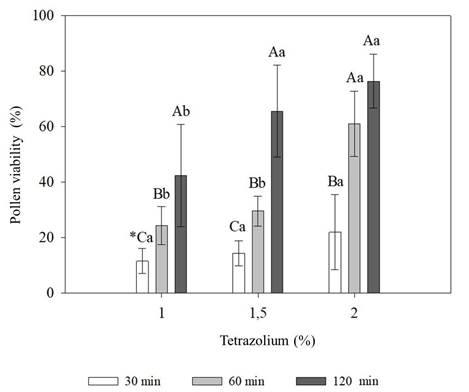
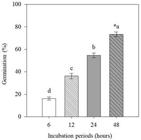
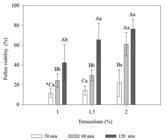
Interspecific hybridization has been widely employed in genetic improvement programs for species of the genus Eucalyptus, contributing significantly to the increased productivity of forest plantations. In hybrid production, it is essential that the pollen used for controlled pollination exhibits high viability. In this study, we evaluated the effect of boric acid on in vitro pollen germination of Eucalyptus urophylla S.T. Blake, and the influence of tetrazolium salt on pollen viability. Different concentrations of boric acid (0, 0.15, 0.30, 0.45, and 0.60 mg L-1) were tested at different incubation periods (6, 12, 24, and 48 h). In addition, tetrazolium salt at concentrations of 1, 1.5, and 2% were evaluated at incubation periods of 30, 60, and 120 min. We found that boric acid had no significant effect on E. urophylla pollen germination, with the highest germination rate (73.4%) observed 48 h after incubation. In the colorimetric analysis using tetrazolium salt, concentrations of 1.5% and 2% for 120 min, and 2% for 60 min proved to be the most suitable for pollen viability assessment. These results indicated that the tetrazolium test is a rapid and effective method that can serve as an alternative to the in vitro germination tests in culture media under controlled laboratory conditions.
Key words:
forest genetic improvement; pollen germination; boric acid; tetrazolium
 Thumbnail
 Thumbnail
 Thumbnail