 Phytochemical, ethnopharmacological and pharmacological properties of Alibertia edulis (Rich.) A. Rich. ex DC.: a review
ABSTRACT:
Alibertia edulis (Rich.) A. Rich. ex DC (Rubiaceae) is known in the Brazilian Cerrado usually as cerrado quince, marmalade or marmelada. This species has wide popular use, associated with anti-inflammatory, antiseptic, antiviral, astringent, diuretic and antihypertensive action, among others, due to the presence of bioactive compounds with these biological activities. This study investigated documents using the Scientific Procedures and Rotationales for Systematic Literature Reviews (SPAR-4-SLR) protocol in academic databases (CAPES Journals Portal, Dimensions, Scopus, PubMed, Scientific Electronic Library Online (SciELO), Web of Science ISI and Google Scholar). The 79 publications were grouped according to specificity: morphology, phytotherapy, phytotherapic, phytochemical activity, ethnopharmacological and pharmacological potential that explored bioactive compounds, biological activities and their medicinal applications. Six descriptors were used and categorized into classes of variables used in a Pearson correlation analysis. Pearson’s correlation showed a high positive correlation between reference and therapeutic indication (0.94, P < 0.001), with Brazil being the country where A. edulis is most studied. There was also a negative correlation between the method of administration and the country (-0.23), reference (-0.14) and therapeutic indication (-0.071), indicating that the methods of preparation most used in the six countries and the degree to which the seven parts of the plant are used influence the medicinal and food properties of A. edulis. In general, the data obtained confirmed the various drugs present in the leaves with antioxidant, antifungal and cytotoxic activities, while the diversity of new niches as raw material for different industrial segments was evident in the fruit.
Key words:
Rubiaceae; Cerrado;
Hemeroplanes triptolemus
; associated traditional knowledge
RESUMO:
Alibertia edulis (Rich.) A. Rich. ex DC (Rubiaceae) é conhecida no Cerrado Brasileiro usualmente como marmelo do cerrado, marmelão ou marmelada. Essa espécie tem amplo uso popular, associada à ação anti-inflamatória, antisséptica, antiviral, adstringente, diurética e anti-hipertensiva, dentre outras, devido à presença de compostos bioativos com essas atividades biológicas. Este estudo investigou documentos utilizando o protocolo Scientific Procedures and Rotionales for Systematic Literature Reviews (SPAR-4-SLR) em bases de dados acadêmicos (Portal de Periódicos da CAPES, Dimensions, Scopus, PubMed, Scientific Electronic Library Online (SciELO), Web of Science ISI e Google Scholar). As 79 publicações foram agrupadas, conforme a especificidade: morfologia, fitoterapia, fitoterápico, atividade fitoquímica, potencial etnofarmacológico e farmacológico que explorassem compostos bioativos, atividades biológicas e suas aplicações medicinais. Seis descritores foram empregados e categorizados em classes de variáveis empregados numa análise de correlação de Pearson. A correlação de Pearson exibiu uma elevada correlação positiva entre a referência e indicação terapêutica (0.94, P < 0.001), sendo o Brasil o país onde mais se estuda A. edulis. Além disso, foi mostrada uma correlação negativa entre o modo de administração com o País (-0.23), referência (-0.14) e indicação terapêutica (-0.071), indicando que as formas de preparo mais utilizado pelos seis países e o grau de utilização das sete partes da planta, influenciam nas propriedades medicinais e alimentícia de A. edulis. De modo geral, os dados obtidos confirmam diversos fármacos presente nas folhas com atividades antioxidante, antifúngico e citotóxico, enquanto no fruto se evidenciou à diversidade de novos nichos como matéria prima para diferentes segmentos industriais.
Palavras-chave:
Rubiaceae; marmelo do Cerrado;
Hemeroplanes triptolemus
; conhecimento tradicional associado
INTRODUCTION
The vegetation of the Brazilian Cerrado is home to countless species of plants that offer health benefits, including the prevention and treatment of diseases, as well as food uses, flavoring, decoration and the recovery of degraded areas. The increase in chronic non-communicable diseases since the beginning of industrial development and the growth of science and technology, which has led to a change in lifestyle, allows us to see the impact of food on our health (DUARTE-CASAR et al., 2024), as well as the use of natural products for their phytochemical qualities, which have been manipulated to produce highly efficient drugs for the prevention, treatment and control of various diseases (MORAES et al., 2024). FERREIRA et al. (2014) and VALLI et al. (2018) state that around 25% of the Brazilian pharmaceutical industry’s revenue comes from the trade in plant-derived products.
Phytochemistry is an important source in the search for new metabolites that can make advances in the field of phytotherapy and contributing to the growth of the pharmaceutical industry. This is because various bioactive compounds applied to food and health are extracted from plants and the study of the structures and metabolites of many plants has been stimulated. Among the species rich in bioactive compounds and native to Brazilian biomes is Alibertia edulis.
In the literature consulted, the presence of tannins, saponins, iridoids, triterpenes, oleanane, among others, has been reported for this species (CRONQUIST, 1981; BROCHINI et al., 1994; VALLI et al., 2016), related to its medicinal properties. However, many other bioactive compounds are present, such as alkaloids and phenolics with toxic and antioxidant activities (SOTO-SOBENIS et al., 2001; SILVA et al., 2010).
RIEDER’S (2013) research on ethnopharmacological and pharmacological surveys of A. edulis revealed that the aqueous extract of the leaves has antioxidant activities capable of eliminating free radicals and preventing hemolysis, hypotensive potential, antihypertensive in rats, diuretic and hypoglycemic interfered with the decrease in blood glucose levels in normoglycemic mice (AQUINO et al., 2020). MENEGATI et al. (2016), when experimenting with acute and subacute toxicity studies in animal models, found that the doses tested are considered safe, as the LD50 was greater than 2000 mg kg-1;although, further studies are essential.
Studies on A. edulis showed trends associated with applications of the aqueous extract of the leaves in antibacterial and leishmanicidal activities (MARQUES et al., 2013), against chickenpox and rheumatism (VIEIRA et al., 2015), among others.
In view of the importance of carrying out studies that highlight biological activities and the bioactive compounds present in A. edulis in order to foster new discoveries in the prevention, cure and treatment of certain diseases and to strengthen traditional and scientific knowledge, this study carrieed out a bibliographical review of the medicinal properties of A. edulis and to explore its phytochemical, ethnopharmacological and pharmacological potential, discussing the diseases treated, the part of the plant used, its uses in traditional medicine and the scientific evidence that already exists.
MATERIALS AND METHODS
SPAR-4-SLR protocol
Documentary analysis was carried out using the Scientific Procedures and Routines for Systematic Literature Reviews (SPAR-4-SLR) protocol. The bibliographic search was carried out in different scientific databases such as CAPES Journal Portal, Dimensions, Scopus, US National Library of Medicine (PubMed), Scientific Electronic Library Online (SciELO), Web of Science ISI and Google Scholar, using the keyword Alibertia edulis, as well as the selection of other references not found in the search, but identified in the references of the works researched. The time interval was between 1980 and 2024. The documents selected were articles, theses, dissertations, book chapters in English, Spanish or Portuguese and abstracts related to the topic for data collection and analysis, according to the aim of this study. Preprints, notes and errata were excluded from the search.
The results were de-duplicated and the content of the documents was first evaluated by the titles, then by reading the abstracts and the theoretical references, including those that presented the theme of the topics 1) Medicinal Plants, Phytotherapy and Herbal Medicine; 2) Description and Morphological Aspects; 3) Phytochemical Activity; and 4) Study of Ethnopharmacological and Pharmacological Potential. The final selection comprised 79 documents.
Based on the literature consulted, the information was generated according to the Australian and New Zealand Standard Research Classification - ANZSRC (2020) (Table 1) <https://www.abs.gov.au/statistics/classifications/australian-and-new-zealand-standard-research-classification-anzsrc/latest-release>.
Literature review scheme. Scientific Procedures and Rotationales for Systematic Literature Reviews (SPAR-4-SLR) protocol (PAUL et al., 2021).
Characterization of the qualitative descriptors of A. edulis
To characterize the qualitative descriptors of A. edulis, they were organized and evaluated as follows: References (R), Country (C), Therapeutic indication (TI), Part of the plant used (PPU), Administration mode (AM), and Types of knowledge (TK).
Statistical analysis
To verify the relationship between the descriptors and the classes of variables, values were assigned to the different classes, and a Pearson correlation analysis was carried out using the statistical software RBio version 166, UFV, Viçosa, MG, Brazil (BHERING, 2017).
RESULTS AND DISCUSSION
Genus Alibertia and Cordiera
The Rubiaceae Juss. family is the fourth largest in number of species among the Angiospermae, with around 650 genera and 13,000 species (BARBOSA et al., 2013; MARTINELLI & MORAES, 2013; GENTIL & SILVA, 2021); and therefore includes herbs, shrubs and trees. It occurs mainly in the forest, cerrado and caatinga of northeastern Brazil. It is in this family that we find the plant that produces one of the world’s best-known drinks, coffee (Coffea arabica L.).
Among the genera of the Rubiaceae family, Alibertia has great economic, pharmacological and therapeutic relevance, since some species of this genus have antitumor, cytotoxic and antioxidant activities (GUPTA et al., 2011; MENDONÇA et al., 2013). Phytochemical research has shown that the plants are a source of pentacyclic triterpenes, especially oleanane and ursane, as well as iridoids, flavonol glycosides and caffeic acid and its esters (BOLZANI et al., 1991; OLEA et al., 1997; LUCIANO et al., 2004; MILITÃO et al., 2005).
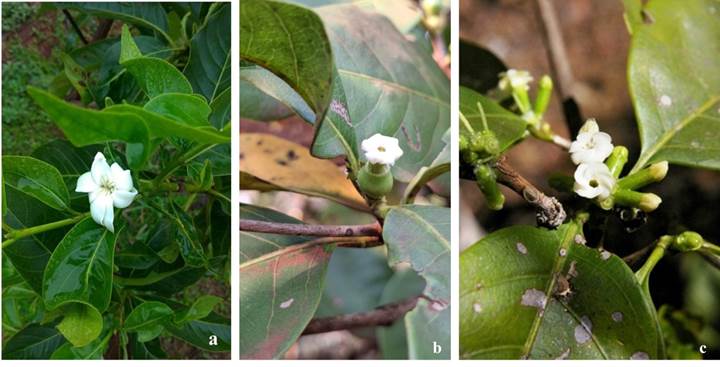
Among the Rubiaceae, Alibertia edulis (Rich.) A. Rich. ex DC (Figure 1A) has been widely studied, especially the use of its leaves, in the form of infusions, for their diuretic, hypoglycemic and calming effects, as well as against chickenpox and rheumatism (GUARIM NETO, 1987; RIEDER, 2013; MENEGATI et al., 2015; VIEIRA et al., 2015). Another species of the genus, Alibertia sessilis (Vell.) K. Schum., synonym Cordiera sessilis (Vell.) Kuntze (Figure 1B), stands out for its organoleptic, nutraceutical and medicinal properties. Its leaves, branches, bark and fruit are used against skin conditions, antifungal and antioxidant (TEIXEIRA et al., 2016); Alibertia macrophylla (K. Schum.) Kuntze, synonym Cordiera macrophylla (K. Schum.) Kuntze (Figure 1C), exhibited antifungal activity (BOLZANI et al., 1991; YOUNG et al., 1992).
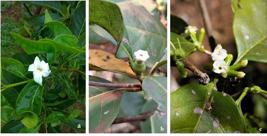
Alibertia edulis (Rich.) A. Rich. ex DC (a), Cordiera sessilis (Vell.) Kuntze (b). Source: The authors (2024). Cordiera macrophylla (K. Schum.) Kuntze (c). Source: <https://arvoresdobiomacerrado.com.br> (2024).
Description and morphological aspects of Alibertia edulis (Rich.) A. Rich. ex DC.
Alibertia edulis (Rich.) A. Rich. ex DC.; it is popularly known as “apuruí” (MARTIN et al., 1987; FLORES et al., 2018), “puruí” (GENTIL & SILVA, 2021), “guava preta” (DANTAS et al., 2020), “marmelão” (YOUNG et al., 1992), “marmelada bola” (SOBRINHO et al., 2017), “marmelo do Cerrado” (BROCHINI et al., 1994; PERSSON, 2000), “marmelada nativa” (BENTO et al., 2016) and “marmelo de cachorro” (NAVES et al., 1991).
It is distributed throughout Brazil, covering the North: the states of Acre, Amazonas, Pará, Rondônia and Tocantins; the Northeast: the states of Bahia, Ceará, Maranhão and Piauí; the Midwest: the Federal District, Mato Grosso do Sul, Goiás, Mato Grosso, and finally the Southeast: Minas Gerais and São Paulo (SILVA et al., 2006; MARTINELLI & MORAES, 2013; ZAPPI et al., 2014). The plants are widely used in landscaping and the recovery of degraded ecosystems.
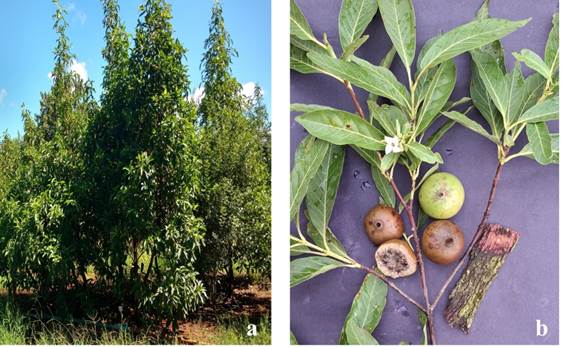
The plant is a branched shrub, 2 to 4 m high (Figure 2A), reaching up to 8 m in height (RODRIGUES et al., 2010); the individuals are dioecious, with a pyramidal crown for the male plants and a rounded crown for the female plants (ALMEIDA et al., 1998); the bark of the stem is brown and has longitudinal fissures (Figure 2B).
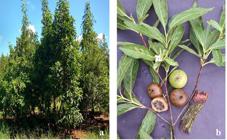
Adult plant (a) and detail of stem bark (b) of Alibertia edulis in the Medicinal Plants Garden of the Universidade Federal da Grande Dourados (UFDG). Source: The authors (2024).
The leaves are simple, with opposite phyllaries, elliptic to elliptic-oblong, acute or acuminate apices, petiolate with triangular and acuminate interpetiolar stipules. Branches in good condition, about 30 cm long, containing leaves and flowers from the mother plant were collected from the Medicinal Plants Garden at the Universidade Federal da Grande Dourados (UFGD), in May 2023, for identification purposes. The exsiccate (10188) of this species is deposited in the DDMS Herbarium of the Universidade Federal da Grande Dourados (UFGD), Dourados - MS, Brazil.
The flowers have ornamental potential. They are fragrant, dioecious, 2 to 3 cm long, actinomorphic or radiate with two or more planes of symmetry, white in color, tubular and trumpet-shaped with 4 to 5 petals, the male flowers (Figure 3A) having fewer petals than the female flowers (Figure 3B).
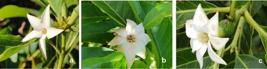
Male flowers (a), female flowers with stigma (b) and female flowers with infertile ovary (c). Source: The authors (2024).
The male flowers are terminal, dimorphic, sessile or subsessile, fasciculate, with an androecium of three to eight fascicles, while the pistillate flowers are solitary and smaller, with pedicels 1 to 3 mm long and reduced or absent bracts. The female flowers are solitary or have three flowers and foliaceous bracts.
The corolla is fleshy, hypocrateriform in the shape of a long, narrow tube, the petals are patent and revolute at anthesis, the anthers are stiff, the pollen tube is 15 to 30 mm long and the ovaries are infertile (Figure 3C).
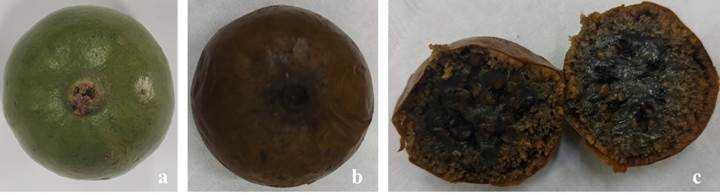
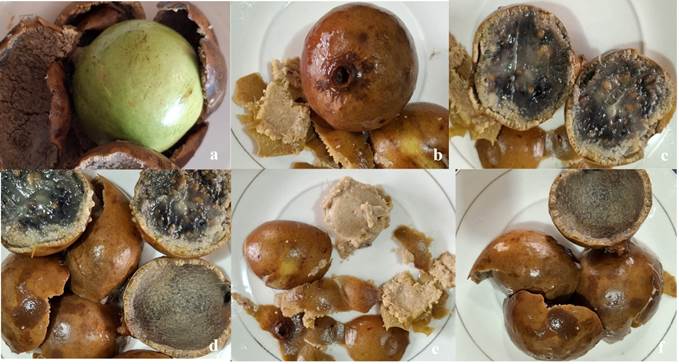
The fruits are spherical and globose, 2 to 4 cm in diameter, initially green (Figure 4A) and, when ripe, straw-yellow to brownish-black (Figure 4B); the flesh is juicy and sweet (MARTIN et al., 1987; VALLI et al., 2016). Flowering begins between June and October (PILON et al., 2024) and fruiting takes place between August and December. Fruit is produced from the third year of the plant’s age (CAMPOS FILHO, 2009). The dark, viscous part of the fruit contains pectin (Figure 4C), which is used to make food products with nutritional and functional properties, such as jams, jellies, liqueurs and cereal bars; it can also be eaten fresh (AMARAL & GUARIM, 2007; YAHAGI et al., 2024), and in cattle feed. The targets of the Sustainable Development Goals (SDGs) focus, among SDG 2, on the demand to produce safe food products that lead to advances in improving the nutritional properties and quality of life of the population, as well as valuing the products of traditional communities and family farmers.
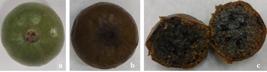
Immature fruit (a), mature fruit (b) and dark part of the pectin-rich fruit (c). Source: The authors (2024).
The seeds are flattened, small, yellowish-brown, angular and 3 to 8 mm long (LORENZI, 2016; MENEGATI et al., 2016). There is an average of 169.88 seeds per fruit (SOBRINHO et al., 2017) and they germinate at around 50%. ALMEIDA et al. (1998) and FELFILI et al. (2000) mention that the seeds, when roasted and crushed, are used in percolation, making a drink reminiscent of coffee.
Recording moths on plants
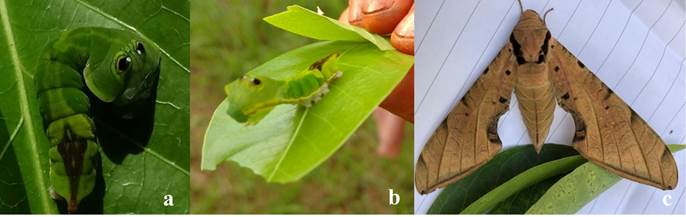
The presence of Hemeroplanes triptolemus (CRAMER, 1779) (Lepidoptera-Sphingidae) on the leaves of A. edulis was recorded from March to June 2024 in the Medicinal Plants Garden at UFGD. The caterpillar has a characteristic horn-shaped discal spot, green in color with a darker band across the central abdominal segment, forming a ring on the upper side approximately 1.5 cm in diameter and 10 cm long (Figure 5A). The caterpillars feed on leaves, new shoots and fruit, reducing the leaf area; however, due to the small number of caterpillars recorded, there was no reduction in the productivity of A. edulis.
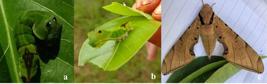
Caterpillars (a and b), moth (c) Hemeroplanes triptolemus on Alibertia edulis leaves. Source: The authors (2024).
The caterpillars, when they felt threatened, mimicked a snake ready to attack, i.e. the extension that precedes the head, the first thoracic segments, dilated and formed a structure similar to a snake’s head (Figure 5B). There are records of these moths (Figure 5C) also occurring in the Cerrado, in Miranda - MS, Brasília - DF, Alto Paraíso de Goiás - GO, Balsas - MA, Paracatu - MG, Rio Pardo de Minas - MG and Uberlândia - MG (DUARTE JÚNIOR & SCHLINDWEIN, 2005).
The high occurrence of carpenter ants of the genus Camponotus rufipes (Formicinae) on the leaves of A. edulis can also be observed in floral and extrafloral nectarines acting in pollination or attracting and sustaining frequent visitation by arthropods (THOMAS, 1991; BARREIRO & MACHADO, 2007; KLEIN et al., 2004). This species of ant interacts in a mutualistic way with the A. edulis plant connected to the fruit ripening period with direct effects on their quality, as well as reducing the photosynthetic area of the leaves (PILON et al., 2024).
Chemical composition and antioxidant activity of A. edulis leaves
In general, iridoids, phenolic derivatives, triterpenes, flavonoids and esters have been isolated from A. edulis leaf extracts (BOLZANI et al., 1991; BROCHINI et al., 1994; OLEA et al., 1997; LUCIANO et al., 2004; SILVA et al., 2007).
In the ethanolic extract of the leaf, various drugs have been detected, such as tannins, saponins and iridoids with antifungal and cytotoxic potential related to inhibitory activities on strains of Candida albicans, C. krusei, C. parapsilosis and Cryptococcus neoformans (SILVA et al., 2007; VALLI et al., 2016). Phenolic compounds and caffeic acid were identified in the extract prepared by decoction (BROCHINI et al., 1994). AQUINO et al. (2017), in their research, identified caffeic acid by the same method, as well as quercetin, 3-rhamnosyl-(1→6)-galactoside and ixoside.
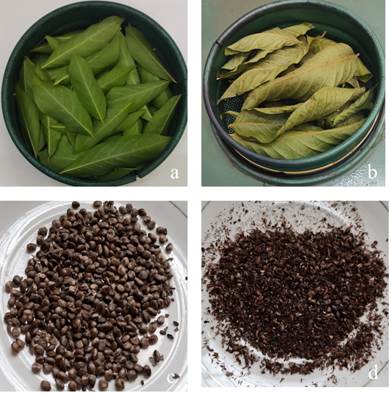
SANTANA et al. (2016), in their studies carried out with the leaf infusion, proved the presence of flavonoids. The result of pharmacological research carried out with the phenolic compound was antioxidant activity (TOTTER, 1980; DIPLOCK, 1994; HUDECOVÁ et al., 2012; MENEGATI et al., 2016; AQUINO et al., 2017). With this characteristic and the coffee aroma presented by the dried leaves and roasted seeds, new niches are opening as a raw material for different industrial segments, including “gourmet coffee” (Figure 6).

Chemical composition of A. edulis stem bark
The bark of the A. edulis stem contains a variety of phytochemicals with beneficial properties for health, including sources of triterpenes derived from cycloartane (SILVA et al., 2007), as well as pentacyclic triterpenes, mainly oleanane and ursane (BOLZANI et al., 1991; BROCHINI et al., 1994; OLEA et al., 1997; LUCIANO et al., 2004).
SILVA et al. (2007), in his research using the ethanolic extract of the stem bark, observed tannins and ixiside in the n-butanolic fraction, signs of the iridoid compounds 6-hydroxy-7-epigardoside methyl ester and shanzhiside methyl ester and the phenolic derivative 3,4,5-trimethoxyphenyl-β-apiofuranosyl-(1→6)β-glucopyranoside. Pomolate saponin of 3β-O-[α-Lramnopyranosyl-(1-2)-O-β-D-glucopyranosyl-(1-2)-O-β-D-glucopyranosyl]-28-O-β-Dglycopyranoside has also been isolated from the stem bark (ROSS, 1997; CASTRO & CARDOSO, 2021).
Nutritional properties and chemical composition of the fruit
Studies by YAHAGI et al. (2024) provided information on the convective drying method with and without osmotic pre-treatment for extracting the nutritional properties of A. edulis fruit flour. The dried fruit was found to contain carbohydrates (63.92 g/100 g), crude fiber (14.07 g/100 g), protein (8.41 g/100 g), fixed mineral residue (3.43 g/100 g), lipids (2.30 g/100 g) and energy value (310.02 kcal/100 g), while the flour produced from the osmodehydrated fruit had carbohydrate content (75.92 g/100 g), crude fiber (7.94 g/100 g), protein (5.64 g/100 g), fixed mineral residue (1.70 g/100 g), lipids (2.20 g/100 g) and energy value (346.04 kcal/100 g).
YAHAGI et al. (2024) used the method of determining antioxidant activity to prove that there were higher levels of phenolic compounds and antioxidant activity in the pulp of unripe fruit when compared to ripe fruit. Studies have also shown that fruit pulp flour has higher antioxidant activity and phenolic compound content when compared to fresh fruit.
CARVALHO et al. (2023) and GENTIL & SILVA (2021) observed the presence of phenolic acid (caffeic acid), iridoid (genipin), flavones (baicalin and 3’,7-dimethoxy-3-hydroxyflavone) and aporphine alkaloid (anonaine) in hydroalcoholic extracts of the fruit pulp (Figure 7).
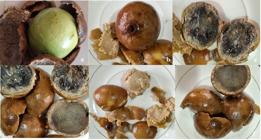
Immature (a) and mature (b) fruit, seeds (c and d), pulp (e) and bark (f) of Alibertia edulis. Source: The authors (2024).
Study of the ethnopharmacological and pharmacological potential of A. edulis
The leaves of A. edulis have great medicinal value in the treatment of liver disease (ALVES et al., 2008), antiplatelet (LESCANO et al., 2021), diabetes (RIEDER, 2013; GAIA & GOMES, 2017) and rheumatism (VIEIRA et al., 2015). Significant use is a good practice, as the plant produces several leaves and its harvest causes little physiological damage to the species. The leaves and fruit of A. edulis (Cerrado quince), administered in the form of an infusion, have been used for medicinal purposes to combat gastrointestinal diseases (ZAMBRANA et al., 2017) and acute diarrhea (ALVES et al., 2008). It is traditionally used for external bathing and the use of leaf tea helps with blood circulation (SANGALLI et al., 2002). The leaves are used in tea form as a decoction or infusion.
ALMEIDA et al. (1998) and DI STASI & HIRUMA-LIMA (2002) mention the use of the leaves in the form of compresses, as well as in the treatment of ailments and poultices. The use of baths with the addition of the leaves helps to reduce hernias (MORS, 2000). In addition, the use of the leaves by decoction is indicated as a therapeutic resource in the form of calming (GURIM NETO, 1987), antihypertensive, antitumor, hypoglycemic (MENEGATI et al., 2016; TOLOUEI et al., 2020), the aqueous extract of the leaves has antihypertensive, antidiuretic and hypotensive activities (AQUINO et al., 2017).
The epicarp of the fruit (FORERO, 1980) and the bark of the stem (SVETAZ et al., 2010; GUPTA et al., 2011) have been shown to stimulate breast milk production. Anti-inflammatory efficacy has also been found with tea made from the immature fruit (FERROATO & COELHO, 1996). The macerated fruits are stomachic (MATTA, 2003) and are also used against chickenpox (ROCHA & SILVA, 2002; VIEIRA et al., 2015).
In Mexico, the leaves are used to treat diarrhea (SALDAÑA et al., 2024). While in Nicaragua there are reports of the leaves and stem bark being used to combat postpartum pain and menstrual bleeding (COE, 2008), the leaves, fruit and roots are indicated for the treatment of respiratory problems (VIEIRA & MARTINS, 1996; VIEIRA et al., 2015). The fruit syrup is commonly used in the Amazon (CORRÊA & PENA, 1984).
There are records that the methanolic extracts of the leaf and stem bark of A. edulis were cited in studies by SILVA et al. (2008) with antifungal activity in the treatment of Candida albicans, C. krusei, Cryptococcus neoformans and to combat Leishmania. MARQUES et al. (2013) reported that the leaf and branches had an average inhibitory concentration (MIC) of 1000 μg mL-1 for the fungi Pseudomonas aeruginosa and C. krusei. The leaf extract also showed a mean inhibitory concentration (MIC) of 500 μg mL-1 for the fungus C. albicans, with no inhibitory action in the leaf branches. The medicinal recognition information on the A. edulis species with therapeutic indication, part used and form of use is shown in table 2 and table 3.
Biological activities described in the literature for Alibertia edulis (Rich.) A. Rich. ex DC. from the Rubiaceae family.
Qualitative descriptors for A. edulis
A total of 79 documents were used, distributed as follows: 61 (77.20%) published between 1980 and 2017 and 18 (22.80%) between 2018 and 2024. Of the total number of articles used in the study, only 69 were used in the construction of table 3, because ten of them dealt only with the plant anatomy of A. edulis and were used only in the descriptions given above.Table 3 shows only 26 papers from which information on the six descriptors was extracted.
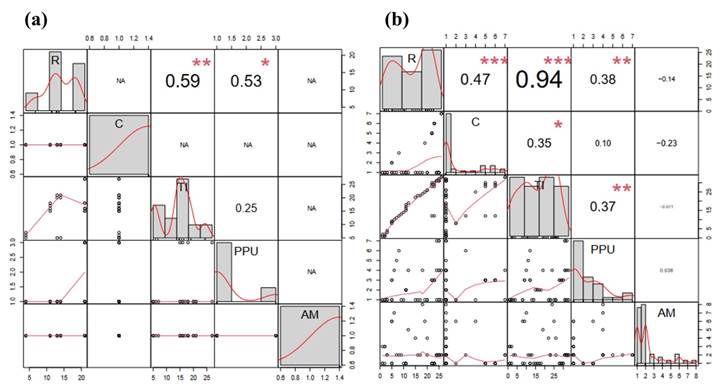
Based on the six qualitative descriptors (R, C, TI, PPU, AM, TK) of A. edulis, classes were established within the different variables (Table 3). The classes made it possible to better differentiate the information collected when reading the selected references. The formation of classes enabled the qualitative data to be transformed into quantitative data and the latter to be used in correlation analyses to assess the relationships between the variables (Figure 8). In this way, 26 classes were formed when considering the references used to gather the information described in table 3. Seven classes were formed for the country where the research was carried out, seven classes for the part of the plant used, eight classes for the method of administration, and two classes for the type of knowledge involved in the research (Table 3). The 33 classes formed when checking the therapeutic indication stand out. This information showed the wide use of this plant in the regions where it has been described. The use of medicinal plants is a practice with deep roots in local culture and can have significant impacts on the country’s health, well-being and economy. SDG 3 therefore helps to identify medicinal plants used for therapeutic purposes, while at the same time contributing to the promotion and well-being of society.
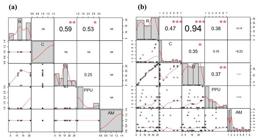
Pearson’s correlation and scatter plot obtained by comparing six qualitative descriptors evaluated against the class of A. edulis variables: references (R), country (C), therapeutic indication (TI), part of the plant used (PPU), administration mode (AM), and types of knowledge (TK). The different correlations obtained represent scientific knowledge (Figure 8A) and traditional knowledge (Figure 8B). Correlation values with the symbols NA, ***, **, * represent absence of analysis and significant differences of (P < 0.001), (P < 0.01) and (P < 0.05) probability, respectively.
Pearson correlation analysis of A. edulis variable class groups
To compare the relationship between the six descriptors (Table 3) and the classes of variables, a Pearson correlation analysis was carried out (Figure 8). The relationships were established considering the types of knowledge individually, separating in figure 8A the scientific knowledge using information from 21 articles and in figure 8B the traditional knowledge associated with using A. edulis data extracted from 48 articles and estimating the Pearson correlation coefficients (Figure 8). R was positively correlated with TI (0.59, P < 0.01) and with PPU (0.53, P < 0.05) (Figure 8A).
The publications dealing with the crop show that scientific knowledge (Figure 8A) is validated by corroborating experimental evidence, carried out only in Brazil and using the decoction method of administration. This is why for both descriptors C and AM, the relationship with the other descriptors was NA, justified by the fact that there is only one class within them, Brazil and decoction, respectively. For this reason, we can highlight the importance of research that proves medicinal actions and uses. The restriction of research generally carried out in Brazil highlights the importance of the use of this crop in South and Central America, considering that six other countries (Nicaragua, Colombia, Mexico, Panama, Peru and Bolivia) report its medicinal and therapeutic uses (Table 3). Studies indicated that the part of the plant used together with the method of administration are essential to ensure medicinal efficacy, while bringing numerous health benefits when used appropriately (PEDROSO et al., 2021). SDG 2 plays an important role in responsible consumption and production, the rational and sustainable use of biodiversity and the development of the medicinal plant production chain. Therefore, the characteristics of the raw plant material used for therapeutic purposes are of great significance in attesting to the safety and efficacy of the use of medicinal species.
When the 48 articles related to associated traditional knowledge were evaluated, the descriptor R showed a highly significant interaction with TI (0.94, P < 0.001), but a low and significant interaction with C (0.47, P < 0.001) and PPU (0.38, P < 0.01) (Figure 8B). Regarding to countries, Brazil (71% of the total number of papers) had the highest number of papers with therapeutic indications. Due to the medicinal potential of this species, its natural population is continually exploited through extractivism, most of which is predatory (BILIO et al., 2024). One mitigating factor is that, in general, the medicinal use is of the leaves, reducing the probable damage caused by the loss of the plants. However, more studies are needed into the traditional use associated with the other different parts of the plant that could be used, as they are an important source of raw material for different medicinal and therapeutic applications.
PPU was positively correlated with TI (0.37, P < 0.01) (Figure 8B), highlighting that the way in which the parts of the plant are used, especially the leaves of A. edulis (46% of the studies) and the bark of the stem (21% of the studies) are important to ensure the presence of bioactive compounds, as well as guaranteeing certification of low toxicity. It should therefore be pointed out that one of the main causes of adverse effects when using plant parts for phytotherapeutic purposes is directly related to extrinsic factors: place of origin, collection method, drying, storage, cultivation, transportation (WHO, 2003) and extraction of its constituents.
AM showed no significant correlation with the other variables, with C (- 0.23), R (- 0.14) and TI (- 0.071) showing a negative magnitude (Figure 8B) and PPU (0.038) a positive one. The relationships between these variables indicated that the way it is administered is independent of the country (C) that reports its use, as well as the different bibliographical references, the therapeutic indication reported and the part of the plant used in the different works that show its use through associated traditional knowledge.
CONCLUSION
A. edulis is used for pain relief, healing and treatment of various diseases in Brazil, Bolivia, Panama, Peru, Colombia, Mexico and Nicaragua. The plant’s most used organ is the leaves and the most common form of use is by decoction and infusion, which contribute to the control, prevention and cure of numerous diseases. The literature reports that phytochemical studies of A. edulis extracts have shown the presence of tannins, saponins, iridoids, phenolics, triterpenes, flavonoids, oleanane, among other compounds.
The A. edulis species has demonstrated medicinal activities with hypoglycemic, hypotensive, anti-hypertensive, diuretic and antioxidant effects in experimental models, as well as benefits in the treatment of blood circulation, rheumatism, respiratory problems, among others. The research carried out is important and demonstrated the wealth of bioactive compounds in A. edulis that can be used in medicines and foods. It is hoped that this study will serve as a compiled reference for studies on the use of the plant.
ACKNOWLEDGMENTS
To the Fundação de Apoio ao Desenvolvimento do Ensino, Ciência e Tecnologia do Estado de Mato Grosso do Sul (FUNDECT), the Conselho Nacional de Desenvolvimento Científico e Tecnológico (CNPq) and the financed in part by the Coordenação de Aperfeiçoamento de Pessoal de Nível Superior (CAPES), Brasil - Finance code 001.
REFERENCES
- ALMEIDA, S.P. et al. Cerrado: espécies vegetais úteis. Planaltina: EMBRAPA-CPAC, 1998.
-
ALVES, E. O. et al. Levantamento etnobotânico e caracterização de plantas medicinais em fragmentos florestais de Dourados-MS. Ciência e Agrotecnologia, v.32, n.2, p.651-658, 2008. Available from: <Available from: https://doi.org/10.2174/1874401X01003010142 >. Accessed: Feb. 18, 2018. doi: 10.2174/1874401X01003010142.
» https://doi.org/10.2174/1874401X01003010142.» https://doi.org/10.2174/1874401X01003010142 -
AMARAL, C. N.; GUARIM, V. L. M. S. Estudo etnobotânico da comunidade rural de cascavel (Jangada-MT). Revista Brasileira de Biociências, v.5, supl.1, p.894-896, 2007. Available from: <Available from: https://seer.ufrgs.br/index.php/rbrasbioci/article/view/115775 >. Accessed: Feb. 18, 2018.
» https://seer.ufrgs.br/index.php/rbrasbioci/article/view/115775 -
ANZSRC - Australian Bureau Of Statistics Australian And New Zealand Standard Research Classification. A statistical classification used for the measurement and analysis of R&D in Australia and New Zealand. 2020. Available from: <Available from: https://www.abs.gov.au/statistics/classifications/australian-and-new-zealand-standard-research-classification-anzsrc/latest-release >. Accessed: Jun. 12, 2024.
» https://www.abs.gov.au/statistics/classifications/australian-and-new-zealand-standard-research-classification-anzsrc/latest-release -
AQUINO, D. F. S. et al. Alibertia edulis (L.C. Rich.) A.C. Rich - A potent diuretic arising from Brazilian indigenous species. Journal of Ethnopharmacology, v.196, p.193-200, 2017. Available from: <Available from: https://doi.org/10.1016/j.jep.2016.12.024 >. Accessed: Feb. 18, 2018. doi: 10.1016/j.jep.2016.12.024.
» https://doi.org/10.1016/j.jep.2016.12.024.» https://doi.org/10.1016/j.jep.2016.12.024 -
AQUINO, D. F. S. et al. Investigation of the antioxidant and hypoglycemiant properties of Alibertia edulis (L.C. Rich.) A.C. Rich. Leaves. Journal of Ethnopharmacoly, v.253, e112648, 2020. Available from: <Available from: https://doi.org/10.1016/j.jep.2020.112648 >. Accessed: Feb. 18, 2018. doi: 10.1016/j.jep.2020.112648.
» https://doi.org/10.1016/j.jep.2020.112648.» https://doi.org/10.1016/j.jep.2020.112648 -
BARBOSA, M. R. et al. Rubiaceae in Lista de Espécies da Flora do Brasil. Jardim Botânico do Rio de Janeiro, 2013. Available from: <Available from: http://floradobrasil.jbrj.gov.br/jabot/floradobrasil/FB210/ >. Accessed: Jun. 12, 2024.
» http://floradobrasil.jbrj.gov.br/jabot/floradobrasil/FB210/ -
BARREIRO, D. P.; MACHADO, S. R. Coléteres dendróides em Alibertia sessilis (Vell.) K. Schum., uma espécie não-nodulada de Rubiaceae. Brazilian Journal of Botany, v.30, p.387-399, 2007. Available from: <Available from: https://doi.org/10.1590/S0100-84042007000300005 >. Accessed: Feb. 21, 2018. doi: 10.1590/S0100-84042007000300005.
» https://doi.org/10.1590/S0100-84042007000300005.» https://doi.org/10.1590/S0100-84042007000300005 -
BENTO, L. F. et al. Storage of Alibertia edulis seeds: Influence of water content and storage conditions. African Journal of Agriculture Research, v.11, n.18, p.1646-1655, 2016. Available from: <Available from: https://doi.org/10.5897/AJAR2016.10871 >. Accessed: Feb. 21, 2022. doi: 10.5897/AJAR2016.10871.
» https://doi.org/10.5897/AJAR2016.10871.» https://doi.org/10.5897/AJAR2016.10871 -
BHERING, L. L. Rbio: A Tool For Biometric And Statistical Analysis Using The R Platform. Crop Breeding and Applied Biotechnology, v.17, p.187-190, 2017. Available from: <Available from: https://dx.doi.org/10.1590/198470332017v17n2s29 >. Accessed: Feb. 21, 2023. doi: 10.1590/198470332017v17n2s29.
» https://doi.org/10.1590/198470332017v17n2s29.» https://dx.doi.org/10.1590/198470332017v17n2s29 -
BILIO, R. S. et al. Fenologia de Alibertia edulis (Rich.) A. Rich em duas fitofisionomias do Cerrado Matogrossense. Ciência Florestal, v.34, n.1, p.e73390-e73390, 2024. Available from: <Available from: https://doi.org/10.5902/1980509873390 >. Accessed: Mar. 21, 2020. doi: 10.5902/1980509873390.
» https://doi.org/10.5902/1980509873390.» https://doi.org/10.5902/1980509873390 -
BOLZANI, V. S. et al. Caffeic acid esters and triterpenes of Alibertia macrophylla Phytochemistry, v.30, n.6, p.2089-2091, 1991. Available from: <Available from: https://doi.org/10.1016/0031-9422(91)85077-D >. Accessed: Feb. 19, 2018. doi: 10.1016/0031-9422(91)85077-D.
» https://doi.org/10.1016/0031-9422(91)85077-D.» https://doi.org/10.1016/0031-9422(91)85077-D -
BROCHINI, C. B. et al. An oleanane acid from Alibertia edulis Phytochemistry, v.36, n.5, p.1293-1295, 1994. Available from: <Available from: https://doi.org/10.1016/S0031-9422(00)89654-5 >. Accessed: Mar. 21, 2020. doi: 10.1016/S0031-9422(00)89654-5.
» https://doi.org/10.1016/S0031-9422(00)89654-5.» https://doi.org/10.1016/S0031-9422(00)89654-5 - CAMPOS FILHO, EM. Plante as árvores do Xingu e Araguaia. Guia de identificação (ISA). v. 2, São Paulo, 2009. 304p.
-
CARVALHO, N. C. C. et al. Phenolic compounds and antioxidant properties of puruí (Alibertia edulis, Rubiaceae), an edible dark purple fruit from the Brazilian Amazon. Nutraceuticals, v.3, n.4, p.529-539, 2023. Available from: <Available from: https://doi.org/10.3390/nutraceuticals3040038 >. Accessed: Feb. 18, 2024. doi: 10.3390/nutraceuticals3040038.
» https://doi.org/10.3390/nutraceuticals3040038.» https://doi.org/10.3390/nutraceuticals3040038 -
CASTRO, T. L. A.; CARDOSO, C. A. L. Uso tradicional, cultivo, composição química e atividades biológicas de Alibertia edulis (Rich.) A. Rich. ex DC. (Rubiaceae). Biodiversidade, v.20, n.4, 2021. Available from: <Available from: https://www.researchgate.net/profile/Thiago-Luis-Aguayo-De-Castro/publication/357227393_Uso_tradicional_cultivo_composicao_quimica_e_atividades_biologicas_de_Alibertia_edulis_Rich_A_Rich_ex_DC_Rubiaceae/links/61c26fc8c99c4b37eb14780f/Uso-tradicional-cultivo-composicao-quimica-e-atividades-biologicas-de-Alibertia-edulis-Rich-A-Rich-ex-DC-Rubiaceae.pdf >. Accessed: Feb. 18, 2024.
» https://www.researchgate.net/profile/Thiago-Luis-Aguayo-De-Castro/publication/357227393_Uso_tradicional_cultivo_composicao_quimica_e_atividades_biologicas_de_Alibertia_edulis_Rich_A_Rich_ex_DC_Rubiaceae/links/61c26fc8c99c4b37eb14780f/Uso-tradicional-cultivo-composicao-quimica-e-atividades-biologicas-de-Alibertia-edulis-Rich-A-Rich-ex-DC-Rubiaceae.pdf -
COE, F. G. Rama midwifery in eastern Nicaragua. Journal of Ethnopharmacology, v.117, n.1, p.136-57, 2008. Available from: <Available from: https://doi.org/10.1016/j.jep.2008.01.027 >. Accessed: Mar. 21, 2020. doi: 10.1016/j.jep.2008.01.027.
» https://doi.org/10.1016/j.jep.2008.01.027.» https://doi.org/10.1016/j.jep.2008.01.027 - CORRÊA, M. P.; PENA, L. A. Dicionário das plantas úteis do Brasil e das exóticas cultivadas. v.3. Brasília: Ministério da Agricultura, Instituto Brasileiro de Desenvolvimento Florestal, 1984. 777p.
- CRONQUIST, A. An integrated system of flowering plants. New York: Columbia University Press, 1262p. il, 1981.
-
DANTAS, L. G. et al. Development of ten microsatellite markers for Alibertia edulis (Rubiaceae), a Brazilian savanna tree species. Molecular Biology Reports, v.46, p.4593-4597, 2020. Available from: <Available from: https://doi.org/10.1007/s11033-019-04819-2 >. Accessed: Mar. 10, 2022. doi: 10.1007/s11033-019-04819-2.
» https://doi.org/10.1007/s11033-019-04819-2.» https://doi.org/10.1007/s11033-019-04819-2 - DI STASI, L. C.; HIRUMA-LIMA, C. A. Plantas medicinais na Amazônia e na Mata Atlântica. São Paulo: Editora UNESP, 2002. 592p.
-
DIPLOCK, A. T. Antioxidants and diseases prevention. Molecular Aspects of Medicine, v.15, p.293-376, 1994. Available from: <Available from: https://doi.org/10.1016/0098-2997(94)90005-1 >. Accessed: Mar. 10, 2022. doi: 10.1016/0098-2997(94)90005-1.
» https://doi.org/10.1016/0098-2997(94)90005-1.» https://doi.org/10.1016/0098-2997(94)90005-1 -
DUARTE JÚNIOR, J. A.; SCHLINDWEIN, C. Riqueza, abundância e sazonalidade de Sphingidae (Lepidoptera) num fragmento de Mata Atlântica de Pernambuco, Brasil. Revista Brasileira de Zoologia, v.22, p.662-666, 2005. Available from: <Available from: https://doi.org/10.1590/S0101-81752005000300022 >. Accessed: Aug. 21, 2024. doi: 10.1590/S0101-81752005000300022.
» https://doi.org/10.1590/S0101-81752005000300022.» https://doi.org/10.1590/S0101-81752005000300022 -
DUARTE-CASAR, R. et al. Five underutilized ecuadorian fruits and their bioactive potential as functional foods and in metabolic syndrome: A Review. Molecules, v.29, n.12, p.2904, 2024. Available from: <Available from: https://doi.org/10.3390/molecules29122904 >. Accessed: Feb. 21, 2024. doi: 10.3390/molecules29122904.
» https://doi.org/10.3390/molecules29122904.» https://doi.org/10.3390/molecules29122904 - FELFILI, J. M. et al. Recuperação de Matas de Galeria. Distrito Federal: Embrapa Cerrados, 2000.45p.
-
FERREIRA, T. S. et al. Phytotherapy: an introduction to its history, use and application. Revista Brasileira de Plantas Medicinais, v.16, p.290-298, 2014. <https://doi.org/10.1590/S151605722014000200019>. Accessed: Mar. 10, 2019. doi: 10.1590/S1516-05722014000200019.
» https://doi.org/10.1590/S1516-05722014000200019.» https://doi.org/10.1590/S151605722014000200019 - FERROATO, A.; COELHO, M. Germinação e viabilidade de sementes de marmelada-bota (Alibertia edulis Rich), espécie medicinal de Mato Grosso. In. Simpósio de Plantas Medicinais do Brasil, 14, Florianópolis,1996 . Resumos. Florianópolis: SBPM, p.4 (resumo B-008). 1996.
-
FLORES, J. A. et al. Inventory data on Brazilian Amazon’s non-wood native biomass sources for bioenergy production. Data in Brief, v.20, p.1931-1941, 2018. Available from: <Available from: https://doi.org/10.1016/j.dib.2018.09.050 >. Accessed: Feb. 18, 2020. doi: 10.1016/j.dib.2018.09.050.
» https://doi.org/10.1016/j.dib.2018.09.050.» https://doi.org/10.1016/j.dib.2018.09.050 -
FORERO, L. E. Etnobotánica de las comunidades indígenas Cuna y Waunana, Chocó (Colombia). Cespedesia, v.9, n.33-34, p.115-301, 1980. Available from: <Available from: https://repositorio.ucaldas.edu.co/handle/ucaldas/17709 >. Accessed: Feb. 18, 2020.
» https://repositorio.ucaldas.edu.co/handle/ucaldas/17709 - GAIA, S. D. C.; GOMES, E. A. Levantamento etnobotânico de frutas comercializadas no município de Tefé - Am. Trabalho de Conclusão de Curso (Licenciatura em Ciências Biológicas) Centro de Estudos Superiores de Tefé, Universidade do Estado do Amazonas. Tefé, AM, 2017.
-
GENTIL, E. P.; SILVA, O. C. Study on the impact of the drying process on the finalcharacteristicsof the dehydrated Puruí (Alibertia edulis) fruit. Brazilian Journal of Development, v.7, n.4, p.43695-43703, 2021. Available from: <Available from: https://doi.org/10.34117/bjdv7n4-703 >. Accessed: Feb. 10, 2022. doi: 10.34117/bjdv7n4-703.
» https://doi.org/10.34117/bjdv7n4-703.» https://doi.org/10.34117/bjdv7n4-703 - GUARIM NETO, G. Plantas utilizadas na medicina popular no estado de Mato Grosso. Brasília: CNPq, 58 p., 1987.
- GUPTA, M. P. et al. Plantas Medicinales de Panamá. Panamá: Organization of American States, 2011.
-
HUDECOVÁ, A. et al. Silver nanoparticles induce premutagenic DNA oxidation that can be prevented by phytochemicals from Gentiana asclepiadea Mutagenesis, v.27, p.759-769, 2012. Available from: <Available from: https://doi.org/10.1093/mutage/ges046 >. Accessed: Jun. 18, 2022. doi: doi.org/10.1093/mutage/ges046.
» https://doi.org/doi.org/10.1093/mutage/ges046.» https://doi.org/10.1093/mutage/ges046 -
KLEIN, D. E. et al. The structure of colleters in several species of Simira (Rubiaceae). Annals of Botany, v.94, n.5, p.733-740, 2004. Available from: <Available from: https://doi.org/10.1093/aob/mch198 >. Accessed: Jun. 18, 2022. doi: 10.1093/aob/mch198.
» https://doi.org/10.1093/aob/mch198.» https://doi.org/10.1093/aob/mch198 -
LESCANO, C. H. et al. Rutin present in Alibertia edulis extract acts on human platelet aggregation through inhibition of cyclooxygenase/thromboxane. Food & Fuction, v.12, n.2, p.802-814, 2021. Available from: <Available from: https://doi.org/10.1039/D0FO02276D >. Accessed: Jun. 10, 2022. doi: 10.1039/D0FO02276D.
» https://doi.org/10.1039/D0FO02276D.» https://doi.org/10.1039/D0FO02276D - LORENZI, H. Árvores brasileiras: manual de identificação e cultivo de plantas arbóreas nativas do Brasil. v.3, 2.ed. São Paulo: Instituto Plantarum de Estudos da Flora, 2016. 384p.
-
LUCIANO, J. H. S. et al. Chemical constituents of Alibertia myrciifolia Spruce ex K. Schum. Biochemical Systematics and Ecology, v.32, n.12, p.1227-1229, 2004. Available from: <Available from: https://doi.org/10.1016/j.bse.2004.05.006 >. Accessed: Jun. 12, 2023. doi: 10.1016/j.bse.2004.05.006.
» https://doi.org/10.1016/j.bse.2004.05.006.» https://doi.org/10.1016/j.bse.2004.05.006 -
MARQUES, M. C. S. et al. In vitro biological screening and evaluation of free radical scavenging activities of medicinal plants from the Brazilian Cerrado. Journal of Medicinal Plants Research, v.7, n.15, p.957-962, 2013. Available from: <Available from: https://doi.org/2013. 10.5897/JMPR12.882 >. Accessed: Jun. 22, 2022. doi: 10.5897/JMPR12.882.
» https://doi.org/10.5897/JMPR12.882.» https://doi.org/2013. 10.5897/JMPR12.882 - MARTIN, F. W. et al. Perennia edible fruits of the tropics: An inventory. USA: U.S. Department of Agriculture Handbook, n.642, 1987.
- MARTINELLI, G.; MORAES, M. A. (org.). Livro vermelho da flora do Brasil. 1. ed. Rio de Janeiro: Instituto de Pesquisas Jardim Botânico do Rio de Janeiro. Centro Nacional de Conservação da Flora, 2013.1100p.
- MATTA, A. A. Flora médica brasiliense. 3.ed. Manaus: Editora Valer e Governo do Estado do Amazonas, 2003. 356p. (Série Poranduba, 3).
-
MENDONÇA, A. C. A. M. et al. Rubiaceae: aspectos ecológicos e reprodutivos. Cadernos de Cultura e Ciência, v.12 n.2, p.8-20, 2013. Available from: <Available from: https://periodicos.urca.br/ojs/index.php/cadernos/article/view/630 >. Accessed: Jun. 18, 2020.
» https://periodicos.urca.br/ojs/index.php/cadernos/article/view/630 - MENEGATI, S. E. L. T. et al. Acute and subacute toxicity of the aqueous extract of Alibertia edulis (Rich.) A. Rich. ex DC. in rats. Journal of Ethnopharmacology, v.194, p.1096-1102, 2016.
- MENEGATI, S. E. L. T. et al. Avaliação da toxicidade aguda do extrato aquoso das folhas de Alibertia edulis (L.C. Rich.) A.C. Rich. In: 17th Workshop de Plantas Medicinais do Mato Grosso do Sul e Empório da Agricultura Familiar. Resumos. Proceedings of the 17th Workshop de Plantas Medicinais do Mato Grosso do Sul e 7th Empório da Agricultura Familiar, 2015.
-
MILITÃO, G. C. G. et al. Cytotoxicity of flavonoids isolated from Alibertia myrciifolia Pharmaceutical biology, v.43, n.5, p.480-484, 2005. Available from: <Available from: https://doi.org/10.1080/13880200590963989 >. Accessed: Jun. 18, 2020. doi: 10.1080/13880200590963989.
» https://doi.org/10.1080/13880200590963989.» https://doi.org/10.1080/13880200590963989 -
MORAES, A. R. A. et al. Phytochemical study of Magonia pubescens A. St.-Hil. and cytotoxicity of branches aqueous extract on breast cancer and leukemia cells. Natural Product Research, v.38, n.11, p.1956-1960, 2024. Available from: <Available from: https://doi.org/10.1080/14786419.2023.2227988 >. Accessed: Oct. 28, 2020. doi: 10.1080/14786419.2023.2227988.
» https://doi.org/10.1080/14786419.2023.2227988.» https://doi.org/10.1080/14786419.2023.2227988 - MORS, W. B. et al. Medicinal plants of Brazil. Rio de Janeiro: Botanical Garden, 2000.
-
NAVES, R. V. et al. Avaliação da emergência de plântulas de espécies frutíferas nativas do cerrado goiano. Anais Escolas Agronomia e Veterinária, v.21/22, n.1, p.133-141, 1991. Available from: <Available from: https://revistas.ufg.br/pat/article/view/2610 >. Accessed: Jun. 18, 2020.
» https://revistas.ufg.br/pat/article/view/2610 -
OLEA, R. S. G. et al. Acylated flavonol lycosides and terpenoids from the leaves of Alibertia sessilis Journal of the Braziliam Chemical Society, v.8, n.3, p.257-259, 1997. Available from: <Available from: https://doi.org/10.1590/S0103-50531997000300013 >. Accessed: Jun. 28, 2020. doi: 10.1590/S0103-50531997000300013.
» https://doi.org/10.1590/S0103-50531997000300013.» https://doi.org/10.1590/S0103-50531997000300013 -
PAUL, J. et al. Scientific procedures and rationales for systematic literature reviews (SPAR-4-SLR). International Journal of Consumer Studies, v.45, n.4, p.01-016, 2021. Available from: <Available from: https://doi.org/10.1111/ijcs.12695 >. Accessed: Mar. 28, 2022. doi: 10.1111/ijcs.12695.
» https://doi.org/10.1111/ijcs.12695.» https://doi.org/10.1111/ijcs.12695 -
PEDROSO, R. S. et al. Medicinal plants: an approach to rational and safe use. Physis: Revista de Saúde Coletiva, v.31, n.02, p.e310218, 2021. Available from: <Available from: https://doi.org/10.1590/S0103-73312021310218 >. Accessed: Jun. 10, 2022. doi: 10.1590/S0103-73312021310218.
» https://doi.org/10.1590/S0103-73312021310218.» https://doi.org/10.1590/S0103-73312021310218 -
PERSSON, C. Phylogeny of the neotropical Alibertia group (Rubiaceae), with emphasis on the genus Alibertia, inferred from ITS and 5S ribosomal DNA sequences. American Journal of Botany, v.87, n.7, p.1018-1028, 2000. Available from: <Available from: https://doi.org/10.2307/2657002 >. Accessed: Jul. 10, 2022. doi: 10.2307/2657002.
» https://doi.org/10.2307/2657002.» https://doi.org/10.2307/2657002 -
PILON, N. A. A plant-ant interaction in the Brazilian Savanna: The interesting case of Alibertia edulis (Rich.) A. Rich (Rubiaceae) and Camponotus rufipes (Fabr.) (Formicinae). South African Journal of Botany, v.167, p.166-172, 2024. Available from: <Available from: https://doi.org/10.1016/j.sajb.2024.02.012 >. Accessed: Jul. 10, 2024. doi: 10.1016/j.sajb.2024.02.012.
» https://doi.org/10.1016/j.sajb.2024.02.012.» https://doi.org/10.1016/j.sajb.2024.02.012 -
RIEDER, A. Plants used for diabetes in the transition zone of Platinum and Amazon Hydrographic Basins, southwest portion of Mato Grosso, Brazil. Planta Medica, v.79, n.13, p.PF8, 2013. Available from: <Available from: https://doi.org/10.1055/s-0033-1352065 >. Accessed: Jul. 20, 2022. doi: 10.1055/s-0033-1352065.
» https://doi.org/10.1055/s-0033-1352065.» https://doi.org/10.1055/s-0033-1352065 - ROCHA, A. E. S.; SILVA, M. F. F. Catálogo de espécies da floresta secundária. Belém: Museu Paraense Emílio Goeldi, 212 p., 2002.
-
RODRIGUES, V. H. P. et al. Composição, estrutura e aspectos ecológicos da floresta ciliar do rio Aráguari no Triângulo Mineiro. Hoehnea, v.37, n.1, p.87-105, 2010. Available from: <Available from: https://doi.org/10.1590/S2236-89062010000100006 >. Accessed: Jul. 20, 2022. doi: 10.1590/S2236-89062010000100006.
» https://doi.org/10.1590/S2236-89062010000100006.» https://doi.org/10.1590/S2236-89062010000100006 -
SALDAÑA, R. A. C. et al. Uso y conocimiento tradicional de plantas medicinales en comunidades de Villa Corzo, Chiapas, México. Boletín Latinoamericano y del Caribe de Plantas Medicinales y Aromáticas, v.23, n.2, p.257-272, 2024. Available from: <Available from: https://doi.org/10.37360/blacpma.24.23.2.18 >. Accessed: Jul. 20, 2024. doi: 10.37360/blacpma.24.23.2.18.
» https://doi.org/10.37360/blacpma.24.23.2.18.» https://doi.org/10.37360/blacpma.24.23.2.18 -
SANGALLI, A. et al. Levantamento e caracterização de plantas nativas com propriedades medicinais em fragmentos florestais e de Cerrado de Dourados - MS, numa visão etnobotânica. Acta Horticultura, v.569, p.173-184, 2002. Available from: <Available from: https://doi.org/10.17660/ActaHortic.2002.569.28 >. Accessed: Feb. 18, 2020. doi: 10.17660/ActaHortic.2002.569.28.
» https://doi.org/10.17660/ActaHortic.2002.569.28.» https://doi.org/10.17660/ActaHortic.2002.569.28 -
SANTANA, L. F. et al. Avaliação da atividade antioxidante do extrato aquoso das folhas de Alibertia edulis (L. C. Rich.) A. C. Rich. Perspectivas Experimentais e Clínicas, Inovações Biomédicas e Educação em Saúde, v.2, n.2, supl.2: Jornada de Nutrição 2016, 2016. Available from: <Available from: https://periodicos.ufms.br/index.php/pecibes/article/view/4881/3596 >. Accessed: Feb. 18, 2018.
» https://periodicos.ufms.br/index.php/pecibes/article/view/4881/3596 -
SILVA, N. L. A. et al. Triagem fitoquímica de plantas de Cerrado, da área de proteção ambiental municipal do Inhamum, Caxias, Maranhão. Scientia Plena, v.6, n.2, e025402, 2010. Available from: <Available from: https://scientiaplena.emnuvens.com.br/sp/article/view/22 >. Accessed: Feb. 18, 2023.
» https://scientiaplena.emnuvens.com.br/sp/article/view/22 -
SILVA, V. C et al. New antifungal terpenoid glycosides from Alibertia edulis (Rubiaceae). Helvetica Chimical Acta, v.91, n.7, p.1355-1362, 2008. Available from: <Available from: https://doi.org/10.1002/hlca.200890147 >. Acessed: Feb. 18, 2018. doi: 10.1002/hlca.200890147.
» https://doi.org/10.1002/hlca.200890147.» https://doi.org/10.1002/hlca.200890147 -
SILVA, V. C. et al. A new antifungal phenolic glycoside derivative, iridoids and lignans from Alibertia sessilis (vell.) k. schum. (Rubiaceae). Journal of the Brazilian Chemical Society, v.18, p.1405-1409, 2007. Available from: <Available from: https://doi.org/10.1590/S0103-50532007000700017 >. Accessed: Feb. 18, 2024. doi: 10.1590/S0103-50532007000700017.
» https://doi.org/10.1590/S0103-50532007000700017.» https://doi.org/10.1590/S0103-50532007000700017 -
SILVA, V. C. et al. Isolation of lignans glycosides from Alibertia sessilis (Vell.) K. Schum. (Rubiaceae) by preparative high-performance liquid chromatography. Eclética Química, v.31, n.4, p.55-58, 2006. Available from: <Available from: https://doi.org/10.1590/S0100-46702006000400008 >. Accessed: Feb. 18, 2018. doi: 10.1590/S0100-46702006000400008.
» https://doi.org/10.1590/S0100-46702006000400008.» https://doi.org/10.1590/S0100-46702006000400008 -
SOBRINHO, S. P. et al. Caracterização física de frutos e sementes de Lafoensia pacari, Alibertia edulis e Genipa americana Revista de Ciências Agrárias, v.40, n.2, p.382-389, 2017. Available from: <Available from: https://doi.org /10.19084/RCA16034 >. Accessed: Feb. 18, 2024. doi: 10.19084/RCA16034.
» https://doi.org/10.19084/RCA16034.» https://doi.org /10.19084/RCA16034 -
SOTO-SOBENIS, A. et al. Alkaloid screening of herbarium samples of Rubiaceae from Panamá. Pharmaceutical Biology, v.39, n.3, p.161-169, 2001. Available from: <Available from: https://doi.org/10.1076/phbi.39.3.161.5925 >. Accessed: Sept. 18, 2024. doi: 10.1076/phbi.39.3.161.5925.
» https://doi.org/10.1076/phbi.39.3.161.5925» https://doi.org/10.1076/phbi.39.3.161.5925 -
SVETAZ, L. et al. Value of the etnnomedical information for the discovery of plants with antifungal properties. A survey among seven Latin American countries. Journal of Ethnopharmacology, v.127, p.137-158, 2010. Available from: <Available from: https://doi.org/10.1016/j.jep.2009.09.034 >. Accessed: Sept. 18, 2024. doi: 10.1016/j.jep.2009.09.034.
» https://doi.org/10.1016/j.jep.2009.09.034.» https://doi.org/10.1016/j.jep.2009.09.034 -
TEIXEIRA, T. R. et al. Leaf anatomy of Cordiera sessilis (Vell.) Kuntze (Rubiaceae). Acta Scientiarum. Biological Sciences, v.38, n.3, p.355-364, 2016. Available from: <Available from: https://doi.org/10.4025/actascibiolsci.v38i3.29902 >. Accessed: Sept. 18, 2024. doi: 10.4025/actascibiolsci.v38i3.29902.
» https://doi.org/10.4025/actascibiolsci.v38i3.29902.» https://doi.org/10.4025/actascibiolsci.v38i3.29902 -
THOMAS, V. Structural, functional and phylogenetic aspects of the colleter. Annals of Botany, v.68, n.4, p.287-305, 1991. Available from: <Available from: https://doi.org/10.1093/oxfordjournals.aob.a088256 >. Accessed: Sept. 18, 2024. doi: 10.1093/oxfordjournals.aob.a088256.
» https://doi.org/10.1093/oxfordjournals.aob.a088256.» https://doi.org/10.1093/oxfordjournals.aob.a088256 -
TOLOUEI, S. E. M. et al. Cytotoxic, genotoxic and mutagenic evaluation of Alibertia edulis (rich.) a. Rich. ex DC: an indigenous species from Brazil. Drug and Chemical Toxicology, v.4, n.2, p.200-207, 2020. Available from: <Available from: https://doi.org/10.1080/01480545.2018.1488862 >. Accessed: Sept. 18, 2024. doi: 10.1080/01480545.2018.1488862.
» https://doi.org/10.1080/01480545.2018.1488862.» https://doi.org/10.1080/01480545.2018.1488862 -
TOTTER, J. R. Spontaneous cancer and its possible relationship to oxygen metabolism. Proceedings of the National Academy of Sciences, v.77, p.1763-1767, 1980. Available from: <Available from: https://doi.org/10.1073/pnas.77.4.1763 >. Accessed: Sept. 18, 2024. doi: 10.1073/pnas.77.4.1763.
» https://doi.org/10.1073/pnas.77.4.1763.» https://doi.org/10.1073/pnas.77.4.1763 -
VALLI, M. et al. A beleza invisível da biodiversidade: o táxon Rubiaceae. Revista Virtual de Química, v.8, n.1, p.296-310, 2016. Available from: <Available from: https://doi.org/10.5935/1984-6835.20160020 >. Accessed: Jun. 12 2024. doi: 10.5935/1984-6835.20160020.
» https://doi.org/10.5935/1984-6835.20160020.» https://doi.org/10.5935/1984-6835.20160020 -
VALLI, M. et al. The potential contribution of the natural products from Brazilian biodiversity to bioeconomy. Anais da Academia Brasileira de Ciências, v.90, p.763-778, 2018. Available from: <Available from: https://doi.org/10.1590/0001-3765201820170653 >. Accessed: Jun. 12, 2024. doi: 10.1590/0001-3765201820170653.
» https://doi.org/10.1590/0001-3765201820170653.» https://doi.org/10.1590/0001-3765201820170653 -
VIEIRA, L. S. et al. Plantas medicinais conhecidas por especialistas locais de uma comunidade rural maranhense. Revista Brasileira de Plantas Medicinais, v.17, p.1061-1068, 2015. Available from: <Available from: https://doi.org/10.1590/1983-084X/15_009 >. Accessed: Jun. 12, 2024. doi: 10.1590/1983-084X/15_009.
» https://doi.org/10.1590/1983-084X/15_009.» https://doi.org/10.1590/1983-084X/15_009 - VIEIRA, R. F.; MARTINS, M. V. M. Estudos etnobotanicos de espécies medicinais de uso popular no Cerrado. In: Internacional Savana Symposium, 1996. Brasília. . Resumo Brasília: Embrapa/CPAC, 1996.
-
YAHAGI, L. Y. et al. Barra de cereal com adição de Alibertia edulis L. Contribuciones a Las Ciencias Sociales, São José dos Pinhais, v.17, n.1, p.7431-7449, 2024. Available from: <Available from: https://doi.org/10.55905/revconv.17n.1-448 >. Accessed: Jun. 12, 2024. doi: 10.55905/revconv.17n.1-448.
» https://doi.org/10.55905/revconv.17n.1-448.» https://doi.org/10.55905/revconv.17n.1-448 -
YOUNG, M. C. M. et al. Fungitoxic non-glycosidic iridoids from Alibertia macrophylla Phytochemistry, v.31, n.10, p.3433-3435, 1992. Available at <Available at https://doi.org/10.1016/0031-9422(92)83701-Y >. Accessed: Jun. 12, 2024. doi: 10.1016/0031-9422(92)83701-Y.
» https://doi.org/10.1016/0031-9422(92)83701-Y.» https://doi.org/10.1016/0031-9422(92)83701-Y -
ZAMBRANA, N. Y. et al. Traditional knowledge hiding in plain sight - twenty-first century ethnobotany of the Chácobo in Beni, Bolivia. Journal of etnchobiology and ethnomedicine, v.13, n.57, p.2-47, 2017. Available from: <Available from: https://doi.org/10.1186/s13002-017-0179-2 >. Accessed: Jun. 28, 2020. doi: 10.1186/s13002-017-0179-2.
» https://doi.org/10.1186/s13002-017-0179-2.» https://doi.org/10.1186/s13002-017-0179-2 -
ZAPPI, D. C. et al. Flora da Serra do Cipó, Minas Gerais: Rubiaceae. Boletim de Botânica, v.32, n.1, p.71-140, 2014. Available from: <Available from: https://doi.org/10.11606/issn.2316-9052 >. Accessed: Jun. 28, 2020. doi: 10.11606/issn.2316-9052.
» https://doi.org/10.11606/issn.2316-9052.» https://doi.org/10.11606/issn.2316-9052
Edited by
-
ASSOCIATE EDITOR:
Alessandro Dal’Col Lúcio (0000-0003-0761-4200)
-
SCIENTIFIC EDITOR:
Ivo Oliveira (0000-0002-0866-953X)
Raw data are available directly from the author.