
 ALWAYS THE WOMEN? VALUES AND HOUSEWORK DIVISION IN A COMPARATIVE PERSPECTIVE
Abstract
This article explores how attitudes and behaviors toward housework vary across countries and among individuals, focusing on gender roles. Using data from the International Social Survey Programme (ISSP), specifically its Family and Changing Gender Roles module, the study employs multilevel analysis to examine responses from 41 countries across different continents. The findings reveal that factors such as gender, education, working hours, religion, and religiousness influence attitudes and practices related to domestic labor. Moreover, while national contexts play a role in shaping gender values, there is notable uniformity across countries in actual practices concerning the sexual division of housework.
INEQUALITY; GENDER RELATIONS; SEXUAL DIVISION OF LABOR; DOMESTIC WORK
Resumo
De que forma os valores de gênero e as práticas em relação ao trabalho doméstico variam segundo os contextos nacionais e as características dos indivíduos? Para responder a essa pergunta, o artigo analisa os dados do Family and Changing Gender Roles, do International Social Survey Programme (ISSP), elegendo as questões sobre os valores de gênero e práticas na divisão do trabalho doméstico de 41 países de diferentes continentes através de análise multinível. Os resultados indicam que gênero, escolaridade, horas trabalhadas, religião e religiosidade influenciam valores e práticas de gênero. Mas, enquanto o contexto nacional no qual as pessoas vivem afeta os valores de gênero, os países se mostram muito mais homogêneos no que se refere às práticas relacionadas à divisão sexual do trabalho.
DESIGUALDADE; RELAÇÕES DE GÊNERO; DIVISÃO SEXUAL DO TRABALHO; TRABALHO DOMÉSTICO
Resumen
¿De qué forma los valores de género y las prácticas en relación al trabajo doméstico varían según los contextos nacionales y las características de los individuos? Para responder a esa pregunta, el artículo analiza los datos del Family and Changing Gender Roles, del International Social Survey Programme (ISSP), eligiendo las preguntas sobre los valores de género y prácticas en la división del trabajo doméstico, de 41 países de diferentes continentes a través del análisis multinivel. Los resultados indican que el género, la educación, las horas trabajadas, la religión y la religiosidad influyen en los valores y prácticas de género. Pero, mientras el contexto nacional en el que las personas viven afecta los valores de género, los países se muestran mucho más homogéneos en lo que se refiere a las prácticas relacionadas con la división sexual del trabajo.
DESIGUALDAD; RELACIONES DE GÉNERO; DIVISIÓN SEXUAL DEL TRABAJO; TRABAJO DOMÉSTICO
Résumé
Comment les valeurs et les pratiques de genre sur le travail domestique varient-elles en fonction des contextes nationaux et des caractéristiques des individus? Pour répondre à cette question, l’article, à travers une analyse multiniveaux, examine les données de l’enquête Family and Changing Gender Roles de l’International Social Survey Programme (ISSP), où ont été selectionnées des questions sur les valeurs de genre et les pratiques de la division du travail domestique, dans 41 pays de différents continents. Les résultats indiquent que le genre, le niveau de scolarité, le nombre d’heures travaillées, la religion et la religiosité influencent les valeurs et les pratiques de genre. Toutefois, si le contexte national dans lequel vivent les gens influe sur les valeurs de genre, les pays semblent beaucoup plus homogènes pour ce qui est des pratiques liées à la division sexuelle du travail.
INÉGALITÉS; RELATIONS DE GENRE; DIVISION SEXUELLE DU TRAVAIL; TRAVAIL DOMESTIQUE
TO UNDERSTAND HOW GENDER INEQUALITIES ARE STRUCTURED AND PERPETUATED OVER time, one of the key variables to examine is the distribution of domestic and care work among family members. Historically, the term “work” has referred exclusively to paid activities, typically performed by men. Conversely, activities necessary for family upkeep, usually performed by women in the private sphere, were considered inherent to female nature. These constructs are informed by cultural values related to gender (male and female) and manifest in the beliefs that there are natural aptitudes and propensities according to biological sex (male or female), leading to the idea that the sexual division of domestic labor reflects such differences.
Socio-anthropological studies, emphasizing the diverse roles men and women perform across various societal contexts, along with feminist activism demanding workplace equality and public policies to support families, have disrupted the traditional naturalization of gender roles. Together, these efforts have come together in feminist social theories, revealing the organic connection between paid work and family life, both crucial to social reproduction. However, this process also creates and perpetuates gender hierarchies, differences, and inequalities (Hirata & Kergoat, 2007), with women often shouldering the burden of unpaid family care work.
Empirical studies have shown that gender inequality in the division of domestic and care work has endured over time across various countries and cultural contexts, regardless of their economic development (Altintas & Sullivan, 2016). This persistent inequality, combined with political activism from gender equality movements, has led several countries - primarily in Europe - to implement supportive policies, such as childcare centers, elder care facilities, and affirmative actions aimed at promoting gender equality. Such measures include granting longer, negotiable parental leave for both parents; bans on gender-based pay disparities for the same roles; initiatives to encourage women to pursue careers in politics, science, technology, and management; and campaigns to promote shared responsibility for childcare and household duties (Landwerlin et al., 2020). In many other countries without similar public policies, the main approach has been to rely on hiring support services for families, leave women largely responsible for domestic and care work, or distribute responsibilities among family members and personal support networks.
In this article, we draw from a comparative perspective to enhance existing analyses of how gender inequalities are reproduced. To achieve this, we analyzed data from the 4th round of the Family and Changing Gender Roles module of the International Social Survey Programme (ISSP), which includes the survey conducted in Brazil. We conducted multilevel analyses to explore values and practices related to the sexual division of domestic labor, while controlling for both contextual and individual variables.
The ISSP is a consortium of research groups from various countries, based at the GESIS1 Leibniz Institute for the Social Sciences, which conducts surveys on values and attitudes across predefined themes such as government roles, social networks, social inequality, changes in family and gender roles, religion, and the environment. These themes, known as modules, are repeated every 5 to 10 years. Each participating country conducts the survey using a standardized questionnaire and follows the ISSP’s sampling guidelines. After collecting the data, the countries submit it to the ISSP, which combines it into a single database accessible on their website at
https://issp.org. The Brazilian survey data has been standardized and integrated into this international database,2 thereby allowing for global comparisons.
The present article is structured into four main sections, in addition to this introduction. The first section reviews key discussions from the literature on the division of domestic and care work. The second section presents the data and variables that underpin our analysis. The third section explains our methodology for creating the indices and discusses our findings. Finally, we offer some reflections on the topic and examine the convergences identified in the literature.
Values, attitudes, and the division of housework: A glimpse into the literature
Gender values can be defined as the set of beliefs embedded in common sense about the conditions, characteristics, and aptitudes associated with masculinity and femininity. These ideas are usually rooted in a binary and inherent understanding of male and female nature and are conveyed through institutions such as families, schools, workplaces, as well as cultural and religious traditions. Ultimately, these values shape what we refer to as “gender roles”. Gender roles pertain to the behaviors expected and deemed appropriate for men and women in various social activities, including parenting, sexuality, aesthetics, child and dependent care, household chores (e.g., cooking, cleaning, and laundry), and participation in the labor market. Two concepts are foundational in defining gender roles: gender essentialism and male supremacy. Gender essentialism is the belief that men and women have inherent attributes - men are viewed as natural providers, strong, and rational, while women, as the bearers of children, are seen as naturally nurturing and affectionate. Male supremacy holds that masculine traits and their associated qualities are considered superior to feminine attributes, resulting in greater social and economic value (Crompton & Lyonette, 2005; Chatillon et al., 2018).
During the first half of the 20th century, gender essentialism and male supremacy were fundamental beliefs upholding the notion that child care, domestic labor, and performing jobs in personal services related to domestic tasks, personal care and hygiene, early childhood education, and routine non-manual activities were roles more suited to women. Such belief stemmed from the view that these roles aligned with women’s inherent qualities - maternal, gentle, delicate, affectionate, and nurturing - traits deemed less valuable than the strength, rationality, aggressivity, competitiveness, and assertiveness associated with men (Sorj, 2013; Hirata & Kergoat, 2007; Chatillon et al., 2018).
Comparative analyses over the past five decades and across various countries show a decline in traditional values that view men as providers, more rational, better suited for leadership roles, and deserving of higher pay, while viewing women as primary caregivers in the family home, more fragile, and less suited for leadership positions. However, this decline has not been matched by an equivalent increase in men’s involvement in domestic and care work. Research continues to find that women predominantly enter the workforce in typically feminine occupations, with schedules that allow them to accommodate domestic and care tasks. Meanwhile, men have not significantly increased the average number of hours they devote to domestic and care work (Mandel & Lazarus, 2021; Araújo, Picanço et al., 2018). Recent decades have seen a decline in the belief in “male supremacy”, followed by a surge in women’s participation in the labor market and education system. However, the belief in “gender essentialism” has not diminished to the same extent (Charles & Bradley, 2009; Levanon & Grusky, 2016; Quadlin, 2020; Barone & Assirelli, 2020).
How was this diagnosis made possible? Since the late 1970s, numerous studies have developed methods to measure cultural values, enabling comparisons over time and across various social, cultural, and economic contexts. Building on this trend, researchers have examined values and practices related to the division of housework, allowing for comparisons both within a society over time and across different countries (Lomazzi & Seddig, 2020).
Since cultural values cannot be measured directly, research has focused on assessing gender attitudes - understood as positive and negative evaluations of social roles shaped by gender values. Gender attitudes reflect how people perceive social roles for men and women, particularly their beliefs about the division of paid and unpaid work, child care, and household chores, based on a gendered separation of tasks and responsibilities (Lee, 2010; Davis & Greenstein, 2009). Gender attitudes can thus be seen as indicators of whether individuals lean toward equality or traditional roles (Inglehart & Welzel, 2005), and as ideas that influence how they believe paid and unpaid work should be divided between partners (Kroska & Elman, 2009).
Researchers have employed the notion of gender attitudes to analyze variations in the division of housework (Mandel et al., 2020; Bianchi et al., 2012; Crompton et al., 2005; Fuwa, 2004; Davis & Greenstein, 2004), income (Stickney & Konrad, 2007), employment (Oláh et al., 2021), and work-family conflict (Yucel & Chung, 2021). Furthermore, researchers have also explored how these attitudes are influenced by contextual variables such as cultural values (Lomazzi & Seddig, 2020) and the presence of women in the labor market (Mandel & Lazarus, 2021).
A review of the literature reveals three key research areas that have shaped the study of gender values and attitudes. The first area explores which macrosocial factors - such as government regimes, welfare policies, and predominant cultural traits like religion and familism - affect adherence to traditional or less traditional gender values across different countries. Studies in this area underscore “macro-level” variables and the importance of societal and cultural factors, such as social norms, institutional constraints, and policies designed to reduce social and gender inequalities, in shaping gender values. The second research area focuses on how individual factors - referred to as “micro-level” factors -, such as gender, race, education, income, the presence of young children, and religious practices, account for variations in adherence to traditional or less traditional gender values within countries. Finally, the third area examines the impact of gender values on everyday family practices, with a particular emphasis on the division of domestic labor.
In the first research area, which looks at how macrosocial factors affect gender values, studies have found a positive correlation between socioeconomic development and adherence to gender equality. As economic development progresses, women’s participation in the labor market, education, and politics increases, along with a stronger commitment to egalitarian gender values (Boehnke, 2011; Fortin, 2005; Therborn, 2004). The culturalist perspective highlights how broader social values, norms, and preferences shape specific gendered work arrangements (Haas, 2005).
Nations vary not only in their social structures but also in their cultures and, especially, in their social values. Cultural explanations emphasize the close relationship between attitudes toward gender roles and the prevailing value system in a society. For example, some studies have examined how religious beliefs and secularization influence gender attitudes and how these attitudes evolve over time (Droogenbroeck & Spruyt, 2021). While most religions endorse traditional gender roles, secularization tends to promote more liberal gender norms and diminishes the emphasis on traditional roles and the value placed on self-fulfillment (Inglehart & Norris, 2003).
Several studies have documented how structural changes impact gender attitudes. These changes are directly linked to the evolution of welfare and family policies, which may, in turn, influence gender values. Institutional factors, such as policies aimed at balancing domestic and professional responsibilities, serve as crucial indicators of gender attitudes. For example, the availability of services such as childcare centers and parental leave policies affects opportunities and shapes individual opinions (Lomazzi et al., 2018; Knudsen & Wærness, 2008; Fuwa, 2004; Sjöberg, 2004).
Sjöberg (2004) and Goossen (2020) emphasized that state-supported family policies and the redistribution of unpaid labor influence practices in two main ways: they facilitate balancing work and family life and establish standards for what is considered normatively appropriate behavior. Knudsen and Wærness (2001), in their study on attitudes toward maternal employment, compared Britain, Sweden, and Norway, finding that different welfare policies led to clear variations in these attitudes.
The second line of research examines how individual factors influence gender values. Studies have found that younger people, those with higher educational levels, higher incomes, and those living in urban areas are more likely to embrace egalitarian values (Picanço et al., 2021; Kroska & Elman, 2009; Sjöberg, 2004; Bolzendahl & Myers, 2004). Higher education, in particular, is associated with a stronger adherence to egalitarian gender values. Conversely, life events such as becoming a parent tend to push individuals towards more traditional roles (Vespa, 2009).
For women, being young and employed in the labor market tends to increase support for egalitarian gender values. Interestingly, age has a greater impact on women than on men; older women are more likely to hold traditional values compared to younger women, with a larger age gap observed among women than between younger and older men. Therefore, at the individual level, factors such as education, gender, race/ethnicity, age, marital status, and having children are crucial in explaining both the commitment to egalitarian gender values and practices related to the division of domestic labor (Picanço et al., 2021; Oláh et al., 2021; Gubernskaya, 2010; Coltrane, 2000).
Finally, the third line of research examines how values affect practices, or more specifically, to what extent more egalitarian values lead to a more balanced division of domestic labor between partners. Artis and Pavalko (2003) found that women who adopt more egalitarian values over time tend to spend fewer hours on housework, even when controlling for other variables such as changes in family structure or free time. Research also shows that younger men are more likely to engage in domestic chores, reflecting their more egalitarian values (Davis & Greenstein, 2004). Additionally, Fan and Marini (2000) found that working mothers, who tend to have more egalitarian gender attitudes, often pass these values on to their children. This trend, combined with rising education levels and increased female employment, suggests that the movement toward detraditionalization is likely to persist (Hong et al., 2023; Khamis & Ayuso, 2022; Mandel et al., 2020).
Coltrane (2000), upon reviewing over two hundred studies on the topic within the three lines outlined above, concluded that no single theoretical perspective fully explains why housework is predominantly performed by women. Nevertheless, it is clear that domestic labor involves a complex interplay of material and symbolic practices that shape and sustain everyday life. In efforts to deepen the understanding of gender values and the distribution of domestic and caregiving work, interest is growing in integrating various levels of analysis.
Integrating the effects of context (macro-level) and individual characteristics of respondents (micro-level) into regression analysis to explain variations in adherence to more egalitarian values and the division of household tasks is not a novel approach, as shown by Picanço et al. (2021). However, previous studies have typically incorporated these variables into a linear regression model. Multilevel analysis offers the advantage of examining how individual variables (microlevel) and variables related to social norms, public policies, and institutional practices (macro-level) impact gender values and the division of domestic labor, providing a clearer picture of variations across different contexts. Some studies using multilevel analysis stand out.
Based on questions from the ISSP conducted in 27 countries about the ideal arrangement for parents working outside the home with a child under 4 years old, Edlund and Öun (2023) found that higher levels of gender equality at the macro level are positively associated with less gendered family ideals; national institutions and norms significantly influence individuals’ opinions on family configurations and how work should be divided between men and women.
Altintas and Sullivan (2017) analyzed data from the Multinational Time Use Study (MTUS) across 15 countries, categorizing them into four regime types: liberal (United States, Canada, and the United Kingdom), Nordic (Denmark, Finland, Sweden, and Norway), Southern (Italy, Spain, and Israel), and corporate (France and Germany). Their findings reveal that the type of regime influences men’s involvement in domestic and care work over time. In Nordic countries, fathers set the benchmark for the highest involvement. Southern countries start with lower participation rates, but see an increase over time. In corporate countries, fathers begin with high involvement but show little change over time. In liberal countries, a significant difference emerges: fathers are either highly engaged or not at all, with those who do engage gradually reaching levels similar to those in Nordic countries. Therefore, there are patterns that reflect the alignment of country trends with their respective regime types. At the micro-level, the authors observe that more educated fathers provide more education to their children, are more active in domestic tasks, and unemployed fathers tend to be more engaged in household work.
Hofäcker and Braun (2022) found a negative correlation between hours spent on paid work and hours devoted to housework. They argue that this pattern reflects more than just time constraints; it also highlights differences in labor market conditions and the bargaining power of men and women at home. Their study showed that, regardless of the country, women consistently spend more time on domestic tasks than men, indicating that macro-level factors have a limited impact. The authors conclude that gender norms continue to exert a persistent influence on everyday practices related to the division of domestic labor.
Hagqvist (2018) examined changes in the gender division of housework between 1994 and 2012 across 21 countries. The dependent variable was the respondents’ statements about how housework is divided between them and their partner. Individual-level control variables included gender, age, education level, weekly hours worked, and the presence of children in the household. At the macro level, the study considered three indicators: gender equality norms, number of women with higher education, and female employment rate. The variable “gender equality norms” is an index based on six items that measure agreement or disagreement with the following statements: “a working woman can establish as warm and secure a relationship with her child as a mother who does not work”, “a pre-school child suffers if his or her mother has a full-time job”, “family life suffers when a woman has a full-time job”, “what most women really want is a home and children”, “being a housewife is as fulfilling as working for pay”, and “a man’s job is to earn money and a woman’s job is to look after the home and family”. The study found that the gender division of housework became more equal over time, except in the United States, France, Hungary, Latvia, Slovakia, and Switzerland, where no statistically significant change was observed. No country showed a decline in equality in the division of housework (Hagqvist, 2018).
Similar to Hofäcker and Braun (2022), Hagqvist (2018) found that increased equality in the division of domestic labor results not only from a reduction in the time women spend on household tasks but also from a shift in individuals’ perceptions regarding gender equality in the labor market. Hagqvist also compared countries based on their “family policy models”, showing that nations with more conservative family policies initially had lower levels of egalitarianism in the division of household labor. However, these countries showed greater progress over time compared to those starting from more egalitarian baselines. The study concludes that the institutional framework, shaped by societal factors, affects both the division of housework and how this division evolves over time (Hagqvist, 2018).
A comparison of 25 countries using data from 2002 and 2012 (Mandel & Lazarus, 2021) found that gender values were more determinant for the division of domestic labor than structural factors such as women’s participation in the workforce. The study examined the difference in average hours spent on domestic tasks between men and women, excluding caregiving activities. The analysis included two individual-level variables: women’s economic independence, calculated as the difference between the partner’s income and the woman’s income divided by the total income, and gender ideology, based on agreement with statements from the ISSP questionnaire. The macro-level variables were women’s participation in the labor market and the average gender ideology index (described above). The findings revealed that while increasing women’s economic resources is important, it alone is insufficient to achieve a more equitable division of domestic labor without a corresponding ideological shift towards gender equality. This contextual shift redefines what is considered a fair distribution of domestic tasks by altering underlying “national norms” and expanding the boundaries of what constitutes an unfair division of domestic responsibilities (Greenstein, 2000). Therefore, researchers argue that policies designed to make the labor market more accommodating for women have reached their limits (Mandel & Lazarus, 2021).
Building on the findings from this literature, part of which based on ISSP data, our interest lies in comparing countries by introducing dimensions and analyses that are still novel in the field.
Data and variables: Creating the indices
In this study, we drew upon data from the 39 countries that participated in the 2012 ISSP survey, including Brazil, which was collected in 2016. Our goal was to explore trends, similarities, and specificities in values, assessed through attitudes towards gender roles and practices related to the gendered division of domestic labor, across different contexts of development and socioeconomic inequality.3 To do this, we created two indicators: the Gender Attitude Index (GAI), which measures values, and the Domestic Labor Concentration Index for Women (DLCW) to measure practices related to unpaid domestic labor. Next, we ran multilevel regression models using the GAI and the DLCW as dependent variables. The individual leval independent variables were gender, age, education level, religious affiliation, and religiousness. We also included the Human Development Index (HDI) and the Gender Inequality Index (GII) to capture differences between countries at the macrolevel. The HDI compares and ranks countries based on indicators such as years of schooling, average years of schooling, life expectancy at birth, and per capita income. In turn, the GII measures gender inequality using indicators such as maternal mortality, teenage pregnancy rates, the proportion of women in national parliaments or congress, the percentage of the female population with at least secondary education, and female labor force participation. In the HDI, a lower score (closer to 0) indicates lower human development and greater inequality, while in the GII, a lower score (closer to 0) represents higher gender equality.
To achieve our research objectives, we analyzed the data using multilevel regression. This method allows us to separately assess the impact of individual characteristics and contextual or structural factors on gender values and practices.
Gender Attitude Index (GAI)
To measure gender attitudes, we selected questions that assess the level of agreement or disagreement with the following statements: “A working woman can establish as warm and secure a relationship with her child as a mother who does not work”; “Family life suffers when a woman has a full-time job”; “A man’s job is to earn money and a woman’s job is to look after the home and family”; and “A solo parent can raise a child just as well as a couple”.
We developed the GAI based on responses to the selected questions. We assigned values on a scale from 0 to 1, where 1 represents full agreement with more egalitarian views on gender and 0 represents complete disagreement. For example, for the statement “A working woman can establish as warm and secure a relationship with her child as a mother who does not work”, the values were: strongly agree = 1; agree = 0.75; neither agree nor disagree = 0.50; disagree = 0.25; and strongly disagree = 0. We then summed these values and scaled them to a range from 0 to 1. Therefore, the GAI ranges from 0 (indicating traditional attitudes) to 1 (indicating egalitarian attitudes). The sample included both women and men from all participating countries.
The use of Likert scale responses, assigning points, summing them, and converting them into a linear scale is a standard practice in social sciences research, particularly for studying values, attitudes, and gender practices (Araújo, Gama et al., 2018; Araújo & Veiga, 2017; Platt & Polavieja, 2016; Constantin & Voicu, 2015; Kroska & Elman, 2009). This approach creates an index that reflects a latent construct beyond individual survey answers. However, there is ongoing debate in applied statistics about this method. Critics argue that the intervals between points on an ordinal Likert scale may not be linear and recommend using non-parametric methods such as multiple group factor analysis (MGFA) to estimate indices capturing latent concepts (Davidov et al., 2010). Despite this debate, we chose the most widely used methodological approach in our field to compute the indices in our research, thus ensuring our findings can be compared with those of other studies.
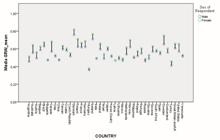
The results, presented in Figure 1, show that women are more likely to hold egalitarian views than men in all countries. This trend is especially pronounced among women in Denmark, Iceland, Sweden, Finland, Norway, Germany, Canada, Brazil, France, Ireland, Great Britain, and the United States. Among men, Denmark, Iceland, and Sweden remain the leaders, but Brazil surpasses Finland, Germany, Norway, and France. When comparing the differences between men and women, Bulgaria, Latvia, and India exhibit the smallest gender gaps, while Sweden and Canada show the largest. Thus, smaller gender differences are typically found in more traditional contexts, where women hold views as traditional as men. Conversely, larger differences are typically observed in more egalitarian contexts, where there is a more pronounced denaturalization and rejection of traditional gender roles among women.
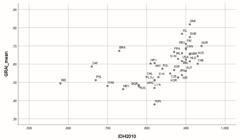
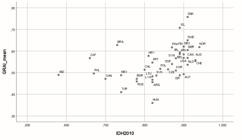
Figures 2 and 3 show the relationship between gender attitudes and the HDI for women and men, respectively. The data indicates that higher HDI scores correlate with a greater propensity for more egalitarian attitudes. This correlation is significant and stronger for women (ρ = 0.57) than for men (ρ = 0.45).
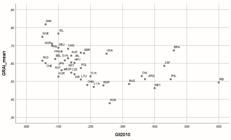
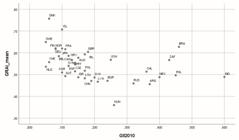
The relationship between the GAI and the GII, illustrated in figures 4 and 5, reveals a predictable pattern: countries that score higher on general gender equality indicators also tend to have more progressive attitudes toward gender. The correlation is stronger for women (ρ = 0.53) compared to men (ρ = 0.45).
Domestic Labor Concentration Index for Women (DLCW)
We measured the division of domestic labor among individuals living with a partner by asking who typically performs various tasks: washing clothes, making small repairs, caring for sick family members, shopping, cleaning the house, and preparing meals.
We then created the DLCW by scoring responses as follows: If a woman answered “always/usually me” and the man answered “always/usually my partner,” we assigned a score of 1. All other responses received a score of 0, including cases where the woman said “always/usually my partner” and the man said “always/usually me,” or where both answered “both” or “other people”. Therefore, a score closer to 1 indicates a higher concentration of housework among women.
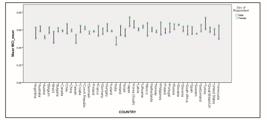
Women tend to report a higher concentration of housework on themselves than men do (see Figure 6). Japan shows the highest concentration of housework among women, as identified by both women and men. The countries with the greatest discrepancies - where men reported a lower concentration of housework on women compared to women’s reports - are Mexico, Brazil, Argentina, Venezuela, and Turkey, with France closely following.
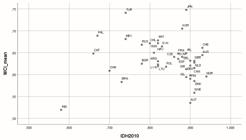
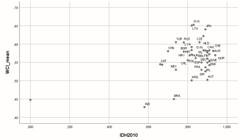
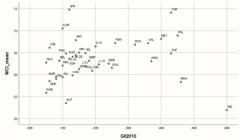
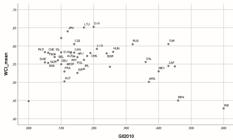
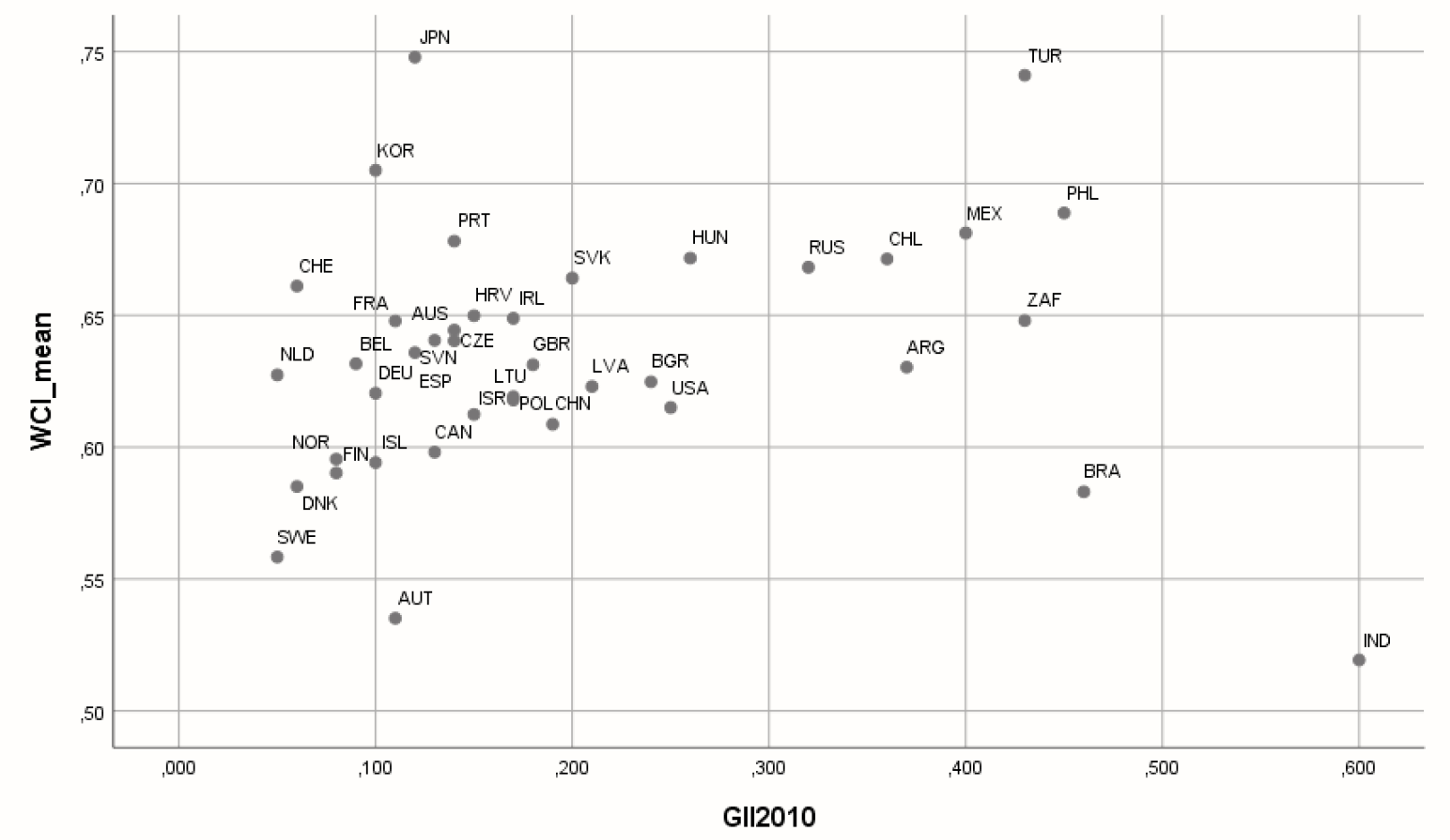
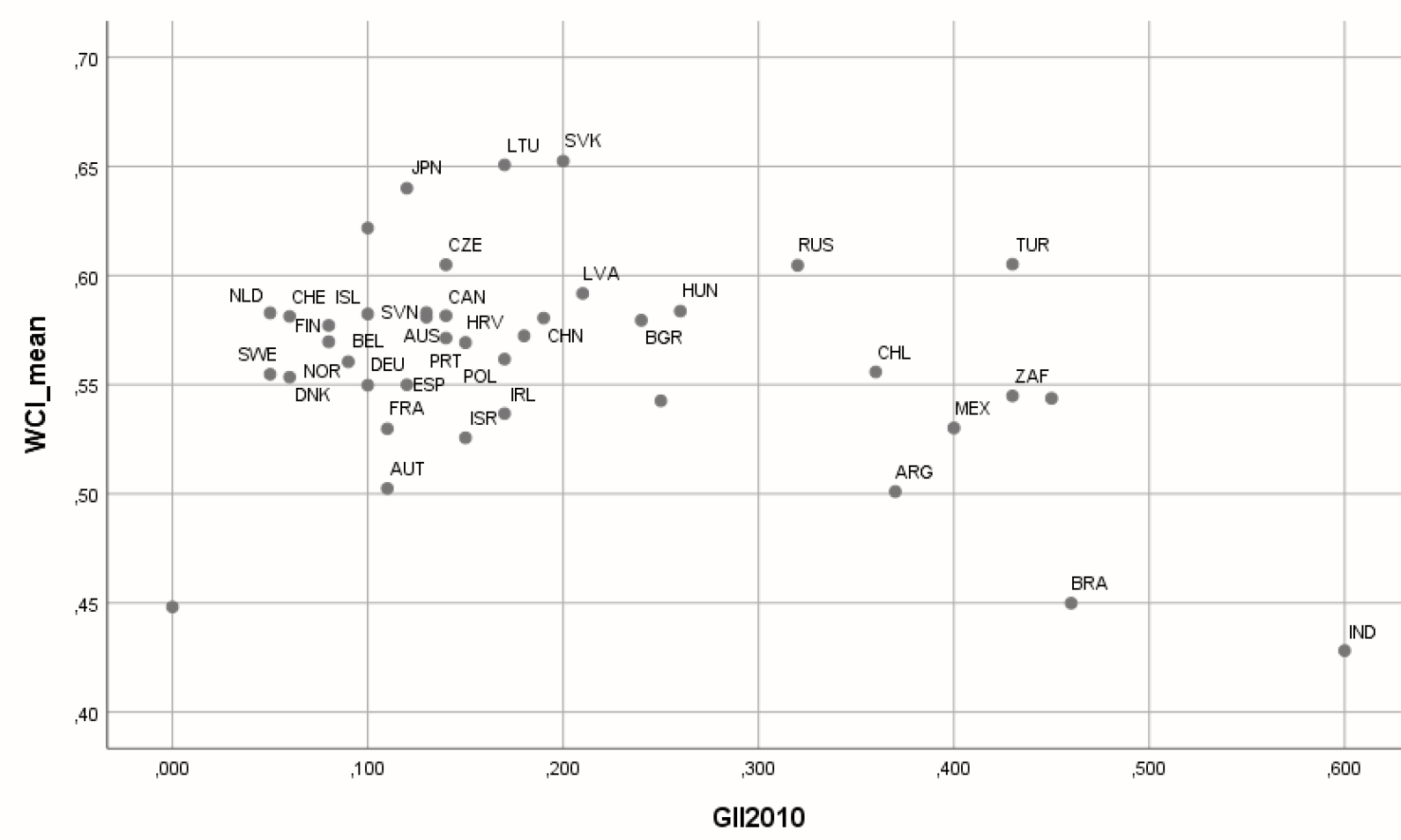
The analysis of the relationship between the DLCW and HDI, presented in figures 7 and 8, indicates no linear correlation for women, as the coefficient was not significant. For men, the coefficient was significant but very low. Therefore, human development and the concentration of domestic labor among women do not correlate in the same way as gender attitudes.
The correlation between the DLCW and the GII, as shown in figures 9 and 10, is not significant for women, but is significant for men. This means that women generally report a higher concentration of housework, regardless of the socioeconomic and gender inequalities reflected by the indices. Conversely, men’s perceptions of domestic labor concentration vary depending on the context.
Method and findings
Lachance-Grzela and Bouchard (2010) have challenged existing research on the division of domestic labor by summarizing studies that explore the effects of both micro (individual-level) and macro (national-level) factors. Their review revealed a lack of consensus in the literature. While many studies have found that more gender-equal national contexts positively impact the division of housework, other analyses suggest that countries with extensive family support policies (such as schools, daycares, and parental leave) do not necessarily see a corresponding increase in men’s involvement in care and domestic labor. Instead, women continue to bear the majority of these responsibilities. Therefore, contexts can have varying effects on the division of domestic labor, either promoting greater equality or reinforcing existing inequalities. As a result, higher levels of female education do not always reduce the domestic labor burden on women, and more favorable contexts for women do not always lead to a more equitable distribution of domestic and care tasks. Studies that focus only on individual-level factors (micro) often overlook the influence of national contexts. Conversely, analyses at the aggregate level (macro) frequently fail to explore or even consider the effects of individual variables.
To tackle this challenge, as noted earlier, much of the literature has relied on multilevel regression models. These models allow researchers to estimate overall patterns in the responses across countries while also capturing the unique characteristics of each context (Hox & Maas, 2002; Duncan et al., 1998). By doing so, they can account for both context (micro and macro-level relations) and complex structures.
Furthermore, the model offers three key advantages. First, it prevents the underestimation of issues arising from contextual variation by splitting the residual variance into intergroup (individual) and intragroup (country) components. The model incorporates both an individual-level component, representing the equation within each country, and a macro-level component, where each country’s model parameters are the responses in the global model among countries. This approach allows us to clearly separate individual factors from contextual influences (Hox & Maas, 2002; Duncan et al., 1998). Applied to the analysis of gender values and practices, the model can reveal if the internal variation within a country, measured by individual variables, remains significant when contextual variables are included in the overall model. For example, if the variation at the country level is linked to socioeconomic or gender inequalities, it may diminish or significantly decrease when the HDI and GII are included in the model. The second advantage is that this model does not require the assumption of independence between cases, which is necessary for other statistical models used in similar analyses. For instance, we expect stronger associations between countries within the same region (e.g., Brazil and Argentina in Latin America) compared to countries from different regions (e.g., Brazil and Sweden). The third advantage is that multilevel analysis does not require balanced data across groups (Hox & Maas, 2002), allowing for different numbers of respondents in each country.
The analyses below employ multilevel models, allowing us to separately estimate the impact of individual characteristics and contextual or structural factors on gender values and practices. This is made possible by considering two levels: individuals and countries, i.e., grouping respondents within their countries to investigate factors influencing gender attitudes and practices. The multilevel regression model is an extension of the classic multivariate regression model (Hox & Maas, 2002). Following the notation presented by Raudenbush and Bryk (2002), the two-level model may be formulated as follows:
Level 1 (individual: respondents)
Where:
-
Yij: represents the value of the indicator (GAI or DLCW) for person i, living in country j.
-
π0ij: represents the intercept at the individual level for person i.
-
apij: are the p = 1, ..., p characteristics (gender, age, education, etc.) of the individuals.
-
πpj: are the coefficients of the respondent-level variables a1, ..., ap, which estimate the strength and direction of the association between the characteristics of the individuals and their responses to the indices in country j.
-
eij: is the random error at the respondent level.
Each regression coefficient at the individual level can be considered fixed or random. The equation at the country level estimates this relationship:
Level 2 (group: countries)
Where:
-
αp0j: is the intercept at the country level.
-
Xqj: represents the country-level characteristics associated with the effect of the country (πpj), where each πp may have its own set of explanatory variables at the country level Xqj, such as HDI and GII.
-
αpq: are the coefficients for the country-level variables.
-
rpj: is the random error at the country level.
In multilevel regression, we estimate parameters using maximum likelihood estimation. This technique finds the parameter values that maximize the likelihood function, which measures the probability of observing the given sample based on these parameters. Essentially, maximum likelihood estimation identifies the parameter values that make it most likely to observe a sample with characteristics similar to the population under analysis (Hox & Maas, 2002).
In a multilevel analysis, we need to choose among several model options. For instance, we may select a model with both random intercepts and coefficients (more complex) or a model with only random intercepts (simpler). Additionally, we need to decide whether or not to include explanatory variables at each level and how these variables interact. To compare different models and determine which one fits the data best, we use the deviance, calculated using the following formula:
Where Likelihood is the value of the likelihood function.
In general, models with lower deviance fit the data better (Hox & Maas, 2002).
Our first step in the multilevel analysis was to assess how much of the variance in the indicators (GAI and DLCW) can be attributed to differences between countries. Multilevel analysis is preferable over multivariate regression when a substantial portion of the variance is due to country-level differences. If the country-level variance is minimal, then multivariate regression might be more suitable for examining the factors related to the indicators. To estimate the proportion of variance at each level, we start with the null model, or unconditional model (Hox & Maas, 2002; Raudenbush & Bryk, 2002). This is the simplest form of the multilevel model, as it includes only the hierarchical levels and the dependent variable, without incorporating any explanatory variables at either level.
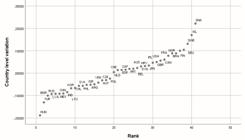
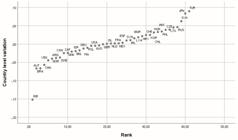
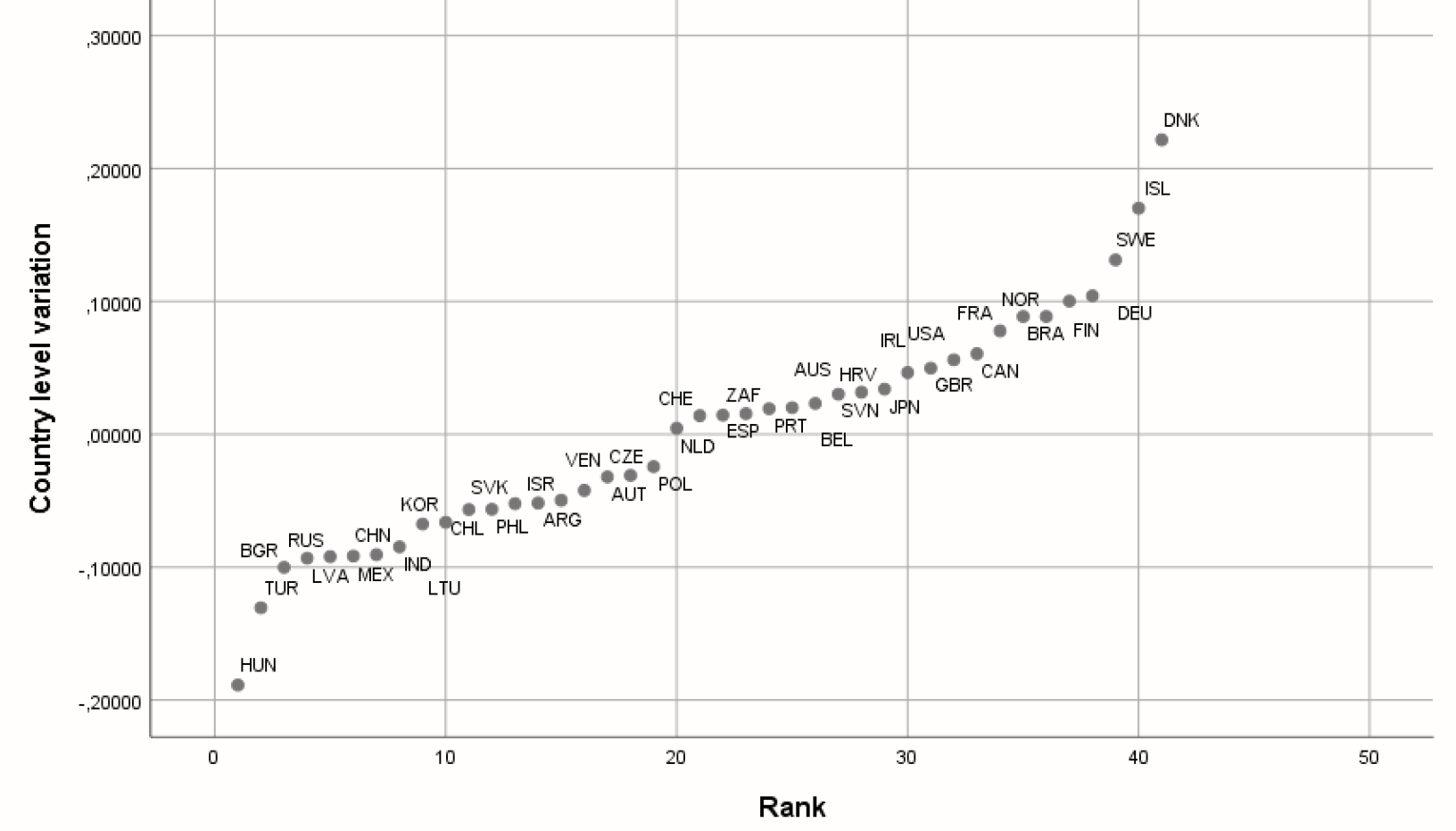
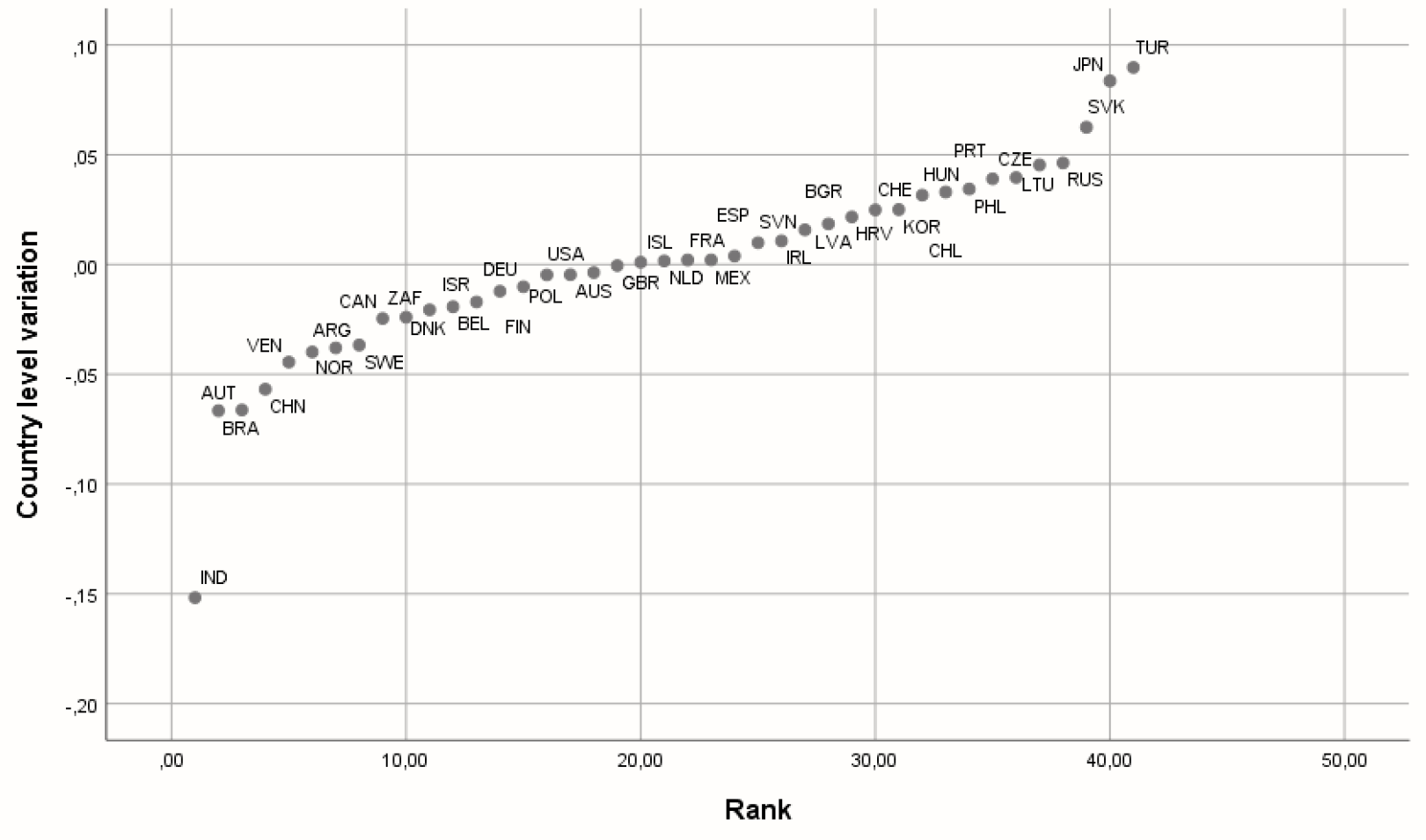
In our analysis of the null models for both the GAI and the DLCW, we found that the variation at the country level was small - 0.007 and 0.002, respectively - but statistically significant, with a p-value < 0.001. An analysis of the residuals from the null model, when compared to the average across all countries, highlights the variation at the country level. This result is shown in figures 11 and 12:
Domestic Labor Concentration Index for Women: country-level variation relative to conservatism
In both figures, the y-axis shows the difference for each country, with zero (0.000) indicating the average response across all countries for each index, while the x-axis ranks the countries. Figure 11 starts with the country displaying the most traditional responses and moves towards the one with the least traditional responses concerning gender attitudes. We thus find that Hungary (HUN) stands out with the most traditional gender values and attitudes, followed by Turkey (TUR), Bulgaria (BGR), Russia (RUS), Latvia (LVA), Mexico (MEX), and China (CHN). On the other end, Scandinavian countries such as Denmark (DK), Iceland (ISL), and Sweden (SWE) are the least conservative, followed by Germany (DEU), Norway (NOR), Finland (FIN), Brazil (BRA), and France (FRA). The average GAI scores are represented by the Netherlands (NL), Spain (ESP), Switzerland (CHE), South Africa (ZAF), Portugal (PRT), and Belgium (BEL).
Figure 12 ranks countries from those with the highest to the lowest concentration of domestic labor performed by women. Most countries are close to the average line (0.0000), indicating that the concentration of domestic labor among women is relatively uniform across countries. Countries such as the Netherlands (NED), Brazil (BRA), Austria (AUT), China (CHN), Venezuela (VEN), Norway (NOR), Argentina (ARG), and Sweden (SWE) stand out with the lowest concentration of domestic labor performed by women. In contrast, Turkey (TUR) and Japan (JPN) have the highest concentrations. Although the variation is small (0.002), it is statistically significant. Therefore, we proceeded with the multilevel analysis to control for country-level effects. However, the results should be interpreted with caution.
We included several individual variables in our model calculations: gender, age, education level, number of children under 17, hours worked in paid employment, marital status (whether living with a partner or not), religion, and religiousness (frequency of religious attendance). For the Domestic Labor Concentration Index for Women model, we also added the Gender Attitudes Index. The contextual variables included in the model were the HDI and the GII. For the individual variables, we used a stepwise method: adding one variable at a time and comparing each new model to the previous ones. We evaluated the models based on deviance, selecting those with lower deviance as the best fit for the data.
When analyzing the GAI, the variables age and number of children under 17 were not statistically significant and did not improve the model fit. Models 1, 2, and 3 in Table 1 provided the best fit for the data. Model 1 examines the correlations between gender, education, marital status, hours worked in paid work, religion, and religiousness (frequency of religious attendance). Models 2 and 3 incorporate the HDI and the GII. According to model 1, which includes respondents from all countries, the following factors are associated with more egalitarian gender attitudes: being female, not living with a partner, having a higher level of education, and working more hours in paid employment. Conversely, individuals who practice a religion and attend religious services more frequently are more likely to hold traditional gender attitudes. Among religious groups, Catholics tend to be the least traditional. Those who identify as non-religious, in turn, tend to exhibit more egalitarian gender attitudes and values. These findings are consistent with existing literature.
Our contribution to the literature is the incorporation of country-level variables, specifically the HDI and GII, as shown in models 2 and 3. Although these variables improve model fit and are statistically significant, their low coefficients suggest that they cannot fully account for the heterogeneity between countries. While context does impact gender attitudes, individual characteristics, especially higher education levels, have a much stronger effect.
Our results contrast with the findings of Edlund and Öun (2023). Their study, however, focused solely on questions about the ideal involvement of parents in paid work when they have children under 4, using per capita GDP as a contextual variable. They found that GDP affects people’s opinions about this ideal because a country’s development, through its institutions and norms, significantly impacts public perceptions of desirable behaviors and responsibilities for men and women in work and family roles. In contrast, our findings reveal that when we take into account a wider range of factors in defining gender values and measure development beyond just national GDP, the influence of context becomes more diffuse. Consequently, individual variables provide a clearer explanation for the observed differences.
When analyzing the DLCW, we excluded marital status because our questions about housework were only directed at individuals living with a partner. Additionally, age did not significantly impact the DLCW, just as it did not for the GAI. The contextual variables - HDI and GII - also showed no significant effect. Model 4 (Table 1) provided the best fit, which shows the correlations between individual-level variables: gender, education, number of children under 17, hours worked in paid employment, religion, religiousness, and the Gender Attitude Index. Women, those with children under 17, individuals with only secondary education, and those working longer hours in paid employment reported a higher concentration of domestic labor among women. On the other hand, more egalitarian gender attitudes were associated with a lower concentration of domestic work among women, with this variable having the most significant impact.
Most of the existing literature has focused on the average hours men and women spend on housework rather than on how tasks are distributed, i.e., who performs each specific task. Nevertheless, our findings are still consistent with existing literature. Mandel and Lazarus (2021) using women’s participation in the labor market as a contextual variable and the gap in hours spent on domestic labor between men and women as the dependent variable, argued that gender values are more determinant in the division of domestic labor than structural factors. Similarly, Hofäcker and Braun (2022) found that macro-level variables have little impact on domestic labor inequality, with women consistently spending more time on domestic tasks than men. They also observed that the number of hours spent on paid work is positively correlated with the number of hours spent on domestic labor, emphasizing that the issue is not just about available time but about gender values that persistently assign domestic responsibilities to women, regardless of their free time.
Concluding remarks
In this article, we analyzed trends, similarities, and particularities in values and attitudes regarding gender roles and the division of housework in Brazil and 40 other countries across different continents. Using data from the 4th round of the International Social Survey Programme (Jorat et al., 2016) and the Gender, Family, and Work survey (Araújo, Gama et al., 2018), we employed multilevel analysis to identify individual and contextual factors that influence gender values and practices.
Our findings indicate that gender, higher education levels, hours worked in paid employment, religion, and religious attendance significantly influence gender attitudes. Individuals with higher education, women, those without a spouse, and those working more hours in paid employment tend to hold more egalitarian views. Conversely, those without higher education and those attending religious events weekly are less likely to support egalitarian values. The multilevel analysis enabled us to conclude that much of the heterogeneity in gender values across countries can be attributed to respondents’ characteristics. While the Human Development Index and Gender Inequality Index contribute to the model, they do not account for all the observed differences.
When we examined the sexual division of domestic labor - focusing on who performs the tasks rather than the time spent - we included the Gender Attitude Index along with sociodemographic variables. Our findings show that, while the variation between countries is statistically significant, it is minimal, underscoring the dominant role of individual variables, particularly gender attitudes and results in the insignificance of contextual variables (HDI and GII) in the model. Women, individuals with lower education, individuals living with children under 17, and those working longer hours in paid jobs reported a higher concentration of domestic labor among women. This pattern suggests that gender values significantly influence the concentration of domestic labor on women, regardless of their participation in paid work.
Our multilevel analysis indicates that although gender values find fertile ground in countries with higher social development and greater equality for creating more diverse cultural models, domestic tasks still tend to be concentrated among women, regardless of the couples’ context. Achieving lasting gender equality requires challenging these gender values and investing in education across various national settings. This involves broadening the public debate about family roles and the private sphere to ensure all individuals share responsibility for domestic tasks.
-
1
Gesellschaft Sozialwissenschaftlicher Infrastruktureinrichtungen.
-
2
Brazil joined the ISSP in 2002 and participated in the 3rd round of the Family and Changing Gender Roles module. In 2012, when the 4th round of this module was conducted, Brazil did not have an affiliated research team. However, in 2016, although Brazil was not a member of the ISSP, some of the researchers involved in the 2002 survey, led by Clara Araújo, carried out the survey using the international standardized questionnaire from the 4th round of the module. They integrated the data from the 2016 Brazilian survey into the international database from the 4th round and presented the general findings at GESIS during Felícia Picanço’s tenure as a visiting fellow in the institution. This study resulted in a book (Araújo, Gama et al., 2018) comparing Brazil with six other countries (Chile, Spain, USA, Japan, Sweden).
-
3
Descriptive statistics for the entire database, as well as for each country included in the analysis, are available upon request from the authors.
Data availability statement
After publication, the data will be available on demand to the authors.
-
How to cite this articlePicanço, F., Covre-Sussai, M., Sento-Sé, I. V., & Araújo, C. (2024). Always the women? Values and housework division in a comparative perspective. Cadernos de Pesquisa, 54, Article e10796. https://doi.org/10.1590/1980531410796_en
References
- Altintas, E., & Sullivan, O. (2016). Fifty years of change updated: Cross-national gender convergence in housework. Demographic Research, 35, 455-470.
- Altintas, E., & Sullivan, O. (2017). Trends in fathers’ contribution to housework and childcare under different welfare policy regimes. Social Politics: International Studies in Gender, State & Society, 24(1), 81-108.
- Araújo, C., Gama, A., Picanço, F., & Cano, I. (Orgs.). (2018). Gênero, família, e trabalho no Brasil do século XXI [Base de dados]. Gramma.
- Araújo, C., Picanço, F., Cano, I., Veiga, A., & Gama, A. (2018). Evolução das percepções de gênero, trabalho e família no Brasil: 2003-2016. In C. Araújo, A. Gama, F. Picanço, & I. Cano (Orgs.), Gênero, família e trabalho no Brasil do século XXI (pp. 1-82) [Base de dados]. Gramma.
- Araújo, C., & Veiga, A. D. E. C. (2017). Um difícil equilíbrio: Vida familiar e trabalho remunerado de mulheres e homens no estado do Rio de Janeiro. In C. Araújo, & A. Gama (Orgs.), Entre a casa e o trabalho: Gênero e família no Rio de Janeiro (pp. 41-83). ABE Gráfica e Editora.
- Artis, J. E., & Pavalko, E. K. (2003). Explaining the decline in women’s household labor: Individual change and cohort differences. Journal of Marriage and Family, 65(3), 746-761.
- Barone, C., & Assirelli, G. (2020). Gender segregation in higher education: An empirical test of seven explanations. Higher Education, 79, 55-78.
- Bianchi, S. M., Sayer, L. C., Milkie, M. A., & Robinson, J. P. (2012). Housework: Who did, does or will do it, and how much does it matter? Social Forces, 91(1), 55-63.
-
Boehnke, M. (2011). Gender role attitudes around the globe: Egalitarian vs. Traditional views. Asian Journal of Social Science, 39(1), 57-74. https://www.jstor.org/stable/43500538
» https://www.jstor.org/stable/43500538 - Bolzendahl, C. I., & Myers, D. J. (2004). Feminist attitudes and support for gender equality: Opinion change in women and men, 1974-1998. Social Forces, 83(2), 759-789.
- Charles, M., & Bradley, K. (2009). Indulging our gendered selves? Sex segregation by field of study in 44 countries. American Journal of Sociology, 114(4), 924-976.
- Chatillon, A., Charles, M., & Bradley, K. (2018). Gender ideologies. In B. J. Risman, C. M. Froyum, & W. J. Scarborough (Eds.), Handbook of the sociology of gender (pp. 217-226). Springer.
-
Coltrane, S. (2000). Research on household labor: Modeling and measuring the social embeddedness of routine family work. Journal of Marriage and Family, 62(4), 1208-1233. https://doi.org/10.1111/j.1741-3737.2000.01208.x
» https://doi.org/10.1111/j.1741-3737.2000.01208.x - Constantin, A., & Voicu, M. (2015). Attitudes towards gender roles in cross-cultural surveys: Content validity and cross-cultural measurement invariance. Social Indicators Research, 123(3), 733-751.
- Crompton, R., Brockmann, M., & Lyonette, C. (2005). Attitudes, women’s employment and the domestic division of labour: A cross-national analysis in two waves. Work, Employment and Society, 19(2), 213-233.
- Crompton, R., & Lyonette, C. (2005). The new gender essentialism - Domestic and family ‘choices’ and their relation to attitudes 1. The British Journal of Sociology, 56(4), 601-620.
- Davidov, E., Datler, G., Schmidt, P., & Schwartz, S. H. (2010). Testing the invariance of values in the Benelux countries with the European Social Survey: Accounting for ordinality. In E. Davidov, P. Schmidt, & J. Billiet, Cross-Cultural analysis: Methods and applications (pp. 149-168). Routledge.
- Davis, S. N., & Greenstein, T. N. (2004). Cross-national variations in the division of household labor. Journal of Marriage and Family, 66(5), 1260-1271.
- Davis, S. N., & Greenstein, T. N. (2009). Gender ideology: Components, predictors, and consequences. Annual Review of Sociology, 35, 87-105.
- Droogenbroeck, F. van, & Spruyt, B. (2021). Social pressure for religious conformity and anti-gay sentiment among Muslim and Christian youth. In X. Kuang, J. Zhu, & K. J. Kennedy (Eds.), Civic learning for alienated, disaffected and disadvantaged students (pp. 87-108). Routledge.
- Duncan, C., Jones, K., & Moon, G. (1998). Context, composition and heterogeneity: Using multilevel models in health research. Social Science & Medicine, 46(1), 97-117.
-
Edlund, J., & Öun, I. (2023). Equal sharing or not at all caring? Ideals about fathers’ family involvement and the prevalence of the second half of the gender revolution in 27 societies. Journal of Family Studies, 29(6), 2576-2599. https://doi.org/10.1080/13229400.2023.2179531
» https://doi.org/10.1080/13229400.2023.2179531 - Fan, P. L., & Marini, M. M. (2000). Influences on gender-role attitudes during the transition to adulthood. Social Science Research, 29(2), 258-283.
- Fortin, N. M. (2005). Gender role attitudes and the labour-market outcomes of women across OECD countries. Oxford Review of Economic Policy, 21(3), 416-438.
- Fuwa, M. (2004). Macro-level gender inequality and the division of household labor in 22 countries. American Sociological Review, 69(6), 751-767.
- Goossen, M. (2020). The gender gap in welfare state attitudes in Europe: The role of unpaid labour and family policy. Journal of European Social Policy, 30(4), 452-466.
- Greenstein, T. N. (2000). Economic dependence, gender, and the division of labor in the home: A replication and extension. Journal of Marriage and Family, 62(2), 322-335.
-
Gubernskaya, Z. (2010). Changing attitudes toward marriage and children in six countries. Sociological Perspectives, 53(2), 179-200. https://doi.org/10.1525/sop.2010.53.2.179
» https://doi.org/10.1525/sop.2010.53.2.179 - Haas, B. (2005). The work-care balance: Is it possible to identify typologies for cross-national comparisons? Current Sociology, 53(3), 487-508.
- Hagqvist, E. (2018). Toward gender equality in practice? Cross-national patterns of change in the gendered division of housework over two decades. Journal of Comparative Family Studies, 49(3), 355-377.
-
Hirata, H., & Kergoat, D. (2007). Novas configurações da divisão sexual do trabalho. Cadernos de Pesquisa, 37(132), 595-609. https://doi.org/10.1590/S0100-15742007000300005
» https://doi.org/10.1590/S0100-15742007000300005 - Hofäcker, D., & Braun, S. (2022). The household division of labour in Europe: A multilevel perspective. In S. Bertolini, & B. Poggio, Research handbook on work-life balance: Emerging issues and methodological challenges (Chapter 7). Edward Elgar Publishing.
- Hong, I., Kang, J. Y., & Lee, J. (2023). Better job prospects or an imperative to ‘just work’? A cross-national study on social investment and women’s employment. International Journal of Social Welfare, 32(3), 383-421.
- Hox, J. J., & Maas, C. J. (2002). Sample sizes for multilevel modeling. In Social Science Methodology in the New Millennium: Proceedings of the Fifth International Conference on Logic and Methodology (pp. 1-19). Leske & Budrich Verlag.
- Inglehart, R., & Norris, P. (2003). Rising tide: Gender equality and cultural change around the world Cambridge University Press.
- Inglehart, R., & Welzel, C. (2005). Modernization, cultural change, and democracy: The human development sequence (Vol. 333). Cambridge University Press.
-
Jorat, J. R., Evans, A., Höllinger, F. (2016). International Social Survey Programme: Family and Changing Gender Roles IV - ISSP 2012. GESIS Data Archive https://doi.org/10.4232/1.12661
» https://doi.org/10.4232/1.12661 - Khamis, N., & Ayuso, L. (2022). Female breadwinner: More egalitarian couples? An international comparison. Journal of Family and Economic Issues, 43(3), 534-545.
- Knudsen, K., & Wærness, K. (2001). National context, individual characteristics and attitudes on mothers’ employment: A comparative analysis of Great Britain, Sweden and Norway. Acta Sociologica, 44(1), 67-79.
-
Knudsen, K., & Wærness, K. (2008). National context and spouses’ Housework in 34 countries. European Sociological Review, 24(1), 97-113. https://doi.org/10.1093/esr/jcm037
» https://doi.org/10.1093/esr/jcm037 - Kroska, A., & Elman, C. (2009). Change in attitudes about employed mothers: Exposure, interests, and gender ideology discrepancies. Social Science Research, 38(2), 366-382.
-
Lachance-Grzela, M., & Bouchard, G. (2010). Why do women do the lion’s share of housework? A decade of research. Sex Roles, 63(11), 767-780. https://doi.org/10.1007/s11199-010-9797-z
» https://doi.org/10.1007/s11199-010-9797-z - Landwerlin, G. M., Balsas, P. R., & García, J. R. (2020). Permisos para el cuidado de niños destinados a los padres: Evolución y sus efectos en la corresponsabilidad familiar. In K. Batthyány (Coord.), Miradas latinoamericanas a los cuidados (pp. 159-186). Clacso.
- Lee, K. S. (2010). Gender, care work, and the complexity of family membership in Japan. Gender & Society, 24(5), 647-671.
- Levanon, A., & Grusky, D. B. (2016). The persistence of extreme gender segregation in the twenty-first century. American Journal of Sociology, 122(2), 573-619.
- Lomazzi, V., Israel, S., & Crespi, I. (2018). Gender equality in Europe and the effect of work-family balance policies on gender-role attitudes. Social Sciences, 8(1), Article 5.
-
Lomazzi, V., & Seddig, D. (2020). Gender role attitudes in the International Social Survey Programme: Cross-national comparability and relationships to cultural values. Cross-Cultural Research, 54(4), 398-431. https://doi.org/10.1177/1069397120915454
» https://doi.org/10.1177/1069397120915454 - Mandel, H., & Lazarus, A. (2021). Contextual effects on the gendered division of housework: A cross-country and cross-time analysis. Sex Roles, 85(3-4), 205-220.
- Mandel, H., Lazarus, A., & Shaby, M. (2020). Economic exchange or gender identities? Housework division and wives’ economic dependency in different contexts. European Sociological Review, 36(6), 831-851.
- Oláh, L. S., Vignoli, D., & Kotowska, I. E. (2021). Gender roles and families. In K. F. Zimmermann (Ed.), Handbook of Labor, Human Resources and Population Economics (pp. 1-28). Springer.
-
Picanço, F., Araújo, C. M. O., & Covre-Sussai, M. (2021). Papéis de gênero e divisão das tarefas domésticas segundo gênero e cor no Brasil: Outros olhares sobre as desigualdades. Revista Brasileira de Estudos de População, 38, Artigo e0177. https://doi.org/10.20947/s0102-3098a0177
» https://doi.org/10.20947/s0102-3098a0177 - Platt, L., & Polavieja, J. (2016). Saying and doing gender: Intergenerational transmission of attitudes towards the sexual division of labour. European Sociological Review, 32(6), 820-834.
- Quadlin, N. (2020). From major preferences to major choices: Gender and logics of major choice. Sociology of Education, 93(2), 91-109.
- Raudenbush, S. W., & Bryk, A. S. (2002). Hierarchical linear models: Applications and data analysis methods (Vol. 1). Sage.
-
Sjöberg, O. (2004). The role of family policy institutions in explaining gender-role attitudes: A comparative multilevel analysis of thirteen industrialized countries. Journal of European Social Policy, 14(2), 107-123. https://doi.org/10.1177/0958928704042003
» https://doi.org/10.1177/0958928704042003 -
Sorj, B. (2013). Arenas de cuidado nas interseções entre gênero e classe social no Brasil. Cadernos de Pesquisa, 43(149), 478-491. https://doi.org/10.1590/S0100-15742013000200006
» https://doi.org/10.1590/S0100-15742013000200006 - Stickney, L. T., & Konrad, A. M. (2007). Gender-role attitudes and earnings: A multinational study of married women and men. Sex Roles, 57, 801-811.
- Therborn, G. (2004). Between sex and power: Family in the world 1900-2000 Routledge.
- Vespa, J. (2009). Gender ideology construction: A life course and intersectional approach. Gender & Society, 23(3), 363-387.
-
Yucel, D., & Chung, H. (2021). Working from home, work-family conflict, and the role of gender and gender role attitudes. Community Work & Family, 26(2), 190-221. https://doi.org/10.1080/13668803.2021.1993138
» https://doi.org/10.1080/13668803.2021.1993138

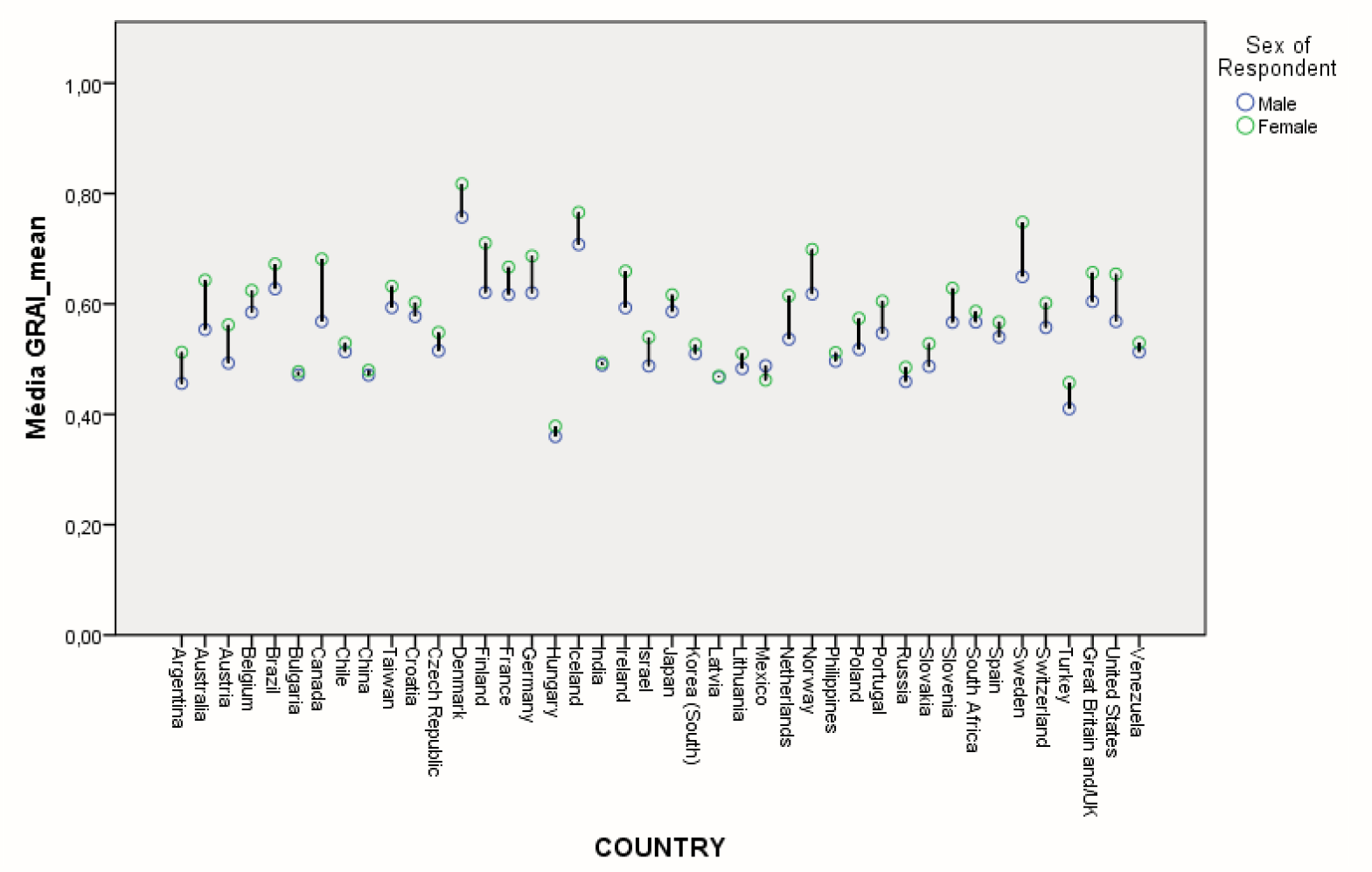 Source: Authors’ elaboration based on data from Family and Changing Gender Roles - ISSP (
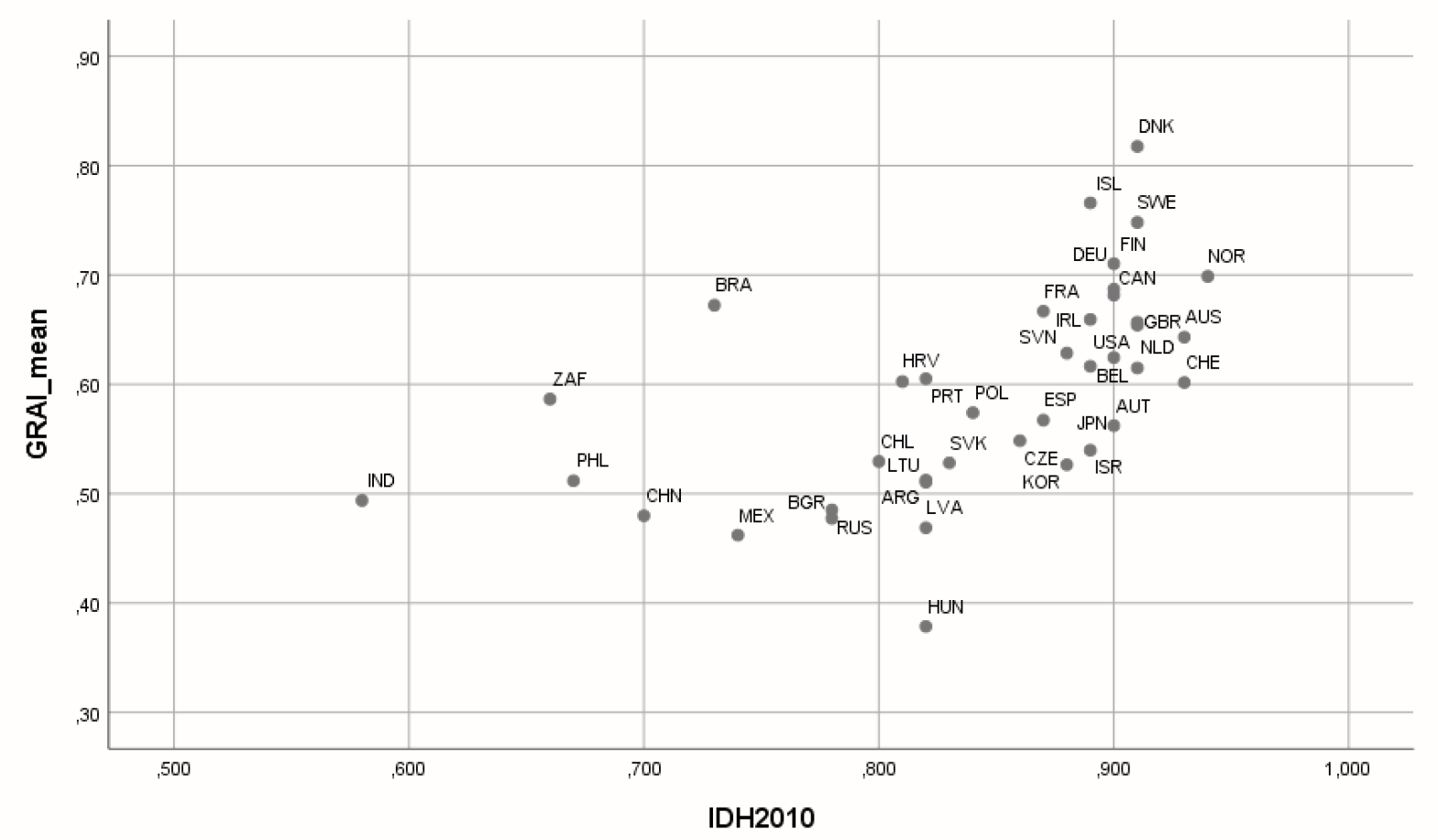 Source: Authors’ elaboration based on data from Family and Changing Gender Roles - ISSP (
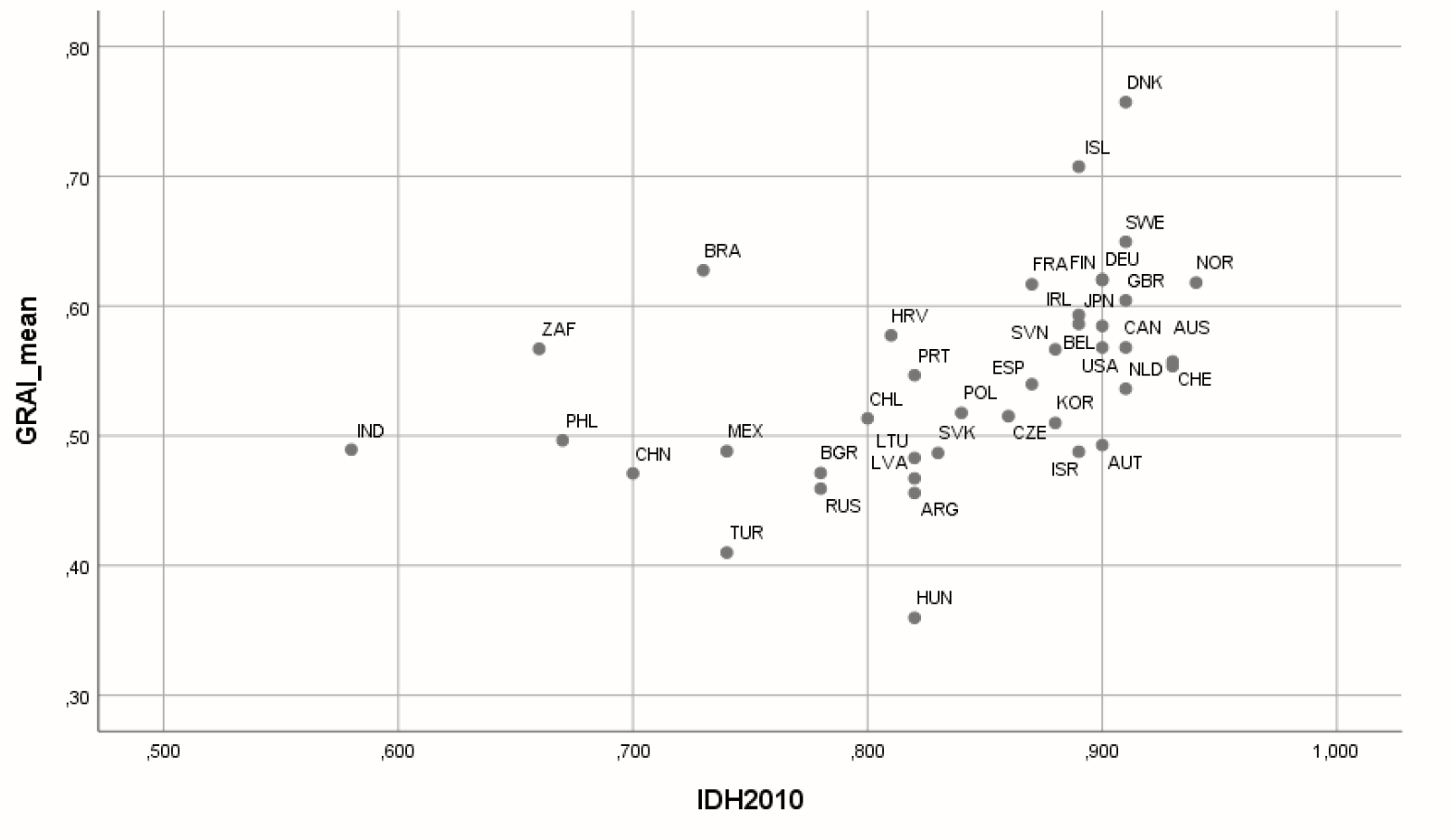 Source: Authors’ elaboration based on data from Family and Changing Gender Roles - ISSP (
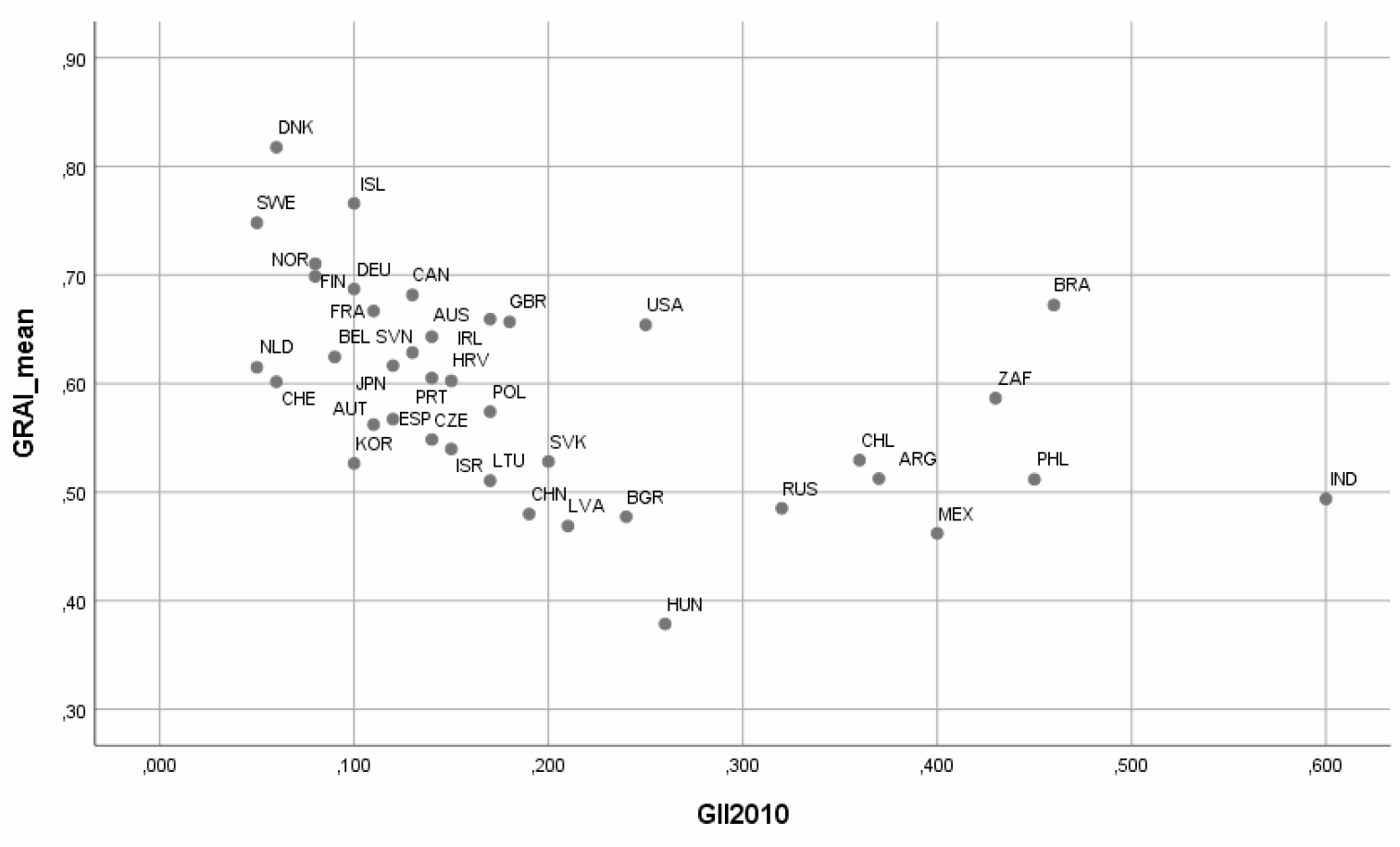 Source: Authors’ elaboration based on data from Family and Changing Gender Roles - ISSP (
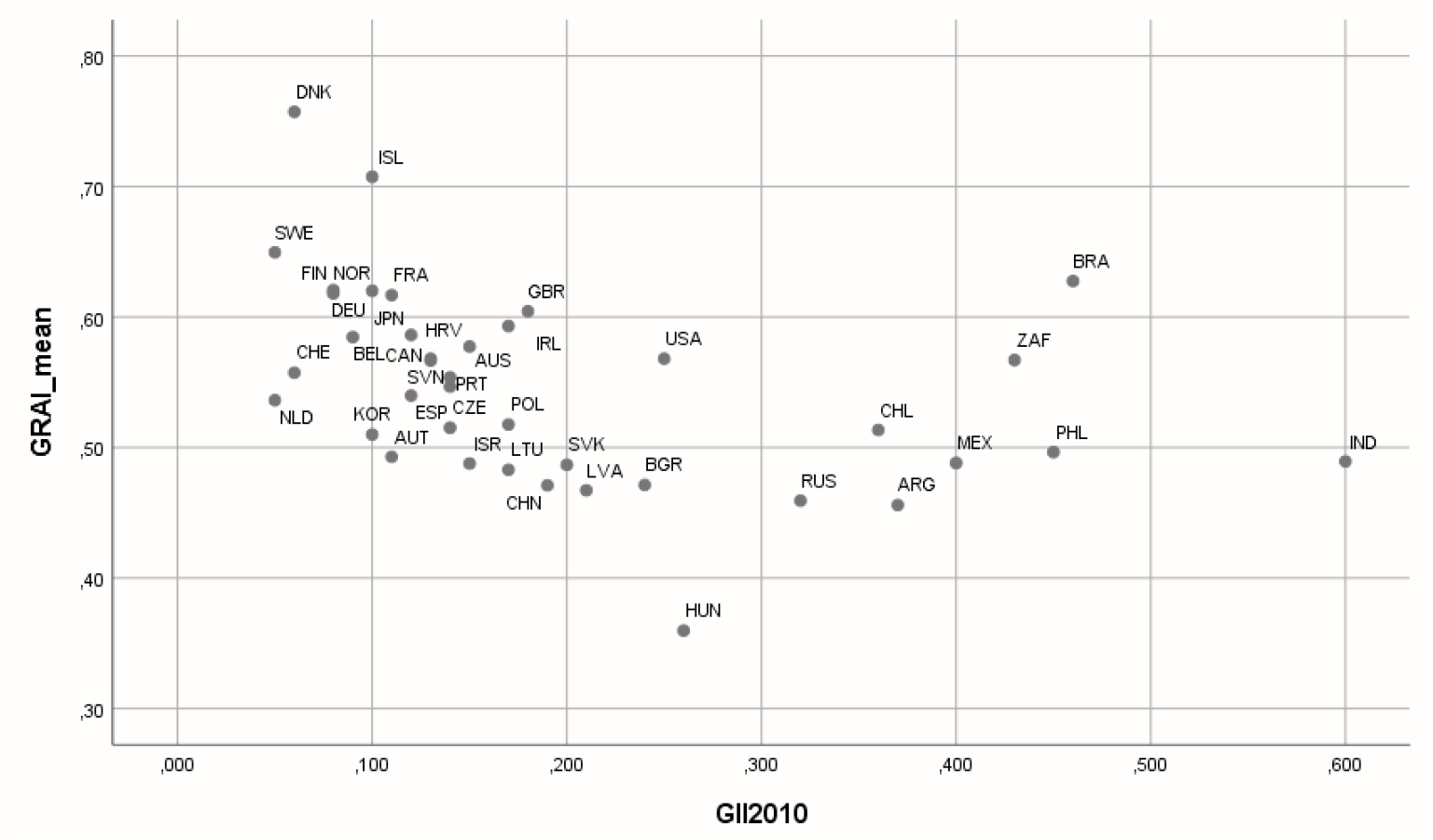 Source: Authors’ elaboration based on data from Family and Changing Gender Roles - ISSP (
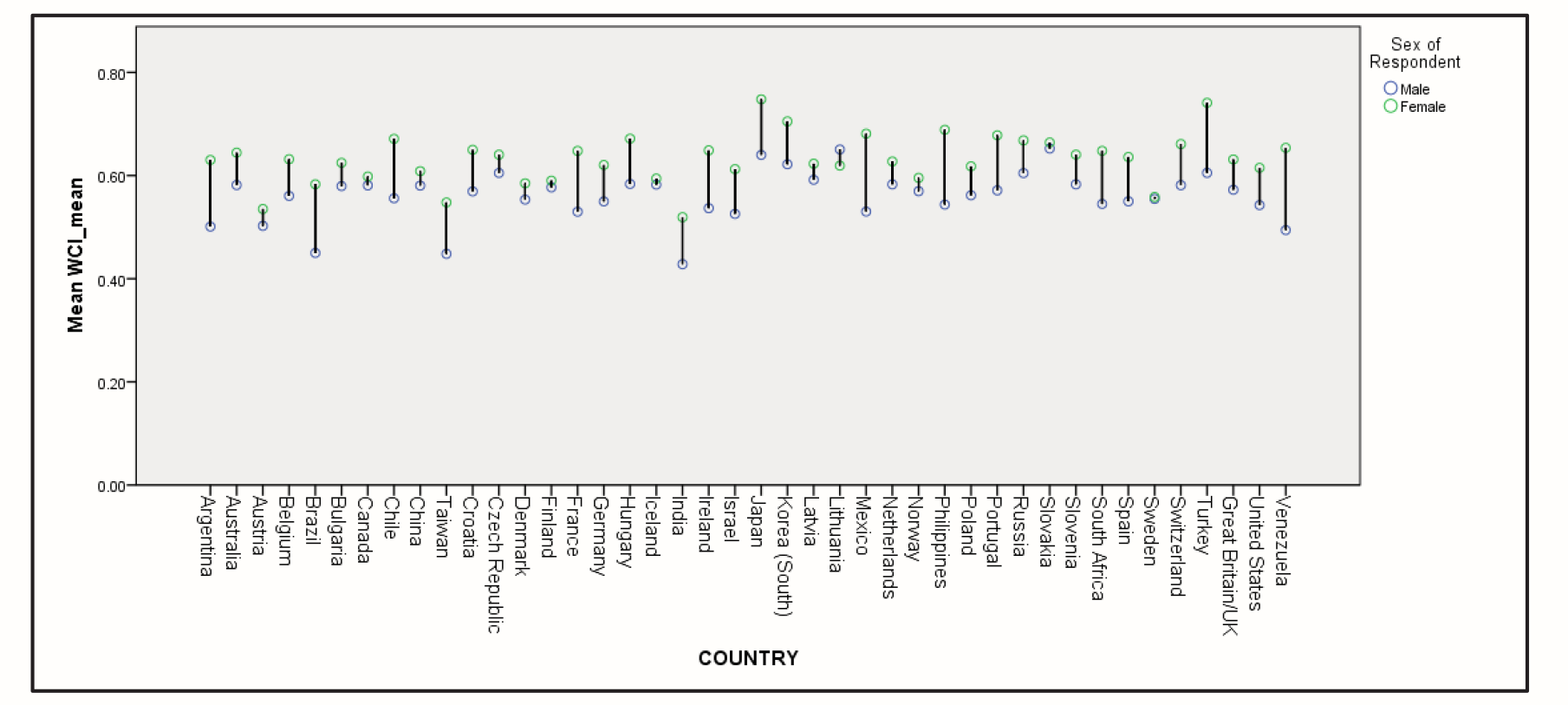 Source: Authors’ elaboration based on data from Family and Changing Gender Roles - ISSP (
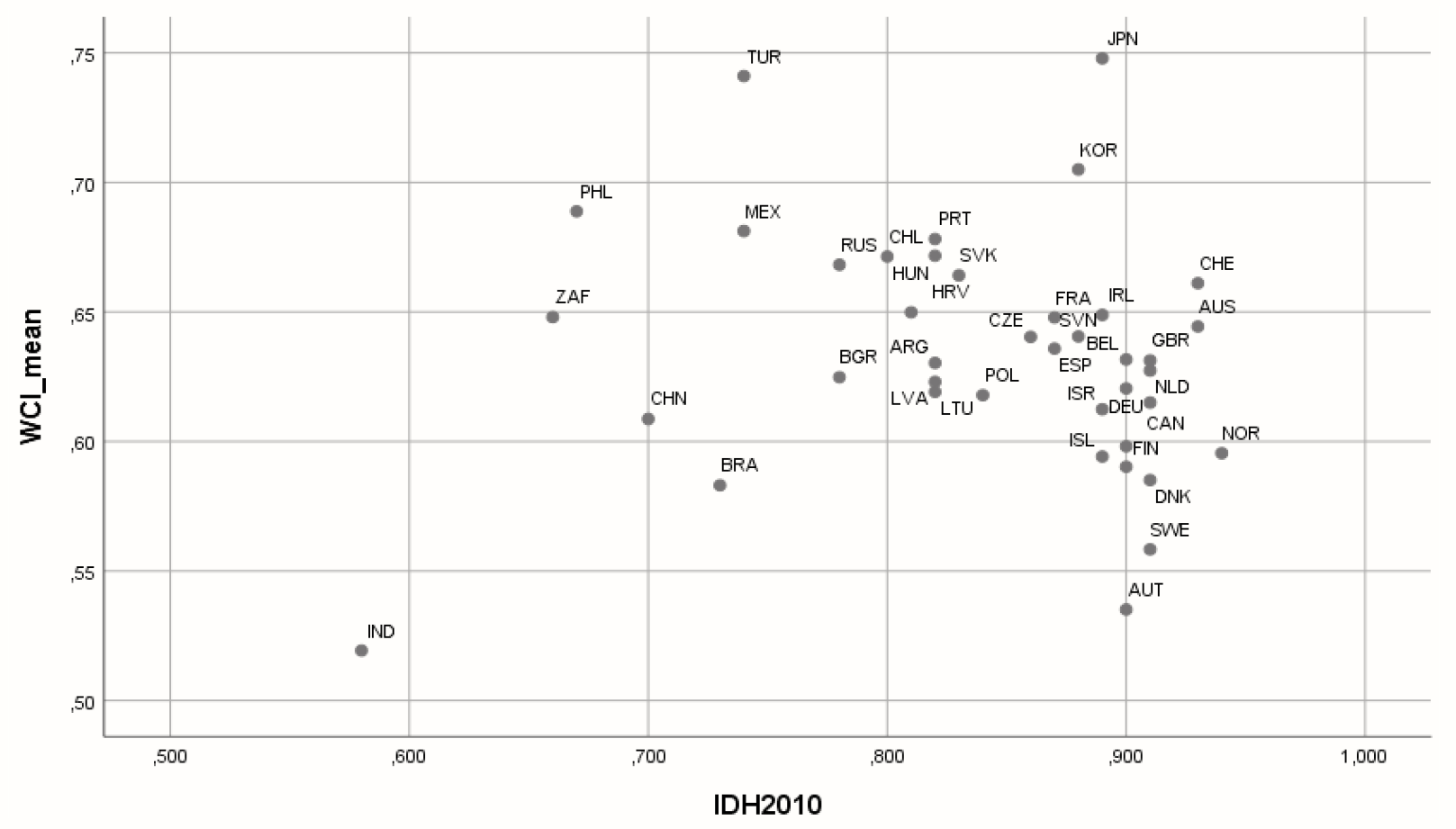 Source: Authors’ elaboration based on data from Family and Changing Gender Roles - ISSP (
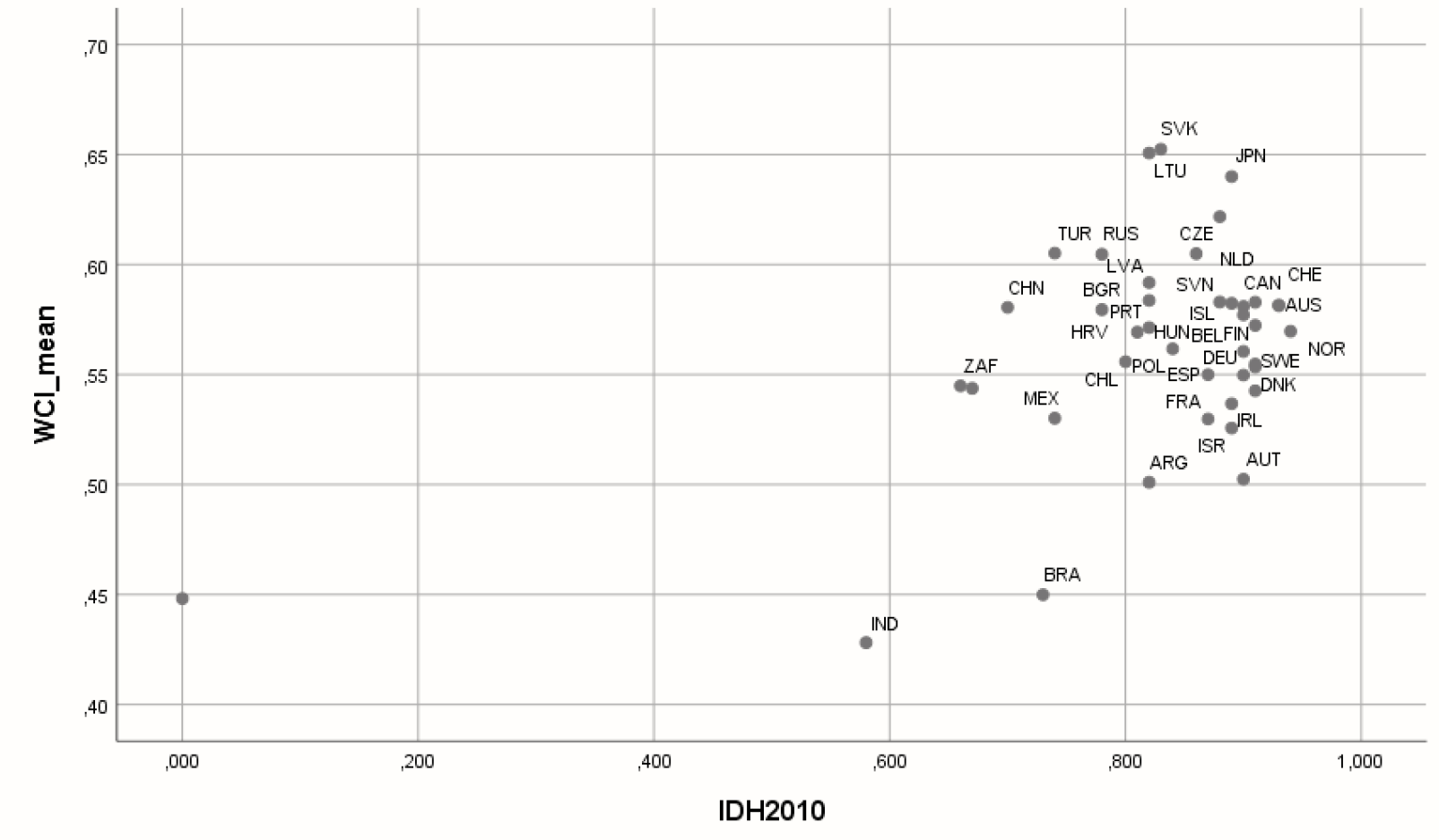 Source: Authors’ elaboration based on data from Family and Changing Gender Roles - ISSP (
 Source: Authors’ elaboration based on data from Family and Changing Gender Roles - ISSP (
 Source: Authors’ elaboration based on data from Family and Changing Gender Roles - ISSP (
 Source: Authors’ elaboration based on data from Family and Changing Gender Roles - ISSP (
 Source: Authors’ elaboration based on data from Family and Changing Gender Roles - ISSP (