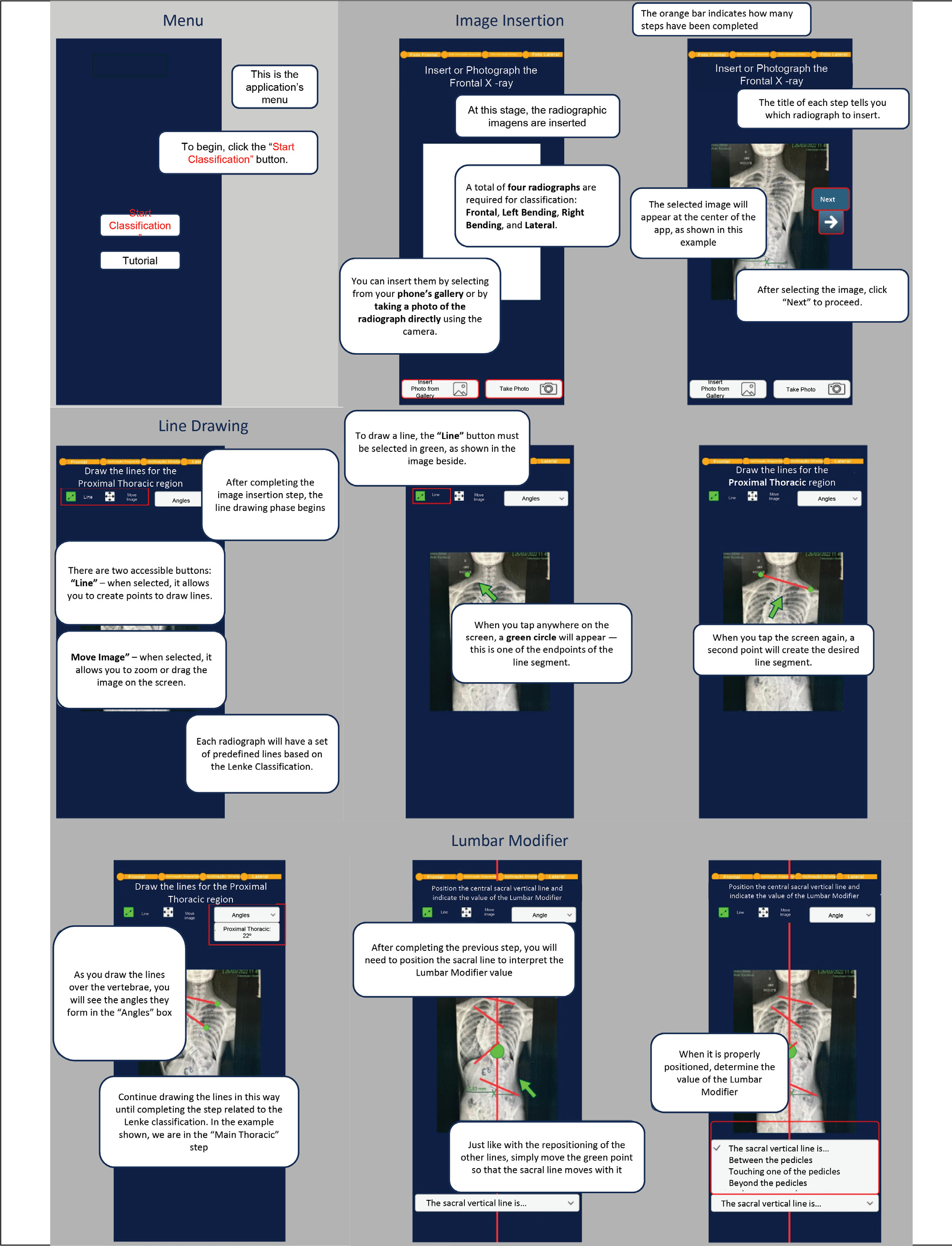
 DEVELOPMENT AND PILOT VALIDATION OF AN EDUCATIONAL APPLICATION FOR RADIOGRAPHIC ASSESSMENT OF ADOLESCENT IDIOPATHIC SCOLIOSIS
Objective: To develop an educational application for teaching the measurement and classification of Adolescent Idiopathic Scoliosis (AIS), and to conduct its pilot validation with experts.
Methods: This was a cross-sectional, descriptive, and analytical study with a quantitative-qualitative approach and a focus on teaching. The project was approved by the Research Ethics Committee of CESUPA (approval no. 6.454.954). A Likert scale was used for evaluation, and statistical analysis was performed using SPSS software. The Content Validity Index (CVI) was calculated, with ≥ 0.70 considered satisfactory. Fifteen spine surgery specialists participated in the study.
Results: The overall CVI was 0.803. The highest-rated items were “The application is appropriate for its intended purpose” and “The application is intuitive,” both with a CVI of 0.87. The lowest-rated item was “It is possible to enlarge the image for better visualization of anatomical structures,” with a CVI of 0.50.
Conclusion: The application showed satisfactory content validity among Orthopaedics and Traumatology specialists, supporting its potential as a didactic tool for teaching radiographic evaluation of AIS. Technical limitations identified indicate opportunities for improvement in future versions, along with the need for further clinical validation. Level of Evidence III; Comparativee Retrospectivef Study.
Keywords:
Digital Technology; Mobile Device; Scoliosis; Education; Medical; Orthopaedics.
 Thumbnail