 DEVELOPMENT AND PILOT VALIDATION OF AN EDUCATIONAL APPLICATION FOR RADIOGRAPHIC ASSESSMENT OF ADOLESCENT IDIOPATHIC SCOLIOSIS
ABSTRACT
Objective: To develop an educational application for teaching the measurement and classification of Adolescent Idiopathic Scoliosis (AIS), and to conduct its pilot validation with experts.
Methods: This was a cross-sectional, descriptive, and analytical study with a quantitative-qualitative approach and a focus on teaching. The project was approved by the Research Ethics Committee of CESUPA (approval no. 6.454.954). A Likert scale was used for evaluation, and statistical analysis was performed using SPSS software. The Content Validity Index (CVI) was calculated, with ≥ 0.70 considered satisfactory. Fifteen spine surgery specialists participated in the study.
Results: The overall CVI was 0.803. The highest-rated items were “The application is appropriate for its intended purpose” and “The application is intuitive,” both with a CVI of 0.87. The lowest-rated item was “It is possible to enlarge the image for better visualization of anatomical structures,” with a CVI of 0.50.
Conclusion: The application showed satisfactory content validity among Orthopaedics and Traumatology specialists, supporting its potential as a didactic tool for teaching radiographic evaluation of AIS. Technical limitations identified indicate opportunities for improvement in future versions, along with the need for further clinical validation. Level of Evidence III; Comparativee Retrospectivef Study.
Keywords:
Digital Technology; Mobile Device; Scoliosis; Education; Medical; Orthopaedics.
RESUMO
Objetivo: Desenvolver um aplicativo educacional para o ensino da mensuração e classificação da Escoliose Idiopática do Adolescente (EIA), bem como realizar sua validação-piloto com especialistas.
Método: Estudo transversal, descritivo e analítico, com abordagem quanti-qualitativa e ênfase no ensino. O projeto foi aprovado pelo Comitê de Ética do CESUPA (parecer nº 6.454.954). Utilizou-se escala Likert para avaliação dos itens, com análise estatística realizada pelo software SPSS. O Índice de Validade de Conteúdo (IVC) foi calculado, considerando-se satisfatório o valor ≥ 0,70. Participaram 15 especialistas em cirurgia de coluna.
Resultados: O IVC total obtido foi de 0,803. Os itens mais bem avaliados foram “O aplicativo é adequado para a proposta a que se destina” e “O aplicativo é intuitivo”, ambos com um CVI de 0,87. O item com menor índice foi “É possível ampliar a imagem para melhor visualização das estruturas anatômicas”, com IVC de 0,50.
Conclusão: O aplicativo apresentou validade de conteúdo satisfatória entre especialistas em Ortopedia e Traumatologia, reforçando seu potencial como ferramenta didática no ensino da avaliação radiográfica da EIA. As limitações técnicas observadas apontam para oportunidades de aprimoramento em versões futuras, com necessidade de validações clínicas complementares. Nível de Evidência III; Estudo Retrospectivof Comparativoe.
Descritores:
Tecnologia Digital; Dispositivo Móvel; Escoliose; Educação Médica; Ortopedia.
RESUMEN
Objetivo: Desarrollar una aplicación educativa para la enseñanza de la medición y clasificación de la Escoliosis Idiopática del Adolescente (EIA), así como realizar su validación piloto con especialistas.
Métodos: Estudio transversal, descriptivo y analítico, con enfoque cuantitativo-cualitativo y énfasis en la enseñanza. El proyecto fue aprobado por el Comité de Ética en Investigación del CESUPA (n.º de aprobación 6.454.954). Se utilizó una escala de Likert para la evaluación, y el análisis estadístico se realizó mediante el software SPSS. Se calculó el Índice de Validez de Contenido (IVC), considerando satisfactorio un valor ≥ 0,70. Participaron 15 especialistas en cirugía de columna.
Resultados: El IVC total fue de 0,803. Los ítems mejor evaluados fueron “La aplicación es adecuada para el propósito al que se destina” y “La aplicación es intuitiva”, ambos con un IVC de 0,87. El ítem con menor puntuación fue “Es posible ampliar la imagen para una mejor visualización de las estructuras anatómicas”, con un IVC de 0,50.
Conclusión: La aplicación mostró una validez de contenido satisfactoria entre especialistas en Ortopedia y Traumatología, evidenciando su potencial como herramienta didáctica para la enseñanza de la evaluación radiográfica de la EIA. Las limitaciones técnicas identificadas apuntan a oportunidades de mejora en futuras versiones y a la necesidad de validaciones clínicas complementarias. Nivel de evidencia III; Estudioe Retrospectivof Comparativo.
Descriptores:
Tecnología Digital; Dispositivo Móvil; Escoliosis; Educación Médica; Ortopedia.
INTRODUCTION
Scoliosis is a three-dimensional deformity of the spine, characterized by curvatures in the frontal plane, axial rotation of the vertebrae, and changes in sagittal alignment.1-3 Among its causes, Adolescent Idiopathic Scoliosis (AIS) is the most prevalent, affecting 2% to 6% of the population between 11 and 18 years, with a predominance in females.2-4
When not diagnosed early, AIS can progress with structural deformities, chronic pain, aesthetic impairment, and significant psychological impact, affecting quality of life.1,5-8 The main tool for diagnosis and therapeutic planning is the Cobb angle, obtained through X-rays, while the Lenke classification is widely used to define the surgical strategy.3,6-10
Although essential, these methods are complex and depend on clinical experience, commonly being restricted to the practice of orthopedic surgeons and residents. This highlights a gap in medical training that can be filled with the use of educational technologies. The development of an educational app that assists in measuring and classifying AIS can facilitate the learning of fundamental concepts in orthopedics.
Thus, the present study aimed to develop and validate an educational app for measuring the Cobb angle and assisting in the Lenke classification in X-rays of patients with AIS.
METHOD
This cross-sectional, descriptive, analytical study, with a quantitative-qualitative approach, emphasized health education. It was conducted in accordance with the guidelines and regulatory standards for research involving human beings according to Resolution No. 466/2012 of the National Health Council (CNS). The study was submitted and approved by the Research Ethics Committee of the University Center of Pará (CESUPA), receiving the CAAE: 75056223.7.0000.5169 and opinion number 6.454.945.
Development of the app
Radiographic images of patients diagnosed with AIS stored in the public domain database were used, in anteroposterior and lateral panoramic incidences, from the C1 level to the sacral region and thoracolumbar spine X-rays with right and left inclination, obtained from a digital medium in “jpg” format, already previously standardized.
Inclusion criteria
Orthopedic surgeons with a focus on Spine Surgery and residency preceptors in Orthopedics and Traumatology registered with the Brazilian Society of Orthopedics and Traumatology (SBOT) and the Brazilian Spine Society (SBC) with a minimum of 5 years of experience.
Exclusion criteria
Doctors who are not specialists in Spine Surgery or in Orthopedics and Traumatology.
Doctors who are not residency preceptors in Orthopedics and Traumatology or in Spine Surgery.
Doctors with less than 5 years of experience as a residency preceptor in Orthopedics and Traumatology or Spine Surgery.
Pilot validation
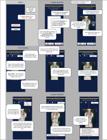
A link was provided for downloading the app, accompanied by an explanatory video about its operation and an evaluation form. The form included items related to the adequacy of the proposal, objectives, organization, layout, writing, appearance, and usability, evaluated using a Likert scale. This scale was chosen for its widespread use in validating realistic simulators, training models, research methods, and organization.11 The flowchart for using the application is shown in Figure 1.
Statistical analysis - Content validity index
The results were analyzed based on a Likert scale from 1 (strongly disagree) to 5 (strongly agree). After receiving the evaluation forms, the data were transferred to the Statistical Package for the Social Sciences (SPSS) software for organization in Tables 1 and 2, demonstrating absolute frequency and calculating the Content Validity Index (CVI). An item was considered approved if it presented a CVI greater than 0.70.12,13
Validation of content and appearance of the application according to the evaluation of specialist doctors in orthopedics and traumatology.
Validation of the application’s usability according to the evaluation of orthopedic and trauma specialist doctors.
• The calculation of the CVI: I- Calculation of the mean of the items (Mx): Based on the scores assigned by the experts, the values from 1 to 5 were transformed into scores from -2 (strongly disagree) to +2 (strongly agree). Then, the mean (Mx) for each item was calculated. Each item could receive a maximum score of 2 points. II - Calculation of the initial CVI (CVIi): The calculated mean (Mx) was divided by the maximum possible score to determine the initial CVI of each item. III - Calculation of the error (Pei): To adjust for possible biases, the error of each item was calculated by dividing 1 by the number of participants, raised to the same number of evaluators. IV- Calculation of the final CVI (CVIf): The final value of the CVI was obtained by subtracting the error (Pei) from the initial CVI (CVIi). V- Calculation of the total CVI (CVIt): The total CVI was calculated by subtracting the mean of the initial CVI (MIVC) from the mean of the error (MPei).
RESULTS
Fifteen orthopedic doctors participated in the research, selected according to the previously established inclusion criteria. The total Content Validity Index (CVI) of the application was 0.803, a value higher than the minimum established of 0.70. In the evaluation of content and appearance, the items with the highest CVI were: “the application is suitable for its intended purpose” and “the application is intuitive”, both with a CVI of 0.87. The lowest index recorded in this category was for the item “the product interface is attractive”, which obtained a CVI of 0.73.
Regarding usability, the item “the Lenke classification is described correctly” presented the highest index, with a CVI of 1.0. The items “the application allows real-time indexing of X-ray images” and “it is possible to delineate the scoliotic angles according to the Lenke classification” received a content validity index (CVI) of 0.83. The lowest index in this category was related to the item “it is possible to enlarge the image for better visualization of anatomical structures,” with a CVI of 0.50.
The consolidated data, as presented in Table 3, showed that all items, except one, obtained values above the stipulated validation limit (CVI > 0.70).
Calculation of the Content Validity Index for items 1 to 21, first evaluation of the application ScoliossisClassificator.
DISCUSSION
The incorporation of digital technologies has played an increasing role in health education, especially in the development of interactive tools aimed at clinical practice and teaching.12-16 This advancement accompanies the international movement for standardization of clinical outcomes in spinal deformities, as proposed by the Scoliosis Research Society and collaborators.1 In this context, the present study conducted a pilot validation of the mobile application ScoliosisClassificator, proposed as a didactic-pedagogical tool for measuring the Cobb angle and Lenke classification in Adolescent Idiopathic Scoliosis (AIS).
The global Content Validity Index (CVI) obtained was satisfactory (0.803), highlighting the items “adequacy to the proposal” and “intuitiveness”, both with a CVI of 0.87, which reinforces the functionality and ease of use perceived by the evaluators. On the other hand, the item “image enlargement for anatomical visualization” received the lowest score (CVI = 0.50), which may be attributed to the inherent visualization limitations of the small screens of mobile devices.17
Regarding usability, the items associated with Lenke classification, image indexing, and angle delimitation presented high scores, with CVIs ranging from 0.83 to 1.0, indicating that the main functionalities were well implemented. Such findings are consistent with previous studies that validated medical applications using the Likert scale, such as those aimed at total knee arthroplasty planning,18-20 and teaching surgical instrumentation through digital simulation.11,21
The accuracy in measuring the Cobb angle is a widely documented challenge, being the subject of systematic reviews comparing different measurement methods.9,22,23 In this context, the use of digital solutions has shown promise, with tools like the TraumaMeter, which have also demonstrated reliability and validity in the angular assessment of idiopathic scoliosis.24,25
The use of ScoliosisClassificator can benefit different levels of medical training, from undergraduate students to residents in Orthopedics and Traumatology. The literature highlights that the reduced workload of orthopedics in medical curricula contributes to the inexperience of residents at the beginning of specialization,19 and studies point to the need for resources that fill this gap in traditional theoretical training.11,20 The adoption of digital tools, such as the developed application, can promote greater engagement, interactivity, and content retention, optimizing the teaching-learning process.
Moreover, current guidelines for treating scoliosis during growth highlight the importance of early education on diagnosis and non-surgical approaches, which can be enhanced by interactive educational platforms like this one.5 Similarly, teaching the Lenke classification essential for the surgical planning of adolescent idiopathic scoliosis (AIS)10 remains challenging in undergraduate education, being more common in medical residency environments.
Despite the good acceptance of the application among evaluators, some limitations must be considered. The small number of participants (15 specialists) restricts the generalization of the results, and the absence of tests in real clinical environments prevents the analysis of the practical effectiveness of the tool, an essential step to be conducted in future studies. Additionally, technical issues such as difficulties in downloading and enlarging images were noted and should be prioritized for improvement in the next versions of the application.
Although there are other medical applications aimed at orthopedic practice, few are specifically directed at teaching the Lenke classification and measuring the Cobb angle.26 The educational focus of ScoliosisClassificator, combined with validation by specialists, gives originality and relevance to the study, especially in the current context of modernization of medical education.
In summary, even in the pilot phase, the application demonstrated potential as a complementary didactic tool in teaching AIS. The next steps should include the technical improvement of the platform, the expansion of the sample of evaluators, and the conduction of comparative studies with traditional teaching and diagnostic methods.
CONCLUSION
It is concluded that the development of the portable application ScoliosisClassificator for measuring and classifying Adolescent Idiopathic Scoliosis (AIS) was successful, achieving pilot validation of usability by specialists in Orthopedics and Traumatology. The application obtained a Content Validity Index (CVI) of 0.803, demonstrating adequacy and potential as a didactic tool. Despite the identified limitations, such as image enlargement and the download process, the results confirm its utility in medical education, with possibilities for technical improvement and future validations.
-
Reviewed by: Alexandre Fogaça
-
Study conducted by the Centro Universitário do Pará (CESUPA), Department of Spine Surgery, Av. Gov. José Malcher, 1242, Nazaré, Belém, PA, Brazil. 66060-230.
DATA AVAILABILITY DECLARATION
The contents underlying the research are available in the manuscript.
REFERENCES
-
1 de Kleuver M, Faraj SSA, Haanstra TM, Wright AK, Polly DW, van Hooff ML, et al. The Scoliosis Research Society adult spinal deformity standard outcome set. Spine Deform. 2021;9(5):1211-1221. doi: 10.1007/s43390-021-00334-2.
» https://doi.org/10.1007/s43390-021-00334-2. -
2 Dunn J, Henrikson NB, Morrison CC, Blasi PR, Nguyen M, Lin JS. Screening for Adolescent Idiopathic Scoliosis: Evidence Report and Systematic Review for the US Preventive Services Task Force. JAMA. 2018;319(2):173-187. doi: 10.1001/jama.2017.11669.
» https://doi.org/10.1001/jama.2017.11669. -
3 Konieczny MR, Senyurt H, Krauspe R. Epidemiology of adolescent idiopathic scoliosis. J Child Orthop. 2013;7(1):3-9. doi: 10.1007/s11832-012-0457-4.
» https://doi.org/10.1007/s11832-012-0457-4. -
4 Brito GCC, Rangel TAM, Pereira AFF, Ferreira MAC, Medeiros RC, Cabral LTB. Epidemiology of pediatric scoliosis in a tertiary hospital in Recife-PE. Coluna/Columna. 2024;23(1):e273475. doi: 10.1590/S1808-185120242301273475.
» https://doi.org/10.1590/S1808-185120242301273475. -
5 Negrini S, Donzelli S, Aulisa AG, Czaprowski D, Schreiber S, de Mauroy JC, et al. 2016 SOSORT guidelines: orthopaedic and rehabilitation treatment of idiopathic scoliosis during growth. Scoliosis Spinal Disord. 2018;13:3. doi: 10.1186/s13013-017-0145-8.
» https://doi.org/10.1186/s13013-017-0145-8. -
6 Nadirov N, Vissarianov S. A Comparative Study of Surgical Correction of Idiopathic Scoliosis With Spinal Transpedicular Metal Structures in Children. Front Pediatr. 2022;10:871117. doi: 10.3389/fped.2022.871117.
» https://doi.org/10.3389/fped.2022.871117. -
7 Latalski M, Danielewicz-Bromberek A, Fatyga M, Latalska M, Kröber M, Zwolak P. Current insights into the aetiology of adolescent idiopathic scoliosis. Arch Orthop Trauma Surg. 2017;137(10):1327-1333. doi: 10.1007/s00402-017-2756-1.
» https://doi.org/10.1007/s00402-017-2756-1. -
8 Théroux J, Stomski N, Hodgetts CJ, Ballard A, Khadra C, Le May S, et al. Prevalence of low back pain in adolescents with idiopathic scoliosis: a systematic review. Chiropr Man Therap. 2017;25:10. doi: 10.1186/s12998-017-0143-1.
» https://doi.org/10.1186/s12998-017-0143-1. -
9 Langensiepen S, Semler O, Sobottke R, Fricke O, Franklin J, Schönau E, Eysel P. Measuring procedures to determine the Cobb angle in idiopathic scoliosis: a systematic review. Eur Spine J. 2013;22(11):2360-71. doi: 10.1007/s00586-013-2693-9.
» https://doi.org/10.1007/s00586-013-2693-9. - 10 Lenke LG, Betz RR, Harms J, Bridwell KH, Clements DH, Lowe TG, et al. Adolescent idiopathic scoliosis: a new classification to determine extent of spinal arthrodesis. J Bone Joint Surg Am. 2001;83(8):1169-81.
-
11 Alencar Neto JB, Araújo RL, Barroso Filho EM, Silva PGB, Garrido RJ, Rocha PHM, et al. Development and validation of a smartphone application for orthopedic residency education. Rev Bras Educ Med. 2020;44:e012213. doi: 10.1590/1981-5271v44.4-20200212.ING.
» https://doi.org/10.1590/1981-5271v44.4-20200212.ING. - 12 Cassepp-Borges V, Balbinotti MA, Teodoro ML. Tradução e validação de conteúdo: uma proposta para a adaptação de instrumentos. In: Pasquali L. Instrumentação psicológica: fundamentos e práticas. Porto Alegre: Artmed; 2010. p. 506-20.
-
13 Silveira MB, Saldanha RP, Leite JCC, Silva TOFD, Silva T, Filippin LI. Construction and validation of content of one instrument to assess falls in the elderly. Einstein (Sao Paulo). 2018;16(2):eAO4154. doi: 10.1590/S1679-45082018AO4154.
» https://doi.org/10.1590/S1679-45082018AO4154. - 14 Macedo FS. Aplicativo para auxílio na avaliação de exames de imagem e tomada de decisão em ortopedia [dissertação]. Fortaleza: Centro Universitário Christus; 2020.
-
15 Elfiky T, Patil N, Shawky M, Siam A, Ragab R, Allam Y. Oxford Cobbometer Versus Computer Assisted-Software for Measurement of Cobb Angle in Adolescent Idiopathic Scoliosis. Neurospine. 2020;17(1):304-311. doi: 10.14245/ns.1938260.130.
» https://doi.org/10.14245/ns.1938260.130. -
16 Pepe M, Kocadal O, Iyigun A, Gunes Z, Aksahin E, Aktekin CN. Use of the smartphone for end vertebra selection in scoliosis. Acta Orthop Traumatol Turc. 2017;51(2):146-149. doi: 10.1016/j.aott.2016.12.006.
» https://doi.org/10.1016/j.aott.2016.12.006. -
17 Robertson GAJ, Wong SJ, Brady RR, Subramanian AS. Smartphone apps for spinal surgery: is technology good or evil? Eur Spine J. 2016;25(5):1355-1362. doi: 10.1007/s00586-015-3932-z.
» https://doi.org/10.1007/s00586-015-3932-z. -
18 Pereira FG, Rocha DJL, Melo GAA, Jaques RMPL, Formiga LMF. BUILDING AND VALIDATING A DIGITAL APPLICATION FOR THE TEACHING OF SURGICAL INSTRUMENTATION. Cogitare Enferm. 2019;24:e58334. doi: 10.5380/ce.v24i0.58334.
» https://doi.org/10.5380/ce.v24i0.58334. -
19 Camargo OP. O ensino da ortopedia nas escolas médicas do Brasil. Rev Bras Ortop. 2010;45(2). doi: 10.1590/S0102-36162010000200001
» https://doi.org/10.1590/S0102-36162010000200001 -
20 Silva BAMD, Fernandes MR, Pereira ERS. Assessment of the Performance of Orthopedic Residents in Clinical Practice. Rev Bras Ortop (Sao Paulo). 2022;57(6):1060-1064. doi: 10.1055/s-0042-1744500.
» https://doi.org/10.1055/s-0042-1744500. -
21 Rocha EPC, Neto JBA, Lima RA. Aplicativo para residentes de ortopedia e traumatologia: a tecnologia a favor do aprendizado. Saúde em Foco. 2020;21:289-300. doi: 10.37885/200600564.
» https://doi.org/10.37885/200600564. -
22 Langensiepen S, Semler O, Sobottke R, Fricke O, Franklin J, Schönau E, et al. Measuring procedures to determine the Cobb angle in idiopathic scoliosis: a systematic review. Eur Spine J. 2013;22(11):2360-71. doi: 10.1007/s00586-013-2693-9.
» https://doi.org/10.1007/s00586-013-2693-9. -
23 Brink RC, Wijdicks SPJ, Tromp IN, Schlösser TPC, Kruyt MC, Beek FJA, et al. A reliability and validity study for different coronal angles using ultrasound imaging in adolescent idiopathic scoliosis. Spine J. 2018;18(6):979-985. doi: 10.1016/j.spinee.2017.10.012.
» https://doi.org/10.1016/j.spinee.2017.10.012. -
24 Sousa LMO, Cysne JCA, Silva Filho FMS, Santos JB, Abreu RNDC, Rolim KMC, et al. Construção de um aplicativo digital para o ensino do aprazamento de medicações. Braz J Dev. 2020;6(4):22284-96. doi: doi.org/10.34117/bjdv6n4-408.
» https://doi.org/doi.org/10.34117/bjdv6n4-408. -
25 Hurtado-Avilés J, Santonja-Medina F, León-Muñoz VJ, Sainz de Baranda P, Collazo-Diéguez M, Cabañero-Castillo M, et al. Validity and Absolute Reliability of the Cobb Angle in Idiopathic Scoliosis with TraumaMeter Software. Int J Environ Res Public Health. 2022;19(8):4655. doi: 10.3390/ijerph19084655.
» https://doi.org/10.3390/ijerph19084655. - 26 Filho HA. Desenvolvimento e validação de um aplicativo móvel para o ensino das técnicas radiológicas [dissertação]. Fortaleza: Centro Universitário Christus; 2018.