
 Cultural heritage, master plan, and the right to the city in Brazil: state of the art
Abstract
The guidelines established by the City Statute mandate the guarantee of the right to sustainable cities, democratic management, and the inclusion of heritage policy in urban development planning and management. The objective of this study is to carry out state-of-the-art research, in databases, on the Brazilian academic production related to the approach to cultural heritage in municipal master plans between 2011 and 2020. Through the state--of-the-art methodology, it was concluded that there is limited academic production connecting master plans to cultural heritage.
cultural heritage; master plan; state of the art
Resumo
As diretrizes estabelecidas pelo Estatuto da Cidade determinam a garantia do direito a cidades sustentáveis, à gestão democrática e à inclusão da política patrimonial no planejamento e na gestão do desenvolvimento urbano. O objetivo deste trabalho é realizar uma pesquisa do estado da arte, em bancos de dados, sobre a produção acadêmica nacional relacionada à abordagem do patrimônio cultural entre 2011-2020, nos planos diretores municipais. Por meio da metodologia estado da arte foi possível concluir que há pouca produção acadêmica relacionando o plano diretor ao patrimônio cultural.
patrimônio cultural; plano diretor; estado da arte
Introduction
The Brazilian Federal Constitution of 1988 established in its article 182 the responsibility for implementing urban policy to the municipal government, in cooperation with civil society, with the purposes of organizing the development of the city social functions and guaranteeing the well-being of its inhabitants (Brasil, 1988). Later, the City Statute regulated articles 182 and 183 of the Federal Constitution and established the parameters and guidelines for urban policy in Brazil. It offers instruments, including the master plan, so that the municipality can intervene in the planning processes and guarantee the right to the city (Brasil, 2001). The City Statute defines the master plan as a basic instrument to guide the development and planning policy with the function of defining the conditions to which property must conform to fulfill its social function. To this end, it establishes as guidelines, among others:
(I) guarantee of the right to sustainable cities, understood as the right to urban land, housing, environmental sanitation, urban infrastructure, transportation and public services, work and leisure, for present and future generations; (II) democratic management through the participation of the population and associations representing the various segments of the community in the formulation, execution, and monitoring of urban development plans, programs and projects; [...] (XII) protection, preservation, and recovery of the natural and built environment, of the cultural, historical, artistic, landscape, and archaeological heritage. (Brasil, 2001, free translation)
In September 2015, the United Nations (UN) approved the 2030 Agenda, which provides for the implementation of 17 Sustainable Development Goals (SDGs) and their 169 targets for the period 2016 to 2030 (UN, 2015). Among the goals, the 11th stands out, which aims to make cities and human settlements inclusive, safe, resilient, and sustainable. Among the targets for this goal, we emphasize target 11.3, which consists of increasing inclusive and sustainable urbanization, capacities for participatory, integrated, and sustainable human settlement planning and management in all countries by 2030; and target 11.4, which aims to strengthen efforts to protect the world's cultural and natural heritage.
In view of this, it is necessary to notice:
Cultural heritage management [...] only breaks its isolation and harmonizes with the real meaning of sustainable development if it is part of the agenda and efforts of government planning and the actions of public authorities and private enterprise. The cultural dimension must increasingly be incorporated into other dimensions of development, such as the social and economic, relegating partial solutions to the past, incapable of providing alternatives for a complex and dialectical reality. (Iphan, 2012, free translation)
The right to the city, in addition to its protection in the City Statute and its inclusion in the 17 SDGs, is mentioned in several documents produced in international social forums, such as the World Charter for the Right to the City (Polycentric World Social Forum, 2006), the Charter-Agenda for Human Rights in the City (United Cities and Local Governments, 2009), the Mexico City Charter for the Right to the City (2009), and the Rio de Janeiro Manifesto on the Right to the City (2010).
This investigation aims to discuss the state of the art of academic research that simultaneously contains among its keywords: “cultural heritage,” “master plan,” and “right to the city” or “right to a sustainable city.” To this end, a state-of-the-art searching was carried out in the Brazilian Digital Library of Theses and Dissertations (BDTD), in the Coordination for the Improvement of Higher Education Personnel (Capes) Catalog of Theses and Dissertations, in the Capes Periodicals Portal, and in the Scientific Electronic Library Online (SciELO) portal.
Anyway, cultural heritage policies duly included in the master plan can promote the constitutional right to a sustainable city. However, despite the right to the city being contemplated in the aforementioned documents and in Brazilian legal regulations, deep-rooted problems (such as violence, unemployment, and inequality) persist in cities, as observed by Carlos (2007, p. 83, free translation):
Inequalities can no longer be ignored, it is no longer possible to govern by forging unanimity. The heightening of urban contradictions, the result of rapid growth, in which the State places itself at the service of the capital expanded reproduction, is an indisputable fact. Urban space reproduces itself, reproducing segregation, the result of the privilege granted to a portion of Brazilian society.
Considering the cultural heritage is included in the city's master plan as a means of ensuring the right to a sustainable city, the purpose here was to conduct a survey of related academic productions. Thus, the state of the art was chosen, which, according to Romanowski and Ens (2006), makes it possible an overview of what has been produced on a given subject.
The research methodology
The state of the art, according to Ferreira (2002), is a methodology of academic and scientific production of inventory and description character. It is developed in the direction of
pointing out paths that have been taken and aspects that are addressed to the detriment of others. Carrying out these assessments makes it possible to contribute to organize and analyze the definition of a field, an area, in addition to indicating possible contributions of research to social ruptures. (Romanowski; Ens, 2006, p. 39, free translation)
Identifying the state of the art and mapping the academic production of a research area are relevant, since “the state of the art helps us understand how knowledge is produced in a given area of knowledge in doctoral theses, master's dissertations, journal articles, and publications” (Romanowski; Ens, 2006, p. 39, free translation). Furthermore, state of the art is a methodology that allows us to experience greater familiarity with the problem, with a view to forming hypotheses (Gil, 1999).
In the same way, Romanowski and Ens (2006, p. 39, free translation) explain:
State of the art can mean an important contribution in the constitution of the theoretical field of an area of knowledge, as it seeks to identify the significant contributions to the construction of theory and pedagogical practice, the restrictions on the field in which the research moves, its dissemination gaps, investigated innovative experiences that point out to alternative solutions to practical problems, and research contributions in the constitution of proposals in the focused area.
State-of-the-art research provides new perspectives to the ones who seek to elucidate an issue, as Soares (free translation) emphasizes:
Understanding the state of knowledge on a topic, at a given moment, is necessary [...] in order to periodically order the set of information and results already obtained, an ordering that allows for the indication of the possibilities of integrating different, apparently autonomous perspectives, the identification of duplications or contradictions, and the determination of gaps and biases. (Soares, 1989, p. 3)
Considering the relevance of the state of the art highlighted by the mentioned authors, it was decided to map studies that related cultural heritage and the city’s master plan thinking on the promotion of the right to the city. Thus, a preliminary search was carried out in September 2020 in the BDTD with the terms “master plan” AND “cultural heritage” AND “study mapping” OR “master plan” AND “cultural heritage” AND “bibliographic review” OR “master plan” AND “cultural heritage” AND “state of the art”. No research related to the searched terms was found that indicated the existence of a mapping of studies on the chosen keywords. This lack justifies this study.
To develop an investigation on national academic production related to the cultural heritage in the Brazilian municipalities’ master plans, the object and sources of research were delimited by the following parameters:
-
thematic parameter: production associated with the following keywords: “cultural heritage,” “master plans,” and “right to the city or right to a sustainable city”;1
-
linguistic parameter: national academic and scientific productions, including those produced by Brazilian authors and published abroad;
-
sources for consultation: periodicals, theses, and dissertations from the BDTD of the Brazilian Institute of Information in Science and Technology, in the Capes Catalog of Theses and Dissertations, in the CapesS Periodicals Portal, and in the SciELO portal;
-
chronological parameter: 2011–2020.
With the parameters established, the investigation began with the following systematic searches:
-
the following keywords were used in the description field: “cultural heritage” AND2 “master plan” AND “right to the city” OR “right to sustainable cities”;
-
since no results were found for this search, it was decided to continue the search using, in the description field, only the keyword “master plan;”
-
the search was expanded using the word “master plan” and adding another keyword related to the object of study, “cultural heritage.” To this end, the words “master plan” AND “cultural heritage” were entered in the search field, following the same parameters described previously;
-
a search was performed using the word “master plan”, adding another keyword related to the object of study, “right to the city” OR “right to a sustainable city”, using the same parameters.
These searches were carried out in the following databases: BDTD, CapesS Periodicals Portal, and SciELO. To perform the search in the CapesS Catalog of Theses and Dissertations, the Brazilian Open Data Portal,3 was used. Once the open data page was accessed, the term Capes was entered in the search field, and the CSV data was selected, which allows the location of the theses and dissertations that are available by year in XLS and CSV data files. The files for the respective years were downloaded, selecting the CSV data. Each file was systematized, and filters were applied according to the parameters established for the investigation.
In this way, the results found in the search portals were collected, catalogued, grouped, quantified, and expressed in thematic tables. They were also grouped into two blocks, separating in the first block the works that contain among their keywords the terms “master plan and cultural heritage”, and in the second block those that contain among their keywords the terms “master plan and right to the city or right to a sustainable city”.
To demonstrate the thematic content of the selected research, a word cloud4 (WC)5 was constructed using the keywords of the 11 selected productions, aiming to highlight the approximation and the relationship with the theme proposed here.
State of the art: results
Based on the information collected, the results obtained were systematized, and it was found that the triad “cultural heritage,” “master plan” and “right to the city” or “right to sustainable cities” was not the subject of academic production in the research carried out in these databases in the period 2011-2020.
The search carried out with the keyword “master plan” yielded the results shown in Chart 1.
– Number of academic productions on master plan, cultural heritage, right to the city and to the sustainable city in Brazil, from 2011 to 2020
In Graph 1, we present the mapping of the longitudinal distribution of productions throughout the research period, by database. The lowest volume of publications was found in 2020, 13 works. It is possible that this low volume is related to the context of the Covid-19 pandemic.

– Number of theses, dissertations, and articles on master plan by year of defense/publication, period 2011-2020
The total of 528 works was found about the topic “master plan”. Graph 2 shows this result by Brazilian region. It is possible to see that there is a greater concentration in the Southeast region, with 45.5% of the productions (240 works). The second largest concentration was observed in the South region (26% / 138 works). The Northeast region occupies the third position in number of productions (15% / 78 works). In the Central-West region, 6.5% of the productions (34 works) were found, and in the North region, 4% (22 works).

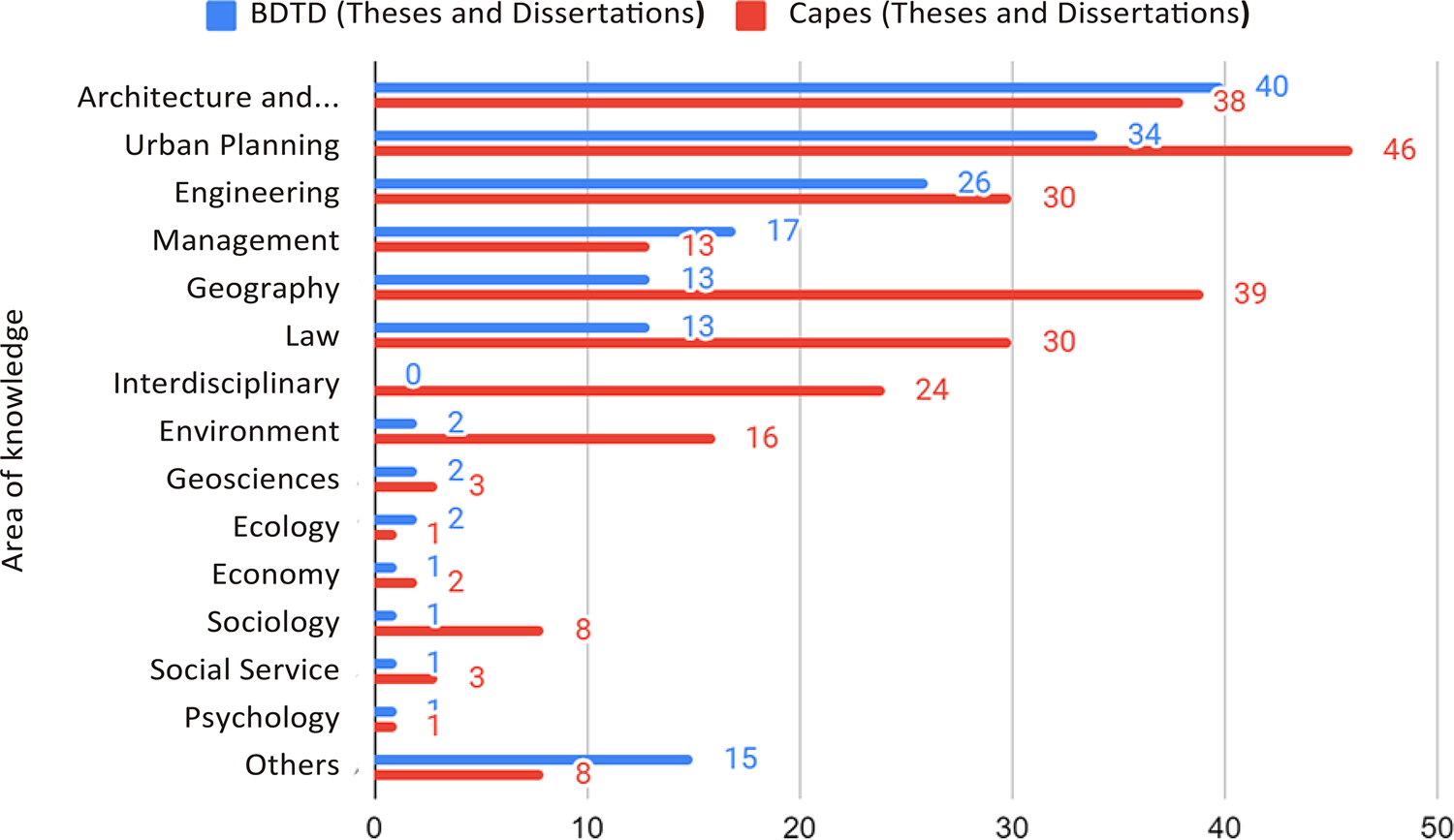
Regarding the area of knowledge to which the academic works are related, the item was seen in the Capes Theses and Dissertations Catalog and in the BDTD portal, since the Capes Periodicals Portal does not provide this information. It was found that the productions were mostly related to the areas of architecture and urbanism, geography, engineering, and urban planning (Graph 3).

All the 96 articles found (67 from the Capes Periodicals Portal and 29 from the SciELO portal) were published in 51 journals.
Among them, 25 works were found when the word “master plan” was added to the descriptors “cultural heritage”, and “right to the city” or “right to a sustainable city”. Of these, eight works (five dissertations and three articles) have as keywords “master plan and cultural heritage”. Among them, two dissertations were not aligned with the study object and were excluded, while six works (three dissertations and three articles) remained, found in the Capes Theses and Dissertations Catalog, Capes Periodicals Portal, and SciELO (Chart 2).
The remaining 18 papers have the keywords “master plan” and “right to the city” or “right to a sustainable city”. Among them, 13 were not aligned with this study and were excluded. Then, five papers aligned with this research (two theses, two dissertations, and one article) found in the Capes Theses and Dissertations Catalog and Capes Periodicals Portal remained, as shown in Chart 3.
From the results, it was found the triad “cultural heritage,” “master plan,” and “right to the city” or “right to a sustainable city” was not the object of any academic production in the research carried out in the sources BDTD, Capes Theses and Dissertations Catalog, Capes Periodicals Portal Bank, and SciELO, in the period 2011-2020.
Among the total of 528 works found, 1.14% (6) related to the master plan have “cultural heritage” among their keywords, and 2.09% (11) of the works have affinity with the theme, but do not specifically address the proposed thematic encounter–cultural heritage, master plan, and right to the city. However, they are relevant to the corpus of this research due to the thematic encounter proposed in parts of chapters, paragraphs, or even in sentences or quotations.
Once the publications were mapped, the analytical reading, interpretation, and presentation of the data were carried out. Graph 4 shows the distribution by year, and Graph 5 the one by Brazilian geographic region.
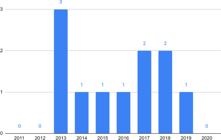
– Production that simultaneously includes “master plan” and “cultural heritage,” and “master plan” and “right to the city,” per year, period 2011-2020
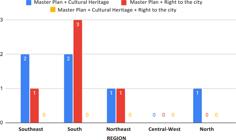
– Academic production that includes “master plan” and “cultural heritage,” “master plan” and “right to the city,” and “master plan,” “cultural heritage,” and “right to the city,” by Brazilian region, period 2011-2020
In order to promote a better visualization of the thematic content of the selected research, a word cloud was constructed (Figure 1), with the keywords of the 11 selected productions, shown in Charts 2 and 3. Figure 1 highlights the approach to the subject proposed in this research.

Considering the proposed objective – to find academic production with the keywords “master plan,” “cultural heritage,” and “right to the city”–, it was found that the keyword “master plan” appeared in all the 11 works; “cultural heritage” appeared in six works; “right to the city” appeared in five works; “popular participation” and “democracy” appeared in three works; the keyword “city statute” appeared in two works; and the other keywords appeared in one production.
In this context, the keywords indicate the frequency of the topic. It can be said that “master plan” is the most common keyword and the most relevant subject of the selected productions, followed by “cultural heritage” and “right to the city.”
It is noticed that, although no academic production was found that had as its subject the triad “cultural heritage,” “master plan,” and “right to the city”, the productions identified and selected prove that they are related to the parameters established in the methodology.
First group: master plan and cultural heritage
In this group, it was decided to gather the data with the six works presented in Chart 2, which address “master plan and cultural heritage” and which analyze the inclusion of heritage policy in the municipality urban planning, through the master plan, to promote the right to the city or the right to a sustainable city.
Among the works that present this approach, there is the dissertation entitled Master plan as an element of preservation of the historical-cultural environment, written by Tonial (2013). The author studies the master plan as a tool to preserve the historical-cultural environment and seeks to prove how important is for the municipal master plans to contemplate and regulate the care of the cultural environment, with the purpose of preserving it for the current and future generations. The research showed that the responsibility of caring for and preserving the cultural heritage is of the municipal government and society in order to guarantee one of the fundamental rights – the right to culture –, and also that stories from past generations reach future generations. The author concludes by reaffirming that the municipal master plan is one of the important instruments for the preservation and care of cultural heritage.
In the same direction, the second work, the dissertation entitled Cultural heritage and the city: an analysis of the conflicts related to the listing of the old city center and the historic center of Manaus, by Magalhães (2013), aimed to understand the relationship between the city, cultural heritage, and master plan, in the protection of assets of cultural value through urban planning, to promote quality of life for the people who live in the city.
Magalhães (2013) points out that the contemporary concept makes it possible to separate cultural heritage from the idea of exceptionality and monumentality, which was linked to the national identity defended in the Vargas era, in order to consider cultural heritage as something relevant to the groups that compose Brazilian society. In addition, the author affirms cultural heritage is in cities which are not only an urbanized geographic space, but also the result of the cultural manifestations of their people, their production systems, and their social conflicts. In view of this, he defends the need to involve society in the city management, practicing democratic management. To this end, the necessary urban interventions must be brought to the society’s attention. The interests involved must be exposed, and the related cultural values must be identified, so that, once known, they can be debated, and together, society and the government can decide what must be protected and what must be done in the city, promoting quality of life and sustainable development.
The third dissertation is by Carvalho (2017), entitled The proposal to safeguard the special preservation units (UEPs) of Maceió: an assessment after 10 years of the establishment of the urban planning instrument. The 56 properties of historical, architectural, and symbolic value that are eligible for protection were included in the master plan. These are assets with material and artistic value, monuments, and common public spaces, linked to memory and affective values. These are old spaces, but also modern. It was found that, although the protection included in the master plan is not equivalent to listing, both instruments have similarities, because the master plan contains conditions, incentives, and penalties related to the conservation of the units and relies on democratic management, since the process of constructing the master plan must necessarily take place in a participatory process.
The fourth work is an article by Colesanti and Campos (2013) entitled The protection of cultural heritage and the municipality of Uberlândia-MG, published in the Revista da Faculdade de Direito da Universidade Federal de Uberlândia. The authors discuss the State’s responsibility, based on the 1988 Federal Constitution and its instruments to act in the protection of cultural heritage. The Union, the states, the Federal District, and the municipalities have among their attributions the responsibility to protect heritage assets. The authors recall that the 88 Federal Constitution, in its article 216, presents a broad concept of cultural heritage and provides related and applicable guidelines. However, they consider that the concept and a set of standards do not guarantee the cultural heritage sustainability.
Another element highlighted in the study is article 23 of the 1988 Federal Constitution, which recognizes the municipality as an entity and assigns it responsibilities common to the states and the federal government. Among the attributions listed, there is the duty to care for public heritage (historical, artistic, and cultural). The article addresses urban policy, as a result of demands by popular movements for urban reform, which instituted the new master plan as an instrument of urban development policy. This master plan was understood as a document that, built with popular participation, should guide the actions and interventions of a territory, reconciling collective interests, distributing fairly the benefits arising from urbanization, promoting the right to the city and the protection of cultural heritage. In the case of Uberlândia (MG), Brazil, the study verifies that, although citizen participation in the protection of cultural heritage is guaranteed by Brazilian legislation, in practice, several difficulties arise regarding the implementation of this right (Colesanti; Campos, 2013).
From this perspective, the fifth work, written by Trevizan (2016), an article published in Cadernos NAUI under the title Cultural heritage and the master plan in small-scale municipalities, portrays the difficulties and weaknesses found in urban planning. The article deals with the implications for cultural heritage generated by conflicts that can be triggered by actions proposed by a deficient master plan. It argues that the master plan is the key tool for organizing and balancing existing relationships in a city, even if occupied by a society driven by capital. The author presents a critical reflection on master plans in small municipalities and how these, when not well-prepared, can generate social and economic conflicts in a city.
We also have the sixth work, by Figueiredo, entitled Cultural heritage, city, sustainability: what is the role of urban legislation in preservation and development?, published in 2014, which addresses the integration between territorial planning and sectoral policies and considers cultural heritage as a resource for sustainable development and for building a less unequal future.
In the article, the author highlights two experiences: Special Zone for Cultural Preservation (Zepec), created by São Paulo’s Strategic Master Plan, and Special Zone of Interest for the Heritage of Paranapiacaba (Zeipp), established by Santo André’s Participatory Master Plan. The author states that, while Zepec is based on the idea of a monument and on a segmented view of heritage and the city, with an incongruence between preservation and urban planning policies, Zeipp links territorial planning to preservation policies, environmental conservation, and urban and socioeconomic development, from the perspective of integrated and participatory planning and management. The author does not limit the landscape as a testimony to future generations, but rather as a significant resource in the search for sustainable development of communities, creating identity and memory, values for the protection policy maintenance. Therefore, according to the author, the policy applied in Santo André (SP), Brazil, is an experience that sought new possibilities for sustainable policies for cities (Figueiredo, 2014).
All the works in this group are unanimous and corroborate other approaches that argue the legislation that makes up urban planning rules appears to be indispensable for the city spatial organization. For Rolnik (1997), urban legislation has the function of serving as a reference for the population, even when it is not applied, since it delimits power and organizes territories, confers meanings and generates notions of civility and citizenship. It functions as a strong cultural reference. Even if it does not actually leave the paper, it ends up marking times and events, establishing an ideal and an intention and constituting facts of urban history. “Therein lies, perhaps, one of the most interesting aspects of the law: it apparently functions as a kind of mold for the ideal or desirable city ” (ibid., p. 13, free translation).
All the works, some to a greater or lesser extent, address the weaknesses that exist in master plans, either because they were drawn up without adequately understanding the city and the territory, others because they were not applied or even because they were not elaborated properly. It must be considered that the existence of the master plan by itself, as a document, is not enough to guarantee rights and protect cultural assets as a reference for the society. The achievements are the result of urban reform, but the mechanisms and law instruments by themselves will not be able to consolidate the right to a sustainable city. They need to be well applied. Is this achievement linked to popular pressure? Is it also linked to the fact that legal operators need to break with the practice of market logic?
Instruments and plans, even when supported by laws, are, in principle, merely resources that will only become effective wealth when there are conditions for the effective implementation of these same instruments and plans. These conditions are of various kinds – economic, political, cultural...–, but one aspect that seems decisive in making both the elaboration and implementation of instruments and plans viable, in a society as heteronomous as Brazil, where there are laws that go well and others that don’t go well, is popular pressure and the capacity of civil society to monitor and oversee compliance with the laws. (Souza, 2010, p. 322, free translation)
However, all research has shown that there are legal instruments that can, when drawn up with the appropriate popular participation, guide sustainable development.
Second group: master plan and right to the city
In this group, the five works presented in Table 3 are highlighted. They deal with the master plan and the right to the city and problematize democratic management in the city management, urban planning and, consequently, heritage management.
From the legal perspective, the right to a sustainable city is contemplated in the 1988 Federal Constitution. In turn, the City Statute, Federal Law n. 10.257/2001, regulates articles 182 and 183 of the 1988 Federal Constitution and establishes parameters and guidelines for urban policy in Brazil. It provides instruments for the municipality to intervene in planning processes and ensure the realization of the right to the city. The City Statute defines the master plan as a basic instrument to guide development and planning policy thinking on defining the conditions to which property must conform in order to fulfill its social function.
Von Gehlen (2017), in his dissertation entitled Popular participation and deliberative democracy as legitimation of urban policies and guarantee of the right to the city, affirms:
Both the Federal Constitution and the city statute provide for means of popular participation, [...] in order to plan the city according to the citizen's perspective, it is fully possible to achieve this, as long as this participation is effective and significant. (Ibid., p. 15, free translation)
This study deals with popular participation in the formulation of public policies to ensure the right to the city and the implementation of democracy, particularly in the city of Chapecó (SC), Brazil. The author analyzes deliberative democracy and its relationship with effective participation in public policies. He assesses whether current legislation allows for effective popular participation in the formulation of public policies and city planning, and identifies the causes of the deficiency in the exercise of popular participation by citizens and organized civil society in the context of public hearings and deliberative councils. The study seeks to identify the possible consequences of these deficiencies for the guarantee of the right to the city and the implementation of democracy (Von Gehlen, 2017).
This investigation is very relevant, since many Brazilian municipalities are required to prepare and/or review their master plans every 10 years, whose legitimacy is linked to popular participation. Many of the municipalities studied have low popular participation in community meetings, public hearings or other events that require popular participation. They also face the fact that the few that participate are not always able to represent the interests of most of the population (Von Gehlen, 2017).
It is important to say that popular participation is already supported by several Brazilian regulations, such as article 1, sole paragraph, of the 1988 Federal Constitution, which establishes democracy – participatory and/or representative – as a principle of the democratic state and instituted the cooperation of representative associations in municipal planning as a precept to be followed by municipalities. This is also established in the City Statute, when its guidelines determine that the urban policy management be democratic.
Considering that cultural heritage is included in urban policy, this implicitly determines popular participation in the cultural heritage management. Furthermore, this determination is corroborated by article 216 of the 1988 Federal Constitution, which determines: “The Public Power, with the collaboration of the community, will promote and protect the Brazilian cultural heritage, through inventories, records, surveillance, listing and expropriation, and other forms of safeguarding and preservation” (Brasil, 1988, pp. 139-140, free translation). Is the master plan one of these other forms of safeguarding and preservation?
The other dissertation is by Silva (2018), entitled Urban space, law, and the right to the city in dispute: the (in)existence of democratic management in the review process of the III Pelotas Master Plan by the Master Plan Municipal Council (2013-2017). This study deals with the relationship between urban space and democratic management in the implementation of the right to the city in Pelotas (RS), Brazil, in the review process of the III Master Plan. To this end, the author problematized the principle of democratic management as a guide for the preparation, monitoring, and review of the master plan and analyzed Pelotas Master Plan Municipal Council according to its democratic nature. The study found that, in the case analyzed, democratic management of the urban space did not occur, since the very functioning of the Master Plan Municipal Council disregarded the Municipal Organic Law and the public principles of publicity and transparency, being not democratic neither in its composition nor in its actions. The author, in conclusion, recalls that demanding participatory spaces is combating the commodification of urban space and contributing to strengthening and consolidating democracy as a condition of social justice.
In this sense, Varella (2018) states in his thesis, entitled The right to self-ordering: experiments in subversive planning and resistance to heteronomous territorial planning in Paranaguá-PR:
The approach with social movements allowed us to bring to light the potential of the daily collective actions of these actors to think about the construction of an “other” territorial planning, capable of fostering the autonomy of groups and, also, consolidating concrete rights in everyday life, serving the fight against the socio-spatial segregation of cities. (Ibid., p. 8, free translation)
Varella’s (2018) thesis aimed to provoke reflection on Brazilian cities, regarding territorial planning and management, in the realization of the right to the city. The author discusses the right to the city in the Brazilian reality and how it has historically deteriorated, despite being constitutionally provided for, but not being implemented in practice. The study presents the potential of the implementation of the right to the city for transforming the socio-spatial reality, which is currently increasingly segregated. It is natural to see upper-class people living in luxury condominiums while workers are destined to occupy spaces that most of the time seem invisible, and to whom the right to the city is constantly denied. The author emphasizes that subverting the master plan means transforming it and that this task, in Paranaguá (PR), Brazil, or in any other city, is a great challenge. However, the author mentions that popular participation is necessary in the fight for the right to the city, carried out by social movements, which can achieve urban planning that results in less urban segregation and gradually conquer the right to the city for everyone.
The other selected thesis is by Ferreira (2019), under the title Right to the city and popular participation in urban policy in the city of Natal/RN: a socio-legal critique of urban law. This thesis investigates the role of urban law to support the understanding of the right to the city based on the analysis of public management in the context of urban policy in Natal (RN), Brazil. For the author, the dialogue about democracy and the rights of participation can reduce inequality and domination in cities, and popular participation can build a better, more just, and balanced city.
The last selected work was produced by Moreira, Dantas, and Martins (2015) under the title Some contributions from Milton Santos to the understanding of the participatory master plan for cities, published in Caminhos de Geografia. The article presents an analysis of Milton Santos’ theories on the spatial and social dynamics of cities and makes considerations about how such analyses can be relevant to the understanding of the right to public policy on urban planning through the master plan.
Since the master plan is a municipal obligation, it can take care of urban planning in a way that the social function of property and the city is contemplated. Thus, it allows urban space in the city to contribute to ensuring that its inhabitants have their fundamental rights guaranteed. In this context, this work defines the master plan, based on an analysis of the spatial and social dynamics of cities, as the instrument capable of effectively contributing to the construction of a more just and democratic city.
However, the works of this group point out that popular participation in the construction of plans, when there is participation, does not represent the interests of an entire city, since the representatives who participate are from very specific sectors, almost always from dominant sectors of society, corroborating Villaça (1999, p. 50) when he says: “The dominant class has always participated in both master plans and zoning plans and laws. Those who have never participated were – and continue to be – the dominated classes, that is, the majority ”.
Final considerations
The works described here confirm (albeit in different ways) that a sustainable city – which generates well-being for present and future generations – necessarily requires that urban planning, through democratic management, ensures that policies for cultural, environmental, and archaeological heritage protection are assured in its master plan.
Regarding the objective proposed for this article – to conduct a state-of-the-art research on national academic production related to the approach to cultural heritage in municipal master plans, in the context of the IBICT theses and dissertations database, Capes Theses and Dissertations Catalog, Capes Periodicals Portal, and SciELO Portal, with a time frame of 2011-2020 –, it was possible to verify, although some limitations, there is a significant volume of research related to master plans. However, few simultaneously address the master plan and cultural heritage.
Thus, it is possible to highlight gaps in the problematization of the thematic meeting of the proposed triad “cultural heritage,” “master plan,” and “sustainable cities”. Such gaps include:
-
the lack of academic production relating master plans to cultural heritage;
-
the absence of the triad “cultural heritage,” “master plan,” and “sustainable cities” in academic production;
-
the absence of cultural heritage on the urban planning agenda.
The identification of these gaps can lead to the deepening and expansion of the theme proposed here, as:
-
It generates reflections on how the absence of such themes in theory, demonstrated by the low academic production, has been related to the absence in practice. Are they consequences of one another?;
-
It questions how relevant is the heritage policies being part of the master plan, thus forming an overall policy, since sustainable development involves safeguarding heritage, as established by the urban planning regulations themselves;
-
It questions the place of cultural heritage in the urban planning agenda, since there is no way to practice the sustainability culture without protecting its common environmental and archaeological assets–its cultural heritage;
-
It suggests as a necessary action to promote awareness about how important cultural heritage is, in order to empower citizens to effectively participate in democratic management and, thus, demand the safeguarding of cultural heritage in favor of a sustainable society for present and future generations.
Finally, it must be considered that cultural heritage is the product of man's relationship with nature and it connects the past, present, and future. It is geographically located everywhere in the world, but first it becomes local or municipal, then it is listed, registered or endorsed as state, national or global, even if this logic is not always followed. Heritage should be enjoyed primarily by those who own it. It should be a tool to encourage sustainable development in municipalities; and its management, even if it sometimes causes conflicts, should be done in a democratic and participatory manner.
Therefore, urban planning, as a management tool, needs to consider cultural heritage in its regulations.
Acknowledgements
We would like to thank the Research Support Fund of the Universidade da Região de Joinville (UNIVILLE), which supported this research
References
-
BRASIL (1988). Constituição da República Federativa do Brasil. Disponível em: https://www2.senado.leg.br/bdsf/bitstream/handle/id/518231/CF88_Livro_EC91_2016.pdf Acesso em: 20 jul 2020.
» https://www2.senado.leg.br/bdsf/bitstream/handle/id/518231/CF88_Livro_EC91_2016.pdf -
BRASIL (2001). Lei n. 10.257 de 10 de julho. Estatuto da Cidade. Disponível em: https://www2.senado.leg.br/bdsf/bitstream/handle/id/70317/000070317.pdf?sequence=6%20Calizaya, Acesso em: 5 jun 2020.
» https://www2.senado.leg.br/bdsf/bitstream/handle/id/70317/000070317.pdf?sequence=6%20Calizaya, - CARLOS, A. F. A. (2007). O espaço urbano: novos escritos sobre a Cidade São Paulo, FFLCH.
- CARVALHO, R. C. S. (2017). A proposta de salvaguarda das Unidades Especiais de Preservação (UEPs) de Maceió: uma avaliação após 11 anos de instituição do instrumento urbanístico. Dissertação de mestrado. Alagoas, Universidade Federal de Alagoas.
- COLESANTI, M. T. M.; CAMPOS, S. R. M. (2013). A tutela do patrimônio cultural e o município de Uberlândia-MG. Revista da Faculdade de Direito da Universidade Federal de Uberlândia Uberlândia, v. 40, n. 2, pp. 321-337.
- FERREIRA, A. M. M. (2019). Direito à cidade e participação popular na política urbana da cidade do Natal-RN: uma crítica sociojurídica ao direito urbanístico. Tese de doutorado. Natal, Universidade Federal do Rio Grande do Norte.
- FERREIRA, N. S. A. (2002). As pesquisas denominadas "estado da arte". Educação & Sociedade Campinas, Cedes, ano XXIII, n. 79, pp. 257-272.
- FIGUEIREDO, V. G. B. (2014). Patrimônio cultural, cidade, sustentabilidade: qual o papel da legislação urbanística na preservação e no desenvolvimento? Ambiente & Sociedade São Paulo, v. XVII, n. 2, pp. 91-110.
- GIL, A. C. (1999). Métodos e técnicas de pesquisa social 5 ed. São Paulo, Atlas.
- MAGALHÃES, A. C. M. (2013). O patrimônio cultural e a cidade: uma análise dos conflitos relacionados ao tombamento do centro antigo e do centro histórico de Manaus. Dissertação de mestrado. Manaus, Universidade do Estado do Amazonas.
- MENESES, U. T. B. (2012). O campo do patrimônio cultural: uma revisão de premissas. In: SUTTI, W. (coord.). I FÓRUM NACIONAL DO PATRIMÔNIO CULTURAL: SISTEMA NACIONAL DE PATRIMÔNIO CULTURAL - DESAFIOS, ESTRATÉGIAS E EXPERIÊNCIAS PARA UMA NOVA GESTÃO Brasília, Iphan, pp. 25-39.
- MOREIRA, P. N. B.; DANTAS, F. A. C.; MARTINS, C. R. (2015). Algumas contribuições de Milton Santos para a compreensão do Plano Diretor Participativo das cidades. Caminhos de Geografia Uberlândia, v. 16, n. 55, pp. 174-185.
-
ONU - Organização das Nações Unidas (2015). Objetivos para o desenvolvimento sustentável: Objetivo 11. Disponível em: https://nacoesunidas.org/pos2015/ods11/ Acesso em: 1º maio 2020.
» https://nacoesunidas.org/pos2015/ods11/ - ROLNIK, R. (1997). A cidade e a lei São Paulo, Nobel.
- ROMANOWSKI, J. P.; ENS, R. T. (2006). As pesquisas denominadas do tipo "Estado da Arte" em Educação. Revista Diálogo Educacional, v. 6, n. 19, pp. 37-50.
- SANTOS, B. S. (1988). Reinventar a democracia Lisboa, Gradiva.
- SILVA, M. S. (2018). O espaço urbano, a lei e o direito à cidade em disputa: a (in)existência da gestão democrática no processo de revisão do III Plano Diretor de Pelotas pelo Conselho Municipal do Plano Diretor (2013-2017). Dissertação de mestrado. Rio Grande, Universidade Federal do Rio Grande.
- SOARES, M. (1989). Alfabetização no Brasil: o estado do conhecimento Brasília, Inep/MEC.
- SOUZA, M. L. (2010). Mudar a cidade: uma introdução crítica ao planejamento urbano e á gestão urbana 6. ed. Rio de Janeiro, Bertrand Brasil.
- TONIAL, J. (2013). Plano diretor como elemento de preservação do meio ambiente histórico-cultural. Dissertação de mestrado. Caxias do Sul, Universidade de Caxias do Sul.
- TREVIZOL, M. (2016). Patrimônio cultural e o Plano Diretor em municípios de pequeno porte. Cadernos Naui Florianópolis, v. 5, n. 5, pp. 48-73.
- VARELLA, M. C. (2018). O direito ao auto-ordenamento: experimentações do planejamento subversivo e resistências ao planejamento territorial heterônomo em Paranaguá-PR. Tese de doutorado. Curitiba, Universidade Federal do Paraná.
- VILLAÇA, F. (1999). "Uma contribuição para a história do planejamento urbano no Brasil". In: DEÁK, C.; SCHIFFER, S. R. (org.). O processo de urbanização no Brasil São Paulo, Edusp.
- VON GEHLEN, J. S. (2017). A participação popular e a democracia deliberativa como legitimação das políticas urbanas e garantia do direito à cidade. Dissertação de mestrado. Chapecó, Universidade Comunitária da Região de Chapecó.
Notes
-
1
The “subject” filter was applied with the aim of finding production that discusses the topics described in the keywords, and not the one that just mentions them in different contexts.
-
2
AND and OR are Boolean operators that are used to inform the respective search engine about the combination of descriptors used in the search. They are written in capital letters. AND works like the word “and” (intersection), searching only for articles that simultaneously contain the keywords entered. The operator “OR” (union) works like the word “or”, searching for articles that contain at least one of the words, which are usually synonymous.
- 3
-
4
Word cloud is a graphic resource that represents word frequencies that by themselves will not answer a research question, but points out paths for what to observe in the study. This tool can be used in text interpretation and production activities.
-
5
Word clouds (WC) are graphic resources that represent word frequencies that by themselves will not answer a research question, but they point out paths for what must be observed in a study.

 Source: elaborated by the authors, in 2021.
 Source: elaborated by the authors, in 2021.
 Source: elaborated by the authors, in 2021.
 Source: elaborated by the authors, in 2021.
 Source: elaborated by the authors, in 2021.
 Source: elaborated by the authors, in 2021.