
 Floristic-structural heterogeneity of deciduous tropical forest on topographic gradient of limestone outcrop
ABSTRACT
Tropical deciduous forests on limestone outcroppings have great ecological relevance and are threatened, making studies for their conservation and restoration necessary. The objective of this study was evaluate the variation in composition and structure of the shrub and tree component of a deciduous forest in three areas of a topographic gradient in the Serra da Bodoquena. A total of 102 contiguous 10 x 10 m (100 m2) plots were sampled, with 34 plots per relief strip, and a total area of 1.02 ha. All shrubby-arboreal individuals with PAP ≥ 10 cm were included and heights were estimated. Richness estimators, usual phytosociological parameters, and diversity were calculated. The data of the variables were ordered in NMDS by the Bray-Curtis coefficient. As a result, in the total area we obtained 2,385 individuals belonging to 70 species, 49 genera and 29 botanical families, with a basal area of 25.44 m2/ha. The density was increasing from the top to the lower slope. Diversity and equability were higher at the top. Diameters were concentrated in the first class, up to 13.1 cm, and the average height was 5.25 m, with a predominance of understory. Five species sampled had not yet been recorded for the region. Ordination analysis revealed greater distance of plots and species from the hilltop compared to the two hillside areas. Composition and structure indicated topography as a factor generating floristicstructural variations.
Keywords
Biodiversity; Phytosociology; Topography; Serra da Bodoquena
RESUMO
Florestas tropicais deciduais sobre afloramento calcário possuem grande relevância ecológica e encontram-se ameaçadas, tornando necessários estudos para sua conservação e restauração. Objetivouse aqui avaliar a variação na composição e estrutura do componente arbustivo-arbóreo de uma floresta decidual em três áreas de um gradiente topográfico na Serra da Bodoquena. Foram amostradas 102 parcelas contíguas de 10 x 10 m (100 m2), sendo 34 parcelas por faixa de relevo, e área total de 1,02 ha. Foram incluídos todos os indivíduos arbustivo-arbóreos com PAP ≥ 10 cm e estimadas as alturas. Calcularam-se os estimadores de riqueza, os parâmetros fitossociológicos usuais e a diversidade. Os dados das variáveis foram ordenados em NMDS pelo coeficiente de Bray-Curtis. Como resultado, na área total obteveram-se 2.385 indivíduos pertencentes a 70 espécies, 49 gêneros e 29 famílias botânicas, com área basal de 25,44 m2/ha. A densidade foi crescente do topo para a encosta baixa. A diversidade e a equabilidade foram maiores no topo. Os diâmetros se concentraram na primeira classe, até 13,1 cm, e a média de alturas foi de 5,25 m, com predomínio de sub-bosque. Cinco espécies amostradas ainda não possuíam registro para a região. A análise de ordenação revelou maior distância das parcelas e espécies do topo do morro em relação às duas áreas de encosta. A composição e a estrutura indicaram a topografia como fator gerador das variações florístico-estruturais.
Palavras-chave
Biodiversidade; Fitossociologia; Topografia; Serra da Bodoquena
1 INTRODUCTION
Seasonal deciduous forests occur in tropical regions with a seasonal climate, with annual rainfall below 2000 mm and on very fertile soils (Nascimento et al., 2004; Salis et al., 2004; Kilca et al., 2009) and are distributed as enclaves throughout South America. In Brazil, they are classified as formations of the Atlantic Forest domain (IBGE, 2004), but occur along the Central Plateau, forming a mosaic with the Cerrado physiognomies and composing floristic transition areas (Rizzini, 1997).
The occurrence on limestone soils gives rise to floristic and structural features that are distinct from forests on other types of soil (Rizzini, 1997; Ivanauskas; Rodrigues, 2000; Carvalho; Felfili, 2011). The roots grow on the rock, which is easily dissolved by water and fractures due to variations in temperature and pressure. Organic matter is deposited in these fractures and comes into contact with calcium ions, resulting in high levels of organic carbon in a shallow topsoil that is rich in nutrients (Gonzaga, 2013; Pereira et al., 2013).
They occupy the smallest territorial extensions relative to the other formations in the state of Mato Grosso do Sul, and are weakened by anthropogenic pressures. Deforestation can lead to the extinction of endemic species, a reduction in populations and genetic diversity, with negative effects on all local and regional biodiversity (Damasceno-Jr et al., 2000).
Located in the center-south of the South American continent, the Serra da Bodoquena is a zone of floristic contacts originating in various directions of the continent, presenting unique characteristics that contribute to a high alpha and beta diversity (Zavala et al., 2017). In the interfluves and slopes of the Serra da Bodoquena, on limestone outcrops, there are typical savannah and deciduous seasonal forest physiognomies with a tree layer up to 30 m high, containing floristic genera of AfroAmazonian and Andean-Argentine origin (Prado; Gibbs, 1993).
It is the largest continuous area of forest and savannah-forest transition in this region and is maintained mainly due to the difficulty of access (Oliveira et al., 2009). Due to its ecological, social and economic importance, 76,481ha of this formation is currently under the full protection of the Serra da Bodoquena National Park (PNSB). However, threats due to the expansion of agriculture and livestock are imminent (Rego, 2008; Oliveira et al., 2009; Oliveira, 2020).
Topography and soil conditions generate great environmental heterogeneity, including floristic-structural heterogeneity (Salis et al., 2004; White; Hood, 2004) and phytosociological studies provide useful information for managing these forests. The aim here was to evaluate the variation in the composition and structure of the shrub component of a deciduous forest in three areas of a topographic gradient in the Serra da Bodoquena.
2 MATERIALS AND METHODS
2.1 Study area
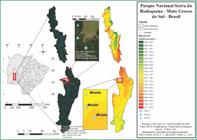
The study was carried out in a deciduous forest toposequence located in the region known as the Perdido River sinkhole, in the southern part of the Serra da Bodoquena National Park, in the municipality of Bonito - MS (Figure 1).
The climate is Tropical Rainy Savannah (Aw) (Köppen, 1948), with average annual rainfall of 1600 to 1800 mm and seasonality defined by a rainy period from October to March and a dry period from April to September, with the drought being most intense between June and August. Average annual temperatures range from 22ºC to 26ºC, with absolute highs of up to 40ºC and absolute lows of 0ºC.
With a great diversity of soils, due to the region’s complex geology, it has lithological variations along altitudinal gradients (Campanha et al., 2011). In a toposequence in the Serra da Bodoquena, soils were classified as: Lithic Sapric Folic Organosol, Typical Ortic Haplic Chernosol, Typical Ortic Argiluvic Chernosol, Chernossolic Carbonate Melanic Gleisol and Organossolic Carbonate Melanic Gleisol (Pereira et al., 2013).
2.2 Sampling
Floristic sampling took place between January 2017 and July 2018, with incursions to recognize the area, collect environmental data and fertile and vegetative botanical material. Botanical identifications were made by consulting specialists, identification keys, various bibliographies and comparisons with material in the physical herbarium (Federal University of Grande Dourados - UFGD) and the Reflora Virtual Herbarium. The material collected was deposited in the DDMS herbarium at the Federal University of Grande Dourados.
The terrain was sectioned into three altitude levels where 34 contiguous 10 x 10 m (100 m2) plots were allocated, arranged in a horizontal strip within each section, corresponding to a total of 102 plots with a total area of 1.02 ha. The topographic positions were called low slope (average slope of 15%, 512m), medium slope (average slope of 25%, 534m) and upper slope (slightly undulating flat terrain, 559m).
The inclusion criterion was perimeter at breast height (DBH) ≥ 10 cm for all living trees and/or shrubs. Heights were estimated and number tags were used for all the individuals included.
The taxa were classified according to APG III (ANGIOSPERM PHYLOGENY GROUP, 2009). The checking of epithets and families was carried out by consulting the database of the Brazilian Flora Species List (FLORA DO BRASIL, 2020), Species link and The Plant List platforms.
2.3 Data analysis
From the primary data of Perimeter at breast height and height, depending on the sample area, phytosociological parameters were generated (Mueller-Dombois; Elemberg, 1974) using the FITOPAC 2.1.2 software (Shepherd, 2010). Alpha diversity was calculated using the Shannon (H’) and Pielou (J’) diversity indices (Browner; Zar, 1984).
Seeking to estimate whether the list of species sampled corresponds to the expected richness, the Chao, Jakknife and Bootstrap estimators were used. These differ as follows: 1) Jacknniffe 1 and 2: based on the abundance of rare species (number of singletons/doubletons). Chao 2 - considers the presence/absence of rare species (number of uniques/duplicates); Bootstrap: also based on presence/absence, but standardizes species richness comparisons for a common number of individuals (Freitas; Magalhães, 2012). Richness estimators were calculated using Past 3.22 software (Hammer et al., 2018).
To verify the grouping of species, multivariate analysis was used using NonMetric Multidimensional Scaling (NMDS) (Minchin, 1987). Using the species abundance matrix of the 102 plots, the ordination graph was generated using the Bray-Curtis distance coefficient, using the software R 3.5.1 (R CORE TEAM, 2018) and the Vegan package (Oksanen et al., 2018). The stress value (Standardized Residual Sum of Squares) originated indicates the representativeness of the distances represented in the diagram compared to the original sampling distances (Michin, 1987). In the multivariate analysis of variance (MANOVA), the significance of the variation in the data set was tested according to Friedrich et al. (2016).
3 RESULTS AND DISCUSSIONS
A total of 2,385 individuals were sampled, with a total density of 2,339 ind./ ha and a basal area of 25.44 m2/ha (Table 1). The lower slope was the densest of the three evaluated, with 3,223 ind./ha-1, 47% more dense than the upper slope and 35.4% more dense than the middle slope, explaining its higher basal area (9.02 m2/ ha). The middle slope had the lowest basal area, average height and diversity indices. On the other hand, the upper slope had higher values in these areas.
Phytosociological data of the shrub component of deciduous forest on a hill in the Serra da Bodoquena National Park, Bonito - MS, Brazil
Evaluating the data, it is suggested that the greater number of individuals and density present on the lower slopes are associated with the greater amount of soil, humidity and nutrients, common characteristics of low-lying areas (Silva Júnior et al., 2001).
In terms of Shannon and Pielou diversity, when compared to other deciduous forests in regions close to the Brazilian Cerrado, they are among the highest values found. Studies in the southeast by Ivanauskas and Rodrigues (2000) found H’= 3.00 and Siqueira et al. (2009) H’= 2.76 and 2.59. In Goiás, Silva and Scariot (2003; 2004) found values of 2.99 and 3.18 for deciduous forests on limestone outcrops. In the southern region of Brazil, these values are higher, where Hack et al. (2005), Almeida et al. (2015) and Bambolim et al. (2018) found 3.63, 3.12 and 3.34, respectively. In terms of equability, the values range from 0.66 to 0.83 (Siqueira et al., 2009; Silva; Scariot, 2003; Ivanauskas; Rodrigues, 2000; Bambolin et al., 2018).
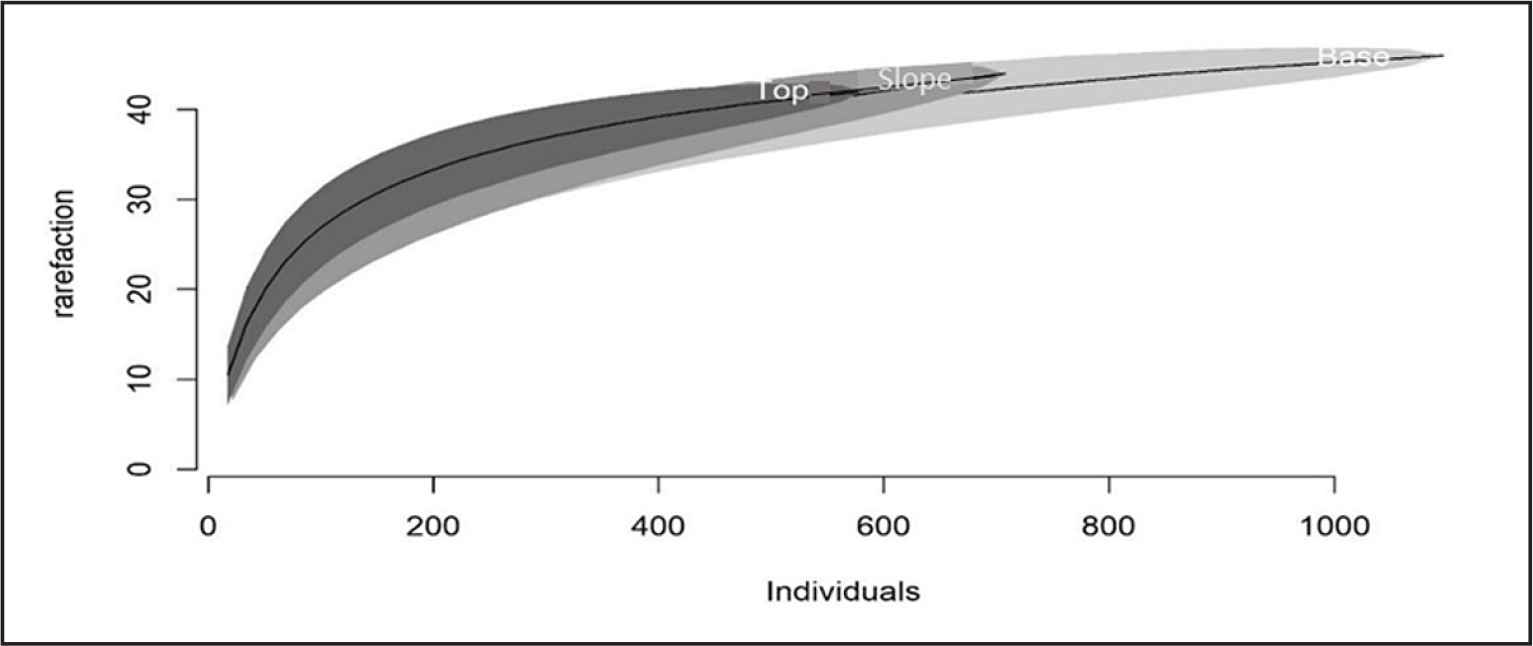
A total of 70 species were recorded, distributed in 49 genera and 29 botanical families, seven of which were identified down to genus level and one down to family level. The rarefaction curves indicated sampling sufficiency in the three topographies (Figure 2).

In a survey, Oliveira Filho and Ratter (2002) came up with 100 species specific to the Seasonal Deciduous Forest in the Brazilian Cerrado. However, at a local level, studies generally show lower species richness than this. On the western edge of the Pantanal, richnesses of between 24 and 47 species have been reported for fragments of deciduous forest, and 79 for a set of four areas sampled, distributed in up to 30 families (Salis et al., 2004; Lima et al., 2010).
The richness estimators (Table 2) validated the sampling, with Jackknife 1 and Chao 2 being the closest to the observed value, reinforcing the sufficiency of the data collection (Freitas; Magalhães, 2012).
Diversity estimators applied to phytosociological sampling of deciduous forest in the Serra da Bodoquena National Park
The total basal area (25.44 m2ha) is high, and the variation throughout Brazil ranges from 8.45 to 28.34 m2.ha, including forests in Goiás (Silva; Scariot, 2003; Silva; Scariot, 2004; Nascimento et al., 2004), Minas Gerais (Siqueira et al., 2009), Santa Catarina (Freitas et al., 2019) and Rio Grande do Sul (Hack et al., 2005).
Evaluating the diametric distribution in the different relief positions (Figure 3), we see a similar behavior, with a normal curve in decreasing geometric progression, in the shape of an inverted J, and a greater concentration of diameters in the first class. The lower slope had a higher density of individuals, which explains its higher basal area. Competition for light and interspecific differences in shade tolerance are considered key determinants of the horizontal structure of the forest, where shade-tolerant species tend to have monotonic diameter distributions on steep slopes (Zavala et al., 2007).

This area suffered from consecutive deforestation and selective logging between 1984 and 2000 as pointed out by Oliveira (2020), indicating that the observed diametric distribution must be that of a regenerating forest, justifying the occurrence of only 1.3% of diameters above 33 cm. Natural phenomena, such as deciduousness and disturbances in the canopy, can also shape the structure of the forest and are important for the dynamics, since the greater availability of light favors the germination and growth of pioneer and early succession species. The occurrence of many young individuals and shrubby pioneer species characterizes continuous recruitment in the forest studied, as already suggested by Jardim and Quadros (2016) and Higuchi et al. (2008).
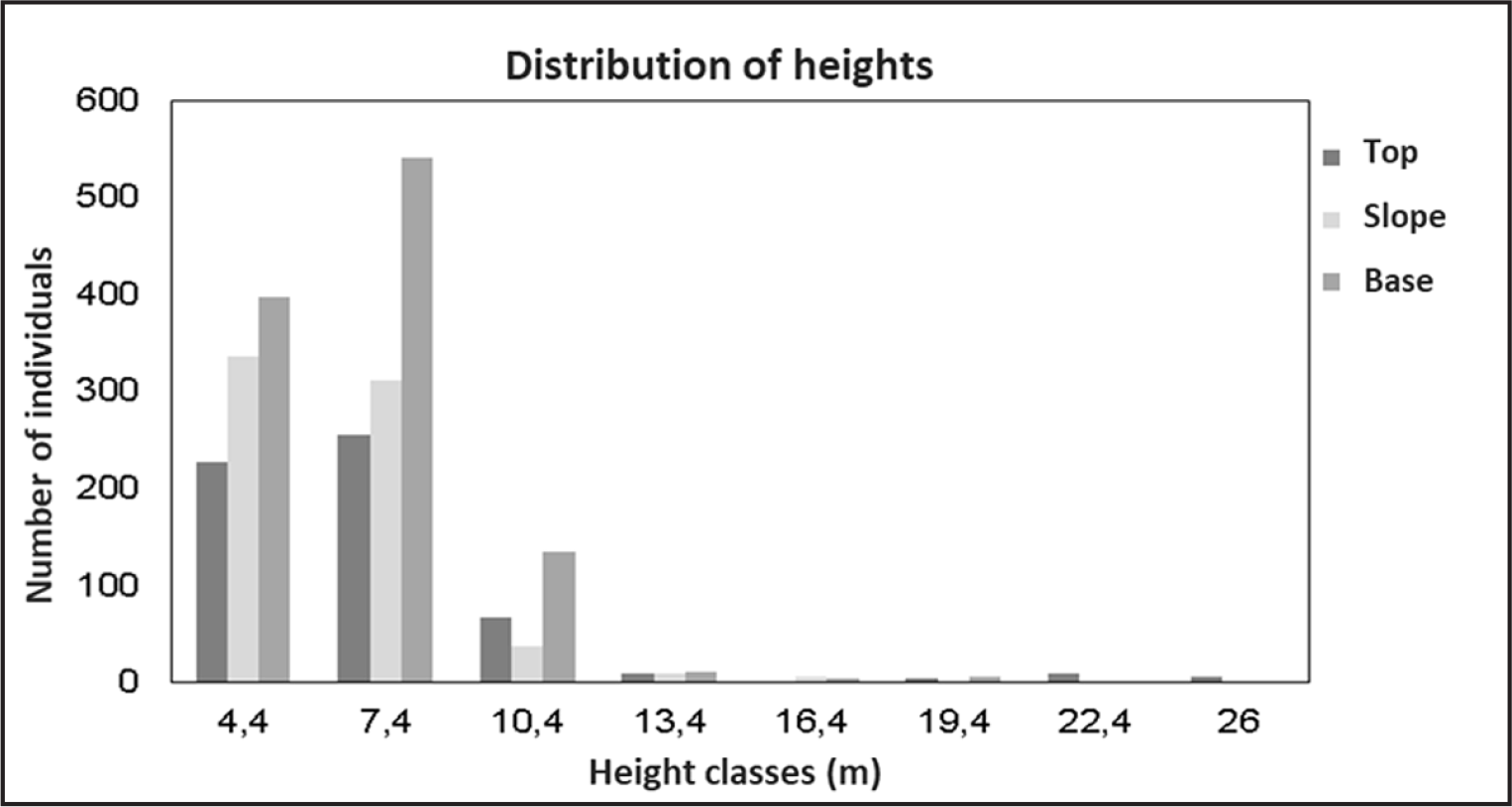
Regarding vertical stratification (Figure 4), the sample was concentrated in the first two classes, with an overall average height of 5.25 m, indicating that few individuals reached the canopy. The values ranged from 1.5 m to 26 m, with a higher frequency of heights in the classes up to 7.5 m, configuring a young forest in regeneration, as already observed for the diameters. The greatest heights of the tree layer in these forests are around 25 m, an intrinsic characteristic of mesophytic formations (Prado; Gibbs, 1993; Nascimento et al., 2004).

The representatives of Ceiba pubiflora and Cereus bicolor had the lowest heights. The lowest average heights (2.5 m - 4 m) were of the most representative species in the understory, such as Lessingianthus scabrifoliatus, Pilocarpus pennatifolius and Acalipha villosa at the top, Adelia membranifolia, Myrciaria delicatula and Prockia crucis on the lower slope, and Randia ferox, Allophylus edulis and C. bicolor distributed across the gradient.
The highest averages among the most abundant species were Parapiptadenia rigida and Astronium graveolens (15 m) on the lower slope, and the largest individuals on the gradient were Dalbergia sp., Anadenanthera colubrina and Holocalix balansae (26 m).
The ten species with the highest VI represent 58.5% of the total value, with C. pubiflora alone accounting for 25.8% of this index (Table 3). In the deciduous forests of Corumbá - MS, on the western edge of the Pantanal, Lima et al. (2010) recorded C. pubiflora with the second highest VI in the lowlands and highlands, and Anadenathera colubrina (highlands) and Calycophyllum multiflorum (lowlands) as the most important in those areas. In this study, A. colubrina and C. multiflorum had an increasing distribution towards the lower part of the gradient.
Phytosociological parameters of the species inventoried in the Seasonal Deciduous Forest, in the Serra da Bodoquena National Park, Bonito - MS
Deciduous forests usually show a high degree of dominance by a few species (Oliveira-Filho; Ratter, 2002), which corroborates the current data, where C. pubiflora dominated 40% and Cereus bicolor 12.3%. Another important Malvaceae was Helicteres lhotzkyana, which increased in abundance towards the lower part of the gradient and was the third highest in density. This species is common in the study region and is found in deciduous and semi-deciduous forests in Mato Grosso do Sul (Baptista-Maria et al., 2009; Zavala et al., 2017; Damasceno-Jr et al., 2018). Balfourodendron riedelianum was very representative on the upper and lower slopes, occurring little on the middle slope, and was second in number of individuals.
The sample included widely distributed species typical of deciduous forests and indicative of the connection between the residual formations of the Pleistocene arc, such as A. colubrina, Myracrodruon urundeuva and Aspidosperma pyrifolium, all of which are abundant in the study area (Prado; Gibbs, 1993; Santos et al., 2015).
Some species of Fabaceae showed a preference for specific areas of the topography. Senegalia polyphylla, Machaerium sp. and Peltophorum dubium occurred mainly on the lower slopes. Holocalix balansae increased towards the upper slope and Dalbergia sp. and A. colubrina towards the lower slope. Piptadenia gonoacantha preferred the middle slope and Parapiptadenia rigida the upper slope.
A. pyrifolium is found from eastern Bolivia and Paraguay, through the Midwest and Tocantins, to the caatinga, and is considered a typical component of calcareous deciduous forests (Pereira, 2011). In a study of material collection and taxonomy of the genus Aspidosperma in Mato Grosso do Sul, Machate et al. (2016) found A. parvifolium in semi-deciduous forests, and A. cylindrocarpon, A. pyrifolium and A. subincanum in submontane forests, both deciduous and semi-deciduous.
Considering that this region is still very little known (Damasceno-Jr et al., 2018), it is worth noting that the species Aralia excelsa, Actinostemon concepcionis, Crateva tapia, Erythroxylum pelleterianum and Simira sampaioana have not yet been recorded in the Serra da Bodoquena. In fact, A. excelsa has no official record of occurrence for Brazil (FLORA DO BRASIL, 2022), but it does appear on floristic lists from Minas Gerais, found in areas of arboreal caatinga and ecotone (Menino et al, 2015). Crateva tapia occurs in flooded areas of the Pantanal (Damasceno-Jr et al, 2005).
Eugenia florida, Zanthoxylum ridelianum and Guapira opposita occur widely in the Cerrado (Santos et al., 2015) and are found along the Serra da Bodoquena, in hillside areas and in riverine forests (Battilani et al., 2005; Baptista-Maria et al., 2009; Zavala et al., 2017), as in this study.
It is thought that there is a variation in luminosity between the top and other areas, due to the lower density of individuals. The availability of light allowed the germination and establishment of pioneer species (Duz et al., 2004) such as Lessingianthus scabrifoliatus, Trema micranta and Schefflera morototoni.
Regarding the families, we found that Malvaceae had the highest number of representatives (33.8%), with three species. Fabaceae had the lowest relative abundance (20.5%), but the highest richness (12 species = 17.1%). Together, they accounted for more than 54% of the total abundance. 29 families were identified, with the six most abundant containing 76% of the individuals sampled. With similar results, the deciduous formations in the Pantanal region have shown a distribution of species in up to 30 families, where Malvaceae and Fabaceae are very representative (Salis et al., 2004; Lima et al., 2010).
Cactaceae, with just one species, had a relative abundance of 4.6%. Rutaceae was also very representative, with six species (8.6%) and 8.6% abundance. Myrtaceae, although not very abundant, had high richness (5spp= 7.1%).
Four families were exclusive to the upper slopes (Piperaceae, Capparaceae, Monimiaceae and Araliaceae), three were exclusive to the middle slopes (Verbenaceae, Araceae and Sapotaceae) and four were exclusive to the lower slopes (Capparaceae, Arecaceae, Erythroxylaceae and Primulaceae). Urticaceae and Phyllantaceae did not occur at the upper slopes. Only one individual of Myrtaceae occurred at the upper slopes, and this family showed an increase in abundance towards the lower slopes.
The distribution of species and their composition varied according to the ordering of the data in two dimensions (Figure 5). The stress value = 0.24 shows that the adjusted distances and the observed dissimilarities disagree to a low degree. 94% of the original matrix was recovered. The difference between the top area and the other areas was significant (Pillai = 0.35204; gl = 1 and 2; p =< 0.000006).
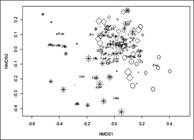
NMDS ordination diagram of species occurring in the deciduous forest of the Serra da Bodoquena National Park, with samples distributed over three altitudinal ranges
The exploratory ordination analysis revealed greater distance between the plots and species from the upper part of the hill compared to the plots and species from the two slope areas. In addition to the altitudinal position on the relief, another aspect to consider is the variation in the slope of the terrain, which also influences floristicstructural heterogeneity (Seta et al., 2019). The flat to slightly undulating terrain of the upper part of the hill and the slope of the hillside are differentials that may have acted on the selection of species in the environment.
In addition, topographical parameters also determine exposure to solar radiation, influencing the microclimate and landscape configurations (Chagas et al., 2013), and being directly related to the establishment of plant life forms in the environment (Ricklefs; Releya, 2014). It is suggested that the different incidences of solar radiation in the gradient may have contributed to the pattern observed in the distribution of taxa.
Alamgir et al. (2016) concluded that forests on high ground have a greater capacity to provide diverse ecosystem services when compared to lowland forests. According to these authors, elevation, precipitation and temperature gradients, along with forest structure, are the main determining factors for the amount of ecosystem services provided. The processes that control spatial heterogeneity in forest tree communities have major effects on ecosystem properties (Pacala; Deutshman, 1995) and should therefore guide decision-making in conservation and environmental restoration.
Altitude has been considered the most important factor in the segregation of floristic-structural groups (Cabrera et al., 2019). In other tropical regions of the world, there is also variation in the distribution of flora across a gradient of topography, with altitude and slope affecting the composition and structure of the forest community (Elias et al., 2019; Seta et al., 2019).
5 CONCLUSIONS
The deciduous forest of the Serra da Bodoquena National Park was characterized by the high dominance of a few species. Some species were recorded for the first time in this region: Aralia excelsa, Crateva tapia, Erythroxylum pelleterianum, Actinostemon concepcionis and Simira sampaioana. Diversity was high in the three areas evaluated. The horizontal and vertical structures indicated that the forest is young and regenerating. The topographic variation determined the floristic-structural variation, markedly between the upper and the two slope areas.
The floristic-structural heterogeneity of the gradient reinforces the importance of preserving and conserving vegetation in the various topographic positions, aiming to safeguard biodiversity in its different niches. The need for more research and biological inventories is reaffirmed to fill the lack of information and sampling for the Serra da Bodoquena region and the State of Mato Grosso do Sul, and thus support forest conservation and restoration actions.
REFERENCES
- ALAMGIR, M.; TURTON, S. M.; MACGREGOR, C. J.; PERT, P. L. Assessing regulating and provisioning ecosystem services in a contrasting tropical forest landscape. Ecological Indicators, n. 64, p. 319-334, 2016.
- ALMEIDA, C. M. D.; ARAUJO, M. M.; LONGHI, S. J.; ROVEDDER, A. P.; SCCOTI, M. S. V.; D’AVILA, M.; TONETTO, T. D. S. Análise de agrupamentos em remanescente de floresta estacional decidual. Ciência Florestal, v. 25, n. 3, p. 781-789, 2015.
- APG (Angiosperm Phylogeny Group) III. An update of the Angiosperm Phylogeny Group classification for the orders and families of flowering plants: APG III. Botanical Journal of Linnean Society, v. 16, n. 20, p. 105-121. 2009.
- BAPTISTA-MARIA, V. R.; RODRIGUES, R. R.; DAMASCENO-JR, G.; MARIA, F. S.; SOUZA, V. C. Composição florística de florestas estacionais ribeirinhas no estado de Mato Grosso do Sul, Brasil. Acta Botanica Brasilica, v. 23, n. 2, p. 535-548, 2009.
- BATTILANI, J. L.; SCREMIN-DIAS, E. S.; SOUZA, A. L. T. Fitossociologia de um trecho da mata ciliar do rio da Prata, Jardim, MS, Brasil. Acta Botanica Brasilica, v.19, n. 3, p. 597-608, 2005.
- BAMBOLIM, A.; DONDE, A. R.; WOJCIECHOWSK, J. C. Análise fitossociológica e estrutura florística de uma floresta estacional decidual. Journal of Neotropical Agriculture, v. 5, n. 2, p. 62-68, 2018.
- BROWNER, J.; ZAR, J.H. Field and laboratory methods for general ecology Dubuque, Iowa. 1984.
- CABRERA, O.; BENÍTEZ, Á.; CUMBICUS, N.; NARANJO, C.; RAMÓN, P.; TINITANA, F.; ESCUDERO, A. (2019). Geomorphology and Altitude Effects on the Diversity and Structure of the Vanishing Montane Forest of Southern Ecuador. Diversity, v. 11, n. 3, p. 1-32, 2019.
- CAMPANHA, G. A. C.; BOGGIANI, P. C.; SALLUN FILHO, W.; DE SÁ, F. R.; ZUQUIM, M. D. P. S.; PIACENTINI, T. A faixa de dobramento Paraguai na Serra da Bodoquena e depressão do Rio Miranda, Mato Grosso do Sul. Geologia USP Série Científica, v. 11, n. 3, p. 79-96, 2011.
- CARVALHO, F. A.; FELFILI, J. M. Variações temporais na comunidade arbórea de uma floresta decidual sobre afloramentos calcários no Brasil Central: composição, estrutura e diversidade florística. Acta Botanica Brasilica, v. 25, n. 1, p. 203-214, 2011.
- CHAGAS, C. S.; FERNANDES FILHO, E. I.; BHERING, S. B. Relação entre atributos do terreno, material de origem e solos em uma área no noroeste do estado do Rio de Janeiro. Sociedade & Natureza, v. 25, n. 1, p. 147-162, 2013.
- DAMASCENO-JR, G. A.; POTT, A.; NEVES, D. R. M.; SCIAMARELLI, A.; FINA, B. G. Flora lenhosa de Florestas estacionais do estado de Mato Grosso do Sul: estado da arte. Iheringia, Série botânica, v. 73, p.65-79, 2018.
- DAMASCENO-JR, G. A.; SEMIR, J.; SANTOS, F. A. M.; LEITÃO-FILHO, H. F. Structure, distribution of species and inundation in a riparian forest Rio Paraguai, Pantanal, Brazil. Flora-Morphology, Distribution, Functional Ecology of Plants, v. 200, n. 2, p. 119-135, 2005.
- DAMASCENO-JR, G. A.; NAKAJIMA, J. N.; REZENDE, U. M. Levantamento florístico das cabeceiras dos rios Negro, Aquidauana, Taquari e Miranda no Pantanal, Mato Grosso do Sul, Brasil. RAP Bulletin of Biological Assesment, v. 18, p. 152-162, 2000.
- DUZ, S. R.; SIMINSKI, A.; SANTOS, M.; PAULILO, M. T. S. Crescimento inicial de três espécies arbóreas da Floresta Atlântica em resposta à variação na quantidade de luz. Brazilian Journal of Botany, v. 27, n. 3, p. 587-596, 2004.
- ELIAS, F.; JUNIOR, B. H. M.; DE OLIVEIRA, F. J. M.; DE OLIVEIRA, J. C. A.; MARIMON, B. S. Soil and topographic variation as a key factor driving the distribution of tree flora in the Amazonia/ Cerrado transition. Acta Oecologica, v. 100, p. 1-29, 2019.
-
FLORA DO BRASIL. LEFB - Lista de Espécies da Flora do Brasil Jardim Botânico do Rio de Janeiro. Disponível em: http://floradobrasil.jbrj.gov.br/.Último acesso em: dez. de 2022.
» http://floradobrasil.jbrj.gov.br/.Último - FREITAS, W. K.; FERREIRA, J.; NORONHA, G. D.; RAMOS, M. C. G.; ESPER, P. M. O. Diametric structure of a deciduous forest fragment in the agribusiness region of western Santa Catarina State, Brazil. Bioscience Journal, v. 35, n. 1, p. 267-276, 2019.
- FREITAS, W. K. de; MAGALHÃES, L. M. S. Métodos e parâmetros para estudo da vegetação com ênfase no estrato arbóreo. Floresta e Ambiente, v. 19, n. 4, p. 520-539, 2012.
- FRIEDRICH, S.; BRUNNER, E.; PAULY, M. Permuting longitudinal data despite all the dependencies Cornell University. v. 2, p. 1-45, 2016.
- GONZAGA, A. P. D.; PINTO, J. R. R.; MACHADO, E. L. M.; FELFILI, J. M. Similaridade florística entre estratos da vegetação em quatro Florestas Estacionais Deciduais na bacia do Rio São Francisco. Rodriguésia, v.64, n. 1, p.11-19, 2013.
- HACK, C.; LONGHI, S. J.; BOLIGON, A. A.; MURARI, A. B.; PAULESKI, D. T. Análise fitossociológica de um fragmento de floresta estacional decidual no município de Jaguari, RS. Ciência Rural, v.35, n.5, p. 1083-1091, 2005.
- HAMMER, Ø.; HARPER, D. A. T.; RYAN, P. D. PAST: Paleontological statistics software package for education and data analysis. Palaeontologia Electronica, versão 3.22 v. 4, n1, p 1-9, 2018.
- HIGUCHI, P.; OLIVEIRA-FILHO, A. T.; SILVA, A. C. D.; MACHADO, E. L. M.; SANTOS, R. M. D.; PIFANO, D. S. Dinâmica da comunidade arbórea em um fragmento de floresta estacional semidecidual montana em Lavras, Minas Gerais, em diferentes classes de solos. Revista Árvore, v. 32, n.3, p. 417-426, 2008.
- IVANAUSKAS, M. N.; RODRIGUES, R. R. Florística e fitossociologia de floresta estacional decidual em Piracicaba, São Paulo, Brasil. Revista Brasileira de Botânica v.23, n3, p.291-304, 2000.
- JARDIM, F. C. D. S.; QUADROS, L. C. L. Estrutura de uma floresta tropical dez anos após exploração de madeira em Moju, Pará. Revista Ceres, v. 63, n.4, p.427-435, 2016.
- KILCA, R. V.; SCHIAVINI, I.; MONTEIRO, G. A. Padrões florísticos em dois tipos de florestas estacionais no cerrado. Bioscience Journal, v. 30, n.3, p. 903-913. 2014.
- LIMA, M. S. D.; DAMASCENO-JR, G. A.; TANAKA, M. O. Aspectos estruturais da comunidade arbórea em remanescentes de floresta estacional decidual, em Corumbá, MS, Brasil. Brazilian Journal of Botany, v. 33, n. 3, p. 437-453, 2010.
- MACHATE, D. J.; ALVES, F. M.; FARINACCIO, M. A. Aspidosperma (Apocynaceae) no estado de Mato Grosso do Sul, Brasil. Rodriguésia, v. 67, n. 4, p. 1011-1024, 2016.
- MENINO, G. C. D. O.; SANTOS, R. M. D.; APGAUA, D. M. G.; PIRES, G. G.; PEREIRA, D. G. S.; FONTES, M. A. L.; ALMEIDA, H. D. S. Florística e estrutura de florestas tropicais sazonalmente secas. Cerne, v. 21, n. 2, p. 277-291, 2015.
- MINCHIN, P. R. An evaluation of the relative robustness of techniques for ecological ordination. Vegetatio, n. 69, p. 89-107, 1987.
- MUELLER-DOMBOIS, D.; ELLEMBERG, H. Aims and methods vegetation ecology New York, Wiley. 1974. 547p.
- NASCIMENTO, A. R. T.; FELFILI, J. M.; MEIRELLES, E. M. Florística e estrutura da comunidade arbórea de um remanescente de Floresta Estacional Decidual de encosta, Monte Alegre, GO, Brasil. Acta Botanica Brasilica, v. 18, n. 3, p. 659-669, 2004.
- OLIVEIRA, J. G. D.; MORAES, L. F. D.; PEREIRA, T. S.; DAMASCENO-JR, G. A. Advance of Urochloa decumbens (Stapf) RD Webster (Poaceae) on remaining native forest in the Serra da Bodoquena National Park. Biodiversidade Brasileira - BioBrasil, n. 2, p. 148-157, 2020.
- OLIVEIRA, A. K. M.; FERNANDES, V.; GARNÉS, S. J. A.; DOS SANTOS, C. R. B. Avaliação da perda da vegetação arbórea nativa na serra da Bodoquena, Mato Grosso do Sul, por meio de sensoriamento remoto. Raega - O Espaço Geográfico em Análise, n.17, p. 43-52, 2009.
- OLIVEIRA-FILHO, A. T.; RATTER, J. A. Vegetation physiognomies and woody flora of the Cerrado Biome In: OLIVEIRA, P. S.; MARQUIS, R. J. (eds.) The Cerrados of Brazil: ecology and natural history of a Neotropical savanna. Columbia University Press, New York, cap. 6, p. 91120, 2002.
- PACALA, S.W.; DEUTSCHMAN, D. Details that matter: the spatial distribution of individual trees maintains forest ecosystem function. Oikos, v.74, p.357-365, 1995.
- PENNINGTON, R. T.; LEWIS, G. P.; RATTER, J. A. An overview of the plant diversity, biogeography and conservation of Neotropical Savannas In: Neotropical savannas and dry forests: plant diversity, biogeography and conservation. Oxford: Taylor & Francis, p. 1-30, 2006.
- PEREIRA, M. G.; SCHIAVO, J. A.; FONTANA, A.; NETO, D., HYPÓLITO, A.; MIRANDA, L. P. M. D. Caracterização e classificação de solos em uma topossequência sobre calcário na Serra da Bodoquena, MS. Revista Brasileira de Ciência do Solo, p. 25-36, 2013.
-
PEREIRA, B.A. da S. Árvores do bioma Cerrado. 2011. Disponível em: http://www.arvoresdobiomacerrado.com.br/site/ Acesso em 15 jan. 2020.
» http://www.arvoresdobiomacerrado.com.br/site - PRADO, D. E.; GIBBS, P. Patterns of species distributions in the dry seasonal forest of South America. Annals of Missouri Botanic Garden, n. 80, p. 902-927, 1993.
- REGO, N. H. Variação da estrutura da vegetação arbórea em uma toposseqüência num vale da Serra de Maracaju, Aquidauana, MS Tese de Doutorado (Doutorado em Agronomia, Produção Vegetal). Universidade Estadual Paulista, Faculdade de Ciências Agrárias e Veterinárias, Jaboticabal, 2008. 105f.
- RICKLEFS, R.; RELYEA, R. Adaptations to terrestrial environments (charpter 3). In: The economy of nature, 7ª ed. Chart W.H. Freeman and Company, New York, US, p. 90-129, 2014.
- RIZZINI, C. T. Tratado de fitogeografia do Brasil: aspectos ecológicos, sociológicos e florísticos 2. ª ed. Âmbito Cultural Edições Ltda, 1997.
- SALIS, S. M.; SILVA, M.P.; MATTOS, P.P.; SILVA, J.S.V.; POTT, V.J.; POTT, A. Fitossociologia de remanescentes de floresta estacional decidual em Corumbá, Estado do Mato Grosso do Sul, Brasil. Revista Brasileira de Botânica, n. 27, p. 671-684, 2004.
- SANTOS, R. M.; BARBOSA, A. C. M. C.; DE SOUZA ALMEIDA, H.; VIEIRA, F. A., SANTOS, P. F.; DE CARVALHO, D. A.; DE OLIVEIRA-FILHO, A. T. Structure and floristics of a remnant of arboreous caatinga in Juvenília, northern Minas Gerais, Brazil. Cerne, v. 17, n. 2, p. 247-258, 2015.
- SETA, T.; DEMISSEW, S.; WOLDU, Z. Floristic diversity and composition of the Biteyu forest in the Gurage mountain chain (Ethiopia): implications for forest conservation. Journal of Forestry Research, v. 30, n. 1, p. 319-335, 2019.
- SHEPHERD, G. J. FITOPAC 2.1.2 Software. Campinas: Departamento de Botânica, Unicamp, 2010.
- SILVA, L. A.; SCARIOT, A. Composição florística e estrutura da comunidade arbórea em uma Floresta Estacional Decidual em afloramento calcário (Fazenda São José, São Domingos, GO, Bacia do Rio Paranã). Acta Botanica Brasilica, n. 17, v. 2, p. 305-313, 2003.
- SILVA, L. A.; SCARIOT, A. Composição e estrutura da comunidade arbórea de uma Floresta Estacional Decidual sobre afloramento calcário no Brasil Central. Revista Árvore, v.28, n.1, p. 69-75, 2004.
- SIQUEIRA, A. S.; ARAÚJO, G. M.; SCHIAVINI, I. Estrutura do componente arbóreo e características edáficas de dois fragmentos de floresta estacional decidual no vale do rio Araguari, MG, Brasil. Acta Botanica Brasilica, v. 23, n. 1, p. 10-21, 2009.
- WHITE, D.A.; HOOD, C.S. Vegetation patterns and environmental gradients in tropical dry forest of the northern Yucatan Peninsula. Journal of Vegetation Science, n. 15, p. 151-160, 2004.
- ZAVALA, C. B. R.; FERNANDES, S. S. L.; PEREIRA, Z. V.; SILVA, S. M. Análise fitogeográfica da flora arbustivo-arbórea em ecótono no Planalto da Bodoquena, MS, Brasil. Ciência Florestal, v. 27, n. 3, p. 907-921, 2017.
- ZAVALA, M. A.; ANGULO, Ó.; DE LA PARRA, R. B.; LÓPEZ-MARCOS, J. C. An analytical model of stand dynamics as a function of tree growth, mortality and recruitment: The shade tolerancestand structure hypothesis revisited. Journal of Theoretical Biology, v. 244, n. 3, p. 440-450, 2007.



 Source: Authors (2020)In where: * = upper slope, ○ = middle slope, ◇ = lower slope. The symbols increase according to the increasing order of the plots sampled (from 1 to 34).