
 From homogeneous planting of Araucaria angustifolia (Bertol.) Kuntze to biodiverse forest, Capão Bonito, SP, Brazil
ABSTRACT
In the Araucaria Forest of the Capão Bonito National Forest, São Paulo, Brazil, we assessed floristics, phytosociology, vegetation typology, successional aspects, diversity, and similarity. In 65 plots of 10 × 20 m, data were collected for living tree individuals, considering the adult component (AC), individuals with circumference at breast height (CBH) ≥ 15 cm, and the juvenile component (JC), individuals with total height ≥ 1 m and CBH < 15 cm, recorded in 5 × 5 m subplots. For the AC, we registered 2,055 individuals, belonging to 51 families, 110 genera, and 198 species, with a density of 1,580.8 individuals·ha⁻1 and a basal area of 40.3 m2·ha⁻1. For the JC, 425 individuals were recorded, belonging to 32 families, 67 genera, and 111 species, with a density of 2,698.4 individuals·ha⁻1. Shannon-Wiener diversity (H’) was 4.17 for the AC and 4.16 for the JC. Three families were dominant in both components: Myrtaceae, Lauraceae, and Fabaceae. The Jaccard similarity index between AC and JC was 0.45, and the Morisita-Horn index was 0.73. Six threatened species and two invasive alien species were identified. The typology of the Mixed Ombrophilous Forest (Araucaria Forest) was confirmed for the study site. Late secondary species predominated, accounting for 43.7% of all species. Floristic dissimilarity was observed between this study and others, as well as between the southern and northern portions of the Araucaria Forest in São Paulo State.
Keywords:
Biodiversity; Mixed Ombrophilous Forest; Plants succession; Similarity
RESUMO
Na Floresta com Araucária, Floresta Nacional de Capão Bonito - SP, Brasil, foi avaliada a florística, fitossociologia, tipologia vegetacional, aspectos sucessionais, diversidade e similaridade. Em 65 parcelas, 10 x 20 m, foram obtidos dados dos indivíduos arbóreos vivos, para o componente adulto (CA), indivíduos de circunferência à altura do peito (CAP) ≥ 15 cm, e para o componente juvenil (CJ), os de altura total ≥ 1 m e CAP < 15 cm, estes, em subparcelas de 5 x 5 m. Para o CA foram registrados 2.055 indivíduos, em 51 famílias, 110 gêneros e 198 espécies, 1.580,8 indivíduos.ha-1, 40,3 m2.ha-1. E, para o CJ, 425 indivíduos, 32 famílias, 67 gêneros, 111 espécies e densidade de 2.698,4 indivíduos.ha-1. No CA obteve-se diversidade de Shannon-Wiener (H’) = 4,17 e no CJ, H’ = 4,16. Destacaram-se três famílias: Myrtaceae, Lauraceae e Fabaceae no CA e CJ. A similaridade de Jaccard entre CA e CJ foi 0,45 e a de Morisita-Horn, 0,73. Ocorreram seis espécies ameaçadas de extinção e duas espécies exóticas invasoras. Confirmou-se a tipologia da Floresta Ombrófila Mista (Floresta com Araucária) originalmente no local de estudo. As espécies secundárias tardias predominaram, com 43,7 % das espécies. Houve dissimilaridade florística deste estudo com os demais e entre a Floresta com Araucária sul paulista com a do norte.
Palavras-chave:
Biodiversidade; Floresta Ombrófila Mista; Sucessão de plantas; Similaridade
1 INTRODUCTION
The biodiversity of São Paulo State ranks among the highest in Brazil due to the transition between tropical and subtropical climates (São Paulo, 2009). The Capão Bonito region, located in the Paranapanema Zone, encompasses elements of both the Atlantic Forest and Cerrado biomes. This transitional environment, where mosaics of forests and savannas converge, begins in the Paulista Peripheral Depression between Pirassununga and Sorocaba and extends into the domain of grasslands and patches of Araucaria forests between Capão Bonito and Itapeva (Ab’sáber, 2003). The transitional community that arises from the association of Araucaria, broadleaf vegetation, and Cerrado vegetation complicates the definition of a specific physiognomic type, leading to the adoption of a broader denomination for this vegetational mosaic: the Araucaria Forest.
This forest type is highly threatened due to predatory exploitation and represents one of the most ecologically valuable vegetation physiognomies (Oliveira-Filho; Budke; Jarenkow; Eisenlohr; Neves, 2013). Currently, Araucaria Forest in São Paulo State occupies only 0.8% of the 203,997 ha of remaining vegetation (São Paulo, 2020). Pure Araucaria plantations, due to their pioneer, heliophilous, and nucleating characteristics, have potential and viability as facilitators of regeneration of other species in their understory (Ribeiro; Martins; Polisel; Santos; Ivanauskas, 2015).
In the study area, the Capão Bonito National Forest, our hypothesis is that, through the dynamic process of succession following the establishment of homogeneous Araucaria angustifolia (Bertol.) Kuntze plantations, natural heterogeneous vegetation has progressively reestablished from 1945 to the present, resembling natural remnants of Araucaria Forest. Therefore, the aim of this study was to assess this vegetation, addressing the following questions: (1) What are the levels of species richness, diversity, vegetation type, degree of threat, and successional aspects in this community? (2) Is there floristic similarity between the adult component (upper stratum) and the juvenile component (lower stratum)? (3) Does the studied community exhibit floristic similarity with remnant areas of Araucaria Forest in São Paulo State?
2 mATERIALS and methods
2.1 Study area characterization
The study was conducted in three areas of Araucaria Forest within the Capão Bonito National Forest, São Paulo, Brazil (Figure 1). The site is located between latitudes 23º49’S and 24º00’S and longitudes 48º26’W and 48º34’W. Covering an area of 4,344.33 ha, it ranges in altitude from 626 m to 775 m, with mean annual precipitation between 1,200 mm and 1,500 mm, and predominance of Oxisol soils (ICMBio, 2017). The vegetation lies at the interface of the Atlantic Forest and Cerrado biomes, within an ecotonal zone, and is classified in the Atlas of the Biodiversity Information System of São Paulo State - SINBIOTA (SÃO PAULO, BIOTA/FAPESP, 2022) as Seasonal Semideciduous Forest and Savanna/Mixed Ombrophilous Forest (Araucaria Forest) contact. The original occurrence of Araucaria was documented east and west of the study site by the Geographic and Geological Commission of the State of São Paulo - CGG (1927), forming “araucaria groves” between Capão Bonito and Itapeva (AB’SÁBER, 2003).

Location of the study areas in the Capão Bonito National Forest, Capão Bonito, São Paulo State, Brazil
2.2 Floristics and phytosociology
Community structure was assessed through systematic sampling using for floristic sampling, 65 plots of 10 × 20 m (200 m2) established at a distance of 50 m from the forest edge, totaling 1.3 ha. As inclusion criteria, all living woody individuals with arboreal habit (trees and treelets) were recorded at 1.3 m above ground level, considering: (a) the adult component (AC), individuals with circumference at breast height (CBH) ≥ 15 cm; and (b) the juvenile component (JC), individuals with total height ≥ 1 m and CBH < 15 cm, recorded in 5 × 5 m (25 m2) subplots, totaling 0.16 ha. Branched individuals were included whenever at least one stem met the inclusion criteria.
Species identification was carried out in the field by a local parabotanist and, when necessary, confirmed using specialized literature. Botanical identifications were performed between August 2020 and April 2021. Species nomenclature and synonymy were verified through the Flora and Funga of Brazil database (REFLORA, 2022).
In addition, was performed the classification of indicator species within the vegetation types defined for the study area (São Paulo, BIOTA/FAPESP, 2022; REFLORA, 2022): Cerrado (lato sensu, CER), Seasonal Semideciduous Forest (FES), and Mixed Ombrophilous Forest (Araucaria Forest, FOM). This classification highlighted the ecotonal character of the study site and evidenced the occurrence of diagnostic species of the Araucaria Forest.
Floristic similarity was also estimated between the study area and nine remnants of Araucaria Forest in São Paulo State (Table 1). Only native tree species with complete binomial nomenclature were included. Species names, verification of arboreal habit (trees and treelets), and synonymy were checked against the Flora and Funga of Brazil database (REFLORA, 2022).
Araucaria Forest remnants in São Paulo State, Brazil, used for the floristic similarity analysis with the study area
The successional category (SC) of species (complete binomial, except for the genus Aspidosperma) followed the criteria of Gandolfi, Leitão-Filho, and Bezerra (1995), using four ecological groups: (a) pioneers (P); (b) early secondary (Si); (c) late secondary (St); and (d) uncategorized (SC). For species not listed by the authors, the categorization was based on bibliographic research following a similar methodology.
To evaluate whether species were classified under any threat category (TC), we adopted the Red List of Threatened Plant Species of Brazil (BRASIL, 2022), the Red List of Threatened Plant Species of the State of São Paulo (SÃO PAULO, 2016), and the Red List of the International Union for Conservation of Nature - IUCN (2022), according to the categories: (a) Critically Endangered (CR), (b) Endangered (EN), (c) Vulnerable (VU), and (d) Near Threatened (NT).
2.3 Data Analysis and Statistics
Floristic and phytosociological parameters were calculated separately for the adult component (AC) and the juvenile component (JC). For each species, we estimated absolute and relative values of density, dominance, and frequency, as well as the Importance Value (IV). Diversity was assessed using the Shannon-Wiener index (H′) and Pielou’s evenness index (J′). Floristic similarity between the AC and JC was quantified using the Jaccard and Morisita-Horn similarity indices. Sampling sufficiency for both the adult and juvenile components was assessed using rarefaction curves based on the abundance of sampled species. Species richness was estimated with the second-order Jackknife estimator, within a 95% confidence interval.
For the characterization of the sampled floristic composition, phytosociological descriptors were calculated for both the adult and juvenile components of each species, including relative density (DeR), relative frequency (FrR), relative dominance (DoR), and Importance Value (IV). Diversity was estimated using the Shannon-Wiener index (H′), and ecological dominance was evaluated using Pielou’s evenness index (J); both indices were analyzed with 9,999 bootstrap resamplings within a 95% confidence interval.
To analyze floristic similarity between the study area and nine remnants of Araucaria Forest in São Paulo State, a cluster analysis was performed using the Unweighted Pair Group Method with Arithmetic Mean (UPGMA), with the Jaccard index employed as the measure of similarity. In the assessment of successional aspects, the percentage of species and individuals within each successional category (P - pioneer, Si - early secondary, St - late secondary, SC - uncategorized) was calculated.
Estimates of diversity, evenness, similarity indices, and cluster analysis were performed using Paleontological Statistics software (PAST), version 4.06 (Hammer; Harper; Ryan, 2001). Phytosociological descriptors were calculated with FITOPAC, version 2.1 (Shepherd, 2010), and sampling sufficiency analyses were performed with EstimateS, version 9.1.0 (Colwell, 2013).
3 RESULTS AND DISCUSSIONS
3.1 Floristics and phytosociology
In the floristic sampling was observed 2,480 individuals, 213 species, 115 genera, and 51 families, with a density of 1,908 individuals·ha⁻1 and an absolute dominance of 40.5 m2·ha⁻1. In the adult component (AC), 2,055 individuals (82.9%) were recorded, distributed across 51 families, 110 genera, and 198 species, of which 165 (83.3%) were identified to the species level with complete binomial nomenclature (Table 2).
Floristic composition of the adult and juvenile components of the Araucaria Forest, Capão Bonito, São Paulo State, Brazil, arranged in alphabetical order by family and species
The families contributing the greatest species richness were Myrtaceae (27), Fabaceae (26), Lauraceae (11), Annonaceae (11), Salicaceae (8), Asteraceae (7), and Sapotaceae (7), which together accounted for 49% of the total number of species in the group. Twenty families were represented by only one species. Among all species, 53 (27%) were singletons, represented by only one individual.
For the juvenile component (JC), 425 individuals (17.1% from total ind.) were recorded, belonging to 32 families, 67 genera, and 111 species, of which 86 were identified to the species level with complete binomial nomenclature. The families with the highest species richness were Myrtaceae (17), Lauraceae (13), Fabaceae (11), Asteraceae (7), Salicaceae (5), and Annonaceae (5), which together represented 52.3% of the total species richness of this group.
There was high floristic richness in both the adult and juvenile components when compared with other studies of Araucaria Forest in São Paulo State. Using the same inclusion criterion (CBH ≥ 15 cm), 123 species, 81 genera, and 42 families were identified in Barra do Chapéu, SP, and 58 species, 38 genera, and 26 families in Campos do Jordão, SP (Souza, 2008). In Itaberá, SP, an ecotonal region similar to the present study, 134 species, 93 genera, and 47 families were recorded in the adult stratum, and 93 species, 66 genera, and 39 families in the juvenile stratum (total height ≥ 30 cm and CBH < 15 cm) (Ribeiro; Ivanauskas; Martins; Polisel; Santos; Miranda Neto, 2013b).
The floristic richness values obtained in this study highlight the importance of the investigated Araucaria Forest for biodiversity conservation. Only one juvenile individual of Araucaria angustifolia was recorded; however, the low occurrence of juvenile araucaria has been consistently reported in studies of natural regeneration of Araucaria Forest (Aimi; Araujo; Rorato; Dutra; Callegaro, 2017; Souza; Polisel; Souza; Assis; Ivanauskas, 2015). This pattern suggests recruitment limitations for the species, which may be related to factors such as seed predation, low germination rates, or competition in the understory, and highlights the need for targeted management and restoration strategies to ensure the long-term persistence of A. angustifolia populations.
Six species were found to be threatened with extinction: Araucaria angustifolia, Brosimum glaziovii, Cedrela fissilis, Machaerium villosum, Ocotea odorifera, and Xylopia brasiliensis. With the exception of A. angustifolia, the threatened species were represented by only a handful of individuals, underscoring their vulnerability and the urgency of implementing management measures aimed at securing their persistence over the medium and long term.
Two invasive alien species were recorded, Eriobotrya japonica, with one individual, and Pinus elliottii var. elliottii, with 11 individuals. The latter was identified as invasive in riparian areas of this protected area and requires eradication to prevent further spread and reinfestation (Ramos; Magro; Couto; Castro, 2019).
The Importance Value (IV) in the adult component (Figure 2A) was markedly high for Araucaria angustifolia (IV = 89.79), which is represented by canopy-dominant individuals with high relative dominance (DoR = 64.81%) and relative density (DeR = 19.08). Following in importance were Casearia sylvestris (IV = 8.48), Myrsine umbellata (IV = 7.61), Astronium fraxinifolium (IV = 6.89), Croton floribundus (IV = 6.54), Piptadenia gonoacantha (IV = 5.16), Tapirira guianensis (IV = 5.03), Myrcia splendens (IV = 4.99), Machaerium nyctitans (IV = 4.81), and Nectandra oppositifolia (IV = 4.67). Together, these species accounted for 48% of the total Importance Value (300). Nine of the ten species with the highest IV were non-pioneer, with the only pioneer being Croton floribundus, indicating the advanced successional stage of the forest. Two of the ten species belonged to the Lauraceae family, which is a prominent family in Araucaria Forest studies.
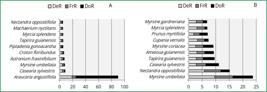
Importance Value (IV) of the adult component (A) and the juvenile component (B) of the Araucaria Forest, Capão Bonito, São Paulo State, Brazil
Absolute density in the adult component was 1,580.8 individuals·ha⁻1, with an absolute dominance (basal area) of 40.3 m2·ha⁻1. Using the same inclusion criterion, a natural remnant of Araucaria Forest in Guarapuava, Paraná State, showed similar values: Araucaria angustifolia (IV = 88.26), with only five species accounting for 64.85% of the total Importance Value; 1,397 individuals·ha⁻1; and a basal area per hectare (absolute dominance) of 67.25 m2·ha⁻1 (Cordeiro; Rodrigues, 2007).
In the juvenile component (Figure 2B), the species with the highest Importance Values (IV) were Myrsine umbellata (IV = 23.71), Nectandra oppositifolia (IV = 15.13), Casearia sylvestris (IV = 11.12), Tapirira guianensis (IV = 9.55), Amaioua guianensis (IV = 9.21), Myrsine coriacea (IV = 9.12), Cupania vernalis (IV = 7.27), Prunus myrtifolia (IV = 7.00), Myrcia splendens (IV = 6.80), and Myrsine gardneriana (IV = 6.71), which together accounted for 35.2% of the total IV. None of these ten species were pioneers, a pattern likely associated with the denser shading of this stratum that favors late-successional species. Particularly noteworthy was Nectandra oppositifolia (Lauraceae), ranked second in IV, reflecting the prominence of this family in Araucaria Forest assemblages. Overall, the juvenile component presented an absolute density of 2,698.4 individuals·ha⁻1 and an absolute dominance of 1.18 m2·ha⁻1.
The adult and juvenile strata revealed distinct but complementary floristic and structural patterns. While Araucaria angustifolia dominated the canopy, the understory was shaped by shade-tolerant late-successional species such as Myrsine umbellata and Nectandra oppositifolia, reflecting ongoing successional dynamics and confirming patterns observed in other Araucaria Forest remnants (Cordeiro; Rodrigues, 2007). The scarcity of A. angustifolia juveniles, also reported in previous studies, underscores recruitment limitations for this species (Souza et al., 2015; Aimi et al., 2017). These findings suggest a forest trajectory toward more mature conditions but also highlight the need for targeted management interventions, particularly enrichment planting and protection of regeneration, to secure the persistence of A. angustifolia and other threatened taxa within this ecotonal landscape.
3.2 Indicator species and vegetation type
The ecotonal character of the study area is evidenced by the classification of vegetation types (São Paulo, BIOTA/FAPESP, 2022). Among the 163 native species sampled (with complete binomial nomenclature) that occur in distinct vegetation physiognomies, 30 species (18.4%) were distributed across CER = CERRADO - Savana Vegetation, FES = Semideciduous Seasonal Forest, and FOM = Mixed Ombrophilous Forest (Araucaria Forest), including Allophylus edulis, Clethra scabra, Matayba elaeagnoides, and Solanum pseudoquina; 22 species (13.5%) occurred in both FOM and FES, such as Annona sylvatica, Citharexylum myrianthum, and Dalbergia brasiliensis; 42 species (25.8%) in FES and CER, including Astronium graveolens, Amaioua guianensis, and Copaifera langsdorffii; and five species (3.1%) in FOM and CER, such as Myrsine umbellata, Psidium cattleyanum, and Roupala montana var. brasiliensis. Additionally, 37 species (22.7%) were exclusive to FES, including Annona cacans, Aspidosperma cylindrocarpon, and Brosimum glaziovii; 14 species (8.6%) occurred in CER, such as Handroanthus chrysotrichus, Hieronyma alchorneoides, Moquiniastrum polymorphum, and Sapium glandulosum; and nine species (5.5%) were restricted to FOM, including Banara parviflora, Ilex theezans, Myrcia hebepetala, Piptocarpha regnellii, and Trichilia clausseni. Furthermore, four species (2.5%) were associated with Ombrophilous Forest, which, although not formally defined for the study site, exert floristic influence due to the proximity of the Paranapiacaba Mountains.
Considering species associated with FOM, whether exclusively or in combination with FES or CER, a total of 66 species (40.5%) were recorded. This confirms the original presence of Araucaria Forest at the study site.
3.3 Successional aspects
In the evaluation of the community’s successional stage (Figure 3A), late secondary species were predominant, totaling 73 species (43.7%) of the overall sample (n = 167), with 69 species (43.4%) in the adult component (AC; n = 159) and 41 species (46.6%) in the juvenile component (JC; n = 88). In contrast, pioneers accounted for only 22 species (13.2%) of the total, with 22 species (13.8%) in the AC and nine species (10.1%) in the JC.

Percent distribution of species (A) and individuals (B) in the Araucaria Forest, Capão Bonito, São Paulo State, Brazil
Regarding the total number of individuals (N = 2,277; Figure 3B), late secondary species were also the most representative, with 1,048 individuals (46%). In the adult component (AC), they comprised 902 individuals (47.1% of AC, N = 1,916), while in the juvenile component (JC) they accounted for 146 individuals (40.4% of JC, N = 361), a proportion lower than that of early secondary species (51.5%). Pioneers contributed only 231 individuals (10.1%), with 207 in the AC (10.8%) and 24 in the JC (6.7%). These values are consistent with the distribution of species across ecological successional categories (Figure 3A).
Both the richness and abundance patterns indicate a community dominated by late secondary species while pioneers remain poorly represented. This distribution reflects successional advancement toward mature forest conditions, reinforced by the presence of shade-tolerant such as Pouteria spp. (Sapotaceae), Guatteria australis, Hirtella hebeclada, and Ocotea odorifera, typical of advanced stages. Similar patterns have been observed in other Araucaria Forest remnants, where the decline of pioneers and the expansion of late secondary species signal the transition to advanced successional stages (GANDOLFI et al., 1995; RIBEIRO et al., 2013b).
3.4 Floristic diversity and similarity
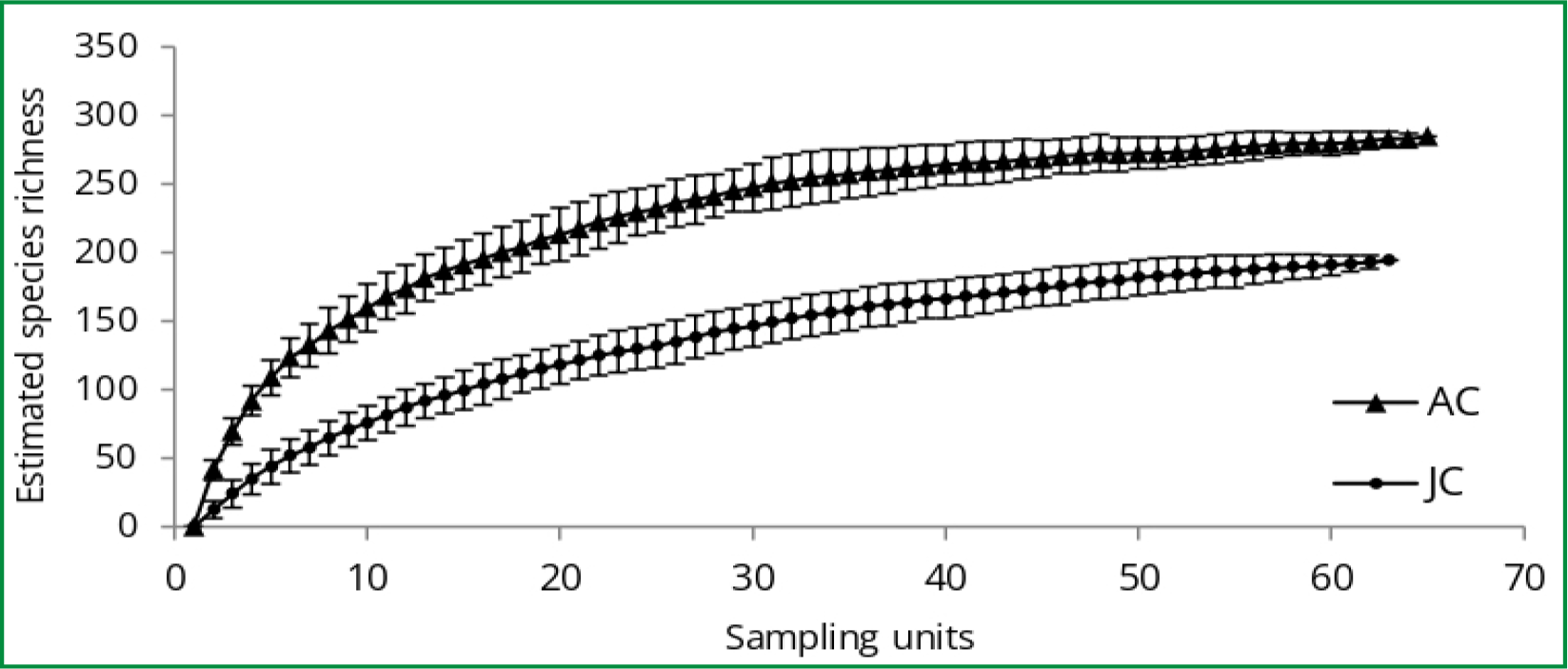
The species recorded in the adult (n = 198) and juvenile (n = 111) components represented 69.5% and 56.9% of the estimated richness (285 and 195 species, respectively), as shown by the rarefaction curves (Figure 4). Both curves tended toward stabilization, although in tropical forests true asymptotes are rarely achieved (Schilling; Batista; Couto, 2012). Environmental heterogeneity, floristic composition, and natural successional processes likely account for the gap between observed and estimated richness (Higuchi; Silva; Almeida; Bortoluzzi; Mantovani; Ferreira; Souza; Gomes; Silva, 2013).

Rarefaction curves for the adult component (AC) and juvenile component (JC) of the Araucaria Forest, Capão Bonito, São Paulo State, Brazil. Error bars represent standard deviation
Shannon-Wiener diversity (H′) was similar between adults (H′ = 4.17; 4.04 < H′ < 4.18) and juveniles (H′ = 4.16; 4.09 < H′ < 4.20). These values are comparable to those reported for Campos do Jordão, SP (0.725 ha; H′ = 4.05; LOS, 2004) and Itaberá, SP (1 ha; adults H′ = 4.12, juveniles H′ = 3.5; RIBEIRO et al., 2013b), both ecotonal areas similar to the present study. Evenness (J) was higher among juveniles (0.88; 0.87 < J < 0.91) than adults (0.79; 0.78 < J < 0.81), indicating some ecological dominance but also a relatively balanced distribution of individuals across species. According to Brower; Zar; Van Ende (1988), 21% (adults) and 12% (juveniles) more species would be required to reach maximum diversity. Comparable evenness was reported in Itaberá for adults (J = 0.84; RIBEIRO et al., 2013b).
A total of 96 species were shared between strata, with a Jaccard index of 0.45 and a Morisita-Horn index of 0.73, both above thresholds commonly used to indicate floristic similarity (Mueller-Dombois; Ellemberg, 1974). Despite 27% of sampled species being rare (singletons), the results suggest equilibrium, with juvenile cohorts replenishing adult populations in the face of disturbances or mortality.
Cluster analysis of Araucaria Forest studies in São Paulo (Figure 5, Table 1) revealed three main groups (cophenetic correlation = 0.91; similarity -0.1 to -0.2). The first grouped Campos do Jordão sites: a subcluster of valley-bottom and natural grassland areas (CJ.RI1215, CJ.SO0815, CJ.VA10), and another of heterogeneous forest sites (CJ.LO04, CJ.RO90) with higher floristic affinity (0.37). The second grouped southern São Paulo sites, with Capão Bonito (CB.FIB03 and CB.RA21, present study) closest, followed by Itaberá (IT.RI13) and more distantly Barra do Chapéu (BC.SO0815). However, similarity was low between this study and the others: Capão Bonito (0.24), Itaberá (0.23), and Barra do Chapéu (0.19). Barra do Chapéu’s more Ombrophilous flora contrasts with the ecotonal vegetation of Capão Bonito and Itaberá, where Ombrophilous, Seasonal, and Cerrado elements intermingle. The third group consisted solely of Bananal (BA.RI13), isolated from both Campos do Jordão and southern São Paulo groups, though with some affinity to Barra do Chapéu (0.18).
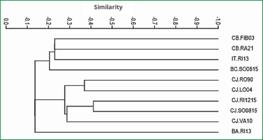
Cluster dendrogram using the Unweighted Pair Group Method with Arithmetic Mean (UPGMA) based on a Jaccard similarity matrix, comparing studies of Araucaria Forest in São Paulo State (Table 1)
Across the southern São Paulo sites, 23 species were shared among one or more studies, but only Araucaria angustifolia occurred in all. The floristic dissimilarity observed underscores that the Capão Bonito National Forest harbors a unique biodiversity within Araucaria Forest, reinforcing the need for targeted conservation measures.
Overall, the Araucaria Forest at Capão Bonito exhibited high diversity, comparable to other ecotonal sites such as Campos do Jordão and Itaberá (LOS, 2004; Ribeiro et al., 2013B). Yet, the relatively low floristic similarity with other remnants underscores its singularity, shaped by ecotonal conditions and successional dynamics (Mueller-Dombois; Ellemberg, 1974). This uniqueness highlights the need for targeted management actions, including the protection of late-successional species, enrichment planting of threatened taxa, and control of invasive species, to safeguard Capão Bonito as a key reservoir of biodiversity within the Araucaria Forest. Importantly, these findings provide an applied perspective, as the Capão Bonito National Forest is planned for plantation management, Araucaria angustifolia will be managed for seed production under different conservation and use strategies, such as Seed Collection Areas (SCAs), Seed Production Areas (SPAs), or Active Germplasm Banks (AGBs).
4 CONCLUSIONS
The Araucaria Forest at Capão Bonito showed high species richness and diversity, with late secondary species predominating in both adult and juvenile components, confirming the advanced successional stage of the community. Six threatened species occurred, reinforcing the conservation value of the area. Two invasive alien species were also recorded, showing the need for eradication management.
Floristic similarity between strata was moderate (Jaccard = 0.45; Morisita-Horn = 0.73), indicating that the juvenile component has the potential to replenish adult populations and maintain community balance over time.
Comparisons with other remnants in São Paulo State revealed low floristic similarity, highlighting the unique composition of Capão Bonito Araucaria Forest, shaped by its ecotonal condition and successional dynamics. This singularity emphasizes the need for management actions aimed at conserving biodiversity, controlling invasive species, and promoting the sustainable use of Araucaria angustifolia, particularly in seed collection, production, and germplasm conservation initiatives.
Data Availability Statement:
Datasets related to this article will be available upon request to the corresponding author.
References
- AB’SÁBER, A. N. Os Domínios de Natureza no Brasil: Potencialidades Paisagísticas. 7. Ed. 2012. São Paulo: Ateliê Editorial, 2003. capítulo 7, p. 99 - 112.
- AIMI, S. C.; ARAUJO, M. M.; RORATO, D. G.; DUTRA, A. F.; CALLEGARO, R. M. Estrutura horizontal e influência de características do solo em fragment de Floresta Ombrófila Mista. Nativa, Sinop, v. 5, n. 2, p. 151 - 156, 2017.
- BARRETO, K. D.; BRITO, M. C.; SZTUTMAN, M.; CAMPOS FILHO, E. M.; BECHARA, F. C.; ROMÃO, G. O.; CAPRETZ, R. L.; BETINI, G. S.; BRIANI, D. C.; KATO, K.; BRITO, S.; FERRAZ, F. F. B.; SPINOLA, C. M.; FRANCISCO, C. S.; NALESSIO, A. P. Monitoramento ambiental das fazendas da Votorantim: Projeto Conservação Flora e Fauna. Unidade Capão Bonito. Piracicaba: Casa da Floresta Assessoria Ambiental; Votorantim Celulose e Papel, 2003. 188 p. Relatório Anual (não publicado).
-
BRASIL. Portaria GM/MMA n. 300 de 13 de dezembro de 2022 Publicada em 14 dez. 2022, Ed. 234, Seção 1, página 45. Available at: https://www.in.gov.br/en/web/dou/-/portaria-gm/mma-n-300-de-13-de-dezembro-de-2022-450425464 Accessed on: 22 Dec. 2022.
» https://www.in.gov.br/en/web/dou/-/portaria-gm/mma-n-300-de-13-de-dezembro-de-2022-450425464 - BROWER, J. E.; ZAR, J. H.; VAN ENDE, C. N. Field and laboratory methods for general ecology 4 th WCB/McGraw, New York: 1988. 273 p.
- COLWELL, R. K. EstimateS: Statistical estimation of species richness and shared species from samples Versão 9.1.0., 15 de junho, 2013. Available at: purl.oclc.org/estimates. Accessed on: 02 Oct. 2021.
- CORDEIRO, J.; RODRIGUES, W.A. Caracterização fitossociológica de um remanescente de Floresta Ombrófila Mista em Guarapuava, PR. Revista Árvore, Viçosa, v. 31, n. 3, p. 545 - 554, 2007.
- COMISSÃO GEOGRÁFICA E GEOLÓGICA DO ESTADO DE SÃO PAULO. “Exploração da região compreendida pelas folhas topográficas: Sorocaba, Itapetininga, Bury, Faxina, Itaporanga, Sete Barras, Capão Bonito, Ribeirão Branco e Itararé”. São Paulo: Typ. Brazil de Tothschild & Cias, 1927.
-
FLORA E FUNGA DO BRASIL. REFLORA Jardim Botânico do Rio de Janeiro. Available at: http://floradobrasil.jbrj.gov.br Accessed on: 07 Nov. 2022.
» http://floradobrasil.jbrj.gov.br - GANDOLFI, S.; LEITÃO FILHO, H. de F.; BEZERRA, C. L. F. Levantamento florístico e caráter sucessional das espécies arbustivo-arbóreas de uma Floresta Mesófila Semidecídua no município de Guarulhos, SP. Revista Brasileira de Biologia, São Carlos, v. 55, n. 4, p. 753 - 767, 1995.
-
HAMMER, O; HARPER, D. A. T.; RYAN, P. D. Programa e Manual: PAST - Paleontological Statistics software package for education and data analysis. Version 4.06. Palaeontologia Electronica, Oslo, v. 4, n. 1, 2001. Available at: https://www.nhm.uio.no/english/research/infrastructure/past/ Accessed on: 18 Jun. 2021.
» https://www.nhm.uio.no/english/research/infrastructure/past/ - HIGUCHI, P.; SILVA, A. C. da; ALMEIDA, J. A. de; BORTOLUZZI, R. L. da C.; MANTOVANI, A.; FERREIRA, T. de S.; SOUZA, S. T. de; GOMES, J. P.; SILVA, K. M. da. Florística e estrutura do componente arbóreo e análise ambiental de um fragmento de Floresta Ombrófila Mista Alto-Montana no município de Painel, SC. Ciência Florestal, Santa Maria, v. 23, n. 1, p. 153 - 164, 2013.
-
INSTITUTO CHICO MENDES DE CONSERVAÇÃO DA BIODIVERSIDADE - ICMBio. Plano de Manejo da Floresta Nacional de Capão Bonito Vol. 1. Diagnóstico. 2017. Available at: www.icmbio.gov.br Accessed on: 12 Oct. 2021.
» www.icmbio.gov.br -
INTERNATIONAL UNION FOR CONSERVATION OF NATURE - IUCN. The IUCN Red List of Threatened Species - Version 2022-2. Available at: https://www.iucnredlist.org Accessed on: 18 Sept. 2022.
» https://www.iucnredlist.org - LOS, M. M. Florística, estrutura e diversidade da Floresta com Araucária em áreas de diferentes tamanhos 2004. 79 p. Dissertação (Mestre em Ciências, Área de Ecologia) - Instituto de Biociências - Universidade de São Paulo, 2004.
- MUELLER-DOMBOIS, D.; ELLEMBERG, H. Aims and methods of vegetation ecology New York: John Willey, 1974. 547 p.
- OLIVEIRA-FILHO, A. T.; BUDKE, J. C.; JARENKOW, J. A.; EISENLOHR, P. V.; NEVES, D. R. M. Delving into the variations in tree species composition and richness across South American subtropical Atlantic and Pampean forests. Journal of Plant Ecology, Oxford, online first, 2013.
- RAMOS, M.; MAGRO, T. C.; COUTO, H. T. Z. do; CASTRO, T. N. de. Dispersão e impacto de Pinus elliottii var. elliottii em área ripária da Floresta Nacional de Capão Bonito - SP. Ciência Florestal, Santa Maria, v. 29, n. 1, p. 75 - 85, 2019.
- RIBEIRO, T. M.; IVANAUSKAS, N. M.; MARTINS, S. V.; POLISEL, R. T.; SANTOS, R. L. R. dos. Fitossociologia de uma Floresta Secundária com Araucaria angustifolia (Bert.) O. Kuntze na Estação Ecológica de Bananal, Bananal-SP. Floresta e Ambiente, Seropédica, v. 20, n. 2, p. 159 - 172, 2013a.
- RIBEIRO, T. M.; IVANAUSKAS, N. M.; MARTINS, S. V.; POLISEL, R. T.; SANTOS, R. L. R. dos; MIRANDA NETO, A. Mixed rain forest in southeastern Brazil: tree species regeneration and floristic raltionships in a remaining stretch of forest near the city of Itaberá, Brazil. Acta Botanica brasilica, Brasília, v. 27, n. 1, p. 71 - 86, 2013b.
- RIBEIRO, T. M.; MARTINS, S. V.; POLISEL, R. T.; SANTOS, R. L. R. dos; IVANAUSKAS, N. M. Impactos do fogo na restauração florestal com Araucaria angustifolia (Bert.) O. Kuntze: Um estudo de caso no Parque Estadual de Campos do Jordão, SP, Brasil. In: CARDOSO, E. J. B. N.; VASCONCELOS, R. L. F. (Ed.). Floresta com Araucária: Composição florística e biota do solo. Piracicaba: FEALQ, 2015. Capítulo 2, p. 27 - 61.
- ROBIM, M. de J.; PASTORE, J. A.; AGUIAR, O. T. de; BAITELO, J. B. Flora arbóreo arbustiva e herbácea do Parque Estadual de Campos do Jordão (SP). Revista do Instituto Florestal, São Paulo, vol. 2, n. 1, p. 31 - 53, 1990.
-
SÃO PAULO. Atlas 2.1. Programa de Pesquisas em Caracterização, Conservação, Recuperação e Uso Sustentável da Biodiversidade do Estado de São Paulo - Programa BIOTA/FAPESP. Available at: https://sinbiota.biota.org.br/atlas/ Accessed on: 10 Jan. 2022.
» https://sinbiota.biota.org.br/atlas/ - SÃO PAULO. Fauna Ameaçada de Extinção no Estado de São Paulo: Vertebrados. BRESSAN, P. M.; KIERULFF, M. C. M.; SUGIEDA, A. M. (Coord.). São Paulo: Secretaria do Meio Ambiente, 2009. 645 p.
- SÃO PAULO. Inventário florestal do Estado de São Paulo NALON, M. A. et al. (Coord.). São Paulo: Instituto Florestal, 2020. 39 p.
-
SÃO PAULO. Lista oficial das espécies da flora ameaçadas de extinção no Estado de São Paulo Resolução SMA - 57, de 05 de junho de 2016. Publicada no Diário Oficial - Poder Executivo - Seção I. Available at: https://www.infraestruturameioambiente.sp.gov.br/institutodebotanica/wp-content/uploads/sites/235/2016/06/Resolucao-SMA-057-05_2016.pdf Accessed on: 08 Jun. 2021.
» https://www.infraestruturameioambiente.sp.gov.br/institutodebotanica/wp-content/uploads/sites/235/2016/06/Resolucao-SMA-057-05_2016.pdf - SCHILLING, A. C.; BATISTA, J. L. F.; COUTO, H. Z. do. Ausência de estabilização da curva de acumulação de espécies em florestas tropicais. Ciência Florestal, Santa Maria, v. 22, n. 1, p. 101 - 111, 2012.
-
SHEPHERD, G. J. FITOPAC Versão 2.1. Campinas, SP: Departamento de Botânica, Universidade Estadual de Campinas - UNICAMP, 2010. Available at: https://pedroeisenlohr.webnode.com.br/fitopac/ Accessed on: 5 abr 2021.
» https://pedroeisenlohr.webnode.com.br/fitopac/ - SOUZA, R. P. M. de. Estrutura da Comunidade arbórea de trechos de florestas de Araucária no estado de São Paulo 2008. 101 p. Dissertação (Mestrado em Recursos Florestais) - Escola Superior de Agricultura “Luiz de Queiroz” - Universidade de São Paulo, 2008.
- SOUZA, R. P. M.; POLISEL, R. T.; SOUZA, V. de C.; ASSIS, M. C. de; IVANAUSKAS, N. M. Estrutura da comunidade arbórea e aspectos da regeneração natural de remanescentes florestais paulistas com araucária. In: CARDOSO, E. J. B. N.; VASCONCELOS, R. L. F. (Ed.). Floresta com Araucária: Composição florística e biota do solo. Piracicaba: FEALQ, 2015. capítulo 4, p. 89 - 132.
- VALERIANO, D. D. B. Dinâmica da Floresta Ombrófila Mista Altomontana, Campos do Jordão, São Paulo 2010. 176 p. Tese (Doutorado em Ciência, Área de Ecologia) - Instituto de Biociências - Universidade de São Paulo, 2010.
-
Editorial Board:
Prof. Dr. Cristiane Pedrazzi, Editor-in-ChiefProf. Dr. Dalton Righi, Associate EditorMiguel Favila, Managing Editor

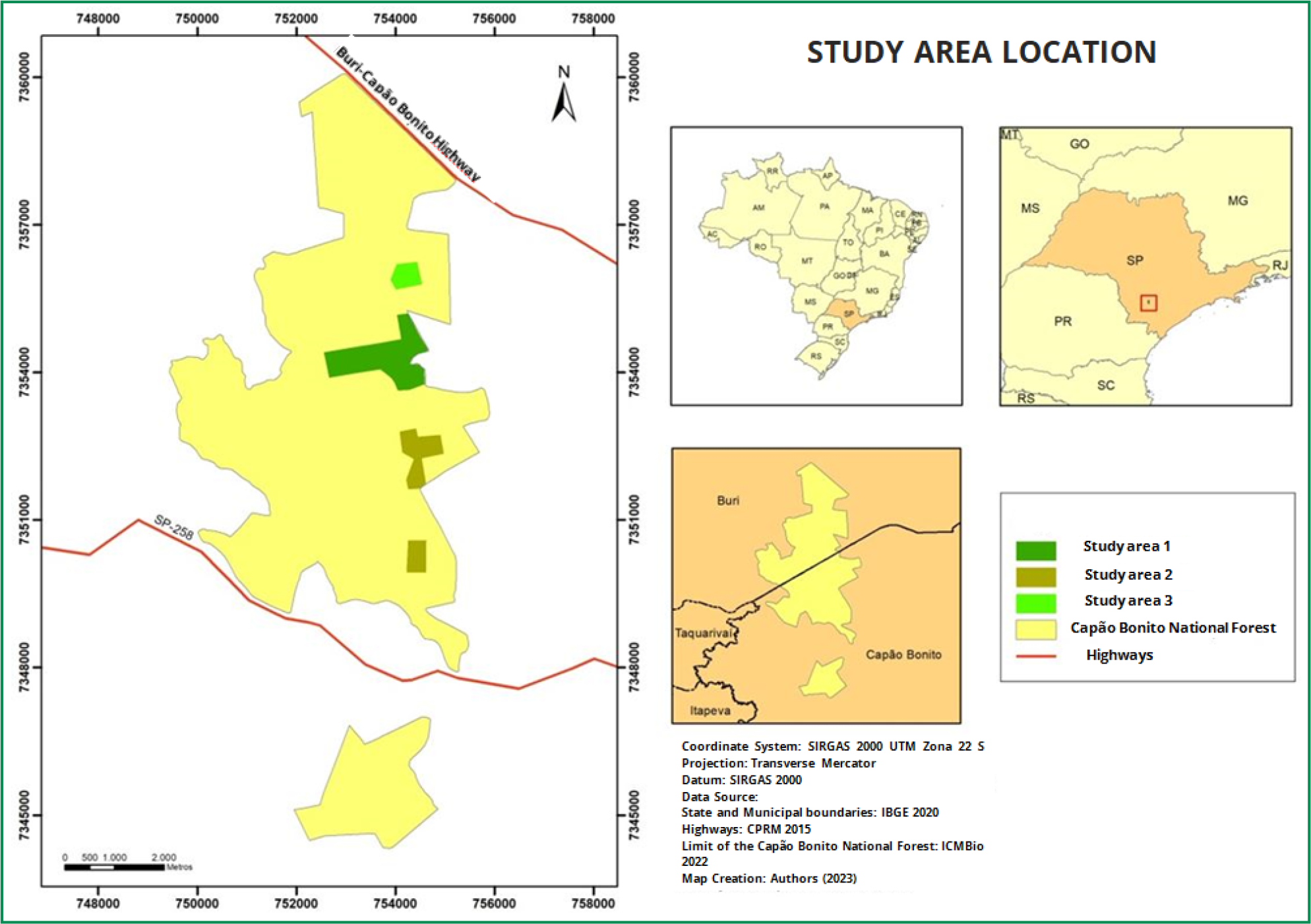 Source: Authors (2023)In where: SIRGAS = Global Satellite Navigation System; IBGE = Brazilian Institute of Geography and Statistics; CPRM = Mineral Resources Research Company; ICMBio = Chico Mendes Institute for Biodiversity Conservation - Ministry of Environment and Climate Change.
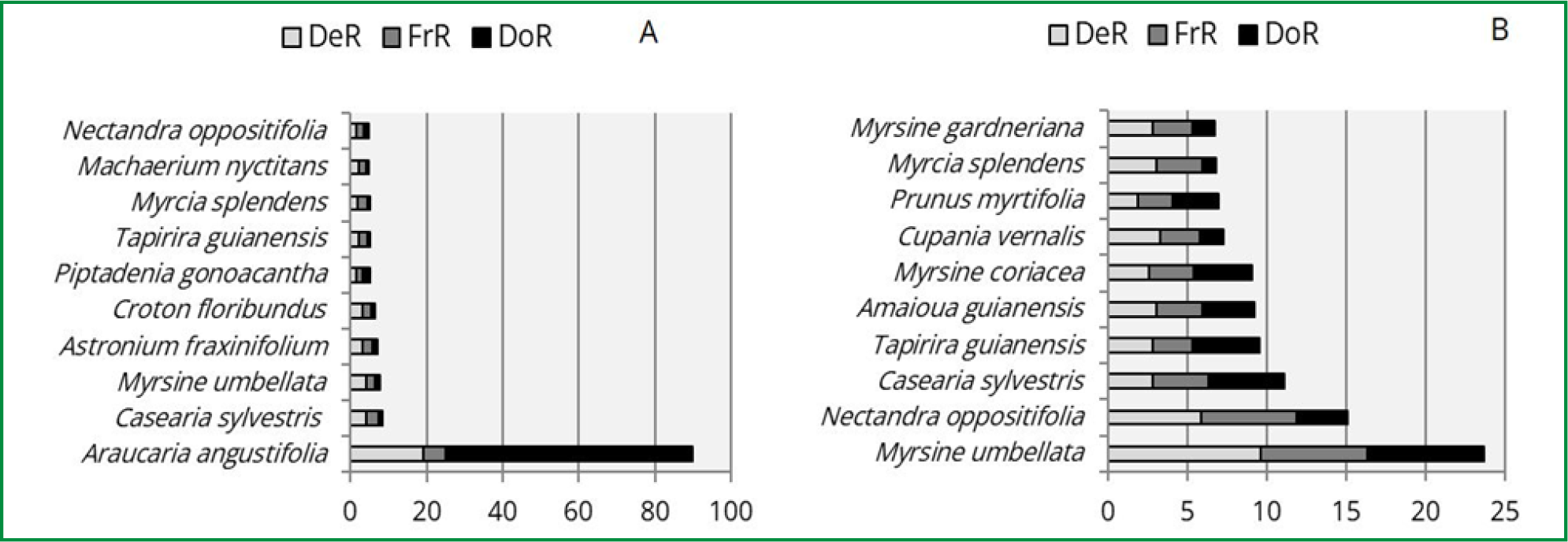 Source: Authors (2023)In where: DeR = relative density; FrR = relative frequency; DoR = relative dominance.
 Source: Authors (2023)In where: AC = adult component; JC = juvenile component; P = pioneer; Si = early secondary; St = late secondary; SC = uncategorized; and prominent values in red.
 Source: Authors (2023)
 Source: Authors (2023)