
 Floristics and phytosociology of models ecological restoration intercropped with Eucalyptus in the Brazilian Atlantic Forest
This work aimed to evaluate the effectiveness of forest restoration combined or not with eucalyptus in the floristic and in the phytosociological recovery and in the species diversity. Three of them were managed with the following forest restorations: natural regeneration after clear cutting of eucalyptus plantations (RPA), planting of native species after clear cutting of eucalyptus plantations (RMA) and planting of native species after cutting 50% of eucalyptus plantations. eucalyptus (RAR), and a fourth stand consisting of a secondary forest (REF). The floristic and phytosociological data were collected in ten plots of 25 × 25 m in each stand. The active restoration with native forest species (RAM) was better than the restorations with eucalyptus (RAR and RPA), when analyzed using diversity, evenness and floristic composition indices, but they were not similar to the Secondary Forest area (REF). In areas undergoing forest restoration, even after ten years of implementation, the structural attributes similar to those in the Secondary Forest area were not verified. The use of restorations with native forest species in consortium with eucalyptus were not able to promote a recovery of the species diversity and structure. Restoration with the planting of native species without the presence of eucalyptus can recover species diversity and establish ecological succession in the Atlantic Forest. However, it was unable to restore the structure similar to a secondary forest.
Keywords:
Recovery of degraded areas; Species diversity; Ecological succession
 Thumbnail
 Thumbnail
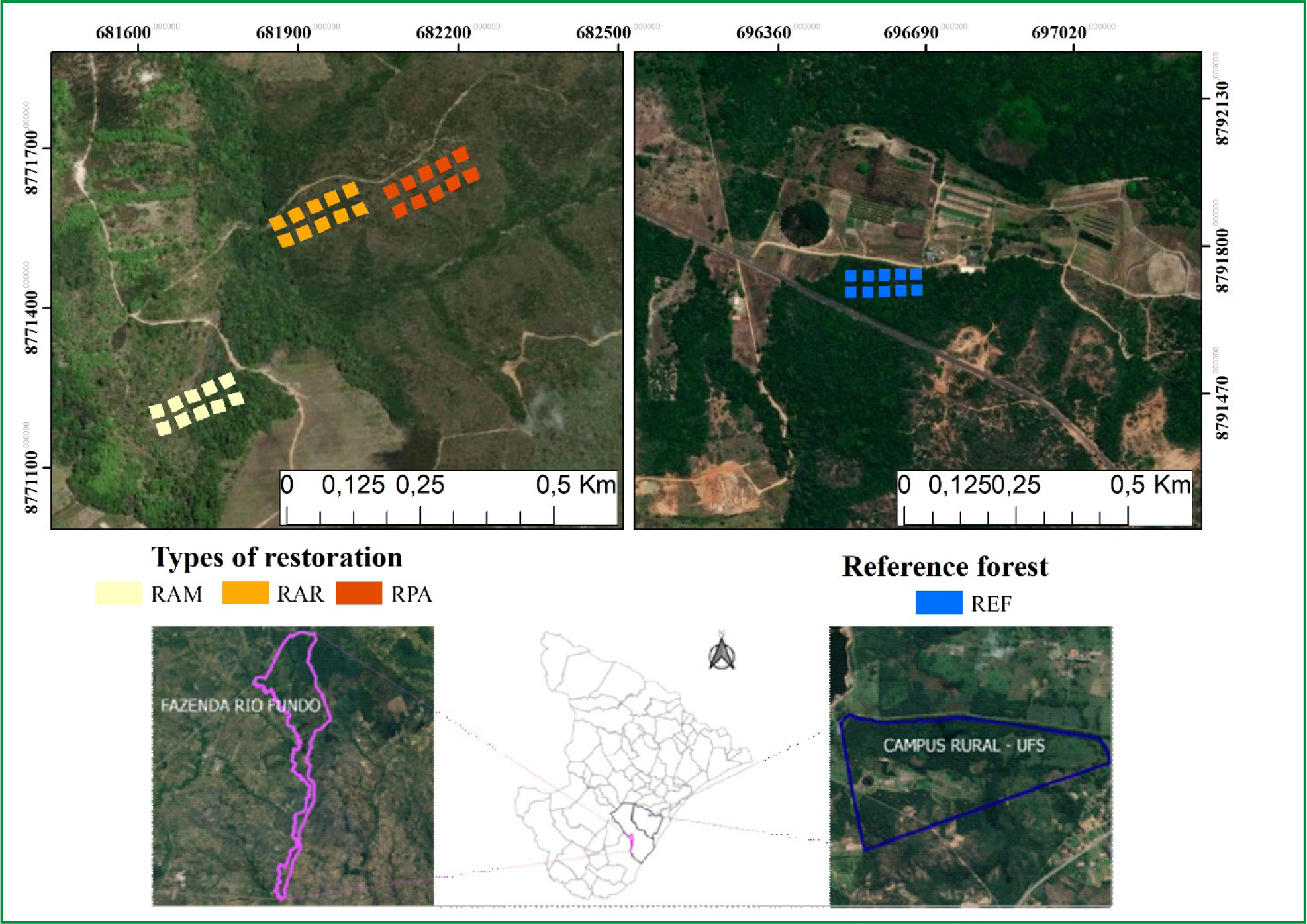 Source: Authors (2023)In where: RAM = Active restoration; RAR = Active Restoration combined with eucalyptus; RPA = Passive restoration, REF = Secondary forest.
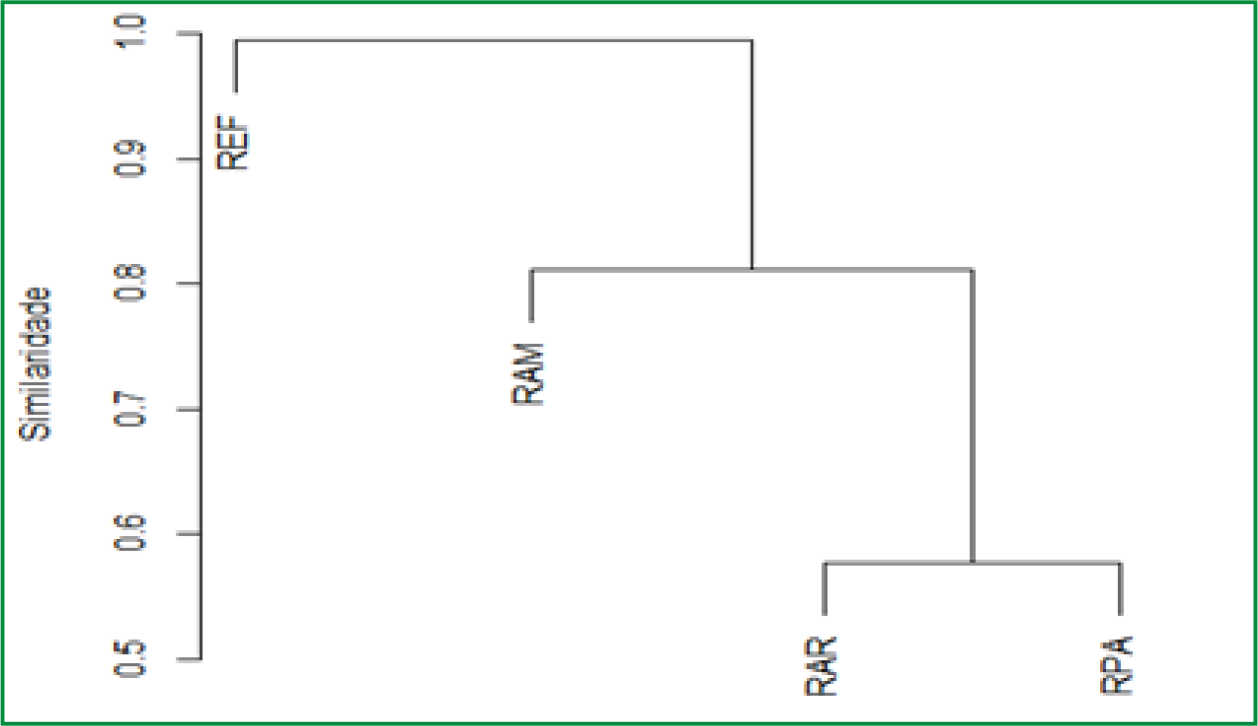 Source: Authors (2023)