
 Selection of Jacaranda mimosifolia genotypes for vegetative propagation by minicutting
ABSTRACT
This work aimed to select Jacaranda mimosifolia genotypes for vegetative propagation by mini-cutting. Evaluated the competence of adventitious rooting of minicuttings of genotypes during six successive collects. J. mimosifolia genotypes were established in a clonal mini-garden for shoots production and mini-cuttings supply. In each of the six collections, the minicuttings were planted in tubes containing commercial substrate and vermiculite. Mini-cuttings were evaluated for the rooting percentage and the number of rooted mini-cuttings after 60 days of cultivation in the greenhouse. The components of variance were estimated based on repeated measures by the Restricted Maximum Likelihood (REML) method, the prediction of phenotypic and genotypic values by the Best Linear Unbiased Prediction (BLUP). Genetic variability was observed at accuracies of 0.84 and 0.74, for the number of produced and the number of rooted minicuttings, respectively, in the six evaluations. Seven J. mimosifolia genotypes were selected for the number of rooted minicuttings, resulting in a selection gain of 53.5%. The results of this work show a high potential of this strategy of genetic improvement of forest species for vegetative propagation with high gains from selection, can be applied to other species.
Keywords:
Adventitious rooting; Genetic parameters; Minicutting
RESUMO
Este trabalho teve como objetivo selecionar genótipos de Jacaranda mimosifolia para propagação vegetativa por miniestaquia. Avaliou-se a competência do enraizamento adventício de miniestacas dos genótipos durante seis coletas sucessivas. Genótipos de J. mimosifolia foram implantados em minijardim clonal para produção de mudas e fornecimento de miniestacas. Em cada uma das seis coletas, as miniestacas foram plantadas em tubetes contendo substrato comercial e vermiculita. As miniestacas foram avaliadas quanto à porcentagem de enraizamento e número de miniestacas enraizadas após 60 dias de cultivo em casa de vegetação. Os componentes de variância foram estimados com base em medidas repetidas pelo método Restricted Maximum Likelihood (REML), a predição dos valores fenotípicos e genotípicos pelo Best Linear Unbiased Prediction (BLUP). A variabilidade genética foi observada com precisões de 0,84 e 0,74, para o número de miniestacas produzidas e o número de miniestacas enraizadas, respectivamente, nas seis avaliações. Sete genótipos de J. mimosifolia foram selecionados quanto ao número de miniestacas enraizadas, resultando em um ganho de seleção de 53,5%. Os resultados deste trabalho mostram um alto potencial desta estratégia de melhoramento genético de espécies florestais para propagação vegetativa com altos ganhos de seleção, podendo ser aplicada a outras espécies.
Palavras-chave:
Enraizamento adventício; Parâmetros genéticos; Miniestaquia
1 INTRODUCTION
Vegetative propagation is currently the main form of production of plantlets of several forest species, especially of the Eucalyptus. This is due to its potential to clone genotypes of interest, regardless of their genetic makeup, and to fix more favorable combinations of characters and superior genetic interactions, as well as or the genetic conservation of the species (Fonseca et al., 2021). Although vegetative propagation techniques are often used in the production of commercial plantlets, aspects related to clonal propagation, such as the multiplication rate, are disregarded during the selection process. However, ignoring such aspects can lead to losses of time and investments during long periods of selection and recombination, which is even more relevant for perennial species. It should be noted that superior genotypes identified over several selective cycles cannot be fixed if vegetative propagation is not possible, which has already been observed for forest species of economic importance. For this reason, the selection of genotypes with greater potential for vegetative propagation is considered fundamental, thereby prioritizing the high productivity of propagules and the high competence for adventitious rooting. This results in a greater number of rooted minicuttings during the period of vegetative growth throughout the year (Burin et al., 2018a).
In addition to the punctual performance of a genotype in each evaluation, it is necessary to consider that the vegetative propagation is highly influenced by the physiological state of the plant and by environmental factors. Both these aspects are highly related to the collection periods of the propagules (Brondani et al., 2017). This justifies the need to carry out repeated measures to obtain inferences about the genotype's ability to repeat its performance over successive evaluations. In other words, whether the selected genotypes will maintain their superiority throughout the collections, making it possible to assess whether the selection based on a certain phenotypic characteristic will be reliable (Cruz et al., 2012).
The correlation between repeated measures on the same individual over time and space statistically defines the repeatability coefficient (Cruz et al., 2012). A particularly relevant aspect in the use of the repeatability coefficient, is the possibility of verifying the sufficient number of measures to reach the maximum accuracy. This allows for optimization of the time, the physical structure, and the manpower necessary to evaluate a certain characteristic for the selection of genetically superior individuals at the accuracy desired by the researcher (Jesus et al., 2021).
Repeatability and heritability are the most important genetic parameters, which are estimated by the components of variance, and depend on appropriate biometric procedures to maximize selection efficiency (Della Bruna et al., 2012). One of the most efficient methods for estimating genetic parameters and genotypic values is the mixed model methodology based on the Restricted Maximum Likelihood Method (REML)/Best Linear Unbiased Prediction (BLUP) model (Bezerra et al., 2020). Through this method, the coefficient of genetic variation and genetic correlations are also estimated, which can be used to make inferences about the genetic variability present in a group of plants (Abu-Ellail et al., 2018).
Considering these aspects, it is evident that it is important to estimate genetic parameters, including repeatability as well as the selection of genotypes with competence for vegetative propagation. Our investigation was based on an arboreal species that resulted in quite easily vegetative propagation, Jacaranda mimosifolia D. Don, popularly known as jacaranda, belonging to the Bignoniaceae family and native to Argentina, Bolivia, Paraguay and which can be found in temperate and tropical regions. It is a pioneer species in forest succession (Grau et al., 1997), present in all succession processes of a secondary forest during a 50-year study in northwestern Argentina (Socolowski; Takaki, 2004), with a tree size that reaches up to 15 meters in height (Lorenzi; Souza; Torres, 2003). The species can be used in urban afforestation, in carpentry for making linings and boxes, in the treatment of diseases, wounds, ulcers and as an astringent (Lorenzi; Souza; Torres, 2003). Because it is a tree species with showy flowers, its pollen and nectar become attractive to fauna, which aids in the pollination process. In addition, Bignoniaceae are often used in landscaping, due to the scenic beauty and great ornamental potential of its species. Studies carried out with vegetative propagation by mini-cutting herbaceous branches suggested that new plantlets can be produced without the application of auxins and without the need for a specialized structure, such as a humidity chamber for adventitious rooting. In addition, the parent plants can be kept in a clonal-minigarden, providing sprouts for the preparation of mini-cuttings throughout the growing season, which makes it possible to produce and offer plantlets practically throughout the year (Fauerharmel et al., 2020). Thus, this study aimed to select promising jacaranda genotypes for vegetative propagation by mini-cuttings and test the selection strategy for vegetative propagation through repeated measurements.
2 MATERIALS AND METHODS
This study was conducted at the Plant Breeding and Propagation Center, Federal University of Santa Maria, RS, Brazil. According to the Köppen classification, the climate in the region is subtropical (Cfa), characterized by an average temperature ranging between -3 °C and 18 °C in the coldest month and above 22 °C in the hottest month, with an average annual precipitation ranging from 1,600 to 1,900 mm (Alvares et al., 2013). Four well-defined seasons occur in the region; the coldest months of the study year occur between May and August, and the warmest months between November and February. The experiments were conducted in an acclimatized greenhouse.
The clonal minigarden was established from seedlings, 120 days after sowing. Seeds were collected from two selected plants considering trunk diameters and straightness. Seeds were mixed and placed for germination in 280 cm3 tubes containing commercial substrate-based pine-bark. The most vigorous seedlings were randomly distributed in four polyethylene trays (55 × 34 × 15 cm, length × width × depth), spaced 10 cm apart. Twenty-three seedlings (genotypes) were considered for the present study. Each tray of the clonal minigarden was composed of a medium gravel layer (3 cm), followed by a polyethylene mesh (1 mm2) and a layer of coarse sand (12 cm). The trays had a 20 mm diameter polyvinyl chloride (PVC) transversal tube, with two perforations to distribute the nutrient solution in the cultivation bed. In the flood fertigation system, the nutrient solution was provided for 15 min, twice a day, with the aid of a digital programmer and a low-flow submerged pump.
The following composition was applied (mg L⁻1): 117.0 N in the form of nitrate; 15.75 N in the form of ammonium; 14.63 of P; 131.62 of K; 84.0 of Ca; 25.21 of Mg; 73.28 of S; 0.01 of B; 0.02 of Cu; 69.73 of Fe; 0.03 of Mn; 0.008 of Zn; and 0.0016 of Mo. The pH of the solution was maintained between 5.5 and 5.8, and the electrical conductivity at 1.5 dS m⁻1.
The nutrient solution promoted the complete soaking of the substrate and the formation of a superficial layer, which was drained by two holes, arranged in the front part of the tray. The nutrient solution was adapted from Hoagland and Arnon (1950). The pH of the nutrient solution was maintained between 5.5 and 6.0, and the electrical conductivity was maintained at 1.5 dS m-1.
After 30 days of planting the seedlings, drastic pruning was carried out to form ministumps, which promoted a break in the apical dominance and allowed the lateral buds to grow new shoots. The collections were carried out according to the growth of the shoots, totaling six collections representing the whole period of the growing season (December 2016, February, April, September, and November 2017, and January 2018).
Shoots collected from each genotype were sectioned into double bud mini-cuttings, approximately 1.5 to 2.0 cm long, containing a pair of leaves with four pairs of leaflets. The minicuttings were grown in polyethylene tubes, with longitudinal grooves and a capacity of 110 cm3, containing a commercial substrate based on pine bark mixed with vermiculite, in a proportion of 2:1 (v/v). The rooting of the mini-cuttings was carried out in the same environment of the greenhouse where the clonal mini-garden was established, and the mini-cuttings were manually watered every day. In this environment, the relative humidity was around 80%, and the maximum temperature was 25ºC. In each collection, the number of produced mini-cuttings per mini-stump (NMP) was counted, and after 60 days of cultivation in the rooting substrate, the number of rooted mini-cuttings per mini-stump (NRM), and the percentage of rooted mini-cuttings (PRM) for each genotype were recorded. Mini-cuttings were considered rooted when they had at least one root equal to or greater than 0.1 cm.
The data were subjected to deviance analysis, as proposed by Resende (2002). The significance of the difference in the fit of different models was tested using the Likelihood Ratio Test (LRT) proposed by Wilks, and defined by the model:
Where: Lp+1 and Lp correspond to the peaks of the likelihood function associated with the complete model and the reduced model, respectively.
Thus, λ must be compared with the probability density function (χ2) for a given number of degrees of freedom and probability of error (Dobson, 1990). In order to corroborate the likelihood ratio test, Pearson's correlation test was performed with the aid of the statistical program RBio (Bhering, 2017), with the objective of identifying the character that should be used for the selection of jacaranda genotypes for vegetative propagation.
Components of variance were estimated by the REML method and the prediction of phenotypic and genotypic values was undertaken using the BLUP method (Resende, 2002). The statistical model 63 was used, which corresponds to the basic model of repeatability without design, with the aid of the Selegen REML/BLUP software (Resende, 2016). The statistical model is expressed by:
Where: y is the data vector, m is the vector of the collection effects (assumed to be fixed) plus the general average, p is the vector of permanent plant effects (genotypic effects + permanent environment effects) (assumed to be random), and e is the vector of errors or residues (random). The capital letters represent the incidence matrices for the effects of m and p, respectively.
The efficiency of using m measurements on each plant, compared to using one measure for each plant, in relation to genetic gain with selection, is defined by the function:
Where: f is the selective efficiency, m is the number of measurements, and ρ is the repeatability coefficient.
The value m to achieve a fraction of the maximum coefficient of determination is defined by the function:
Where: f is the selective efficiency, m is the number of measurements, and ρ is the repeatability coefficient.
The average components (individual BLUPs), based on the permanent phenotypic effect of the 23 evaluated genotypes of J. mimosifolia, were obtained to classify and identify superior genotypes for vegetative propagation. The genotypic values of each individual evaluated were obtained by adding each genotypic effect to the general average of the experiment. The genetic gain was equivalent to the average of the predicted vectors of the genetic effects for each selected genotype. The overall average plus the genetic gain resulted in an improved population mean. The relative performance of each genotype was obtained by the relationship between the improved population means and the average of the genotype with the highest genetic value. The phenotypic values of each genotype, corresponding to the values observed in the experiment, were added to the list. The genotypes that presented a relative performance higher than 80% for the genotypic value for the number of rooted minicuttings, were selected.
3 RESULTS AND DISCUSSIONS
Deviance analysis showed that the 23 evaluated jacaranda genotypes differed in terms of the number of mini-cuttings produced (p < 0.01) and the number of rooted mini-cuttings (p < 0.05) in the six consecutive shoot collections (Table 1). As for the rooting percentage of the minicuttings, no significant difference was detected between the jacaranda genotypes. In addition, the rooting average of the 23 genotypes studied can be considered satisfactory, since jacaranda minicuttings do not require treatment with auxin or a specialized structure for cultivation during the adventitious rooting process (Fauerharmel et al., 2020).
Deviance values for the number of mini-cuttings produced and rooted and for the rooting percentage of 23 Jacaranda mimosifolia genotypes in six consecutive collections and evaluated at 60 days of cultivation in a greenhouse
LRT values showed that, for both the number of minicuttings produced and rooted, the genotypic effects and the environmental effects were significant, indicating that the complete model was the most suitable for adjusting the data in comparison with the reduced model. According to Sanchéz et al. (2017), the likelihood principle allows several models to be compared and, therefore, this type of model is the most appropriate for genetic estimation. In addition, the LRT showed the existence of genetic variability, indicating the possibility of obtaining selection gains, both for the number of mini-cuttings produced and for the number of rooted mini-cuttings, whose characters were significantly correlated (0.4338, p = 1.065-07). As for the rooting percentage, no significant differences were detected between the genotypes (Table 1) and the correlation was positive and significant with the number of rooted minicuttings (0.6947, p = 2.2-16). However, the correlation was negative and not significant (-0.0614, p = 0.4741) with the number of minicuttings produced.
The fact that the jacaranda genotypes presented similar behavior in terms of the percentage of adventitious rooting made the number of rooted minicuttings assume greater importance for the selection of genotypes for vegetative propagation. This was directly associated with the number of minicuttings produced and the percentage of rooting, and was corroborated by Pearson's correlation analysis. In addition, a significant and positive correlation indicated that the selection of the number of rooted mini-cuttings will result in indirect selection gains for the number of mini-cuttings produced and also for the rooting percentage. It is emphasized that the plant material used comes from a clonal mini-garden, which, through system management and pruning, provides vigor and, possibly, juvenility, consequently favoring adventitious rooting. These results were in agreement with those obtained for Cabralea canjerana (Vell.) Mart. by Burin et al. (2018b). They indicate the selection of the number of rooted mini-cuttings as an improvement strategy for vegetative propagation, considering both the number of mini-cuttings produced and the rooting percentage.
The estimates of the genetic parameters showed that a large part of the individual phenotypic variance corresponded to the temporary variance of the environment. Therefore, the number of produced mini-cuttings and rooted mini-cuttings were highly influenced by the environment (Table 2). These results indicate that, although restricted, there is genetic variability among the evaluated plants, corroborating the deviance analysis. This guarantees the possibility of genetic gains when selecting genotypes for vegetative propagation, especially if the environmental conditions similar to those in the present study are maintained. In addition, they showed that the jacaranda genotypes responded differently to environmental variations linked to different collection periods, which increases the contribution of the environmental component to the phenotypic variance. In the same cultivation system, where similar management techniques were applied in the clonal mini-garden of C. canjerana, it was also observed that the clones differed in terms of their competence for adventitious rooting of the mini-cuttings based on the time of sprouting (Burin et al., 2018a). The effect of the growing season can be explained by the different concentrations of phytohormones, which interact with the environment to regulate the stages of the complex adventitious rooting process in time and space (Lakehal and Bellini, 2019).
Variance components and genetic parameters for the number of mini-cuttings produced and rooted of Jacaranda mimosifolia genotypes in six consecutive collections and evaluated at 60 days of cultivation in a greenhouse
Significant contribution of the environmental component to the phenotypic variance negatively affected heritability estimates, as measured by repeatability (Table 2). The coefficients of individual repeatability (r) found in the present study were of medium magnitude for the number of mini-cuttings produced and of low magnitude for the number of rooted mini-cuttings, according to the classification of Resende (2016). According to Almeida et al. (2019) in perennial plants, low magnitude repeatability values are commonly observed in genotypes that are not yet stabilized. This corroborates the importance of the repeatability estimate, for which the superiority of a given genotype must persist throughout the life cycle (Sanchés et al., 2017). Other perennials also have low magnitude repeatability coefficients for productivity, such as Annona muricata L. (Sanchéz et al., 2017), Poncirus trifoliata (L.) Raf., and Citrus unshiu (Yu. Tanaka ex Swingle) Marcow. (Imai et al., 2016).
Although the repeatability did not reach high magnitudes, the selective precision or accuracy considering all collections/assessments of adventitious rooting was 0.84 for the number of mini-cuttings produced and 0.74 for the number of rooted mini-cuttings (Table 2). These results showed that there is a relative superiority of genotypes from one collection to another, and that the expression of these characters had adequate genetic control. The greater the selective accuracy, the greater was the confidence in the evaluation and in the predicted genetic value of the individual, which is the main element of genetic progress that the breeder can change to maximize the selection gain (Sturion and Resende, 2005). This is due to the fact that selective accuracy corresponds to the correlation between the predicted genotypic values and the true genotypic values (Sanchéz et al., 2017). Therefore, the components of variance and genetic parameters also indicate that the number of rooted mini-cuttings can be used for the selection of jacaranda genotypes for vegetative propagation by mini-cutting.
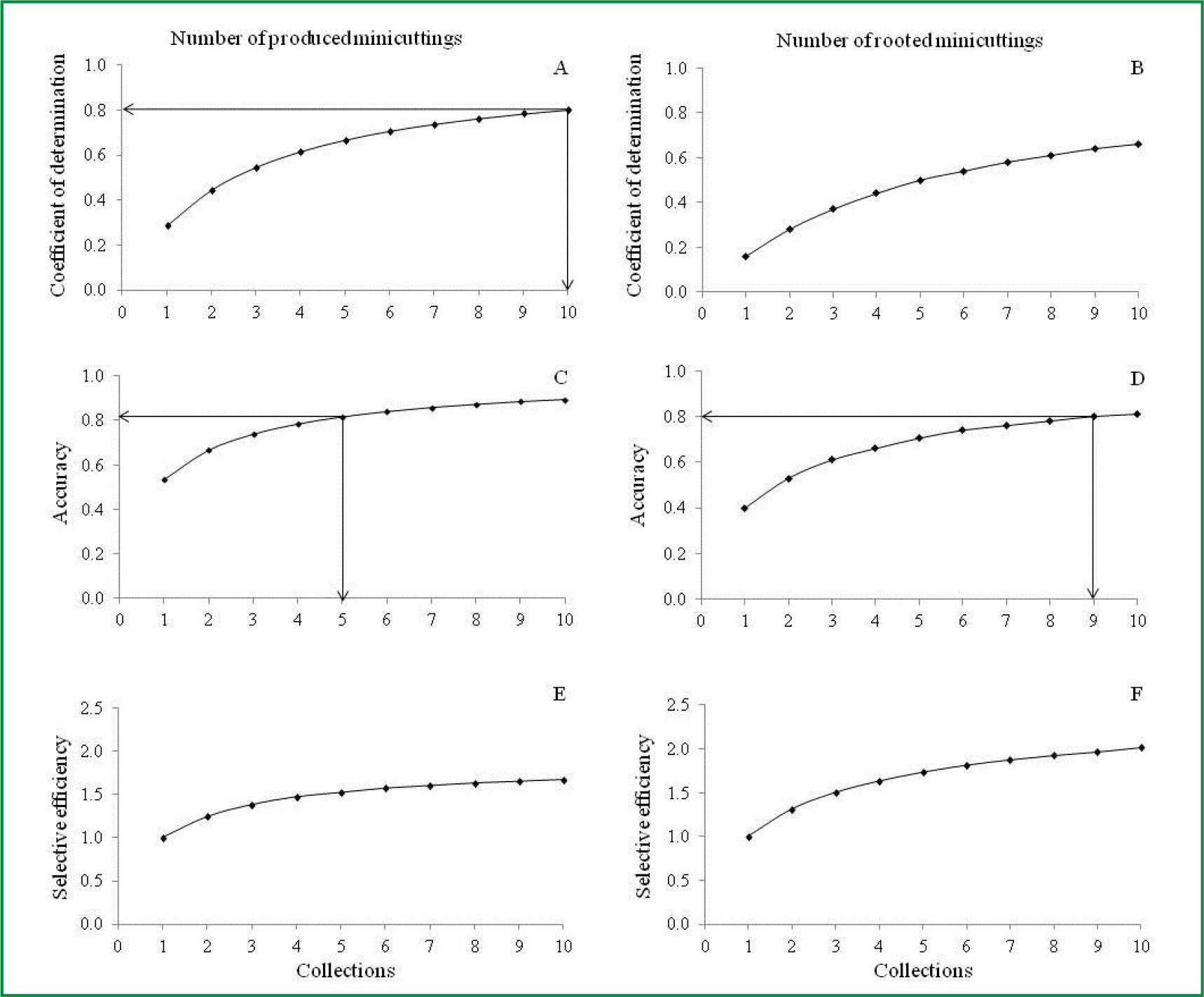
The coefficient of determination, which demonstrates the reliability of the phenotypic value in predicting the real value of the genotypes (Cargin, 2016), reached a maximum value of 80% in the tenth evaluation for the number of mini-cuttings produced, and 70% for the number of mini-cuttings rooted (Figure 1 A and B). Considering that six collections were made, the results of the determination coefficient indicated that a greater number of evaluations should be carried out to reach the minimum value of 80%, as recommended by some authors (Della Bruna et al., 2012; Cargin, 2016). The selection precision of 0.80 was reached in the fifth and ninth collections for the number of minicuttings produced and rooted, respectively (Figure 1 C and D). The selective efficiency showed a progressive increase with the number of collections, indicating that the use of six collections was important to achieve an adequate efficiency for the selection of jacaranda genotypes for the number of mini-cuttings produced (Figure 1 E and F), with a slightly higher selective efficiency for the number of rooted mini-cuttings. It is worth noting that there was a considerable gain in selective efficiency with the increase in the number of collections, which is highly desirable in any program of genetic improvement of perennial species.
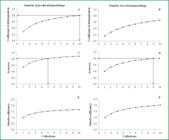
Coefficient of determination, accuracy and selective efficiency in function of the number of collections for the number of produced and rooted mini-cuttings of Jacaranda mimosifolia genotypes
The 23 jacaranda genotypes were ranked according to the average components (individual BLUPs) based on the number of rooted mini-cuttings, and the genotypes that presented relative performance above 80% were selected (Table 3). The seven genotypes selected showed the greatest competence for adventitious rooting, considering six consecutive evaluations for the number of rooted minicuttings. On average, these genotypes produced 12 mini-cuttings, of which 5.4 formed adventitious roots, which corresponded to 46.3 percent of rooting (Table 3). Selection based on nonlinear analysis allows the estimation of genetic parameters, which increase the safety and robustness in identifying superior genotypes regarding adventitious rooting, especially when compared to alternative methods, such as k-means clustering method, used by Burin et al. (2018a). Mixed models are already frequently used for perennial plants, such as Spondias sp. (Yamamoto et al., 2017), Pennisetum purpureum Schum. (Menezes et al., 2016), Prunus persica (L.) Batsch (Della Bruna et al., 2012), Psidium guajava (Almeida et al., 2019), and Bertholletia excelsa (Bonpl.) (Azevedo et al., 2020).
Permanent phenotypic effect and value, selection gain, new media and relative performance in percentage estimated for the number of minicuttings produced and rooted and for the rooting percentage of Jacaranda mimosifolia genotypes1
For the seven selected genotypes, the permanent phenotypic values were higher than the phenotypic effects, resulting in a gain with the selection. In relation to the original population average, the selection of genotypes for the number of rooted mini-cuttings resulted in a direct genetic gain of 53.5%, which corresponded to an increase of 1.54 times the number of rooted mini-cuttings in relation to the original population. In addition, a high indirect genetic gain of selection (50.1%) was observed for the number of minicuttings produced and a low gain (0.6%) was observed for the rooting percentage (Table 3). Using the same statistical methodology based on repeated data, the selection for fruit and matrix production resulted in gains of 2.4 - and 4.2 times, respectively, in relation to the original population of Bertholletia excelsa (Azevedo et al., 2020).
In terms of genetic improvement, the use of repeated measures is a promising strategy for the selection of genotypes for vegetative propagation, not only for the species under study, but for the various species, for which seedling production depends on vegetative propagation. The selection of plants for vegetative propagation increases the efficiency of the seedling production process, as it allows the projection of the quantity of produced plantlets, the expected quality standard, and the time spent to obtain plantlets with adequate quality to be transplanted in the field. This character, in addition to being related to the number of seedlings that are actually being produced, is easy to measure and monitor, since it is obtained by simply registering the number of minicuttings that take root from a particular genotype throughout the collections. Successive collections are necessary to estimate genetic parameters, which must represent the different seasons of the year, with their environmental variations, so that the selection is effective for mass production of seedlings throughout the year, as indicated by Burin et al. (2018a). Despite this, further studies are needed to analyze the stability and adaptability of the selected clones, the interaction of genotypes with the environment, as well as aspects related to the quality of the root system and plantlet produced by mini-cutting throughout the year.
4 CONCLUSIONS
The results of this work show a high potential of this strategy of genetic improvement of forest species for vegetative propagation and indicate the possibility of high selection gains. The statistical model used allow for the estimate the genetic parameters, and select the best genotypes for competence in vegetative propagation by mini-cutting, based on the number of rooted mini-cuttings.
ACKNOWLEDGEMENTS
To the Coordination for the Improvement of Higher Education Personnel (CAPES) and the National Council for Scientific and Technological Development (CNPq) for scholarship grants.
Data Availability Statement:
Datasets related to this article will be available upon request to the corresponding author.
REFERENCES
-
ABU-ELLAIL, F. F. B.; GHAREEB, Z. E.; GRAD, W. E. Sugarcane family and individual clone selection based on best linear unbiased predictors (BLUPS) analysis at single stool stage. Journal of Sugarcane Research, v. 8, p. 155-68, 2018. https://www.researchgate.net/publication/353031166
» https://www.researchgate.net/publication/353031166 -
ALMEIDA, C. L. P. DE; VIANA, A. P.; SANTOS, E. A.; QUINTAL, S. S. R. Repetibility in guava: how many evaluations is necessary for selection the best guava tree? Funcional Plant Breeding Journal, v. 1, n. 2, p. 1-10, 2019. http://dx.doi.org/10.35418/2526-4117/v1n2a5
» http://dx.doi.org/10.35418/2526-4117/v1n2a5 -
ALVARES, C. A.; STAPE, J. L.; SENTELHAS, P. C.; GONÇALVES, J. L. M.; SPAROVEK, G. Köppen’s climate 353 classification MAP for Brazil. Meteorologische Zeitschrift, v. 22, n. 6, p. 711-728, 2013. http://dx.doi.org/10.1127/0941-2948/2013/0507
» http://dx.doi.org/10.1127/0941-2948/2013/0507 -
AZEVEDO, V. R.; WADT, L. H. O.; PEDROZO, A. C.; FONSECA, F. L.; RESENDE, M. D. V. Coeficiente de repetibilidade para produção de frutos e seleção de matrizes de Bertholletia excelsa (Bonpl.) em castanhais nativos do estado do Acre. Ciência Florestal, v. 30, n 1, p. 135-144, 2020. https://doi.org/10.5902/1980509834304
» https://doi.org/10.5902/1980509834304 -
BEZERRA, C. M.; RIBEIRO, R. M.; VIANA, A. P.; CAVALCANTE, N. R.; SILVA, F. A. DA; AMBRÓSIO, M.; AMARAL JUNIOR, A.T. do. Guava breeding via full-sib family selection: conducting selection cycle and divergence between parents and families. Crop Breeding and Applied Biotechnology, v. 20, 2020, e256520112. https://doi.org/10.1590/1984-70332020v20n1a12
» https://doi.org/10.1590/1984-70332020v20n1a12 -
BHERING, L. L. Rbio: A Tool For Biometric And Statistical Analysis Using The R Platform. Crop Breeding and Applied Biotechnology, v. 17, p. 187-190, 2017. https://doi.org/10.1590/1984-70332017v17n2s29
» https://doi.org/10.1590/1984-70332017v17n2s29 -
BRONDANI, G. E.; OLIVEIRA, L. S.; KONZEN, E. R.; SILVA, A. L. L.; COSTA, J. L. Miniincubators improve the adventitious rooting performance of Corymbia and Eucalyptus microcuttings according to the environment in which they are conditioned. Anais da Academia Brasileira de Ciências In press: p. 1-17, 2017. https://doi.org/10.1590/0001-3765201720170284
» https://doi.org/10.1590/0001-3765201720170284 -
BURIN, C.; BISOGNIN, D. A.; LENCINA, K. H.; SOMAVILLA, T. M.; PEDROSO, M. F. Enraizamento de miniestacas em diferentes épocas de coleta para a seleção de clones de canjerana. Revista Brasileira de Ciências, v. 13, n. 2, p.1-7, 2018ª. https://doi.org/10.5039/agraria.v13i2a5530
» https://doi.org/10.5039/agraria.v13i2a5530 -
BURIN, C.; BISOGNIN, D. A.; LENCINA, K. H.; GIMENES, E. S. Early selection of Cabralea canjerana for propagation by mini-cutting. Pesquisa Agropecuária Brasileira, v. 53, n. 9, p. 1018-1024, 2018 b. https://doi.org/10.1590/S0100-204X2018000900005
» https://doi.org/10.1590/S0100-204X2018000900005 -
CARGIN, A. Repetibilidade e número de colheitas de características para a seleção de clones de variedades viníferas. Ciência Rural, v. 46, n. 2, p. 221-226, 2016. https://doi.org/10.1590/0103-8478cr20141346
» https://doi.org/10.1590/0103-8478cr20141346 - CRUZ, C. D.; REGAZZI, A. J.; CARNEIRO, P. C. S. Modelos biométricos aplicados ao melhoramento genético Viçosa: Editora UFV. 2012.
-
DELLA BRUNA, E. D.; MORETO, A. L.; DALBÓ, M. A. Uso do coeficiente de repetibilidade na seleção de clones de pessegueiro para o litoral sul de Santa Catarina. Revista Brasileira de Fruticultura, v. 34, n. 1, p. 206-215, 2012. https://doi.org/10.1590/S0100-29452012000100028
» https://doi.org/10.1590/S0100-29452012000100028 - DOBSON, A. J. An introduction to generalized linear models Melbourne: Chapman and Hall. 1990.
-
FAUERHARMEL, M.; BISOGNIN, D. A.; LENCINA, K. H.; TONETTO, T. DA S.; MELTZER, J. M.; MAGGIONI, J. H. Production of jacaranda plantlets by minicutting. Semina: Ciências Agrárias, v. 41, n. 5, supplement 1, p. 1951-1962, 2020. https://doi.org/10.5433/1679-0359.2020v41n5supl1p1951
» https://doi.org/10.5433/1679-0359.2020v41n5supl1p1951 -
FONSECA, A. L. C; MAGALHÃES, T. A.; MELO, L. A.; OLIVEIRA, L. S.; BRONDANI, G. E. Rescue and vegetative propagation of Eremanthus erythropappus (DC.) MacLeish in natural stand. Brazilian Journal of Biology, v. 81, n. 3, p. 566-574, 2021. https://doi.org/10.1590/1519-6984.225119
» https://doi.org/10.1590/1519-6984.225119 - GRAU, H. R. et al Floristic and structural patterns along a chronosequence of secondary forest succession in Argentina subtropical montane. Forest Ecology and Management, v. 95, p.161-171, 1997.
-
HOAGLAND, D. R.; ARNON, D. I. The water-culture method for growing plants without soil Berkeley: California Agricultural Experiment Station, University of California, Circular, 1950;p. 347. http://www.nutricaodeplantas.agr.br/site/downloads/hoagland_arnon.pdf
» http://www.nutricaodeplantas.agr.br/site/downloads/hoagland_arnon.pdf -
IMAI, A.; KUNIGA, T.; YOSHIOKA, T.; NONAKA, K.; MITANI, N.; FUKAMACHI, H.; HAYASHI, T. Evaluation of the best linear unbiased prediction method for breeding values of fruit-quality traits in citrus. Tree Genetics & Genomes, v. 12, n. 6, p. 119, 2016 https://doi.org/10.1007/s11295-016-1078-8
» https://doi.org/10.1007/s11295-016-1078-8 -
JESUS, O. N.; LIMA, L. K. S.; SOUZA, P. U.; GIRARDI, E. A. Genetic parameters, correlation and repeatability of agronomic characters of yellow passion fruit genotypes in three harvest cycles. Bragantia, v. 80, p. 1-11, 2021. https://doi.org/10.1590/1678-4499.20200294
» https://doi.org/10.1590/1678-4499.20200294 -
LAKEHAL, A.; BELLINI, C. Control of adventitious root formation: insights intosynergistic and antagonistic hormonal interactions. Physiologia Plantarum, v. 165, p. 90-100, 2019. https://doi.org/10.1111/ppl.12823
» https://doi.org/10.1111/ppl.12823 - LORENZI, H.; SOUZA, H. M.; TORRES, M. A. V. Árvores exóticas do Brasil: madeireiras, ornamentais e aromáticas. São Paulo: Instituto Plantarum de Estudos da Flora. 2003. 368p.
-
MENEZES, B. R. DA S.; DAHER, R. F.; GRAVINA, G. DE A.; SILVA, V. B.; RODRIGUES, E. V.; OLIVEIRA, M. L. F.; TARDIN, F. D.; PONCIANO, N. J.; ARAÚJO, M. S. B.; ROCHA, A. S. Seleção de genótipos de capim-elefante (Pennisetum purpureum) utilizando a metodologia REML/BLUP. Revista de Ciências Agrárias, v. 39, n. 3, p. 360-365, 2016. https://doi.org/10.19084/RCA15073
» https://doi.org/10.19084/RCA15073 - RESENDE, M. D. V. Genética biométrica e estatística no melhoramento de plantas perenes Brasília: Embrapa Informação Tecnológica, 2002.
-
RESENDE, M. D. V. Software Selegen-REML/BLUP: a useful tool for plant breeding. Crop Breeding and Applied Biotechnology, 2016;16:330-339. https://doi.org/10.1590/1984-70332016v16n4a49
» https://doi.org/10.1590/1984-70332016v16n4a49 -
SANCHÉZ, C. F. B.; ALVES, R. S.; GARCIA, A. D. P.; TEODORO, P. E.; PEIXOTO, L. A.; SILVA, L. A.; BHERING, L. L.; RESENDE, M. D. V. Estimates of repeatability coefficients and the number of the optimum measure to select superior genotypes in Annona muricata L. Genetics and Molecular Research, v. 16, n. 3, p. 1-8, 2017. http://dx.doi.org/10.4238/gmr16039753
» http://dx.doi.org/10.4238/gmr16039753 - SOKOLOWSKI, F.; TAKAKI, M. Germination of Jacaranda mimosifolia (D. Don - Bignoniaceae) Seeds: Effects of Light, Temperature and Water Stress. Brazilian Archives of Biology and Technology, v.47, n.5, p.785-792, 2004.
-
STURION, J. A.; RESENDE, M. D. V. Seleção de progênies de erva-mate (Ilex paraguarensis St. Hil.) para produtividade, estabilidade e adaptabilidade temporal de massa foliar. Boletim de Pesquisa Florestal, v. 50, p. 37-51. 2005 https://ainfo.cnptia.embrapa.br/digital/bitstream/CNPF-2009-09/40387/1/pag_37-52.pdf
» https://ainfo.cnptia.embrapa.br/digital/bitstream/CNPF-2009-09/40387/1/pag_37-52.pdf -
YAMAMOTO, E. L. M.; HOLANDA, I. S. A.; MORAIS, P. L. D.; NUNES, G. H. S.; ANTONIO, R. P.; LEMOS, M. S.; SILVA, J. R. Selection of umbu-cajazeira clones using the REML/BLUP. Revista Brasileira de Ciências Agrárias, v. 12, n. 4, p. 496-502, 2017. http://dx.doi.org/10.5039/agraria.v12i4a5485
» http://dx.doi.org/10.5039/agraria.v12i4a5485
-
Evaluators in this article:
Ezequiel Gasparin, Section Editor
-
Editorial Board:
Prof. Dr. Cristiane Pedrazzi, Editor-in-ChiefProf. Dr. Dalton Righi, Associate EditorMiguel Favila, Managing Editor

 Source: Authors (2024)