 Waste in the tropical furniture industry: a case study and comprehensive analysis of certified wood and legal wood
ABSTRACT
Background: This study analyzed waste generation in the production of certified and legal wooden furniture from tropical forests, aiming to provide insights for environmental and economic management decisions within the company. The study was conducted in a furniture industry that utilizes certified exotic species as well as certified and legal native wood as raw materials. The production yield of two chair models, with and without armrests, was evaluated. To achieve this, the industry was characterized, production flowcharts were created, waste diagnosis (identification, classification, quantification, and causes of generation) was conducted, and linear programming techniques were applied to evaluate two scenarios: profit maximization and waste generation minimization.
Results: Differences in results were observed based on the type of wood, chair model, and the interaction between wood type and chair model. The lowest waste generation was observed in the processing of legal wood, particularly in the armchair model. Linear programming for Scenario 1 yielded a monthly profit of R$ 22,209.16 (US$ 8,444.55), with a total production of 112 chairs of all models. In Scenario 2, a monthly waste generation of 1.52 m³ was observed, considering a production of 67 units of the studied products.
Conclusion: It was found that producing only certified wooden furniture is not feasible for the company.
Keywords:
tropical forests; Industrial waste reduction; linear programming; wood mechanical processing
HIGHLIGHTS
Legal wood showed higher material yield and less waste generation than certified wood. Mechanical processing between certified and legal wood impacts waste minimization. Processing optimization and efficient strategies reduce waste generation.
INTRODUCTION
The global forest area spans 4.06 billion hectares, corresponding to 31% of the planet’s total area. However, it is important to note that this distribution is not geographically uniform. Tropical forests, for example, hold the largest global proportion, representing 45%, followed by the boreal, temperate, and subtropical domains. Surprisingly, more than half (54%) of all the world’s forests is concentrated in just five countries: the Russian Federation, Brazil, Canada, the United States of America, and China (FAO, 2020). Brazil stands out as the holder of the largest area of tropical forest on the planet, covering an impressive 60% (FAO, 2020; MOREIRA et al., 2022). The Amazon Region, within Brazil, is recognized as the largest expanse of tropical forest in the world, encompassing approximately a quarter of all tropical forests on the planet (IORIS, 2008; MAURE et al., 2023; MOREIRA et al., 2022 ).
These tropical forests, in addition to their vast geographical extent, exhibit extraordinary floristic diversity. The species composing them are involved in a forest dynamics that includes recruitment, growth, survival, and mortality. These processes directly influence the horizontal and vertical structure of forests, determining aspects such as abundance, frequency, volume, and diameter distribution (DA SILVA LUZ et al., 2021). Tropical forests are vast reservoirs of biodiversity and play a crucial role in the health of our planet. In recent years, Brazil has seen growing interest in the sustainable management of forest resources, a movement that has gained prominence since the 1990s (MOREIRA et al., 2022). This awakening to the importance of environmental preservation and responsible wood utilization has led to the introduction of forest certification and the development of good forest management practices in tropical forests. Forest certification has emerged as a response to destructive exploitation, promoting the sustainable use of forest resources. It enables companies and communities to produce wood from controlled sources with reduced environmental impact, through environmentally responsible, socially just, and economically viable methods. This process aligns with the sustainability objectives of the Forest Stewardship Council (FSC), which promotes forest management practices that adhere to rigorous environmental and social standards. The FSC certification has proven especially effective in tropical regions with high biodiversity, supporting sustainable forest practices that balance conservation with local economic needs (KUZNETSOV et al., 2021; BOUBACAR; SISSOKO, 2025 ).
The implementation of good management in certified areas aims not only to preserve the integrity of the forest but also to generate significant social and economic benefits. The actions resulting from good management contribute to reducing the impacts of exploitation, increasing efficiency and profitability, and minimizing waste generated during harvesting (BRUSSELAERS et al., 2020; BRUSSELAERS; VAN HUYLENBROECK; BUYSSE, 2017; CORREIA, 2010; N’DOUA, 2023). However, beyond certified wood, another important source of timber in Brazil is legal wood, which is sourced from areas with authorized deforestation, as regulated by the Brazilian Institute of Environment and Renewable Natural Resources (IBAMA) (BRASIL, 2022). This wood is accompanied by the Forest Origin Document (DOF), which certifies its legal origin and ensures that its extraction is permitted within the legal and environmental limits established by Brazilian law. Despite its legal status, the use of legal wood can still contribute to several negative impacts (BRASIL, 2022; FRANCA et al., 2023). These include illegal deforestation, where demand for wood from questionable sources is inadvertently supported, labor exploitation, when companies fail to respect workers’ rights, and environmental degradation, as non-certified management often leads to significant biodiversity loss and ecosystem disruption (FRANCA et al., 2023; GONÇALVES et al., 2020; SOUSA JÚNIOR, et al., 2021 ).
Forest certification represents a significant advancement compared to conventional forest management. However, when considering the substantial losses throughout the wood processing chain, from the sawmill to the final product, it becomes evident that the pursuit of sustainability in forest production requires effective intervention throughout the entire production chain (ARYAL et al., 2023; CORREIA, 2010; HALALISAN et al., 2023). All losses throughout the industrial processes of wood transformation directly impact the intensity of tropical forest exploitation, emphasizing the importance of selecting appropriate species for different types of products and optimizing the management of the production process. One of the sectors that has increasingly incorporated certified wood into its operations is the furniture industry, representing significant potential for certification adoption in Brazil (CORREIA, 2010; HALALISAN et al., 2023). Given this scenario, this study focuses on evaluating waste generation during the mechanical processing of wood from tropical forest management, specifically in the context of furniture production.
The central question driving this research focuses on the use of certified and legal wood in furniture manufacturing, with an emphasis on the impacts of mechanical processing in tropical forests managed according to appropriate practices. Our hypothesis proposes that significant differences in yield and waste generation are expected between furniture made from certified and legal wood sourced from tropical forests, primarily due to variations in forest management and silvicultural practices. This research aims to demonstrate that there are distinct mechanical processing methods for certified and legal wood, with the goal of reducing waste generation, improving production efficiency, and enhancing the final product quality. Thus, the study seeks to implement tailored strategies to minimize waste generation while maximizing the sustainability of the production process, in line with the principles of “Cleaner Production.” By analyzing these differences, we aim to provide insights into the optimal use of these wood types in furniture manufacturing, optimizing both production efficiency and waste management. Thus, this study aims to analyze waste generation in furniture produced with certified and legal forest management wood, identifying the types, volumes, causes, and operations that determine this generation.
MATERIALS AND METHODS
Study Site and Industry Characterization
The study was conducted in a furniture industry in the State of São Paulo, located in the municipality of Praia Grande, at latitude 24° 00’ 35”, longitude 46° 24’ 45”, altitude 5 m, with an average temperature of 27°C. It is a small-sized company with a production system based on high-quality straight-line furniture, made to order, sold in specialized stores in the State of São Paulo, southeastern Brazil. During the study period, the company used certified wood from the Forest Stewardship Council (FSC), sourced from planted forests and from communities in the State of Acre, in the northern Amazon region of Brazil, which had obtained forest management certification. Additionally, the company occasionally used legal wood sourced from the State of Pará, also in northern Brazil, which was accompanied by the Forest Origin Document (DOF) to certify its legal extraction and trade, in addition to wood panels and laminates.
The most commonly used types of wood were Dipteryx odorata (cumaru), Eucalyptus grandis (eucalipto), Tabebuia serratifolia (ipe), Roupala montana (louro faia), Astronium lecointei Ducke (muiracatiara), and Diplotropis purpurea (sucupira). The characterization of the industry’s production system was conducted through the analysis of physical installation conditions and equipment. In this context, the types of equipment, the number and functions of employees, the manufactured products, installed production capacity, annual raw material consumption, wood origin, and specifications for obtaining raw materials (length, width, and thickness) for each type of product were observed.
Waste Diagnosis
Flowcharts of the industry’s production systems were developed to detail the raw material processing operations, identifying the types of waste resulting from each operation and the causes of generation (Table 1). The production process area or specific equipment item occurs when: (i) raw material enters, (ii) there is some form of transformation, or (iii) materials are released in a different form, state, or composition from the input conditions (BARROS NUNES; VALDÉS SERRA, 2019; COLOMA-JIMÉNEZ; AKIZU-GARDOKI; LIZUNDIA, 2022).
The waste was classified based on its morphological characteristics (shape and size of particles) as fines and coarse. Fine waste includes wood chips (maximum dimensions of 50 x 20 mm), shavings (more than 2.5 mm), sawdust (dimensions between 0.5 and 2.5 mm), and dust (particles smaller than 0.5 mm) (FALLER; ALMEIDA, 2014). The coarse waste encompasses scrap pieces, defective, or improperly sized parts, identified in the quality control process by the company’s employees. The causes of generation were identified during wood processing and waste quantification. The quantity of waste generated was used as a performance indicator for both environmental and administrative purposes. The quantification method took place directly in the production flow, tracking the sawn wood pieces through all stages of processing: reception in the yard, drying in the kiln, mechanical processing, finishing, and dispatch.
The quantification of waste generation began simultaneously with the drying and processing of wood. Coarse waste was quantified, and the generation of fine waste was estimated. Initially, the gross volume of dry wood was obtained, representing the volume that came out of the kiln to be machined. This gross volume was used in the wood processing on a specific machine. Sixty pieces of coarse waste generated from various machines were randomly collected and subsequently weighed. Based on the specific mass, the average of the coarse waste was obtained. All coarse waste generated from a particular sawn timber was weighed, allowing the calculation of the volume of coarse waste. By subtracting the total volume that entered, the useful volume produced, and the volume of coarse waste generated on a specific machine, the volume of fine waste was obtained. The defects in the wood pieces and their frequencies were thoroughly examined. Additionally, the wood moisture content was measured using the gravimetric method. This assessment aimed to determine if the wood moisture level was suitable for the manufacture of indoor furniture. In the context of this study, the recommended acceptable range of final moisture content was established between 6% and 10%.
Linear programming
Two scenarios were devised to provide an economic and waste management overview for the company. In Scenario 1, the central objective of the model was to optimize the company’s profit, which referred to determining the optimal quantity of different chairs to be manufactured. The constraints were: consumer market, raw material inventory, finished product storage space, and waste generation. Equation 1 used for this scenario was:
Where: Max z = function maximization; i = type of wood, where i = 1 is related to certified wood, and i = 2 related to legal wood; j = chair model, with j = 1 relating to the Ethos model with arm, and j = 2 relating to the Ethos model without arm; xij = quantity (number) of chairs made with wood i of model j to be manufactured in 1 month; Pij = sales price of the chair made with wood i of model j; Cij = production cost of the chair made with wood i of model j; Z = maximum profit obtained in 1 month.
For Scenario 2, the central objective of the problem was to optimize waste generation by the company, referring to determining the optimal quantity of different chairs to be manufactured. The constraints were: consumer market, raw material inventory, finished product storage space, and profit. This was determined with the aid of Equation 2.
Where: Min z = minimization of the function; i = type of wood used, with i = 1 relating to certified wood, and i = 2 relating to legal wood; j = chair model, with j = 1 relating to the Ethos model with arm, and j = 2 relating to the Ethos model without arm; xij = quantity (number) of chairs made with wood i of model j to be manufactured in 1 month; Kij = amount of waste generated, in m³, to manufacture 1 unit of chair made with wood i of model j; Z = minimum amount of waste generated in 1 month, in m³. For solving the linear programming problem, the Lindo 6.1 for Windows program, based on the simplex method, was utilized.
Data Analysis
A completely randomized 2 x 2 factorial experiment design (certified wood and legal wood x chair model with armrest and chair model without armrest) was adopted. Chairs made with certified wood had 24 repetitions, and chairs made with legal wood had 32 repetitions. Yield data for the finished product were used as they could assess production yield. The experimental unit was the sawn wood piece. Analysis of variance was conducted when necessary using the statistical package R at a significance level of 5%.
RESULTS
Industry characterization
The company had been in operation for three years, with a team consisting of 15 employees directly involved in production. Among this team, there were 4 assistants, 10 carpenters, and 1 painter. Only one of the employees had formal training in carpentry, while the carpenters performed tasks without distinction, operating all machines and carrying out a variety of tasks, except for the assistants and apprentices. Painters were exclusively specialized in this activity. The company did not specialize in a particular type of product and operated on a made-to-order basis, with its products being sold in specialized stores in the city of São Paulo, SP. Its main catalog included counters, chairs, bookshelves, racks, tables, beds, benches, and sideboards, as well as custom projects. Although the emphasis was on the production of residential furniture, they also manufactured institutional and office furniture.
In furniture production, both certified and legal wood were used, with the former being used on a larger scale. The certified wood studied originated from communities that obtained forest management certification in the State of Acre, in the northern Amazon region of Brazil. This purchase was facilitated through the organization of some consumers of certified wood (micro and small furniture and wooden objects companies), who came together to obtain a volume of wood that would enable transportation from the State of Acre to São Paulo. The acquisition of certified native wood has been a problem for these companies. Large timber companies export their production because prices in the international market are more profitable. This leaves the domestic market with wood produced by communities, who also face great difficulties in meeting deadlines, facilitating transportation, and producing quality sawn wood. Considering this scenario, there was no concern with the quality of the raw material in the acquisition of sawn wood, only with its origin (certified or legal) and price.
The legal wood originated from the State of Pará. In this case, criteria regarding dimensions were adopted for purchasing: length (1.0 to 1.7 m), width (12 to 15 cm), and thickness (3 to 4 cm). The installed production capacity for solid wood was 60 m³ per year; however, the company was operating below this value, approximately 48 m³ per year, due to demand. The company estimated a yield of 50% from the total processed wood. The physical facilities consisted of a 1,000 m² masonry warehouse. The space was divided into: reception and raw material storage area; production area (machining, painting, and assembly); component and finished product storage area; and administrative area. The equipment used in production included circular saws, band saws, routers, planers, thicknessers, spindle moulders, sanders, and presses. These machines form the basis for the manufacturing of wooden products, where their maintenance and usage time interfere with the greater or lesser generation of waste. Due to its characteristics, the company represents micro and small national furniture industries and can be classified according to (GUIMARÃES et al., 2016) into: poorly specialized, vertically integrated, with a low-skilled workforce, artisanal production, low technological level, and highly dependent on the market.
Production flowchart
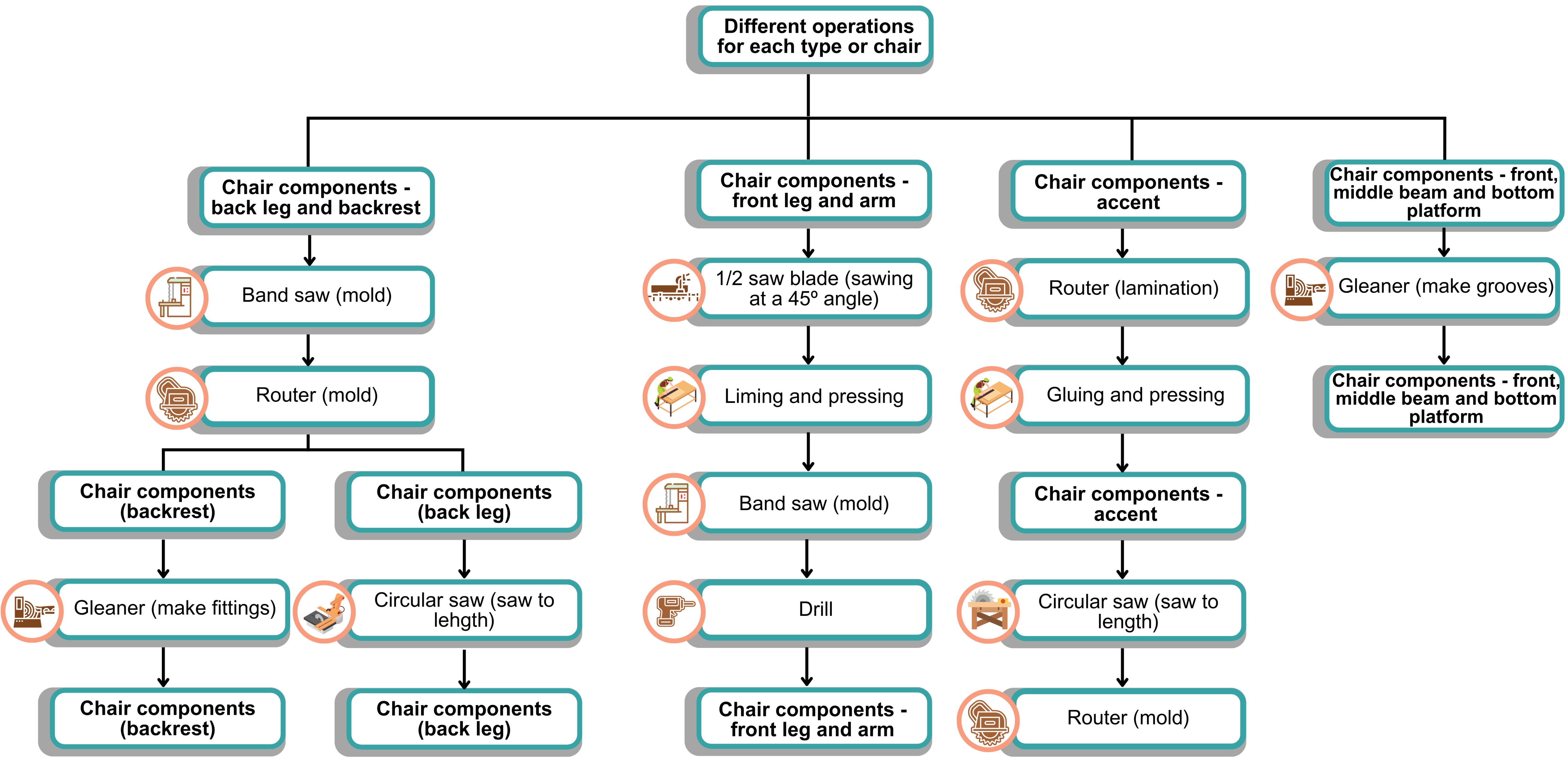
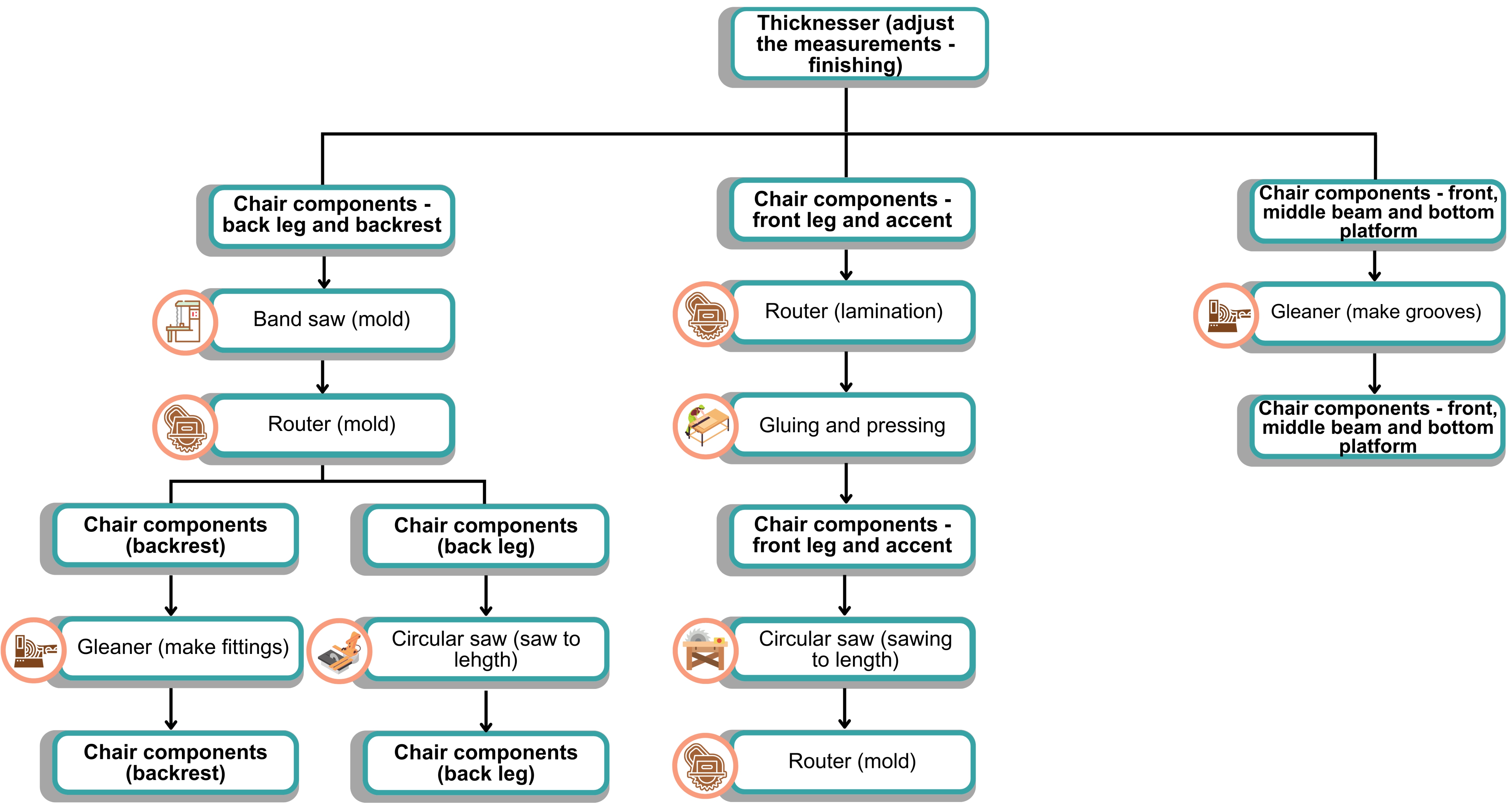
Due primarily to the difference in thickness between certified and legal raw materials compared to product piece specifications, differences in processing operations were observed during the preparation phase, as illustrated in Figure 1. The chairs under study originated from the same concept, applied to a model with armrests and another without armrests. This resulted in differences in processing operations (Figure 2 and Figure 3).


Flowchart of operations in the raw material transformation phase for the Ethos model with armrest (Products 1 and 3).
Flowchart of operations in the raw material transformation phase for the Ethos model without armrest (Products 2 and 4).
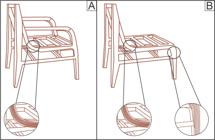
The components of the chair with armrests are solid, with only the seat made of glued laminated wood, due to the curvature required for this component (Figure 4A). The armless chair has the seat and front leg made of glued laminated wood (Figure 4B). The original design was conceived considering solid front legs; however, these did not withstand mechanical stresses, resulting in component failure. Therefore, it was decided to use laminated material instead. Glued laminated wood met the mechanical strength requirements, but resulted in increased operations, production time, labor usage, tool and machine wear, and greater waste generation.
Classification, generation causes, and quantification of waste
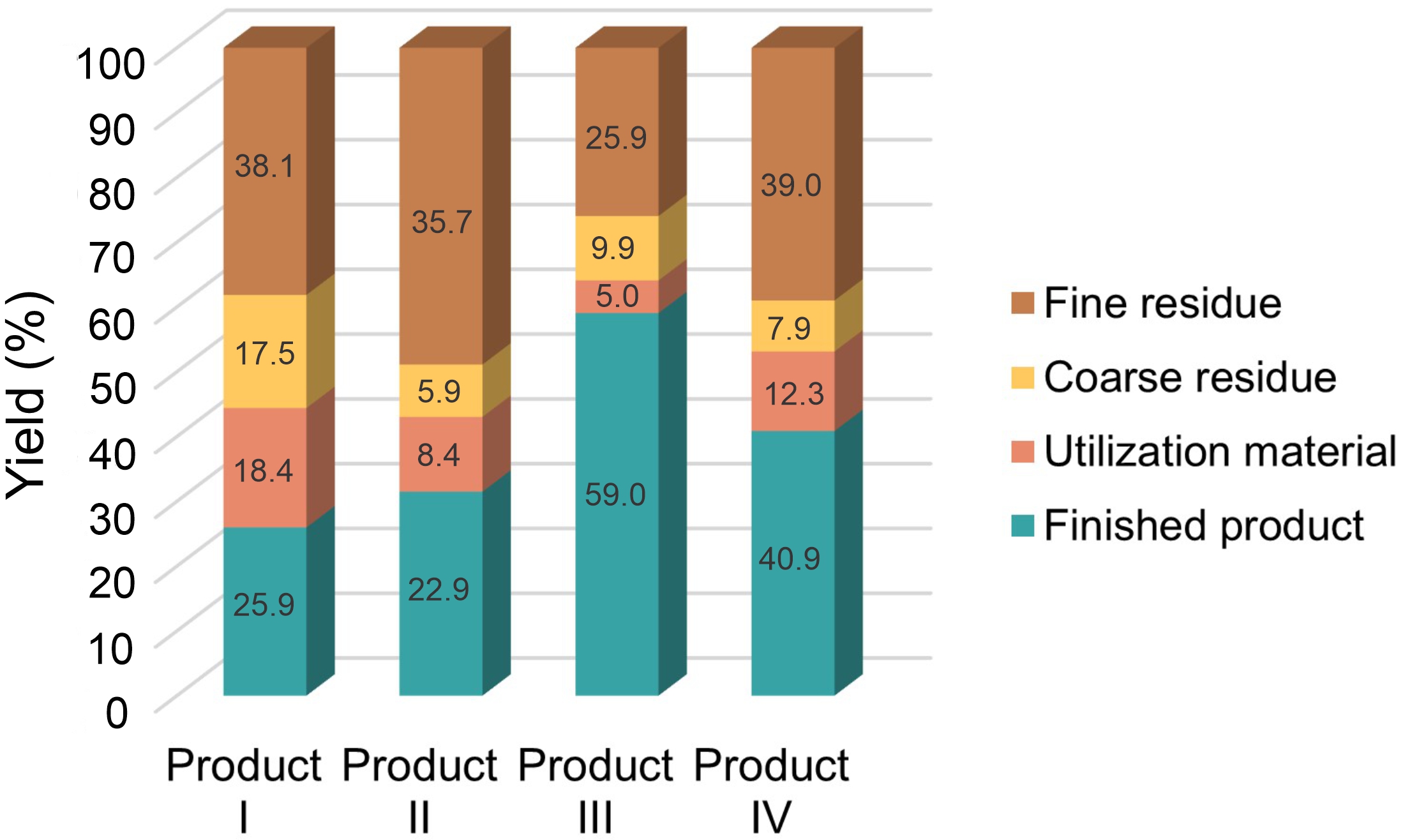
Fine waste was generated in all machines except the presses, with its proportion varying by machine. Coarse waste was generated in the circular saw, band saw, router (when the circular saw tool was used), and spindle moulder. Utilizable material was generated in the circular saw, band saw, and spindle moulder machines. Production processes are based on three components: (i) raw materials and inputs, (ii) equipment and production processes, and (iii) operational and managerial workforce. Supplementary Table A details the types of waste obtained in the respective production operations. Figure 5 presents the yields for the studied products. The product that exhibited the best yield was the Ethos model with armrest made from legal wood (Product III). This also had the lowest amount of usable material and fine waste.
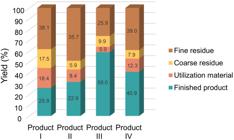
Yield by product type. Where: Product I = Ethos chair with armrest made of certified wood; Product II = Ethos chair without armrest made of certified wood; Product III = Ethos chair with armrest made of legal wood; Product IV = Ethos chair without armrest made of legal wood.
The usable material and coarse waste were generated in greater quantity in Product I (Ethos chair with armrest produced with certified wood). There was a higher generation of fine waste in Product II (Ethos chair without armrest produced with certified wood). Chairs made of legal wood showed a higher yield due to the raw material. This was because the legal wood had more suitable dimensions for chair manufacturing than the certified wood. This reduced one operation in processing legal wood, as the former required passing through the circular saw to adjust the thickness, while the latter did not.
Wood quality
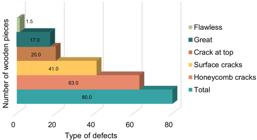
For certified wood, the observed genera were: Bowdichia sp. (black sucupira) and Diplotropis sp. (brown sucupira), both from the Leguminosae family. For legal wood, only the species Bowdichia sp. was observed. The most common defects were: knots, interlocked grain, surface cracks, shattered wood, occurrence of woodworm, “whitewood”, stains, canoe warping, end cracking, and twisted warping. The defects presented by the sucupira wood negatively influenced waste generation. Due to their presence, there was the disposal of pieces (coarse waste) or a greater generation of usable material in the raw material preparation operations. There was also the occurrence of extraction of species that were not in the cutting plan of the management area due to difficulty in identifying the species despite the 100% inventory. After drying, the moisture content of the certified wood was determined to be 12.80%. For legal wood, the average moisture content obtained was 8.9%. Both types were dried in a kiln, probably with different drying schedules. Figure 6 presents the results of the analysis of defect frequency in certified wood after drying.
Linear programming
Analyzing Scenario 1, the maximum monthly profit obtained was R$ 22,209.16 (US$ 8,444.55) by producing 24 Ethos chairs with arms made of certified wood (Product I), 36 Ethos chairs without arms made of certified wood (Product II), 24 Ethos chairs with arms made of legal wood (Product III), and 28 Ethos chairs without arms made of legal wood (Product IV). The active constraints, i.e., the problem constraints that limited the chair production and consequently the profit increase, were the consumer market for Products I, II, and III. Due to the lack of raw materials, the consumer market for Product IV was not fully supplied: 8 units remained unproduced due to limiting production capacity. If one more unit of Product I could be sold, there would be an increase in profit of R$ 276.77. Considering the consumer market constraint for Product II, an increase of one unit in the sale of this product would be associated with a profit increase of R$ 260.39. For the consumer market of Product III, if one more unit of this product could be sold, there would be a profit increase of R$ 120.44. Analyzing Scenario 2, the minimum waste generation was 1.51 m³ by producing 24 Ethos armchair model chairs made with certified wood (Product I), 21 Ethos armless chair model chairs made with certified wood (Product II), and 22 Ethos armchair model chairs made with legal wood (Product III). If Product IV were manufactured and sold, there would be an increase in waste generation of 0.020120 m³. The entire consumer market for Products II, III, and IV was not utilized; with some slack, there were 15 extra units of Product II, two of Product III, and 36 of Product IV. There was a surplus of 1.73 m³ of raw material; 78.78 m² of space for storing finished products; and a profit of R$ 0.35.
DISCUSSION
Production flowchart
The lack of criteria in sizing the raw material based on the product resulted in an increased number of operations, higher waste generation, energy expenditure, time, and labor. A greater number of operations were required to bring the wood piece to the measurements required by the products. The wood piece passed through the circular saw three times. This operation would have been unnecessary if there were specifications for the raw wood based on the dimensions of the product components. After the raw material preparation phase, specific transformation operations for each chair model began. To address the challenges related to increased operations, extended production time, excessive labor usage, tool and machine wear, as well as heightened waste generation in the context of the original design, it is crucial to adopt a comprehensive approach. Starting with a reassessment of the product design, it is possible to optimize the application of laminated wood by simplifying parts and reducing the need for multiple operations. Additionally, process automation can be an effective solution, reducing reliance on manual labor and speeding up production. Moreover, investing in specialized team training is essential, empowering them to handle laminated materials more efficiently. In waste management, establishing efficient practices such as recycling laminated wood leftovers and waste reduction is crucial. Carefully reviewing production processes allows the elimination of unnecessary or inefficient steps (FALLER; ALMEIDA, 2014).
Standardizing components, whenever possible, reduces the number of operations and simplifies production. A study conducted by (BIANCO et al., 2021) when analyzing tools based on Life Cycle Assessment (LCA) for the eco-design of wooden furniture, it was found that the use of LCA software or even spreadsheets accessible to non-LCA specialists allows quantifying the environmental impacts of furniture production and evaluating different possible scenarios to enhance production efficiency and environmental sustainability. A valuable alternative for both the company in this study and other companies in the same segment is the implementation of Life Cycle Assessment (LCA) training programs. This approach would empower teams to minimize production time, enhance the quality of the production process, and reduce waste generation. These LCA training programs would enable companies to more comprehensively assess the environmental impacts of their operations, identifying improvement opportunities in their processes. This would result in more efficient production with less resource, time, and raw material waste. Furthermore, the emphasis on quality and environmental sustainability could contribute to enhancing the company’s reputation and market position. Thus, LCA training would not only benefit the study company but also represent a valuable strategy for the sector as a whole, promoting more sustainable and efficient production practices.
Waste quantification
The quality of the final product depends on these three factors, and failure in any of these factors will depreciate its quality standard or result in higher consumption of raw materials, equipment, and workforce (ABU et al., 2019; OLIVEIRA et al., 2016). These three factors influenced waste generation as they form the basis of the production process. Therefore, observing each of them identified flaws in the production process that can be corrected to minimize waste generation. The most recent analysis of the furniture industries in the country investigated the profile of these sectors in the state of Rio de Janeiro (SOUZA et al., 2016), while another study focused on Espírito Santo (CAETANO; DEPIZZOL; REIS, 2017). The waste generation from the production of Products I and II can be considered low compared to the literature data mentioned above. Daian e Ozarska (2009) conducted a comprehensive survey involving six wood furniture companies located in Melbourne, Brisbane, and Perth, Australia, offering a variety of furniture products similar in scope to the present study. The results indicated that expenses directly associated with wood waste represent 7 to 50% of the total wood material used annually by wood furniture manufacturers, resulting in waste, totaling an annual cost between €308 and €12,700, covering expenses related to the collection and transportation of wood waste. Some recommended practices for reducing wood waste, as pointed out by Daian e Ozarska (2009), include: (i) ordering glued laminated timber in specific sizes; (ii) simplifying furniture design whenever possible, adopting shapes that require less machining; (iii) using automated cutting machines to generate finished dimensions according to furniture piece specifications. The complication in the furniture industry of this study lies in the use of reclaimed materials that are intended to serve as raw materials, but there is no knowledge about the period these materials remain stored for future use and whether they will indeed be utilized. The certification process should encompass the entire production chain, establishing efficiency criteria that promote the optimization of certified raw material utilization. Only in this way can forest sustainability be effectively promoted, as any loss during processing will result in the need for a larger volume of wood and consequently, in intensified exploitation or a larger exploited area.
Wood quality
The drying process was not conducted properly. Different species were subjected to the same drying environment, where temperature, humidity, and exposure time conditions could be mild for some species and extremely harsh for others. Excessive drying exacerbates physical defects in the wood, such as distortion, while insufficient drying results in wood that does not meet industrial standards (TREMBLAY et al., 2024). There was an increase in surface cracks and greater evidence of reverse grain, previously imperceptible. Another factor related to wood quality and losses in the process is the wood storage condition before and after drying. It is in the yard that the wood can naturally dry (when time allows) or be stored in the best possible way. When wood is dried in a kiln, it would be ideal to machine it immediately. If this does not occur, it should be stored in a covered and well-ventilated area and correctly stacked. This will decrease the incidence of defects and help the wood maintain its drying moisture (KUZNETSOV et al., 2021; SYRODOY et al., 2023). The legal wood was not stored at the company. The ease of obtaining this material in the market, limited space, low demand, and the need to avoid mixing certified and legal wood to achieve chain of custody certification are the reasons justifying this practice.
Linear programming
In scenario 1, there is a directly proportional relationship between the variations in sales of the four products in question and the profit, that is, the value of the objective function must respect certain variation intervals, because when these intervals are exceeded, the restriction may no longer be active. The range of variation for the market value of Product I was from 0.036 to 24 units. Within this range, the variation in the value of the objective function, i.e., profit, will be directly proportional to R$ 286.77. The range of variation for the market value of Product II was from 0.036 to 36 units. Within this range, the variation in the value of the objective function, i.e., profit, will be directly proportional to R$ 260.39. The range of variation for the market value of Product III was from 0.059 to 24 units. Within this range, the variation in the value of the objective function, i.e., profit, will be directly proportional to R$ 120.44. However, the ranges of variation in the absolute value of the constraints and the shadow price values are valid for each individual constraint. Additionally, 0.001848 m³ of raw material, 71.47 m² of space for storing finished products, and 0.47014 m³ of waste were not used. This means that these resources were not fully utilized because there were constraints limiting production and consequently the use of these resources. Based on these results, it can be inferred that with an increase in raw material inventory and production capacity of the company, the production of Product IV could be increased, thereby increasing the company’s profit. Another influence would be to expand the consumer market for Products I, II, and III to increase the company’s profit, since the consumer market constraints for these products limit their sales. Possible investments in marketing or exploring new markets could be two alternatives for this purpose.
Scenario 2 indicates that these resources were not fully utilized because there were restrictions that limited the production and use of these resources. It is noted that in Scenario 1, it was more influenced by the choice of one type of chair over another, since the unit profit of each type of chair was provided to the company. Associated with the restriction of the consumer market, which limited production, the least favored chair was the one related to Product IV, which presented the lowest unit profit. Scenario 2 can be used as a reference for resource management, that is, it can assist in decision-making regarding the use of wood raw material.
Limitations of the study, practical and social applications, and future research
The present research, while offering valuable insights into the relationship between the furniture industry, the use of certified and legal wood from tropical forests, and environmental challenges, has some important limitations to be considered. Firstly, by focusing on specific types of wood and furniture products, it is crucial to recognize that this delimitation may not encompass the full diversity of the market. Another relevant limitation is related to the geography covered by the research. By restricting it to a specific region of tropical forests, generalizing the results to other areas with different environmental conditions and legislation becomes challenging. Additionally, it is important to highlight limitations related to sample size and the representativeness of the analyzed furniture companies. The universe of studied companies may not fully cover the heterogeneity of the sector, which may influence the applicability of the results at the national or global level. The specific characteristics of the companies involved in the research may not reflect the entirety of the practices and challenges faced by other companies in the industry.
However, the findings of this study offer valuable recommendations that can be directly applied by companies in the furniture sector, aiming at process optimization, waste reduction, and operational efficiency improvement. By implementing the suggested practices, companies have the opportunity not only to enhance their profitability but also to contribute significantly to the sustainability of the sector as a whole. One practical suggestion highlights the use of generated waste as a valuable resource. The company can adopt innovative strategies, such as producing compacted biofuels like briquettes and pellets, from this waste. In addition to reducing environmental impact, this approach allows the company to achieve energy self-sufficiency. By utilizing internally generated biofuels, the company not only meets its energy needs but can also create a sustainable cycle by reselling these biofuels to other companies or sectors, thus contributing to the local economy and promoting more sustainable energy practices. In this way, companies in the furniture sector have the opportunity not only to enhance their efficiency and competitiveness but also to play an active role in building a more sustainable and environmentally conscious industry. By adopting innovative approaches and strategies aligned with sustainable practices, these companies not only benefit their own businesses but also positively impact the environmental and economic landscape in which they operate.
Future research may adopt a comprehensive approach to address challenges and promote sustainable practices in the furniture industry, from regional aspects to technological innovations. An in-depth analysis, exploring challenges in different tropical regions, becomes crucial, considering variables such as local legislation, climatic conditions, and ecosystem characteristics. Additionally, it is imperative to assess the long-term effects of sustainable forest management practices on local communities, encompassing not only environmental but also social and economic issues. Proposing to explore the transformative potential of technological innovations in furniture production using both certified and legal wood from tropical forests, with a focus on reducing waste and increasing production efficiency. Expanding research to other sectors dependent on forest resources is essential for an integrated understanding of the implications of sustainable practices and potential solutions, promoting a comprehensive view of environmental impact. Evaluating the role of government policies in promoting forest certification and sustainable practices is crucial, identifying opportunities for improvement. Integrating Life Cycle Assessment (LCA) analyses provides a holistic view of the environmental impact of furniture production, guiding more sustainable practices from extraction to the disposal of the final product. Exploring the effectiveness of government policies to incentivize sustainable production, along with forest certification programs such as the Forest Stewardship Council (FSC) and the Programme for the Endorsement of Forest Certification (PEFC). It is essential to investigate effective strategies for community engagement, ensuring active and inclusive participation in sustainable forest management practices, and understanding the needs and concerns of local communities. Finally, investing in research to identify innovative technologies that improve efficiency in sustainable furniture production is crucial to advance towards a more responsible and environmentally conscious industry.
CONCLUSION
A significant difference in production yield was observed across various categories: (i) between certified and legal wood, (ii) between armchair and armless chair models, and (iii) in the interaction between wood type and chair model. Legal wood demonstrated higher yield in chair production compared to certified wood. The armchair model demonstrated superior yield compared to the armless chair, with the legal wood-based chair achieving the most favorable results in terms of finished product, usable material, and waste generation. The company’s chair manufacturing process exhibited a considerable level of waste production, highlighting the need for optimizing resource utilization to enhance efficiency and sustainability. However, to obtain a more precise understanding of these differences, further detailed analyses of the physical, chemical, anatomical, and mechanical characteristics of the wood species used would be necessary to determine whether these factors significantly influence yield and waste generation. Critical points of waste generation were the quality of raw material, product design, and lamination operation. Linear programming was effective for economic and waste management. In Scenario 1, the company achieved a monthly profit of R$ 22,209.16 (US$ 8,444.55), producing chairs with different combinations of wood and model. In Scenario 2, focused on waste minimization, the company generated 1.52 m³ of waste monthly.
In light of these results, it becomes challenging for the company to adopt exclusive production of native certified wood furniture in the short term. To enable this transition, actions in the production chain are necessary, such as increasing the supply of certified wood at lower prices, improving the quality of certified raw material by implementing rigorous quality control criteria in procurement, developing products that minimize waste generation considering wood characteristics, investing in workforce training and equipment (including maintenance routines and appointing a responsible person for control).
ACKNOWLEDGEMENTS
This study was funded by the Coordenação de Aperfeiçoamento de Pessoal de Nível Superior (CAPES - Finance Code 001), Conselho Nacional de Desenvolvimento Científico e Tecnológico (CNPq - Chamada Universal 18/2021, Chamada de Bolsas no Exterior 26/2021, Bolsa de Produtividade em Desenvolvimento Tecnológico e Extensão Inovadora 08/2022, Apoio a Projetos Internacionais de Pesquisa Científica, Tecnológica e de Inovação 14/2023, Conhecimento Brasil - Rede de Colaboração 22/2024 Apoio a Projetos Internacionais de Pesquisa Científica, Tecnológica e de Inovação 16/2024, Bolsas no País 32/2023), Fundação de Amparo à Pesquisa e Inovação do Espírito Santo (FAPES - Chamada Universal 28/2022, Extensão Tecnológica 09/2024, Estágio Técnico Científico 29/2022, Programa de Capacitação de Recursos Humanos na Pós-Graduação 12/2021) and a Sociedade de Amparo ao Desenvolvimento Tecnológico e Cultural (Sadtec, Brasil).
REFERENCE
-
ABU, F.; GHOLAMI, H.; MAT SAMAN, M. Z.; et al. The implementation of lean manufacturing in the furniture industry: A review and analysis on the motives, barriers, challenges, and the applications. Journal of Cleaner Production, v. 234, p. 660-680, 2019. https://doi.org/10.1016/j.jclepro.2019.06.279
» https://doi.org/10.1016/j.jclepro.2019.06.279 -
ARYAL, K.; AWASTHI, N.; MARASENI, T.; et al.. Calibrating Nepal’s scientific forest management practices in the measure of forest restoration. Land Use Policy, v. 127, p. 106586, 2023. https://doi.org/10.1016/j.landusepol.2023.106586
» https://doi.org/10.1016/j.landusepol.2023.106586 -
BARROS, F. V.; LEWIS, K.; ROBERTSON, A. D.; et al. Cost-effective restoration for carbon sequestration across Brazil’s biomes. Science of The Total Environment, v. 876, p. 162600, jun. 2023. https://doi.org/10.1016/j.scitotenv.2023.162600
» https://doi.org/10.1016/j.scitotenv.2023.162600 -
BARROS NUNES, R. S.; VALDÉS SERRA, J. C. Quantificação de resíduos de madeira provenientes de empresas moveleiras de pequeno porte e alternativas de aproveitamento. Revista Ciência da Madeira (Brazilian Journal of Wood Science), v. 10, n. 3, p. 189-196, 1 dez. 2019. https://doi.org/10.12953/2177-6830/rcm.v10n3p189-197
» https://doi.org/10.12953/2177-6830/rcm.v10n3p189-197 -
BENFICA, N. S.; GOMES, A. da S.; ZANCHI, F. B. Twenty years of net photosynthesis, climatic and anthropic factors from biomes of Bahia State, Brazil. Journal of South American Earth Sciences, v. 131, p. 104636, 2023. https://doi.org/10.1016/j.jsames.2023.104636
» https://doi.org/10.1016/j.jsames.2023.104636 -
BIANCO, I.; THIÉBAT, F.; CARBONARO, C.; et al.. Life Cycle Assessment (LCA)-based tools for the eco-design of wooden furniture. Journal of Cleaner Production, v. 324, p. 129249, 2021. https://doi.org/10.1016/j.jclepro.2021.129249
» https://doi.org/10.1016/j.jclepro.2021.129249 -
BOUBACAR, I.; SISSOKO, Y. Sustainable forest management through certification and wood products trade: Analyzing the role of the FSC across diverse economic and climatic contexts. Journal of Cleaner Production, v. 518. p. 145786, 2025. https://doi.org/10.1016/j.jclepro.2025.145786
» https://doi.org/10.1016/j.jclepro.2025.145786 -
BRASIL. Documento de Origem Florestal (DOF). 2022. Disponível em: Disponível em: https://www.gov.br/ibama/pt-br/assuntos/biodiversidade/flora-e-madeira/documento-de-origem-florestal-dof Acesso em: 31 jan. 2025.
» https://www.gov.br/ibama/pt-br/assuntos/biodiversidade/flora-e-madeira/documento-de-origem-florestal-dof -
BRUSSELAERS, J.; VERBEKE, W.; METTEPENNINGEN, E.; et al. Unravelling the true drivers for eco-certified wood consumption by introducing scarcity. Forest Policy and Economics, v. 111, p. 102026, 2020. https://doi.org/10.1016/j.forpol.2019.102026
» https://doi.org/10.1016/j.forpol.2019.102026 - BRUSSELAERS, J.; VAN HUYLENBROECK, G.; BUYSSE, J. Green Public Procurement of Certified Wood: Spatial Leverage Effect and Welfare Implications. Ecological Economics, v. 135, p. 91-102, 2017.
-
CAETANO, M. D. D. E.; DEPIZZOL, D. B.; REIS, A. O. P. Análise do gerenciamento de resíduos sólidos e proposição de melhorias: estudo de caso em uma marcenaria de Cariacica, ES. Gestão & Produção, v. 24, n. 2, p. 382-394, 23 fev. 2017. https://doi.org/10.1590/0104-530X1413-16
» https://doi.org/10.1590/0104-530X1413-16 -
COLOMA-JIMÉNEZ, M.; AKIZU-GARDOKI, O.; LIZUNDIA, E. Beyond ecodesign, internationalized markets enhance the global warming potential in the wood furniture sector. Journal of Cleaner Production, v. 379, p. 134795, dez. 2022. https://doi.org/10.1016/j.jclepro.2022.134795
» https://doi.org/10.1016/j.jclepro.2022.134795 -
CORREIA, D. The certified Maine North Woods, where money grows from trees. Geoforum, v. 41, n. 1, p. 66-73, jan. 2010. https://doi.org/10.1016/j.geoforum.2009.03.001
» https://doi.org/10.1016/j.geoforum.2009.03.001 -
DA SILVA LUZ, E.; SOARES, Á. A. V.; GOULART, S. L.; et al. Challenges of the lumber production in the Amazon region: relation between sustainability of sawmills, process yield and logs quality. Environment, Development and Sustainability, v. 23, p. 4924-4948, 2021. https://doi.org/10.1007/s10668-020-00797-9
» https://doi.org/10.1007/s10668-020-00797-9 -
DAIAN, G.; OZARSKA, B. Wood waste management practices and strategies to increase sustainability standards in the Australian wooden furniture manufacturing sector. Journal of Cleaner Production, v. 17, n. 17, p. 1594-1602, 2009. https://doi.org/10.1016/j.jclepro.2009.07.008
» https://doi.org/10.1016/j.jclepro.2009.07.008 - FALLER, L. P.; ALMEIDA, M. I. R. Planejamento por cenários: preparando pequenas empresas do varejo de móveis planejados para um futuro competitivo. Revista de Administração, v. 49, n. 1, p. 171-187, 2014.
-
FAO, Food and Agriculture Organization of the United Nations. Global Forest Resources Assessment 2020, 2020 12p. https://openknowledge.fao.org/server/api/core/bitstreams/9f24d451-2e56-4ae2-8a4a-1bc511f5e60e/content
» https://openknowledge.fao.org/server/api/core/bitstreams/9f24d451-2e56-4ae2-8a4a-1bc511f5e60e/content -
FRANCA, C. S. S.; PERSON, U. M.; CARVALHO, T. et al Quantifying timber illegality risk in the Brazilian forest frontier. Nature Sustainability, v. 6, n. 11, p. 1485-1495, 2023. https://doi.org/10.1038/s41893-023-01189-3
» https://doi.org/10.1038/s41893-023-01189-3 -
GONÇALVES, J. R. M. R. et al Document of Forest Origin (DFO) and its Relevance in Civil Construction. International Journal of Advanced Engineering Research and Science, v. 7, n. 6, p. 188-193, 2020. https://dx.doi.org/10.22161/ijaers.76.23
» https://dx.doi.org/10.22161/ijaers.76.23 -
GUIMARÃES, J. C. F.; SEVERO, E. A.; DORION, E. C. H.; et al. The use of organisational resources for product innovation and organisational performance: A survey of the Brazilian furniture industry. International Journal of Production Economics, v. 180, p. 135-147, 2016. https://doi.org/10.1016/j.ijpe.2016.07.018
» https://doi.org/10.1016/j.ijpe.2016.07.018 -
HALALISAN, F.; ROMERO, C.; POPA, B.; et al. Global assessment of FSC forest management certification auditing through analysis of accreditation reports. Land Use Policy, v. 131, p. 106724, 2023. https://doi.org/10.1016/j.landusepol.2023.106724
» https://doi.org/10.1016/j.landusepol.2023.106724 -
IORIS, E. M. Na trilha do manejo científico da floresta tropical: indústria madeireira e florestas nacionais. Boletim do Museu Paraense Emílio Goeldi. Ciências Humanas, v. 3, n. 3, p. 289-309, 2008. https://doi.org/10.1590/S1981-81222008000300002
» https://doi.org/10.1590/S1981-81222008000300002 -
KUZNETSOV, G.V.; SYRODOY, S.V.; NIGAY, N.A.; et al. Features of the processes of heat and mass transfer when drying a large thickness layer of wood biomass. Renewable Energy, v. 169, p. 498-511, 2021.https://doi.org/10.1016/j.renene.2020.12.137
» https://doi.org/10.1016/j.renene.2020.12.137 -
MAURE, L. A.; DINIZ, M. F.; PACHECO COELHO, M. T.; et al. Biodiversity and carbon conservation under the ecosystem stability of tropical forests. Journal of Environmental Management, v. 345, p. 118929, nov. 2023. https://doi.org/10.1016/j.jenvman.2023.118929
» https://doi.org/10.1016/j.jenvman.2023.118929 -
MOREIRA, L. S.; ANDRADE, F. W. C.; BALBONI, B. M.; et al. Wood from Forest Residues: Technological Properties and Potential Uses of Branches of Three Species from Brazilian Amazon. Sustainability, v. 14, n. 18, p. 11176, 2022. https://doi.org/10.3390/su141811176
» https://doi.org/10.3390/su141811176 -
N’DOUA, B. D. The impact of forest management certification on exports in the wood sector: Evidence from French firm-level data. Journal of Cleaner Production, v. 418, p. 138032, set. 2023. https://doi.org/10.1016/j.jclepro.2023.138032
» https://doi.org/10.1016/j.jclepro.2023.138032 -
OLIVEIRA, O.; GAMBOA, D.; FERNANDES, P. An Information System for the Furniture Industry to Optimize the Cutting Process and the Waste Generated. Procedia Computer Science, v. 100, p. 711-716, 2016. https://doi.org/10.1016/j.procs.2016.09.215
» https://doi.org/10.1016/j.procs.2016.09.215 -
SOUZA, N. D. Perfil das indústrias moveleiras da região Metropolitana do Rio de Janeiro. Revista Ciência da Madeira (Brazilian Journal of Wood Science), v. 7, n. 3, p. 127-140, 2016. https://doi.org/10.12953/2177-6830/rcm.v7n3p127-140
» https://doi.org/10.12953/2177-6830/rcm.v7n3p127-140 -
SOUSA JÚNIOR, A. D.; CANTO, J. L.; COSTA, W. P. L. B. Produtos florestais nativos, legalizados e comercializados no Rio Grande do Norte. Cadernos de Ciência & Tecnologia, v. 38, n. 1, p. 26779, 2021. https://doi.org/10.35977/0104-1096.cct2021.v38.26779
» https://doi.org/10.35977/0104-1096.cct2021.v38.26779 -
SYRODOY, S. V.; KUZNETSOV, G. V.; NIGAY, N. A.; et al. The effect of compaction of the dispersed wood biomass layer on its drying efficiency. Renewable Energy, v. 211, p. 64-75, jul. 2023. https://doi.org/10.1016/j.renene.2023.04.121
» https://doi.org/10.1016/j.renene.2023.04.121 - TIMOFEICZYK JUNIOR, R.; GRAÇA, L. R.; BERGER, R.; et al. Estrutura de custos do manejo de baixo impacto em florestas tropicais; um estudo de caso. Floresta, v. 35, n. 1, p.89-105. 2005.
-
TREMBLAY, F. A.; DURAND, A.; MORIN, M. et al. Deep reinforcement learning for continuous wood drying production line control. Computers in Industry, v. 154, p. 104036, jan. 2024. https://doi.org/10.1016/j.compind.2023.104036
» https://doi.org/10.1016/j.compind.2023.104036