 Buzzy® and Pikluc® in the relief of pediatric pain in intramuscular injection: randomized clinical trial protocol
ABSTRACT
Objective: Describe the protocol for a randomized clinical trial to verify the equivalence of positioning Buzzy® devices for 15 seconds or Pikluc® immediately before administering intramuscular injections for pain relief in children compared to Buzzy® positioned for 30 seconds before the procedure.
Method: Controlled, open-label, equivalence randomized clinical trial protocol with three groups (Buzzy® 15 seconds, Pikluc® and Buzzy® 30 seconds), conducted in two Pediatric Emergency Departments in southern Brazil with children aged 1 to 11 years. The primary outcome is the pain score, while secondary outcomes include pain categorization and assessment of concurrent and non-concurrent behaviors.
Final considerations: The protocol will allow for the evaluation of equivalence between the Buzzy® device applied for 15 seconds before and Pikluc® immediately before intramuscular injection in reducing pain in children, compared to Buzzy® for 30 seconds before the procedure.
KEYWORDS:
Pediatric Nursing; Injections; Intramuscular; Biomedical Technology; Pain; Clinical Trial Protocol.
HIGHLIGHTS
1. First clinical trial comparing Buzzy® and Pikluc® in pediatric pain.
2. Evaluation of the equivalence between different application times of Buzzy®.
3. Improvement of clinical nursing practice in intramuscular injections.
RESUMO
Objetivo: Descrever o protocolo de um ensaio clínico randomizado para verificação da equivalência do posicionamento dos dispositivos Buzzy® por 15 segundos ou do Pikluc® imediatamente antes da administração de injeções intramusculares no alívio da dor em crianças em comparação ao Buzzy® posicionado por 30 segundos antes do procedimento.
Método: Protocolo de ensaio clínico randomizado, controlado, aberto, de equivalência, com três grupos (Buzzy® 15 segundos, Pikluc® e Buzzy® 30 segundos), realizado em duas Emergências Pediátricas no Sul do Brasil, com crianças de 1 a 11 anos. O desfecho primário é o escore de dor, os desfechos secundários incluem a categorização da dor e avaliação de comportamentos concorrentes e não concorrentes.
Considerações finais: O protocolo permitirá a avaliação da equivalência entre o dispositivo Buzzy® aplicado por 15 segundos antes e o Pikluc® imediatamente antes da injeção intramuscular na redução da dor em crianças, comparado ao Buzzy® por 30 segundos antes do procedimento.
DESCRITORES:
Enfermagem Pediátrica; Injeções Intramusculares; Tecnologia Biomédica; Dor; Protocolo de Ensaio Clínico.
HIGHLIGHTS
1. Primeiro ensaio clínico comparando Buzzy® e Pikluc® na dor pediátrica.
2. Avaliação da equivalência entre diferentes tempos de aplicação do Buzzy®.
3. Aprimoramento da prática clínica de enfermagem em injeções intramusculares.
RESUMEN
Objetivo: Describir el protocolo de un ensayo clínico aleatorizado para verificar la equivalencia de la colocación de los dispositivos Buzzy® durante 15 segundos o Pikluc® inmediatamente antes de la administración de inyecciones intramusculares para el alivio del dolor en niños, en comparación con Buzzy® colocado durante 30 segundos antes del procedimiento.
Método: Protocolo de ensayo clínico aleatorio, controlado, abierto, de equivalencia, con tres grupos (Buzzy® 15 segundos, Pikluc® y Buzzy® 30 segundos), realizado en dos Urgencias Pediátricas en el sur de Brasil, con niños de 1 a 11 años. El resultado primario es la puntuación del dolor, los resultados secundarios incluyen la categorización del dolor y la evaluación de comportamientos concurrentes y no concurrentes.
Consideraciones finales El protocolo permitirá evaluar la equivalencia entre el dispositivo Buzzy® aplicado durante 15 segundos antes y el Pikluc® inmediatamente antes de la inyección intramuscular en la reducción del dolor en niños, en comparación con el Buzzy® durante 30 segundos antes del procedimiento.
DESCRIPTORES:
Enfermería Pediátrica; Inyecciones Intramusculares; Tecnología Biomédica; Dolor; Protocolo de Ensayo Clínico.
HIGHLIGHTS
1. Primer ensayo clínico comparativo entre Buzzy® y Pikluc® en el dolor pediátrico.
2. Evaluación de la equivalencia entre diferentes tiempos de aplicación de Buzzy®.
3. Mejora de la práctica clínica de enfermería en inyecciones intramusculares.
INTRODUCTION
Intramuscular injection is a procedure commonly performed by the nursing team during child care and is considered painful due to the mechanical trauma resulting from needle insertion and drug administration1. According to the International Association for the Study of Pain, pain is an unpleasant sensory and emotional experience associated with actual or potential tissue damage2.
In this context, it is incumbent upon the nursing team to seek strategies to provide non-traumatic care that addresses physical aspects such as pain reduction and emotional aspects including the minimization of fear, anxiety, and stress experienced by the child1. Therefore, it is necessary to improve the use of non-pharmacological measures for pediatric pain management, especially during intramuscular injections. It should be noted that there are different resources available, such as the application of heat or cold, vibration, virtual reality, audiovisual distraction, and local pressure devices3-4.
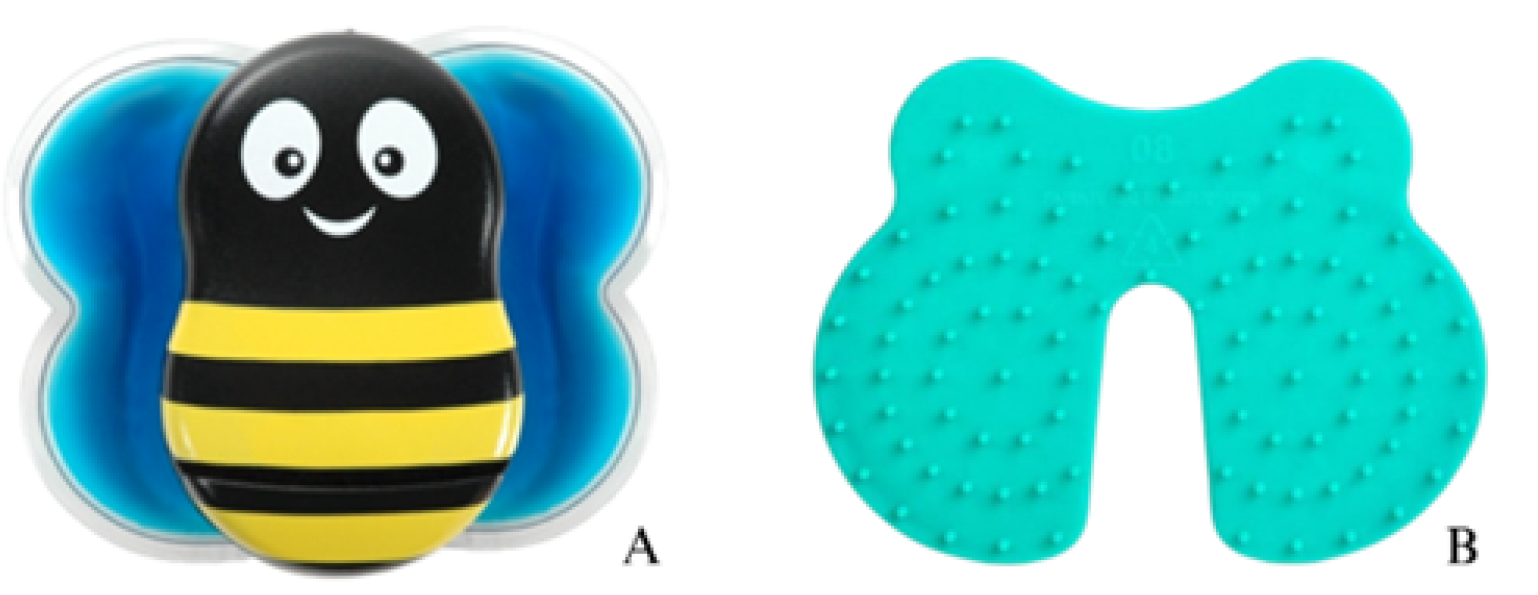
During intramuscular injections in children, the nursing team can use Buzzy®, a beeor ladybug-shaped device that uses Oscilice® technology and delivers high-frequency vibration combined with a wing-shaped ice pack, which should be applied for at least 30 seconds before the procedure5. The combination of these stimuli generates different sensations and, consequently, there is a reduction in pain during needle insertion5.
Another technology available to nurses is the Pikluc® local pressure device, consisting of small tips that sensitize the nerve endings in the area and divide the impact of needle insertion, helping to reduce pain by inhibiting the transmission of painful stimuli4. It should be noted that Pikluc® is a Brazilian product4, easily accessible and with limited studies on its effectiveness. In addition, both Pikluc® and Buzzy® are based on the Gate Control Theory of Pain6.
Although both devices offer benefits, Pikluc® can be used immediately before the procedure, without requiring a minimum time to be effective in reducing pain, and costs less than Buzzy®. However, the manufacturer of Buzzy® recommends using it for 30 to 60 seconds before the procedure to reduce pain5. Still on the use of Buzzy®, the literature presents different times: immediately before the procedure7, 15 to 45 seconds8, 30 to 60 seconds9, 30 seconds10-12, and 60 seconds13-14.
Therefore, it is essential to test this time on a national scale, using 15 seconds as an intervention to reduce the duration of the procedure, making it less uncomfortable for the child while ensuring pain reduction. The 30-second time will be used as a control, as this is the minimum time recommended by the manufacturer of Buzzy®. Furthermore, Pikluc® will be tested due to the scarcity of studies with this device, as evidenced in a scoping review15.
It should be noted that this protocol is unique in the national and international context, as it is the first to compare Pikluc® and different times of Buzzy®. In view of the above, this study aims to describe the protocol of a randomized clinical trial to verify the equivalence of positioning the Buzzy® device for 15 seconds or the Pikluc® immediately before administering intramuscular injections for pain relief in children compared to the Buzzy® positioned for 30 seconds before the procedure.
METHOD
This is a controlled, open-label, equivalence randomized clinical trial protocol (RCT) reported according to the Standard Protocol Items: Recommendations for Interventional Trials (SPIRIT)16 and Template for Intervention Description and Replication (TIDieR)17. This RCT is registered under number RBR-57m3wnw on the Brazilian Registry of Clinical Trials (ReBEC) platform. The RCT was conducted in two Pediatric Emergency Departments at two public hospitals in southern Brazil. The recruitment period has been completed, and data analysis is currently underway.
The population consisted of children aged between 1 and 11 years, divided into two strata, the first comprising children aged 1 to 3 years and the second comprising children aged 4 to 11 years. The sample was calculated to test the equivalence between three treatment groups, with 90% power and an alpha level of 0.05 (adjusted to 0.0167 by comparison using Bonferroni correction for three paired comparisons), using a one-sided test with equivalence margins of ±2.0 points, mean difference of 0 points, and standard deviation of 2.84 (pilot study data), resulting in 55 participants per group, totaling 165.
The children were randomly assigned, by stratified randomization, in blocks of nine to the groups: Intervention Group 1, Intervention Group 2, and Control Group. In Intervention Group 1, Buzzy® was applied for 15 seconds before intramuscular injection; in Intervention Group 2, Pikluc® was used immediately before the procedure; while in Control Group, Buzzy® was applied for 30 seconds before intramuscular injection. An external researcher prepared the randomization list in the RANDON Program (www.random.org) and stored it in opaque, sealed envelopes. The principal investigator opened the envelopes during the recruitment of the children, and they contained the randomization group assignments: A = Intervention Group 1, B = Intervention Group 2, and C = Control Group.
The study was conducted in four stages. In the first stage, the proposal was presented to the heads and nursing professionals of the Pediatric Emergency Departments, obtaining the consent of the institutions. The study was then submitted to and approved by the Research Ethics Committees of the participating institutions.
In the second stage, training was provided to nursing professionals during working hours and according to availability. The training included reading and signing the Free and Informed Consent Form; completing a sociodemographic and educational questionnaire; participating in a interactive lecture to present the research protocol and the Buzzy® (Figure 1A) and Pikluc® (Figure 1B) devices; and low-fidelity simulation with intramuscular injection administration in a doll. Throughout the process, nursing professionals were allowed to clarify doubts and, as new professionals joined the nursing team, they were invited to participate in the research. Those who accepted received the appropriate training.
In the third stage, the research protocol “Buzzy® 30s, Buzzy® 15s, and Pikluc® - BBP” (Appendix A), based on the recommendations for use of the Buzzy®5 and Pikluc®4 devices and specialized literature18-19, was tested in a pilot study with 60 children. After evaluation, no adjustments to the protocol were necessary.
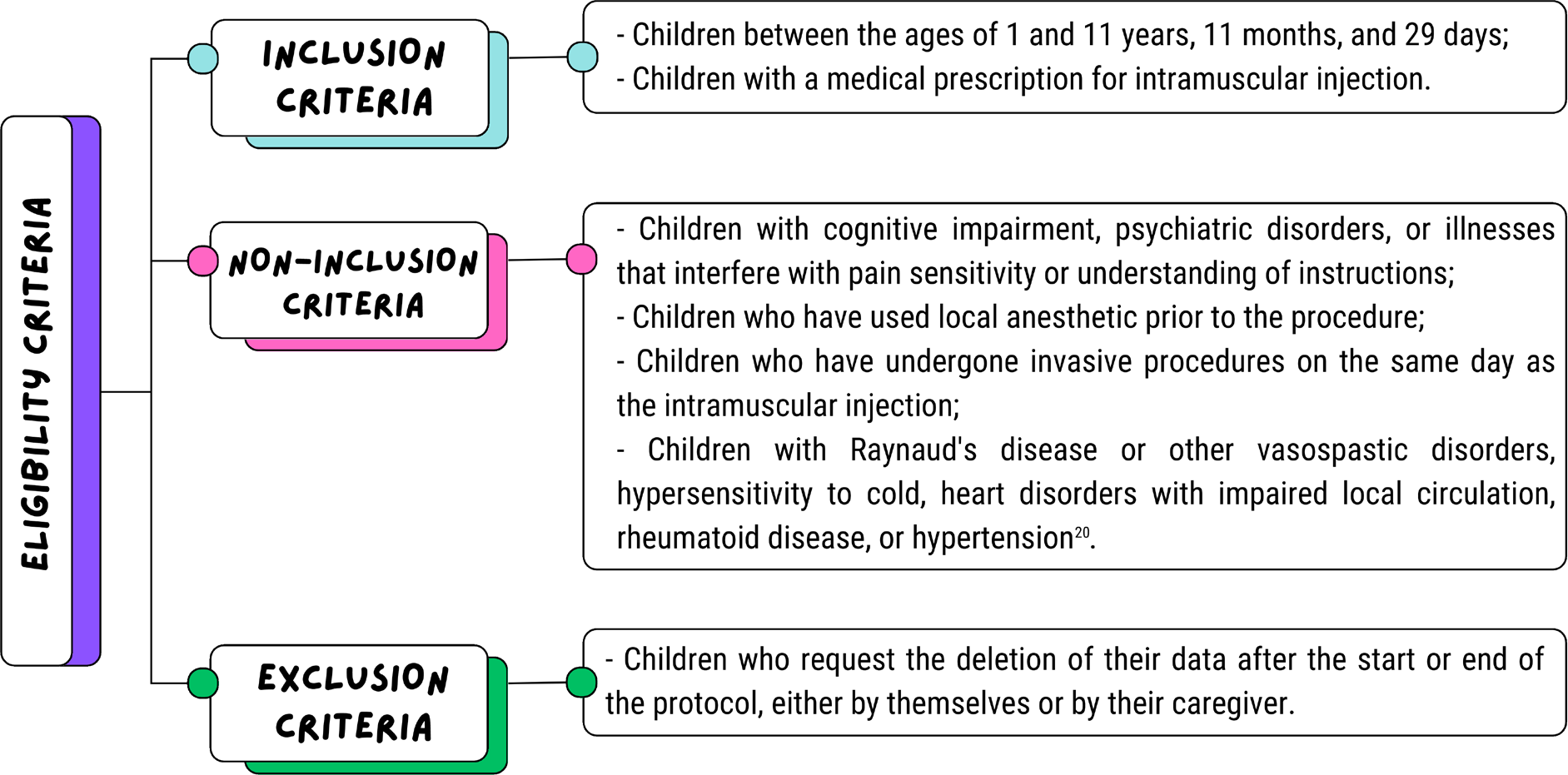
The fourth stage consisted of collecting data from the RCT (recruitment of participants), according to the BBP research protocol (Appendix A). Thus, the steps of the protocol were summarized as follows: children indicated for intramuscular injection, after undergoing screening and medical consultation, who met the eligibility criteria (Figure 2), verified with their caregivers, were invited to participate in the study accompanied by their caregiver. After acceptance, the researcher led the participant to an empty office (if no office was available, the procedure room was used), explained the objectives, advantages, and limitations of participating in the research, the stages of data collection, and answered any questions, providing the Free and Informed Consent Form for reading and signature by those caregivers.

Eligibility criteria for participants. Florianópolis, SC, Brasil, 2024 Source: The authors (2024).
Subsequently, the randomization envelope was opened, indicating which group the child would be assigned to: Intervention Group 1 (Buzzy® for 15 seconds), Intervention Group 2 (Pikluc®) or Control Group (Buzzy® for 30 seconds). Next, the Free and Informed Assent Form was read and signed for children over 4 years of age. For children between 1 and 3 years of age, only the Free and Informed Consent Form was signed by their caregivers. Then, the researcher filled in the characterization data for the child and their caregiver. Next, an Instructional Therapeutic Play session was conducted, in which the steps for administering the intramuscular injection and using the Buzzy® or Pikluc® device were explained, depending on the child’s randomization group. The Instructional Therapeutic Play is recommended for children aged 4 years and older; for children aged 1 to 3 years, the session was designed to explain the procedure to caregivers. During the Instructional Therapeutic Play session, children aged 4 years and older and their caregivers had the opportunity to ask questions and, if they wished, have the procedure performed on a doll.
After the Instructional Therapeutic Play session, the child and caregiver were taken to the procedure room, where the intramuscular injection was administered by the unit’s nursing professional with the aid of the Buzzy® or Pikluc® device, according to the child’s randomization group. The primary and secondary outcome data were collected, the child was praised, the researcher thanked them for participating in the study, and data collection was completed.
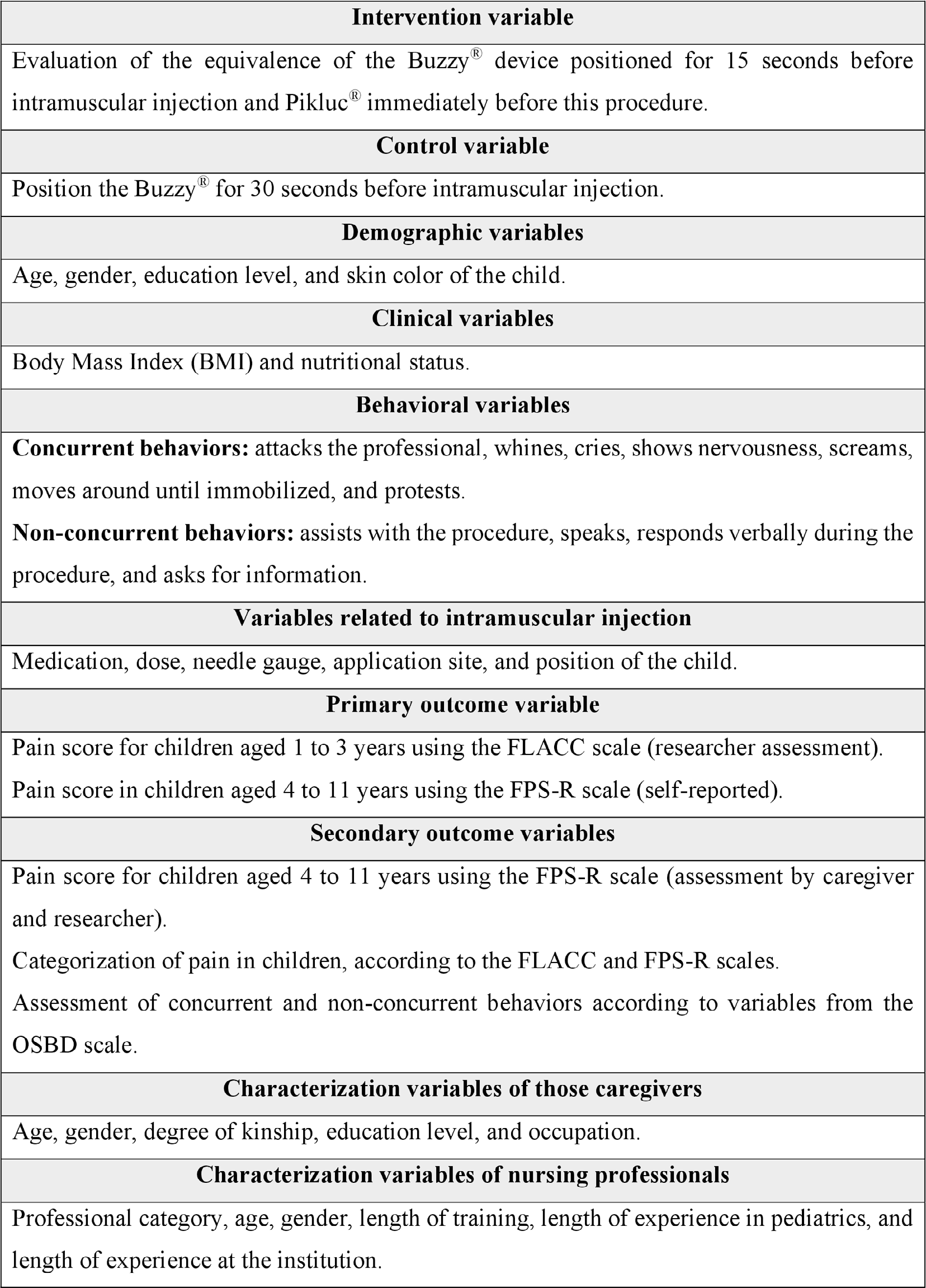
It should be noted that the initial approach for presenting the research, inviting participation, reading and signing the Free and Informed Consent Form and/or Free and Informed Assent Form, in addition to filling out the instrument with sociodemographic and clinical information, took approximately seven to ten minutes. The Instructional Therapeutic Play session, used to present the Buzzy® or Pikluc® devices and simulate intramuscular injection, lasted between seven and twelve minutes. The procedure itself, including the evaluation of the outcomes, took about five minutes. The variables used in the study are shown in Figure 3.
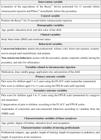
The primary outcome was pain associated with intramuscular injection in children, assessed by the researcher in children aged 1 to 3 years using the Face, Legs, Activity, Cry, Consolability Scale (FLACC)21, and by self-report in children aged 4 to 11 years using the Faces Pain Scale - Revised (FPS-R)21. The secondary outcomes were: 1) Pain assessment in children aged 4 to 11 years, performed by the caregivers and the researcher, using the FPS-R21 scale; 2) Categorization of pain reported by the child21-22; 3) Assessment of concurrent and non-concurrent behaviors, based on selected variables from the Observation Scale of Behavioral Distress (OSBD)23. Concurrent behaviors are those that hinder, prevent, or delay the procedure, while non-concurrent behaviors facilitate or do not hinder its execution23-24. The concurrent behaviors evaluated in this study were: attacking the professional, whining, crying, showing nervousness, shouting, moving around until immobilized, and protesting. Non-concurrent behaviors included: assisting with the procedure, speaking, responding verbally during the procedure, and requesting information23-24.
The data were entered and will be analyzed using the Statistical Package for the Social Sciences (SPSS®) version 29.0. For the primary analysis, a bilateral design will be used to test equivalence between groups. Pain scores will be analyzed by linear regression, considering the group (three levels: Buzzy® 15 seconds, Pikluc® and Buzzy® 30 seconds) as a fixed effect by stratum. The results will be presented as mean score differences and confidence intervals (CIs) of 98.33% (adjusted by the Bonferroni method from 95% for three paired comparisons).
For secondary outcomes, pain assessments performed by the researcher and caregivers (children aged 4 to 11 years) will be analyzed by linear regression, similar to the primary outcome. Pain categorization will be analyzed using logistic regression, with a significance level of α = 0.025 (0.05/2), and the results will be presented as an odds ratio with a 95% CI. Pain levels by age group will be analyzed using mixed linear models, with a significance level of α = 0.025 (0.05/2). For behavioral outcomes, two categories will be analyzed using mixed logistic regression: a) Concurrent behaviors, with α = 0.007 (0.05/7); b) Non-concurrent behaviors, with α = 0.0125 (0.05/4). Both results will be presented as odds ratios with 95% CIs.
This study complied with the standards established by Resolution No. 466, dated December 12, 2012, of the National Health Council of the Ministry of Health, which provides guidelines and standards regulating research involving human subjects25. Furthermore, the researchers declare that they are aware of and comply with the requirements established by the General Data Protection Law, Law No. 13,709, of August 14, 201826, and that all measures have been taken to ensure the secrecy, confidentiality, and privacy of the data.
The physical data generated in this study was stored in file folders, and virtual data was downloaded to an external hard drive, deleting all records from any virtual platform, shared environment, or cloud. After the research is completed, the raw and analyzed data, data collection instruments, Free and Informed Consent Forms, and Free and Informed Assent Forms of each participant will remain under the responsibility of the supervising professor, stored in a locked cabinet in the Nursing Department of the Federal University of Santa Catarina for five years to ensure their security and validity. After this period, the data will be destroyed.
The study was approved by the Research Ethics Committee of the Federal University of Santa Catarina under opinion number: 5,901,237, and by the Research Ethics Committee of the Joana de Gusmão Children’s Hospital under opinion number: 6,036,546. It should be noted that at the end of the research, the results obtained will be disseminated through the publication of articles in national and/or international journals, presentation of abstracts at scientific events, posters on the research group’s social networks, and feedback to the units participating in the study.
FINAL CONSIDERATIONS
The results of this RCT are expected to contribute to the field of nursing by: 1) Determine whether the Buzzy® and Pikluc® devices are equivalent in reducing pain associated with intramuscular injections in children; 2) Evaluate the equivalence between different application times of the Buzzy®; 3) Identify the most appropriate technology for each age group studied; 4) Provide evidence on the level of pain in each group analyzed; 5) Compare self-reported pain levels and those assessed by caregivers and the researcher; 6) Evaluate the impact of the devices on children’s behavior during intramuscular injection.
-
HOW TO REFERENCE THIS ARTICLE:
Moura JWS, Silva TL, Bitencourt AS, de Moura SST, Silva BSM, dos Santos LM, et al. Buzzy® and Pikluc® in the relief of pediatric pain in intramuscular injection: randomized clinical trial protocol. Cogitare Enferm [Internet]. 2025 [cited “insert year, month and day”];30:e96620en. Available from: https://doi.org/10.1590/ce.v30i0.96620en
ACKNOWLEDGEMENTS
Coordenação de Aperfeiçoamento de Pessoal de Nível Superior - Brazil (CAPES) - Finance Code 001 - Doctorate Scholarship, process no. 88887.666427/2022-00. National Council for Scientific and Technological Development - Brazil (CNPq) - Research Productivity Grant, process no. 309565/2022-7. CNPq - Call No. 14/2023 - Support for International Scientific, Technological, and Innovation Research Projects, process No. 441879/2023-3.
References
-
1 Kurt A, Dinç F, Akkoç B. Effect of the Helfer skin tap technique on pain, anxiety, and fear in children undergoing intramuscular injection: an open-label randomized controlled study. Arch Pediatr [Internet]. 2024 [cited 2024 Jul 12];31(2):148-54. Available from: https://doi.org/10.1016/j.arcped.2023.10.008
» https://doi.org/10.1016/j.arcped.2023.10.008 -
2 Raja SN, Carr DB, Cohen M, Finnerup NB, Flor H, Gibson S, et al. The revised International Association for the Study of Pain definition of pain: concepts, challenges, and compromises. Pain [Internet]. 2020 [cited 2024 Jul 12];161(9):1976-82. Available from: https://doi.org/10.1097/j.pain.0000000000001939
» https://doi.org/10.1097/j.pain.0000000000001939 -
3 Mendes BV, Furlan MS, Sanches MB. Non-pharmacological interventions in painful needle procedures in children: integrative review. BrJP [Internet]. 2022 [cited 2024 Jul 14];5(1):61-7. Available from: https://doi.org/10.5935/2595-0118.20220004
» https://doi.org/10.5935/2595-0118.20220004 -
4 Likluc Puericultura LTDA [Internet]. [São José dos Pinhais, PR]: Likluc; 2024 [cited 2025 Apr 11]. Pikluc: acessório para aliviar a dor da injeção;[about 4 screens]. Available from: https://likluc.com.br/loja/product/pikluc/
» https://likluc.com.br/loja/product/pikluc/ -
5 Buzzy Medical [Internet]. [place unknown]: Buzzy Medical; 2024 [cited 2024 Apr 14]. O que é o Buzzy;[about 3 screens]. Available from: https://buzzy4shots.com.br/pages/o-que-e-o-buzzy
» https://buzzy4shots.com.br/pages/o-que-e-o-buzzy -
6 Melzack R, Wall PD. Pain mechanisms: a new theory. Science [Internet]. 1965 [cited 2024 Jul 16];150(3699):971-9. Available from: https://doi.org/10.1126/science.150.3699.971
» https://doi.org/10.1126/science.150.3699.971 -
7 Şahiner NC, Ínal S, Akbay AS. The effect of combined stimulation of external cold and vibration during immunization on pain and anxiety levels in children. J Perianesth Nurs [Internet]. 2015 [cited 2024 Jul 21];30(3):228-35. Available from: https://doi.org/10.1016/j.jopan.2014.05.011
» https://doi.org/10.1016/j.jopan.2014.05.011 -
8 Lima TR. Avaliação da distração eletrônica e vibração para alívio da dor na vacinação em crianças [dissertation on the Internet]. Canoas: Universidade La Salle; 2018 [cited 2024 Jul 21]. 62 p. Available from: https://svr-net20.unilasalle.edu.br/handle/11690/1129
» https://svr-net20.unilasalle.edu.br/handle/11690/1129 -
9 Fontes VS. Buzzy® e distrACTION® na redução da dor durante a vacinação infantil: ensaio clínico randomizado [dissertation on the Internet]. Aracaju: Universidade Federal de Sergipe; 2019 [cited 2024 Jul 21]. 72 p. Available from: https://ri.ufs.br/handle/riufs/14982
» https://ri.ufs.br/handle/riufs/14982 -
10 Redfern RE, Chen JT, Sibrel S. Effects of thermomechanical stimulation during vaccination on anxiety, pain, and satisfaction in pediatric patients: a randomized controlled trial. J Pediatr Nurs [Internet]. 2018 [cited 2024 Jul 22];38:1-7. Available from: https://doi.org/10.1016/j.pedn.2017.09.009
» https://doi.org/10.1016/j.pedn.2017.09.009 -
11 Sapçi E, Kocamaz EB, Gungormus Z. Effects of applying external cold and vibration to children during vaccination on pain, fear and anxiety. Complement Ther Med [Internet]. 2021 [cited 2024 Jul 22];58:102688. Available from: https://doi.org/10.1016/j.ctim.2021.102688
» https://doi.org/10.1016/j.ctim.2021.102688 -
12 Yilmaz G, Alemdar DK. Using Buzzy, ShotBlocker, and bubble blowing in a pediatric emergency department to reduce the pain and fear caused by intramuscular injection: a randomized controlled trial. J Emerg Nurs [Internet]. 2019 [cited 2024 Jul 23];45(5):502-11. Available from: https://doi.org/10.1016/j.jen.2019.04.003
» https://doi.org/10.1016/j.jen.2019.04.003 -
13 Girgin BA, Aktaş E, Kilinç D, Gözen D. Let’s prefer the pain reducing intervention, Buzzy or ShotBlocker: a randomized controlled trial. J Dr Behcet Uz Child Hosp [Internet]. 2020 [cited 2024 Jul 24];10(3):290-8. Available from: https://dx.doi.org/10.5222/buchd.2020.13007
» https://dx.doi.org/10.5222/buchd.2020.13007 -
14 Sivri Bilgen B, Balci S. The effect on pain of Buzzy® and ShotBlocker® during the administration of intramuscular injections to children: a randomized controlled trial. J Korean Acad Nurs [Internet]. 2019 [cited 2024 Jul 24];49(4):486-94. Available from: https://doi.org/10.4040/jkan.2019.49.4.486
» https://doi.org/10.4040/jkan.2019.49.4.486 -
15 Moura JWS, Bitencourt AS, Silva TL, do Carmo ACF, dos Santos LM, Rocha PK. Utilization of local pressure devices in pain management during injections: scoping review. Rev Bras Enferm [Internet]. 2024 [cited 2025 Feb 22];77(3):e20230399. Available from: https://doi.org/10.1590/0034-7167-2023-0399
» https://doi.org/10.1590/0034-7167-2023-0399 -
16 Chan AW, Tetzlaff JM, Gøtzsche PC, Altman DG, Mann H, Berlin JA, et al. SPIRIT 2013 explanation and elaboration: guidance for protocols of clinical trials. BMJ. [Internet]. 2013 [cited 2024 Jul 17];346:e7586. Available from: https://doi.org/10.1136/bmj.e7586
» https://doi.org/10.1136/bmj.e7586 -
17 Hoffmann T, Glasziou P, Boutron I, Milne R, Perera R, Moher D, et al. Better reporting of interventions: template for intervention description and replication (TIDieR) checklist and guide. BMJ. [Internet]. 2014 [cited 2024 Jul 17];348:g1687. Available from: https://doi.org/10.1136/bmj.g1687
» https://doi.org/10.1136/bmj.g1687 - 18 Brown TL. Variações pediátricas nas intervenções de Enfermagem. In: Hockenberry MJ, Wilson D, Rodgers CC, editors. Wong - Fundamentos de Enfermagem Pediátrica. 10. ed. Rio de Janeiro: Elsevier; 2018. p. 575-635.
- 19 Melo LL, Maia EBS, Luz JH, Souza MA, Ribeiro CA. O neonato, a criança, o adolescente e a família no processo de hospitalização: brinquedo terapêutico - tecnologia de cuidado à criança. In: Souza AIJ, Anders JC, Pina JC, Rocha PK, Sparapani VC, editors. Enfermagem Pediátrica: avanços e contribuições para a prática clínica. Florianópolis: Papa-Livro; 2021. p. 217-240.
-
20 Leventhal LC, Bianchi RC, de Oliveira SMJV. Clinical trial comparing three types of cryotherapy in non-pregnant women. Rev Esc Enferm USP [Internet]. 2010 [cited 2024 Jul 18];44(2):337-43. Available from: https://doi.org/10.1590/S0080-62342010000200014
» https://doi.org/10.1590/S0080-62342010000200014 -
21 da Silva FC, Thuler LCS. Cross-cultural adaptation and translation of two pain assessment tools in children and adolescents. J Pediatr [Internet]. 2008 [cited 2024 Nov 10];84(4):344-9. Available from: https://doi.org/10.1590/S0021-75572008000400010
» https://doi.org/10.1590/S0021-75572008000400010 -
22 Tsze DS, Hirschfeld G, Dayan PS, Bulloch B, Von Baeyer CL. Defining no pain, mild, moderate, and severe pain based on the Faces Pain Scale-Revised and Color Analog Scale in children with acute pain. Pediatr Emerg Care [Internet]. 2018 [cited 2024 Nov 10];34(8):537-44. Available from: https://doi.org/10.1097/PEC.0000000000000791
» https://doi.org/10.1097/PEC.0000000000000791 - 23 Costa Júnior AL. Análise de comportamentos de crianças expostas à punção venosa para quimioterapia [thesis]. Brasília: Universidade de Brasília; 2001.
-
24 de Oliveira FPS, Ferreira EAP, Novaes VR, Lima JS. Análise do comportamento de crianças vítimas de queimaduras expostas a curativo sem sedação em enfermaria. Rev Bras Crescimento Desenvolv Hum [Internet]. 2009 [cited 2025 Mar 2];19(3):369-82. Available from: https://www.revistas.usp.br/jhgd/article/view/19925/22003
» https://www.revistas.usp.br/jhgd/article/view/19925/22003 -
25 Ministério da Saúde (BR). Resolução Nº 466, de 12 de dezembro de 2012. Aprova as diretrizes e normas regulamentadoras de pesquisas envolvendo seres humanos. Diário Oficial da União [Internet]. 2013 Jun 13 [cited 2025 Feb 22];(Seção 1):59. Available from: https://bvsms.saude.gov.br/bvs/saudelegis/cns/2013/res0466_12_12_2012.html
» https://bvsms.saude.gov.br/bvs/saudelegis/cns/2013/res0466_12_12_2012.html -
26 Brasil. Lei nº 13.709, de 14 de agosto de 2018. Lei Geral de Proteção de Dados Pessoais (LGPD) [Internet]. Brasília, DF: Presidência da República; 2018 [cited 2025 Feb 22]. Available from: https://www.planalto.gov.br/ccivil_03/_ato2015-2018/2018/lei/l13709.htm
» https://www.planalto.gov.br/ccivil_03/_ato2015-2018/2018/lei/l13709.htm
-
Associate editor:
Dra. Claudia Nery Teixeira Palombo