
 Hope, spirituality and quality of life: a study with chronic kidney patients on peritoneal dialysis
ABSTRACT
Objective: Analyze the level of hope, spirituality, and perception of the quality of life of chronic renal patients on peritoneal dialysis.
Method: Transversal analytical study conducted in a nephrology center between January and April 2024. A clinical-demographic questionnaire, the Herth Scale of Hope and Quality of Life - Spirituality, Religiousness and Personal Beliefs, were applied. For the analysis of correlation between scales, Pearson and Spearman tests were used; for comparisons between groups, Mann-Whitney and Kruskal-Wallis tests were used.
Results: 69 individuals participated, with average scores of 38.78/48 and 17.28/20 for hope and quality of life, respectively. Significant correlation was identified between the scales (p = 0.01), indicating that higher hopeful scores are associated with a higher quality of life.
Conclusion: Despite treatment limitations, participants demonstrated hope and spirituality at satisfactory levels, with a positive impact on quality of life.
DESCRIPTORS:
Public Health; Indicators of Quality of Life; Nephrology; Renal Dialysis; Renal Insufficiency, Chronic
HIGHLIGHTS
1. Average HHS score: 38.78 of 48.
2. Average score WHOQOL-SRBP: 17.28 out of 20.
3. Correlation between HHS and WHOQOL-SRPB scales: (p = 0.01).
4. Better quality of life is associated with greater hope.
RESUMO
Objetivo: Analisar o nível de esperança, espiritualidade e percepção da qualidade de vida de pacientes renais crônicos em diálise peritoneal.
Método: Estudo transversal analítico realizado em um centro de nefrologia entre janeiro e abril de 2024. Aplicou-se questionário clínico-demográfico, Escala de Esperança de Herth e instrumento Qualidade de vida - Espiritualidade, Religiosidade e Crenças Pessoais. Para análise de correlação entre as escalas, utilizou-se testes de Pearson e Spearman; testes de Mann-Whitney e Kruskal-Wallis foram empregados para comparação entre grupos.
Resultados: Participaram 69 indivíduos, com escores médios de esperança e qualidade de vida de 38,78/48 e 17,28/20, respectivamente. Identificou-se correlação significativa entre as escalas (p = 0,01), indicando que maiores escores de esperança associam-se a maior qualidade de vida.
Conclusão: Apesar das limitações do tratamento, os participantes apresentaram esperança e espiritualidade em níveis satisfatórios, com impacto positivo na qualidade de vida.
DESCRITORES:
Saúde Pública; Indicadores de Qualidade de Vida; Nefrologia; Diálise Renal; Insuficiência Renal Crônica
HIGHLIGHTS
1. Escore médio EEH: 38,78 de 48.
2. Escore médio WHOQOL-SRBP: 17,28 de 20.
3. Correlação entre escalas EEH e WHOQOL-SRPB: (p = 0,01).
4. Maior qualidade de vida está associada a maior esperança.
RESUMEN
Objetivo: Analizar el nivel de esperanza, espiritualidad y percepción de la calidad de vida de pacientes renales crónicos en diálisis peritoneal.
Método: Estudio transversal analítico realizado en un centro de nefrología entre enero y abril de 2024. Se aplicó un cuestionario clínico-demográfico, la Escala de Esperanza de Herth y el instrumento Calidad de vida: espiritualidad, religiosidad y creencias personales. Para analizar la correlación entre las escalas, se utilizaron las pruebas de Pearson y Spearman; las pruebas de Mann-Whitney y Kruskal-Wallis se emplearon para la comparación entre grupos.
Resultados: Participaron 69 individuos, con puntuaciones medias de esperanza y calidad de vida de 38,78/48 y 17,28/20, respectivamente. Se identificó una correlación significativa entre las escalas (p = 0,01), lo que indica que las puntuaciones más altas en esperanza se asocian con una mayor calidad de vida.
Conclusión: A pesar de las limitaciones del tratamiento, los participantes mostraron niveles satisfactorios de esperanza y espiritualidad, lo que tuvo un impacto positivo en su calidad de vida.
DESCRIPTORES:
Salud Pública; Indicadores de Calidad de Vida; Nefrología; Diálisis Renal; Insuficiencia Renal Crónica
HIGHLIGHTS
1. Puntuación media EEH: 38,78 de 48.
2. Puntuación media WHOQOL-SRBP: 17,28 de 20.
3. Correlación entre las escalas EEH y WHOQOL-SRPB: (p = 0,01).
4. Una mayor calidad de vida está asociada a una mayor esperanza.
INTRODUCTION
Chronic kidney disease (CHD) is a condition of global relevance, with increasing prevalence and incidence, representing a challenge to public health. Its etiology is associated with systemic arterial hypertension, diabetes mellitus, and glomerulonephritis, requiring effective strategies for prevention, early diagnosis, and proper management1,2.
In the advanced stages (glomerular filtration rate below 15 mL/min), the functional loss becomes significant, with the need for renal replacement therapy. In this stage, hemodialysis (HD) is the preferred approach due to its efficacy in removing toxins. As an alternative, peritoneal dialysis (PD) is an equally effective option, offering greater autonomy and the possibility of being conducted at home3,4.
PD is a method that involves the infusion, retention, and drainage of fluids and toxins via a Tenckhoff catheter inserted into the peritoneal cavity. This is a procedure that can be performed at the patient's home5. There are two approaches to its initiation: the planned PD, which includes pre-preparation, training, and catheter use after 15 days of implantation; and the unplanned PD, initiated within 72 hours of implantation as an emergency, without prior HD 6,7.
According to the Brazilian Dialysis Census of 2024, the total number of patients on chronic dialysis reached 172,585. There was an estimated growth of 52,944 new cases, reflected in the prevalence and incidence rates per million inhabitants, which were 812 and 249, respectively. Among the prevalent, 87.3% were in conventional HD, while only 5.6% were in PD8.
Despite the benefits associated with PD, CHD patients undergoing dialysis therapy face various physical and emotional limitations that negatively impact their vivacity and functionality. These restrictions undermine the ability to maintain productive and social activities, directly affecting the quality of life9.
However, across dialectical modalities, PD has been associated with better indicators of quality of life, particularly by providing greater autonomy and flexibility in everyday life. A comparative study among patients with HD and PD shows that individuals with PD report higher satisfaction with treatment and greater stimulation from the healthcare team, possibly due to the lower frequency of direct contact and exposure to potentially stressful situations, common in the environments of HD10.
This positive perception is directly related to the concept of quality of life adopted by the World Health Organization (WHO), which defines it as the perception that the individual makes of their position in life, considering the cultural context, the value systems into which they are inserted, as well as their goals, expectations, patterns, and concerns11. In this sense, PD can foster greater alignment with the subjective and social dimensions that comprise this definition, contributing to a more satisfying and meaningful treatment experience.
In this context, it becomes necessary to develop situation-based tackling strategies, among which stands the support offered by spirituality and religiousness, which gives hope for better management of the disease12.
Spirituality is perceived as the search for understanding the meaning of life and its connection with the sacred, and may or may not result in religious practices. While religious practice refers to the level of belief and practice of a religion, it can be organizational (participation in institutional religious activities) or non-organizational (without institutional bond), manifesting itself in individual practices, such as prayer, meditation, reading religious texts, or even in the expression of faith in daily activities12.
It can be inferred that spirituality and religiousness promote hope, translated in the context of health as a continuous and essential process to foster favorable actions, face crises, preserve quality of life, plan healthy goals, and promote health improvement13. In clinical practice, it is observed that in the care of renal patients, there is a significant discrepancy between the spiritual needs of these individuals and the techniques offered, representing a challenge12.
Additionally, greater adaptation to HD may result in economic benefits, since this modality presents lower costs than HD and better adherence tends to expand the vacancy pool and reduce waiting lists in HD, provided that it is accompanied by public policies that encourage home treatment and ensure adequate technical support14.
Based on the reflections presented, this study aimed to analyze the level of hope, spirituality and perception of the quality of life of chronic renal patients in peritoneal dialysis. To this end, the following guiding question was raised: To what extent do hope and spirituality impact the quality of life of CHD patients in PD?
METHOD
This is a cross-sectional analytical study with a quantitative approach, conducted at a nephrology center in a hospital in the Federal District, from January to April 2024.
The inclusion criteria were: individuals with CHD, of both sexes, aged over 18 years, and undergoing PD treatment for more than three months. Patients with acute renal impairment (IRA), those with limited ability to understand and communicate, physical incapacity to attend the research site, and those who refused to participate in the study were excluded.
The subjects of the study were selected from the universe of 96 individuals inserted into the PD program during the collection period. Of the total individuals, four were excluded due to limited ability to understand and communicate, three due to death, two due to hospitalization elsewhere, one due to transfer to HD, one due to transfer to another program, 11 due to absences from monthly consultations, and five who refused to participate in the study. Thus, 27 patients were excluded, leaving 69 individuals who composed the final sample of the study.
A clinical-demographic questionnaire, the Herth Hope Scale (HHS), and the instrument Quality of Life - Spirituality, Religion and Personal Beliefs (WHOQOL-SRPB) were applied.
The clinical-demographic questionnaire covered questions relating to profile, religiousness, spirituality, and therapy. With multiple choice questions and Likert questions ranging from 1 to 5 (nothing, very little, more or less, quite or extremely).
HHS is a self-reporting psychometric instrument of the Likert type, with scores ranging from 1 to 4 (completely disagree, disagree, agree, completely agree), developed to measure hope in individuals, especially those with chronic diseases. With 12 items, your total score ranges from 12 to 48, being proportional to hope level 4,15.
The WHOQOL-SRPB is an additional module of the WHOQOL instrument, developed by the World Health Organization (WHO) to assess the quality of life in the field of spirituality, religiousness, and personal beliefs. Integrated into WHOQOL-100 as domain 6, it consists of 32 items distributed in eight facets: spiritual connection, sense of life, admiration, totality and integration, inner strength, inner peace, hope/ optimism, and faith. Each facet is scored independently, with scores ranging from 4 to 20, where higher values indicate better perception of quality of life in the respective dimension. Domain 6 is calculated by the average of the result of the facets multiplied by four 16,17.
The data was tabulated in Microsoft Excel spreadsheet and analyzed in the program Statistical Package for Social Science (SPSS), version 23.0. For the correlation analysis, the Pearson and Spearman tests were used, according to the distribution of the variables.
In addition, to compare the independent variables between groups, the Student t test, Mann-Whitney test, and Kruskal-Wallis test were used. The chi-square test was used for the categorical variables, and statistical significance was assessed at p < 0.05.
This study was approved by the co-founded opinion of the Research Ethics Committee by opinion nº 6.424.369.
RESULTS
The sample was composed of 69 (100%) participants, 37 female (53.60%), with an average age of 56 years; 30 (43.47%) older than 60 years, married 31 (44.93%), and had children 55 (79.71%), who, in the majority, resided with them. Regarding racial self-declaration, 41 (59.40%) identified as purple. Catholicism was the most mentioned religion, representing 38 (55%) of the sample.
In the socioeconomic profile, 33 (47.82%) were retired, 21 (30.43%) had elementary education, 32 (46.37%) had income up to a minimum wage, and 26 (37.68%) received some government aid. Among the comorbidities, systemic arterial hypertension was the most prevalent, present in 60 (86.96%) subjects, followed by diabetes mellitus 29 (42.03%), and anxiety in 20 (28.99%). Absence of physical activity practice was a commonly reported condition, 50 (72.46%).
Regarding religiousness, 29 (42.03%) participants stated that they attended church or religious temple at least once a week, 27 (39.10%) considered themselves very religious, and 18 (26.10%) extremely religious. Regarding spiritual beliefs, 27 (39.13%) considered them very important, while 29 (42.03%) considered them extremely important.
The duration of treatment ranged from 3 to 192 months, with an average of 38 months, of which 37 (53.62%) were on dialysis for less than 24 months. It was observed that 32 (46.38%) were on the waiting list for transplantation. As for the start of therapy, 13 (18.84%) entered unplanned and 56 (81.16%) carried out prior planning.
Descriptive statistics and the Mann-Whitney test indicated no significant difference between the groups' scores (planned and unplanned). However, there was a tendency towards significance in the variables' integrity (p = 0.056) and faith (p = 0.070) (Table 1).
Descriptive measurements of scores (WHOQOL and HHS domains) with planned and unplanned. Brasília, DF, Brazil, 2024
As for HHS, only one participant obtained a score of 26; 18 presented values between 31 and 39; and 50 remained between 40 and 48, of the four reached the maximum score. The total average was 38,78, indicating high levels of hope among the participants (Table 2).
Regarding future expectations, 62 (89.85%) showed optimism for life, 56 (81.15%) had short- and long-term plans; 65 (94.20%) claimed to have faith that offers comfort; 45 (65.21%) valued every day; and 47 (68.11%) did not feel alone. Only seven (10.14%) said they were not optimistic about life, and three (42.86%) said they felt very lonely.
As for the WHOQOL-SRPB scale, the results ranged from 8.5 to 20, with an average of 17.28. The average scores were high, indicating that participants maintain a strong connection with spirituality and believe that these dimensions positively impact their lives. The total score concludes this perception, with the predominance of the summed scores close to the maximum (Table 3).
Descriptive statistics of instrument scores WHOQOL-SRPB by items and in total. Brasília, DF, Brazil, 2024
There was no statistical significance between HHS and WHOQOL-SRP scores and the profile, expressing that gender, age group, civil status, religion and time of therapy did not significantly influence the scores. In relation to the WHOQOL-SRBP, the Mann-Whitney test showed a tendency to significance (p = 0.080) in the sex scores in the connection domain.
In the scores by age group, by the Kruskal-Wallis test, it was identified that participants aged between 60-69 years had higher scores in both HHS and WHOQOL-SRPB, compared to those aged 20-29.
In the analysis of the Spearman correlation between the scales applied, a moderate positive and statistically significant association between the HHS scores and the WHOQOL-SRPB scores was observed, indicating that higher levels of hope are related to better perception of spiritual quality of life (Table 4).
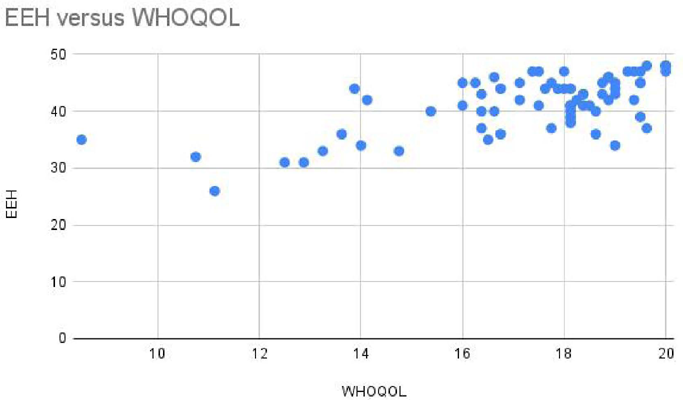
Among the four participants who obtained the maximum score in the HHS (48 points), three presented 20 points and one recorded 19,625 points on the WHOQOL-SRPB scale. These values indicate that these individuals with peak levels of hope also achieved high scores in assessing quality of life related to spirituality, religiousness and personal beliefs. This pattern suggests that, in this specific group, high hopes are associated with positive perceptions of subjective aspects of quality of life.
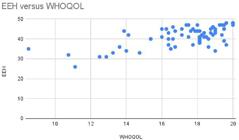
Figure 1 shows a positive correlation between the scales, indicating that as quality-of-life scores increase, hopeful levels tend to be higher. Most participants had high scores on the WHOQOL-SRPB, ranging from 16 to 20, with corresponding high hopeful levels of 40 to 50. However, there is a greater dispersion in hope scores for participants with lower quality of life values, suggesting greater variability of hope in these cases.
DISCUSSION
In the sociodemographic analysis, female predominance was observed, aligned with the recent analysis, contrasting with international data and the Brazilian Census of Dialysis of 2024, which point to a male majority among the dialysis patients 8,18,19. This discrepancy may reflect variations in population cut-offs and sample characteristics. Factors such as increased female search for preventive care, the cultural role of caregiver and greater engagement with self-care can influence the indication of peritoneal dialysis19.
Cohabitation with a spouse and the presence of children constitute an essential support network for the effectiveness of peritoneal dialysis. This modality requires joint adaptation between the patient and family, which promotes the patient's well-being, and many report not feeling alone. The family actively participates in the treatment, offering emotional and financial support and assisting with therapeutic adherence, especially in cases where it directly takes over the management of dialysis 20.
As for comorbidities, HAS and DM were the most prevalent, in accordance with epidemiological data from the Brazilian Dialysis Census of 2024, in which HAS (29%) and DM (29%) constituted more than half of the underlying diseases for kidney disease8.
In this study, the predominance of brown differs from previous research, which showed the prevalence of white 2,9. There was also a wide variation in educational attainment, with primary education predominant, indicating a profile of lower formal education. Evidence indicates that race/color and education act as protective factors for the CHD, and the probability of diagnosis is lower among self-declared white or brown individuals with complete secondary or higher education2.
Occupational diversity was observed among the participants, with informal ties predominating among those who worked, while almost half were retired. Although the CHD and dialysis treatment do not render work impossible, they impose limitations that justify such ties and the most vulnerable socioeconomic profile observed21.
This occupational reality is directly related to the financial context of these individuals. About half received up to a minimum wage, demonstrating the functional impact of the CHD. In a comparative study, 82.8% of individuals had income equivalent to a minimum wage of 21.
The average 38-month treatment duration observed in this study was considerably greater than the 16.68 months reported in another Brazilian study22. Regarding survival, the literature indicates stability, with 59% of patients still alive after 96 months of follow-up18. In the international context, it was found that 48% of patients remained in PD after five years, suggesting that factors such as the predominant modality of therapy, the clinical profile of patients, and the available care structure directly influence the duration of stay in renal replacement therapy23.
Recent data from the Brazilian Dialysis Census 2024 reinforce that strategies aimed at the prevention of complications such as anemia, hyperphosphatemia, and cardiovascular diseases are fundamental to broaden survival and improve the quality of life of these patients, 8,23.
More than half of the participants declared to profess the Catholic religion, corroborating a previous study, in which 60% were Catholics, and faith was considered an important factor in dealing with the CHD24. Spirituality and religiousness are relevant dimensions for emotional strengthening, helping in dealing with daily difficulties. Hope, in addition, helps to maintain motivation and the prospect of a better future. Thus, healthcare professionals should consider these dimensions in the comprehensive care of chronic kidney patients21.
The difference between the planned and unplanned groups is justified by the recent implementation of the unplanned modality in the hospital, with low adherence in the DF. Emergency dialysis has been spread worldwide, considered a viable and safe alternative, contributing to broadening the prevalence of PD among patients with CHD 25,26,27
This distinction can impact both adherence to treatment and emotional and spiritual aspects. There was a tendency towards significance in the fields of integrity and faith, indicating greater emotional and spiritual balance among those who started therapy in a planned way. These findings suggest that prior planning supports clinical adjustment and emotional resilience in the face of the challenges posed by the disease.
In this context, faith proved essential in the confrontation, promoting strength, comfort and well-being. Faith and spirituality have been identified as foundations in the search for existential meaning and resilience strategies, evidencing the relevance of the spiritual dimension in the care of the person with CHD24.
This internal strengthening appears to directly influence how patients perceive their condition, as many did not consider themselves ill, demonstrating well-being and optimism. Studies indicate that positive self-perception favors clinical evolution and can directly impact mortality2.
In this perspective, the HHS results indicate that, despite adversities, most participants achieved high scores, demonstrating that hope is a predominant feeling, consistent with another study that obtained comparable results using the same scale 9.
The positive results of the WHOQOL-SRPB indicate that spirituality, religiousness, and personal beliefs have a favorable impact on patients' quality of life. Similar studies reinforce this evidence in patients with HD. While those in PD presented superior quality of life, with better physical and emotional performance compared to those in HD21,28.
There was no statistical significance between the variables gender, age, civil status, religion and time of therapy and scores on the scales, indicating that such factors did not influence the results. However, a tendency to significance was observed in the field of gender connection, with greater involvement among women. This finding suggests that women tend to be more open to religious and spiritualized practices, reflecting greater spiritual connection29.
This study observes that older individuals demonstrate higher levels of hope and quality of spiritual life, possibly related to resilience, appreciation of the present, and internalization of spiritual dimensions. While other studies point to clinical profile and vulnerability as influencers of hope, life experience stands out as a positive factor7.
A correlation between HHS and WHOQOL-SRPB was verified, showing that high levels of hope positively impact on quality of life. Hope is a fundamental human resource for adapting to adversity, and it is important to foster strategies that stimulate confrontation and well-being30. Despite the scarcity of research on spirituality and hope in patients with PD, evidence from HD has shown positive associations between WHOQOL-SRPB and HHS, corroborating the findings of this study21.
Finally, the short interval between consultations, the dengue epidemic in the period, the change of unit location, and the loss of follow-up (transfers, hospitalizations, deaths) were highlighted as limitations of the study, which impacted data collection.
CONCLUSION
The present study showed that chronic renal patients on peritoneal dialysis exhibit high levels of hope and spirituality, which are positively associated with perceptions of quality of life. The scores obtained on the HHS and WHOQOL-SRPB scales indicate that, despite the limitations imposed by the disease and dialysis treatment, participants maintain significant internal resources to manage the clinical condition. The statistically significant correlation between hope and quality of life reinforces the role of the spiritual dimension as a protective factor and promoter of well-being.
Spirituality, expressed through faith, a sense of life, and inner strength, contributed to emotional balance and resilience to the challenges imposed by renal replacement therapy. Hope, in turn, proved to be a central element in fostering positive perspectives, promoting treatment adherence, and preserving quality of life. Such findings reinforce the importance of incorporating approaches that value the spiritual dimension in integral care for kidney patients, thereby promoting more humanized and effective therapeutic strategies.
ACKNOWLEDGMENTS
The research was conducted with the support of the School of Health Sciences (ESCS), through the Project of Scientific Initiation (PIC) - Edital No. 10, of May 11, 2023.
-
HOW TO REFERENCE THIS ARTICLE:
Lemos KC, Borges MS, Araújo CV, de Moraes SEM, Braz LS. Hope, spirituality and quality of life: a study with chronic kidney patients on peritoneal dialysis. Cogitare Enferm [Internet]. 2026 [cited “insert year, month and day“];31:e100533en. Available from: https://doi.org/10.1590/ce.v31i0.100533en
Data availability:
The authors declare that all data are fully available within the article.
References
-
1 Jesus NM, de Souza GF, Mendes-Rodrigues C, Almeida Neto OP, Rodrigues DDM, Cunha CM. Quality of life of individuals with chronic kidney disease on dialysis. J Bras Nefrol [Internet]. 2019 [cited 2023 Feb 12];41(3):364-74. Available from: https://doi.org/10.1590/2175-8239-JBN-2018-0152
» https://doi.org/10.1590/2175-8239-JBN-2018-0152 -
2 de Aguiar LK, Prado RR, Gazzinelli A, Malta DC. Factors associated with chronic kidney disease: epidemiological survey of the National Health Survey. Rev Bras Epidemiol [Internet]. 2020 [cited 2024 Apr 12];23:e200044. Available from: https://doi.org/10.1590/1980-549720200044
» https://doi.org/10.1590/1980-549720200044 -
3 Gomes ICC, Manzini CSS, Ottaviani AC, Moraes BIP, Lanzotti RB, Orlandi F S. Attitudes facing pain and the spirituality of chronic renal patients in hemodialysis. BrJP [Internet]. 2018 Oct. [cited 2025 Oct 8];1(4):320-4. Available from: https://doi.org/10.5935/2595-0118.20180061
» https://doi.org/10.5935/2595-0118.20180061 -
4 Eloia SMC, Ximenes MAM, Eloia SC, Galindo Neto NM, Barros LM, Caetano JA. Religious coping and hope in chronic kidney disease: a randomized controlled trial*. Rev Esc Enferm USP [Internet]. 2021 [cited 2023 Feb 12];55:e20200368. Available from: https://doi.org/10.1590/1980-220X-REEUSP-2020-0368
» https://doi.org/10.1590/1980-220X-REEUSP-2020-0368 -
5 Alvarenga WA, Amorim JVM, Magalhães LHF, Neris RR, Nascimento LC, da Rocha SS. Work-hemodialysis treatment interface in patients with chronic kidney disease: a scoping review. Acta Paul Enferm [Internet]. 2023[cited 2025 Oct 8];36:eAPE02411. Available from: https://doi.org/10.37689/acta-ape/2023AR02411
» https://doi.org/10.37689/acta-ape/2023AR02411 -
6 Pilatti M, Theodorovitz VC, Hille D, Sevignani G, Ferreira HC, Vieira MA, et al. Urgent vs. planned peritoneal dialysis initiation: complications and outcomes in the first year of therapy. Braz J Nephrol [Internet]. 2022 [cited 2025 Jun 14];44(4):482-9. Available from: https://doi.org/10.1590/2175-8239-JBN-2021-0182
» https://doi.org/10.1590/2175-8239-JBN-2021-0182 -
7 Blake PG, Jain AK. Urgent start peritoneal dialysis: defining what it is and why it matters. Clin J Am Soc Nephrol [Internet]. 2018 [cited 2025 Jun 14];13(8):1278-9. Available from: http://dx.doi.org/10.2215/CJN.02820318
» https://doi.org/10.2215/CJN.02820318 -
8 Sociedade Brasileira de Nefrologia (SBN). Censo de diálise, 2024. [Internet]. São Paulo: SBN; 2024 [cited 2025 Aug 27]. Available from:_https://www.censo-sbn.org.br/censosAnteriores
» https://www.censo-sbn.org.br/censosAnteriores -
9 Moreira RA, Borges M S. Profile and level of hope in patients undergoing hemodialysis and peritoneal dialysis*. Cogitare Enferm [Internet]. 2020 [cited 2025 Oct 8];25:e67355 Available from: https://doi.org/10.5380/ce.v25i0.67355
» https://doi.org/10.5380/ce.v25i0.67355 -
10 Gonçalves FA, Dalosso IF, Borba JMC, Bucaneve J, Valerio NMP, Okamoto CT, et al. Quality of life in chronic renal patients on hemodialysis or peritoneal dialysis: a comparative study in a referral service of Curitiba - PR. J Bras Nefrol. 2015[cited 2025 Oct 8];37(4):476-74. Available from: https://doi.org/10.5935/0101-2800.20150074
» https://doi.org/10.5935/0101-2800.20150074 -
11 World Health Organization (WHO). WHOQOL: Measuring quality of life [Internet]. Geneva: WHO; 2012 [cited 2025 Oct 8]. 105 p. Available from: https://www.who.int/tools/whoqol
» https://www.who.int/tools/whoqol -
12 Bravin AM, Trettene AS, de Andrade LGM, Popim RC. Benefits of spirituality and/or religiosity in patients with Chronic Kidney Disease: an integrative review. Rev Bras Enferm [Internet]. 2019 [cited 2025 Jun 14];72(2):541-51. Available from: https://doi.org/10.1590/0034-7167-2018-0051
» https://doi.org/10.1590/0034-7167-2018-0051 -
13 Ferreira GSM, Soares FMM, Nunes RS, Oliveira PMC, Araújo RA, Ripardo JO, et al. Vivência de espiritualidade/religiosidade e qualidade de vida em pacientes em tratamento hemodialítico. Rev Enferm Atual In Derme [Internet]. 2021 [cited 2024 Sep 14];95(35):e-021121. Available from: https://mail.revistaenfermagematual.com.br/index.php/revista/article/view/1199
» https://mail.revistaenfermagematual.com.br/index.php/revista/article/view/1199 -
14 Brabo AM, Dias DB, da Silva EN, Ponce D. Economic analysis of hemodialysis and urgent-start peritoneal dialysis therapies. Braz J Nephrol 2025 [cited 2025 Oct 8];47(1):e20240051. Available from: https://doi.org/10.1590/2175-8239-JBN-2024-0051en
» https://doi.org/10.1590/2175-8239-JBN-2024-0051en -
15 Sartore AC, Grossi SAA. Escala de Esperança de Herth: instrumento adaptado e validado para a língua portuguesa. Rev esc enferm USP [Internet]. 2008 [cited 2025 Oct 8];42(2):227-32. Available from: https://doi.org/10.1590/S0080-62342008000200003
» https://doi.org/10.1590/S0080-62342008000200003 -
16 Panzini RG, Maganha C, da Rocha NS, Bandeira DR, Fleck MP. Brazilian validation of the Quality of Life Instrument related to spirituality, religion and personal beliefs. Rev Saúde Pública [Internet]. 2011 [cited 2025 Oct 8];45(1):1-13. Available from: https://doi.org/10.1590/S0034-89102011000100018
» https://doi.org/10.1590/S0034-89102011000100018 -
17 World Health Organization. WHOQOL-SRPB: scoring and coding for the WHOQOL SRPB field-test instrument : users manual, 2012 revision. Geneva: WHO; 2012 [cited 2025 Nov 19]. Available from: https://www.who.int/publications/i/item/WHO-MSD-MER-Rev-2012-05
» https://www.who.int/publications/i/item/WHO-MSD-MER-Rev-2012-05 -
18 Moura-Neto JA, de Andrade LGM, Moura AF, Cruz CMS. A decade of change in peritoneal dialysis in Brazil: challenges and perspectives in the Public Health System. Healthcare. [Internet] 2025 [cited 2025 Oct 8];13(3):337. Available from: https://doi.org/10.3390/healthcare13030337
» https://doi.org/10.3390/healthcare13030337 -
19 Nerbass FB, Calice-Silva V. Why are there more women than men on peritoneal dialysis in Brazil?. Braz J Nephrol [Internet]. 2025 [cited 2025 Oct 8];47(4):e20250128. Available from: https://doi.org/10.1590/2175-8239-JBN-2025-0128pt
» https://doi.org/10.1590/2175-8239-JBN-2025-0128pt -
20 Negreiros DM, Furtado AM, Gonçalves CB, Ribeiro IAP, e Silva LLL, Ferreira AA, et al. O cuidado da família à pessoa renal crônica em diálise peritoneal: care of the family to the chronic kidney person in peritoneal dialysis. Rev Enferm Atual In Derme [Internet]. 2019 [cited 2025 Oct 8];90(28):1-5. Available from: https://revistaenfermagematual.com.br/index.php/revista/article/view/462
» https://revistaenfermagematual.com.br/index.php/revista/article/view/462 -
21 Leimig MBC, Lira RT, Peres FB, Ferreira AG de C, Falbo AR. Qualidade de vida, espiritualidade, religiosidade e esperança em pessoas com doença renal crônica em hemodiálise. Rev Soc Bras Clín Méd [Internet]. 2018 [cited 2024 May 02];16(1):30-6. Available from: https://www.sbcm.org.br/ojs3/index.php/rsbcm/article/view/322
» https://www.sbcm.org.br/ojs3/index.php/rsbcm/article/view/322 -
22 Werneck AL, Ribeiro RCHM, Beccaria LM, Cesarino CB, da Silva NTF, Poletti NAA. Atividades de vida diária dos pacientes na diálise peritoneal. Rev Enferm UFPE on line. [Internet] 2019 [cited 2025 Oct 8];13:e240513. Available from: https://www.researchgate.net/publication/336570383Atividadesdevidadiariadospacientesnadialiseperitoneal
» https://www.researchgate.net/publication/336570383Atividadesdevidadiariadospacientesnadialiseperitoneal -
23 Scarmignan R, Alfano G, Morisi N, Fontana F, Mori G, Ferrarini M, et al. Long-term mortality and technique survival in peritoneal dialysis patients: a 25-year retrospective analysis in a single center. Clinical Kidney Journal. [Internet] 2025 [cited 2025 Oct 8];18(8):sfaf215. Available from: https://doi.org/10.1093/ckj/sfaf215
» https://doi.org/10.1093/ckj/sfaf215 -
24 Moura HCGB, Menezes TMO, de Freitas RA, Moreira FA, Pires IB, Nunes AMPB, et al. Faith and spirituality in the meaning of life of the elderly with Chronic Kidney Disease. Rev Bras Enferm [Internet]. 2019 [cited 2024 Apr 12];73(Suppl 3): e20190323. Available from: https://www.scielo.br/j/reben/a/wph5TxmPsM7MNH936fm9GrF/?format=html⟨=en
» https://www.scielo.br/j/reben/a/wph5TxmPsM7MNH936fm9GrF/?format=html⟨=en -
25 Mendes ML, Alves CA, Bucuvic EM, Dias DB, Ponce D. Peritoneal dialysis as the first dialysis treatment option initially unplanned. J. Bras. Nefrol [Internet]. 2017 [cited 2024 Apr 12];39(4):441-6. Available from: https://doi.org/10.5935/0101-2800.20170077
» https://doi.org/10.5935/0101-2800.20170077 -
26 Dias DB, Mendes ML, Banin VB, Barretti P, Ponce D. Urgent-Start Peritoneal Dialysis: The First Year of Brazilian Experience. Blood Purif [Internet]. 2017 [cited 2024 Apr 12];44 (4):283-7. Available from: https://doi.org/10.1159/000478970
» https://doi.org/10.1159/000478970 -
27 Alkatheeri AMA, Blake PG, Gray D, Jain AK. Success of Urgent-Start Peritoneal Dialysis in a Large Canadian Renal Program. Perit Dial Int [Internet]. 2015 [cited 2024 Apr 12];36(2): Available from: https://doi.org/10.3747/pdi.2014.00148
» https://doi.org/10.3747/pdi.2014.00148 -
28 Chuasuwan A, Pooripussarakul S, Thakkinstian A, Ingsathit A, Pattanaprateep O. Comparisons of quality of life between patients underwent peritoneal dialysis and hemodialysis: a systematic review and meta-analysis. Health Qual Life Outcomes [Internet]. 2020 [cited 2024 Jul 12];18:191. Available from: https://doi.org/10.1186/s12955-020-01449-2
» https://doi.org/10.1186/s12955-020-01449-2 -
29 Baker JO, Whitehead AL. Gendering (Non) religion: politics, education, and gender gaps in secularity in the United States. Social Forces [Internet]. 2016 [cited 2024 Jul 12];.94(4):1623-45. Available from: https://doi.org/10.1093/sf/sov119
» https://doi.org/10.1093/sf/sov119 -
30 de Oliveira IC, Feitosa PWG, dos Santos EA, Girão MMF, de Oliveira EG, do Carmo FA, et al. Cuidados paliativos e espiritualidade no Sistema Único de Saúde: uma revisão sistemática da literatura. ID line Rev Psicol [Internet]. 2019 [cited 2024 Jul 22];13(45):405-19. Available from https://doi.org/10.14295/idonline.v13i45.1739
» https://doi.org/10.14295/idonline.v13i45.1739
-
Associate editor:
Dra. Luciana de Alcantara Nogueira

 Source: The authors (2024).