
 Cultural industry, mystification and mass consumption: Technology at the service of “digital entrepreneurs”
Abstract
This paper aims to discuss the dialectic between the virtual social network Instagram© and the role of “digital entrepreneurs” in contemporary times. The theoretical framework, based on Dialectic of Enlightenment by Theodor Adorno and Max Horkheimer (1985), recovers aspects underlying the Cultural Industry, mystification, and mass consumption. We establish a transposition of Frankfurt to evaluate the effects of technological instrumentalization in modernity. We argue that critical thinking obliteration has, diachronically, chained subjects in a state of minority conditioning them to various forms of self-preservation, enabling circumscribed masses to enter the digital entrepreneurship domains through virtual social networks. The results point to critical reflections on the effects of the Cultural Industry today and raise broader reflections that could subvert the application of digital technologies, rationalizing them at the service of society rather than ideological interests.
Keywords:
Frankfurt School; Enlightenment; Digital technologies; Dialectic; Cultural Industry
Resumo
O objetivo neste artigo é discutir a dialética existente entre a rede social virtual Instagram© e a atuação dos empreendedores digitais no contexto contemporâneo. A obra Dialética do Esclarecimento, de Theodor Adorno e Max Horkheimer (1985), marco teórico, recupera aspectos subjacentes à Indústria Cultural, à mistificação e ao consumo de massa”. Nesse contexto, estabelecemos uma transposição dos ideais frankfurtianos para avaliar os efeitos da instrumentalização tecnológica na modernidade. Argumentamos que a obliteração do pensamento crítico vem, diacronicamente, aprisonando sujeitos em um estado de menoridade, no qual são condicionados a diversas formas de autoconservação. Esse processo, por sua vez, reforça a circunscrição de massas aos domínios do empreendedorismo digital por meio de redes sociais virtuais. Os resultados permitem tecer reflexões críticas sobre os efeitos da Indústria Cultural na atualidade e suscitar reflexões mais amplas que possam subverter a aplicação das tecnologias digitais, racionalizando-as a serviço da sociedade e não a interesses ideológicos.
Palavras-chave:
Escola de Frankfurt; Esclarecimento; Tecnologias digitais; Dialética; Indústria Cultural
Resumen
Este artículo tiene como objetivo discutir la dialéctica entre la red social virtual Instagram© y el papel de los emprendedores digitales en el contexto contemporáneo. El marco teórico, centrado en la obra Dialéctica de la Ilustración de Theodor Adorno y Max Horkheimer (1985), recupera aspectos subyacentes a la industria cultural, la mistificación y el consumo de masas. En este camino, buscamos establecer una transposición de conceptos de Frankfurt para evaluar los efectos de la instrumentalización tecnológica en la modernidad. Argumentamos que la destrucción del pensamiento crítico ha encadenado, diacrónicamente, a los sujetos en un estado de minoridad, condicionándolos a diversas formas de autoconservación, lo que a su vez refuerza la circunscripción de masas a los dominios del emprendimiento digital a través de redes sociales. Los resultados permiten reflexionar críticamente sobre los efectos de la industria cultural en la actualidad y suscitan reflexiones más amplias que podrían subvertir la aplicación de las tecnologías digitales, racionalizándolas al servicio de la sociedad y no de intereses ideológicos.
Palabras clave:
Escuela de Frankfurt; Ilustración; Tecnologías digitales; Dialéctica; Industria cultural
INTRODUCTION
The story of the legendary Greek hero Odysseus, a mythical figure renowned for his role in Homer’s epic poem The Odyssey, is remembered in classical literature for the cunning he displayed on his journey back to Ithaca after the Trojan War. Beyond the battle that crowned him victorious, Odysseus faced numerous challenges and temptations, including the uncontrollable desire to hear the voices of the Sirens - hybrid creatures whose seductive songs lured unsuspecting sailors to their deaths. To avoid succumbing to their call while still savoring its allure, Odysseus filled his sailors’ ears with wax and bound himself to the ship’s mast. Thus, when he lost his rationality under the spell of the Sirens and demanded his release, the sailors could not hear him and therefore ignored his pleas. Thanks to this stratagem, Odysseus and his crew passed safely through the island’s perils (Mangel, 2008).
Inspired by Theodor Adorno and Max Horkheimer (1985 [original work published in 1944]), we invoke this Homeric episode as a symbolic backdrop to introduce one of the Frankfurt School’s central critiques, articulated in Dialectic of Enlightenment. In this work - particularly in the chapter “The Song of the Sirens” - enchantment and the loss of reason symbolize key Frankfurt School discussions about the homogenization of culture and the alienation of the individual in modern society. These reflections were later articulated through the concepts of the Culture Industry and the shaping of human subjectivity.
The obstacles faced by Odysseus can be interpreted as a metaphor for the traps of mystification and mass consumption, whose objectives often aim to divert individuals from self-determination by subjecting them to one-dimensional narratives and behaviors (Adorno & Horkheimer, 1985; Marcuse, 2015). The subtle and persuasive symbolism in Odysseus’s voyage also evokes discussions about the imposition of instrumental rationality, which - although disguised as entertainment and leisure - serves purposes of alienation and domination (Adorno & Horkheimer, 1985; Benjamin, 2018; Habermas, 1989; Weber, 1989).
Like Odysseus, who believed himself autonomous yet had to rely on self-imposed constraints to resist seductive temptations, contemporary society is deeply engaged with cultural products that often obscure the critical and reflective dimensions of human experience. Consequently, the logic of standardized cultural production, when consumed passively, fosters the illusion of self-determination (Adorno & Horkheimer, 1985).
While The Odyssey portrays Odysseus’s longing for belonging and authenticity, modern life is characterized by the suppression of rationality, which has been socially degraded and instrumentalized in the service of capital. This condition produces diversions and distractions that align individuals with the dictates of the Culture Industry. Although this phenomenon gained prominence in the mid-twentieth century, it has intensified with the rise of cyberculture, e-commerce, and digital entrepreneurship (Dornelas, 2016; Feenberg, 2009; Lemos, 2004; Lévy, 2000; Pariser, 2012; Paula & Paes, 2021; Richter et al., 2017).
Examining the role of technology in the contemporary context - particularly within digital social networks - through the theoretical lens of the Frankfurt School raises the following question: How has technology contributed to the reproduction of mystification and mass consumption in contemporary society? Seeking to revive critical reflection on this issue, this article discusses the role of digital entrepreneurs within the social media platform Instagram©.
Drawing on Adorno and Horkheimer’s (1985) perspective, we argue that digital social networks act as instruments of mass instrumentalization, fostering the obliteration of critical thinking and confining individuals to a state of minority, which conditions them to various forms of self-preservation. These dynamics represent contemporary manifestations of the Culture Industry, (re)defined through modern technological resources that transcend both time and space.
Beyond Frankfurt School thought, we recognize that the issues of the Culture Industry, mystification, and mass consumption are manifested in collective behaviors that reflect social pathologies already identified by twentieth-century philosophers and sociologists. This awareness highlights the ongoing need for enlightenment in modernity. Thus, throughout this article, and in order to expand the understanding of the Dialectic of Enlightenment, we integrate the following concepts: “semi-formation” (Adorno & Horkheimer, 1985); “terrorist society” (Lefebvre, 1991); “fetishism” (Marx, 1983); and “the totalitarian organization of appearance” and “spectacle” (Debord, 1997). Each contributes to understanding the dynamics between digital entrepreneurs or influencers and virtual social networks.
To clarify our theoretical-methodological approach, this article is organized into seven sections, including this introduction. Three sections present the theoretical framework: the first connects the concept of the Culture Industry to virtual social networks; the second examines mystification and its alienating effects; and the third addresses mass consumption, based on the influence of digital entrepreneurs on Instagram©. Next, we describe the methodological approach and the criteria used to select the analyzed objects. The results section presents reflections on metric content (RMC) and digital content (RDC), followed by a conclusion that synthesizes the main findings, purposes, and suggestions for future research.
CULTURAL INDUSTRY IN THE CONTEXT OF TECHNOLOGY: INSTRUMENTALIZATION VIA VIRTUAL SOCIAL NETWORKS
In Dialectic of Enlightenment, Adorno and Horkheimer (1985) argue that the crisis of modernity unfolds within a logic of universal domination in which technical control is intertwined with economic power. The theorists explain that technical rationality is, in essence, a rationality of domination, and therefore manifests itself compulsively in a society alienated from its own essence. Beyond promoting the domination of humans by humans, this instrumental rationality obscures the self-criticism necessary for realizing the principles of freedom, justice, and emancipation (Habermas, 1989; Weber, 1989).
Adorno and Horkheimer (1985) observe that the logic of technical instrumentalization shapes modern cultural dynamics, rendering individuals hostage to their lack of enlightenment. This state of “minority,” intensified by semi-education and the illusion of self-determination, leads individuals to renounce criticism and passively accept the products and discourses of the Culture Industry. The massification and standardization of cultural goods, oriented toward mass consumption, occur at the expense of authentic artistic expression and critical reflection. Within this context, semi-education emerges as a process that limits the development of genuine critical thinking and preserves alienated thought (Adorno & Horkheimer, 1985).
Within the dynamics of virtual networks, Lefebvre’s (1991) concept of the “terrorist society” illustrates this state of alienation by highlighting the confinement of individuals within an environment of psychological and emotional control. Technology becomes an instrument that combines domination and social alienation. In this sense, media such as radio, television, and digital platforms play an increasingly powerful role in influencing behaviors, shaping discourses, and reaching global audiences (Barbosa, 2018; Lefebvre, 1991; Pariser, 2012).
To observe this process in practice, this article adopts the social media platform Instagram© as an object of analysis, given its deep penetration into Brazilian society since its creation in 2010. Conceived by Kevin Systrom and Mike Krieger, Instagram© is a virtual social network that enables the instantaneous sharing of images and short videos, offering intuitive editing tools and simplified content dissemination for users (Aragão et al., 2016).
Instagram©’s prominence in the capitalist sphere is evident in its numbers: soon after its launch, the platform reached over 100 million users worldwide - most of them young. Within a decade, it grew to 1.28 billion users, ranking as the fourth-largest social network globally and the third in Brazil, following WhatsApp© and YouTube©.
In an empirical study of digital entrepreneurs preferences across major social networks, Costa (2020) found that Instagram© is the preferred platform both among those operating exclusively in virtual commerce and among entrepreneurs who also maintain physical establishments. Similarly, Aragão et al. (2016) empirically confirmed that user interaction on Instagram© has the potential to increase trust and influence consumers’ purchasing decisions regarding products and services advertised on the network.
According to Costa (2020), users attribute their preference for Instagram© to the platform’s ability to combine entertainment with business opportunities - particularly by expanding customer reach at low cost while fostering audience loyalty. Among Instagram©’s features, the platform’s advanced tools for producing, editing, and sharing audiovisual content stand out, as do its distinctive recommendation algorithms, which enable both the customization and amplification of content aimed at entertainment, personalized advertising, and large-scale product promotion by sponsors. These information-selection algorithms heighten users’ sensitivity to personalized products and content while simultaneously restricting them to specific social spheres. In doing so, they influence individuals’ perceptions of reality by shaping the construction of interpersonal relationships and interactions (Pariser, 2012).
From the perspective of Adorno and Horkheimer (1985), this mechanism aligns closely with instrumentality as a source of digital entertainment, one of the defining effects of the Culture Industry. Mass-produced expressions presented as forms of enlightenment have been explored by philosophers and sociologists as instruments of control that rationally determine both individual and collective life, transforming them into artificial constructs - illusions that ultimately serve capitalism and dominant elites (Lipovetsky, 1989).
MYSTIFICATION AS AN IDEOLOGICAL MECHANISM OF SUBJECTIVE ALIENATION
Continuing our purpose, this section seeks to develop an understanding of mystification of reality, a concept underlying the Culture Industry, whose effects on the individual psyche pave the way for subjective alienation. According to Adorno and Horkheimer (1985), mystification does not occur through the concealment of truth - as if hiding the essence of something - but rather through an objective illusion that, under an appearance of truth, masks the contradictions inherent in capitalist social reality. In Guy Debord’s conception (1997), this articulation constitutes a typical construction of the “society of the spectacle,” in which interpersonal relationships are mediated by images, representations, and appearances. Thus, instead of direct and authentic experiences, what emerges is an ambivalence between self-determination and self-preservation, permeated by obscure mechanisms designed to obscure the ideological structure of contemporary capitalism.
Figure 1 illustrates how the dialectic between self-determination (the overcoming of a state of minority) and self-preservation (through servile self-coercion) is permeated by the mechanism of mystification. In this process, uncritical and apolitical thought is mistaken for universal truth, concealing the instrumental rationality governed by economic imperatives. Responding to these phenomena, Frankfurt School theorist Jürgen Habermas (1989) argued that economic development has advanced to such a degree that it has invaded the social sphere, imposing an instrumental modus operandi on human action and communication.

As social norms are replaced by mechanistic patterns, a systemic rationalization arises - one that proves incompatible with the social actors themselves. In practical terms, Habermas contended that the instrumental rationality of the market, driven by power and money, has supplanted dialogical and social relations, leaving individuals in a state of emptiness and alienation within a reified society. This process produces a mythically interpreted world, devoid of clear conceptual distinctions between people and things - between manipulable objects and thinking, communicative agents capable of acting through language (Habermas, 1989).
Updating this understanding within the context of neoliberalism, Han (2018) identifies the modern entrepreneur as a voluntary exploiter of the self in pursuit of self-preservation. Within the economic cult of survival, the “market god” transforms collective salvation into a pathological celebration of individual guilt. Managerial culture - including entrepreneurship - emerges as an artifact of the Culture Industry, forming one of the pillars of this mystification of reality. It suppresses humanity’s inherent capacity for dialogical exchange, organic time, and the cyclical processes of rupture and renewal that define the human condition.
This technical and instrumental rationality - prioritizing urgency and social Darwinism - drives society toward self-preservation at the expense of freedom and the critical sensibility inherent to otherness. Digital technologies now operate through a panopticon of self-control, disseminating neoliberal ideology at a pace that far exceeds individuals’ capacity for assimilation. This mechanism inhibits the internalization and critical filtering of information and emotion while suppressing divergence and ontological questioning (Han, 2018). Mass media thus condition individuals to a standardized, superficial, and illusory reality, where appearance replaces substance and direct experience is mediated by spectacle - a phenomenon Debord (1997) defined as the “totalitarian organisation of appearance.”
When correlating Debord (1997) conception with mystification in the context of digital entrepreneurship, we confront a paradox. Instead of challenging the unemployment crises generated by capitalism, society aligns itself with the ideology of escape through entrepreneurship. Mystification operates by reshaping individuals’ sense of reality and amplifying their adaptation to power through mechanisms of self-preservation. Here lies a crucial facet of the Dialectic of Enlightenment (Adorno & Horkheimer, 1985): what is proclaimed as progress ultimately results in a regression of human consciousness and social relations.
In the digital age, the easy access to immaterial solutions obscures the fact that “[…] across generations, the ego expands and contracts with the prospects of economic autonomy and productive ownership” (Adorno & Horkheimer, 1985, p. 75). Thus, the subjective alienation resulting from the mystification of reality is reconfigured in this century, now reinforced by digital entrepreneurship as a new expression of the Culture Industry.
THE INFLUENCE OF DIGITAL ENTREPRENEURS ON INSTAGRAM©: A NEW PATH TO MASS CONSUMPTION
The mainstream concept of digital entrepreneurship, socially constructed in recent decades, is linked to the emergence of Information and Communication Technologies (ICTs) as well as the development of computer science, the Internet, and digital tools - conditions that have enabled new business models within virtual social networks (Rodrigues et al., 2023). The notion of digital entrepreneurship, which began to permeate contemporary society between the 1990s and 2000s, represents a transposition of (Schumpeter, 1949) logic of “creative destruction” from the physical to the virtual realm. This transformation was driven by the popularization of the World Wide Web and the growing activity of “internet users” who started to explore exclusive opportunities in the online environment (Kraus et al., 2019).
Since the beginning of the twenty-first century, online transactions have become commonplace as the digital economy has expanded, fostering new dynamics of intermediation and the increasing influence of “agents” on digital platforms. With the wide dissemination of products and services online, specific markets such as e-commerce have been extensively explored, while new business opportunities have been capitalized on through radical strategies designed to persuade and influence users in virtual spaces (Guthrie, 2014; Richter et al., 2017). From 2010 onward, with the rise of big tech companies, the most prominent “agents” in digital environments became recognized as “digital influencers” - a term that gained popularity among users of platforms such as YouTube©, Facebook©, Snapchat©, TikTok©, and others (Karhawi, 2017).
Within virtual social networks, both influencers and entrepreneurs engage in the production, management, and sharing of digital content as a form of labor - motivated by potential remuneration and the absence of traditional employment ties (Almeida, 2019; Camargo, 2014; Karhawi, 2017). Consequently, the concepts of digital influencer and digital entrepreneur are analogous, as both are shaped by an ideology of self-entrepreneurship that fosters an illusion of autonomy and freedom while concealing the precariousness and exemption mechanisms imposed by corporatist big tech companies (Abílio, 2020; Antunes, 2018; Karhawi, 2017; Morais, 2024).
Although digital entrepreneurs are not necessarily owners of the means of production, their expectations extend beyond financial gain to include intangible dividends derived from professional visibility and recognition. This new configuration of work - platform-based and lacking institutional guarantees - has consolidated itself in contemporary society as an updated form of the dominant mode of production (Almeida, 2019; Amorim & Mevis, 2021; Camargo, 2014; Karhawi, 2017; Morais, 2024). Conceptual similarities between the two terms also appear in the way these agents identify themselves as strategic intermediaries between the consumer market and the virtual universe. In many cases, they achieve personal visibility and influence user choices by disseminating behaviors, lifestyles, and consumption ideals (Silva et al., 2023).
The actions of digital entrepreneurs in creating and spreading trends and habits - expressions replicated on technological platforms - allow them to shape consumption patterns and establish socially conditioned market standards (Silva et al., 2023). By promoting products and services, influencers cultivate behavioral norms and gain the trust of followers, fostering mass consumption that glorifies the object of desire (Giles & Edwards, 2018). Immersed in a consumer society, individuals are drawn toward material fetishes that mirror the lifestyles of higher social classes. As Moreira (2010) observes, consumers are constantly bombarded by marketing ideologies, while influencers - sponsored by corporations and amplified by algorithms - offer an “illusory proximity” that seeks to satisfy these desires (Pariser, 2012).
Such dynamics are clearly observable on virtual social networks such as Instagram©, the focus of this study. Owned by Meta Platforms, Inc., the social network is one of the flagship products of Mark Zuckerberg’s corporation. The businessman ranks among the world’s wealthiest individuals (4th in 2024), and his platform continues to expand at a rapid pace (Meta, n.d.).
Manovich (2017) notes that the photographic aesthetics characteristic of Instagram© are shaped by distinct social, cultural, and aesthetic values. He argues that the platform gave rise to a global sociocultural phenomenon he calls Instagramism, through which users construct and project their identities and affiliations. While aesthetic appeal dominates the posts, content often lacks substantive meaning, revealing standardized behavioral patterns among users (Manovich, 2017). Relating Instagramism to the publication of videos and images that portray lifestyles, routines, and influencer marketing strategies brings us back to the metaphor found in the Dialectic of Enlightenment, in which an ambivalence arises between self-determination and self-preservation. On one hand, the influencer seeks authenticity; on the other, they succumb to a market dynamic that transforms their personality into a consumable product.
In this way, the fetishized image of the influencer becomes a lifestyle desired by followers - a phenomenon that reinforces and reproduces consumer culture. The desires inspired by this dynamic transcend the boundaries of reality, promoting aspirations and values constructed through image-based narratives within massified virtual environments.
METHODOLOGICAL APPROACH
To achieve the objective of this article, we adopted data collection and content analysis methods (Bardin, 1977, 2006), which can be classified as a qualitative, cross-sectional approach. Ontologically, this research is grounded in the subjectivity of social reality, and epistemologically, in the critical-realist perspective, according to which knowledge production transcends a purely rational-positivist view by considering, above all, the agency and power relations established between and within social structures (Archer et al., 1998; Rocha & Gonçalves, 2022).
Content analysis, as employed here, is a systematic technique for categorizing, organizing, and interpreting data and information. It involves the examination of materials of various types that have either not yet undergone analytical scrutiny or can be revisited for new interpretations (Bardin, 2006; Rocha et al., 2023). Accordingly, the starting point of our investigation was the theoretical framework established in Dialectic of Enlightenment (Adorno & Horkheimer, 1985), whose contribution provided the central concepts of Culture Industry, Mystification, and Mass Consumption. These concepts were analyzed through reflections within the contemporary technological context - specifically in relation to the virtual social network Instagram©.
The choice of Instagram© as the empirical object is justified by the platform’s extensive reach within the Brazilian context. According to a recent survey published by Forbes©, Brazilians spend, on average, two hours per day on Instagram©. In quantitative terms, Brazil ranks third globally, with approximately 134.6 million active accounts, surpassed only by India and the United States. Furthermore, Mundo do Marketing (2023) identifies Instagram© as the preferred social network among digital influencers in Brazil, reinforcing our decision to select it as the object of analysis.
In this study, we selected profiles of digital entrepreneurs and analyzed the content of their posts on the aforementioned platform. Given the large number of Instagram© users who self-identify as influencers, inclusion criteria were established to select specific profiles that aligned with the article’s objectives. To optimize this stage, we utilized the SocialTalk© digital platform as technical support for both profile selection and data collection.
SocialTalk© operates as an influencer marketing platform designed to optimize the management of campaigns conducted with digital influencers. It enables the identification, selection, and monitoring of user interactions, as well as the automated tracking of publications and metrics on social networks such as Instagram©, YouTube©, and TikTok©.
After completing the preliminary registration for access to SocialTalk©, we established objective criteria based on the data-mining filters available on the platform. The following filters were applied to obtain profiles aligned with the purpose of this study: i) belonging to Brazilian influencers; ii) reach exceeding ten million followers; iii) no gender distinction; iv) active use of the platform in 2024, within the timeframe of January to April; v) self-identification as entrepreneurs or engagement in entrepreneurial and/or commercial activity on Instagram©. It is important to note that the selection of profiles with a substantial number of followers is directly related to the account holder’s capacity to generate revenue.
The preliminary search returned more than fifty profiles. This result motivated a further round of refinement aimed at reducing the dataset. We then conducted a random selection among the initially identified influencer profiles using the Microsoft Excel© application. This procedure yielded ten profiles for detailed analysis, which will be presented in the Results and Discussion section.
In each selected profile, we examined the published content, focusing on two dimensions: quantitative metrics (data provided directly by the SocialTalk© platform) and qualitative categories of analysis, which we designate as aspects in this article. The systematization of content followed the principles of content analysis (Bardin, 1977, 2006).
Accordingly, within our object of investigation, this systematization was guided by the data available through the SocialTalk© interface. When analyzing the platform’s structure, we identified the possibility of establishing two analytical dimensions.
In the first dimension, the analysis focused on the quantitative data of the ten selected accounts. SocialTalk© provides an interface that enables examination of four core metrics: reach, engagement, publication volume, and growth in follower count.
In the second dimension, the analysis concentrated on the content of the posts and their relationship with the theoretical concepts discussed in this study. Among the platform’s functionalities, we prioritized the examination of the ten most recent and ten most prominent posts from each profile since account creation. This approach enabled us to identify five recurring themes, which either emerged or failed to manifest after the preliminary categorization of the analyzed profiles. The data were collected directly from the main feed between April 22 and 24, 2024.
The first aspect, “brand, product, service, or event promotion,” emerged as the most prominent qualitative category among the analyzed profiles. In all accounts within the sample, profile owners used their accounts to advertise or promote commercial products, professional services, or events. Similarly, the second aspect, “personal and family routine,” also stood out as a recurring category across all analyzed profiles. In this aspect, a common strategy was identified: influencers frequently share personal moments, such as family interactions or everyday activities. This practice allows influencers to appear relatable, presenting themselves not as salespeople but as “ordinary individuals” in whom followers can see themselves.
The third aspect, “tribute to others,” appeared in several profiles and consists of promoting another user with less visibility. According to the platform, this practice tends to increase engagement for both profiles - the one offering the tribute and the one being recognized.
The fourth aspect, “reflections or critical analyses,” was infrequent in the analyzed content. Although this category includes themes that could prompt followers to question pre-established models, hegemonic powers, or intersectional issues, it was not consistently present across the profiles. Nevertheless, it was retained in the analysis due to its conceptual relevance to the critical scope of this study.
Finally, the fifth aspect, “social, environmental, or human issues; formative or educational content,” also associated with our critical framework, exhibited minimal presence in the analyzed profiles - an observation that will be discussed in the following section.
For clarity and organization, all collected data were compiled, stored, and categorized in a spreadsheet. This procedure enabled the segmentation of results into two analytical dimensions: Reflections on Metric Content (RMC) and Reflections on Digital Content (RDC), which together form the basis of our results.
RESULTS AND DISCUSSION
Metric Content Reflections (MCR)
In the current era marked by technology, innovation, global connectivity, automation, merchandising, and business efficiency, digital entrepreneurship has fostered the development of technological tools for instrumentalization such as startups, marketplaces, e-commerce, f-commerce, and e-learning platforms - applications with diverse functionalities. The object of this study, the virtual social network Instagram©, represents a key example of this phenomenon (Aragão et al., 2016; Camargo, 2014; Dornelas, 2016; Kraus et al., 2019). Across all these contexts, the underlying goal is to enhance commercial activities mediated by companies, freelancers, and consumer influencers - commonly referred to as influencers, or, as we prefer in this study, digital entrepreneurs.
Instagram© stands out as one of the leading digital platforms that generate financial returns for profiles with extensive audience reach. It has consolidated itself as a fertile environment for digital entrepreneurs engaged in content creation and dissemination, who design and implement information flows - such as posts, stories, and reels - and stimulate user interactions including likes, shares, and comments (Kraus et al., 2019). On this platform, the creation of content aims to increase visibility through performance metrics that amplify the volume of posts and enhance engagement. Such actions are intended to promote greater interactivity, whether through the active participation of audiences (engagement) or through growth in the total number of followers.
Within a predominant thematic focus, many influencers publish photos and videos that generate two central metrics: reach - the number of unique users who view a post - and impressions - the total number of times the post appears to users on the network. These indicators serve as the basis for sponsorship formats and financial partnerships, transforming profiles into platforms for product and service exposure. As a result, they increase traffic to affiliated accounts, websites, or commercial pages (Aragão et al., 2016).
Table 1 presents the profiles selected for this study and highlights the five key metrics obtained from the SocialTalk© platform. In accordance with research ethics, the names of the analyzed profiles have been withheld to preserve confidentiality.
Without departing from the epistemological orientation of this study - grounded in critical realism - we present these metrics to illustrate the scale of public engagement that profiles on virtual social networks can achieve.
Profile #1 exhibits the highest metrics in the sample, with approximately 221 million followers. On average, its posts reach 20 million individual profiles, while total views (impressions) average 24 million users worldwide. Additionally, an average of 1.2 million followers - equivalent to 6.39% of its audience - actively engage with the published content.
Taken together, the profiles analyzed in this study collectively have the potential to directly reach approximately 700 million users. Within this context, the number of followers emerges as one of the most valued metrics among digital entrepreneurs, functioning as a form of social capital or “asset.” This emphasis on audience expansion has encouraged a growing practice: the strategic pursuit of follower acquisition (Aragão et al., 2016; Camargo et al., 2017). This trend, summarized in Table 2, is evidenced by the recent variations in follower counts observed across the analyzed profiles.
As demonstrated in Table 2 and observed over recent years, the steady growth in the number of followers on the platform reflects a practice that, subtly, may reveal the reproduction of interests disconnected from the genuine needs of the masses in virtual environments (Pariser, 2012). Returning to the metaphor of Ulysses bound to the ship’s mast, one may perceive a similar illusion among digital entrepreneurs - an apparent sense of self-determination rooted in the influence they exert over their audiences, as if this power stemmed solely from their free will. Yet, they seldom recognize that they themselves are reifications of the virtual system of domination, functioning as components within the very metrics that sustain it.
We will examine these effects in greater detail in the following section.
Reflections on Digital Content (RDC)
In pursuing the objectives of this study, we do not limit our analysis to quantitative data alone. Rather than reducing the profile of digital entrepreneurs to a set of simple metrics, we reflect on the effects of the permeability of digital social networks on society - namely, the reproduction of a semi-formative and fetishized reality that continues to expand on a large scale (Adorno & Horkheimer, 1985; Marx, 1983).
Revisiting the assumptions of the Culture Industry and examining them through the five aspects of digital content defined in this study - (1) brand, product, service, or event promotion; (2) personal and family routine; (3) tribute to others; (4) critical, social, environmental, or human reflections or analyses; and (5) formative or educational content - we identify a cause-and-effect relationship between the instrumentalization of technology, represented by social networks, and the massification of consumption, represented by the actions of influencers and their followers.
These profiles operate as virtual showcases, displaying not only online content that mirrors the daily lives or “portraits” of digital entrepreneurs but also serving a strategic purpose: to attract followers and, consequently, to achieve the level of visibility required for sponsored posts that capitalize on audience engagement (Pariser, 2012).
Image 1 presents a compilation of two posts from Profile #10. According to metrics calculated by SocialTalk©, this profile has an average engagement potential of 90,000 interactions. However, a specific post published in January 2024 (left) achieved the highest interaction rate among all analyzed posts, surpassing 1.2 million likes. A sponsored post (right) reached nearly 300,000 interactions (likes and comments). The profile owner incorporated the sponsor’s brand into the background of the image and mentioned the company’s institutional account in the caption. In both cases, the engagement levels significantly exceeded the estimated metrics.
Similar patterns and communicative effects were observed across all ten analyzed profiles.
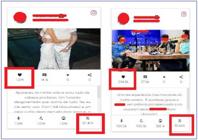
Composition of personal (left) and sponsored (right) content in one of the analyzed profiles
The persuasive imagery disseminated by digital entrepreneurs - largely validated through acts of consumption - is presented as authentic, overcoming the cognitive barriers of potential consumers and fostering similar patterns of behavior and consumption (Debord, 1997; Silva et al., 2023). This practice enables the artificial construction of idealized images designed to elicit an appreciative illusion that ultimately serves the interests of capitalism and dominant elites (Lipovetsky, 1989).
When analyzing the ten most prominent publications from each profile, we observed that greater engagement (as illustrated in Image 1) occurs in posts where the profile owner presents themselves in intimate contexts, such as personal celebrations. These posts typically feature rich detail in the physical environment, expressions of affection among participants, and visual harmony in color and lighting.
Nonetheless, a higher prevalence was identified for publications that promote brands, products, services, or events - that is, sponsored content - compared to posts that depict personal or family routines. Table 3 demonstrates this phenomenon by comparing the segmentation of predominant digital content across the analyzed profiles.
Table 3 highlights, among the selected profiles, a predominant tendency to use the virtual social network for commercial and/or professional purposes, rather than for activities not associated with sponsored content (47%). Another noteworthy observation is the low prevalence of digital content addressing critical, social, environmental, or humanistic reflections (5%), as well as the complete absence of formative or educational content, a finding that stands in sharp contrast to the high number of followers these accounts attract.
Although not always explicit, influencers consistently seek visibility and engagement on social networks. However, this pursuit reflects a condition akin to the concept of minority, understood as a state of “semi-formation”. In this context, influencers themselves become products of the system: instead of fostering a comprehensive and critical understanding of reality, they reproduce a limited and distorted one. This phenomenon embodies a form of knowledge that does not necessarily correspond to enlightenment or emancipation, but rather to obscurantism, manipulation, subjugation, and alienation perpetuated by dominant power structures (Adorno & Horkheimer, 1985).
Regarding the “fetishism” observed in this relationship - understood as a byproduct of alienation - the profile owners fail to recognize their own role in the creation of value and wealth (Marx, 1983). On the contrary, they attribute such power to the products they promote. This results in an inversion of perception, in which the creations of human labor acquire autonomy and exert dominance over their creators. Moreover, fetishism (Marx, 1983) conceals the relations of exploitation and domination inherent in the capitalist system, rendering them invisible to contemporary society.
From this perspective, Guy Debord (1997) explains that images and representations disseminated by mass media and advertising come to dominate social life, producing a superficial and spectacularized reality. His concept of the “totalitarian organization of appearance” elucidates how modern society functions as a “society of the spectacle,” organized around the production and consumption of images, to the detriment of authentic human experience and genuine social interaction (Debord, 1997).
In this process, the appearance of social relations, mediated through images on virtual platforms, functions as a mechanism for constructing aspirations among users, accentuating the reified aspects of capitalist culture. This “commodity fetishism” (Marx, 1983) manifests on social networks through images that seem to acquire a life of their own, while the underlying social relations are obscured. From this vantage point, one can observe a clear convergence between the ideas of Debord and Marx and the principles of the Culture Industry, reinforcing the argument that contemporary society is increasingly shaped under the aegis of capital, for, as Debord (1997, p. 13) reminds us, “[…] all life in societies where modern conditions of production prevail presents itself as an immense accumulation of spectacles. Everything that was directly lived has become a representation.”
CONCLUSION
In this article, we examined the actions of digital entrepreneurs within the context of the Instagram© social network, revisiting the concepts developed in Adorno and Horkheimer (1985) Dialectic of Enlightenment, particularly those related to the Culture Industry, analyzed here from the perspective of the digital age. Considering the advent of social networks - specifically Instagram© - as artifacts that stimulate digital entrepreneurship and position influencers as mediators of mystification and mass consumption, we were able to address the central question guiding this study: How has technology contributed to the reproduction of mystification and mass consumption in contemporary times?
The theoretical framework adopted allowed us to emphasize that one of the principal effects of digital technologies in society is the fragmentation of human self-criticism. Rather than mitigating the reproduction of mass consumption, technological mediation often confines individuals within an instrumental rationality that progressively prevents them from escaping alienating conditions. It is within this process that mystification is realized.
These reflections represent the main implications and contributions of this study to academia, organizations, and society. By outlining and exemplifying the mechanism of subjective alienation that emerges between the dialectic of self-determination - understood as a movement toward emancipation - and self-preservation - as a movement of self-coercion - we have demonstrated how this logic ultimately reinforces the power of big capital. We reaffirm the enduring relevance of Adorno and Horkheimer (1985) concepts in the twenty-first century, relating them to the dynamics of digital entrepreneurship and its coercive tendencies. This process resembles the siren’s song effect, as it operates through a false pursuit of emancipation that, paradoxically, results in the self-subjection of individuals to dominant economic imperatives.
We believe that this study has fulfilled its objectives and contributed to advancing critical discussions on the phenomenon of digital entrepreneurship, although we recognize certain limitations. One limitation concerns the need to analyze the cultural, economic, and social specificities that influence the adoption and use of social networks in Brazil and Latin America - regions where digital influencers occupy an especially prominent role in consumer markets that rank among the world’s largest on Instagram©. Another limitation arises from our reliance on secondary data; the absence of direct interaction with influencers through qualitative methods restricts our understanding of more subjective nuances, such as their perceptions, motivations, and desires regarding follower engagement on social networks.
In this regard, future research could explore digital entrepreneurship through diversified approaches and deeper analyses. Comparative studies, for example, contrasting influencers with large and small follower bases, those operating in peripheral regions, or gender-segmented analyses, could enrich the literature by providing a more contextualized and realistic perspective on this practice.
Furthermore, studies that involve the direct participation of influencers could yield valuable insights into the subversive rationalization of digital technologies (Feenberg, 2009), highlighting the ethical and conscious potential of these tools. Investigations into public policies, such as the regulation of major technology corporations (big techs) and the promotion of media education initiatives, could serve as countermeasures to cultural alienation in the digital sphere and foster the development of individual autonomy and critical thinking.
Research that connects the dimensions of cyberculture to areas such as public health, transportation, and education could also generate socially applicable contributions, particularly for nonprofit organizations. Another promising avenue involves studies focusing on “open data” policies within governmental, private, and social institutions.
These perspectives would broaden the practical relevance of research on digital entrepreneurship while contributing to the closure of the critical cycle, by advancing proposals for social transformation. In doing so, they open reflective pathways capable of generating positive effects in the relationship between digital technologies and social networks, fostering more ethical and socially oriented practices that guide digital entrepreneurship toward serving society as a whole - rather than merely consumer markets.
ACKNOWLEDGMENTS
The authors gratefully acknowledge the research funding programs CNPq, CAPES, and FAPEMIG, as well as the PROQUALI Program of the Universidade Federal de Juiz de Fora (UFJF).
References
-
Abílio, L. C. (2020). Uberização: a era do trabalhador just-in-time?Estudos avançados,34(98), 111-126. https://doi.org/10.1590/s0103-4014.2020.3498.008
» https://doi.org/10.1590/s0103-4014.2020.3498.008 - Adorno, T. W., & Horkheimer, M. (1985). Dialética do esclarecimento Jorge Zahar.
- Almeida, L. T. G. L.(2019). Vida compartilhada: influenciadores e seu papel na reestruturação do capitalismo informacional. In S. B. L. Martínez, M. Baumgartenet al. (Eds.). Cruzando puentes: recientes estudios en ciencia, tecnología y sociedad en América Latina y el Caribe(pp. 45-66). Silvia Beatriz Lago Martínez.
-
Amorim, H., Moda, F., & Mevis, C. (2021). Empreendedorismo: uma forma de americanismo contemporâneo?Caderno CRH,34, 1-16. https://doi.org/10.9771/ccrh.v34i0.36219
» https://doi.org/10.9771/ccrh.v34i0.36219 - Antunes, R. (2018).O privilégio da servidão: o novo proletariado de serviço na era digital Boitempo editorial.
-
Aragão, F. B. P., Farias, F. G., Mota, M. de O., & de Freitas, A. A. F. (2016). Curtiu, comentou, comprou. A mídia social digital Instagram e o consumo. Revista Ciências Administrativas, 22(1), 130-161. http://dx.doi.org/10.5020/2318-0722.2016.v22n1p130
» https://doi.org/10.5020/2318-0722.2016.v22n1p130 - Archer, M., Bhaskar, R., Collier, A., Lawson, T. & Norrie, A. (Eds.) (1998). Critical Realism: Essential readings Routledge.
-
Barbosa, N. S. (2018). O reflexo da sociedade do hiperconsumo no Instagram e a responsabilidade civil dos influenciadores digitais.Revista Direitos Culturais,13(30), 73-88. http://dx.doi.org/10.20912/rdc.v13i30.2706
» https://doi.org/10.20912/rdc.v13i30.2706 - Bardin, L. (1977). Análise de Conteúdo Edições 70.
- Bardin, L. (2006). Análise de Conteúdo (3a ed.). Edições 70.
- Benjamin, W. (2018). A obra de arte na era de sua reprodutibilidade técnica L&PM Editores.
- Camargo, C. P. (2014). Facebook Marketing Novatec Editora.
- Camargo, I., Estevanim, M., & Silveira, S. C. D. (2017). Cultura participativa e convergente: o cenário que favorece o nascimento dos influenciadores digitais.Revista Communicare,17, 96-118.
-
Costa, S. A. (2020). O perfil do empreendedor digital nas redes sociais [Trabalho de Conclusão de Curso, Centro Universitário Unichristus]. Repositório Institucional Unichristus. https://repositorio.unichristus.edu.br/jspui/handle/123456789/1099
» https://repositorio.unichristus.edu.br/jspui/handle/123456789/1099 - Debord, G. (1997). A sociedade do espectáculo Contraponto.
- Dornelas, J. (2016). Empreendedorismo: transformando ideias em negócios (6a ed.). Atlas.
- Feenberg, A. (2009). Cinco paradoxos da tecnologia e da política de desenvolvimento. In A. Oterloo et al. Tecnologias Sociais: caminhos para a sustentabilidade Conteúdo de Transformação.
-
Giles, D. C., & Edwards, L. (2018). Instagram and the rise of the social media “influencer”. In D. C. Giles, Twenty-first century celebrity: Fame in digital culture(pp. 155-173). Emerald Publishing Limited. https://doi.org/10.1108/9781787437081
» https://doi.org/10.1108/9781787437081 - Guthrie, C. (2014). The digital factory: A hands-on learning project in digital entrepreneurship.Journal of Entrepreneurship Education,17(1), 115.
- Habermas, J. (1989). Teoría de la acción comunicativa: complementos y estudios previos Cátedra.
- Han, B. C. (2018). Psicopolítica: o neoliberalismo e as novas técnicas de poder. Editora Âyiné.
- Karhawi, I. (2017). Influenciadores digitais: conceitos e práticas em discussão.Communicare,17(12), 46-61.
-
Kraus, S., Palmer, C., Kailer, N., Kallinger, F. L., & Spitzer, J. (2019). Digital entrepreneurship: A research agenda on new business models for the twenty-first century.International Journal of Entrepreneurial Behavior & Research,25(2), 353-375. https://doi.org/10.1108/IJEBR-06-2018-0425
» https://doi.org/10.1108/IJEBR-06-2018-0425 - Lefebvre, H. (1991). A vida cotidiana no mundo moderno (A. J. Barros, Trad.). Ática.
- Lemos, A. (2004).Cibercultura: tecnologia e vida social na cultura contemporânea(2a ed.). Editora Sulina.
- Lévy, P. (2000). Cibercultura(2a ed.). Editora 34.
- Lipovetsky, G. (1989). O Império do Efêmero Companhia das Letras.
- Mangel, A. (2008). Ilíada e Odisséia de Homero: uma biografia Jorge Zahar.
-
Manovich, L. (2017). Instagram and contemporary image http://manovich.net/index.php/projects/instagram-and-contemporary-image
» http://manovich.net/index.php/projects/instagram-and-contemporary-image - Marcuse, H. (2015). O homem unidimensional: estudos da ideologia da sociedade industrial avançada EDIPRO.
- Marx, K. (1983). O Capital: Crítica da Economia Política Abril Cultural.
-
Meta. (n.d.). Criar o futuro das conexões humanas e a tecnologia que o torna realidade https://www.meta.com/pt-br/about/company-info/?utm_source=about.meta.com&utm_medium=redirect
» https://www.meta.com/pt-br/about/company-info/?utm_source=about.meta.com&utm_medium=redirect - Morais, P. (2024). O Trabalho dos influenciadores digitais: precariedade e gerenciamento algorítmico sob a hegemonia do modo de vida empreendedor. Revista Cronos, 25(1), 134-152.
- Moreira, F. E. C. U. (2010). Consumo, Sociedade de Consumo e suas representações. In S. M. Pimenta, M. L. Corrêa, M. C. Dadalto. Sociedade e consumo: Múltiplas dimensões na contemporaneidade(pp. 171-199). Editora Juruá.
-
Mundo do Marketing. (2023, agosto 21). Instagram, YouTube e Facebook são as redes sociais preferidas pelos brasileiros https://mundodomarketing.com.br/instagram-youtube-e-facebook-sao-as-redes-sociais-preferidas-pelos-brasileiros
» https://mundodomarketing.com.br/instagram-youtube-e-facebook-sao-as-redes-sociais-preferidas-pelos-brasileiros -
Paula, A. P. P. de, & Paes, K. D. (2021). Fordismo, pós-fordismo e ciberfordismo: os (des) caminhos da Indústria 4.0. Cad. EBAPE BR, 19(4), 1047-1058. https://doi.org/10.1590/1679-395120210011
» https://doi.org/10.1590/1679-395120210011 - Pariser, E. (2012). O filtro invisível: o que a internet está escondendo de você Zahar.
-
Richter, C., Kraus, S., Brem, A., Durst, S., & Giselbrecht, C. (2017). Digital entrepreneurship: Innovative business models for the sharing economy.Creativity and innovation management,26(3), 300-310. https://doi.org/10.1111/caim.12227
» https://doi.org/10.1111/caim.12227 -
Rocha, A. R., & Gonçalves, W. (2022). Influência de fatores intrínsecos e extrínsecos na satisfação de servidores públicos em uma instituição de ensino superior federal.Revista Brasileira de Política e Administração da Educação,38, 1-23. https://doi.org/10.21573/vol38n12022.110703
» https://doi.org/10.21573/vol38n12022.110703 -
Rocha, A. R., Segura, L. C., Zatta, F. N., & Gonçalves, W. (2023). Competências de liderança para a cultura inovativa na gestão pública.Teoria e Prática em Administração,13(1) 1-13. https://doi.org/10.22478/ufpb.2238-104X.2022v13n1.64604
» https://doi.org/10.22478/ufpb.2238-104X.2022v13n1.64604 -
Rodrigues, A., Martens, C. D. P., & Scazziota, V. V. (2023). Empreendedorismo digital em organizações: Revisão integrativa da literatura e proposição de elementos de análise sob a ótica das capacidades dinâmicas.Revista Eletrônica de Administração,29(3). http://dx.doi.org/10.1590/1413-2311.393.135273
» https://doi.org/10.1590/1413-2311.393.135273 - Schumpeter, J. (1949). A teoria econômica e história empresarial, na mudança e do empresário: postulados e os padrões de história empresarial Havard.
-
Silva, J. P. M., Siffert, P. V., & Rezende, M. (2023). Influenciadores em mídias sociais e o problema da autenticidade: um ensaio teórico.RECADM,22(2), 293-315. http://dx.doi.org/10.21529/RECADM.2023012
» https://doi.org/10.21529/RECADM.2023012 - Weber, M. (1989). Ciência e Política Cultrix.
-
DATA AVAILABILITY
The dataset that supports the findings of this study is not publicly available.
-
REVIEWERS
Ana Carolina Soares Oliveira (Instituto Federal de Educação, Ciência e Tecnologia do Sul de Minas, Minas Gerais / MG - Brazil).
-
REVIEWERS
Bruno de Souza Lessa (Universidade de Fortaleza, Fortaleza / CE - Brazil). ORCID: http://orcid.org/0000-0002-1696-394X
-
REVIEWERS
One of the reviewers did not authorize the disclosure of their identity.
-
PEER REVIEW REPORT
The peer review report is available at the following link: https://periodicos.fgv.br/rap/article/view/97059
-
18
[Translated version] Note: all quotes in English translated by this article’s translator
Edited by
The dataset that supports the findings of this study is not publicly available.

 Source: Elaborated by the authors.
 Note: Certain sections and images have been intentionally blurred or omitted to preserve the identity of the profile owner. Source: Elaborated by the authors using images extracted from the SocialTalk© platform.