Career mobility in middle age: between forces of attraction and resistance
Abstract
Population aging increases the presence of older professionals in the labor market and requires new strategies to sustain careers in the long term. This article aims to understand the different forms of mobility triggered in midlife and their repercussions on career sustainability. Using Grounded Theory, 26 semi-structured interviews with midlife professionals were examined. As a result, physical, psychological, technological, identity-based, symbolic, bodily, temporal, and relational mobilities emerged as central dimensions for understanding these professionals’ trajectories. The findings show that these mobilities operate interdependently amid forces of attraction and resistance, expanding or restricting future possibilities. Conceptually, the article proposes a systemic model that integrates career mobility in midlife. It also highlights the need for public policies, organizational actions, and individual strategies that address these dimensions in a coordinated manner, promoting more sustainable careers in a constantly changing work context.
Keywords:
aging; midlife; career; sustainability; mobility
Resumo
O envelhecimento populacional amplia a presença de profissionais mais velhos no mercado de trabalho e exige novas estratégias para sustentar as carreiras a longo prazo. Este artigo tem como objetivo compreender as diferentes formas de mobilidade acionadas na meia-idade e suas repercussões na sustentabilidade da carreira. Utilizando a Grounded Theory, foram examinadas 26 entrevistas semiestruturadas com profissionais na meia-idade. Como resultado, as mobilidades física, psicológica, tecnológica, de identidade, simbólica, corporal, temporal e relacional emergiram como dimensões centrais para compreender as trajetórias desses profissionais. Os achados mostram que essas mobilidades operam de forma interdependente no entremeio de forças de atração e resistência, expandindo ou restringindo possibilidades futuras. Conceitualmente, o artigo propõe um modelo sistêmico que integra a mobilidade de carreira na meia-idade. Também destaca a necessidade de políticas públicas, ações organizacionais e estratégias individuais que tratem essas dimensões de forma articulada, promovendo carreiras mais sustentáveis em um contexto de trabalho em constante transformação.
Palavras-chave:
envelhecimento; meia-idade; carreira; sustentabilidade; mobilidade
Resumen
El envejecimiento de la población aumenta la presencia de profesionales de más edad en el mercado laboral y exige nuevas estrategias para mantener las carreras a largo plazo. El objetivo de este artículo es comprender las diferentes formas de movilidad que se activan en la mediana edad y sus repercusiones en la sostenibilidad de la carrera profesional. Utilizando la teoría fundamentada (Grounded Theory), se examinaron 26 entrevistas semiestructuradas con profesionales de mediana edad. Como resultado, las movilidades física, psicológica, tecnológica, de identidad, simbólica, corporal, temporal y relacional surgieron como dimensiones centrales para comprender las trayectorias de estos profesionales. Los hallazgos muestran que estas movilidades operan de forma interdependiente en medio de fuerzas de atracción y resistencia, ampliando o restringiendo las posibilidades futuras. Conceptualmente, el artículo propone un modelo sistémico que integra la movilidad profesional en la mediana edad. También destaca la necesidad de políticas públicas, acciones organizativas y estrategias individuales que aborden estas dimensiones de manera articulada, promoviendo carreras más sostenibles en un contexto laboral en constante transformación.
Palabras clave:
envejecimiento; mediana edad; carrera profesional; sostenibilidad; movilidad
INTRODUCTION
The aging of the workforce is one of the major challenges facing contemporary societies, increasing the participation of older professionals in the labor market (Amorim et al., 2019; Baruch & Sullivan, 2022; De Lange et al., 2021). As professional trajectories become longer, career management has increasingly become the responsibility of individuals themselves, who seek to balance financial independence, quality of life, and diversified career paths (Schweitzer et al., 2023; Zaniboni et al., 2015). Although there is no consensus on age boundaries, research commonly classifies “older workers” as those aged 40-50, a life stage commonly recognized as midlife (Climent-Rodríguez et al., 2019; Heijden et al., 2024; Infurna et al., 2020; Sánchez-Martín & Izquierdo-Rus, 2020).
Studies on older workers examine the factors that affect their retention and mobility in the labor market, addressing professional reintegration, motivations to continue working, lifelong learning, bridge employment, post-retirement work, and late self-employment (Climent-Rodríguez et al., 2019; Eppler-Hattab, 2022; Mazumdar et al., 2024; Sánchez-Martín & Izquierdo-Rus, 2020; Sullivan & Al Ariss, 2021). The literature also highlights employability and age-related stereotypes as barriers to career continuity (Amorim et al., 2019; De Lange et al., 2021). In this context, workforce aging emerges as a relevant topic in studies on career sustainability (De Vos et al., 2020; Müller & Scheffer, 2022; Zaniboni et al., 2015).
Career sustainability involves the dynamic interaction between the individual and the context over time (De Vos et al., 2020; Müller & Scheffer, 2022). As an approach developed in response to population aging and changes in work relations, it emphasizes adaptability and proactivity to ensure career continuity (Heijden & De Vos, 2015). For older workers, extending working life requires not only remaining employed but also maintaining engagement, health, and satisfaction (Zaniboni et al., 2015). Thus, understanding how these professionals sustain their careers in uncertain environments requires attention to the career movements undertaken during midlife.
Mobility, a central theme in contemporary career studies, refers to the experiences and transitions that shape trajectories over time (Inkson & Thorn, 2010; Tran et al., 2019). Although contemporary models acknowledge the importance of crossing physical and psychological boundaries in career management (Baruch & Sullivan, 2022), the literature still largely focuses on physical mobility, overlooking other forms of mobility that also structure professional trajectories (Guan et al., 2019), particularly in later career stages.
At the same time, transformations in the world of work have driven models that move beyond linear perspectives, such as boundaryless careers and sustainable careers (Baruch & Sullivan, 2022). While the sustainable career perspective broadens analysis by considering the interaction between individual and context, it has been criticized for privileging individual agency and for not fully addressing the structural inequalities that shape career trajectories (Bal et al., 2021). In this context, articulating mobility and career sustainability advances this agenda by incorporating a more systemic perspective, capable of highlighting how different forms of movement - beyond physical mobility - are activated and marked by tensions over time, especially in midlife.
Midlife concentrates challenges that, although present in other stages, tend to be more intense and simultaneous during this period (Infurna et al., 2020). These include responsibilities related to children and/or aging parents, peak career demands, and the role of leading and mentoring others (Infurna et al., 2020; Schalk et al., 2015). Vulnerabilities, such as the onset of chronic diseases, may also affect personal and professional life (Schalk et al., 2015). In this context, physical mobility may be constrained by family demands, reducing the availability for relocations and transitions (Sánchez-Martín & Izquierdo-Rus, 2020). However, other forms of mobility may be activated to sustain professional trajectories. Thus, this study investigates the different forms of mobility activated by midlife professionals and how these mobilities impact the sustainability of their careers.
This article aims to understand the different forms of mobility activated in midlife and their implications for career sustainability. By examining how professionals at this stage navigate and reconfigure their trajectories, the study deepens the understanding of careers in later stages, highlighting mobility as a mechanism of adaptation and continuity in an ever-changing labor market.
THEORETICAL FRAMEWORK
Career Mobilities
The new mobilities paradigm (Sheller & Urry, 2006) shifted the focus of social sciences from a static view of groups and institutions to an approach centered on the movement of people, ideas, and information across physical and subjective dimensions. Mobility is closely related to contemporary career studies, as “career essentially means movement” (Jacobs & Akkermans, 2022, p. 14). Thus, career mobility is understood as transitions from one position to another along a trajectory from past to future (Tran et al., 2019), allowing careers to be understood as constituted through movement.
This perspective gained prominence with the boundaryless career model (Defillippi & Arthur, 1994), which describes professional trajectories as a sequence of work opportunities beyond the boundaries of a single employer. This model emerged in response to increasing organizational flexibility (Grabarski & Shwartz-Asher, 2022). Initially limited to physical mobility, the concept evolved to include psychological mobility, forming a continuum ranging from low to high levels of mobility (Sullivan & Arthur, 2006). In this model, physical mobility refers to actual movements between jobs, organizations, occupations, and countries. Psychological mobility, in turn, refers to the mental readiness to cross organizational boundaries, accumulating experiences across different employers (Sullivan & Arthur, 2006).
According to Kellerman (2012), mobility has two interrelated facets: practiced mobility, which corresponds to the actual movement carried out by the individual; and potential mobility, understood as the preparatory phase that encompasses possible movements that may or may not materialize. Potential mobility refers to the range of options individuals mobilize to develop their personal projects (Flamm & Kaufmann, 2006), and it may be strategically maintained to expand future choices. Practiced mobility, once enacted, feeds back into this set of possibilities, influencing decisions and expanding or restricting access. Under these conditions, mobility takes on the character of strategic capital (Freitas, 2009; Kellerman, 2012) and, in a society that values it as an ideology, it may also function as a factor of social distinction (Flamm & Kaufmann, 2006).
Glăveanu (2020a) argues that physical movement not only expands experiences but also transforms them into resources for imagination. Thus, movement generates new possibilities for thinking and acting, articulating geographical, social, and psychological dimensions (Glăveanu, 2020a, 2020b). These perspectives emerge in practice - through transitions across physical, social, and symbolic positions - and deepen one’s understanding of both the world and of oneself. Mobility, therefore, involves flows, transitions, and transformations shaped by historical and social contexts, which condition the pace and pattern of individual mobility choices (Glăveanu, 2020a).
Career Sustainability
The discussion on sustainable careers emerges in response to population aging and the need to ensure career longevity (Newman, 2011). Studies indicate that, in the second half of the career, workers tend to reassess their priorities and redirect their choices, assigning greater value to self-fulfillment (Schalk et al., 2015). In the Brazilian context, research highlights barriers faced by older professionals within organizations, such as age-based workforce reduction practices (“age cleansing”) in dismissal processes (Hanashiro & Pereira, 2020), greater difficulty in reintegration after job loss (Oliveira & Silva, 2024), and the “age-based glass ceiling” that affects women in leadership positions (Cepellos & Tonelli, 2022). From this perspective, Newman (2011) argues that organizations should invest in retaining their aging workforce rather than treating it as replaceable.
The author proposes that sustainable careers are characterized by adaptability and flexibility, including periods of renewal, rest, learning, and future planning, in order to balance professional and personal demands. In this vein, Heijden and De Vos (2015, p. 7) define a sustainable career as “the sequence of an individual’s different career experiences, reflected through a variety of continuity patterns over time, across various social spaces, and characterized by individual agency, providing meaning to the individual.”
The sustainable career model proposes a continuous adjustment between the individual and their career over time (De Vos et al., 2020). Individual agency enables this self-management, but the context imposes barriers and opportunities that require constant realignment. The model also emphasizes the role of time, as contextual changes and personal priorities reshape the person-career fit. De Vos et al. (2020) measure sustainability through three indicators - health, happiness, and productivity -operationalized by Heijden et al. (2024) as job satisfaction, general health, and employability.
Thus, career sustainability is understood as a dynamic process of continuous adaptation to changes in work, preserving well-being and human development (Müller & Scheffer, 2022). It results from an active individual process involving reflection on the past and projection into the future, guiding present decisions to maintain career continuity (Schweitzer et al., 2023). Its balance depends on the interaction among different actors and adaptation to varying cycles of experience in the short, medium, and long term (Müller & Scheffer, 2022). In this sense, it involves continuously aligning the individual and their career to ensure satisfaction, health, and productivity while meeting current demands without compromising future opportunities (Schweitzer et al., 2023). Person-career fit is thus crucial and occurs when individual needs and goals converge with development opportunities offered by the organization (Cha et al., 2009; Parasuraman et al., 2000).
Adopting a systemic perspective implies analyzing how external conditions and individual resilience combine over time (Müller & Scheffer, 2022). However, this is a deeply individualized process, as career experiences, patterns, goals, and expectations vary widely, reflecting the uniqueness of each trajectory (Schweitzer et al., 2023). Therefore, understanding career sustainability requires considering the subjective perspective of professionals, who interpret and reconstruct their trajectories in continuous dialogue with context and the passage of time (Schweitzer et al., 2023).
METHODOLOGICAL PROCEDURES
To understand the different mobilities activated in midlife and their implications for career sustainability, this study adopted Grounded Theory (Charmaz, 2009; Gioia et al., 2013; Magnani & Gioia, 2023). Semi-structured interviews were conducted with midlife professionals (approximately between 40 and 60 years of age). This method was chosen due to the lack of a specific theoretical framework addressing the phenomenon and its suitability for generating theory grounded in empirical data (Charmaz, 2009; Flamm & Kaufmann, 2006). Grounded Theory combines data collection and analysis in iterative cycles, allowing codes and categories to emerge from the empirical material without reliance on prior hypotheses, resulting in a substantive explanation of the processes and interactions under investigation (Charmaz, 2009; Magnani & Gioia, 2023).
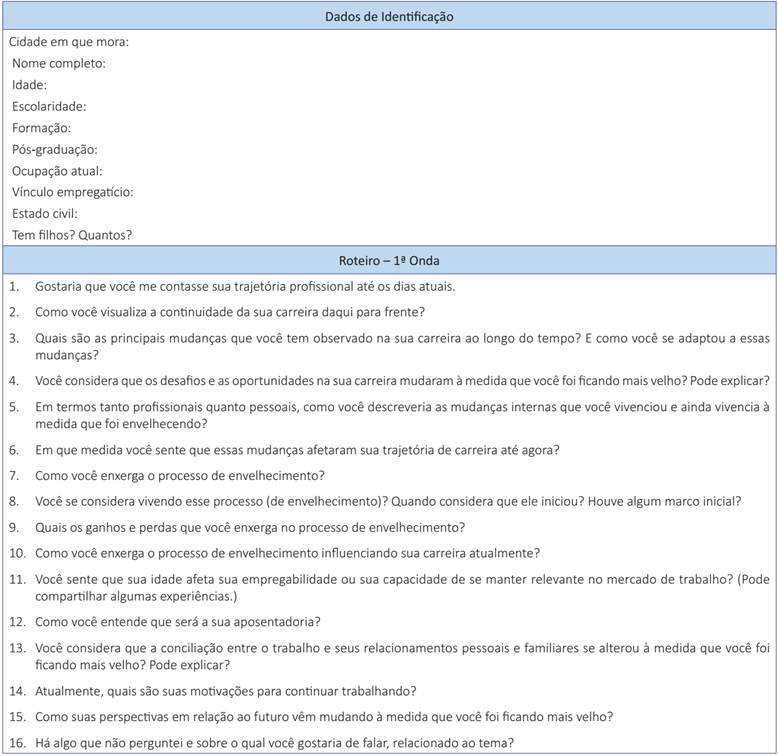
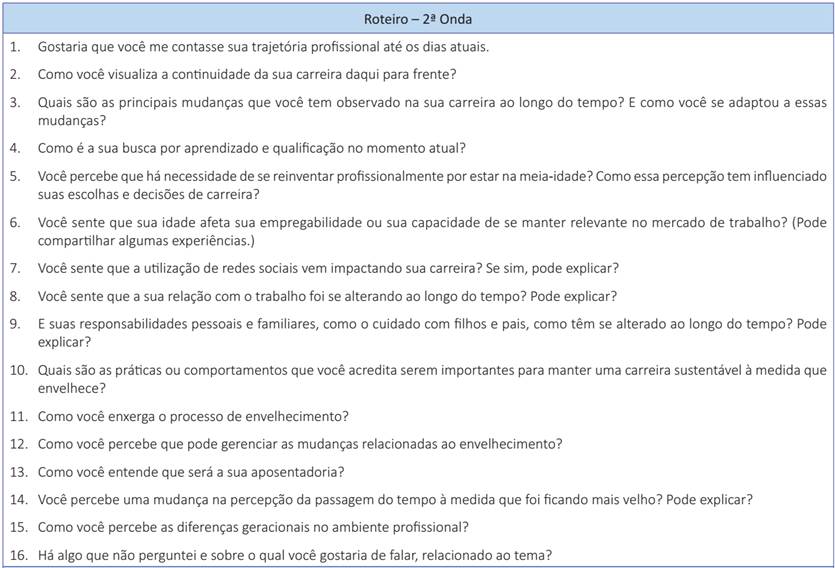
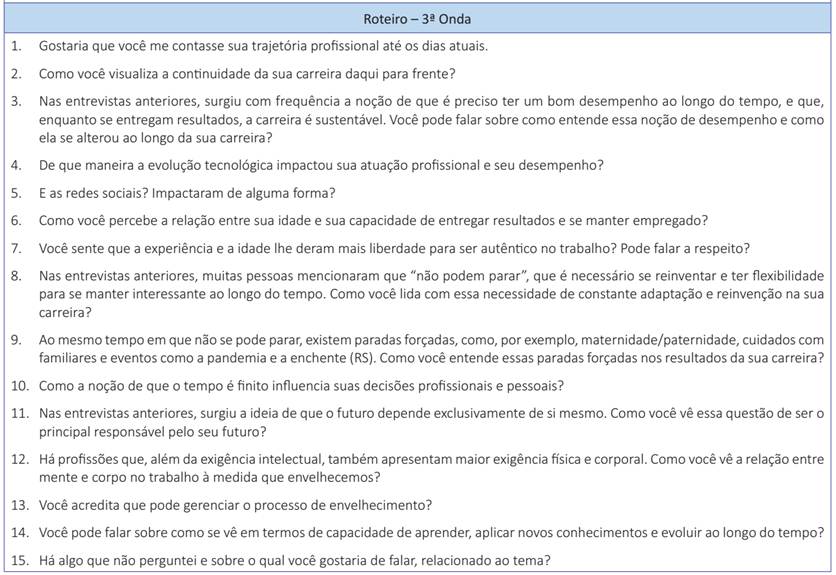
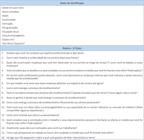
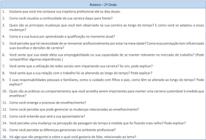
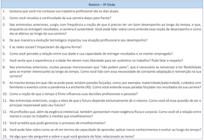
An initial interview guide was developed based on sensitizing concepts drawn from the literature (Charmaz, 2009). The first participants were contacted through the researcher’s professional network, and at the end of each interview, participants were asked to suggest additional potential respondents using snowball sampling. Three waves of interviews - both in-person and online - were conducted with 26 participants, as described in Table 1, between March 15 and September 13, 2024. Each wave was concluded when the data supported a provisional theoretical explanation and revealed gaps to be explored in subsequent rounds. The interview guide (Appendix 2) was refined after the analysis of each set of interviews.
After the first round, the absence of participants over the age of 50 was identified; this is the reason why half of the second wave included professionals within this age group. Similarly, at the end of the second wave, the importance of including individuals in occupations involving greater physical effort was recognized, which was incorporated into the third round of interviews. This final phase was concluded when theoretical sufficiency was deemed to have been reached (Charmaz, 2009).
The interviews were recorded and fully transcribed, resulting in 387 pages for analysis. After each wave, the interviews were manually coded with the support of Atlas.ti software, generating codes through an open (Charmaz, 2009) and inductive (Gioia et al., 2013) approach. The systematic Gioia methodology (Gioia et al., 2013; Magnani & Gioia, 2023) was employed to analyze the data, identifying first-order codes, second-order themes, and aggregate dimensions (Figure 1). First-order analysis aims to present findings using terms and codes centered on the participants, maintaining a descriptive dimension. In second-order analysis and the development of aggregate dimensions, the codes become more analytical, with progressively more abstract categories that combine existing theory with empirical evidence.

This analytical procedure was applied in a continuous and cumulative manner, with each new wave involving a review of all first-order codes based on the analysis of similarities and differences, leading to the reduction of categories to a more manageable number for the researcher (Gioia et al., 2013). Likewise, in each subsequent round, second-order codes were revised based on new insights that emerged throughout the research process. In the final stage of analysis, the data were synthesized into codes and dimensions with a higher level of abstraction and theoretical scope (Magnani & Gioia, 2023). As a result, a theoretical model was developed to explain the phenomenon under study, which is presented in the following sections.
RESULTS ANALYSIS
This section presents the mobilities identified in the study and their impacts on career sustainability in midlife. Physical, psychological, technological, identity, symbolic, bodily, temporal, and relational mobilities emerged as key dimensions for understanding career trajectories (Figure 1) and are conceptualized and discussed based on empirical evidence.
Physical mobility
Physical mobility refers to movements between jobs, organizations, occupations, and regions throughout one’s career (Sullivan & Arthur, 2006). From a career sustainability perspective, it can be understood as a mechanism for adapting to contextual changes, supporting individuals’ continued participation in the labor market. However, it assumes distinct characteristics at more advanced career stages, when professionals tend to reassess their trajectories and assign new meanings to transitions (Schalk et al., 2015).
The interviews suggest the influence of attraction forces, such as autonomy, new forms of work, and geographical freedom, as highlighted by I6 (Female, 47 years old): “I want to travel the world; my profession is already being built for that, so I can work from anywhere.” At the same time, resistance forces emerge, such as family stability, local market constraints, and shifts in aspirations, as stated by I8 (Female, 45 years old): “I’m already planning to step away from all this hustle to have more time for myself, for my family, and to have more peace.”
The narratives indicate that physical mobility is more intense during early career growth stages, when individuals are more willing to change positions, organizations, or locations. However, in midlife, geographical constraints become more prominent, particularly when advancement requires relocation to major economic centers. Some participants reported reaching a career plateau, where progression often requires moving to larger cities such as São Paulo - an option that is not always feasible or desirable, as illustrated by I21.
It won’t be easy for me to reposition myself here. There is a market in Brazil, but I lack mobility. My wife is also an executive, so either we live apart and commute frequently - which we’ve already discussed with our daughters and do not want - or she leaves her job so we can pursue a C-level position elsewhere, which we do not want either. To reposition myself, I might have to accept a downgrade in my career (I21, Male, 46 years old).
When geographical mobility becomes restricted, other forms of mobility are activated to sustain career trajectories. In the analyzed group, the transition to entrepreneurship emerged as a strategy (Tran et al., 2019), enabling greater flexibility and hybrid work arrangements, as noted by I23 (Female, 45 years old): “Before this interview, I was attending an online client from São Paulo. Before, they wouldn’t have hired me because I wasn’t there, but now we can work from anywhere. I think intellectual capital has become more important than physical location.” Within this interplay of forces, other forms of mobility emerge as strategic alternatives for sustaining and advancing careers.
Psychological mobility
Psychological mobility refers to the perception of being able to cross organizational boundaries, explore new opportunities, and evolve across different work contexts (Sullivan & Arthur, 2006). From a career sustainability perspective, it involves the dynamic adjustment between individual needs and available opportunities (Cha et al., 2009; Müller & Scheffer, 2022). By shaping how individuals interpret and respond to labor market changes, this form of mobility can sustain satisfaction, health, and productivity over time (Heijden et al., 2024).
The findings indicate that psychological mobility often precedes physical mobility, functioning as a form of mobility potential (Kellerman, 2012) and reflecting a predisposition to broaden one’s perspectives and explore new possibilities (Glăveanu, 2020a). In midlife, this predisposition is shaped by enabling factors - such as accumulated experience, side projects, and external shocks such as the pandemic - as well as constraints that may limit it. This is illustrated by I4 (Female, 43 years old), when she states: “During the pandemic, I had to do something quickly; I couldn’t wait to see what would happen. I closed my salon, set up the equipment in my car, and kept working [through in-home services]”; and by I15 (Male, 58 years old): “I really enjoy being in contact with younger people, with new trends, and not staying stuck in the “back in my day” mindset. My time is now.”
However, several factors constrain psychological mobility, narrowing the range of perceived possibilities. These include failed promotions, value conflicts following leadership changes, feelings of stagnation, and the belief that age reduces advancement opportunities. As I12 (Male, 39 years old) states: “I’m aware that if I make a mistake, I need to make it quickly, because maybe at 50 or 60, I’ll have more difficulty finding a new job.” I3 (Female, 45 years old) adds: “The company I work for doesn’t discriminate between young and old when hiring, but if I have to make a change, I feel afraid.” In midlife, some professionals begin to question their ability to achieve new roles, as expressed by I14:
The limitation at this age is understanding that it’s not your birth date that defines aging, as many may think “I’m too old for this, to learn something new, to change.” I think the greatest trap for a professional is the lack of perspective about oneself (I14, Male, 51 years old).
The findings suggest that psychological mobility in midlife involves the development of internal resources that help sustain career trajectories in uncertain environments. This process influences subjectivity, perceived competence, employability, and adaptability.
Technological mobility
Technological mobility refers to movement mediated by digital technologies in virtual environments, enabling the construction of social and productive relationships between individuals and organizations across different locations (Fraga et al., 2024). In midlife, this flexibility supports career sustainability, but also blurs work-life boundaries, affecting subjectivity and reshaping the relationship with work (McDonald et al., 2022).
In the analyzed group, the COVID-19 pandemic accelerated the digitalization of work and the use of digital tools (McDonald et al., 2022). Among the factors enabling technological mobility in midlife are agility, geographical flexibility, and temporal autonomy. Conversely, constraining forces include uncertainty regarding the future of work, the need for continuous upskilling, and increasing work demands (Heijden et al., 2024). As reported by I6:
The process has remained the same for 30 years, but technology has made it faster. Before, I could serve one or two clients; now I can serve 20 at the same speed […] In remote work, you need to schedule everything, otherwise you end up working 24 hours a day (I6, Female, 47 years old).
Self-employed professionals recognize that digital visibility expands opportunities but also report technostress resulting from information overload and the expectation of constant online presence (McDonald et al., 2022). Even those working primarily in face-to-face settings experience this pressure, as illustrated by I8 (Female, 45 years old): “Today there is more visibility on social media, but it seems that being an excellent recreation worker is not enough - I have to be a recreation coach, a mentor… I can’t take it anymore.” Similarly, I11 (Male, 53 years old) states:
I’ve always been considered an early adopter, but I face several difficulties, for example, when trying to access platforms I’m not familiar with. So, you realize that you need to adapt, you need to catch up quickly, because the world moves faster than you.
Technological changes go beyond transforming how work is performed; they redefine professional mobility itself in midlife. As I23 (Female, 45 years old) notes, “today we operate nationally, combining in-person and online work.” On the other hand, I20 (Female, 47 years old) teaches exclusively in virtual MBA programs. Thus, digitalization expands remote work, and geographical mobility is no longer an imperative in many careers, as it is partially replaced by technological mobility (Fraga et al., 2024).
Identity mobility
Identity mobility refers to transitions between roles across life and career, shaped by the reconfiguration of work relations and intergenerational interactions. In midlife, this movement intensifies: professionals balance multiple responsibilities and act as bridges between generations, while younger individuals explore career paths and older individuals increasingly prioritize goals aligned with intrinsic and affective values (Infurna et al., 2020).
In the studied group, factors that enable identity reconfiguration include greater freedom resulting from children becoming independent, opportunities to occupy strategic positions, and accumulated experience. As summarized by I10 (Female, 54 years old): “My son is already a young working adult; it’s a different phase.” This context facilitates transitions toward greater autonomy (Tran et al., 2019), such as moving from corporate employment to self-employment. In this process, individuals must detach from prior organizational identities, as described by I7 (Female, 49 years old): “I realized that I don’t need a corporate surname to be respected and I have authority in what I do”.
Conversely, constraining conditions - such as caring for aging parents, dealing with illness, or experiencing loss - may restrict such changes. Three accounts illustrate some of the transformations of this phase. I3 (Woman, 45 years old) says: “At 40 I became a grandmother; until then, I saw myself as a mature woman and suddenly I was a grandmother.” For E12 (Man, 39 years old), “the parent-child roles were reversed at the end of her life, and I was able to fulfill my role as a son by caring for my parents [...] The loss of my mother… I felt very lonely.” E7 (Woman, 49 years old) notes: “Our energy changes, physically, so I think I’ll have to find other ways to continue doing my work.”
Strategic roles tend to increase autonomy but also intensify responsibility, potentially leading to greater rigidity, as noted by I2 (Male, 40 years old): “With age and a higher comes more responsibilities - work, bills, family - which sometimes makes you more rigid.” In addition, forced transitions - such as layoffs, organizational restructuring, or family-related events - impose unplanned identity reconfigurations, as highlighted by I9 (Female, 40 years old), “I had to adapt again, this time to work in sales, dealing with a completely different audience.”
The findings suggest that identity mobility in midlife involves the continuous reconstruction of roles, driven by uncertainty and the accumulation of responsibilities. This process directly affects career sustainability, requiring ongoing alignment between the individual and their career trajectory (Cha et al., 2009; Müller & Scheffer, 2022).
Symbolic mobility
Symbolic mobility refers to the reconfiguration of values and social representations over time, shaping how individuals interpret their trajectories and envision their professional futures. In midlife, this is particularly connected to the reframing of aging, generating tensions between professionals’ self-perceptions and the expectations imposed by the labor market and society.
Intergenerational dynamics, as well as age and gender stereotypes, modulate the value attributed to experience, sometimes opportunities while other times constraining them. As noted by I11 (Male, 53 years old): “I am not sure if this is a difficulty, but it’s a reality we face, we have to understand and adapt rather than expecting others to adapt to us because we are older.”
Among participants, retirement is no longer viewed as the end of productive life but rather as a stage that opens new possibilities, aligning with the neoliberal ideal of active aging (Bernardinelli et al., 2023). As stated by I25 (Male, 45 years old), “just because retirement comes doesn’t mean people should stop; there are people in their 70s, 80s, even 90s who are still active.”
Participants’ discourse reveals a strong need for continuous updating in midlife, reflecting concerns about professional obsolescence. I20 (Female, 47 years old) notes that “every day I wake up and feel outdated,” while I3 (Female, 45 years old) explains:
A professional needs to remain attractive to the company. So, staying stagnant, relying only on your initial training and qualifications, not pursuing further training, whether in soft or hard skills, will not allow you to achieve greater opportunities; there is a need for constant development.
Although many participants claim not to experience age discrimination, there is a clear mismatch between this perception and market practices. As I19 (Male, 48 years old) reports: “After 30 years of career, I found myself back in the job market. What should I do? Sending out résumés would have little chance, because age matters.” In contrast, individuals in strategic roles or working autonomously tend to perceive seniority as a competitive advantage. As I15 (Male, 58 years old) observes: “I chose a field where age is an advantage - in mentoring, being over 50 adds credibility.”
Gender differences also permeate these dynamics. Men express concerns about becoming “useless,” while women report pressures related to appearance. I2 (Male, 40 years old) states: “I can’t see myself being useless; I can’t imagine reaching 50 without doing anything.” Meanwhile, I8 (Female, 45 years old) reflects: “I no longer go to parties dressed like a princess. It used to be an advantage, but wearing a Snow White costume now? Forget about it.” These perceptions reflect broader social constructions that associate masculinity with productivity and femininity with youth (Bowman et al., 2017).
Symbolic mobility thus reveals how midlife professionals sustain their careers by navigating tensions between their self-perception as still productive and social expectations that, while framing aging as a stage of new opportunities, impose increasingly demanding standards.
Bodily mobility
Bodily mobility refers to the physical and cognitive transformations that occur over time, encompassing the physiological changes associated with aging as well as the demands imposed by professional and social contexts. Centered on health, it results from the interaction between enabling and constraining factors, shaped by individual conditions - such as lifestyle - and contextual elements, including biomedical advances that influence longevity.
Participants believe that aging can be managed through healthy habits and biomedical support. As summarized by I13 (Female, 46 years old): “I take great care regarding my diet, physical activity, sleep, and everything that gives me energy and stamina.” Similarly, I11 (Male, 53 years old) notes: “When you have non-natural elements in your body for medical reasons, you can already be considered bionic - something that used to be fiction.”
Despite these efforts, participants acknowledge signs of physical decline - such as sensory losses, memory lapses, fatigue, and reduced learning capacity (Schalk et al., 2015). As I10 (Female, 54 years old) emphasizes: “I don’t have the same energy I had 30 years ago… we can’t be hypocrites and say these limitations are all in the mind. No, physical limitations are real limitations.” These effects are more pronounced in physically demanding occupations, as illustrated by I26 (Female, 46 years old): “Dentistry becomes limiting over time. I’ll still be young at 60, but 40 years on a stool take a toll on your back, eyes, and shoulders.”
In addition, bodily mobility is shaped by aesthetic and social pressures that influence the legitimacy of certain professions. As noted by I24 (Male, 48 years old): “There is strong discrimination against a personal trainer who is overweight, who doesn’t train or take care of their health, as clients notice, colleagues notice.” In response to such constraints, many participants anticipate future career transitions as a strategy to sustain their professional longevity.
With the extension of working lives, menopause has become an integral part of women’s professional trajectories. Hormonal changes, fatigue, and associated stereotypes may affect performance (Heijden et al., 2021), as reflected in I18’s account (Female, 51 years old): “With menopause, my memory just collapsed.” Likewise, I16 (Female, 48 years old) states: “On the day I resigned, I received my menopause diagnosis and thought: “I gave my eggs away to the company,” highlighting the perception of bodily sacrifice in relation to corporate work. These findings indicate that bodily mobility can redefine careers in midlife. Sustaining productivity requires continuous adjustments, ranging from preventive health practices to career transitions, in order to preserve well-being and, consequently, career sustainability.
Temporal mobility
Temporal mobility refers to changes in the perception of time throughout the professional trajectory, influencing priorities, goals, and the relationship with work. In midlife, the future tends to feel closer, leading professionals to reassess their choices and prioritize affective or strategic goals, in contrast to the pursuit of accelerated growth typical of early career stages (Infurna et al., 2020; Schalk et al., 2015). This reframing of aging and finitude unfolds under simultaneous forces that both enable and constrain decisions, shaping the rhythm and cycles of the career trajectory.
Contemporary acceleration and the pressure for quick results intensify the sense of time scarcity. Among participants, a persistent feeling of incompleteness emerges, and the need for continuous improvement reinforces the perception of never being fully ready, as reported by I5 (Male, 43) - “My therapist told me: ‘I5, have you realized you’re already 42?’ And the market? My English is intermediate; I need to push harder…” - and I4 (Female, 43) - “Sometimes it hits me: ‘I’m this age and haven’t done much.’ No! I’ve done a lot! That feeling of… guilt.” External events, such as the pandemic, intensify this perception. I6 (Female, 47) recalls: “We were left without work, used our savings, and when it ran out, we needed to reinvent ourselves but couldn’t; that lost time makes a difference”.
Awareness of unpredictability makes career choices more pragmatic. Career changes, flexible work arrangements, and redefinitions of success emerge as strategies to realign the individual-career fit. As I17 (Female, 53) notes, “When we are young, we think we have all the time in the world; now, at 53, I know I might have a lot of time, or maybe not.” There is a shift from long-term planning toward valuing the present (Schweitzer et al., 2023).
Maturity fosters the recognition of life and career as cyclical processes, enabling planning that is more closely aligned with intrinsic values. “We go through cycles of sowing, planting, and harvesting; career trajectories operate under the same logic,” summarizes I22 (Male, 44 years old). Similarly, I12 (Male, 39 years old) reflects that “if I had managed my skills a bit better throughout my professional journey, I might be at a different financial level. But perhaps I wouldn’t have achieved other personal things that I did.”
This logic contrasts with the expectation of definitive decisions early in professional life, as I11 (Male, 53) ironically states: “I’ve already changed [professions] three times… I ask my 16-year-old son what he wants to do and he says: ‘Dad, you’ve been through the exact sciences, the humanities, and the biological sciences and you want me to choose one?’” Temporal mobility thus involves the continuous adjustment between different career rhythms and cycles, requiring constant adaptation to market demands and unpredictable events, ultimately impacting career sustainability.
Relational mobility
Relational mobility refers to movement across professional networks and the ability to activate and transfer social capital throughout career development. Its possibilities depend on social interactions and contextual conditions, which may either expand or constrain continued participation in the labor market. In midlife, this dimension becomes even more relevant, as networks built over time turn into a strategic resource for overcoming mobility barriers.
Ageism limits the reemployment of midlife professionals (Amorim et al., 2019). In the accounts, networking emerges as a compensatory mechanism, expanding opportunities for job referrals, entry into new projects, and the strengthening of professional reputation, thereby mitigating the impact of age-related barriers, as highlighted by I21 (Male, 46 years old): “What will actually keep you in the labor market is networking”; and also by I13 (Female, 46 years old): “In my field, when you enter the market, at first, you survive through your network, directly or indirectly.”
Although networking is strategic, not everyone accesses this resource in the same way. Professionals who have spent many years in a single organization may have limited external networks, which restricts their mobility in midlife. As noted by I16 (Female, 48 years old):
Until then, I had worked for a company, and I had no time to build a network [...] I’m in a career transition, starting over, but it’s a different kind of restart, it’s not like starting at 20 with no experience. I have experience, but I don’t have the connections.
Entrepreneurs in the study reveal another facet of relational mobility: the tendency to form work networks without formal partnerships. This reflects a reconfiguration of work relations, in which attachment to a single organization becomes less relevant than the ability to move across projects, as summarized by I15 (Male, 58 years old): “When a larger project comes up, I assemble teams with other companies. When the project ends, that group dissolves.”
In this context, flexibility based on the mobilization of networks can be seen as a strategy to overcome age-related barriers; however, risks are increasingly shifted onto individuals. Midlife careers thus become dependent on the ability to build and activate connections, a resource that, while expanding opportunities, may also intensify long-term insecurity and instability.
DISCUSSION
Based on the new mobilities paradigm (Sheller & Urry, 2006) and the concepts of potential mobility (Kellerman, 2012), mobility as a generator of possibilities (Glăveanu, 2020a), and sustainable careers (De Vos et al., 2020; Müller & Scheffer, 2022), this article argues that multiple forms of mobility are dynamically activated in midlife. This movement reflects the need to simultaneously adjust to transformations in the world of work and to personal changes typical of this life stage.
Career mobility in midlife unfolds amid forces of attraction and resistance, whose roles may shift depending on the context. Accumulated experience, which often encourages individuals to reinvent themselves, may also anchor them in their current roles due to the stability already achieved. Likewise, the pursuit of work-life balance may enable new arrangements; however, workloads may constrain mobility. Ageism, role overload, and pressures to continuously upskill, among other factors, may act either as barriers or as motivations for change, demonstrating that these forces intertwine rather than operate in isolation.
Figure 2 represents this dynamic through the metaphor of a “tightening spiral,” in which opposing forces stretch and compress the “spring” of career trajectories, interconnecting physical and subjective mobilities. Each dimension is interdependent; when activated, it reverberates across others. Health issues, for example, may limit physical mobility while encouraging digital work, requiring identity and relational adjustments. This feedback mechanism directly affects career sustainability. Each activation may either expand or constrain the future field of possibilities, influencing employability, satisfaction, and longevity. Extensive professional networks often broaden opportunities; however, when they are overly endogenous or homogeneous, they may also restrict choices. Understanding midlife careers, therefore, requires a systemic and dynamic perspective that recognizes the elasticity of these mobilities and the continuous back-and-forth movement resulting from the tension between forces that simultaneously enable and constrain professional trajectories.
Thus, midlife career mobility can be conceptualized as a systemic and continuous process of transitions over time, shaped by internal and external factors, through the interaction of different forms of mobility (physical and subjective) that lead individuals to new experiences and the exploration of new possibilities. This process unfolds amid tensions between forces that drive change and those that restrict possibilities, influencing individuals’ circulation in the labor market and their ability to redefine their own trajectories. For this mobility to be sustainable, career transitions must include opportunities for renewal and adaptation, enabling the integration of different life domains and ensuring that individuals remain satisfied, healthy, and productive throughout their professional trajectories.

The findings reinforce the conception of career sustainability as a dynamic process: midlife professionals continuously adjust their trajectories in response to personal and contextual changes (De Vos et al., 2020; Müller & Scheffer, 2022). This sustainability does not result solely from individual agency; instead, it depends on the interaction between multiple contexts (Heijden et al., 2024) that, through different forms of mobility, may expand or constrain opportunities over time.
Although the literature predominantly describes mobility as physical or psychological transitions between positions (Sullivan & Arthur, 2006; Tran et al., 2019), the results indicate that, in midlife, this process also depends on the ongoing interaction with other subjective mobilities. Furthermore, the study reinforces the distinction between enacted and potential mobility (Flamm & Kaufmann, 2006; Kellerman, 2012). This finding contributes to the literature by showing that many participants deliberately maintain a high level of mobility potential as a strategy to preserve their employability (even without immediate movement), which functions as a “buffer” providing security in an uncertain labor market.
The literature suggests that, in the second half of the career, individuals reassess their priorities, placing greater emphasis on personal fulfillment and social recognition (Infurna et al., 2020; Schalk et al., 2015). The findings confirm this shift and highlight that subjective mobilities play a central role in the reframing of aging and in adapting to new professional demands. However, the interviews also reveal a recurring fear of future reemployment, particularly at more advanced ages, associated with the perception of reduced opportunities. This context is marked by the demand for continuous adaptation, alongside the feeling that stabilizing one’s trajectory may risk a loss of relevance in the labor market. These elements resonate with barriers identified in the Brazilian context, such as “age cleansing” in dismissal processes and the challenges of professional reintegration (Amorim et al., 2019; Hanashiro & Pereira, 2020; Oliveira & Silva, 2024).
The results of this study not only corroborate these dynamics but also deepen them by revealing subjective dimensions that intensify such barriers, indicating that the pressure to continuously upskill tensions the shift toward trajectories oriented by intrinsic values. In this sense, changes in the perception of aging do not necessarily expand freedom of choice; instead, they demand constant adaptation to remain competitive, placing career sustainability at risk.
FINAL CONSIDERATIONS
From a theoretical perspective, this study advances the debate on mobility, aging, and career sustainability by adopting a multidimensional approach. By highlighting the role of subjective mobilities, it clarifies how midlife professionals adjust their trajectories through a non-linear process marked by cycles of expansion and restriction, in which new possibilities emerge while barriers simultaneously constrain them. In this sense, it contributes by proposing the concept of midlife career mobility as well as the tensioned spiral model, which enables the understanding of trajectories as continuous dynamics of advancement, containment, and reconfiguration, shaped by individual, organizational, and structural factors.
The practical implications of this study point to the need for an integrative approach to career management in midlife. For individuals, sustainable careers require adaptability, the strengthening of professional networks, transition planning, cognitive flexibility, and continuous attention to learning and health. For organizations, it is important to develop policies that take aging into account, such as lifelong learning programs, revised performance metrics, support for employees balancing work and eldercare responsibilities, long-term financial planning, and initiatives promoting intergenerational knowledge exchange. Public policies, in turn, should promote continuous upskilling and more flexible as well as hybrid work arrangements throughout the life course, support career transitions and provide protection mechanisms that ensure decent conditions for older workers, fostering their continued productive participation in the labor market.
Regarding limitations, the study focused on professionals with high levels of education and greater social capital, which may facilitate access to mobility and sustainability strategies, thus limiting the generalizability of the findings. In addition, although gender was considered, other intersectional dimensions - such as race, class, and different forms of labor market insertion - were not explored in depth. It is also important to note that, although the model includes eight types of mobility, this delimitation does not exhaust the phenomenon, indicating the openness of the field and the need for further investigation into subjective mobilities.
Finally, future research may advance by examining more diverse contexts, including workers in more vulnerable conditions as well as by deepening intersectional approaches. The development of instruments to measure different forms of mobility across the career is also recommended, contributing to comparative analyses and to the empirical strengthening of the field.
References
-
Amorim, W., Fischer, A., & Fevorini, F. B. (2019). Workers age 50 and over in the brazilian labor market: is there ageism? Revista de Gestão, 26(2), 161-179. https://doi.org/10.1108/REGE-09-2018-0092
» https://doi.org/10.1108/REGE-09-2018-0092 -
Bal, P. M., Matthews, L., Dóci, E., & McCarthy, L. P. (2021). An ideological analysis of sustainable careers: identifying the role of fantasy and a way forward. Career Development International, 26(1), 83-101. https://doi.org/10.1108/CDI-05-2020-0114
» https://doi.org/10.1108/CDI-05-2020-0114 -
Baruch, Y., & Sullivan, S. E. (2022). The why, what and how of career research: a review and recommendations for future study. Career Development International, 27(1), 135-159. https://doi.org/10.1108/cdi-10-2021-0251
» https://doi.org/10.1108/cdi-10-2021-0251 -
Bernardinelli, I., Candido, S. E. A., & Tonelli, M. J. (2023). Neoliberalism and active aging: the role of business retirement preparation programs. RAM - Revista de Administração Mackenzie, 24(1), 1-27. https://doi.org/10.1590/1678-6971/eRAMG230168.en
» https://doi.org/10.1590/1678-6971/eRAMG230168.en -
Bowman, D., McGann, M., Kimberley, H., & Biggs, S. (2017). ‘Rusty, invisible and threatening’: ageing, capital and employability. Work, Employment and Society, 31(3), 465-482. https://doi.org/10.1177/0950017016645732
» https://doi.org/10.1177/0950017016645732 -
Cepellos, V. M., & Tonelli, M. J. (2022). O processo de envelhecimento de mulheres em cargos de liderança: a iminência da morte e do renascimento simbólicos. Organizações & Sociedade, 29(101), 329-358. https://doi.org/10.1590/1984-92302022v29n0014PT
» https://doi.org/10.1590/1984-92302022v29n0014PT -
Cha, J., Kim, Y., & Kim, T. Y. (2009). Person-career fit and employee outcomes among research and development professionals. Human Relations, 62(12), 1857-1886. https://doi.org/10.1177/0018726709338638
» https://doi.org/10.1177/0018726709338638 - Charmaz, K. (2009). A construção da teoria fundamentada: guia prático para análise qualitativa Artmed.
-
Climent-Rodríguez, J. A., Navarro-Abal, Y., López-López, M. J., Gómez-Salgado, J., & García, M. E. A. (2019). Grieving for job loss and its relation to the employability of older jobseekers. Frontiers in Psychology, 10, 1-12. https://doi.org/10.3389/fpsyg.2019.00366
» https://doi.org/10.3389/fpsyg.2019.00366 -
Defillippi, R., & Arthur, M. B. (1994). The boundaryless career: a competency-based perspective. Journal of Organizational Behavior, 15(4), 307-324. https://doi.org/10.1002/job.4030150403
» https://doi.org/10.1002/job.4030150403 -
De Lange, A. H., Heijden, B. I. J. M. van der, Vuuren, T. van, Furunes, T., De Lange, C., & Dikkers, J. (2021). Employable as we age? A systematic review of relationships between age conceptualizations and employability. Frontiers in Psychology, 11, 605684. https://doi.org/10.3389/fpsyg.2020.605684
» https://doi.org/10.3389/fpsyg.2020.605684 -
De Vos, A., Heijden, B. I. J. M. van der, & Akkermans, J. (2020). Sustainable careers: towards a conceptual model. Journal of Vocational Behavior, 117, 1-13. https://doi.org/10.1016/j.jvb.2018.06.011
» https://doi.org/10.1016/j.jvb.2018.06.011 -
Eppler-Hattab, R. (2022). From lifelong learning to later life self-employment: a conceptual framework and an Israeli enterprise perspective. Journal of Enterprising Communities: People and Places in the Global Economy, 16(6), 948-966. https://doi.org/10.1108/JEC-01-2021-0014
» https://doi.org/10.1108/JEC-01-2021-0014 -
Flamm, M., & Kaufmann, V. (2006). Operationalising the concept of motility: a qualitative study. Mobilities, 1(2), 167-189. https://doi.org/10.1080/17450100600726563
» https://doi.org/10.1080/17450100600726563 -
Fraga, A. M., Scherer, L. A., Macke, J., & Miri, D. H. (2024). Navegando pelo território digital do trabalho: conceitos, tendências e oportunidades de pesquisa sobre mobilidade tecnológica. Anais do 48º Encontro da Anpad, Florianópolis, SC, Brasil. https://anpad.com.br/uploads/articles/131/approved/4cc574cdc8da2b49b46e9bed5255cece.pdf
» https://anpad.com.br/uploads/articles/131/approved/4cc574cdc8da2b49b46e9bed5255cece.pdf -
Freitas, M. E. (2009). A mobilidade como novo capital simbólico nas organizações ou sejamos nômades? O&S, 16(49), 247-264. https://doi.org/10.1590/S1984-92302009000200003
» https://doi.org/10.1590/S1984-92302009000200003 -
Gioia, D. A., Corley, K. G., & Hamilton, A. L. (2013). Seeking qualitative rigor in inductive research: notes on the Gioia Methodology. Organizational Research Methods, 16(1), 15-31. https://doi.org/10.1177/1094428112452151
» https://doi.org/10.1177/1094428112452151 - Glăveanu, V. P. (2020a). Mobilities and human possibility Palgrave Macmillan.
-
Glăveanu, V. P. (2020b). New mobilities and psychology: why are we still not on the move? Europe’s Journal of Psychology, 16(2), 186-192. https://doi.org/10.5964/ejop.v16i2.3117
» https://doi.org/10.5964/ejop.v16i2.3117 -
Grabarski, M. K., & Shwartz-Asher, D. (2022). The “Era of Me”: design and integration of career paths in an era of self-directed careers. In A. Tziner, L. Bareket-Bojmel, E. Fein, & M. Machin (Eds.), Engineering the World of Work (pp. 1-20). Edward Elgar. https://doi.org/https://doi.org/10.4337/9781839105562
» https://doi.org/10.4337/9781839105562 -
Guan, Y., Arthur, M. B., Khapova, S. N., Hall, R. J., & Lord, R. G. (2019). Career boundarylessness and career success: a review, integration and guide to future research. Journal of Vocational Behavior, 110(Part B), 390-402. https://doi.org/10.1016/j.jvb.2018.05.013
» https://doi.org/10.1016/j.jvb.2018.05.013 -
Hanashiro, D. M. M., & Pereira, M. F. M. W. M. (2020). O etarismo no local de trabalho: evidências de práticas de “saneamento” de trabalhadores mais velhos. Revista Gestão Organizacional, 13(2), 188-206. http://dx.doi.org/10.22277/rgo.v13i2.5032
» https://doi.org/10.22277/rgo.v13i2.5032 -
Heijden, B. I. J. M. van der, & De Vos, A. (2015). Sustainable careers: introductory chapter. In A. De Vos & B. I. J. M. van der Heijden (Eds.), Handbook of Research on Sustainable Careers (pp. 1-19). Edward Elgar. https://doi.org/10.4337/9781782547037
» https://doi.org/10.4337/9781782547037 -
Heijden, B. I. J. M. van der, Pak, K., & Santana, M. (2021). Menopause and sustainable career outcomes: a science mapping approach. International Journal of Environmental Research and Public Health, 18(23), 12559. https://doi.org/https://doi.org/10.3390/ijerph182312559
» https://doi.org/10.3390/ijerph182312559 -
Heijden, B. I. J. M. van der, Hofer, A., & Semeijn, J. (2024). “Don’t you worry ‘bout a thing” - the moderating role of age in the relationship between qualitative job insecurity and career sustainability. Career Development International, 29(5), 527-543. https://doi.org/10.1108/CDI-08-2023-0280
» https://doi.org/10.1108/CDI-08-2023-0280 -
Infurna, F. J., Gerstorf, D., & Lachman, M. E. (2020). Midlife in the 2020s: opportunities and challenges. American Psychologist, 75(4), 470-485. https://doi.org/10.1037/amp0000591
» https://doi.org/10.1037/amp0000591 -
Inkson, K., & Thorn, K. (2010). Mobility and careers. In S. Carr (Ed.), The psychology of global mobility (pp. 259-278). https://doi.org/10.1007/978-1-4419-6208-9_13
» https://doi.org/10.1007/978-1-4419-6208-9_13 -
Jacobs, S., & Akkermans, J. (2022). Careers in perspective: setting the scene — Sustainable careers and career mobility in Belgium and the Netherlands Working Paper No. WP1. Antwerp Management School, House of HR, Vrije Universiteit Amsterdam. https://blog.antwerpmanagementschool.be/hubfs/_Downloadables/Research%202022/Human%20Impact/House%20of%20HR%20-%20Sofie%20Jacobs/AMS_%20WP1%20-%20House%20of%20HR_ENG.pdf
» https://blog.antwerpmanagementschool.be/hubfs/_Downloadables/Research%202022/Human%20Impact/House%20of%20HR%20-%20Sofie%20Jacobs/AMS_%20WP1%20-%20House%20of%20HR_ENG.pdf -
Kellerman, A. (2012). Potential Mobilities. Mobilities, 7(1), 171-183. https://doi.org/10.1080/17450101.2012.631817
» https://doi.org/10.1080/17450101.2012.631817 -
Magnani, G., & Gioia, D. (2023). Using the Gioia Methodology in international business and entrepreneurship research. International Business Review, 32(2), 102097. https://doi.org/10.1016/j.ibusrev.2022.102097
» https://doi.org/10.1016/j.ibusrev.2022.102097 -
Mazumdar, B., Warren, A. M., & Brown, T. C. (2021). Bridge employment: understanding the expectations and experiences of bridge employees. Human Resource Management Journal, 31(2), 575-591. https://doi.org/10.1111/1748-8583.12323
» https://doi.org/10.1111/1748-8583.12323 -
McDonald, K. S., Hite, L. M., & O’Connor, K. W. (2022). Developing sustainable careers for remote workers. Human Resource Development International, 25(2), 182-198. https://doi.org/10.1080/13678868.2022.2047148
» https://doi.org/10.1080/13678868.2022.2047148 -
Müller, C. V., & Scheffer, A. B. B. (2022). Why adopt a sustainability approach in career studies? A theoretical essay about the foundations and the discussion’ relevance. RAE - Revista de Administração de Empresas, 62(5), 1-19. https://doi.org/10.1590/S0034-759020220506
» https://doi.org/10.1590/S0034-759020220506 -
Newman, K. L. (2011). Sustainable careers: lifecycle engagement in work. Organizational Dynamics, 40(2), 136-143. https://doi.org/10.1016/j.orgdyn.2011.01.008
» https://doi.org/10.1016/j.orgdyn.2011.01.008 -
Oliveira, L. B., & Silva, E. C. M. (2024). Demissão e transição de carreira de trabalhadores a maturidade. Revista Eletrônica de Ciência Administrativa, 23(3), 410-433. https://doi.org/10.21529/RECADM.2024016
» https://doi.org/10.21529/RECADM.2024016 - Parasuraman, S., Greenhaus, J. H., & Linnehan, F. (2000) Time, person-career fit, and the boundaryless career. In C. L. Cooper & D. M. Rousseau (Eds.), Trends in organizational behavior: time in organizational behavior (pp. 63-78, Vol. 7). Wiley.
-
Sánchez-Martín, M., & Izquierdo-Rus, T. (2020). Demandas de los empresarios en la contratación de los mayores de 45 años. Universitas Psychologica, 19, 1-12. https://www.redalyc.org/journal/647/64762919028/html/
» https://www.redalyc.org/journal/647/64762919028/html/ - Schalk, R., Engen, M. L. van, & Kooij, D. (2015). Sustainability in the second half of the career. In A. De Vos & B. I. J. M. van der Heijden (Eds.), Handbook of research on sustainable careers (pp. 287-303). Edward Elgar.
-
Schweitzer, L., Lyons, S., & Smith, C. J. (2023). Career sustainability: framing the past to adapt in the present for a sustainable future. Sustainability (Switzerland), 15(15), 1-21. https://doi.org/10.3390/su151511800
» https://doi.org/10.3390/su151511800 -
Sheller, M., & Urry, J. (2006). The new mobilities paradigm. Environment and planning A: economy and space, 38(2), 207-226. https://doi.org/10.1068/a37268
» https://doi.org/10.1068/a37268 -
Sullivan, S. E., & Al Ariss, A. (2021). Making sense of different perspectives on career transitions: a review and agenda for future research. Human Resource Management Review, 31(1), 100727. https://doi.org/10.1016/j.hrmr.2019.100727
» https://doi.org/10.1016/j.hrmr.2019.100727 -
Sullivan, S. E., & Arthur, M. (2006). The evolution of the boundaryless career concept: examining physical and psychological mobility. Journal of Vocational Behavior, 69(1), 19-29. https://doi.org/10.1016/j.jvb.2005.09.001
» https://doi.org/10.1016/j.jvb.2005.09.001 -
Tran, H., Baruch, Y., & Bui, H. T. M. (2019). On the way to self-employment: the dynamics of career mobility. International Journal of Human Resource Management, 32(14), 1-25. https://doi.org/10.1080/09585192.2019.1640267
» https://doi.org/10.1080/09585192.2019.1640267 -
Verbruggen, M. (2012). Psychological mobility and career success in the “New” career climate. Journal of Vocational Behavior, 81(2), 289-297. https://doi.org/10.1016/j.jvb.2011.10.010
» https://doi.org/10.1016/j.jvb.2011.10.010 - Zaniboni, S., Fraccaroli, F., & Truxillo, D. M. (2015). Older workers and sustainable late careers: job characteristic effects. In A. De Vos & B. I. J. M. van Der Heijden (Eds.), Handbook of Research on Sustainable Careers (pp. 272-286). Edward Elgar.
-
14
[Translated version] Note: All quotes in English translated by the authors.
-
DATA AVAILABILITY
The data set that supports the results of this study is not publicly available.
-
ARTIFICIAL INTELLIGENCE USAGE
The arti fi cial intelligence tool ChatGPT was used to assist with technical and grammati cal revision of the text, translati on, and reference standardizati on.
-
REVIEWERS
Bruno Pereira de Andrade Rebelo, Insti tuto Universitário de Lisboa, Lisbon, Portugal. ORCID: https://orcid.org/0000-0002-1702-0396
-
REVIEWERS
Ana Teresa Oliveira da Silva Basto, Fundação Getulio Vargas, São Paulo, SP, Brazil. ORCID: https://orcid.org/0000-0001-8546-2025
-
REVIEWERS
Marcelo Afonso Ribeiro, Universidade de São Paulo, São Paulo, SP, Brazil. ORCID: https://orcid.org/0000-0002-0396-7693
-
PEER REVIEW REPORT
The peer review report is available at https://periodicos.fgv.br/rap/article/view/94420


Edited by
-
EDITOR-IN-CHIEF
Hélio Arthur Reis Irigaray, Fundação Getulio Vargas, Rio de Janeiro, RJ, Brazil. ORCID: https://orcid.org/0000-0001-9580-7859
-
GUEST EDITORS
Fabricio Stocker, Fundação Getulio Vargas, Rio de Janeiro, RJ, Brazil. ORCID: https://orcid.org/0000-0001-6340-9127
-
GUEST EDITORS
Diego Costa Mendes, Universidade Federal de Viçosa, Viçosa, MG, Brazil. ORCID: https://orcid.org/0000-0003-3193-7034
-
GUEST EDITORS
Kely Cesar Marti ns de Paiva, Universidade Federal de Minas Gerais, Belo Horizonte, MG, Brazil. ORCID: https://orcid.org/0000-0002-5185-9072
-
GUEST EDITORS
Darcy Miti ko Mori Hanashiro, Universidade Presbiteriana Mackenzie, São Paulo, SP, Brazil. ORCID: https://orcid.org/0000-0003-2305-4186
-
GUEST EDITORS
Sónia P. Gonçalves, Universidade de Lisboa, Lisbon, Portugal. ORCID: https://orcid.org/0000-0003-3704-2995
The data set that supports the results of this study is not publicly available.

 Thumbnail
 Thumbnail
 Thumbnail
 Source: Elaborated by the authors.
 Source: Elaborated by the authors.