 Research areas in the usability and user experience of assistive technologies for motor disability: a scientometric analysis
Abstract
Introduction Assistive Technologies (AT) designed for individuals with motor disabilities face challenges related to their usability and user experience (UX). Proper evaluation of these aspects is essential to ensure their effectiveness, acceptance, and adoption in real-world contexts.
Objective To identify and analyze the most relevant research areas in the assessment of usability and UX of AT aimed at individuals with motor disabilities, through a scientometric analysis of scientific production over the past decade.
Method A literature review of 184 articles indexed in Web of Science and PubMed (2014–2024) was conducted, using the GQM (Goal-Question-Metric) approach, PICOC criteria, and algorithm-based analysis in MATLAB, with visualization in Gephi.
Results Eight research areas were identified, focusing on topics such as robotic innovation, personalization, participatory design, and the development of interaction systems, among others. Trends highlight the importance of user-centered approaches, technological customization, and multidimensional evaluation.
Conclusion The study revealed the need to integrate both technical and subjective dimensions in the design of AT. Participatory methodologies, longitudinal evaluations, and the integration of emerging technologies are recommended to ensure devices that are functional and emotionally meaningful.
Keywords:
Ergonomics; User-centered Design; Persons with disabilities; Self-help Devices
Resumen
Introducción Las Tecnologías de Asistencia (TA) destinadas a personas con discapacidad motriz enfrentan desafíos relacionados con su usabilidad y experiencia de usuario (UX). La evaluación adecuada de estos aspectos resulta esencial para garantizar su efectividad, aceptación y adopción en contextos reales.
Objetivo Identificar y analizar las áreas de investigación más relevantes en la evaluación de la usabilidad y la UX de TA dirigidas a personas con discapacidad motriz, mediante un análisis cienciométrico de la producción científica en la última década.
Método Se realizó una revisión bibliográfica de 184 artículos indexados en Web of Science y PubMed (2014–2024), empleando el enfoque GQM (Goal-Question-Metric), criterios PICOC y análisis con algoritmos en MATLAB y visualización en Gephi.
Resultados Se identificaron ocho áreas de investigación centradas en diversos temas como innovación robótica, personalización, diseño participativo, desarrollo de sistemas de interacción, entre otras. Las tendencias destacan la importancia de enfoques centrados en el usuario, personalización tecnológica y evaluación multidimensional.
Conclusión Se reveló la necesidad de integrar dimensiones técnicas y subjetivas en el diseño de TA. Se recomienda fomentar metodologías participativas, evaluaciones longitudinales e integración de tecnologías emergentes para garantizar dispositivos funcionales y emocionalmente significativos.
Palabras clave:
Ergonomía; Diseño Centrado en el Usuario; Personas con Discapacidad; Dispositivos de Autoayuda
Resumo
Introdução As Tecnologias Assistivas (TA) destinadas a pessoas com deficiência motora enfrentam desafios relacionados à sua usabilidade e à experiência do usuário (UX). A avaliação adequada desses aspectos é essencial para garantir sua eficácia, aceitação e adoção em contextos reais.
Objetivo Identificar e analisar as áreas de pesquisa mais relevantes na avaliação da usabilidade e da UX das TA voltadas à pessoas com deficiência motora, por meio de uma análise cienciométrica da produção científica na última década.
Método Foi realizada uma revisão bibliográfica de 184 artigos indexados nas bases Web of Science e PubMed (2014–2024), utilizando a abordagem GQM (Goal-Question-Metric), critérios PICOC e análise baseada em algoritmos no MATLAB, com visualização em Gephi.
Resultados Foram identificadas oito áreas de pesquisa com foco em temas como inovação robótica, personalização, desenho participativo, desenvolvimento de sistemas de interação, entre outros. As tendências destacam a importância de abordagens centradas no usuário, personalização tecnológica e avaliação multidimensional.
Conclusão O estudo revelou a necessidade de integrar dimensões técnicas e subjetivas no desenho das TA. Recomenda-se fomentar metodologias participativas, avaliações longitudinais e a integração de tecnologias emergentes para garantir dispositivos funcionais e emocionalmente significativos.
Palavras-chave:
Ergonomia; Design Centrado no Usuário; Pessoas com Deficiência; Tecnologia assistiva
Introduction
Assistive Technologies (AT), also called Supportive Technologies (STs), are defined by the World Health Organization (2022) as the set of knowledge, products, and services designed to support people with functional difficulties or limitations and that seek to promote independence and social inclusion. These technologies range from physical devices such as prostheses and wheelchairs to digital solutions and environmental adaptations. However, their adoption and effectiveness are conditioned by factors that transcend the technical, such as emotional acceptance, cultural adaptability, and coherence with the real needs of users.
The design of ATs has undergone significant progress focused on providing better functionality and quality of life for people with physical disabilities, through interdisciplinary projects that evaluate, recommend, and develop devices adapted to their needs (Amaral et al., 2020). Nonetheless, the success of these devices depends both on their technical innovation and on their ability to be effectively integrated into the daily lives of users (Bissoli et al., 2019). In this context, User Experience (UX) and Usability emerge as fundamental pillars to ensure that Assistive Technologies (ATs) not only fulfill their technical functions but are also perceived as accessible, satisfying, and emotionally meaningful tools. According to ISO 9241-210, UX is defined as a person's perceptions and responses resulting from the use or anticipated use of a product or service, thus encompassing the emotional reactions that technology evokes in the user (Godoi et al., 2020). Usability, according to ISO 9241-11, refers to the extent to which a product can be used by users to achieve specific goals effectively, efficiently, and satisfactorily in a given context, focusing on the functionality and practical results of the user-system interaction (Godoi et al., 2020).
The objective of this study is to identify and analyze the main areas of research in the evaluation of usability and UX in ATs aimed at people with motor disabilities. This objective is achieved through a scientometric analysis of scientific production published between 2014 and 2024. Furthermore, the aim was not only to map the current state of knowledge, but also to highlight critical gaps, proposing guidelines for future developments that balance objective factors related to usability and subjective factors inherent to UX.
By integrating articles with interdisciplinary perspectives, this work underscores the urgency of addressing the human and social dimensions in the development of assistive technologies. The findings aim to guide researchers, designers, and healthcare professionals toward solutions that, beyond their clinical efficacy, foster the autonomy, dignity, and full participation of people with motor disabilities in society.
Method
Methodological approach
This bibliometric study was based on the Goal-Question-Metric (GQM) paradigm, developed by Basili & Rombach (1988). This approach provided the research with a solid structure, starting from a defined objective, a specific central question, and quantifiable metrics that allowed the systematic analysis of the results.
The objective (Goal) of this approach was to identify the research areas related to the methods, methodologies, and models used to evaluate usability and UX in assistive products for people with motor disabilities. Likewise, the research question was defined as: What are the research focuses related to the methodologies, techniques, and/or methods that have been used to evaluate Usability and UX in assistive products designed for people with motor disabilities?
Finally, two metrics were defined: first, the number of scientific publications related to the evaluation of Usability and UX in assistive products for people with motor disabilities; and second, the number of the most recurrent research areas in the analyzed studies.
Search and selection of studies
The literature review was carried out between July and November 2024 using a systematic two-phase procedure. To define the state of knowledge in the last decade, the search for publications was restricted to the period between 2014 and 2024.
In the first phase, a preliminary evaluation of the titles and abstracts of the retrieved articles was conducted, applying specific inclusion and exclusion criteria. Documents whose relevance could not be definitively determined in this initial stage were retained for further, more detailed analysis. The second phase consisted of a full-text review of the preselected articles to confirm their suitability in relation to the specific objectives of the study.
The study sought to explore research focused on the implementation, development, and testing of methods, methodologies, and models used to evaluate usability and UX in assistive technology for people with motor disabilities. Furthermore, this study approached the topic from the perspective of ergonomic researchers and healthcare professionals, particularly those involved in rehabilitation.
The selection of data sources was based on several key factors. First, priority was given to databases offering efficient search engines, facilitating the rapid and accurate retrieval of relevant information. Second, the capacity of the sources to allow searches using similar terms within search strings was considered, which is crucial for capturing the diversity of vocabulary and approaches used in scientific research. Finally, data sources covering a broad spectrum of scientific literature were selected, guaranteeing a high volume of results and a greater probability of identifying all studies relevant to the research topic.
Based on the above, the search process was carried out in the electronic databases Web of Science and PubMed, recognized for their academic rigor and their extensive coverage of scientific literature in areas such as health, engineering, and design.
To define the keywords for the search string, the PICOC criteria (Population, Intervention, Comparison, Outcomes, and Context), based on Kitchenham & Charters (2007), were applied. Thus, the criteria were defined as follows:
-
Population (P): Users with motor disabilities who use assistive technology.
-
Intervention (I): Methodologies and techniques for evaluating usability and UX.
-
Comparison (C): Not applicable (the objective of this research is not to compare information).
-
Results (O): Impact evaluated through user satisfaction, usability, and UX.
-
Context (C): Not applicable (a specific geographic, social, or technical context was not established).
Table 1 presents the search string used in the databases, which was structured based on the research by Godoi (2021).
Inclusion criteria
-
CI1: Articles focused on usability and/or UX evaluation methodologies in AT for people with disabilities.
-
CI2: Studies that present tools, models, or processes for evaluating usability/UX in AT.
-
CI3: Experimental studies that apply usability/UX evaluation methodologies in AT.
-
CI4: Research with specific samples of users with motor disabilities.
Exclusion criteria
-
CE1: Studies without full-text access (restricted, paid, or unavailable).
-
CE2: Articles in languages other than English.
-
CE3: Duplicate publications.
-
CE4: Documents not peer-reviewed (theses, proceedings, technical reports, etc.).
Information processing and analysis
For the analysis, a coding system was implemented for the selected articles. Each publication was identified with the label "Art_x" (where x represents a consecutive number), supplemented with four key variables: year of publication, total number of citations according to Google Scholar, average annual citations (calculated by dividing the total citations by the number of years since publication), and its corresponding bibliographic reference. This information processing can be seen in the research of Cázares Vieyra (2024) and Torres-Cockrell et al. (2024).
El identificador del artículo funciona como una etiqueta única para cada documento, estableciendo un vínculo directo con su respectiva referencia en la sección bibliográfica.
The article identifier functions as a unique label for each document, establishing a direct link with its respective reference in the bibliography section. The year of publication allows the examination of the chronological distribution of the articles, facilitating the identification of patterns or trends in academic production over time. Furthermore, the average number of citations per year is used as an indicator of the impact and relevance of each article within the scientific community, allowing the identification of those works that have had the greatest influence and recognition in the field of study.
The analysis was performed using algorithms developed in MATLAB, adapted from the methodology of Cázares Vieyra (2024). This methodology employs support vector machines to classify scientific publications based on the co-occurrence of key terms, generating a matrix of elements that represents the semantic relationship between documents and concepts. In this matrix, the intersection of rows and columns represents various relationships between the analyzed articles. These relationships reflect connections between authors and all the words that make up the discourse of the topic in question, forming a complex network that captures the interrelationships present in the corpus. This matrix was subsequently exported to the Gephi software for visualization and structural analysis. In Gephi, a complex network was constructed in which the nodes represented both the articles and the significant terms extracted from the corpus, and the connections between them reflected their level of co-occurrence.
Analysis of communities (or research areas)
In the visualization generated by Gephi, the size of the nodes indicates their level of authority, which helps identify their importance and relevance within the overall network structure. Furthermore, to identify communities within the network, the Louvain community detection algorithm was used, implemented through the Gephi software. This method allows the network to be divided into subsets, optimizing the modularity index. A resolution factor of 0.9 was established, which favors the detection of intermediate communities (neither too fragmented nor excessively broad). Once the communities were identified, a qualitative analysis of each thematic group was conducted through a thorough reading of the articles belonging to each community to identify patterns, methodological approaches, and emerging lines of research on usability and UX in AT. Finally, the resulting thematic groups underwent a qualitative review to ensure their internal consistency and distinctiveness, leading to the final consolidation of the research areas presented in this study.
Results
The initial literature search yielded a total of 398 records. Of these, 3 documents were excluded due to the lack of full text and 112 because they were duplicates, prioritizing records from PubMed over those from Web of Science. After this initial screening, 283 articles were submitted for full-text review in the second phase, resulting in the final selection of 184 documents based on their thematic relevance to the usability and UX of assistive technology (AT) for people with motor disabilities.
Of the 184 articles analyzed, 63 (34.23%) were produced by, or in collaboration with, schools, faculties, laboratories, or institutions specializing in occupational therapy. This highlights the relevance of this discipline in the evaluation and development processes of AT, particularly regarding functional suitability and user experience.
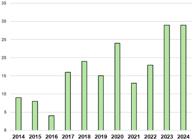
Figure 1 illustrates the temporal distribution of the resulting articles throughout the study period. This graph allows the visualization of the temporal distribution of publications, offering a clear perspective on the evolution and volume of academic output during the analyzed time interval.
In addition, the dispersion of the average annual citations of the articles included in the review reveals that most publications have a moderate citation rate, predominantly between 1 and 5 citations per year. However, some exceptional works with a significantly higher impact were identified, reaching values close to 20 citations annually. This variability in the citation rate could be associated with factors such as thematic relevance, interdisciplinary scope, or the authors' influence in their areas of specialization.
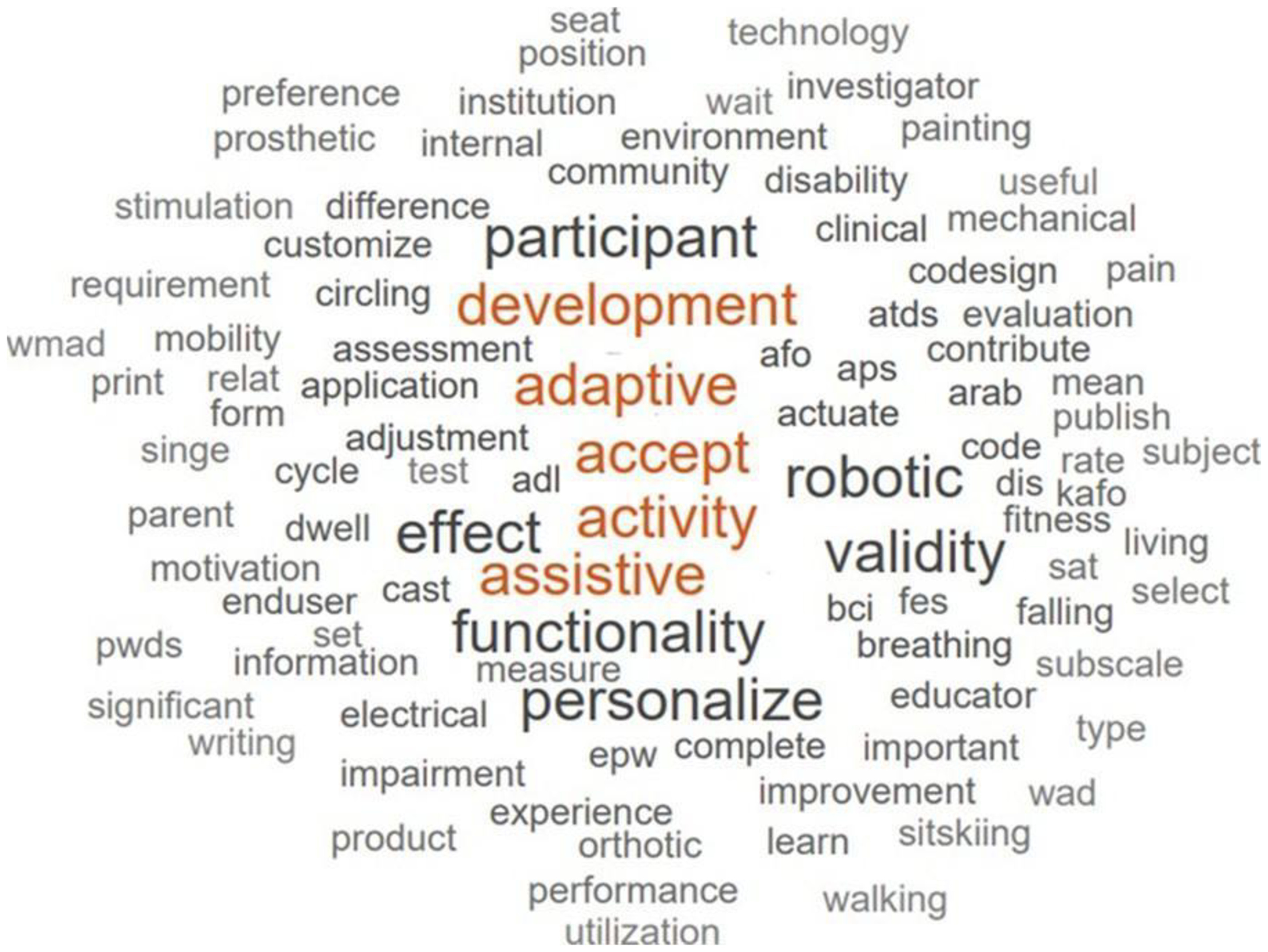
Figure 2 also shows a word cloud generated by MATLAB from the complete set of analyzed documents, highlighting the most recurrent terms or words (those with the greatest length). Among the predominant words are: “participant,” “development,” “adaptive,” “accept,” “activity,” “effect,” “robotic,” “validity,” “assistive,” “functionality,” and “personalize.” These terms reflect a research approach focused on the technical and subjective validation of the devices.

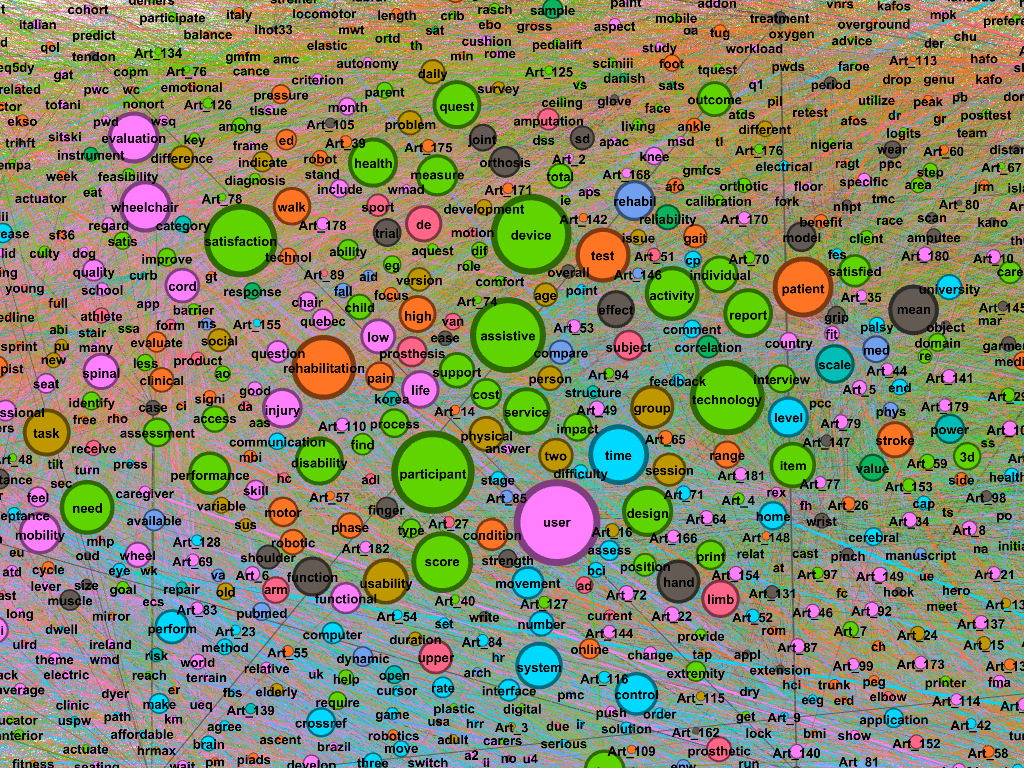
Figure 3 presents the complex network generated by Gephi, where the nodes represent both article identifiers and keywords. The color coding used in Figure 3 indicates the membership of the nodes (articles and keywords) in the thematic communities identified by the Louvain community detection algorithm. Each color represents a distinct thematic group (a research area), facilitating the visualization of the knowledge structure and co-occurrence points within the corpus. The classification of the nodes is also distinguished by this color coding. On the other hand, Figure 4 provides a detailed analysis of the concepts “user,” “Assistive Technology,” and “device,” which act as central nodes within their respective networks.


As a result of the analysis, nine distinct communities were identified, each representing a specific thematic grouping within the field of study. These communities reflect different lines of research related to the methodologies, techniques, and/or approaches used to evaluate usability and UX in assistive products designed for people with motor disabilities.
It is important to note that, although the algorithmic analysis in Gephi initially identified nine thematic communities, a subsequent qualitative analysis was conducted to validate their coherence and conceptual distinction. As a result of this interpretative stage, it was determined that two of the communities, one focused on the assessment of the impact of technologies from the UX perspective (composed of only 3 articles) and another on the multidimensional evaluation of AT (17 articles), presented such significant thematic overlap that their separation was not justifiable. Both addressed the evaluation of the impact on the user’s quality of life from a holistic perspective. Therefore, the methodological decision was made to merge them into a single and more robust research area, resulting in the final classification of eight main areas described below, organized in descending order according to the number of articles that compose them:
-
Exploration of usability in multicultural environments through the use of the QUEST 2.0 instrument (80 articles).
-
Participatory design and co-creation of AT (39 articles).
-
Multidimensional evaluation of AT (20 articles).
-
Design and development of control systems based on HCI and BCI (12 articles).
-
Development, adaptation, and personalization of AT (10 articles).
-
Parametric design and 3D printing in AT (9 articles).
-
Virtual reality in clinical and home environments (9 articles).
-
Innovation in exoskeletons and robotic devices (5 articles).
Analysis and Discussion
The analysis of the word cloud (Figure 2) revealed the most frequent terms in the selected scientific studies, offering a significant perspective on the predominant conceptual frameworks in usability and UX research in assistive technology for people with motor disabilities. A central concept identified is “development,” reflecting the dynamism of technological production in this area. Research has focused on the design and continuous improvement of devices that aim to address specific mobility limitations (Moineau et al., 2021; Gowran et al., 2022). However, this development has transcended technical aspects, progressively incorporating adaptive and contextual dimensions, as evidenced by the frequent appearance of the term “adaptive.” This indicates that devices are no longer conceived as standardized solutions but rather as configurable systems that respond to individual variations, which is particularly relevant given the diversity of motor impairments (Howard et al., 2024; Thorsen et al., 2024).
In this same vein, the term “personalize” also highlights the importance of personalization in assistive technology (AT) design. The literature emphasizes that the effectiveness of a device is closely related to its ability to adapt to the user's preferences, body shape, and lifestyle (Moineau et al., 2021; Benham et al., 2024; Davoudian Talab et al., 2024). This focus on personalization is linked to improvements in device acceptance, as suggested by the prominent use of the word “accept.” Several studies report that acceptance depends not only on technical functionality but also on subjective factors such as comfort, aesthetics, social perception, and the user's self-esteem (De Lima & Alves, 2020; Silva & Alves, 2020).
The term "functionality" also occupies a relevant position, confirming that assistive technologies (ATs) must meet operational efficiency criteria for specific tasks. However, their mere presence does not guarantee adherence or continued use of the device (Meyer et al., 2022). User experience (UX), as a mediating variable, largely determines whether a functional AT will also be satisfactory and meaningful. This relates to the term "effect," which is linked to both clinical and psychosocial outcomes. Recent studies analyze the effect of ATs on activities of daily living, emotional well-being, and social participation, indicating a more holistic approach to evaluating their impact (Chen et al., 2014; Domingues et al., 2019).
On the other hand, the recurrence of the term “robotic” reflects robust research related to exoskeletons, intelligent prostheses, and automated rehabilitation systems. In this field, robotics not only contributes to mobility but also to the possibility of programming personalized adjustments, sensory feedback, and task automation (Ambrosini et al., 2014; Barria et al., 2023; Fernández-Vázquez et al., 2021). However, these technological advances demand rigorous validation processes, which explains the relevance of the term “validity” in the analyzed literature. This highlights the need for controlled studies, standardized tests, and the use of comparable metrics to objectively demonstrate the efficacy, safety, and reliability of the developed solutions (Fernández-Vázquez et al., 2021; Hampshire et al., 2022).
Additionally, the high frequency of the term “assistive” not only confirms the thematic focus of the analyzed corpus but also reveals the consolidation of this area as an interdisciplinary field. It brings together knowledge from industrial design, ergonomics, engineering, physiotherapy, and psychology (Amaral et al., 2020; Silva & Alves, 2020).
Research areas identified from the generated communities
The following lines of research were defined, grouping the different methodological and thematic approaches to the evaluation of usability and UX in assistive technology for people with motor disabilities. These are presented below in descending order according to the number of articles they comprise:
Area 1 - Exploration of usability in multicultural environments using the QUEST 2.0 instrument (Quebec User Evaluation of Satisfaction with Assistive Technology)
Comprising 80 articles, this area addresses the standardized evaluation of usability in multicultural contexts. The QUEST 2.0 questionnaire emerges as the fundamental tool for measuring satisfaction with AT devices and associated services, seeking to prevent the abandonment of AT products (Guerreiro et al., 2022).
The research focuses on the need for cultural and linguistic adaptation of the instrument, which has been translated and validated in numerous languages (Carvalho et al., 2014; Colucci et al., 2021; Guerreiro et al., 2022; Kablan et al., 2022). Although QUEST 2.0 aims for universality, it is essential to validate its psychometric properties in specific populations using different assistive technologies (ATs), such as prostheses (Kablan et al., 2022), orthoses (Yang et al., 2018), and wheelchairs (Berardi et al., 2021; Gitlow et al., 2020).
This systematic evaluation of usability (Janson et al., 2020; Colucci et al., 2021; Kablan et al., 2022) is crucial for identifying determinants of satisfaction and factors of continued use, allowing the optimization of device design and the refinement of prescription processes.
Area 2 - Participatory design and co-creation of ATs
This area, which includes 39 articles, is distinguished by its focus on the methodology and design process, rather than on the attributes of the final product. The premise is that, for the successful integration of assistive technologies (ATs), users must be considered active partners in development, not passive recipients. Participatory design and co-creation emerge as key methodologies for identifying real needs, barriers to use, and individual preferences that traditional processes overlook (Alder et al., 2023; Clanchy et al., 2024).
The development of ATs such as orthoses or human-machine interfaces aims to facilitate daily activities (Roentgen et al., 2021), but their adoption depends critically on this approach. Several studies report that a lack of functional, aesthetic, and contextual suitability severely limits the use of these devices (Vegt et al., 2017; Surucu et al., 2022). Therefore, comfort, aesthetics, and social acceptability are valued, as demonstrated by the development of visually acceptable lightweight carbon orthoses (Gasq et al., 2023; Schladen et al., 2020). Therefore, this approach is essential for designing truly effective, sustainable, and humanized ATs that respond to the diversity of experiences and promote full participation in society.
Area 3 - Multidimensional evaluation of AT
This area, composed of 20 articles, goes beyond approaches focused only on technical functionality (Chen et al., 2014; Swinnen et al., 2017). It proposes a holistic evaluation that integrates technical, psychosocial, and service dimensions, centered on the impact on quality of life from the UX perspective. Its contribution is the identification of the determining factors for the acceptance and continued use of the AT device (Young et al., 2023).
Research in this area starts from the premise that a functional AT does not guarantee its use (Chen et al., 2014); ignoring UX can lead to early abandonment of the device (Meyer et al., 2022). Therefore, user participation in the evaluation is crucial (Meyer et al., 2022; Young et al., 2023), addressing ergonomic, cognitive, and emotional factors. It is revealed that, although functionality is essential, aspects such as appearance and discretion significantly influence acceptance (Swinnen et al., 2017). Methodologically, models are proposed that integrate objective and subjective metrics (Ensink et al., 2022), also highlighting the importance of timely and personalized prescription of AT, showing that early interventions with adapted designs improve adherence and tolerance to AT (Bertini et al., 2024).
Area 4 - Design and development of control systems based on HCI and BCI.
Composed of 12 articles, this area proposes technological solutions for people with severe motor disabilities (Amyotrophic Lateral Sclerosis, cerebral palsy). Given the limitations of traditional interfaces, systems based on Human-Computer Interaction (HCI) and Brain-Computer Interfaces (BCI) emerge, enabling the control of devices through neurophysiological signals without the need for muscular movement (Schettini et al., 2015; Šumak et al., 2019). This area is essential for offering new pathways for communication and interaction, improving autonomy and quality of life (Borges et al., 2022; Holz et al., 2015; Noda, 2018; Schettini et al., 2015).
Optimal evaluation and user-centered design are essential to transfer these technologies from the laboratory to everyday contexts (Bissoli et al., 2019; Käthner et al., 2017; Riccio et al., 2015). Although BCIs demonstrate feasibility, challenges remain regarding response speed; however, their usability (effectiveness, efficiency, and satisfaction) does not differ significantly from conventional interfaces (Schettini et al., 2015). In this area, modular and customizable systems (Schettini et al., 2015) and hybrid approaches (BCI combined with electromyography) (Käthner et al., 2017; Riccio et al., 2015) are explored, as well as eye-tracking technologies in alternative interfaces (Bissoli et al., 2019; Borges et al., 2022).
Area 5 - Development, adaptation, and personalization of AT
This area, composed of 10 articles, focuses on the final attributes and technical outcomes of AT, emphasizing that innovation must translate into personalized and effective solutions. The focus is not on the design process, but on the characteristics that guarantee success in real-world use: functional, safe, comfortable, and motivating devices.
Research in this area seeks to create robust and reliable systems for autonomous use in any environment (Guillén-Climent et al., 2021).This implies deep adaptation to individual characteristics, from residual motor capacities to aesthetic preferences and the intended purpose of use (sports or daily use) (Barria et al., 2023; Ju et al., 2021; Yurkewich et al., 2020). The objective of this research area is to develop devices that are easy to use, lightweight (Ju et al., 2021; Suulker et al., 2024), and precisely fitted to avoid pain or fatigue (Barria et al., 2023; Guillén-Climent et al., 2021). Continuous feedback from users and therapists is essential for the iterative development of AT products and for reducing device abandonment (Barria et al., 2023; Guillén-Climent et al., 2021; Yurkewich et al., 2020). This comprehensive approach ensures that the technology not only functions but also significantly improves the quality of life of people with motor disabilities by enabling them to perform daily activities more independently (Ju et al., 2021).
Area 6 - Parametric design and 3D printing in AT devices
Composed of 9 articles, this area transforms the field of AT by combining industrial design with digital manufacturing. Its relevance lies in addressing the need for personalization, reducing access barriers, and using innovative materials.
Parametric design, through 3D scanning and digital modeling, enables the creation of devices adapted to the user’s morphology, optimizing geometries in prostheses for specific tasks (Lee et al., 2018) and improving the ergonomics of orthoses (Chu et al., 2022). In terms of efficiency, 3D printing drastically reduces time and costs, enabling the fabrication of functional prostheses in less than 48 hours (Lee et al., 2018), which is crucial for early rehabilitation (Zuniga, 2018).
Regarding materials, the use of filaments with antibacterial properties (Zuniga, 2018) and the fabrication of seamless orthoses with ductile materials that increase comfort are explored (Chu et al., 2022). This combination of computational design and additive manufacturing redefines the standards of AT, offering greater comfort and more accessible personalized solutions (Lee et al., 2019; Marinho et al., 2020).
Area 7 - Virtual reality in clinical and home environments
This area, composed of 9 articles, evaluates advanced AT with emphasis on Virtual Reality (VR) to improve function, quality of life, and social participation of people with motor disabilities, both in clinical and home environments (Tamplin et al., 2020; Van Dijsseldonk et al., 2020).
The importance of VR lies in its ability to offer immersive experiences that go beyond the limitations of conventional telehealth. For example, in music therapy interventions, VR has proven to be an accessible solution that allows individuals with tetraplegia to participate in singing groups from their homes, eliminating mobility barriers (Tamplin et al., 2020). Participants report positive experiences and a temporary “escape” from their physical condition. Furthermore, the use of avatars in VR can reduce inhibitions and embarrassment (Tamplin et al., 2020). These findings indicate that immersive AT can significantly improve social participation and quality of life for people with disabilities (Van Dijsseldonk et al., 2020).
Area 8 - Innovation in exoskeletons and robotic devices
This area, composed of 5 articles, focuses on the development of exoskeletons and robotic systems aimed at efficient and personalized interaction, integrating usability and UX to restore mobility and improve quality of life.
Research addresses solutions for lower-limb amputations, where microprocessor-controlled knee prostheses significantly improve balance, mobility, and user satisfaction (Lansade et al., 2018). For people with multiple sclerosis (MS), powered exoskeletons emerge as a viable and safe alternative (Kozlowski et al., 2017), reporting high satisfaction among users and therapists, along with improvements in gait and psychosocial well-being (Fernández-Vázquez et al., 2021). In powered wheelchairs, innovation focuses on stability and safety on uneven terrain, using controlled robotic suspension systems and evaluating usability to optimize design (Sivakanthan et al., 2020). As the analyzed studies indicate, the success of these technologies depends not only on their clinical effectiveness but also on their ability to adapt to the real needs of people with motor disabilities.
Conclusions
This bibliometric study has identified and analyzed the main research areas surrounding the evaluation of usability and UX in assistive technology (AT) for motor disabilities, revealing eight key areas ranging from robotic exoskeletons to HCI/BCI systems. The findings highlight three fundamental pillars for the effective design of AT: the personalization and adaptability of devices, the integration of participatory methodologies, and multidimensional evaluation that transcends the technical to incorporate subjective dimensions such as psychosocial factors.
For designers, these results underscore the need to adopt user-centered approaches from the initial stages of the design process, where principles of ergonomics, additive manufacturing, and co-creation methodologies can be incorporated. In particular, 3D printing emerges as a key technology for balancing personalization, functionality, and affordability. Furthermore, the study reveals that the success of AT depends critically on its ability to seamlessly integrate into daily life, requiring solutions that balance technical complexity with ease of use.
On the other hand, this study presents methodological limitations that restrict opportunities for future research. The selection of bibliographic sources, limited to the Web of Science and PubMed databases, together with the exclusion of publications in languages other than English, may have omitted relevant contributions from other geographical or linguistic contexts. These limitations motivate the proposal of four conditions that could contribute to the advancement of knowledge in this field.
First, longitudinal evaluations are needed to examine the sustained impact of assistive technologies (ATs) on users' quality of life, moving beyond the one-off approaches prevalent in the current literature. Second, it is imperative to establish standardized protocols for participatory design, with special attention to their applicability in multicultural environments, where sociocultural factors can significantly influence co-creation processes.
Likewise, it is necessary to systematically investigate the incorporation of emerging technologies (such as artificial intelligence systems) into the iterative processes of AT evaluation, design, and development. Finally, the urgent need to refine comprehensive evaluation methodologies that integrate objective metrics with subjective UX indicators is evident, paying particular attention to the emotional and psychosocial dimensions of using these devices.
These guidelines not only address the identified limitations but also guide future research toward more robust and multidimensional approaches to studying usability and UX in assistive technology for people with motor disabilities. Ultimately, this work reinforces the idea that innovation in assistive technology must transcend the purely technological to address human and social dimensions. Collaboration among designers, engineers, healthcare professionals, and end users will be key to developing truly inclusive solutions that bridge the gap between technological innovation and practical accessibility.
-
How to cite:
Anaya, J. D. R., Navarro, M. V. F., Sotelo, D. S. V., & Gutiérrez, R. A. M. (2026). Research areas in the usability and user experience of assistive technologies for motor disability: a scientometric analysis. Cadernos Brasileiros de Terapia Ocupacional, 34, e4135. https://doi.org/10.1590/2526-8910.cto419141352
-
Data Availability
The data supporting the results of this study are available from the corresponding author upon reasonable request.
References
-
Alder, G., Taylor, D., Rashid, U., Olsen, S., Brooks, T., Terry, G., Niazi, I. K., & Signal, N. (2023). A brain computer interface neuromodulatory device for stroke rehabilitation: iterative user-centered design approach. JMIR Rehabilitation and Assistive Technologies, 10, e49702. PMid:38079202. https://doi.org/10.2196/49702
» https://doi.org/10.2196/49702 -
Amaral, D. S., Amorim, B. E. F. D., Rosa, C. S., Sanguinetti, D. C. D. M., Cabral, A. K. P. D. S., Merino, G. S. A. D., & Merino, E. A. D. (2020). Aplicabilidade da captura de movimentos na pesquisa interdisciplinar de tecnologia assistiva: um relato de experiência. Cadernos Brasileiros de Terapia Ocupacional, 28(4), 1297-1310. https://doi.org/10.4322/2526-8910.ctore2023
» https://doi.org/10.4322/2526-8910.ctore2023 -
Ambrosini, E., Ferrante, S., Rossini, M., Molteni, F., Gföhler, M., Reichenfelser, W., Duschau-Wicke, A., Ferrigno, G., & Pedrocchi, A. (2014). Functional and usability assessment of a robotic exoskeleton arm to support activities of daily life. Robotica, 32(8), 1213-1224. https://doi.org/10.1017/S0263574714001891
» https://doi.org/10.1017/S0263574714001891 -
Barria, P., Riquelme, M., Reppich, H., Cisnal, A., Fraile, J.-C., Pérez-Turiel, J., Sierra, D., Aguilar, R., Andrade, A., & Nuñez-Espinosa, C. (2023). Hand rehabilitation based on the RobHand exoskeleton in stroke patients: a case series study. Frontiers in Robotics and AI, 10, 1-15. PMid:37033674. https://doi.org/10.3389/frobt.2023.1146018
» https://doi.org/10.3389/frobt.2023.1146018 -
Basili, V. R., & Rombach, H. D. (1988). The TAME project: towards improvement-oriented software environments. IEEE Transactions on Software Engineering, 14(6), 758-773. https://doi.org/10.1109/32.6156
» https://doi.org/10.1109/32.6156 -
Benham, S., Milstrey, B., Stemple, J., Davis, J., Scatena, D., Bush, J., Kolakowsky-Hayner, S., & Amy, K. (2024). Mobile device accessibility with 3D printed devices for individuals with physical disabilities. Disability and Rehabilitation. Assistive Technology, 19(6), 2279-2284. PMid:37982729. https://doi.org/10.1080/17483107.2023.2280244
» https://doi.org/10.1080/17483107.2023.2280244 -
Berardi, A., Galeoto, G., Lucibello, L., Panuccio, F., Valente, D., & Tofani, M. (2021). Athletes with disability’ satisfaction with sport wheelchairs: an Italian cross sectional study. Disability and Rehabilitation. Assistive Technology, 16(4), 420-424. PMid:32730722. https://doi.org/10.1080/17483107.2020.1800114
» https://doi.org/10.1080/17483107.2020.1800114 - Bertini, A., Manganelli, F., Fabrizi, G. M., Schenone, A., Santoro, L., Cavallaro, T., Tagliapietra, M., Grandis, M., Previtali, S. C., Falzone, Y. M., Allegri, I., Padua, L., Pazzaglia, C., Tramacere, I., Cavalca, E., Saveri, P., Quattrone, A., Valentino, P., Tozza, S., Gentile, L., Russo, M., Mazzeo, A., Vita, G., Prada, V., Zuccarino, R., Ferraro, F., Pisciotta, C., Pareyson, D., & Italian, C. M. T., & Italian CMT Network (2024). Use, tolerability, benefits and side effects of orthotic devices in Charcot-Marie-Tooth disease. Journal of Neurology, Neurosurgery, and Psychiatry, 95(5), 434-441. PMid:37918904.
-
Bissoli, A., Lavino-Junior, D., Sime, M., Encarnação, L., & Bastos-Filho, T. (2019). A human–machine interface based on eye tracking for controlling and monitoring a smart home using the internet of things. Sensors (Basel), 19(4), 1-26. PMid:30791414. https://doi.org/10.3390/s19040859
» https://doi.org/10.3390/s19040859 -
Borges, L. R., Naves, E. L. M., & Sa, A. A. R. (2022). Usability evaluation of an electric-powered wheelchair driven by eye tracking. Universal Access in the Information Society, 21(4), 1013-1022. https://doi.org/10.1007/s10209-021-00809-z
» https://doi.org/10.1007/s10209-021-00809-z -
Carvalho, K. E. C. D., Gois Júnior, M. B., & Sá, K. N. (2014). Tradução e validação do Quebec User Evaluation of Satisfaction with Assistive Technology (QUEST 2.0) para o idioma português do Brasil. Revista Brasileira de Reumatologia, 54(4), 260-267. PMid:25627220. https://doi.org/10.1016/j.rbr.2014.04.003
» https://doi.org/10.1016/j.rbr.2014.04.003 - Cázares Vieyra, J. I. (2024). Clasificación de textos científicos a través de máquinas de soporte vectorial. Caso de estudio: Textos sobre ciberseguridad 2018 al 2023 (Tesis de maestría). Universidad Autónoma Metropolitana, Azcapotzalco.
-
Chen, C.-L., Teng, Y.-L., Lou, S.-Z., Lin, C.-H., Chen, F.-F., & Yeung, K.-T. (2014). User satisfaction with orthotic devices and service in Taiwan. PLoS One, 9(10), e110661. PMid:25338026. https://doi.org/10.1371/journal.pone.0110661
» https://doi.org/10.1371/journal.pone.0110661 -
Chu, C.-H., Wang, I.-J., Sun, J.-R., & Liu, C.-H. (2022). Customized designs of short thumb orthoses using 3D hand parametric models. Assistive Technology : The Official Journal of RESNA, 34(1), 104-111. PMid:31891329. https://doi.org/10.1080/10400435.2019.1709917
» https://doi.org/10.1080/10400435.2019.1709917 -
Clanchy, K., Mitchell, J., Mulholland, K., Jurd, E., Kendall, E., Lloyd, D. G., Palipana, D., Pizzolato, C., & Shirota, C. (2024). Towards co-design of rehabilitation technologies: a collaborative approach to prioritize usability issues. Frontiers in Rehabilitation Sciences, 5, 1302179. PMid:38450206. https://doi.org/10.3389/fresc.2024.1302179
» https://doi.org/10.3389/fresc.2024.1302179 -
Colucci, M., Tofani, M., Trioschi, D., Guarino, D., Berardi, A., & Galeoto, G. (2021). Reliability and validity of the Italian version of Quebec User Evaluation of Satisfaction with Assistive Technology 2.0 (QUEST-IT 2.0) with users of mobility assistive device. Disability and Rehabilitation. Assistive Technology, 16(3), 251-254. PMid:31553245. https://doi.org/10.1080/17483107.2019.1668975
» https://doi.org/10.1080/17483107.2019.1668975 -
Davoudian Talab, A. H., Mokaramiyan, S., & Kamari Ghanavati, F. (2024). Iranian translation and psychometric of the Quebec user evaluation of satisfaction with Assistive technology (QUEST2.0) on wheelchair users. Disability and Rehabilitation, 46(10), 2125-2129. PMid:37198952. https://doi.org/10.1080/09638288.2023.2212179
» https://doi.org/10.1080/09638288.2023.2212179 -
Domingues, I., Pinheiro, J., Silveira, J., Francisco, P., Jutai, J., & Correia Martins, A. (2019). Psychosocial impact of powered wheelchair, users’ satisfaction and their relation to social participation. Technologies, 7(4), 1-11. https://doi.org/10.3390/technologies7040073
» https://doi.org/10.3390/technologies7040073 -
Ensink, C. J., Keijsers, N. L. W., & Groen, B. E. (2022). Translation and validation of the System Usability Scale to a Dutch version: D-SUS. Disability and Rehabilitation, 46(2), 395-400. PMid:36573399. https://doi.org/10.1080/09638288.2022.2160837
» https://doi.org/10.1080/09638288.2022.2160837 -
Fernández-Vázquez, D., Cano-de-la-Cuerda, R., Gor-García-Fogeda, M. D., & Molina-Rueda, F. (2021). Wearable robotic gait training in persons with multiple sclerosis: a satisfaction study. Sensors (Basel), 21(14), 4940. PMid:34300677. https://doi.org/10.3390/s21144940
» https://doi.org/10.3390/s21144940 -
Gasq, D., Dumas, R., Caussé, B., Scandella, M., Cintas, P., Acket, B., & Arné-Bes, M. C. (2023). Comparison between a novel helical and a posterior ankle–foot orthosis on gait in people with unilateral foot drop: A randomised crossover trial. Journal of Neuroengineering and Rehabilitation, 20(1), 63. PMid:37170277. https://doi.org/10.1186/s12984-023-01184-x
» https://doi.org/10.1186/s12984-023-01184-x -
Gitlow, L., Frailey, S., Garson, N., Simon, R., Smith, M., Winsor, S., Yacovoni, J., & Yuu, C. (2020). Parenting with a disability: exploring the satisfaction and efficacy of the PediaLift wheelchair accessible crib. Disability and Rehabilitation. Assistive Technology, 16(8), 902-909. PMid:32274947. https://doi.org/10.1080/17483107.2020.1749894
» https://doi.org/10.1080/17483107.2020.1749894 - Godoi, T. X. (2021). UUXAC-DAT: checklist de avaliação de tecnologias assistivas sob a perspectiva da usabilidade, experiência do usuário e acessibilidade para surdos em aplicações móveis (Tesis de maestría). Universidade Federal do Paraná, Curitiba.
-
Godoi, T. X., García, L. S., & Valentim, N. M. C. (2020). Evaluating a usability, user experience and accessibility checklist for assistive technologies for deaf people in a context of mobile applications. Proceedings of the 19th Brazilian Symposium on Human Factors in Computing Systems, (14), 1–10. https://doi.org/10.1145/3424953.3426631
» https://doi.org/10.1145/3424953.3426631 -
Gowran, R. J., Clifford, A., Gallagher, A., McKee, J., O’Regan, B., & McKay, E. A. (2022). Wheelchair and seating assistive technology provision: A gateway to freedom. Disability and Rehabilitation, 44(3), 370-381. PMid:32510246. https://doi.org/10.1080/09638288.2020.1768303
» https://doi.org/10.1080/09638288.2020.1768303 -
Guerreiro, J., Jiménez-Arberas, E., Porto Trillo, P., Vilar Figueira, O., Saénz-López Buñuel, P., Pais, S., Tierra Orta, J., & Pousada García, T. (2022). Cross-cultural validation of quebec user satisfaction with Assistive Technology 2.0 for Spanish Population (QUEST-2.0 ES). International Journal of Environmental Research and Public Health, 19(15), 9349. PMid:35954705. https://doi.org/10.3390/ijerph19159349
» https://doi.org/10.3390/ijerph19159349 -
Guillén-Climent, S., Garzo, A., Muñoz-Alcaraz, M. N., Casado-Adam, P., Arcas-Ruiz-Ruano, J., Mejías-Ruiz, M., & Mayordomo-Riera, F. J. (2021). A usability study in patients with stroke using MERLIN, a robotic system based on serious games for upper limb rehabilitation in the home setting. Journal of Neuroengineering and Rehabilitation, 18(1), 41. PMid:33622344. https://doi.org/10.1186/s12984-021-00837-z
» https://doi.org/10.1186/s12984-021-00837-z -
Hampshire, L., Dehghani-Sanij, A., & O’Connor, R. J. (2022). Restorative rehabilitation robotics to promote function, independence and dignity: Users’ perspectives on clinical applications. Journal of Medical Engineering & Technology, 46(6), 527-535. PMid:35730525. https://doi.org/10.1080/03091902.2022.2089256
» https://doi.org/10.1080/03091902.2022.2089256 -
Holz, E. M., Botrel, L., Kaufmann, T., & Kübler, A. (2015). Long-term independent brain-computer interface home use improves quality of life of a patient in the locked-in state: a case study. Archives of Physical Medicine and Rehabilitation, 96(3, Suppl.), S16-S26. PMid:25721543. https://doi.org/10.1016/j.apmr.2014.03.035
» https://doi.org/10.1016/j.apmr.2014.03.035 -
Howard, J., Fisher, Z., Tasker, L. H., & Tree, J. (2024). The extended impact of co-designed personalised aids for people living with chronic conditions: an exploratory study in a healthcare setting. Disability and Rehabilitation. Assistive Technology, 19(8), 3050-3062. PMid:38722100. https://doi.org/10.1080/17483107.2024.2341844
» https://doi.org/10.1080/17483107.2024.2341844 -
Janson, R., Burkhart, K., Firchau, C., Hicks, K., Pittman, M., Yopps, M., Hatfield, S., & Garabrant, A. (2020). Three-dimensional printed assistive devices for addressing occupational performance issues of the hand: a case report. Journal of Hand Therapy : Official Journal of the American Society of Hand Therapists, 33(2), 164-169. PMid:32423845. https://doi.org/10.1016/j.jht.2020.03.025
» https://doi.org/10.1016/j.jht.2020.03.025 -
Ju, N., Lee, K.-H., Kim, M.-O., & Choi, Y. (2021). A user-driven approach to prosthetic upper limb development in Korea. Healthcare (Basel), 9(7), 1-13. PMid:34356217. https://doi.org/10.3390/healthcare9070839
» https://doi.org/10.3390/healthcare9070839 -
Kablan, N., Bakhsh, H. R., Alammar, W., Tatar, Y., & Ferriero, G. (2022). Psychometric evaluation of the Arabic version of the Quebec user evaluation of satisfaction with assistive technology (A-QUEST 2.0) in prosthesis users. European Journal of Physical and Rehabilitation Medicine, 58(1), 118-126. PMid:34247472. https://doi.org/10.23736/S1973-9087.21.06880-5
» https://doi.org/10.23736/S1973-9087.21.06880-5 -
Käthner, I., Halder, S., Hintermüller, C., Espinosa, A., Guger, C., Miralles, F., Vargiu, E., Dauwalder, S., Rafael-Palou, X., Solà, M., Daly, J. M., Armstrong, E., Martin, S., & Kübler, A. (2017). A multifunctional brain-computer interface intended for home use: an evaluation with healthy participants and potential end users with dry and gel-based electrodes. Frontiers in Neuroscience, 11, 1-21. PMid:28588442. https://doi.org/10.3389/fnins.2017.00286
» https://doi.org/10.3389/fnins.2017.00286 -
Kitchenham, B., & Charters, S. (2007). Guidelines for performing Systematic Literature Reviews in Software Engineering Recuperado el 6 de enero de 2026, de https://legacyfileshare.elsevier.com/promis_misc/525444systematicreviewsguide.pdf
» https://legacyfileshare.elsevier.com/promis_misc/525444systematicreviewsguide.pdf -
Kozlowski, A. J., Fabian, M., Lad, D., & Delgado, A. D. (2017). Feasibility and Safety of a Powered Exoskeleton for Assisted Walking for Persons With Multiple Sclerosis: A Single-Group Preliminary Study. Archives of Physical Medicine and Rehabilitation, 98(7), 1300-1307. PMid:28315666. https://doi.org/10.1016/j.apmr.2017.02.010
» https://doi.org/10.1016/j.apmr.2017.02.010 -
Lansade, C., Vicaut, E., Paysant, J., Ménager, D., Cristina, M.-C., Braatz, F., Domayer, S., Pérennou, D., & Chiesa, G. (2018). Mobility and satisfaction with a microprocessor-controlled knee in moderately active amputees: A multi-centric randomized crossover trial. Annals of Physical and Rehabilitation Medicine, 61(5), 278-285. PMid:29753888. https://doi.org/10.1016/j.rehab.2018.04.003
» https://doi.org/10.1016/j.rehab.2018.04.003 -
Lee, K. H., Kim, D. K., Cha, Y. H., Kwon, J.-Y., Kim, D.-H., & Kim, S. J. (2019). Personalized assistive device manufactured by 3D modelling and printing techniques. Disability and Rehabilitation. Assistive Technology, 14(5), 526-531. PMid:30318956. https://doi.org/10.1080/17483107.2018.1494217
» https://doi.org/10.1080/17483107.2018.1494217 -
Lee, K. H., Kim, S. J., Cha, Y. H., Kim, J. L., Kim, D. K., & Kim, S. J. (2018). Three-dimensional printed prosthesis demonstrates functional improvement in a patient with an amputated thumb: A technical note. Prosthetics and Orthotics International, 42(1), 107-111. PMid:27913783. https://doi.org/10.1177/0309364616679315
» https://doi.org/10.1177/0309364616679315 -
Lima, P. B., & Alves, A. C. D. J. (2020). An intervention of occupational therapy in parasports using the matching person and technology model: a case study. Work : A Journal of Prevention, Assessment, and Rehabilitation, 67(4), 881-893. PMid:33325435. https://doi.org/10.3233/WOR-203339
» https://doi.org/10.3233/WOR-203339 -
Marinho, F. D., Santos, P. M. D., Nardi, S. M. T., Sime, M. M., & Coutinho, G. C. (2020). Use of 3D printed orthesis and occupational therapeutic treatment in rhizarthrosis. Cadernos Brasileiros de Terapia Ocupacional, 28(4), 1151-1164. https://doi.org/10.4322/2526-8910.ctoAO2083
» https://doi.org/10.4322/2526-8910.ctoAO2083 -
Meyer, J. T., Weber, S., Jäger, L., Sigrist, R., Gassert, R., & Lambercy, O. (2022). A survey on the influence of CYBATHLON on the development and acceptance of advanced assistive technologies. Journal of Neuroengineering and Rehabilitation, 19(1), 38. PMid:35366930. https://doi.org/10.1186/s12984-022-01015-5
» https://doi.org/10.1186/s12984-022-01015-5 -
Moineau, B., Myers, M., Ali, S. S., Popovic, M. R., & Hitzig, S. L. (2021). End-user and clinician perspectives on the viability of wearable functional electrical stimulation garments after stroke and spinal cord injury. Disability and Rehabilitation. Assistive Technology, 16(3), 241-250. PMid:31592679. https://doi.org/10.1080/17483107.2019.1668974
» https://doi.org/10.1080/17483107.2019.1668974 -
Noda, K. (2018). Google Home: smart speaker as environmental control unit. Disability and Rehabilitation. Assistive Technology, 13(7), 674-675. PMid:28830267. https://doi.org/10.1080/17483107.2017.1369589
» https://doi.org/10.1080/17483107.2017.1369589 -
Riccio, A., Holz, E. M., Aricò, P., Leotta, F., Aloise, F., Desideri, L., Rimondini, M., Kübler, A., Mattia, D., & Cincotti, F. (2015). Hybrid P300-based brain-computer interface to improve usability for people with severe motor disability: electromyographic signals for error correction during a spelling task. Archives of Physical Medicine and Rehabilitation, 96(3, Suppl.), S54-S61. PMid:25721548. https://doi.org/10.1016/j.apmr.2014.05.029
» https://doi.org/10.1016/j.apmr.2014.05.029 -
Roentgen, U. R., Heide, L. A. V. D., Kremer, I. E. H., Creemers, H., Brehm, M. A., Groothuis, J. T., Hagedoren, E. A. V., Daniëls, R., & Evers, S. M. A. A. (2021). Effectiveness and cost-effectiveness of an optimized process of providing assistive technology for impaired upper extremity function: protocol of a prospective, quasi-experimental non-randomized study (OMARM). Technology and Disability, 33(3), 207-220. https://doi.org/10.3233/TAD-210335
» https://doi.org/10.3233/TAD-210335 -
Schettini, F., Riccio, A., Simione, L., Liberati, G., Caruso, M., Frasca, V., Calabrese, B., Mecella, M., Pizzimenti, A., Inghilleri, M., Mattia, D., & Cincotti, F. (2015). Assistive device with conventional, alternative, and brain-computer interface inputs to enhance interaction with the environment for people with amyotrophic lateral sclerosis: a feasibility and usability study. Archives of Physical Medicine and Rehabilitation, 96(3, Suppl.), S46-S53. PMid:25721547. https://doi.org/10.1016/j.apmr.2014.05.027
» https://doi.org/10.1016/j.apmr.2014.05.027 -
Schladen, M. M., Koumpouros, Y., Sandison, M., Casas, R., & Lum, P. (2020). Conceptualization of Hand-TaPS to measure the subjective experience of dynamic hand orthoses in promoting functional recovery at home after stroke. Technology and Disability, 32(4), 285-294. PMid:34421288. https://doi.org/10.3233/TAD-200289
» https://doi.org/10.3233/TAD-200289 -
Silva, I. C. N., & Alves, A. C. J. (2020). Identification of assistive technologies in paralympic sports: contributions and barriers. Cadernos Brasileiros de Terapia Ocupacional, 28(3), 917-930. https://doi.org/10.4322/2526-8910.ctoAO1933
» https://doi.org/10.4322/2526-8910.ctoAO1933 -
Sivakanthan, S., Candiotti, J. L., Sundaram, S. A., Battles, C., Daveler, B. J., Chung, C.-S., Grindle, G. G., Cooper, R., Dicianno, B. E., & Cooper, R. A. (2020). Usability evaluation of attitude control for a robotic wheelchair for tip mitigation in outdoor environments. Medical Engineering & Physics, 82(1), 86-96. PMid:32709269. https://doi.org/10.1016/j.medengphy.2020.07.002
» https://doi.org/10.1016/j.medengphy.2020.07.002 -
Šumak, B., Špindler, M., Debeljak, M., Heričko, M., & Pušnik, M. (2019). An empirical evaluation of a hands-free computer interaction for users with motor disabilities. Journal of Biomedical Informatics, 96, 103249. PMid:31295624. https://doi.org/10.1016/j.jbi.2019.103249
» https://doi.org/10.1016/j.jbi.2019.103249 -
Surucu, S., Aydın, M., Güray Batma, A., Karaşahin, D., & Mahiroğulları, M. (2022). Evaluation of the patient satisfaction of using a 3D printed medical casting in fracture treatment. Joint Diseases and Related Surgery, 33(1), 180-186. PMid:35361093. https://doi.org/10.52312/jdrs.2022.372
» https://doi.org/10.52312/jdrs.2022.372 -
Suulker, C., Greenway, A., Skach, S., Farkhatdinov, I., Charles Miller, S., & Althoefer, K. (2024). Let me give you a hand: enhancing human grasp force with a soft robotic assistive glove. IEEE Robotics and Automation Letters, 9(9), 7811-7818. https://doi.org/10.1109/LRA.2024.3433202
» https://doi.org/10.1109/LRA.2024.3433202 -
Swinnen, E., Lafosse, C., Van Nieuwenhoven, J., Ilsbroukx, S., Beckwée, D., & Kerckhofs, E. (2017). Neurological patients and their lower limb orthotics: an observational pilot study about acceptance and satisfaction. Prosthetics and Orthotics International, 41(1), 41-50. PMid:26246356. https://doi.org/10.1177/0309364615592696
» https://doi.org/10.1177/0309364615592696 -
Tamplin, J., Loveridge, B., Clarke, K., Li, Y., & Berlowitz, J. (2020). Development and feasibility testing of an online virtual reality platform for delivering therapeutic group singing interventions for people living with spinal cord injury. Journal of Telemedicine and Telecare, 26(6), 365-375. PMid:30823854. https://doi.org/10.1177/1357633X19828463
» https://doi.org/10.1177/1357633X19828463 -
Thorsen, R., Cugnod, D., Ramella, M., Converti, R., & Ferrarin, M. (2024). A parametric 3D printed assistive device for people with cerebral palsy – assessment of outcomes and comparison with a commercial counterpart. Assistive Technology : The Official Journal of RESNA, 36(1), 16-21. PMid:37083458. https://doi.org/10.1080/10400435.2023.2202696
» https://doi.org/10.1080/10400435.2023.2202696 -
Torres-Cockrell, G. S., Mora-Gutiérrez, R. A., Rincón-García, E. A., Montes-Orozco, E., De-los-Cobos-Silva, S. G., Lara-Velazquez, P., & Gutiérrez-Andrade, M. Á. (2024). Bi-objective model for community detection in weighted complex networks: non overlap multiobjective k_core community detection. EAI Endorsed Transactions on Industrial Networks and Intelligent Systems, 11(4), 1-19. https://doi.org/10.4108/eetinis.v11i4.4059
» https://doi.org/10.4108/eetinis.v11i4.4059 -
Van Dijsseldonk, R. B., Van Nes, I. J. W., Geurts, A. C. H., & Keijsers, N. L. W. (2020). Exoskeleton home and community use in people with complete spinal cord injury. Scientific Reports, 10(1), 15600. PMid:32973244. https://doi.org/10.1038/s41598-020-72397-6
» https://doi.org/10.1038/s41598-020-72397-6 -
Vegt, A. E., Grond, R., Grüschke, J. S., Boomsma, M. F., Emmelot, C. H., Dijkstra, P. U., & Sluis, C. K. (2017). The effect of two different orthoses on pain, hand function, patient satisfaction and preference in patients with thumb carpometacarpal osteoarthritis: a multicentre, crossover, randomised controlled trial. The Bone & Joint Journal, 99-B(2), 237-244. PMid:28148667. https://doi.org/10.1302/0301-620X.99B2.37684
» https://doi.org/10.1302/0301-620X.99B2.37684 -
World Health Organization, & United Nations Children’s Fund. (2022). Global report on assistive technology Recuperado el 6 de enero de 2026, de https://apps.who.int/iris/handle/10665/354357
» https://apps.who.int/iris/handle/10665/354357 -
Yang, B.-S., Chen, Y.-W., & Tong, J.-R. (2018). User experience of lower-limb orthosis. Assistive Technology : The Official Journal of RESNA, 30(5), 267-273. PMid:28598300. https://doi.org/10.1080/10400435.2017.1322157
» https://doi.org/10.1080/10400435.2017.1322157 -
Young, R., Sage, K., Broom, D., Hext, A., Snowdon, N., & Smith, C. (2023). Evaluating the usability of a co-designed power assisted exercise graphical user interface for people with stroke. Journal of Neuroengineering and Rehabilitation, 20(1), 95. PMid:37488564. https://doi.org/10.1186/s12984-023-01207-7
» https://doi.org/10.1186/s12984-023-01207-7 -
Yurkewich, A., Kozak, I. J., Hebert, D., Wang, R. H., & Mihailidis, A. (2020). Hand Extension Robot Orthosis (HERO) Grip Glove: enabling independence amongst persons with severe hand impairments after stroke. Journal of Neuroengineering and Rehabilitation, 17(1), 33. PMid:32102668. https://doi.org/10.1186/s12984-020-00659-5
» https://doi.org/10.1186/s12984-020-00659-5 -
Zuniga, J. M. (2018). 3D printed antibacterial prostheses. Applied Sciences (Basel, Switzerland), 8(9), 1-10. https://doi.org/10.3390/app8091651
» https://doi.org/10.3390/app8091651
Edited by
-
Section editor
Prof. Dr. Roseli Esquerdo Lopes
The data supporting the results of this study are available from the corresponding author upon reasonable request.