 The process of developing occupational therapy records: the perspective of occupational therapists
Abstract
Introduction The Occupational Therapy Record is the document in which the occupational therapist records all client information related to the therapeutic process, from referral to the service through discharge.
Objective To identify aspects of the documentation process of the Occupational Therapy Record from the perspective of occupational therapists.
Method This was a cross-sectional, exploratory, and descriptive study. Occupational therapists actively engaged in professional practice in health care settings were included. Data were collected through an electronic questionnaire, and the data obtained were analyzed using descriptive statistics.
Results Clinical documentation in occupational therapy is considered fundamental to the development of the occupational therapist’s clinical practice and of the occupational-therapeutic process with the client. However, this activity was found to require institutional support, such as protected time and scheduling for documentation, as well as training to ensure compliance with the parameters established by official documents and practice guidelines and to improve the quality of records. Additionally, professionals described the preparation of the Occupational Therapy Record as, above all, exhausting.
Conclusion The findings highlight the need to improve the resources and time available for documentation in the Occupational Therapy Record, as well as to broaden discussion of the topic and provide further guidance on clinical documentation in occupational therapy.
Keywords:
Medical Records; Documentation; Occupational Therapy
Resumo
Introdução O Prontuário Terapêutico Ocupacional é o documento no qual a terapeuta ocupacional registra todas as informações do cliente referentes ao processo terapêutico, desde o seu encaminhamento ao serviço até a sua alta.
Objetivo Identificar aspectos do processo de documentação do Prontuário Terapêutico Ocupacional a partir da percepção das terapeutas ocupacionais.
Método Estudo transversal, exploratório e descritivo. Foram incluídas terapeutas ocupacionais em efetivo exercício profissional, atuantes em equipamentos de saúde. O levantamento de informações ocorreu através do preenchimento do questionário eletrônico, sendo os dados obtidos analisados por estatística descritiva.
Resultados O processo de documentação clínica em terapia ocupacional é considerado fundamental para o desenvolvimento da prática clínica da terapeuta ocupacional e do processo terapêutico ocupacional com o cliente. Entretanto, verificou-se que tal atividade requer suporte institucional, como disponibilização de agenda e tempo para registro, bem como treinamentos para ser desempenhada de forma a atender os parâmetros estabelecidos por documentos oficiais e norteadores da prática, a fim de garantir melhor qualidade dos registros. Além disso, a etapa de elaboração do Prontuário Terapêutico Ocupacional foi avaliada, principalmente, como desgastante pelos profissionais.
Conclusão Identificou-se a necessidade de adequação dos recursos e do tempo disponível para o registro em Prontuário Terapêutico Ocupacional, assim como a ampliação do debate acerca da temática e a disponibilização de mais orientações quanto ao processo de registros clínicos em terapia ocupacional.
Palavras-chave:
Prontuários; Documentação; Terapia Ocupacional
Introduction
The Occupational Therapy Record (OTR) is the document in which the occupational therapist records all information related to the occupational-therapeutic process. Despite conceptual differences regarding this instrument, the literature addresses its identification and characterization using the terms occupational therapy documentation, medical records, clinical documentation, or professional records (Brasil, 2012a, 2012b; Matthews & Jabri, 2005; Pelissari & Palhares, 2015).
Documentation is a fundamental part of occupational therapy clinical practice (Matthews & Jabri, 2005; Oliveira et al., 2012; Sames, 2011). These records serve to compile information regarding the nature of the services provided by the occupational therapist, the procedures used, technical observations, outcomes, and referrals related to occupational-therapeutic interventions. In addition, the OTR serves as reliable evidence of therapeutic and/or legal actions among those involved in the care process (American Occupational Therapy Association, 2018; Matthews & Jabri, 2005; Oliveira et al., 2012; Sames, 2011).
Although there is no standard method for recording the OTR, clinical documentation must follow certain parameters to ensure the functionality and quality of the records (Sames, 2011). Thus, it is necessary to ensure that information is recorded in writing in a clear, legible, concise, objective, precise, and complete manner, using terminology specific to the profession and stored in a location that guarantees confidentiality and privacy of access to the information (Brasil, 2012a; Matthews & Jabri, 2005; Souza et al., 2024).
The American Occupational Therapy Association (AOTA) established guidelines describing the purpose, types, and required content to be addressed in clinical documentation prepared by the occupational therapist (American Occupational Therapy Association, 2018). In Brazil, guidelines regarding OTR documentation were published by the Federal Council of Physical Therapy and Occupational Therapy (COFFITO) through Resolution 415/2012. This document provides guidance regarding the mandatory nature of documentation and its minimum structure, namely: identification of the individual(s), clinical history, occupational-therapeutic examinations, diagnoses, and prognoses, the occupational-therapeutic plan, progress notes on the intervention, and professional identification, in addition to record retention and disposal (Brasil, 2012a; Brasil, 2012b).
According to Bombarda & Joaquim (2021), the quality of records made by the occupational therapist reflects the quality of the care provided. Incomplete information in this document may cause communication failures and result in inadequate client treatment (Oliveira et al., 2012; Valdes & Souza, 2024). Although analysis of these records is extremely important for maintaining documentation quality, there are few indicators that enable their evaluation (Bombarda & Joaquim, 2021), and technical-scientific materials available on the practice of clinical documentation in occupational therapy are also scarce (Panzeri & Palhares, 2013).
Thus, analyzing the occupational therapist’s documentation practice as a new study on this topic is essential to provide support for the preparation of high-quality records (Pelissari & Palhares, 2015), whether in the care, administrative, educational, legal, or scientific spheres of occupational therapy practice (Bombarda & Joaquim, 2021).
Analyzing occupational therapists’ perceptions regarding the clinical documentation process is also an important issue to be addressed in this investigative movement. This is because negative aspects related to the documentation process have often been associated by professionals with job dissatisfaction and career abandonment in other countries, such as the United States, Canada, and South Africa (Bailey, 1990; Fearing, 1991; Pierre & Sonn, 1999). Thus, both knowledge about the documentation process and occupational therapists’ understanding of it may be useful in developing solutions that help address these professionals’ specific needs (Panzeri & Palhares, 2013). This study aimed to identify aspects of the OTR documentation process from the perspective of occupational therapists.
Method
Study design
This was a cross-sectional, exploratory, and descriptive study on the documentation process in occupational therapy. This study addresses a relevant issue applied to the core body of occupational therapy knowledge. Through the method used, it is possible to explore a problem and provide additional information on the topic investigated (Cordeiro et al., 2023). This study was approved by the Ethics Committee of the Federal University of Minas Gerais (UFMG) under CAAE opinion no. 62526222.2.0000.5149.
Study sample
Occupational therapists actively engaged in professional practice in health care settings. The sample size calculation was based on the study by Lewis et al. (2021). In that study, the authors, after observing discrepancies in recommendations regarding sample size for pilot and feasibility studies, proposed a methodology that would make it possible to derive the sample size and conduct a formal test of the suggested progression criteria. Thus, for this study, a statistical power of 90% and a significance level of 5% were considered, resulting in a sample of 70 occupational therapists. Occupational therapy students were excluded from this study.
Procedures
Instrument
The questionnaire developed by the researchers and used as the data collection instrument contained binary, open-ended, and multiple-choice questions prepared on the basis of conceptual and categorical considerations present in the Guidelines for Documentation of Occupational Therapy (American Occupational Therapy Association, 2018) and COFFITO Resolution No. 415/2012 (Brasil, 2012a). The questionnaire was structured into six sections. The first was intended to present the study and obtain signature of the informed consent form. The subsequent sections were categorized into thematic axes, namely: participant profile; general aspects related to occupational therapy care and its documentation, the structure of the OTR, and the resources available for documentation practice; and OTR retention and disposal. The last section of the questionnaire was dedicated to the occupational therapist’s perception of the OTR and consisted of questions about the relationship between documentation and professional practice, facilitators and barriers to record completion, participants’ perceptions of their training for documentation, and continuing education actions sought by the participants.
Data collection
Data were collected through online recruitment using posts published on Instagram® and Facebook®. The invitation posts contained a hyperlink directing potential participants to the electronic form. Upon accessing it, individuals were initially presented with the informed consent form, and agreement was required in order to proceed. After formal consent, participants were presented with objective questions and then open-ended questions. Responses were automatically stored in a secure cloud computing environment, ensuring confidentiality and data integrity.
Statistical analysis
Data and information were organized into editable tables and processed through statistical analysis. Statistical analyses were performed using IBM SPSS Statistics® software, version 22.0 (IBM SPSS Statistics, Armonk, NY, USA), and the Word Clouds® application to construct word clouds from the open-ended responses provided by the interviewed professionals. Connective words, articles, and pronouns were removed from the analysis. Qualitative variables were expressed as absolute frequencies and percentages. Gaussian distribution of the quantitative variables was verified using the Shapiro-Wilk test.
Results
Seventy occupational therapists actively engaged in professional practice and affiliated with health care services of varying levels of complexity participated in this study.
The sample was characterized predominantly by female participants (97.1%), aged 20 to 30 years (41.4%), with up to 10 years of professional experience (58.6%), and with a predominance of lato sensu specialization as their academic qualification (68.6%). Most participants completed their occupational therapy degree at a private institution (57.1%). Currently, the private sector is their main professional employment setting (61.4%). Among areas of professional practice, pediatric rehabilitation predominated (69.2%). The remaining data and information regarding the profile of the occupational therapists are shown in Table 1.
Occupational-therapeutic sessions had a mean duration of 45 minutes (44.3%). Most professionals reported completing the OTR after the session (54.3%), whereas the frequency with which they made such records was predominantly daily (70%). The time spent completing the record per session was, on average, 10 minutes or less (61.4%).
The availability of time for recording information in the OTR varied according to the occupational therapist’s individual planning and/or the time organization established by the institution/workplace. In most cases, the time allocated to this activity ranged from 30 minutes to 1 hour per day. However, some professionals reported not having a specific period during the workday for this activity, which may result in failure to complete the OTR or in the need to do so later, outside working hours.
In addition, some records were completed weekly or monthly, which represents a point of tension when professional guidelines are considered. This practice was reported by professionals working in institutions and/or workplaces where there was no guaranteed protected time within their workload specifically allocated to this activity. When analyzing the practice settings in which records tended to be completed at longer intervals, a predominance of private clinics and home care was observed. Data related to care and documentation in occupational therapy are presented in Table 2.
The OTR was most often prepared in digital format (45.7%), although there was still substantial documentation in paper format (41.4%). The main resources used to prepare the OTR were multiprofessional clinical documentation software programs (47.1%), followed by printed pre-structured forms prepared by the occupational therapist (41.4%) and blank/letterhead paper sheets (40.0%).
Regarding the format in which the OTR was stored, professionals used both paper format (40.0%) and mixed format (paper and digital) (40.0%). In most cases, the records were retained for seven years or more (40.0%). A total of 47.1% of the occupational therapists stated that the OTR remained stored even after the legally required retention period. With regard to disposal of the OTR, the institution providing occupational therapy services was identified as the main party responsible for this stage (61.4%).
Most occupational therapists working in home care reported that they retained the OTR from these visits (69.6%). The original version of the document remained mainly under the custody of the occupational therapist herself (43.5%) or of the institution with which she was affiliated (43.5%). In addition, 69.6% of the participants reported having informed the patient and/or family members about the confidentiality of the information contained in the record. Data and information on the structure of the OTR and the resources available for practice are presented in Table 3.
As for the content of the records in the OTR, it was found that, regarding identification of the individuals receiving care, the information most frequently included in the records was full name (100%), date of birth (97.1%), and date of care (97.1%). As for clinical history, chief complaint (95.7%), current and past history of the disease (94.3%), and treatments received (92.9%) were the most frequently addressed items. Regarding the description of the client’s health status, quality of life, and social participation, the item most frequently described by the occupational therapists in the OTR was health status (74.3%). It is noteworthy that 15.7% of the participants stated that they did not describe any of these items.
Still regarding the OTR content, 70% of the occupational therapists reported documenting complementary examinations previously performed, whereas 25.7% did not document any complementary examinations. According to the participants, other items most frequently described in the OTRs were occupational diagnosis (45.7%), therapeutic objectives to be achieved (87.1%), proposed occupational-therapeutic procedures describing the methods to be used by the professional (52.9%), and progress of the treatment provided at each session (81.4%). Professional identification was predominantly represented by a stamp identifying the occupational therapist’s full name and CREFITO registration number, accompanied by the professional’s signature (68.6%). In addition, other aspects that appeared with considerable frequency in the OTRs were the justification for referral of the client (67.1%) and frequency of sessions (70%). Information regarding the content of the records in the OTR is presented in Table 4.
Although the present study did not include, among the data collected, a specific item on the use of occupational therapy terminology in the clinical documentation process, the responses to the open-ended questions revealed a variety of expressions used to refer to the same aspects of professional practice. This heterogeneity suggests a lack of standardization in the use of the profession’s technical language, which may negatively affect clarity, interprofessional communication, and the security of the information recorded in the records.
Concerning the stages that compose the clinical documentation process in occupational therapy, preparation of the OTR was considered both easy to perform (27.1%) and exhausting (28.6%) by the professionals. Most considered OTR retention easy (38.6%); however, some professionals perceived this task as difficult to perform (25.7%). The same divergence was found regarding disposal of the OTR, which was considered easy to perform by 31.4% of the participants and difficult by 27.1%. Regarding sharing the OTR with the client, this stage was evaluated mainly as efficient (30.0%) and easy to perform (28.6%). Overall, the set of responses obtained in this category was quite heterogeneous and, in this sense, no specific characteristic stood out considerably in relation to the others.
As for occupational therapists’ satisfaction with the clinical documentation process, measured on a five-point scale ranging from totally dissatisfied to totally satisfied, 45.7% of the participants reported being satisfied with preparation of the OTR. However, only 25.7% reported being satisfied with the resources available for its preparation, such as software programs and forms. The stages of retention (42.9%), disposal (41.4%), and sharing the OTR with the client (41.4%) were identified as those that contributed most positively to the overall perception of satisfaction with the clinical documentation process. On the other hand, dissatisfaction predominated regarding the time spent completing the OTR, with 31.4% of respondents indicating that they were somewhat dissatisfied and 22.9% totally dissatisfied. It is also noteworthy that there were no reports of being totally satisfied with any of the aspects related to the documentation process performed by the occupational therapist.
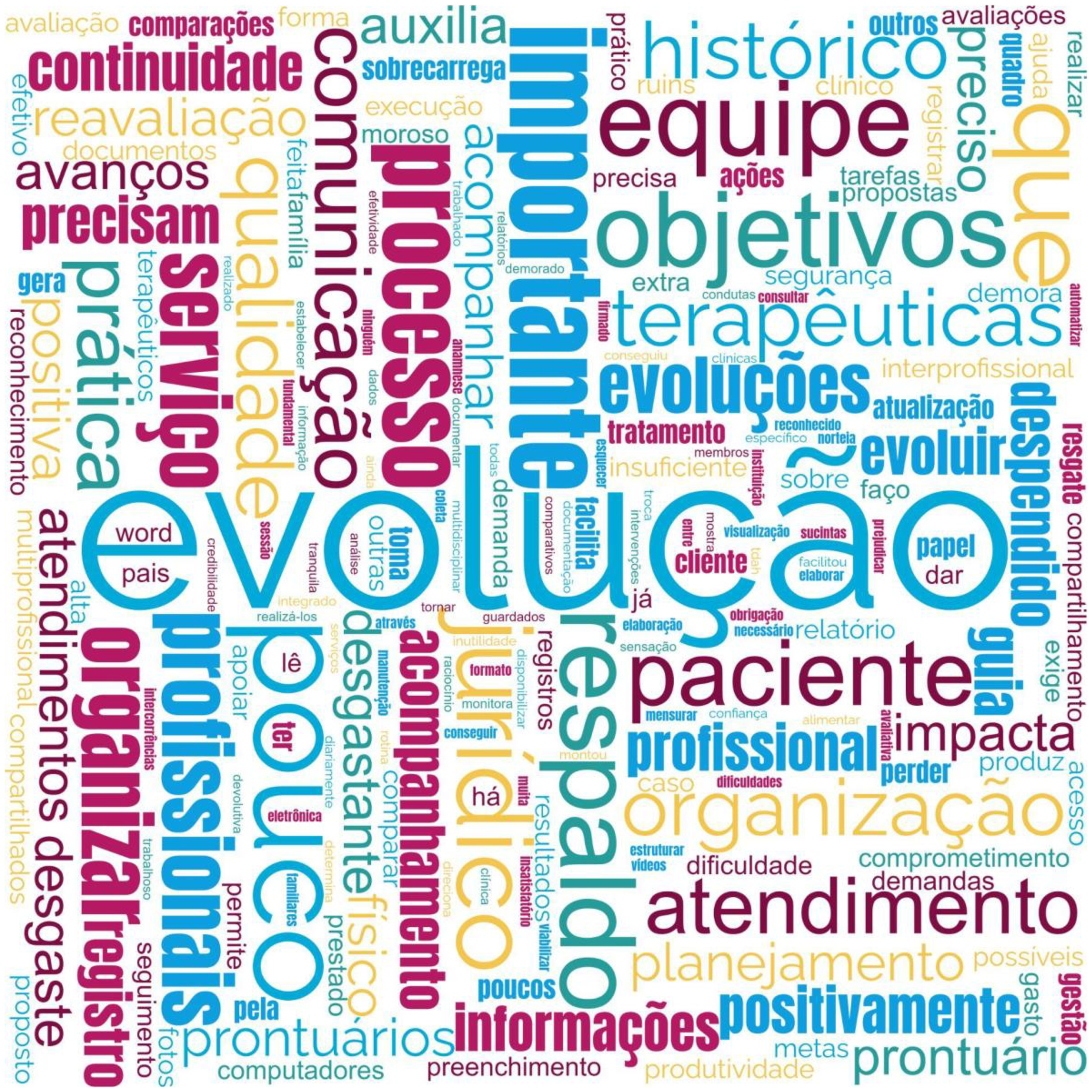
The way in which the clinical documentation process affects the occupational therapist’s professional activity is presented in the form of a word cloud. Thus, clinical documentation in occupational therapy was evaluated as an important process for several reasons, such as supporting clinical/professional reasoning, guiding occupational-therapeutic conduct, assisting in the organization and grouping of information related to the client, ensuring monitoring of the progression of the clinical case, and enabling measurement of intervention outcomes. This process also facilitates report writing, favors communication both with the team and with the client’s family members, and enables continuity of treatment in the event of referral. In addition, it was reported that documentation in the OTR serves a legal support function, in addition to contributing to assessment and maintenance of service quality, as well as to increasing the visibility and recognition of the occupational therapist’s practice.
In addition to the positive aspects mentioned above, documentation in occupational therapy was also described as a mandatory, time-consuming, difficult, and exhausting activity. These characteristics were identified mainly as resulting from lack of time to complete the records, the paper format of the records, the limited number of devices available for record completion, and the high patient demand associated with the small number of occupational therapists available to provide care. As a result, professionals reported that it was necessary to use unpaid extra working hours to complete documentation in the OTR. In addition, it was reported that the clinical documentation process was not recognized by the service as part of the occupational therapist’s routine work. The variables attributed to the clinical documentation process in relation to the occupational therapist’s professional activity are shown in Figure 1.

Word cloud of variables related to clinical documentation in occupational therapy practice.
The barriers identified by the occupational therapists during OTR documentation practice were concentrated mainly in the limited time available for record completion. In this regard, the professionals pointed to a mismatch between the time available for OTR documentation and the high number of patients, which results in an excessive number of records to be completed within a short period. Additionally, according to the therapists, the time allocated for OTR documentation was also disproportionate to the time required by the very nature and complexity of the clinical documentation process. Added to these factors were insufficient guidance on occupational therapy documentation from the Professional Council, the high cost of software programs designed for this purpose, the paper format of the records, and the generic nature of clinical documentation platforms.
With regard to facilitators, the items most frequently mentioned in the responses were the digital format of the OTR, a pre-structured guide for evaluation and progress notes, access to the records of other professionals for consultation, and time management through service organization, individual planning, or autonomous work. Although the digital format had not yet been implemented in some settings, professionals who still used paper records stated that the electronic record could become a facilitator of clinical documentation practice. In addition, the occupational therapists’ professional attitude toward barriers was considered a possible facilitator of the clinical documentation process. Thus, the following were highlighted: seeking knowledge about rules related to clinical records, the occupational therapist’s participation in software updates, dialogue with the institution to which she is affiliated, and responsibility and diligence regarding the commitment to completing the OTR.
The main proposals presented to address the issues mentioned by the professionals were management and expansion of the time available for OTR documentation, development and implementation of technological resources for clinical documentation practice, standardization of the OTR format according to area of practice, and education and training for clinical documentation practice during undergraduate education and on a continuing basis. Education and practice related to OTR documentation during the academic training of occupational therapists were also mentioned by the participants. It appears that the therapists perceive this topic as one that could be better explored or addressed during occupational therapy education. This aspect was identified as a factor that would contribute to better knowledge of the rules regulating OTR documentation practice within the profession.
Discussion
Clinical documentation in occupational therapy is fundamental to the development of efficient clinical practice, given its contributions to the occupational-therapeutic care process (Oliveira et al., 2012; Panzeri & Palhares, 2013; Ramos, 2018). Thus, as shown by the study findings, some of the contributions offered by this document relate to monitoring the client’s progress in the therapeutic process, communication with the client/family/team, structuring the occupational therapist’s professional reasoning, and planning care (American Occupational Therapy Association, 2018, 2020, 2021; Bombarda et al., 2018; Botelho, 2014; Matthews & Jabri, 2005; Massad et al., 2003; Oliveira et al., 2012; Sames, 2011).
Accordingly, occupational therapists are assigned responsibility for documenting the services provided, in compliance with deadlines, formats, and standards established by federal and state laws, in order to ensure the quality of clinical documentation (American Occupational Therapy Association, 2021; Massad et al., 2003; Matthews & Jabri, 2005; Sames, 2011). Despite these recommendations, the study findings revealed noncompliance of both the records and OTR documentation practice with the guidance set forth in current legislation and other documents that guide the clinical documentation process. Such irregularity has been addressed in other studies (Alencar, 2022; Bombarda et al., 2018; Panzeri & Palhares, 2013; Pelissari & Palhares, 2015) and has constituted one of the main causes of sanctions imposed by oversight bodies (Bombarda et al., 2018).
In this regard, concerning OTR content, among the set of items investigated in the study that make up the minimum structure required by COFFITO through Resolution No. 415/2012 (Brasil, 2012a), only one item was unanimously described in the records by the occupational therapists. Therefore, considering that documentation provides the information necessary for appropriate occupational therapy care, the absence of this information may negatively affect the therapeutic process. In this case, it is understood that this may lead to communication failures, difficulty structuring clinical reasoning, infeasibility of continuity of care and its evaluation, inadequate treatment, and adverse events (Azevedo et al., 2019; Bombarda & Joaquim, 2022; Matthews & Jabri, 2005; Pavão et al., 2011; Pelissari & Palhares, 2015; Silva et al., 2016). In addition, the status of the record as reliable evidence may be negatively affected by the scarcity of information, as well as by doubts regarding the accuracy of the record as a whole (Matthews & Jabri, 2005).
Another important aspect to highlight concerns OTR retention and disposal. Based on the data collected, it was found that the retention stage has not been carried out by some of the participating occupational therapists. This situation tends to intensify losses in the conduct of occupational-therapeutic processes and in the administrative function of documentation of the care provided (Brasil, 2012a; Brasil, 2013; Brasil, 2018a; Brasil, 2018b).
It is understood that, at the storage stage, as well as at the preparation stage when performed electronically, the resources used may compromise the security and integrity of the records. This is because, in the processing of sensitive data, it is important that the means used for documentation include certain techniques and resources, such as encryption, memory management, or the use of special servers, in order to guarantee protection against improper and/or unauthorized access, use, alteration, reproduction, and destruction of the OTR (Brasil, 2018a; Brasil, 2019; Brasil, 2022; Korkmaz, 2019; Massad et al., 2003).
Although the present investigation addressed, among the findings, only information related to the OTR retention period, the person responsible for this stage, and disposal of the document, it should be emphasized that these aspects may vary according to different care contexts and are subject to specific regulations, including those related to qualification of the professional category. In addition, defining appropriate retention periods contributes to preserving the history of the occupational-therapeutic processes developed, ensuring ethical, legal, and technical support for professional practice. (Brasil, 2012a; Brasil, 2013; Brasil, 2018a; Brasil, 2018b).
In this context, considering the interrelationship among structure, process, and outcome related to health care, and understanding these aspects as both influencers and indicators of the quality of the service provided, the barriers identified by professionals, corresponding to structure, directly affect the clinical documentation process and documentation quality (Donabedian, 2003; Siqueira et al., 2021). In this sense, the time made available and spent on the clinical documentation process was considered by the study participants to be one of the main barriers faced in recordkeeping practice. This finding is similar to that found in the study conducted by Panzeri (2013) with occupational therapists in the state of São Paulo. These problems are characterized by preparation of records during the time allocated to other professional activities or outside the workday, which may be compounded by failure to complete the OTR or by improper documentation of information in it. These aspects may be subject to an effective workload greater than that reasonably possible for the professionals to perform within the service, negatively affecting documentation quality and the care provided to the patient (Gondim et al., 2018; Panzeri, 2013).
As in other studies, other barriers were also identified, such as service management, institutional dynamics and demands, the unequal ratio between the small number of occupational therapists and the high patient demand, and the material resources and physical structures available for this task (Bezerra & Tavares, 2010; Farias & Bezerra, 2016; Gondim et al., 2018; Panzeri, 2013).
As for the paper format of the OTR, according to Gonçalves et al. (2013) and Figueiredo et al. (2007), its disadvantages may be associated with the longer time required for documentation, difficulty locating and accessing information, and the potential loss of clinical information, in addition to its cumulative nature, that is, information is grouped together without any possibility of interaction, the consequence of which is the impossibility of immediately obtaining a summary of the patient’s history, resulting in a time-consuming process for consulting information. By contrast, according to Massad et al. (2003), advantages of this format include the low investment of time and money in digital training.
Although the digital format of the OTR was identified as one of the main facilitators of the process by the study participants, Sames (2011), Gonçalves et al. (2013), and Figueiredo et al. (2007) also point to disadvantages, such as susceptibility to failures, the need to train professionals to use the tool, the high cost of its development, acquisition, and maintenance, and investments in data security. Its advantages would include guaranteed legibility, greater speed in preparing and locating records, data processing with elimination of redundant information, and easier sharing to support decision-making (Figueiredo et al., 2007; Matsuda et al., 2006; Sames, 2011; Valdes & Souza, 2024).
The generic and high-cost nature of the multiprofessional software used by the participants does not encompass the specificities of the profession. A change in the profile of the format used for clinical documentation by occupational therapists in Brazil may be underway. It is noteworthy that, in Panzeri’s study (2013), conducted in an outpatient context more than a decade ago, greater use of the paper format was observed to the detriment of the digital format, reflecting the stage of computerization of services at that time. In the present study, conducted in different health care settings, a more balanced distribution was observed between use of paper records (41.4%) and digital records (45.7%), with a slight predominance of the latter, a result similar to that found by Alencar (2022). Although the contexts investigated are not entirely equivalent, the comparison suggests a growing trend toward adoption of electronic records, possibly influenced by the expansion of digital infrastructure in health services over recent years. In this sense, studies indicate that, although the computerization of health services has been consolidated over recent decades, challenges related to adherence to and effective use of electronic health records by health professionals still persist (Gomes et al., 2019; Massad et al., 2003; Schenk et al., 2018; Toledo et al., 2021). These challenges may be related to factors such as insufficient technological infrastructure, limited technical training, resistance to changes in the work process, and limitations in the design of digital interfaces. Considering the potential of electronic records to improve communication among professionals, optimize care, and strengthen the comprehensiveness of health practices, it becomes necessary to deepen the analysis of the specific barriers to adoption of this modality in occupational therapy, recognizing both the advances made and the gaps that still remain.
The importance of adapting documentation systems to the work environment should also be emphasized. These aspects may be significant factors in the low adoption of digital records among occupational therapists and are also associated with intensification and precarization of working conditions. By contrast, the limited time that can be made available and spent on the clinical documentation process and the increased speed of documentation practice made possible by software appear to be possible factors responsible for the increased preference for the digital format, given that time management was also considered one of the main facilitators of the clinical documentation process in occupational therapy.
Guidance and/or support provided to professionals by the Council and/or professional associations may be qualifying elements for better adherence to both the format and the content of the OTR. However, as pointed out by Panzeri (2013) more than a decade ago, the support offered to the professional category is still, to a large extent, occasional and limited. It should be noted that, in recent years, there has been significant progress in the regulation of OTR documentation, with the availability of technical guidance booklets, an increase in publications on the topic, and discussions at professional events. Nevertheless, despite this progress, the support currently available still appears limited in the face of challenges related to the quality and security of OTR data.
Concerning the models available for preparing the OTR, it is observed that some of them contribute to a documentation practice more closely aligned with the profession’s guidelines (Bombarda & Joaquim, 2021). However, other models, including those developed by Regional Councils (such as CREFITO-2, 2022; CREFITO-8, 2024), through word processors and generic or nonspecialized software, may compromise the security of the information recorded in OTRs. In this context, Joint Ordinance CREFITO-4 MG/CRP-MG/CRESS-MG No. 002, of August 18, 2020 (CREFITO-4, 2020), emerges as an important regulation by guiding the use of software that ensures confidentiality of information, as well as remote access with digital certification, thereby promoting greater protection of the data contained in the records.
Despite the indirect identification of the use of uniform terminology, this issue emerges as a relevant limitation in the quality of OTR records. Difficulties in using terminology associated with the epistemological and technical dimensions of occupational therapy in the clinical documentation process pose a challenge to the profession. The literature points to the importance of its use (American Occupational Therapy Association, 2020; Barnard, 2009; Borst & Nelson, 1993; Carvalho et al., 2013; Clarke et al., 2001; Drummond, 2007; Nogueira & Rodrigues, 2015; Oliveira et al., 2012; Oliveira & Peres, 2021; Perinchief, 2008; Salles & Matsukura, 2016; Sames, 2011; Souza et al., 2024).
Among the benefits arising from the use of standardized terminology are better guidance for occupational therapy practice, especially professional reasoning in stages and/or care processes, and the development of effective communication among professionals (Carvalho et al., 2013; Norouzinia et al., 2015; Witiski et al., 2019). Lack of uniformity in the use of this terminology among professionals is an aspect that negatively affects these processes, as well as undermining the visibility and understanding of occupational therapy practice and role in intervention situations and contexts. (Azevedo et al., 2019; Bombarda & Joaquim, 2020; Nogueira & Rodrigues, 2015; Perinchief, 2008; Sames, 2011; Silva et al., 2016).
The OTR and its respective data belong to the client. Therefore, the information recorded in these documents must be presented in a clear, legible, and understandable manner for the user, since the client is guaranteed the right to know about the care provided and all aspects related to this process (Brasil, 2009). Particular attention should be paid to the use of terminology, because in many situations it may present a semantic barrier, since the technical and profession-specific vocabulary is often not colloquially understood (Bagnasco et al., 2013; Martins et al., 2014; Nogueira & Rodrigues, 2015; Norouzinia et al., 2015; Toralles-Pereira et al., 2004; Witiski et al., 2019).
Finally, no correlation was identified between sociodemographic factors and development of the OTR. However, considering the negative impacts that this practice may have on the professional’s life, such as stress and exhaustion resulting from work overload, it is understood that this factor may contribute to inadequate documentation practice (Hirschle & Gondim, 2020; Oliveski, 2019). Furthermore, considering that the sample profile was predominantly composed of female professionals, the factor of double/triple work shifts, or other issues related to gender, may also be pointed out, in addition to the other structural aspects of work that may negatively affect performance of work activities, including documentation in records (Braga et al., 2019; Medeiros, 2018; Silva, 2021; Vieira & Amaral, 2013; Vieira, 2014). In this sense, broadening the debate about the relationship between the OTR documentation process, contextual factors, and performance in this activity is relevant to the development of strategies that may favor this practice.
Conclusion
The professionals consider the Occupational Therapy Record (OTR) to be an important instrument for development of the occupational-therapeutic process. This documentation is structured with physical resources, evidencing the expanding incorporation of electronic and/or digital technologies. Occupational therapists use nonstandardized protocols, in different formats and structures, and dissatisfaction has been expressed regarding the current format and practical content of this documentation.
In light of the data obtained, it is suggested that continuing education, promoted by occupational therapy associations, professional councils, and universities, may contribute to understanding and documentation in the OTR, as well as to improvements in the occupational-therapeutic documentation process and in the right to health of the population that accesses occupational therapy.
It is understood that this study enabled the evaluation, from the participants’ perspective, of aspects related to the clinical documentation process in occupational therapy, allowing broader debate on the topic and enabling reflection on numerous factors that affect this activity. However, some limitations were identified throughout development of this study, such as the time available to conduct the study, the size and randomness of the sample, and the absence of a pilot study. Thus, although it is not possible to make generalizations from the results obtained, this study corroborated the need for further studies related to the theme of clinical documentation in occupational therapy.
-
How to cite:
Valverde, I. R., Parreira, F. V., Maxta, B. S. B., & Magalhães, R. C. (2026). The process of developing occupational therapy records: the perspective of occupational therapists. Cadernos Brasileiros de Terapia Ocupacional, 34, e3777. https://doi.org/10.1590/2526-8910.cto390837772
-
Data Availability
The data that support the findings of this study are available from the corresponding author upon request.
References
-
Alencar, M. C. V. (2022). AGILECLINIC: Sistema de prontuário eletrônico do paciente baseado nas especificidades da terapia ocupacional usando a CIF como modelo de classificação (Dissertação de mestrado). Instituto Federal de Educação, Ciência e Tecnologia da Bahia, Salvador. Recuperado em 22 de fevereiro de 2024, de https://repositorio.ifba.edu.br/jspui/handle/123456789/267
» https://repositorio.ifba.edu.br/jspui/handle/123456789/267 -
American Occupational Therapy Association – AOTA. (2018). Guidelines for documentation of occupational therapy. The American Journal of Occupational Therapy, 72(Suppl. 2), 1-7. https://doi.org/10.5014/ajot.2018.72S203
» https://doi.org/10.5014/ajot.2018.72S203 -
American Occupational Therapy Association – AOTA. (2020). Occupational therapy practice framework: domain & process. The American Journal of Occupational Therapy, 74(2, Suppl. 2), 1-87. https://doi.org/10.5014/ajot.2020.74S2001
» https://doi.org/10.5014/ajot.2020.74S2001 -
American Occupational Therapy Association – AOTA. (2021). Standards of practice for occupational therapy. The American Journal of Occupational Therapy, 75(Suppl. 3), 7513410030. https://doi.org/10.5014/ajot.2021.75S3004
» https://doi.org/10.5014/ajot.2021.75S3004 -
Azevedo, O. A., Guedes, É. S., Araújo, S. A. N., Maia, M. M., & Cruz, D. A. L. M. (2019). Documentação do processo de enfermagem em instituições públicas de saúde. Revista da Escola de Enfermagem da USP, 53, 1-8. https://doi.org/10.1590/s1980-220x2018003703471
» https://doi.org/10.1590/s1980-220x2018003703471 -
Bagnasco, A., Tubino, B., Piccotti, E., Rosa, F., Aleo, G., Pietro, P. D., Sasso, L., Passalacqua, D., & Gambino, L. (2013). Identifying and correcting communication failures among health professional working in the emergency department. International Emergency Nursing, 21(3), 168-172. https://doi.org/10.1016/j.ienj.2012.07.005
» https://doi.org/10.1016/j.ienj.2012.07.005 -
Bailey, D. M. (1990). Reasons for attrition from occupational therapy. The American Journal of Occupational Therapy, 44(1), 23-29. https://doi.org/10.5014/ajot.44.1.23
» https://doi.org/10.5014/ajot.44.1.23 - Barnard, P. M. (2009). A framework of uniform motor terminology for South African occupational therapists working with developmental motor delay (Dissertação de mestrado). University of the Witwatersrand, Johannesburg.
- Bezerra, W. C., & Tavares, M. M. F. (2010). A precarização do trabalho no “terceiro setor”: um estudo a partir da realidade da terapia ocupacional em Maceió-AL. Cadernos Brasileiros de Terapia Ocupacional, 17(1), 25-32.
-
Bombarda, T. B., Moreira, M. de S., Dahdah, D. F., Marcolino, T. Q., & Joaquim, R. H. V. T. (2018). A prática de registros em Terapia Ocupacional: reflexões sobre os fundamentos técnico-legais da resolução COFFITO-415. Revista de Terapia Ocupacional da Universidade de São Paulo, 29(1), 85-91. https://doi.org/10.11606/issn.2238-6149.v29i1p85-91
» https://doi.org/10.11606/issn.2238-6149.v29i1p85-91 -
Bombarda, T. B., & Joaquim, R. H. V. T. (2020). Registro em prontuário: reflexões sobre a qualidade documental na terapia ocupacional. Revista de Terapia Ocupacional da Universidade de São Paulo, 30(2), 110-115. https://doi.org/10.11606/issn.2238-6149.v30i2p110-115
» https://doi.org/10.11606/issn.2238-6149.v30i2p110-115 -
Bombarda, T. B., & Joaquim, R. H. V. T. (2021). Indicadores do processo de ensino aprendizagem do registro em prontuário no contexto da Terapia Ocupacional. Revista Sustinere, 9, 313-332. https://doi.org/10.12957/sustinere.2021.48340
» https://doi.org/10.12957/sustinere.2021.48340 -
Bombarda, T. B., & Joaquim, R. H. V. T. (2022). Registro em prontuário hospitalar: historicidade e tensionamentos atuais. Cadernos Saúde Coletiva, 30(2), 265-273. https://doi.org/10.1590/1414-462x202230020116
» https://doi.org/10.1590/1414-462x202230020116 - Borst, M. J., & Nelson, D. L. (1993). Terminologia uniforme para a terapia ocupacional – terceira edição. In: A. Cavalcanti & C. Galvão (Eds.), Terapia ocupacional: fundamentação e prática (p. 10-17). Rio de Janeiro: Guanabara Koogan.
-
Botelho, F. R. (2014). Organização e conscientização da importância do prontuário como ferramenta na assistência ao paciente na unidade de saúde palmital em Lagoa Santa, Minas Gerais (Trabalho de conclusão de curso). Universidade Federal de Minas Gerais, Lagoa Santa. Recuperado em 22 de fevereiro de 2024, de https://www.nescon.medicina.ufmg.br/biblioteca/imagem/organizacao-conscientizacao-importancia-prontuario.pdf
» https://www.nescon.medicina.ufmg.br/biblioteca/imagem/organizacao-conscientizacao-importancia-prontuario.pdf -
Braga, N. L., Araújo, N. M., & Maciel, R. H. (2019). Condições do trabalho da mulher: uma revisão integrativa da literatura brasileira. Psicologia: Teoria e Prática, 21(2), 211-251. https://doi.org/10.5935/1980-6906/psicologia.v21n2p232-251
» https://doi.org/10.5935/1980-6906/psicologia.v21n2p232-251 -
Brasil. (2009). Portaria nº 1.820, de 13 de agosto de 2009. Dispõe sobre os direitos e deveres dos usuários da saúde. Diário Oficial da União, Brasília. Recuperado em 22 de fevereiro de 2024, de https://bvsms.saude.gov.br/bvs/saudelegis/gm/2009/prt1820_13_08_2009.html
» https://bvsms.saude.gov.br/bvs/saudelegis/gm/2009/prt1820_13_08_2009.html -
Brasil. Conselho Federal de Fisioterapia e Terapia Ocupacional – COFFITO. (2012a). Resolução n° 415 de 19 de maio de 2012. Dispõe sobre a obrigatoriedade do registro em prontuário pelo terapeuta ocupacional, da guarda e do seu descarte e dá outras providências. Diário Oficial da União, Brasília. Recuperado em 22 de fevereiro de 2024, de https://www.coffito.gov.br/nsite/?p=3178
» https://www.coffito.gov.br/nsite/?p=3178 -
Brasil. Conselho Federal de Fisioterapia e Terapia Ocupacional – COFFITO. (2012b). Resolução nº 418 de 04 de junho de 2012. Fixa e estabelece os Parâmetros Assistenciais Terapêuticos Ocupacionais nas diversas modalidades prestadas pelo Terapeuta Ocupacional e dá outras providências. Diário Oficial da União, Brasília. Recuperado em 22 de fevereiro de 2024, de https://www.coffito.gov.br/nsite/?p=3181
» https://www.coffito.gov.br/nsite/?p=3181 -
Brasil. Conselho Federal de Fisioterapia e Terapia Ocupacional – COFFITO. (2013). Resolução nº425, de 08 de julho de 2013. Estabelece o Código de Ética e Deontologia da Terapia Ocupacional. Diário Oficial da União, Brasília. Recuperado em 22 de fevereiro de 2024, de https://www.coffito.gov.br/nsite/?p=3188
» https://www.coffito.gov.br/nsite/?p=3188 -
Brasil. (2018a). Lei nº 13.709, de 14 de agosto de 2018. Lei Geral de Proteção de Dados Pessoais (LGPD). Diário Oficial da União, Brasília. Recuperado em 22 de fevereiro de 2024, de https://www.planalto.gov.br/ccivil_03/_ato2015-2018/2018/lei/l13709.htm
» https://www.planalto.gov.br/ccivil_03/_ato2015-2018/2018/lei/l13709.htm -
Brasil. (2018b). Lei nº 13.787, de 27 de dezembro de 2018. Dispõe sobre a digitalização e a utilização de sistemas informatizados para a guarda, o armazenamento e o manuseio de prontuário de paciente. Diário Oficial da União, Brasília. Recuperado em 22 de fevereiro de 2024, de https://www.planalto.gov.br/ccivil_03/_ato2015-2018/2018/lei/l13787.htm
» https://www.planalto.gov.br/ccivil_03/_ato2015-2018/2018/lei/l13787.htm -
Brasil. (2019). Sistema brasileiro de proteção e acesso a dados pessoais: análise de dispositivos da Lei de Acesso à Informação, da Lei de Identificação Civil, da Lei do Marco Civil da Internet e da Lei Nacional de Proteção de Dados. Brasília: Ministério Público Federal. Recuperado em 22 de fevereiro de 2024, de https://www.mpf.mp.br/atuacao-tematica/ccr3/documentos-e-publicacoes/roteiros-de-atuacao/sistema-brasileiro-de-protecao-e-acesso-a-dados-pessoais-volume-3
» https://www.mpf.mp.br/atuacao-tematica/ccr3/documentos-e-publicacoes/roteiros-de-atuacao/sistema-brasileiro-de-protecao-e-acesso-a-dados-pessoais-volume-3 -
Brasil. (2022). Guia de Requisitos Mínimos de Privacidade e Segurança da Informação para Aplicações Web. Brasília: Ministério da Gestão e da Inovação em Serviços Públicos. Recuperado em 22 de fevereiro de 2024, de https://www.gov.br/governodigital/pt-br/seguranca-e-protecao-de-dados/ppsi/guia_requisitos_minimos_web.pdf
» https://www.gov.br/governodigital/pt-br/seguranca-e-protecao-de-dados/ppsi/guia_requisitos_minimos_web.pdf -
Carvalho, E. C., Cruz, D. A. L. M., & Herdman, T. H. (2013). Contribuição das linguagens padronizadas para a produção do conhecimento, raciocínio clínico e prática clínica da Enfermagem. Revista Brasileira de Enfermagem, 66(spe), 134-141. https://doi.org/10.1590/S0034-71672013000700017
» https://doi.org/10.1590/S0034-71672013000700017 - Clarke, C., Sealey-Lapes, C., & Kotsch, L. (2001). Outcome Measures Information Pack for Occupational Therapy. London: College of Occupational Therapy.
-
Conselho Regional de Fisioterapia e Terapia Ocupacional 2 – CREFITO-2. (2022). Baixe o modelo de Prontuário Fisioterapêutico e Terapêutico Ocupacional para ser usado eletronicamente. Recuperado em 22 de fevereiro de 2024, de https://www.crefito2.gov.br/home/manuais_e_orienta%C3%A7%C3%B5es/4941
» https://www.crefito2.gov.br/home/manuais_e_orienta%C3%A7%C3%B5es/4941 -
Conselho Regional de Fisioterapia e Terapia Ocupacional 4 – CREFITO-4. (2020). Portaria Conjunta CREFITO-4 MG/CRP-MG/CRESS-MG nº 002, de 18 de agosto de 2020. Institui Diretrizes Gerais sobre sigilo de prontuários eletrônicos. Diário Oficial da União, Brasília. Recuperado em 22 de fevereiro de 2024, de https://pesquisa.in.gov.br/imprensa/jsp/visualiza/index.jsp?data=19/08/2020&jornal=515&pagina=116&totalArquivos=116
» https://pesquisa.in.gov.br/imprensa/jsp/visualiza/index.jsp?data=19/08/2020&jornal=515&pagina=116&totalArquivos=116 -
Conselho Regional de Fisioterapia e Terapia Ocupacional 8 – CREFITO-8. (2024). Modelo de Prontuário Terapia Ocupacional. Recuperado em 22 de fevereiro de 2024, de https://www.crefito8.gov.br/portal/index.php/manuais/alteracao-cadastral-7
» https://www.crefito8.gov.br/portal/index.php/manuais/alteracao-cadastral-7 -
Cordeiro, F. N. C. S., Cordeiro, H. P., Pinto, L. O. A. D., Sefer, C. C. I., Santos-Lobato, E. V., de Mendonça, L. T., & Sá, A. M. M. (2023). Estudos descritivos exploratórios qualitativos: um estudo bibliométrico. Brazilian Journal of Health Review, 6(3), 11670-11681. https://doi.org/10.34119/bjhrv6n3-259
» https://doi.org/10.34119/bjhrv6n3-259 - Donabedian, A. (2003). An introduction to quality assurance in health care Oxford: Oxford University Press.
- Drummond, A. de F. (2007). Fundamentos da terapia ocupacional. In: A. Cavalcanti & C. Galvão (Eds.), Terapia ocupacional: fundamentação e prática (pp. 10-17). Rio de Janeiro: Guanabara Koogan.
-
Farias, K. K. R., & Bezerra, W. C. (2016). Condições institucionais e estratégias de enfrentamento da precarização do trabalho por terapeutas ocupacionais em hospitais públicos. Cadernos de Terapia Ocupacional da UFSCar, 24(2), 235-246. https://doi.org/10.4322/0104-4931.ctoAO0576
» https://doi.org/10.4322/0104-4931.ctoAO0576 -
Fearing, V. (1991). Managing paperwork: problem solving for job satisfaction. Canadian Journal of Occupational Therapy. Revue Canadienne d’Ergothérapie, 58(2), 55-57. https://doi.org/10.1177/000841749105800201
» https://doi.org/10.1177/000841749105800201 -
Figueiredo, L. T., Borges, M. P. C., Torres, A. de L., & de Araújo, E. C. (2007). Prontuário eletrônico do paciente: a funcionalidade do registro informatizado. Revista de Enfermagem UFPE On Line, 1(2), 254-261. https://doi.org/10.5205/reuol.389-8831-1-LE.0102200721
» https://doi.org/10.5205/reuol.389-8831-1-LE.0102200721 - Gomes, P. D. A. R., Farah, B. F., Rocha, R. S., Friedrich, D. B. C., & Dutra, H. S. (2019). Prontuário eletrônico do cidadão: instrumento para o cuidado de enfermagem. Cuidado é Fundamental, 11(5), 1226-1235.
-
Gonçalves, J. P. P., Batista, L. R., Carvalho, L. M., Oliveira, M. P., Moreira, K. S., & Leite, M. T. de S. (2013). Prontuário Eletrônico: uma ferramenta que pode contribuir para a integração das Redes de Atenção à Saúde. Saúde em Debate, 37(96), 43-50. https://doi.org/10.1590/S0103-11042013000100006
» https://doi.org/10.1590/S0103-11042013000100006 -
Gondim, A. A., Pinheiro, J. A. M., Mendes, C. F., & Neves, L. (2018). O impacto do processo de precarização laboral em serviços de saúde. Revista da SBPH (Belo Horizonte), 21(1), 56-73. https://doi.org/10.57167/Rev-SBPH.21.265
» https://doi.org/10.57167/Rev-SBPH.21.265 -
Hirschle, A. L. T., & Gondim, S. M. G. (2020). Estresse e bem-estar no trabalho: uma revisão de literatura. Ciência & Saúde Coletiva, 25(7), 2721-2736. https://doi.org/10.1590/1413-81232020257.27902017
» https://doi.org/10.1590/1413-81232020257.27902017 - Korkmaz, M. R. D. C. R. (2019). Dados sensíveis na Lei Geral de Proteção de Dados Pessoais: mecanismos de tutela para o livre desenvolvimento da personalidade (Dissertação de mestrado). Universidade Federal de Juiz de Fora, Juiz de Fora.
-
Lewis, M., Bromley, K., Sutton, C. J., McCray, G., Myers, H. L., & Lancaster, G. A. (2021). Determining sample size for progression criteria for pragmatic pilot RCTs: the hypothesis test strikes back! Pilot and Feasibility Studies, 7(1), 40. https://doi.org/10.1186/s40814-021-00770-x
» https://doi.org/10.1186/s40814-021-00770-x -
Martins, C. C. F., Santos, V. E. P., Pereira, M. S., & dos Santos, N. P. (2014). Relacionamento interpessoal da equipe de enfermagem x estresse: limitações para a prática. Cogitare Enfermagem : Revista do Departamento de Enfermagem da UFPR, 19(2), 309-315. https://doi.org/10.5380/ce.v19i2.36985
» https://doi.org/10.5380/ce.v19i2.36985 - Massad, E., Marin, H. F., & Neto, R. S. A. & Lira, A. C. O. (2003). O prontuário eletrônico do paciente na assistência, informação e conhecimento médico São Paulo: H. de F. Marin.
- Matthews, M. M., & Jabri, J. L. (2005). Documentação dos serviços de terapia ocupacional. In: L. M. Pedretti & M. B. Terapia ocupacional: capacidades práticas para disfunções físicas (pp. 98-107). São Paulo: Roca.
-
Matsuda, L. M., Silva, D. M. P. P., Évora, Y. D. M., & Coimbra, J. A. H. (2006). Anotações/registros de enfermagem: instrumento de comunicação para a qualidade do cuidado? Revista Eletrônica de Enfermagem, 8(3), 415-421. Recuperado em 22 de fevereiro de 2024, de https://revistas.ufg.br/fen/article/view/7080/5011
» https://revistas.ufg.br/fen/article/view/7080/5011 -
Medeiros, T. J. (2018). Efeitos de jornada de trabalho, habilidades sociais e gênero sobre o equilíbrio trabalho-família (Tese de doutorado). Universidade Federal de São Carlos, São Carlos. Recuperado em 22 de fevereiro de 2024, de https://repositorio.ufscar.br/handle/ufscar/10367
» https://repositorio.ufscar.br/handle/ufscar/10367 -
Nogueira, J., & Rodrigues, M. (2015). Comunicação efetiva no trabalho em equipe em saúde: um desafio para a segurança do paciente. Cogitare Enfermagem : Revista do Departamento de Enfermagem da UFPR, 20(3), 636-640. https://doi.org/10.5380/ce.v20i3.40016
» https://doi.org/10.5380/ce.v20i3.40016 -
Norouzinia, R., Aghabarari, M., Shiri, M., Karimi, M., & Samami, E. (2015). Communication barriers perceived by nurses and patients. Global Journal of Health Science, 8(6), 65-74. https://doi.org/10.5539/gjhs.v8n6p65
» https://doi.org/10.5539/gjhs.v8n6p65 -
Oliveira, N. B., & Peres, H. H. C. (2021). Qualidade da documentação do processo de enfermagem em sistemas de apoio à decisão clínica. Revista Latino-Americana de Enfermagem, 29, 1-12. https://doi.org/10.1590/1518-8345.4510.3426
» https://doi.org/10.1590/1518-8345.4510.3426 - Oliveira, A. S., Baldo, E. T., Josué, V. F., & de Carvalho, T. S. E. (2012). Prontuário do paciente e Terapia Ocupacional. In M. C. B. Galvão & I. L. M. Ricarte, Prontuário do Paciente: informações com qualidade para uma saúde melhor Rio de Janeiro: Guanabara Koogan.
-
Oliveski, P. (2019). O estresse e seus impactos no ambiente de trabalho e na qualidade de vida (Trabalho de conclusão de curso). Universidade Federal de Pelotas, Pelotas. Recuperado em 22 de fevereiro de 2024, de https://wp.ufpel.edu.br/psicologia/files/2019/10/Priscila-Oliveski-TCC-Imprimir-CD.pdf
» https://wp.ufpel.edu.br/psicologia/files/2019/10/Priscila-Oliveski-TCC-Imprimir-CD.pdf -
Panzeri, C. S. B. (2013). A prática da documentação clínica ambulatorial sob a ótica de terapeutas ocupacionais (Dissertação de mestrado). Universidade Federal de São Carlos , São Carlos. Recuperado em 22 de fevereiro de 2024, de https://repositorio.ufscar.br/bitstream/handle/ufscar/6864/4831.pdf?sequence=1&isAllowed=y
» https://repositorio.ufscar.br/bitstream/handle/ufscar/6864/4831.pdf?sequence=1&isAllowed=y -
Panzeri, C. S., & Palhares, M. S. (2013). A documentação clínica em Terapia Ocupacional: revisão de literatura. Cadernos de Terapia Ocupacional da UFSCar, 21(3), 623-634. https://doi.org/10.4322/cto.2013.065
» https://doi.org/10.4322/cto.2013.065 -
Pavão, A. L. B., Andrade, D., Mendes, W., Martins, M., & Travassos, C. (2011). Estudo de incidência de eventos adversos hospitalares, Rio de Janeiro, Brasil: avaliação da qualidade do prontuário do paciente. Revista Brasileira de Epidemiologia = Brazilian Journal of Epidemiology, 14(4), 651-661. https://doi.org/10.1590/S1415-790X2011000400012
» https://doi.org/10.1590/S1415-790X2011000400012 -
Pelissari, D. C., & Palhares, M. S. (2015). O registro da intervenção no prontuário pelo terapeuta ocupacional em um ambulatório infanto-juvenil. Cadernos de Terapia Ocupacional da UFSCar, 23(4), 711-722. https://doi.org/10.4322/0104-4931.ctoAO0497
» https://doi.org/10.4322/0104-4931.ctoAO0497 - Perinchief, J. M. (2008). Documentación y administración de los servicios de terapia ocupacional. In E. B. Crepeau, E. S. Cohn & B. A. B. Schell (Eds.), Willard & Spackman: Terapia Ocupacional (pp. 897-905). Rio de Janeiro: Guanabara Koogan.
-
Pierre, B. L., & Sonn, U. (1999). Occupational therapy as documented in patients’ records: part II. what is proper documentation? Contradictions and aspects of concern from the perspective of OTs. Scandinavian Journal of Occupational Therapy, 6(1), 3-10. https://doi.org/10.1080/110381299443799
» https://doi.org/10.1080/110381299443799 -
Ramos, R. O. (2018). A preservação da memória da saúde na Gestão Documental dos arquivos hospitalares. Revista Informação na Sociedade Contemporânea, 2, 1-13. https://doi.org/10.21680/2447-0198.2018v2n0ID13671
» https://doi.org/10.21680/2447-0198.2018v2n0ID13671 -
Salles, M. M., & Matsukura, T. S. (2016). O uso dos conceitos de ocupação e atividade na Terapia Ocupacional: uma revisão sistemática da literatura. Cadernos de Terapia Ocupacional da UFSCar, 24(4), 801-810. https://doi.org/10.4322/0104-4931.ctoAR0525
» https://doi.org/10.4322/0104-4931.ctoAR0525 - Sames, K. M. (2011). Documentação na Prática. In E. B. Crepeau, E. S. Cohn & B. A. B. Schell (Eds.), Willard & Spackman: Terapia Ocupacional (pp. 408-416). Rio de Janeiro: Guanabara Koogan.
-
Schenk, E., Schleyer, R., Jones, C. R., Fincham, S., Daratha, K. B., & Monsen, K. A. (2018). Impact of adoption of a comprehensive electronic health record on nursing work and caring efficacy. Computers, Informatics, Nursing : CIN, 36(7), 331-339. https://doi.org/10.1097/CIN.0000000000000441
» https://doi.org/10.1097/CIN.0000000000000441 -
Silva, T. G., Santos, R. M., Crispim, L. M. C., & Almeida, L. M. W. S. (2016). Conteúdo dos registros de enfermagem em hospitais: contribuições para o desenvolvimento do processo de enfermagem. Enfermagem em Foco, 7(1), 24-27. https://doi.org/10.21675/2357-707X.2016.v7.n1.679
» https://doi.org/10.21675/2357-707X.2016.v7.n1.679 -
Silva, L. B. (2021). Maternidade e trabalho: revisão de literatura e estudo longitudinal com mães trabalhadoras (Dissertação de mestrado). Universidade Federal da Bahia, Salvador. Recuperado em 22 de fevereiro de 2024, de https://repositorio.ufba.br/bitstream/ri/34296/3/Tese_L%C3%ADlia%20Bittencourt%20Silva_PPGPSI.pdf
» https://repositorio.ufba.br/bitstream/ri/34296/3/Tese_L%C3%ADlia%20Bittencourt%20Silva_PPGPSI.pdf -
Siqueira, V. C. A., Marques, M. A. R., Cesario, E. M. S., & Kehrig, R. T. (2021). Avaliação do processo de trabalho na estratégia saúde da família: uma revisão da literatura. Brazilian Journal of Health Review, 4(1), 2830-2852. https://doi.org/10.34119/bjhrv4n1-228
» https://doi.org/10.34119/bjhrv4n1-228 -
Souza, A. D., Dutra, F. G. C., Corrêa, F., Silva, H. J., Ribeiro, J. S. A. N., & Felipe, E. R. (2024). Terminologia de interface: processamento de linguagem natural de dados clínicos em narrativas do prontuário eletrônico do paciente. Encontros Bibli, 29, 1-13. https://doi.org/10.5007/1518-2924.2024.e94983
» https://doi.org/10.5007/1518-2924.2024.e94983 -
Toledo, P. P. S., Santos, E. M., Cardoso, G. C. P., Abreu, D. M. F., & Oliveira, A. B. (2021). Prontuário Eletrônico: uma revisão sistemática de implementação sob as diretrizes da Política Nacional de Humanização. Ciência & Saúde Coletiva, 26(6), 2131-2140. https://doi.org/10.1590/1413-81232021266.39872020
» https://doi.org/10.1590/1413-81232021266.39872020 -
Toralles-Pereira, M. L., Sardenberg, T., Mendes, H. W. B., & Oliveira, R. A. (2004). Comunicação em saúde: algumas reflexões a partir da percepção de pacientes acamados em uma enfermaria. Ciência & Saúde Coletiva, 9(4), 1013-1022. https://doi.org/10.1590/S1413-81232004000400022
» https://doi.org/10.1590/S1413-81232004000400022 -
Valdes, G., & Souza, A. S. (2024). Uso de prontuário eletrônico e parâmetros de acesso e acolhimento segundo dados do terceiro ciclo do PMAQ-AB. Ciência & Saúde Coletiva, 29(1), 1-12. https://doi.org/10.1590/1413-81232024291.04492023
» https://doi.org/10.1590/1413-81232024291.04492023 -
Vieira, A., & Amaral, G. A. (2013). A arte de ser Beija-Flor na tripla jornada de trabalho da mulher. Saúde e Sociedade, 22(2), 403-414. https://doi.org/10.1590/S0104-12902013000200012
» https://doi.org/10.1590/S0104-12902013000200012 -
Vieira, R. S. C. (2014). Saúde e Segurança no Trabalho das Mulheres: A perspectiva de gênero para a proteção e promoção do meio ambiente laboral equilibrado (Dissertação de mestrado). Universidade de São Paulo, São Paulo. Recuperado em 22 de fevereiro de 2024, de https://www.teses.usp.br/teses/disponiveis/2/2138/tde-03102017-114125/publico/VIEIRA_ReginaS_C_Mestrado_v_corrigida.pdf
» https://www.teses.usp.br/teses/disponiveis/2/2138/tde-03102017-114125/publico/VIEIRA_ReginaS_C_Mestrado_v_corrigida.pdf -
Witiski, M., Makuch, D. M. V., Rozin, L., & Matia, G. (2019). Barreiras de comunicação: percepção da equipe de saúde. Ciência. Cuidado e Saúde, 18(3), 1-10. https://doi.org/10.4025/ciencuidsaude.v18i3.46988
» https://doi.org/10.4025/ciencuidsaude.v18i3.46988
Edited by
-
Section editor
Prof. Regina Helena Vitale Torkomian Joaquim
The data that support the findings of this study are available from the corresponding author upon request.