
 Advancement of the reproductive cycle in oat combinations on productivity and nutritional quality for silage
The combination of winter cereal cultivars aims to extend the harvest window, in addition to favoring dual purposes: grazing during the period and grain and/or silage production. The experiment on which this study is based was carried out at the Animal Production Center (NUPRAN) of the Agricultural and Environmental Sciences Sector of UNICENTRO, in Guarapuava-PR. The objective was to evaluate the productive and bromatological characteristics of two oat combinations: T1 - TamPic: 90% white oats GMX Tambo + 10% black oats GMX Picasso; and T2 - TamGau: 30% white oats GMX Tambo + 70% white oats UPF Gaudéria. The design was randomized blocks, in a 2x5 factorial scheme, with two oat combinations associated with five harvests, with cutting intervals of seven days, from pre-flowering for silage production, with five replicates. Regardless of the combinations evaluated, the advancement of the reproductive cycle promoted an increase in the plant dry matter content and dry biomass production; it reduced the mineral matter and crude protein contents. The TamPic combination was superior for bromatological chemical quality, with (CP: 108.59 g/kg-1 DM; NDF: 595.46 g/kg-1 DM; ADF: 428.24 g/kg-1 DM), despite the lower dry biomass production compared to the TamGau combination (6.49 t ha-1 versus 7.83 t ha-1).
Key-words:
winter crops; harvest for silage; forage quality; phenotypic response
 Thumbnail
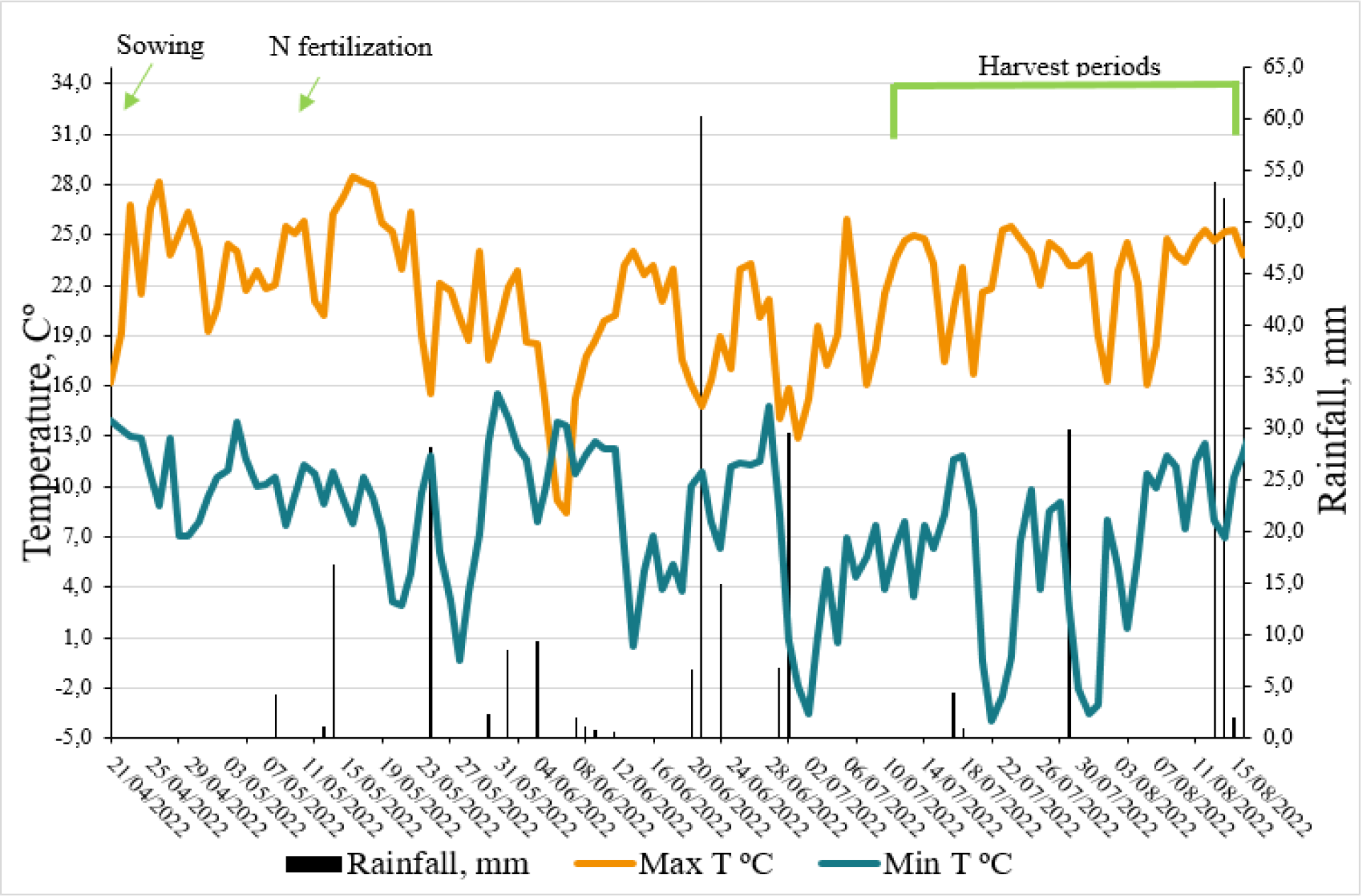 Source: SIMEPAR/UNICENTRO experimental station, Guarapuava, state of Paraná, Brazil, 2022.