 Propolis in animal health and production: a review
Abstract
Propolis is a resinous substance produced by bees that is known for its various biological properties, including antimicrobial, antioxidant, anti-inflammatory, and immunomodulatory effects. These properties make propolis a promising natural additive for managing the health of domestic animals, including monogastric animals and ruminants. Propolis supplementation enhances growth performance, improves gut health by modulating the microbiota, and boosts immune responses in poultry and swine. Its antimicrobial properties help to reduce infections and promote overall health and productivity. Propolis improves milk quality in ruminants such as cattle and sheep by increasing beneficial fatty acids and improving antioxidant capacity. It also helps reduce the prevalence of mastitis by inhibiting pathogens, such as Staphylococcus aureus. In addition, propolis helps protect udder health and ensures higher milk yields. Moreover, propolis improves nutrient digestibility and feed efficiency, thereby improving animal growth and production metrics. Overall, incorporating propolis into animal diets offers a natural and effective means of enhancing animal health and productivity, reducing reliance on antibiotics, and supporting sustainable agricultural practices. The multifaceted benefits of propolis underscore its potential as a valuable tool in modern animal husbandry.
Keywords:
antimicrobial; antioxidant; monogastric; phenolic compounds; ruminant
Resumo
A própolis é uma substância resinosa produzida pelas abelhas, conhecida por suas diversas propriedades biológicas, incluindo efeitos antimicrobianos, antioxidantes, anti-inflamatórios e imunomoduladores. Essas propriedades tornam a própolis um aditivo natural promissor para o manejo da saúde de animais domésticos, incluindo monogástricos e ruminantes. A suplementação com própolis melhora o desempenho de crescimento, promove a saúde intestinal por meio da modulação da microbiota e estimula as respostas imunes em aves e suínos. Suas propriedades antimicrobianas ajudam a reduzir infecções e promovem a saúde e produtividade geral. A própolis melhora a qualidade do leite em ruminantes, como bovinos e ovinos, aumentando os ácidos graxos benéficos e aprimorando a capacidade antioxidante. Ela também ajuda a reduzir a prevalência de mastite ao inibir patógenos, como o Staphylococcus aureus. Além disso, a própolis auxilia na proteção da saúde do úbere e garante maiores rendimentos de leite. Ademais, a própolis melhora a digestibilidade dos nutrientes e a eficiência alimentar, aumentando o crescimento e os índices produtivos dos animais. De forma geral, a incorporação da própolis na dieta animal oferece um meio natural e eficaz de aprimorar a saúde e a produtividade, reduzindo a dependência de antibióticos e promovendo práticas agrícolas sustentáveis. Os múltiplos benefícios da própolis ressaltam seu potencial como uma ferramenta valiosa na pecuária moderna.
Palavras-chave:
antimicrobiano; antioxidante; compostos fenólicos; monogástrico; ruminante
1. Introduction
Propolis is a resinous material collected by worker and stingless bees (Meliponini) from the buds and secretions of numerous tree species. Once collected, this material is enriched in salivary and enzymatic secretions and is used by bees to seal the hive wall, fill gaps or cracks, and embalm dead insects that invaded the hive (1). The chemical composition of propolis is vast and complex, with phenolic compounds (phenolic acids, esters, and flavonoids) as the primary components. Propolis has been the subject of numerous pharmacological studies due to its antimicrobial, antifungal, antiviral, antiinflammatory, hepatoprotective, antioxidant, antitumor, immunomodulatory, and other properties (2-5). This biological potential arises from the synergy between its diverse constituents, particularly phenolic compounds. Driven by concerns regarding antibiotic use for therapeutic, prophylactic, or growthpromoting purposes, its properties have heightened interest in using propolis in animal production.
These concerns stem from the emergence of antimicrobial resistance, further emphasized by the finding that avoparcin, an antibiotic used in Europe to enhance animal growth, contributes to increased resistance to vancomycin (6). Ionophore additives, which are widely used in ruminant feed to reduce methane and ammonia production and increase feed efficiency, have been banned in the European Union since January 2006 (7). It is essential to consider that including growth promoters in animal diets, although a significant innovation in enhancing animal performance, can lead to increased feed costs. This practice has faced criticism from consumer groups, government agencies, and research institutions, who advocate either banning these substances or identifying alternatives to synthetic drugs to ensure that final animal products are free from potentially harmful residues (8).
In recent years, propolis and its components have been thoroughly studied for their use in the production and health of ruminants and monogastric animals. Research has shown that propolis has great potential due to its bioactive components, which have antimicrobial, antioxidant, and antiinflammatory properties (9-11). These properties can improve the overall health of domestic animals. Propolis improves digestibility and feed efficiency in ruminants, leading to greater weight gain and improved feed conversion(12). Propolis has been effective in reducing enteric and respiratory diseases and promoting healthier growth in monogastric animals, such as poultry (13). Additionally, propolis has been studied as a natural alternative to antibiotics for mitigating antimicrobial resistance (14).
Propolis in animal diets improves the quality of animal products, such as milk (15) and meat (16), thereby enhancing their nutritional and commercial value. However, the lack of standardization of propolis makes it challenging to interpret certain results. The term "propolis" does not effectively represent its chemical composition, as propolis is derived from the predominant flora in the region where it is produced. This indicates that the chemical composition of propolis can vary significantly across different regions. Comparing samples of propolis from different parts of the world, such as Bulgaria and Brazil, is similar to analyzing extracts from two plants belonging to different botanical families (17). To address this issue, recent publications on the biological activity of propolis include chemical characterization of the substances used (3). This facilitates the grouping and comparison of results, helping us to better understand the action of propolis as an alternative to antibiotic growth promoters. This understanding is crucial for future research, enabling the correct use of specific types of propolis with particular biological properties in animal production.
This article reviews the main studies on the use of different types of propolis for the production and health of monogastric and ruminant animals. The objective was to discuss the contributions of propolis to animal science and identify areas that require further investigation in future studies.
2. Types of propolis and their constituents
Plants are vital sources of natural compounds. In addition to their role as food sources for humans and animals, plants provide essential resources for insects to create valuable natural products. This was particularly evident in the relationship between honeybees and melliferous plants. Bees gather nectar, pollen, and resin from the outside of the hive to produce honey, bee pollen, beebread, and propolis (18).
The word “propolis” derives from the Greek pro (“in front of,” “in defense of”) and polis (“community” or “city”), and, as the name suggests, it is a substance for the defense of the hive (1). Propolis is a resinous material collected from the buds and secretions of numerous tree species by worker bees. Bees can also collect materials actively secreted by plants or from their exudates (e.g., lipophilic material on leaves and resins) to produce propolis (19). Once collected, the material is enriched with salivary and enzymatic secretions from the hive. As a resinous substance, propolis is prepared by honeybees to seal cracks and smooth walls, and to maintain moisture and temperature stability throughout the year. It is also important for the defense against invading microorganisms (20, 21). Raw propolis is typically composed of 50 % plant resin, 30 % wax, 10 % essential and aromatic oils, 5 % pollen, and 5 % other organic substances (20). The botanical source of resin is a key characteristic of this type of propolis. In temperate regions, most propolis is produced from cultivated poplar species (Populus spp.), which serve as the primary botanical source of the resins used by honeybees, whereas tropical propolis originates mainly from wild plants (22). The color of propolis can range from green to brown or reddish, depending on its botanical source (23). Table 1 presents the main types of propolis, their botanical sources, and origins.
For optimal utilization of the phenolic compounds in propolis, they should be purified through solvent extraction. This process removes inert materials and preserves the phenolic fraction (29). The most popular technique for producing propolis extracts is ethanol extraction, as the active substances in propolis are soluble in ethanol (30). However, extraction with hydroalcoholic solutions has also shown significant effects on the extraction of phenolic compounds from propolis (31).
The chemical composition of propolis is vast and complex. It includes phenolic compounds (phenolic acids, their esters, and flavonoids) as the primary components, and fatty acids, carbohydrates, aldehydes, amino acids, ketones, chalcones, dihydrochalcones, terpenoids, vitamins, and inorganic substances as the minor components (32, 1). The chemical complexity of propolis is attributable to the wide variety of plants from which the bees collect it. The composition of propolis varies depending on factors such as its botanical origin, the type of bees that collect it, and local climate and vegetation. The chemical composition of propolis is more complex in areas with higher vegetation diversity (33). According to Bankova (3), it is important for researchers studying the biological activity of propolis to be aware of the standardization concern and to distinguish between different types of propolis. Propolis has been the subject of numerous pharmacological studies due to its antimicrobial, antifungal, antiviral, anti-inflammatory, hepatoprotective, antioxidant, antitumor, and immunomodulatory properties (2, 34-36). This biological potential is due to the synergism among its many constituents (31), including phenolic compounds.
Phenols are the main components of the poplar type propolis, constituting approximately 28 ± 9 % of its total mass. Within this, 8 ± 4 % consists of flavones/flavonols, and 6 ± 2 % consists of flavanones/ dihydroflavonols. Phenols, including flavonoids, lignans, caffeoylquinic acid derivatives, hydroxycinnamic acid derivatives, and terpenes, are considered the primary active molecules in propolis from temperate and tropical climates and some Mediterranean regions. Among these, flavonoids are the most important and function as the main biologically active ingredients in propolis (37).
Propolis is typically divided into different groups such as Poplar, Birch, Green, Red, Pacific, and Mediterranean, based on its botanical sources and primary constituents (38). These categories are closely linked to geographical zones, including temperate, Mediterranean, subtropical, and tropical global regions (39). Different plant sources influence the chemical composition of propolis, particularly its phenolic profile. In temperate zones (Europe, Asia, and North America), propolis is characterized by high levels of flavanones and flavones and low levels of phenolic acids and their esters (40). Complex profiles of phenolic compounds have been described in propolis from tropical regions, including prenylated p-coumaric acids, prenylated flavonoids, caffeoylquinic acid derivatives, and lignans (41, 42). Tropical propolis samples, especially those from Brazil, showed significant differences in their chemical compositions compared to propolis from temperate zones. Therefore, Brazilian propolis has become a subject of great interest for scientists. Among the flavonoids found in Brazilian propolis, acacetin, pinobanksin, kaempferol, apigenin, pinocembrin, chrysin, galangin, isosakuranetin, and betuletol are notable (43-46).
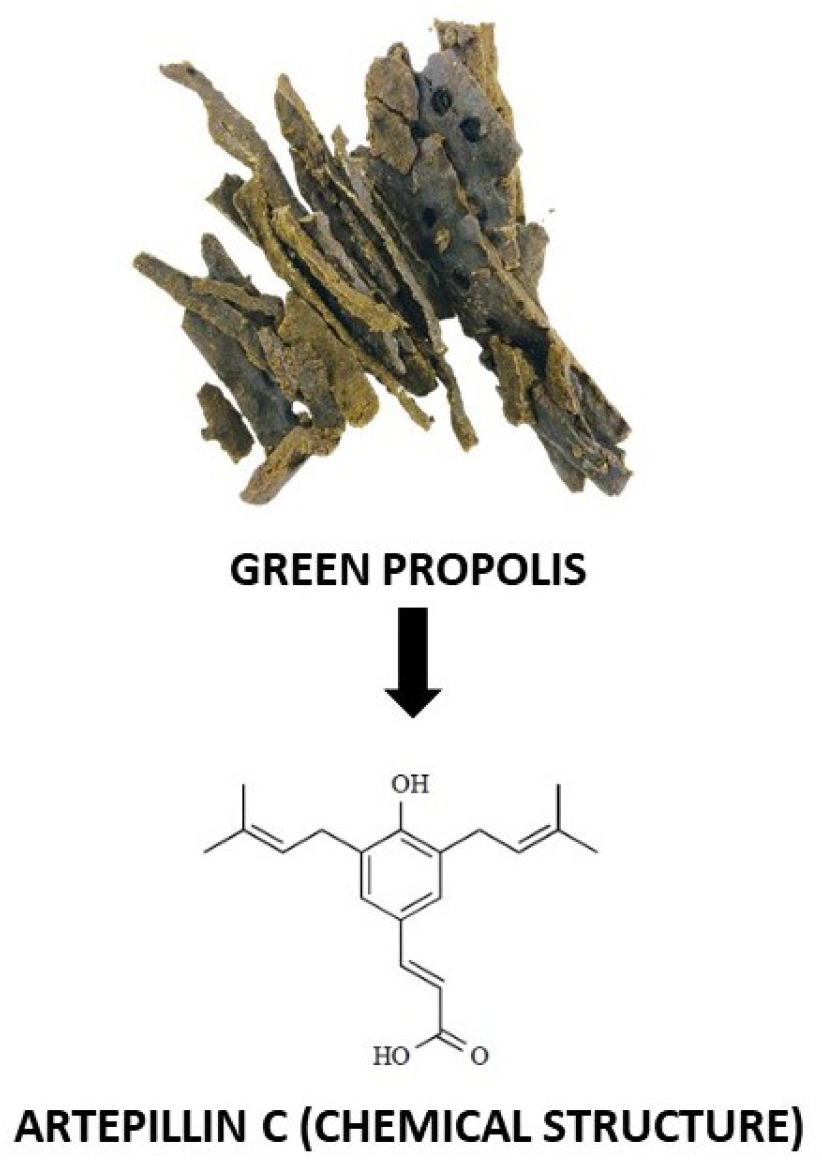
Brazilian green propolis is one of the most extensively researched propolis types worldwide. The chemical composition of green propolis it a promising natural product with diverse applications in the pharmaceutical industry. This explains its empirical use over the centuries (47). Among the phenolic compounds found in Brazilian propolis, Artepillin C (Figure 1) has attracted the most attention from researchers and has been extensively studied in recent years.

Artepillin C was first discovered in Brazilian propolis in 1994 by Aga et al. (48) who identified its antibacterial activity. This discovery, and its structural similarity to caffeic acid phenethyl ester (CAPE) (the presence of a trans-cinnamoyl system) increased interest in this compound. Several important pharmacological activities have been identified over a short period, and some studies have revealed the mechanism of action of Artepillin C (49).
Recently, various biological activities, such as antioxidant, antimicrobial, and antitumor, have been attributed to Artepillin C (50, 51). Several studies have reported the presence of Artepillin C in Brazilian propolis. Chang et al. (45) analyzed ethanol extracts of Brazilian green propolis (Baccharis dracunculifolia) and identified Artepillin C (63 % of the base peak) in the analyzed extracts. Other researchers have also found this compound in Brazilian propolis extracts, with Artepillin C becoming an important indicator of the quality of Brazilian propolis (51, 53).
Therefore, propolis has been studied for use in ruminants and monogastric animals, aiming to replace or complement commonly used drugs and growth-promoting additives in livestock.
2.1 Main applications of propolis in the production and health of livestock
Propolis is a promising additive for animal production owing to its antimicrobial, antioxidant, and anti-inflammatory properties. Its use can reduce the need for antibiotics, thereby decreasing the risk of antimicrobial resistance. Additionally, propolis contributes to improved gastrointestinal health by promoting balanced microbiota and increasing feed efficiency. Studies have shown improvements in weight gain and immunity in poultry, swine, and ruminants. Propolis also aids in wound healing and the prevention of respiratory diseases, contributing to the overall health of animals and, consequently, to the productivity and quality of animal products.
2.2.1 Monogastric animals
The use of propolis in monogastric livestock such as swine and poultry has evolved significantly in recent decades. Initially, its use was limited and poorly studied; however, with increased research, its antimicrobial, antioxidant, and anti-inflammatory properties have been discovered.
Ma et al. (54) conducted two experiments to compare the immune-enhancing effects of propolis, oil emulsion, and aluminum salt in guinea pigs vaccinated with an inactivated porcine parvovirus (PPV) vaccine. PPV primarily affects pigs and causes reproductive failure in breeding herds. Vaccination is the primary control method used to protect breeding sows and gilts to ensure the birth of healthy litters. The authors observed that all three adjuvants increased the antibody titer, T lymphocyte proliferation, and IL-2 and IL-4 secretion from splenic lymphocytes. Propolis performed similarly to oil emulsions and was better than aluminum salt, especially during the early vaccination period. In a subsequent immune protection test, propolis and oil emulsions enhanced the antibody titer, increased IL-2 and IL-4 levels in serum, and reduced PPV content in the blood and organs. Propolis was particularly effective at improving the cellular immune response, suggesting its potential as an effective adjuvant for inactivated vaccines. This highlights propolis as a promising alternative to vaccine formulations.
In another study, Li and Kim (55) assessed the effect of adding Saccharomyces cerevisiae cell wall extract and poplar propolis ethanol extract (SPE) on the growth, digestibility, blood profiles, fecal microbiota, and fecal noxious gas emissions in growing pigs. The pigs were divided into three dietary groups: a control diet and diets with 0.05 % or 0.10 % SPE. The results indicated that the inclusion of propolis extract improved the growth performance, nutrient digestibility, and fecal microbial composition. Additionally, a significant reduction in the emission of harmful fecal gases such as ammonia and hydrogen sulfide was observed. These findings suggest that propolis can be a beneficial dietary supplement for pigs, contributing to more efficient growth and reduced environmental impacts.
Additional properties of propolis have also been demonstrated in animal studies. Both red and green propolis exhibited considerable antiviral activity against herpes viruses in animals. Simoni et al. (56) conducted a study that analyzed the antiviral potential of three types of propolis from two different regions of Brazil against equine, porcine, and bovine herpes viruses. The authors also compared the inhibitory effects of propolis obtained from these two bee species. The propolis samples included red and green types from Africanized Apis mellifera and a third type from Tetragonisca angustula (jataí). Additionally, Baccharis extracts were obtained from four species: B. oblongifolia, B. burchellii, B. dracunculifolia, and B. uncinella. The study used nontoxic concentrations of the extracts that showed no morphological changes in the cells during antiviral tests. The results indicated that red propolis was effective against all three herpesviruses, green propolis was effective against equine and swine herpesviruses, and jataí propolis showed no antiviral activity. Most Baccharis extracts displayed antiviral activity against bovine and swine herpesviruses, and only the female B. oblongifolia extract inhibited equine herpesviruses. The results of that study show that the botanical origin of propolis influences its flavonoid and phenolic composition, which enhances some of its biological properties.
Plant-based additives such as propolis are included in animal feed because of their health benefits. They can improve animal performance and well-being, and reduce the need for antibiotics due to their antimicrobial properties. These additives are commonly included in pig diets worldwide, especially during weaning. Weaning can be stressful for young pigs as they suddenly transition from their mother's milk to dry feed, often leading to digestive issues and diarrhea, which is the primary cause of death at this stage (57).
In a study with weaned piglets, Stolić et al. (58) evaluated the influence of native propolis on the growth performance by monitoring changes in selected biochemical parameters. The piglets were divided into a control group fed standard feed and an experimental group supplemented with 1 g/kg propolis. That study shows that the health effects of propolis depend on its composition, metabolism, and dosage. Supplemented piglets presented higher levels of cholesterol, triglycerides, urea, and liver enzymes than those in the control group, whereas albumin levels were reduced. These changes, which are within the physiological range, suggest the immunomodulatory activity of propolis. The experimental group had a lower incidence of diarrhea, likely due to the presence of antimicrobial compounds, such as cinnamic acid. The increase in alanine aminotransferase indicates faster growth, which is influenced by propolis ingredients such as isoflavonoids. That study showed that propolis-enriched foods positively affect overall health, resulting in the faster growth of healthier and heavier animals in the long term.
More recently, Ma et al. (59) investigated the chemical composition, anti-PPV efficacy, and immunological enhancement of a propolis flavone ethanolic extract. The authors identified specific flavonoids responsible for immunomodulatory effects and highlighted their potential to boost the immune response. Additionally, that study demonstrated the antiviral properties of propolis against PPV, suggesting its efficacy as a natural alternative for disease prevention in pigs. These findings support the use of propolis to improve animal health and reduce the reliance on synthetic drugs.
Recent studies have explored the use of propolis in poultry farming, particularly in broilers and laying hens, emphasizing its potential to improve health and productivity. In broilers, propolis supplementation has shown the potential to enhance growth rate, feed efficiency, and meat quality, while also reducing the incidence of diseases and improving the birds' immune response. In laying hens, propolis has been primarily evaluated for its effect on egg quality and bird health. Research on the use of propolis in poultry farming is growing, and the results thus far are promising, suggesting that this natural product could be a viable alternative to antibiotics and other synthetic additives, contributing to more sustainable and healthy poultry production.
Shalmany and Shivazad (60) investigated the effects of dietary propolis supplementation in Ross broiler chickens. The results showed that propolis supplementation significantly improved weight gain, feed conversion, and productive efficiency of birds. Additionally, there was a reduction in mortality and an improvement in the overall health of broilers, which was attributed to the antimicrobial and antiinflammatory properties of propolis. The supplemented birds also exhibited better intestinal integrity, which favored nutrient absorption. Overall, the authors concluded that propolis could be an effective dietary supplement for improving the performance and health of broiler chickens.
Propolis is also a beneficial supplement for mitigating the negative effects of heat stress in broiler chickens and improving both behavior and feather quality. A previous study indicated that propolis supplementation significantly reduced stress-related behaviors, such as aggression and agitation. Additionally, there was an improvement in the feather score, suggesting better physical condition and well-being of the birds. Broilers fed higher levels of propolis exhibit reduced mortality rates and increased heat resistance (61).
In another study, Daneshmand et al. (62) analyzed the complementary effects of an 70 % ethanolic extract of Iranian propolis combined with probiotics in male broiler chickens. The combination of propolis and probiotics significantly improved growth performance, as reflected by increased weight gain and improved feed conversion. Additionally, the immune response was enhanced, with increased antibody levels and phagocytic activity. Analysis of serum metabolites revealed improvements in lipid and protein profiles, indicating better metabolic health in birds. In conclusion, the combination of propolis extract and probiotics can potentiate the beneficial effects of both supplements by promoting growth, immune health, and metabolic balance in broiler chickens.
The combination of propolis and bee pollen in the diet can effectively improve liver health and reduce the incidence of hepatic pathologies in broiler chickens (63). The effects of dietary supplementation with propolis and bee pollen on liver pathology in broilers were examined. Supplementation with both compounds resulted in a significant reduction in liver lesions, including degeneration and fatty infiltration. Histopathological analysis revealed an improvement in the integrity and function of the liver in the supplemented birds. Additionally, a decrease in hepatic oxidative stress markers was observed, indicating a protective antioxidant effect.
Including raw propolis and bee pollen in the diet can promote intestinal health and enhance nutrient absorption and the structural integrity of the intestine in broiler chickens. Prakatur et al. (64) investigated the effects of propolis and bee pollen supplementation on the intestinal morphology of broilers. They observed that the supplemented birds showed a significant increase in villus height and crypt depth, indicating an improved nutrient absorption capacity. Additionally, there was a reduction in intestinal lesions and inflammation. Supplementation also increased digestive enzyme activity, suggesting an improved digestive efficiency.
Propolis has also been studied for use in the production of laying hens. It can be an effective supplement for improving immunity and antibody production in laying hens, thereby contributing to their health and productivity. A study evaluated the effects of a propolis extract supplementation (30 g of propolis in a volume of 100 mL with 70 % ethanol) on antibody production in laying hens and observed that hens supplemented with propolis showed a significant increase in antibody production, specifically against common antigens used in vaccination. Supplementation resulted in an improvement in the humoral immune response, as indicated by increased antibody titers. The supplemented birds also exhibited better infection resistance and a lower incidence of disease (65).
Another study investigated the effects of different levels of dietary propolis on hematological and immunological parameters in laying hens (66). The researchers found that including Turkish propolis prepared with 70 % ethanol at a dose of 3 g/kg of diet could enhance the production of IgG and IgM compared to those at lower or higher doses. They also suggested that the propolis dosage could play a crucial role in immune stimulation in laying hens. Additionally, laying hens are frequently exposed to various environmental, nutritional, physical, social, and pathological stresses, which can weaken their immune function and make them more susceptible to starvation and infectious diseases. Therefore, incorporating 3 g/kg propolis into the diet may help protect birds from the detrimental effects of stress and reduce their vulnerability to infectious diseases.
The first study on the effect of propolis on fatty liver in laying hens was recently published (67). The aim of that study was to investigate the effects of propolis supplementation on the performance, liver fat ratio, egg quality, and antioxidant enzymes in laying hens fed a high-energy diet that can lead to fatty liver. The results showed that the liver fat ratio increased significantly and egg production decreased in hens fed the high-energy diet. However, when 200 mg/kg propolis was added to the diet, egg production increased, liver fat ratio decreased, low-density lipid and triglyceride levels decreased, and antioxidant enzyme activities, such as superoxide dismutase, catalase, and glutathione peroxidase, increased. This suggested that adding 200 mg/kg propolis to laying hen diets can positively affect various parameters.
Propolis has also been studied in aquaculture, primarily as a growth promoter for fish. Abd-El-Rhman (68) evaluated the increased resistance of Oreochromis niloticus to Aeromonas hydrophila using raw propolis and its ethanolic extract as nonspecific immunostimulants, and studied their effects on growth performance. They found that the best growth rate and feed conversion ratio were obtained using the ethanolic extract. The increase in average daily gain, specific growth rate, and feed efficiency ratio was highly significant in the ethanolic extract group, followed by that in the raw propolis, compared to that in the control group. It was also verified that raw propolis and its ethanolic extract reduced A. hydrophila-induced mortality compared to the control group. These results indicated that raw propolis and its ethanolic extract activated the immune system of Nile tilapia. It is important to note that the performance of the tilapia extract was superior to that of the ethanolic extract of propolis, compared to raw propolis. This likely occurred because of the greater action of the extracted phenolics, as with other components of propolis, such as waxes and resins, which impeded the action of the active compounds in propolis.
Propolis has demonstrated significant effects as a growth promoter, a hepatoprotective agent, and a nonspecific immunostimulant in rainbow trout. Deng et al. (69) studied the effect of graded concentrations of an ethanolic extract of propolis (EEP) on the growth performance and plasma biochemical parameters of rainbow trout (Oncorhynchus mykiss). The authors found that supplemental EEP improved feed and protein efficiency ratios. Additionally, dietary EEP supplementation typically increases plasma superoxide dismutase, lysozyme, total antioxidant capacity, glutathione peroxidase, and catalase activities, while decreasing plasma malondialdehyde levels.
Based on these results, propolis acts as a natural growth promoter, improving the feed efficiency and overall growth performance of monogastric animals. Propolis also possesses strong antimicrobial properties that prevent infections and reduce the need for antibiotics. In addition, it serves as an effective immunostimulant, enhancing the immune response and resilience against diseases. Their antioxidant properties contribute to improved health and reduced oxidative stress in monogastric animals. Overall, propolis is a valuable natural additive that supports healthy and efficient monogastric production.
2.2.2 Ruminant animals
The use of propolis is aligned with the increasing demand for natural and sustainable farming practices. Integrating natural additives such as propolis into livestock production offers a viable pathway to meet the expectations of consumers who are becoming more health-conscious and environmentally aware. Propolis is a promising natural additive that can enhance the health, productivity, and sustainability of ruminants. Several studies have investigated the effects of propolis as a performance-enhancing additive in ruminants. In dairy cattle, propolis improves milk yield and quality, thereby contributing to higher economic returns for farmers (15). Its anti-inflammatory properties help reduce mastitis, a common and costly issue in dairy farming. Additionally, propolis promotes gut health by modulating the microbial population in the rumen, leading to improved digestion and nutrient utilization (70).
De Aguiar et al. (31) evaluated the antimicrobial activities of different Brazilian green propolis extracts against selected ruminal bacteria belonging to the main functional groups (cellulolytic, amylolytic, and proteolytic). They found that of the 11 strains tested, eight were sensitive to propolis extracts. The authors also evaluated the effect of some of the main flavonoids and phenolic acids present in Brazilian propolis (including Artepillin C) on these same strains. They found that only naringenin exhibited inhibitory effects against all strains, suggesting that the antimicrobial action of propolis does not rely on a single component but rather on the synergism between them.
Aguiar et al. (70) evaluated the effects of three propolis-based products (PBP) (with different concentrations of green propolis and alcohol content) on intake, digestibility (ruminal and intestinal), and blood parameters. They observed that all three PBPs reduced the ruminal digestibility of crude protein (CP), suggesting that PBPs increase nitrogen metabolism in the rumen by reducing the population of ammonia nitrogen (NH3-N)-producing bacteria, thereby increasing the flow of microbial protein to the intestine. The authors also reported that one of the PBPs reduced ruminal NH₃-N concentration, indicating a positive effect on protein metabolism. In another study, Aguiar et al. (71) observed that the dietary inclusion of PBP improved milk quality by modifying the fatty acid profile, enhancing CLA (cis9,trans11-18:2), increasing mono-and polyunsaturated FAs, reducing saturated FAs and the n6:n3 ratio, and boosting the antioxidant capacity of milk.
In 2014, the first study characterizing propolis-tolerant isolates from the rumen of Brazilian cattle was published (72). In that study, the authors used phenotyping and 16S rRNA identification. These bacteria belong to the phyla Firmicutes and Proteobacteria, predominantly streptococci (likely Streptococcus bovis) with amylolytic activity, as well as Escherichia coli, along with some strains of Clostridium bifermentans and Mitsuokella jalaludinii. Most of the isolated strains exhibited amylolytic and/or saccharolytic activities and were gram-positive bacteria.
Silva et al. (73) studied the effects of Brazilian green propolis extracts on the presence of grampositive and gram-negative bacteria in the ruminal fluid of cattle. They concluded that the products used as additives in this experiment could influence the characteristics of ruminal flora by altering its bacterial composition. The authors observed that propolis-based treatments were selected for both gram-positive and gram-negative bacteria, corroborating the findings of Aguiar et al. (31), who concluded that the mechanism of action of propolis on bacteria does not depend on the permeability of the bacterial outer membrane, as is the case with ionophore additives.
Gomes et al. (74) tested the addition of different concentrations and doses of brown propolis extract to the diet of ruminants, investigated the effects of this supplementation on diet degradation in ruminal fluid, and evaluated the kinetics of cumulative gas production in vitro using nonlinear logistic and dual exponential models. The authors found that diets supplemented with 100 % ethanolic extract of brown propolis promoted dietary degradability and cumulative gas production in vitro, concluding that the ethanolic extract of brown propolis can be included as a nutritional additive in ruminant diets.
The addition of propolis and vitamin E to diets containing flaxseed oil for dairy cows proved beneficial, as it did not negatively affect digestive parameters (antimicrobial effect) and had a positive effect on milk quality due to its antioxidant properties (75). that study also found that the addition of propolis to the diet increased the production of cis9,trans11-18:2 CLA in milk and the count of Butyrivibrio fibrisolvens in the rumen, without influencing the effects of flaxseed oil on other studied parameters.
These studies show that propolis acts on rumen microorganisms through its antimicrobial and antioxidant properties. Studies have shown that propolis can selectively inhibit certain harmful bacteria while promoting the growth of beneficial bacteria. It affects rumen microbial composition by reducing the abundances of gram-positive and gram-negative bacteria, such as Escherichia coli, and enhancing the growth of beneficial species, such as Butyrivibrio fibrisolvens. Propolis also alters fatty acid profiles, increases CLA production, and improves antioxidant capacity, contributing to overall rumen health and nutrient utilization in ruminants. Its mechanism of action is distinct from that of ionophore additives because it does not rely on altering bacterial membrane permeability.
Varela et al. (15) evaluated whether feeding propolis extract (PE) influences nutrient intake, milk production and composition, serum biochemistry, and physiological parameters in dairy cows under heat stress. They observed that providing 64 mL/day of PE tended to increase milk production by 11.64 % and improve the cows' gross feed efficiency by 12.04 %. The provision of PE did not affect milk composition or blood parameters but reduced the cows' rectal temperature and respiratory rate. Propolis can help reduce thermal stress in ruminants owing to its antioxidant and anti-inflammatory properties. It works by neutralizing free radicals that can worsen the effects of high temperatures, thereby alleviating oxidative stress. In addition, propolis helps regulate inflammatory responses, resulting in improved overall health and comfort in animals. By enhancing immune function and reducing heat-induced oxidative damage, propolis helps ruminants cope with heat stress more effectively.
In a study on small ruminants, de Melo Garcia et al. (76) evaluated the effect of increasing levels of red PE in the diet of confined sheep. They examined its effect on animal performance, morphometric parameters of the rumen and intestine, and histopathological parameters of the liver and kidneys. It was concluded that red PE can be used as a natural food additive to increase the absorptive areas of the rumen and intestine, enhance intestinal health, improve the hepatic glycogen index, and promote total weight gain in confined sheep without causing liver or kidney damage.
Propolis is also increasingly being used as a preventive measure against bovine mastitis due to its potent antimicrobial and anti-inflammatory properties. When applied, it can help reduce the incidence and severity of mastitis by inhibiting pathogen growth and soothing udder inflammation. Studies have shown that propolis can decrease somatic cell counts in milk, indicating improved udder health. Some studies have reported antimicrobial activity of propolis against certain bacteria responsible for bovine mastitis. Loguercio et al. (77) assessed the in vitro activity of an ethanolic PE (EPE) (50 % propolis [w/v] in alcoholic solution) and commonly used antimicrobials against bacterial agents of bovine mastitis. That study used 36 coagulase-positive Staphylococcus sp. isolates and 27 Streptococcus sp. isolates, with 94.4 % of Staphylococcus spp. and 85.2 % of Streptococcus spp. being susceptible to the PE. Saeki et al. (78) isolated Staphylococcus aureus from milk samples of mastitic animals and evaluated its sensitivity to commercial antibiotics and a 30 % PE. They found that the antimicrobial effect of propolis on Staphylococcus aureus was equally effective (above 90 %) as commonly used antimicrobials for treating this disease. Barbosa et al. (79) determined the in vitro inhibitory potential of propolis against Staphylococcus aureus and observed that propolis has an inhibitory action against this mastitis-causing bacterium, making it an alternative to conventional bactericides for in vivo treatment studies. Meanwhile, Klahr et al. (80) evaluated the in vitro antimicrobial activity of an EPE at different concentrations against the main mastitis-causing bacteria. They found that EPE exhibited inhibitory activity against 100 % of the tested bacteria at concentrations above 10 % (w/v) propolis.
Propolis is important in preventing bovine mastitis due to its strong antimicrobial properties against mastitis-causing bacteria such as Staphylococcus aureus and Streptococcus sp. Studies have shown that PEs can effectively inhibit these pathogens and sometimes outperform conventional antibiotics. Its natural origin and reduced risk of antibiotic resistance make it a promising alternative for preventing mastitis. In addition, propolis exhibits anti-inflammatory and healing properties, further supporting the udder health of dairy cows. These attributes highlight its potential as a valuable tool in dairy herd management.
2.3 Challenges in standardizing propolis for animal production: A brief discussion
The application of propolis in animal production has shown broad and diverse benefits, especially in monogastric animals such as swine and poultry. EPEs have been used in various studies due to the high bioavailability of phenolic compounds and flavonoids. For instance, their inclusion in swine diets improves productive performance, nutrient digestibility, and fecal microbiota composition, while reducing the emissions of harmful gases such as ammonia and hydrogen sulfide. These results suggest that the active compounds, which are better extracted from ethanolic solutions significantly affect intestinal health and the environment.
In poultry farming, ethanolic extracts of propolis have shown potential in combating heat stress and promoting intestinal integrity, thereby favoring weight gain and feed efficiency in broiler chickens. Additionally, in laying hens, propolis supplementation helped reduce liver fat and improve egg quality, especially when fed high-energy-density diets. These results confirm the hepatoprotective and antioxidant benefits of propolis extracted with ethanol.
Raw propolis, on the other hand, has also been used in studies with promising results. Although the presence of wax and resins limits the bioavailability of their active compounds, their positive effects on the immunity and performance of fish and poultry have been attributed to their antimicrobial and immunomodulatory properties. However, compared to ethanolic extracts, raw propolis showed less pronounced effects on growth and feed conversion, highlighting the importance of selecting an extraction method based on the intended purpose. Notably, despite the positive results observed with raw propolis, its practical use has become unfeasible. This is because, in addition to the high cost of propolis sold in its raw form, its use in health and monogastric production is expensive. The large number of animals used in farming operations, whether in poultry, swine, or fish production, makes the use of raw propolis impractical. Moreover, the cost of raw propolis is very high because, without solvent extraction, the action of its phenolic compounds is significantly reduced because other components (such as wax) hinder the release of these compounds.
Another important observation is that when comparing these studies with the types of propolis used, the influence of the chemical profile of propolis on its efficacy becomes evident. Based on the above studies, red propolis demonstrated greater antiviral activity, whereas green propolis was effective against herpes viruses in swine and horses. The botanical origin and species of bees producing propolis also play crucial roles, as the composition of flavonoids and phenols varies depending on the location and predominant flora.
In ruminants, the effects of propolis supplementation are significantly influenced by the type of propolis used and the extraction methods employed to isolate the phenolic compounds. This relationship arises from variations in chemical composition among different types of propolis and the impact of extraction techniques on the availability and efficacy of bioactive compounds.
Studies have shown that green propolis exhibits strong antimicrobial and anti-inflammatory activities, positively modulating ruminal microbial flora. For instance, it promotes an increase in beneficial bacteria, such as Butyrivibrio fibrisolvens, which are responsible for synthesizing CLA, while reducing the populations of ammonia-producing bacteria, such as Clostridium aminophilum. This modulation enhances protein digestion and milk quality, as evidenced by increased levels of unsaturated fatty acids and higher antioxidant capacity in milk.
Brown propolis, which contains a lower concentration of flavonoids than green propolis but remains relevant for ruminant supplementation, has an efficacy tied to concentrations and extraction methods. For example, ethanol extracts of brown propolis demonstrated improved dietary degradability and increased cumulative gas production, indicating their potential as zootechnical additives.
Although less studied, red propolis, rich in isoflavones and polyphenols, suggests beneficial effects on ruminant intestinal health. Studies on sheep have shown that red propolis can increase absorptive areas in the rumen and intestines, promoting greater weight gain without causing organ damage.
The extraction methods also play a crucial role. The choice of solvent and technique affect the concentration and bioavailability of phenolic compounds. Studies highlight that extracts obtained with 70 % or 100 % ethanol exhibit greater antimicrobial and antioxidant efficacy due to better solubilization of flavonoids and phenolic acids. However, the choice of ethanol concentration can modulate the results. For example, appropriate doses of ethanolic extracts of brown propolis result in improved feed degradability in the rumen. Meanwhile, high-concentration alcoholic extracts demonstrated greater efficacy in ‘in vitro’ studies against bacteria such as Staphylococcus aureus and Streptococcus spp., suggesting that concentrations above 10 % propolis in alcoholic solutions are necessary for consistent results.
Importantly, the efficacy of propolis does not rely on a single compound but rather on the synergy among its bioactive components. Therefore, the selection of the type of propolis and extraction method should be strategic and based on specific supplementation goals such as improving ruminal health, milk quality, and productive performance. Standardizing extracts and defining safe and effective doses are fundamental steps in optimizing their use in ruminant nutrition.
The type and chemical composition of propolis are closely linked to local flora. The predominant vegetation in the region where bees collect resins directly influences the type of propolis obtained, such as brown, green, and red, resulting in distinct chemical compositions and biological properties. Certain compounds serve as characteristic markers of the different types of propolis. A notable example is Artepillin C, a phenolic compound identified in Brazilian green propolis. The high concentration in this type of propolis is due to its specific botanical source, which gives it a unique chemical composition that applies to all types of propolis.
Furthermore, some botanical sources are exclusive to or predominant in specific regions, making it impossible to consider propolis a uniform substance with identical composition and biological properties. Another critical factor is the extraction method used; the type of solvent (water, ethanol, or methanol) and the ratio between them (water/alcohol ratio) influence the ability to extract phenolic compounds and their concentrations. Because raw propolis does not exhibit significant effectiveness, it is essential to extract its active compounds.
These variables make it infeasible to standardize propolis, as the composition and concentration of the extracted phenolic compounds depend on both the type of propolis and the extraction method used. This directly affects its biological properties, such as antimicrobial and antioxidant activities. Therefore, studies on the effects of propolis on animal health and production cannot be analyzed in absolute terms. Instead, it was necessary to associate the observed effects with the specific propolis extracts used in each study.
4. Conclusion
The use of propolis in animal production has gained prominence, particularly due to growing concerns regarding increasing microbial resistance and the indiscriminate use of antibiotics. Propolis improves the productive performance and health of monogastric animals and ruminants primarily due to its antimicrobial properties. However, the type of propolis and the extraction methods used play crucial roles in determining the composition and concentration of phenolic compounds responsible for the observed effects. Therefore, to better interpret the results and develop more targeted future studies, it is essential to link the types of propolis extracts to the extracted phenolic compounds, thereby enabling a deeper understanding of their mechanisms of action on animal health and production.
Data availability statement
The data will be provided upon request.
References
-
1 Castaldo S, Capasso F. Propolis, an old remedy used in modern medicine. Fitoterapia. 2002;73 Suppl 1:S1-6. http://dx.doi.org/10.1016/s0367-326x(02)00185-5
» http://dx.doi.org/10.1016/s0367-326x(02)00185-5 -
2 Kumazawa S, Hamasaka T, Nakayama T. Antioxidant activity of propolis of various geographic origins. Food Chemistry. 2004;84(3):329-39. http://dx.doi.org/10.1016/s0308-8146(03)00216-4
» http://dx.doi.org/10.1016/s0308-8146(03)00216-4 -
3 Bankova V. Chemical diversity of propolis and the problem of standardization. Journal of Ethnopharmacology. 2005;100(1-2):114-7. http://dx.doi.org/10.1016/j.jep.2005.05.004
» http://dx.doi.org/10.1016/j.jep.2005.05.004 -
4 Kosalec I, Pepeljnjak S, Bakmaz M, Vladimir-Knezević S. Flavonoid analysis and antimicrobial activity of commercially available propolis products. Acta Pharmaceutica. 2005;55(4):423-30. https://www.researchgate.net/publication/7395100_Flavonoid_analysis_and_antimicrobial_activity_of_commercially_available_propolis_product
» https://www.researchgate.net/publication/7395100_Flavonoid_analysis_and_antimicrobial_activity_of_commercially_available_propolis_product -
5 Alencar SM de, Aguiar CL de, Paredes-Guzmán J, Park YK. Composição química de Baccharis dracunculifolia, fonte botânica das própolis dos estados de São Paulo e Minas Gerais. Ciência Rural. 2005;35(4):909-15. http://dx.doi.org/10.1590/s010384782005000400025
» http://dx.doi.org/10.1590/s010384782005000400025 -
6 Houlihan AJ, Russell JB. The susceptibility of ionophore-resistant Clostridium aminophilum F to other antibiotics. Journal of Antimicrobial Chemotherapy. 2003;52(4):623-8. http://dx.doi.org/10.1093/jac/dkg398
» http://dx.doi.org/10.1093/jac/dkg398 -
7 OFFICIAL JOURNAL OF THE EUROPEAN UNION. 1831/2003 of the European Parliament and of the Council of 22 September 2003 on additives for use in animal nutrition. 2003 Oct. https://eur-lex.europa.eu/legal-content/EN/TXT/PDF/?uri=CELEX:32003R1831
» https://eur-lex.europa.eu/legal-content/EN/TXT/PDF/?uri=CELEX:32003R1831 -
8 da Silva CS, de Souza EJO, Pereira GFC, Cavalcante EO, de Lima EIM, Torres TR, Silva JRC, da Silva DC. Plant extracts as phytogenic additives considering intake, digestibility, and feeding behavior of sheep. Tropical Animal Health and Production. 2017;49(2):353-9. http://dx.doi.org/10.1007/s11250-016-1199-y
» http://dx.doi.org/10.1007/s11250-016-1199-y -
9 Zulhendri F, Lesmana R, Tandean S, Christoper A, Chandrasekaran K, Irsyam I, Suwantika AA, Abdulah R, Wathoni N. Recent update on the anti-inflammatory activities of propolis. Molecules. 2022;27(23):8473. http://dx.doi.org/10.3390/molecules27238473
» http://dx.doi.org/10.3390/molecules27238473 -
10 Rendueles E, Mauriz E, Sanz-Gómez J, González-Paramás AM, Vallejo-Pascual M-E, Adanero-Jorge F, García-Fernández C. Biochemical profile and antioxidant properties of Propolis from Northern Spain. Foods. 2023;12(23). http://dx.doi.org/10.3390/foods12234337
» http://dx.doi.org/10.3390/foods12234337 -
11 Rocha VM, Portela RD, dos Anjos JP, de Souza CO, Umsza-Guez MA. Stingless bee propolis: composition, biological activities and its applications in the food industry. Food Production, Processing and Nutrition. 2023;5(1). http://dx.doi.org/10.1186/s43014-023-00146-z
» http://dx.doi.org/10.1186/s43014-023-00146-z -
12 Paixão TR, de Almeida VVS, Oliveira AC, da Silva APG, Silva JWD, Santos LV, Lima Júnior DM, Silva RR. Intake, digestibility, ruminal parameters, and performance in lamb fed with increasing levels of red propolis extract. Tropical Animal Heath and Production. 2022;54(6):364. http://dx.doi.org/10.1007/s11250-022-03376-4
» http://dx.doi.org/10.1007/s11250-022-03376-4 -
13 Mahmoud UT, Cheng HW, Applegate TJ. Functions of propolis as a natural feed additive in poultry. World's Poultry Science Journal. 2016;72(1):37-48. http://dx.doi.org/10.1017/s0043933915002731
» http://dx.doi.org/10.1017/s0043933915002731 -
14 Helmy AK, Sidkey NM, Abdel-Aziz MM, El-Hela AA. Chemical composition of Egyptian propolis and studying its antimicrobial activity and synergistic action with honey against some multidrug-resistant uropathogens. Scientific Reports. 2025;15(1):17484. http://dx.doi.org/10.1038/s41598-025-00773-1
» http://dx.doi.org/10.1038/s41598-025-00773-1 -
15 Varela AMG, de Lima Junior DM, de Araújo TLAC, de Souza Junior JBF, de Macedo Costa LL, Pereira MWF, Batista NV, Melo VLL, Lima PO. The effect of propolis extract on milk production and composition, serum biochemistry, and physiological parameters of heat-stressed dairy cows. Tropical Animal Health and Production. 2023;55(4):244. http://dx.doi.org/10.1007/s11250-02303647-8
» http://dx.doi.org/10.1007/s11250-02303647-8 -
16 Abd El-Ghany WA. Propolis (bee glue): A promising natural feed additive for poultry and rabbits - A review. Annals of Animal Science. 2024;24(4):1051-64. http://dx.doi.org/10.2478/aoas-2024-0024
» http://dx.doi.org/10.2478/aoas-2024-0024 -
17 Machado GM de C, Leon LL, De Castro SL. Activity of Brazilian and Bulgarian propolis against different species of Leishmania. Memórias do Instituto Oswaldo Cruz. 2007;102(1):73-7. http://dx.doi.org/10.1590/s0074-02762007000100012
» http://dx.doi.org/10.1590/s0074-02762007000100012 -
18 Dezmirean DS, Paşca C, Moise AR, Bobiş O. Plant sources responsible for the chemical composition and main bioactive properties of poplar-type Propolis. Plants. 2020;10(1):22. http://dx.doi.org/10.3390/plants10010022
» http://dx.doi.org/10.3390/plants10010022 -
19 Bankova VS, de Castro SL, Marcucci MC. Propolis: recent advances in chemistry and plant origin. Apidologie (Celle). 2000;31(1):3-15. http://dx.doi.org/10.1051/apido:2000102
» http://dx.doi.org/10.1051/apido:2000102 -
20 Huang S, Zhang C-P, Wang K, Li GQ, Hu F-L. Recent advances in the chemical composition of propolis. Molecules. 2014;19(12):19610-32. http://dx.doi.org/10.3390/molecules191219610
» http://dx.doi.org/10.3390/molecules191219610 -
21 Ribeiro VP, Mejia JAA, Rodrigues DM, Alves GR, de Freitas Pinheiro AM, Tanimoto MH, Bastos JK, Ambrósio SR. Brazilian brown Propolis: An overview about its chemical composition, botanical sources, quality control, and pharmacological properties. Revista Brasileira de Farmacognosia. 2023;33(2):288-99. http://dx.doi.org/10.1007/s43450-023-00374-x
» http://dx.doi.org/10.1007/s43450-023-00374-x -
22 Salatino A, Salatino MLF, Negri G. How diverse is the chemistry and plant origin of Brazilian propolis? Apidologie (Celle). 2021;52(6):1075-97. http://dx.doi.org/10.1007/s13592-021-00889-z
» http://dx.doi.org/10.1007/s13592-021-00889-z -
23 Kuropatnicki AK, Szliszka E, Krol W. Historical aspects of propolis research in modern times. Evidence-Based Complementary and Alternative Medicine. 2013;2013:964149. http://dx.doi.org/10.1155/2013/964149
» http://dx.doi.org/10.1155/2013/964149 -
24 Messias AC, Lopes GF, de Souza Oliveira R, Álvares Horta JG, Campos Oliveira D, Brumana Correa P, Caligiorne, RB, Binda, NS, Figueiredo SM. Comparison of physical and chemical properties of green and brown Brazilian Propolis collected in Minas Gerais, Brazil. Chemistry & Biodiversity. 2023;20(6):e202300382. http://dx.doi.org/10.1002/cbdv.202300382
» http://dx.doi.org/10.1002/cbdv.202300382 -
25 Vieira ALS, Correia VT da V, Ramos ALCC, da Silva NHA, Jaymes LAC, Melo JOF, de Paula ACCFF, Garcia MAVT, Araújo, LRB. Evaluation of the chemical profile and antioxidant capacity of green, brown, and dark Propolis. Plants. 2023;12(18). http://dx.doi.org/10.3390/plants12183204
» http://dx.doi.org/10.3390/plants12183204 -
26 López BG-C, Schmidt EM, Eberlin MN, Sawaya ACHF. Phytochemical markers of different types of red propolis. Food Chemistry. 2014;146:174-80. http://dx.doi.org/10.1016/j.foodchem.2013.09.063
» http://dx.doi.org/10.1016/j.foodchem.2013.09.063 -
27 Rufatto LC, dos Santos DA, Marinho F, Henriques JAP, Roesch Ely M, Moura S. Red propolis: Chemical composition and pharmacological activity. Asian Pacific Journal of Tropical Biomedicine. 2017;7(7):591-8. http://dx.doi.org/10.1016/j.apjtb.2017.06.009
» http://dx.doi.org/10.1016/j.apjtb.2017.06.009 -
28 da Silveira CCS de M, Fernandes LMP, Silva ML, Luz DA, Gomes ARQ, Monteiro MC, Machado CS, Torres YR, de Lira TO, Ferreira AG Fontes-Júnior EA, Maia CSF. Neurobehavioral and antioxidant effects of ethanolic extract of yellow Propolis. Oxidative Medicine and Cellular Longevity. 2016;2016:2906953. http://dx.doi.org/10.1155/2016/2906953
» http://dx.doi.org/10.1155/2016/2906953 -
29 Alvarez-Suarez JM, editor. Bee products - chemical and biological properties. 1st ed. Basileia, Switzerland: Springer International Publishing; 2017. 306p. https://link.springer.com/book/10.1007/978-3-319-59689-1
» https://link.springer.com/book/10.1007/978-3-319-59689-1 -
30 Pietta PG, Gardana C, Pietta AM. Analytical methods for quality control of propolis. Fitoterapia. 2002;73 Suppl 1:S7-20. http://dx.doi.org/10.1016/s0367-326x(02)00186-7
» http://dx.doi.org/10.1016/s0367-326x(02)00186-7 -
31 de Aguiar SC, Zeoula LM, Franco SL, Peres LP, Arcuri PB, Forano E. Antimicrobial activity of Brazilian propolis extracts against rumen bacteria in vitro. World Journal of Microbiology and Biotechnology. 2013;29(10):1951-9. http://dx.doi.org/10.1007/s11274-013-1361-x
» http://dx.doi.org/10.1007/s11274-013-1361-x -
32 Dietemann V, Ellis J, Neumann P, editors. Standard methods for Apis mellifera hive product research. III. Ibra & Nbb. 2021. 464p. https://doi.org/10.1080/00218839.2019.1574449
» https://doi.org/10.1080/00218839.2019.1574449 -
33 Belmehdi O, El Menyiy N, Bouyahya A, El Baaboua A, El Omari N, Gallo M, Montesano D, Naviglio D, Zengin G, Senhaji NS Goh BH, Abrini J. Recent advances in the chemical composition and biological activities of Propolis. Food Reviews International. 2023;39(9):6078-128. http://dx.doi.org/10.1080/87559129.2022.2089164
» http://dx.doi.org/10.1080/87559129.2022.2089164 -
34 Ripari N, Sartori AA, da Silva Honorio M, Conte FL, Tasca KI, Santiago KB, Sforcin JM. Propolis antiviral and immunomodulatory activity: A review and perspectives for COVID-19 treatment. Journal of Pharmacy and Pharmacology. 2021;73(3):281-99. http://dx.doi.org/10.1093/jpp/rgaa067
» http://dx.doi.org/10.1093/jpp/rgaa067 -
35 Ożarowski M, Karpiński TM, Alam R, Łochyńska M. Antifungal properties of chemically defined Propolis from various geographical regions. Microorganisms. 2022;10(2):364. http://dx.doi.org/10.3390/microorganisms10020364
» http://dx.doi.org/10.3390/microorganisms10020364 -
36 Altuntaş Ü, Güzel İ, Özçelik B. Phenolic constituents, antioxidant and antimicrobial activity and clustering analysis of Propolis samples based on PCA from different regions of Anatolia. Molecules. 2023;28(3):1121. http://dx.doi.org/10.3390/molecules28031121
» http://dx.doi.org/10.3390/molecules28031121 -
37 Šturm L, Ulrih NP. Advances in the Propolis chemical composition between 2013 and 2018: A review. eFood. 2020;1(1):24-37. http://dx.doi.org/10.2991/efood.k.191029.001
» http://dx.doi.org/10.2991/efood.k.191029.001 -
38 El-Guendouz S, Lyoussi B, Miguel MG. Insight on Propolis from Mediterranean countries: Chemical composition, biological activities and application fields. Chemistry & Biodiversity. 2019;16(7):e1900094. http://dx.doi.org/10.1002/cbdv.201900094
» http://dx.doi.org/10.1002/cbdv.201900094 -
39 Pant K, Sharma A, Chopra HK, Nanda V. Impact of biodiversification on propolis composition, functionality, and application in foods as natural preservative: A review. Food Control. 2024;155(110097):110097. http://dx.doi.org/10.1016/j.foodcont.2023.110097
» http://dx.doi.org/10.1016/j.foodcont.2023.110097 -
40 Marcucci MC. Propolis: chemical composition, biological properties and therapeutic activity. Apidologie (Celle). 1995;26(2):83-99. http://dx.doi.org/10.1051/apido:19950202
» http://dx.doi.org/10.1051/apido:19950202 -
41 Boudourova-Krasteva G, Bankova V, Sforcin JM, Nikolova N, Popov S. Phenolics from Brazilian Propolis. Zeitschrift für Naturforschung C. 1997;52(9-10):676-9. http://dx.doi.org/10.1515/znc-1997-9-1016
» http://dx.doi.org/10.1515/znc-1997-9-1016 -
42 Banskota AH, Tezuka Y, Prasain JK, Matsushige K, Saiki I, Kadota S. Chemical constituents of Brazilian propolis and their cytotoxic activities. Journal of Natural Products. 1998;61(7):896-900. http://dx.doi.org/10.1021/np980028c
» http://dx.doi.org/10.1021/np980028c -
43 Park YK, Alencar SM, Aguiar CL. Botanical origin and chemical composition of Brazilian propolis. Journal of Agricultural and Food Chemistry. 2002;50(9):2502-6. http://dx.doi.org/10.1021/jf011432b
» http://dx.doi.org/10.1021/jf011432b -
44 Sawaya ACHF, Souza KS, Marcucci MC, Cunha IBS, Shimizu MT. Analysis of the composition of Brazilian propolis extracts by chromatography and evaluation of their in vitro activity against gram-positive bacteria. Brazilian Journal of Microbiology. 2004;35(1-2):104-9. http://dx.doi.org/10.1590/s1517-83822004000100017
» http://dx.doi.org/10.1590/s1517-83822004000100017 -
45 Chang R, Piló-Veloso D, Morais SAL, Nascimento EA. Analysis of a Brazilian green propolis from Baccharis dracunculifolia by HPLC-APCI-MS and GC-MS. Revista Brasileira de Farmacognosia. 2008;18(4):549-56. http://dx.doi.org/10.1590/s0102695x2008000400009
» http://dx.doi.org/10.1590/s0102695x2008000400009 -
46 Cottica SM, Amado DAV, Aguiar SC de, Boeing JS, Franco SL, Zeoula LM, Visentainer J. Antioxidant activity and lipid oxidation in milk from cows with soybean oil and propolis extract added to their feed. Food Science and Technology. 2019;39(2):467-74. http://dx.doi.org/10.1590/fst.33817
» http://dx.doi.org/10.1590/fst.33817 -
47 Adriano Carlos Batista M, Rodrigues Nolasco E, Pedro Mendes Moura J, Lucas Ramos França R, Aparecida Lima de Moura S, Máximo Cardoso L, Ceron, CS. Green Propolis: A review of pharmaceutical patents with potential therapeutic applications. Combinatorial Chemistry & High Throughput Screening. 2024;27. http://dx.doi.org/10.2174/0113862073298470240522093733
» http://dx.doi.org/10.2174/0113862073298470240522093733 -
48 Aga H, Shibuya T, Sugimoto T, Kurimoto M, Nakajima S. Isolation and identification of antimicrobial compounds in Brazilian Propolis. Bioscience, Biotechnology, and Agrochemistry. 1994;58(5):945-6. http://dx.doi.org/10.1271/bbb.58.945
» http://dx.doi.org/10.1271/bbb.58.945 -
49 Bankova V. Chemical diversity of propolis makes it a valuable source of new biologically active compounds. Journal of ApiProduct & ApiMedical Science. 2009;1(2):23-8. http://dx.doi.org/10.3896/ibra.4.01.2.01
» http://dx.doi.org/10.3896/ibra.4.01.2.01 -
50 Veiga RS, De Mendonça S, Mendes PB, Paulino N, Mimica MJ, Lagareiro Netto AA, Lira IS, López BG-C, Negrão V, Marcucci MC. Artepillin C and phenolic compounds responsible for antimicrobial and antioxidant activity of green propolis and Baccharis dracunculifolia DC. Journal of Applied Microbiology. 2017;122(4):911-20. http://dx.doi.org/10.1111/jam.13400
» http://dx.doi.org/10.1111/jam.13400 -
51 Ceva Antunes O, Mendes da Silva J, Duque Estrada G. Artepillin C: A Review. Letters in Drug Design & Discovery. 2008;5(2):88-92. http://dx.doi.org/10.2174/157018008783928436
» http://dx.doi.org/10.2174/157018008783928436 -
52 Chikaraishi Y, Izuta H, Shimazawa M, Mishima S, Hara H. Angiostatic effects of Brazilian green propolis and its chemical constituents. Molecular Nutrition & Food Research. 2010;54(4):566-75. http://dx.doi.org/10.1002/mnfr.200900115
» http://dx.doi.org/10.1002/mnfr.200900115 -
53 Zhang C-P, Shen X-G, Chen J-W, Jiang X-S, Wang K, Hu F-L. Artepillin C, is it a good marker for quality control of Brazilian green propolis? Natural Product Research. 2017;31(20):2441-4. http://dx.doi.org/10.1080/14786419.2017.1303697
» http://dx.doi.org/10.1080/14786419.2017.1303697 -
54 Ma X, Guo Z, Shen Z, Wang J, Hu Y, Wang D. The immune enhancement of propolis adjuvant on inactivated porcine parvovirus vaccine in guinea pig. Cellular Immunology. 2011;270(1):13-8. http://dx.doi.org/10.1016/j.cellimm.2011.03.020
» http://dx.doi.org/10.1016/j.cellimm.2011.03.020 -
55 Li J, Kim IH. Effects of Saccharomyces cerevisiae cell wall extract and poplar propolis ethanol extract supplementation on growth performance, digestibility, blood profile, fecal microbiota and fecal noxious gas emissions in growing pigs: Yeast Cell Wall and Propolis in Growing Pigs. Animal Science Journal. 2014;85(6):698-705. http://dx.doi.org/10.1111/asj.12195
» http://dx.doi.org/10.1111/asj.12195 -
56 Simoni IC, Aguiar B, Navarro AM de A, Parreira RM, Fernandes MJB, Sawaya ACHF, Fávero OA. In vitro antiviral activity of propolis and Baccharis sp. extracts on animal herpesviruses. Arquivos do Instituto Biológico. 2018;85(0). http://dx.doi.org/10.1590/1808-1657000972016
» http://dx.doi.org/10.1590/1808-1657000972016 -
57 Montoya D, D’Angelo M, Martín-Orúe SM, Rodríguez-Sorrento A, Saladrigas-García M, Araujo C, Chabrillat T, Kerros S, Castillejos L. Effectiveness of two plant-based in-feed additives against an Escherichia coli F4 oral challenge in weaned piglets. Animals. 2021;11(7):2024. http://dx.doi.org/10.3390/ani11072024
» http://dx.doi.org/10.3390/ani11072024 -
58 Stolić I, Popović M, Mršić G, Vlahović K, Špoljarić D. The effect of native propolis on serum biochemical parameters in weaned piglets. Veterinarski Arhiv. 2019;89(2):201-10. http://dx.doi.org/10.24099/vet.arhiv.0096
» http://dx.doi.org/10.24099/vet.arhiv.0096 -
59 Ma X, Guo Z, Li Y, Yang K, Li X, Liu Y, Shen Z, Zhao L, Zhang Z. Phytochemical constituents of Propolis flavonoid, immunological enhancement, and anti-porcine Parvovirus activities isolated from Propolis. Frontiers in Veterinary Science. 2022;9:857183. http://dx.doi.org/10.3389/fvets.2022.857183
» http://dx.doi.org/10.3389/fvets.2022.857183 -
60 Shalmany S, Shivazad M. The effect of diet Propolis supplementation on Ross broiler chicks performance. International Journal of Poultry Science. 2006;5(1):84-8. http://dx.doi.org/10.3923/ijps.2006.84.88
» http://dx.doi.org/10.3923/ijps.2006.84.88 -
61 Mahmoud UT, Abdel-Rahman MAM, Darwish MHA, Applegate TJ, Cheng H-W. Behavioral changes and feathering score in heat stressed broiler chickens fed diets containing different levels of propolis. Applied Animal Behaviour Science. 2015;166:98- 105. http://dx.doi.org/10.1016/j.applanim.2015.03.003
» http://dx.doi.org/10.1016/j.applanim.2015.03.003 -
62 Daneshmand A, Sadeghi GH, Karimi A, Vaziry A, Ibrahim SA. Evaluating complementary effects of ethanol extract of propolis with the probiotic on growth performance, immune response and serum metabolites in male broiler chickens. Livestock Science. 2015;178:195-201. http://dx.doi.org/10.1016/j.livsci.2015.04.012
» http://dx.doi.org/10.1016/j.livsci.2015.04.012 -
63 Klaric I, Pavic M, Miskulin I, Blazicevic V, Dumic A, Miskulin M. Influence of dietary supplementation of Propolis and bee pollen on liver pathology in broiler chickens. Animals. 2018;8(4):54. http://dx.doi.org/10.3390/ani8040054
» http://dx.doi.org/10.3390/ani8040054 -
64 Prakatur I, Miskulin M, Pavic M, Marjanovic K, Blazicevic V, Miskulin I, Domacinovic M. Intestinal morphology in broiler chickens supplemented with Propolis and bee pollen. Animals. 2019;9(6):301. http://dx.doi.org/10.3390/ani9060301
» http://dx.doi.org/10.3390/ani9060301 -
65 Freitas JA, Vanat N, Pinheiro JW, Balarin MRS, Sforcin JM, Venancio EJ. The effects of propolis on antibody production by laying hens. Poultry Science. 2011;90(6):1227-33. http://dx.doi.org/10.3382/ps.2010-01315
» http://dx.doi.org/10.3382/ps.2010-01315 -
66 Cetin E, Silici S, Cetin N, Güçlü BK. Effects of diets containing different concentrations of propolis on hematological and immunological variables in laying hens. Poultry Science. 2010;89(8):1703-8. http://dx.doi.org/10.3382/ps.2009-00546
» http://dx.doi.org/10.3382/ps.2009-00546 -
67 Bölükbaşı ŞC, Ürüşan H, Apaydın Yıldırım B. The effect of propolis addition to the laying-hen diet on performance, serum lipid profile and liver fat rate. Archives Animal Breeding. 2023;66(3):225-32. http://dx.doi.org/10.5194/aab-66-225-2023
» http://dx.doi.org/10.5194/aab-66-225-2023 -
68 Abd-El-Rhman AMM. Antagonism of Aeromonas hydrophila by propolis and its effect on the performance of Nile tilapia, Oreochromis niloticus Fish and Shellfish Immunology. 2009;27(3):454-9. http://dx.doi.org/10.1016/j.fsi.2009.06.015
» http://dx.doi.org/10.1016/j.fsi.2009.06.015 -
69 Deng J, An Q, Bi B, Wang Q, Kong L, Tao L, Zhang X. Effect of ethanolic extract of propolis on growth performance and plasma biochemical parameters of rainbow trout (Oncorhynchus mykiss). Fish Physiology and Biochemistry. 2011;37(4):959-67. http://dx.doi.org/10.1007/s10695-011-9493-0
» http://dx.doi.org/10.1007/s10695-011-9493-0 -
70 Aguiar SC, Paula EM, Yoshimura EH, Santos WBR, Machado E, Valero MV, Santos GT, Zeoula LM. Effects of phenolic compounds in propolis on digestive and ruminal parameters in dairy cows. Revista Brasileira de Zootecnia. 2014;43(4):197-206. http://dx.doi.org/10.1590/s1516-35982014000400006
» http://dx.doi.org/10.1590/s1516-35982014000400006 -
71 Aguiar SC, Cottica SM, Boeing JS, Samensari RB, Santos GT, Visentainer JV, Zeoula LM. Effect of feeding phenolic compounds from propolis extracts to dairy cows on milk production, milk fatty acid composition, and the antioxidant capacity of milk. Animal Feed Science and Technology. 2014;193:148-54. http://dx.doi.org/10.1016/j.anifeedsci.2014.04.006
» http://dx.doi.org/10.1016/j.anifeedsci.2014.04.006 -
72 de Aguiar SC, Zeoula LM, do Prado OPP, Arcuri PB, Forano E. Characterization of rumen bacterial strains isolated from enrichments of rumen content in the presence of propolis. World Journal of Microbiology and Biotechnology. 2014;30(11):2917- 26. http://dx.doi.org/10.1007/s11274-014-1719-8
» http://dx.doi.org/10.1007/s11274-014-1719-8 -
73 Silva SCC, Gasparino E, Vesco APD, Balini V, Zeoula LM, Tanamati F, Garcia ALS. Efeito do uso de própolis sobre a presença de bactérias gram-positivas e negativas no líquido ruminal de bovinos. Acta Tecnológica. 2017;11(2):11-26. http://dx.doi.org/10.35818/acta.v11i2.192
» http://dx.doi.org/10.35818/acta.v11i2.192 -
74 Gomes M de FF, Ítavo CCBF, Ítavo LCV, Leal CRB, Silva JA da, Heimbach N da S, Leal ES. In vitro fermentation characteristics of ruminant diets using ethanol extract of brown propolis as a nutritional additive. Revista Brasileira de Zootecnia. 2017;46(7):599- 605. http://dx.doi.org/10.1590/s1806-92902017000700007
» http://dx.doi.org/10.1590/s1806-92902017000700007 -
75 Yoshimura EH, Santos NW, Machado E, Agustinho BC, Pereira LM, de Aguiar SC, Franzolin C, Gasparino E, dos Santos GT, Zeoula LM. Effects of dairy cow diets supplied with flaxseed oil and propolis extract, with or without vitamin E, on the ruminal microbiota, biohydrogenation, and digestion. Animal Feed Science and Technology. 2018;241:163-72. http://dx.doi.org/10.1016/j.anifeedsci.2018.04.024
» http://dx.doi.org/10.1016/j.anifeedsci.2018.04.024 -
76 de Melo Garcia PH, Ribeiro NL, de Oliveira JS, de Lima Júnior DM, de Almeida VVS, da Silva EG, Costa TM, Guerra RR. Red propolis extract as a natural ionophore for confined sheep: performance and morphological and histopathological changes. Tropical Animal Health and Production. 2023;55(6):391. http://dx.doi.org/10.1007/s11250-023-03799-7
» http://dx.doi.org/10.1007/s11250-023-03799-7 -
77 Loguercio AP, Groff ACM, Pedrozzo AF, Witt NM, Silva MS e., Vargas AC de. Atividade in vitro do extrato de própolis contra agentes bacterianos da mastite bovina. Pesquisa Agropecuária Brasileira. 2006;41(2):347-9. http://dx.doi.org/10.1590/s0100204x2006000200021
» http://dx.doi.org/10.1590/s0100204x2006000200021 - 78 Saeki EK, Peixoto ECTM, Matsumoto LS, Marcusso PF, Monteiro RM. Mastite bovina por Staphylococcus aureus: sensibilidade às drogas antimicrobianas e ao extrato alcoólico de propolis. Acta Veterinaria Brasilica. 2011;5(3):284-90.
-
79 Barbosa MS, Vieira GHC, Andrade WP, Bardiviesso DM. Uso da própolis no controle in vitro da bactéria gram-positiva Staphylococcus aureus causadora da mastite em vacas leiteiras. Boletim da Indústria Animal. 2014;71(2):122-6. http://dx.doi.org/10.17523/bia.v71n2p22
» http://dx.doi.org/10.17523/bia.v71n2p22 -
80 Klhar GT, Isola JV, Da Rosa CS, Giehl DZ, Martins AA, Bartmer ME, Segabinazzi LR. Antimicrobial activity of the ethanolic extract of propolis against bacteria that cause mastitis in cattle. Biotemas. 2019;32(1):1-10. http://dx.doi.org/10.5007/21757925.2019v32n1p1
» http://dx.doi.org/10.5007/21757925.2019v32n1p1
Edited by
-
Editor:
Luiz Augusto B. Brito