 Nonlinear models to characterize cumulative gas production using the in vitro technique in Brachiaria grass silage harvested at three cutting ages
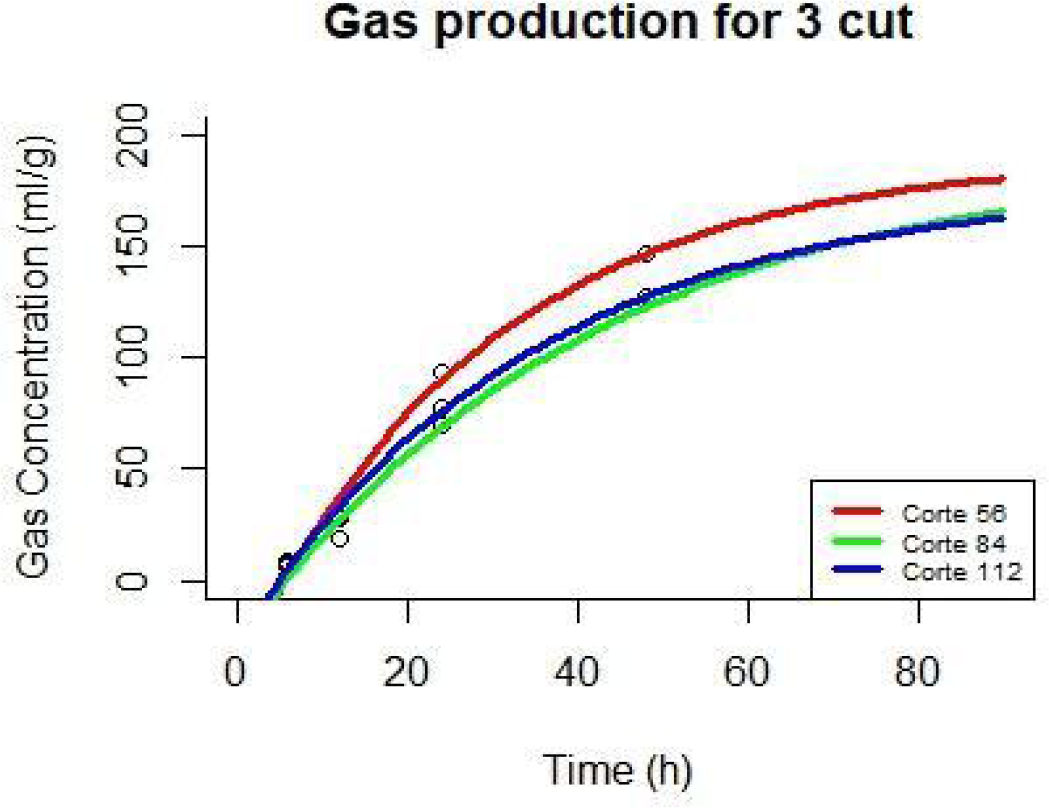
The Brazilian ruminant production system, which relies on native or cultivated pastures, underscores the importance of silage for feed preservation in the tropical regions. This study aimed to evaluate different mathematical models for cumulative in vitro gas production in Brachiaria decumbens grass silages at three distinct cutting ages (56, 84, and 112 d). The in vitro gas production technique provided information on fermentation kinetics, were analyzed using mathematical models. The methodology included statistical tests to evaluate normality, independence, and heteroscedasticity of the residuals, as well as the application of various criteria for model selection. The results indicated that models such as Logistic, von Bertalanffy, Gompertz, Richards, Brody, and France were appropriate, but the France and Brody models provided the best overall fit. Based on the adopted criteria, the Brody model was found to be the most suitable for describing cumulative gas production across all cutting ages of Brachiaria grass. Cumulative gas production was highest at 56 days of growth, with the Brody model indicating superior production capacity during this period (191.14 mL/g dry matter). In conclusion, an appropriate choice of mathematical model is important for the accurate representation of gas production kinetics in Brachiaria grass silage.
Keywords:
fermentation; tropical forage; model selection.
 Thumbnail
 Thumbnail
 Thumbnail
 Thumbnail