 Estrous cycle modulates the acute and persistent inflammatory muscle hyperalgesia in sedentary but not in exercised female mice
BACKGROUND AND OBJECTIVES Persistent pain is a significant public health issue, profoundly impacting quality of life. Women experience persistent pain more frequently and with greater intensity than men, which is attributed to sexual hormonal fluctuations. This study investigated the influence of the estrous cycle on the development and maintenance of acute and persistent inflammatory muscle hyperalgesia in sedentary and exercised female mice.
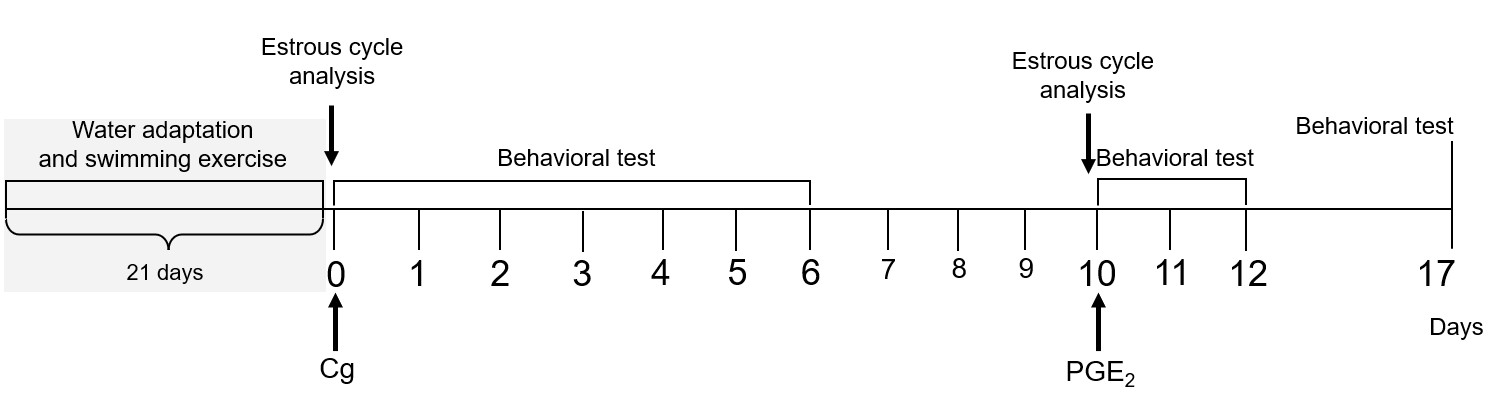
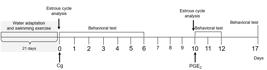
METHODS The study analyzed mechanical muscle hyperalgesia in female Swiss mice that underwent a model of acute and persistent inflammatory muscle hyperalgesia, during each of the four estrous cycle phases (proestrus, estrus, metestrus or diestrus). Swimming exercises were performed before the induction of acute and persistent inflammatory muscle hyperalgesia.
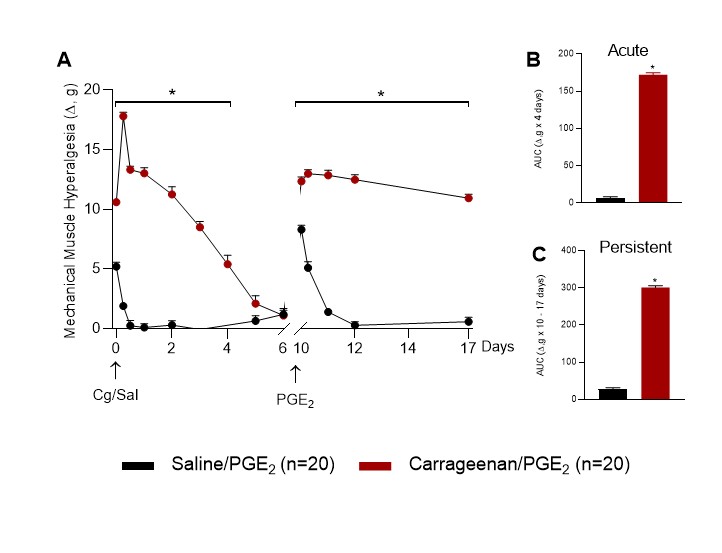
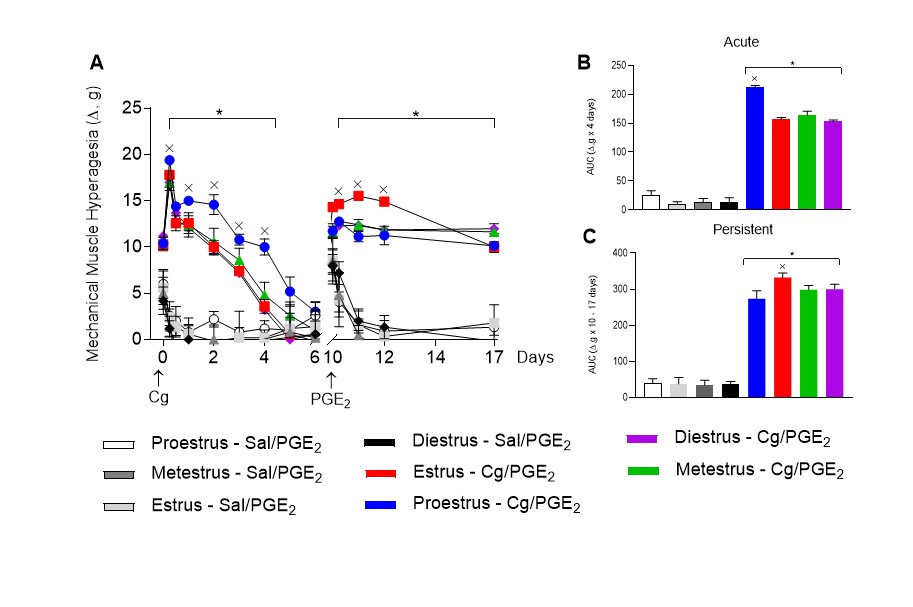
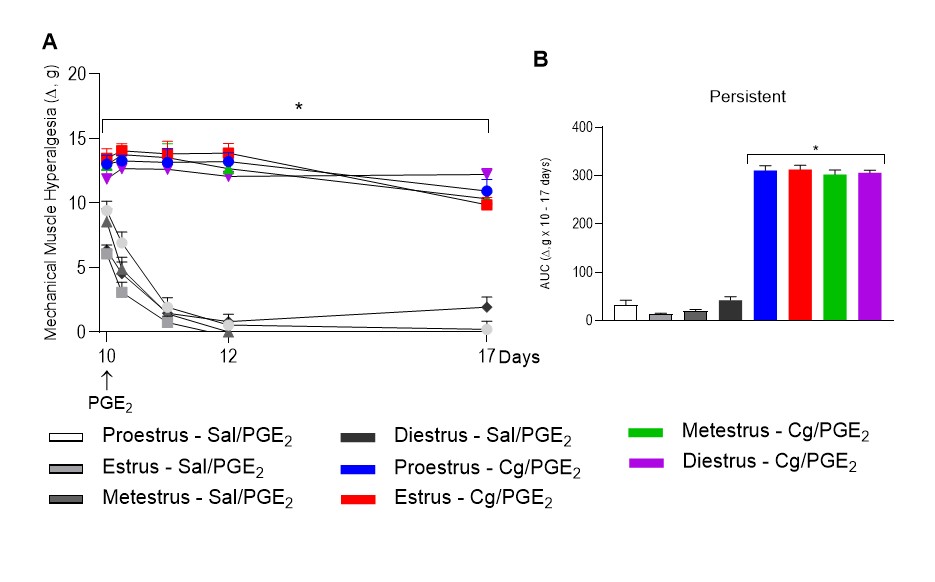
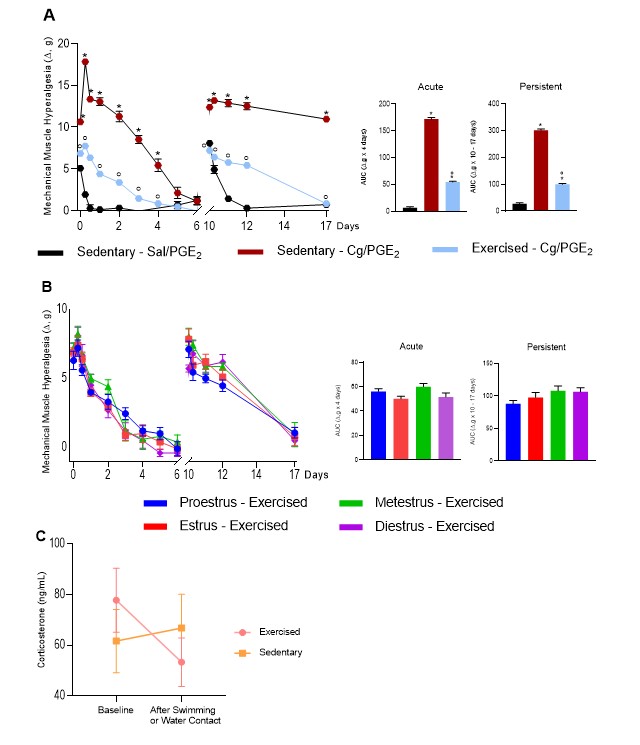
RESULTS The inflammatory stimulus of carrageenan during the proestrus phase induced the most intense acute muscle hyperalgesia. Conversely, in the estrus phase, the inflammatory stimulus induced the most intense persistent muscle hyperalgesia. The maintenance of persistent muscle hyperalgesia was not modulated by estrous cycle. Regular swimming exercise prevented the acute and persistent muscle hyperalgesia, regardless of the estrous cycle.
CONCLUSION These findings suggest that the estrous cycle phase during which an inflammatory insult occurs is critical for the development of acute inflammatory muscle hyperalgesia and its transition to the persistent phase. This effect was observed in sedentary, but not in exercised female mice, suggesting that regular physical activity may provide analgesic benefits regardless estrous cycle phase or the associated fluctuations in gender hormones. Further research is necessary to elucidate the mechanisms underlying the development of inflammatory muscle pain in females.
Keywords:
Estrous cycle; Female mice; Persistent hyperalgesia; Physical exercise; Muscle
The estrous cycle, in which an inflammatory insult occurred, was determinant in the development of acute and persistent inflammatory muscle hyperalgesia
The inflammatory insult to the musculoskeletal muscle during the proestrus phase triggered the highest acute muscle hyperalgesia
The inflammatory insult to the musculoskeletal muscle during the estrus phase triggered the highest persistent muscle hyperalgesia
Regular swimming exercise prevented the acute and persistent muscle hyperalgesia, regardless of the estrous cycle phase
 Thumbnail
 Thumbnail
 Thumbnail
 Thumbnail
 Thumbnail