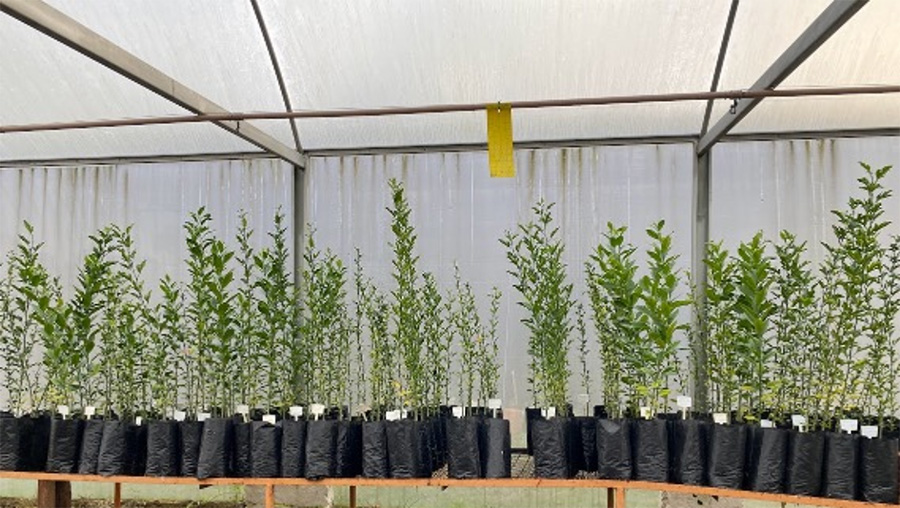
 Production systems for ‘Ponkan’ mandarin nursery plants grafted onto different rootstocks
ABSTRACT
One of the main challenges in citrus nursery plant production under protected environments is the space required for plant growth due to the large volume of containers and substrates, along with nutritional management demands. Hydroponics emerges as a promising alternative, offering more precise nutrient supply, efficient water use, reduced space requirements, and better control of growth conditions. This study aimed to evaluate the production of ‘Ponkan’ mandarin nursery plants in conventional cultivation and hydroponics systems, using five rootstocks: ‘Swingle’ citrumelo, ‘Rangpur’ lime, ‘Limeira’ and ‘Rubidoux’ trifoliate, and ‘Índio’ citrandarin. Two experiments were conducted in randomized blocks with five treatments, four replicates, and 18 plants per plot. One hundred and 50 days after grafting, growth and physiological parameters were measured, including scion length,plant height, stem diameters, number of leaves, root length, root volume, dry mass, Dickson quality index, leaf traits, photosynthetic pigments, chlorophyll a-fluorescence, gas exchange, and water use efficiency. The joint analysis of experiments was performed, and the means were compared using the Tukey’s test. In the conventional system, plants were produced in 3.2 dm3 bags with commercial substrate, while in the hydroponic one they were produced in 280 cm3 tubes with vermiculite placed in pools supplied with nutrient solution. Higher growth of ‘Ponkan’ mandarin nursery plants was obtained in the conventional system with ‘Swingle’ citrumelo, ‘Rangpur’ lime, and ‘Índio’ citrandarin rootstocks. Photosynthetic parameters showed no significant differences between rootstocks and production systems, except for photochemical dissipation coefficient, which was higher in hydroponics for plants grafted onto ‘Swingle’ citrumelo and ‘Rangpur’.
Key words
Citrus reticulata
; floating; chlorophyll fluorescence; hydroponics; propagation; gas exchange
INTRODUCTION
‘Ponkan’ mandarin is highly appreciated by Brazilian consumers and is widely cultivated in the state of Minas Gerais. Despite the introduction of other mandarin cultivars and hybrids, the ‘Ponkan’ cultivar still prevails in the market (Pacheco et al. 2023).
The production of healthy citrus nursery plants with high sanitary quality and certified genetic origin must follow established standards for propagation, commercialization, identity, and quality (MAPA 2013). One of the requirements is the production of citrus nursery plants in a protected environment, covered with anti-aphid netting to protect against vector insects (Carvalho et al. 2019).
Commercial citrus nursery plants are obtained by grafting highly productive scion cultivars onto rootstocks obtained through the selection of natural variants and genetic improvement. Rootstocks influence several plant characteristics, including nursery plant growth. In Brazil, ‘Rangpur’ lime (Citrus × limonia Osbeck) has historically been one of the most widely used rootstocks due to its high productivity and drought tolerance, and it is likely still the predominant rootstock in orchards currently in production (Oliveira et al. 2024). However, since 2015, ‘Swingle’ citrumelo [Citrus × paradisi Macfad. × Poncirus trifoliata (L.) Raf.] has become the main rootstock used for new nursery plants in São Paulo state (Girardi et al. 2021). In 2024, ‘Swingle’ accounted for 57.2% of grafted nursery plants in the state, while ‘Rangpur’ lime represented 18.7% (Defesa Agropecuária do Estado de São Paulo, 2025).
New rootstock options have given rise to superior hybrids, such as citrandarins. The ‘Índio’ citrandarin is a hybrid of the ‘Sunki’ mandarin and the ‘English’ trifoliate, which combines lower susceptibility to decline, tristeza disease, and citrus nematode, advantages acquired from mandarins, with resistance to gummosis, in addition to forming compact and productive plants (Passos 2021). Trifoliate selections are also among the new rootstocks used in citrus farming. Poncirus trifoliata ‘Rubidoux’ provides higher fruit production and higher soluble solids content, and ‘Limeira’ P. trifoliata is tolerant to gummosis and to the Tylenchulus semipenetrans nematode, in addition to enabling the production of excellent quality fruits (Raddatz-Mota et al. 2019). However, these rootstocks are susceptible to citrus decline, have little tolerance to drought, and are incompatible with some of the main scions used in Brazil, such as ‘Pera’ orange (Pompeu Júnior and Blumer 2006).
In Brazil, one of the challenges in producing citrus nursery plants in a protected environment is the need for space for plant growth, due to the large volume of containers and substrates used, in addition to the nutritional management requirements. Hydroponic cultivation emerges as an alternative to improve production, providing greater precision in the supply of nutrients, water use optimization, reduction of the required space, and better control of growth conditions (Zhou et al. 2019, Ferrarezi et al. 2020).
Hydroponics is a tool that promotes precision agriculture even in small-scale crops, allowing greater control of variables such as pH, temperature, and electrical conductivity, which provides greater production and savings of resources (Velazquez-Gonzalez et al. 2022). In citrus, studies on the use of hydroponic systems in nursery plants production are still scarce. Therefore, the evaluation of other nursery plants production systems that require less space and use smaller substrate volume can contribute to the reduction of operational costs and nursery plants transportation, making the process more efficient and sustainable.
Citrus nursery plant production has been extensively studied as a promising alternative to conventional systems, aiming to optimize plant performance, reduce costs, and accelerate orchard establishment. Various strategies have been evaluated, including the use of rootstocks with greater tolerance to abiotic stresses such as salinity and aluminum toxicity (Pereira et al. 2003, Sá et al. 2018), as well as the adoption of intensive management systems and production under protected environments, such as hydroponics or alternative substrates (Gomes et al. 2019, Zhou et al. 2019). These approaches seek to improve seedling growth, quality, and field adaptability, contributing to more efficient and sustainable citrus production systems.
Thus, the aim of this study was to evaluate different rootstocks in the production of ‘Ponkan’ mandarin nursery plants in two production systems (conventional and hydroponic).
METHODS
Two experiments were carried out simultaneously in the municipality of Lavras, Minas Gerais, Brazil, located at latitude 21°14’S, longitude 44°59’W and altitude of 919 m. The local climate is classified as Cwa, warm temperate with a dry period in winter (Santos et al. 2021).
The seeds used to produce rootstocks consisted of the following varieties:
-
‘Swingle’ citrumelo [Citrus × paradisi Macfad. × Poncirus trifoliata (L.) Raf.];
-
‘Rangpur’ lime (Citrus × limonia Osb.);
-
‘Limeira – IAC382’ trifoliate [Poncirus trifoliata (L.) Raf.];
-
‘Rubidoux – IAC 835’ trifoliate [Poncirus trifoliata (L.) Raf.];
-
‘Índio’ citrandarin [Citrus sunki (Hayata) hort. ex Tanaka × Poncirus trifoliata (L.) Raf. ‘English’].
Rootstocks were sown in July 2022, in a protected environment, covered with anti-aphid screen, with plastic cover and intermittent nebulization irrigation. Ninety days after sowing, in October 2022, rootstocks were transplanted to other containers, half of which were grown in the conventional nursery plants production system, and the other half used in hydroponic cultivation. The experimental design used for each location was in randomized blocks, with five treatments, four replicates and 18 plants per plot, thus totaling 360 plants per experiment. In the conventional system, rootstocks were transplanted into plastic bags with capacity of 3.2 dm3, filled with commercial substrate Lupatec, composed of 20% stabilized pine bark and 80% class A soil conditioner (cellulose fiber and ash). The physical-chemical characteristics of the substrate were density 420 kg.m-3, electrical conductivity (EC) 0.1940 mS/cm, and water holding capacity (WHC) 250% (dry basis). Eight grams per container of controlled-release fertilizer Basacote Plus 9M [16-08-12 (+2)], with granule diameter ranging from 2.5 to 3.5 mm, containing 16% N, 8% P2O5, 12% K2O, 2% MgO, 5% S, 0.02% B, 0.05% Cu, 0.4% Fe, 0.06% Mn, 0.015% Mo, and 0.02% Zn, were added to the substrate. The arrangement of the plants in the conventional system is shown in Fig. 1.

In the hydroponic system, rootstocks were transplanted into 280-cm3 tubes filled with vermiculite and placed on plastic grids that served as support, arranged inside a screen covered with anti-aphid mesh. The grids containing the tubes were placed in “pools” in the ‘floating’ system, with dimensions of 3 × 0.6 × 0.2 m. The bottom of the tubes and, consequently, the roots of rootstocks were in permanent contact with the nutrient solution (Fig. 2).

The standard solution used was composed of 720 g of Max Sal Hidrogood Fert NPK 10-09-28: 10% N, 9% P2O5, 28% K2O, 3.38% Mg, 4.3% S, 0.06% B, 0.01% Cu, 0.05% Mn, 0.07% Mo, 0.02% Zn, and 0.007% Ni; 540 g of calcium nitrate (15.5-0-0 + 26.5 CaO) and 40 g of EDDHA Iron Chelate diluted in 1,000 L of water. The pH and EC, weekly measured, ranged from 5.4 to 6.3 and 1.75 to 1.9 mS.cm-1, respectively, to monitor the conditions of the nutrient solution, which was monthly replaced.
Grafting was performed in both experiments, 180 days after transplanting the rootstocks, in April 2023. Buds of the ‘Ponkan’ mandarin variety (Citrus reticulata Blanco) were grafted using the inverted T budding technique at a height of 15 cm from the plant collar. Grafting tape was tied, and the rootstock was bent just above the scion to force tissue union. After 30 days, the rootstock was decapitated above the union point, and nursery plants were conducted on a single stem.
Grafting was performed when the rootstocks reached an average stem diameter of approximately 6 mm, as recommended for nursery plant production under screenhouse house conditions (Carvalho et al. 2005). Stem diameters were monitored biweekly to ensure that the mean diameter of each rootstock reached 6 mm, at which point the plants were suitable for grafting. Table 1 presents the mean stem diameters of the rootstocks in both systems at the time of grafting.
Mean stem diameter of rootstocks grown under conventional and hydroponic systems at grafting, 270 days after sowing.
One hundred and 50 days after grafting, in September 2023, three expanded leaves per plant were selected, located in the middle third, from three plants in each plot for physiological analyses. To determine the leaf chlorophyll index, a Falker ClorofiLog model CFL1030 electronic meter was used, determining chlorophyll a, chlorophyll b, and total chlorophyll. Chlorophyll a fluorescence and gas exchange were evaluated in the same leaves. Chlorophyll fluorescence measurements were obtained with the MINI-PAM II photosynthesis performance analyzer (HeinzWalz, Effeltrich, Germany).
Leaves were adapted to the dark for 30 minutes before fluorescence measurements were performed. Values of initial fluorescence (F0), maximum fluorescence (Fm), steady-state fluorescence level indicating the establishment of more stable and intense photosynthesis (Fs) and maximum (Fm’) and minimum (F0’) fluorescence levels in the light were obtained. The variable fluorescence (Fv = Fm - F0), the maximum photochemical quantum yield of photosystem II (Fv/Fm), the photochemical extinction coefficient, also called photochemical quenching [qP = (Fm’- Fs)/(Fm’- F0’)], the non-photochemical dissipation coefficient [NPQ = (Fm - Fm’)/Fm’] (Genty et al. 1989, Huarancca Reyes et al. 2018, Curadi et al. 2022), and the electron transport rate [ETR = (Y).(PAR).(0.84).(0.5)], where Y corresponds to the quantum production of PSII and PAR refers to the measurements of photosynthetically active radiation in µmols electrons m-2.s-1, were calculated. The average leaf absorption coefficient value was 0.84, and the fraction of light absorbed by the antenna complex of photosystem II used was 0.5 (Lu et al. 2019).
Gas exchange measurements were performed with an infrared gas analyzer, model LI-6400XT (Li-COR Biosciences, Lincoln, Nebraska, United States of America). Data were collected between 8 a.m. and 10 a.m. under concentration of 400 µmol CO2 mol-1 and photosynthetically active radiation (PAR) of 900 µmol m-2.s-1 (Miranda et al. 2021). The following parameters were obtained: photosynthetic assimilation rate (A, μmol CO2 m-2.s-1), stomatal conductance (gs, mol H2Om-2.s-1), intracellular CO2 concentration (Ci, μmol CO2 mol-1) and transpiration (E, mmol H2O m-2.s-1). Water use efficiency was obtained by the ratio between the photosynthetic assimilation rate and transpiration.
The same leaves used for these physiological measurements were subsequently detached from the plants and scanned on a flatbed scanner model A3 Scanner (1200S, Mustek, China). The leaf area was determined using the ImageJ image analysis software. Leaves were finally placed in an oven at 65°C until they reached constant weight. Then, the dry mass of these leaves, the specific leaf area (leaf area/dry mass), and the ratio between leaf area and total chlorophyll were measured.
The length (cm) of scions, total height (cm) of nursery plants, diameter of the rootstock, measured 5 cm above the plant collar, and scion (mm), measured 5 cm above the grafting point, number of leaves, length of the main root, and volume of the root system were also evaluated 150 days after grafting, in September 2023. Plants were removed from their respective containers, roots were washed with water, and the length of the main root was measured using a graduated ruler. The root volume was estimated by the water column displacement method.
The stem, leaves, and root system of each plant were separated, weighed on an analytical scale and placed in an oven with forced air circulation at the temperature of 65°C until reaching constant weight. After this process, it was possible to obtain the dry mass (g) of each part and the Dickson quality index (DQI), according to Eq. 1:
where: TDM: total dry mass (g); H: height (cm); SD: stem diameter (mm); SDM: shoot dry mass (g); RDM: root dry mass (g).
Data obtained were submitted to the Shapiro-Wilk, Bartlett, and Durbin-Watson tests to verify the assumptions of normality of errors, homogeneity of variances and independence of errors, respectively. For each variable, analysis of variance (ANOVA) was performed at 5% significance level (p > 0.05), and the ratio between the mean squares of the error of the individual analyses of each experiment, conventional and hydroponic cultivation, was calculated to verify the homogeneity of evaluated experiments. Joint analysis was then performed when the ratio was less than 7, to compare the growth of nursery plants in both experiments.
The three approaches adopted based on the results of the statistical analyses are described below:
-
when it was not possible to perform joint analysis between experiments: in this case, only the differences between rootstocks were presented, without comparisons between the production systems;
-
when joint analysis was possible and there was a significant interaction between production systems and rootstocks: in this scenario, comparisons were made both between rootstocks and between systems;
-
when joint analysis was possible, but no significant interaction was found: here, we chose to present only the overall mean of the treatments, since the rootstocks did not influence the systems, nor did the systems influence the rootstocks.
Means were compared by the Tukey’s test at 5% significance level (p > 0.05). For the analyses that resulted in significant interaction between cultivation systems and treatments (rootstock varieties), the test of means was applied for rootstock varieties and for cultivation systems (experiments). AgroR Shiny, a Shiny application that is part of the AgroR package of the R Software, was used to perform the analyses.
RESULTS AND DISCUSSION
Growth parameters of the grafted nursery plants
For the growth data of ‘Ponkan’ mandarin nursery plants, joint analysis was not performed for root volume and shoot dry mass of the rootstocks. In these cases, statistical analysis was carried out separately for each cultivation system, hydroponic and conventional. For the variables in which the interaction between experiments and treatments (rootstocks) was significant (plant height, number of leaves, rootstock shoot dry mass, height of scions and nursery plants, scion diameter, number of leaves, dry mass of leaves, shoots, and roots of the nursery plants), it was possible to perform a means test for both rootstocks and cultivation systems. For the other growth variables in which no significant interaction was observed between factors, the overall average encompassing both nursery plant production systems was presented.
The scion height data indicated that the rootstock with the greatest canopy growth, when comparing the systems, was the ‘Índio’ citrandarin in the conventional system. The other varieties did not show any differences in height regarding the system used (Table 2). Under similar cultivation conditions, using the ‘floating’ hydroponic system, Souza et al. (2013) evaluated the viability of producing ‘Ponkan’ mandarin nursery plants on ‘Rangpur’ lime rootstock in hydroponic system, and produced nursery plants that reached 20 cm in scion length 126 days after grafting.
Height of scions and ‘Ponkan’ mandarin nursery plants produced with different rootstocks in conventional and hydroponic systems evaluated 150 days after grafting*.
‘Rangpur’ lime has highly rusticity, provides great growth of grafted plants, and has drought tolerance and vigor both in the nursery and in the field (Oliveira et al. 2024). Rootstocks influence the growth of grafted nursery plants, with morphological aspects such as height and diameter varying significantly. Scions on Poncirus trifoliata have the smallest heights and growth, while the most vigorous rootstocks allow the scion shoot to reach its maximum height and high vigor (Hayat et al. 2022).
Poncirus trifoliata plants are short, and their dwarfing potential may vary according to soil and climate conditions, use or not of irrigation and the scion cultivar used. In addition, another hypothesis for the smaller height of plants grafted onto trifoliate trees is the presence of the exocortis virus, to which trifoliate trees are intolerant (Pompeu Júnior 2005).
The total height of ‘Ponkan’ mandarin nursery plants varied according to the rootstock used, with nursery plants being taller in the conventional system than in the hydroponic system for ‘Swingle’ citrumelo, ‘Rangpur’ lime, and ‘Índio’ citrandarin varieties. Nursery plants formed on trifoliate trees did not differ in height for both systems, so growth was the same regardless of the system used.
Hayat et al. (2022) obtained the smallest nursery plants sizes when Poncirus trifoliata was used as rootstock, even though the grafting was performed on 1-year-old rootstocks. Khan et al. (2020) evaluated the production of sweet orange nursery plants—Citrus × sinensis (L.) Osbeck—on different rootstocks and observed the same scion sprouting behavior, which presented greater length when grafted on ‘Rangpur’ lime and less development in Poncirus trifoliata (L.), 195 days after grafting.
The diameter of ‘Ponkan’ mandarin scions in both production environments was higher for ‘Swingle’ citrumelo, ‘Rangpur’ lime, and ‘Índio’ citrandarin varieties, which did not differ from each other (Table 3). The scions evaluated on these rootstocks presented higher averages in the conventional system when compared to hydroponic cultivation.
Diameter of scions and rootstocks and number of leaves of ‘Ponkan’ mandarin nursery plants produced with different rootstocks in conventional and hydroponic systems evaluated 150 days after grafting*.
Wang et al. (2020) evaluated ‘Ponkan’ mandarin nursery plants 180 days after grafting and obtained scion diameter of 5.8 mm even when grafting was performed on Poncirus trifoliata rootstock. However, these plants were intergrafted, which may interfere with the final size of the scion variety, as well as the time required for nursery plants formation.
In general, larger scion stem diameters and number of leaves were observed in the conventional system, when compared to the hydroponic system. Regarding the diameters of rootstocks, it was observed that the ‘Swingle’ citrumelo (11.35 mm) reached the highest average, but did not differ from ‘Rangpur’ lime (9.66 mm), and ‘Índio’ citrandarin (9.25 mm). The lowest averages were obtained for ‘Rubidoux’ (7.66 mm) and ‘Limeira’ trifoliate trees (7.81 mm).
The use of hydroponic systems is not consolidated in the production of fruit nursery plants yet, and for citrus, some studies were carried out with ‘Rangpur’ lime using subirrigation, which provided greater plant growth and reduced the time required for rootstock formation, anticipating transplantation (Ferrarezi et al. 2015). When using hydroponic system, Gomes et al. (2021) obtained better rootstock development, proving the viability of producing citrus rootstocks in hydroponics, which demonstrates the potential of the technique to produce citrus nursery plants.
The highest number of leaves in the conventional system was obtained for ‘Índio’ citrandarin (21.67), ‘Rangpur’ lime (19.64), and ‘Swingle’ citrumelo (19.06) rootstocks. In the hydroponic system, the variety that provided the lowest number of leaves to nursery plants was the ‘Limeira’ trifoliate (9.43), which was significantly different from the number observed in ‘Swingle’ citrumelo, while no significant differences were observed among the other rootstocks. Except for trifoliate varieties, which did not present significant difference in relation to the number of leaves, among the cultivation systems evaluated, the other rootstocks provided the canopy with greater number of leaves in the conventional cultivation. The interactions between rootstock, which constitutes the root system, and leaves, which exert a functional balance, allows the distribution of assimilates from the leaves throughout the plant, in addition to the free movement of water and essential nutrients.
The root volume of nursery plants in the conventional system was higher in the ‘Swingle’ citrumelo (61.13 mL), ‘Rangpur’ lime (57.03 mL), and ‘Índio’ citrandarin (46.06 mL) rootstocks. On the other hand, in hydroponics, only ‘Swingle’ citrumelo and ‘Rangpur’ lime rootstocks presented higher volumes, 25.48 and 23.86 mL, respectively (Table 4). The length of the main root did not present significant difference among rootstocks evaluated.
Volume and length of roots of ‘Ponkan’ mandarin nursery plants produced with different rootstocks in conventional and hydroponic systems evaluated 150 days after grafting*.
In conventional cultivation, Rodrigues et al. (2016) reported no differences between the root volume of ‘Cravo Santa Cruz’ lime, ‘Swingle’ citrumelo, ‘Índio’ citrandarin, and ‘Riverside’ rootstocks, but the ‘Flying Dragon’ trifoliate presented smaller root volume than the other rootstocks. These evaluations were carried out 150 days after grafting ‘Pera-D6’, ‘Westin’ orange trees, ‘Piemonte’ mandarin, and ‘Tahiti CNPMF-02’ acid lime trees.
In an adapted hydroponic system, when comparing growth ten weeks after sowing in soil and hydroponics, for the length of the main root of Poncirus trifoliata rootstocks, hydroponic cultivation provided greater root growth, but for root volume, no significant difference was observed between experiments (Zhou et al. 2019).
The lower root volume values obtained in hydroponics may have occurred due to the smaller size of containers used. The 280-cm3 tubes used in hydroponics, despite allowing an increase in plant density in the nursery and saving substrate, may have limited root growth, which may consequently affect shoot development.
In the hydroponic system, the dry mass of leaves was statistically equal for all rootstocks used, while in the conventional system, trifoliate rootstocks were those that produced the lowest leaf biomass compared to the other rootstocks (Table 5). Among production systems, the highest dry mass of leaves was obtained in the conventional system, except for trifoliate species, which did not differ in terms of production system.
Dry mass of leaves (DML), rootstocks (DMRS), stems (DMS), root systems (DMR), and Dickson quality index (DQI) of ‘Ponkan’ mandarin nursery plants produced with different rootstocks in conventional and hydroponic systems evaluated 150 days after grafting*.
‘Rangpur’ lime, like citrandarins, provided the canopy with greater dry mass of leaves, 150 days after grafting, when used as rootstock in the production of ‘Pera’ and ‘Westin’ orange nursery plants (Rodrigues et al. 2016). For the combinations mentioned, ‘Índio’ citrandarin and ‘Cravo Santa Cruz’ lime did not differ from each other and presented means of 5.41 and 4.81 g, respectively. The lowest means were obtained for ‘Flying Dragon’ trifoliate and ‘Swingle’ citrumelo, which fell into an intermediate group.
The rootstock dry mass between the plant collar and the grafting region showed similar behavior among rootstock varieties for both conventional and hydroponic systems. In the conventional cultivation, the highest average rootstock dry mass was observed for ‘Swingle’ citrumelo (6.42 g), ‘Rangpur’ lime (5.89 g), and ‘Índio’ citrandarin (5.68 g) varieties, possibly due to their greater stem thickening, since grafting was performed at the same height for all varieties. In the hydroponic system, the highest dry mass values were observed in ‘Swingle’ citrumelo and ‘Rangpur’ lime.
The lower dry masses obtained in trifoliate varieties can be attributed to the lower vigor of Poncirus trifoliata, which makes the vegetative development of these rootstocks slower in the nursery phase. According to Girardi et al. (2021), ‘Swingle’ citrumelo rootstocks present medium vigor in the nursery, ‘Rangpur’ lime has high vigor, and trifoliate has low vigor, especially in winter.
For the stem dry mass of scions in the hydroponic system, no significant difference was observed among varieties. In the conventional cultivation, ‘Swingle’ citrumelo, ‘Rangpur’ lime tree, and ‘Índio’ citrandarin reached the highest values. ‘Ponkan’ mandarin nursery plants grafted on ‘Rangpur’ lime, and ‘Índio’ citrandarin showed greater stem dry mass in the conventional system.
In the production of mandarin nursery plants such as ‘Montenegrina’, rootstocks influenced the total shoot dry mass, with ‘Rangpur’ lime inducing greater dry mass accumulation in nursery plants when compared to trifoliate trees (Fochesato et al. 2006). Sweet orange trees grafted onto ‘Rangpur’ lime also responded with shoot weight gain when comparing different rootstocks, including trifoliate and citrange (Khan et al. 2020).
The root dry mass was higher in the conventional system in ‘Rangpur’ lime (17.40 g), ‘Swingle’ citrumelo (14.66 g), and ‘Índio’ citrandarin (12.54 g). Trifoliate trees had similar development both in hydroponics and in conventional cultivation. The root system of rootstocks showed similar performance in dry mass in ‘Tahiti CNPMF-02’ acid lime nursery plants, evaluated 150 days after grafting, in which the highest dry mass was obtained for the ‘Rangpur’ lime cultivar, while ‘Índio’ citrandarin and ‘Swingle’ citrumelo did not differ from each other (Rodrigues et al. 2016).
Mandarin nursery plants grafted onto different rootstocks presented high DQI, as described in Table 5. The three varieties that developed the most in the other variables already discussed also presented the highest indices, ‘Swingle’ citrumelo, ‘Rangpur’ lime, and ‘Índio’ citrandarin. In fruit species, the average values range from 0.10 to 3.40, and the higher the index, the better the nursery plants quality. High DQI value indicates adequate balance between the shoot biomass and the root system, predicting high vigor and good field performance (Gallegos-Cedillo et al. 2021).
Photosynthetic parameters
Regarding the physiological analyses, all chlorophyll fluorescence and gas exchange variables showed no significant interaction between factors, except for the photochemical quenching coefficient (qP). Furthermore, the means comparison test for these variables revealed no significant differences between the rootstocks, only between the growing systems for the qP.
‘Rangpur’ lime reached leaf area of 28.79 cm2, but it only showed significant difference in the leaves of nursery plants compared to the ‘Limeira’ trifoliate variety, which obtained the smallest leaf area (18.99 cm2) (Table 6). For the specific leaf area, obtained by the ratio between the leaf area and the dry mass, numerically, the highest average (34.76) observed was on the ‘Swingle’ citrumelo rootstock. However, no significant difference was observed among varieties.
Leaf area (LA), specific leaf area (LA/dry mass ratio—DM), photosynthetic pigments chlorophyll a (Chl a), chlorophyll b (Chl b), total chlorophyll (a + b) and LA/total chlorophyll ratio of ‘Ponkan’ mandarin nursery plants produced with different rootstocks in conventional and hydroponic systems evaluated 150 days after grafting*.
In Citrus × sinensis (L). Osbeck nursery plants on ‘Carrizo’ and ‘Troyer’ citranges, Poncirus trifoliata L., ‘Rangpur’ lime, and ‘Rugoso’ lime rootstocks, the leaf area of nursery plants produced on ‘Rangpur’ lime (17.35 cm2) was larger and significantly superior to those produced on Poncirus trifoliata (14.75 cm2), seven months after grafting (Khan et al. 2020), while nursery plants of Citrus reticulata Blanco varieties on Poncirus trifoliata at 150 days after grafting reached average leaf areas of 25.73 and 27.61 cm2 (Bhandari et al. 2021). Thus, when compared to other studies, the average leaf areas obtained in hydroponics and conventional cultivation reached high values, which may allow the nursery plants to present good development.
The photosynthetic pigments chlorophyll a, chlorophyll b, and total chlorophyll (a + b) did not show significant differences between rootstocks or in relation to the systems used in the formation of nursery plants (Table 6). The results measured for photosynthetic pigments demonstrate that chlorophylls were not significantly affected by rootstocks, thus providing similar behavior among nursery plants evaluated.
The leaf area to total chlorophyll ratio showed significant differences, with the ‘Limeira’ trifoliate reaching the lowest value, statistically differing from ‘Swingle’ citrumelo and ‘Rangpur’ lime, which presented the highest averages.
The integrity of photosystems can be measured by means of the chlorophyll a fluorescence. For all rootstocks evaluated, the photochemical efficiency obtained in ‘Ponkan’ mandarin leaves was 0.81, with no significant difference among cultivars (Table 7). According to Medina et al. (2005), the Fv/Fm ratio can vary from 0.78 to 0.83.
Chlorophyll a fluorescence of ‘Ponkan’ mandarin nursery plants evaluated 150 days after grafting produced with different rootstocks in conventional and hydroponic systems: potential photochemical efficiency of photosystem II (Fv/Fm), photochemical quenching coefficient (qP), non-photochemical quenching coefficient (NPQ), and electron transport rate (ETR)*.
Similar results were obtained in 6-month-old ‘Valência’ orange nursery plants grafted onto ‘Rangpur’ lime and ‘Swingle’ citrumelo. At 10 a.m., both rootstocks reached maximum quantum efficiency close to 0.80 (Machado et al. 2010). In 3-year-old ‘Ponkan’ mandarin grafted onto ‘Rangpur’ lime, values close to 0.80 were obtained, and after days of stress due to water deficit, a decrease in the Fv/Fm ratio was observed (Cruz et al. 2009).
Among chlorophyll a fluorescence variables measured by the fluorometer, the only one that resulted in significant interaction for rootstock varieties (treatments) and cultivation systems factors was qP, also called photochemical dissipation coefficient. In hydroponics, ‘Rangpur’ lime (0.43) and ‘Swingle’ citrumelo (0.41) were higher than conventional cultivation, with values around 0.32. These differences can be attributed to the nursery plants production environment. In addition, high quantum efficiency was observed, which can reduce qP (Silva et al. 2021).
For both non-photochemical dissipation coefficient (NPQ) and the electron transport rate (ETR), there was no significant difference in the leaves of nursery plants among rootstocks evaluated. In 9-month-old ‘Pêra’ orange nursery plants, NPQ varied from values below 0.3 to 1.5 as the photosynthetic photon flux increased (Ribeiro et al. 2003).
In the electron transport rate, results similar to those obtained in this study were observed in the leaves of ‘Natal’ orange nursery plants grown in greenhouse, in which the ETR reached values close to 10 µmol m-2.s-1 at 8 a.m., increasing its value throughout the day, reaching maximum ETR of approximately 75 µmol m-2.s-1 around 2 p.m. (Medina et al. 2005). The low values obtained in this study may have been influenced by the incidence of light at the evaluation site where nursery plants were formed. Light intensity and quality are among the main factors that interfere with the electron transport rate.
Gas exchange measurements performed on nursery plants, obtained using an infrared gas analyzer, did not show significant differences among rootstocks (Table 8). The CO2 assimilation rate (A) ranged from 8.34 μmol CO2 m-2.s-1 in nursery plants grafted onto ‘Rubidoux’ trifoliate to 9.50 μmol CO2 m-2.s-1 for ‘Swingle’ citrumelo. In Citrus × sinensis (L.) Osbeck nursery plants 11 months after transplanting, irrigated with nutrient solution, photosynthetic assimilation also reached average values of close to 9 μmol CO2 m-2.s-1 (Jia et al. 2021).
When evaluating 2-year-old ‘Valência’ orange nursery plants under water deficit and grafted onto ‘Swingle’ citrumelo and ‘Rangpur’ lime rootstocks, the control treatment (with irrigation) obtained assimilation rates between 8 and 12 μmol CO2 m-2.s-1, while plants under water deficit presented lower rates, especially those grafted onto ‘Rangpur’ lime (Miranda et al. 2021).
As with CO2 assimilation, stomatal conductance did not show significant differences among rootstocks, and values obtained did not vary greatly, ranging from 0.12 mol H2O m-2.s-1 for ‘Rubidoux’ trifoliate to 0.14 mol H2O m-2.s-1 for ‘Swingle’ citrumelo and ‘Rangpur’ lime.
In citrus plants exposed to light and without stress conditions, CO2 assimilation rates in leaves between 4 and 10 μmol CO2 m-2.s-1 are achieved by stomatal opening of 0.1 to 0.3 mol H2O m-2.s-1 (Medina et al. 2005). Unlike what was observed in this study, in which rootstocks were statistically equal, Machado et al. (2010) evaluated 6-month-old ‘Valência’ orange nursery plants grafted onto ‘Rangpur’ lime and ‘Swingle’ citrumelo and observed differences among rootstocks, with conductance of leaves on ‘Swingle’ citrumelo (between 0.10 and 0.14 mol H2O m-2.s-1) being lower than that obtained on ‘Rangpur’ lime (0.17 mol H2O m-2.s-1), at the temperature of 20°C. The small stomatal conductance values obtained are in accordance with what is expected for healthy plants without stressful conditions.
Photosynthetic assimilation rate (A), stomatal conductance (gs), intracellular CO2 concentration (Ci), transpiration rate (E), and water use efficiency (A/E = WUE) of ‘Ponkan’ mandarin nursery plants evaluated 150 days after grafting produced with different rootstocks in conventional and hydroponic systems*.
The intracellular CO2 concentration obtained in nursery plants grafted onto ‘Swingle’ citrumelo was 253.78 μmol CO2 mol.air-1, onto Rangpur lime 257.54 μmol CO2 mol air-1, and onto ‘Limeira’ trifoliate 250.04 μmol CO2 mol.air-1, while ‘Rubidoux’ trifoliate and ‘Índio’ citrandarin reached lower averages. Jia et al. (2021) obtained similar concentrations in 11-month-old orange nursery plants irrigated with nutrient solution, approximately 230 to 270 μmol CO2 mol.air-1, which varied according to the leaf position on the plant being evaluated.
The highest transpiration rates, although without statistical difference among rootstock varieties, were observed in ‘Swingle’ citrumelo (2.98 mmol H2O m-2.s-1) and ‘Rangpur’ lime (2.87 mmol H2O m-2.s-1) rootstocks. Terán et al. (2024) studied the effects of kaolin on 1-year-old ‘Carrizo’ citrange plants (Poncirus trifoliata L. Raf. × Citrus × sinensis L. Osbeck) and obtained transpiration below 1.5 in the control treatment (25°C), not submitted to abiotic stress conditions due to heat and intense light, with kaolin application, transpiration rate close to 2 mmol H2O m-2 s-1 and under heat stress, values close to 3 mmol H2O m-2.s-1. However, Jia et al. (2021) also achieved transpiration rates in Citrus × sinensis leaves close to 3 mmol H2O m-2.s-1 in plants without stressful conditions and nutritionally healthy.
The ratio between photosynthetic rate and transpiration quantifies the water use efficiency, also called transpiration ratio, which allows plants to regulate water loss and CO2 absorption (Taiz et al. 2024). According to Medina et al. (2005), in citrus, water use efficiency is around 3 µmol.mmol-1. The ratios obtained for the rootstocks being evaluated in the present study were 3.10 in ‘Rangpur’ lime, 3.27 in ‘Índio’ citrandarin, and 3.28 in ‘Rubidoux’ trifoliate, but with no significant difference among varieties. The measurements obtained demonstrate the high water use efficiency by nursery plants in both conventional and hydroponic cultivation.
These parameters allow us inferring that nursery plants produced in both hydroponics and conventional systems were not under stressful conditions, which provided high photosynthetic rates, essential for plant growth.
CONCLUSION
‘Rangpur’ lime, ‘Swingle’ citrumelo, and ‘Índio’ citrandarin rootstocks provided greater growth of ‘Ponkan’ mandarin nursery plants when compared to trifoliate rootstocks. The growth of ‘Ponkan’ mandarin nursery plants was superior in the conventional system when compared to hydroponics.
The use of different rootstocks and production systems did not significantly affect the physiological performance of ‘Ponkan’ mandarin nursery plants. The hydroponic system provided greater photochemical extinction coefficient for ‘Rangpur’ lime and ‘Swingle’ citrumelo varieties when compared to the conventional system. ‘Ponkan’ mandarin nursery plants reached adequate photosynthetic parameters, regardless of rootstock and nursery plants production system used.
ACKNOWLEDGMENTS
Not applicable.
How to cite:
FUNDING
DECLARATION OF USE OF ARTIFICIAL INTELLIGENCE TOOLS
DATA AVAILABILITY STATEMENT
The data that support the findings of this study are available on request from the corresponding author.
REFERENCES
-
Bhandari, N., Basnet, M. and Khanal, S. (2021). Standardization of grafting time of mandarin (Citrus reticulata Blanco) in Central Mid Hill of Nepal. International Journal of Fruit Science, 21, 599-608. https://doi.org/10.1080/15538362.2021.1875964
» https://doi.org/10.1080/15538362.2021.1875964 -
Carvalho, S. A., Girardi, E. A., Mourão Filho, F. A. A., Ferrarezi, R. S. and Coletta Filho, H. D. (2019). Advances in citrus propagation in Brazil. Revista Brasileira de Fruticultura, 41, e422. https://doi.org/10.1590/0100-29452019422
» https://doi.org/10.1590/0100-29452019422 - Carvalho, S. A., Graf, C. C. D. and Violante, A. R. (2005). Produção de material básico e propagação. In D. Mattos Junior, J. D. Negri, R. M. Pio and J. Pompeu Júnior (Eds.). Citros (p. 485-509). Campinas: IAC/FUNDAG.
-
Cruz, M. C. M., Siqueira, D. L., Salomão, L. C. C. and Cecon, P. R. (2009). Fluorescência da clorofila a em folhas de tangerineira ‘Ponkan’ e limeira ácida ‘Tahiti’ submetidas ao estresse hídrico. Revista Brasileira de Fruticultura, 31, 896-901. https://doi.org/10.1590/S0100-29452009000300037
» https://doi.org/10.1590/S0100-29452009000300037 -
Curadi, M., Marchioni, I., Mancino, M., Pistelli, L., Pistelli, L. and Scartazza, A. (2022). Physiological and biochemical adaptive traits in leaves of four citrus species grown in an Italian charterhouse. Horticulturae, 8, 324. https://doi.org/10.3390/horticulturae8040324
» https://doi.org/10.3390/horticulturae8040324 -
Defesa Agropecuária do Estado de São Paulo. Dados da Citricultura Paulista. Defesa Agropecuária do Estado de São Paulo. Available at: https://www.defesa.agricultura.sp.gov.br/estatisticas/dados-da-citricultura-paulista,3.html Accessed on: July 31, 2025.
» https://www.defesa.agricultura.sp.gov.br/estatisticas/dados-da-citricultura-paulista,3.html -
Ferrarezi, R. S., Nogueira, T. A. R., Jani, A. D., Wright, A. L., Ritenour, M. A. and Burton, R. (2020). Grapefruit production in open hydroponics system. Horticulturae, 6, 50. https://doi.org/10.3390/horticulturae6030050
» https://doi.org/10.3390/horticulturae6030050 -
Ferrarezi, R. S., Weaver, G. M., Van Iersel, M. W. and Testezlaf, R. (2015). Subirrigation: Historical overview, challenges, and future prospects. HortTechnology, 25, 262-276. https://doi.org/10.21273/HORTTECH.25.3.262
» https://doi.org/10.21273/HORTTECH.25.3.262 -
Fochesato, M. L., Souza, P. V. D., Schäfer, G. and Maciel, H. S. (2006). Produção de mudas cítricas em diferentes porta-enxertos e substratos comerciais. Ciência Rural, 36, 1397-1403. https://doi.org/10.1590/S0103-84782006000500008
» https://doi.org/10.1590/S0103-84782006000500008 -
Gallegos-Cedillo, V. M., Diánez, F., Nájera, C. and Santos, M. (2021). Plant agronomic features can predict quality and field performance: a bibliometric analysis. Agronomy, 11, 2305. https://doi.org/10.3390/agronomy11112305
» https://doi.org/10.3390/agronomy11112305 -
Genty, B., Briantais, J. and Baker, N. R. (1989). The relationship between the quantum yield of photosynthetic electron transport and quenching of chlorophyll fluorescence. Biochimica et Biophysica Acta, 900, 87-92. https://doi.org/10.1016/S0304-4165(89)80016-9
» https://doi.org/10.1016/S0304-4165(89)80016-9 - Girardi, E. A., Pompeu Júnior, J., Sobrinho, J. T., Soares Filho, W. S., Passos, O. S., Cristofani-Yaly, M., Sempionato, O. R., Stuchi, E. S., Donadio, L. C., Mattos Jr., D., Bassanezi, R. B., Garcia, L. A. P. and Ayres, A. J. (2021). Guia de reconhecimento dos citros em campo: um guia prático para o reconhecimento em campo de variedades de laranjeira-doce e outras espécies de citros cultivadas no estado de São Paulo e Triângulo Mineiro. Fundecitrus.
-
Gomes, W. A., Chalfun, N. N. J., Faquim, V., Peche, P. M. and Soares Filho, W. S. (2021). Production of citrus rootstocks in hydroponic system. Revista de Ciências da Saúde Nova Esperança, 19, 155-166. Available at: https://revista.facene.com.br/index.php/revistane/article/view/654 Accessed on: Sep. 30, 2025.
» https://revista.facene.com.br/index.php/revistane/article/view/654 -
Gomes, W. A., Chalfun, N. N. J., Peche, P. M., Ramos, J. D. and Faquin, V. (2019). Leading systems and viability of citric buds in hydroponics. Revista Caatinga, 32, 364-369. https://doi.org/10.1590/1983-21252019v32n209rc
» https://doi.org/10.1590/1983-21252019v32n209rc -
Hayat, F., Li, J., Liu, W., Li, C., Song, W., Iqbal, S., Khan, U., Umer Javed, H., Ahsan Altaf, M., Tu, P., Chen, J. and Liu, J. (2022). Influence of citrus rootstocks on scion growth, hormone levels, and metabolites profile of ‘Shatangju’ mandarin (Citrus reticulata Blanco). Horticulturae, 8, 608. https://doi.org/10.3390/horticulturae8070608
» https://doi.org/10.3390/horticulturae8070608 -
Huarancca Reyes, T., Scartazza, A., Pompeiano, A., Ciurli, A., Lu, Y., Guglielminetti, L. and Yamaguchi, J. (2018). Nitrate reductase modulation in response to changes in C/N balance and nitrogen source in arabidopsis. Plant & Cell Physiology, 59, 1248-1254. https://doi.org/10.1093/pcp/pcy065
» https://doi.org/10.1093/pcp/pcy065 -
Jia, Y., Xu, H., Wang, Y., Ye, X., Lai, N., Huang, Z., Chen, L. L. and Guo, J. (2021). Differences in morphological and physiological features of citrus seedlings are related to Mg transport from the parent to branch organs. BMC Plant Biology, 21, 239. https://doi.org/10.1186/s12870-021-03028-z
» https://doi.org/10.1186/s12870-021-03028-z -
Khan, M. N., Hayat, F., Asim, M., Iqbal, S., Ashraf, T. and Asghar, S. (2020). Influence of citrus rootstocks on growth performance and leaf mineral nutrition of ‘Salustiana’ sweet orange [Citrus sinensis (L). obsek]. Journal of Pure and Applied Agriculture, 5, 46-53. Available at: https://ojs.aiou.edu.pk/index.php/jpaa/article/view/1939 Accessed on: Sep. 30, 2025.
» https://ojs.aiou.edu.pk/index.php/jpaa/article/view/1939 -
Lu, T., Yu, H., Li, Q., Chai, L. and Jiang, W. (2019). Improving plant growth and alleviating photosynthetic inhibition and oxidative stress from low-light stress with exogenous GR24 in tomato (Solanum lycopersicum L.) seedlings. Frontiers in Plant Science, 10, 490. https://doi.org/10.3389/fpls.2019.00490
» https://doi.org/10.3389/fpls.2019.00490 -
Machado, D. F. S. P, Machado, E. C., Machado, R. S. and Ribeiro, R. V. (2010). Efeito da baixa temperatura noturna e do porta-enxerto na variação diurna das trocas gasosas e na atividade fotoquímica de laranjeira ‘Valência’. Revista Brasileira de Fruticultura, 32, 351-359. https://doi.org/10.1590/S0100-29452010005000064
» https://doi.org/10.1590/S0100-29452010005000064 -
[MAPA] Ministério da Agricultura, Pecuária e Abastecimento (2013). Instrução Normativa nº 48 de 24/09/2013. Decreto nº 5.153, de 23 de julho de 2004, nas Instruções Normativas nº 09, de 2 de junho de 2005, nº 24, de 16 de dezembro de 2005, e nº 48, de 24 de setembro de 2013 e o que consta do Processo nº 21000.005235/2012-18. Available at: https://www.defesa.agricultura.sp.gov.br/legislacoes/instrucao-normativa-48-de-24-09-2013,1136.html Accessed on: June 15, 2024.
» https://www.defesa.agricultura.sp.gov.br/legislacoes/instrucao-normativa-48-de-24-09-2013,1136.html - Medina, C. L., Rena, A. B., Siqueira, D. L. and Machado, E. C. (2005). Fisiologia dos citros. In D. Mattos Junior, J. D. de Negri, R. M. Pio and J. Pompeu Júnior (Eds.). Citros (p. 146-195). Instituto Agronômico, Fundag.
-
Miranda, M. T., Silva, S. F., Silveira, N. M., Pereira, L., Machado, E. C. and Ribeiro, R. V. (2021). Root osmotic adjustment and stomatal control of leaf gas exchange are dependent on citrus rootstocks under water deficit. Journal of Plant Growth Regulation, 40, 11-19. https://doi.org/10.1007/s00344-020-10069-5
» https://doi.org/10.1007/s00344-020-10069-5 -
Oliveira, V. S., Zucoloto, M., Ferreira, L. S., Barbosa, D. H. S. G., Soares Filho, W. S. and Passos, O. S. (2024). Productive performance of sweet orange trees on different rootstocks, in the Extreme South of the State of Bahia. Revista Brasileira de Fruticultura, 46, e-737. https://doi.org/10.1590/0100-29452024737
» https://doi.org/10.1590/0100-29452024737 -
Pacheco, C. A., Azevedo, F. A., Silva, D. J., Shimizu, G. D. and Conceição, P. M. (2023). Postharvest longevity of Fremont IAC 543 mandarin. Revista Brasileira de Fruticultura, 45, e-801. https://doi.org/10.1590/0100-29452023801
» https://doi.org/10.1590/0100-29452023801 -
Passos, O. (2021). Citrandarin “Indio”. EMBRAPA Mandioca e Fruticultura. Available at: https://www.embrapa.br/busca-de-imagens/-/midia/5468001/citrandarin-indio Acessed on: Apr. 16, 2024.
» https://www.embrapa.br/busca-de-imagens/-/midia/5468001/citrandarin-indio -
Pereira, W. E., Siqueira, D. L., Puiatti, M., Martínez, C. A., Salomão, L. C. C. and Cecon, P. R. (2003). Growth of citrus rootstocks under aluminium stress in hydroponics. Scientia Agricola, 60, 31-41. https://doi.org/10.1590/S0103-90162003000100006
» https://doi.org/10.1590/S0103-90162003000100006 - Pompeu Júnior, J. (2005). Porta-enxertos. In D. Mattos Junior, J. D., Negri, R. M. Pio and J. Pompeu Júnior (Eds.). Citros (p. 317-344). Campinas: IAC/Fundag.
-
Pompeu Júnior, J. and Blumer, S. (2006). Trifoliate rootstocks for Valencia sweet orange trees. Citrus Research & Technology, 27, 287-295. Available at: https://www.citrusrt.ccsm.br/article/5e57d44a0e8825b6765d5a14 Accessed on: Sep. 30, 2025.
» https://www.citrusrt.ccsm.br/article/5e57d44a0e8825b6765d5a14 -
Raddatz-Mota, D., Franco-Mora, O., Mendoza-Espinoza, J. A., Rodríguez-Verástegui, L. L., León-Sánchez, F. D. and Rivera-Cabrera, F. (2019). Effect of different rootstocks on Persian lime (Citrus latifolia T.) postharvest quality. Scientia Horticulturae, 257, 108716. https://doi.org/10.1016/j.scienta.2019.108716
» https://doi.org/10.1016/j.scienta.2019.108716 -
Ribeiro, R. V., Machado, E. C., Oliveira, R. F. and Pimentel, C. (2003). High temperature effects on the response of photosynthesis to light in sweet orange plants infected with Xylella fastidiosa Brazilian Journal of Plant Physiology, 15, 89-97. https://doi.org/10.1590/S1677-04202003000200004
» https://doi.org/10.1590/S1677-04202003000200004 -
Rodrigues, M. J. D. S., Oliveira, E. R. M. D., Girardi, E. A., Ledo, C. A. D. S. and Soares Filho, W. D. S. (2016). Produção de mudas de citros com diferentes combinações copa e porta-enxerto em viveiro protegido. Revista Brasileira de Fruticultura, 38, 187-201. https://doi.org/10.1590/0100-2945-284/14
» https://doi.org/10.1590/0100-2945-284/14 -
Sá, F. V. S., Brito, M. E. B., Moreira, R. C. L., Silva, L. A., Soares Filho, W. S., Figueiredo, L. C., Gheyi, H. R. and Fernandes, P. D. (2018). Growth and physiology of citrus rootstocks under salt stress. Bioscience Journal, 34, 907-916. https://doi.org/10.14393/BJ-v34n1a2018-36553
» https://doi.org/10.14393/BJ-v34n1a2018-36553 -
Santos, P. A. B., Monti, C. A. U., Carvalho, L. G., Lacerda, W. S. and Schwerz, F. (2021). Air temperature estimation techniques in Minas Gerais state, Brazil, Cwa and Cwb climate regions according to the Köppen-Geiger climate classification system. Ciência e Agrotecnologia, 45, e023920. https://doi.org/10.1590/1413-7054202145023920
» https://doi.org/10.1590/1413-7054202145023920 -
Silva, T. A., Brito, M. E. B., Conceição, I. H., Nunes, E. D. S., Souza, D. S. and Martins, G. O. (2021). Phothochemical quenching is indicative of ionic stress on ‘Tahiti’ acid lime grafted on citrus genotypes. Revista Brasileira de Engenharia Agrícola e Ambiental, 25, 409-414. https://doi.org/10.1590/1807-1929/agriambi.v25n6p409-414
» https://doi.org/10.1590/1807-1929/agriambi.v25n6p409-414 -
Souza, A. G., Faquin, V., Chalfun, N. N. and Souza, A. A. (2013). Produção de mudas de tangerineira ‘Ponkan’ em sistema hidropônico. Revista Ciência Agronômica, 44, 902-909. https://doi.org/10.1590/S1806-66902013000400029
» https://doi.org/10.1590/S1806-66902013000400029 - Taiz, L., Zeiger, E., Moller, I. M. and Murphy, A. (2024). Fisiologia e desenvolvimento vegetal. 7. ed. Porto Alegre: Artmed.
-
Terán, F., Vives-Peris, V., López-Climent, M. F., Gómez-Cadenas, A. and Pérez-Clemente, R. M. (2024). Palliative effects of kaolin on citrus plants under controlled stress conditions of high temperature and high light intensity. Journal of Plant Growth Regulation, 43, 486-499. https://doi.org/10.1007/s00344-023-11103-y
» https://doi.org/10.1007/s00344-023-11103-y -
Velazquez-Gonzalez, R. S., Garcia-Garcia, A. L., Ventura-Zapata, E., Barceinas-Sanchez, J. D. O. and Sosa-Savedra, J. C. (2022). A review on hydroponics and the technologies associated for medium-and small-scale operations. Agriculture, 12, 646. https://doi.org/10.3390/agriculture12050646
» https://doi.org/10.3390/agriculture12050646 -
Wang, T., Xiong, B., Tan, L., Yang, Y., Zhang, Y., Ma, M., Xu, Y., Liao, L., Sun, G. and Liang, D. (2020). Effects of interstocks on growth and photosynthetic characteristics in ‘Yuanxiaochun’ Citrus seedlings. Functional Plant Biology, 47, 977-987. https://doi.org/10.1071/FP20079
» https://doi.org/10.1071/FP20079 -
Zhou, G., Wei, Q., Li, B., Zeng, X. and Liu, G. (2019). Establishment and optimization of a hydroponic system for root morphological and nutritional analysis of citrus. Scientia Agricola, 77, e20180261. https://doi.org/10.1590/1678-992X-2018-0261
» https://doi.org/10.1590/1678-992X-2018-0261