
 Where Do City Councilors Go? Gender and Political Career Trajectories in Municipal Politics
Abstract
Although research on gender inequality in political representation often focuses on issues such as institutional constraints, the role of political parties, campaign costs, or shortcomings in the design of gender quotas, fewer studies examine women’s political careers directly. This article analyzes women’s political careers beginning at the city council level, the most accessible and available elected office in the Brazilian political system. To do so, we conduct a long-term analysis (2002–2020) of the prior and subsequent electoral trajectories of city councilors elected in 2008, using descriptive statistics and multiple regression models. Our results show that women councilors have a higher predicted probability of being classified in trajectories characterized either by exit from political careers (‘retiree’) or by continued participation without additional electoral success (‘resilient’). Men, in contrast, have a higher predicted probability of following trajectories marked by electoral success and/or attempts to pursue higher office (‘veteran’, ‘contender’, and ‘achiever’).
Keywords:
Representation; political careers; women city councilors; gender; reelection
Introduction
Winning elected office for the first time usually takes quite a while – and most people who try never make it. In Brazil, the scale of this competition is striking: in the 2024 elections, about 460,000 people ran for city council, whereas 58,435 were elected. Those who decide to pursue a political career in Brazil typically spend years before securing a seat: they must first join a party, later become candidates, seek a place on an electoral slate, and only then – if everything aligns – be elected (GATTO and THOMÉ, 2024). Many set out on this path, but because it requires sustained resilience over time, a large share ultimately drops out along the way.
In the 2008 elections, which constitute the reference year for our analysis, more than 50,000 city councilors were elected nationwide. Women accounted for about 12.5% of them, while men made up the remaining 87.5%. In the years since, women and men have followed a variety of paths: some have chosen not to run again, others have sought re-election and succeeded, others fallen short, and still others have pursued higher office – with outcomes ranging from success to failure.
Scholarship on gender and politics has consistently shown – both theoretically and empirically – that women’s experiences in political life differ markedly from those of their male counterparts. These differences stem not only from gendered socialization (BIROLI, 2016), but also from the obstacles women face in party nomination processes and informal party practices (GATTO and WYLIE, 2022), in securing resources (SACCHET et al., 2025; SACCHET and SPECK, 2012), in navigating party leadership (GATTO and THOMÉ, 2020; THOMÉ, 2021), as well as from the institutional design of the political system in which competition unfolds (ARAÚJO, 2009, 2001). Scholars working within feminist institutionalism (MACKAY, KENNY, and CHAPPELL, 2010) further argue that the gendered biases embedded in political institutions mean that women’s experiences in politics are frequently shaped by discrimination, which all too often drives them away from arenas of power.
In Brazil, the combined effect of these multiple factors is that, even after the adoption of policies intended to reduce gender inequality, such as candidate quotas, women still held only 17.7% of the seats in the Chamber of Deputies and 18% in the Federal Senate in 2025. At the local level, women accounted for 18% of city councilors and roughly 13% of mayors.
Brazil’s standing relative to other countries underscores the magnitude of this disparity: the country ranks 134th worldwide in women’s political representation – measured by the share of seats in the lower house – and holds the lowest position among Latin American countries (INTER-PARLIAMENTARY UNION, 2024). As a result, a significant body of research has sought to explain the reasons behind women’s persistent underrepresentation in these spaces, particularly through studies focused on descriptive representation1 at the national level (ARAÚJO, 1998; FEITOSA, 2012; MARQUES, CELINI and SANTOS, 2021; MIGUEL and BIROLI, 2010; REZENDE, 2017).
In this study, we focus on the political trajectories of women candidates, with particular attention to local politics, the level at which barriers to entering and remaining in ‘formal’ politics are generally assumed to be lower (BORCHERT, 2011; MIGUEL, 2003). This article primarily addresses the following questions: What career patterns emerge among women elected to municipal office? How do they differ from those of men? Drawing on these data, we examine a dimension we view as essential to women’s political participation: their capacity to remain resilient throughout their political careers (GATTO and THOMÉ, 2020).
We employ an analytical model that follows the long-term trajectories of these women representatives, in contrast to traditional studies of political ambition, which typically provide a snapshot in time – focusing on career ‘decisions’ rather than the ‘careers’ themselves (CODATO et al., 2022; SAMUELS, 2000; SANTOS, 1999). To that end, we adapt the model developed by Gelape (2022) to identify career patterns among city councilors elected in 2008, taking into account both their prior trajectories and the paths they subsequently pursued.
In doing so, we contribute to the literature on gender and politics while also engaging with scholarship on political elites and political careers (SAINZ, 2024), both in general and at the local level. Within the first body of work, we highlight the factors associated with women’s electoral careers, especially the development of resilience among candidates over time (GATTO and THOMÉ, 2020; MARQUES, 2012; MARQUES, CELINI and SANTOS, 2021; PINTO and SILVEIRA, 2018).
As for the literature on political careers, we offer two main contributions. First, our study is among the few that explicitly foreground the role of time in shaping political careers in the Brazilian context (LIMA, 2017; PINTO and SILVEIRA, 2018). Second, we contribute by analyzing these trajectories at the subnational level, a field that is still developing in Brazil (MESSIAS, 2019; VIEIRA, 2019; WYLIE, 2020) as well as in the comparative literature (FOLKE and RICKNE, 2016; SCHWINDT-BAYER, 2011).
Our results show that women city councilors are disproportionately represented among the less successful career paths in local politics. In regression models that include controls for other predictors of political careers – such as municipality size and prior professional experience – we find that women councilors have a higher predicted likelihood than men of either abandoning a political career or running for re-election and losing. Taken together, these findings provide clear evidence of gender disparities in the career trajectories of city councilors.
Political careers in comparative perspective and at the subnational/local level
This study engages closely with scholarship that examines political careers from the standpoint of politicians’ individual decision-making (MACKENZIE, 2009). In comparative politics, this tradition builds on Schlesinger’s classic framework (1966), which identifies three types of political ambition in the United States: ‘progressive’ ambition, involving movement toward higher office; ‘static’ ambition, focused on seeking re-election; and ‘discrete’ ambition, defined by stepping away from political life. More recent comparative scholarship has raised questions about the model’s broader applicability. As Borchert (2011) argues, the framework helps explain ‘unidirectional’ career patterns, such as those observed in Switzerland, France, and the United States, but it does not adequately capture the Brazilian case.
Research by Borchert (2011), Santos and Pegurier (2011), and Pegurier (2012) departs from earlier analyses of Brazil (LEONI, PEREIRA, and RENNÓ, 2003; SAMUELS, 2003), which were grounded in a unidirectional model. Instead, these authors argue that political careers in Brazil follow an integrated pattern. This pattern is marked by the absence of clear boundaries between levels of government or institutions and by the lack of a rigid hierarchy. Within such a system, politicians move frequently across positions to maintain electoral viability, even when that means stepping into roles considered lower on the political ladder (so-called fallback positions).
Despite the movement between offices and levels of government, political careers in Brazil still have a clearly defined lowest, and highest points, with the city council as the lowest level (BARRETO, 2017; MALUF, 2006; MIGUEL, 2003). The role of city councilor also has distinctive features compared with other elected offices. Following the criteria outlined by Borchert (2011), it is the most accessible elected office because it imposes the fewest legal requirements (such as a minimum age of 18, for instance) and offers the greatest number of seats. Still, the office of city councilor may hold limited appeal for those seeking a long-term professional political career. Accordingly, it is reasonable to expect that only a relatively small share will move on to higher offices, given that these positions are considerably less accessible.
Subnational, regional, and local offices are often seen as starting points for political careers. In Brazil, serving on a city council is indeed one of the main ways of entering elected politics, though not the only one (SANTOS and PEGURIER, 2011; SILVA, 2014). Gelape (2022) shows that in smaller municipalities, city councilors frequently build careers that remain entirely local, without ever moving on to compete in state or national races. In this sense, the office functions not only as a starting point but also as a long-term political home for many. In more populous municipalities, however, a minority, albeit meaningful, share of councilors goes on to hold state or federal office. Santos and Pegurier (2011) likewise found that 17.9% of federal deputies previously served as city councilors.
As comparative research has shown – for instance, in Dodeigne’s (2014) study of Belgium – political careers also operate at the subnational, regional, and local levels. These trajectories often unfold over the medium or long term and may offer opportunities for advancement. Accordingly, we examine political careers that begin at the city council level in Brazil, which provides a particularly useful case for analyzing gender inequality in electoral politics.
Women, political careers, and municipal politics
When examining the relationship between political careers and gender in Brazil, we find that some studies have focused on political ambition at the federal level. Marques et al. (2021) found that women deputies who were either re-elected or returned to the Chamber of Deputies after a break in their careers tended to share a common trait: higher levels of family-based political capital. Pinto and Silveira (2018), in turn, analyzed patterns among 62 ‘long-tenured’ women candidates – a category they developed – and concluded that these women’s political careers were typically shaped by trajectories of activism that began well before they first ran for office. Finally, Sacchet and Speck (2012) examined re-election prospects in relation to campaign financing and found that access to financial resources played an important role in women’s chances of sustaining their political careers.
Municipal legislatures are one of the main entry points for individuals seeking to begin a political career and therefore serve as a key pathway for members of underrepresented groups (BOHN, 2009), including women and Afro-Brazilian2 individuals. However, research focusing on the municipal level remains relatively scarce and largely consists of descriptive case studies examining career patterns in specific city councils or state assemblies. Examples include the study by Pinheiro, Sarmento, and Silva (2022) on the career profiles and pathways into politics of women city councilors elected in Belém between 2020 and 2022; Soares’s (2022) prosopographic analysis of women city councilors in Curitiba from 1982 to 2016; and Messias’s (2019) study of political careers originating in the Salvador city council.
Moritz (2019) offers a more comprehensive analysis by examining 96 women city councilors elected in five municipalities (Fortaleza, Goiânia, Manaus, Porto Alegre, and Rio de Janeiro) between 1996 and 2016. Using this sample, she analyzed rates of exit from politics, continuation in office, and advancement to higher office, finding that 22% left politics, while 58% either remained on the city council or advanced to higher office.
Since gender quotas were introduced in 1995, the number of women elected to office has increased not only in the National Congress but also at the local level. Although these figures remain well below the 30% share of candidacies that parties are legally required to reserve for women on their electoral slates, women’s representation in municipal legislatures increased from 11.5% to 16% between 2000 and 2020.
Carlomagno (2017) found that, as of 2016, women held a larger share of seats in municipalities with up to 20,000 voters, and that their presence was inversely related to municipality size, a pattern that remained consistent throughout the entire period analyzed in his study (2000–2016). Regarding party affiliation in Brazil, although left-wing parties have been more receptive to agendas promoting women’s rights (THOMÉ, 2021) and tend to nominate a higher proportion of women candidates, most women city councilors are elected from right-wing parties (BOHN, 2009)3.
To better understand the mechanisms that may influence women’s representation at the municipal level, Alves et al. (2007) found that, in the 2004 elections, growth in the number of women candidates was associated with increases in the number of women elected to city councils. Meireles and Andrade (2017), using a causal research design, found that when a municipality gained one additional seat on its city council, the number of women elected increased by nearly 40%, and the likelihood that the municipality would elect at least one woman increased by 20 percentage points.
Gatto and Thomé (2024) conducted a comprehensive qualitative study based primarily on interviews with women candidates for city council. Among the topics covered in these interviews were the candidates’ career profiles and political trajectories. The interviews reveal patterns of resilience in these trajectories: women candidates are more likely to remain in politics and run for other offices when they receive party support, have access to support networks, and have not experienced what they characterize as political violence.
A related strand of research in Brazil examines the profiles of women city councilors and mayors from a substantive representation perspective (PITKIN, 1967). In other words, these studies seek to understand how women behave politically and the kinds of initiatives they pursue once they seek office or are elected. This literature includes both case studies and broader analyses. Pinto and Moritz (2009), for instance, examine women mayoral candidates in Porto Alegre (RS); Silva and Almeida (2017) analyze women city councilors in Umuarama (PR); and Ferreira and Lima (2021) study women politicians in 19 municipalities in the Recôncavo region of Bahia.
In comparative politics, studies addressing women’s candidacies, electoral success, or, more specifically, their political trajectories at the subnational level have likewise been relatively scarce. De Paola and Scoppa (2011) assess the quality of municipal politicians in Italy after they are elected, taking gender into account but without focusing specifically on political careers – that is, placing greater emphasis on the substantive dimension of representation. Wängnerud and Sundell (2012) examine gender equality and substantive representation among municipal politicians in Sweden. Segaard and Saglie (2021), in turn, analyze voter preferences for women candidates of different ages in Norway, although they do not focus on the candidates’ political trajectories.
Focusing specifically on political ambition at the local level, some studies, such as Dahl and Nyrup (2021) about Denmark, have identified a gender gap in local political ambition. The authors argue that women’s underrepresentation in this case is less related to voters’ reluctance to vote for women candidates than to women’s own willingness to run for office. According to their findings, women are less confident than men about their chances of being elected, express less interest in local politics, and report having less time to devote to such activities. Dahl and Nyrup (2021) therefore conclude that the main issue lies on the supply side rather than the demand side.
Overall, there remains considerable scope for further research on women’s political trajectories and on women representatives at the local level. In the Brazilian case, some studies show that certain profiles – such as involvement in social movements or the presence of family-based political capital – are associated with greater resilience in political careers. At the same time, several case studies seek to understand the role of women representatives in municipalities. Yet a clear gap still remains in the literature regarding their political behavior and career trajectories in municipal politics.
Research design
In this study, we sought to identify patterns in the political careers of politicians who served on city councils, considering longer time horizons than the single electoral cycle following a councilor’s election. Our objective was to understand whether and how women remained in politics once they cleared the most significant hurdle: being elected. As noted earlier, the office of city councilor is the most widely available and accessible elected position in the Brazilian political system. We therefore expected this office to provide the most favorable conditions for women’s entry into – and continued participation in – these arenas of power.
Our analysis focuses on individuals elected to city councils in 2008; alternates and candidates who were not elected in that year were excluded, even if they were elected in other years covered by the study. This approach helped mitigate potential biases stemming from the characteristics of unsuccessful candidates, who often differ systematically from those who were elected. By focusing only on elected officials, we sought to reduce the influence of factors that may discourage individuals – particularly women – from running for office in the first place (FOX and LAWLESS, 2004), as well as factors that may diminish their chances of electoral success (KROOK, 2010).
Unlike most studies on electoral careers in Brazil, our analysis focused on the long-term trajectories of these political actors. The concept of political careers, after all, calls for a perspective that examines the phenomenon over a longer period (MACKENZIE, 2009), rather than a single electoral cycle4. To this end, we used the extensive data made available by the Superior Electoral Court to build an original dataset with 51,478 cases, tracking the political trajectories from 2002 to 2022 of all individuals elected to city councils in 20085.
This approach covers five municipal election cycles (2004, 2008, 2012, 2016 and 2020), allowing us to observe how these careers unfold over time and across multiple opportunities for re-election, including both successful and unsuccessful bids for executive office, as well as instances in which individuals leave electoral competition and later return. Although we cannot claim that the data capture the entirety of these individuals’ careers6, it is reasonable to expect that they provide a broad view of their trajectories. Moreover, this represents an analytical exercise that has not previously been undertaken in the Brazilian case.
To describe and analyze the different career trajectories of city councilors elected in 2008, we define as our dependent variable each candidate’s electoral trajectory following their victory in that election. Following Gelape (2022), this variable consists of five categories, presented in Table 01. These categories are based on whether individuals ran for office again after that election, which office they contested, and whether those attempts were successful.
If a candidate meets the criteria for more than one category (for example, ‘veteran’ and ‘contender’, as they may have won a city council race but lost a bid for municipal executive office), the candidate is assigned to the higher category, based on the office contested and/or won during their career. Accordingly, the variable is ordinal and follows the following order: retiree < resilient < veteran < contender < achiever.
We defined 2008 as the t₀ of our analysis because it allowed us to incorporate these politicians’ prior trajectories, covering a period that spans two municipal election cycles. The literature shows that holding political office is an important predictor of electoral success. Ignoring candidates’ earlier trajectories would therefore introduce bias into the analysis. We also restricted the sample to those elected in 2008 to maximize our ability to observe both their prior and subsequent trajectories. As Gelape (2022) shows – and as we also demonstrate in this study – using different time windows to assess political trajectories can affect the inferences drawn, particularly by increasing the number of less successful trajectories.
Treating gender as relational, that is, as constructed through comparison between men and women, we analyze the careers of both groups during this period in order to 01. map patterns of women’s participation in local politics and 02. examine whether– and how– these trajectories differ from those of men over the same period.
Political careers are inherently endogenous phenomena, which makes it difficult to draw causal inferences about them. This study does not pursue that objective, but rather aims to contribute to a better understanding of the role of gender in shaping these trajectories. Accordingly, we explore other factors that may be associated with electoral trajectories, including prior political trajectory, municipality size, education, marital status, age, occupation, and party ideology. Prior political trajectory was also classified using a typology similar to that of our dependent variable and is described in Table 02.
We analyzed the data in three steps. First, we compared how focusing on career ‘decisions’ versus career ‘trajectories’, affects the results. Next, we presented descriptive statistics on the careers of these city councilors, with particular attention to the association between gender and their trajectories. Finally, we estimated ordered logistic regression models to examine the relationship between gender and other control variables that may help explain the observed patterns.
Subsequent electoral trajectories of city councilors
As noted earlier, this article examines the electoral ‘career trajectories’ of city councilors rather than focusing exclusively on individual ‘career decisions’. Accordingly, we begin by showing how the trajectories of city councilors are classified and how this approach differs from analyses centered on individual career decisions.
Our universe of analysis consisted of 51,478 city councilors elected in 20087. In addition to their electoral results in that year, we identified every office they contested in general and municipal elections between 2002 and 2022, along with the corresponding outcomes. Based on this information, we classified their trajectories before and after 2008 according to the typologies outlined in the research design section.
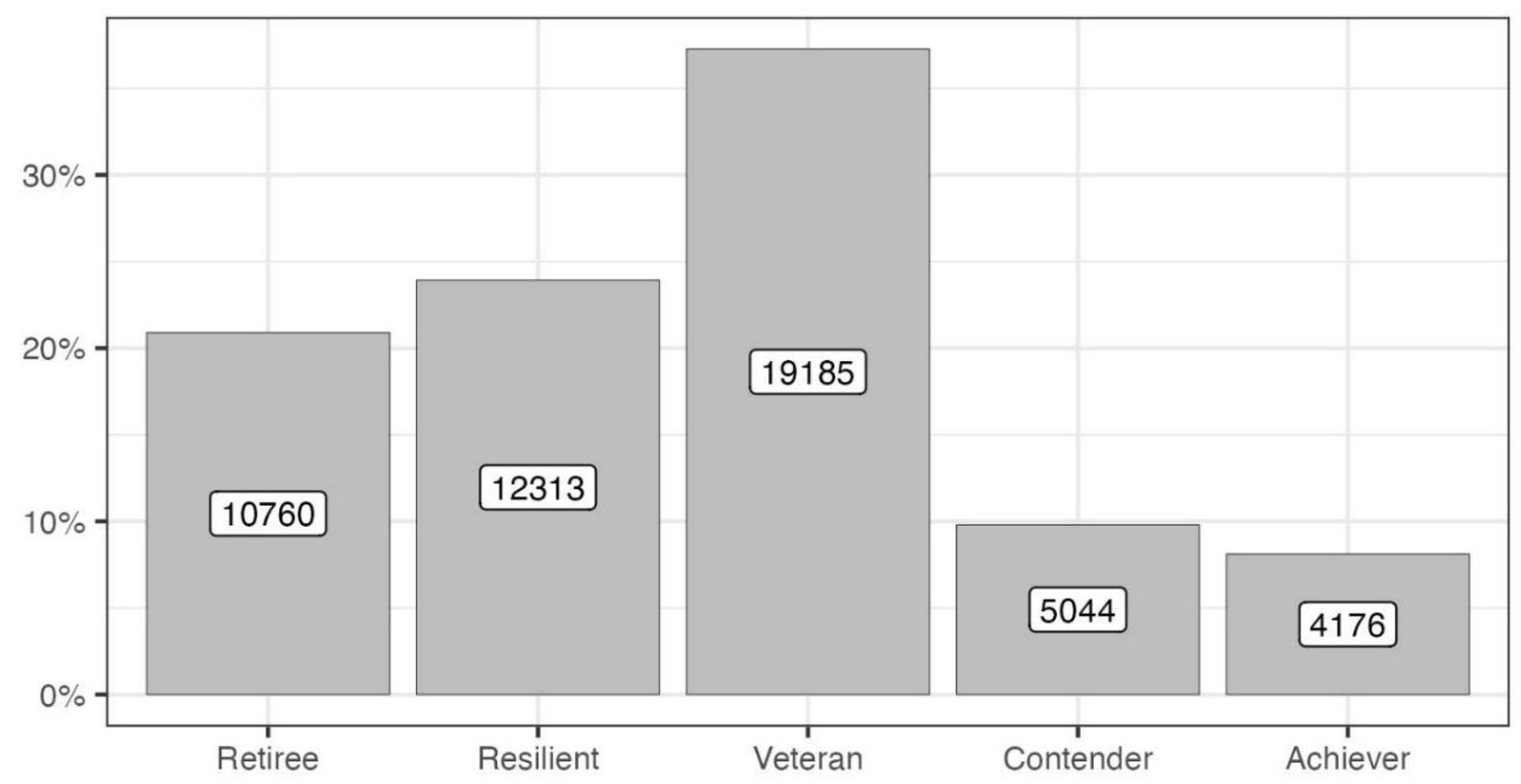
Figure 01 shows that the largest share of city councilors elected in 2008 (37.3%) falls into the ‘veteran’ category, that is, those who ran for and won at least one city council election in the subsequent 12 years. The next largest group is composed of the ‘resilient’ (23.9%), who continued to run in elections despite not securing additional victories. The third group (20.9%) consists of those who did not run for any office after their 2008 victory, the ‘retirees’. Fewer than 20% of the councilors elected in 2008 went on to run for municipal executive office (either mayor or vice-mayor). Among them, the largest share is made up of the ‘contenders’, who ran but were not successful (9.8% of the total). Finally, the ‘achievers’, who ran for municipal executive office and won, represent the smallest group (8.1%).
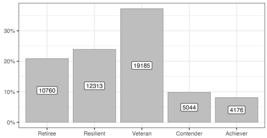
In other words, among the city councilors elected in 2008, nearly 40% served at least two terms on the city council up to 2020. Moreover, nearly 80% of them (all except the ‘retirees’) ran in at least two elections. This pattern points to a certain degree of commitment to pursuing a political career at the local level (GELAPE, 2022). In addition, nearly 20% of these city councilors also ran for positions in the local executive branch. These bids for higher office should not be interpreted as mere personal whims, since running for mayor or vice-mayor requires foregoing the opportunity to seek re-election to the city council. Finally, it is worth noting that more than 20% of them did not run for office again. Thus, a substantial share – one in five candidates – chose to leave politics even after serving an elected term.
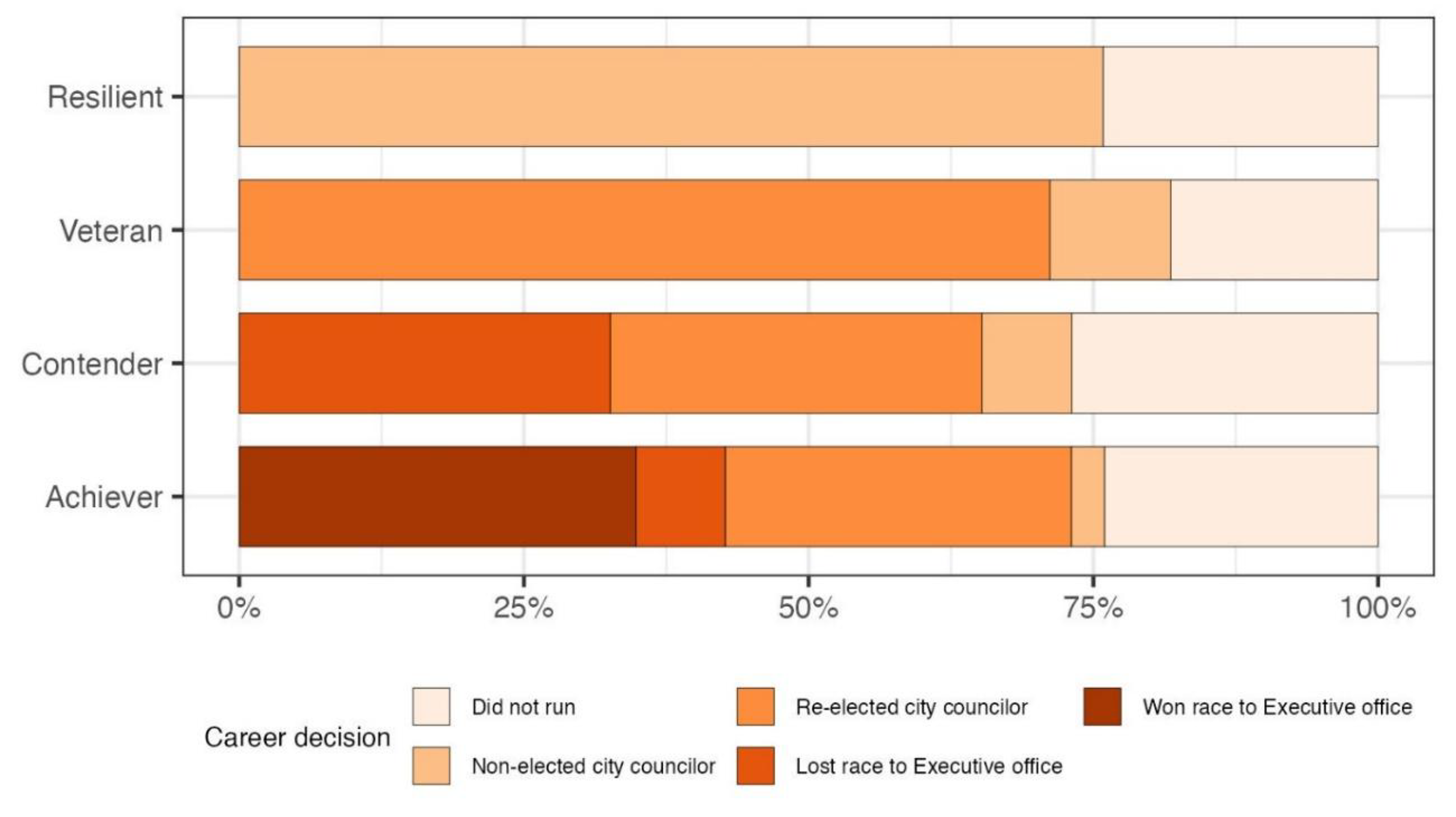
For comparison, what would these findings look like if, instead of considering the 12-year period following the 2008 election, we focused only on the next electoral cycle (2012) and analyzed the ‘career decisions’8 of these city councilors? First, we would observe a substantial shift in the largest category, which would now consist of the ‘retirees’ (38%). They would be followed by councilors who were re-elected (32.2%), corresponding, within our typology, to the ‘veterans’, although they would represent a smaller share of the total than in our career-based analysis. Next, we would observe a similar share of councilors who were unsuccessful in their bids for re-election (23.1%), which corresponds to our ‘resilient’ category. Other notable differences would appear among those who ran for municipal executive office: unsuccessful candidates would outnumber successful ones (3.8% versus 2.8%), but both groups would remain well below the shares observed for the ‘contenders’ and ‘achievers’ categories in our career-based classification.
Figure 02 shows how classifying politicians based on ‘career decisions’ alone can obscure patterns that become visible when their full ‘career trajectories’ are considered. In the figure, each bar represents the percentage of candidates in each trajectory category when classified according to their career decision. For example, if we look specifically at the 2012 decisions of city councilors who, according to our career trajectories typology, are classified as resilient, nearly a quarter (25%) would be classified simply as ‘retirees’. Likewise, when we look at the veterans, who ultimately went on to win another city council election in the long-term analysis, roughly 30% would be classified either as retirees or as unsuccessful candidates (analogous to the resilient category in our typology). Thus, analyzing political careers solely on the basis of career decisions in the subsequent electoral cycle obscures broader patterns in these individuals’ career trajectories (GELAPE, 2022).
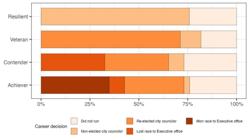
Career decisions (2008–2012) across the electoral trajectories of city councilors elected in 2008
Another important point is that focusing on ‘career decisions’ tends to underestimate trajectories toward municipal executive office. In local political careers, the mayoralty represents the highest position (GELAPE, 2022). However, running for this office requires candidates to forgo a potential bid for re-election to the city council and generally depends on the accumulation of local political capital, since it is a single-seat office with far fewer opportunities than the multiple seats contested in city council elections. It is therefore reasonable to expect that candidacies for executive office emerge gradually over time, as political capital accumulates and political careers develop, rather than resulting from a single ‘career decision’.
In summary, we find that a large share of city councilors pursues local political careers (GELAPE, 2022), whether within the city council itself (with or without success) or through bids for municipal executive office. This occurs even though a significant fraction of them (around 20%) did not run for office again after their 2008 victory. We also find that, compared with analyses based solely on career decisions, examining long-term trajectories leads to different inferences, particularly by identifying fewer retirees and a larger number of individuals who run for municipal executive office.
General patterns in the trajectories of city councilors
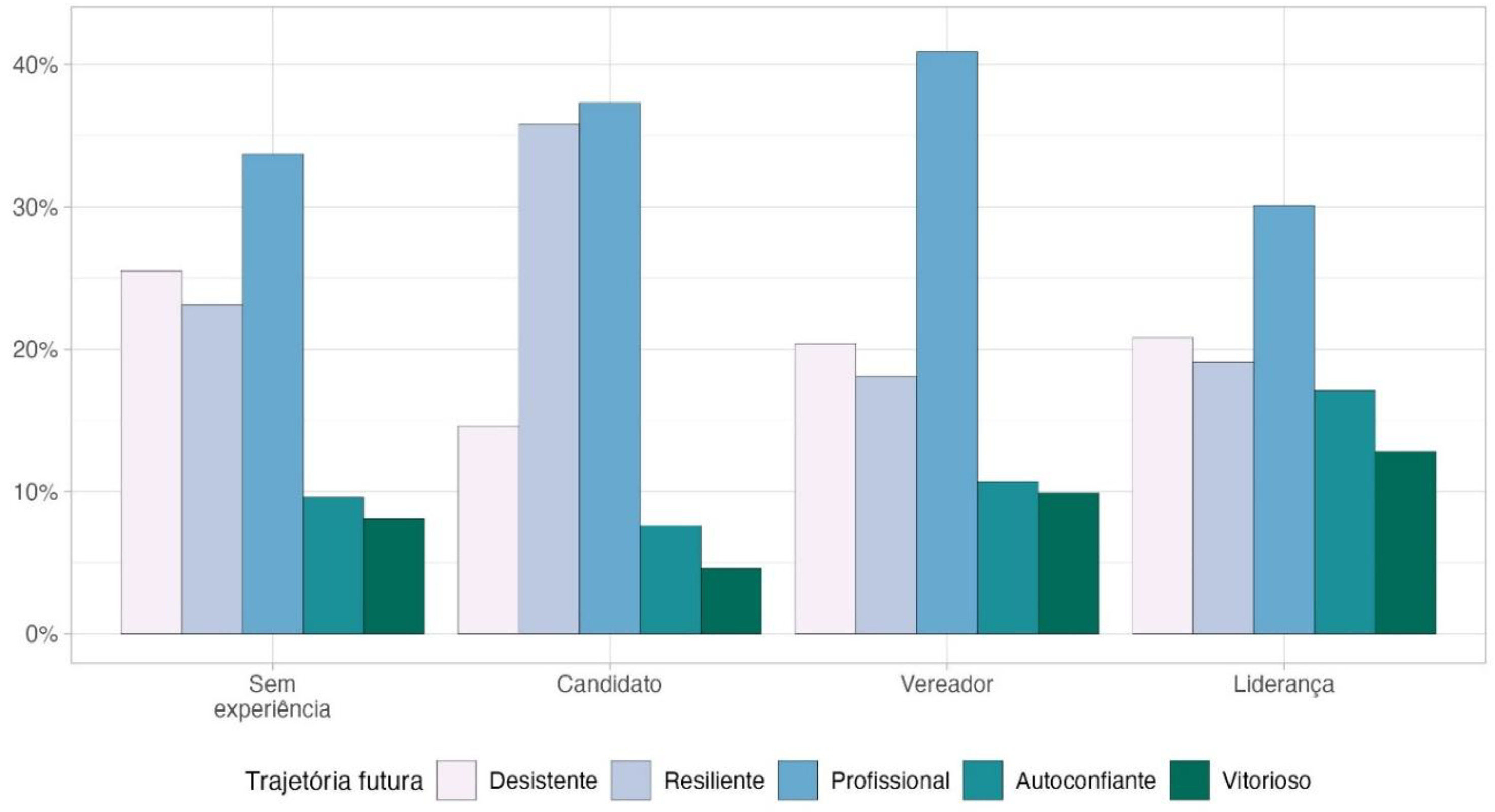
In addition to examining subsequent trajectories – that is, from 2008 onward – the literature on political careers also emphasizes the importance of candidates’ prior trajectories. How are the city councilors elected in 2008 distributed across both their prior and subsequent trajectories? Figure 03 presents these findings.
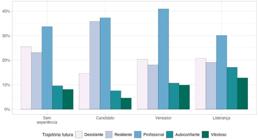
As expected, candidates with no prior experience have the highest share of city councilors with a ‘retiree’ subsequent trajectory compared with the other groups. Among those who had run for office at least once since 2002 but had not been elected, we observe a higher proportion of ‘resilient’ candidates than in the other prior trajectory groups. Among those who had previously been elected city councilors at least once, the share of ‘veteran’ councilors is also higher. Finally, among those with a prior ‘local leadership’ trajectory (that is, those who had made at least one unsuccessful bid for mayor or vice-mayor before their victory), we find higher shares of ‘contenders’ and ‘achievers’, that is, candidates who ran for municipal executive office after 2008. Taken together, these findings suggest that prior trajectory is an important predictor of the subsequent trajectories of city councilors.
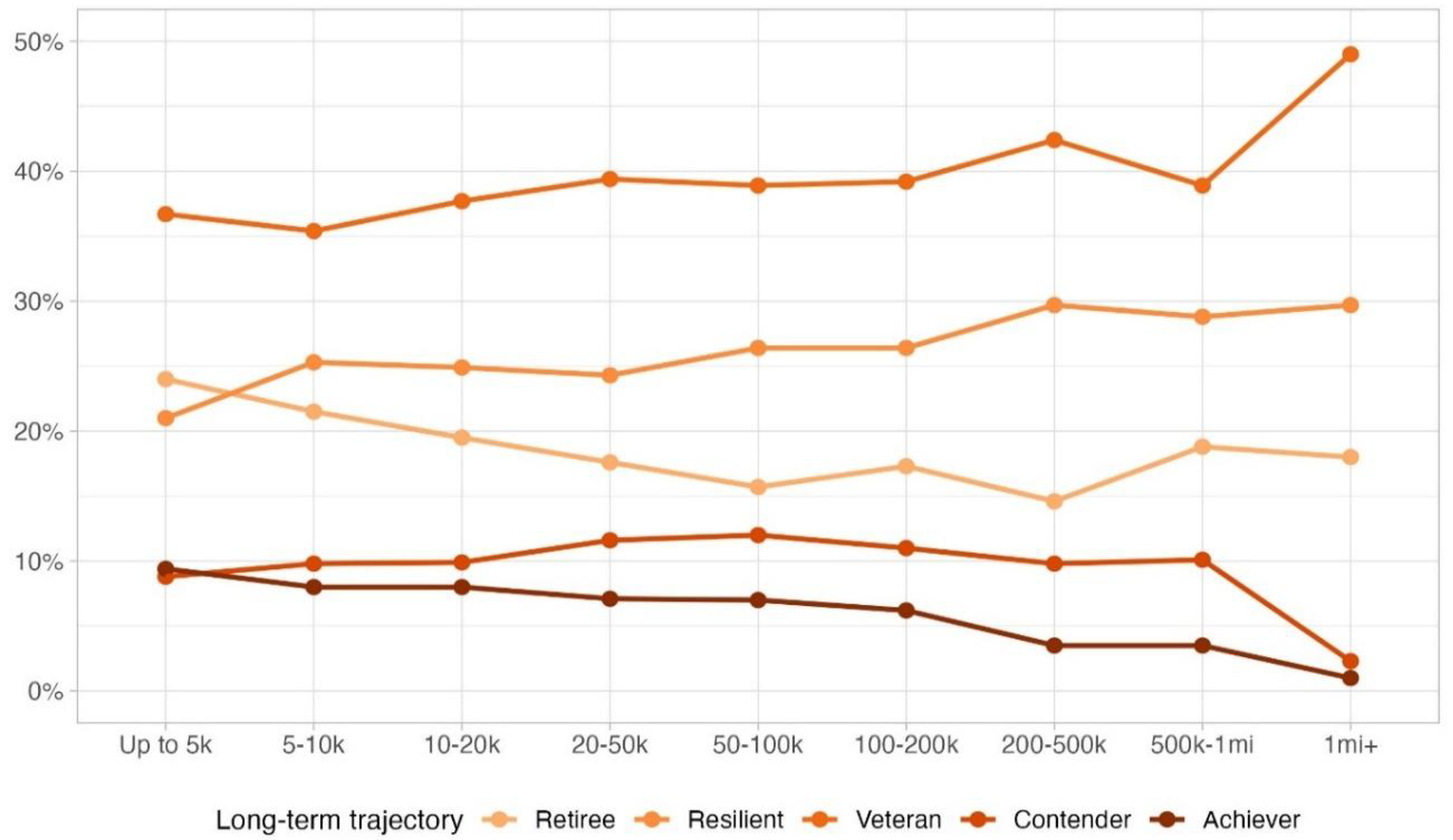
Research on local politics shows that municipality size plays an important role in shaping electoral career trajectories (GELAPE, 2022; LIMA and BARRETO, 2013). Figure 04 presents the subsequent electoral trajectories of the city councilors in our sample, taking into account the size of the electorate in the municipalities where they were elected in 2008.
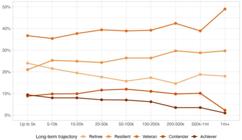
Subsequent electoral trajectories of city councilors elected in 2008, by size of the municipal electorate
When we examine electorate size categories, we observe higher proportions of ‘retirees’ in smaller municipalities. In general, the share of ‘resilient’ councilors increases as the size of the municipal electorate increases. The distribution of ‘veterans’ trajectories appears to follow three distinct levels: a lower level in the two smallest electorate categories, an intermediate level in municipalities with between 20,000 and 01 million voters, and a higher level in the most populous municipalities. The share of those who run unsuccessfully for municipal executive office (‘contenders’) remains around 10% in municipalities with up to 01 million voters but declines sharply in the largest municipalities. By contrast, ‘achievers’ account for a relatively stable share in municipalities with between 5,000 and 100,000 voters, after which their proportion begins to decline.
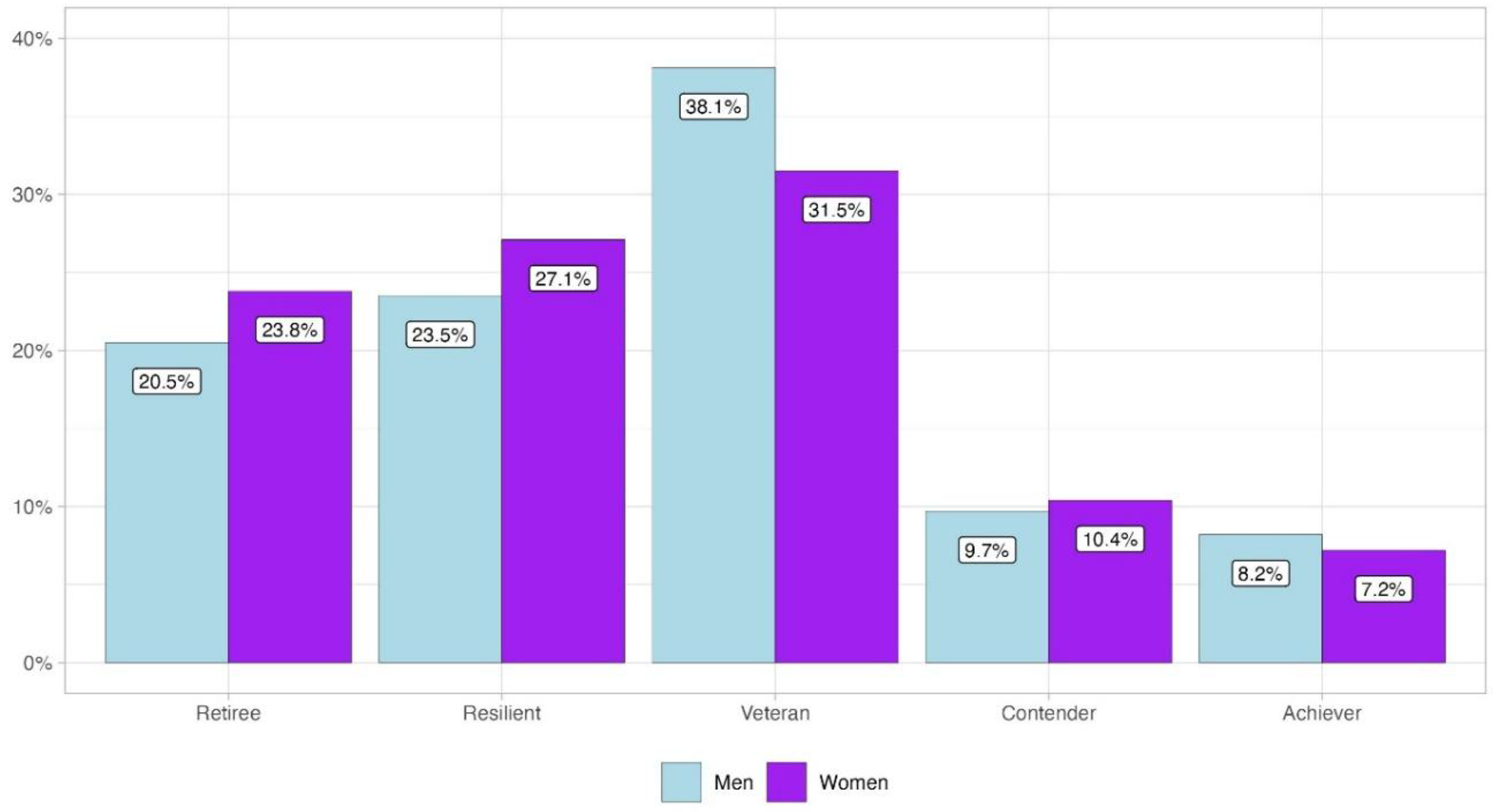
Of the approximately 51,500 city councilors analyzed, 12.5% (6,445) are women. When we break the results down by gender, as shown in Figure 05, we find that women account for a smaller share of trajectories marked by electoral success (that is, the ‘veteran’ and ‘achiever’ categories) than men. These differences are instead reflected in higher proportions of ‘retiree’ and ‘resilient’ trajectories among women.
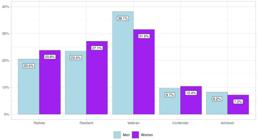
While 20.5% of male city councilors elected in 2008 fall into the ‘retiree’ trajectory, this share rises to 23.8% among women. ‘Resilient’ trajectories are also more common among women than among men (27.1% and 23.5%, respectively). These figures suggest that women are more likely to leave politics and, when they continue to compete in elections, tend to experience lower levels of electoral success.
In addition, those who ran for municipal executive office but were unsuccessful – the ‘contenders’ – represent a slightly larger share among women (10.4%) than among men (9.7%). Interestingly, the share of those who ran for higher office – that is, for mayor – is quite similar: while 17.9% of men did so, 17.6% of women also ran for these positions. By contrast, trajectories marked by electoral success – the ‘veteran’ and ‘achiever’ categories – account for larger shares among men (38.1% and 8.2%) than among women (31.5% and 7.2%).
Consistent with expectations in the literature, gender, prior trajectory, and municipality size appear to shape the political careers of city councilors. To examine how these factors – along with others – are associated with the career trajectories of the city councilors elected in 2008, the next section presents ordered logistic regression models.
Multivariate models
To assess the effect of gender on the subsequent trajectories of city councilors elected in 2008, we estimated ordered logistic regression models. We selected this approach because our dependent variable – the subsequent trajectory of these councilors – is ordinal, meaning that its categories follow a ranked order from lowest to highest (in this case, from ‘retirees’ to ‘achievers’).
In addition, we tested this association using three different models. The first tested the relationship between subsequent trajectory and gender, without including any additional control variables. The second added two control variables: the politician’s prior trajectory and municipality size. The third model built on Model 02 by incorporating additional controls: the councilor’s level of education, marital status, age, and party ideology – the latter two categorized according to the criteria established by Silva (2014) and Codato, Berlatto, and Bolognesi (2018), respectively – as well as fixed effects for the state where the councilor was elected.
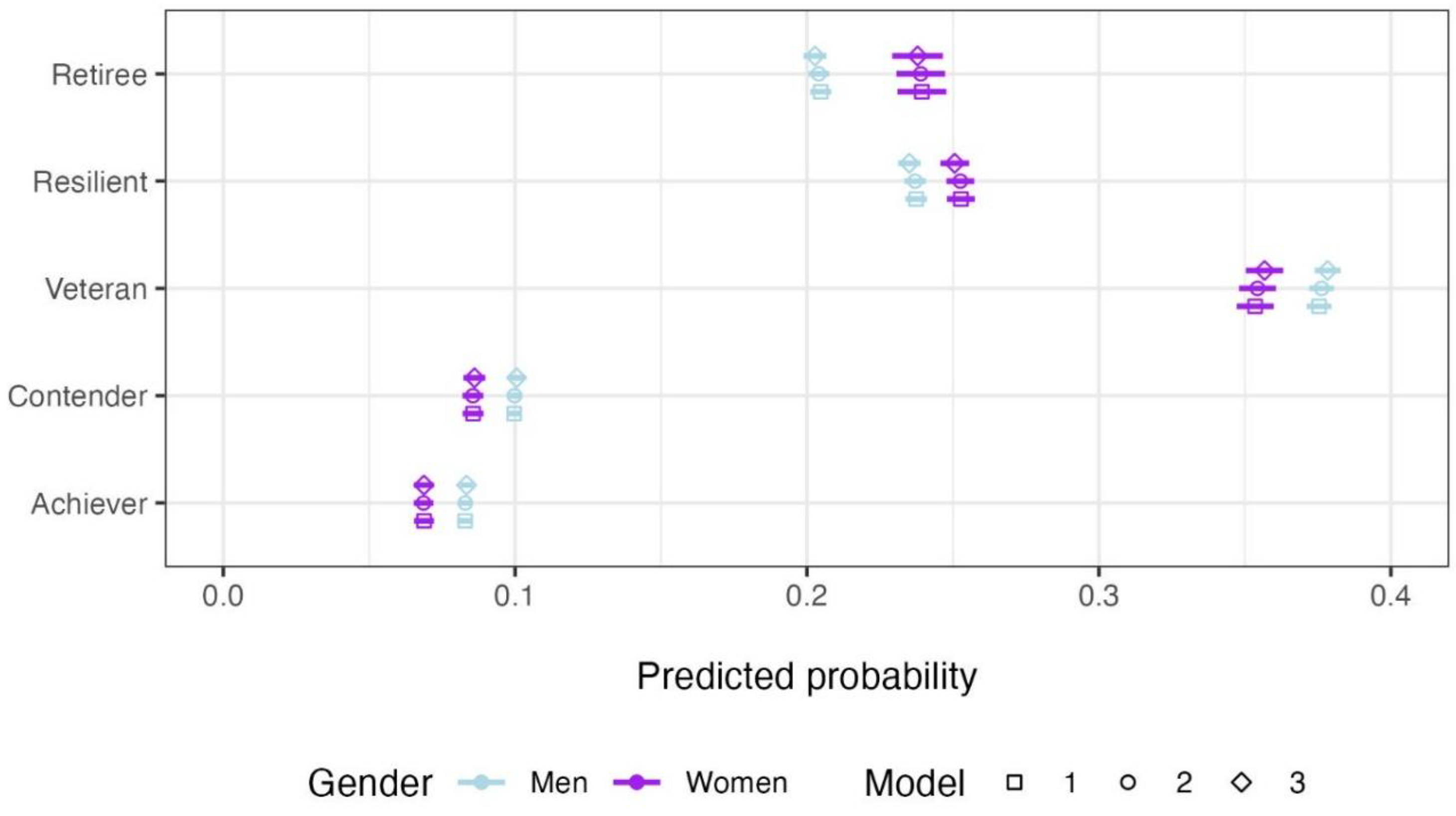
Interpreting the results of logistic regression models can be challenging. To facilitate interpretation, rather than presenting a table of regression coefficients9, we present a figure that shows the predicted probability of each category of the dependent variable by gender. In other words, the figure displays, for each individual in the dataset, the average predicted probability of being classified into each subsequent career trajectory category under each estimated model. These results are shown in Figure 06.
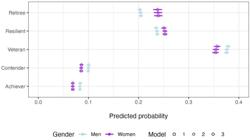
The three models yield similar results: women have a higher predicted probability of following ‘retiree’ or ‘resilient’ trajectories compared to their male counterparts. Men, by contrast, have a higher predicted probability of following ‘veteran’, ‘contender’, or ‘achiever’ trajectories. All of these differences are statistically significant at the 95% confidence level. The inclusion of additional controls has little effect on the estimates, as the predicted probabilities do not differ meaningfully across models, despite the relatively narrow confidence intervals around the estimates, which reflect the large sample size used in the analysis.
More specifically, according to the full model (Model 03 in Figure 06), the predicted probability that a woman follows a ‘retiree’ trajectory ranges from approximately 22.9% to 24.7%, compared with 19.9% to 20.7% for men. The predicted probability of a ‘resilient’ trajectory ranges from 24.6% to 25.5% for women and from 23.1% to 23.9% for men. Women have a predicted probability of between about 35.0% and 36.3% of following a ‘veteran’ trajectory, whereas for men the corresponding probability ranges from 37.4% to 38.3%. Among women councilors, the predicted probability of a ‘contender’ trajectory ranges from approximately 8.2% to 9.0%, while among men it ranges from 9.8% to 10.3%. Finally, the predicted probability that a woman councilor follows an ‘achiever’ trajectory ranges from 6.5% to 7.2%, compared with 8.1% to 8.6% for men.
Taken together, the results of our models further underscore the importance of gender in shaping political career trajectories at the local level in Brazil. Using descriptive statistics, we initially observe that a larger proportion of women falls into the ‘contender’ trajectory category. However, when we estimate ordered logistic regression models, we find that women have a lower predicted probability of following such trajectories than men across all three models. In summary, women councilors elected in 2008 have a higher predicted probability of following electoral trajectories marked by unsuccessful outcomes (‘retiree’ or ‘resilient’), whereas male councilors have a higher predicted probability of following trajectories marked by electoral success and/or attempts to pursue higher office (‘veteran’, ‘contender’, or ‘achiever’).
Final remarks
By examining the political careers of city councilors, this study sought to address gaps in the literature on gender and politics and on local politics by providing evidence on the ‘career trajectories’ of women in municipal politics beyond isolated ‘career decisions’. As the literature review shows, few studies have examined women’s presence at the subnational level together with their political careers through longitudinal analyses covering extended periods. This remains a developing field that offers ample opportunities for further research (SAINZ, 2024).
By examining the trajectories of city councilors elected in 2008, we find that women are disproportionately represented in the less successful trajectory groups when predicting their subsequent electoral trajectories. They have a higher probability of withdrawing from electoral competition (‘retirees’) or failing to secure another term on the city council (‘resilient’). Men, in turn, are more likely to follow successful trajectories, either by winning another term as city councilors (‘veterans’) or by running for municipal executive office, whether unsuccessfully (‘contenders’) or successfully (‘achievers’).
Because city council seats are the most available and accessible elective offices in the Brazilian political system (BORCHERT, 2011), the presence of gender inequality at this stage points to bottlenecks in women’s participation in Brazilian politics, even at a level where such barriers might, in principle, be easier to overcome. It is important to note that career choices at the local level are not merely individual decisions but are also constrained by political parties (GATTO and THOMÉ, 2024; GELAPE, 2022). For women candidates, this challenge is even greater, given their often difficult relationship with political parties (THOMÉ, 2021). In the Brazilian context – where gender quotas make it relatively easy to secure a place on a party ticket – decisions to withdraw from electoral competition may nevertheless be closely tied to candidates’ awareness of this hostile environment (PISCOPO, 2019).
As is well known, Brazil still has relatively low levels of women’s political representation compared with other countries in the region. We hope this study contributes to improving the diagnosis of this problem and to identifying ways to mitigate these inequalities. In addition, we emphasize how these inequalities unfold over time, suggesting that researchers should also consider this temporal dimension.
Beyond the subfields of political careers and gender, we believe our approach also offers a methodological contribution to the study of political careers in Brazil and elsewhere. When we speak of ‘career trajectories’, it is important to consider a sequence of political decisions rather than focusing on a single point in time, as is common in many studies of ‘political ambition’. We therefore hope that scholars consider this factor when designing research to examine other cases.
Finally, we acknowledge several limitations in our analysis, including constraints related to data availability. For example, because we chose to maximize the temporal window of the analysis, we are unable to examine gender from an intersectional perspective, as the race variable has only been reported by the Superior Electoral Court (TSE) since 201410. In addition, studying political careers presents inherent challenges, as they constitute a highly endogenous phenomenon.
Thus, while we find evidence of gender inequality, we do not provide a causal analysis of the factors that may produce or mitigate such inequality. Another promising direction for future research would also be to explore potential heterogeneous effects across variables such as municipality size and candidates’ sociodemographic characteristics, such as race and ethnicity, among others.
References
- ALVES, José Eustáquio Diniz; CAVENAGHI, Suzana Marta, and ALCÂNTARA, Adeilton Pedro de (2007), Participação das mulheres nas eleições de 2004: avaliação da política de cotas no Brasil. Revista Gênero Vol. 07, N° 02, pp. 195-215.
- ARAÚJO, Clara (2009), Gênero e acesso ao poder legislativo no Brasil: as cotas entre as instituições e a cultura. Revista Brasileira de Ciência Política N° 02, pp. 23-59.
- ARAÚJO, Clara (2001), Potencialidades e limites da política de cotas no Brasil. Revista Estudos Feministas Vol. 09, pp. 231-252.
- ARAÚJO, Clara (1998), Mulheres e representação política: a experiência das cotas no Brasil. Estudos feministas Vol. 06, N° 01, pp. 71-90.
- BARRETO, Alvaro Augusto de Borba (2017), Para onde ir? A trajetória eleitoral dos prefeitos das capitais estaduais brasileiras (1996-2014). Opinião Pública. Vol. 23, N° 01, pp. 194-229.
- BIROLI, Flávia (2016), Divisão sexual do trabalho e democracia. Dados. Vol. 59, N° 03, pp. 719-754.
- BOHN, Simone (2009), Mulheres brasileiras na disputa do legislativo municipal. Perspectivas: Revista de Ciências Sociais Vol. 35, pp. 63-89.
- BORCHERT, Jens (2011), Individual ambition and institutional opportunity: a conceptual approach to political careers in multi-level systems. Regional and Federal Studies, Vol. 21, N° 02, pp. 117-140.
- CARLOMAGNO, Márcio Cunha (2017), Em que lugares as mulheres têm maiores chances de se eleger vereadoras. Observatório de Elites Políticas e Sociais do Brasil. Vol. 04, N° 01, pp. 01-12.
- CODATO, Adriano; BERLATTO, Fábia, and BOLOGNESI, Bruno (2018), Tipologia dos políticos de direita no Brasil: uma classificação empírica. Análise Social. N° 229, pp. 870-897.
- CODATO, Adriano; SAINZ, Nilton; GABRIEL, Gabryela, and PICUSSA, Roberta (2022), Cor, gênero e ambição política no Brasil. In: Democracia e eleições no Brasil: para onde vamos? Edited by INÁCIO, Magna and OLIVEIRA, Vanessa Elias de. São Paulo: Hucitec Editora. pp. 63-76.
- DAHL, Malte and NYRUP, Jacob (2021), Confident and cautious candidates: explaining under-representation of women in Danish municipal politics. European Journal of Political Research. Vol. 60, N° 01, pp. 199-224.
- DODEIGNE, Jérémy (2014), (Re-) assessing career patterns in multi-level systems: insights from Wallonia in Belgium. Regional & Federal Studies Vol. 24, N° 02, pp. 151-171.
- FERREIRA, Maria Inês Caetano and LIMA, Isis Keiko Kataoka (2021), Mulheres na política no Recôncavo da Bahia em 2016: quem são as vereadoras eleitas? Revista Feminismos. Vol. 09, N° 02, pp, 272-298.
- FEITOSA, Fernanda (2012), A participação política das mulheres nas eleições 2010: panorama geral de candidatos e eleitos. In: Mulheres nas eleições de 2010 Edited by ALVES, José Eustáquio Diniz; PINTO, Céli Regina Jardim, and JORDÃO, Fátima. São Paulo: ABCP/Secretaria de Políticas para as Mulheres. pp. 139-166.
- FOLKE, Olle and RICKNE, Johanna (2016), Electoral competition and gender differences in political careers. Quarterly Journal of Political Science. Vol. 11, N° 01, pp. 59-102.
- FOX, Richard L. and LAWLESS, Jennifer L (2004), Entering the arena? Gender and the decision to run for office. American Journal of Political Science. Vol. 48, N° 02, pp. 264-280.
- GATTO, Malu A. C. and THOMÉ, Débora (2024), Candidatas: os primeiros passos das mulheres na política no Brasil. Rio de Janeiro: Editora FGV. 200 pp..
- GATTO, Malu A. C. and THOMÉ, Débora (2020), Resilient aspirants: women's candidacies and election in times of COVID-19. Politics & Gender. Vol. 16, N° 04, pp. 1001-1008.
- GATTO, Malu A. C. and WYLIE, Kristin N. (2022), Informal institutions and gendered candidate selection in Brazilian parties. Party Politics. Vol. 28, N° 04, pp. 727-738.
- GELAPE, Lucas de Oliveira (2022), Apesar de tudo, carreiras políticas locais: padrões alternativos, reeleição e partidos nas trajetórias de vereadores. Doctoral thesis Faculdade de Filosofia, Letras e Ciências Humanas. Departamento de Pós-Graduação em Ciências Política. Universidade de São Paulo.
-
INTER-PARLIAMENTARY UNION (2024), Monthly ranking of women in national parliaments. Available at < https://data.ipu.org/women-ranking/?data_year=2024&data_month=09 >. Accessed on October 02, 2024.
» https://data.ipu.org/women-ranking/?data_year=2024&data_month=09 - KROOK, Mona Lena (2010), Why are fewer women than men elected? Gender and the dynamics of candidate selection. Political Studies Review. Vol. 08, N° 02, pp. 155-168.
- LEONI, Eduardo; PEREIRA, Carlos, and RENNÓ, Lúcio (2003), Estratégias para sobreviver politicamente: escolhas de carreiras na Câmara de Deputados do Brasil. Opinião Pública Vol. 09, N° 01, pp. 44-67.
- LIMA, Iana Alves de (2017), Carreiras e ambição política em sistemas multinível: um estudo de caso da circulação política no Brasil (1995-2015). Master's dissertation. Dissertação. Programa de Pós-Graduação em Ciência Política. Instituto de Ciência Política. Universidade de Brasília.
- LIMA, Rafael Nachtigall de and BARRETO, Alvaro (2013), A carreira de vereador e a ambição progressiva: análise a partir do caso do Rio Grande do Sul (2002-2010). Pensamento Plural. N° 12, pp. 91-115.
- MACKAY, Fiona; KENNY, Meryl, and CHAPPELL, Louise (2010), New institutionalism through a gender lens: towards a feminist institutionalism? International Political Science Review. Vol. 31, N° 05, pp. 573-588.
- MACKENZIE, Scott Alan (2009), Strategy, choice and the pathways to power: sequence analysis of political careers. Doctoral thesis. Philosophy Department. Political Science Post-Graduation Program. University of California.
- MALUF, Rui Tavares (2006), A carreira política na Câmara Municipal de São Paulo (CMSP). Doctoral thesis Faculdade de Filosofia, Letras e Ciências Humanas. Departamento de Ciência Política. Programa de Pós-Graduação em Ciência Política. Universidade de São Paulo.
- MARQUES, Danusa (2012), Determinantes de carreiras políticas no Brasil, na Argentina e no Uruguai: uma abordagem comparativa entre deputadas e deputados. Doctoral thesis Faculdade de Filosofia e Ciências Humanas. Departamento de Ciência Política. Programa de Pós-Graduação em Ciência Política. Universidade Federal de Minas Gerais.
- MARQUES, Danusa; CELINI, Túlio Pustrelo; SANTOS, Laura Freire dos (2021), Carreiras políticas de mulheres no Brasil: aprofundando o debate a partir da nova bancada feminina da câmara dos deputados (2019-2022). Revista Feminismos. Vol. 09, N° 02, pp. 24-55.
- MEIRELES, Fernando and ANDRADE, Luciana Vieira Rubim (2017), Magnitude eleitoral e representação de mulheres nos municípios brasileiros. Revista de Sociologia e Política Vol.25, N° 63, pp. 79-101.
- MESSIAS, Gelma Gabriela de Matos (2019), Carreira e ambição política dos vereadores de Salvador (1997-2012). Revista de Sociologia e Política. Vol. 27, N° 72, pp. 01-25.
- MIGUEL, Luis Felipe (2003), Capital político e carreira eleitoral: algumas variáveis na eleição para o congresso brasileiro. Revista de Sociologia e Política Vol. 20, pp. 115-134.
- MIGUEL, Luis Felipe and BIROLI, Flávia (2010), Práticas de gênero e carreiras políticas: vertentes explicativas. Revista Estudos Feministas Vol. 18, N° 03, pp. 653-679.
- MORITZ, Maria Lúcia (2019), As vereadoras das capitais brasileiras: um balanço dos 20 anos da lei de cotas (1996-2016). Revista Científica Gênero na Amazônia N° 15, pp. 33-48.
- PAOLA, Maria De and SCOPPA, Vincenzo (2011), Political competition and politician quality: evidence from Italian municipalities. Public Choice Vol. 148, pp. 547-559.
- PEGURIER, Fabiano (2012), Political careers and the chamber of deputies in Brazil. Revista Ibero-Americana de Estudos Legislativos Vol. 02, N° 01, pp. 39-57.
- PINHEIRO, Tamires Lúcia; SARMENTO, Rayza, and SILVA, Maria Dolores Lima da (2022), Vereadoras de Belém do Pará: indicadores quali-quanti sobre as eleitas entre 2000-2020. Revista Científica Gênero na Amazônia. N° 01, pp. 33-48.
- PINTO, Céli Regina Jardim and MORITZ, Maria Lúcia (2009), A tímida presença da mulher na política brasileira: eleições municipais em Porto Alegre (2008). Revista Brasileira de Ciência Política N° 02, pp. 61-87.
- PITKIN, Hannah F. (1967), The concept of representation. Berkeley: University of California Press. 323 pp..
- PINTO, Celi Regina Jardim and SILVEIRA, Augusta (2018), Mulheres com carreiras políticas longevas no legislativo brasileiro (1950-2014). Opinião Pública Vol. 24, N ° 01, pp. 178-208.
- PISCOPO, Jennifer M. (2019), The limits of leaning in: ambition, recruitment, and candidate training in comparative perspective. Politics, Groups, and Identities. Vol. 07, N° 04, pp. 817-828.
- REZENDE, Daniela Leandro (2017), Desafios à representação política de mulheres na Câmara dos Deputados. Revista Estudos Feministas Vol. 25, pp. 1199-1218.
- ROHDE, David W. (1979), Risk-bearing and progressive ambition: the case of members of the United States House of Representatives. American Journal of Political Science. Vol. 23, N° 01, pp. 01-26.
- SACCHET, Teresa; AFLALO, Hanna Maruci; ALVES, Marcos Vinícius C. and CHAVES, Vanilda Souza (2025), Não é só sobre dinheiro: diferentes dimensões do financiamento eleitoral em perspectiva de gênero e raça no Brasil. Revista Brasileira de Ciência Política. Vol. 44, pp. 01-41.
- SACCHET, Teresa and SPECK, Bruno Wilhelm (2012), Financiamento eleitoral, representação política e gênero: uma análise das eleições de 2006. Opinião Pública. Vol. 18, N° 01, pp. 177-197.
- SAINZ, Nilton Garcia (2024), Padrões de carreira e ambição política dos representantes nacionais em sistemas multinível: os casos de Brasil e Chile em perspectiva comparada. Doctoral thesis. Setor de Ciências Humanas. Programa de Pós-Graduação em Ciência Política. Universidade Federal do Paraná.
- SAMUELS, David (2003), Ambition, federalism, and legislative politics in Brazil. Cambridge: Cambridge University Press. 248 pp..
- SAMUELS, David (2000), Ambition and competition: explaining legislative turnover in Brazil. Legislative Studies Quarterly. Vol. 25, N° 03, pp. 481-497.
- SANTOS, Fabiano (1999), Recruitment and retention of legislators in Brazil. Legislative Studies Quarterly Vol. 24, N° 02, pp. 209-237.
- SANTOS, Fabiano G. M. and PEGURIER, Fabiano J. H. (2011), Political careers in Brazil: long-term trends and cross-sectional variation. Regional & Federal Studies. Vol. 21, N° 02, pp. 165-183.
- SCHLESINGER, Joseph A. (1966), Ambition and politics: political careers in the United States. Chicago: Rand McNally and Co. 226 pp..
- SCHWINDT-BAYER, Leslie (2011), Women who win: social backgrounds, paths to power, and political ambition in Latin American legislatures. Politics & Gender Vol. 07, N° 01, pp. 01-33.
- SEGAARD, Signe Bock and SAGLIE, Jo (2021), A gender-generation gap in political representation? The contingent impact of preference voting in Norwegian municipal elections. Local Government Studies. Vol. 47, N° 01, pp. 145-165.
- SILVA, Patrick Cunha (2014), O poder legislativo municipal: estrutura, composição e produção. Master's dissertation. Faculdade de Filosofia, Letras e Ciências Humanas. Departamento de Ciência Política. Programa de Pós-Graduação em Ciência Política. Universidade de São Paulo.
- SILVA, Rafael Egídio da and ALMEIDA, Thaís (2017), Mulheres candidatas à vereadora em Umuarama/PR nas eleições de 2016: expectativas e perspectivas da participação feminina na política. Revista NEP. Vol. 03, N° 01, pp. 268-284.
- SOARES, Jeanette (2022), Vereadoras de Curitiba: análise prosopográfica da trajetória das eleitas entre 1982 e 2016. São Paulo: Editora Dialética. 228 pp.
- THOMÉ, Débora (2021), Mulheres interessadas em política: evidências de um grupo de candidatas a candidatas. Revista Feminismos Vol. 09, N° 02, pp. 239-271.
-
TSE - TRIBUNAL SUPERIOR ELEITORAL (2024), Portal de dados abertos do TSE. Available at < https://dadosabertos.tse.jus.br/ >. Accessed on April 27, 2026.
» https://dadosabertos.tse.jus.br/ - VIEIRA, Anne Karoline Rodrigues (2019), Ambição política, perfis de carreira e representação de minorias: o caso da Assembleia Legislativa de Minas Gerais (ALMG). Teoria & Pesquisa Revista de Ciência Política Vol. 28, N° 02, pp. 71-100.
- WÄNGNERUD, Lena and SUNDELL, Anders (2012), Do politics matter? Women in Swedish local elected assemblies 1970-2010 and gender equality in outcomes. European Political Science Review. Vol. 04, N° 01, pp. 97-120.
- WYLIE, Kristin (2020), Taking bread off the table: race, gender, resources and political ambition in Brazil. European Journal of Politics and Gender Vol. 03, N° 01, pp. 121-142.

 Source: Elaborated by the authors using data from the
  Source: Elaborated by the authors using data from the
  Source: Elaborated by the authors using data from the
  Source: Elaborated by the authors using data from the
  Source: Prepared by the authors using data from the
  Source: Elaborated by the authors using data from the