 Parasitic nematodes of Osteocephalus oophagus, an anuran from a Brazilian Amazon National Park
Abstract
This study investigated the fauna of nematode parasites in Osteocephalus oophagus collected in the Montanhas do Tumucumaque National Park, eastern Brazilian Amazon. Between September 2022 and May 2023, 19 hosts were collected, of which 68.42% had at least one Nematoda species. Four species of helminths were identified: Aplectana cf. pella, Oswaldocruzia sp., Oxyascaris sp., and Rhabdias cf. waiapi. Ecological analysis employed indices of prevalence, intensity, and abundance, in addition to Shannon diversity and Pielou’s evenness indices. The prevalence of infection was higher in females, with Aplectana cf. pella standing out in abundance and dominance. Aplectana cf. pella showed a uniform dispersion pattern, while Oswaldocruzia sp. showed random dispersion. Cluster analysis using the Bray-Curtis index suggested a habitat selection similarity between Aplectana cf. pella and Oswaldocruzia sp.. This work contributes to the knowledge of the parasitic biodiversity of O. oophagus, including new records of association with Aplectana cf. pella, Oxyascaris sp. and Rhabdias cf. waiapi, which had not been reported for this host until now, and underscores the importance of the Montanhas do Tumucumque National Park as a region of high ecological value for Amazonian helminth fauna.
Keywords
Anurans; nematodes; infestation; Environmental Protection Area; Amazon
Resumo
Este estudo investigou a fauna de helmintos parasitos em Osteocephalus oophagus coletados no Parque Nacional Montanhas do Tumucumaque, leste da Amazônia Brasileira. Entre setembro de 2022 e maio de 2023, 19 hospedeiros foram coletados, dos quais 68,42% apresentaram ao menos uma espécie de nematoide. Foram identificadas quatro espécies de helmintos: Aplectana cf. pella, Oswaldocruzia sp., Oxyascaris sp. e Rhabdias cf. waiapi. A análise ecológica utilizou índices de prevalência, intensidade e abundância, além dos índices de diversidade de Shannon e de equitabilidade de Pielou. A prevalência de infecção foi maior em fêmeas, com Aplectana cf. pella destacando-se em abundância e dominância. Aplectana cf. pella apresentou padrão de dispersão uniforme, enquanto Oswaldocruzia sp. apresentou dispersão randômica. A análise de agrupamento empregando o índice de Bray-Curtis sugeriu uma proximidade na escolha dos habitats parasitários entre Aplectana cf. pella e Oswaldocruzia sp.. Este trabalho contribui para o conhecimento da biodiversidade parasitária de O. oophagus, incluindo novos registros de associação com Aplectana cf. pella, Oxyascaris sp. e Rhabdias cf. waiapi, que até o momento não haviam sido reportados para este hospedeiro, e reforça a importância do Parque Nacional Montanhas do Tumucumaque como uma área de alto valor ecológico para a fauna helmintológica amazônica.
Palavras-chave
Anuros; nematoides; infestação; Área de Proteção Ambiental; Amazônia
Introduction
The Amazon encompasses the world’s largest river basin and the most extensive tropical rainforest, spanning an area of 6 to 8 million km2 and representing 40% of South America. With a hot and humid climate, the region comprises diverse ecosystems, contributing to its megadiversity and harboring 10% of the known species on the planet (Müller 2020). The Montanhas do Tumucumaque National Park (PARNA Montanhas do Tumucumaque) in eastern Amazonia is the largest tropical rainforest park in the world and connects protected areas between the Brazilian states of Amapá and Pará, forming an important biodiversity corridor (ICMBio 2009).
The anuran fauna in Brazil is the most diverse in the world, with 1,242 recorded species (Frost 2025), of which 384 occur in the Brazilian Amazon (Hoogmoed & Galatti 2024). In Amapá, Taucce et al. (2022) listed 111 anuran species across 48 locations. Lima et al. (2008) cataloged 70 amphibian species in PARNA Montandas do Tumucumaque. Due to their biphasic life cycle, limited dispersal ability, and high sensitivity to environmental changes, anurans are important indicators of environmental quality (Dela-Torre & Nuneza 2021).
Osteocephalus oophagus Jungfer & Schiesari, 1995, is a species of anuran found in the Brazilian Amazon, Colombia, Guyana, Suriname, and French Guiana (Frost 2025). It exhibits a brown dorsal coloration with lighter and darker spots, a cream to whitish ventral surface, and body sides with potential white markings. Its arms and legs display transverse bars on a dark brown background. Reproduction occurs during the rainy season, with tadpoles developing in phytotelms such as those in epiphytes, bromeliads, palms, or tree cavities. The female returns to the oviposition site to deposit eggs, which serve as food for the tadpoles, a behavior known as oophagy (Lima et al. 2006, Deichmann 2008). This species is nocturnal and arboreal anuran, widely distributed in the Amazon (Lima et al. 2006). In the state of Amapá, its presence has been recorded in studies conducted by Queiroz et al. (2011), Araújo and Costa-Campos (2014), and Benício and Lima (2017).
In recent years, there has been significant growth in research dedicated to understanding helminth parasitism in amphibians from the Amazon region (Tavares-Costa et al. 2019, Oliveira-Souza et al. 2020, Rebêlo et al. 2020, Cardoso et al. 2021, Coêlho et al. 2021, Coêlho et al. 2023, Prata et al. 2023, Rebêlo et al. 2023, Santos et al. 2023, Willkens et al. 2023, Neves et al. 2024). These studies encompass different aspects, such as recording new occurrences of helminths parasitizing specific species of amphibians, and studying parasitic community structure, assessing possible correlations between parasitic load and host size. Additionally, some of this research has described new species of helminths, expanding knowledge of the biodiversity in the Amazon region.
At present, knowledge about the nematode fauna parasitizing Osteocephalus oophagus is quite limited. Therefore, the present study aims to investigate the structure of the nematode community associated with O. oophagus in the PARNA Montanhas do Tumucumaque, located in the Brazilian Amazon.
Material and Methods
1. Study site and host capture
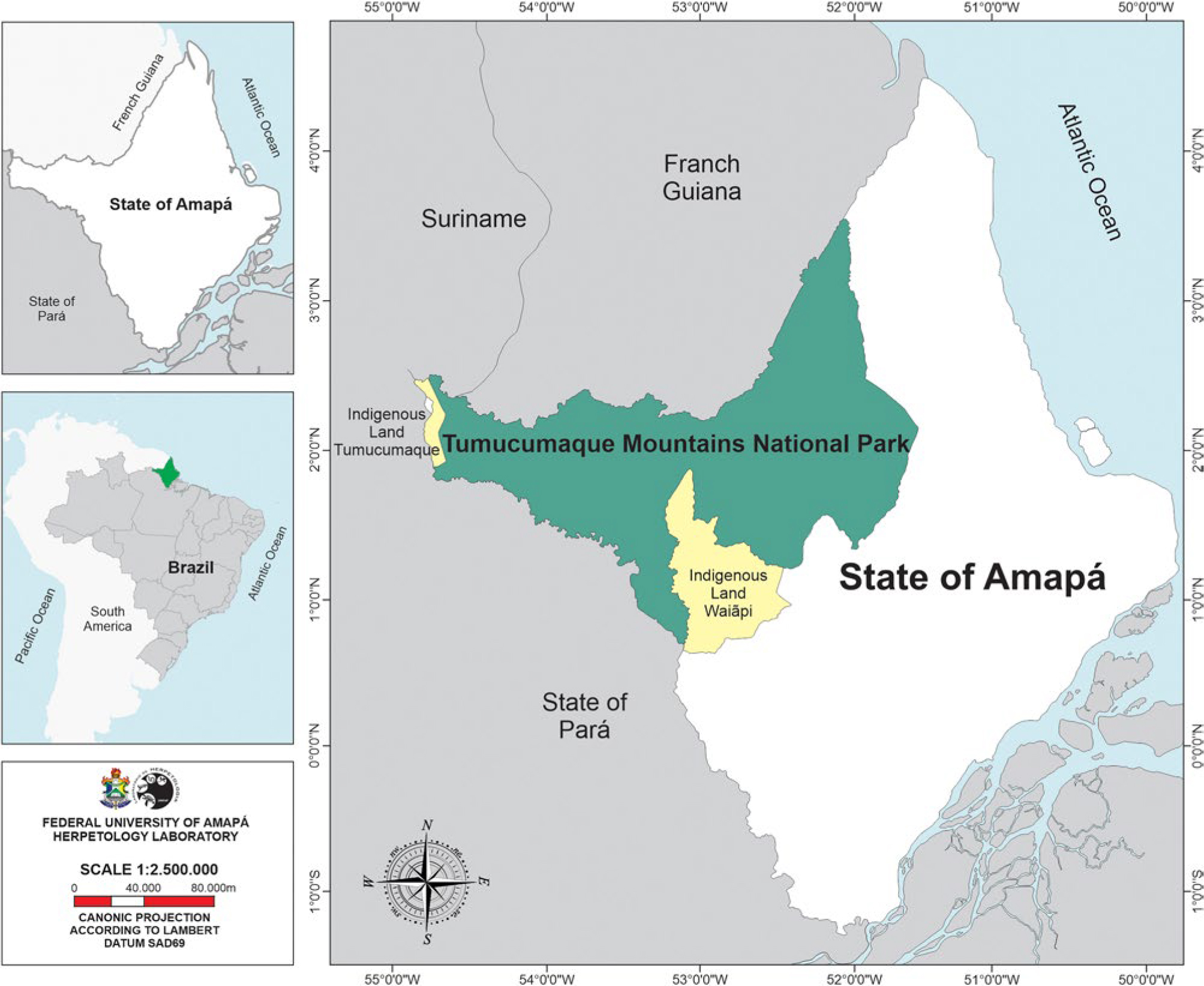
The PARNA Montanhas do Tumucumaque (Figure 1), where the collections were carried out, covers an area of 38,464.05 km2, located primarily in the northwest of the state of Amapá. This conservation unit is characterized by the presence of the headwaters of the main rivers that flow through the region, standing out as an area of ecological importance for the maintenance of local biodiversity (ICMBio 2009).
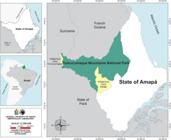
Map of Brazil with the state of Amapá, highlighting the Montanhas do Tumucumaque National Park, where hosts of the species O. oophagus were collected.
During the expeditions conducted in September 2022 and May 2023, 19 specimens of O. oophagus were obtained along trails in the PARNA Tumucumaque (01°13’36.97” N; 52°23’43.11” W). The collection of anurans was limited to a maximum of 10 individuals per campaign, as the study area is a Strictly Protected Conservation Unit, in accordance with SISBIO (Biodiversity Authorization and Information System) license no. 83254-1. Two sampling campaigns were conducted, each lasting eight days, with sampling on alternate days. Specimens were captured manually using the active/visual search method (Halliday 2006), with each search lasting two hours, resulting in a cumulative sampling effort of 32 hours. The classification of amphibian hosts follows Lima et al. (2006) and Frost (2025).
2. Necropsy, collection, and preservation of parasites procedures
During the fieldwork, all captured hosts were euthanized with 2% lidocaine hydrochloride, following the recommendations established by Federal Council of Veterinary Medicine (CFMV, 2013). After euthanasia, the specimens had their measurements and weights recorded and were immediately subjected to necropsy. The internal organs were removed and placed in Petri dishes containing 0.98% saline solution, where they were dissected and examined under a Zeiss Stemi 2000-C stereomicroscope.
Because the objective of the study was specifically to investigate nematode infections in O. oophagus, the parasitological examination was directed exclusively toward detecting nematodes. No systematic search for other helminth groups (e.g., digeneans, cestodes, or acanthocephalans) was performed.
All nematodes found were carefully collected, washed in saline solution, and fixed in preheated 70% ethanol. Subsequently, they were stored in microtubes containing 70% ethanol and kept at room temperature. In the Herpetology Laboratory of the Federal University of Amapá, all nematodes were first hydrated in distilled water and then cleaned in Amann’s Lactophenol for morphological analyses. They were examined on temporary slides under an Olympus CX41 microscope and, upon completion of the analyses, transferred to 70% ethanol for long-term storage. Parasite identification was carried out following the criteria proposed by Vicente et al. (1991) and Anderson et al. (2009), complemented by species descriptions available in the literature (Tavares-Costa et al. 2022, Santos et al. 2023).
3. Data analysis
The parasitology descriptors used in the study were infection prevalence, mean intensity, and mean abundance, as recommended by Bush et al. (1997). Dominance frequency (DF), defined as the percentage of infracommunities in which a parasite species is numerically dominant, was assessed using the method proposed by Rohde et al. (1995).
The nematode communities were classified into two levels: infracommunity, which includes all nematode populations present in a single O. oophagus specimen, and component community, which encompasses all nematode infracommunities in the total O. oophagus population. To characterize the richness and diversity of these communities, we used the total number of species (richness), the Shannon diversity index (H'), and Pielou’s evenness index (J'), with the latter calculated as the ratio between H' and the maximum value of H', as described by Zar (2010). In addition, the Brillouin diversity index (HB) and Pielou’s evenness index (E) were applied to describe the diversity and evenness of the infracommunities. Finally, the Berger-Parker dominance index (d) was used to identify the most abundant species in the component community, as recommended by Magurran (2004). All these parameters were calculated using the software PAST 4.03 (Hammer et al. 2001).
The dispersion index (DI) and Poulin’s discrepancy index (D) were calculated for each species with parasitic prevalence > 10%, using the software Quantitative Parasitology 3.0. The DI indicates whether the nematode distribution among hosts tends to be uniform (DI < 1), random (DI ≈ 1), or aggregated (DI > 1), while the D measures inequality in abundance among hosts (0 = uniform; 1 = highly unequal) (Rózsa et al. 2000). The significance of the ID was assessed using the d statistic, where d < 1.96 indicates a random distribution, and d > 1.96 indicates that the distribution differs significantly from random, being either uniform (DI < 1) or aggregated (DI > 1) (Ludwig and Reynolds, 1988). Cluster analysis using the Bray-Curtis similarity index was performed to compare the infestation sites of each nematode species parasitizing O. oophagus.
Results
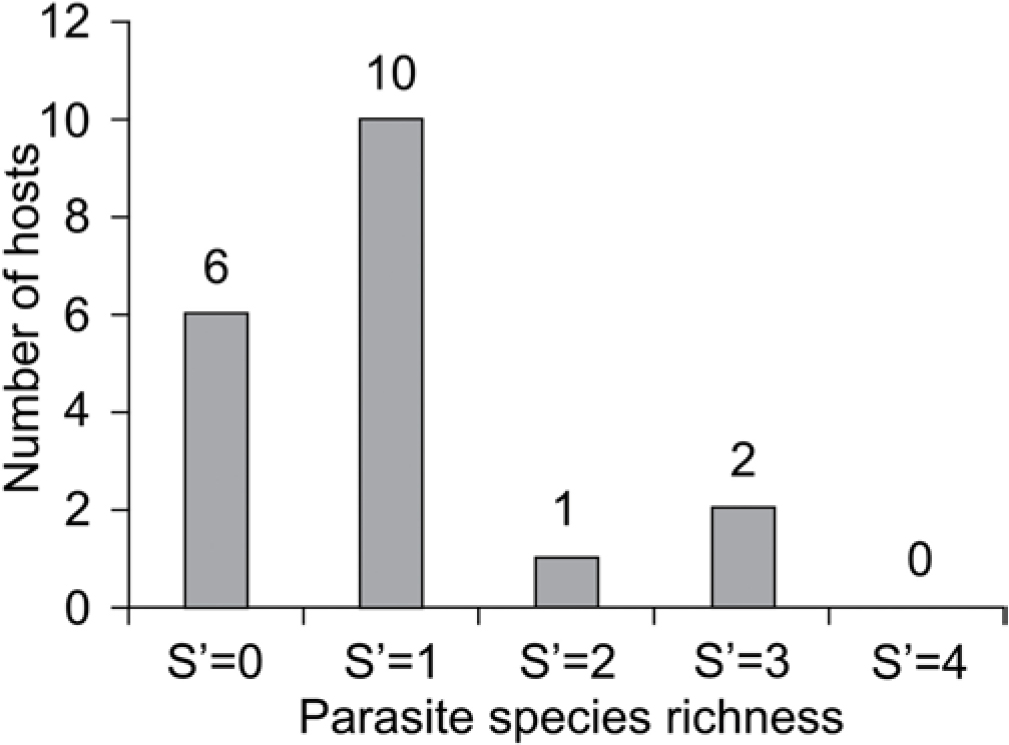
In the specimens of O. oophagus collected, 76 parasitic nematodes were identified, distributed across four species: eight specimens of Oxyascaris sp. Travassos, 1920, belonging to the family Cosmocercidae Railliet, 1926; 12 of Oswaldocruzia sp. Travassos, 1917 from the family Molineidae Durette-Desset & Chabaud, 1977; 17 of Rhabdias cf. waiapiTavares-Costa & Melo, 2022, belonging to the family Rhabdiasidae Railliet, 1915; and 39 of Aplectana cf. pellaSantos, Borges & Melo, 2023, also from the family Cosmocercidae. The infection prevalence was considered high, with 68.42% of the examined frogs harboring at least one nematode species, meaning that more than two-thirds of the sampled hosts were infected. None of the frogs, however, were parasitized by more than three nematode species simultaneously (Figure 2). The most common associations were Rhabdias cf. waiapi with Aplectana cf. pella or with Oswaldocruzia sp., whereas Aplectana cf. pella also co-occurred with Oxyascaris sp. On the other hand, each of the four nematodes was also found alone in some hosts, indicating variability in the co-occurrence patterns within this helminth community.
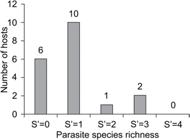
Community richness of helminths parasitizing Osteocephalus oophagus from PARNA Montanhas do Tumucumaque, Brazilian Amazon.
The prevalence of parasites in O. oophagus was higher in females, reaching 76.92% (10 out of 13 specimens), while in males it was 50.00% (3 out of 6 specimens). The average parasite abundance also varied between sexes, being estimated at 4.62 parasites per female and 2.67 per male, indicating that females harbor a comparatively larger number of individuals. The average infestation intensity was higher in females, with an average of 6.00 parasites per infected host, compared to 5.33 parasites in males, indicating a slightly higher intensity in females. Regardless of the host’s sex, the most prevalent nematode was Rhabdias cf. waiapi, identified in 31.58% of the specimens analyzed (6 out of 19). On the other hand, Aplectana cf. pella stood out both for its higher average abundance, with 2.05 nematodes per examined anuran, and its higher average infestation intensity, recording 7.80 parasites per infected host. Additionally, Aplectana cf. pella had the highest frequency of dominance, meaning it was the most common species in individual infracommunities (Table 1). For the parasitic infracommunities, the average Brillouin diversity index (HB) showed relatively low values, as did the average equitability. In contrast, for the component communities, equitability indicates a more balanced distribution of parasite species. The Berger-Parker index reveals that the dominant species represents about half of the parasites sampled. The data presented in Table 2 provides an overview of the structure and diversity of the nematode infracommunities and the component communities of parasites in O. oophagus.
Parasitological indices of nematodes in Osteocephalus oophagus, at Montanhas do Tumucumaque National Park, Brazilian Amazon. P: prevalence; MA: mean abundance; MI: mean intensity; TNP: total number of parasites; FD: frequency of dominance. Infestation site: ST: stomach; LI: large intestine; SI: small intestine; LG: lung.
Aspects of the parasite community of helminth infracommunities and component communities of Osteocephalus oophagus in PARMA Montanhas do Tumucumaque, Brazilian Amazon.
According to the Dispersion Index (DI), most nematodes tended toward a uniform dispersion pattern. For instance, Aplectana cf. pella had a DI of 0.86, while Oswaldocruzia sp. showed a DI of 1.00, consistent with a randon distribution. However, when tested with the d statistic, all species exhibited random dispersion, with no evidence of aggregation (Table 3).
Dispersion index (DI), d statistic and discrepancy index (D) for nematodes parasitic on Osteocephalus oophagus from PARNA Montanhas do Tumucumaque, Brazilian Amazon.
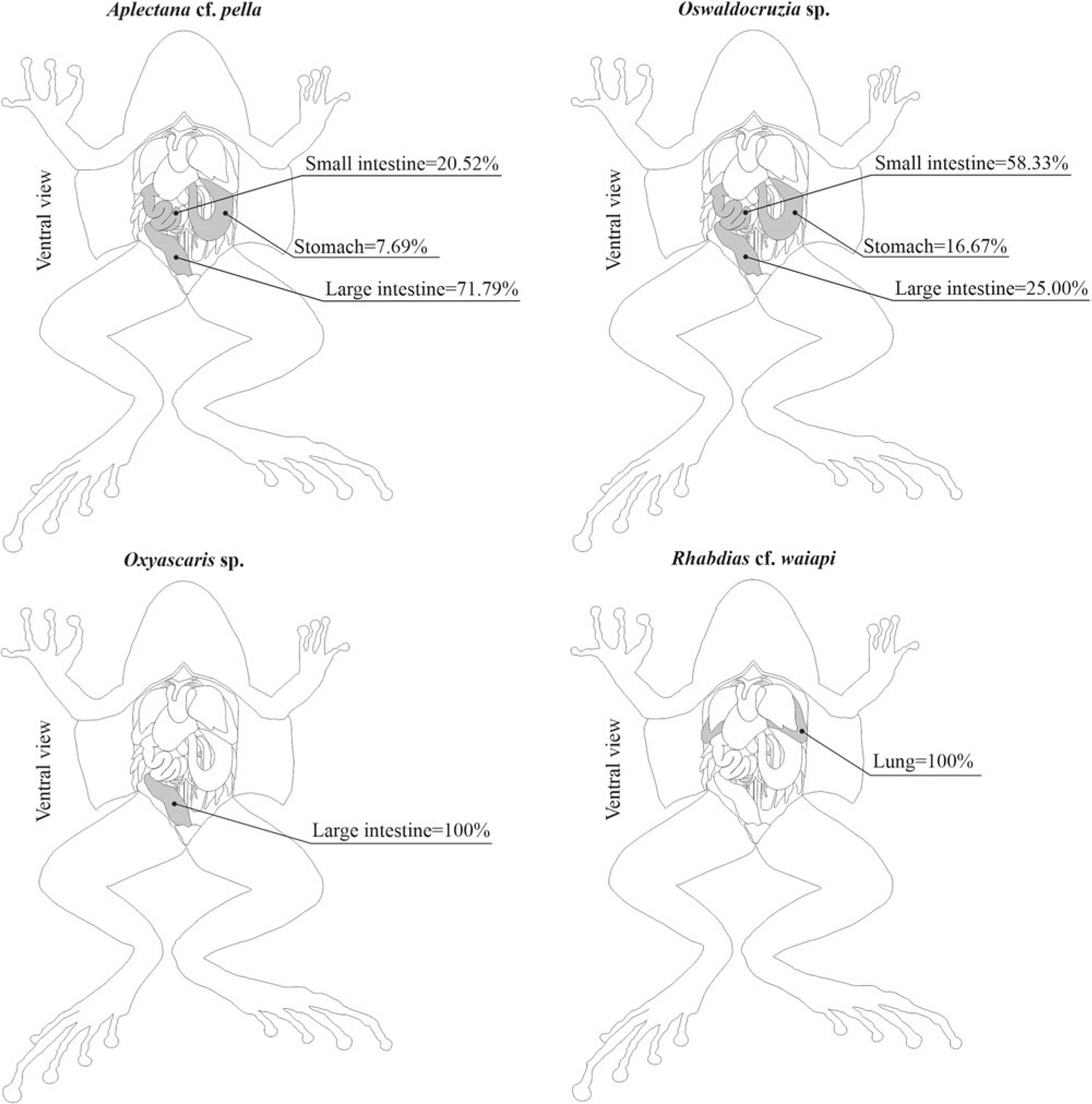
The nematodes were collected from different parts of the digestive and respiratory system of the examined hosts, including the lungs, stomach, small intestine, and large intestine. Oxyascaris sp. occurred exclusively in the large intestine (21.05%), while Rhabdias cf. waiapi was restricted to the lungs (31.58%). Aplectana cf. pella was more frequent in the large intestine (26.32%), whereas Oswaldocruzia sp. was predominantly found in the small intestine (15.79%) (Figure 3). Cluster analysis using the Bray-Curtis index indicated a higher similarity between the infestation sites of Aplectana cf. pella and Oswaldocruzia sp.. This similarity may reflect a partial overlap in the habitual use of these parasites within the host’s digestive tract (Figure 4).
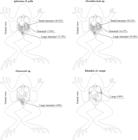
Prevalence of nematodes by infestation site in Osteocephalus oophagus from PARNA Montanhas do Tumucumaque, Brazilian Amazon.
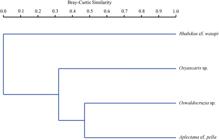
Cluster analysis using Bray-Curtis index for infestation sites of parasitic nematodes of Osteocephalus oophagus from PARNA Montanhas do Tumucumaque, Brazilian Amazon.
Discussion
Knowledge about the parasites associated with Osteocephalus oophagus remains limited, with only a few records in the scientific literature. Willkens (2019) reported the presence of Oswaldocruzia sp. in the small intestine of O. oophagus in the Caxiuanã National Forest, Cruz (2019) identified Parapharyngodon sp. Chatterji, 1933 in the large intestine of specimens from Fazenda São Nicolau in Cotriguaçu, Mato Grosso, and Pinho et al. (2021) recorded Trypanosoma sp. Gruby, 1843 in the blood of individuals captured at the Agropalma Company in Tailândia, Pará. Although these parasites are taxonomically distinct from those described in the present study, their records provide an important context for understanding the diversity of parasitic fauna associated with O. oophagus.
In the present study, although the number of hosts examined was relatively low (N = 19), due to restrictions on collection in a strictly protected area, the 76 nematodes recovered represent a relevant sample. These findings provide valuable information on the diversity, prevalence, intensity, and dispersion patterns of parasites in the region, contributing to a more comprehensive understanding of O. oophagus parasitism.
An important aspect of this study is that it represents the first report of infestation of O. oophagus by nematodes of the genera Aplectana Railliet & Henry, 1916, Oxyascaris Travassos, 1920, and Rhabdias Stiles & Hassall, 1905. Although nematodes of these genera have been reported in other Osteocephalus species, such records are scarce. For example, Neves et al. (2024) conducted the first parasitological study on Osteocephalus cabrerai Cochran and Goin, 1970 in the Brazilian Amazon, describing five new parasite records for the genus, including Aplectana pella, Oswaldocruzia chabaudi Slimane & Durette-Desset, 1993, and Oxyascaris oxyascaris Travassos, 1920. Additionally, Tavares-Costa et al. (2018) documented a new host record for Rhabdias in Osteocephalus taurinus Steindachner, 1862. These findings underscore the novelty of the present study and contribute to a broader understanding of the parasitic fauna in the genus Osteocephalus.
In this study, Rhabdias cf. waiapi exhibited the highest prevalence among the parasites found. In the Brazilian Amazon, at least 10 records of Rhabdias species infecting anurans have been reported. These include infestations in Rhinella species (Kloss 1971, Santos et al. 2011, Melo et al. 2016), as well as in other hosts such as Leptodactylus petersii Steindachner, 1864 and Leptodactylus macrosternum Miranda-Ribeiro, 1926 (Nascimento et al. 2013, Oliveira-Souza et al. 2020), Leptodactylus pentadactylus Laurenti, 1768 and Leptodactylus paraensis Heyer, 2005 (Kuzmin et al. 2016), Adelphobates galactonotus Steindachner, 1864 (Kuzmin et al. 2016), Scinax gr. ruber Laurenti, 1768 (Willkens et al. 2019), Ameerega pulchripecta Silverstone, 1976 (Tavares-Costa et al. 2019), and Pristimantis chiastonotus Lynch and Hoogmoed, 1977 (Tavares-Costa et al. 2022). Several of these records correspond to the description of new species, such as Rhabdias paraensis, R. breviensis, R. galactonoti, R. stenocephala, R. glaurungi, and R. waiapi (Santos et al. 2011, Nascimento et al. 2013, Kuzmin et al. 2016, Willkens et al. 2019, Tavares-Costa et al. 2022). The most recent description, R. waiapi, was reported in P. chiastonotus at the Cancão Natural Municipal Park in Amapá, with a prevalence of 33.30% (Tavares-Costa et al. 2022), a value close to that observed in the present study. Both studies were conducted in geographically close protected areas of Amapá and involved amphibians with similar ecological traits, such as nocturnal activity and the use humid forest microhabitats. These host-related similarities, rather than characteristics of the areas themselves, may account for the comparable parasitism patterns observed.
The nematode Aplectana cf. pella stood out as the most numerous species among the parasites collected in O. oophagus, showing the highest mean values of abundance and parasitic intensity, thus establishing itself as the dominant species in this host. In the Brazilian Amazon, records of Aplectana parasites infecting anurans are scarce. Gonçalves et al. (2002) identified Aplectana membranosa Schneider, 1866 in specimens of Bufo marinus (currently Rhinella marina Linnaeus, 1758) from state of Amazonas, northern Brazil, based on 28 nematode specimens deposited in the Helminthological Collection of the Oswaldo Cruz Institute. Cardoso et al. (2021) reported 10 nematode taxa parasitizing Leptodactylus fuscus Schneider, 1799 collected on the campus of the Federal University of Pará (UFPA), in Belém, Pará state, northern Brazil, including Aplectana sp. and Aplectana membranosa. Additionally, Rebêlo et al. (2020) recorded Aplectana elenae Baker & Vaucher, 1986 infecting the anuran Ameerega hahneli Boulenger, 1884 in the Amanã Sustainable Development Reserve, Amazonas state, northern Brazil. More recently, Santos et al. (2023) described a new species, Aplectana pella, parasitizing Boana boans Linnaeus, 1758 in the Beija-Flor Brilho de Fogo Extractive Reserve, Amapá state, northern Brazil. Neves et al. (2024) documented the infestation of O. cabrerai by Aplectana pella in the same reserve, with 99 nematode specimens collected and a prevalence of 27.38%. This prevalence is close to the value observed in the present study, reinforcing the quantitative importance and occurrence frequency of this nematode species in the region.
The nematodes Oxyascaris sp. and Oswaldocruzia sp. showed the lowest abundance among the parasites identified in this study. In the study conducted by Larrat et al. (2018), a new species, Oswaldocruzia lanfrediae, was described from the small intestine of L. paraensis collected in the Caxiuanã National Forest, Pará state, with an infection prevalence of 67.00%, a value significantly higher than that observed in the present study. Cardoso et al. (2021) reported low prevalence and abundance of Oxyascaris sp. (N = 1, from the small intestine) and Oswaldocruzia sp. (N = 11, from the small intestine and stomach) after analyzing 2,229 helminths (including nematodes and digeneans) from 36 individuals of L. fuscus on the UFPA campus, Pará state. Similarly, Neves et al. (2024) documented relatively low prevalences of Oswaldocruzia chabaudi (14.29%, small intestine) and Oxyascaris Oxyascaris (5.95%, large intestine) in O. cabrerai collected in Amapá state, with values slightly lower than those observed in the present work.
The parasitic dynamics of the helminth infracommunities and the component community in O. oophagus reveal peculiar characteristics. In the infracommunities, there is low diversity and evenness, suggesting that, at the individual level, hosts tend to harbor a relatively homogeneous composition of parasites, with some species dominating broadly. On the other hand, the analysis of the component community reveals higher diversity and evenness, indicating that, at the population scale, there is a more balanced coexistence and a slightly broader variety of species. This dynamic resembles the pattern observed in the first parasitological study on O. cabrerai, also conducted in an environmental protection area in the state of Amapá by Neves et al. (2024). The similarity between the two studies suggests that, within the genus Osteocephalus, parasite dynamics may be characterized by strong dominance of particular nematodes at the individual level, coupled with broader diversity at the population level. Such a pattern may reflect both the arboreal and nocturnal habits of these amphibians, which expose them to similar transmission routes in humid microhabitats, and the relatively preserved conditions of protected areas, which may favor stable parasite-host interactions.
Although the DI suggested a tendency to uniformity in Aplectana cf. pella, the d statistic indicated a random distribution, suggesting that parasite occurrence in O. oophagus results from stochastic infestation processes. The higher DI observed may reflect variations in exposure or susceptibility. Notably, these results differ from O. cabrerai, where helminths with a prevalence above 10% exhibited aggregated distributions (Neves et al. 2024).
The analysis of parasitic nematodes in O. oophagus highlights a differentiated structuring of the component community across the host’s organs. Aplectana cf. pella and Oswaldocruzia sp. showed moderate similarity and were found in different parts of the digestive tract, including the stomach, small intestine, and large intestine. This distribution indicates some flexibility in their habitat requirements, suggesting that they may act as generalist parasites within the host. In contrast, Rhabdias cf. waiapi and Oxyascaris sp. exhibited exclusive occurrence in the lungs and large intestine, respectively, reflecting a higher degree of specialization and compatibility with the physiological conditions of these organs. These patterns suggest that the coexistence of parasites in O. oophagus is shaped not only by segregation of infection sites but also by the balance between generalist and specialist strategies within the component community.
Anurans commonly host generalist helminths, characterized by low host specificity and wide geographic distribution (Campião et al. 2014). Among these parasites, nematodes stand out for their significant contribution to the composition of parasitic communities, as they typically have a direct life cycle and are transmitted primarily through the oral route or skin penetration (Anderson 2000). This pattern is supported by the high prevalence of nematodes observed in O. oophagus from the PARNA Tumucumaque.
This study expands the knowledge of the helminth fauna of O. oophagus and the genus Osteocephalus in the Brazilian Amazon, highlighting the diversity and infection patterns recorded in the PARNA Montanhas do Tumucumaque. The predominance of Aplectana cf. pella and Rhabdias cf. waiapi, together with the low-abundance of Oxyascaris sp. and Oswaldocruzia sp., indicates an infracommunity structure characterized by strong dominance of a few species and reduced representation of others. According to the ecological indices applied, including the Dispersion Index and the d statistic, the parasites exhibited random distribution, suggesting that stochastic events or homogeneous environmental factors may influence their occurrence. These conclusions are based on prevalence, abundance, intensity, diversity, and evenness indices, which together provide a broader understanding of the parasitic ecology of amphibians. Further investigations in protected areas are needed to strengthen our knowledge of host-parasite interactions in Amazonian ecosystems.
Acknowledgments
The authors thank the Federal University of Amapá (UNIFAP), Marco Zero do Equador campus in Macapá, for the logistical support provided for the execution of this work. We also thank the Ichthyology and Limnology Laboratory of UNIFAP for their contribution to the preparation of slides and the identification of helminths. Finally, we express our gratitude for the financial support provided by UNIFAP through the Office of the Dean of Personnel Management (PROGEP).
Data Availability
The datasets generated and analyzed during this study are publicly available at: https://doi.org/10.48331/scielodata.CNKRTE.
References
- ANDERSON, R.C. 2000. Nematode parasites of vertebrates, their development and transmission, 2nd ed. CABI Publishing, Wallingford, Oxon.
- ANDERSON, R.C., CHABAUDM A.G. & WILLMOTT, S. 2009. Keys to the Nematode Parasites of Vertebrates: Archival Volume London: CAB International.
-
ARAÚJO, A.S. & COSTA-CAMPOS, C.E. 2014. Anurans of the Reserva Biológica do Parazinho, Municipality of Macapá, state of Amapá, eastern Amazon. Check list 10(6):1414–1419. https://doi.org/10.15560/10.6.1414
» https://doi.org/10.15560/10.6.1414 -
BENÍCIO, R.A. & LIMA, J.D. 2017. Anurans of Amapá National Forest, Eastern Amazonia, Brazil. Herpetology Notes 10:627–633. Available from: https://www.biotaxa.org/hn/article/view/31651
» https://www.biotaxa.org/hn/article/view/31651 -
BUSH, A.O., LAFFERTY, K.D., LOTZ, J.M. & SHOSTAK, A.W. 1997. Parasitology meets ecology on its own terms: Margolis et al. Revisited. The Journal of Parasitology 83(4):575–583. https://doi.org/10.2307/3284227
» https://doi.org/10.2307/3284227 -
CAMPIÃO, K.M., MORAIS, D.H., DIAS, O.T., AGUIAR, A., TOLEDO, G., TAVARES, L.E.R. & SILVA, R.J. 2014. Checklist of helminth parasites of amphibians from South America. Zootaxa 3843:1–93. https://doi. org/10.11646/zootaxa.3843.1.1
» https://doi.org/10.11646/zootaxa.3843.1.1 -
CARDOSO, E.L., JESUS, R.F., SILVA-FILHO, H.F., WILLKENS, Y., SANTANA, G.L., SANTOS, NA., SANTOS, J.N. & MELO, F.T.V. 2021. Do Environmental and host variables influence the parasite Community of Leptodactylus fuscus (Anura: Leptodactylidae) in the Amazon Region. The Journal of Parasitology 107(6):904–911. https://doi.org/10.1645/21-53
» https://doi.org/10.1645/21-53 -
CFMV – Conselho Federal de Medicina Veterinária. Métodos de eutanásia. 2013. In: Comissão de ética, Bioética e bem-estar animal. Guia brasileiro de boas práticas de eutanásia em animais CFMV. Brasília, Distrito Federal, 28–29. Available from: https://www.gov.br/agricultura/pt-br/assuntos/producao-animal/arquivos-publicacoes-bem-estar-animal/guia-brasileiro-de-boas-praticas-para-a-eutanasia-em-animais.pdf/view
» https://www.gov.br/agricultura/pt-br/assuntos/producao-animal/arquivos-publicacoes-bem-estar-animal/guia-brasileiro-de-boas-praticas-para-a-eutanasia-em-animais.pdf/view -
COÊLHO, T.A., SOUZA, D.C., CAVALCANTE, M.C. & VIANA, L.A. 2023. First record of microfilariae in the Cane Toad, Rhinella marina (Linnaeus, 1758) in Brazil. Herpetology Notes 16:693–695. Available from: https://biotaxa.prod.amazon.auckland.ac.nz/hn/article/view/82398
» https://biotaxa.prod.amazon.auckland.ac.nz/hn/article/view/82398 -
COÊLHO, T.A., SOUZA, D.C., SANTOS-JR, I.A. & KAWASHITA-RIBEIRO, R.A. 2021. Filarial nematode in the blood of Leptodactylus macrosternum (Anura: Leptodactylidae). Herpetology Notes 14:855–857. Available from: https://www.biotaxa.org/hn/article/view/64669
» https://www.biotaxa.org/hn/article/view/64669 -
CRUZ, C.M. 2019. Diversidade de metazoários parasitos de anuros na Floresta Amazônica sazonalmente seca no estado de Mato Grosso (Publicação No. 4718) [Dissertação de Mestrado, Universidade Federal do Mato Grosso]. Biblioteca Digital Brasileira de Teses e Dissertações. Available from: http://ri.ufmt.br/handle/1/4718
» http://ri.ufmt.br/handle/1/4718 -
DEICHMANN, J.L. 2008. Osteocephalus oophagus (NCN). Terrestrial Behavior. Herpetological Review 39(3):338–339. Available from: https://ssarherps.org/herpetological-review-pdfs/
» https://ssarherps.org/herpetological-review-pdfs/ -
DELA-TORRE, V.C.P. & NUNEZA, O.M. 2021. Species diversity, distribution, and microhabitats of anurans on mt. Kalo-kalo of the mt. kalatungan range natural park, bukidnon, philippines. Asian Herpetological Research 12(1):58–75. https://doi.org/10.16373/j.cnki.ahr.200023
» https://doi.org/10.16373/j.cnki.ahr.200023 -
FROST, D.R. 2025. Amphibian Species of the World 6.2, an online Reference [online]. American Museum of Natural History. New York, USA. [cited 2025 Sep 10]. Available from: https://amphibiansoftheworld.amnh.org/Amphibia/Anura/Hylidae/Hylinae/Osteocephalus/Osteocephalus-oophagus
» https://amphibiansoftheworld.amnh.org/Amphibia/Anura/Hylidae/Hylinae/Osteocephalus/Osteocephalus-oophagus -
HAMMER, Ø., HARPER, D.A.T. & RYAN, P.D. 2001. Past: Paleontological Statistics Software package for education and data analysis. Palaeontologia Electronica 4(1):1–9. Available from: https://palaeo-electronica.org/2001_1/past/issue1_01.htm
» https://palaeo-electronica.org/2001_1/past/issue1_01.htm -
HOOGMOED, M. & GALATTI, U. Censo da biodiversidade da Amazônia Brasileira. Available from: http://censo.museu-goeldi.br:8080/museugoeldi-web-1.2.0/paginas/especie_consultar.xhtml
» http://censo.museu-goeldi.br:8080/museugoeldi-web-1.2.0/paginas/especie_consultar.xhtml -
ICMBio – Instituto Chico Mendes de Conservação da Biodiversidade. Parque Nacional Montanhas do Tumucumaque Macapá: ICMBio; 2009. Available from: https://www.gov.br/icmbio/pt-br/assuntos/biodiversidade/unidade-de-conservacao/unidades-de-biomas/amazonia/lista-de-ucs/parna-montanhas-do-tumucumaque
» https://www.gov.br/icmbio/pt-br/assuntos/biodiversidade/unidade-de-conservacao/unidades-de-biomas/amazonia/lista-de-ucs/parna-montanhas-do-tumucumaque -
KLOSS, G.R. 1971. Alguns Rhabdias (Nematoda) de Bufo no Brasil. Papéis Avulsos de Zoologia 24(1):1–52. https://doi.org/10.11606/0031-1049.1971. 24.p1-52
» https://doi.org/10.11606/0031-1049.1971.24.p1-52 -
KUZMIN, Y., MELO, F.T.V., SILVA-FILHO, H.F. & SANTOS, J.N. 2016. Two new species of Rhabdias Stiles et Hassall, 1905 (Nematoda: Rhabdiasidae) from anuran amphibians in Pará, Brazil. Folia Parasitologica 63:015. https://doi.org/10.14411/fp.2016.015
» https://doi.org/10.14411/fp.2016.015 -
LIMA, A.P., MAGNUSSON, W.E., MENIN, M., ERDTMANN, L.K., RODRIGUES, D.J., KELLER, C. & HÖDL, W. 2006. Guide to the Frogs of Reserva Adolpho Ducke, Central Amazonia Manaus: Áttema Design Editorial. Available from: https://repositorio.inpa.gov.br/handle/1/36309
» https://repositorio.inpa.gov.br/handle/1/36309 -
LIMA, J.D. 2008. The herpetofauna of the Tumucumaque Mountains National Park, Amapá, Brazil, Expeditions I to V. In: Bernard E. Rapid Biological Inventories in the Tumucumaque Mountains National Park, Amapá, Brazil (E. Bernard, eds). Arlington: Conservation International, 38–50. Available from: https://www.conservation.org/docs/default-source/brasil/RAP_Tumucumaque.pdf
» https://www.conservation.org/docs/default-source/brasil/RAP_Tumucumaque.pdf - LUDWIG, J.A. & REYNOlDS, J.F. 1988. Statistical ecology: a primer in methods and computing John Wiley & Sons.
-
QUEIROZ, S.S., SILVA, A.R., REIS, F.M., LIMA, J.D. & LIMA, J.R.F. 2011. Anfíbios de uma área de castanhal da Reserva Extrativista do Rio Cajari, Amapá. Biota Amazônia 1(1):1–18. https://doi.org/10.18561/2179-5746/biotaamazonia.v1n1p1-18
» https://doi.org/10.18561/2179-5746/biotaamazonia.v1n1p1-18 - MAGURRAN, A.E. 2004. Measuring biological diversity John Wiley & Sons.
-
MELO, F.T.V., NASCIMENTO, L.C.S., MACEDO, L.C., SANTOS, J.N., KUZMIN, Y. 2016. The morphology of free-living stages and immature parasites of Rhabdias paraensis (Nematoda: Rhabdiasidae), a parasite of Rhinella marina (Anura: Bufonidae) in Brazil. Acta Parasitologica 61(1): 42–51. https://doi.org/10.1515/ap-2016-0004
» https://doi.org/10.1515/ap-2016-0004 - MÜLLER, C. 2020. Brazil and the Amazon Rainforest: Deforestation, Biodiversity and Cooperation with the EU and International Forums Luxembourg: European Union.
-
NASCIMENTO, L.C.S., GONÇALVES, E.C., MELO, F.T.V., GIESE, E.G., FURTADO, A.P. & Santos, J.N. 2013. Description of Rhabdias breviensis n. sp. (Rhabditoidea: Rhabdiasidae) in two Neotropical frog species. Systematic Parasitology 86:69–75. https://doi.org/10.1007/s11230-013-9432-9
» https://doi.org/10.1007/s11230-013-9432-9 -
NEVES, J.K.S., CARDOSO, E.L., REBÊLO, G.L., FÉLIX, A.J.S., MACHADO, A.S., COSTA-CAMPOS, C.E., SANTOS, J.N. & MELO, F.T.V. 2024. Filling the gaps on parasites of Osteocephalus: Helminth Community structure of Osteocephalus cabrerai (Anura: Hylidae) from the Brazilian Amazon. Internetional Journal for Parasitology: Parasites and Wildlife 25, 100996. https://doi.org/10.1016/j.ijppaw.2024.100996
» https://doi.org/10.1016/j.ijppaw.2024.100996 -
OLIVEIRA-SOUZA, A.E., SANTANA, M.M.S., REIS, T. DOS S., COSTACAMPOS, C.E., MIRANDA, C.A. DE M. & MELO, F.T.V. 2020. Helminth parasites and diet of Leptodactylus petersii (Steindachner, 1864) (Anura: Leptodactylidae) from Amapá state, Eastern Amazon, Brazil. Helminthologia 57(4):388–393. https://doi.org/10.2478/helm-2020-0044.
» https://doi.org/10.2478/helm-2020-0044 -
PRATA, D.A., SOUZA, D.C., COÊLHO, T.A., VIANA, L.A., CORRÊA, L.L. & KAWASHITA-RIBEIRO, R.A. 2023. Rhinella major (Anura: Bufonidae): a new paratenic host of Centrorhynchus sp. (Palaeacanthocephala: Centrorhynchidae) in Brazilian Amazon. Annals of Parasitology 69(2): 75–78. https://doi.org/10.17420/ap6902.512
» https://doi.org/10.17420/ap6902.512 -
REBÊLO, G.L., SANTOS, A.N., TAVARES-COSTA, L.F.S., DIAS-SOUZA, M.R., MÜLLER, M.I., JESUS, R.F., COSTA-CAMPOS, C.E., SANTOS, J.N. & MELO, F.T.V. 2023. Morphological and molecular characterization of Cosmocercoides amapari n. sp. (Nematoda: Cosmocercidae), parasitic in hylid frogs from the Brazilian Amazon. Parasitology 150:286–296. https://doi.org/10.1017/S0031182022001767
» https://doi.org/10.1017/S0031182022001767 -
REBÊLO, G.L., SANTOS, A.N., WILLKENS, Y., MACEDO, L.C., SANTOS, J.N. & MELO, F.T.V. 2020. Nematode parasites of Ameerega hahneli (Boulenger, 1884) from the Eastern Brazilian Amazon Herpetology Notes 13:165–168. Available from: https://www.biotaxa.org/hn/article/view/54988
» https://www.biotaxa.org/hn/article/view/54988 -
ROHDE, K., HAYWARD, C., HEAP, M. 1995. Aspects of the ecology of metazoan ectoparasites of marine fishes. International Journal for Parasitology 25:945–970. https://doi.org/10.1016/0020-7519(95)00015-t
» https://doi.org/10.1016/0020-7519(95)00015-t -
RÓZSA, J., REICZIGEL, J. & MAJOROS, G. 2000. Quantifying parasites in samples of hosts. The Journal of Parasitology 86(2):228–232. https://doi.org/10.1645/0022-3395(2000)086[0228:QPISOH]2.0.CO;2
» https://doi.org/10.1645/0022-3395(2000)086[0228:QPISOH]2.0.CO;2 -
SANTOS, A.N., BORGES, E.S., WILLKENS, Y., SANTOS, J.N., COSTACAMPOS, C.E. & MELO, F.T.V. 2023. A new species of Aplectana Railliet & Henry, 1916 (Nematoda: Cosmocercidae) in the Brazilian Amazon and the taxonomic status of Aplectana longa Brazilian Journal of Veterinary Parasitology 32(4):e014023. https://doi.org/10.1590/S1984-29612023074
» https://doi.org/10.1590/S1984-29612023074 -
SANTOS, J.N., MELO, F.T.V., NASCIMENTO, L.C.S., NASCIMENTO, D.E.B., GIESE, E.G. & FURTADO, A.P. 2011. Rhabdias paraensis sp. nov.: a parasite of the lungs of Rhinella marina (Amphibia: Bufonidae) from Brazilian Amazonia. Memórias do Instituto Oswaldo Cruz 106(4):433–440. https://doi.org/10.1590/S0074-02762011000400008
» https://doi.org/10.1590/S0074-02762011000400008 -
SANTOS, J.N., SILVA, D.C.B., FEITOSA, L.A.N., FURTADO, A.P., GIESE, E.G. & MELO, F.T.V. 2016. Rhinella marina (Amphibia: Bufonidae) versus Rhabdias paraensis (Nematoda: Rhabdiasidae): expanding the view on a natural infection. The Journal of Parasitology 102(3):349–355. https://doi. org/10.1645/15-944
» https://doi.org/10.1645/15-944 -
TAUCCE, P.P.G., COSTA-CAMPOS, C.E., CARVALHO, T.R. & MICHALSKI, F. 2022. Anurans (Amphibia: Anura) of the Brazilian state of Amapá, Eastern Amazonia: species diversity and knowledge gaps. European Journal of Taxonomy 836:96–130. http://doi.org/10.5852/ejt.2022.836.1919
» https://doi.org/10.5852/ejt.2022.836.1919 -
TAVARES-COSTA, L.F.S., DIAS-SOUZA, M.R., COSTA-CAMPOS, C.E., MELO, F.T.V. 2018. Osteocephalus taurinus (Slender-legged Treefrog). Endoparasites. Herpetological Review 49(3):518. Available from: https://ssarherps.org/herpetological-review-pdfs/
» https://ssarherps.org/herpetological-review-pdfs/ -
TAVARES-COSTA, L.F.S., DIAS-SOUZA, M.R., COSTA-CAMPOS, C.E. & MELO, F.T.V. Helminth parasites of Ameerega pulchripecta (Anura: Dendrobatidae) from the eastern Amazon, Brazil. Herpetology Notes 2019; 12:435–437. Available from: https://www.biotaxa.org/hn/article/view/38396
» https://www.biotaxa.org/hn/article/view/38396 -
TAVARES-COSTA, L.F.S., REBÊLO, G.L., MÜLLER, M.S., JESUS, R.F., NANDYARA, B. & SILVA, L.M.O. 2022. A new species of Rhabdias (Nematoda: Rhabdiasidae), a lung parasite of Pristimantis chiastonotus (Anura: Strabomantidae) from the Brazilian Amazon: description and phylogenetic analyses. Parasitology Research 121(1):155–166. https://doi. org/10.1007/s00436-021-07396-1
» https://doi.org/10.1007/s00436-021-07396-1 -
VICENTE, J.J., RODRIGUES, H. DE O., GOMES, D.C. & PINTO, R.M. 1991. Nematóides do Brasil 2ª Parte: Nematóides de Anfíbios. Revista Brasileira de Zoologia 7(4):549–626. https://doi.org/10.1590/S0101-81751990000400015
» https://doi.org/10.1590/S0101-81751990000400015 -
WILLKENS, Y. 2019. Taxonomia integrativa de nematódeos Oswaldocruzia (Trichostrongyloidea: Molineidae) da Amazônia oriental (Publicação No. 13505) [Dissertação de Mestrado, Universidade Federal do Amapá/Museu Paraense Emilio Goeldi]. Repositório da UFPA. Available from: https://repositorio.ufpa.br/jspui/handle/2011/13505
» https://repositorio.ufpa.br/jspui/handle/2011/13505 -
WILLKENS, Y., JESUS, R.F., BORGES, E S., RIBEIRO, T., COSTACAMPOS, C.E., SANTOS, J.N. & MELO, F.T.V. 2023. A new species of Kentropyxia (Nematoda: Molineidae) parasitic in three species of the genus Boana (Anura: Hylidae) from the Eastern Amazon. The Journal of Parasitology 109(1):35–42. https://doi.org/10.1645/22-3
» https://doi.org/10.1645/22-3 -
WILLKENS, Y., REBÊLO, G.L., SANTOS, J.N., FURTADO, A.P., VILELA, R.V., TKACH, V.V., KUZMIN, Y. & MELO, F.T.V. 2020. Rhabdias glaurungi sp. nov. (Nematoda: Rhabdiasidae), parasite of Scinax gr. ruber (Laurenti, 1768) (Anura: Hylidae), from the Brazilian Amazon. Journal of Helminthology 94(e54):1–9. https://doi.org/10.1017/S0022149X19000476
» https://doi.org/10.1017/S0022149X19000476 - ZAR JH. Biostatistical analysis, 5nd ed. New Jersey: Prentice Hall; 2010.