 Restoration effects on avian populations and communities: an integrative review
Abstract
Ecological restoration is increasingly used to recover biodiversity in degraded ecosystems, yet its effectiveness for avifauna varies across contexts. We conducted an integrative review of studies assessing the effects of restoration on bird populations and communities worldwide. Search in Scopus, Web of Science, and Google Scholar yielded 192 studies, covering forests, savannahs/grasslands, and wetlands across 37 countries. Most studies implemented active restoration, with fewer using passive or mixed approaches. Overall, restoration effects on birds were predominantly positive (81.3%) with neutral outcomes reported in 16.1% of studies and negative outcomes in 2.6%. Positive responses included increases in species richness, abundance, and community resemblance to reference habitats; however, parity with native systems often depended on long-term maintenance and successional development. Time from intervention strongly modulated outcomes, with older plantings consistently supporting higher richness and abundance. Projects relying on native vegetation tended to outperform those dominated by exotic species. Beyond taxonomic metrics, most studies assessing functional and phylogenetic diversity reported convergence toward native reference communities, though some documented losses of evolutionary history and specialization. Geographically, publications were concentrated in the United States and Australia, underscoring gaps in tropical and Global South biomes. Collectively, the evidence indicates that restoration can meaningfully advance avian conservation when actions prioritize native species, structural heterogeneity, and landscape connectivity, and when monitoring spans sufficient temporal scales to capture community assembly and demographic viability. These findings provide actionable guidance for restoration design and evaluation, and highlight priorities for future research on long-term dynamics, edge effects, predation, and specialist taxa.
Keywords
Ecological restoration; Birds; Biodiversity; Landscape; Conservation
Resumo
A restauração ecológica é cada vez mais utilizada para recuperar a biodiversidade em ecossistemas degradados, mas sua eficácia para a avifauna varia entre os contextos. Realizamos uma revisão integrativa de estudos que avaliam os efeitos da restauração em populações e comunidades de aves em todo o mundo. Buscas no Scopus, Web of Science e Google Acadêmico resultaram em 192 estudos, abrangendo florestas, savanas/campos e áreas úmidas em 37 países. A maioria dos estudos implementou a restauração ativa, com menos estudos usando abordagens passivas ou mistas. No geral, os efeitos da restauração sobre as aves foram predominantemente positivos (81,3%), com resultados neutros relatados em 16,1% dos estudos e resultados negativos em 2,6%. As respostas positivas incluíram aumentos na riqueza de espécies, abundância e semelhança da comunidade com habitats de referência; no entanto, a paridade com sistemas nativos frequentemente dependia da manutenção a longo prazo e do desenvolvimento sucessional. O tempo desde a intervenção modulou fortemente os resultados, com plantações mais antigas consistentemente suportando maior riqueza e abundância. Projetos que dependem de vegetação nativa tendem a superar aqueles dominados por exóticas. Além das métricas taxonômicas, a maioria dos estudos que avaliam a diversidade funcional e filogenética relatou convergência em direção a comunidades nativas de referência, embora alguns tenham documentado perdas de história evolutiva e especialização. Geograficamente, as publicações concentraram-se nos Estados Unidos e na Austrália, ressaltando lacunas nos biomas tropicais e do Sul Global. Coletivamente, as evidências indicam que a restauração pode promover significativamente a conservação de aves quando as ações priorizam espécies nativas, heterogeneidade estrutural e conectividade da paisagem, e quando o monitoramento abrange escalas temporais suficientes para capturar a montagem da comunidade e a viabilidade demográfica. Essas descobertas fornecem orientações práticas para o projeto e a avaliação da restauração e destacam prioridades para pesquisas futuras sobre dinâmica de longo prazo, efeitos de borda, predação e táxons especialistas.
Palavras-chave
Restauração ecológica; Aves; Biodiversidade; Paisagem; Conservação
Introduction
Habitat destruction, particularly of forests and other natural ecosystems, often results in remnant areas that are too small to sustain viable populations of the species that depend on them (Pimm 1991). In this context, habitat conversion and degradation have been recognized as primary drivers of global biodiversity loss (Newbold et al. 2015). The reduction or elimination of suitable habitat leads to population decline and, in many cases, to species extinction. Consequently, maintaining enough suitable habitat is essential for ensuring the long-term persistence of species (Ma et al. 2022).
According to the Living Planet Report (2024), the average size of monitored wildlife populations decreased by 73% between 1970 and 2020, revealing that birds have suffered substantial losses. According to BirdLife International (2024), 1,354 species are currently classified under some category of extinction risk. The main drivers include agricultural expansion (affecting 73% of species), logging (51%), invasive alien species (42%), hunting and trapping (39%), and climate change (37%). However, habitat is not static; it changes over time due to both natural and anthropogenic disturbances. Thus, restoring wildlife habitat requires not only understanding the ecological requirements of species but also the processes that sustain these habitats over time (George and Zack 2001).
According to the Society for Ecological Restoration International (2004), ecological restoration is the process of assisting the recovery of an ecosystem that has been degraded, damaged, or destroyed. In this sense, restoration acts as an ally of biodiversity, by promoting the recovery of altered ecosystems and conserving those that remain intact (United Nations 2021). The restoration of degraded areas is currently an international priority to both mitigate climate change and protect biodiversity (Schüler and Bustamante 2022). To understand the effects of restoration on ecosystems, it is essential to evaluate faunal responses. According to Burnett et al. (2005), birds are a suitable model group for assessing the success of restoration efforts and land-use changes. They are also useful indicators of habitat value in restored areas, as they are easily detected and sufficiently abundant to provide quantitative data (Gould and Mackey 2015). Moreover, as emphasized by Gardali et al. (2006), birds are relatively easy to detect and identify, can be efficiently surveyed, and their demographic parameters can be directly assessed. Researchers also benefit from the existence of standardized programs and guidelines that facilitate monitoring and analysis.
In this study, we conducted an integrative literature review to understand how the restoration of different natural ecosystems influences bird populations and communities on a global scale. To achieve this objective, we structured the research questions into two complementary axes: (i) characterization of the scientific production and (ii) synthesis of the ecological effects of restoration on avifauna. Together, these axes allow us to contextualize the development of the field while synthesizing the main ecological outcomes of restoration.
1. Patterns of scientific production
-
What is the temporal trend in publications investigating the effects of restoration on bird populations and communities?
-
Which countries concentrate the highest number of studies on the effects of restoration on avifauna?
-
Which types of ecosystems concentrate the greatest number of studies assessing the effects of restoration on bird populations and communities?
2. Ecological effects of restoration on avifauna
-
What are the main restoration techniques employed in the studies? Are there differences between active and passive restoration in terms of their effects on avifauna?
-
What is the overall effect of restoration on bird diversity (positive, negative, or neutral)? Can restored ecosystems sustain levels of diversity comparable to those found in native habitats?
-
How does time since restoration influence the successional trajectories of bird communities?
-
Do the studies prioritize the use of native or exotic plant species? Which type of vegetation is associated with more favorable outcomes for avifauna?
-
What are the effects of restoration on specialist, threatened, and endemic bird species? Do the studies go beyond taxonomic diversity to include functional and genetic diversity metrics?
Material and Methods
1.1. Literature search
We conducted a structured literature search as part of an integrative review. to answer the question: “What is the influence of ecological restoration on bird communities?” This question was developed based on the PICOS framework—Population, Intervention, Comparison, Outcome, and Study—type recommended for systematic reviews (Eriksen and Frandsen 2018). In this context, the population was defined as bird species, the intervention referred to ecological restoration projects, and the comparison involved restored areas, areas with exotic vegetation, and areas with native vegetation. The outcome focused on understanding how and under what conditions restoration benefits bird communities. We included both experimental and observational study types.
Although this review is integrative rather than a formal systematic review, we used the PICOS framework to structure the question and eligibility criteria, and we present the screening process using PRISMA flowchart (Page et al. 2022) and adapted to include grey literature sources.
The literature search was conducted between June and September 2024 using three databases: Web of Science (www.webofknowledge.com), Scopus (www.scopus.com), and Google Scholar (scholar.google. com). The search strings applied were as follows: Web of Science: TS = (“ecological restoration” OR restoration) AND TS = (bird* OR avian), where TS refers to topic searches including title, abstract, and keywords; Scopus: TITLE-ABS-KEY ((“ecological restoration” OR restoration) AND (bird* OR avian)), which includes searches in titles, abstracts, and keywords. In Google Scholar, the same terms were applied without field restrictions. Although a limited number of synonyms was used, the selected terms are widely employed in restoration ecology and avian studies, ensuring the retrieval of studies directly aligned with the objectives of this review.
1.2. Publications screening
After compiling the initial set of records, we applied a first-level screening based on article titles, which had to include the terms “restoration” and “birds”, or the name of a specific bird species, since some studies focused on individual taxa. We then used the Rayyan platform (Ouzzani et al. 2016) to detect and remove duplicates. Additional exclusions were made manually, based on the inclusion and exclusion criteria.
Next, we conducted an abstract screening to identify studies addressing the relationship between habitat restoration and bird communities. We included studies from both terrestrial and aquatic environments. Eligible sources included peer-reviewed scientific papers, book chapters, and selected gray literature such as technical reports and unpublished theses, provided they offered relevant insights into the topic. Grey literature was identified through targeted searches in Google Scholar, screening of reference lists from key articles, and consultation of institutional repositories and databases. The same inclusion and exclusion criteria applied to peer-reviewed studies were also applied to these sources.
A full-text review was then carried out for the remaining papers. We excluded literature reviews, studies that did not present empirical results on birds, forecasting studies that only modeled potential outcomes without implementing restoration actions, preliminary studies, commercial articles promoting revegetation services, and studies focusing on products or equipment. Study selection was conducted by a single reviewer. To ensure consistency, the screening process followed predefined criteria and was applied systematically across all stages.
The final set of references included studies that reported empirical responses of bird communities to different restoration initiatives. Information from each study was organized into a table, which included: (1) the study location and year; (2) restoration techniques employed; (3) type of environment; (4) age of the restored plots at the time of bird sampling; (5) presence of structural habitat changes; (6) types of environments compared; (7) whether the study focused on communities or single species; (8) main ecological responses observed; and (9) the overall effect of restoration on birds.
For each study, the following were recorded: (i) the type of restoration technique (active, passive, or a combination of both), (ii) the type of vegetation or intervention applied (e.g., use of native or exotic species, hydrological restoration, or natural regeneration), and (iii) the reported effect on bird communities (positive, neutral, or negative).
For comparative analyses, positive and neutral effects were grouped and classified as favorable responses, while negative effects were classified as unfavorable. This approach has been adopted in previous ecological syntheses to distinguish between detrimental and non-detrimental outcomes of restoration. Neutral responses were considered favorable because they do not indicate harm to avifauna and may reflect early stages of ecological recovery. We acknowledge that this classification may influence the interpretation of results by potentially overestimating favorable outcomes; therefore, the results should be interpreted with caution, and alternative classifications (e.g., treating neutral responses as a separate category) were considered during data exploration.
Proportions of favorable and unfavorable responses were calculated for each category analyzed. To quantify the association between the type of restoration technique (active vs. passive) and the probability of favorable avifauna responses, the odds ratio (OR) was estimated from 2 × 2 contingency tables (Agresti 2007). In situations where zero frequencies occurred (absence of negative effects in one of the categories), the Haldane–Anscombe correction was applied, adding 0.5 to all cells in the table (Haldane, 1956; Anscombe, 1956), to avoid bias in the OR estimation. Analyses were conducted in a descriptive-comparative framework using R version 4.3.1. When applicable, confidence intervals were calculated to support interpretation of the estimates. Results were interpreted using a structured narrative approach, taking into account the historical context of land use, the temporal scale of restoration processes, and methodological differences among studies.
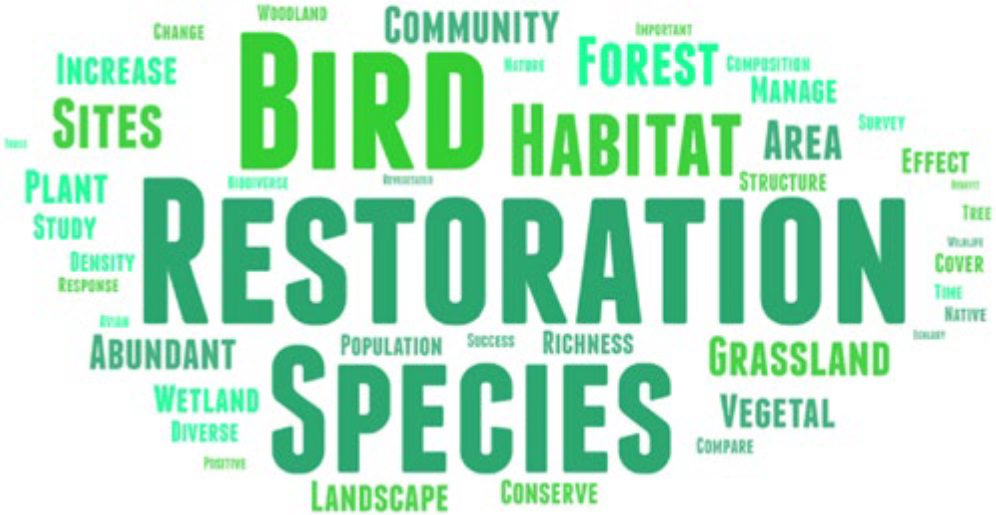
To identify predominant research themes, the abstracts of all included studies were used to generate a word cloud representing the 45 most frequent terms. This analysis aimed to provide a descriptive overview of recurring topics and research focus areas within the literature on ecological restoration and avifauna. The word cloud was generated using the WordArt platform (www.wordart.com).
Finally, the geographical distribution of the studies was represented by a thematic map created on the online platform MapChart (https://www.mapchart.net). Countries were manually highlighted according to the number of publications identified, using a color scale to represent different frequency classes.
The map is descriptive and illustrative in nature, with the aim of visually summarizing the spatial patterns of research distribution on a global scale. The information presented is based on absolute counts of studies per country and does not constitute a quantitative or inferential spatial analysis, nor does it involve statistical modeling of geographical distribution.
Results
Using the defined search terms to identify studies evaluating the effects of terrestrial and aquatic landscape restoration on avifauna, we retrieved 809 records from Scopus, 383 from Web of Science, and 1,000 from Google Scholar. In total, 2,192 records were screened. The main reasons for exclusion included lack of empirical data on birds, review articles, modeling studies without implemented restoration, and studies not directly related to habitat restoration. After applying inclusion and exclusion criteria, 192 studies met the eligibility requirements and were included in this review. These comprised 173 peer-reviewed articles, three book chapters, six technical reports, and ten academic theses (Figure 1).

Flowchart of the study selection process based on predefined inclusion and exclusion criteria, adapted from the PRISMA guidelines. The diagram summarizes the identification, screening, eligibility, and inclusion stages, including records obtained from databases and other sources.
The word-cloud analysis revealed that the most frequent terms across the corpus were “restoration” (frequency = 851), “bird” (798), “species” (770), “habitat” (440), “sites” (305), “forest” (300), “area” (240), “grassland” (240), “community” (227), “abundant” (216), “change” (100), “success” (84), “biodiverse” (80), “revegetated” (57), and “ecology” (56) (Figure 2).

Word cloud representing the most frequently mentioned words in 192 abstracts of publications on the effects of ecological restoration on bird populations and communities around the world. The size of the word is proportional to its frequency in the abstracts.
The most frequent terms were related to habitat restoration, species diversity, and community-level responses. This analysis provides a descriptive overview of the main research themes in literature and helps identify dominant topics and potential gaps related to the objectives of this review.
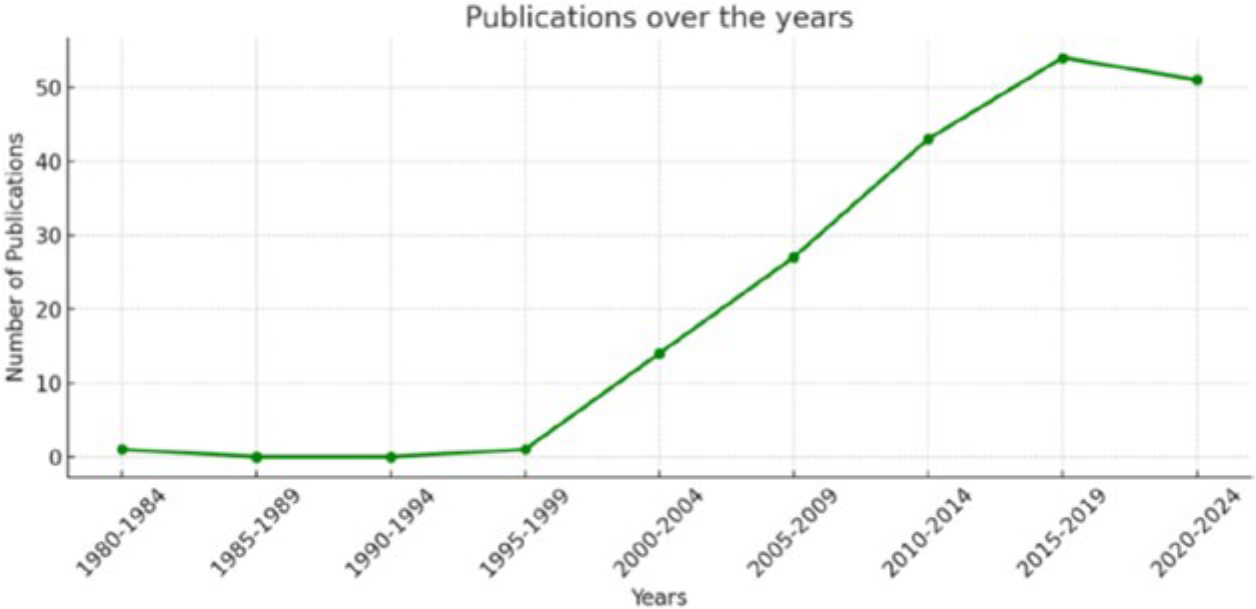
In terms of publication trends, the studies included in this review were published between 1980 and mid-2024 (Figure 3). Notably, 58.9% of the publications appeared in the last decade, indicating a marked increase in the number of publications on ecological restoration and avifauna.

Temporal distribution of publications on the effects of ecological restoration on bird communities between 1980 and September 2024. Values represent the number of studies published per year.
Geographically, the studies encompassed research conducted in 37 countries (Figure 4). The United States accounted for the largest share, representing 49.5% of all publications, followed by Australia (13.5%) and Brazil (4.2%).

Global distribution of studies by country, illustrating the number of publications on ecological restoration and bird communities. Countries are shaded according to the number of studies identified, representing different frequency classes.
To assess which environments are most frequently represented in restoration studies, study sites were categorized into forest, savannah/grassland, and wetland ecosystems. Forest environments accounted for 52.6% of the studies representing the most frequently studied ecosystem type inrestoration initiatives involving birds. Savannah and grassland ecosystems represented 25%, while wetlands accounted for 22.4% of the records.
2.1 Restoration techniques
Among the reviewed studies, 85.4% reported the use of active restoration techniques, involving direct human intervention to accelerate recovery through methods such as seedling planting, direct seeding, prescribed burning, vegetation cutting, and construction of physical structures. In contrast, 6.3% of studies reported passive restoration, where ecosystems regenerate naturally without direct human intervention, while 8.3% combined both strategies.
Comparative analysis using odds ratios indicated that, when grouping positive and neutral responses as favorable, the probability of beneficial effects from restoration was high in both strategies. After applying the correction for zero frequencies (Table 1), the estimated Odds Ratio (OR ≈ 0.74) indicates similar probabilities of favorable responses between active and passive restoration.
Contingency table used for the estimation of the odds ratio comparing active and passive restoration techniques. Values include the Haldane–Anscombe correction applied to account for zero frequencies.
2.2 Overall effects of restoration on birds
Across all ecosystems and regions, 81.3% of the studies reported beneficial outcomes for bird diversity and community structure. In contrast, 16.1% reported neutral effects, with no significant changes in bird communities following restoration. Only 2.6% of studies (n = 5) reported negative outcomes. Of these, three evaluated restoration effects at the population level of a single species, while two reported negative effects on both vegetation and avifauna.
Among studies providing information on restoration age, time since intervention ranged from 1 to 111 years.
Most restoration projects emphasized the use of native plant species. In forest ecosystems, 70 studies reported the exclusive use of native trees, while only six combined native and exotic species. In savannah and grassland restorations, 22 studies used native grasses exclusively, and eight used mixed species compositions) (Table S1.)
A subset of 18 studies specifically examined restoration effects on conservation-priority bird species including specialists, endangered, and endemic taxa. Of these, 14 reported positive outcomes, such as increased reproductive success, population growth, improved habitat quality, and enhanced body condition. The remaining four studies reported neutral effects.
Finally, ten studies addressed the influence of restoration on functional and phylogenetic diversity. Nine of these detected positive effects, while one study reported a loss of functional diversity.
Discussion
The results of this integrative review indicate that ecological restoration has a strong potential to promote the recovery of bird communities across diverse ecosystems. Across all ecosystems and regions, 81.3% of the studies reported beneficial outcomes, while 16.1% reported neutral effects and only 2.6% reported negative responses. These findings suggest that restoration generally supports avian diversity and community structure, although outcomes vary depending on ecological and methodological contexts.
The geographical and temporal patterns identified in this review also reveal important biases in the literature. Most studies were conducted in temperate regions, particularly in the Northern Hemisphere, while tropical and developing regions remain underrepresented. Additionally, the increase in publications over recent decades reflects growing scientific interest in ecological restoration, which has been further reinforced by global initiatives such as the United Nations Decade on Ecosystem Restoration, which has expanded investments and priorities in ecosystem recovery (UNEP & FAO, 2020).
In most studies, active restoration techniques – involving direct human intervention, such as planting, seeding, or structural modifications- were most frequently employed. Latja et al. (2016) observed rapid responses from bird communities in tropical forests after anthropogenic disturbances; similarly, Helms IV et al. (2018) documented increases of up to 94% in species richness in reforested areas, with average annual increments of 27% in years without fire occurrence. In general, active restoration techniques produced positive effects on bird richness, abundance, and diversity (Wilson, Masters and Bukenhofer, 1995; Canales-Delgadillo et al. 2019; Gamblin et al. 2023).
Neutral responses were frequently associated with short monitoring periods, as vegetation establishment and successional processes require time to reach maturity. Negative outcomes were rare and often linked to studies focusing on single species or to restoration practices that altered vegetation structure in ways that were unfavorable to avifauna. For example, inappropriate management practices, such as canopy reduction or burning outside appropriate seasonal windows, may negatively affect bird communities (Barrioz et al. 2013). According to Da Silva, Lindenmayer and Fontana (2019), passive restoration can be effective and economically advantageous when local conditions favor natural regeneration. Although active and passive approaches often result in distinct plant structures, resource availability may converge over time (Morrison and Lindell 2011).
The time elapsed since restoration also emerged as an important factor influencing avian recovery. Ecological succession plays a central role in this process, as bird communities tend to stabilize gradually over time (Miranda 2009). Studies have shown that older restored areas support higher richness and abundance than recently restored sites, Kavanagh, Stanton and Herring (2007) reported that older plantations (10–25 years) supported greater bird richness and abundance than younger sites (< 10 years), although the time required for recovery varies widely depending on environmental conditions and land-use history. In addition to the restoration method, the timing of restoration, proximity to remnant native habitats, and successional stage of restored areas were consistently identified as key determinants of avian recovery (Paxton et al. 2018; Olechnowski et al. 2009; Haslem et al. 2023).
Long-term maintenance and temporal continuity are also essential for sustaining bird diversity in restored habitats. As highlighted by Lindenmayer et al. (2016), supporting a range of vegetation age classes within restored forests is crucial; species associated with younger stands may abandon the area if new plantations are not periodically established. Similarly, restored wetlands often harbor rich waterbird assemblages but seldom replicate the ecological functions of natural wetlands, as they typically lack seasonal hydrological fluctuations essential for many tidal specialists such as shorebirds (Fan et al. 2021).
Consistent with the patterns observed in this review, most restoration projects prioritized the use of native plant species. Selecting appropriate sites and considering the surrounding landscape matrix are critical components of restoration success. According to Silva and Fontana (2021), the amount of adjacent native habitat can strongly influence bird diversity in restored areas. Integrating landscape-level planning into restoration projects can thus enhance connectivity and facilitate species dispersal. As suggested by Ma et al. (2022), restoration between forest fragments should be prioritized to increase habitat connectivity, while degraded monospecific plantations can be converted into mixed species stands through replanting to optimize vegetation structure and ecological function.
The use of native plant species is generally more beneficial for avifaunal recovery than the introduction of exotic species. Werema (2021) demonstrated that restorations dominated by exotic vegetation exhibited lower bird species richness, abundance, and diversity compared to those using native flora. Similarly, Becker, Paise, and Pizo (2019) reported that even a decade after revegetation with exotic grasses, restored areas still did not resemble natural pastures in terms of bird composition. Exotic grass species can also alter plant community dynamics, degrading habitat quality for both birds and other faunal groups (Lituma, 2010). These findings collectively underscore the ecological risks of relying on non-native species in restoration projects.
Restoration also showed positive effects on conservation-priority species, including specialists, endangered, and endemic birds. Most studies reported improvements in parameters such as reproductive success, population trends, and habitat quality, although some neutral responses were observed, particularly in studies with limited postrestoration monitoring. Beyond species richness, restoration can influence the functional and phylogenetic dimensions of biodiversity. Ikin et al. (2019) provided clear evidence that large-scale restoration enhances functional complementarity and redundancy among bird assemblages in degraded agricultural landscapes. Structural complexity of vegetation promotes the reorganization and addition of functional traits such as diet, habitat preference, body mass, environmental sensitivity, and foraging stratum that together increase functional richness and evenness (Melo, Silva and Piratelli 2020).
However, contrasting results have also been reported. Cosset and Edwards (2017) found that restoration led to a loss of evolutionary history and functional specialization, suggesting that certain practices may favor generalist species over specialists. This highlights the need for holistic ecosystem-based approaches that prevent restoration from inadvertently reducing functional diversity. As Tilman et al. (2017) emphasize, the policies and restoration strategies adopted today will decisively shape which species and how many persist through ongoing environmental change.
Despite the consensus on restoration’s positive influence, important gaps remain. Few studies have conducted long-term monitoring of bird assemblages, limiting our understanding of whether specialist species can maintain viable populations over time (Waldén and Lindborg 2018). Moreover, key ecological processes such as nest predation, edge effects, and matrix pressure, which are often intensified in restored landscapes, remain underexplored (Pass, Pensa and Lõhmus 2022; Whittingham and Evans 2004). Understanding these dimensions is fundamental to determining whether increases in abundance genuinely represent conservation success.
Conclusion
Overall, the results reinforce that restoration should be viewed as a dynamic, multi-scalar process. At the local scale, structural heterogeneity of vegetation supports different bird guilds and ecological functions. At the landscape scale, habitat connectivity and spatial configuration play decisive roles, although their effects vary among biomes. Clearly defining target species, ecological functions, and management objectives is therefore essential to ensure that restoration outcomes extend beyond assemblages dominated by generalists.
However, the available evidence presents important limitations that should be considered when interpreting these findings. The studies included in this review show considerable heterogeneity in terms of ecosystems, methodologies, and restoration approaches, which may influence the comparability of results. In addition, the scarcity of long-term monitoring limits our understanding of whether observed positive responses are sustained over time, particularly for specialist and conservation-priority species.
Finally, birds remain valuable bioindicators of ecological restoration, reflecting environmental quality and successional progress. However, their responses must be interpreted with caution, because numerical increases do not always translate into real conservation gains. Integrating functional, phylogenetic, and behavioral metrics into future studies will provide a more comprehensive understanding of how restoration contributes to avian biodiversity and ecosystem resilience.
Supplementary Material
The following online material is available for this article:
Table S1. List of studies included in this integrative review.
Acknowledgements
The authors are grateful for the financial support provided by the Fundo Brasileiro para a Biodiversidade (FUNBIO), the Global Environment Facility (GEF), and the Fonseca Leadership Program (FLP) (Grant no. 111/2025). MMB also acknowledges the Coordenação de Aperfeiçoamento de Pessoal de Nível Superior – Brasil (CAPES) for the scholarship awarded (Finance Code 88887.935287/2024-00).
Data Availability
All information presented in this text was derived from secondary data obtained through our integrative review. The documents included in the review are detailed in the Additional File. The authors confirm that all data necessary for reproducing the study findings are available in the designated dataset https://doi.org/10.48331/SCIELODATA.LKWMMT.
References
- AGRESTI, A. 2007. An introduction to categorical data analysis (2nd ed.). Wiley.
- ANSCOMBE, F.J. 1956. On estimating binomial response relations. Biometrika, 43:461–464.
-
BARRIOZ, S., KEYSER, P., BUCKLEY, D., BUEHLER, D. & HARPER, C. 2013. Vegetation and avian response to oak savanna restoration in the Mid-South USA. The American Midland Naturalist 169(1):194–213. https://doi.org/10.1674/0003-0031-169.1.194.
» https://doi.org/10.1674/0003-0031-169.1.194 -
BECKER, R.G., PAISE, G. & PIZO, M.A. 2019. A comparison of bird communities in natural and revegetated grasslands in south Brazil. Revista Brasileira de Ornitologia, 27(3):199–206. https://doi.org/10.1007/s43388-019-00033-y.
» https://doi.org/10.1007/s43388-019-00033-y -
BirdLife International. 2024. BirdLife International. https://www.birdlife.org
» https://www.birdlife.org - BURNETT, R.D., GARDALI, T. & GEUPEL, G.R. 2005. Using songbird monitoring to guide and evaluate riparian restoration in salmonid-focused stream rehabilitation projects. In C.J. RALPH & T.D. RICH (Eds.), Bird conservation implementation and integration in the Americas: Proceedings of the Third International Partners in Flight Conference (pp. 533–536). USDA Forest Service.
- CANALES-DELGADILLO, J.C., PÉREZ-CEBALLOS, R., ZALDÍVAR-JIMÉNEZ, M.A., MERINO-IBARRA, M., CARDOZA, G. & CARDOSO-MOHEDANO, J.G. 2019. The effect of mangrove restoration on avian assemblages of a coastal lagoon in southern Mexico. PeerJ 7: e7493.
-
COSSET, C.C.P. & EDWARDS, D.P. 2017. The effects of restoring logged tropical forests on avian phylogenetic and functional diversity. Ecological Applications 27(6):1932–1945. https://doi.org/10.1002/eap.1578.
» https://doi.org/10.1002/eap.1578 -
DA SILVA, T.W., LINDENMAYER, D.B. & FONTANA, C.S. 2019. Passive restoration contributes to bird conservation in Brazilian Pampa grasslands. Journal of Field Ornithology 90(4):295–308. https://doi.org/10.1111/jofo.12316.
» https://doi.org/10.1111/jofo.12316 -
ERIKSEN, M.B. & FRANDSEN, T.F. 2018. The impact of patient, intervention, comparison, outcome (PICO) as a search strategy tool on literature search quality: A systematic review. Journal of the Medical Library Association 106(4):420–431. https://doi.org/10.5195/jmla.2018.345.
» https://doi.org/10.5195/jmla.2018.345 - FAN, J., WANG, X., WU, W., CHEN, W., MA, Q. & MA, Z. 2021. Function of restored wetlands for waterbird conservation in the Yellow Sea coast. Science of the Total Environment 756:144061.
-
GAMBLIN, A.E., DARRAH, A.J., WOODREY, M.S. & IGLAY, R.B. 2023. Coastal bird community response to dredge-spoil tidal marsh restoration at New Round Island, Mississippi, USA. Restoration Ecology 31(4):e13775. https://doi.org/10.1111/rec.13775.
» https://doi.org/10.1111/rec.13775 -
GARDALI, T., HOLMES, A.L., SMALL, S.L., NUR, N., GEUPEL, G.R. & GOLET, G.H. 2006. Abundance patterns of landbirds in restored and remnant riparian forests on the Sacramento River, California, USA. Restoration Ecology 14(3):391–403. https://doi.org/10.1111/j.1526-100X.2006.00147.x.
» https://doi.org/10.1111/j.1526-100X.2006.00147.x - GEORGE, T.L. & ZACK, S. 2001. Spatial and temporal considerations in restoring habitat for wildlife. Restoration Ecology 9(3):272–279.
-
GOULD, S.F. & MACKEY, B.G. 2015. Site vegetation characteristics are more important than landscape context in determining bird assemblages in revegetation. Restoration Ecology 23(5):670–680. https://doi.org/10.1111/rec.12222.
» https://doi.org/10.1111/rec.12222 - HALDANE, J.B.S. 1956. The estimation and significance of the logarithm of a ratio of frequencies. Annals of Human Genetics 20:309–311.
- HASLEM, A., MAISEY, A.C., CLARKE, R.H., STEWART, A., RADFORD, J.Q. & BENNETT, A.F. 2023. Quantifying the landscape-scale recovery of bird communities over time in response to on-farm restoration plantings. Biological Conservation 280:109987.
- HELMS, J.A. IV, WOERNER, C.R., FAWZI, N.I., MACDONALD, A., JULIANSYAH, POHNAN, E. & WEBB, K. 2018. Rapid response of bird communities to small-scale reforestation in Indonesian Borneo. Tropical Conservation Science 11:1940082918769460.
- IKIN, K., BARTON, P.S., BLANCHARD, W., CRANE, M., STEIN, J. & LINDENMAYER, D.B. 2019. Avian functional responses to landscape recovery. Proceedings of the Royal Society B 286(1901):20190114.
- KAVANAGH, R.P., STANTON, M.A. & HERRING, M.W. 2007. Eucalypt plantings on farms benefit woodland birds in south-eastern Australia. Austral Ecology 32(6):635–650.
- LATJA, P., VALTONEN, A., MALINGA, G.M. & ROININEN, H. 2016. Active restoration facilitates bird community recovery in an Afrotropical rainforest. Biological Conservation 200:70–79.
- LINDENMAYER, D.B., LANE, P.W., BARTON, P.S., CRANE, M., IKIN, K., MICHAEL, D. & OKADA, S. 2016. Long-term bird colonization and turnover in restored woodlands. Biodiversity and Conservation 25(8): 1587–1603.
- LITUMA, C.M. 2010. Effects of grassland restoration on avian assemblage characteristics and dickcissel nesting success in Texas (Doctoral dissertation). Texas A&M University.
- MA, T., SUN, G., LI, X., LIU, X., LIU, F., QIAN, F. & XIAO, W. 2022. Effects of forest amount and fragmentation on different bird guilds reveal strategies of forest restoration. Global Ecology and Conservation 38:e02224.
- MELO, M.A., SILVA, M.A.G. & PIRATELLI, A.J. 2020. Improvement of vegetation structure enhances bird functional traits and habitat resilience. Anais da Academia Brasileira de Ciências 92:e20191241.
- MIRANDA, J.C. 2009. Sucessão ecológica: conceitos, modelos e perspectivas. SaBios – Revista de Saúde e Biologia 4(1).
- MORRISON, E.B. & LINDELL, C.A. 2011. Active or passive forest restoration? Restoration Ecology 19(2):170–177.
- NEWBOLD, T., HUDSON, L.N., HILL, S.L., CONTU, S., LYSENKO, I., SENIOR, R.A. & PURVIS, A. 2015. Global effects of land use on local terrestrial biodiversity. Nature 520(7545):45–50.
- OLECHNOWSKI, B.F., DEBINSKI, D.M., DROBNEY, P., VISTE-SPARKMAN, K. & REED, W.T. 2009. Changes in vegetation structure through time. Ecological Restoration 27(4):449–457.
- OUZZANI, M., HAMMADY, H., FEDOROWICZ, Z. & ELMAGARMID, A. 2016. Rayyan—a web and mobile app for systematic reviews. Systematic Reviews 5:210.
- PAGE, M.J., et al. 2022. A declaração PRISMA 2020. Epidemiologia e Serviços de Saúde 31(2):e2022107.
- PAXTON, E.H., YELENIK, S.G., BORNEMAN, T.E., ROSE, E.T., CAMP, R.J. & KENDALL, S.J. 2018. Rapid colonization of a Hawaiian restoration forest. Restoration Ecology 26(1):165–173.
- PASS, E., PENSA, M. & LÕHMUS, A. 2022. Short-term effects of predator removal. Wetlands Ecology and Management 30(1):161–169.
- PIMM, S.L. 1991. The balance of nature? University of Chicago Press.
- SCHÜLER, J. & BUSTAMANTE, M.M.C. 2022. Spatial planning for restoration in Cerrado. Journal of Applied Ecology 59(10):2616–2626.
- SILVA, T.W. & FONTANA, C.S. 2021. Remnants of native vegetation surrounding do not affect birds. Frontiers in Ecology and Evolution 8: 576705.
-
SOCIETY FOR ECOLOGICAL RESTORATION INTERNATIONAL. 2004. The SER primer on ecological restoration. http://www.ser.org
» http://www.ser.org - TILMAN, D., CLARK, M., WILLIAMS, D.R., KIMMEL, K., POLASKY, S. & PACKER, C. 2017. Future threats to biodiversity. Nature 546(7656):73–81.
- UNEP & FAO. 2020. The UN Decade on Ecosystem Restoration 2021–2030. United Nations.
-
UNITED NATIONS. 2021. Becoming #GenerationRestoration. https://www.decadeonrestoration.org
» https://www.decadeonrestoration.org - WALDÉN, E. & LINDBORG, R. 2018. Facing the future for grassland restoration. Journal of Environmental Management 227:305–312.
- WEREMA, C. 2021. Exotic and native tree species in rehabilitation. African Journal of Ecology 59(3):641–654.
- WILSON, C.W., MASTERS, R. & BUKENHOFER, G.A. 1995. Breeding bird response to pine–grassland restoration. The Journal of Wildlife Management 59:56–67.
- WHITTINGHAM, M.J. & EVANS, K.L. 2004. Habitat structure and predation risk. Ibis 146:210–220.