 Termites of the Gurupi Biological Reserve, Eastern Amazon, Brazil
Abstract
The Gurupi Biological Reserve (Rebio Gurupi) is a strategically important area for the conservation of Amazonian flora and fauna, as it represents one of the last remaining patches of Amazon rainforest on the easternmost edge of the biome. Despite its relevance and the high biomass of termites, a group crucial for ecosystem services, their assemblages remain largely unknown in Rebio Gurupi. In this study we therefore provide a first checklist of the termites in the Gurupi Biological Reserve. Termites were sampled across different microhabitats using standardized time- and area-restricted collection protocols, as well as qualitative sampling. The classification of feeding groups was carried out according to information present in the scientific literature. A total of 98 termite species were registered, distributed across four families, eight subfamilies, and 53 genera. Of these, 93 species belong to the family Termitidae. Soil-feeders were predominant, with a total of 57 species. Sample completeness indices suggest that several additional species may be observed with continued inventory efforts. Our results show that the area has a high termite diversity and reinforce the importance of Rebio Gurupi as a biodiversity refuge, highlighting the need for conservation efforts to preserve termite fauna and the associated ecosystem services.
Keywords
Belém Center of Endemism; Biodiversity; Neotropical Region; Isoptera; Feeding groups
Resumo
A Reserva Biológica do Gurupi (Rebio Gurupi) é uma área de importância estratégica para a conservação da flora e fauna amazônica, por representar um dos últimos remanescentes da floresta amazônica no limite leste do bioma. Apesar de sua relevância e da alta biomassa de térmitas, um grupo crucial para os serviços ecossistêmicos, suas comunidades permanecem em grande parte desconhecidas na Rebio Gurupi. Neste estudo, nós fornecemos a primeira lista de espécies de térmitas na Reserva Biológica do Gurupi. Os térmitas foram amostrados em diferentes microhabitats usando protocolos padronizados de coleta com restrição de tempo e área, bem como amostragem qualitativa avulsa. A classificação dos grupos alimentares foi realizada de acordo com informações presentes na literatura científica. Um total de 98 espécies de térmitas foi registrado, distribuído em quatro famílias, oito subfamílias e 53 gêneros. Dessas, 93 espécies pertencem à família Termitidae. Os humívoros foram predominantes, com um total de 57 espécies. Os índices de completude da amostragem sugerem que várias espécies adicionais podem ser observadas com esforços de inventário contínuos. Nossos resultados mostram que a área possui uma alta diversidade de térmitas e reforçam a importância da Rebio Gurupi como um refúgio de biodiversidade, destacando a necessidade de esforços de conservação para preservar a fauna de térmitas e os serviços ecossistêmicos associados.
Palavras-chave
Centro de Endemismo de Belém; Biodiversidade; Região Neotropical; Isoptera; Grupos Alimentares
Introduction
The Gurupi Biological Reserve (Rebio Gurupi) plays a fundamental role in biodiversity conservation, as it is one of the last preserved areas in the easternmost portion of the Amazon (MMA, 1999). Situated in a context of intense anthropogenic pressure, marked by logging, deforestation and expansion of cattle ranching, Rebio Gurupi serves as a crucial refuge for several endemic and endangered species. Among them is the black-winged trumpeter (Psophia obscura Pelzeln, 1857), a bird classified as Critically Endangered and found exclusively in this reserve (Mendonça et al., 2021).
Human activities such as illegal logging, irregular occupation, wildlife trafficking, and cattle ranching expansion pose increasing threats to Rebio Gurupi, leading to a progressive loss of habitats (Barros & Barbosa, 2015). These activities have already reduced the vegetation cover of this Conservation Unit (CU) by approximately 30%. In addition, the reserve has been severely impacted by wildfires—in 2015 alone, nearly 50% of its area was affected by fires (Celentano et al., 2017; Hessel & Lisboa, 2015). Given this scenario, the implementation of effective protection strategies is crucial to avoid global extinctions of resident endemic and endangered taxa.
Despite this urgent need for conservation, we currently lack information for many taxa, particularly the invertebrates, from Rebio Gurupi. One group we know very little about from Rebio Gurupi is termites. Termites are eusocial insects that have high biomass in tropical and subtropical regions (Rosenberg et al., 2023), such as the Amazon. Currently, around 3,000 species are known worldwide and about 350 in Brazil, and it is estimated that there are approximately 5,000 species worldwide and 600 in Brazil (Constantino, 2018; Grandcolas et al., 2024). They play a crucial role in the decomposition of plant necromass and soil formation (Bignell & Eggleton, 2000; Vasconcellos & Moura, 2010; Wang et al., 2024), contributing to nutrient redistribution, increased soil permeability, and aeration— factors that enhance primary productivity (DeSouza & Cancello, 2010). These ecological roles are often linked to specific feeding groups (e.g., wood-feeders, soil-feeders, leaf-feeders), whose composition can reflect environmental conditions and resource availability. Over the past decades, termites have been extensively studied in the Amazon, leading to the publication of species lists (Castro et al., 2021b; Constantino, 1992; Dambros et al., 2012; Ferreira et al., 2023) and a deeper ecological understanding of various aspects of the group (Constantino & Acioli, 2006; Constantino & Cancello, 1992; Dambros et al., 2017; Eleuterio et al., 2020; Martius et al., 1996). Yet, despite advances in termite research, significant gaps remain regarding their taxonomy and distribution, particularly in the Amazon (Carvalho et al., 2023).
In this study, our objective was to characterize the taxonomic diversity and feeding groups of the termite community in terra-firme areas in the Gurupi Biological Reserve, Maranhão state, Brazil. As termites can be used as bioindicators (Alves et al., 2011), analyzing their taxonomic and functional composition can provide valuable insights into environmental impacts on the local ecosystem, helping us predict how changes in environmental factors may affect their ecological services, such as organic matter decomposition and nutrient cycling.
Material and Methods
1. Study area
The Gurupi Biological Reserve (Fig. 1) is located in the state of Maranhão, northeastern Brazil, at the easternmost edge of the Amazon and covers an area of 271,197.51 hectares. As a Conservation Unit of strict protection, its entire area is dedicated to conservation. The reserve is part of a complex of nearly 1.2 million hectares of preserved land also encompassing three indigenous territories (Alto Turiaçu, Awa and Caru; Oliveira 2011). Established in 1988, Rebio Gurupi spans the municipalities of Centro Novo do Maranhão, Bom Jardim, and São João do Caru (Brasil, 1988). The local climate is tropical humid, with an average annual precipitation of approximately 1,740 mm. Its vegetation is predominantly composed of different types of Dense Ombrophilous Forest, including Alluvial Ombrophilous Forest and Plateau Ombrophilous Forest.
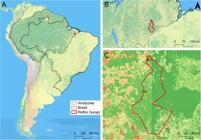
A, B) Location of the Gurupi Biological Reserve, easternmost Amazon (lined area), in the state of Maranhão, Brazil. C) NDVI image showing the vegetation cover in the reserve and adjacent areas. The yellow dots indicate the location and year of each collection expedition. Satellite images were acquired from Sentinel-2 L2A, accessed via the Copernicus Browser (browser.dataspace.copernicus.eu) for the date of 17/05/2024.
The Normalized Difference Vegetation Index (NDVI) was used to characterize the vegetation cover within the study area. For this purpose, data from the Sentinel-2 L2A satellite, provided by the European Union’s Copernicus Programme, were utilized. The B08 (Near-Infrared) and B04 (Red) bands were selected due to their high spatial resolution and minimal cloud obstruction over the reserve. The NDVI was calculated in QGIS using the Raster Calculator tool, following the standard formula (NDVI = (B08-B04)/(B08+B04)). The visual representation of the NDVI raster was refined by customizing its color scheme to accurately reflect the patterns of vegetation.
2. Sampling
Two sampling expeditions were conducted in the Gurupi Biological Reserve, focusing on terra-firme forests, one in 2016 (3°37’34.3”S 46°48’54.8”W) and another in 2022 (3°15’06.7”S 46°44’37.8”W), the latter during the 8th expedition of the Amazon Biodiversity & Carbon (ABC) (www.abc-expeditions.com). The sampling efforts targeted different, yet ecologically similar, areas within the reserve during each expedition. In both, a standardized diversity sampling protocol (Cancello et al., 2014) was followed, consisting of six 65-meter long transects spaced at least 100 meters apart. Each transect is divided into 5 plots of 5 x 2 meters, spaced 10 meters apart. In total, 12 transects (60 plots) were applied in the area across both expeditions. In each plot, a sampling effort of 1 hour/person was made, actively searching for termites in all possible microhabitats, such as soil, decaying wood, plant roots, under rocks, conspicuous nests, leaf litter, soil tunnels (up to 20 cm deep), and living tree trunks (up to 2 meters high). Additionally, qualitative sampling was conducted in various microhabitats outside the established plots to complement the species list for the study area and find species not detected by the standardized protocol.
The collection and transportation of termites were properly authorized by the Brazilian Biodiversity Authorization and Information System (SISBIO), under the Chico Mendes Institute for Biodiversity Conservation (ICMBio) and the Ministry of the Environment (MMA) (SISBIO authorization numbers: 54892-1 and 84390-1). Collected material was placed in flasks containing 80 °GL ethyl alcohol for sorting in the laboratory. All collected samples were deposited in the Termite Collection of the Department of Systematics and Ecology at the Federal University of Paraíba (UFPB).
3. Identification of specimens and feeding groups
Species identification was carried out by comparing samples already deposited in the UFPB Termite Collection and based on taxonomic descriptions and identification keys available in the scientific literature (Acioli & Constantino, 2015; Bourguignon et al., 2010, 2016; Carrijo et al., 2011, 2023; Constantino, 1991, 1995, 2002; Constantino et al., 2006; Oliveira & Constantino, 2016; Rocha et al., 2012a, 2012b; Rocha & Cancello, 2007, 2022). Primarily, identification relied on the morphology of the soldiers. However, for specimens of the subfamily Apicotermitinae, which lack the soldier caste in the Neotropical region, identification was based on details of the digestive tract coiling and enteric valve of workers (Almeida-Azevedo et al., 2023). In some cases, external characteristics of Apicotermitinae workers, such as the protibia and fontanel, were also used for identification. Conspicuous nestbuilding species were identified using field observations and scientific literature data (Constantino, 1991, 1992, 1995; Duran-Bautista et al., 2025; Ferreira et al., 2023; Mathews, 1977).
In this study, the classification of feeding groups is based primarily on the type of material consumed by termites. The categories include: wood-feeders (W) for species that feed on wood; soil-feeders (S) for those that feed on humus; wood/soil interface termites (W/S) for species that feed on plant material in an intermediate stage of decomposition; inquilines termites (I) that feed on compounds produced by the host species; and leaf/litter-feeders (L). A second category system was also utilized, based on the humification gradient of the termites’ gut contents, grouping them into four categories (I, II, III, and IV). The classification of species into these feeding groups was based on information from the scientific literature, considering species lists published from research conducted in Amazonian forest areas (Constantino, 1992; Donovan et al., 2001; Ferreira et al., 2023; Plaza, 2019). This classification was extrapolated to the genus level when species-specific information was not available.
4. Analysis
To assess the sample completeness of the termite inventories, using iNEXT package (Hsieh et al., 2016), sample coverage (DataInfo function) and species richness (iNEXT function) estimates were made using data from the standardized protocol (using plots as the sampling unit and “incidence_freq” datatype) from each of the sampling expeditions, both separately and combined. The estimates were performed using frequency data and the graphs were generated with the ggiNEXT function, with analysis conducted in the R software (R Core Team, 2024). Only the species sampled in the protocol were used in the analysis.
Results
In total, 98 species were recorded in the Rebio Gurupi (Table 1). Of these, 22 could not be identified to the species level and were classified as morphospecies at the genus level (11) or subfamily level (11), the latter in the case of some Apicotermitinae. The family with the highest species richness was Termitidae, with 93 species, followed by Kalotermitidae (2), Heterotermitidae (2), and Rhinotermitidae (1). Among the subfamilies of Termitidae, Apicotermitinae exhibited the highest richness, with 33 (morpho-)species, followed by Nasutitermitinae (22), Syntermitinae (19), Termitinae (10), Neocapritermitinae (5), Microcerotermitinae (2), Crepititermitinae (1), and Cylindrotermitinae (1). Although Apicotermitinae had the highest species richness and encounters (117), 42.4% of these were classified as morphospecies (Fig S1, Supplementary Material). A total of 366 encounters were recorded, with 19 of them from qualitative sampling. The most frequently encountered species was Nasutitermes guayanae (Holmgren, 1910), with 19 encounters. Thirty-seven species were collected only once. Thirteen species were recorded during qualitative sampling. Overall, 17 species known as conspicuous nest builders were recorded (Fig. S2, Supplementary Material).
The majority of species (57) and encounters (184) were categorized as soil-feeders (S), followed by wood-feeders and wood/soil interface species. Inquilines (I) were the least recorded, with only one species, Ereymatermes rotundicepsConstantino, 1991. According to the classification by Donovan et al. (2001), group III was the richest and most frequent, with 57 species and 177 encounters (Table 1, Fig. 2).
List of termite species from the Gurupi Biological Reserve, located in the state of Maranhão, northeastern Amazonia, Brazil. Feeding groups: W – woodfeeders, S – soil-feeders, W/S – wood-soil interface, I – inquilines, L – leaf-feeders (Plaza, 2019) and groups I, II, III and IV (Donovan et al. 2001). The plus sign (+) indicates species also found in qualitative sampling, and the superscript numbers are the number of the encounters of each species in the qualitative sampling. The asterisk (*) indicates species known as builders of conspicuous nests.

Number of termite species from each feeding group registered at the Gurupi Biological Reserve: soil-feeders (S), wood-feeders (W), wood/soil interface (W/S), leaf-feeders (L), and inquilines (I) according to Plaza (2019), and groups I, II, III and IV according Donovan et al. (2001).
In general, the sample coverage estimates ranged from 81,33% to 88,52% between the expeditions. By combining the data from both sampling collections, using only data from the transects, the observed species richness in the area was 95 species. Just Angularitermes sp., A. nasutissimus (Emerson, 1925) e Anoplotermes sp. 2 were not sampled in the transects. The estimated speciesrichness increased by nearly 50% compared to the observed richness (Sest = 142.3 species) (Table 2, Fig. 3).
Number of samples collected (N), sample coverage estimates (SC), observed (Sobs) and estimated (Sest) species richness in the different sampling expeditions conducted in the Gurupi Biological Reserve, Maranhão, Brazil.

Species interpolation and extrapolation curves based on samples for the inventories conducted in the Gurupi Biological Reserve, Maranhão state, Brazil. Continuous lines: observed species richness; dotted lines: extrapolated species richness of each collection expedition. Shaded areas near the lines: 95% confidence intervals of the samples.
Discussion
We registered 98 termite species at the Gurupi Biological Reserve during our two inventories, of which 22 were morphospecies, representing potentially undescribed species. In addition, the study adds 47 species to the state of Maranhão, which previously had only 41 known species (Constantino, 2022). This information is crucial for future ecological and taxonomic research and conservation. Increasing our biodiversity knowledge in the eastern Amazon is fundamental, given the high anthropogenic pressure and forest degradation in the region (Rosa et al., 2023). Our findings also underline the value of basic biodiversity inventories, especially in undersampled regions. Conducting detailed biodiversity inventories is therefore essential, as they enable the identification of species present in a given area, a facilitate their monitoring, and enhances our understanding of their ecological interactions and roles within the ecosystem (Marino et al., 2025). This knowledge is crucial for developing more effective and urgent conservation strategies (Silveira et al., 2010), as well as for assessing habitat health and ensuring the continuity of ecosystem services, which are vital for both environmental stability and human well-being (Alho, 2012).
The high number of soil-feeders termites encounters is a positive indicator for the health of the Rebio Gurupi ecosystems, as the presence of these species directly impacts the quality of the soil in these environments by improving pH and increasing organic carbon and water content (Donovan, Eggleton, Dubbin, et al., 2001). Furthermore, conspicuous nest-building species in the soil improve the physical and chemical properties of the soil, creating islands of fertility (Duran-Bautista et al., 2025). The most frequently encountered species, Nasutitermes guayanae (Holmgren, 1910), was found 19 times, suggesting a high degree of dominance within the local community. This finding may indicate that N. guayanae possesses a broad ecological niche or high adaptability, a pattern observed in other tropical termite species that strongly influence community assembly (Hausberger & Korb, 2015).
The data revealed a high number of unique species, with 35 species collected only once in the Rebio Gurupi. This directly impacts the sample coverage estimates and, consequently, the estimated species richness (Roswell et al., 2021). The high number of uniques reflects the presence of many rare species and suggests that the sampling effort was insufficient to fully capture local diversity. As a result, the true species richness is likely underestimated, and the extrapolated estimates carry greater uncertainty (Magurran & McGill, 2011). In comparison to other Amazonian areas, the entire states of Acre and Rondônia contain 128 (Ferreira et al., 2023) and 116 (Carrijo, 2013) documented species, respectively – both studies with a substantially higher sampling effort than the one conducted in the Rebio Gurupi so far.
Many termite samples could only be determined to morphospecies, and most of these belong to the subfamily Apicotermitinae. This group is difficult to study due to the complexity of accessing gut coiling characters, which has historically limited the number of researchers dedicated to studying this group (Romero Arias et al., 2021). Although studies on Apicotermitinae taxonomy have intensified in recent decades, the long-standing lack of researchers reflects the geographical and taxonomic gaps still observed for the group (Carrijo et al., 2023).
The majority of species and encounters were categorized as soilfeeders. Studies carried out in other areas of the Amazon Rainforest also recorded a high number of soil-feeders in relation to other feeding groups (Castro et al., 2021a; Davies et al., 2003; Ferreira et al., 2023). Feeding groups to which the species belong, as both the taxonomic and functional composition of local taxocenoses directly influences the impact these organisms have on the environment (Jones & Eggleton, 2011). The soil-feeders termites success may be linked to their ability to exploit a wide range of organic matter in the soil, including highly decomposed material, which is abundant in humid tropical forests (Bourguignon et al., 2015). Additionally, soil-feeders tend to have cryptic habits and complex foraging systems, which may make them more resilient to environmental variation and disturbance (Lee & Su, 2010). However, it is worth noting that wood-feeders termites records may be biased because, although diversity protocols are important ecological tools, they present an underestimation of specific taxa, such as Kalotermitidae (Scheffrahn et al., 2018).
The presence of conspicuous termite nests in the Rebio Gurupi, whether active or abandoned, play an important ecological role by contributing to habitat complexity and serving as shelter, hunting grounds, or reproductive sites for various taxa, including insects, arachnids, amphibians, reptiles, and birds (Cunha & Brandão, 2001; Vasconcelos et al., 2015). Additionally, the structure and abundance of nests, along with the identity of the builder species, can act as indicators of environmental conditions, particularly in assessing levels of anthropogenic disturbance at different spatial scales (Vasconcellos et al., 2008).
Inventories conducted in the 20th century in humid tropical forest areas showed a different pattern, where wood-feeding species predominated over other feeding groups, including soil-feeders (Bandeira, 1979; Constantino, 1992; Mill, 1982). However, in more recent studies, soil-feeders have shown a higher number of encounters and species, which leads us to consider that they may be becoming more representative (Bourguignon et al., 2011; Davies et al., 2003; Davies, 2002; Ferreira et al., 2023; Palin et al., 2011). This shift in proportion of this group within termite communities can be explained by two main factors. First, most termites in the subfamily Apicotermitinae are soilfeeding species, and their taxonomy only began to be better understood with the systematic use of internal morphological characters. This led to the description of many new species, expanding knowledge of the group’s diversity and consequently increasing the proportion of soilfeeders in species inventories (Rocha et al., 2019). Second, the adoption of standardized sampling methods with controlled time and area enabled more effective sampling of soil microhabitats, which also contributed to the higher number of soil-feeding species recorded (Cancello et al., 2014; DeSouza & Brown, 1994; Jones & Eggleton, 2000).
Our list of termite species adds to the growing number of studies describing the fauna of Rebio Gurupi. The list of termite species from Rebio Gurupi is part of a comprehensive database for the reserve, which already includes information on various taxa, such as reptiles and amphibians (Freitas et al., 2017), wasps (Somavilla et al., 2014), butterflies (Pereira et al., 2018), primates (Buss et al., 2017), and birds (Lima et al., 2014). The reserve is recognized as the locality with the highest bird richness within the Belém Endemism Area (Pinheiro et al., 2024). Additionally, Rebio Gurupi has been an important center for the discovery and description of new species across different groups, including earthworms (Hernández-García et al., 2024;Hernández-García et al., 2018; Sousa et al., 2020) and flies (Rafael et al., 2012). Factors such as the high species richness observed and the potential for discovering new taxa reflect the ecological importance of the reserve for termites. In this way, the Gurupi Biological Reserve increasingly solidifies its position as an area of major importance for the biodiversity of the Amazon.
Supplementary Material
The following online material is available for this article:
Figure S1
Figure S2
Acknowledgments
This study was partially funded by the Fundação de Apoio à Pesquisa do Estado da Paraíba (FAPESQ) and carried out with support from the Coordination for the Improvement of Higher Education Personnel (CAPES). RRF (88887.950422/2024-00) and EFL (88887.462219/2019-0, 150360/2025-8) received scholarships from CAPES and CNPq, and AV received a productivity grant (309820/2020-0) from the National Council for Scientific and Technological Development (CNPq). We sincerely thank the Research Council of Norway for financial support of the Amazon Biodiversity and Carbon Expeditions (ABC Expeditions, project no. 288086). We are deeply grateful to the residents, managers, and hosts at all our study sites, especially those at and around the Gurupi Biological Reserve—for their invaluable support and assistance. Special thanks go to Evandro Almeida Damasceno for his essential help during termite field collections, as well as to Pilar Louisy Maia Braga, João Araújo de Souza, Evanir Almeida Damasceno for their logistical support. We also thank all participants and collaborating institutions involved inthe Amazon Biodiversity and Carbon Expeditions (abc-expeditions.com). This publication follows the authorship guidelines of the ABC Expeditions project and is publication #7 of the Amazon Biodiversity and Carbon Expeditions.
Data Availability
The datasets generated during and/or analyzed during the current study are available at: https://doi.org/10.48331/scielodata.X6HJKS
References
-
ACIOLI, A.N.S. & CONSTANTINO, R. 2015. A taxonomic revision of the neotropical termite genus Ruptitermes (Isoptera, Termitidae, Apicotermitinae). Zootaxa, 4032(5): 451–492. https://doi.org/10.11646/zootaxa.4032.5.1
» https://doi.org/10.11646/zootaxa.4032.5.1 -
ALHO, C.J.R. 2012. Importância da biodiversidade para a saúde humana: Uma perspectiva ecológica. Estudos Avançados, 26(74): 151–166. https://doi.org/10.1590/S0103-40142012000100011
» https://doi.org/10.1590/S0103-40142012000100011 -
ALMEIDA-AZEVEDO, R., ALVES-OLIVEIRA, J., MORAIS, J.W., FRANKLIN, E. & AZEVEDO, R.A.D. 2023. Step-by-step Dissection Protocol of Apicotermitinae Worker (Blattaria: Isoptera). Sociobiology, 70(4): e8503. https://doi.org/10.13102/sociobiology.v70i4.8503
» https://doi.org/10.13102/sociobiology.v70i4.8503 -
ALVES, W.D.F., MOTA, A., LIMA, R.D., BELLEZONI, R. & VASCONCELLOS, A. 2011. Termites as Bioindicators of Habitat Quality in the Caatinga, Brazil: Is There Agreement Between Structural Habitat Variables and the Sampled Assemblages? Neotropical Entomology, 40(1): 39–46. https://doi.org/10.1590/S1519-566X2011000100006
» https://doi.org/10.1590/S1519-566X2011000100006 - BANDEIRA, A.G. 1979. Notas sobre a fauna de cupins (Insecta: Isoptera) do Parque Nacional da Amazônia (Tapajós), Brasil. Boletim do Museu Paraense Emílio Goeldi, 96: 1–12.
-
BARROS, R.A. & BARBOSA, R.S. 2015. Unidades de Conservação: Um Estudo sobre os Impactos Ambientais Resultantes da Extração de Madeira na Reserva Biológica do Gurupi-MA. InterEspaço: Revista de Geografia e Interdisciplinaridade, 1(2): 270–292. https://doi.org/10.18766/2446-6549/interespaco.v1n2p270-292
» https://doi.org/10.18766/2446-6549/interespaco.v1n2p270-292 -
BIGNELL, D.E. & EGGLETON, P. 2000. Termites in ecosystems. In T. ABE, D.E. BIGNELL, & M. HIGASHI (Org.), Termites: Evolution, Sociality, Symbiosis, Ecology (V. 1, p. 363–387). Springer. https://doi.org/10.1007/978-94-017-3223-9_17
» https://doi.org/10.1007/978-94-017-3223-9_17 -
BOURGUIGNON, T., DROUET, T., ŠOBOTNÍK, J., HANUS, R. & ROISIN, Y. 2015. Influence of Soil Properties on Soldierless Termite Distribution. PLOS ONE, 10(8): e0135341. https://doi.org/10.1371/journal.pone.0135341
» https://doi.org/10.1371/journal.pone.0135341 -
BOURGUIGNON, T., LEPONCE, M. & ROISIN, Y. 2011. Beta-diversity of termite assemblages among primary French Guiana rain forests. Biotropica, 43(4): 473–479. JSTOR. https://doi.org/10.1111/j.1744-7429.2010.00729.x
» https://doi.org/10.1111/j.1744-7429.2010.00729.x -
BOURGUIGNON, T., SCHEFFRAHN, R.H., KŘEČEK, J., NAGY, Z.T., SONET, G. & ROISIN, Y. 2010. Towards a revision of the Neotropical soldierless termites (Isoptera:Termitidae): Redescription of the genus Anoplotermes and description of Longustitermes, gen. nov. Invertebrate Systematics, 24(4): 357. https://doi.org/10.1071/IS10012
» https://doi.org/10.1071/IS10012 -
BOURGUIGNON, T., SCHEFFRAHN, R.H., NAGY, Z.T., SONET, G., HOST, B. & ROISIN, Y. 2016. Towards a revision of the Neotropical soldierless termites (Isoptera: Termitidae): Redescription of the genus Grigiotermes Mathews and description of five new genera. Zoological Journal of the Linnean Society, 176(1): 15–35. https://doi.org/10.1111/zoj.12305
» https://doi.org/10.1111/zoj.12305 -
BRASIL. (1988). Decreto no95.614, de 11 de janeiro de 1988.https://www.planalto.gov.br/ccivil_03/decreto/1980-1989/d95614.htm
» https://www.planalto.gov.br/ccivil_03/decreto/1980-1989/d95614.htm - BUSS, G., FIALHO, M.S., JERUSALINSKY, L., AZEVEDO, R.B., ALVES, S.L., VIDAL, M.D. & MENDONÇA, E.N. 2017. Abundance and primate density in Gurupi Biological Reserve, Maranhão, Brazil. Biodiversidade Brasileira, 7(2): 47–57.
-
CANCELLO, E.M., SILVA, R.R., VASCONCELLOS, A., REIS, Y.T. & OLIVEIRA, L.M. 2014. Latitudinal variation in termite species richness and abundance along the Brazilian Atlantic Forest hotspot. Biotropica, 46(4): 1–10. https://doi.org/10.1111/btp.12120
» https://doi.org/10.1111/btp.12120 -
CARRIJO, T.F. 2013. Estudo da termitofauna (Insecta, Isoptera) da região do alto Rio Madeira, Rondônia [Doutorado em Entomologia, Universidade de São Paulo]. https://doi.org/10.11606/T.59.2013.tde-17122013-093224
» https://doi.org/10.11606/T.59.2013.tde-17122013-093224 -
CARRIJO, T.F., CASTRO, D., WANG, M., CONSTANTINI, J.P., BOURGUIGNON, T., CANCELLO, E.M., ROISIN, Y. & SCHEFFRAHN, R.H. 2023. Diminishing the taxonomic gap in the neotropical soldierless termites: Descriptions of four new genera and a new Anoplotermes species (Isoptera, Termitidae, Apicotermitinae). ZooKeys, 1167: 317–352. https://doi.org/10.3897/zookeys.1167.100001
» https://doi.org/10.3897/zookeys.1167.100001 -
CARRIJO, T.F., ROCHA, M.M., CUEZZO, C. & CANCELLO, E.M. 2011. Key to the soldiers of Angularitermes Emerson with a new species from Brazilian Amazonia (Isoptera: Termitidae: Nasutitermitinae). Zootaxa, 2967(1): 61–68. https://doi.org/10.11646/zootaxa.2967.1.6
» https://doi.org/10.11646/zootaxa.2967.1.6 -
CARVALHO, R.L., RESENDE, A.F., BARLOW, J., FRANÇA, F.M., MOURA, M.R., MACIEL, R., ALVES-MARTINS, F., SHUTT, J., NUNES, C.A., ELIAS, F., SILVEIRA, J.M., STEGMANN, L., BACCARO, F.B., JUEN, L., SCHIETTI, J., ARAGÃO, L., BERENGUER, E., CASTELLO, L., COSTA, F.R.C., … FEITOSA, Y. 2023. Pervasive gaps in Amazonian ecological research. Current Biology, 33(16): 3495–3504.e4. https://doi.org/10.1016/j.cub.2023.06.077
» https://doi.org/10.1016/j.cub.2023.06.077 -
CASTRO, D., CARRIJO, T.F., SERNA, F.J. & PEÑA-VENEGAS, C.P. 2021a. Can Rubber Crop Systems Recover Termite Diversity in Previously Degraded Pastures in the Colombian Amazon Region? Neotropical Entomology, 50(6): 899–911. https://doi.org/10.1007/s13744-021-00905-y
» https://doi.org/10.1007/s13744-021-00905-y -
CASTRO, D., FERNANDEZ, F., SCHEFFRAHN, R.H. & PEÑA-VENEGAS, C. 2021b. Ant and termite diversity of the Colombian Amazon soils. In Proceedings of the Global Symposium on Soil Biodiversity 2021 (p. 273–278). FAO. http://www.fao.org/documents/card/en/c/cb7374en
» http://www.fao.org/documents/card/en/c/cb7374en -
CELENTANO, D., ROUSSEAU, G.X., MUNIZ, F.H., VARGA, I.V.D., MARTINEZ, C., CARNEIRO, M.S., MIRANDA, M.V.C., BARROS, M.N.R., FREITAS, L., NARVAES, I.D.S., ADAMI, M., GOMES, A.R., RODRIGUES, J.C. & MARTINS, M.B. 2017. Towards zero deforestation and forest restoration in the Amazon region of Maranhão state, Brazil. Land Use Policy, 68: 692–698. https://doi.org/10.1016/j. landusepol.2017.07.041
» https://doi.org/10.1016/j.landusepol.2017.07.041 - CONSTANTINO, R. 1991. Termites (Isoptera) from the lower Japurá River, Amazonas State, Brazil. Boletim do Museu Paraense Emílio Goeldi, série Zoologia, 7(2): 189–224.
-
CONSTANTINO, R. 1992. Abundance and diversity of termites (Insecta: Isoptera) in two sites of primary rain forest in Brazilian Amazonia. Biotropica, 24(3): 420–430. https://doi.org/10.2307/2388613
» https://doi.org/10.2307/2388613 - CONSTANTINO, R. 1995. Revision of the Neotropical Termite Genus Syntermes Holmgren (Isoptera: Termitidae). The University of Kansas Science Bulletin, 55(13): 455–518.
-
CONSTANTINO, R. 2002. An illustrated key to Neotropical termite genera (Insecta: Isoptera) based primarily on soldiers. Zootaxa, 67(1): 1–40. https://doi.org/10.11646/zootaxa.67.1.1
» https://doi.org/10.11646/zootaxa.67.1.1 -
CONSTANTINO, R. 2018. Estimating Global Termite Species Richness Using Extrapolation. Sociobiology, 65(1): 10. https://doi.org/10.13102/sociobiology.v65i1.1845
» https://doi.org/10.13102/sociobiology.v65i1.1845 -
CONSTANTINO, R. 2022. Termite Database University of Brasilia. http://termitologia.net
» http://termitologia.net - CONSTANTINO, R. & ACIOLI, A.N.S. 2006. Termite Diversity in Brazil (Insect: Isoptera). In F. M. S. Moreira, J. O. Siqueira, & L. Brussaard (Org.), Soil biodiversity in Amazonian and other Brazilian ecosystems CABI publ.
-
CONSTANTINO, R., ACIOLI, A.N.S., SCHMIDT, K., CUEZZO, C., CARVALHO, S.H.C. & ALEXANDRE, A. 2006. A taxonomic revision of the Neotropical termite genera Labiotermes Holmgren and Paracornitermes Emerson (Isoptera: Termitidae: Nasutitermitinae). Zootaxa, 1340(1): 1–44. https://doi.org/10.11646/zootaxa.1340.1.1
» https://doi.org/10.11646/zootaxa.1340.1.1 - CONSTANTINO, R. & CANCELLO, E.M. 1992. Cupins (Insecta, Isoptera) da Amazônia Brasileira: Distribuição geográfica e esforço de coleta. Revista Brasileira de Biologia, 52(3): 401–413.
- CUNHA, H.F. & BRANDÃO, D. 2001. Invertebrates associated with the neotropical termite Constrictotermes cyphergaster (Isoptera: Termitidae, Nasutitermitinae). Sociobiology, 37(3): 593–600.
-
DAMBROS, C.S., MENDONÇA, D.R.M., REBELO, T.G. & MORAIS, J.W. 2012. Termite species list in a terra firme and ghost forest associated with a hydroelectric plant in Presidente Figueiredo, Amazonas, Brazil. Check List, 8(4): 718–721. https://doi.org/10.15560/8.4.718
» https://doi.org/10.15560/8.4.718 -
DAMBROS, C.S., MORAES, J.W., AZEVEDO, R.A. & GOTELLI, N.J. 2017. Isolation by distance, not rivers, control the distribution of termite species in the Amazonian rain forest. Ecography, 40(10): 1242–1250. https://doi. org/10.1111/ecog.02663
» https://doi.org/10.1111/ecog.02663 -
DAVIES, R.G. 2002. Feeding group responses of a Neotropical termite assemblage to rain forest fragmentation. Oecologia, 133(2): 233–242. JSTOR. https://doi.org/10.1007/s00442-002-1011-8
» https://doi.org/10.1007/s00442-002-1011-8 -
DAVIES, R., HERNÁNDEZ-TRIANA, L., EGGLETON, P., DIDHAM, R., FAGAN, L. & WINCHESTER, N. 2003. Environmental and spatial influences upon species composition of a termite assemblage across Neotropical forest islands. Journal of Tropical Ecology, 19(5): 509–524. https://doi.org/10.1017/S0266467403003560
» https://doi.org/10.1017/S0266467403003560 -
DESOUZA, O.F.F., & BROWN, V.K. 1994. Effects of habitat fragmentation on Amazonian termite communities. Journal of Tropical Ecology, 10(2): 197–206. https://doi.org/10.1017/S0266467400007847
» https://doi.org/10.1017/S0266467400007847 - DESOUZA, O. & CANCELLO, E.M. 2010. Termites and Ecosystem Function. In K.D. CLARO, P.S. OLIVEIRA, V. RICO-GRAY, A. RAMIREZ, & A. A. A. Barbosa (Org.), International Comission on Tropical Biology and Natural Resources Encyclopedia of Life Support Systems (EOLSS).
-
DONOVAN, S.E., EGGLETON, P. & BIGNELL, D.E. 2001. Gut content analysis and a new feeding group classification of termites. Ecological Entomology, 26(4): 356–366. https://doi.org/10.1046/j.1365-2311. 2001.00342.x
» https://doi.org/10.1046/j.1365-2311.2001.00342.x -
DONOVAN, S.E., EGGLETON, P., DUBBIN, W.E., BATCHELDER, M. & DIBOG, L. 2001. The effect of a soil-feeding termite, Cubitermes fungifaber (Isoptera: Termitidae) on soil properties: Termites may be an important source of soil microhabitat heterogeneity in tropical forests. Pedobiologia, 45(1): 1–11. https://doi.org/10.1078/0031-4056-00063
» https://doi.org/10.1078/0031-4056-00063 -
DURAN-BAUTISTA, E.H., SILVA-OLAYA, A.M., LLANOS-CABRERA, M.P., YALANDA-SEPÚLVEDA, K. & SUÁREZ, J.C. 2025. Soilfeeding termites build islands of soil physical and chemical fertility in pastures in Colombian Amazon. PLOS One, 20(4): e0322186. https://doi.org/10.1371/journal.pone.0322186
» https://doi.org/10.1371/journal.pone.0322186 -
ELEUTERIO, A.A., JESUS, M.A.D. & PUTZ, F.E. 2020. Stem Decay in Live Trees: Heartwood Hollows and Termites in Five Timber Species in Eastern Amazonia. Forests, 11(10): 1087. https://doi.org/10.3390/f11101087
» https://doi.org/10.3390/f11101087 -
FERREIRA, R.R., LUCENA, E.F., KOROIVA, R., AZEVEDO, R.A., HAUGAASEN, T., PERES, C.A., HAWES, J.E. & VASCONCELLOS, A. 2023. Amazonian forest termites: A species checklist from the State of Acre, Brazil. Biota Neotropica, 23(4): e20231551. https://doi. org/10.1590/1676-0611-bn-2023-1551
» https://doi.org/10.1590/1676-0611-bn-2023-1551 -
FREITAS, M.A., SALDANHA VIEIRA, R., ENTIAUSPE-NETO, O.M., OLIVEIRA E SOUSA, S., FARIAS, T., GRAZIELI SOUSA, A., & JORGE BARBOSA De MOURA, G. 2017. Herpetofauna of the Northwest Amazon forest in the state of Maranhão, Brazil, with remarks on the Gurupi Biological Reserve. ZooKeys, 643: 141–155. https://doi.org/10.3897/zookeys.643.8215
» https://doi.org/10.3897/zookeys.643.8215 -
GRANDCOLAS, P., CONSTANTINO, R. & PELLENS, R. 2024. Capítulo 23: Blattaria Burmeister, 1829. In J.A. RAFAEl, G.A. R. MELO, & C.J. B.D. CARVALHO (Org.), Insetos do Brasil: Diversidade e Taxonomia (2o ed., p. 329–351). Editora INPA. https://doi.org/10.61818/56330464c23
» https://doi.org/10.61818/56330464c23 -
HAUSBERGER, B. & KORB, J. 2015. A phylogenetic community approach for studying termite communities in a West African savannah. Biology Letters, 11(10): 20150625. https://doi.org/10.1098/rsbl.2015.0625
» https://doi.org/10.1098/rsbl.2015.0625 -
HERNÁNDEZ-GARCÍA, Á., CUENCA-ENRIQUE, C., DEL-RÍO-CARAZO, L. & IGLESIAS-PRADAS, S. 2024. Exploring the relationship between LMS interactions and academic performance: A Learning Cycle approach. Computers in Human Behavior, 155: 108183. https://doi.org/10.1016/j.chb.2024.108183
» https://doi.org/10.1016/j.chb.2024.108183 -
HERNÁNDEZ-GARCÍA, L.M., BURGOS-GUERRERO, J.E., SANTOS, B.T.S.D., ROUSSEAU, G.X. & JAMES, S.W. 2018. Three new species of Holoscolex (Clitellata, Glossoscolecidae) from the Gurupi Biological Reserve, last forest remnant of the Belém Endemism Area, Eastern Amazon. Zootaxa, 4496(1): 459–471. https://doi.org/10.11646/zootaxa.4496.1.35
» https://doi.org/10.11646/zootaxa.4496.1.35 - HESSEL, F.O. & LISBOA, E.A. 2015. Mapa do estado de conservação da Reserva Biológica do Gurupi: Identificação das áreas conservadas e das áreas antropizadas. In Anais XVII Simpósio Brasileiro de Sensoriamento Remoto—SBSR INPE (p. 4224–4231).
-
HSIEH, T.C., MA, K.H. & CHAO, A. 2016. iNEXT: An R package for rarefaction and extrapolation of species diversity ( H ill numbers). Methods in Ecology and Evolution, 7(12): 1451–1456. https://doi.org/10.1111/2041-210X.12613
» https://doi.org/10.1111/2041-210X.12613 -
JONES, D.T. & EGGLETON, P. 2000. Sampling termite assemblages in tropical forests: Testing a rapid biodiversity assessment protocol. Journal of Applied Ecology, 37(1): 191–203. https://doi.org/10.1046/j.1365-2664.2000.00464.x
» https://doi.org/10.1046/j.1365-2664.2000.00464.x - JONES, D.T. & EGGLETON, P. 2011. Global Biogeography of Termites: A Compilation of Sources. In Biology of Termites: A Modern Synthesis (p. 477–498). Springer.
-
LEE, S.-H. & SU, N.-Y. 2010. Simulation study on the tunnel networks of subterranean termites and the foraging behavior. Journal of Asia-Pacific Entomology, 13(2): 83–90. https://doi.org/10.1016/j.aspen.2010.01.003
» https://doi.org/10.1016/j.aspen.2010.01.003 -
LIMA, D.M., MARTÍNEZ, C. & RAÍCES, D.S.L. 2014. An avifaunal inventory and conservation prospects for the Gurupi Biological Reserve, Maranhão, Brazil. Revista Brasileira de Ornitologia, 22(4): 317–340. https://doi.org/10.1007/BF03544270
» https://doi.org/10.1007/BF03544270 - MAGURRAN, A.E. & MCGILL, B.J. (Org.). 2011. Biological diversity: Frontiers in measurement and assessment Oxford University Press.
-
MARINO, C., SOARES, F. C. & BELLARD, C. 2025. Conservation priorities for functionally unique and specialized terrestrial vertebrates threatened by biological invasions. Conservation Biology, 39(2): e14401. https://doi. org/10.1111/cobi.14401
» https://doi.org/10.1111/cobi.14401 - MARTIUS, C., BANDEIRA, A.G. & MEDEIROS, L.G.S. 1996. Variation in termite alate swarming in rain forests of central Amazonia. Ecotropica, 2(1): 1–11.
- MATHEWS, A.G.A. 1977. Studies on termites from the Mato Grosso State, Brazil (267p ed.). Academia Brasileira de Ciências.
-
MENDONÇA, E.N., MARTINS, A., K.M ALBERNAZ, A.L. & A.R. CARVALHO Jr, E. 2021. Avaliação da Efetividade da Reserva Biológica do Gurupi na Conservação de Vertebrados Terrestres de Médio e Grande Porte. Biodiversidade Brasileira - BioBrasil, 11(3): 1–16. https://doi.org/10.37002/biobrasil.v11i3.1769
» https://doi.org/10.37002/biobrasil.v11i3.1769 -
MILL, A.E. 1982. Populações de térmitas (Insecta: Isoptera) em quatro habitats no baixo rio Negro. Acta Amazonica, 12(1): 53–60. https://doi. org/10.1590/1809-43921982121053
» https://doi.org/10.1590/1809-43921982121053 -
MMA. 1999. Plano de Manejo—Reserva Biológica do Gurupi https://www.gov.br/icmbio/pt-br/assuntos/biodiversidade/unidade-de-conservacao/unidades-de-biomas/amazonia/lista-de-ucs/rebio-do-gurupi/arquivos/rebio_gurupi.pdf
» https://www.gov.br/icmbio/pt-br/assuntos/biodiversidade/unidade-de-conservacao/unidades-de-biomas/amazonia/lista-de-ucs/rebio-do-gurupi/arquivos/rebio_gurupi.pdf -
OLIVEIRA, D.E. & CONSTANTINO, R. 2016. A taxonomic revision of the neotropical termite genus Diversitermes (Isoptera: Termitidae: Nasutitermitinae). Zootaxa, 4158(2): 221–245. https://doi.org/10.11646/zootaxa.4158.2.5
» https://doi.org/10.11646/zootaxa.4158.2.5 - OLIVEIRA, T.G. 2011. Alerta vermelho à conservação da última fronoteira da Amazônia Tocantina: Avaliação do estado de conservação do Gurupi e da Amazônia maranhense. In M. B. Martins & T. G. Oliveira (Org.), Amazônia Maranhense: Diversidade e conservação (p. 283–295). MPEG.
-
PALIN, O.F., EGGLETON, P., MALHI, Y., GIRARDIN, C.A.J., ROZAS-DÁVILA, A. & PARR, C.L. 2011. Termite Diversity along an Amazon-Andes Elevation Gradient, Peru. Biotropica, 43(1): 100–107. https://doi. org/10.1111/j.1744-7429.2010.00650.x
» https://doi.org/10.1111/j.1744-7429.2010.00650.x -
PEREIRA, S., REZENDE, W.M.A. & CÂMARA, J.T. 2018. Borboletas (Lepidoptera: Papilionoidea e Hesperioidea) da Reserva Biológica do Gurupi, Maranhão, Brasil. EntomoBrasilis, 11(2): 124–138. https://doi.org/10.12741/ebrasilis.v11i2.759
» https://doi.org/10.12741/ebrasilis.v11i2.759 -
PINHEIRO, L.V.S., LEITE, G.A., MARTINEZ, C., GONSIOROSKI, G., PEREIRA, S., SILVA DE MELO, H.R., ARANTES, F., VIEIRA CERQUEIRA, P., MELINSKI, R.D., OLIVEIRA, A., ABREU BOVO, A.A., GUEDES LAS-CASAS, F.M., GUIMARÃES CARVALHO, L., BARRETO ALVES DE SOUSA, A.E. & KULAIF UBAID, F. 2024. Aves da Reserva Biológica do Gurupi: Implementação de protocolo avançado de monitoramento e atualizações: Biodiversidade Brasileira, 14(3): 71–104. https://doi.org/10.37002/biodiversidadebrasileira.v14i3.2531
» https://doi.org/10.37002/biodiversidadebrasileira.v14i3.2531 -
PLAZA, T.G.D. 2019. Caracterização das guildas de cupins em uma área de Floresta Amazônica, Rondônia, Brasil [Doctoral thesis, Museu de Zoologia, Universidade de São Paulo]. https://doi.org/10.11606/T.38.2019. tde-14102019-162303
» https://doi.org/10.11606/T.38.2019.tde-14102019-162303 -
R Core Team. 2024. R: A language and anvironment for statistical computing.http://www.R-project.org
» http://www.R-project.org -
RAFAEL, J., MARQUES, D. & LIMEIRA-DE-OLIVEIRA, F. 2012. Tabanidae (Diptera) of Maranhão state, Brazil. V. Description of Protosilvius gurupi sp. N. (Pangoniinae, Pangoniini) and key to Protosilvius species. ZooKeys, 235: 41–50. https://doi.org/10.3897/zookeys.235.3786
» https://doi.org/10.3897/zookeys.235.3786 -
ROCHA, M.M. & CANCELLO, E.M. 2007. Estudo taxonômico de Cylindrotermes Holmgren (Isoptera, Termitidae Termitinae). Papéis Avulsos de Zoologia, 47(10): 137–152. https://doi.org/10.1590/S0031- 10492007001000001
» https://doi.org/10.1590/S0031-10492007001000001 -
ROCHA, M.M. & CANCELLO, E.M. 2022. Updated taxonomy of Syntermitinae (Blattodea: Isoptera, Termitidae), with the description of three new genera. Zootaxa, 5138(4): 445–463. https://doi.org/10.11646/zootaxa.5138.4.6
» https://doi.org/10.11646/zootaxa.5138.4.6 -
ROCHA, M.M., CANCELLO, E.M. & CARRIJO, T.F. 2012a. Neotropical termites: Revision of Armitermes Wasmann (Isoptera, Termitidae, Syntermitinae) and phylogeny of the Syntermitinae. Systematic Entomology, 37(4), 793–827. https://doi.org/10.1111/j.1365-3113.2012.00645.x
» https://doi.org/10.1111/j.1365-3113.2012.00645.x -
ROCHA, M.M., CARRIJO, T.F. & CANCELLO, E.M. 2012b. An illustrated key to the soldiers of Cyranotermes Araujo with a new species from Amazonia (Isoptera: Termitidae: Nasutitermitinae). Zootaxa, 3196(1): 50–57. https://doi.org/10.11646/zootaxa.3196.1.2
» https://doi.org/10.11646/zootaxa.3196.1.2 -
ROCHA, M.M., CUEZZO, C., CONSTANTINI, J.P., OLIVEIRA, D.E., SANTOS, R.G., CARRIJO, T.F. & CANCELLO, E.M. 2019. Overview of the Morphology of Neotropical Termite Workers: History and Practice. Sociobiology, 66(1): 1–32. https://doi.org/10.13102/sociobiology.v66i1.2067
» https://doi.org/10.13102/sociobiology.v66i1.2067 -
ROMERO ARIAS, J., BOOM, A., WANG, M., CLITHEROE, C., ŠOBOTNÍK, J., STIBLIK, P., BOURGUIGNON, T. & ROISIN, Y. 2021. Molecular phylogeny and historical biogeography of Apicotermitinae (Blattodea: Termitidae). Systematic Entomology, 46(3), 741–756. https://doi.org/10.1111/syen.12486
» https://doi.org/10.1111/syen.12486 -
ROSA, J.C.S., CAMPOS, P.B.R., NASCIMENTO, C.B., SOUZA, B.A., VALETICH, R. & SÁNCHEZ, L.E. 2023. Enhancing ecological connectivity through biodiversity offsets to mitigate impacts on habitats of large mammals in tropical forest environments. Impact Assessment and Project Appraisal, 41(5): 333–348. https://doi.org/10.1080/14615517.202 2.2090086
» https://doi.org/10.1080/14615517.2022.2090086 -
ROSENBERG, Y., BAR-ON, Y.M., FROMM, A., OSTIKAR, M., SHOSHANY, A., GIZ, O. & MILO, R. 2023. The global biomass and number of terrestrial arthropods. Science Advances, 9(5): eabq4049. https://doi.org/10.1126/sciadv.abq4049
» https://doi.org/10.1126/sciadv.abq4049 -
ROSWELL, M., DUSHOFF, J. & WINFREE, R. 2021. A conceptual guide to measuring species diversity. Oikos, 130(3): 321–338. https://doi.org/10.1111/oik.07202
» https://doi.org/10.1111/oik.07202 -
SCHEFFRAHN, R.H., CHASE, J.A., MANGOLD, J.R. & HOCHMAIR, H.H. 2018. Relative occurrence of the family Kalotermitidae (Isoptera) under different termite sampling methods. Sociobiology, 65(1): 88–100. https://doi.org/10.13102/sociobiology.v65i1.2097
» https://doi.org/10.13102/sociobiology.v65i1.2097 -
SILVEIRA, L.F., BEISIEGEL, B. DE M., CURCIO, F.F., VALDUJO, P.H., DIXO, M., VERDADE, V.K., MATTOX, G.M.T. & CUNNINGHAM, P.T.M. 2010. Para que servem os inventários de fauna? Estudos Avançados, 24(1): 173–207. https://doi.org/10.1590/S0103-40142010000100015
» https://doi.org/10.1590/S0103-40142010000100015 -
SOMAVILLA, A., MARQUES, D.W.A., BARBOSA, E.A.S., JUNIOR, J.D.S.P. & DE OLIVEIRA, M.L. 2014. Vespas Sociais (Vespidae: Polistinae) em uma Área de Floresta Ombrófila Densa Amazônica no Estado do Maranhão, Brasil. EntomoBrasilis, 7(3): 183–187. https://doi.org/10.12741/ebrasilis.v7i3.404
» https://doi.org/10.12741/ebrasilis.v7i3.404 -
SOUSA, S.C., HERNÁNDEZ-GARCÍA, L.M. & ROUSSEAU, G.X. 2020. A new species of Pontoscolex earthworm (Rhinodrilidae, Clitellata) from the Gurupi Biological Reserve, along with records of earthworm species from the Amazon region of Maranhão, Brazil. Zootaxa, 4801(1): 105–114. https://doi.org/10.11646/zootaxa.4801.1.4
» https://doi.org/10.11646/zootaxa.4801.1.4 -
VASCONCELLOS, A., BANDEIRA, A.G., ALMEIDA, W.O. & MOURA, F.M.S. 2008. Térmitas construtores de ninhos conspícuos em duas áreas de Mata Atlântica com diferentes níveis de perturbação antrópica. Neotropical Entomology, 37(1): 15–19. https://doi.org/10.1590/S1519- 566X2008000100003
» https://doi.org/10.1590/S1519-566X2008000100003 -
VASCONCELLOS, A. & MOURA, F.M.D.S. 2010. Wood Litter Consumption by three Species of Nasutitermes Termites in an Area of the Atlantic Coastal Forest in Northeastern Brazil. Journal of Insect Science, 10(72): 1–9. https://doi.org/10.1673/031.010.7201
» https://doi.org/10.1673/031.010.7201 -
VASCONCELOS, M.F., HOFFMANN, D., ARAÚJO, M.C. & VASCONCELOS, P.N. 2015. Bird-termite interactions in Brazil: A review with perspectives for future studies. Biota Neotropica, 15(1). https://doi.org/10.1590/1676-06032014003514
» https://doi.org/10.1590/1676-06032014003514 -
WANG, D., YUAN, C., ZHANG, X., WEI, X., YUE, K., NI, X. & WU, F. 2024. Precipitation rather than temperature primarily drives global termite effects on litter decomposition. CATENA, 236: 107778. https://doi.org/10.1016/j.catena.2023.107778
» https://doi.org/10.1016/j.catena.2023.107778


