
 Sodium-Glucose Cotransporter 2 Inhibitors in Diabetic Kidney Transplant Recipients: Impact on Glycemic Control, Graft Function, and Proteinuria
ABSTRACT
Introduction: Sodium-glucose cotransporter 2 inhibitors (SGLT2i) improve albuminuria, the rate of chronic kidney disease (CKD) progression, and cardiovascular death in non-transplant patients with diabetes mellitus (DM) and proteinuria. However, kidney transplant recipients (KTRs) were excluded from the most extensive trials. This study aimed to evaluate graft function, proteinuria, and glycemic control in KTRs with pre- and post-transplant DM (PTDM) treated with SGLT2i.
Methods: This is a single-center, retrospective, and observational study including transplant recipients older than 18 years old at transplantation, diagnosed with pre-transplant type 2 DM or PTDM, who were treated with SGLT2i after transplantation from June 2020 to June 2024.
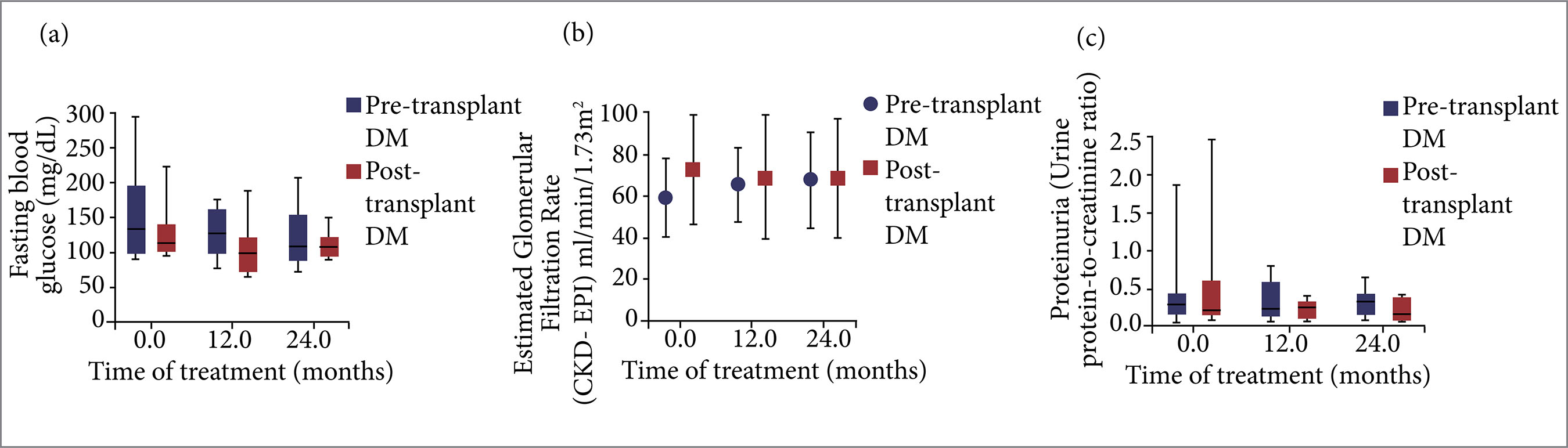
Results: Out of 1,883 KTRs followed at the center from June 2020 to June 2024, 31 patients received SGLT2i, 14 (45.2%) with pre-transplant DM, and 17 (54.8%) with PTDM. Fourteen (45.2%) completed the 24-month follow-up, including eight (57.1%) in the pre-transplant DM group and six (42.8%) in the PTDM group. In the pre-transplant DM group, fasting blood glucose (FBG) (134 [92-295] mg/dL vs. 109 [73-207], p = 0.24), estimated glomerular filtration rate (eGFR) (59.3 ± 19.2 vs. 68.1 ± 23.4, p = 0.35), and urinary protein-to-creatinine ratio (UPCR) (0.3 [0.0-1.9] vs. 0.3 [0.1-0.7], p = 0.80) remained stable. In the PTDM group, there was also no difference in the parameters analyzed, whether FBG (113 [95-225] mg/dL vs. 108 [92-149], p = 0.38), eGFR (73.1 ± 26.8 vs. 69.1 ± 28.9, p = 0.76), or UPCR (0.2 [0.1-2.5] vs. 0.2 [0.1-0.4], p = 0.21).
Conclusion: These results suggest that the treatment has a beneficial effect on preserving graft function over a 2-year follow-up period. The treatment was well tolerated, with a low incidence of urinary tract infection or graft dysfunction.
Descriptors
Sodium-Glucose Transporter Proteins; Diabetes Mellitus; Kidney Transplantation; Immunosuppressive Agents; Graft Survival
RESUMO
Introdução: Os inibidores do cotransportador sódio-glicose 2 [sodium-glucose cotransporter 2 inhibitors (SGLT2i)] melhoram a albuminúria, a taxa de progressão da doença renal crônica e a morte cardiovascular em pacientes não transplantados com diabetes mellitus (DM) e proteinúria. No entanto, os receptores de transplante renal (RTRs) foram excluídos dos ensaios mais abrangentes. Este estudo teve como objetivo avaliar a função do enxerto, a proteinúria e o controle glicêmico em RTRs com DM pré- e pós-transplante tratados com SGLT2i.
Métodos: Este é um estudo unicêntrico, retrospectivo e observacional, incluindo receptores de transplante com mais de 18 anos de idade no momento do transplante, diagnosticados com DM tipo 2 pré-transplante ou DM pós-transplante, tratados com SGLT2i após o transplante de junho de 2020 a junho de 2024.
Resultados: Dos 1.883 RTRs acompanhados no centro de junho de 2020 a junho de 2024, 31 receberam SGLT2i, sendo 14 (45,2%) com DM pré-transplante e 17 (54,8%) com DM pós-transplante. Catorze (45,2%) completaram o acompanhamento de 24 meses, incluindo oito (57,1%) no grupo DM pré-transplante e seis (42,8%) no grupo DM pós-transplante. No grupo DM pré-transplante, a glicemia de jejum (GJ) [134 (92-295) mg/dL vs. 109 (73-207), p = 0,24], a taxa de filtração glomerular estimada (TFGe) [59,3 ± 19,2 vs. 68,1 ± 23,4, p = 0,35] e a relação proteína-creatinina na urina (RPCU) [0,3 (0,0-1,9) vs. 0,3 (0,1-0,7), p = 0,80] permaneceram estáveis. No grupo DM pós-transplante, também não houve diferença nos aspectos analisados, seja na GJ [113 (95-225) mg/dL vs. 108 (92-149), p = 0,38], TFGe [73,1 ± 26,8 vs. 69,1 ± 28,9, p = 0,76] ou RPCU [0,2 (0,1-2,5) vs. 0,2 (0,1-0,4), p = 0,21].
Conclusões: Estes resultados sugerem que o tratamento tem efeito benéfico na preservação da função do enxerto ao longo de um período de acompanhamento de 2 anos. O tratamento foi bem tolerado, com baixa incidência de infecção do trato urinário ou disfunção do enxerto.
Descritores
Proteínas Transportadoras de Sódio-Glicose; Diabetes Mellitus; Transplante Renal; Agentes Imunossupressores; Sobrevivência do Enxerto
INTRODUCTION
Diabetes mellitus (DM) is a leading cause of chronic kidney disease (CKD).1 Moreover, kidney transplantation can increase the risk of DM in previously normoglycemic patients, a condition known as post-transplant DM (PTDM).2 The PTDM incidence ranges from 15% to 30% during the 1st year after transplantation.3 Risk factors for PTDM include traditional risk factors for type 2 DM, such as those present in the general population, and transplant-related factors, including the immunosuppressive therapy regimen, particularly calcineurin inhibitors (CNI) and steroids, acute rejection episodes, and cytomegalovirus infection.4 These conditions induce a diabetogenic status due to impaired insulin release by pancreatic cells and increased peripheral resistance to insulin.5
It is well-established that both pre-existing DM and PTDM are associated with a higher risk of graft failure and infections. Additionally, they may increase the risk and severity of major adverse cardiovascular events, which are a leading cause of mortality in these patients.6-8
SGLT2i represent a novel category of oral antidiabetic medications. They block the primary glucose transporter on the proximal tubule’s luminal surface, preventing glucose reabsorption and promoting excretion through urine.9 SGLT2i-induced natriuresis increases sodium delivery to the macula densa, resulting in afferent arteriolar vasoconstriction and reduced intraglomerular hypertension.10 In non-transplant patients with DM and proteinuria, these drugs reduce albuminuria, the rate of CKD progression, and cardiovascular death.11-13 These effects appear to be independent of glucose-lowering actions, as they promote uric acid excretion and a decrease in plasma volume, blood pressure, body weight, inflammation, and oxidative stress.14-16 However, side effects such as acute kidney injury, volume depletion, mycotic genital infections, urinary tract infections (UTI), and euglycemic ketoacidosis remain a limiting factor in some groups.17
These mechanisms suggest that SGLT2i could benefit kidney transplant patients with DM and proteinuria, enhancing allograft longevity and reducing cardiovascular risk. Nonetheless, the transplant population was usually excluded from the most extensive study trials.18 Issues surrounding SGLT2i treatment for kidney transplant recipients (KTRs) raise concerns, including effects on glomerular filtration rate, an increased risk of infections, potential interactions with immunosuppressant metabolism, and acute rejection. Few studies have previously assessed the efficacy and safety of this drug class for kidney transplant patients.19-23
Although pre-transplant DM and PTDM share some pathophysiological features, such as decreased pancreatic insulin production and increased insulin resistance, the longer duration of dysglycemia and inflammation in those previously diagnosed with DM likely results in more severe vasculopathy and a greater risk of cardiovascular complications. Consequently, the effects of SGLT2i therapy are expected to differ between these groups. This study assesses graft function, proteinuria, and glycemic control in KTRs with pre-transplant DM and PTDM who are treated with SGLT2i over a 24-month follow-up.
METHODS
This is a single-center, retrospective, and observational study that included KTRs older than 18 years at transplantation with a diagnosis of pre-transplant DM or PTDM, who were treated with SGLT2i after transplantation from June 2020 to June 2024. Patients with type 1 DM, an estimated glomerular filtration rate (eGFR) below 20 mL/min/1.73 m², biopsy-confirmed acute rejection, suspected rejection, or active infections were excluded. The sample included all eligible KTRs who received SGLT2i during the study period at the center. As a single-center, retrospective study, the number was limited by available cases. Including all eligible patients minimizes bias and provides a view of real-world practice, despite the modest sample size. The local ethics committee approved the study (CAAE 75533823.9.0000.5404). Written informed consent was obtained.
All kidney transplants were performed using ABO-compatible donors with negative CDC crossmatches. Induction therapy involved either monoclonal anti-interleukin (IL)-2 receptor antibodies or anti-thymocyte globulin (3-6 mg/kg), chosen based on immunological risk and donor profile. No induction was administered for related donors with identical HLA. In cases of non-identical HLA-related or unrelated donors, induction consisted of 3-6 mg/kg of anti-thymocyte globulin. All recipients received 500 mg of IV methylprednisolone at the time of transplantation, followed by tapering doses, then oral prednisone (5-10 mg/day). Maintenance therapy consisted of a CNI and an antiproliferative agent, along with prednisone.
Demographic, clinical, and laboratory data were collected from medical records at the time of transplantation, at the start of SGLT2i treatment, and during months 3, 12, and 24 of therapy. Demographic information included sex, age at transplantation, CKD etiology, and duration of dialysis. Details about the kidney transplantation comprised the donor type, either living or deceased, the donor’s age and sex, cold ischemia time, immunosuppressive therapy regimens for induction and maintenance, the occurrence of delayed graft function, episodes of acute rejection, and infections. The initiation time after transplantation and dosage of SGLT2i were recorded. Clinical data analyzed included body mass index (BMI), systemic blood pressure, the number of antihypertensive drugs, other hypoglycemic medications, and drugs used to lower uric acid levels, such as allopurinol. Laboratory data included serum creatinine, hematocrit, fasting blood glucose (FBG), glycated hemoglobin (HbA1c), uric acid, and urinary protein-to-creatinine ratio (UPCR). Glomerular filtration rate was estimated using the CKD Epidemiology Collaboration (CKD-EPI) formula. The occurrence of adverse events and the need to discontinue medication were also recorded.
Data were organized using a MicrosoftTM Excel worksheet. Numerical data were expressed as the mean ± SD, median, and range, or percentages. For analysis, recipients were grouped according to the time of diagnosis of DM: pre-transplant or post-transplant. Statistical analysis was performed using the GraphPad PrismTM 9.5.1 program (La Jolla, CA, USA), with an unpaired Student t test for parametric continuous variables, a Mann-Whitney test for non-parametric continuous variables, and a chi-square test or Fisher exact test for categorical variables. Statistical significance was considered at p < 0.05.
RESULTS
Of the 1,883 KTRs under regular follow-up at the center from June 2020 to June 2024, 31 (1.6%) received SGLT2i, 14 (45.2%) from the pre-transplant DM group, and 17 (54.8%) from the PTDM group (Fig. 1). In the overall group, most patients were male, with a mean age of 48.5 ± 12.5 years, and were not previously sensitized. The main causes of CKD were DM and unknown etiology, and the duration of dialysis was 28.2 ± 23.1 months. Most transplants were from deceased donors, with a serum creatinine at donation of 1.3 ± 1.2 mg/dL and a cold ischemia time of 18.4 ± 4.9 hours. Induction of immunosuppression included IL-2 receptor antagonists (IL2RA) in 51.6% and anti-thymocyte globulin in 45.2%. The maintenance immunosuppressive regimen included tacrolimus and mycophenolate in most cases, and only one patient did not receive a CNI. The overall BMI was 28.9 ± 23.1, and most patients were classified as overweight or obese at the start of SGLT2i treatment (Table 1).

Recipients and donors were significantly older in the pre-transplant DM group compared to the PTDM group. The main etiology of CKD was DM in the pre-transplant DM group (n = 12, 85.8%) and unknown in the PTDM group (n = 5, 29.4%). Other analyzed characteristics of recipients, donors, and transplantation were similar between groups. Most recipients received a CNI as part of their initial immunosuppressive therapy, mainly tacrolimus, in both groups. In the pre-transplant DM group, the CNI was withdrawn for two patients, tacrolimus was switched to cyclosporine in two cases, and one patient had tacrolimus changed to sirolimus. In the PTDM group, tacrolimus was switched to cyclosporine for two patients. At the initiation of SGLT2i therapy, the blood level of tacrolimus was similar between the groups. During follow-up, one patient presented with antibody-mediated rejection (AMR) in the pre-transplant DM group, which was treated with intravenous immunoglobulin (IVIG) and plasmapheresis. In the PTDM group, there was one case of AMR, treated with IVIG, and one case of T-cell-mediated rejection, treated with methylprednisolone.
Two SGLT2i drugs, dapagliflozin (n = 24, 77.4%) and empagliflozin (n = 7, 22.5%), were prescribed in this series. In both groups, dapagliflozin was the most common medication, with 12 (85.7%) in the pre-transplant DM group and 12 (70.5%) in the PTDM group. The overall median time from transplant to treatment initiation was 57.5 (5.4-357.9) months, and it was significantly earlier in the pre-transplant DM group compared to the PTDM group (35.9 [5.4-185.3] vs. 91.0 [5.5-357.9], p = 0.03). Of the 31 patients, 14 (45.2%) completed the 24-month follow-up: eight (57.1%) in the pre-transplant DM group and six (42.8%) in the PTDM group. Nine patients remained under therapy but did not complete 24 months of treatment. Treatment was discontinued in eight patients: four due to medication costs, two because of graft dysfunction, one because of recurrent UTI, and one because of vulvar pruritus.
The initial FBG was similar between the groups (134 [92-295] mg/dL in the pre-transplant DM group and 113 [95-225] mg/dL in the PTDM group, p = 0.49). In the pre-transplant DM group, FBG remained stable compared to baseline, reaching 109 (73-207) mg/dL at month 24 (p = 0.24). Similarly, in the PTDM group, FBG remained stable throughout follow-up, reaching 108 (92-149) mg/dL at the 2nd year of treatment (p = 0.38) (Fig. 2a). The initial eGFR was also similar between groups (59.3 ± 19.2 in the pre-transplant DM group and 73.1 ± 26.8 in the PTDM group, p = 0.11). In the pre-transplant DM group, eGFR remained stable throughout follow-up, reaching 68.1 ± 23.4 mL/min/1.73 m² at month 24 (p = 0.35). Similarly, in the PTDM group, stability was maintained throughout the entire period, reaching 69.1 ± 28.9 at the 2nd year of therapy (p = 0.76) (Fig. 2b). The UPCR at the end of the 2nd year of treatment was similar to baseline in both groups: (pre-transplant DM: 0.3 [0.1-0.7] vs. 0.3 [0.0-1.9], respectively, p = 0.80; PTDM group: 0.2 [0.1-0.4] vs. 0.2 [0.1-2.5], respectively, p = 0.21) (Fig. 2c). Analysis of secondary outcomes, including changes in BMI, hematocrit, blood pressure, HbA1c, number of antihypertensives, serum uric acid levels, number of antidiabetics, or insulin dosage over 24 months of SGLT2i treatment, showed similar results in both groups (Table 2).

Clinical and laboratory outcomes of KTRs treated with SGLT2i for 2 years, compared to baseline values, according to the groups.
DISCUSSION
KTRs usually present a basal reduction in functioning renal mass, secondary to various aggressions such as ischemia-reperfusion injury, immunosuppressants, rejection, and infections.23 DM, whether before the transplant or developed afterward, can cause changes through hemodynamic and inflammatory mechanisms that lead to the progression of allograft dysfunction.24 The emergence of SGLT2i has shown benefits in slowing CKD progression, controlling proteinuria, and enhancing cardiovascular outcomes. However, the advantages of its use in KTRs remain uncertain.
In this series, the eGFR of KTRs treated with SGLT2i remained stable over the 24-month follow-up, like previous studies.15,19,21,25 The literature has shown an impairment in native renal function during the initial weeks of treatment with SGLT2 inhibitors, resulting from a reduction in intraglomerular pressure due to afferent arteriolar vasoconstriction.12 It was also observed in KTRs receiving SGLT2i between 4 and 8 weeks of treatment in previous studies.20,21 In this series, however, renal function was not recorded within the first 2 months of treatment in most cases. Therefore, if there was any decline in graft function before the 3rd month, we could not detect this fluctuation, and we only documented the values after recovery from the initial graft dysfunction. Therapy with SGLT2i was interrupted in two cases due to graft dysfunction: one occurring within 2 months of treatment, possibly caused by this initial impact on renal function, and the other after 11 months of treatment, associated with the diagnosis of AMR, which suggests it was not directly related to the SGLT2i.
Reduction in proteinuria has been shown in KTRs using SGLT2i.19 The proposed mechanism for the reduction of proteinuria is that glomerular afferent arteriole vasoconstriction, generated after initiation of SGLT2i, as previously described, leads to lower glomerular capillary hypertension and hyperfiltration, resulting in reduced physical stress on the filtration barrier and albuminuria.26 A Spanish multicenter observational study including 339 KTRs treated with SGLT2i for approximately 6 months showed a significant reduction in proteinuria only when the baseline UPCR exceeded 300 mg/g.23 In our series, the absence of significant changes in proteinuria throughout the follow-up period could be explained by the low proteinuria values at the start of treatment.
SGLT2i have modest glucose-lowering effects, whose mechanism depends on the induction of glycosuria by blocking glucose reabsorption via SGLT2. The antihyperglycemic effect of these agents can be limited by more distal glucose absorption in the proximal tubule and other metabolic counterregulatory mechanisms that remain intact.26 Published studies demonstrate improvement in the glycemic profile of patients after starting SGLT2i.21,23,27 However, such results require careful examination since studies had varying baseline glycemic profiles, concomitant medications, and different purposes.28 Furthermore, it has been shown that the glucose-lowering effect depends on kidney function, with a significant effect expected in patients with GFR > 60 mL/min.21 In this series, we did not observe a significant effect of treatment with SGLT2i on glucose control, as post-treatment levels of FBG, HbA1c, insulin dosage, and the number of antidiabetic drugs remained similar to baseline values.
The tendency to experience weight gain after kidney transplantation is well described in the literature.29 It is also described that SGLT2i can induce weight loss, although the proposed mechanism is not yet fully understood. While some reports attribute this effect solely to natriuresis, others argue that SGLT2i-induced glycosuria can precipitate other beneficial metabolic alterations, including shifting substrate utilization from carbohydrate to lipid metabolism. This shift in substrate utilization leads to reduced visceral and subcutaneous fat and, subsequently, body weight.26,30 In KTRs, weight loss was constant in most studies, with variations depending on study design, baseline BMI, and follow-up time.20,22,23,25 In our results, there was no significant difference in BMI after 24 months of treatment compared to the baseline values. However, considering the historical trend of weight gain after kidney transplantation in this population, weight maintenance can be considered a positive effect of the treatment.
The effects of SGLT2i on improving blood pressure in kidney transplant patients are conflicting. A meta-analysis of six studies, which measured blood pressure in KTRs using SGLT2i, demonstrated the absence of an impact of SGLT2i therapy on reducing either systolic or diastolic pressure.31 On the other hand, several studies have shown a significant reduction in blood pressure.22,23,25 We did not observe any changes in blood pressure levels or the number of antihypertensive medications during the study period. Different factors may influence the mechanism of hypertension in transplant patients compared to the non-transplant population, including the effects of immunosuppressive therapy and single-kidney impaired renal function.31
Treatment withdrawal was indicated in only one woman without a history of previous infections who presented with recurrent UTIs in this series. Immunosuppressive treatment increases the risk of infection, and the glycosuria induced by SGLT2i may promote bacterial and fungal growth.23,32 A study by Lim et al.,19 including KTRs with pre-transplant DM or PTDM receiving SGLT2i, showed similar incidence rates of bacterial and fungal UTI between the groups of patients receiving SGLT2i and those not receiving this treatment. Another multicenter observational study with diabetic KTRs treated with SGLT2i showed a UTI incidence of 10.3% within 6 months of treatment, similar to that observed before starting SGLT2i.23 Several other studies in the same population have demonstrated a low incidence of UTI, with most cases being mild, requiring no hospital admission or medication suspension.15,21,22,27 A feared side effect of SGLT2i is euglycemic ketoacidosis; however, this risk is extremely low.33 The limited availability of SGLT2i medications provided by the Brazilian public health system during the study period, combined with the cost of purchasing them for patients with low-income economic status, is the main reason for interrupting the treatment in this series.
Several confounding variables could influence the effects of SGLT2i treatment in KTRs in this series. Variations in baseline BMI, immunosuppressive regimens, CNI blood levels, and steroid doses might also impact glucose control and proteinuria levels. This study has additional limitations: it is an observational, single-center, retrospective study with a small sample size. The study may have some biases, such as patient selection for treatment. Furthermore, neither the patients nor the physicians were blinded to the treatment, and there was no control group. Despite these limitations, we identified important insights about SGLT2i in KTRs. The absence of acute kidney injury and the stabilization of BMI and proteinuria, along with other potential cardiovascular benefits previously noted, suggest that SGLT2i could be helpful for kidney transplant patients with pre- and PTDM.
CONCLUSIONS
In this series, KTRs with pre-transplant DM or PTDM treated with SGLT2i showed stable glomerular filtration rate and proteinuria, with no effects on glucose control as indicated by FBG and HbA1c. These results suggest that the treatment helps preserve graft function over 2 years. The therapy was well tolerated, with few cases of UTI or graft dysfunction. This study indicates that SGLT2i use is feasible and safe for selected KTRs, although broader access and coverage may be necessary to ensure long-term adherence.
ACKNOWLEDGEMENT
Not applicable.
-
FUNDING
Not applicable.
DATA AVAILABILITY STATEMENT
Data will be provided upon request.
References
-
1 Koye DN, Magliano DJ, Nelson RG, Pavkov ME. The global epidemiology of diabetes and kidney disease. Adv Chronic Kidney Dis, 2018; 25(2): 121-32. https://doi.org/10.1053/j.ackd.2017.10.011
» https://doi.org/10.1053/j.ackd.2017.10.011 -
2 Rossi MR, Mazzali M, de Sousa MV. Oral glucose tolerance test as a risk marker for developing post-transplant diabetes mellitus. Transplant Proc, 2024; 56(5): 1061-5. https://doi.org/10.1016/j.transproceed.2024.04.021
» https://doi.org/10.1016/j.transproceed.2024.04.021 -
3 Chakkera HA, Weil EJ, Pham PT, Pomeroy J, Knowler WC. Can new-onset diabetes after kidney transplant be prevented? Diabetes Care, 2013; 36(5): 1406-12. https://doi.org/10.2337/dc12-2067
» https://doi.org/10.2337/dc12-2067 -
4 Paek JH, Kang SS, Park WY, Jin K, Park SB, Han S, et al. Incidence of post-transplantation diabetes mellitus within 1 year after kidney transplantation and related factors in Korean cohort study. Transplant Proc, 2019; 51(8): 2714-7. https://doi.org/10.1016/j.transproceed.2019.02.054
» https://doi.org/10.1016/j.transproceed.2019.02.054 -
5 Rossi MR, Mazzali M, de Sousa MV. Post-transplant diabetes mellitus: risk factors and outcomes in a 5-year follow-up. Front Clin Diabetes Healthc, 2024; 5. https://doi.org/10.3389/fcdhc.2024.1336896
» https://doi.org/10.3389/fcdhc.2024.1336896 -
6 Birdwell KA, Park M. Post-transplant cardiovascular disease. Clin J Am Soc Nephrol, 2021; 16(12): 1878-89. https://doi.org/10.2215/CJN.00520121
» https://doi.org/10.2215/CJN.00520121 -
7 Rodríguez-Rodríguez AE, Porrini E, Hornum M, Donate-Correa J, Morales-Febles R, Khemlani Ramchand S, et al. Post-transplant diabetes mellitus and prediabetes in renal transplant recipients: an update. Nephron, 2021; 145(4): 317-29. https://doi.org/10.1159/000514288
» https://doi.org/10.1159/000514288 -
8 Lin H, Yan J, Yuan L, Qi B, Zhang Z, Zhang W, et al. Impact of diabetes mellitus developing after kidney transplantation on patient mortality and graft survival: a meta-analysis of adjusted data. Diabetol Metab Syndr, 2021; 13(1): 126. https://doi.org/10.1186/s13098-021-00742-4
» https://doi.org/10.1186/s13098-021-00742-4 -
9 Heerspink HJL, Kosiborod M, Inzucchi SE, Cherney DZI. Renoprotective effects of sodium-glucose cotransporter-2 inhibitors. Kidney Int, 2018; 94(1): 26-39. https://doi.org/10.1016/j.kint.2017.12.027
» https://doi.org/10.1016/j.kint.2017.12.027 -
10 Montada-Atin T, PrasadGVR. Recent advances in new-onset diabetes mellitus after kidney transplantation. World J Diabetes, 2021; 12(5): 541-55. https://doi.org/10.4239/wjd.v12.i5.541
» https://doi.org/10.4239/wjd.v12.i5.541 -
11 Pollock C, Stefánsson B, Reyner D, Rossing P, Sjöström CD, Wheeler DC, et al. Albuminuria-lowering effect of dapagliflozin alone and in combination with saxagliptin and effect of dapagliflozin and saxagliptin on glycaemic control in patients with type 2 diabetes and chronic kidney disease (DELIGHT): a randomised, double-blind, placebo-controlled trial. Lancet Diabetes Endocrinol, 2019; 7(6): 429-41. https://doi.org/10.1016/S2213-8587(19)30086-5
» https://doi.org/10.1016/S2213-8587(19)30086-5 -
12 Heerspink HJL, Stefánsson BV, Correa-Rotter R, Chertow GM, Greene T, Hou FF, et al. Dapagliflozin in patients with chronic kidney disease. N Engl J Med, 2020; 383(15): 1436-46. https://doi.org/10.1056/NEJMoa2024816
» https://doi.org/10.1056/NEJMoa2024816 -
13 Perkovic V, Jardine MJ, Neal B, Bompoint S, Heerspink HJL, Charytan DM, et al. Canagliflozin and renal outcomes in type 2 diabetes and nephropathy. N Engl J Med, 2019; 380(24): 2295-306. https://doi.org/10.1056/NEJMoa1811744
» https://doi.org/10.1056/NEJMoa1811744 -
14 Suijk DLS, van Baar MJB, van Bommel EJM, Iqbal Z, Krebber MM, Vallon V, et al. SGLT2 inhibition and uric acid excretion in patients with type 2 diabetes and normal kidney function. Clin J Am Soc Nephrol, 2022; 17(5): 663-71. https://doi.org/10.2215/CJN.11480821
» https://doi.org/10.2215/CJN.11480821 -
15 Mahling M, Schork A, Nadalin S, Fritsche A, Heyne N, Guthoff M. Sodium-glucose cotransporter 2 (SGLT2) inhibition in kidney transplant recipients with diabetes mellitus. Kidney Blood Press Res, 2019; 44(5): 984-92. https://doi.org/10.1159/000501854
» https://doi.org/10.1159/000501854 -
16 Heerspink HJL, Perco P, Mulder S, Leierer J, Hansen MK, Heinzel A, et al. Canagliflozin reduces inflammation and fibrosis biomarkers: a potential mechanism of action for beneficial effects of SGLT2 inhibitors in diabetic kidney disease. Diabetologia, 2019; 62(7): 1154-66. https://doi.org/10.1007/s00125-019-4859-4
» https://doi.org/10.1007/s00125-019-4859-4 -
17 McGill JB, Subramanian S. Safety of sodium-glucose co-transporter 2 inhibitors. Am J Cardiol, 2019; 124: S45-52. https://doi.org/10.1016/j.amjmed.2019.08.006
» https://doi.org/10.1016/j.amjmed.2019.08.006 -
18 Francis RS. SGLT2i after kidney transplantation: ready for prime time? Transplantation, 2022; 106(9): 1732-3. https://doi.org/10.1097/TP.0000000000004227
» https://doi.org/10.1097/TP.0000000000004227 -
19 Lim JH, Kwon S, Jeon Y, Kim YH, Kwon H, Kim YS, et al. The efficacy and safety of SGLT2 inhibitors in diabetic kidney transplant recipients. Transplantation, 2022; 106(9): e404-12. https://doi.org/10.1097/TP.0000000000004228
» https://doi.org/10.1097/TP.0000000000004228 -
20 Schwaiger E, Burghart L, Signorini L, Ristl R, Kopecky C, Tura A, et al. Empagliflozin in posttransplantation diabetes mellitus: a prospective, interventional pilot study on glucose metabolism, fluid volume, and patient safety. Am J Transplant, 2019; 19(3): 907-19. https://doi.org/10.1111/ajt.15223
» https://doi.org/10.1111/ajt.15223 -
21 Halden TAS, Kvitne KE, Midtvedt K, Rajakumar L, Robertsen I, Brox J, et al. Efficacy and safety of empagliflozin in renal transplant recipients with posttransplant diabetes mellitus. Diabetes Care, 2019; 42(6): 1067-74. https://doi.org/10.2337/dc19-0093
» https://doi.org/10.2337/dc19-0093 -
22 Shah M, Virani Z, Rajput P, Shah B. Efficacy and safety of canagliflozin in kidney transplant patients. Indian J Nephrol, 2019; 29(4): 278-81. https://doi.org/10.4103/ijn.IJN_2_18
» https://doi.org/10.4103/ijn.IJN_2_18 -
23 Sánchez Fructuoso AI, Bedia Raba A, Banegas Deras E, Vigara Sánchez LA, Valero San Cecilio R, Franco Esteve A, et al. Sodium-glucose cotransporter-2 inhibitor therapy in kidney transplant patients with type 2 or post-transplant diabetes: an observational multicentre study. Clin Kidney J, 2023; 16(6): 1022-34. https://doi.org/10.1093/ckj/sfad007
» https://doi.org/10.1093/ckj/sfad007 -
24 Agarwal R. Pathogenesis of diabetic nephropathy. ADA Clinical Compendia, 2021; 2021(1) :2-7. https://doi.org/10.2337/db20211-2
» https://doi.org/10.2337/db20211-2 -
25 Attallah N, Yassine L. Use of empagliflozin in recipients of kidney transplant: a report of 8 cases. Transplant Proc, 2019; 51(10): 3275-80. https://doi.org/10.1016/j.transproceed.2019.05.023
» https://doi.org/10.1016/j.transproceed.2019.05.023 -
26 Ujjawal A, Schreiber B, Verma A. Sodium-glucose cotransporter-2 inhibitors (SGLT2i) in kidney transplant recipients: what is the evidence? Ther Adv Endocrinol Metab, 2022; 13. https://doi.org/10.1177/20420188221090001
» https://doi.org/10.1177/20420188221090001 -
27 AlKindi F, Al-Omary HL, Hussain Q, Al Hakim M, Chaaban A, Boobes Y. Outcomes of SGLT2 inhibitors use in diabetic renal transplant patients. Transplant Proc, 2020; 52(1): 175-8. https://doi.org/10.1016/j.transproceed.2019.11.007
» https://doi.org/10.1016/j.transproceed.2019.11.007 -
28 Oliveras L, Montero N, Cruzado JM. Searching in the maze: sodium-glucose cotransporter-2 inhibitors in kidney transplant recipients to improve survival. Clin Kidney J, 2023; 16(6): 909-13. https://doi.org/10.1093/ckj/sfad045
» https://doi.org/10.1093/ckj/sfad045 -
29 Gibson C, Mount R, Valentine H, Sullivan D. Weight change in kidney transplant recipients: an academic medical center-based study. Curr Dev Nutr, 2020; 4:nzaa063_035. https://doi.org/10.1093/cdn/nzaa063_035
» https://doi.org/10.1093/cdn/nzaa063_035 -
30 Vallon V, Verma S. Effects of SGLT2 inhibitors on kidney and cardiovascular function. Annu Rev Physiol, 2021; 83(1): 503-28. https://doi.org/10.1146/annurev-physiol-031620-095920
» https://doi.org/10.1146/annurev-physiol-031620-095920 -
31 Chewcharat A, Prasitlumkum N, Thongprayoon C, Bathini T, Medaura J, Vallabhajosyula S, et al. Efficacy and safety of SGLT-2 inhibitors for treatment of diabetes mellitus among kidney transplant patients: a systematic review and meta-analysis. Med Sci, 2020; 8(4): 47. https://doi.org/10.3390/medsci8040047
» https://doi.org/10.3390/medsci8040047 -
32 Lemke A, Brokmeier HM, Leung SB, Mara KC, Mour GK, Wadei HM, et al. Sodium-glucose cotransporter 2 inhibitors for treatment of diabetes mellitus after kidney transplantation. Clin Transplant, 2022; 36(8): e14718. https://doi.org/10.1111/ctr.14718
» https://doi.org/10.1111/ctr.14718 -
33 Polychronopoulou E, Bourdon F, Teta D. SGLT2 inhibitors in diabetic and non-diabetic kidney transplant recipients: current knowledge and expectations. Front Nephrol, 2024; 4. https://doi.org/10.3389/fneph.2024.1332397
» https://doi.org/10.3389/fneph.2024.1332397
Edited by
-
Seccion editor:
Ilka de Fátima Santana F. Boin https://orcid.org/0000-0002-1165-2149

 Source: Elaborated by the authors.
 Source: Elaborated by the authors.