
 The Multidimensional Intelligence of Silvano Raia: The Farewell to an Exponent and the Eternalization of a Genius and Icon
ABSTRACT
This article analyzes the scientific and clinical trajectory of Prof. Silvano Raia through the lens of Howard Gardner's Theory of Multiple Intelligences. Based on his seminal contributions at the Liver Unit of University of São Paulo — which encompass the surgical treatment of portal hypertension in schistosomiasis, liver resection techniques, and his pioneering role in both the first successful liver transplant in Latin America (1985) and the world's first living-donor liver transplant (1988) — the synergy among logical-mathematical, spatial, bodily-kinesthetic, linguistic and interpersonal domains are mapped. The study highlights how his conative capacity, driven by stubborn determination, and his emergency leadership shattered the dogmatism of magister dixit within highly complex clinical scenarios and in the consolidation of public health policies within the Brazilian Unified Health System (SUS), extending to the development of xenotransplantation and swine cloning, in March 2026. It concludes that his death, on April 28, 2026, marks the end of a distinguished career while immortalizing the figure the figure of the genius and the icon in the history of Brazilian medicine and science.
Descriptors
Cognition; Liver Transplantation; Hypertension, Portal; Transplantation, Heterologous; Leadership
RESUMO
Este artigo analisa a trajetória científica e clínica do Prof. Silvano Raia sob a ótica da Teoria das Inteligências Múltiplas de Howard Gardner. A partir de suas contribuições seminais na Unidade de Fígado da Universidade de São Paulo, que incluem o tratamento cirúrgico da hipertensão portal na esquistossomose, técnicas de ressecção hepática e o pioneirismo no primeiro transplante de fígado bem-sucedido da América Latina (1985) e no primeiro transplante intervivos da literatura (1988), mapeia-se a sinergia entre os domínios lógico-matemático, espacial, corporal-cinestésico, linguístico e interpessoal. Destaca-se como sua capacidade conativa, traduzida em determinação obstinada, e sua liderança emergencial romperam com o dogmatismo do magister dixit em cenários de alta complexidade e na consolidação de políticas públicas no Sistema Único de Saúde (SUS), estendendo-se até o desenvolvimento do xenotransplante e da clonagem suína, em março de 2026. Conclui-se que sua morte, em 28 de abril de 2026, encerra a atuação de um expoente técnico, mas eterniza a figura do gênio e do ícone na história da medicina e da ciência brasileira.
Descritores
Cognição; Transplante de Fígado; Hipertensão Portal; Transplante Heterólogo; Liderança
The progress of liver surgery in Brazil is intertwined with the scientific and clinical work of Professor Silvano Raia, whose death on April 28, 2026, at the age of 95, marked the end of more than six decades of dedication to high-complexity medical procedures. During his 49-year full-time career at the Faculty of Medicine of the University of São Paulo (Faculdade de Medicina da Universidade de São Paulo-FMUSP), from his enrollment as a student in 1951 until his mandatory retirement as a full professor in 2000, Raia built his academic career on the development of temporary liver assistance models and seminal investigations into the pathophysiology and surgical treatment of portal hypertension in schistosomiasis mansoni1-5, as well as the refinement of liver resection techniques6-8.
Figure 1 shows an equipment developed by Silvano Raia and Sérgio Mies in 1973 as part of a project for temporary liver assistance in the pre-clinical phase of liver transplantation. This sophisticated system was equipped with a membrane oxygenator and employed pumps that produced pulsatile normothermic blood flow in the hepatic artery and continuous flow in the portal vein, and mimicked the oscillations of venous pressure in the inferior vena cava and hepatic veins produced by diaphragm movements. The experimental procedures, involving more than 400 pigs, led to a series of publications, including Mies’s doctoral dissertation in 1973 and Raia’s Livre-Docência (Habilitation) thesis in Experimental Surgery in 1978.

This solid foundation in vascular hemodynamics and surgical anatomy underpinned his rise to practical pioneering, culminating in the first successful liver transplant in Latin America in 19859, performed by his team at the Hospital das Clínicas da FMUSP in 1985. Three years later, in 1988, he challenged international technical and ethical dogmas by developing and performing the world's first living-donor liver transplantation, documented in the medical literature10. In the following decade, he convinced the Brazilian federal government to include transplantation in the Unified Health System (Sistema Único de Saúde - SUS), thereby providing financial support for the nationwide expansion of transplantation services.
Over the last 26 years, he dedicated himself to expanding population access to transplantation, coordinating Ministry of Health programs and partnerships with leading hospitals. From 2011 to 2017, his work focused on advancing tissue engineering technologies capable of producing transplant grafts through the recellularization of the extracellular matrix from organs discarded from brain-dead donors. Fig. 2 demonstrates an experimental procedure to produce organs for transplantation by obtaining and using a donor-derived, acellular, non-antigenic three-dimensional biological matrix (scaffold) for subsequent recellularization with autologous recipient cells. The research was part of the Integrated Center for Research and Teaching in Organ Transplantation (Centro Integrado de Pesquisa e Ensino em Transplante de Órgãos -Cipetro) project, coordinated by Silvano Raia from 2011 to 2017, in association with the team from the Human Genome and Stem Cell Research Center (Centro de Pesquisa sobre o Genoma Humano e Células-Tronco) at USP, led by Prof. Mayana Zatz.

More recently, his intellectual leadership extended to genetic engineering with the creation of the Science Center for Development in Xenotransplantation (Centro de Ciência para o Desenvolvimento em Xenotransplante) at USP, paving the way for the use of genetically modified pigs for organ supply11-15.
To comprehend the magnitude of Raia's legacy, which intersects education, basic science, highly complex medical care, and a pivotal role in public policy formulation, one must look beyond a simple cataloging of academic indices. Instead, it is necessary to examine how different cognitive domains operated in synergy throughout his career. Indeed, the architecture of his achievements reveals that Professor Silvano's brilliance did not stem from a single skill, but rather from the dynamic convergence of multiple vectors of intelligence, as proposed by psychologist Howard Gardner in the Theory of Multiple Intelligences16.
In Silvano Raia's scientific trajectory, Logical-Mathematical Intelligence manifested as horizontal thinking, that is, the capacity to engineer innovative solutions by associating two independent, disruptive ideas to create an unprecedented third solution. The deconstruction of causal-logical chains, typical of vertical thinking, served as the analytical engine for proposing new paradigms, such as the hemodynamic reconfiguration of portal hypertension in schistosomiasis, the conception of living-donor liver transplantation, and gene editing for xenotransplantation.
Translating these ideas into the field of hepatobiliary surgery demanded profound spatial intelligence, encompassing the cognitive ability to construct precise three-dimensional mental models and to visualize internal structures deep within the liver that are not visible on the organ's surface.
This abstract geometric perception found its physical counterpart in bodily-kinesthetic intelligence, characterized by the ability to use the hands with coordination and dexterity to safely perform highly complex surgical interventions on friable, highly vascularized tissues. These skills are essential for proposing the resection of a portion of the liver from a living, healthy donor.
Silvano was also endowed with a remarkable linguistic intelligence, reflected in his ease of communication, mastery of multiple languages, fluidity of thought, and a precise, elegant, and effective use of words. This talent, evident in meetings and debates, reached its pinnacle in his keynote lectures, prepared in advance with 'surgical' care.
Ultimately, Professor Raia’s most striking domain was perhaps his interpersonal intelligence—defined as the capacity to discern and respond appropriately to the moods, temperaments, motivations, and desires of others—coupled with a dogged persistence and pragmatic determination to achieve his goals. These elements were indispensable in transmuting high cognitive potential into practical genius. The most disruptive dimension of this intelligence manifested in Raia’s capacity to exercise emergency and adaptive leadership, colliding head-on with the scholastic principle of magister dixit ('the master has spoken')—the blind submission to the dogmatic authority of established chairs that had paralyzed medicine during his training. This counterposition and the strategic management of his persistence were evidenced across three critical axes:
-
Establishment of the Liver Unit: In 1975, Professor Silvano structured a pioneering center at FMUSP, featuring laboratories dedicated to the study of fundamental areas of hepatology, including biochemistry, hemostasis, hemodynamics, pathological anatomy, and experimental surgery. Due to the sophistication of the installed equipment and the modern concept of its physical infrastructure, the sector was promptly nicknamed 'NASA' by the students. Yet, more important than the facilities themselves was the assembly of a team comprising Dalton Chamone, Jorge Kalil Filho, Luiz Caetano da Silva, Luiz Carlos Gayotto, and Sérgio Mies. This 'dream team' worked harmoniously under the principle of emergency leadership, with each member taking responsibility for their area of greatest expertise, while driven by Silvano toward common goals. From this core emerged the scientific contributions that culminated in 1985 in the country's first effective liver transplantation program. Fig. 3 shows Silvano Raia alongside Sérgio Mies, standing in front of the team that performed both the first successful liver transplant in Latin America in 1985 and the world's first living-donor liver transplantation documented in the literature in 1988.
-
Institutional and Political Engagement: Strictly technical talents frequently fail to institutionalize their discoveries due to an inability to navigate political spheres. Raia leveraged his social insight and strategic empathy to engage in dialogue with government officials, ministers, health secretaries, hospital directors, and academic peers, ensuring that liver transplantation was consolidated as a public policy of universal access within the Unified Health System (SUS).
-
Perseverance and determination: The capacity to persist and complete tasks is a hallmark of genius. In the pursuit of his goals, Silvano Raia overcame each milestone with his eyes already set on the next obstacle, priding himself on never accepting 'no' for an answer. This same obstinacy became evident when, in the epilogue of his career, he embarked on the journey toward xenotransplantation. Conscious that pure surgical technique had reached its causal limit, he utilized his interpersonal intelligence to lead and unify scientists from disparate fields. By securing resources and orchestrating a consortium spanning surgery, molecular genetics (led by Mayana Zatz), and cellular immunology (led by Jorge Kalil), Raia confirmed his capacity to galvanize and unite diverse disciplines.12 His unwavering determination to keep the center active culminated in the birth of the first cloned pig in Latin America in March 2026, proving that his ability to motivate teams and pursue complex goals remained intact until the end15.

In reviewing Silvano Raia's fruitful and transformative contributions, I reflected on whether to classify him as an exponent, an icon, or a genius, ultimately concluding that all terms can adequately describe different layers of his legacy. An exponent is characterized by excellence and active leadership, a cycle that ends after death. A genius survives through the paths opened by paradigm shifts that, once incorporated, become part of humanity. And an icon inhabits the realm of collective memory where, despite physical departure, the figure of a symbol of medical pioneering and scientific pride in Brazil crystallizes.
Thus, when contemplating the chain of his discoveries and the lasting impact of his work, it is correct to say that the death of Silvano Raia marks the end of a leading figure's trajectory, but also immortalizes the genius and the icon.
ACKNOWLEDGEMENT
The author thanks to Professor Ilka Boin and the Brazilian Association of Organ Transplantation for the invitation to write this tribute.
-
DECLARATION OF USE OF ARTIFICIAL Intelligence TOOLS
The author declares that the artificial intelligence tool “Gemini 3.5 Flash” was used in the initial stage of writing this manuscript to assist in structuring the text. The suggestions generated were rigorously reviewed and edited, and the author assumes full responsibility for the final published content.
-
FUNDING
Not applicable.
DATA AVAILABILITY STATEMENT
All datasets were generated or analyzed in the current study.
References
- 1 Raia S, Mies S. Temporary hepatic assistance. IV. System and technic for the isolated perfusion of the porcine liver. Rev Hosp Clin Fac Med Sao Paulo. 1975; 30(2):155-160.
-
2 Raia S, Mies S, Macedo AL. Portal hypertension in schistosomiasis. Clin Gastroenterol. 1985 jan; 14(1): 57-82. https://doi.org/10.1016/S0300-5089(21)00637-4
» https://doi.org/10.1016/S0300-5089(21)00637-4 -
3 Mies S, Braghirolli O Neto, Beer A, Baia CES, Alfieri F, Pereira LMMB, et al. Systemic and hepatic hemodynamics in hepatosplenic Manson’s schistosomiasis with and without propranolol. Dig Dis Sci. 1997 apr; 42: 751-761. https://doi.org/10.1023/A:1018803911915
» https://doi.org/10.1023/A:1018803911915 -
4 da Silva LC, Macedo A, Fermanian J, Strauss E, da Silva AT, Foster S, et al. A randomized trial for the study of the elective surgical treatment of portal hypertension in mansonic schistosomiasis. Ann Surg. 1986 aug; 204(2): 148-153. https://doi.org/10.1097/00000658-198608000-00008
» https://doi.org/10.1097/00000658-198608000-00008 -
5 Raia S, da Silva LC, Gayotto LCC, Forster SC, Fukushima J, Strauss E. Portal hypertension in schistosomiasis: a long-term follow-up of a randomized trial comparing three types of surgery. Hepatology 1994 aug; 20(2): 398-403. https://doi.org/10.1002/hep.1840200220
» https://doi.org/10.1002/hep.1840200220 - 6 Mies S, Raia S. Anatomic resection of liver segments V and VI. Surgery. 1988 mar;103(3): 374-375.
- 7 Mies S, Raia S. A simple method for controlling hemorrhage during hepatectomy. Surg Gynecol Obstet. 1989 mar; 168(3): 265-266.
- 8 Mies S, Raia S, Massarollo PCB. Segmental hepatic vascular exclusion for resection of tumors involving the liver and the inferior vena cava. Surg Gynecol Obstetr. 1993 jan; 176(1): 86-88.
-
9 Mies S, Massarollo PCB, Baia CES, Kallas MRE, Raia S. Liver transplantation in Brazil. 1998 sep; 30(6): 2880-2882. https://doi.org/10.1016/S0041-1345(98)00853-7
» https://doi.org/10.1016/S0041-1345(98)00853-7 -
10 Raia S, Nery JR, Mies S. Liver transplantation from live donors. Lancet. 1989 aug; 334(8661): 334497. https://doi.org/10.1016/S0140-6736(89)92101-6
» https://doi.org/10.1016/S0140-6736(89)92101-6 -
11 Caires-Júnior LC, Goulart E, Telles-Silva KA, Araujo BHS, Musso CM, Kobayashi G, et al. Pre-coating decellularized liver with HepG2-conditioned medium improves hepatic recellularization. Mater Sci Eng C. 2021 feb; 121: 111862. https://doi.org/10.1016/j.msec.2020.111862
» https://doi.org/10.1016/j.msec.2020.111862 -
12 Raia SMA. Xenotransplantation: a consistent perspective. Rev Col Bras Cir. 2022; 49: e2022EDIT01. https://doi.org/10.1590/0100-6991e-2022edit01
» https://doi.org/10.1590/0100-6991e-2022edit01 -
13 Pagotto VPF, Busnardo FF, Raia SMA, Gemperli R. Advancements in xenotransplantation: paving the way for revolutionary developments in reconstructive plastic surgery. Acta Cir Bras. 2024; 39: e393424. https://doi.org/10.1590/acb393424
» https://doi.org/10.1590/acb393424 -
14 Nascimento H, Martins TMM, Moreira R, Barbieri G, Pires P, Carvalho LN, et al. Current scenario and future perspectives of porcine corneal xenotransplantation. Cornea. 2025 mar; 44(3): 387-404. https://doi.org/10.1097/ICO.0000000000003723
» https://doi.org/10.1097/ICO.0000000000003723 -
15 Araujo MS, Pegoraro Poor A, Vieira Chida V, Torres G, Leme L, Santos NSB, et al. Embryo transfer surgery via laparotomy in gilts. J Vis Exp. 2024 oct; (212). https://doi.org/10.3791/66984
» https://doi.org/10.3791/66984 - 16 Gardner H. Frames of mind: the Theory of Multiple Intelligences. 3 ed. New York: Basic Books; 2011.
Edited by
-
Section editor:
Ilka de Fátima Santana F. Boin https://orcid.org/0000-0002-1165-2149

 Source: Silvano Raia's personal archive.
 Source: Silvano Raia's personal archive.
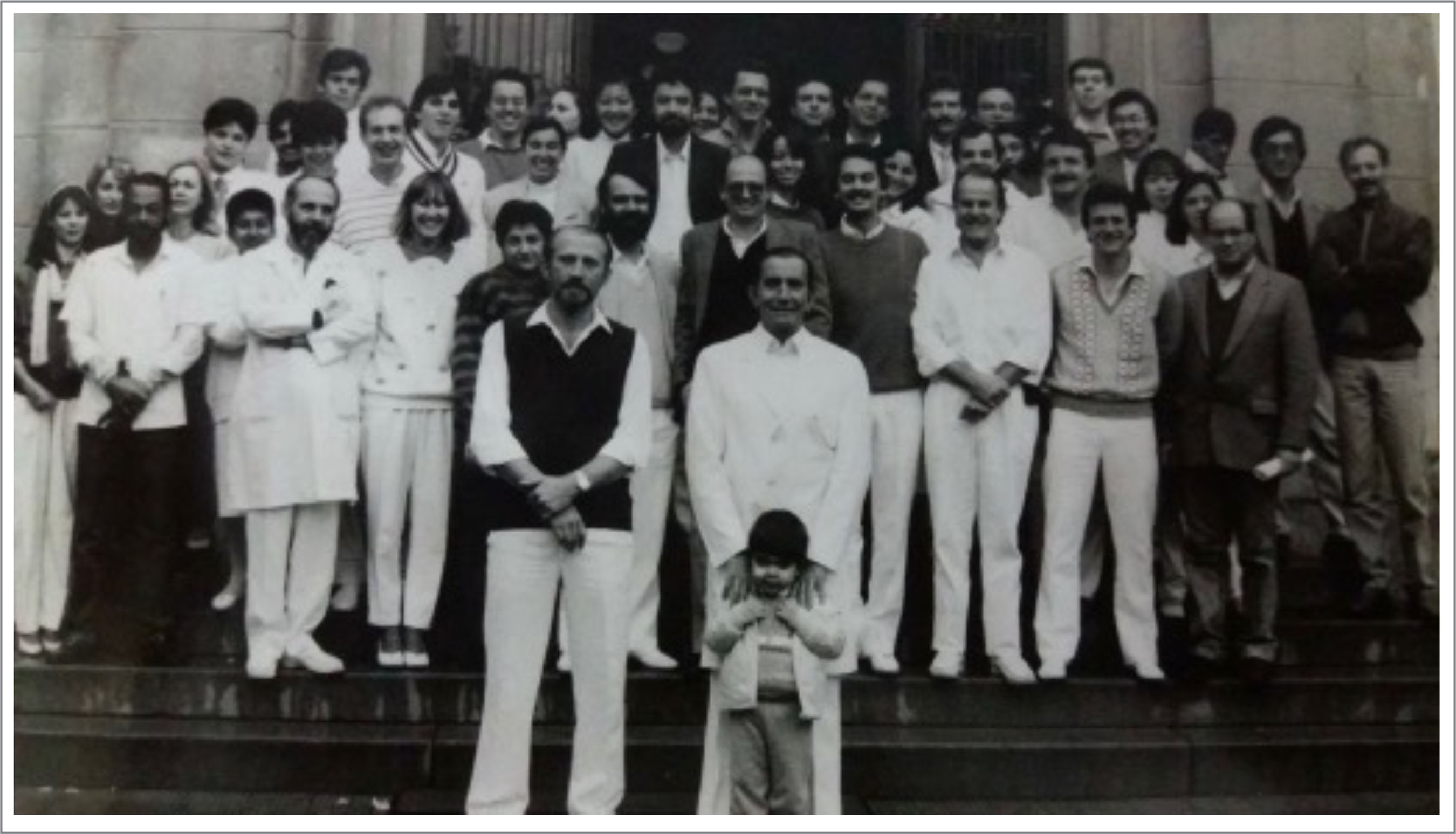 Source: Paulo Massarollo's personal archive.