
 Impact of the COVID-19 Pandemic on the Realization of Organ Donation from Donors Diagnosed with Brain Death: A Narrative Review
ABSTRACT
The COVID-19 pandemic significantly affected healthcare systems and potentially interfered with different stages of the organ donation and transplantation process. This study aimed to evaluate the impact of the pandemic on the realization of organ donation from donors diagnosed with brain death. A narrative literature review was conducted using the PubMed database, covering studies published from 2019 to 2024, with the descriptors “brain death,” “organ donation,” and “COVID-19.” A total of 39 articles were identified, and after applying the eligibility criteria, seven studies were included in the final analysis. Overall, the studies demonstrated a reduction in organ donation rates, an increase in the time required to complete the donation process, and structural limitations related to healthcare system overload during the pandemic.
Descriptors
Brain Death; Organ Procurement; Organ Transplantation; COVID-19
RESUMO
A pandemia de COVID-19 impactou significativamente os sistemas de saúde e potencialmente interferiu em diferentes etapas do processo de doação e transplante de órgãos. Este estudo teve como objetivo avaliar o impacto da pandemia na efetivação da doação de órgãos provenientes de doadores com diagnóstico de morte encefálica. Realizou-se revisão narrativa da literatura com busca na base de dados PubMed no período de 2019 a 2024, utilizando os descritores “brain death”, “organ donation” e “COVID-19”. Foram identificados 39 artigos e, após aplicação dos critérios de elegibilidade, sete estudos foram incluídos na análise final. De forma geral, os estudos demonstraram redução nas taxas de doação, aumento no tempo para efetivação do processo e limitações estruturais relacionadas à sobrecarga dos sistemas de saúde durante a pandemia.
Descritores
Morte Encefálica; Obtenção de Órgãos; Transplante de Órgãos; COVID-19
INTRODUCTION
Organ transplantation represents a well-established therapeutic strategy for patients with advanced organ failure. Despite advances in recent decades, organ scarcity remains a major challenge for transplant systems worldwide. The identification and proper management of potential donors diagnosed with brain death (BD) are essential steps for the successful donation of organs1-3.
Although the benefits of organ donation are well established, organ scarcity remains a significant barrier to effective transplantation, as only about 25% of patients on the waiting list receive a transplant each year1.
There are two main types of donation: multiple organ donation in patients with BD and cardiac arrest in patients with cardiorespiratory arrest (in addition to the well-known living donation).
Organ donation from donors with BD is extremely important for transplant medicine, as it represents the main source of organs from deceased donors. Furthermore, BD enables organ viability, as blood circulation and tissue oxygenation can be maintained until organ removal, thereby preserving organ function, which is essential for increasing donation success rates4.
For this to happen, effective management of the entire donation process is necessary, from the suspicion of death to the confirmation of the BD diagnosis, the timely identification of potential donors, and the optimization of organ preservation conditions. These factors are crucial for the success of transplants, even in the most challenging contexts1-3.
Furthermore, screening potential donors for infectious diseases is of paramount importance. This includes testing for endemic diseases in areas where these infections are prevalent, as they have a significant impact on organ donation, primarily due to the potential risk of infection transmission from donor to recipient5.
The COVID-19 pandemic led to a significant reorganization of healthcare services, with increased demand for intensive care beds and redistribution of hospital resources. These changes may have affected different stages of the donation and transplantation process6.
COVID-19 is a respiratory illness caused by the SARS-CoV-2 virus, first identified in Wuhan, China, in late 2019, that rapidly spread globally, resulting in a pandemic that has affected millions of people worldwide7,8.
Regarding organ donation and transplantation, the pandemic caused an estimated 16% global reduction in transplant activity in 20206.
The objective of the study was to evaluate the impact of the COVID-19 pandemic on the effectiveness of organ donation from donors diagnosed with BD.
The secondary objectives were:
To identify indirect factors related to the management of potential donors that effectively contribute to reducing the conversion of donations into transplants;
To stimulate the development of new research regarding public health measures that can reduce delays in the donation process;
To encourage healthcare professionals to improve the clinical management of potential donors, consequently reducing organ discard.
METHODS
A narrative literature review was conducted using the PubMed database for the period 2019 to 2024. The descriptors “brain death”, “organ donation”, and “COVID-19” were used, combined with Boolean operators. Study selection was performed by reading titles and abstracts, followed by a full analysis of eligible articles.
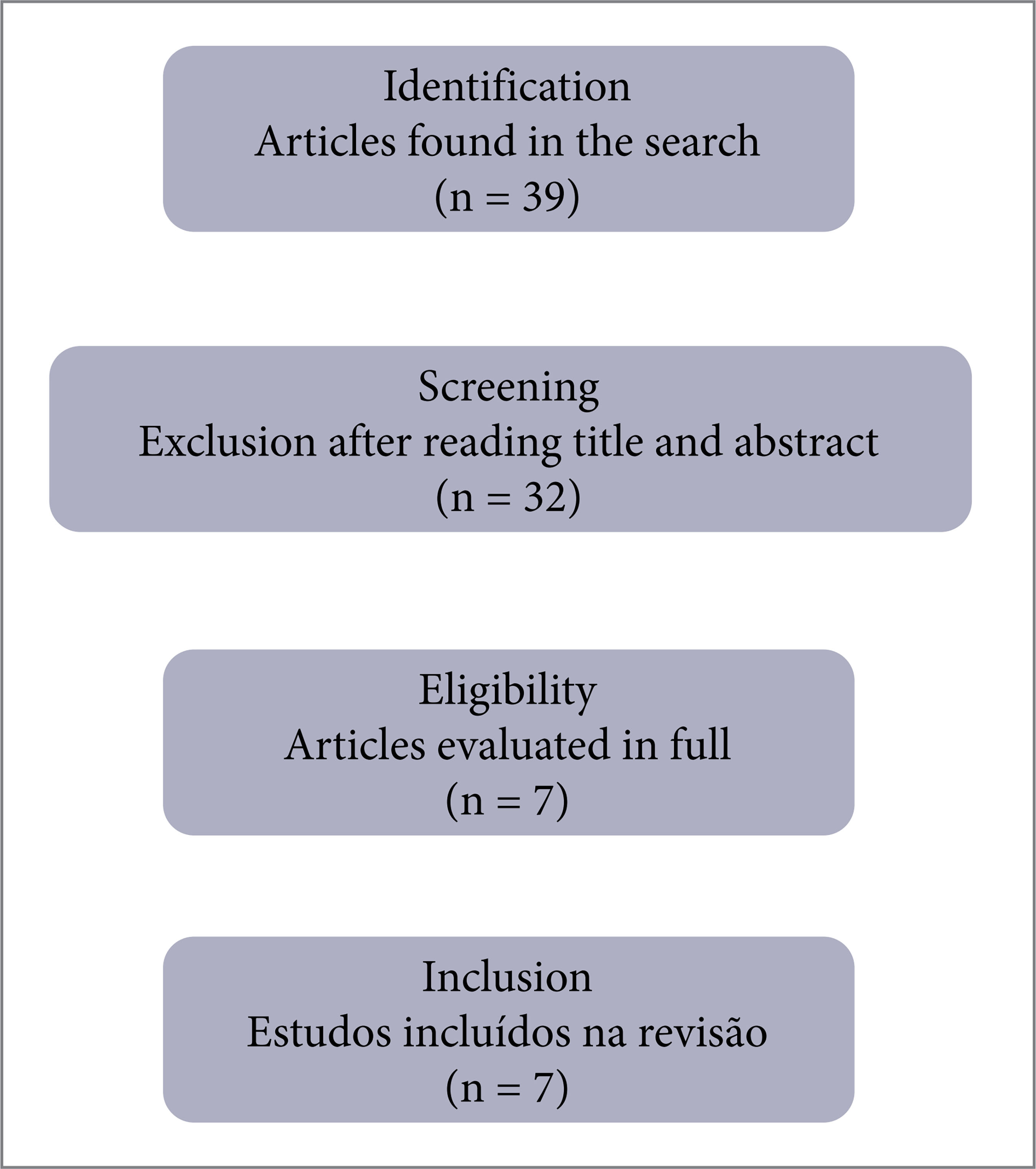
Initially, 39 articles were identified; 32 were excluded after reviewing titles and abstracts because they did not address the proposed topic. Seven relevant articles were selected to compose the results of this analysis, as shown in Table 1.
The inclusion criteria involved articles published in English or Portuguese between 2019 and 2024 that directly addressed the relationship between the COVID-19 pandemic and organ donation in various countries. Priority was given to articles with full text access and that analyzed deceased donors, with death confirmed by BD protocol.
Reports of isolated cases with inconsistent methodology were excluded, as well as studies focused solely on transplants from living donors or that, in some way, did not fit the context of BD for potential donor evaluation, such as, for example, death due to cardiac arrest.
The articles were analyzed critically, considering the methodologies, the relevance of the results, and the authors' conclusions, to synthesize the main evidence on the pandemic's impact on organ donation effectiveness.
RESULTS
Thirty-nine articles were identified in the database using the search strategy described in the methodology. After applying the inclusion and exclusion criteria, seven studies were selected for the final analysis (Fig. 1). The main characteristics of these studies, including principal author, year of publication, context analyzed (pre-pandemic or pandemic), sample, and main conclusions, are summarized in Table 1.

The seven included studies consist predominantly of retrospective analyses based on transplant data collected from specialized centers or national transplant systems. However, they exhibit methodological heterogeneity regarding the outcomes evaluated and the comparison periods.
Caliskan et al.9 retrospectively analyzed donations made between July 2019 and November 2020 at a university hospital in Türkiye. The authors observed a significant reduction in the number of donors and a substantial increase in the time required for the donation to be effective during the pandemic. The average processing time increased from 8.5 ± 2.12 hours in the pre-pandemic period to 54 ± 11.53 hours during the pandemic. Furthermore, only 14 of the 31 available organs were actually transplanted, and five donors had organs discarded due to suspected infection, reflecting difficulties related to the management of potential donors and screening for COVID-19.
In Israel, Katvan et al.10 conducted a retrospective analysis of data from the national transplant registry, comparing 2019 and 2020. The study included 141 deceased donors in the pre-pandemic period and 101 in the pandemic, resulting in a 28% reduction in donations. An increase in transplant waiting times was observed, associated with both decreased organ supply and the prioritization of hospital resources for the care of patients with COVID-19. The authors also reported a negative impact on family consent, possibly related to fear of infection.
Cheung et al.11 conducted a retrospective observational study at a single transplant center in Hong Kong, comparing data from 2018 and 2020. Despite a 26.9% reduction in referrals of potential deceased donors in 2020, the rate of confirmed brain death increased significantly (40.8% in 2020 versus 20.2% in 2018). The rate of family consent remained stable, resulting in a similar number of organs retrieved in both periods. These findings suggest that the country's strict pandemic control contributed to the partial maintenance of donation activities.
In Germany, Englbrecht et al.12 conducted a multicenter retrospective analysis in five university hospitals, comparing pre- and post-pandemic data. A 10% reduction in the number of patients with severe brain damage and a significant 44% drop in the number of effective donors after BD were observed in 2022, compared to 2021. Treatment capacity in intensive care units was reduced by 7.2%, and this was identified as the main factor associated with the decrease in donations, outweighing the effect of direct COVID-19 infection.
In Iran, Dezfuli et al.13 retrospectively evaluated an organ procurement center in Tehran, comparing the pre- and post-pandemic periods. The authors identified a 37% reduction in the number of BD donors during the pandemic, as well as a 52% increase in the incidence of cardiac death before organ retrieval. The conversion rate from potential to actual donors fell from 42.16% to 29.9%, mainly due to donors' clinical inadequacy. The time to obtain family consent also increased significantly.
Kute et al.14 analyzed data from the National Organ and Tissue Transplant Organization in India to evaluate changes in donation rates from 2013 to 2018. Although the study did not directly quantify the impact of the pandemic, the authors highlighted pre-existing structural challenges, such as cultural and religious barriers, a lack of knowledge about BD, and infrastructure limitations, which were likely exacerbated by the global health crisis.
Finally, Ito et al.15 conducted a national survey in Japan, using questionnaires applied to 206 transplant centers and data from the Japan Organ Transplant Network. In 2020, the number of donors in BD fell to 68, corresponding to 69% of the annual average. In addition, 48% of centers suspended transplant surgeries, including 78% of kidney transplant centers. In December 2020, there were no organ donation records in the country, reflecting the prioritization of hospital resources to address the pandemic.
DISCUSSION
The studies analyzed demonstrate that the COVID-19 pandemic had a significant impact on organ donation in different international contexts, affecting both the number of donors and the effectiveness of donations, as well as the time required to complete transplant procedures. Although the magnitude of this impact varied across countries, a consistent pattern of reduced donation activity emerged during the pandemic.
Comparative analysis of the studies allows us to identify common factors associated with the decrease in donations, among which the following stand out: the overload of health systems, the reduction in the availability of intensive care beds, the prolonged time for obtaining family consent, and the fear related to the transmission of SARS-CoV-2 infection. In general, the pandemic has affected the management and logistics of the donation process more significantly than the direct disposal of organs due to confirmed infection.
Hospital capacity, especially the availability of intensive care unit beds, has proven to be a determining factor in maintaining donation activity. In Germany, the reduction in healthcare capacity was directly associated with a drop in the number of effective donors, regardless of the COVID-19 infection rate. A similar situation was observed in Japan, where limited hospital resources led to the temporary suspension of transplants at almost half of the specialized centers.
Confirmation of BD and family consent also emerged as a critical point during the pandemic. In Hong Kong, maintaining efficient protocols and rigorously controlling the virus's spread increased the BD confirmation rate and stabilized donations. In contrast, in Türkiye and Iran, the longer time required to obtain family consent was associated with fewer actual donations.
Although not all studies have explicitly addressed psychosocial factors, it is plausible that families' emotional fragility during the pandemic negatively influenced their decision to donate. Insecurity related to infection, associated with delays in diagnosis and in managing the process, may have contributed to the reduction in family consent rates.
Another relevant aspect concerns the screening and safety of transplants. In some countries, such as Japan and Turkey, the adoption of rigorous COVID-19 screening protocols has slowed the donation and transplant process. In India, although the direct impact of the pandemic has not been quantified, pre-existing structural limitations are likely to have been intensified by the health crisis.
In summary, the analyzed data confirm that the COVID-19 pandemic had a negative global impact on organ donation, with variations depending on the response capacity of health systems. Countries that managed to control the virus's spread more effectively, such as Hong Kong, experienced less disruption to donation activity, while those with overburdened hospital systems suffered sharper declines. Strategies aimed at expanding hospital capacity, strengthening communication with families, and optimizing donation flows are fundamental for recovering transplant rates to pre-pandemic levels and for greater resilience in the face of future health crises.
Study limitations
This study has limitations inherent to the narrative review design. The search strategy was conducted in a single database, which may have limited the identification of all relevant studies. Furthermore, the methodological heterogeneity among the included studies and differences across health systems limit the generalizability of the findings.
CONCLUSION
The COVID-19 pandemic had a significant negative impact on the effectiveness of organ donation from donors diagnosed with BD. The results indicate that the responsiveness of health systems, particularly the availability of intensive care beds and the logistical organization of transplant services, plays a key role in maintaining donation activity during health crises.
ACKNOWLEDGEMENT
Not applicable.
-
DECLARATION OF USE OF ARTIFICIAL INTELIGENCE TOOLS
The authors declare that no artificial intelligence tools were used in the preparation, writing, data analysis, or review of this manuscript.
-
FUNDING
Not applicable.
DATA AVAILABILITY STATEMENT
All dataset were generated or analyzed in the current study.
References
-
1 Lepoittevin M, Giraud S, Kerforne T, Barrou B, Badet L, Bucur P, et al. Preservation of organs to be transplanted: an essential step in the transplant process. Int J Mol Sci, 2022; 23(9): 4989. https://doi.org/10.3390/ijms23094989
» https://doi.org/10.3390/ijms23094989 -
2 Muller E, Dominguez-Gil B, Ahn C, Berenguer M, Cardillo M, Chatzixiros E, et al.Transplantation: a priority in the healthcare agenda. Transplantation, 2025; 109(1): 81-7. https://doi.org/10.1097/TP.0000000000005182
» https://doi.org/10.1097/TP.0000000000005182 -
3 Ferreira LD, Goff C, Kamepalli S, Montgomery AE, Miggins JJ, Goss JA, et al. Survival benefit of solid-organ transplantation: 10-year update. Dig Dis Sci, 2023; 68(9): 3810-7. https://doi.org/10.1007/s10620-023-08012-1
» https://doi.org/10.1007/s10620-023-08012-1 -
4 Bendorf A, Kerridge IH, Stewart C. Intimacy or utility? Organ donation and the choice between palliation and ventilation. Crit Care, 2013; 17(3): 316. https://doi.org/10.1186/cc12553
» https://doi.org/10.1186/cc12553 -
5 Rosen A, Ison MG. Screening of living organ donors for endemic infections: understanding the challenges and benefits of enhanced screening. Transpl Infect Dis, 2017; 19(1): e12633. https://doi.org/10.1111/tid.12633
» https://doi.org/10.1111/tid.12633 -
6 Nimmo A, Gardiner D, Ushiro-Lumb I, Ravanan R, Forsythe JLR. The global impact of COVID-19 on solid organ transplantation: two years into a pandemic. Transplantation, 2022; 106(7): 1312-29. https://doi.org/10.1097/TP.0000000000004151
» https://doi.org/10.1097/TP.0000000000004151 -
7 Marks KM, Gulick RM. Covid-19. Ann Intern Med, 2023; 176(10): ITC145-60. https://doi.org/10.7326/AITC202310170
» https://doi.org/10.7326/AITC202310170 -
8 Sultan S, Altayar O, Siddique SM, Davitkov P, Feuerstein JD, Lee MH, et al.AGA Institute rapid review of the gastrointestinal and liver manifestations of COVID-19, meta-analysis of international data, and recommendations for the consultative management of patients with COVID-19. Gastroenterology, 2020; 159(1): 320-334. e27. https://doi.org/10.1053/j.gastro.2020.05.001
» https://doi.org/10.1053/j.gastro.2020.05.001 -
9 Caliskan G, Sayan A, Kilic I, Haki C, Girgin NK. Has the COVID-19 pandemic affected brain death notifications and organ donation time? Exp Clin Transplant, 2023; 21(5): 460-6. https://doi.org/10.6002/ect.2021.0090
» https://doi.org/10.6002/ect.2021.0090 -
10 Katvan E, Cohen J, Ashkenazi T. Organ donation in the time of COVID-19: the Israeli experience one year into the pandemic—ethical and policy implications. Isr J Health Policy Res, 2022; 11(1): 6. https://doi.org/10.1186/s13584-022-00519-8
» https://doi.org/10.1186/s13584-022-00519-8 -
11 Cheung CY, Pong ML, Au Yeung SF, Chak WL. Impact of COVID-19 pandemic on organ donation in Hong Kong: a single-center observational study. Transplant Proc, 2021; 53(4): 1143-5. https://doi.org/10.1016/j.transproceed.2021.02.016
» https://doi.org/10.1016/j.transproceed.2021.02.016 -
12 Englbrecht JS, Schrader D, Alders JB, Schäfer M, Soehle M. Post-COVID-19 pandemic organ donation activities in Germany: a multicenter retrospective analysis. Front Public Health, 2024; 12: 1356285. https://doi.org/10.3389/fpubh.2024.1356285
» https://doi.org/10.3389/fpubh.2024.1356285 -
13 Mokhber Dezfuli M, Eslami F, Mostafavi K, Khoshkholgh R, Reza Nejatollahi SM, Montazeri S, Abdolmohammadi Y, Ghorbani F. Organ procurement from donors after brain death during the COVID-19 pandemic: experience of a high prevalence country. Exp Clin Transplant, 2022; 20(4): 420-4. https://doi.org/10.6002/ect.2021.0398
» https://doi.org/10.6002/ect.2021.0398 -
14 Kute V, Ramesh V, Shroff S, Guleria S, Prakash J. Deceased-donor organ transplantation in India: current status, challenges, and solutions. Exp Clin Transplant, 2020; 18 (Suppl 2): 31-42. https://doi.org/10.6002/ect.rlgnsymp2020.L6
» https://doi.org/10.6002/ect.rlgnsymp2020.L6 -
15 Ito T, Kenmochi T, Ota A, Kuramitsu K, Soyama A, Kinoshita O, Eguchi S, Yuzawa K, Egawa H. National survey on deceased donor organ transplantation during the COVID-19 pandemic in Japan. Surg Today, 2022; 52(5): 763-73. https://doi.org/10.1007/s00595-021-02388-1
» https://doi.org/10.1007/s00595-021-02388-1
Edited by
-
Seccion editor:
Ilka de Fátima Santana F. Boin https://orcid.org/0000-0002-1165-2149

 Source: Elaborated by the authors