
 Nursing Navigation in Transplants: Assessment of Needs in Hospitalized Patients
ABSTRACT
Objectives: To identify the navigation score among eligible hospitalized candidates for transplants or solid organ transplant recipients, by applying the Escala de Avaliação de Necessidade de Navegação and the associated factors.
Methods: This is an observational, descriptive-exploratory study with a quantitative method. The sample consisted of 50 adult patients eligible for transplantation or solid organ transplant recipients hospitalized in the medical-surgical transplant unit of a private general hospital located in the southern zone of the city of São Paulo, Brazil. Frequency and percentage tables were constructed for qualitative variables, and descriptive statistical measures were calculated for quantitative variables. The chi-square test was used for comparisons between variables. The study followed the guidelines and standards for research involving human subjects according to Resolução 466/2012 of the Conselho Nacional de Saúde.
Results: The sample showed an equal gender distribution, average age of 50 years, predominance of patients from São Paulo (50%), with a comorbidity of kidney failure (30%), and hospitalized for clinical treatment (80%). Navigation needs were present in 26% of patients. The item of the scale that scored the highest was the category “Access to healthcare services/system (transportation conditions, movement between services necessary for treatment within and outside the healthcare institution).”
Conclusion: The study identified the need for patient navigation, highlighting difficulties related to understanding the diagnosis, treatment organization, and access to health services. These findings reinforce the complexity of the care pathway within the transplant process and point to navigation as a strategy to improve care quality, favoring patient follow-up and contributing to better clinical outcomes.
Descriptors
Patient Navigation; Transplantation; Treatment Adherence and Compliance; Patient-Centered Care; Nursing Care
RESUMO
Objetivos: Identificar o escore da necessidade de navegação entre candidatos elegíveis ao transplante ou receptores de transplante de órgãos sólidos, sob regime de internação, por meio da aplicação da Escala de Avaliação de Necessidade de Navegação e dos fatores associados.
Métodos: Estudo observacional, descritivo-exploratório, com delineamento quantitativo. A amostra foi composta por 50 pacientes adultos, candidatos elegíveis ao transplante ou receptores de transplante de órgãos sólidos, sob regime de internação hospitalar na unidade de clínica médico-cirúrgica de transplantes de um hospital geral privado, localizado na zona sul de São Paulo. Foram construídas tabelas de frequências e porcentagens para as variáveis qualitativas e calculadas medidas estatísticas descritivas para as variáveis quantitativas. Nas comparações entre as variáveis, foi utilizado o teste qui-quadrado. O estudo seguiu as diretrizes e normas de pesquisas com seres humanos, segundo a Resolução 466/2012 do Conselho Nacional de Saúde.
Resultados: A amostra apresentou distribuição equitativa de gênero, com média de idade de 50 anos, 50% procedentes de São Paulo, 30% com diagnóstico de insuficiência renal e 80% internados para tratamento clínico. A necessidade de navegação esteve presente em 26% dos pacientes. O item da escala que mais recebeu pontuação foi a categoria “Acesso aos serviços/sistema de saúde (condições de transporte, deslocamento entre os serviços necessários ao seu tratamento dentro e fora da instituição de saúde)”.
Conclusão: O presente estudo identificou a necessidade de navegação por parte dos pacientes, evidenciando dificuldades relacionadas à compreensão do diagnóstico, à organização do tratamento e ao acesso aos serviços de saúde. Tais achados reforçam a complexidade do percurso assistencial no processo de transplante e apontam a navegação como estratégia para qualificar o cuidado, favorecendo o acompanhamento desses pacientes e contribuindo para melhores desfechos clínicos.
Descritores
Navegação de Pacientes; Transplante; Cooperação e Adesão ao Tratamento; Assistência Centrada no Paciente; Cuidados de Enfermagem
INTRODUCTION
Patient navigation (PN) is characterized as the support provided by a healthcare professional, nursing or non-nursing, to a patient who needs help navigating the stages of their treatment. It is a patient-centered care model that allows for effective guidance during treatment, in which individual needs are assessed to develop a tailored care plan1,2.
The concept of "patient navigation" emerged in 1990 at Harlem Hospital in New York, patented by the American physician Harold Freeman in partnership with the American Cancer Society2. Initially, the term was coined based on the doctor's perceptions of the lower adherence to treatment by his black female patients compared to his white female patients, due to social, educational, psychological, emotional, and economic barriers faced by the latter in initiating, continuing, and/or completing their treatments3,4.
In Brazil, patient navigation (PN) services began in mid-2010s in private hospitals in the state of São Paulo, aiming to facilitate communication between healthcare professionals and patients and to mediate the integration of hospitals and clinics. In practice, the navigator is responsible for performing tasks that the patient alone is often unable to complete effectively, such as keeping medical records and health data up to date, or organizing care strategies that facilitate adherence to treatment5.
The Regional Nursing Council of São Paulo held, on January 30, 2020, the first PN event, which sought to present the topic, still little known in the country, and to discuss the best ways to adapt the American concept to the Brazilian reality6.
The Avon Institute, in partnership with the Fundação Laço Rosa (Pink Ribbon Foundation), conducted a pilot project and demonstrated, through the practice of Patient Navigation, that it is possible to expand access to early breast cancer diagnosis among patients served by the Brazilian Unified Health System (Sistema Único de Saúde -SUS). In this manner, compliance with the 60-day Law—which mandates that the initiation of treatment at specialized centers occurs within a period of 60 days or less (pursuant to the caput of Article 2 of Law No. 12.732/12)—increased from 27% to 85% within a few months7-9.
Furthermore, this project served as inspiration for the creation of Bill 4.171/2021, approved in plenary and transformed into Ordinary Law 14.450/2022, which creates the National Patient Navigation Program (Programa Nacional de Navegação de Pacientes) for people with malignant breast neoplasms. Among other objectives, the program seeks to guarantee patient access to individual guidance, support, educational information, coordination and care actions, and other assistance measures necessary for successful treatment7-11.
In December 2023, Law 14.758/23 came into effect, defining the National Policy for Cancer Prevention and Control (Política Nacional de Prevenção e Controle do Câncer) and the National Program for Navigation of People Diagnosed with Cancer (Programa Nacional de Navegação da Pessoa com Diagnóstico de Câncer), making patient navigation accessible to Brazilian citizens. This policy defines guidelines and principles that should constitute actions within the Brazilian public health system (SUS), aiming to prevent and control cancer nationwide10.
In January 2024, the Federal Nursing Council published Resolution 735/24, making the practice of Patient Navigation exclusive to nurse navigators and/or specialists. To receive this title, proof of at least 3 years of experience in the field is required, as well as meeting at least one of the criteria listed in the resolution12.
In the context of transplantation, Brazil stands out as the second-largest transplanting country in the world, registering more than 12,000 transplants performed through the Brazilian public health system (Sistema Único de Saúde-SUS) from January to November 2021. However, compared to the top-ranked country (the United States), Brazil surpasses it by having the largest public system in the world that finances and enables transplants nationwide. Currently, approximately 88% of transplants performed throughout the Federation are financed by the SUS13. It is worth noting that, even amidst the COVID-19 pandemic, Brazil maintained approximately 60% of its transplants without interruption of organ donation processes or activities13.
In Brazil, the state that currently performs the most transplants is São Paulo (9,086), followed by Paraná (1,813), Minas Gerais (1,664), and Rio de Janeiro (1,548). There has been increasing growth in the number of transplants performed in recent decades, as in the state of São Paulo, the number increased from 4,272 transplants in 2001 to 9,086 in 202114.
The waiting time for an organ transplant depends on several factors, including the recipient's health status, the order of registration on the transplant waiting list, the severity of the patient's condition, and, most importantly, the compatibility between the donor and the recipient15.
Generally, for eligible patients, organ transplantation represents the only opportunity for life. Although the volume of transplants performed annually is increasing, the number of people on the waiting list remains extensive.
According to data from the Brazilian Association of Organ Transplantation (Associação Brasileira de Transplante de Órgãos-ABTO), in September 2025, Brazil had 72,626 active adult patients on the transplant waiting list. Of this total, 27,327 were from the state of São Paulo, 7,561 from Minas Gerais, 7,234 from Rio de Janeiro, and 4,406 from Paraná16.
The success of a transplant depends on multiple factors, requiring effectiveness throughout the entire process. The nurse navigator can contribute by understanding the patient's process and guiding all stages most appropriately and efficiently. In addition to continuously encouraging patient adherence to and continuity of treatment, the nurse navigator helps them effectively overcome challenges along the way, thus achieving successful treatment.
Based on this reflection, considering solid organ transplantation as a highly complex and lengthy process, the reality for many transplant patients is a difficult journey from the diagnosis of the need for a transplant intervention, its implementation, and recovery. Therefore, nursing navigation can improve treatment management for transplant candidates and recipients by guiding, orienting, and supporting them, thereby enhancing adherence to treatment and improving quality of life. In this context, the motivation for conducting this study arose, considering the opportunity to delve deeper into nursing navigation in solid organ transplantation.
Objective
To determine navigation need scores for solid organ transplant candidates and recipients in hospital settings, utilizing the Navigation Need Assessment Scale (Escala de Avaliação de Necessidade de Navegação - EANN) and evaluating associated factors.
METHODS
This is an observational, descriptive-exploratory study with a quantitative design that followed the established criteria outlined in the Strengthening the Reporting of Observational Studies in Epidemiology 17.
It was developed in a large, highly complex private hospital located in the southern part of the city of São Paulo, which has a Solid Organ Transplant Program in partnership with the Ministry of Health (Ministério da Saúde -MS), where more than 3,000 transplants have already been performed.
The sample was obtained through convenience sampling to include as many patients as possible during the data collection period, which took place from October 2023 to February 2024, and was conducted by the first researcher.
The selected patients were approached individually in their respective hospital rooms and informed about the research, its objective, and how to participate. They were also invited to participate voluntarily. They were informed about the confidentiality and secrecy of the information, in accordance with Resolution 466/2012 of the National Health Council and the General Law on the Protection of Personal Data, guaranteeing the protection of participants' data. Those who agreed to participate were presented with the Informed Consent Form, which they signed in duplicate, one copy for the researcher and one for the participant.
The sample consisted of 50 patients aged 18 or older, eligible candidates for transplantation or recipients of solid organ transplants, under inpatient hospital care in the institution's medical-surgical transplant unit, and in a clinical condition that allowed them to participate in the research actively.
Two data collection instruments were used. The first, developed by the authors, was used to characterize patient profiles and data on solid organ transplantation among eligible candidates and recipients. The second, the EANN, a scale constructed and validated by nurse navigator Fernanda Pautasso, is an instrument designed to assist in including patients in programs based on their navigation needs2.
The EANN is composed of six categories, subdivided into key questions, directed at patients: patient understanding of the diagnosis; communication skills; understanding of the treatment trajectory; organizational skills for carrying out the treatment; access to health services/system; and family support.
Evaluation criteria are scored 1-3, and the scores are then summed to yield a final navigation needs score. Based on the final score, the patient is classified into2:
-
6 to 9 points – no navigation required;
-
10 to 12 points – Level 1 navigation required*;
-
13 to 17 points – Level 2 navigation required**.
* Navigation Level 1: Navigation performed mostly by an academic navigator and a professional navigator, with support from the nurse navigator; ** Navigation Level 2: Navigation performed by the nurse.
The EANN score was obtained by simply summing the scores across the evaluated criteria to determine the classification of navigation needs2.
The results obtained based on the responses from the two data collection instruments were grouped and studied from a quantitative perspective, using statistical resources.
The categorical variables were organized into tables and/or graphs of frequencies and percentages. For the quantitative variables, statistical measures of position and dispersion were calculated. The possible associations between the factors studied and the need for navigation were assessed using the chi-square test at the 5% significance level.
RESULTS
The sample consisted of 50 patients, equally divided between men and women, with an age range of 20 to 71 years, resulting in an average age of approximately 50 years and a median of 54 years.
Regarding nationality and state of origin, there was a prevalence of Brazilians (96%) and those from São Paulo (50%), followed by those from the states of Minas Gerais (12%), Paraná (6%), and Acre, Bahia, and the Federal District (4% each).
Regarding the educational level of the sample, complete high school education predominated (18/36%), followed by complete higher education (15/30%), incomplete high school education (6/12%), and seven other variations, with one to three participants.
The sample's weight, height, and body mass index had averages of 64.51 kg, 1.66 m, and 23.35 kg/m², respectively.
Regarding medical history, renal failure was represented by 30% of the sample, divided into dialysis (26%) and non-dialysis (4%), diabetes mellitus (24%), systemic arterial hypertension (14%), and heart failure (6%).
Concerning previous surgeries, 90% of patients had already undergone surgical procedures; of these, 68% had undergone some organ transplant, and 20% were hospitalized for a new transplant, of the same organ or a different organ.
Regarding the reason for hospitalization among the patients in the sample, 30 (60%) were admitted post-transplant and 20 (40%) pre-transplant, as shown in Fig. 1.

Among transplant patients, the number of organs received throughout their clinical history ranged from 1 to 6, distributed as shown in Fig. 2.

As a result of the research, it was found that the organs with the highest incidence of transplants among the patients followed were heart (30%) and liver (23.33%), followed by lung (20%), kidney (20%), multivisceral (3.33%) and kidney/pancreas (3.33%). The number of organs transplanted was predominantly represented by one organ (63.33%) and two organs (33.33%).
Regarding the waiting time for the organ among transplanted patients, the statistical analysis revealed a mean of 343.6 days, ranging from 0 days (i.e., hours) to 1,460 days (i.e., 4 years), with a standard deviation of 405.9 days. A significant discrepancy is noted between the minimum and maximum waiting times, both recorded for kidney transplants.
Regarding eligible transplant candidates, it was found that 14 (70%) were listed on the waiting list of the National Transplant System (SNT) and six (30%) were not listed for various reasons: diagnosis of systemic infection (10%), kidney stone (5%), heart failure (5%), eligibility documentation under review (5%) and awaiting results of laboratory tests (5%).
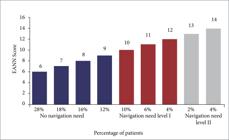
The EANN scores ranged from 6 to 14, with a median of 8 and a standard deviation of 2.23.
Among the patients in the present study, using the EANN, 26% were classified as needing navigation, with 10 (20%) needing Level 1 navigation and 3 (6%) needing Level 2 navigation. The distribution of each score is shown in Fig. 3, with the total score and the corresponding percentage of patients detailed.
The distribution of scores among the items and sub-items that make up the EANN is illustrated in Table 1, showing that no category is more homogeneous; rather, the opposite is true, with items and sub-items having disparate scores.
According to the EANN application, among patients classified as needing navigation, 16 criteria had a score of 3, whereas among those classified as not needing navigation, only 2 criteria had a score of 3.
When evaluating all patients, the item that received the most scores of 3 was the category "Access to services/health system (transportation conditions, movement between services necessary for their treatment within and outside the health institution)", with eight criteria scored at 3, followed by the categories "Patient's understanding of the diagnosis" and "Understanding of the treatment trajectory", both with four criteria scored at 3. In contrast, the category that received the most 2 scores was "Family support system".
Among patients classified as needing navigation, the characteristics shown in Table 2 were identified.
DISCUSSION
Issues related to transplantation can represent a major obstacle for patients, as treatment is associated with multiple factors, including eligibility for the waiting list, waiting time, complex surgery and post-operative periods, obtaining and using immunosuppressant medications, uncertainty regarding the effectiveness of the transplant, and anxieties related to psychological and psychosocial factors, among others that can often lead to difficulties in understanding and ensuring the effectiveness of the treatment18.
Most of the patients participating in this study came from São Paulo and Minas Gerais. The migration of patients to the capital is justified, since the institution hosting the study, along with five other hospitals, is a reference in Brazil and forms an alliance with the Ministry of Health, aiming to support and improve the SUS through the three-year project Program to Support the Institutional Development of the Unified Health System (Programa de Apoio ao Desenvolvimento Institucional do Sistema Único de Saúde/PROADI-SUS). This partnership ensures that patients from other Brazilian states are guaranteed quality, safety, universality, and equity in the transplant process19.
The organs with the highest transplant incidence were the heart and liver, followed by the lung and the kidney. The general coordinator of the National Transplant System (Sistema Nacional de Transplantes-SNT) explains that the system aims to carry out heart transplants in the shortest possible time, due to the extreme urgency of these patients, who meet rigorous and specific eligibility criteria for the procedure. In this sense, patients awaiting heart transplants have low organ function and may depend on extracorporeal circulation and vasoactive medications, which makes them a priority on the waiting list20.
Among the clinical histories present in the patients in the studied sample, renal failure stood out, predominantly requiring dialysis. The prevalence of renal failure is because many patients with organ failure have underlying conditions that increase the risk of this pathology, such as hypertension, diabetes mellitus, and heart failure. These conditions can damage the small blood vessels in the kidneys over time, reducing their ability to filter blood21. Furthermore, organ failure can lead to systemic complications such as sepsis, septic shock, or multiple organ dysfunction syndrome, which can compromise kidney function due to decreased blood flow to the kidneys or the release of toxic substances into the bloodstream. Therefore, regular monitoring of kidney function and early intervention are essential to prevent and treat kidney failure in these patients21.
Clinical treatment was the predominant reason for hospitalization in the vast majority of patients in the sample, especially those in post-transplant care. The organ transplant process can be lengthy due to several complex factors, such as the limited availability of compatible organs and the growing number of patients on the waiting list in the country. Reports from the Ministry of Health estimated the waiting list at 18,450 patients in 2022 in the state of São Paulo, divided among different subcategories of solid organs22.
The waiting time for an organ among transplant patients ranged from a few hours to 4 years; both extremes were related to waiting times for kidney transplants. This process can take weeks, months, or even years, depending on organ availability and donor-recipient compatibility. Furthermore, before a transplant, patients undergo extensive medical evaluation to ensure they are in suitable condition for surgery and subsequent use of immunosuppressant medications. This evaluation includes tissue compatibility testing, assessment of the patient's overall health, and treatment of any underlying conditions that may affect the transplant's success. This entire process can be time-consuming, contributing to transplant delays22.
The complex process of solid organ transplantation, during the pre- and post-operative periods, exposes patients to opportunistic pathogens, including viruses, fungi, bacteria, and parasites. This is because the administration of immunosuppressive drugs is primarily recommended in two phases: reducing the immune system load to prevent acute organ rejection and induce transplant tolerance, and increasing survival. Therefore, post-transplant hospitalization for treatment of any clinical condition associated with infection may be related to immune system suppression21.
The professionals involved in the navigation process work to ensure that the patients they navigate appropriately receive the necessary care and play a crucial role in both the pre-transplant and post-transplant phases, offering essential support to patients undergoing such a profound procedure23.
Concerning previous surgical procedures, most had already undergone some organ transplantation, and a significant portion were hospitalized for a new transplant, either of the same organ or a different organ.
In addition to the adverse effects of using immunosuppressive drugs, there are metabolic complications, such as nephrotoxicity, hepatotoxicity, nervous system alterations, among others, which have a systemic impact on the body, favoring the consequent failure and depression of underlying organs that, in the long term, result in the need for a new transplant, of the same or a different organ21.
Through the application of the Brazilian national assessment scale of navigation, EANN, more than a quarter of the patients studied were classified as needing navigation. This result was compared with patients' educational level (completed high school and completed higher education), showing that, even among educated people, understanding the process of solid organ transplantation in Brazil can be challenging due to the complexity of the health system and the limited dissemination of information on the subject. The process involves a series of steps, from the identification of potential donors to the evaluation and selection of recipients, in addition to legal, ethical, and logistical issues. Furthermore, there are myths and taboos related to organ donation that can affect public perception and hinder an accurate understanding of the process23.
Ongoing education and awareness campaigns on the subject are fundamental to improving public understanding and encouraging families to authorize organ donation. It is estimated that the number of family authorizations increased by 2.1% between 2022 and 2023, according to the National Transplant System (SNT)24.
Prior transplant(s) received by patients were not observed to facilitate coping with the current transplant process, since most of the patients studied had undergone transplantation previously, highlighting the importance of implementing nurse navigators in the organ transplant process.
Even though the nurse's practice is not explicitly named as navigation, all patients treated at the study's host institution during the data collection period were accompanied by a specialized nursing team throughout the transplant process, including on an outpatient basis. However, as evidenced, the need for navigation among the study participants was still verified.
Furthermore, other variables, such as sex, age, profession, and family structure, do not correlate with navigation needs, highlighting the uniqueness of each patient. This fact reaffirms the need to develop patient-centered care, individualizing the patient as a person and prioritizing, throughout their journey, meeting their needs, understanding their circumstances and preferences, and seeking to meet them completely23.
In the present sample, among patients classified as needing navigation, five categories achieved the maximum score, while among patients classified as not needing navigation, only three categories reached the maximum score. Among the items with the maximum score, the category "Access to services/health system (transportation conditions, movement between services necessary for their treatment within and outside the health institution)" predominated, with eight patients scoring 3, followed by the categories "Patient's understanding of the diagnosis" and "Understanding of the treatment trajectory," both with four patients scoring 3.
Regular patient attendance at medical appointments and examinations is crucial for monitoring potential complications, adjusting medication dosages, and ensuring effective recovery. This continuous monitoring requires frequent visits to the doctor and healthcare facility, which inevitably results in a significant increase in transportation costs for the patient. Therefore, the financial burden associated with transportation becomes substantial, representing an additional challenge for patients and their families, especially when they migrate from other states to receive treatment18.
Considering the complexity and sensitivity of the transplant process, this study demonstrates that the nurse navigator's role in planning, executing, coordinating, supervising, and evaluating actions implemented in all phases of the organ transplant process, whether at the outpatient or inpatient level, aims to preserve the patient's functional ability, improve quality of life, and provide education regarding the stages of the process23.
Among the sub-items of the scale, "Family support system" had the highest number of patients with a score of 2, highlighting the importance of family involvement in the care process and how the lack of this support can generate emotional overload in hospitalized patients, since the lack of participation of family members in the patient's care causes a feeling of abandonment24.
Furthermore, the responsibility of care sometimes falls on a single family member, leading to physical and emotional exhaustion throughout the hospitalization period, which often results in the abandonment of the hospitalized relative, leaving them alone to face the process.
Therefore, early classification of inpatients is necessary using the EANN to determine their level of nursing care need and, based on this, develop a more appropriate, individualized care plan.
The use of the EANN as an instrument for assessing navigation needs becomes paramount, as it encompasses the patient in their broadest aspects, including understanding of the diagnosis and treatment trajectory, planning and organizational skills, ease of movement to health services/systems, communication skills, and family support.
Nurse navigators, working alongside the multidisciplinary team, can act as facilitators, providing clear, concise information to patients through effective communication to guide them through the transplant process. This practice contributes to the coordination of consultations, examinations, and evaluations, as well as to the identification and resolution of barriers to transplantation, such as financial issues, transportation, or a lack of emotional support, helping patients become physically and emotionally prepared to receive the organ.
Study limitations
The limitations of this study include the small sample size, which, due to the high complexity of the solid organ transplantation process, resulted in long hospital stays during data collection, leading to low patient turnover in the sector. Furthermore, conducting the study at a single hospital is a significant limitation, as it limits the generalizability of the results to other healthcare settings. Therefore, further studies are proposed with longer data collection periods across different institutions, enabling robust sample sizes and the comparison of findings
CONCLUSION
Among the 50 patients eligible for or recipients of solid organ transplants who comprised the sample for this study, as determined by the EANN, 26% were classified as needing navigation, with 20% requiring Level 1 navigation and 6% requiring Level 2 navigation.
The analysis of patients' navigation needs revealed a range of understanding and organization regarding their diagnosis and treatment, underscoring the importance of personalized support and guidance interventions.
The participants' level of education was predominantly between completed high school and completed higher education, and prior transplantation was documented in most of the sample. However, none of these factors facilitated understanding of the diagnosis and treatment, highlighting the complexity of the process and the need for an approach to patient evaluation and preparation for the transplant.
"Access to health services/system (transportation conditions, movement between services necessary for their treatment within and outside the health institution)" was the predominant item, with the highest score, justified by the high demand for medical consultations and examinations for monitoring throughout the process.
The results of this study bring together important information about the long, complex process of solid organ transplantation for patients, and the need to develop more effective care strategies and support so that these patients can have a better experience and achieve better clinical outcomes. It is expected that this study will bring reflections on the implementation of NP at the national level and in diverse scenarios, such as solid organ transplantation.
ACKNOWLEDGEMENT
Not applicable.
DECLARATION OF USE OF ARTIFICIAL Intelligence TOOLS
FUNDING
DATA AVAILABILITY STATEMENT
Data will be available upon request.
References
-
1 Rodrigues RL, Schneider F, Kalinke LP, Kempfer SS, Backes VM. Resultados clínicos da navegação de pacientes realizada por enfermeiros no cenário da oncologia: revisão integrativa. Rev Bras Enferm, 2021; 74(2). https://doi.org/10.1590/0034-7167-2019-0804
» https://doi.org/10.1590/0034-7167-2019-0804 -
2 Pautasso FF, Lobo TC, Flores CD, Caregnato RC. Nurse Navigator: development of a program for Brazil. Rev Latino Am Enfermagem, 2020; 28: e3275. https://doi.org/10.1590/1518-8345.3258.3275
» https://doi.org/10.1590/1518-8345.3258.3275 -
3 Conselho Regional de Enfermagem de São Paulo. Enfermeiras do Hospital Leforte apresentam a navegação de pacientes à diretoria do Coren-SP. São Paulo: COREN; 2019 [acesso em 05 Jun 2024] Disponível em: https://portal.coren-sp.gov.br/noticias/enfermeiras-do-hospital-leforte-apresentam-a-navegacao-de-pacientes-a-diretora-do-coren-sp/
» https://portal.coren-sp.gov.br/noticias/enfermeiras-do-hospital-leforte-apresentam-a-navegacao-de-pacientes-a-diretora-do-coren-sp/ -
4 Conselho Regional de Enfermagem de São Paulo. Navegação de pacientes: uma nova tendência na enfermagem. São Paulo: COREN; 2020 [acesso em 05 Jun 2024] Disponível em: https://portal.coren-sp.gov.br/noticias/navegacao-de-pacientes-uma-nova-tendencia-na-enfermagem/
» https://portal.coren-sp.gov.br/noticias/navegacao-de-pacientes-uma-nova-tendencia-na-enfermagem/ -
5 Hospital Lefort. O que é a navegação de pacientes oncológicos na enfermagem? São Paulo: Leforte; 2022 [acesso em 05 Jun 2024] Disponível em: https://leforte.com.br/blog/o-que-e-a-navegacao-de-pacientes-oncologicos-na-enfermagem/
» https://leforte.com.br/blog/o-que-e-a-navegacao-de-pacientes-oncologicos-na-enfermagem/ -
6 Conselho Regional de Enfermagem de São Paulo. Primeiro evento sobre navegação de pacientes é realizado no Coren-SP. São Paulo: COREN; 2020 [acesso em 05 Jun 2024] Disponível em: https://portal.coren-sp.gov.br/noticias/149550/
» https://portal.coren-sp.gov.br/noticias/149550/ -
7 Instituto Avon. Navegação de pacientes com câncer de mama. São Paulo: Instituto Avon; 2019 [acesso em 05 Jun 2024] Disponível em: https://institutoavon.org.br/navegacao-de-pacientes-com-cancer-de-mama/
» https://institutoavon.org.br/navegacao-de-pacientes-com-cancer-de-mama/ -
8 Rodovalho RT. O que é navegação de pacientes e por que o Brasil precisa disso. LinkedIn; 2022 [acesso em 05 Jun 2024] Disponível em: https://www.linkedin.com/pulse/o-que-%C3%A9-navega%C3%A7%C3%A3o-de-pacientes-e-porque-brasil-disso-rodovalho
» https://www.linkedin.com/pulse/o-que-%C3%A9-navega%C3%A7%C3%A3o-de-pacientes-e-porque-brasil-disso-rodovalho -
9 Brasil. Lei n. 12.732, de 22 de novembro de 2012. Dispõe sobre o primeiro tratamento de paciente com neoplasia maligna de mama comprovada e estabelece prazo para seu início. Diário Oficial da União, Brasília (DF); 2012 Nov 23; Seção 1. [acesso em 05 Abr 2025] Disponível em: https://www.planalto.gov.br/ccivil_03/_ato2011-2014/2012/lei/l12732.htm
» https://www.planalto.gov.br/ccivil_03/_ato2011-2014/2012/lei/l12732.htm -
10 Brasil. Lei n. 14.758, de 19 de dezembro de 2023. Dispõe sobre o Programa Nacional de Navegação de Paciente para pessoas com neoplasia maligna de mama. Brasília (DF); 2023 Dez 20; Seção 1. [acesso em 05 Abr 2025] Disponível em: https://www.planalto.gov.br/ccivil_03/_ato2023-2026/2023/lei/l14758.htm
» https://www.planalto.gov.br/ccivil_03/_ato2023-2026/2023/lei/l14758.htm -
11 Brasil. Lei n. 14.450, de 21 de setembro de 2022. Cria o Programa Nacional de Navegação de Pacientes para Pessoas com Neoplasia Maligna de Mama. Diário Oficial da União, Brasília (DF); 2022 Set 9; Seção 1. [acesso em 05 Abr 2025] Disponível em: https://www.planalto.gov.br/ccivil_03/_ato2019-2022/2022/lei/l14450.htm
» https://www.planalto.gov.br/ccivil_03/_ato2019-2022/2022/lei/l14450.htm -
12 Conselho Federal de Enfermagem. Cofen normatiza atuação da enfermagem em navegação e em clínica especializada. Brasília (DF): COFEN; 2021 [acesso em 2024 Jun 10]. Disponível em: https://www.cofen.gov.br/cofen-normatiza-atuacao-da-enfermagem-em-navegacao-e-em-clinica-especializada/
» https://www.cofen.gov.br/cofen-normatiza-atuacao-da-enfermagem-em-navegacao-e-em-clinica-especializada/ -
13 Brasil. Ministério da Saúde. Brasil é o segundo maior transplantador de órgãos do mundo: processos e doações foram mantidos durante a pandemia, em 2020 e 2021, quando foram feitos cerca de 25 mil procedimentos. Brasília (DF): MS; 2022. [acesso em 05 Jun 2024] Disponível em: https://www.gov.br/saude/pt-br/assuntos/noticias/2022/fevereiro/brasil-e-o-segundo-maior-transplantador-de-orgaos-do-mundo
» https://www.gov.br/saude/pt-br/assuntos/noticias/2022/fevereiro/brasil-e-o-segundo-maior-transplantador-de-orgaos-do-mundo -
14 Brasil. Ministério da Saúde. Sistema Nacional de Transplantes. Brasília (DF); MS; 2023. [acesso em 05 Jun 2024] Disponível em: https://www.gov.br/saude/pt-br/assuntos/noticias/2023/setembro/arquivos/28-09-2023-apresentacao-coletiva-doacao-de-orgaos-vfinal.pdf
» https://www.gov.br/saude/pt-br/assuntos/noticias/2023/setembro/arquivos/28-09-2023-apresentacao-coletiva-doacao-de-orgaos-vfinal.pdf -
15 Brasil. Ministério da Saúde. FAQ transplantes. Brasília (DF); MS; 2021. [acesso em 05 Jun 2024] Disponível em: https://www.gov.br/saude/pt-br/composicao/saes/snt/faq
» https://www.gov.br/saude/pt-br/composicao/saes/snt/faq -
16 Associação Brasileira de Transplante de Órgãos. Registro Brasileiro de Transplantes: dados numéricos da doação de órgãos e transplantes realizados por estado e instituição no período janeiro/setembro de 2025. São Paulo: ABTO; 2025. [acesso em 11 Mar 2026]. Disponível em: https://site.abto.org.br/wp-content/uploads/2025/11/RBT-2025-3-trimestre-Populacao.pdf
» https://site.abto.org.br/wp-content/uploads/2025/11/RBT-2025-3-trimestre-Populacao.pdf -
17 Elm EV, Altman DG, Egger M, Pocock SJ, Gøtzsche PC, Vandenbroucke JP. The Strengthening the Reporting of Observational Studies in Epidemiology (STROBE) statement: guidelines for reporting observational studies. Lancet, 2008; 61(4): 344-9. https://doi.org/10.1016/j.jclinepi.2007.11.008
» https://doi.org/10.1016/j.jclinepi.2007.11.008 -
18 Lazzaretti CT. Transplantes de órgãos: avaliação psicológica. Psicol Argum, 2006; 24(45): 35-41. [acesso em 05 Jun 2024] Disponível em: https://pesquisa.bvsalud.org/portal/resource/pt/lil-481837
» https://pesquisa.bvsalud.org/portal/resource/pt/lil-481837 -
19 Hospitais PROADI-SUS. Programa de transplantes. São Paulo: PROADI-SUS; 2024 [acesso em 05 Jun 2024] Disponível em: https://hospitais.proadi-sus.org.br/sobre
» https://hospitais.proadi-sus.org.br/sobre -
20 Brasil. Ministério da Saúde. Em 2023, no Brasil, espera por transplante de coração foi menor que 30 dias para 27,5% dos pacientes. Brasília (DF): MS; 2023 [acesso em 05 Jun 2024] Disponível em: https://www.gov.br/saude/pt-br/assuntos/noticias/2023/agosto/em-2023-no-brasil-espera-por-transplante-de-coracao-foi-menor-que-30-dias-para-27-5-dos-pacientes
» https://www.gov.br/saude/pt-br/assuntos/noticias/2023/agosto/em-2023-no-brasil-espera-por-transplante-de-coracao-foi-menor-que-30-dias-para-27-5-dos-pacientes -
21 Silva HA. O paciente transplantado e a imunossupressão [Dissertação] – Universidade Fernando Pessoa; 2015. [acesso em 05 Jun 2024] Disponível em: https://bdigital.ufp.pt/bitstream/10284/5186/1/PPG_21820.pdf
» https://bdigital.ufp.pt/bitstream/10284/5186/1/PPG_21820.pdf -
22 Brasil. Ministério da Saúde. Relatório de lista de espera por um transplante de órgão ou córnea (São Paulo) – Série histórica 2008-2022. Brasília (DF): MS; 2023 [acesso em 05 Jun 2024] Disponível em: https://www.gov.br/saude/pt-br/composicao/saes/snt/estatisticas/lista-de-espera-serie-historica/relatorio-de-lista-de-espera-por-um-transplante-de-orgao-ou-cornea-sao-paulo-serie-historica-2008-2022/view
» https://www.gov.br/saude/pt-br/composicao/saes/snt/estatisticas/lista-de-espera-serie-historica/relatorio-de-lista-de-espera-por-um-transplante-de-orgao-ou-cornea-sao-paulo-serie-historica-2008-2022/view -
23 Mendes KD, Roza BA, Barbosa SF, Schirmer J, Galvão CM. Organ and tissue transplantation: responsibilities of nurses. Texto Contexto Enferm, 2012; 21(4): 945-53. [acesso em 05 Abr 2025]. Disponível em: https://www.scielo.br/j/tce/a/h6dwGwD4V4MH3FtkKZZpy9L/?format=pdf⟨=en
» https://www.scielo.br/j/tce/a/h6dwGwD4V4MH3FtkKZZpy9L/?format=pdf⟨=en -
24 Beuter M, Brondani CM, Szareski C, Cordeiro FR, Roso CC. Sentimentos de familiares acompanhantes de adultos face ao processo de hospitalização. Esc Anna Nery, 2012; 16(1): 134-40. https://doi.org/10.1590/S1414-81452012000100018
» https://doi.org/10.1590/S1414-81452012000100018

 Source: Elaborated by the authors.
 Source: Elaborated by the authors.
 Source: Elaborated by the authors.