
 Thrombocytopenia In The Immediate Postoperative Period After Liver Transplantation: An Integrative Review
ABSTRACT
Objective: To investigate the impact of thrombocytopenia in the immediate postoperative period of liver transplantation (LT) on patient survival, as well as possible associated complications, synthesizing the evidence on risk factors, prevalence, and clinical outcomes.
Methods: An integrative literature review was conducted through searches in the PubMed, Web of Science, and Virtual Health Library (VHL) databases. The selection criteria included observational studies that analyzed immediate postoperative thrombocytopenia after LT. After the screening process, seven articles were selected for the final synthesis.
Results: Thrombocytopenia was a prevalent phenomenon following liver transplantation, with an average reduction of 63% and a nadir between the 3rd and 5th postoperative days. Counts below 30 x 109/L and peak levels under 80 x 103/uL were independent predictors of early mortality (18% vs. 2%), severe complications (Clavien-Dindo III/IV), and graft dysfunction. Although recovery typically occurs within 21 days, the magnitude of the platelet drop is a critical prognostic marker for both patient and graft survival.
Conclusion: Persistent thrombocytopenia after postoperative day 5 transcends mere hematological alteration, establishing itself as a robust biomarker of graft dysfunction and mortality. Thus, it should be interpreted as a systemic warning sign to guide early clinical interventions, rather than merely as a numerical target for transfusional correction.
Descriptors
Thrombocytopenia; Liver Transplantation; Postoperative Period; Postoperative Complications
RESUMO
Objetivo: Investigar o impacto da plaquetopenia no pós-operatório imediato de Transplante de Fígado (TF) para a sobrevida do paciente, bem como possíveis complicações decorrentes, sintetizando as evidências sobre fatores de risco, prevalência e desfechos clínicos.
Métodos: Foi realizada uma revisão integrativa da literatura com busca nas bases de dados PubMed, Web of Science e Biblioteca Virtual em Saúde (BVS). Os critérios de seleção consistiram em estudos observacionais que analisaram a plaquetopenia imediata no pós-operatório de TF, sendo selecionados sete artigos para a síntese final, após um processo de triagem.
Resultados: A trombocitopenia foi um fenômeno prevalente pós-transplante hepático, com redução média de 63% e nadir (ponto mais baixo da contagem) entre o 3º e 5º dia. Contagens inferiores a 30 x 109/L e picos máximos abaixo de 80 x 103/uL foram preditores independentes de mortalidade precoce (18% vs. 2%), complicações graves (Clavien-Dindo III/IV) e disfunção do enxerto. Embora a recuperação ocorra geralmente em 21 dias, a magnitude da queda plaquetária é um marcador prognóstico crítico para a sobrevida do paciente e do enxerto.
Conclusão: A trombocitopenia persistente após o 5º dia pós-operatório transcende a alteração hematológica, consolidando-se como um biomarcador robusto de disfunção do enxerto e mortalidade. Assim, ela deve ser interpretada como um sinal de alerta sistêmico para guiar intervenções clínicas precoces, e não apenas como um alvo numérico para correção transfusional.
Descritores
Trombocitopenia; Transplante de Fígado; Período Pós-Operatório; Complicações Pós-Operatórias
INTRODUCTION
Liver transplantation (LT) is the definitive therapy for end-stage liver disease and acute liver failure, as well as for other selected liver conditions where the procedure offers proven survival and quality of life benefits. However, the immediate postoperative period remains critical, with a high incidence of complications that significantly impact the clinical outcomes of organ recipients1. In this context, early postoperative thrombocytopenia is a frequent finding after LT, recognized in the literature since the early days of liver transplantation, as first described by Hutchison et al. and later cited by Takahashi, Nagai, Safwan, Liang, and Ohkohchi1.
Observational studies suggest an association between early thrombocytopenia and adverse outcomes, including early graft dysfunction, increased complications, and poorer survival1,2. Nevertheless, knowledge of the actual prognostic impact of postoperative thrombocytopenia remains fragmented, with heterogeneity in definitions, cutoff points, and outcomes analyzed.
Given the above, the objective of this integrative review is to synthesize the available scientific evidence on thrombocytopenia in the immediate postoperative period after liver transplantation, evaluating its potential as a predictor of complications and increased morbidity and mortality, to provide a cohesive overview that informs clinical practice.
METHODS
The present article is an integrative review. The work was developed based on the formulation of the guiding question, a literature search for primary studies, the establishment of inclusion and exclusion criteria, the critical analysis of the information included according to levels of evidence, the synthesis of findings, the discussion of results, and the presentation of the integrative review3.
To guide the formulation of the research question and, consequently, the data collection, the PCC strategy was employed, an acronym for Population/Concept/Context. Under this perspective, the following were defined: Population = patients undergoing liver transplantation; Concept = thrombocytopenia; and Context = immediate postoperative period. Thus, the following research question was developed: Is early postoperative thrombocytopenia a predictive factor for increased complications and morbidity and mortality in patients undergoing liver transplantation?
In the bibliographic survey, the search was conducted in PubMed, Web of Science, and Virtual Health Library (Biblioteca Virtual em Saúde-BVS). The descriptors used were validated by the Health Sciences Descriptors (Descritores em Ciências da Saúde-DeCS), and the free term 'Immediate postoperative' was additionally employed due to the absence of a controlled descriptor for the concept of immediate postoperative period, to increase the sensitivity of the search and reduce the possibility of excluding relevant studies.
The descriptors were combined using the Boolean operators 'AND' and 'OR', resulting in '(Thrombocytopenia) OR (Thrombopenia)' AND '(Immediate postoperative) OR (Postoperative Period)' AND '(Liver Transplantation) OR (Hepatic Transplantation) OR (Liver Transplant)'. No temporal restriction was applied, so all publications available in the databases, regardless of year, were considered, and no restriction was applied regarding language or country.
Database indexing methods drive the adoption of English descriptors, since most publications are available in English. In this way, the use of Portuguese terms is avoided, thereby limiting the search to articles with bilingual versions. Conversely, the following exclusion criteria were established: literature reviews (systematic, integrative, or narrative), case reports involving only one patient, editorials, letters to the editor, preclinical studies or studies conducted in animals, as well as articles whose full text could not be obtained for analysis or that were unrelated to the title of the work.
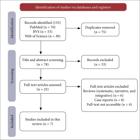
In the three databases, the descriptors were applied and the searches expanded to all fields, resulting in 153 articles: 70 from PubMed, 53 from the BVS (of which 50 are from the Medical Literature Analysis and Retrieval System Online – MEDLINE and 3 from the Latin American and Caribbean Health Sciences Literature (Literatura Latino-Americana e do Caribe em Ciências da Saúde – LILACS) and 30 from the Web of Science Core Collection.
For the systematic selection of articles, the Rayyan – Intelligent Systematic Review tool was employed, following the search strategy recommended by the Preferred Reporting Items for Systematic Reviews and Meta-Analyses (PRISMA) Statement 2020 and aligning with the CARE Guidelines of the Equator Network for systematic reviews4. The resulting flowchart describes the number of studies identified, excluded at each stage, and included in the review. Three independent researchers conducted the article selection in two stages: initially, titles and abstracts were screened; subsequently, the pre-selected studies were evaluated in full to determine final eligibility. Any disagreements between the reviewers were resolved by consensus.
Data collection from the included studies was conducted independently by three reviewers without mutual influence, and the data obtained were organized in a Microsoft Excel® spreadsheet. The following were recorded: article identification data (authorship, year of publication, and country), study design, sample size analyzed, and clinical outcomes, such as mortality, graft dysfunction, and severity of thrombocytopenia. Subsequently, the central findings of each publication were presented through descriptive synthesis.
RESULTS
The search identified seven articles that met the eligibility criteria. The methodology for article selection was described in detail in the PRISMA flowchart (Fig. 1). The vast majority of studies were retrospective observational, with patient numbers ranging from a few dozen to more than 900. The characteristics and main findings of each study are listed in Table 1.
Characteristics of the studies included in the integrative review on thrombocytopenia in the postoperative period of liver transplantation.
Thrombocytopenia manifested as a universal phenomenon in patients undergoing liver transplantation, characterized by a mean 63% reduction in platelet count, declining to around 50 × 10⁹/L5. Moreover, a platelet count below 30 × 10⁹/L is an independent risk factor for the development of severe complications (Grade III/IV according to the Clavien–Dindo classification)6 when compared to those with higher counts (OR = 1.9; 95% CI 1.1–3.3; p < 0.02)7.
The nadir (lowest platelet count point) varies among patients, occurring between postoperative days 3 and 55,6,8. However, this condition is followed by a gradual recovery, with a return to preoperative levels between postoperative days 14 and 21 in patients with favorable outcomes5,8.
The magnitude of platelet decline is a critical prognostic marker in the post-transplant period, as regression analyses demonstrated the percentage drop in platelet count to be an independent predictor of survival (p < 0.05)5, especially when below 72,500/µL on POD 5 (HR: 1.38)8. In this regard, one study demonstrated that early postoperative mortality rates differed substantially between patients with and without thrombocytopenia, reaching 18% and 2%, respectively (p = 0.002).
Moreover, hepatitis C, donor age over 40 years, peak alanine aminotransferase elevation, and reoperation within the first 30 days also independently increase the risk of these complications8. Another study also found the need for dialysis to be a risk factor associated with high mortality in these patients (HR: 2.30; 95% CI 1.10–4.80)9.
In addition to the absolute platelet count, the platelet peak was evaluated to predict patient mortality after liver transplantation. The study demonstrated that patients with a maximum platelet peak below 80 × 10³/µL had 1- and 5-year survival rates of 47.1% and 41.2%, respectively, compared with 90.9% and 84.1% in the group with higher platelet peaks (p < 0.0001)10.
However, over the postoperative period, around 90 days, the mortality rate between patients with and without thrombocytopenia tends to equalize5,7,11, patients who developed thrombocytopenia in the immediate postoperative period showed a substantially higher incidence of early graft dysfunction (22.6%) and severe surgical complications (22.6%)11, as well as adverse clinical outcomes, including increased rates of sepsis (p = 0.001), early graft dysfunction (p = 0.01), and prolonged ascitic drainage (p = 0.002)6.
DISCUSSION
The analysis of the studies included in this integrative review confirms that thrombocytopenia in the immediate postoperative period of LT is highly prevalent, with a characteristic nadir occurring between POD 3 and 55,6,11. However, the persistence of this cytopenia—defined variably across studies as a platelet count < 30 × 10⁹/L or < 50 × 10⁹/L—should not be interpreted merely as an isolated hematological disorder, but rather as a systemic biomarker of severity, being independently associated with high rates of mortality, graft dysfunction, and multiorgan failure2,8. However, this association should be interpreted with caution, considering that the studies included used different definitions of thrombocytopenia, ranging from absolute thresholds such as < 30 × 10⁹/L and < 50 × 10⁹/L to criteria based on the temporal behavior of the platelet curve, such as the count on POD 5 or the maximum platelet recovery peak. This heterogeneity makes direct comparison between findings difficult and limits the definition of a single cutoff point for all patients undergoing liver transplantation8,10,11.
From a pathophysiological standpoint, the platelet drop reflects multiple mechanisms. Initially, platelet sequestration occurs in the liver graft and spleen, a phenomenon often exacerbated by pre-existing hypersplenism, common in cirrhotic individuals5. However, the persistence of this condition suggests more complex mechanisms. Ischemia–Reperfusion Injury (IRI) triggers massive endothelial activation, resulting in platelet aggregation and consumption within the hepatic microvasculature11,12. Recent evidence indicates that platelets play a paradoxical role in this context. While their excessive activation contributes to microthrombus formation, they are also crucial for liver regeneration, releasing growth factors (such as serotonin and VEGF). Therefore, severe thrombocytopenia may compromise the regenerative capacity of the newly transplanted liver, creating a vicious cycle that favors graft failure12.
The relationship between platelet count and mortality after liver transplantation is consistent. Studies have shown that patients with persistent severe thrombocytopenia (< 50 × 10⁹/L for more than 3 days) have a significantly higher mortality rate compared with those with normal platelet counts, reaching 18% versus 2% in non-thrombocytopenic patients9. Moreover, 90-day mortality is more than twice as high in patients who fail to recover their platelet levels after the first week2. From this perspective, the "60-5 Criterion," validated by Lesurtel et al., has consolidated itself as a powerful prognostic tool, since patients below this threshold present a significantly increased risk of severe complications (Clavien–Dindo grade III/IV), suggesting that the fifth postoperative day represents a critical point for graft functional recovery. Nevertheless, the use of these thresholds should be contextualized based on the recipient's clinical profile, graft type, comorbidities, renal function, infectious risk, and overall laboratory evolution. Thus, platelet count should not be interpreted as an isolated marker but rather as part of a broader prognostic assessment5,10,11.
In addition to mortality, severe thrombocytopenia is strongly correlated with other organ dysfunctions, notably Acute Kidney Injury (AKI) and sepsis. An abrupt reduction in platelet count (> 21%) has been identified as an independent predictor of major renal events and the need for dialysis therapy, possibly due to hemodynamic instability and the formation of renal microthrombi, parallel to those in the liver2. In the infectious context, thrombocytopenia serves as an early signal of sepsis; the inability of the bone marrow to meet platelet demand, combined with endotoxin-induced peripheral consumption, often precedes the clinical onset of septic shock6,9.
Finally, the therapeutic approach in light of these findings requires extreme caution, since although platelet concentrate transfusion may seem a logical strategy, the literature warns of its deleterious effects. Massive platelet transfusion is associated with an increased risk of transfusion-related acute lung injury (TRALI), a severe complication whose mortality can range from 5% to 25%8,13. Moreover, transfusion may exacerbate liver injury due to the overload of inflammatory cytokines present in blood products. Therefore, postoperative thrombocytopenia in LT should primarily be interpreted as a marker of systemic functional failure—whether graft-related, renal, or septic—that requires comprehensive clinical optimization5. In clinical practice, severe or persistent thrombocytopenia in the immediate postoperative period should prompt investigation for early graft dysfunction, sepsis, acute kidney injury, active bleeding, increased platelet consumption, and the need for reoperation. Platelet transfusion, in turn, should be individualized and reserved for specific situations such as active bleeding, high hemorrhagic risk, or imminent invasive procedures, and is not recommended solely for numerical correction of laboratory parameters11,13.
As a limitation of this review, the methodological variability among the included studies is notable, particularly in study design, sample size, type of transplantation evaluated, cutoff points for thrombocytopenia and outcomes analyzed. Furthermore, as this is an integrative review, the findings allow for a broad synthesis of the literature but do not enable estimation of a combined effect or establishment of a definitive causal relationship between thrombocytopenia and mortality. Thus, the results should be interpreted as evidence of prognostic association, useful for clinical surveillance and risk stratification, but still dependent on validation in prospective studies and standardized care protocols6,7,8,11,12.
CONCLUSION
Postoperative thrombocytopenia after liver transplantation is a prevalent phenomenon, with a frequent pattern of decline up to the fifth postoperative day. However, the persistence or marked severity of this cytopenia—particularly counts below 30–60 × 10⁹/L or lack of platelet recovery beyond the first days—goes beyond an isolated hematological alteration and constitutes an important prognostic marker associated with unfavorable outcomes.
The analyzed data show that the magnitude of thrombocytopenia is associated with critical clinical outcomes, including early graft dysfunction, acute kidney injury, sepsis, and increased short-term mortality. However, the heterogeneity of studies regarding cutoff points, evaluation periods, and outcomes analyzed limits the definition of a single universal threshold for clinical application.
Therefore, severe thrombocytopenia should be interpreted as a systemic warning sign of possible functional failure or underlying complications. Serial monitoring of platelet counts is recommended as part of post-transplant clinical assessment, not only as a coagulation parameter but also as an auxiliary indicator of graft evolution and the patient’s overall clinical status, contributing to early clinical decisions aimed at reducing morbidity and mortality in this complex population.
ACKNOWLEDGEMENT
We thank the University of Pernambuco and the Faculty of Medical Sciences for providing an excellent environment for the development of scientific research.
DECLARATION OF USE OF ARTIFICIAL Intelligence TOOLS
FUNDING
DATA AVAILABILITY STATEMENT
All datasets were generated or analyzed in the current study.
References
-
1 Takahashi K, Nagai S, Safwan M, Liang C, Ohkohchi N. Thrombocytopenia after liver transplantation: Should we care? World J Gastroenterol. 2018 apr; 24(13): 1386-1397. https://doi.org/10.3748/wjg.v24.i13.1386
» https://doi.org/10.3748/wjg.v24.i13.1386 -
2 Medina-González R, Zaragoza JJ, Hernández-Barajas EM, Correa-de Leon J, Claure-Del Granado R, Vasquez-Rangel A, et al. Decrease in platelet count in patients with AKI and its association with major adverse kidney events. Ren Fail. 2024 jun; 46(1): 2359643. https://doi.org/10.1080/0886022X.2024.2359643
» https://doi.org/10.1080/0886022X.2024.2359643 -
3 Souza MT, Silva MD, Carvalho R. Revisão integrativa: o que é e como fazer. Einstein (São Paulo). 2010 mar; 8(1): 102-106. https://doi.org/10.1590/s1679-45082010rw1134
» https://doi.org/10.1590/s1679-45082010rw1134 -
4 Page MJ, McKenzie JE, Bossuyt PM, Boutron I, Hoffmann TC, Mulrow CD, et al. The PRISMA 2020 statement: an updated guideline for reporting systematic reviews. BMJ. 2021 mar; 372(71): 1-9. https://doi.org/10.1136/bmj.n71
» https://doi.org/10.1136/bmj.n71 -
5 Li L, Wang H, Yang J, Jiang L, Yang J, Wang W, et al. Immediate postoperative low platelet counts after living donor liver transplantation predict early allograft dysfunction. Medicine. 2015 aug; 94(34): e1373. https://doi.org/10.1097/MD.0000000000001373
» https://doi.org/10.1097/MD.0000000000001373 -
6 McCaughan GW, Herkes RG, Powers B, Rickard K, Gallagher ND, Thompson JF, et al. Thrombocytopenia post liver transplantation. Correlations with pre-operative platelet count, blood transfusion requirements, allograft function and outcome. J Hepatol. 1992 sep; 16(1): 16-22. https://doi.org/10.1016/s0168-8278(05)80089-3
» https://doi.org/10.1016/s0168-8278(05)80089-3 -
7 Pamecha V, Mahansaria SS, Kumar S, Bharathy KGS, Sasturkar SV, Sinha PK, et al. Association of thrombocytopenia with outcome following adult living donor liver transplantation. Transpl Int. 2016 jul ;29(10): 1126-1135. https://doi.org/10.1111/tri.12819
» https://doi.org/10.1111/tri.12819 -
8 Takahashi K, Nagai S, Putchakayala KG, Safwan M, Li AY, Kane WJ, et al. Prognostic impact of postoperative low platelet count after liver transplantation. Clin Transplant. 2017 mar; 31(3): e12891. https://doi.org/10.1111/ctr.12891
» https://doi.org/10.1111/ctr.12891 -
9 Ben Hamida, C, Lauzet, J-Y, Rézaiguia-Delclaux, S, Duvoux C, Cherqui D, Duvaldestin P, et al. Effect of severe thrombocytopenia on patient outcome after liver transplantation. Intensive Care Med. 2003 may; 29: 756-762. https://doi.org/10.1007/s00134-003-1727-x
» https://doi.org/10.1007/s00134-003-1727-x -
10 Hayashi H, Takamura H, Ohbatake Y, Nakanuma S, Tajima H, Fushida S, et al. Postoperative changes in neutrophil-to-lymphocyte ratio and platelet count: A simple prognostic predictor for adult-to-adult living donor liver transplantation. Asian J Surg. 2018 jul; 41(4): 341-348. https://doi.org/10.1016/j.asjsur.2017.02.004
» https://doi.org/10.1016/j.asjsur.2017.02.004 -
11 Lesurtel M, Raptis DA, Melloul E, Schlegel A, Oberkofler C, El-Badry AM, et al. Low platelet counts after liver transplantation predict early posttransplant survival: the 60-5 criterion. Liver Transpl. 2014 feb; 20(2): 147-155. https://doi.org/10.1002/lt.23759
» https://doi.org/10.1002/lt.23759 -
12 Beltrame P, Rodriguez S, Brandão ABM. Low platelet count: predictor of death and graft loss after liver transplantation. World J Hepatol. 2019 jan; 11(1): 99-108. https://doi.org/10.4254/wjh.v11.i1.99
» https://doi.org/10.4254/wjh.v11.i1.99 -
13 Toy P, Popovsky MA, Abraham E, Ambruso DR, Holness LG, Kopko PM, et al. Transfusion-related acute lung injury: definition and review. Crit Care Med. 2005 apr; 33(4): 721-726. https://doi.org/10.1097/01.ccm.0000159849.94750.51
» https://doi.org/10.1097/01.ccm.0000159849.94750.51

 Source: Elaborated by the authors