 Exploring the mechanism of action of rehmannia glutinosa for the treatment of gastric cancer based on network pharmacology
Abstract
This study investigates the molecular mechanisms of Rehmannia glutinosa in gastric cancer treatment using network pharmacology, supported by experimental validation. Network pharmacology methods, including active ingredient prescreening, target prediction, gene enrichment analysis, network analysis, and cell-based experiments, were applied to explore the therapeutic action of Rehmannia glutinosa against gastric cancer. Analysis revealed 33 active components and identified 41 potential targets. Gene Ontology analysis indicated that these targets were primarily associated with the biological processes “positive regulation of cell death,” “apoptotic signaling pathway,” and “response to mechanical stimulus.” Kyoto Encyclopedia of Genes and Genomes analysis showed that the targets were enriched in the cancer signaling, prostate cancer, tumor necrosis factor signaling, endocrine resistance-related signaling, and PI3K-Akt signaling pathways. In vitro experiments demonstrated that R. glutinosa total glycosides upregulated Caspase-3 activity, reduced PARP expression levels, and induced cell apoptosis. In conclusion, network pharmacology and experimental results suggest that R. glutinosa may exert its antigastric cancer effects through multiple biological processes and signaling pathways.
Keywords:
Network pharmacology; Rehmannia glutinosa; Gastric cancer; Mechanism.
INTRODUCTION
Gastric cancer remains one of the most prevalent diseases globally, with high morbidity and mortality rates, posing a major threat to human survival (Lyons et al., 2019; Machlowska et al., 2020). The incidence of gastric cancer is notably high in China, especially in rural areas (Cao et al., 2021; Huang et al., 2023). In recent years, as China’s aging population has increased, the incidence of gastric cancer has continued to rise, becoming a focus of national cancer prevention and control (Thrift, Nguyen, 2021; Yang et al., 2023). Western medicine suggests that gastric cancer originates from the gastric mucosal epithelial cells and results from a combination of factors. Current treatments include surgical resection, radiotherapy, chemotherapy, targeted therapy, and immunotherapy (Chandra et al., 2020; Smyth et al., 2020). Although these treatments are continually developing, their effectiveness remains limited. With ongoing development and research into traditional Chinese medicine (TCM), some herbal medicines and TCM compound prescriptions have demonstrated anticancer effects and play an essential role in cancer prevention and diagnosis. According to Chinese medicine theory, although gastriccanceroccurs in the stomach, it is closely related to the liver and spleen. The main symptoms include disorders in qi movement, dampness, phlegm accumulation, and internal resistance to stasis toxins. Based on the holistic approach of principle-method-formula- medicine, TCM often uses invigorating therapies to strengthen body resistance, combined with other methods, offering distinct advantages in gastric cancer treatment (Xu et al., 2022; Xu, Yu, Zeng, 2023).
Network pharmacology applies the concept of interdependence among different components in a network to pharmacology, analyzing the relationships among drugs, targets, and diseases (Boezio et al., 2017). The widespread application of network pharmacology can reduce the time, cost, and failure rate of drug development, as well as identify new targets for existing drugs and expand the scope of known targets by uncovering the mechanisms of drug action. The similarities between the multicomponent and multitarget nature of TCM and the research principles of network pharmacology have led to the extensive use of network pharmacology in TCM research (Zhao et al., 2023) with numerous experimental studies confirming its validity (Liu et al., 2020; Cui et al., 2022; Wang et al., 2024). Modern pharmacological research has shown that Rehmannia glutinosa exerts antitumor effects primarily by inhibiting tumor cell proliferation and inducing apoptosis (Chao et al., 2006; Bhattamisra et al., 2019). However, fewer studies have explored the antigastric cancer effects of R. glutinosa, and its active anticancer components and molecular mechanisms remain unknown. In this study, we reviewed the literature related to the composition of R. glutinosa, collected its active ingredients, and comprehensively analyzed the potential active ingredients and targets for treating gastric cancer. The study aimed to explore the multicomponent, multitarget, and multipathway mechanisms by which R. glutinosa may treat gastric cancer, laying the foundation for further research into its therapeutic effects.
MATERIAL AND METHODS
Material
The root of R. glutinosa was identified by Dr. Qiao Lu from Henan University of Chinese Medicine. The Caspase-3 Activity Assay Kit was purchased from Nanjing Jiancheng Bioengineering Institute. The PARP Detection Kit was obtained from Trevigen. MGC80-3 cells were sourced from Wuhan Pricella Biotechnology Co., Ltd.
Collection and Screening of Chemical Constituents of Rehmannia glutinosa
All known constituents of R. glutinosa were collected by directly reviewing the research literature on its chemical composition (Li et al., 2017; Zhang, Li, Jia, 2008; Shu et al., 2023). The structures of these known constituents were retrieved using the PubChem database (https://pubchem.ncbi.nlm.nih.gov/) or drawn using ChemDraw 19.0 software, and each constituent was saved as an SDF format file. The physicochemical properties of each chemical constituent were predicted by importing them into the SwissADME online platform(http://www.swissadme.ch/). The chemical compositions were screened based on their pharmacokinetic indices and drug-like properties. The gastrointestinal absorption rate was classified as “High,” and at least two of the drug-like properties were marked as “Yes.”
Assessment of ADMET
The absorption, distribution, metabolism, excretion, and toxicity (ADMET) properties of the selected compounds were evaluated using the ADMETboost online tool (Tian, Ketkar, Tao, 2022).
Prediction of target sites for constituents of Rehmannia glutinosa
The screened compounds were sequentially imported into the PharmMapper online platform (http://www.lilabecust.cn/pharmmapper/). The target set was selected as “Human Protein Targets Only,” with other parameters set to default. Predicted targets were screened based on a “Norm Fit ≥0.75” criterion.
Components of Rehmannia glutinosa-Target network construction
Rehmannia glutinosa contains many constituents, each with complex target information, and different constituents may act on the same target. To clarify the relationships between constituents and their targets, target data for each constituent were compiled into network and type files, which were then successively imported into Cytoscape 3.8.0 to construct the constituent-target network of R. glutinosa.
Collection and screening of disease targets
The GeneCards database (https://omim.org/) was searched using the keyword “gastric cancer,” and the results were exported and then filtered by “relevance score ≥10.” The OMIM database (https://omim.org/) was also searched using the same keyword, and results from both databases were merged and de-emphasized to identify human gastric cancer disease targets.
Access to common targets of compounds and diseases
The predicted targets for the components in R. glutinosa and gastric cancer-related targets were separately imported into the Venn Diagram tool (https://bioinfogp.cnb.csic.es/tools/venny/index.html), and the intersection of the two target sets was collected.
Network construction protein-protein interactions
To clarify the interactions between the predicted targets of the main active ingredients of R. glutinosa and cancer targets, the STRING 11.0 database (https://string-db.org/) was used to obtain the protein-protein interaction (PPI) network information. This information was then imported into Cytoscape 3.8.0 to visualize the PPI network map.
GO Biological Processes and KEGG Pathway Analysis
The potential targets for the treatment of gastric cancer by R. glutinosa were imported into the Metascape database (https://metascape.org/gp/index.html#/main/step1), limited to the species “human.” The targets were analyzed for Gene Ontology (GO) biofunctional annotation and Kyoto Encyclopedia of Genes and Genomes (KEGG) pathway enrichment using a p-value cutoff of <0.01, a minimum count of 3, and an enrichment factor of >1.5 in both analyses.
Molecular docking
The three-dimensional structure of the protein with the highest degree of interaction was downloaded from the PDB protein structure database. The Schrodinger tool was used to preprocess the protein receptor and ligand, and the docking active site was identified in the docking-Dride Generation interface. The molecular docking map was generated using Pymol software.
Extraction of total glycosides from Rehmannia glutinosa
Rehmannia glutinosa (2000 g) was powdered, and the effective group of total glycosides was extracted according to the method described by Xu et al. (2020). The obtained R. glutinosa total glycoside powder was stored at 4°C, and an appropriate amount was dissolved in the cell culture solution when needed, followed by filtering through a 0.22-μm microporous filter membrane to remove bacteria.
Determination of EGFR, MAPK1, Caspase-3 Activity and PARP Expression Levels
Gastric cancer MGC-803 cells in the logarithmic growth phase were digested with trypsin and seeded into 96-well plates at a density of 1 × 10⁵ cells per well. The cells were incubated with 0, 5, 10, 15, 20, or 25 mg/L total digitonin extract or aqueous extract of digitonin root in culture medium for 48 h, with six replicate wells per treatment. After incubation, the cells were washed twice with PBS, collected via centrifugation, and lysed with lysis solution for 15 min in an ice bath. Following lowtemperature centrifugation, the supernatant was collected and tested according to the instructions for the EGFR, MAPK1, Caspase-3 ELISA Detection Kit and PARP Kit.
RESULTS
Screening and target prediction of the active components of Rehmannia glutinosa
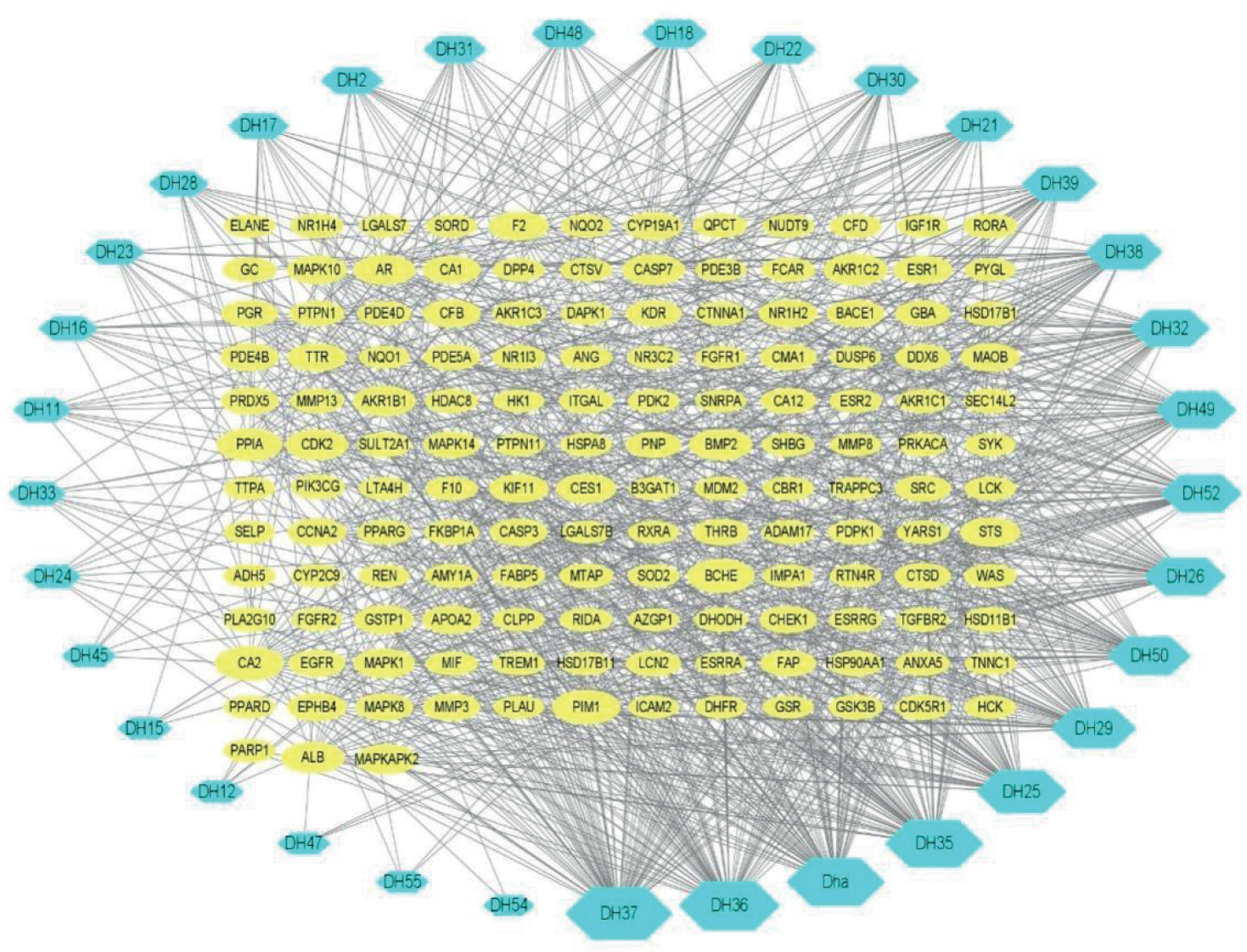
In total, 165 components of R. glutinosa were collected, of which 56 activecomponentsmetthe screening criteria (Table I). These 56 active components were used to predict potential targets using pharmmapper platform, resulting in 474 predicted targets. The active ingredients and their corresponding predicted targets were imported into Cytoscape 3.8.0, and free nodes were removed to construct the ingredient-target network (Figure 1). The network consisted of 180 nodes, including 33 component nodes and 147 target nodes.

Assessment of ADMET
Human intestinal absorption is a crucial factor in the efficacy of oral drugs. From Table II, it is evident that the human intestinal absorption of all active components is greater than 50%, indicating good intestinal absorbability. Drug-induced liver injury (DILI) is a major safety concern for drug withdrawals from the market. All active components had a DILI score of less than 0.5, suggesting minimal liver toxicity.
Acquisition of disease target and intersected with component targets
In total, 901 disease targets related to human gastric cancer were screened by searching the GeneCards database. Additionally, 58 gastric cancer-related targets were obtained from the OMIM database. After de-emphasis, 943 gastric cancer targets were retrieved. The intersection between these disease targets and the 147 component targets directly linked to the active ingredients of R. glutinosa was analyzed, resulting in 41 common targets, which were identified as potential antigastric cancer targets of R. glutinosa (Table III ).
Construction of Protein Interaction Networks
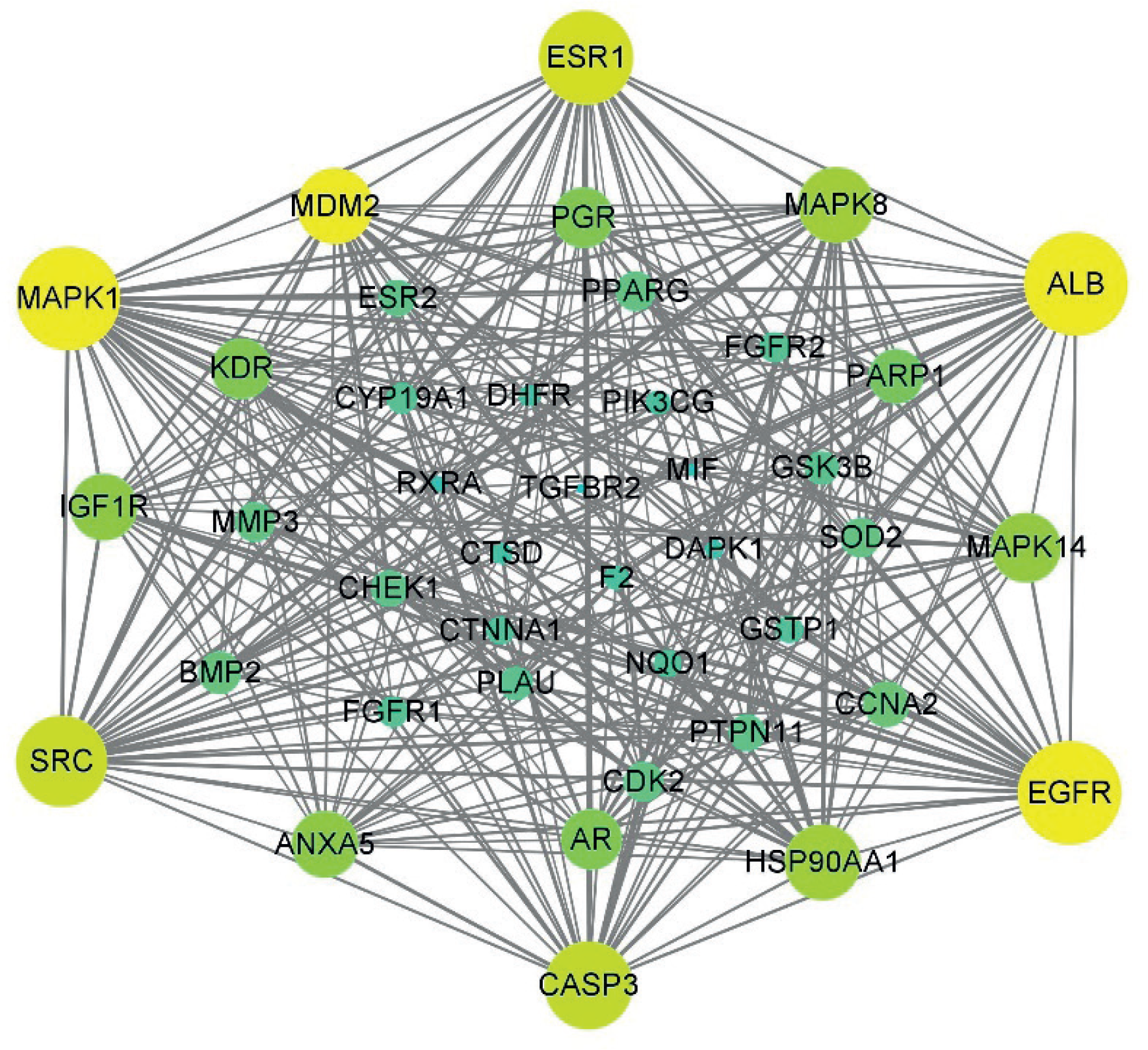
The 41 potential targets were imported into the STRING 11.0 database for PPI analysis. The resulting PPI data were imported into Cytoscape to generate the PPI network diagram (Figure 2). The network consisted of 41 nodes and 328 connecting edges, with an average degree value of 16, Sixteen targets has a degree value exceeding the average. The size of the nodes represents the degree value, and the thickness of the connecting lines indicates the strength of the correlation. The top six target genes with the highest degree values were EGFR (34), MAPK1 (34), ALB (34), ESR1 (31), SRC (30), and CASP3 (29).

GO and KEGG function analysis
To elucidate the molecular mechanisms underlying the anticancer effects of R. glutinosa, GO enrichment and KEGG pathway analyses were performed on the 41 potential targets using the Metascape database. We obtained 919 terms related to the treatment effects of R. glutinosa on gastric cancer (p < 0.01), including 45 main terms. These included 819 biological process (BP) terms, including 20 main terms, such as “positive regulation of cell death,” “apoptosis signaling pathway,” and “mechanical stimulation response.” Additionally, 33 cellular composition (CC) terms were identified, including7 main terms, such as “receptor complex,” “protein kinase complex,” and “blood microparticles.” Furthermore, 67 molecular function (MF) terms were found, including 18 main terms, such as “receptor regulator activity,” “endopeptidase activity,” and “nuclear receptor activity.” The 50 terms with the lowest adjusted p-values in each category are shown in Table IV.
ThroughKEGGpathwayenrichment analysis, 192 signaling pathways potentially involved in the mechanism of R. glutinosa treatment of gastric cancer wereidentified. Thetop20pathways,ranked by their gene ratios, included cancer signaling, prostate cancer, tumor necrosis factor signaling, endocrine drug resistance-related signaling, PI3K-Akt signaling pathways (Table V).
Molecular docking results for catalpol and ERK proteins
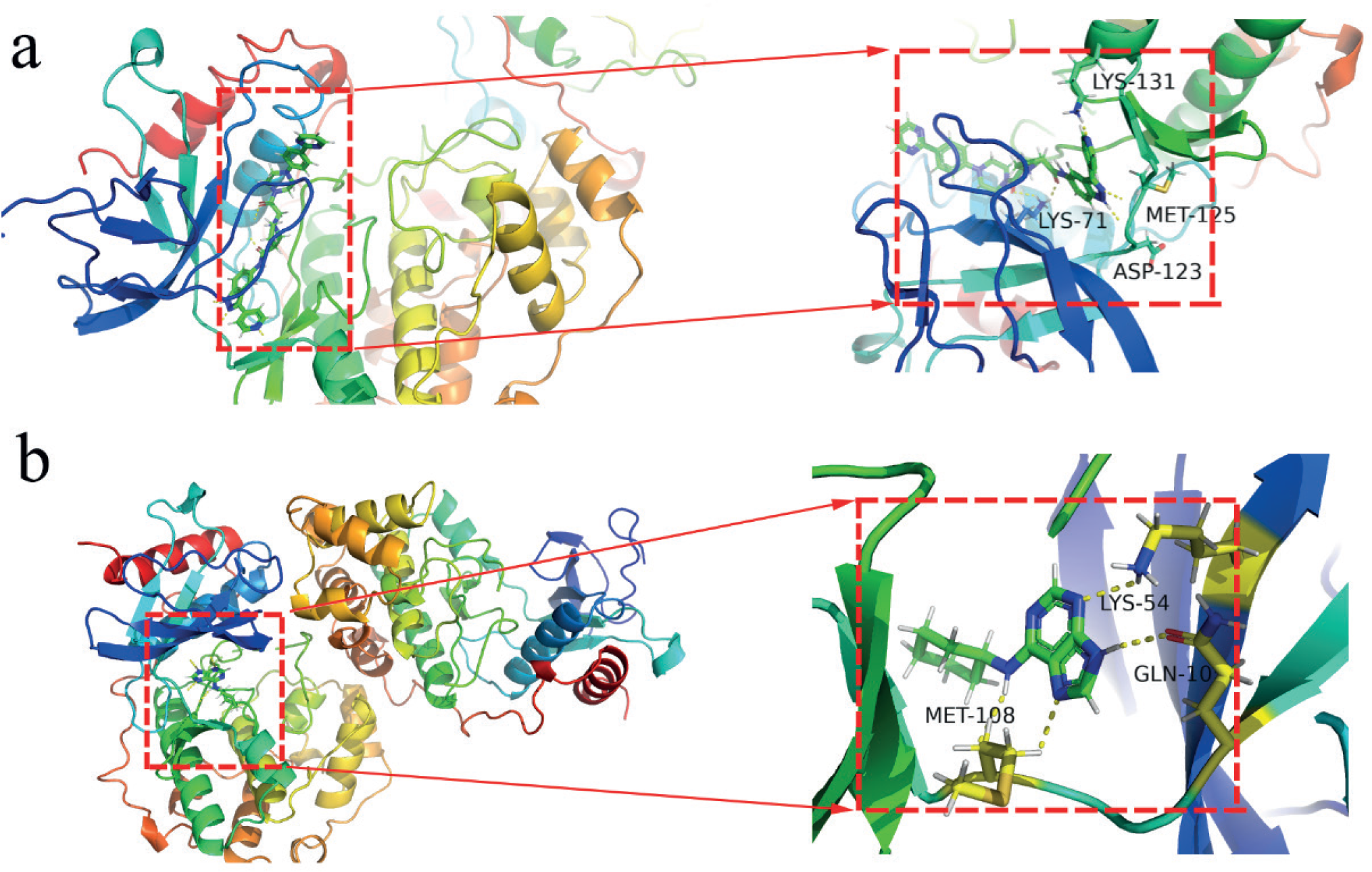
Catalpol exhibited a docking score of -10.217 with ERK1, with binding sites at LYS-131, LSY-57, MET- 125, and ASP-125. It also exhibited a docking score of -11.641 with ERK2, with binding sites at LYS-54, GLN-10, and MET-108 (Figure 3). Lower docking scores indicate more stable binding between catalpol and the receptor proteins. These results suggest that catalpol binds spontaneously and stably to multiple ligands of key proteins in the MAPK/ERK pathway with strong affinity, indicating its potential to target the MAPK/ERK signaling pathway.

Analysis of EGFR, MAPK1, Caspase-3 Activity and PARP Expression Levels
As shown in Figure 2, EGFR, MAPK1, Caspase-3, and PARP are key proteins involved in the effect of R. glutinosa on gastric cancer. The activation of EGFR and MAPK1 promotes cell proliferation and invasion; therefore, inhibiting their signaling pathways can exert antitumor effects. Caspase-3 plays a critical role in cell apoptosis and is closely associated with tumor progression. PARP degradation, a specific substrate of Caspase-3, is an early marker of cell apoptosis.
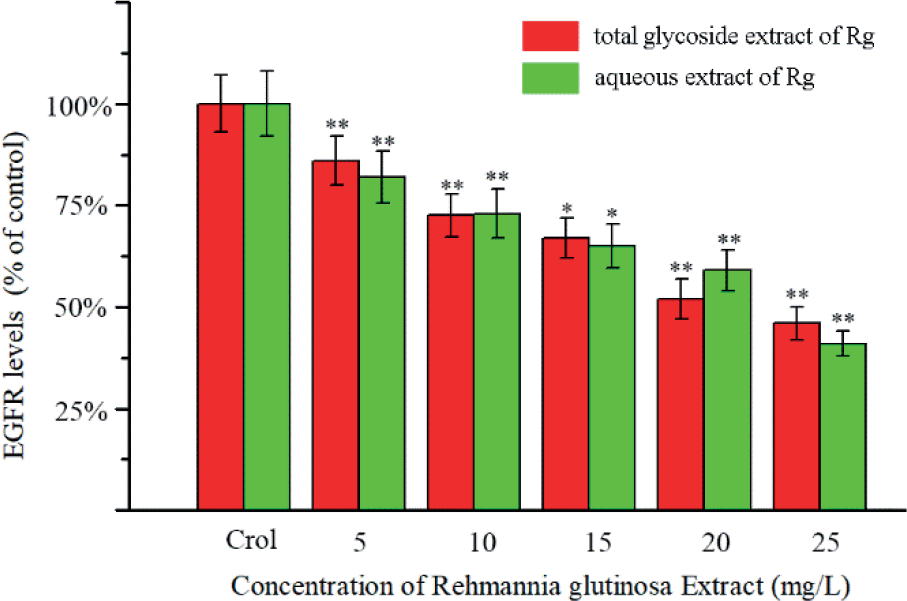
MGC803 cells were treated with varying concentrations of R. glutinosa root extract for 48 h, and the expression levels of EGFR, MAPK1, Caspase-3, and PARP were detected. Both total glycoside extract and aqueous extract of R. glutinosa inhibited the expression of EGFR and MAPK1 to varying degrees( Figure 4A, B). Caspase-3 activity increased with increasing concentrations of R. glutinosa root extract, whereas PARP expression levels decreased. However, at a concentration of 25 mg/L, a decrease in Caspase-3 activity and an increase in PARP expression were observed (Figure 4C, D). These findings indicate that R. glutinosa extract inhibits the expression of EGFR and MAPK in MGC803 cells, reducing cell proliferation and invasion. Additionally, Caspase-3 in MGC-803 activity was upregulated in cells, whereas PARP expression was inhibited, by low-concentration R. glutinosa extract, inducing apoptosis in gastric cancer cells.

Effect of Rehmannia glutinosa root extract on EGFR expression in gastric cancer cell line MGC803 (*P<0.05, **P<0.01 VS. control).
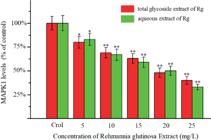
Effect of Rehmannia glutinosa root extract on MAPK1 expression in gastric cancer cell line MGC803 (*P<0.05, **P<0.01 VS. control).

Effect of Rehmannia glutinosa root extract on Caspase-3 expression in gastric cancer cell line MGC803 (*P<0.05, **P<0.01 VS. control).
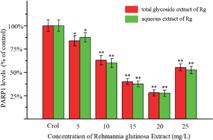
Effect of Rehmannia glutinosa root extract on PARP1 expression in gastric cancer cell line MGC803 (*P<0.05, **P<0.01 VS. control).
DISCUSSIONS
Rehmannia glutinosa, the fresh or dried tuberous root of R. glutinosa Libosch. (Scrophulariaceae), is one of the four major huai-yao. It contains bioactive compounds, such as β-sitosterol, mannitol, catalpol, campesterol, dihuangjin, alkaloids, fatty acids, glucose, vitamin A, stachyose, arginine, and γ-amino acids. Traditionally, R. glutinosa has been widely used in clinical practice for its therapeutic properties, including clearing heat, cooling and blood tonifying, stopping bleeding, nourishing yin, and replenishing essence and marrow (Xu et al., 2019). Modern pharmacological research has further demonstrated its broad physiological effects, including anti-inflammatory, antiosteoporosis, and antitumor activities (Li et al., 2017). Extracts of R. glutinosa also exhibit inhibitory effects on various cancer cell lines (Zheng, 2007; Shi et al., 2016; Zhu et al., 2017). However, few studies have investigated its effects specifically against gastric cancer, and its active anticancer components and molecular mechanisms remain unclear. As the pathogenesis and mechanisms of gastric cancer are complex, with multiple therapeutic targets, using network pharmacology to predictthe therapeutic mechanisms of R. glutinosa’s effects on gastric cancer is essential.
In this study, we identified and analyzed the chemical constituents of R. glutinosa, ultimately isolating 33 active components. From these, 41 potential antigastric cancer targets were identified based on active component-target-signaling pathway analyses, with core targets including EGFR, MAPK1, ALB, ESR1, SRC, CASP3, MDM2, MAPK8, and MAPK14. These targets were associated with 20 major signaling pathways, including cancer signaling, prostate cancer, tumor necrosis factor signaling, endocrine drug resistance-related signaling, and PI3K-Akt signaling pathways. This suggests that the active ingredients in R. glutinosa may exert therapeutic effects on gastric cancer by modulating these pathways and interacting with the core targets.
EGFR is frequently overexpressed or mutated in various cancers, including gastric cancer, with regulation of EGFR expression known to inhibit the growth, survival, and angiogenesis of tumor cells. It functions as an upstream signaling molecule that inhibits tumor cell proliferation and migration through the PI3K/AKT signaling pathway and the MAPK cascade pathway, Ras/Raf/MEK/ERK (Rajaram et al., 2017; Wagner, Ochman, Wagner, 2023). These pathways showed significant p-values in our KEGG analysis, indicating the accuracy of our predictions for R. glutinosa’s anticancer effects. Additionally, MAPK1 (ERK2), MAPK8 (JNK1), and MAPK14 (p38) are key members of the MAPK family, which is crucial for tumor infiltration and metastasis. This indicates that R. glutinosa may inhibit gastric cancer cell invasion and metastasis through the ERK2, JNK1, and p38 pathways (Pandian, Ganesan, 2022; Jiang, Liao, Han, 2023). Enrichment analysis also suggested that R. glutinosa’s antigastric cancer mechanism could involve regulating tumor necrosis factors, hormone secretion, and transcription factors. Notably, our PPI and enrichment results identified ESR1 as a key target. Although ESR1 is mainly associated with breast and ovarian cancers, where it is overexpressed, it also linked to hepatocellular carcinoma, suggesting new research directions for R. glutinosa’s potential in treating other cancers (Clatot, Augusto, Di Fiore, 2017; Giannopoulou et al., 2018; Shang et al., 2024).
Network pharmacological predictions identified Caspase-3 as a critical target in Rehmannia glutinosa’s antigastric cancer effects. Caspase-3, a key effector enzyme in the Fas apoptosis pathway, is known to perform apoptotic functions (Wang et al., 2010; Hu et al., 2019). The degradation of PARP, a target in early apoptosis, is promoted by activated Caspase-3. Studies have shown that Caspase-3 expression is lower in gastric cancer tissues than in normal, adjacent mucosal tissues, and PARP-1 is highly expressed in patients with gastric cancer (Liu, Zhou, Tang, 2017).
To validate our network pharmacology predictions, we examined Caspase-3 and PARP expression after treating MGC-803 cells with the total glycoside extract of R. glutinosa. Our results showed that moderate concentrations of the extract upregulated Caspase-3 activity and inhibited PARP expression. Most of the factors triggering apoptosis occur through activation of the Caspase-3-mediated signaling pathway. Activation of Caspase-3 triggers caspase cascades that cleave PARP, causing apoptosis and hindering tumor cell invasion and migration (Xu et al., 2023). Thus, R. glutinosa appears to induce apoptosis in gastric cancer cells by activating the Caspase-3 signaling pathway.
This study, grounded in network pharmacology and adhering to a methodology for specifying the components and targets of drugs and diseases, provides a preliminary investigation into R. glutinosa’s therapeutic effects on gastric cancer via multicomponent and multitarget interactions. These findings may not only reveal the relevant therapeutic mechanisms but also broaden Rehmannia glutinosa’s clinical applications. Additionally, using this approach, individual glycoside components can be further investigated as potential antitumor agents, enhancing our understanding of Rehmannia glutinosa’s active compounds and their applications in treating gastric cancer among other treatments. Therefore, this study is conducive to the further research and development of Rehmannia glutinosa as an anticancer agent.
ACKNOWLEDGMENTS
The authors are thankful to Henan University of Chinese Medicine College of Pharmacy, Bhimavaram for providing the necessary facilities.
-
FUND
Project of Training Program for Young Backbone Teachers in Higher Education Institutions of Henan Province (2020GGJS111): Open Project of Henan Key Laboratory of Zhang Zhongjing’s Formulas and Immunoregulation (KFKT202002); Innovation and Entrepreneurship Program for College Students in Henan Province (S202110471030)
REFERENCES
- Bhattamisra SK, Yap KH, Rao V, Choudhury H. Multiple biological effects of an iridoid glucoside, catalpol and its underlying molecular mechanisms. Biomolecules. 2019;10(1):32
- Boezio B, Audouze K, Ducrot P, Taboureau O. Networkbased approaches in pharmacology. Mol Inform. 2017;36(10):1700048.
- Cao M, Li H, Sun D, Lei L, Peng J, Chen W. Analysis of epidemiological trends of gastric cancer in China from 2000 to 2019. Chin J Gastro Surg. 2021;20(01):102-109.
- Chandra R, Balachandar N, Wang S, Reznik S, Zeh H, Porembka M. The changing face of gastric cancer: epidemiologic trends and advances in novel therapies. Cancer Gene Ther. 2020.
- Chao JC, Chiang SW, Wang CC, Tsai YH, Wu MS. Hot water-extracted Lycium barbarum and Rehmannia glutinosa inhibit proliferation and induce apoptosis of hepatocellular carcinoma cells. World J Gastroenterol. 2006;(28):4478-4484
- Clatot F, Augusto L, Di Fiore F. ESR1 mutations in breast cancer. AGING-US. 2017;9(1):3-4.
- Cui QL, Hu YH, Ma DY, Zhang JH, Liu BR. Research on the key anti-gastric cancer targets and regulatory networks of volatile oil constituents of ginseng based on network pharmacology. Acta Medica Mediterr. 2022;38(03):1509-1514.
- Giannopoulou L, Mastoraki S, Buderath P, Strati A, Pavlakis K, Kasimir-Bauer S, et al. ESR1 methylation in primary tumors and paired circulating tumor DNA of patients with high-grade serous ovarian cancer. Gynecol Oncol. 2018;150(2):355-360.
- Hu M, Zhu S, Xiong S, Xue X, Zhou X. MicroRNAs and the PTEN/PI3K/Akt pathway in gastric cancer (review). Oncol Rep. 2019; 41(3):1439-1454.
- Huang B, Liu J, Ding F, Li Y. Epidemiology, risk areas and macro determinants of gastric cancer: a study based on geospatial analysis. Int J Health Geogr. 2023;22(1):32.
- Jiang L, Liao J, Han Y. Study on the role and pharmacology of cuproptosis in gastric cancer. Front Oncol. 2023;13:1145446
- Li M, Wang X, Zhang Z, Zhang J, Zhao X, Zheng X, et al. Three new alkaloids and a new iridoid glycoside from the roots of Rehmannia glutinosa. Phytochem Lett. 2017;21:157-162.
- Liu H, Zhou Y, Tang L. Caffeine induces sustained apoptosis of human gastric cancer cells by activating the caspase-9/caspase-3 signalling pathway. Mol Med Rep. 2017;16: 2445-2454.
- Liu W, Chen X, Ge Y, Wang H, Phosat C, Li J, et al. Network pharmacology strategy for revealing the pharmacological mechanism of pharmacokinetic target components of San-Ye-Tang-Zhi-Qing formula for the treatment of type 2 diabetes mellitus. J Ethnopharmacol. 2020; 5(260):113044.
- Lyons K, Le LC, Pham YT, Borron C, Park JY, Tran CTD, et al. Gastric cancer: epidemiology, biology, and prevention: a mini review. Eur J Cancer Prev. 2019;28(5):397-412.
- Machlowska J, Baj J, Sitarz M, Maciejewski R, Sitarz R. Gastric Cancer: Epidemiology, Risk Factors, Classification, Genomic Characteristics and Treatment Strategies. Int J Mol Sci. 2020;21(11):4012-4012.
- Pandian J, Ganesan K. Delineation of gastric tumors with activated ERK/MAPK signaling cascades for the development of targeted therapeutics. Exp Cell Res. 2022;410:112956.
- Rajaram P, Chandra P, Ticku S, Pallavi BK, Rudresh KB, Mansabdar P. Epidermal growth factor receptor: role in human cancer. Indian J Dent Res. 2017;28(6):687-694.
- Shang L, Chen X, Zhu T, Chong S, Liu H, Huang W, et al. Cancer-associated fibroblast-secreted exosomes promote gastric cancer cell migration and invasion via the IL-32/ESR1 axis. Appl Biochem Biotech. 2024;1-14.
- Shu P, Cai S, Zhao X, Zang S, Li R, Ge Y, et al. Chemical constituents from the roots of Rehmannia glutinosa. Rec Nat Prod. 2023;17(4):615-621.
- Shi CJ, Wen XS, Gao HF, Liu ZH, Xu XK, Li LF, et al. Steamed root of Rehmannia glutinosa Libosch (Plantaginaceae) alleviates methotrexate-induced intestinal mucositis in rats. J Ethnopharmacol. 2016;183:143-150.
- Smyth EC, Nilsson M, Grabsch HI, van Grieken NC, Lordick F. Gastric cancer. The Lancet. 2020;396(10251):635-648.
- Tian H, Ketkar R, Tao P. ADMETboost: a web server for accurate ADMET prediction. J Mol Model. 2022;28(12):408.
- Thrift AP, Nguyen TH. Gastric Cancer Epidemiology. Gastrointest Endosc Clin N Am. 2021;31(3):425-439.
- Wagner W, Ochman B, Wagner W. Semaphorin 6 family-an important yet overlooked group of signaling proteins involved in cancerogenesis. Cancers. 2023;15(23):5536
- Wang YK, Hong YJ, Wei M, Wu Y, Huang ZQ, Chen RZ, et al. Curculigoside attenuates human umbilical vein endothelial cell injury induced by H2O2. J Ethnopharmacol. 2010;132(1):233-239.
- Wang Z, Wang R, Na Z, Liang S, Wu F, Xie H, et al. Network pharmacology analysis of liquid-cultured armillaria ostoyae mycelial metabolites and their molecular mechanism of action against gastric cancer. Molecules. 2024;29(7):1668.
- Xu H, Shen X, Li X, Yang X, Chen C, Luo D. The natural product dehydrocurvularin induces apoptosis of gastric cancer cells by activating PARP-1 and caspase-3. Apoptosis. 2023;28(3-4):525-538.
- Xu W, Li B, Xu M, Yang T, Hao X. Traditional Chinese medicine for precancerous lesions of gastric cancer: a review. Biomed Pharmacother. 2022;146:112542.
- Xu X, Yu Z, Zeng S. Investigating the therapeutic mechanism of Xiaotan Sanjie Formula for gastric cancer via network pharmacology and molecular docking: a review. Medicine. 2023;102(46):e35986.
- Xu Z, Dai X, Su S, Yan H, Guo S, Qian D, et al. Investigation of dynamic accumulation and regularity of nine glycosides and saccharides in Rehmannia glutinosa by rapid quantitative analysis technology. J Sep Sci. 2019;42(8):1489-1499.
- Xu Z, Dai XX, Zhang QY, Su SL, Yan H, Zhu Y, et al. Protective effects and mechanisms of Rehmannia glutinosa leaves total glycoside on early kidney injury in db/db mice. Biomed Pharmacother. 2020;125:109926.
- Yang L, Sun H, Bai Y, Sun S, Wu X, Gan Z, et al. Trends and projections of stomach cancer incidence in Hong Kong: a population-based study. Cancer Invest. 2023;41(4):319-329.
- Zhao L, Zhang H, Li N, Chen J, Xu H, Wang Y, et al. Network pharmacology, a promising approach to reveal the pharmacology mechanism of Chinese medicine formula. J Ethnopharmacol. 2023;309:116306.
- Zhang RX, Li MX, Jia ZP. Rehmannia glutinosa: review of botany, chemistry and pharmacology. J Ethnopharmacol. 2008;117(2):199-214.
- Zheng, Y. The therapeutic effects of rehmannia oral liquid for the syndrome of heat accumulation with Yin consumption in esophagus cancer patients undergoing radiotherapy--a report of 60 cases. J Tradit Chin Med. 2007;27(4):248-254.
- Zhu P, Wu Y, Yang A, Fu X, Mao M, Liu Z. Catalpol suppressed proliferation, growth and invasion of CT26 colon cancer by inhibiting inflammation and tumor angiogenesis. Biomed Pharmacother. 2017;95:68-76.
Edited by
-
Associated Editor:
Camila Manoel Crnkovic