 Developing nutritional and antioxidant properties of mozzarella cheese by adding fermented spinach powder (Spinacia oleracea L.)
Abstract
Spinach powder is a rich source of natural minerals and antioxidants, but it has anti-nutritional factors (ANFs). This study aimed to investigate the effect of fermenting spinach on reducing its antinutrients for improved application in mozzarella cheese. Fermented spinach powder was prepared and incorporated into mozzarella cheese at levels of 0.5%, 1.0%, and 1.5%. Cheese samples were analyzed for chemical composition, mineral content, texture profile, antioxidant activity, and sensory properties. The results showed that adding fermented spinach powder resulted in significantly increased protein from 17.51% ± 0.42% to 18.92% ± 0.28%, fat from 14.4% ± 0.14% to 17.35%± 0.70%, and fiber from 0.00 to 0.37% ± 0.07% with the addition of fermented spinach powder. Analysis showed an increase in calcium from 7031 ± 0.21 to 7500 ± 0.21 mg/100 g, iron from 50 ± 0.11 to 79.5 ± 0.26 mg/100 g, and magnesium from 1750 ± 0.15 to 3950± 0.18 mg/100 g compared to the control. Textural profile analysis of the mozzarella cheese samples revealed a significant increase in hardness from 8.85 ± 0.72 to 15.45 ±0.71 N (p < 0.05) with the addition of fermented spinach powder. The cheese test samples contained significant (p < 0.05) amounts of 2,2-diphenyl-1-picrylhydrazyl radical, phenolic, and flavonoid compounds. Sensory properties confirmed that the optimum percentage of fermented spinach powder, at 1.0% enriched the functional and nutritional properties of the mozzarella cheese. These results indicate that fermented spinach powder can serve as a natural functional ingredient in mozzarella cheese production, supporting the development of value-added dairy products with potential health benefits.
Keywords:
Anti-nutrient; Antioxidants; Fermented spinach; Functional properties; Minerals
Highlights
Fermentation of spinach powder enhances nutrition and lowers antinutritional factors
Mozzarella with fermented spinach powder shows higher protein, fat, and antioxidants
Adding 1.0% fermented spinach powder gives optimal cheese quality and functionality
1 Introduction
Minerals as micronutrients play an essential role in human health and are necessary for various physiological functions. Mineral deficiencies can lead to a high frequency of common diseases and disease symptoms since micronutrients have a variety of functions and potentials in the body's metabolism and equilibrium (Gharibzahedi & Jafari, 2017; Ohanenye et al., 2021). According to the World Health Organization (WHO) (World Health Organization, 2021) estimates indicate that in developing countries individuals suffering from malnutrition (underweight) contribute to more than half of all child fatalities (Hossain et al., 2023). Therefore, the food industry should meet the needs of consumers by increasing the nutritional value using natural materials without affecting the price of the final product (Waseem et al., 2021). Dairy products are the most consumed products in the world, which are daily consumed products (Ntuli et al., 2023). The cheapest way of preventing iron shortage and guaranteeing daily consumption for an extended length of time is to fortify foods with minerals, particularly iron (Cayot et al., 2013). The food industry is creating bio-functional food items that are enhanced with plant-based components in response to consumer demand for more nutrient-dense meal options (Farahat et al., 2021). These delicacies are designed to provide benefits for health that go beyond simple dietary intake. Plant-based ingredients are rich in vital vitamins, minerals, and antioxidants, plus other active ingredients that have been shown to provide a multitude of health benefits, like fruits and vegetables (Guiné et al., 2020). Increasing the consumption of green leafy vegetables is crucial for meeting the body's nutritional demands for healthy growth and protection against diseases caused by an inadequate diet (Sarkar et al., 2023). Spinach (Spinacia oleracea L.) is an economically important leafy vegetable that is an annual plant of the Amaranthaceae family. The leafy part of the plant is eaten, so it is classified as to leafy vegetable (Di Gioia et al., 2017). The birthplace of the plant is considered to be central and Southeast Asia. Subsequently, spinach became widely cultivated in Europe, America, Africa, and Australia (Tort, 2019). It is known that spinach has beneficial properties and is used in the complex treatment and prevention of a wide range of diseases, including anemia, diabetes, helminthiases, obesity, various inflammations, as well as nervous and other diseases (Khalid et al., 2022; Xu et al., 2017). Spinach is a great source of vitamins, minerals, and antioxidants. It has been linked to several positive health benefits, including a reduced risk of heart disease, stroke, and cancer (Essa et al., 2023). The nutritional value of spinach contains 2.9 g of protein, 0.4 g of fat, and 3.6 g of carbohydrates, as well as 2.2 g of dietary fiber /100 g raw spinach. Therefore, it is classified as a low-calorie food (Chaturvedi et al., 2019). Spinach has abundant levels of vitamins like vitamins A, C, E, and K. Also, it is similarly rich in folic acid (Li et al., 2019). Spinach contains a variety of minerals such as calcium, manganese, magnesium, iron, copper, zinc, potassium, and phosphorus (Elvira-Torales et al., 2019). Spinach is a richer source of carotenoids and phenolic compounds, including para-coumaric acid, ortho-coumaric acid, and ferulic acid. It also contains a variety of polyphenols and flavonoids, such as quercetin, myricetin, spinacetin, luteolin, jaceidin, patuletin, lutein epoxide, neoxanthin, glucuronic acid, 3,5,7,3', 4'pentahydroxy-6-methoxyflavone, pheophytin b, and neolutein (Kaur et al., 2016). Furthermore, spinach is rich in carotenoids such as lutein, 9′-(Z)-neoxanthin, violaxanthin, and beta-carotene (Hedges & Lister, 2007).
Research has shown that fermented foods offer big health benefits and excessive nutritional value. These meals provide probiotics and possess antioxidant, antibacterial, anticancer, antidiabetic, and anti-inflammatory properties. They are also rich in nutrients, phenolic compounds, and amino acids, contributing to their distinct sensory characteristics. These advantages are intently related to plant-based ingredients and the metabolic activity of fermentation starter cultures, especially lactic acid bacteria (LAB) (Naseem et al., 2023).
However, natural toxicants and anti-nutritional compounds in greens present a challenge to fully utilizing their nutritional potential (Terefe et al., 2022). Although these compounds are small, they can appreciably affect food quality (Murcia et al., 2020). Advances in fermentation technology, especially the utility of probiotic microorganisms such as Lactiplantibacillus plantarum, have shown potential in reducing anti-nutritional elements and enhancing the nutritional profile of fermented foods (Terefe et al., 2022). However, research on the use of L. plantarum in the fermentation of spinach to produce fermented spinach and its application in industries is still limited.
Mozzarella cheese is greatly sought after in grocery stores worldwide due to its usage as a pivotal component in a range of pasta, salad, and pizza dishes (Dahl et al., 2024). Mozzarella can be divided into two types based on its moisture levels: high-moisture mozzarella (56% to 65%) and low-moisture mozzarella (45% to 54%). The former is commonly used as a pizza topping, while the latter serves as a delicious table cheese (Cincotta et al., 2021). Mozzarella cheese has a great popularity around the world as a ready-to-eat meal or salad ingredient. Various studies have mentioned the best nutritional, functional, and textural properties of processed cheese with oat flour (Rahman et al., 2023), vegetable oil, and spice extracts. However, there are limited studies that mention the effects of adding spinach powder to cheese. This study aimed to enhance the nutritional value and functional properties of mozzarella cheese by adding spinach powder. The current research investigated the effects of different amounts of fermented spinach powder (FSP) on the chemical composition, texture, mineral content, color, antioxidant activity, and sensory attributes of mozzarella cheese to determine the best concentration of FSP for optimal results.
2 Materials and methods
2.1 Materials
Buffalo milk was obtained from a dairy products lab in Assiut Governorate, Egypt. Microbial rennet powder was also obtained (Valiren - Mayasan Biotech, Türkiye). Spinach leaves (Spinacia oleracea) were collected from Assiut Farms, Egypt's vegetable market, and buffalo’s milk from Assiut Governorate, Egypt. The starter culture Streptococcus thermophilus and Lactobacillus delbrueckii subsp. bulgaricus was brought from Chr. Hansen (Hoersholm, Denmark). Chemicals and solvents used in the research were obtained from Sigma Aldrich (St. Louis, MO, USA). Lactobacillus plantarum subsp. plantarum DSM20174 (Lactiplantibacillus plantarum (L. plantarum)) was obtained from the Microbiology Resources Centre (Cairo MIRCEN), Ain Shams University, Cairo, Egypt.
2.2 Preparation of fermentation spinach powder (SP)
FSP was prepared according to the method described by Naseem et al. (2023). Thus, 1kg of spinach leaves was rinsed under running tap water, dried, and then cut into pieces before being stored in a cool, dark environment. The spinach was then divided into two groups: one group was dried in a dryer cabinet at 50 °C for 15 min, while the other was set aside for fermentation using L. plantarum. The bacterial culture was first activated in MRS broth (De Man, Rogosa and Sharpe Broth) at 39 °C ± 1 °C for 48 h to prepare a stock solution. For inoculum preparation, 5 mL of MRS broth was inoculated with 100 µL of the stock culture. After 48 h of incubation, bacterial cells were collected by centrifugation at 6000 × g for 10 min. The pellet was washed twice by resuspending in sterile saline solution, followed by another centrifugation step. The final bacterial suspension was prepared in sterile distilled water to achieve a concentration of 106 CFU/mL. The spinach batch designated for fermentation was submerged in sterile distilled water inoculated with the L. plantarum culture at a concentration of 106 CFU/g. Fermentation took place in tightly sealed jars incubated at 39 °C ± 1 °C for 120 h. After fermentation, the spinach leaves were collected, spread on nylon mesh trays, and dried in a cabinet dryer at 45 °C. Once dried, they were ground using an industrial grinder. The microbial population was assessed using the plate count method on MRS agar. The agar plates were incubated at 37 °C for 24 h, and the resulting colonies were enumerated using a colony counter. The results were expressed as CFU (Colony Forming Unit) per gram, with each sample analyzed in triplicate, and the mean values reported.
2.3 Production of mozzarella cheese
Mozzarella cheese was manufactured using pasteurized cow milk (65 °C for 30 min.) according to the method described by Zedan et al. (2014), following the formulations presented in Table 1. The control sample contained 100 g of milk, while the experimental samples included varying amounts of FSP (0.5%, 1.0%, and 1.5%) with corresponding adjustments in milk volume. All batches were inoculated with 0.1 g of an active starter culture consisting of Streptococcus thermophilus and Lactobacillus delbrueckii subsp. bulgaricus (1:1 ratio). The starter culture was added to the milk at 37 ± 2°C (acidity 0.17%), and after 30 – 45 min rennet (0.0025 g) was introduced at the beginning of acid development, allowing coagulation to occur within 30–40 min. The curd was cut, held in warm whey until a pH of 5.8 was reached, then collected and kept in the warm whey at 38 °C ± 2 °C until the pH dropped to 5.2. Once the desired texture was confirmed, the curd was stretched in hot water (80 °C to 85 °C), shaped into braids, and salted in an 18% to 20% brine solution at 6 °C ± 2 °C for 2 h. The finished cheese was dried on muslin, then packaged and stored at 5 ± 1 °C for further analysis.
Ingredients of mozzarella cheese (control) and mozzarella cheese with fermented spinach powder formulations.
2.4 Chemical analysis
The total solids (TS), moisture, ash, fat, and protein of control (without SP) and SP cheese formula were measured according to the Association of Official Analytical Chemists (AOAC) method (Association of Official Analytical Chemists, 2000). The carbohydrate content was determined by difference using the following equations: % Carbohydrates = [100- (Moisture + Total ash + Protein + Fiber + Fat)]. The minerals (Mn, K, Ca, Mg, Fe, Cu, and Zn) in samples were determined by Inductively Coupled Plasma-Optical Emission Spectroscopy (ICP-OES) using a Thermo Scientific iCAP 6000 series ICP spectrometer (Cambridge, UK). Samples were prepared and weighed out, then allowed to dry (final weight ~0.05 g). 5 mL of Nitric Acid was then added before digestion. The samples were allowed to cool before being made up to 25 mL with deionized water (Luis et al., 2015).
2.5 Texture profile analysis
The texture profile analysis (TPA) of the four different formulas of mozzarella cheese was performed using a multi-test 1-d texture analyzer (Mecmesin Limited, Slinfold, West Sussex, UK), according to the method described by Clark et al. (2009). Experiments were conducted using a compression test, which generated a plot of force (N) versus time (s). Samples were double compressed at a compression speed of 2 cm/min. The analysis was carried out at room temperature. Hardness (N), springiness (mm), chewiness (N*mm), gumminess (N), and cohesiveness were calculated from the obtained TPA according to the definition provided by the International Dairy Federation (1992).
2.6 Color
The four different formulas of the mozzarella cheese sample's color analyses were conducted using a Hunter colorimeter (Hunter Ultra Scan VIS, Hunter Associates Laboratory, Inc., Reston, VA, USA). Hunter expressed values L*, a*, b* and C*, where L∗ was the value of the lightness (0-100 representing dark to light), a∗ was the value of the degree of red and green color, where a higher positive value was indicated by more red, and b∗ was the value of the degree of the yellow and blue colors, where higher values were indicated by more yellow, and C* was the value of chroma and calculated C*= (a*2+b*2)1/2 (Hunter & Harold, 1987).
2.7 DPPH activity (DPPH -2,2-diphenyl-1-picrylhydrazyl radical)
The radical scavenging capacity estimation of each sample was performed using 2,2-diphenyl-1-picrylhydrazyl radical (DPPH•, Sigma Aldrich, St. Louis, MO, USA), according to the method of Soliman et al. (2022). Thus, 500 µL was taken from each sample, and mixed with DPPH• reagent 1,000 µL (0.1 mM) for 30 min. Each mixture was read at 517 nm in a double-beam Ultraviolet-Visible (UV-Vis) spectrophotometer (Thermo Scientific, Waltham, MA, AQ8000, USA).
2.8 Total phenolic content
The total phenolic content (TPC) of the samples was evaluated as a gallic acid equivalent in µg/g determined by the Folin-Ciocalteu method Žilić et al. (2012). Folin-Ciocalteu reagent (100 mL) was used, adding 1.58 mL of distilled water (DW) and 20 mL of the sample. After 3 min, 300 mL of Na2CO3 (20%) was added. The mixture was left to stand at room temperature for 30 min. Then, the absorbance was estimated at 765 nm using a spectrophotometer (Cary 60 UV-Vis, Agilent Technologies, Santa Clara, CA, USA).
2.9 Total flavonoid content
According to Žilić et al. (2012), the total flavonoid content (TFC) was calculated. In summary, 500 µL of extract was combined with 250 µl of 5% NaNO2. After that, 2.5 mL of a 10% AlCl3 solution was added after 6 min. Then, 1.25 mL of 1 M NaOH was added after 7 minutes, and the mixture was centrifuged for 10 min at 5000 × g. The supernatant's absorbance was measured at 510 nm in comparison to the solvent blank. TFC was measured in terms of µg of catechin equivalent (CE) per mL of sample.
2.10 Oxalate
The oxalate content in the spinach sample was determined following the method described by Amin et al. (2018). One gram of methanol was drawn into a 100 mL conical flask, and 75 mL of 3 N H2SO4 was added. The mixture was stirred for 1 h and then filtered through Whatman No. 1 filter paper. A 25 mL aliquot of the filtrate was transferred to a 100 mL flask and titrated at 80-90 °C with 0.1 N KMnO4 solution until a stable pink color persisted for at least 30 s. Each sample was analyzed in triplicate, and the results were recorded, accordingly (Amin et al., 2018).
2.11 Phytates
The phytate content in spinach powder samples was determined using the method described by Haug and Lantzsch (1983). Two grams of the finely ground sample were mixed with 20 mL of 0.2 M HCl and filtered. A 0.5 mL filtrate was transferred into a test tube, followed by adding 1 mL of NH4Fe (SO4)2 solution. The mixture was heated in a water bath for 30 min, rapidly cooled in ice for 15 min, and centrifuged at 1260 g for 15 min to collect the supernatant. One milliliter of supernatant was mixed with 1.5 mL of pyridine solution, and the absorbance was measured at 519 nm. The phytate concentration was determined using a standard calibration curve based on phytic acid standard solutions.
2.12 Sensory properties
The sensory properties of mozzarella cheese samples fortified with FSP were determined using a pleasant rating test, as recommended by Roessler et al. (1978). Fifteen partially trained evaluators were given randomly assigned samples and were requested to evaluate the color, flavor, taste, texture, mouth feel, and overall acceptance on a 9-point scale, where 1 represented extreme dislike, 2 strongly dislike, 3 represented moderate dislike, 4 represented slight dislike, 5 represented neither like nor dislike, 6 represented slight liking, 7 represented moderate liking, 8 represented greatly liking, and 9 represented extremely liking. All mozzarella cheese samples were presented to the panelists on plastic plates and at room temperature (24 °C ± 1 °C). In between samples, the panelists rinsed their palates with water (Motevalizadeh et al., 2018). Panelists were randomly selected from staff members who were very familiar with cheese products and evaluated for sensory acuity and consistency.
2.13 Statistical analysis
The data from the mozzarella cheese samples were analyzed using one-way Analysis of Variance (ANOVA) using IBM SPSS 25 statistical software (IBM Corp, Armonk, NY, USA). The p-value < 0.05 was considered statistically significant for all analyses.
3 Results and discussion
3.1 Chemical composition
The chemical composition of spinach powder is important since it affects the nutritional content, flavor, and potential health benefits. The chemical composition of the FSP and non-fermented spinach powder (NFSP) is shown in Table 2. In this study, the FSP and NFSP moisture were 3.53% ± 0.10% and 3.33% ± 0.10%, respectively (El-Sayed, 2020; Naseem et al., 2023). The NFSP contained a higher ash, 28.24% ± 0.14%, than the FSP, 26.24% ± 0.12% (Waseem et al., 2021). The fermentation increased the percentage of protein from 1.32% ± 0.10% to 2.41% ± 0.12%, fat from 1.21% ± 0.15% to 3.01% ± 0.17%, and fiber from 15.25% ± 0.17% to 17.43% ± 0.10% compared to NFSP. The fermentation decreased the carbohydrate from 47.15% ± 0.19% to 39.15% ± 0.19%, phytate from 0.86 ± 0.10 mg/100 g to 0.52 ± 0.13 mg/100 g, and oxalate from 0.03 ± 0.002 mg/100 g to 0.02 ± 0.005 mg/100 g. Therefore, the fermentation process of spinach powder enhances the nutritional nutrients like protein, fat, and fiber, and decreases the antinutrients like oxalate and phytate. Table 3 summarizes that the addition of FSP to mozzarella cheese significantly increased (p < 0.05) the total solids, ash, protein, fat, and fiber in cheese, but there were no significant (p > 0.05) differences in the carbohydrate. On the other hand, the moisture content decreased significantly (p < 0.05) with the addition of spinach powder to mozzarella cheese. Finally, the FSP chemical composition analysis study reported that it contained a high amount of protein and minimal fat. Proteins are necessary for life since they make up all cells in the human body. The fundamental component of proteins is an amino acid chain, and the high protein content in the diet helps cells replace and repair in the human body. Kids, teens, and pregnant women need to get enough protein.
Nutritional and anti-nutritional composition of non-fermented spinach powder (NFSP) and fermented spinach powder (FSP).
Nutritional and anti-nutritional composition of mozzarella cheese (control) and mozzarella cheese fortified with fermented spinach powder (FSP).
3.2 Texture characteristics
Texture frequently reflects a food's rheological characteristics and has a significant impact on a product's acceptance. Physical characteristics like resilience, adhesiveness, hardness, and springiness are significant factors in determining a food's organoleptic qualities (Xie et al., 2021). The addition of FSP to mozzarella cheese shows significant differences in hardness, springiness, gumminess, adhesiveness, cohesiveness, and chewiness (Table 4). The hardness value increased with the addition of 1.5% FSP to mozzarella cheese, which had the highest hardness, which may be due to the increasing total solids and minerals of spinach content (Tunick, 2000). The content of spinach powder was 30.7% protein and 3.75% fat, so the increase in hardness could be noted (Gonçalves & Cardarelli, 2020). The highest adhesiveness and cohesiveness of mozzarella cheese containing FSP were also observed. The higher value of adhesiveness implied the soft texture of the food (Xie et al., 2021), and contains spinach for protein and moisture, which may improve cohesiveness. Also, the addition of FSP increased springiness was relatively high, 0.59 mm in mozzarella cheese fortified by 1% spinach powder compared to 0.46 mm in the control this might be due to saturated fatty acids enhancing protein absorption on fat surfaces, leading to increased springiness (Han et al., 2021). Hardness and cohesiveness produce gumminess, whereas gumminess and springiness produce chewiness (Dharaiya et al., 2021). The mozzarella cheese with added FSP exhibited increased firmness, consistency, and bounce, resulting in higher stickiness and chewiness compared to the control cheese. Therefore, it is suggested that the addition of 1% mozzarella cheese at the FSP exhibited a hard texture.
Texture profile analysis of mozzarella cheese (control) and mozzarella cheese fortified with fermented spinach powder (FSP).
3.3 Minerals
Minerals play several essential roles in structure, nutrition, and metabolism, and are vital to human health. Maintaining good health and avoiding mineral deficiencies requires consuming a diet rich in foods high in minerals (Vahčić et al., 2010). Calcium (Ca), an indispensable mineral, performs a pivotal function in the upkeep of robust bones, teeth, and the general health of the skeletal system (Pop et al., 2023). Enriched cheese, made from calcium-rich plants, provides essential calcium for daily intake, reducing the risk of osteoporosis and other bone-related issues (Thor, 2019). The fermentation process of spinach increased the mineral content Table 5. Also, fortification of mozzarella cheese with FSP recorded a significant increase (p< 0.05) in the mineral content of the mozzarella products with added value (Table 4). The current results recorded that calcium, magnesium, and potassium were the most common ingredients in spinach. The calcium content increased significantly (p < 0.05) with the addition of FSP from 7202 ± 0.26 ppm to 7500 ± 0.21 ppm. Also, magnesium and potassium content increased significantly (p < 0.05) with adding spinach powder from 1750±0.15 ppm to 3950±0.18 ppm and from 3505 ± 0.25 ppm to 5522 ± 0.25 ppm, respectively. These results are in agreement with those reported in ultrafiltration (UF) (UF-soft cheese) fortified with spinach powder (El-Sayed, 2020). Iron (Fe) is crucial for bodily functions, and anaemia is a disorder often caused by iron deficiency, requiring a diet high in iron-rich foods (Meshref et al., 2014). Adding spinach powder to mozzarella cheese increased Fe in fortified samples from 50 ± 0.11 ppm in control cheese to 79.5 ± 0.26 ppm in 1.5% FSP. Similar results were recorded for the Fe changes in UF-soft cheese supplemented with spinach powder (El-Sayed, 2020). Zinc (Zn) is an essential mineral that plays a crucial role in numerous physiological processes within the body. Maintaining optimal health requires eating a diet rich in foods containing zinc (Capcarova et al., 2024). The Zn content of SP cheese was increased significantly (p < 0.05) with the increased percentage of added FSP (Table 4). Copper (Cu), an essential trace mineral, is crucial for human physiological functions for maintaining health and preventing copper shortages (Vahčić et al., 2010), but the higher consumption of Cu might be dangerous for humans (de Romaña et al., 2011). The Cu content in our mozzarella cheese samples ranged from 4.5 ± 0.31 ppm to 9.55 ± 0.15 ppm. This quantity was consistent with the dietary recommended intake (DRI), which has been established and suggests a daily allowance of 0.9 mg Cu and a maximum of 10 mg Cu/d (O'Donohue et al., 1993). The level of Cu is higher in cheese than in milk because of its ability to bind with casein (Vahčić et al., 2010). Manganese (Mn) recorded an increase in content with increased spinach powder added, and the highest content was recorded at 1.5% FSP, which was similar to that reported by El-Sayed (2020). These findings suggest that the addition of FSP to mozzarella cheese has a greater impact on the mineral levels compared to control mozzarella cheese.
Mineral content of non-fermented spinach powder (NFSP), fermented spinach powder (FSP), mozzarella cheese (control), and mozzarella cheese fortified with fermented spinach powder.
3.4 Color properties
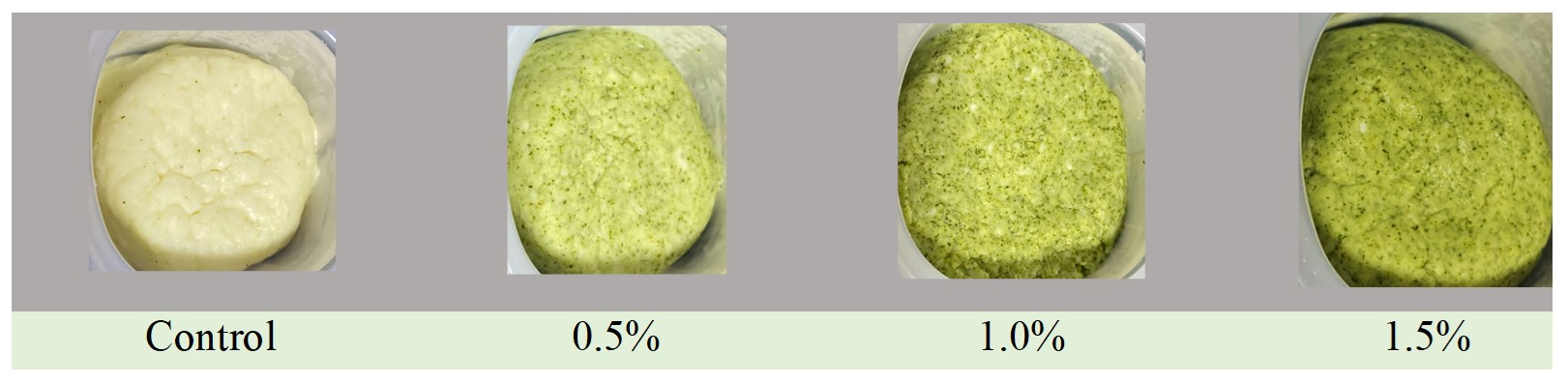
The color profile of mozzarella cheese was altered significantly (p > 0.05) when FSP was added (Figure 1), with a decrease in L* and an increase in a*, b*, and C*(Table 6). The changes were observed between 0.5% and 1.5% FSP addition, with L* values ranging from 61.38 ± 1.23 to 66.30 ± 2.15, a* values ranging from 21.90 ± 2.21 to 78.00 ± 0.25, b* values ranging from 22.50 ± 0.13 to 11.70 ± 3.25, and C* values ranging from 22.50 ± 0.13 to 11.70 ± 3.25. These findings align with the color changes observed in crackers supplemented with spinach powder, suggesting that the green color of the powder is responsible for the variations in color profile (Galla et al., 2017). Similar findings were reported for color changes in UF soft cheese supplemented with spinach powder (El-Sayed, 2020).

Physical properties of mozzarella cheese (control) and mozzarella cheese fortified with fermented spinach powder.
Color properties of mozzarella cheese (control) and mozzarella cheese fortified with fermented spinach powder.
3.5 Antioxidant activates
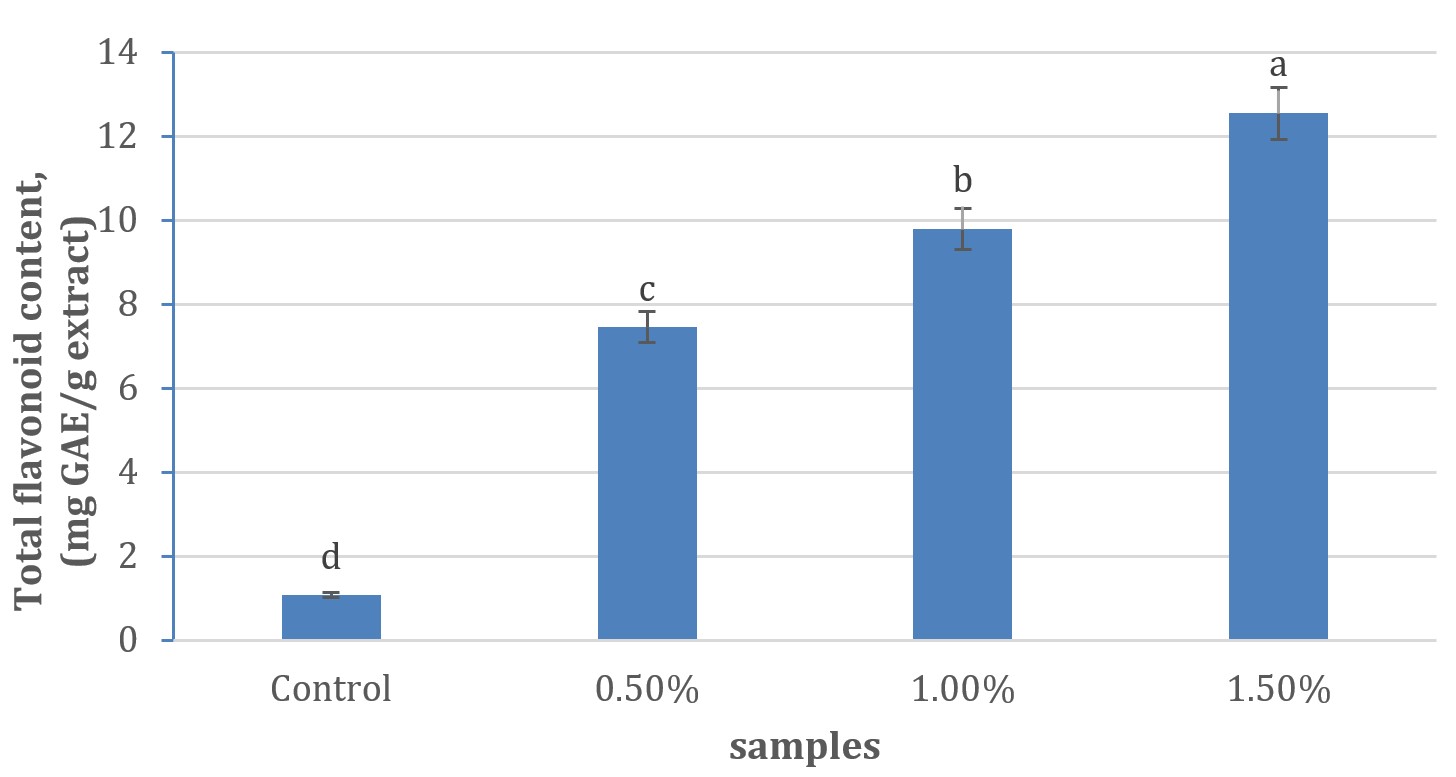
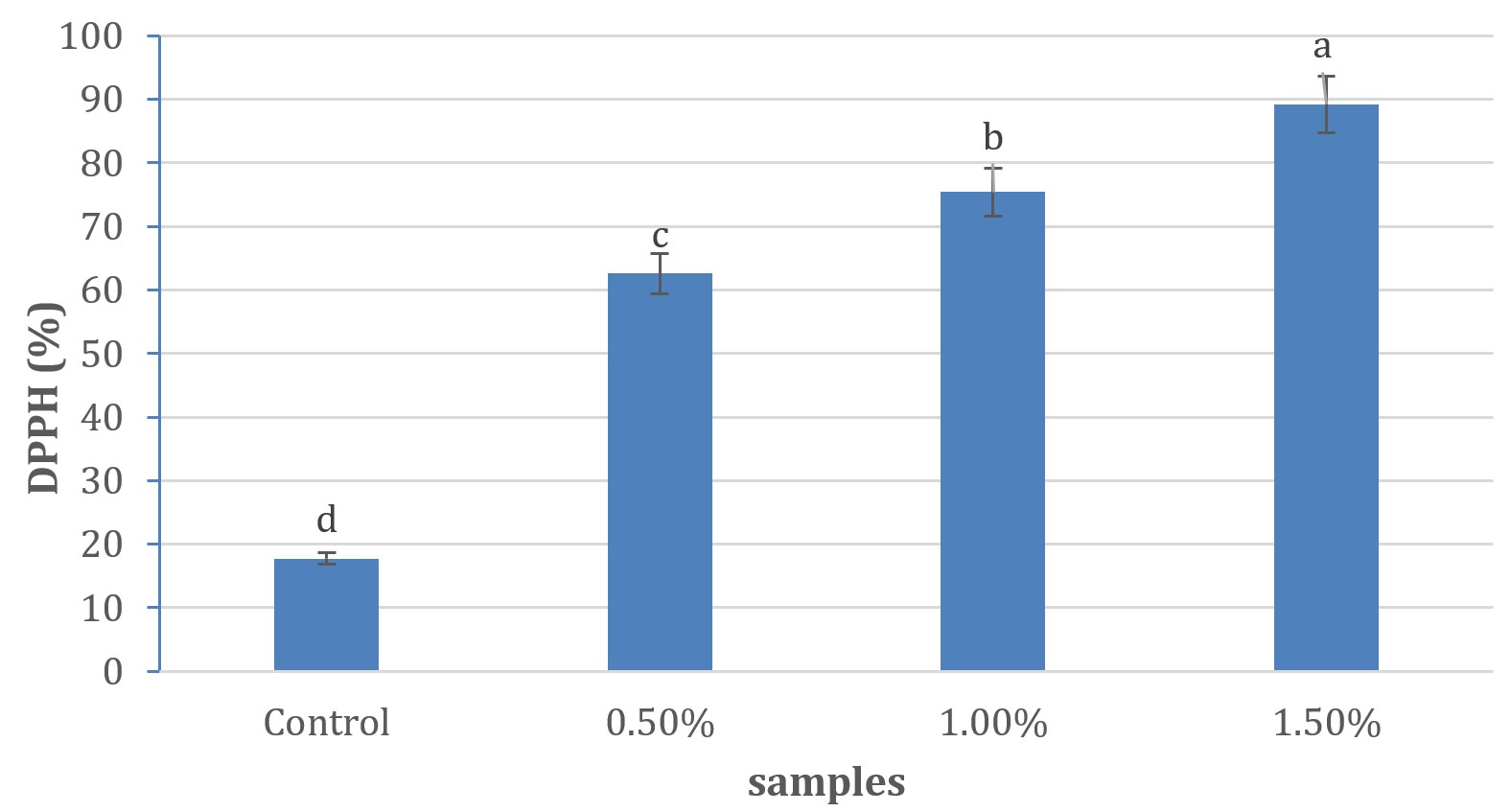
Green vegetables, such as spinach, are a great source of carotenoids, polyphenols, and chlorophylls, which are all natural antioxidants (Elvira-Torales et al., 2019). Antioxidant properties of spinach powder had the TPC of 12.2 mg GAE/g extract, total flavonoid content of 5.1 mg GAE/g extract, and DPPH 47.8%. A similar TPC and DPPH were reported by El-Sayed (2020) as 11.63 mg/g and 48.58%, respectively. Figure 2 displays the varying amounts of phenolic compounds in mozzarella cheese fortified with different levels of FSP. The TPC ranged from 19.45 to 40.19 mg GAE/g extract. Each sample showed significant differences in experimental values (p < 0.05), with the highest phenolic content observed in the sample containing 1.5% FSP, indicating the highest TPC. Fruits benefit from phenolic compounds because they have antioxidant qualities that stop hydrogen peroxide from breaking down into free radicals or deactivate lipid-free radicals (Yerlikaya et al., 2021). Spinach is known to contain various flavonoids, which are antioxidants and have potential health benefits (Murcia et al., 2020). Numerous flavonoids, which are antioxidants and may offer health advantages, are known to be present in spinach (Galla et al., 2017). The addition of FSP to mozzarella cheese likely contributed to an increase in flavonoid content (Junejo et al., 2021), therefore enhancing the antioxidant properties of the mozzarella cheese samples. The total flavonoid amount found in mozzarella cheese samples enriched with FSP ranged from 7.45 to 12.54 mg GAE/g extract, Figure 3. When the amount of FSP was increased, there was a significant difference (p < 0.05) in the overall flavonoid content. The DPPH radical scavenging assay of mozzarella cheese samples is shown in Figure 4. The DPPH values of the mozzarella cheese samples were obtained as 17.75%, 62.57%, 75.45%, and 89.23%, 57.25% of mozzarella cheese fortified with 0%, 0.5%, 1.0%, and 1.5% FSP, respectively. FSP exhibited high antioxidant activity compared to the control. The highest values were observed in mozzarella cheese fortified by 1.5% FSP. These results are in agreement with those of Junejo et al. (2021), who recorded the highest concentration of SP. The presence of plant chemicals and active compounds in leafy greens, such as flavonoids, zeaxanthin, carotenoids, beta-carotene, gamma- and beta-tocopherol, contributes to the elevated levels of antioxidants. Spinach contains phytochemicals and bioactive substances such as polyphenols, lutein, lycopene, alpha-carotene, and gamma- and alpha-tocopherol, so adding spinach powder may have increased antioxidant properties (Duthie et al., 2013).

Total phenolic content of mozzarella cheese (control) and mozzarella cheese fortified with fermented spinach powder (FSP).

Total flavonoid content of mozzarella cheese (control) and mozzarella cheese fortified with fermented spinach powder (FSP).

DPPH of mozzarella cheese (control) and mozzarella cheese fortified with fermented spinach powder (FSP).
3.6 Sensory evaluation
The sensory properties of the mozzarella cheese with FSP are shown in Table 7. Supplementation showed a significant (p < 0.05) effect on the sensory properties of the value-added spinach powders. The control mozzarella cheese showed the highest color score of 8.64 ± 0.33. There was a decrease in flavor score (8.23 ± 0.25 to 7.05 ± 0.64) and an increase in texture score (7.13 ± 0.33 to 8.15 ± 0.62) of mozzarella cheese with the increase in the supplementation levels of FSP with the increase in fortification levels (0.5% to 1.5%) of FSP in mozzarella cheese. Texture could be due to the higher concentration of FSP, which has fibrous and grainy attributes and is also responsible for the savory-sour taste of the product (Murcia et al., 2020). The taste and mouth feel scores decreased significantly (p < 0.05) at levels 1.0% and 1.5% compared to the control, and at level 0.5%, the values were 6.90 ± 0.51 and 7.35 ± 0.55, respectively. Similar results were recorded by other workers for the changes in sensory parameters due to the fortification of the UF-Soft cheese (El-Sayed, 2020), and durum wheat bread (Junejo et al., 2021) by SP. The highly overall scores acceptable was recorded in mozzarella cheese content 0.5% and 1% concentration of FSP, these results were in agreement with El-Sayed (2020) and Galla et al. (2017). When compared to regular mozzarella cheese, fortified mozzarella cheese bears similarities to earlier research on various functional ingredients (such as onion skin, black tea, coriander leaf powder, spinach powder, and mallow powder), which found that adding plant materials to mozzarella cheese increased consumer acceptability (Junejo et al., 2021).
Sensory evaluation of mozzarella cheese (control) and mozzarella cheese fortified with fermented spinach powder (FSP).
4 Conclusions
This study showed that the nutritional, functional, and sensory qualities of mozzarella cheese are strongly impacted by the amount of FSP incorporated. While higher levels of FSP increased the amount of bioactive compounds and minerals, but marginally decreased consumer acceptability. Moderate levels preserved desired sensory quality while improving functional qualities. Without affecting texture, optimal acceptance enhanced colour and overall appeal in terms of sensory perception. The viability of FSP as a functional ingredient in dairy applications is supported by the acceptable sensory scores obtained by all tested formulations. These results demonstrate how adding plant-based ingredients to cheese production can result in value-added goods that satisfy consumer demand for natural and healthier options.
Data Availability Statement
The data supporting this study are not publicly available, but can be requested from the corresponding author upon reasonable request.
-
Cite as:
Darwish, A. M. I. (2025). Developing nutritional and antioxidant properties of mozzarella cheese by adding fermented spinach powder (Spinacia oleracea L.). Brazilian Journal of Food Technology, 28, e2025060. https://doi.org/10.1590/1981-6723.06025
-
Funding:
None.
References
-
Amin, K., Akhtar, S., & Ismail, T. (2018). Nutritional and organoleptic evaluation of functional bread prepared from raw and processed defatted mango kernel flour. Journal of Food Processing and Preservation, 42(4), e13570. https://doi.org/10.1111/jfpp.13570
» https://doi.org/10.1111/jfpp.13570 - Association of Official Analytical Chemists – AOAC. (2000). Official Methods of Analysis Association of Official Agriculture Chemists Wisconsin. Rockville: AOAC.
-
Capcarova, M., Frigenti, M., Arvay, J., Janco, I., Harangozo, L., Bandlerova, A., Sartoni, M., Guidi, A., Stawarz, R., Formicki, G., Argente, M.-J., & Massanyi, P. (2024). Levels of essential and trace elements in Mozzarella available on the Slovak Market with the estimation of consumer exposure. Biological Trace Element Research, 202(5), 2357-2366. PMid:37594594. https://doi.org/10.1007/s12011-023-03813-x
» https://doi.org/10.1007/s12011-023-03813-x -
Cayot, P., Guzun-Cojocaru, T., & Cayot, N. (2013). Iron fortification of milk and dairy products. In V. R. Preedy, R. Srirajaskanthan & V. B. Patel (Eds.), Handbook of food fortification and health: From concepts to public health applications (Vol. 1, pp. 75-89). New York: Springer. https://doi.org/10.1007/978-1-4614-7076-2_6
» https://doi.org/10.1007/978-1-4614-7076-2_6 -
Chaturvedi, R., Favas, P. J. C., Pratas, J., Varun, M., & Paul, M. S. (2019). Metal(loid) induced toxicity and defense mechanisms in Spinacia oleracea L.: Ecological hazard and Prospects for phytoremediation. Ecotoxicology and Environmental Safety, 183, 109570. https://doi.org/10.1016/j.ecoenv.2019.109570
» https://doi.org/10.1016/j.ecoenv.2019.109570 - Cincotta, F., Condurso, C., Tripodi, G., Merlino, M., Prestia, O., Stanton, C., & Verzera, A. (2021). Comparison of lactose free and traditional mozzarella cheese during shelf-life by aroma compounds and sensory analysis. Lebensmittel-Wissenschaft + Technologie, 140, 110845. https://doi.org/10.1016/j.lwt.2020.110845
-
Clark, S., Costello, M., Drake, M., & Bodyfelt, F. (2009). The sensory evaluation of dairy products. New York: Springer. https://doi.org/10.1007/978-0-387-77408-4
» https://doi.org/10.1007/978-0-387-77408-4 -
Dahl, J. F., Gregersen, S. B., Andersen, U., Schulz, H.-J., & Corredig, M. (2024). Small and large deformation rheology on pizza cheese as an example of application to study anisotropic properties of food soft materials. Food Hydrocolloids, 148, 109456. https://doi.org/10.1016/j.foodhyd.2023.109456
» https://doi.org/10.1016/j.foodhyd.2023.109456 -
de Romaña, D. L., Olivares, M., Uauy, R., & Araya, M. (2011). Risks and benefits of copper in light of new insights of copper homeostasis. Journal of Trace Elements in Medicine and Biology: Organ of the Society for Minerals and Trace Elements (GMS), 25(1), 3-13. PMid:21342755. https://doi.org/10.1016/j.jtemb.2010.11.004
» https://doi.org/10.1016/j.jtemb.2010.11.004 -
Dharaiya, C., Jana, A., Patel, A., & Patel, D. (2021). Comparison of natural Mozzarella cheese with acid casein based Mozzarella cheese analogue. Indian Journal of Dairy Science, 74(4), 301-308. https://doi.org/10.33785/IJDS.2021.v74i04.003
» https://doi.org/10.33785/IJDS.2021.v74i04.003 -
Di Gioia, F., Renna, M., & Santamaria, P. (2017). Sprouts, microgreens and “baby leaf” vegetables. In F. Yildiz & R. Wiley (Eds.), Minimally processed refrigerated fruits and vegetables (pp. 403-432). Boston: Springer. https://doi.org/10.1007/978-1-4939-7018-6_11
» https://doi.org/10.1007/978-1-4939-7018-6_11 -
Duthie, G., Campbell, F., Bestwick, C., Stephen, S., & Russell, W. (2013). Antioxidant effectiveness of vegetable powders on the lipid and protein oxidative stability of cooked turkey meat patties: Implications for Health. Nutrients, 5(4), 1241-1252. PMid:23595133. https://doi.org/10.3390/nu5041241
» https://doi.org/10.3390/nu5041241 -
El-Sayed, S. M. (2020). Use of spinach powder as functional ingredient in the manufacture of UF-Soft cheese. Heliyon, 6(1), e03278. PMid:31993529. https://doi.org/10.1016/j.heliyon.2020.e03278
» https://doi.org/10.1016/j.heliyon.2020.e03278 -
Elvira-Torales, L. I., García-Alonso, J., & Periago-Castón, M. J. (2019). Nutritional importance of carotenoids and their effect on liver health: A review. Antioxidants, 8(7), 229. PMid:31330977. https://doi.org/10.3390/antiox8070229
» https://doi.org/10.3390/antiox8070229 -
Essa, M. M., Bishir, M., Bhat, A., Chidambaram, S. B., Al-Balushi, B., Hamdan, H., Govindarajan, N., Freidland, R. P., & Qoronfleh, M. W. (2023). Functional foods and their impact on health. Journal of Food Science and Technology, 60(3), 820-834. PMid:36908338. https://doi.org/10.1007/s13197-021-05193-3
» https://doi.org/10.1007/s13197-021-05193-3 -
Farahat, E. S., Mohamed, A. G., El-Loly, M. M., & Gafour, W. A. (2021). Innovative vegetables-processed cheese: I. Physicochemical, rheological and sensory characteristics. Food Bioscience, 42, 101128. https://doi.org/10.1016/j.fbio.2021.101128
» https://doi.org/10.1016/j.fbio.2021.101128 -
Galla, N. R., Pamidighantam, P. R., Karakala, B., Gurusiddaiah, M. R., & Akula, S. (2017). Nutritional, textural and sensory quality of biscuits supplemented with spinach (Spinacia oleracea L.). International Journal of Gastronomy and Food Science, 7, 20-26. https://doi.org/10.1016/j.ijgfs.2016.12.003
» https://doi.org/10.1016/j.ijgfs.2016.12.003 -
Gharibzahedi, S. M. T., & Jafari, S. M. (2017). The importance of minerals in human nutrition: Bioavailability, food fortification, processing effects and nanoencapsulation. Trends in Food Science & Technology, 62, 119-132. https://doi.org/10.1016/j.tifs.2017.02.017
» https://doi.org/10.1016/j.tifs.2017.02.017 -
Gonçalves, M. C., & Cardarelli, H. R. (2020). Effect of the stretching temperature on the texture and thermophysical properties of mozzarella cheese. Journal of Food Processing and Preservation, 44(9), e14703. https://doi.org/10.1111/jfpp.14703
» https://doi.org/10.1111/jfpp.14703 -
Guiné, R. P., Florença, S. G., Barroca, M. J., & Anjos, O. (2020). The link between the consumer and the innovations in food product development. Foods, 9(9), 1317. PMid:32962007. https://doi.org/10.3390/foods9091317
» https://doi.org/10.3390/foods9091317 -
Han, Z., Xu, S., Sun, J., Yue, X., Wu, Z., & Shao, J.-H. (2021). Effects of fatty acid saturation degree on salt-soluble pork protein conformation and interfacial adsorption characteristics at the oil/water interface. Food Hydrocolloids, 113, 106472. https://doi.org/10.1016/j.foodhyd.2020.106472
» https://doi.org/10.1016/j.foodhyd.2020.106472 -
Haug, W., & Lantzsch, H. J. (1983). Sensitive method for the rapid determination of phytate in cereals and cereal products. Journal of the Science of Food and Agriculture, 34(12), 1423-1426. https://doi.org/10.1002/jsfa.2740341217
» https://doi.org/10.1002/jsfa.2740341217 - Hedges, L., & Lister, C. (2007). Nutritional attributes of spinach, silver beet and eggplant crop & food research (Confidential Report, No. 1928). Auckland: New Zealand Institute for Crop and Food Research Limited.
-
Hossain, M. M., Abdulla, F., & Rahman, A. (2023). Prevalence and risk factors of underweight among under-5 children in Bangladesh: Evidence from a countrywide cross-sectional study. PLoS One, 18(4), e0284797. PMid:37093817. https://doi.org/10.1371/journal.pone.0284797
» https://doi.org/10.1371/journal.pone.0284797 - Hunter, R. S., & Harold, R. W. (1987). The measurement of appearance. Hoboken: John Wiley & Sons.
-
International Dairy Federation – IDF. (1992). Rheological and fracture properties of cheese. Bulletin of the International Dairy Federation, (368), 1-67. Retrieved in 2025, June 4, from http://agris.fao.org/agrissearch/search.do?recordID=BE9200359
» http://agris.fao.org/agrissearch/search.do?recordID=BE9200359 -
Junejo, S. A., Rashid, A., Yang, L., Xu, Y., Kraithong, S., & Zhou, Y. (2021). Effects of spinach powder on the physicochemical and antioxidant properties of durum wheat bread. Lebensmittel-Wissenschaft + Technologie, 150, 112058. https://doi.org/10.1016/j.lwt.2021.112058
» https://doi.org/10.1016/j.lwt.2021.112058 - Kaur, D., Kamboj, A., & Shri, R. (2016). Comparative evaluation of anxiolytic effects of various extracts of oats (Avena sativa), rice bran (Oryza sativa) and spinach (Spinacia oleracea) in experimental animals. International Journal of Pharmaceutical Sciences and Research, 7(10), 4110. http://dx.doi.org/10.13040/IJPSR.0975-8232.7(10).4110-16
-
Khalid, W., Arshad, M. S., Ranjha, M. M. A. N., Różańska, M. B., Irfan, S., Shafique, B., Rahim, M. A., Khalid, M. Z., Abdi, G., & Kowalczewski, P. L. (2022). Functional constituents of plant-based foods boost immunity against acute and chronic disorders. Open Life Sciences, 17(1), 1075-1093. PMid:36133422. https://doi.org/10.1515/biol-2022-0104
» https://doi.org/10.1515/biol-2022-0104 -
Li, Y., Cui, Y., Lu, F., Wang, X., Liao, X., Hu, X., & Zhang, Y. (2019). Beneficial effects of a chlorophyll-rich spinach extract supplementation on prevention of obesity and modulation of gut microbiota in high-fat diet-fed mice. Journal of Functional Foods, 60, 103436. https://doi.org/10.1016/j.jff.2019.103436
» https://doi.org/10.1016/j.jff.2019.103436 -
Luis, G., Rubio, C., Revert, C., Espinosa, A., González-Weller, D., Gutiérrez, A., & Hardisson, A. (2015). Dietary intake of metals from yogurts analyzed by inductively coupled plasma optical emission spectrometry (ICP-OES). Journal of Food Composition and Analysis: An Official Publication of the United Nations University, International Network of Food Data Systems, 39, 48-54. https://doi.org/10.1016/j.jfca.2014.11.013
» https://doi.org/10.1016/j.jfca.2014.11.013 -
Meshref, A. M., Moselhy, W. A., & Hassan, N. E.-H. Y. (2014). Heavy metals and trace elements levels in milk and milk products. Journal of Food Measurement and Characterization, 8(4), 381-388. https://doi.org/10.1007/s11694-014-9203-6
» https://doi.org/10.1007/s11694-014-9203-6 -
Motevalizadeh, E., Mortazavi, S. A., Milani, E., & Hooshmand‐Dalir, M. A. R. (2018). Optimization of physicochemical and textural properties of pizza cheese fortified with soybean oil and carrot extract. Food Science & Nutrition, 6(2), 356-372. PMid:29564103. https://doi.org/10.1002/fsn3.563
» https://doi.org/10.1002/fsn3.563 -
Murcia, M. A., Jiménez-Monreal, A. M., Gonzalez, J., & Martínez-Tomé, M. (2020). Spinach. In A. K. Jaiswal (Ed.), Nutritional composition and antioxidant properties of fruits and vegetables (Chap. 11, pp. 181-195). Academic Press. https://doi.org/10.1016/B978-0-12-812780-3.00011-8
» https://doi.org/10.1016/B978-0-12-812780-3.00011-8 -
Naseem, A., Akhtar, S., Ismail, T., Qamar, M., Sattar, D. E., Saeed, W., Esatbeyoglu, T., Bartkiene, E., & Rocha, J. M. (2023). Effect of growth stages and lactic acid fermentation on anti-nutrients and nutritional attributes of spinach (Spinacia oleracea). Microorganisms, 11(9), 2343. PMid:37764187. https://doi.org/10.3390/microorganisms11092343
» https://doi.org/10.3390/microorganisms11092343 -
Ntuli, V., Sibanda, T., Elegbeleye, J. A., Mugadza, D. T., Seifu, E., & Buys, E. M. (2023). Dairy production: Microbial safety of raw milk and processed milk products. In M. E. Knowles, L. E. Anelich, A. R. Boobis, & B. Popping (Eds.), Present knowledge in food safety (Chap. 30, pp. 439-454). London: Academic Press. https://doi.org/10.1016/B978-0-12-819470-6.00076-7
» https://doi.org/10.1016/B978-0-12-819470-6.00076-7 - O'Donohue, J. W., Reid, M. A., Varghese, A., Portmann, B., & Williams, R. (1993). Micronodular cirrhosis and acute liver failure due to chronic copper self-intoxication. European Journal of Gastroenterology & Hepatology, 5(7), 561-562.
-
Ohanenye, I. C., Emenike, C. U., Mensi, A., Medina-Godoy, S., Jin, J., Ahmed, T., Sun, X., & Udenigwe, C. C. (2021). Food fortification technologies: Influence on iron, zinc and vitamin A bioavailability and potential implications on micronutrient deficiency in sub-Saharan Africa. Scientific African, 11, e00667. https://doi.org/10.1016/j.sciaf.2020.e00667
» https://doi.org/10.1016/j.sciaf.2020.e00667 -
Pop, M. S., Cheregi, D. C., Onose, G., Munteanu, C., Popescu, C., Rotariu, M., Turnea, M.-A., Dograru, G., Ionescu, E. V., Oprea, D., Iliescu, M. G., Minea, M., Stanciu, L. E., Silișteanu, S. C., & Oprea, C. (2023). Exploring the potential benefits of natural Calcium-rich mineral waters for health and Wellness: A systematic review. Nutrients, 15(14), 3126. PMid:37513544. https://doi.org/10.3390/nu15143126
» https://doi.org/10.3390/nu15143126 -
Rahman, M. A., Roy, J., & Mahomud, M. S. (2023). Textural and antioxidant properties of mozzarella cheese fortified with dehydrated oyster mushroom flour. Foods and Raw Materials, 11(2), 251-258. https://doi.org/10.21603/2308-4057-2023-2-574
» https://doi.org/10.21603/2308-4057-2023-2-574 -
Roessler, E., Pangborn, R., Sidel, J., & Stone, H. (1978). Expanded statistical tables for estimating significance in paired: Preference, paired-difference, duo-trio and triangle tests. Journal of Food Science, 43(3), 940-943. https://doi.org/10.1111/j.1365-2621.1978.tb02458.x
» https://doi.org/10.1111/j.1365-2621.1978.tb02458.x -
Sarkar, T., Salauddin, M., Roy, S., Chakraborty, R., Rebezov, M., Shariati, M. A., Thiruvengadam, M., & Rengasamy, K. R. R. (2023). Underutilized green leafy vegetables: Frontier in fortified food development and nutrition. Critical Reviews in Food Science and Nutrition, 63(33), 11679-11733. PMid:35816152. https://doi.org/10.1080/10408398.2022.2095555
» https://doi.org/10.1080/10408398.2022.2095555 -
Soliman, T. N., Mohammed, D. M., El-Messery, T. M., Elaaser, M., Zaky, A. A., Eun, J. B., Shim, J. H., & El-Said, M. M. (2022). Microencapsulation of plant phenolic extracts using complex coacervation incorporated in ultrafiltered cheese against AlCl3-Induced neuroinflammation in rats. Frontiers in Nutrition, 9, 929977. PMid:35845781. https://doi.org/10.3389/fnut.2022.929977
» https://doi.org/10.3389/fnut.2022.929977 -
Terefe, Z. K., Omwamba, M., & Nduko, J. M. (2022). Effect of microbial fermentation on nutritional and antinutritional contents of cassava leaf. Journal of Food Safety, 42(3), e12969. https://doi.org/10.1111/jfs.12969
» https://doi.org/10.1111/jfs.12969 -
Thor, K. (2019). Calcium: Nutrient and messenger. Frontiers in Plant Science, 10, 440. PMid:31073302. https://doi.org/10.3389/fpls.2019.00440
» https://doi.org/10.3389/fpls.2019.00440 - Tort, A. R. (2019). A review on the domestication and breeding history of Spinach (Spinacia oleracea L.): The possible origin and spread of Spinach (Master's thesis). Wageningen University, Wageningen.
-
Tunick, M. H. (2000). Rheology of dairy foods that gel, stretch, and fracture. Journal of Dairy Science, 83(8), 1892-1898. PMid:10984168. https://doi.org/10.3168/jds.S0022-0302(00)75062-4
» https://doi.org/10.3168/jds.S0022-0302(00)75062-4 - Vahčić, N., Hruškar, M., Marković, K., Banović, M., & Barić, I. C. (2010). Essential minerals in milk and their daily intake through milk consumption. Mljekarstvo, 60(2), 1-10.
-
Waseem, M., Akhtar, S., Manzoor, M. F., Mirani, A. A., Ali, Z., Ismail, T., Ahmad, N., & Karrar, E. (2021). Nutritional characterization and food value addition properties of dehydrated spinach powder. Food Science & Nutrition, 9(2), 1213-1221. PMid:33598205. https://doi.org/10.1002/fsn3.2110
» https://doi.org/10.1002/fsn3.2110 -
World Health Organization – WHO. (2021). Fact sheets-malnutrition Retrieved in 2025, June 4, from https://www.who.int/news-room/fact-sheets/detail/malnutrition
» https://www.who.int/news-room/fact-sheets/detail/malnutrition -
Xie, D., Gao, Y., Du, L., Shen, Y., Xie, J., & Wei, D. (2021). Effect of flavorzyme‐modified soy protein on the functional properties, texture and microstructure of Mozzarella cheese analogue. Journal of Food Processing and Preservation, 45(11), e15963. https://doi.org/10.1111/jfpp.15963
» https://doi.org/10.1111/jfpp.15963 -
Xu, D.-P., Li, Y., Meng, X., Zhou, T., Zhou, Y., Zheng, J., Zhang, J.-J., & Li, H.-B. (2017). Natural antioxidants in foods and medicinal plants: Extraction, assessment and resources. International Journal of Molecular Sciences, 18(1), 96. PMid:28067795. https://doi.org/10.3390/ijms18010096
» https://doi.org/10.3390/ijms18010096 -
Yerlikaya, O., Akan, E., Bayram, O., Karaman, A., & Kinik, O. (2021). The impact of medicinal and aromatic plant addition on antioxidant, total phenolic, antimicrobial activities, and microbiological quality of Mozzarella cheese. International Food Research Journal, 28(3), 508-516. https://doi.org/10.47836/ifrj.28.3.10
» https://doi.org/10.47836/ifrj.28.3.10 -
Zedan, I. A., Abou-Shaloue, Z., & Zaky, S. M. (2014). Quality evaluation of Mozzarella cheese from different milk types. Alexandria Science Exchange Journal, 35, 162-177. https://doi.org/10.21608/asejaiqjsae.2014.2591
» https://doi.org/10.21608/asejaiqjsae.2014.2591 -
Žilić, S., Serpen, A., Akıllıoğlu, G., Janković, M., & Gökmen, V. (2012). Distributions of phenolic compounds, yellow pigments and oxidative enzymes in wheat grains and their relation to antioxidant capacity of bran and debranned flour. Journal of Cereal Science, 56(3), 652-658. https://doi.org/10.1016/j.jcs.2012.07.014
» https://doi.org/10.1016/j.jcs.2012.07.014
Edited by
-
Associate Editor:
Priscila Z. Bassinelo.