
 Chenopodium quinoa and Amaranthus spp. raw meals as meat extenders in Pelibuey mortadella
Abstract
This study examined the impact of partially replacing wheat flour with raw flours from Andean pseudocereals (Chenopodium quinoa Willd. and Amaranthus spp.) in Bologna-style mortadella formulations made with pelibuey meat (Ovis aries). The study included the physicochemical, functional, microbiological, and sensory characterization of the flours and final product using standardized protocols. Significant differences were found between the flours. Quinoa had a higher protein content (16.30% ± 0.36%) and pH, while amaranth had a higher absorption capacity (1.99 ± 0.83 g/g) and water retention capacity (WRC) (1.76 ± 0.52 g/g). In the meat formulations, the type and percentage of flour substitution significantly impacted the moisture, fat, protein, and pH of the final product (ANOVA, p < 0.001). Sensory analysis revealed that mortadella with 3% amaranth flour exhibited the highest overall acceptability (mean score: 399), surpassing quinoa formulations and approaching the wheat treatment (413). All treatments complied with the parameters established by the Ecuadorian technical standard NTE INEN 1340:96. The results suggest that a 3% amaranth flour inclusion rate is a viable, sensory-acceptable alternative to wheat flour in emulsified meat products. However, raw quinoa presents limitations at inclusion rates higher than 3% due to its negative impact on organoleptic attributes.
Keywords:
Pelibuey meat; Plant-based meat extenders; Raw flours; Sensory evaluation; Water retention capacity; Meat emulsion
Highlights
Andean pseudocereals improve emulsified meat matrices nutritionally and technologically
Good sensory acceptance was achieved by amaranth at intermediate levels of inclusion
Quinoa provides protein but limits sensory attributes at high concentrations
1 Introduction
In recent years, concerns about the environmental impact of intensive animal protein production, particularly meat and meat product production, have grown. This has prompted the food industry to develop sustainable alternatives (Gil et al., 2024; Smetana et al., 2023). Conventional livestock farming is associated with high resource consumption and ethical implications that have shifted consumer preferences toward more ecologically and socially responsible products (Rocchetti et al., 2023; Schader et al., 2015). In this context, designing food systems that maintain the nutritional and sensory quality of products while minimizing production costs and environmental impact has been promoted.
According to Jang & Lee (2024), the meat industry faces the particular challenge of developing innovative products that integrate plant-based functional ingredients without compromising technological properties or consumer acceptance. Plant-based meat extenders are an effective strategy for achieving this goal because they allow for a reduction in meat content while enriching the product's nutritional profile and improving relevant functional characteristics, such as water retention, emulsion stability, and texture (Balestra & Petracci, 2019; Shen et al., 2022).
Various raw materials have been evaluated as extenders, including legumes (e.g., lentils and chickpeas), cereals (e.g., wheat and corn), tubers (e.g., potatoes and cassava), and agro-industrial by-products (Calderón-Oliver & López-Hernández, 2022; da Silva et al., 2024). Pseudocereals, such as quinoa (Chenopodium quinoa Willd.) and amaranth (Amaranthus spp.), have gained interest due to their protein content (13-18%) and the presence of essential amino acids, such as lysine and methionine. They are also useful in emulsified meat products due to their ability to form gelled structures (Fernández-López et al., 2021).
Meanwhile, the search for alternatives to traditional meats has led to the increased use of underutilized species, such as pelibuey (Ovis aries). This species is a high-quality protein source that contains significant amounts of iron, zinc, phosphorus, and B-complex vitamins (B2, B6, and B12). These nutrients are essential for critical physiological functions, such as hematopoiesis (Gurgeira et al., 2022). Pelibuey meat is a sustainable and cost-effective option for diversifying meat sources.
Within this framework, the present study aimed to formulate and evaluate a Bologna-type mortadella made with Pelibuey meat and raw quinoa and amaranth flours as plant-based meat extenders. We considered cost reduction through partial meat substitution and compliance with the physicochemical, functional, textural, microbiological, and sensory parameters defined by Ecuadorian Institute for Standardization (INEN) standards and supported by the Association of Official Agricultural Chemists (AOAC). Additionally, we sought to address the growing demand among contemporary consumers for healthy foods with low levels of salt, saturated fat, and chemical additives, such as nitrites (Pintado & Delgado-Pando, 2020), while maintaining quality and food safety.
This study may suggest that using raw Chenopodium quinoa and Amaranthus spp. flours to partially replace wheat flour in Pelibuey mortadella affect the product's technological and sensory characteristics, with variations attributable to the type of flour used and the level of substitution.
2 Materials and methods
2.1 Description of the study area
The research was carried out in the food analysis laboratories of the Universidad Politécnica Estatal del Carchi (UPEC) in the Ecuadorian Andean region and in the meat processing plant of the Centro Experimental San Francisco in Huaca. The laboratories are located at the geographic coordinates 0°48'18.22” N, 77°44'2.65” W, and the processing plant is located at the geographic coordinates 0°37'50.99” N, 77°43'35.76” W.
These facilities are located at an elevation of 2,950 ± 5 meters above sea level (masl), with an average annual temperature of 12.8 ± 1.2 °C, relative humidity of 80 ± 5%, and an average atmospheric pressure of 728 ± 2 hPa. These conditions significantly influence food research processes.
2.2 Experimental Procedure
The experiment was divided into two phases. In the first phase, raw flours were obtained and characterized from quinoa and amaranth. In the second phase, mortadellas based on pelibuey meat were prepared and characterized using the cereal flours as meat extenders. Internationally validated procedures according to the FAO/WHO Codex Alimentarius and standardized ISO 17025:2017 (International Organization for Standardization, 2017) protocols were used in both phases. For sensory evaluation tests, individual booths and standardized lighting systems were used, built according to ISO 8589:2007 (International Organization for Standardization, 2017) specifications.
2.2.1 First phase: obtaining raw flour
Andean cereals, quinoa (C. quinoa) and amaranth (Amaranthus spp.), were used as raw materials and as meat extenders in the preparation of pelibuey meat Bologna-type mortadella.
The grains of each cereal underwent selection, washing (to minimize saponin contents), and drying processes to ensure product quality and eliminate impurities and anti-nutritional compounds. This process was carried out in a tray dryer with forced airflow at a constant temperature of 50 °C for 24 hours to ensure a maximum humidity level of 10%. After drying, the grains were milled and sieved to produce particles measuring 212 µm (65 mesh). Finally, the flours were vacuum-packed in polyethylene bags for storage and subsequent use as extenders.
2.2.1.1 Characterization of the flours
Before preparing the mortadellas, the flours were characterized physicochemically, functionally, and microbiologically.
In the physicochemical characterization of the flours, properties such as moisture, acidity, fat, protein, and pH were determined.
For moisture determination, a gravimetric method based on NTE INEN ISO-712 (Ecuadorian Standards Institute, 2013g) was used. In addition, 2 g of the sample were weighed and placed in a porcelain capsule and placed in an oven at 103±2 °C for 3 h until a constant weight was obtained. From the weight loss, the corresponding value of this parameter was obtained.
Acidity was determined by a volumetric method according to NTE INEN-ISO 7305 (Ecuadorian Standards Institute, 2013h), titrating with 0.1 N sodium hydroxide, with phenolphthalein as an indicator. The results were expressed as %H2SO4.
The methodology established in the NTE INEN-ISO 11085 (Ecuadorian Standards Institute, 2013a) standard was followed for fat, using Soxhlet equipment. Thus, 1 g of sample was weighed on filter paper and placed in a thimble, sealed with cotton, which entered the equipment in the immersion phase for 30 min, followed by washing for 1 h, and finally, the extraction of the hexane solvent for 35 min. The ladle with fat was placed in the oven for 2 h, then it was left to cool, and the weights were recorded to obtain the corresponding results.
Protein content was determined using the Kjeldahl method and was expressed as a percentage of nitrogen following the methodology of NTE INEN 20483 (Ecuadorian Standards Institute, 2014). In a flour, this percentage is obtained by multiplying the result of the determination by the factor 6.25. After that, 1 g of the sample was weighed in a mineralization tube with the copper sulfate-based catalyst to be subjected to a digestion process at 420 °C with 10 ml of sulfuric acid. Afterwards, a distillation was carried out, where 80 ml of distilled water and 70 ml of 40% sodium hydroxide were added to the mineralization tube after cooling. Finally, the titration was carried out with boric acid standardized to 4%, 0.1 N hydrochloric acid, and methyl red as an indicator.
The pH determination was carried out in accordance with NTE INEN 526:2012 (Ecuadorian Standards Institute, 2012), using a standardized potentiometer with buffer solutions of pH 4, 7, and 10.
The functional characterization was comprised of swelling capacity, water retention capacity (WRC), and water absorption tests.
For the determination of swelling capacity, 2.5 g of flour was weighed in a tube with 30 ml of water and stirred manually. The sample rested for 24 h at a room temperature of 27 °C ± 0.5 °C, to measure the final volume of the sample as a result of its hydration.
Regarding the WRC, 1 g of flour was weighed and placed in a test tube with 30 ml of water under agitation, then it was left to hydrate for 18 h. The sample was then taken to a centrifuge to measure the WRC. Then, it was taken to a centrifuge at 2000 rpm for 30 min, verifying the separation of the supernatant and the residue, which was placed in a crucible to be weighed, obtaining the value of the wet residue. The residue was placed in the oven at 105 °C ± 1 °C for 24 h to weigh it again, obtaining the dry residue value.
As for the water absorption capacity, 0.5 g of flour was weighed in a test tube, 10 ml of water was added, and shaken for 30 min. Then, it was placed in a centrifuge at 3000 rpm for 10 min, and the supernatant was removed, and the sediment was weighed.
All these determinations were carried out under controlled conditions using analytical grade materials and reagents. The assays were performed in triplicate to ensure reproducibility of the results, which were subsequently analyzed statistically in order to identify significant differences between the flours obtained.
For the microbiological characterization analyses, the requirements were taken from INEN Standard 3042: 2015 (Ecuadorian Standards Institute, 2015). For molds and yeasts, the methodology of NTE INEN 1529-10 (Ecuadorian Standards Institute, 2013b) was used for Salmonella spp. NTE INEN 1529-15 (Ecuadorian Standards Institute, 2013d) was followed, for Mesophilic aerobes NTE INEN 1529-5 (Ecuadorian Standards Institute, 2013e) was applied, for Staphylococcus aureus NTE INEN 1529-14 (Ecuadorian Standards Institute, 2013c) was used, and for Escherichia coli NTE INEN 1529-8 (Ecuadorian Standards Institute, 2013f) was employed.
2.2.2 Second phase: preparation of mortadella
The second phase focused on the production of Bologna-type mortadella using pelibuey meat (O. aries) with partial replacement of the meat/filler fraction by raw flours from quinoa (C. quinoa) and amaranth (Amaranthus spp.). Carcasses were deboned under hygienic conditions, and the meat was meticulously trimmed to remove connective tissue, veins, tendons, and excess fat. The lean fraction was cut into 6–7 cm cubes and tempered at 0–4 °C for 12 h to improve grinding performance. Pork back fat was treated separately under the same refrigerated conditions to ensure uniformity during emulsification.
Formulations were prepared in accordance with the Ecuadorian Technical Standard NTE INEN 1340:1996 (Ecuadorian Standards Institute, 1996) for Bologna-type mortadella. Three substitution levels were established (1.5%, 3.0%, and 4.5%) for quinoa or amaranth flour, in addition to a wheat flour control. This resulted in seven experimental groups: control (wheat), Q1.5, Q3, Q4.5, A1.5, A3, and A4.5. The factorial design allowed independent evaluation of flour type and inclusion level, ensuring statistical robustness.
Processing was conducted in an industrial bowl cutter following a standardized four-step sequence:
-
Meat cubes were chopped at 1,500 rpm with 20 g/kg sodium chloride and 2.5 g/kg curing salts (sodium nitrite/nitrate) to promote salt-soluble myofibrillar protein extraction, which is critical for emulsion stability.
-
Crushed ice (10% of total mass) was incorporated gradually to maintain batter temperature below 12 °C, preventing protein denaturation and ensuring functional integrity.
-
Quinoa or amaranth flour was added at the predefined substitution level, together with seasonings (white pepper, garlic, nutmeg; 1.5 g/kg each). These pseudocereal flours contributed proteins and complex carbohydrates and acted as natural stabilizers, enhancing water-holding and emulsifying capacity (Fernández-López et al., 2021).
-
Pork back fat was incorporated progressively with chilled water, reaching 3,000 rpm until a stable and homogeneous emulsion was obtained.
The emulsified batters were vacuum-stuffed into 80 mm caliber polyamide casings, sanitized in 2% lactic acid solution. Mortadellas were subjected to thermal processing by scalding in hot water at 75 °C to 80 °C for 60 min, until an internal temperature of 72 °C was achieved (monitored with a calibrated probe). This ensured protein denaturation, microbial inactivation, and structural stabilization. Immediately after cooking, the products underwent thermal shock in ice water for 20 min, rapidly reducing temperature to below 10 °C to minimize microbial proliferation and preserve textural integrity.
Final products were stored at 0 °C to 4 °C before analysis. Physicochemical parameters (moisture, protein, fat, ash, and pH) were determined according to AOAC and INEN standards. Microbiological safety was verified following NTE INEN 1340:1996 (Ecuadorian Standards Institute, 1996), assessing Salmonella spp., E. coli, S. aureus, molds, and yeasts. Texture profile analysis (hardness, cohesiveness, adhesiveness, chewiness, springiness) was performed using a Brookfield CTX texture analyzer with a 50 mm cylindrical probe. Sensory analysis involved 75 untrained panelists under ISO 8589:2007 (International Organization for Standardization, 2007) conditions (individual booths and standardized lighting). A 7-point hedonic scale was applied to evaluate color, odor, flavor, appearance, consistency, and overall acceptability.
2.2.3 Statistical methods
The data obtained were first organized and analyzed using descriptive statistics, calculating measures of central tendency and dispersion. To visually explore the similarity between formulations according to their physicochemical properties, a heat map accompanied by a dendrogram was constructed using Euclidean distances and the hierarchical clustering method by average linkage (Rashedi et al., 2015).
In the first stage, Student's t-test was used to compare the means between two groups. In cases where the assumptions of normality (verified by the Shapiro-Wilk test) and homogeneity of variances (Levene's test) were not met, the nonparametric Mann-Whitney U test was used as an alternative.
In a second step, a Pearson correlation analysis was performed to identify linear relationships between quantitative variables. Then, a two-way analysis of variance (ANOVA) was used to evaluate the effect of the type of flour (factor A, with two levels: quinoa and amaranth) and the percentage of substitution (factor B, with three levels: 1.5%, 3% and 4.5%). When significant differences were detected (p < 0.05), a Tukey’s post hoc test was performed to identify specific comparisons between factor levels.
For sensory data, due to its ordinal nature and non-normality of its distribution, the Kruskal-Wallis test was used to assess differences between groups (Ostertagová et al., 2014). In cases where this test was significant, multiple comparisons were performed using the Wilcoxon test for paired samples with Holm's correction to adjust the p-value and control for type I error.
The analysis was performed using R statistical software (version 4.3.1) and Microsoft Excel for preliminary data processing. This methodology combined a parametric and nonparametric approach.
3 Results
Table 1 shows the results obtained for the main physicochemical, proximate, and functional variables analyzed for the raw flours of both quinoa and amaranth. These values highlight an adequate nutritional and functional profile of these Andean pseudocereals, compared to other conventional extenders.
Quinoa and amaranth flours showed differences and similarities in their physicochemical properties. In terms of swelling capacity, quinoa presented a value of 3.014 ± 0.203 ml/g, while amaranth had 3.028 ± 0.201 ml/g, indicating similar values. However, the water holding capacity was higher in amaranth (1.762 ± 0.517 g) compared to quinoa (1.527 ± 0.474 g), with a difference of 15.4%. Similarly, the water absorption capacity was higher in amaranth (1.989 ± 0.825 g) than in quinoa (1.594 ± 0.562 g), representing a 24.8% increase. The moisture values of the two flours were very close: 10.640% ± 0.250% for quinoa and 10.636% ± 0.793% for amaranth. Fat also showed similar values, comprising 4.490% ± 0.248% in quinoa and 4.547% ± 0.227% in amaranth, with a minimal difference (1.27% more fat in amaranth). The pH showed a more notable variation, with 6.796 ± 0.044 in quinoa. At the same time, amaranth had a pH of 6.376 ± 0.095, indicating that quinoa is more alkaline, which may affect the stability and taste of products made with it (Suárez-Estrella et al., 2018). Regarding acidity, both values were very close (0.104% ± 0.021% in quinoa and 0.101% ± 0.014% in amaranth). Regarding protein, quinoa flour presented a significantly higher content (16.300% ± 0.356%) compared to amaranth flour (14.713% ± 0.331%), with a difference of 10.8%, making it a superior protein source, as was also reported by Kierulf et al. (2020). Finally, the particle size was very similar in both flours (95.063% ± 0.046% in quinoa and 95.073% ± 0.049% in amaranth), indicating that they could have a similar behavior. Amaranth flour stood out for its higher water retention and absorption capacity, while quinoa flour was superior in protein content at a higher pH.
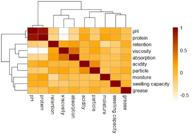
The heat map (Figure 1) showed groupings between physicochemical and functional variables of the raw formulations. A strong association was observed between protein, retention, viscosity, and absorption, suggesting that higher protein concentrations favor water retention and viscosity (Gonçalves et al., 2016). The pH was negatively associated with this group, suggesting that formulations with higher functional activity tend to be more acidic. Moisture was grouped with swelling capacity and fat, indicating that products with higher water content had greater structural expansion and a tendency to retain fat, a behavior characteristic of matrices with a high degree of hydration and low compaction. The particle size variable was also related to this group, suggesting that it influences fat and WRC. Finally, acidity remained slightly separate, although inversely related to pH.
The statistical analysis of the physicochemical variables in the quinoa and amaranth flours (Table 2) allowed the evaluation of significant differences; the Mann-Whitney U test was also applied, since the assumptions of normality and homoscedasticity were not met for several variables.
For particle size, no significant differences were found between the two flours (p = 0.566 in the Mann-Whitney U test), confirming that their particle size is similar. The swelling capacity also showed no statistically significant differences (p = 0.948), indicating that they have comparable behavior in terms of expansion in the presence of water. In the case of retention capacity, the value of p = 0.12 indicates that there is no statistically significant difference, although the amaranth flour presented a numerically higher value.
On the other hand, absorption capacity showed significant differences (p = 0.027), indicating that amaranth flour has a greater capacity to absorb water than quinoa flour.
The moisture content showed a p-value of 0.781, confirming that there are no significant differences. For fat, the p-value of 0.461 also indicated no significant differences, suggesting a similar lipid composition. However, pH showed a highly significant difference (p = 0.000), indicating that quinoa flour is more alkaline than amaranth flour.
As for acidity, no significant differences were found (p = 0.728), indicating comparable chemical stability in both flours. The protein content showed a highly significant difference (p = 0.000), confirming that quinoa flour has a higher protein content than amaranth flour.
Although many variables did not show statistically significant differences, the tests indicated that absorption capacity, pH, and protein content were differentiating variables between the two flours. These results suggest that while amaranth flour is superior in water absorption, quinoa flour stands out for its higher protein content and higher pH (Tömösközi et al., 2011).
Table 3 shows a descriptive analysis of the physicochemical properties of the mortadella for each of the formulations that were evaluated.
Amaranth showed increasing moisture content with concentration, being 51.19% at 1.5 and 53.08% at 4.5, with low variability (Coefficient of Variation (CV) between 2.28% and 3.91%). Fat was stable in all amaranth samples (~11.3-11.5%) with moderate CVs, while protein was around 12.5% with low CVs, suggesting good homogeneity of nutrient content. Ash content was also stable (~3.6-3.7%) with a slight improvement in precision with increasing concentration. In the case of quinoa, a slightly lower moisture content than amaranth (48.53-49.83%) was observed, with a slightly higher variability than amaranth at lower concentrations (CV up to 3.11%), although it improved with increasing concentration. The fat content of quinoa was higher (~12.25%) and more consistent at concentration 1.5 (CV 1.26%). Protein was also high (~13%) and stable, especially in quinoa at 3 and 4.5. Ash showed some variation but was higher than in amaranth, with quinoa 4.5 standing out at 13.25%, with a notable improvement in precision (CV 1.99%). The pH in quinoa decreased with increasing concentration and presented a moderate variability (CV up to 3.42%), being more stable at higher concentrations. On the other hand, wheat presented the lowest moisture content of all the samples (44.36%) with a variability of 4.39%, its fat and protein content being lower than that of quinoa but comparable to that of amaranth. On the other hand, the ash content in wheat is lower (12.15%) but with a very high variability (CV 17.92%), indicating little consistency in the sample or process. The pH in wheat also presented the highest CV of all samples (6.15%), which shows a large dispersion.
The correlation analysis (Figure 2) between the physicochemical variables showed a significant inverse relationship between moisture and fat content (r = -0.862, p < 0.001), especially pronounced in the amaranth 1.5% (r = -0.957) and quinoa 1.5% (r = -0.946) treatments. This suggests that the higher the moisture in the formulation, the lower the fat content. Similarly, a negative correlation was observed between moisture and pH (r = -0.521), which could indicate that products with higher water retention tend to have a more acidic or less alkaline environment.
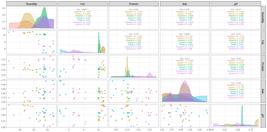
On the other hand, the correlations between protein and the other variables are low or null, suggesting that protein content is independent of the other characteristics analyzed. On the other hand, the ash variable showed a moderate positive correlation with fat content (r = 0.482), which could indicate that more concentrated formulations in solids also retain more minerals.
The densities indicate that the quinoa treatments showed less variability in fat, while amaranth generated a greater dispersion. As for the wheat treatment, this value was significantly different from others in pH.
The statistical analysis of the effects of the type of flour (Factor A) and the percentage of substitution (Factor B) on different physicochemical variables (Table 4) showed significant differences in several of them.
Analysis of variance of the effects of the factors (type of flour and percentage of substitution) on the properties of the ingredients.
For moisture, Factor A showed a significant effect (p = 0.00121), indicating that quinoa flour and amaranth flour showed differences in this parameter. Factor B also had a highly significant effect (p = 1.61e-09), indicating that the percentage of substitution influences the moisture of the mixture. However, the interaction between the two factors was not significant (p = 0.23926), indicating that the effect of flour type and substitution percentage on moisture is independent.
In the case of ash, flour type had a significant effect (p = 0.0154), indicating that there are differences between the two flours in this mineral content. However, the percentage of substitution had no significant effect (p = 0.1552), and no significant interaction between the factors was found (p = 0.8027), indicating that substitution does not significantly affect ash content.
For pH, both flour type (p = 1.26e-08) and substitution percentage (p = 7.77e-10) had highly significant effects, indicating that both flour choice and substitution ratio strongly influence the acidity of the mix. The interaction between the factors was not significant (p = 0.0781), making the individual effects independent.
As for the protein content, the type of flour had a highly significant effect (p = 4.69e-05), confirming the differences between quinoa and amaranth flour in this component. The percentage of substitution also had a significant effect (p = 6.51e-08), and a significant interaction was found between both factors (p = 0.000359), indicating that the effect of substitution on protein depends on the type of flour used.
Finally, in the case of fat content, both the type of flour (p < 2e-16) and the percentage of substitution (p< 2e-16) had highly significant effects, indicating that both variables affect the amount of fat in the mix. However, the interaction between the factors was not significant (p = 0.563), indicating that the effect of the percentage of substitution on fat is independent of the type of flour used.
The results showed that moisture, pH, protein, and fat are strongly influenced by both the type of flour and the percentage of substitution. The interaction between these factors was significant only in the case of protein, suggesting that the combination of both elements affects this parameter in a specific way.
The results of Tukey's test showed that, for the moisture content, the combinations wheat:3 (50.08%), quinoa:4.5 (49.44%), and amaranth:4.5 (49.37%) presented the highest values, grouped in the same statistical group (letter “a”), with no significant differences among them. Similarly, quinoa:3 (48.00%) and amaranth:3 (47.99%) were located in this group. The formulations quinoa:1.5 (42.81%) and amaranth:1.5 (40.09%) presented significantly lower values, forming a second group (“b”). The mean square error (MSE) for moisture was 0.04086001.
In terms of fat content, amaranth:1.5 (10.33%) and quinoa:1.5 (10.33%) had the highest values, with no significant differences from quinoa:3 (10.05%) and amaranth:3 (10.05%), forming a single group (“a”). Amaranth:4.5 (8.63%) and quinoa:4.5 (8.46%) presented intermediate values (“b”), while wheat:3 (7.54%) had the lowest fat content, forming a separate group (“c”). The Mean Squared Error (MSE) for fat was 0.06449449.
Regarding the protein content, the combination quinoa:4.5 (13.56%) recorded the highest value and formed a statistically superior group (“a”), followed by amaranth:4.5 (13.04%) (“b”) and amaranth:1.5 (12.96%) (“bc”). Quinoa:3 (12.58%) and quinoa:1.5 (12.49%) were grouped in intermediate positions (“bcd” and “cd”, respectively). Amaranth:3 (12.23%) and wheat:3 (12.17%) had the lowest protein values, grouped in “d”. The MSE for protein was 0.07456198.
As for the ash content, the combination wheat:3 (4.33%) presented the highest value and was grouped in “a”. Quinoa:4.5 (4.04%), amaranth:3 (4.03%), quinoa:3 (3.96%), amaranth:4.5 (3.94%) and quinoa:1.5 (3.79%) did not show significant differences among themselves or with wheat:3, placing them in group “ab”. Amaranth:1.5 (3.77%) showed the lowest content, forming a separate group (“b”). The MSE for ash was 0.07456198.
In the pH analysis, the quinoa:1.5 (5.87) formulation obtained the highest value (“a”). Wheat:3 (5.62), amaranth:1.5 (5.62), quinoa:3 (5.58), and quinoa:4.5 (5.52) did not differ significantly from each other, clustering mainly in groups “b” and “bc”. Amaranth:3 (5.34) was in group “c”, and amaranth:4.5 (5.09) had the lowest pH, belonging to group “d”. The MSE for pH was 0.01007692.
The results of Tukey’s test showed that some formulations shared statistically similar groups, while others showed significant differences depending on the type of flour and concentration used.
Table 5 shows the results obtained in the sensory evaluation of each of the mortadellas prepared.
Sensory evaluation of treatments with different proportions of amaranth, quinoa and wheat in terms of color, consistency, odour, flavour, and acceptability.
The sensory analysis of mortadella made with different proportions of amaranth, quinoa, and wheat flour showed variations in attributes such as colour, consistency, smell, taste, and acceptability.
For colour, the treatment with 3% wheat obtained the highest score (411), followed by the formulations with 1.5% quinoa (396) and 4.5% amaranth (395), suggesting that wheat contributes to a more attractive appearance in mortadella, while the use of higher proportions of quinoa or amaranth may slightly affect this attribute.
Consistency was best in the sample with 3% wheat (380), followed by 4.5% amaranth (374) and 3% amaranth (372). On the other hand, the formulations containing quinoa had lower scores, especially the 4.5% quinoa (345), indicating that a higher quinoa content could affect the texture of the product.
For odour, the 1.5% amaranth formulation scored best (405), followed by the 3% wheat formulation (403). This suggests that small amounts of amaranth can improve the aromatic properties of mortadella, while increasing the quinoa content tends to reduce this attribute, with the 4.5% quinoa formulation receiving the lowest score (329).
In terms of flavour, the mortadella with 3% wheat had the highest score (394), followed by the 3% amaranth formulation (382). Samples containing quinoa received lower scores, especially the 4.5% quinoa (327), suggesting that increasing this ingredient may negatively affect taste perception.
The overall acceptability was higher in the formulation with wheat at 3% (413), confirming that this combination is the most preferred by the evaluators. For the alternative flours, the 3% amaranth formulation (399) showed a similar level of acceptability to the 1.5% amaranth formulation (398), indicating that this ingredient can partially replace wheat without affecting consumer preference. In contrast, the formulation containing 4.5% quinoa (343) had the lowest level of acceptability, suggesting that a high quinoa content may have an impact on consumer preference. In contrast, the formulation with 4.5% quinoa (343) had the lowest acceptability, suggesting that a high quinoa content may reduce the sensory acceptability of the product.
The results indicated that mortadella with 3% wheat was the most preferred from a sensory point of view. However, amaranth at 1.5% and 3% maintains good acceptability and can be a viable alternative in the formulation. On the other hand, quinoa at higher levels had a negative effect on sensory perception, especially in terms of consistency, smell, taste, and acceptability.
Table 6 shows the results of the Kruskal-Wallis test and multiple comparisons using the Wilcoxon test with Holm's correction. For the colour and odour variables, the results of the Kruskal-Wallis test showed no statistically significant differences between treatments, with p-values of 0.2792 and 0.5392, respectively, indicating that there is insufficient evidence to reject the null hypothesis of equality of medians between groups. This is confirmed by the post-hoc tests, where all pairs of treatments have p-values equal to or close to 1, confirming the absence of detectable differences.
Results of the Kruskal-Wallis analysis for sensory attributes, with pairs of treatments with significant differences.
On the other hand, the p-value of the Kruskal-Wallis test for the consistency variable was 0.001301, indicating significant differences between treatments. Pairwise comparisons with Holm's correction reveal some punctual differences, highlighting the comparisons between T2 and T6 (p = 0.0376) and between T6 and T7 (p = 0.0066), suggesting that certain treatments have a differentiated impact on the perception of consistency. The taste variable showed an extremely low p-value (1.201e-05), indicating highly significant differences between treatments. Pairwise contrasts allow the identification of relevant comparisons such as T1 versus T4 (p = 0.0034), T1 versus T6 (p = 0.0011), and T4 versus T7 (p = 0.0055), demonstrating that treatments have a differential effect on taste perception.
For acceptability, statistically significant differences were also found with a p-value of 0.000703 in the Kruskal-Wallis test. Multiple comparisons highlight differences between T4 and T7 (p = 0.0492) and between T6 and T7 (p = 0.0026), suggesting that treatments affect overall product acceptability in a statistically relevant way.
For physicochemical characterization, the presence/absence of the microorganisms E. coli (<3* CFU/g), S. aureus (1x10² CFU/g), Salmonella spp. (absence/25g) and mesophilic aerobes (1x10⁷ CFU/g) was evaluated. The results obtained showed the absence of colonies for all the microorganisms mentioned above.
4 Discussion of results
The results obtained in this research show that the use of raw amaranth (Amaranthus spp.) and quinoa (C. quinoa) flours as substitutes for wheat flour in a Pelibuey meat mortadella type formulation significantly affects the physicochemical, functional and sensory properties of the product. These effects are closely related to the compositional and functional nature of each pseudocereal, as has been widely discussed in the literature.
This structured methodology ensured reproducibility and comparability among treatments. Incorporation of Andean product flours was expected to enhance water retention, emulsion stability, and nutritional quality without negatively affecting consumer acceptance. Previous studies highlight that quinoa and amaranth inclusion in emulsified meat matrices can improve functional and technological attributes while maintaining or even enhancing sensory profiles (Balestra & Petracci, 2019; Shen et al., 2022). Therefore, this phase validated the technological feasibility of pseudocereal flours as sustainable, functional meat extenders in pelibuey mortadella.
Regarding the compositional behavior, it was found that quinoa flour had a higher protein content (16.30 ± 0.36%) compared to amaranth (14.71 ± 0.33%), with statistically significant differences (p < 0.05). This finding is consistent with that reported by Verma et al. (2019), who documented the protein and fiber superiority of quinoa compared to amaranth when evaluated as a refined flour substitute in goat meat nuggets. In that study, quinoa flour also provided bioactive compounds such as ferulic acid, quercetin, and kaempferol, which is consistent with the nutritional profile demonstrated in this study.
However, the highest WRC was observed in amaranth (27.55 ± 0.74%) compared to quinoa (23.10 ± 0.62%), which translated into higher moisture values and sensory improvement in terms of texture and juiciness. This difference in functional behavior has been widely supported by Sayas-Barberá et al. (2021), who, when comparing three fractions of black quinoa (flour, seeds, and wet milling by-product) in patties, showed that the by-product and flour exhibited inferior behavior in water retention and texture compared to other vegetable extenders, negatively affecting the overall acceptability during frozen storage.
In contrast, Suychinov et al. (2023) found that adding amaranth flour significantly improved the WRC of meat patties. This effect was attributed to the properties of the soluble fiber and protein in this flour, which form gels that trap water and contribute to a stable emulsion.
In agreement with the sensory results of the present study, it was observed that the 3% amaranth formulations achieved comparable and even higher scores in odour (405) and taste (400) compared to the wheat flour treatment (403 and 399, respectively), while the quinoa formulations, especially at 4.5%, obtained the lowest scores (odour: 329; taste: 327). These results are consistent with those reported by Bağdatli (2018), who evaluated the addition of 2.5%, 5%, and 7.5% quinoa flour to beef meatballs. They found that products with more than 5% quinoa flour were less acceptable due to sensory defects related to bitterness and texture.
Similarly, Muchekeza et al. (2021) reported that quinoa and amaranth flours can be used as binders with similar properties and acceptability in beef sausage production. However, the aroma of amaranth is not appealing when used in high concentrations. The sensory impact of up to 10% amaranth flour is generally acceptable (Suychinov et al.,2023).
In terms of thermal and technological behavior, the results of this research showed that amaranth allowed to maintain a firmer texture and a consistency closer to the standard product (wheat), which is congruent with the data obtained by (Tamsen et al., 2018), who observed significant improvements in emulsion stability and texture when replacing wheat flour with amaranth flour in chicken nuggets, although they reported a darkening of the color of 100% treated products. However, in this study, no unfavorable sensory differences attributable to color were observed for treatments with amaranth ≤ 3%.
Complementarily, Longato et al. (2017) found significant improvements in cooking yield, oxidative stability (as measured by Thiobarbituric Acid Reactive Substances - TBARS), and overall product acceptability by incorporating 1% and 2% amaranth flour into chicken patties. Their study supports the hypothesis that amaranth acts not only as a protein and fiber source, but also as a meat emulsion stabilizer and sensory modulator, which was reflected in the 3% amaranth treatment.
In contrast, the behavior of quinoa as a partial replacement of wheat, despite its nutritional value, showed functional limitations at the level of texture and cohesiveness. Fernández-Diez et al. (Fernández-Diez et al., 2016) partially replaced fat with cooked quinoa in sausage-type sausages and observed that the use of >50% quinoa reduced juiciness, increased toughness, and intensified spicy flavors without compromising overall acceptability. These effects were similar to those found in the 4.5% quinoa treatment, where less juiciness and less cohesive texture were noted than in the amaranth treatments.
Aslinah et al. (2018) also demonstrated in reduced-fat meatballs with adzuki flour that replacing 50% of corn flour and fat with this protein- and fiber-rich flour resulted in a product with increased toughness and chewiness, without compromising acceptability. This finding suggests that matrices high in starch and fiber, such as amaranth, can be adequately incorporated into emulsified meat systems if the inclusion ratio is controlled.
On the other hand, Zambrano et al. (2019) evaluated the use of quinoa flour as a gelling agent in mortadella, replacing up to 100% of soybean flour, and determined that high proportions can negatively affect sensory attributes such as flavour and odour if thermal gelation conditions are not adjusted. This observation is consistent with the 4.5% quinoa treatment, where sensory scores were significantly lower than the control.
In line with the above, Sayas-Barberá et al.(2021) and Fernández-López et al. (2020) warned of the adverse effects of black quinoa wet milling by-products on colour and lipid oxidation in cured meat products, especially when used without formulation adjustment. This reinforces the need to standardize the inclusion levels of pseudocereals according to their origin, type of fraction, and previous processing.
The present findings concerning the functional role of quinoa and amaranth flours as partial plant-based meat extenders in pelibuey mortadella are consistent with recent evidence highlighting the potential of pseudocereals in meat product innovation. Putthawan and Chaiso (2023) demonstrated that the incorporation of red amaranth extracts into plant-based protein formulations significantly enhanced antioxidant activity, water absorption, and textural stability, while simultaneously improving sensory acceptance in elderly consumers, thereby confirming the multifunctionality of amaranth as both a nutritional and bioactive ingredient. In parallel, Mazumder et al. (2023) reported that diverse plant proteins, including quinoa and amaranth, substantially improve emulsion stability, water-holding capacity, and overall sensory performance in emulsion-type sausages and hybrid meat systems, validating their dual role as technological stabilizers and sustainable protein sources.
Additionally, De Bock et al. (2021) found that quinoa and amaranth flours are an important source of minerals such as P, K, Mg, and Ca, with quinoa standing out for its higher P and K contents, while amaranth has a higher Mg and Ca content.
Janssen et al. (2017) reported that amaranth and quinoa are among the most important pseudocereals in terms of global production because they contain high levels of starch, protein, dietary fiber, minerals, vitamins, and other bioactive compounds. Their proteins have a balanced amino acid composition, are more sustainable than those of animal origin, and can be consumed by patients with celiac disease.
Taken together, these external findings reinforce the results of the present study, particularly the observation that intermediate substitution levels—such as 3% amaranth flour—achieved the best balance between structural integrity, protein solubility, and consumer acceptability. This convergence suggests that pseudocereal flours do not merely act as fillers but actively contribute to enhancing the physicochemical, nutritional, and sensory quality of Bologna-type mortadella. Consequently, quinoa and amaranth emerge as promising raw materials capable of addressing current demands for healthier, functional, and environmentally sustainable meat products, while maintaining consumer-driven sensory standards.
In conclusion, it is important to highlight that all the treatments developed met the requirements of the Ecuadorian standard NTE INEN 1340:96 (Ecuadorian Standards Institute, 1996) in terms of minimum protein content (>12%), maximum fat (<25%), and moisture (<70%), validating their technological and nutritional feasibility. However, from the point of view of sensory and technological functionality, 3% amaranth flour proved to be the most promising alternative as a partial replacement of wheat in Pelibuey Bologna-type mortadella.
5 Conclusion
The use of raw amaranth (Amaranthus spp.) and quinoa (C. quinoa) flours as partial substitutes for wheat flour in a Bologna-style mortadella formulation based on pelibuey meat significantly affects the compositional, functional, and sensory properties of the product. Quinoa flour presented a superior nutritional profile in terms of protein content (16.30 ± 0.36%), while amaranth flour showed a higher WRC, which translated into better texture, consistency, and sensory acceptability values, especially in treatments with inclusion ≤ 3%.
From a sensory and technological point of view, the treatment with 3% amaranth flour proved to be the most efficient alternative as a partial replacement of wheat flour, presenting an optimal balance between the attributes of taste, smell, texture and compliance with the parameters established by the Ecuadorian technical standard (NTE INEN 1340:96). In contrast, quinoa flour in concentrations higher than 3% generated adverse effects on the sensory profile of the product, showing limitations in its functionality without prior heat treatment.
The results of this research confirm the potential of Andean pseudocereals as functional ingredients in emulsified meat matrices, offering nutritional, technological, and sensory advantages, as long as the formulation conditions and the degree of inclusion are optimized. These results are consistent with several previous studies and allow us to propose the controlled use of amaranth as a viable strategy for the development of alternative, value-added, sustainable, and culturally adapted meat products.
Data Availability Statement
The data supporting this study are not publicly available, but can be requested from the corresponding author upon reasonable request.
-
Cite as:
Salgado, G. R., Pulles, M. B., Rodríguez, F. D., & Mayanquer, F. G. T. (2025). Chenopodium quinoa and Amaranthus spp. raw meals as meat extenders in Pelibuey mortadella. Brazilian Journal of Food Technology, 28, e2025045. https://doi.org/10.1590/1981-6723.4525
-
Funding:
Universidad Politécnica Estatal del Carchi - Research Project (CITT-2022-03).
REFERENCES
-
Aslinah, L. N. F., Mat Yusoff, M., & Ismail-Fitry, M. R. (2018). Simultaneous use of adzuki beans (Vigna angularis) flour as meat extender and fat replacer in reduced-fat beef meatballs (bebola daging). Journal of Food Science and Technology, 55(8), 3241-3248. PMid:30065435. http://doi.org/10.1007/s13197-018-3256-1
» http://doi.org/10.1007/s13197-018-3256-1 -
Bağdatli, A. (2018). The influence of quinoa (Chenopodium quinoa Willd.) Flour on the pshycochmical, textural and sensorial properties of beef meatball. Italian Journal of Food Science, 30(2), 280-288. http://doi.org/10.14674/IJFS-945
» http://doi.org/10.14674/IJFS-945 -
Balestra, F., & Petracci, M. (2019). Technofunctional ingredients for meat products: current challenges. In C. M. Galanakis (Ed.), Sustainable meat production and processing (Chap. 3, pp. 45–68). Cambridge: Academic Press. http://doi.org/10.1016/B978-0-12-814874-7.00003-1
» http://doi.org/10.1016/B978-0-12-814874-7.00003-1 -
Calderón-Oliver, M., & López-Hernández, L. H. (2022). Food vegetable and fruit waste used in meat products. Food Reviews International, 38(4), 628-654. http://doi.org/10.1080/87559129.2020.1740732
» http://doi.org/10.1080/87559129.2020.1740732 -
De Bock, P., Daelemans, L., Selis, L., Raes, K., Vermeir, P., Eeckhout, M., & Van Bockstaele, F. (2021). Comparison of the chemical and technological characteristics of wholemeal flours obtained from amaranth (Amaranthus sp.), quinoa (Chenopodium quinoa) and buckwheat (Fagopyrum sp.) seeds. Foods, 10(3), 651. PMid:33808595. http://doi.org/10.3390/foods10030651
» http://doi.org/10.3390/foods10030651 - Ecuadorian Standards Institute - INEN. (1996). NTE INEN, 1340:1996 – Bologna-type mortadella: Requirements. INEN.
- Ecuadorian Standards Institute - INEN. (2012). NTE INEN, 526:2012 – Wheat flour: Requirements INEN.
- Ecuadorian Standards Institute - INEN. (2013a). NTE INEN 11085 – Cereals, pulses and derived products: Determination of crude fat by extraction. INEN.
- Ecuadorian Standards Institute - INEN. (2013b). NTE INEN 1529-10 – Microbiology of food: Determination of molds and yeasts. INEN.
- Ecuadorian Standards Institute - INEN. (2013c). NTE INEN 1529-14 – Microbiology of food: Detection of Staphylococcus aureus. INEN.
- Ecuadorian Standards Institute - INEN. (2013d). NTE INEN 1529-15 – Microbiology of food: Detection of Salmonella spp. INEN.
- Ecuadorian Standards Institute - INEN. (2013e). NTE INEN 1529-5 – Microbiology of food: Determination of mesophilic aerobic microorganisms. INEN.
- Ecuadorian Standards Institute - INEN. (2013f). NTE INEN 1529-8 – Microbiology of food: Detection of Escherichia coli. INEN.
- Ecuadorian Standards Institute - INEN. (2013g). NTE INEN ISO 712 – Cereals and cereal products: Determination of moisture content. INEN.
- Ecuadorian Standards Institute - INEN. (2013h). NTE INEN ISO 7305 – Cereals and cereal products: Determination of acidity. INEN.
- Ecuadorian Standards Institute - INEN. (2014). NTE INEN 20483 – Cereals and pulses: Determination of nitrogen content and calculation of protein (Kjeldahl method). INEN.
- Ecuadorian Standards Institute - INEN. (2015). INEN, 3042:2015 – Bean flour: Requirements INEN.
-
Fernández-Diez, A., Caro, I., Castro, A., Salvá, B. K., Ramos, D. D., & Mateo, J. (2016). Partial fat replacement by boiled quinoa on the quality characteristics of a dry-cured sausage. Journal of Food Science, 81(8), C1891-C1898. PMid:27442806. http://doi.org/10.1111/1750-3841.13393
» http://doi.org/10.1111/1750-3841.13393 -
Fernández-López, J., Lucas-González, R., Viuda-Martos, M., Sayas-Barberá, E., Ballester-Sánchez, J., Haros, C. M., Martínez-Mayoral, A., & Pérez-Álvarez, J. A. (2020). Chemical and technological properties of bologna-type sausages with added black quinoa wet-milling coproducts as binder replacer. Food Chemistry, 310, 125936. PMid:31835224. http://doi.org/10.1016/j.foodchem.2019.125936
» http://doi.org/10.1016/j.foodchem.2019.125936 -
Fernández-López, J., Viuda-Martos, M., & Pérez-Alvarez, J. A. (2021). Quinoa and chia products as ingredients for healthier processed meat products: technological strategies for their application and effects on the final product. Current Opinion in Food Science, 40, 26-32. http://doi.org/10.1016/j.cofs.2020.05.004
» http://doi.org/10.1016/j.cofs.2020.05.004 - Food and Agriculture Organization – FAO. World Health Organization – WHO. (2007). Codex Alimentarius: General standard for contaminants and toxins in food and feed (CODEX STAN 193-1995). Food and Agriculture Organization / World Health Organization.
-
Gil, M., Rudy, M., Duma-Kocan, P., Stanisławczyk, R., Krajewska, A., Dziki, D., & Hassoon, W. H. (2024). Sustainability of alternatives to animal protein sources, a comprehensive review. Sustainability 16(17), 7701. http://doi.org/10.3390/su16177701
» http://doi.org/10.3390/su16177701 -
Gonçalves, A. D., Alexander, C., Roberts, C. J., Spain, S. G., Uddin, S., & Allen, S. (2016). The effect of protein concentration on the viscosity of a recombinant albumin solution formulation. RSC Advances, 6(18), 15143-15154. http://doi.org/10.1039/C5RA21068B
» http://doi.org/10.1039/C5RA21068B -
Gurgeira, D. N., Crisóstomo, C., Sartori, L. V. C., de Paz, C. C. P., Delmilho, G., Chay-Canul, A. J., Bedoya, H. J. N., Vega, W. H. O., Bueno, M. S., & da Costa, R. L. D. (2022). Characteristics of growth, carcass and meat quality of sheep with different feed efficiency phenotypes. Meat Science, 194, 108959. PMid:36084489. http://doi.org/10.1016/j.meatsci.2022.108959
» http://doi.org/10.1016/j.meatsci.2022.108959 - International Organization for Standardization – ISO. (2007). ISO 8589:2007 – Sensory analysis: General guidance for the design of test rooms. ISO.
- International Organization for Standardization – ISO. (2017). ISO 17025:2017 – General requirements for the competence of testing and calibration laboratories. ISO.
-
Jang, J., & Lee, D. W. (2024). Advancements in plant based meat analogs enhancing sensory and nutritional attributes. NPJ Science of Food, 8(1), 50. PMid:39112506. http://doi.org/10.1038/s41538-024-00292-9
» http://doi.org/10.1038/s41538-024-00292-9 -
Janssen, F., Pauly, A., Rombouts, I., Jansens, K., Deleu, L., & Delcour, J. (2017). Proteins of amaranth (Amaranthus spp.), buckwheat (Fagopyrum spp.), and quinoa (Chenopodium spp.): a food science and technology perspective. Comprehensive Reviews in Food Science and Food Safety, 16(1), 39-58. PMid:33371541. http://doi.org/10.1111/1541-4337.12240
» http://doi.org/10.1111/1541-4337.12240 - Kierulf, A., Whaley, J., Liu, W., Enayati, M., Tan, C., Perez-Herrera, M., You, Z., & Abbaspourrad, A. (2020). Protein content of amaranth and quinoa starch plays a key role in their ability as Pickering emulsifiers. Food Chemistry, 315, 126246. https://doi.org/https://doi.org/10.1016/j.foodchem.2020.126246
-
Longato, E., Lucas-González, R., Peiretti, P. G., Meineri, G., Pérez-Alvarez, J. A., Viuda-Martos, M., & Fernández-López, J. (2017). The effect of natural ingredients (amaranth and pumpkin seeds) on the quality properties of chicken burgers. Food and Bioprocess Technology, 10(11), 2060-2068. http://doi.org/10.1007/s11947-017-1978-0
» http://doi.org/10.1007/s11947-017-1978-0 -
Mazumder, M. A. R., Panpipat, W., Chaijan, M., Shetty, K., & Rawdkuen, S. (2023). Role of plant protein on the quality and structure of meat analogs: a new perspective for vegetarian foods. Future Foods, 8, 100280. http://doi.org/10.1016/j.fufo.2023.100280
» http://doi.org/10.1016/j.fufo.2023.100280 -
Muchekeza, J. T., Jombo, T. Z., Magogo, C., Mugari, A., Manjeru, P., & Manhokwe, S. (2021). Proximate, physico-chemical, functional and sensory properties of quinoa and amaranth flour as potential binders in beef sausages. Food Chemistry, 365, 130619. PMid:34407490. http://doi.org/10.1016/j.foodchem.2021.130619
» http://doi.org/10.1016/j.foodchem.2021.130619 -
Ostertagová, E., Ostertag, O., & Kováč, J. (2014). Methodology and application of the Kruskal-Wallis test. Applied Mechanics and Materials, 611, 115-120. http://doi.org/10.4028/www.scientific.net/AMM.611.115
» http://doi.org/10.4028/www.scientific.net/AMM.611.115 -
Pintado, T., & Delgado-Pando, G. (2020). Towards more sustainable meat products: extenders as a way of reducing meat content. Foods, 9(8), 1044. PMid:32756372. http://doi.org/10.3390/foods9081044
» http://doi.org/10.3390/foods9081044 -
Putthawan, P., & Chaiso, S. (2023). Development of a plant-based meat product supplemented with red amaranth antioxidants for the elderly. Malaysian Applied Biology, 52(2), 109-118. http://doi.org/10.55230/mabjournal.v52i2.2619
» http://doi.org/10.55230/mabjournal.v52i2.2619 -
Rashedi, E., Mirzaei, A., & Rahmati, M. (2015). An information theoretic approach to hierarchical clustering combination. Neurocomputing, 148, 487-497. http://doi.org/10.1016/j.neucom.2014.07.014
» http://doi.org/10.1016/j.neucom.2014.07.014 -
Rocchetti, G., Ferronato, G., Sarv, V., Kerner, K., Venskutonis, P. R., & Lucini, L. (2023). Meat extenders from different sources as protein-rich alternatives to improve the technological properties and functional quality of meat products. Current Opinion in Food Science, 49, 100967. http://doi.org/10.1016/j.cofs.2022.100967
» http://doi.org/10.1016/j.cofs.2022.100967 -
Sayas-Barberá, E., Valero-Asencio, M. M., Navarro Rodríguez-Vera, C., Fernández-López, J., Haros, C. M., Pérez-Álvarez, J. Á., & Viuda-Martos, M. (2021). Effect of different black quinoa fractions (seed, flour and wet-milling coproducts) upon quality of meat patties during freezing storage. Foods, 10(12), 3080. PMid:34945629. http://doi.org/10.3390/foods10123080
» http://doi.org/10.3390/foods10123080 -
Schader, C., Muller, A., El-Hage Scialabba, N., Hecht, J., Isensee, A., Erb, K. H., Smith, P., Makkar, H. P. S., Klocke, P., Leiber, F., Schwegler, P., Stolze, M., & Niggli, U. (2015). Impacts of feeding less food-competing feedstuffs to livestock on global food system sustainability. Journal of the Royal Society, Interface, 12(113), 20150891. PMid:26674194. http://doi.org/10.1098/rsif.2015.0891
» http://doi.org/10.1098/rsif.2015.0891 -
Shen, Y., Hong, S., Du, Z., Chao, M., O’Quinn, T., & Li, Y. (2022). Effect of adding modified pea protein as functional extender on the physical and sensory properties of beef patties. Lebensmittel-Wissenschaft + Technologie, 154, 112774. http://doi.org/10.1016/j.lwt.2021.112774
» http://doi.org/10.1016/j.lwt.2021.112774 -
Silva, V. T., Mateus, N., de Freitas, V., & Fernandes, A. (2024). Plant-based meat analogues: exploring proteins, fibers and polyphenolic compounds as functional ingredients for future food solutions. Foods, 13(14), 2303. PMid:39063388. http://doi.org/10.3390/foods13142303
» http://doi.org/10.3390/foods13142303 -
Smetana, S., Ristic, D., Pleissner, D., Tuomisto, H. L., Parniakov, O., & Heinz, V. (2023). Meat substitutes: resource demands and environmental footprints. Resources, Conservation and Recycling, 190, 106831. PMid:36874227. http://doi.org/10.1016/j.resconrec.2022.106831
» http://doi.org/10.1016/j.resconrec.2022.106831 - Suárez-Estrella, D., Torri, L., Pagani, M. A., & Marti, A. (2018). Quinoa bitterness: causes and solutions for improving product acceptability. Journal of the Science of Food and Agriculture, 98(11), 4033-4041. https://doi.org/10.1002/jsfa.8980
-
Suychinov, A., Zhumanova, G., Mironova, I., Akhmadullina, E., Kadirov, N., Galiyeva, Z., & Neverova, O. (2023). Investigation of the chemical composition, physicochemical properties, and microstructure of meat patties with amaranth flour. Theory and Practice of Meat Processing, 8(3), 183-190. http://doi.org/10.21323/2414-438X-2023-8-3-183-190
» http://doi.org/10.21323/2414-438X-2023-8-3-183-190 -
Tamsen, M., Shekarchizadeh, H., & Soltanizadeh, N. (2018). Evaluation of wheat flour substitution with amaranth flour on chicken nugget properties. Lebensmittel-Wissenschaft + Technologie, 91, 580-587. http://doi.org/10.1016/j.lwt.2018.02.001
» http://doi.org/10.1016/j.lwt.2018.02.001 -
Tömösközi, S., Gyenge, L., Pelcéder, Á., Abonyi, T., Schönlechner, R., & Lásztity, R. (2011). Effects of flour and protein preparations from amaranth and quinoa seeds on the rheological properties of wheat-flour dough and bread crumb. Czech Journal of Food Sciences, 29(2), 109-116. http://doi.org/10.17221/45/2010-CJFS
» http://doi.org/10.17221/45/2010-CJFS -
Verma, A. K., Rajkumar, V., & Kumar, S. (2019). Effect of amaranth and quinoa seed flour on rheological and physicochemical properties of goat meat nuggets. Journal of Food Science and Technology, 56(11), 5027-5035. PMid:31741527. http://doi.org/10.1007/s13197-019-03975-4
» http://doi.org/10.1007/s13197-019-03975-4 - Zambrano, P., Riera González, G., & Cruz Viera, L. (2019). Quinoa as gelling agent in a mortadella formulation. International Food Research Journal, 26(3), 1069-1077.
Edited by
-
Associate Editor:
Marco Antonio Trindade.


