
 The impact of freeze drying on the rehydration and enzymatic browning of the avocado variety Hass (Persea americana Mill.)
Abstract
In 2021, Colombia produced 214,700 t of Hass avocado, representing 32.46% of the country’s total avocado production, with 96,358 t (44%) exported. Dehydration allows food preservation, whereas freeze-drying does not affect the avocado’s organoleptic features, except for its texture. The Hass avocado variety was freeze-dried at different temperatures (-20 °C, -80 °C) and freezing times (6, 12, 18 h). Enzymatic Activity (EA) and rehydration properties, such as Hydration Kinetics (HK) and Water Retention Capacity (WRC), were analysed as response variables. Hydration kinetics was assessed in different immersion mediums at 20 °C, 40 °C, 60 °C, and 80 °C. Analysis of variance was performed to evaluate both the WRC and the EA. The treatments achieved a maximum moisture content of 3.45 ± 0.84%. The maximum HK value was reached into 6 hours of freezing at -20 °C and -80 °C. The Vmax for EA occurred at -20 °C for 6 h. Freeze-drying at -20 °C and 18 h resulted in the lowest EA value (0.000742 mmol.s-1), compared to the blank.
Keywords:
Dehydration; Preservation; Water retention capacity; Kinetic rehydration; Enzymatic activity, Tropical fruits
Highlights
No moisture difference was found between -20 ºC and -80 ºC freeze-dried avocados
Lyophilization preserves the structure, yielding a highly porous avocado product
Water retention capacity showed no significant difference between -20 ºC and -80 ºC treatments
Enzymatic browning was absent in freeze-dried avocado but reactivated upon rehydration
1 Introduction
The Hass variety of avocado (Persea americana Mill.) is a fruit whose ripening is based on the oil content, the dry matter content, or the water content of the fruit (Escobar et al., 2019) and is associated with its softening and change in color. The skin of this fruit turns into a deep dark green color when ripe. It is oval-shaped and its seed varies from small to medium size (5-12 oz). It is easy to peel, presenting a great flavor, a smooth appearance, and thick but foldable skin, pale green flesh, and creamy texture. The fruit contains the ten essential amino acids and has high levels of water, lipids, phenolic compounds, vitamins, and minerals, among other bioactive compounds that make the fruit an excellent dietary supplement (Villa-Rodriguez et al., 2020).
In Colombia, avocado production reached 661,200 t in 2021, with 92,700 ha planted and a yield of 10 t·ha-1. Hass avocado production amounted to 214,700 t, corresponding to 32.46% of the total avocado production in the country, with 31.5 ha planted and a yield of 11 t·ha-1. Colombian avocado exports from 2015 to September 2022 have registered annual growths between 15% and 50%, totaling USD FOB 725.8 million and 366,582 t. It is worth highlighting the growth of more than 200% achieved in 2016 when foreign sales were made for USD FOB 35 million and 18,200.7 t. The year 2021 recorded the figure of USD FOB 203.7 million and 96,357 t, showing a positive variation of 57.3% compared to 2020 when foreign sales were made for USD FOB 129.5 million and 67,514 t (LegisComex, 2022). However, 64.1% of the remaining production remains in the domestic market and the development of the production chain is linked to the commercialization of fresh fruit, making processing alternatives necessary to absorb the surpluses that are not demanded by the fresh fruit markets (Ministério de Agricultura y Desarrollo Rural, 2021). Additionally, post-harvest losses from the export of Colombian Hass avocado reach up to 60%, generally due to poor storage practices and inadequate final ripening conditions of the fruit (Benítez et al., 2021; Granada et al., 2020; Olivares et al., 2020).
Dehydration of vegetables is an option to solve shelf-life, storage, and transport problems, usually carried out by conventional methods such as hot air drying, a process unsuitable for avocado and other fruits, as they tend to show shrinkage and collapse of tissues, characteristics that delay rehydration and change the original appearance of the product (Caliskan & Dirim, 2017; Silva-Espinoza et al., 2020). However, it has been found that the use of alternative methods such as freeze-drying allows the quality of the final product to be preserved (Richter et al., 2021), maintaining the structure of the material, eliminating moisture content at low temperatures, guaranteeing the stability of the product during storage, and reducing undesirable enzymatic reactions (Dal-Bó & Freire, 2022; Silva-Espinoza et al., 2020).
Freeze-drying is a dehydration process based on the phenomenon of sublimation, which does not affect the organoleptic quality of the avocado, except for its texture, as it uses temperatures below the freezing point of water (Silva-Espinoza et al., 2020). At the same time, it does not require the introduction of heat, thus avoiding the undesirable chemical and biochemical processes to that the avocado pulp (Dal-Bó & Freire, 2022).
In this study, we assessed the rehydration characteristics using WRC and HK (M.M. & T.H., 2016), in addition to the Enzymatic Activity E.A. of peroxidase (enzymatic browning) of the Hass avocado variety dehydrated by freeze-drying.
2 Materials and methods
2.1 Material
The plant material for the research was collected in the municipality of La Ceja – Antioquia (Colombia) at 2,143 m above sea level at an average temperature of 18 °C. Fruits were harvested in grade 1 on the ripening scale (Zhou et al., 2021).
2.2 Physical-chemical characterization
Physicochemical analysis (moisture content, ash, ethereal extract, total fiber, total protein, total acidity, and carbohydrates) followed methodology A.O.A.C, on day 0 and day 12 of harvesting (consumption maturity). Each of the parameters had three replicates assessed.
2.3 Hass avocado dehydration by freeze-drying
2.3.1 Downsizing
The Hass avocado pulp was subjected to a med size reduction by manual cutting with a knife in the form of parallelepipeds with an edge of 0.5 cm.
2.3.2 Freezing
The avocado parallelepipeds were arranged in the flasks fast-freeze of 900 lands brought to freezing for 6, 12, and 18 h, at temperatures of -20 °C and -80 °C (Zhou et al., 2021). A SANYO MDF-C8V1 freezer and a Samsung freezer model RSA1JTWP were used for freezing at -80 °Cand at -20 °C, respectively.
2.3.3 Freeze-drying
It was carried out in a LABCONCO freezone 6 plus apparatus, for 24 h at conditions of -82 °C condenser temperature and 0.0023 mBar of vacuum pump pressure.
2.4 Variables measured on freeze-dried Hass avocado
2.4.1 Moisture content
The constant weight method (A.O.A.C. 934.01/05) was used in a DIES forced convection oven.
2.4.2 Water retention capacity (WRC)
Weighed (± 0.5 g) freeze-dried avocado in a centrifuge tube, added 10 ml of distilled water, left to stand for 24 h, centrifuged at 13000 g for 10 min, the supernatant was decanted, and the tube was weighed. It was expressed as g water·g base dry-1 (Yin et al., 2022).
2.4.3 Hydration Kinetics (HK)
2.0 g of freeze-dried avocado was taken, placed inside a stainless-steel mesh, and placed in distilled water without stirring for 10 min, the water was drained, and the mesh was dried and weighed. The operation was repeated every 10 min for 90 min and expressed as g water·g base dry-1. This operation was performed at 20, 40, 60, and 80 °C of water as an immersion medium (Zhou et al., 2021).
2.4.4 Enzymatic Activity (EA)
The fresh and freeze-dried avocados had their EA peroxidase determined by spectrophotometry, using catechol as substrate at molar concentrations (M) of 6.25E-03, 1.25E-02, 1.88E-02, 2.50E-02,3.10E-02, and 3.75E-02 and reading at 410 nm wavelength (Bustos et al., 2017; Marin-Castro et al., 2022). Additionally, Vmax was calculated based on the Michaelis-Menten theory.
2.5 Analysis of data
We performed a completely randomized design of experiments with six treatments, each with three replicates, consisting of two temperatures (-20 °C and -80 °C) and three freezing times (6, 12, and 18 h). With the results from the W.R.C. and the E.A., the analysis of variance (one-way ANOVA) was carried out on SAS V 8. 0 to determine the existence of a statistically significant difference between the values obtained for each response variable (α ≤ 0.05). In addition, for WRC, the significant differences between the treatments were determined by the Tukey test.
3 Results and discussion
3.1 Physicochemical characterization
Table 1 shows the results from the physicochemical characterization of fresh Hass avocado for days 0 and 12 and the comparison with the values reported in other studies.
Comparison between experimental and referenced physicochemical analysis for fresh Hass avocado.
The results established are close to those reported by Serpa et al. (2014) and by Ríos-Mesa et al. (2020), where moisture content is 68.69% and 68.04%, protein 3.66% and 1.58%, and oil content is 21.62% and 20.56%, respectively. The oil varies the most, reaching 31.24 ± 2.73% on day 12 of harvesting, which is particular to this variety of avocados. Similarly, the lipid content present in Hass variety avocado on day 12 (31.24%) is higher than other varieties, such as Fuerte (23.65%), Ettinger (22.715%), Reed (8.05%), and LambHass (12.355%) (Salameh et al., 2022), but lower than that reported for coconut (33.49%), peanut (49.60%), and sesame (50.87%) (United States Department of Agriculture, 2019), since these types of plants have cells specialized in oil production, which makes them highly desirable at the industrial level.
3.2 Moisture content
As shown in Table 2, the final moisture content of the freeze-dried avocado was below 3.45 ± 0.84% for the different treatments. The freezing time in which the greatest amount of water is subsequently removed is 18 h, reaching a content of 1.26 ± 0.48% at a freezing temperature of -20 °C and at 0.53 ± 0.13% moisture content for freezing at -80 °C. According to these results, there was a significant difference in the final moisture content of avocados subjected to freezing at -20 °C and -80 °C, as the effects of freezing are more easily observed when working with raw materials or processes (Fellows, 2022). In contrast, the moisture content increases for both temperatures during the 12-hour freezing period. During this time, a part of the solute reaches supersaturation, and it is crystallized. The release of latent heat causes the temperature to increase until it reaches the temperature of the solute, which also causes the crystals to become less uniform, whereas, at the time of sublimation, the moisture content is higher than that reported at 6 h and 18 h (Fellows, 2022).
The moisture content was close to that reported by Souza et al. (2014), who found that freeze-dried avocado pulp had a moisture content of 2.82%. In a similar study, Salazar et al. (2018) found a moisture content of freeze-dried mango slices between 2.96% and 5.72%.
The moisture content below 15% obtained from freeze-dried avocados, as shown in Table 2, prevents the attack of microorganisms in this type of product (Henry et al., 2022). In turn, moisture content close to 2% indicates that some of the water bound to the internal structures of the material was removed (Assegehegn et al., 2020). Therefore, freeze-drying is a method that allows obtaining a dry product, free of available water, favoring better conservation and handling (Ciurzyńska et al., 2022; Ismail et al., 2020; Karwacka et al., 2022).
3.3 Water Retention Capacity (WRC)
Hass avocado frozen at -80 °C for 6 h showed the highest WRC (3.6497 g water·g base dry-1). Freezing for 12 h decreased the index to 3.5206 g water·g base dry-1, while for the treatment at 18 h of freezing, the WRC decreased to 3.0298 g water·g base dry-1. Additionally, the WRC for the temperature of – 20 °C is lower (2.7106 – 3.2360 g water·g base dry-1) than for -80 °C (3.0298 - 3.6497 g water·g base dry-1). This is possible because at lower temperatures more defined pores are formed, thus allowing for greater rehydration. In addition, the water uptake appears to be related to the volume of pores developed during moisture content removal (Marques et al., 2009). Table 3 shows the data from the WRC experimental tests analyzed statistically for the different treatments.
The Tukey test allowed us to establish that there is no statistically significant difference between the six treatments (α = 0.05); therefore, similar results can be obtained for this property when freezing for 6, 12, or 18 at both proposed temperatures. However, there is a slight tendency for the WRC to decrease. At -80 °C, there was an increasing freezing time, which did not occur in the -20 °C treatment, since the dehydration process can alter the physicochemical properties of the products, modifying their functional properties (Dal-Bó & Freire, 2022; Silva-Espinoza et al., 2020).
The WRC results show that the structures are better preserved at lower freezing temperatures (-80°C), causing the trend to be clearer. Meanwhile, crystals are not as homogeneous at higher freezing temperatures (-20°C), thus making the trend not defined. Studies by Marques et al., (2009) report that freeze-drying protects the primary structure and shape of the materials. However, they reported that a minimal difference between the temperatures of the process results in a highly porous final product, so complete restoration of the fresh samples is not achieved. The authors concluded that the samples were restored between 58% and 64% of their original water lost during drying, depending on the type of fruit. in contrast, the release of latent heat causes the temperature to increase until it reaches the temperature of the solute (Fellows, 2022), which also makes the crystals less uniform, with fewer pores and lower WRC.
This rate considers not only water absorption but also the loss of soluble solids. In addition, freeze-drying was shown to protect the primary structure and shape of the materials, maintaining the structure of the food and allowing a highly porous final product to be obtained (Silva-Espinoza et al., 2020; Qiu et al., 2022). The structural and chemical alteration during rehydration is a major factor affecting the capacity of freeze-dried fruits to absorb and retain water, but its influence has not been fully explained in the literature (Caliskan & Dirim, 2017).
3.4 Hydration Kinetics (HK)
Three freezing times and four immersion temperatures were used to analyze the behavior of HK. For freeze-dried avocados at -20 °C, the rehydration values at immersion temperatures ranged between 2.3768 and 2.8582 g water·g base dry-1. Freeze-dried avocado for 6 h showed the maximum rehydration with a value of 2.8582 g water·g base dry-1, at an immersion medium temperature of 40 °C; at 12 and 18 h, maximum values of 2.5422 and 2.7839 g water·g base dry-1 were obtained, respectively, at different temperatures of the immersion medium; no definite trend was observed.
Figure 1a shows that the HK of avocado frozen at -20 °C for 6 h did not depend on the temperatures of the immersion medium, since the data obtained are very close, the curves for the different water temperatures overlap. The same phenomenon was described in another study on rehydration of freeze-dried avocado, where avocado frozen at -40 °C for periods of 6, 9, 12, and 15 h presented a very similar HK, regardless of the temperature of the immersion medium (25 °C and 45 °C) for freezing times below 10 h, while a difference appeared for longer periods (Zhou et al., 2021). Figure 1b shows different behaviors with avocados frozen at -20 °C for 12 h, with HK remaining the same for immersion medium temperatures of 20, 40, and 60 °C. However, the temperature of the immersion medium of 80 °C increased. The maximum rehydration value (2.5422 g water·g base dry-1) was found between 40 and 90 minutes. In turn, Figure 1c shows the HK of freeze-dried avocado with a freezing time of 18 h, with the lowest values achieved at immersion temperatures between 20 and 40 °C, while the highest values occurred at immersion temperatures between 60 and 80 °C. This same behavior occurred with freeze-dried tomatoes, where rehydration curves were performed with medium temperatures of 20, 40, and 50 ºC, with 50 ºC being the temperature at which the highest rehydration capacity was reached, hence the highest moisture content in the final equilibrium (Lopez-Quiroga et al., 2020). The pores created during the freeze-drying process re-fill more readily at higher immersion medium temperatures, as shown in Figure 1b, where the highest value HK was found at the highest temperature of the immersion medium.
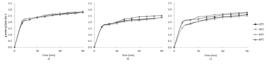
HK at -20 °C freezing and 4 temperatures of the immersion medium (20, 40, 60, and 80 °C). a) 6 h freezing; b) 12 h freezing and c) 18 h freezing.
Frozen Hass avocados at -80 °C showed rehydration values at the different temperatures of the immersion medium between 2.5413 and 3.5550 g water·g base dry-1. The highest rehydration was 3.5550 g water·g base dry-1 for -80 °C, 6 h freezing, and 20 °C of the immersion medium, decreasing to 3.2941 and 2.7428 g water·g base dry-1 for 12 and 18 h and (40 °C and 80 °C of the immersion medium), respectively.
Figure 2 shows that the HK of the freeze-dried avocado at -80 °C decreased as the freezing time increased, whereas the maximum rehydration interval was above that obtained at -20 °C. This behavior occurred because freezing at -80 °C generates a greater structural change, typical of freeze-drying, causing greater weakening of the structure and more thick pores (Richter et al., 2021), hence a greater capacity for rehydration. Likewise, as the freeze-dried avocado structure was weakened, the detachment of small portions occurred due to excess water present during rehydration (Zhou et al., 2021). This same phenomenon occurred in the rehydration of tofu frozen at -20, -50, and -90 °C, where the rehydration ratio of 3 h increased with lower freezing temperatures (Nathdanai et al., 2016). Generally, the rehydration ratio is a measure of structural damage to fruits and vegetables, caused by the dehydration process and resulting in the deterioration of reconstitution properties (Caliskan & Dirim, 2017). In turn, the formation of larger ice crystals in food materials results in the creation of large pores after freeze-drying, leading to a higher rehydration ratio of the frozen samples (Silva-Espinoza et al.,2020).

HK at -80 °C freezing and 4 temperatures of the immersion medium (20, 40, 60, and 80 °C). a) 6 h freezing, b) 12 h freezing, and c) 18 h freezing.
Figures 1 and 2 presented typical rehydration characteristics for freeze-dried avocados in terms of water gained as a function of time. All the treatments studied showed that most of the rehydration occurred in the first 20 min of the process, becoming more gradual as the process approached the equilibrium state. A similar trend was reported in the study of the rehydration kinetics of shiitake mushrooms, where in the first 20 min it showed a rapid rate of absorption and then reached equilibrium (Qiu et al., 2022).
The freeze-dried avocado must be reconstituted for it to be used. The speed and ease with which this operation can be performed determine the quality of the lyophilized product (Richter et al., 2021; Qiu et al., 2022). Rehydration properties are related to the structural characteristics of each material and the dependence on HK has been confirmed with the plant material structure. For freeze-dried tomatoes and apples, a high degree of water absorption occurred during the first few minutes (Zhu et al., 2022; Lopez-Quiroga et al., 2020). However, in the case of the tomato, the initial moisture content of the fresh tomato was not reached. Lopez-Quiroga et al. (2020) obtained a tomato moisture content of 52% in an immersion medium at 50 °C; however, in an immersion medium at 20 °C, it reached only 37% moisture content. As for the avocado, the initial moisture content reached values between 60% and 66%. Zhou and collaborators (2021) conducted a study using garlic and found a rapid initial water absorption; however, the percentage of moisture content obtained was relatively low, 61.5%. Thus, we might infer that the structure of the material influences rehydration.
3.5 Enzymatic Activity (EA)
Figure 3 shows the trend EA for fresh Hass avocado, freeze-dried avocado at -20 °C, and freeze-dried avocado at -80 °C containing different substrate concentrations. As the substrate concentration increased, represented graphically, the value of R2 ≈ 1 was achieved in all cases. This is because in all reactions catalyzed by an enzyme, if the enzyme concentration (E) is kept constant, the rate of the reaction increases exponentially as the substrate concentration (S) increases, since the more substrate molecules there are, the more likely the formation of the E-S complex. The increase is rapid for low substrate concentrations, which, when increased, slows down until the substrate concentration reaches a certain value (maximum rate), beyond which, although the concentration increases, the rate of the reaction does not (Castaño et al., 2008).

EA (Fresh Hass Avocado, -20 °C freezing and -80 °C freezing) in different substrate concentrations (M). a) 6 h freezing, b) 12 h freezing, and c) 18 h freezing.
According to ANOVA analyses, EA did not present a statistically significant difference between the blank and the six treatments. The results showed that five out of the six treatments tend to have a higher Vmax value between 0.00149 and 0.00270 mmol.s-1 than the blank, which reached a Vmax of 0.00138 mmol.s-1.
The value obtained from freeze-drying avocados at -20 °C for 18 hours was below the blank value of 0.000742 mmol.s-1. Upon being freeze-dried for 12 hours at -20 °C and -80 °C, the avocados showed high values: 0.00270 mmol.s-1 and 0.00243 mmol.s-1, respectively.
The literature reports that treatments before fruit freeze-drying are required to decrease enzymatic browning. Electrical treatment of fresh potato issue (40 V·cm-1 for 1 min) without heating and before freeze-drying reduced its browning after rehydration (Zvitov-Ya'ari & Nussinovitch, 2014).
4 Conclusion
The oil content of Hass avocado doubles after 12 days of harvesting, even without previous treatment. Freeze-drying reduces the moisture content to below 4%, enhancing product stability over time. The water retention capacity remains unaffected by variations in freeze-drying temperature. The increase in hydration kinetics at freezing temperatures below -20 °C is likely due to ice crystal formation, which facilitates water penetration during rehydration. No significant changes in enzymatic activity were observed at different freezing times, likely due to enzyme inactivity during dehydration. Overall, freezing Hass avocados at -80 °C before freeze-drying offers no substantial advantages.
Acknowledgements
The authors would like to thank the Faculty of Agro-industrial Engineering and the CIDI of the Universidad Pontificia Bolivariana of Colombia for their technical and financial support. The authors report no competing interests.
-
Cite as: Barajas Gamboa, J. A., Arias Gómez, Z., Hincapié-Llanos, G. A., Ramírez-Jiménez., M. A., & Ríos-Mesa, A. F. (2025). The impact of freeze drying on the rehydration and enzymatic browning of the avocado variety Hass (Persea americana Mill.). Brazilian Journal of Food Technology, 28, e2024057. https://doi.org/10.1590/1981-6723.05724
-
Funding: None.
References
-
Assegehegn, G., Brito-de la Fuente, E., Franco, J. M., & Gallegos, C. (2020). Chapter one - freeze-drying: A relevant unit operation in the manufacture of foods, nutritional products, and pharmaceuticals. Advances in Food and Nutrition Research, 93, 1-58. PMid:32711860. http://doi.org/10.1016/bs.afnr.2020.04.001
» http://doi.org/10.1016/bs.afnr.2020.04.001 -
Benítez, J., Sánchez, A., Bolaños, C., Bernal, L., Ochoa-Martínez, C., Vélez, C., & Sandoval, A. (2021). Cambios fisicoquímicos del aguacate Hass durante el almacenamiento frio y la maduración acelerada. Biotecnologia en el Sector Agropecuario y Agroindustrial, 19(2), 41-56. http://doi.org/10.18684/bsaa.v19.n2.2021.1490
» http://doi.org/10.18684/bsaa.v19.n2.2021.1490 -
Bustos, M. C., Mazzobre, M. F., & Buera, M. P. (2017). Stabilization of refrigerated avocado pulp: Chemometrics-assessed antibrowning allium and brassica extracts as effective lipid oxidation retardants. Food and Bioprocess Technology, 10(6), 1142-1153. http://doi.org/10.1007/s11947-017-1888-1
» http://doi.org/10.1007/s11947-017-1888-1 -
Caliskan, G., & Dirim, S. N. (2017). Drying characteristics of pumpkin (Cucurbita moschata) slices in convective and freeze dryer. Heat and Mass Transfer, 53(6), 2129-2141. http://doi.org/10.1007/s00231-017-1967-x
» http://doi.org/10.1007/s00231-017-1967-x -
Castaño, N., Bejarano, C., & Giraldo, G. G. (2008). Conservación de la fresa (fragaria chiloensis L Duch) osmodeshidratada por el método de liofilización. Revista de Investigaciones Universidad del Quindío, 18(1), 87-93. Retrieved in 2024, June 5, from https://1library.co/document/z3e0xxeq-conservacion-fresa-fragaria-chiloensis-duch-osmodeshidratada-metodo-liofilizacion.html
» https://1library.co/document/z3e0xxeq-conservacion-fresa-fragaria-chiloensis-duch-osmodeshidratada-metodo-liofilizacion.html -
Ciurzyńska, A., Galus, S., Karwacka, M., & Janowicz, M. (2022). The sorption properties, structure, and shrinkage of freeze-dried multi-vegetable snack bars in the aspect of the environmental water activity. Lebensmittel-Wissenschaft + Technologie, 171, 114090. http://doi.org/10.1016/j.lwt.2022.114090
» http://doi.org/10.1016/j.lwt.2022.114090 -
Dal-Bó, V., & Freire, J. T. (2022). Effects of lyophilization on colorimetric indices, phenolics content, and antioxidant activity of avocado (Persea americana) pulp. Food Control, 132, 108526. http://doi.org/10.1016/j.foodcont.2021.108526
» http://doi.org/10.1016/j.foodcont.2021.108526 -
Escobar, J., Rodriguez, P., Cortes, M., & Correa, G. (2019). Influence of dry matter as a harvest index and cold storage time on cv. Hass Avocado quality produced in high tropic region. Información Tecnológica, 30(3), 199-210. http://doi.org/10.4067/S0718-07642019000300199
» http://doi.org/10.4067/S0718-07642019000300199 - Fellows, P. J. (2022). Food processing technology: principles and practice. Cambridg: Woodhead publishing.
-
Granada, D., López-Lujan, L., Ramírez-Restrepo, S., Morales, J., Peláez-Jaramillo, C., Andrade, G., & Bedoya-Pérez, J.-C. (2020). Bacterial extracts and bioformulates as a promising control of fruit body rot and root rot in avocado cv Hass. Journal of Integrative Agriculture, 19(3), 748-758. http://doi.org/10.1016/S2095-3119(19)62720-6
» http://doi.org/10.1016/S2095-3119(19)62720-6 -
Henry, A. D., Noble, K., Michael, S., Raphael, J., Owusu, F. W. A., Philomena, E., Francis, A., & Kwabena, O.-K. (2022). Investigation of the physicochemical properties of freeze-dried fruit pulp of Telfairia occidentalis and its potential use as suspending agent. Heliyon, 8(7), e09997. PMid:35879997. http://doi.org/10.1016/j.heliyon.2022.e09997
» http://doi.org/10.1016/j.heliyon.2022.e09997 -
Ismail, E. A., Aly, A. A., & Atallah, A. A. (2020). Quality and microstructure of freeze-dried yogurt fortified with additives as protective agents. Heliyon, 6(10), e05196. PMid:33088960. http://doi.org/10.1016/j.heliyon.2020.e05196
» http://doi.org/10.1016/j.heliyon.2020.e05196 -
Karwacka, M., Ciurzyńska, A., Galus, S., & Janowicz, M. (2022). Freeze-dried snacks obtained from frozen vegetable by-products and apple pomace –Selected properties, energy consumption, and carbon footprint. Innovative Food Science & Emerging Technologies, 77, 102949. http://doi.org/10.1016/j.ifset.2022.102949
» http://doi.org/10.1016/j.ifset.2022.102949 -
LegisComex (2022). Informe exportaciones de aguacate Hass septiembre 2022 Retrieved in 2024, June 5, from https://www.analdex.org/wp-content/uploads/2022/12/Informe-aguacate-Hass-Septiembre-2022.pdf
» https://www.analdex.org/wp-content/uploads/2022/12/Informe-aguacate-Hass-Septiembre-2022.pdf -
Lopez-Quiroga, E., Prosapio, V., Fryer, P. J., Norton, I. T., & Bakalis, S. (2020). Model discrimination for drying and rehydration kinetics of freeze-dried tomatoes. Journal of Food Process Engineering, 43(5), 13192. http://doi.org/10.1111/jfpe.13192
» http://doi.org/10.1111/jfpe.13192 -
Marin-Castro, U. R., Dominique, P., García-Alvarado, M. A., Vargas-Ortiz, M. A., Salgado-Cervantes, M. A., & Servent, A. (2022). Effect of the thermal state during Manila mango processing by mild flash vacuum expansion on carotenoids and enzymatic activity. Innovative Food Science & Emerging Technologies, 75, 102900. http://doi.org/10.1016/j.ifset.2021.102900
» http://doi.org/10.1016/j.ifset.2021.102900 -
Marques, L. G., Prado, M. M., & Freire, J. T. (2009). Rehydration characteristics of freeze-dried tropical fruits. Lebensmittel-Wissenschaft + Technologie, 42(7), 1232-1237. http://doi.org/10.1016/j.lwt.2009.02.012
» http://doi.org/10.1016/j.lwt.2009.02.012 -
Ministerio de Agricultura y Desarrollo Rural. Colombia. (2021). Cadena productiva Aguacate Retrieved in 2024, June 5, from https://sioc.minagricultura.gov.co/Aguacate/Documentos/2021-03-31%20Cifras%20Sectoriales.pdf
» https://sioc.minagricultura.gov.co/Aguacate/Documentos/2021-03-31%20Cifras%20Sectoriales.pdf -
Nathdanai, H., Kiyoshi, K., Manabu, W., & Toru, S. (2016). Effects of freezing on microstructure and rehydration properties of freeze-dried soybean curd. Journal of Food Engineering, 184, 10-20. http://doi.org/10.1016/j.jfoodeng.2016.03.014
» http://doi.org/10.1016/j.jfoodeng.2016.03.014 -
Olivares, D., Alvarez, E., Veliz, D., Garcia-Rojas, M., Diaz, C., & Defilippi, B. (2020). Effects of 1-Methylcyclopropene and controlled atmosphere on ethylene synthesis and quality attributes of avocado cvs. edranol and fuerte. Journal of Food Quality, 2020, 1-14. http://doi.org/10.1155/2020/5075218
» http://doi.org/10.1155/2020/5075218 -
Qiu, Y., Bi, J., Jin, X., Wu, X., Hu, L., & Chen, L. (2022). Investigation on the rehydration mechanism of freeze-dried and hot-air-dried shiitake mushrooms from pores and cell wall fibrous material. Food Chemistry, 383, 132360. PMid:35180597. http://doi.org/10.1016/j.foodchem.2022.132360
» http://doi.org/10.1016/j.foodchem.2022.132360 -
Richter, R. F., Caroline, M., de Moraes, S., Carolina, A., & Masson, M. L. (2021). Effect of processing methods on yacon roots health-promoting compounds and related properties. Trends in Food Science & Technology, 113, 346-354. http://doi.org/10.1016/j.tifs.2021.05.010
» http://doi.org/10.1016/j.tifs.2021.05.010 -
Ríos-Mesa, A. F., Zuluaga Gallego, R., Osorio, M., Ciro-Velásquez, H. J., & Márquez Cardozo, C. J. (2020). Effect of vehicle vibration on the mechanical and sensory properties of avocado (Persea Americana Mill. Cv. Hass) during road transportation. International Journal of Fruit Science, 20(3), 1904-1919. http://doi.org/10.1080/15538362.2020.1835602
» http://doi.org/10.1080/15538362.2020.1835602 -
Salameh, M., Nacouzi, D., Lahoud, G., Riachy, I., & El Kayal, W. (2022). Evaluation of postharvest maturity indices of commercial avocado varieties grown at various elevations along lebanon’s coast. Frontiers in Plant Science, 13, 895964. PMid:35783944. http://doi.org/10.3389/fpls.2022.895964
» http://doi.org/10.3389/fpls.2022.895964 -
Salazar, N. A., Catalina, A., & Orrego, C. E. (2018). Optimization of freezing parameters for freeze-drying mango (Mangifera indica L.) slices. Drying Technology, 36(2), 192-204. http://doi.org/10.1080/07373937.2017.1315431
» http://doi.org/10.1080/07373937.2017.1315431 -
Serpa, A. M., Echeverri, A., Lezcano, M. P., Vélez, L. M., Ríos, A. F., & Hincapié, G. A. (2014). Extracción de aceite de aguacate variedad “Hass” (Persea americana Mill) liofilizado por prensado en frio. Revista Investigaciones Aplicadas, 8(2), 118-128. Retrieved in 2024, June 5, from http://hdl.handle.net/20.500.11912/6805
» http://hdl.handle.net/20.500.11912/6805 -
Silva-Espinoza, M. A., Ayed, C., Foster, T., Camacho Md, M., & Martínez-Navarrete, N. (2020). The impact of freeze-drying conditions on the physico-chemical properties and bioactive compounds of a freeze-dried orange puree. Foods, 9(1), 32. PMid:31905861. http://doi.org/10.3390/foods9010032
» http://doi.org/10.3390/foods9010032 -
Souza, D. S., Marques, L. G., Gomes, E. de B., & Narain, N. (2014). Lyophilization of avocado (Persea americana Mill.): effect of freezing and lyophilization pressure on antioxidant activity, texture, and browning of pulp. Drying Technology, 33(2), 194-204. http://doi.org/10.1080/07373937.2014.943766
» http://doi.org/10.1080/07373937.2014.943766 -
United States Department of Agriculture – USDA. (2019). National Nutrient Database for Standard Reference. Retrieved in 2024, June 5, from https://data.nal.usda.gov/dataset/usda-national-nutrient-database-standard-reference-legacy-release
» https://data.nal.usda.gov/dataset/usda-national-nutrient-database-standard-reference-legacy-release -
Villa-Rodriguez, J. A., Yahia, E. M., González-León, A., Ifie, I., Robles-Zepeda, R., Domínguez-Avila, J. A., & González-Aguilar, G. A. (2020). Ripening of “Hass” avocado mesocarp alters its phytochemical profile and the in vitro cytotoxic activity of its methanolic extracts. South African Journal of Botany, 128, 1-8. http://doi.org/10.1016/j.sajb.2019.09.020
» http://doi.org/10.1016/j.sajb.2019.09.020 -
Yin, W., Liu, M., Xie, J., Jin, Z., Ge, S., Guan, F., Liu, H., Zheng, M., Cai, D., & Liu, J. (2022). Removal of bound polyphenols and its effect on structure, physicochemical and functional properties of insoluble dietary fiber from adzuki bean seed coat. Lebensmittel-Wissenschaft + Technologie, 169(1), 114011. http://doi.org/10.1016/j.lwt.2022.114011
» http://doi.org/10.1016/j.lwt.2022.114011 -
Zhou, C., Feng, Y., Zhang, L., & Abu El Gasim, A. (2021). Rehydration characteristics of vacuum freeze- and hot air-dried garlic slices. Lebensmittel-Wissenschaft + Technologie, 143, 111158. http://doi.org/10.1016/j.lwt.2021.111158
» http://doi.org/10.1016/j.lwt.2021.111158 -
Zhu, J., Liu, Y., Zhu, C., & Wei, M. (2022). Effects of different drying methods on the physical properties and sensory characteristics of apple chip snacks. Lebensmittel-Wissenschaft + Technologie, 154, 112829. http://doi.org/10.1016/j.lwt.2021.112829
» http://doi.org/10.1016/j.lwt.2021.112829 -
Zvitov-Ya’ari, R., & Nussinovitch, A. (2014). Browning prevention in rehydrated freeze-dried non-blanched potato slices by electrical treatment. Lebensmittel-Wissenschaft + Technologie, 56(1), 194-199. http://doi.org/10.1016/j.lwt.2013.10.017
» http://doi.org/10.1016/j.lwt.2013.10.017
Edited by
-
Associate Editor: Rosinelson da Silva Pena.


