 May spices be detected as starch in meat products? Starch quantification in meat products
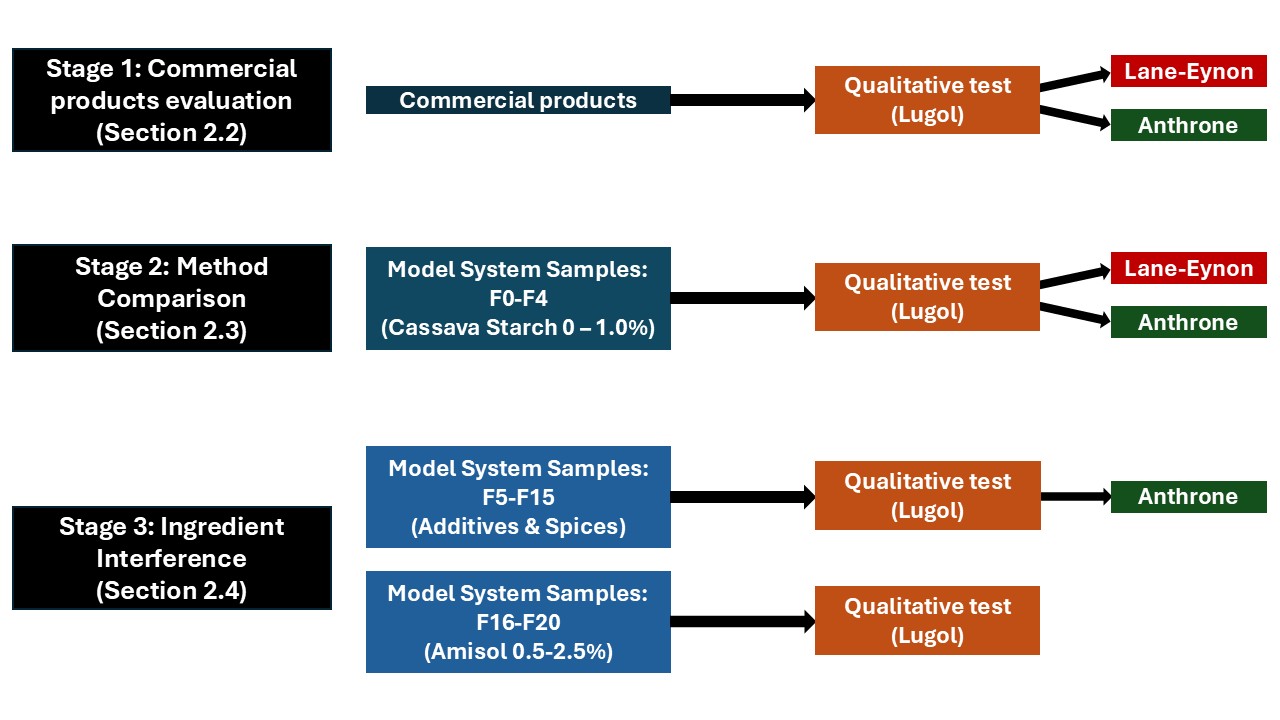
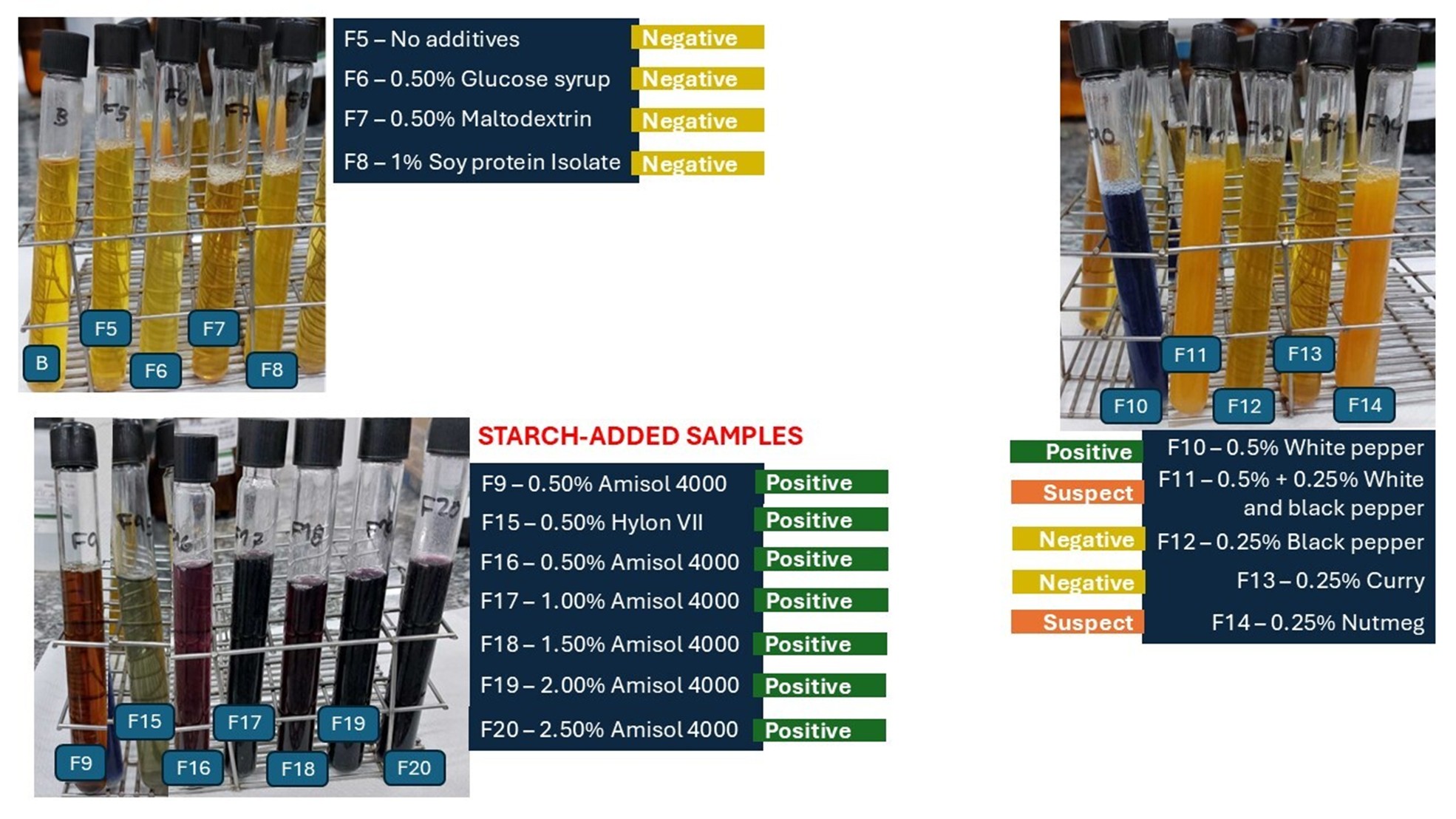
This study aimed to investigate the presence of starch in commercial meat products, compare the accuracy of Lane-Eynon and Anthrone quantitative methods and evaluate the interference of spices in starch detection. Ten commercial products (fresh cured pork sausage, cooked cured Calabresa-type sausage, and salami) were initially screened using the qualitative Lugol’s test. Three samples that tested positive for starch were further analyzed using both Lane-Eynon and Anthrone quantitative methods. To compare the performance of the quantitative methods, fresh sausages were prepared in model-system with known starch concentration (0; 0.25; 0.5; 0.75, and 1.0%). The Anthrone method demonstrated superior accuracy, with a mean recovery rate of 97.4%, compared to only 23.0% for the Lane-Eynon method. Subsequently, the impact of spices was evaluated in formulations containing specific starches and spices. While starch-added samples were correctly identified, starch-free samples containing spices (white pepper, black pepper, and nutmeg) yielded false-positive results in the Lugol’s test. The Anthrone method proved effective in quantifying these low levels of background starch with high precision. Based on these findings, the Anthrone method is recommended for precise quantification, particularly in cases of suspected adulteration where qualitative tests may yield false positives due to spice interference.
Keywords:
Polysaccharide; Food fraud; Additives; Sausages; Lugol; Anthrone
Anthrone method showed superior accuracy (97.4% recovery) compared to Lane-Eynon
Spices caused false-positive results in the qualitative Lugol’s test
Anthrone method effectively quantifies low starch concentrations in meat products
 Thumbnail
 Thumbnail