 Phytochemical analysis, antioxidant and toxicity evaluation of ethanolic Gnetum gnemon L. leaf extracts- A potential natural food additive
Abstract
The primary aims of this study were to assess the antioxidant activity and evaluate the toxicity of ethanolic Gnetum gnemon L. leaf extracts. The ultimate goal was to identify this extract as a promising natural antioxidant in the food industry. The total phenolic content (TPC) was determined, and the antioxidant activities were assessed using the 2,2-diphenyl-1-picrylhydryzyl (DPPH) test, ferric reducing antioxidant power (FRAP) assay, and 2,2'-azino-bis (3-ethylbenzothiazoline-6-sulfonic acid) (ABTS) assay. Liquid Chromatography-Mass Spectrometry (LC-MS) was employed to ascertain the bioactive components accountable for antioxidant activity, whereas the brine shrimp mortality assay was conducted to evaluate toxicity. The extract's TPC exhibited the highest value at 39.4 ± 2.69 mg GAE/g. The DPPH and ABTS assays demonstrated scavenging activity, with IC50 values of 2.51 ± 0.26 mg/mL and 5.02 ± 0.30 mg/mL, respectively. The FRAP assay measured the ferric-reducing antioxidant power activity yielding a value of 696.67 ± 13.56 μmol TEAC/g DW. LC-MS study detected the existence of 11 different non-volatile compounds, including furaneol, traumatic acid, gentiatibetine, tryptophan, anofinic acid, diosmetin, petunidin 3-O-glucoside, rhapontigenin, allixin, [10]-gingerol, and salidroside. These specific chemicals in the G. gnemon leaf extract may have played a role in its antioxidant action. The LC50 of the leaf extract was determined to be 41.08 mg/mL, indicating that it exceeds the threshold of 1 mg/mL. This implies that the extract is not hazardous and poses no threat to human health when consumed. Thus, the ethanolic extract of G. gnemon leaf can be confirmed as a natural antioxidant agent suitable for creating natural additives that protect food from spoilage and counteract oxidative degradation during storage and processing.
Keywords:
Natural antioxidant; Gnetum gnemon L.; DPPH assay; FRAP; ABTS; Phenolic content; Phytochemical composition; Food preservation; Toxicity evaluation
Highlights
Gnetum gnemon L. leaf demonstrated antioxidant properties
G. gnemon leaf contains no toxic content and is safe to use as a natural preservative
G. gnemon leaf has the potential to be used as a natural antioxidant in the food industry
1 Introduction
There has been a significant emphasis on utilizing naturally derived antioxidants in food products in recent decades. This is because investigations have suggested potential negative consequences associated with the intake of artificial antioxidants. Various botanical substances, including fruits, spices, vegetables, herbs, and seeds, are recognized as good sources of antioxidants. The concern in these natural compounds emerges not only from their biological significance but also from their commercial implications, as the majority of them can be derived from food by-products and underutilized plant species (Lourenço et al., 2019). Oxygen is the most essential element in our metabolism, but it has the potential to initiate detrimental reactions (Valko et al., 2006a). Reactive oxygen species (ROS), such as superoxide anion, singlet oxygen, lipid peroxides, and hydroxyl radicals, are substances that are produced during normal cellular energy generation. They have several important functions in the cell, including cell signaling, cell death, gene expression, and the transportation of ions. Elevated amounts of ROS have the potential to cause harm to many crucial components of our body, such as proteins, lipids, RNA, and DNA (Lü et al., 2010). Environmental variables such as pressure, ultraviolet irradiation, contaminants, herbicides, and chemical substances from industry contribute to the body's natural generation of ROS (Carocho & Ferreira, 2012; Lobo et al., 2010; Augustyniak et al., 2010). Cancer, diabetes, atherosclerosis, arthritis, neurological illnesses, and accelerated aging are all made more likely by oxidative stress, which occurs when ROS production exceeds clearance (Valko et al., 2006b; Rajendran et al., 2014; Valavanidis et al., 2013; Wojtunik-Kulesza et al., 2016; Getoff, 2007). In addition to diseases, oxidative rancidity in food is another harmful effect caused by ROS in the food industry (Velasco et al., 2009). Research has shown that synthetic antioxidants may have adverse effects, including possible toxicity, despite their use in the food industry for reducing oxidative damage alongside natural antioxidants. As such, plant-based alternatives should be given priority (Lourenço & Alves., 2019; Lobo et al., 2010; Kumar et al., 2015; Xu et al., 2021). Antioxidant-rich leafy greens are especially important for neutralizing free radicals, and their consumption has been associated with a reduced risk of developing cardiovascular, cancer, diabetes, and neurological disorders (Aryal et al., 2019; Adebooye et al., 2008).
Wild edible leafy plants are the primary source of dietary requirements of the indigenous community around the world due to their medicinal and nutritional properties. These people consume these plants in various forms such as salad, chips, pickles, tea, and juice (Aryal et al., 2019). Gnetum gnemon L. is such a plant that holds greater significance within indigenous communities and is utilized in numerous traditional remedies to treat diverse illnesses. Furthermore, G. gnemon is an abundant and flourishing indigenous plant found in the wild in Southeast Asia and the western Pacific Ocean islands. The tree is of medium size and can reach a height of 15-20 meters, distinguishing it from other Gnetum species that are primarily lianas. It is referred to by several common names, such as Gnemon, Melinjo, Belinjo, Bago, and Paddy Oats. The young leaves, inflorescence, and delicate tips of G. gnemon are edible and consumed as a vegetable in numerous regions worldwide among indigenous people (Agarwal et al., 2020; Barua et al., 2015; Anisong et al., 2022). In Indonesia, many forms of dishes made from the G. gnemon are famous among people (Verheij & Sukendar, 2016). G. gnemon has therapeutic qualities in addition to its nutritional worth. It has been used to cure ailments like asthma, bronchitis, and arthritis in traditional Chinese medical practices. The native inhabitants of Northeast India also utilize its sap to cure eye problems and fever associated with malaria (Dutta et al., 2018; Barua et al., 2015). Seal & Chaudhuri (2016) studied the antioxidant properties of five wild green vegetables in Meghalaya and India, including G. gnemon. The leaves exhibited the highest levels of phenolic compounds and the strongest antioxidant activity. Santoso et al. (2010) assessed the antioxidant properties and potential to prevent DNA damage in various edible parts of G. gnemon. They discovered that the most prominent antioxidant activity was found in mature leaves, whereas young leaves demonstrated the second-highest antioxidant activity. Previous studies have found bioactive components in G. gnemon leaf extracts, including resveratrol, saponins, flavonoids, and tannins (Kato et al., 2011; Santoso et al., 2010). However, to the best of our knowledge, no prior research using the Liquid Chromatography-Mass Spectrometry (LC-MS) approach has been documented for G. gnemon leaf extracts. LC-MS was utilized in this research to identify active radical scavengers and provide a scientific basis for their antioxidant activity. The method’s ability to separate, identify, and quantify complex mixtures of compounds helped in understanding the plant's potential benefits and application as natural additives (Tilvi et al., 2013).
Evaluating toxicity is a vital factor in screening pharmacological substances and applying them in therapeutic settings (Pour et al., 2011). The study establishes a correlation between the responses of animals and humans, showcases the effectiveness and safety of the treatment, and assists in selecting the appropriate doses of the extract for future evaluation (Anwar et al., 2022). Toxicity studies serve to safeguard the population at risk from potential injury and guarantee accurate evaluation of dosage for end users (Mensah et al., 2019). G. gnemon leaf has been used for its therapeutic benefits and culinary purposes for a long time. However, there is a lack of empirical evidence on the potential toxicity of the leaf, particularly when evaluated using scientific techniques like the Brine Shrimp Lethality Assay. Therefore, a systematic analysis of toxicity is needed to confirm the safety of G. gnemon leaf, bridging traditional usage with scientific validation.
2 Materials and methods
2.1 Sample preparation and extraction
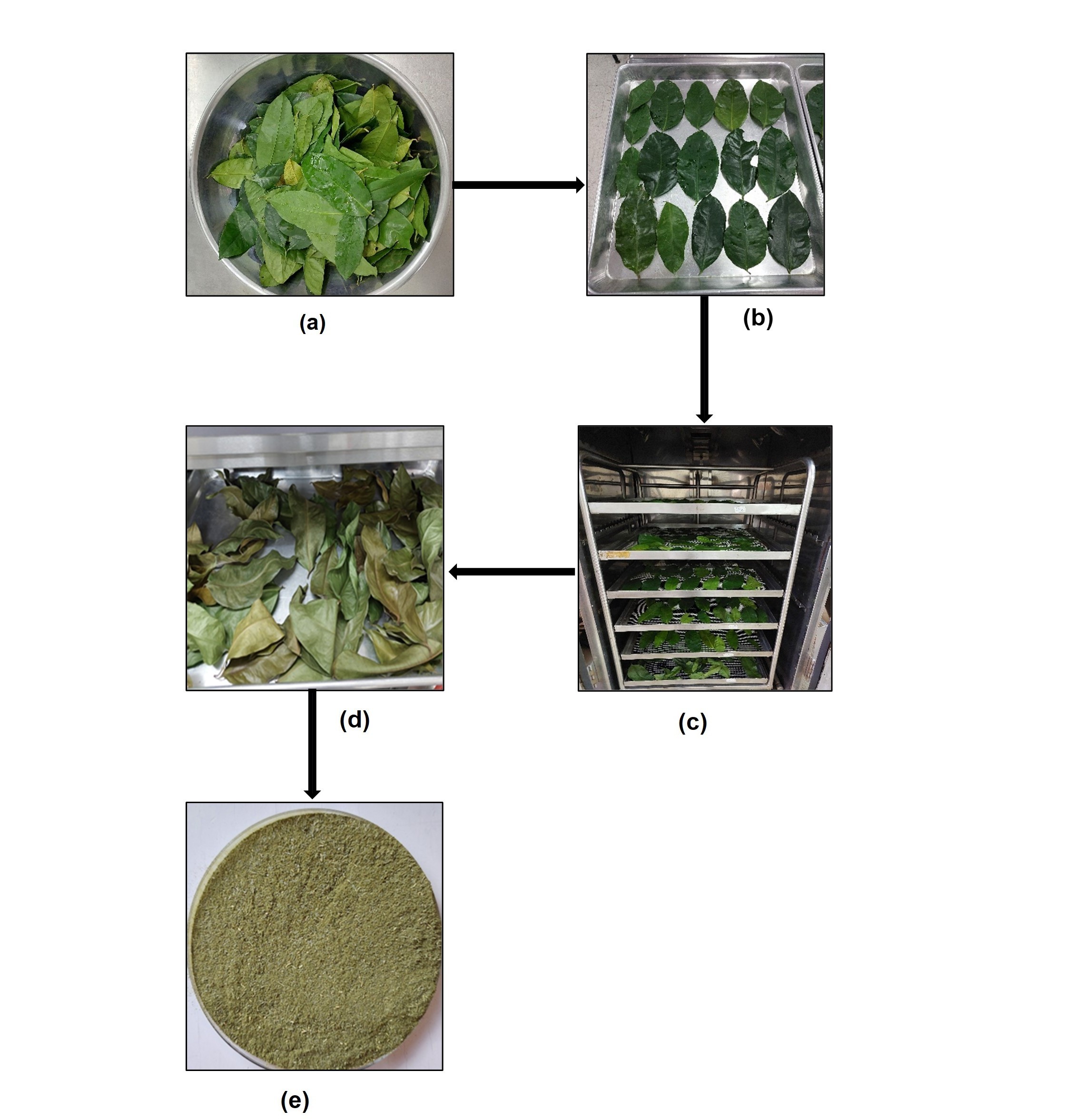
The Gnetum gnemon plant's fresh leaf was collected from the garden located at Universiti Putra Malaysia, Serdang, Malaysia. The leaves were subjected to a comprehensive cleansing with tap water and afterward dried in a professional oven drier (SMA-113, Smoke Master, Japan) until a uniform mass was achieved. The leaves were subsequently crushed and pulverized using a food mixer (MX-G1012, Panasonic, Japan). Next, the powder was sifted and placed in an airtight receptacle to shield it from atmospheric contact, maintaining a temperature of 4°C until it was needed for subsequent applications. Figure 1 illustrates the process of leaf sampling and drying.
G. gnemon L. leaf sampling and drying: (a) leaf sample collection, (b) washing and organizing of sample, (c) sample drying in oven, (d) dried leaves, (e) final powdered form after grinding and sieving.
For the extraction process, 100 g of powdered G. gnemon was immersed in a 400 mL solution of 95% ethanol (Systerm, ChemAR, Kielce, Poland). The sample mixture was then stirred regularly for three days to aid the maceration process, following the methodology described by Rukayadi et al. (2009) with a few modifications. Afterward, the plant material produced from ethanol extraction was filtered using Whatman No.1 filter paper (Whatman International Ltd., Middlesex, England). The filtrate obtained was concentrated using a rotating vacuum evaporator (BUCHI Rotavapor R-200, Switzerland) set at a temperature of 50 °C and a speed of 150 rpm. The crude extract was then stored at a temperature of 4 °C for further use.
2.2 Physicochemical properties evaluation
To determine the color and moisture content of G. gnemon fresh leaves, a physicochemical examination was performed on its dried fine powder. The color study was carried out with a colorimeter (CR-400, Konica Minolta, Japan) using Lab* color analysis, while the moisture content determination was performed using a moisture analyzer (MX-50, A and D Company, Japan). The analyses were repeated three times for accuracy.
2.3 Total phenolic content test using Folin-Ciocalteu assay
The estimation of total phenolic content (TPC) was conducted by employing the Folin-Ciocalteu reagent following the methodology outlined by Singleton et al. (1999). The result was derived from a calibration curve and expressed in gallic acid equivalents (GAE) per gram dry extract weight. The extract was diluted in ethanol to 10 mg/mL, and a 0.5 mL portion was mixed with the reagent. A 7% sodium carbonate solution was added to the mixture and allowed to react at room temperature for 1 hour. Gallic acid was used as a reference standard in various concentrations (100–200 µg/mL). The absorbance at 715 nm was measured using an Ultraviolet-visible (UV-Vis) spectrophotometer (UV-1650 PC, Shimadzu, Kyoto, Japan), and the TPC was quantified as milligrams of GAE per gram of extract (mg GAE/g). The study was conducted in triplicate, and the mean absorbance values were used to construct a calibration curve.
2.4 Antioxidant activity assessment of ethanolic G. gnemon leaf extract
2.4.1 2,2-diphenyl-1-picrylhydrazyl (DPPH) assay
DPPH radical scavenging activity was determined using the method described by Brand-Williams et al. (1995) and Prieto (2012), with certain adaptations. Antioxidants present in the extract cause a transformation of the purple color of DPPH to a yellowish hue (Rahman et al., 2015). The test was performed using a 96-well microplate reader. A 10 mg/mL concentration of extract was added to the columns in a volume of 200 μL. The solution was then serially diluted until the final concentration of 0.156 mg/mL. The Trolox standard was subjected to a similar procedure, with concentrations ranging from 0.5 to 0.007 mg/mL. A 0.15M solution of DPPH was added to each well and thoroughly mixed. The microplate reader was then placed in a dark environment for 30 minutes. The spectrophotometer microplate reader (Biotek Instruments, USA) was used to measure the absorbance at 517 nm. The percentage of radical scavenging was calculated using the following Equation 1:
where A0 and A1 are the absorbance measurements of the control and extract/standard, respectively. DPPH was used as a control, and Trolox as a standard. The percentage of inhibition was plotted against concentration to generate a regression equation, and from the equation, IC50 was calculated.
2.4.2 2,2'-azino-bis(3-ethylbenzothiazoline-6-sulfonic) (ABTS) assay
The free radical scavenging capacity of G. gnemon leaf extract was determined using the 2,2'-azino-bis (3-ethylbenzothiazoline-6-sulfonic) (ABTS) acid radical cation decolorization assay. The assay was conducted by adhering to the techniques outlined by Wanakhachornkrai et al. (2020) with minor adjustments. To initiate the activation of the ABTS·+ cation radical, ABTS solution (1:1 of 7.00 mM ABTS +2.45 mM potassium persulfate) was produced 12 hours before the experiment. The ABTS·+ solution was further diluted with methanol until it reached an absorbance of 0.700 at 734 nm, using a UV-vis spectrophotometer (Shimadzu, Kyoto, Japan). Different concentrations of G. gnemon leaf extract (0.156 to 10 mg/mL) were combined with 100 µL of diluted ABTS solution at a 1:1 ratio. Trolox was used as a standard in different concentrations (3.9 to 500 μg/mL) combined with ABTS solution. Subsequently, the mixtures are stored in a dark room for 15 minutes. Percent inhibition of absorbance at 515 nm was calculated using Formula 2,
Where AB and AA are the absorbance of ABTS radical + methanol, and ABTS radical + sample extract/standard, respectively. The IC50 value was found by constructing a graph that illustrates the relationship between the percentage of ABTS scavenging and the varying concentrations of leaf extract.
2.4.3 Ferric ion reducing antioxidant power (FRAP) assay
The ferric ion reducing antioxidant power (FRAP) assay measures the ability of electron-donating antioxidants to reduce a colorless Fe3+ TPTZ complex to a blue-colored Fe2+ tripyridyltriazine complex at low ph. This test was conducted using the methodologies described by Xiao et al. (2020) and Rajurkar & Hande (2011), with certain modifications. The FRAP reagent solution was generated by combining 10 Mm 2,4,6-tripyridyl-s-triazine (TPTZ), 20 mM ferric chloride (FeCI3.6H2O, 300 mM sodium acetate buffer (C2H3NaO2.3H2O) (pH 3.6) in a ratio of 1:1:10. The recently developed FRAP reagent was combined with the tested leaf extract at a concentration of 10 mg/mL, as well as with various concentrations (ranging from 0.078 to 5 mg/mL) of Trolox solution. Each reaction mixture was then subjected to incubation at 37 °C for 30 minutes. Upon reduction of the ferric -tripyridyltriazine (Fe3+ TPTZ) complex to its ferrous (Fe2+) form, a highly vivid blue color became apparent. The absorbance measurements were then measured at a wavelength of 593 nm, and a calibration curve was generated by graphing the variation in absorbance of Trolox against different concentrations and calculated as Trolox equivalent antioxidant capacity in grams per dry weight. The FRAP value was determined using Equation 3, and the findings were reported as Trolox equivalents at a concentration of 100 mg TE/g of the crude sample extract (Xiao et al., 2020).
where c is the Trolox concentration (µmol/mL) of the corresponding standard curve of the diluted sample, V is the sample volume (mL), t is the dilution factor, and m is the weight of the sample dry matter (g) (Xiao et al., 2020).
2.5 Phytochemical analysis of ethanolic G. gnemon leaf extract using Liquid Chromatography-Mass Spectrometry (LC-MS)
The objective of the LC-MS investigation was to identify the non-volatile elements present in G. gnemon leaf extract that contribute to its antioxidant activity. The G. gnemon concentrate was dissolved in High-Performance Liquid Chromatography (HPLC-grade) methanol to achieve a concentration of 1 mg/mL. The instrument applied for this experiment was the MicrOTOF Q III, (Bruker Daltonics Inc., Massachusetts, United States). The LC-MS system was fitted with a Thermo Scientific C18 column, specifically the AcclaimTM Polar Advantage II with dimensions of 3 × 150 mm and a particle size of 3 μm, and operated using the UltiMate 3000 UHPLC system (Dionex). The gradient centrifugation was conducted with a flow frequency of 0.4 mL/min. The column was kept at a constant temperature of 40 °C. The experimental conditions consisted of a solution of H2O with 0.1% formic acid (A) and 100% acetonitrile (B). The experiment lasted 22 minutes, with the extracted sample (10 µL) injected into the system. The gradient started with a 5% B concentration for the first 3 minutes, then changed to an 80% B concentration from 3 to 10 minutes. Subsequently, the frequency was kept at 80% B for a duration of 10 to 15 minutes and ultimately terminated with a concentration of 5% B from 15 to 22 minutes. The experimental parameters for the positive mode polarity were set as follows: the capillary voltage was set to 4500 V, the nebulizer pressure was kept at 2.0 bar, and a drying gas flow rate of 8 L/min was used at a temperature of 300 °C. The investigated mass range was from 50 to 1500 m/z. The Compass Data Analysis program (Bruker Daltonik GbH) was utilized to get and analyze mass data of the molecular ions, as provided by the time-of-flight (TOF) analyzer. The data were additionally examined in connection with prior documented research on the non-volatile compounds found in different plant extracts.
2.6 Toxicity Test of G. gnemon leaf extract using Brine Shrimp Lethality Assay
The study aimed to assess the cytotoxicity of the ethanolic leaf extract of G. gnemon by using the Brine shrimp mortality assay described by Wong et al. (2021), with slight modifications. Artemia salina eggs (JBL Artemio Mix, Germany) were used, and an artificial saltwater solution was prepared by dissolving 38 grams of salt in 1 L of distilled water. The shrimp eggs were placed in well-oxygenated saltwater, aided by an air pump, and subjected to a light source at a temperature of 30 °C. The nauplii hatched from their eggs during a 24-hour timeframe. The ethanolic G. gnemon leaf extract was mixed with 10% dimethyl sulfoxide (DMSO) to get a 1000 mg/mL concentration, which was further diluted in saltwater to create stock solutions. The extract was then added to tubes containing 20 live brine shrimp nauplii suspended in 20 mL of saltwater. Solutions with varying concentrations (1.56, 3.125, 6.25, 12.5, 25.0, 50.0, 100.0, and 200 mg/mL) of the extract were produced, and the number of viable prawn nauplii was counted every hour for 24 hours. The death end of shrimps was established as the absence of controlled forward movement within a 30-second monitoring interval. The bioassay's positive control was Potassium dichromate (Merck Millipore, Darmstadt, Germany), while the negative control was the greatest concentration of DMSO. In toxicity assessments, the threshold for mammals is typically expressed in mg/kg of body weight, representing the dosage required to induce a toxic effect. However, for brine shrimp lethality assays, toxicity is measured in mg/mL, as the tests are conducted in an aqueous medium where concentration plays a crucial role. This unit of measurement reflects the amount of the compound present in the solution, which directly influences its toxic impact on the shrimp. Given that brine shrimp are small aquatic organisms, evaluating toxicity based on concentration rather than body weight provides a more accurate assessment. This study examined the mortality rate of brine shrimp nauplii exposed to varying concentrations of G. gnemon leaf extract compared to control groups. The substance's concentration was subjected to logarithmic transformation and graphed against the appropriate fatality percentage using Microsoft Excel 2022. Finally, a regression equation was obtained from the shown data. The LC50 value was derived from the regression equation.
2.7 Statistical analysis
The experiments were carried out in triplicate, with each replication repeated three times (n = 3 × 3). The findings were computed using Microsoft Excel 2022. The statistical analysis for the analysis of variance (ANOVA) was performed using Minitab® Version 21.4.0 for Windows software developed by Minitab Inc. The statistical relevance of the differences between the treatments was evaluated using Tukey's test, with a significance level of p < 0.05. The results were interpreted as the mean value ± the repeated analysis's standard deviation (SD).
3 Results and discussion
3.1 Proximate analysis of G. gnemon leaf
Table 1 provides a summary of the yield of crude G. gnemon ethanolic leaf extract and the color, moisture content of dried leaf powder.
The powder underwent Lab* color analysis, with three measurements taken. The L* value measured 36.01 ± 0.41, suggesting a shade of color that is slightly dark. The value of a* was determined to be -11.12 ± 0.46, which indicates the presence of green color features. The b* score was 22.00 ± 0.82, suggesting a slight presence of yellowness. The color analysis was consistent with a prior study conducted by Bharali et al. (2018), which characterized the color of G. gnemon leaf as dark green. Therefore, the powder's color features correspond to the anticipated color of G. gnemon leaf. The tested dried leaf powder had a well-controlled and relatively low moisture content of 6.35% ± 0.05%. This is advantageous as it extends the shelf life, maintains quality, prevents clumping, and ensures ingredient consistency.
3.2 Total phenolic content and In-vitro antioxidant activity analysis of ethanolic G. gnemon leaf extract
3.2.1 Total phenolic content
Phenolic compounds are significant plant elements with redox characteristics that contribute to the antioxidant activities of a plant (Soobrattee et al., 2005). Because their hydroxyl groups contribute to free radical scavenging, the total phenolic concentration could be implemented as a basis for quick screening of antioxidant activity (Baba & Malik, 2014). A calibration curve (y = 0.0071x − 0.0702, R2 = 0.9782) of gallic acid was generated from the readings, and TPC was calculated. The TPC obtained from this current study for ethanolic G. gnemon leaf extract was 39.4 ± 2.69 mg GAE/g for the concentration of 10 mg/mL. A study conducted by Wazir et al. (2011) assessed the TPC of various components of G. gnemon L., including leaf, seeds, bark, and stick. Multiple solvents, including methanol, ethanol, hexane, chloroform, and boiling water, were employed for this purpose. The TPC of leaf, bark, stick, and seed extracted by different solvents ranged from 3.86 to 8.70 mg GAE/ FDW (Freeze-dried weight), 3.25 to 10.71 mg GAE/FDW, 3.13 to 10.3 mg GAE/FDW, and 1.15 to 6.49 mg GAE/FDW, respectively. The findings of the study conducted by Wazir et al. (2011) found that the ethanolic extraction method resulted in the best yield of TPC for both the leaf and seeds of G. gnemon.
3.2.2 Radical Scavenging Activity analysis using DPPH assay
DPPH (2,2-diphenyl-1-picrylhydrazyl) assay was used to measure the radical scavenging activity of ethanolic G. gnemon leaf, with the highest scavenging activity at 10 mg/mL (89.40 ± 1.08%) and the lowest (44.75 ± 1.55%) at 1.25 mg/mL. Trolox was used as the standard, showing 98.71 ± 0.38% scavenging activity at 0.5 mg/mL. The IC50 values for leaf extract and Trolox were calculated to be 2.51 ± 0.26 mg/mL and 0.09 ± 0.00 mg/mL, respectively. A reduction in the absorbance value implies a decrease of DPPH by the antioxidants contained in the leaf extracts. This study presents evidence of a greater capacity for scavenging by the ethanolic extract of G. gnemon leaf, surpassing the findings of earlier investigations. In one study, Bharali et al. (2018) observed that the scavenging activity of G. gnemon leaf exhibited a range of 22.21% to 71.28%, 25.29% to 75.24%, and 23.54% to 67.23% for various concentrations in methanol, acetone, and water, respectively. The IC50 values for acetone, methanol, and water were 0.023 mg/mL, 0.017 mg/mL, and 0.029 mg/mL, respectively. Wazir et al. (2011) investigated the ability of several solvents with variable polarity to scavenge free radicals in the plant components of G. gnemon. The stick exhibited the highest scavenging activity when subjected to methanol extraction, but the bark demonstrated the lowest activity when extracted with hexane. The methanolic extraction method exhibited superior efficacy in comparison to boiling water extraction, specifically for the bark, stick, and seeds. This discovery is consistent with earlier research conducted by Pinelo et al. (2005), which concluded that grape pomace displayed more DPPH scavenging activity when extracted using methanol and ethanol solvents as opposed to water extraction.
3.2.3 Radical scavenging activity analysis using ABTS assay
An essential property of antioxidants is proton radical scavenging activity. ABTS (2,2′-azino-bis(3-ethylbenzothiazoline-6-sulfonate), a protonated radical, exhibits a distinctive absorbance maximum at 734 nm that decreases with proton radical scavenging (Mathew & Abraham, 2006). The ABTS assay was done to assess the radical scavenging activity of ethanolic G. gnemon leaf extract. The extract exhibited the highest ABTS scavenging activity, 73.40 ± 0.50% at 10 mg/mL, while the lowest scavenging activity was 38.30 ± 0.00% at 1.25 mg/mL. Trolox was utilized as a standard and exhibited the most potent scavenging activity of 77.67 ± 0.50% at 0.5 mg/mL. The IC50 value of the tested extract was determined to be 5.02 ± 0.30 mg/mL, while the IC50 value for Trolox standard was 0.22 ± 0.02 mg/mL. This study is the first to investigate the ABTS scavenging activity of ethanolic G. gnemon leaf extract. Fadl Almoulah et al. (2017) evaluated the antioxidant activity of various Solanaceae plants using the ABTS assay. Results showed IC50 values of 0.25 to 1.67 mg/mL for different plants. The findings suggest that G. gnemon leaf extract has weaker ABTS scavenging activity compared to other plant extracts. The scavenging activity of ethanolic G. gnemon leaf extracts is presented in Table 2.
3.2.4 Ferric ion reducing antioxidant power assay
FRAP assay was done in this study to measure the reducing potential of ethanolic G. gnemon leaf extract by reacting with a ferric tripyridyltriazine (Fe3+-TPTZ) complex and producing a colored ferrous tripyridyltriazine (Fe2+-TPTZ) (Rajurkar & Hande, 2011). The ferric reducing antioxidant power or FRAP value of the extract was calculated 696.67 ± 13.56 (μmol TEAC/g DW). A study by Wazir et al. (2011) found that G. gnemon leaf extracts from various solvents, including ethanol and boiling water, showed the highest reducing activity. Fernandes et al. (2016) conducted a study on thirteen plant samples, and the total antioxidant activity measured by the FRAP method ranged from 43.61 ± 0.89 μmol trolox/g dw to 472.32 ± 15.96 μmol trolox/g dw for all samples. In our current investigation, ethanolic G. gnemon leaf extract exhibited superior antioxidant activity for FRAP (696.67 ± 13.56 μmol trolox/g dw) when compared to other plants. The selection of a solvent for extracting plant components can influence the antioxidant efficacy of the plant extract. Ethanol is frequently employed and typically yields greater antioxidant activity due to its intermediate polarity, owing to its efficacy in extracting a diverse array of antioxidant chemicals, such as phenolics and flavonoids. Thus, the ethanolic G. gnemon leaf extract exhibits superior antioxidant properties in comparison to other solvents.
3.3 LC-MS profile of G. gnemon L. extract
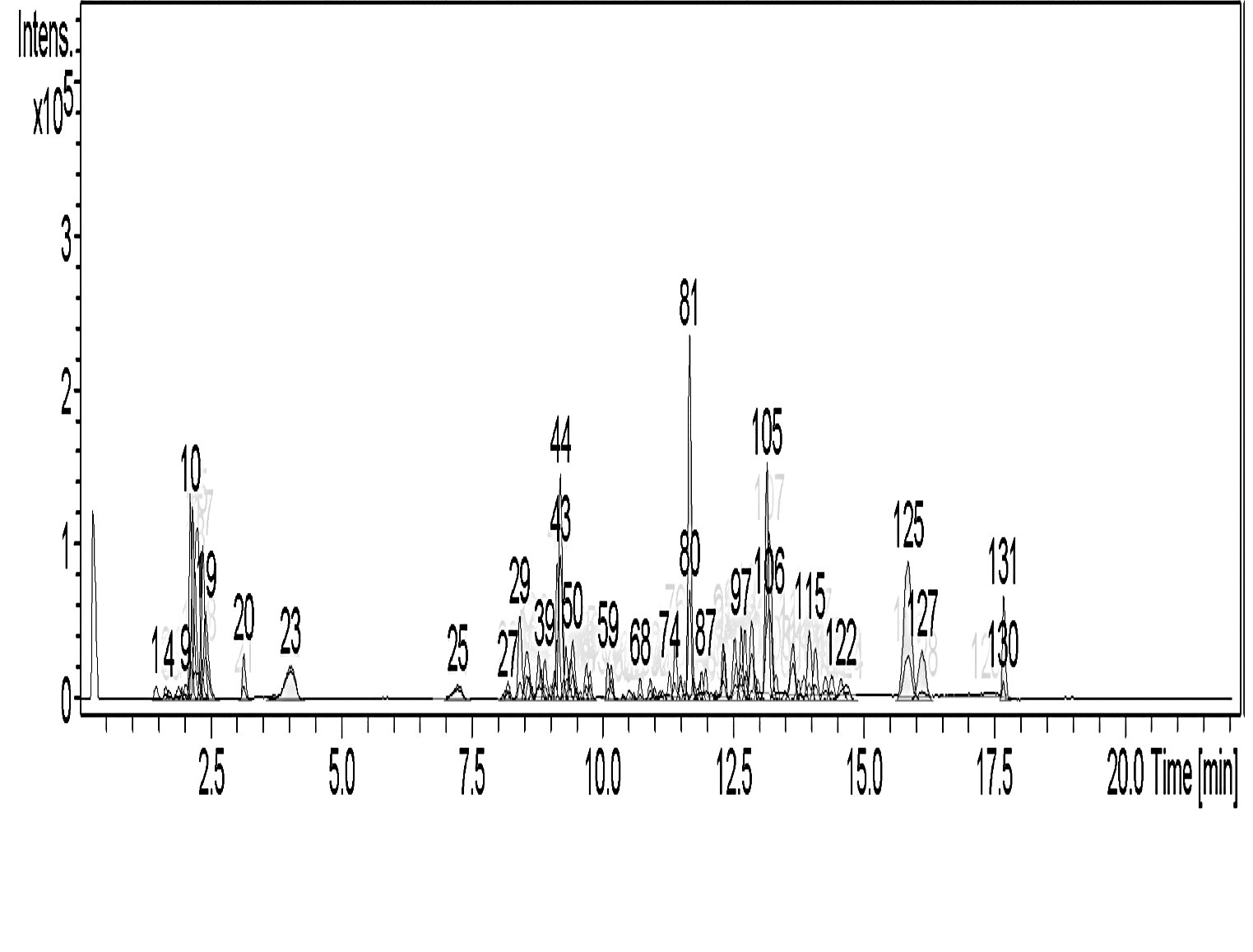
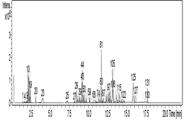
LC-MS positive ionization was applied to identify non-volatile compounds in ethanolic G. gnemon leaf extracts. The LC-MS analysis detected 131 peaks, of which 11 were identified and reported due to their antioxidant relevance (Figure 2). These compounds were analyzed with previously published studies on non-volatile plant leaf extracts. As the study focuses on the antioxidant properties of G. gnemon leaf extract, only antioxidant-active compounds were included. The tentative non-volatile compounds mentioned include diosmetin (Garg et al., 2022), anofinic acid (Elkhouly et al., 2020), furaneol (keto form) (Schwab, 2013), tryptophan (Jiang et al., 2010), traumatic acid (Jabłońska-Trypuć et al., 2016), gentiatibetine (Rahayu & Timotius, 2022), petunidin 3-O-glucoside (Zhou et al., 2020), rhapontigenin (Kolodziejczyk-Czepas & Czepas, 2019), allixin (Borek, 2001), salidroside (Wang et al., 2020), and [10]-gingerol (Dugasani et al., 2010). These compounds have been identified in various plants due to their antioxidant activities.
Rhodiola rosea L. is a globally utilized traditional herbal medicine that is highly regarded for its ability to reduce fatigue, alleviate anxiety, and prevent altitude sickness (Ma et al., 2018; Arabit et al., 2018; Wang et al., 2018). Salidroside, a prominent bioactive compound derived from R. rosea, has demonstrated significant antioxidant activity in a study conducted by Wang et al. (2020). Diosmetin, a flavonoid found in citrus plants, has the potential to treat various disorders (Garg et al., 2022). It scavenges reactive oxygen species production and increases antioxidant concentration (Lee et al., 2020). Pompia juice is effective in preventing damage from reactive oxygen species on cell membranes. The presence of diosmetin in pompia juice has been identified as one of the components responsible for its antioxidant effect (Barberis et al., 2020). Different flavonoids such as kaempferol, luteolin, apigenin, diosmetin, and genistein have been investigated for their antioxidant/pro-oxidant effects. They scavenge free radicals as antioxidants and increase hydroxide production as pro-oxidants (Fang et al., 2020). The aqueous methanolic extracts of Ocimum canum L. showed similar activity, with diosmetin being identified as one of the active plant compounds recovered from the extract (Ononamadu et al., 2019). The dark-purple superfruit blueberries are known for their anthocyanins, which are thought to be the strongest antioxidants found in nature and have shown benefits beyond only scavenging free radicals (Ding et al., 2006; Tulipani et al., 2008; Srivastava et al., 2007). In a recent study carried out by Zhou et al. (2020), blueberry anthocyanins were identified using liquid chromatography-diode array detector-electrospray ionization-tandem mass spectrometry (LC-DAD-ESI-MS2). Notably, petunidin-3-O-glucoside was found to be one of the primary anthocyanin species, accounting for 44.81% of the total anthocyanins in blueberry extract. Allixin, a significant component in aged garlic extract, was also discovered as a potential component in G. gnemon leaf. Aged garlic extract is derived from fresh garlic extracts that have undergone an extended period of age. It is rich in antioxidant phytochemicals, particularly allixin and selenium (Borek, 2001). Zingiber officinale Rosc. commonly known as Zinger has historically been utilized in Ayurvedic, Chinese, and Tibb-Unani herbal remedies to address inflammatory conditions and ailments resulting from oxidative stress. Zinger contains a significant amount of bioactive compounds, among which gingerols are the major ones. In addition, 10-gingerol, alongside two additional gingerols, namely [6]-gingerol and [8]-gingerol, exhibited significant radical scavenging activity in several assessments for antioxidant activity (Dugasani et al., 2010). According to a recent study conducted by Rahayu & Timotius (2022), a straightforward herbal drink was prepared by infusing Moringa oleifera L. leaf with water. The infusion was then analyzed chemically using LC-MS, which revealed the presence of gentiatibetine, an alkaloid that was identified as a significant component responsible for its antioxidant properties.
The findings from the LC-MS evaluation of ethanolic G. gnemon leaf extracts are concisely displayed in Table 3.
3.4 Toxicity test of G. gnemon L. leaf extract using Brine Shrimp Lethality Assay
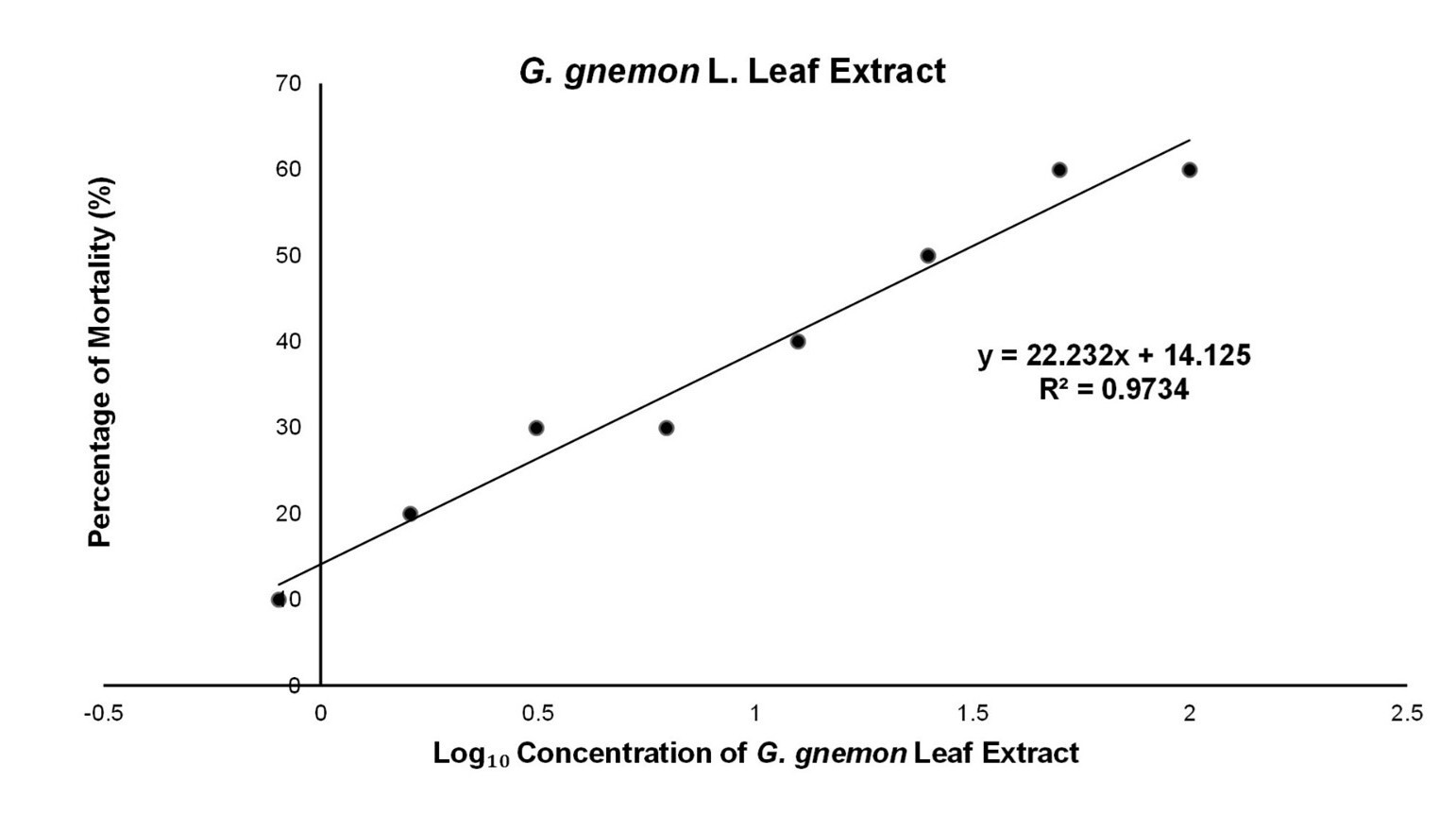
The brine shrimp lethality assay was conducted to assess the safety and effectiveness of the tested plant. This study provides the researchers with an initial understanding of the toxicity levels linked to the chosen plant sample. A graph was generated to illustrate the relationship between extract concentration and death percentage. The experiment revealed a positive correlation between the concentration of G. gnemon leaf extract and the mortality percentage of brine shrimp nauplii. Potassium dichromate was used as a positive control. The highest concentration of DMSO was designated as the negative control, and no deaths were observed in the test species. However, the positive control, potassium dichromate, showed an LC50 value of 0.19 mg/mL, which is less than 1 mg/mL, indicating that potassium dichromate is toxic to the test species. Similar findings have been reported in other studies, where potassium dichromate showed a label below 1 mg/mL had toxicity in brine shrimp lethality assays (Braguini et al., 2018; Sasidharan et al.,2008).
The extract tested had an LC50 value of 41.08 mg/mL, indicating high biological safety and no hazardous properties. This makes it suitable for use in the food industry. Meyer's toxicity index, which classifies crude plant extracts as poisonous if their LC50 value falls below 1 mg/mL, indicates that if the LC50 value exceeds 1 mg/mL, it is safe for human consumption. This index has been widely used in food research and the pharmaceutical industry, making the extract from G. gnemon leaf safe and suitable for use in the food industry (Meyer et al., 1982; Ebadollahi-Natanzi, 2018; Ohikhena et al., 2016). The association between the logarithm of extract concentration and the death % was shown in Figure 3.
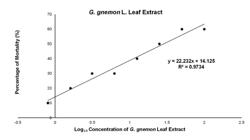
The study demonstrated that the ethanolic G. gnemon crude leaf extracts, at a concentration of 100 mg/mL, exhibited an LC50 value of 41.08 mg/mL. As far as we know, there has been no research undertaken on the toxicity evaluation of G. gnemon leaf extract utilizing the brine shrimp mortality assay. Nevertheless, it is important to mention that the leaves of this plant have been traditionally used as a source of vegetables for a long time and is regarded as safe for consumption. However, it is important to exercise caution when utilizing the extract in the food sector, and its usage should not surpass its LC50 value of 41.08 mg/mL. The leaf extract of G. gnemon contains a variety of bioactive compounds, such as tannins, saponins, terpenoids, flavonoids, flavones, and others. The significant presence of these bioactive constituents may be a contributing factor to the observed restriction of toxicity in the extract (Sarwar et al., 2016).
4 Conclusion
The ethanolic extract of G. gnemon leaf demonstrated the presence of phenolic components and strong antioxidant activity through DPPH, ABTS, and FRAP assays. LC-MS analysis identified 11 antioxidant compounds, while the brine shrimp assay confirmed its non-toxicity. Its historical use as a vegetable further supports its safety. These findings highlight G. gnemon leaf extract as a promising natural antioxidant alternative to synthetic options.
Acknowledgements
The Faculty of Food Science, Universiti Putra Malaysia, provided financial support for this research.
Data Availability Statement
All data generated and analyzed in this study are included in this published article.
-
Cite as:
Trisha, M. R., Dek, M. S. P., & Rukayadi, Y. (2025). Phytochemical analysis, antioxidant and toxicity evaluation of ethanolic Gnetum gnemon L. leaf extracts- A potential natural food additive. Brazilian Journal of Food Technology, 28, e2024061. https://doi.orghttps://doi.org/10.1590/1981-6723.06124
-
Funding:
None.
References
-
Adebooye, O. C., Vijayalakshmi, R., & Singh, V. (2008). Peroxidase activity, chlorophylls and antioxidant profile of two leaf vegetables (Solanum nigrum L. and Amaranthus cruentus L.) under six pretreatment methods before cooking. International Journal of Food Science & Technology, 43(1), 173-178. http://doi.org/10.1111/j.1365-2621.2006.01420.x
» http://doi.org/10.1111/j.1365-2621.2006.01420.x -
Agarwal, H., Dowarah, B., Baruah, P. M., Bordoloi, K. S., Krishnatreya, D. B., & Agarwala, N. (2020). Endophytes from Gnetum gnemon L can protect seedlings against the infection of phytopathogenic bacterium Ralstonia solanacearum as well as promote plant growth in tomato. Microbiological Research, 238, 126503. PMid:32497966. http://doi.org/10.1016/j.micres.2020.126503
» http://doi.org/10.1016/j.micres.2020.126503 -
Anisong, N., Siripongvutikorn, S., Wichienchot, S., & Puttarak, P. (2022). A comprehensive review on nutritional contents and functional properties of Gnetum gnemon Linn. Food Science and Technology, 42(1), e100121. http://doi.org/10.1590/fst.100121
» http://doi.org/10.1590/fst.100121 -
Anwar, F., Saleem, U., Rehman, A. U., Ahmad, B., Ismail, T., Mirza, M. U., & Ahmad, S. (2022). Acute oral, subacute, and developmental toxicity profiling of naphthalene 2-Yl, 2-Chloro, 5-Nitrobenzoate: Assessment based on stress response, toxicity, and adverse outcome pathways. Frontiers in Pharmacology, 12, 810704. PMid:35126145. http://doi.org/10.3389/fphar.2021.810704
» http://doi.org/10.3389/fphar.2021.810704 -
Arabit, J. G. J., Elhaj, R., Schriner, S. E., Sevrioukov, E. A., & Jafari, M. (2018). Rhodiola rosea improves lifespan, locomotion, and neurodegeneration in a drosophila melanogaster model of Huntington’s Disease. BioMed Research International, 2018, 6726874. PMid:29984244. http://doi.org/10.1155/2018/6726874
» http://doi.org/10.1155/2018/6726874 -
Aryal, S., Baniya, M. K., Danekhu, K., Kunwar, P., Gurung, R., & Koirala, N. (2019). Total phenolic content, flavonoid content and antioxidant potential of wild vegetables from Western Nepal. Plants, 8(4), 96. PMid:30978964. http://doi.org/10.3390/plants8040096
» http://doi.org/10.3390/plants8040096 - Augustyniak, A., Bartosz, G., Cipak, A., Duburs, G., Horáková, L., Luczaj, W., Majekova, M., Odysseos, A. D., Rackova, L., Skrzydlewska, E., Stefek, M., Strosová, M., Tirzitis, G., Venskutonis, P. R., Viskupicova, J., Vraka, P. S., & Zarković, N. (2010). Natural and synthetic antioxidants: An updated overview. Free Radical Research, 44(10), 1216-1262. PMid:20836663. http://doi.org/10.3109/10715762.2010.508495
-
Baba, S. A., & Malik, S. A. (2014). Determination of total phenolic and flavonoid content, antimicrobial and antioxidant activity of a root extract of Arisaema jacquemontii Blume. Journal of Taibah University for Science, 9(4), 449-454. https://doi.org/10.1016/j.jtusci.2014.11.001
» https://doi.org/10.1016/j.jtusci.2014.11.001 -
Barberis, A., Deiana, M., Spissu, Y., Azara, E., Fadda, A., Serra, P. A., D’hallewin, G., Pisano, M., Serreli, G., Orrù, G., Scano, A., Steri, D., & Sanjust, E. (2020). Antioxidant, antimicrobial, and other biological properties of pompia juice. Molecules (Basel, Switzerland), 25(14), 3186. PMid:32668641. http://doi.org/10.3390/molecules25143186
» http://doi.org/10.3390/molecules25143186 - Barua, C. C., Haloi, P., & Barua, I. C. (2015). Gnetum gnemon Linn.: A comprehensive review on its biological, pharmacological and pharmacognostic potentials. International Journal of Pharmacognosy and Phytochemical Research, 7(3), 531-539.
-
Bharali, P., Dutta, P., Kalita, M. C., Das, A. K., Tag, H., & Baruah, A. M. (2018). Evaluation of antioxidant and proximate compositions of the leaf extract of Gnetum gnemon L. International Research Journal of Pharmacy, 9(10), 101-105. http://doi.org/10.7897/2230-8407.0910234
» http://doi.org/10.7897/2230-8407.0910234 -
Borek, C. (2001). Antioxidant health effects of aged garlic extract. The Journal of Nutrition, 131(3), 1010S-1015S. PMid:11238807. http://doi.org/10.1093/jn/131.3.1010S
» http://doi.org/10.1093/jn/131.3.1010S -
Braguini, W. L., Pires, N. V., & Alves, B. B. (2018). Phytochemical analysis, antioxidant properties and brine shrimp lethality of unripe fruits of Solanum viarum. Journal of Young Pharmacists: JYP, 10(2), 159-163. http://doi.org/10.5530/jyp.2018.10.36
» http://doi.org/10.5530/jyp.2018.10.36 -
Brand-Williams, W., Cuvelier, M., & Berset, C. (1995). Use of a free radical method to evaluate antioxidant activity. Lebensmittel-Wissenschaft + Technologie, 28(1), 25-30. http://doi.org/10.1016/S0023-6438(95)80008-5
» http://doi.org/10.1016/S0023-6438(95)80008-5 -
Carocho, M., & Ferreira, I. C. (2012). A review on antioxidants, prooxidants and related controversy: natural and synthetic compounds, screening and analysis methodologies and future perspectives. Food and Chemical Toxicology, 51, 15-25. PMid:23017782. http://doi.org/10.1016/j.fct.2012.09.021
» http://doi.org/10.1016/j.fct.2012.09.021 -
Ding, M., Feng, R., Wang, S. Y., Bowman, L., Lu, Y., Qian, Y., Castranova, V., Jiang, B. H., & Shi, X. (2006). Cyanidin-3-glucoside, a natural product derived from blackberry, exhibits chemo preventive and chemotherapeutic activity. The Journal of Biological Chemistry, 281(25), 17359-17368. PMid:16618699. http://doi.org/10.1074/jbc.M600861200
» http://doi.org/10.1074/jbc.M600861200 -
Dugasani, S., Pichika, M. R., Nadarajah, V. D., Balijepalli, M. K., Tandra, S., & Korlakunta, J. N. (2010). Comparative antioxidant and anti-inflammatory effects of [6]-gingerol, [8]-gingerol, [10]-gingerol and [6]-shogaol. Journal of Ethnopharmacology, 127(2), 515-520. PMid:19833188. http://doi.org/10.1016/j.jep.2009.10.004
» http://doi.org/10.1016/j.jep.2009.10.004 -
Dutta, P. P., Bordoloi, M., Roy, S., Narzary, B., Gogoi, K., Bhattacharyya, D. R., Mohapatra, P. K., & Mazumder, B. (2018). Antiplasmodial activity of Gnetum gnemon leaves and compounds isolated from them. Natural Product Communications, 13(10), 1263-1265. http://doi.org/10.1177/1934578X1801301007
» http://doi.org/10.1177/1934578X1801301007 -
Ebadollahi-Natanzi, A. (2018). Toxicity comparison of four cruciferous plant extracts and evaluation of their cytotoxicity-radical scavenging correlations. Jundishapur Journal of Natural Pharmaceutical Products, 13(2), e13866. http://doi.org/10.5812/jjnpp.13866
» http://doi.org/10.5812/jjnpp.13866 -
Elkhouly, H. I., Hamed, A. A., Hosainy, A. M. E., Ghareeb, M. A., & Sidkey, N. M. (2020). Bioactive secondary metabolite from endophytic Aspergillus Tubenginses ASH4 isolated from Hyoscyamus muticus: Antimicrobial, antibiofilm, antioxidant and anticancer activity. Pharmacognosy Journal, 13(2), 434-442. http://doi.org/10.5530/pj.2021.13.55
» http://doi.org/10.5530/pj.2021.13.55 -
Fadl Almoulah, N., Voynikov, Y., Gevrenova, R., Schohn, H., Tzanova, T., Yagi, S., Thomas, J., Mignard, B., Ahmed, A., El Siddig, M., Spina, R., & Laurain-Mattar, D. (2017). Antibacterial, antiproliferative and antioxidant activity of leaf extracts of selected Solanaceae species. South African Journal of Botany, 112, 368-374. http://doi.org/10.1016/j.sajb.2017.06.016
» http://doi.org/10.1016/j.sajb.2017.06.016 -
Fang, X., Gao, W., Yang, Z., Gao, Z., & Li, H. (2020). Dual anti-/prooxidant behaviors of flavonoids pertaining to Cu(II)-catalyzed tyrosine nitration of the insulin receptor kinase domain in an antidiabetic study. Journal of Agricultural and Food Chemistry, 68(22), 6202-6211. PMid:32395994. http://doi.org/10.1021/acs.jafc.0c01676
» http://doi.org/10.1021/acs.jafc.0c01676 -
Fernandes, R. P., Trindade, M. A., Tonin, F. G., Lima, C. G., Pugine, S. M., Munekata, P. E., Lorenzo, J. M., & de Melo, M. P. (2016). Evaluation of antioxidant capacity of 13 plant extracts by three different methods: Cluster analyses applied for selection of the natural extracts with higher antioxidant capacity to replace synthetic antioxidant in lamb burgers. Journal of Food Science and Technology, 53(1), 451-460. PMid:26787964. http://doi.org/10.1007/s13197-015-1994-x
» http://doi.org/10.1007/s13197-015-1994-x -
Garg, M., Chaudhary, S. K., Goyal, A., Sarup, P., Kumari, S., Garg, N., Vaid, L., & Shiveena, B. (2022). Comprehensive review on therapeutic and phytochemical exploration of diosmetin: A promising moiety. Phytomedicine Plus, 2(1), 100179. http://doi.org/10.1016/j.phyplu.2021.100179
» http://doi.org/10.1016/j.phyplu.2021.100179 -
Getoff, N. (2007). Anti-aging and aging factors in life. The role of free radicals. Radiation Physics and Chemistry, 76(10), 1577-1586. http://doi.org/10.1016/j.radphyschem.2007.01.002
» http://doi.org/10.1016/j.radphyschem.2007.01.002 -
Jabłońska-Trypuć, A., Pankiewicz, W., & Czerpak, R. (2016). Traumatic acid reduces oxidative stress and enhances collagen biosynthesis in cultured human skin fibroblasts. Lipids, 51(9), 1021-1035. PMid:27423205. http://doi.org/10.1007/s11745-016-4174-5
» http://doi.org/10.1007/s11745-016-4174-5 -
Jiang, Y., Ng, T. B., Wang, C. R., Li, N., Wen, T. Y., Qiao, W. T., Zhang, D., Cheng, Z. H., & Liu, F. (2010). First isolation of tryptophan from edible lotus (Nelumbo nucifera Gaertn) rhizomes and demonstration of its antioxidant effects. International Journal of Food Sciences and Nutrition, 61(4), 346-356. PMid:20465432. http://doi.org/10.3109/09637480903427913
» http://doi.org/10.3109/09637480903427913 -
Kato, H., Samizo, M., Kawabata, R., Takano, F., & Ohta, T. (2011). Stilbenoids from the melinjo (Gnetum gnemon L.) fruit modulate cytokine production in murine Peyer's patch cells ex vivo.Planta Medica,77(10), 1027-1034. https://doi.org/10.1055/s-0030-1250742
» https://doi.org/10.1055/s-0030-1250742 -
Kolodziejczyk-Czepas, J., & Czepas, J. (2019). Rhaponticin as an anti-inflammatory component of rhubarb: A minireview of the current state of the art and prospects for future research. Phytochemistry Reviews, 18(5), 1375-1386. http://doi.org/10.1007/s11101-019-09652-w
» http://doi.org/10.1007/s11101-019-09652-w -
Kumar, Y., Yadav, D. N., Ahmad, T., & Narsaiah, K. (2015). Recent trends in the use of natural antioxidants for meat and meat products. Comprehensive Reviews in Food Science and Food Safety, 14(6), 796-812. http://doi.org/10.1111/1541-4337.12156
» http://doi.org/10.1111/1541-4337.12156 -
Lee, H., Sung, J., Kim, Y., Jeong, H. S., & Lee, J. (2020). Inhibitory effect of diosmetin on inflammation and lipolysis in coculture of adipocytes and macrophages. Journal of Food Biochemistry, 44(7), e13261. PMid:32367620. http://doi.org/10.1111/jfbc.13261
» http://doi.org/10.1111/jfbc.13261 -
Lobo, V., Patil, A., Phatak, A., & Chandra, N. (2010). Free radicals, antioxidants and functional foods: Impact on human health. Pharmacognosy Reviews, 4(8), 118-126. PMid:22228951. http://doi.org/10.4103/0973-7847.70902
» http://doi.org/10.4103/0973-7847.70902 -
Lourenço, S. C., & Alves, V. D. (2019). Antioxidants of natural plant origins: From sources to food industry applications. Molecules (Basel, Switzerland), 24(22), 4132. PMid:31731614. http://doi.org/10.3390/molecules24224132
» http://doi.org/10.3390/molecules24224132 -
Lourenço, S. C., Moldão-Martins, M., & Alves, V. D. (2019). Antioxidants of natural plant origins: From sources to food industry applications. Molecules (Basel, Switzerland), 24(22), 4132. PMid:31731614. http://doi.org/10.3390/molecules24224132
» http://doi.org/10.3390/molecules24224132 -
Lü, J. M., Lin, P. H., Yao, Q., & Chen, C. (2010). Chemical and molecular mechanisms of antioxidants: Experimental approaches and model systems. Journal of Cellular and Molecular Medicine, 14(4), 840-860. PMid:19754673. http://doi.org/10.1111/j.1582-4934.2009.00897.x
» http://doi.org/10.1111/j.1582-4934.2009.00897.x -
Ma, G., Zheng, Q., Xu, M., Zhou, X., Lu, L., Li, Z., & Zheng, G. (2018). Rhodiola rosea L. improves learning and memory function: Preclinical evidence and possible mechanisms. Frontiers in Pharmacology, 9, 367723. PMid:30564123. http://doi.org/10.3389/fphar.2018.01415
» http://doi.org/10.3389/fphar.2018.01415 -
Mathew, S., & Abraham, T. E. (2006). In vitro antioxidant activity and scavenging effects of Cinnamomum verum leaf extract assayed by different methodologies. Food and Chemical Toxicology, 44(2), 198-206. PMid:16087283. http://doi.org/10.1016/j.fct.2005.06.013
» http://doi.org/10.1016/j.fct.2005.06.013 -
Mensah, M. L., Komlaga, G., Forkuo, A. D., Firempong, C., Anning, A. K., & Dickson, R. A. (2019). Toxicity and safety implications of herbal medicines used in Africa. In P. F. Builders (Ed.), Herbal medicine (pp. 20-24). London: IntechOpen. http://doi.org/10.5772/intechopen.72437
» http://doi.org/10.5772/intechopen.72437 -
Meyer, B. N., Ferrigni, N. R., Putnam, J. E., Jacobsen, L., Nichols, D. E., & McLaughlin, J. L. (1982). Brine shrimp: A convenient general bioassay for active plant constituents. Planta Medica, 45(5), 31-34. PMid:17396775. http://doi.org/10.1055/s-2007-971236
» http://doi.org/10.1055/s-2007-971236 -
Ohikhena, F. U., Wintola, O. A., & Afolayan, A. J. (2016). Toxicity assessment of different solvent extracts of the medicinal plant, Phragmanthera capitata (Sprengel) alle on brine shrimp (Artemia salina). International Journal of Pharmacology, 12(7), 701-710. http://doi.org/10.3923/ijp.2016.701.710
» http://doi.org/10.3923/ijp.2016.701.710 -
Ononamadu, C., Ihegboro, G. O., Owolarafe, T. A., Salawu, K., Fadilu, M., Ezeigwe, O. C., Oshobu, M. L., & Nwachukwu, F. C. (2019). Identification of potential antioxidant and hypoglycemic compounds in aqueous-methanol fraction of methanolic extract of Ocimum canum leaves. Analytical and Bioanalytical Chemistry Research, 6(2), 431-439. http://doi.org/10.22036/abcr.2019.161326.1291
» http://doi.org/10.22036/abcr.2019.161326.1291 -
Pinelo, M., Rubilar, M., Jerez, M., Sineiro, J., & Núñez, M. J. (2005). Effect of solvent, temperature, and solvent-to-solid ratio on the total phenolic content and antiradical activity of extracts from different components of grape pomace. Journal of Agricultural and Food Chemistry, 53(6), 2111-2117. PMid:15769143. http://doi.org/10.1021/jf0488110
» http://doi.org/10.1021/jf0488110 -
Pour, B. M., Latha, L. Y., & Sasidharan, S. (2011). Cytotoxicity and oral acute toxicity studies of Lantana camara leaf extract. Molecules (Basel, Switzerland), 16(5), 3663-3674. PMid:21540795. http://doi.org/10.3390/molecules16053663
» http://doi.org/10.3390/molecules16053663 - Prieto, J. M. (2012). Procedure: Preparation of DPPH radical, and antioxidant scavenging assay. DPPH Microplate Protocol, 7-9.
-
Rahayu, I., & Timotius, K. H. (2022). Phytochemical analysis, antimutagenic and antiviral activity of Moringa oleifera L. leaf infusion: In vitro and in silico studies. Molecules (Basel, Switzerland), 27(13), 4017. http://doi.org/10.3390/molecules27134017
» http://doi.org/10.3390/molecules27134017 -
Rahman, M. M., Islam, M. B., Biswas, M., & Khurshid Alam, A. H. M. (2015). In vitro antioxidant and free radical scavenging activity of different parts of Tabebuia pallida growing in Bangladesh. BMC Research Notes, 8(1), 1-9. PMid:26518275. http://doi.org/10.1186/s13104-015-1618-6
» http://doi.org/10.1186/s13104-015-1618-6 -
Rajendran, P., Nandakumar, N., Rengarajan, T., Palaniswami, R., Gnanadhas, E. N., Lakshminarasaiah, U., Gopas, J., & Nishigaki, I. (2014). Antioxidants and human diseases. Clinica Chimica Acta, 436, 332-347. PMid:24933428. http://doi.org/10.1016/j.cca.2014.06.004
» http://doi.org/10.1016/j.cca.2014.06.004 -
Rajurkar, N. S., & Hande, S. M. (2011). Estimation of phytochemical content and antioxidant activity of some selected traditional Indian medicinal plants. Indian Journal of Pharmaceutical Sciences, 73(2), 146-151. PMid:22303056. http://doi.org/10.4103/0250-474X.91574
» http://doi.org/10.4103/0250-474X.91574 - Rukayadi, Y., Lee, K. H., Han, S. H., Kim, S. K., & Hwang, J. K. (2009). Antibacterial and sporicidal activity of macelignan isolated from nutmeg (Myristica fragrans Houtt.) against Bacillus cereus. Food Science and Biotechnology, 18(5), 1301-1304.
-
Santoso, M., Naka, Y., Angkawidjaja, C., Yamaguchi, T., Matoba, T., & Takamura, H. (2010). Antioxidant and DNA damage prevention activities of the edible parts of Gnetum gnemon and their changes upon heat treatment. Food Science and Technology Research, 16(6), 549-556. http://doi.org/10.3136/fstr.16.549
» http://doi.org/10.3136/fstr.16.549 - Sarwar, S., Khatun, A., Nahar, K., & Rahman, M. A. (2016). Phytochemical screening, cytotoxic and anthelmintic activities of the methanolic leaf extract of Terminalia catappa Linn. Journal of Pharmacognosy and Phytochemistry, 5(6), 24-27.
-
Sasidharan, S., Demirtaş, İ., & Jain, K. K. (2008). In Vivo and In Vitro Toxicity Study of Gracilaria changii. Pharmaceutical Biology, 46(6), 413-417. http://doi.org/10.1080/13880200802055867
» http://doi.org/10.1080/13880200802055867 -
Schwab, W. (2013). Natural 4-hydroxy-2,5-dimethyl-3(2H)-furanone (Furaneol®). Molecules (Basel, Switzerland), 18(6), 6936-6951. PMid:23765232. http://doi.org/10.3390/molecules18066936
» http://doi.org/10.3390/molecules18066936 - Seal, T., & Chaudhuri, K. (2016). Nutritional analysis of some selected wild edible plants consumed by the tribal people of Meghalaya state in India. International Journal of Food Sciences and Nutrition, 1(6), 39-43.
-
Singleton, V. L., Orthofer, R., & Lamuela-Raventós, R. M. (1999). [14] Analysis of total phenols and other oxidation substrates and antioxidants by means of folin-ciocalteu reagent. Methods in Enzymology, 299, 152-178. http://doi.org/10.1016/S0076-6879(99)99017-1
» http://doi.org/10.1016/S0076-6879(99)99017-1 -
Soobrattee, M., Neergheen, V., Luximon-Ramma, A., Aruoma, O., & Bahorun, T. (2005). Phenolics as potential antioxidant therapeutic agents: Mechanism and actions. Mutation Research, 579(1-2), 200-213. PMid:16126236. http://doi.org/10.1016/j.mrfmmm.2005.03.023
» http://doi.org/10.1016/j.mrfmmm.2005.03.023 -
Srivastava, A., Akoh, C. C., Fischer, J., & Krewer, G. (2007). Effect of anthocyanin fractions from selected cultivars of Georgia-grown blueberries on apoptosis and phase II enzymes. Journal of Agricultural and Food Chemistry, 55(8), 3180-3185. PMid:17381106. http://doi.org/10.1021/jf062915o
» http://doi.org/10.1021/jf062915o -
Tilvi, S., Majik, M. S., & Singh, K. S. (2013). Mass spectrometry for determination of bioactive compounds. Comprehensive Analytical Chemistry, 65, 193-218. http://doi.org/10.1016/B978-0-444-63359-0.00008-2
» http://doi.org/10.1016/B978-0-444-63359-0.00008-2 -
Tulipani, S., Mezzetti, B., Capocasa, F., Bompadre, S., Beekwilder, J., de Vos, C. H., Capanoglu, E., Bovy, A., & Battino, M. (2008). Antioxidants, phenolic compounds, and nutritional quality of different strawberry genotypes. Journal of Agricultural and Food Chemistry, 56(3), 696-704. PMid:18211027. http://doi.org/10.1021/jf0719959
» http://doi.org/10.1021/jf0719959 -
Valavanidis, A., Vlachogianni, T., Fiotakis, K., & Loridas, S. (2013). Pulmonary oxidative stress, inflammation and cancer: Respirable particulate matter, fibrous dusts and ozone as major causes of lung carcinogenesis through reactive oxygen species mechanisms. International Journal of Environmental Research and Public Health, 10(9), 3886-3907. PMid:23985773. http://doi.org/10.3390/ijerph10093886
» http://doi.org/10.3390/ijerph10093886 -
Valko, M., Leibfritz, D., Moncol, J., Cronin, M. T., Mazur, M., & Telser, J. (2006a). Free radicals and antioxidants in normal physiological functions and human disease. The International Journal of Biochemistry & Cell Biology, 39(1), 44-84. PMid:16978905. http://doi.org/10.1016/j.biocel.2006.07.001
» http://doi.org/10.1016/j.biocel.2006.07.001 -
Valko, M., Rhodes, C., Moncol, J., Izakovic, M., & Mazur, M. (2006b). Free radicals, metals and antioxidants in oxidative stress-induced cancer. Chemico-Biological Interactions, 160(1), 1-40. PMid:16430879. http://doi.org/10.1016/j.cbi.2005.12.009
» http://doi.org/10.1016/j.cbi.2005.12.009 - Velasco, J., Dobarganes, C., & Márquez-Ruiz, G. (2009). Oxidative rancidity in foods and food quality. In L. H. Skibsted, J. Risbo & M. L. Andersen (Eds.), Chemical deterioration and physical instability of food and beverages (pp. 3-32). Cambridge: Woodhead Publishing Limited. http://doi.org/10.1533/9781845699260.1.3.
-
Verheij, E. W. M., & Sukendar (2016). Gnetum gnemon (PROSEA) Retrieved in 2025, May 14, from https://uses.plantnet-project.org/en/Gnetum_gnemon_(PROSEA)
» https://uses.plantnet-project.org/en/Gnetum_gnemon_(PROSEA) -
Wanakhachornkrai, O., Banglao, W., Thongmee, A., & Sukplang, P. (2020). Determination of antioxidant, anti-aging and cytotoxicity activity of the essential oils from Cinnamomum zeylanicum. Journal of Microbiology, Biotechnology and Food Sciences, 10(3), 436-440. http://doi.org/10.15414/jmbfs.2020.10.3.436-440
» http://doi.org/10.15414/jmbfs.2020.10.3.436-440 -
Wang, X., Du, X., Zhou, Y., Su, W., Su, F., & Zhang, S. (2018). Time-dependent effects of late-onset dietary intake of salidroside on lifespan and age-related biomarkers of the annual fish Nothobranchius guentheri. Oncotarget, 9(19), 14882-14894. PMid:29599913. http://doi.org/10.18632/oncotarget.23957
» http://doi.org/10.18632/oncotarget.23957 -
Wang, Y., Zhou, S., Shen, C., & Jiang, J. (2020). Isolation and identification of four antioxidants from Rhodiola crenulata and evaluation of their UV photoprotection capacity in vitro. Journal of Functional Foods, 66, 103825. http://doi.org/10.1016/j.jff.2020.103825
» http://doi.org/10.1016/j.jff.2020.103825 -
Wazir, D., Ahmad, S., Muse, R., Mahmood, M., & Shukor, M. Y. (2011). Antioxidant activities of different parts of Gnetum gnemon L. Journal of Plant Biochemistry and Biotechnology, 20(2), 234-240. http://doi.org/10.1007/s13562-011-0051-8
» http://doi.org/10.1007/s13562-011-0051-8 -
Wojtunik-Kulesza, K. A., Oniszczuk, A., Oniszczuk, T., & Waksmundzka-Hajnos, M. (2016). The influence of common free radicals and antioxidants on development of Alzheimer’s Disease. Biomedicine and Pharmacotherapy, 78, 39-49. PMid:26898423. http://doi.org/10.1016/j.biopha.2015.12.024
» http://doi.org/10.1016/j.biopha.2015.12.024 -
Wong, J. X., Ramli, S., & Chen, S. N. (2021). Assessment of toxic effect of Centella asiatica extract and its application as natural preservative in fresh-cut mango, pear and cabbage. Journal of Food Processing and Preservation, 45(10), e15824. http://doi.org/10.1111/jfpp.15824
» http://doi.org/10.1111/jfpp.15824 -
Xiao, F., Xu, T., Lu, B., & Liu, R. (2020). Guidelines for antioxidant assays for food components. Food Frontiers, 1(1), 60-69. http://doi.org/10.1002/fft2.10
» http://doi.org/10.1002/fft2.10 -
Xu, X., Liu, A., Hu, S., Ares, I., Martínez-Larrañaga, M., Wang, X., Martínez, M., Anadón, A., & Martínez, M. (2021). Synthetic phenolic antioxidants: Metabolism, hazards and mechanism of action. Food Chemistry, 353, 129488. PMid:33714793. http://doi.org/10.1016/j.foodchem.2021.129488
» http://doi.org/10.1016/j.foodchem.2021.129488 -
Zhou, L., Xie, M., Yang, F., & Liu, J. (2020). Antioxidant activity of high purity blueberry anthocyanins and the effects on human intestinal microbiota. Lebensmittel-Wissenschaft + Technologie, 117, 108621. http://doi.org/10.1016/j.lwt.2019.108621
» http://doi.org/10.1016/j.lwt.2019.108621
Edited by
-
Associate Editor:
Fabio Gomes Moura.