 Identification of fava bean genotypes tolerant and susceptible to water deficit
Abstract
Of the genus Phaseolus, fava beans are of great socio-economic importance to the Brazilian Northeast due to their nutritional profile and dryland cultivation. Legume cultivation has been threatened by environmental changes and processes of aridity and desertification around the world, especially in the semi-arid region of Brazil, which has high rainfall variability with irregular rainfall throughout the year. This research aimed to identify fava bean genotypes that are tolerant and susceptible to water deficit in seedlings. The trials were carried out at the Plant Biology Laboratory (LABIV) of the State University of Ceará (UECE), in Fortaleza-CE. Sixteen cultivars were selected and parameters related to the physiological quality of the seeds were analyzed under conditions of water stress induced by PEG 6000, with osmotic potentials of 0.0 MPa and -0.3 MPa. A survival curve was used to identify contrasting genotypes. It was observed that the germination test and germination speed index explained approximately 77% of the variability in the data. The genotypes BF 306 and BF 313 presented better performance than the other cultivars, showing tolerance to water deficit, while the genotypes BF 308, BF 302, BF 311, BF 303 and BF 293 obtained the worst values, showing their susceptibility to drought. The Screening Box method showed that genotype BF 301 was susceptible to water deficit and its survival was restricted to 25 days, indicating its greater vulnerability to water deficit in relation to other analyzed cultivars.
Keywords:
genetic variability; Phaseolus lunatus L.; polyethylene glycol; survival curve; drought
Resumo
Do gênero Phaseolus, a fava é de grande importância socioeconômica para o Nordeste brasileiro devido ao seu perfil nutricional e cultivo em terras secas. O cultivo de leguminosas tem sido ameaçado por mudanças ambientais e processos de aridez e desertificação em todo o mundo, especialmente na região semiárida do Brasil, que apresenta alta variabilidade pluviométrica com precipitações irregulares ao longo do ano. Esta pesquisa teve como objetivo identificar genótipos de fava que são tolerantes e suscetíveis ao déficit hídrico em plântulas. Os ensaios foram realizados no Laboratório de Biologia Vegetal (LABIV) da Universidade Estadual do Ceará (UECE), em Fortaleza-CE. Foram selecionadas 16 cultivares e analisados parâmetros relacionados à qualidade fisiológica das sementes, sob condições de estresse hídrico induzido pelo PEG 6000, nos potenciais osmóticos de 0,0 MPa e -0,3 MPa. Uma curva de sobrevida foi utilizada para identificar genótipos contrastantes. Observou-se que o teste de germinação e o índice de velocidade de germinação explicaram aproximadamente 77% da variabilidade nos dados. Os genótipos BF 306 e BF 313 apresentaram melhor desempenho que as demais cultivares, apresentando tolerância ao déficit hídrico, enquanto os genótipos BF 308, BF 302, BF 311, BF 303 e BF 293 obtiveram os piores valores, mostrando sua suscetibilidade à seca. O método Screening Box mostrou que o genótipo BF 301 era suscetível ao déficit hídrico e sua sobrevida foi restrita a 25 dias, indicando maior vulnerabilidade ao déficit hídrico em relação às demais cultivares analisadas.
Palavras-chave:
variabilidade genética; Phaseolus lunatus L.; polietilenoglicol; curva de sobrevida; seca
1. Introduction
The fava bean is the second species belonging to the genus Phaseolus that is of socio-economic importance to the Brazilian Northeast, due to its hardiness, diversity and adaptability to the environmental conditions of the semi-arid region (Cavalcante et al., 2024). It is grown in North and South America, East and West Africa, Europe and Southeast Asia, making it an important food crop for the inhabitants of various countries. In Brazil, the Northeast region accounted for around 99% of national production in 2021, with the states of Ceará, Pernambuco and Paraíba being the largest producers (Lopes et al., 2024).
Most cultivated fava bean genotypes are of the 'creole' type and, thanks to this characteristic, many are selected for plant breeding programs due to their variability expressed in the form of a wide diversity of shapes, colors, textures and sizes of their seeds (Assunção-Filho et al., 2022). In addition to these characteristics, it should be noted that fava beans have an excellent nutritional profile, such as: high protein content, compared to other legumes; low fat content; amino acids, minerals, fiber and B vitamins; and can complement the diet along with other cereals (Adebo, 2023).
Legume cultivation has been threatened by environmental changes and processes of aridity and desertification around the world, especially in the semi-arid region of Brazil, which has high rainfall variability with irregular rainfall throughout the year (Luna et al., 2021). In response to these changes, the cultivation of local and traditional drought-adapted varieties could be an effective strategy for mitigating this problem related to agricultural systems, given the climate changes expected for this century (Martínez-Nieto et al., 2020).
The use of PEG 6000 (polyethylene glycol) has been reported in many studies in order to investigate the morphophysiological, biochemical and metabolic responses of different types of grains after the induction of these genotypes to drought conditions, as can be seen in the following studies: common bean (Phaseolus vulgaris L.) (Yasar et al., 2014); cowpea (Vigna unguiculata L. Walp.) (Carvalho et al., 2019); lentil (Lens culinaris Medik) (Keshtiban et al., 2015); soybean (Glycine max (Linn.) Merr.) (Wang et al., 2022); maize (Zea mays L.) (Sousa et al., 2023) and broad bean (Phaseolus lunatus L.) (Nascimento et al., 2019).
The Screening Box method was proposed by Singh et al. (1999) with the aim of identifying genotypes of cowpea (Vigna unguiculata L. Walp.) that are tolerant and susceptible to water deficit through a permanent wilting curve. Adaptations of this methodology are present in the works of Lima et al. (2018) and Sanogo et al. (2023), both evaluating cowpea genotypes; Pardo et al. (2015) studying soybean genotypes; Singh et al. (2017) and Susanto et al. (2019) researching rice (Oryza sativa L.); Meeks et al. (2013) when evaluating corn genotypes (Zea mays L.). In view of the above, the aim of this work was to identify fava bean genotypes that are tolerant and susceptible to water deficit in seedlings.
2. Material and Methods
2.1. Acquisition of plant material
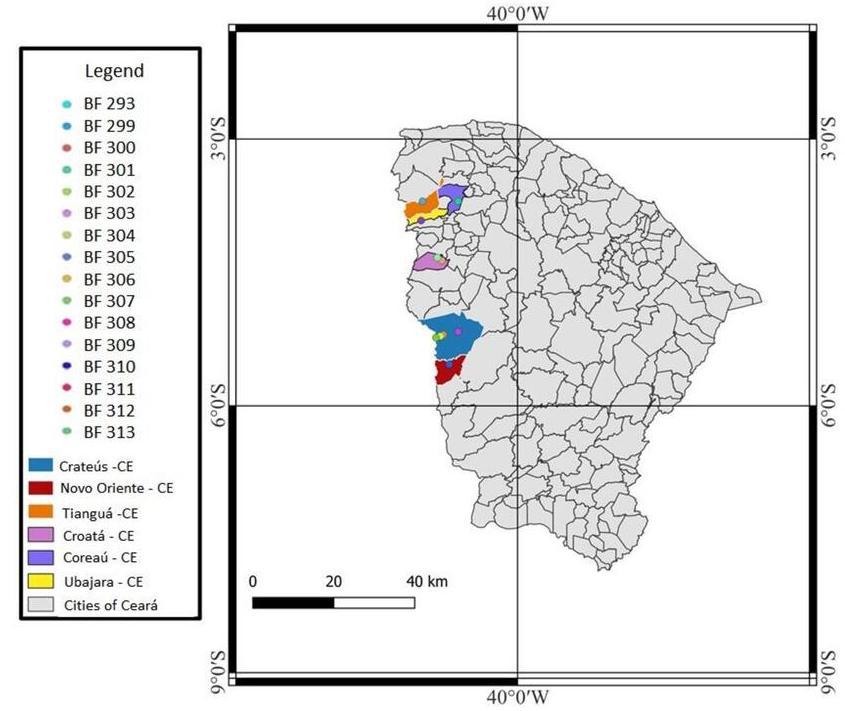
We chose 16 fava bean genotypes from different municipalities in Ceará, obtained through the material transfer agreement between the Plant Ecophysiology Laboratory (ECOFISIO/UECE) and Embrapa Genetic Resources and Biotechnology (CENARGEN). Information on the collection sites for the genotypes used in this research is described in Figure 1.

2.2. Water stress induced by PEG 6000 (Polyethylene glycol)
The treatments were arranged in a completely randomized design (DIC): 16 x 2 (16 genotypes and two osmotic potentials: -0.0MPa (control treatment – T1) and -0.3MPa (water deficit – T2) obtained by wetting with distilled water and PEG 6000 solution, respectively, in four replicates of six seeds (Sá et al., 2021). The seeds of each genotype were moistened with distilled water and polyethylene glycol 6000 solution at a concentration of 151.402 g/L, in an amount equivalent to 2.5 times the mass of the paper, and incubated in a BOD germinator (Lima et al., 2018; Villela et al., 1991).
In order to determine which genotypes were tolerant and susceptible to water deficit, the germination test (TG) and the first count (FC) (Brasil, 2009) were determined; the germination speed index (GSI) (Mangure, 1962), considering a germinated seed to be one that had a root protrusion of 2 mm. After the end of the germination test, the following were also assessed: the length of the radicle (RL) and aerial part (APL), the length of the seedling (SL); the fresh mass of the radicle (FMR) and aerial part (FMAP) and their ratio (FMR/FMAP), fresh mass of the seedling (FMS); dry mass of the radicle (DMR), dry mass of the aerial part (DMPA), dry mass of the seedling (DMS) and the ratio (DMR/DMPA) (Popinigis, 1985).
2.3. Water stress using the Screening Box method
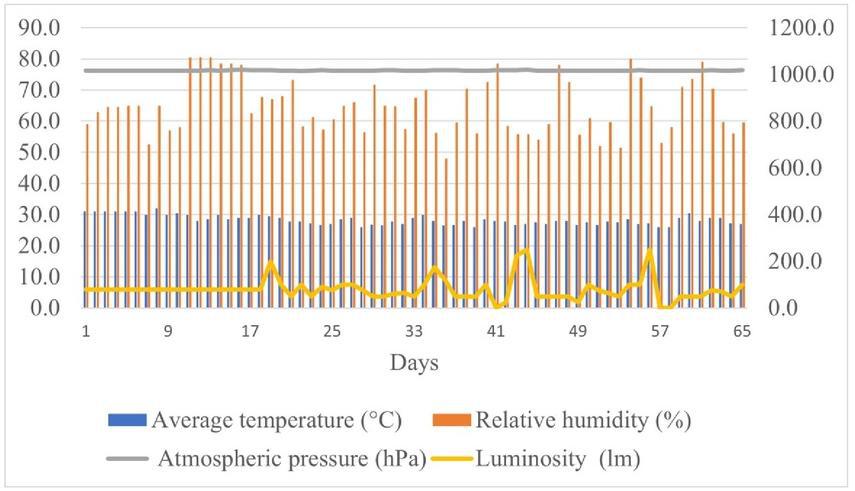
The trial was conducted in a shaded environment in the experimental area of the Plant Biology Laboratory (LABIV) belonging to the Environmental Studies Center (NEA) of the Science and Technology Center (CCT) of the State University of Ceará (UECE), located on the Itaperi Campus (latitude: 3°47’43.6“S; longitude: 38°33’29.7”W) in Fortaleza-CE; from January to May 2024. Temperature (°C), atmospheric pressure (hPa) and relative humidity (%) were collected daily using a ®Learning Resources Meteorological Center. Brightness was measured using a ®Top Garden light meter in lumens. The weather data for the period of the experiment is shown in Figure 2.

Average temperature (°C), relative humidity (%), atmospheric pressure (hPa) and luminosity (lm) in the shaded environment of the experimental area of the Plant Biology Laboratory (LABIV), Fortaleza-CE.
The methodologies used in the works by Lima et al. (2018) and Singh et al. (1999), with adaptations, were used to assess water deficit using the 'Screening Box' technique. A randomized block design (RBL) was used: 16 genotypes and 4 replications. Initially, the seeds were induced to germinate in accordance with the Rules for Seed Analysis (Brasil, 2009), before being introduced into the blocks. Thirty seeds of each genotype were sterilized by immersion in commercial sodium hypochlorite (NaClO) (2.5% active ingredient) at 5% for 5 min. They were then washed with distilled water and distributed in Petri dishes on two 15 cm sheets of quality filter paper, moistened with distilled water in an amount equivalent to 2.5 times the mass of the dry paper. The Petri dishes were placed in aluminum trays and transferred to a BOD germinator with a temperature of 25°C and a photoperiod of 12h (day/night), considering a germinated seed to be one that had a root protrusion of 2 mm.
The seeds of the genotypes were transplanted into plastic boxes measuring 56 cm long, 36 cm wide and 26 cm deep; filled with 30.5 kg of substrate made up of sand sieved through a 5 mm mesh, worm humus and vermiculite in a 6:3:1 ratio, mixed until homogeneous (Jacinto-Júnior et al., 2019). The volume of substrate occupied in the box corresponded to a depth of 15 cm.
The spacing was 6 cm between seedlings and 7 cm between rows, which contained 6 seedlings of each genotype, constituting a repetition. The boxes were irrigated until the appearance of the 1st compound leaf (stage V3 of the bean phenological cycle) with enough water to saturate 60% of the field capacity, as established in the Rules for seed analysis (Brasil, 2009). After all the genotypes reached the V3 phase of phenological growth, irrigation was stopped, the number of live and dead plants assessed daily, the average number of days until wilting and a survival curve was drawn up.
2.4. Statistical analysis
The results were submitted to analysis of variance (ANOVA) and the means were compared using the Tukey test at 5% probability level, with the aid of the ESTAT software (ESTAT, 2006). The survival curve was analyzed using the Log-rank test and the curves were compared using the Cox-table test at the 5% probability level. Principal component analysis (PCA) and hierarchical cluster analysis (HCA) were carried out using ®Jamovi software (Jamovi, 2022). Clustering was carried out using Ward's method based on the Euclidean distances of all the quantitative descriptors described in the linear correlation matrix (Islam et al., 2024).
3. Results
3.1. Water Stress Induced by PEG 6000 (Polyethylene Glycol)
3.1.1. Germination Test, First Count, and Germination Speed Index
For the variables analyzed—germination test, first count, and germination speed index—a significant interaction (p > 0.05) was observed when comparing genotypes with different osmotic potentials (Figure 3). Figure 3A presents the results of the germination test, showing that genotypes BF 299, BF 304, BF 305, BF 306, BF 307, and BF 309 performed similarly in both treatments, achieving germination percentages above 90% with no statistically significant differences among them. In contrast, the worst values were recorded for genotypes BF 293, BF 301, BF 302, BF 303, BF 308, and BF 311, all of which had percentages below 60%.

Germination test – GT (%) (3A), first count – FC (%) (3B) and germination speed index – GSI (3C) in fava bean genotypes irrigated (0.0 MPa) and under water deficit (-0.3 MPa). Averages followed by the same uppercase letter in the same genotype and lowercase letter in the same osmotic potential do not differ according to Tukey’s test at the 5% probability level.
Figure 3B illustrates the variation in the first count germination percentage between the irrigated (0.0 MPa) and water deficit (–0.3 MPa) treatments. The best-performing genotype in both conditions was BF 306, which maintained 100% germination; no statistical differences were noted between the treatments for this genotype. Conversely, genotypes BF 308, BF 293, and BF 303 reached 0% germination at –0.3 MPa, and these differences were statistically significant.
Figure 3C displays the values for the germination speed index (GSI), indicating that GSI decreased as the osmotic potential was reduced. While most genotypes exhibited a reduction in GSI of less than 60% when comparing the two treatments, cultivars BF 303, BF 308, and BF 293 experienced reductions of 67.75% and 91%.
3.1.2. Radicle Length (RL), Aerial Part Length (APL), and Seedling Length (SL)
Most of the morphological variables associated with radicle, aerial part, and seedling length showed a significant interaction (p > 0.05) when comparing genotypes across treatments (Figure 4). In Figure 4A, genotype BF 299 exhibited the worst performance, with a 65% reduction in radicle length relative to the irrigated treatment. In contrast, cultivars BF 307, BF 305, BF 312, BF 293, and BF 310 displayed reductions ranging between 30% and 40%, while genotypes BF 306, BF 301, BF 309, BF 313, BF 300, and BF 303 showed an increase in root length under water deficit conditions (exceeding 40% relative to the irrigated treatment).

Length of radicle (4A), aerial part (4B) and seedling (4C) of fava bean genotypes under irrigation (0.0 MPa) and under water deficit induced by PEG 6000 (-0.3 MPa). Averages followed by the same uppercase letter in the same genotype and lowercase letter in the same osmotic potential do not differ according to Tukey’s test at the 5% probability level.
Figure 4B presents shoot length (SL) data, revealing that all genotypes—except BF 303, which maintained shoot length similar to the irrigated treatment—exhibited reduced shoot growth under PEG-induced stress. This outcome is consistent with the findings of Nascimento et al. (2019), who reported that water deficit affects biological processes such as growth, elongation, and cell wall synthesis.
Figure 4C indicates that seedling length was generally reduced for most genotypes when exposed to PEG. However, genotypes BF 306, BF 309, BF 301, BF 311, BF 300, BF 303, and BF 313 did not show significant differences between treatments, suggesting that they maintained seedling growth values close to those of the irrigated treatment. Notably, BF 306 and BF 313 exhibited the longest seedling lengths under the PEG treatment.
3.1.3. Fresh Mass of the Radicle, Aerial Part, and Seedling; FMR/FMAP Ratio
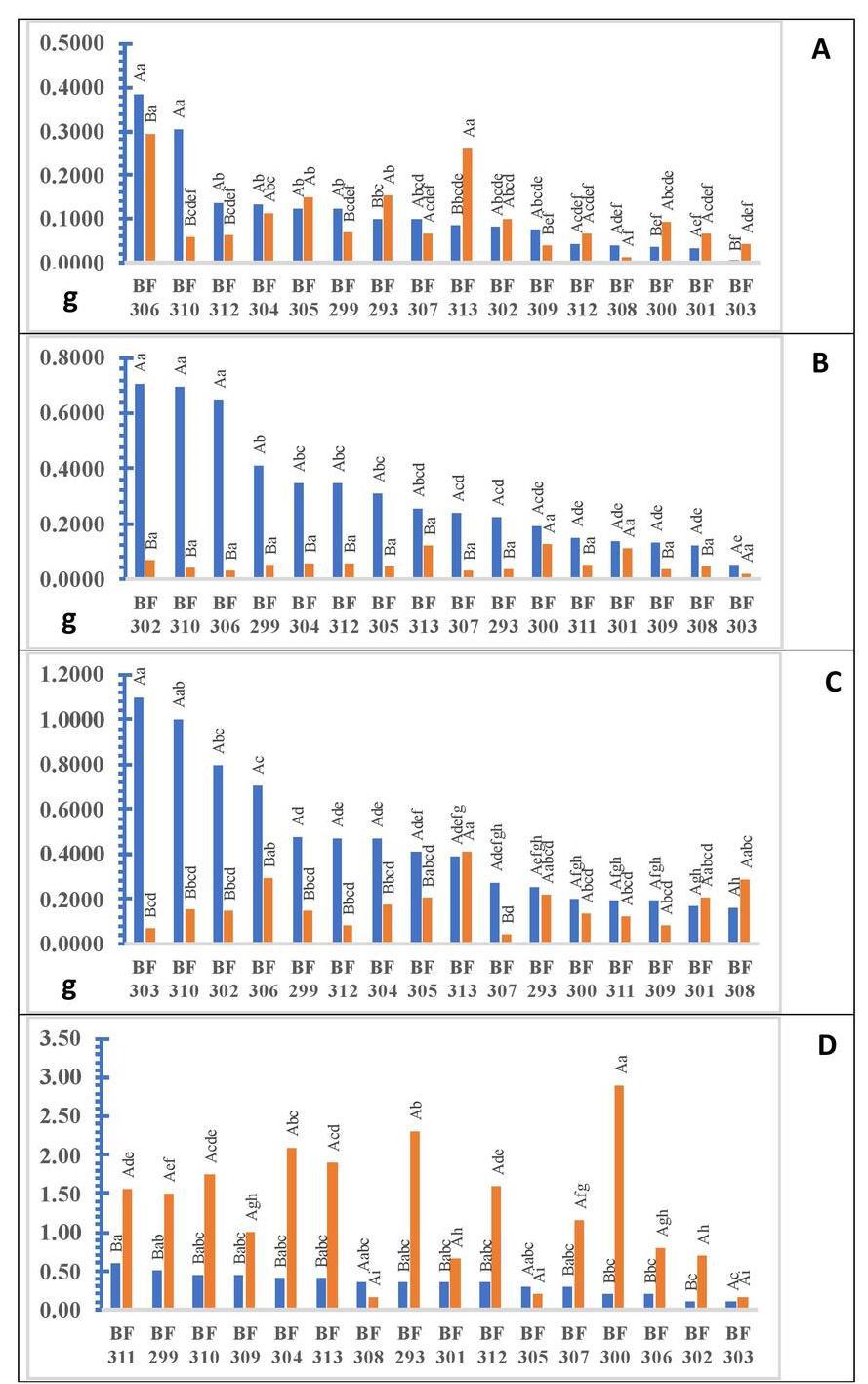
Figure 5 presents the relative data for the fresh mass of the radicle (Figure 5A), aerial part (Figure 5B), seedling (Figure 5C), and the ratio between the fresh mass of the radicle and the aerial part (Figure 5D).

Fresh mass of the radicle (5A), the aerial part (5B), the seedling (5C) and the ratio between the fresh mass of the radicle and the aerial part (5D) of fava bean genotypes under irrigation (0.0 MPa) and under water deficit induced by PEG 6000 (-0.3 MPa). Averages followed by the same uppercase and lowercase letter do not differ between treatments (0.0 MPa and -0.3 MPa) and genotypes, respectively, at the 5% probability level using Tukey’s test.
Genotypes BF 306 and BF 313 achieved the best values for fresh radicle mass, whereas genotype BF 308 registered the worst performance in the PEG treatment. With respect to the fresh mass of the aerial part (FMAP), PEG reduced biomass assimilation for most genotypes; however, genotypes BF 300, BF 301, and BF 303 did not exhibit significant differences between treatments.
Regarding seedling fresh mass (Figure 5C), most genotypes were negatively affected by the presence of PEG. Despite this, cultivars BF 313, BF 293, BF 300, BF 311, BF 309, BF 301, and BF 308 maintained water and mineral salt uptake through their roots at levels similar to those observed under irrigation. In contrast, genotype BF 303 experienced a significant 94% reduction in seedling fresh mass, underscoring its sensitivity to PEG.
Figure 5D shows that genotype BF 300 exhibited a higher ratio between the fresh mass of the radicle and the aerial part under PEG treatment, indicating that the tolerant genotype assimilated nutrients and increased radicle mass by a factor of fifteen relative to the irrigated condition.
3.1.4. Dry Mass of the Radicle, Aerial Part, and Seedling; DMR/DMAP Ratio
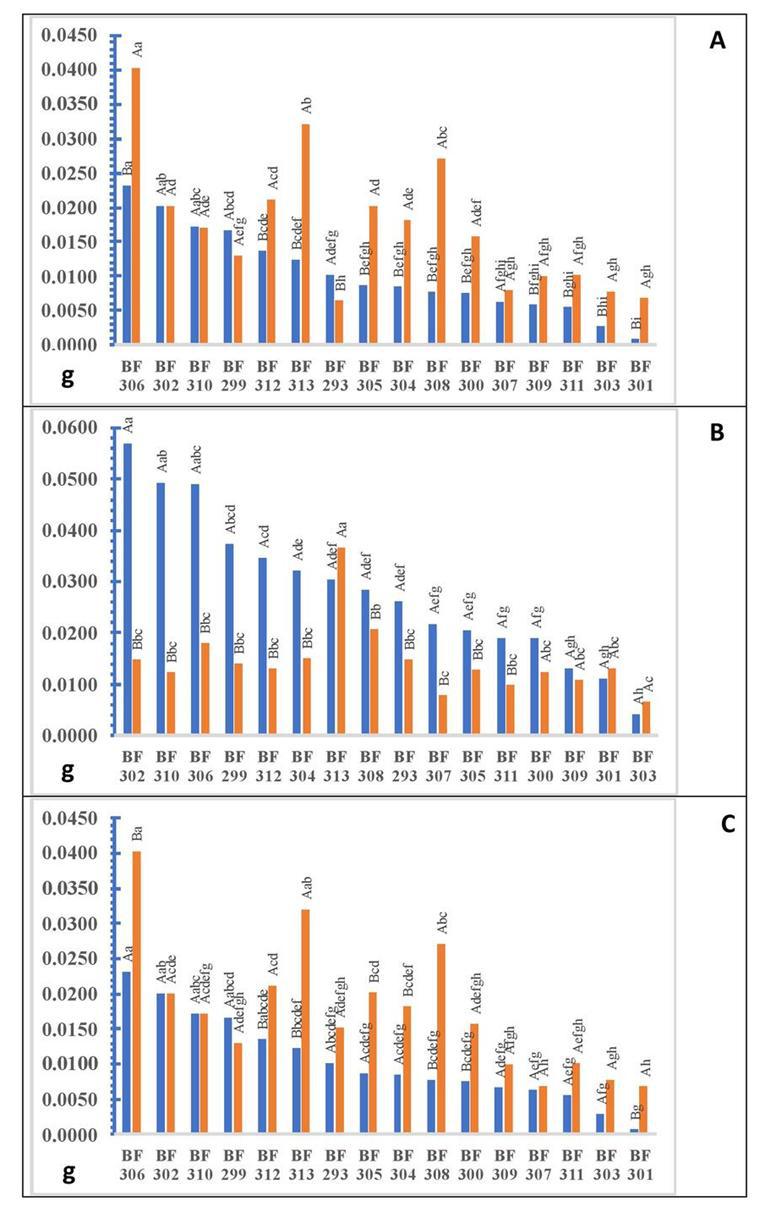
Figure 6 displays the data related to dry mass for the radicle (Figure 6A), aerial part (Figure 6B), and seedling (Figure 6C). In the PEG treatment, most cultivars showed an increase in radicle dry mass. Notably, genotype BF 306 achieved the highest radicle dry mass with a 73% increase under water deficit, suggesting its tolerance to water stress, whereas genotype BF 293 exhibited the greatest reduction (36%) and is thus considered more susceptible.

Dry mass of the radicle (6A), the aerial part (6B), the seedling (6C), in grams (g) of fava genotypes under irrigated conditions (0.0 MPa) and under PEG 6000-induced water deficit (-0,3 MPa). Means followed by the same uppercase and lowercase letters do not differ from each other regarding the treatments (0.0 MPa and -0.3 MPa) and genotypes, respectively, at the 5% probability level according to the Tukey test.
With regard to the dry mass of the aerial part (Figure 6B), most genotypes experienced a reduction at an osmotic potential of –0.3 MPa compared to the irrigated treatment; however, genotype BF 313 demonstrated the highest dry mass in the PEG treatment, while BF 303 consistently showed the lowest values in both conditions.
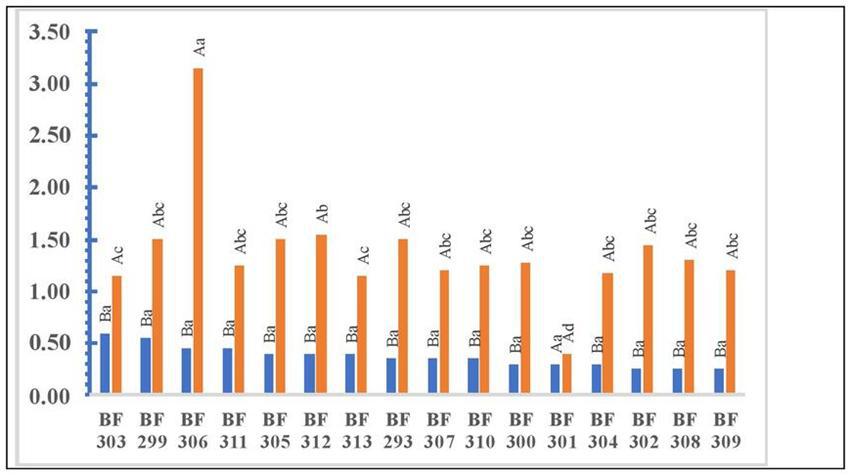
For the dry mass of the seedling (Figure 6C), genotypes BF 306 and BF 301 presented the highest and lowest values, respectively, under the PEG treatment, further indicating their relative tolerance and susceptibility. Finally, Figure 7 shows that the ratio between the dry mass of the radicle and the aerial part (DMR/DMAP) increased significantly for genotype BF 306—by a factor of seven compared to the irrigated treatment—while genotype BF 301 recorded the lowest value under PEG treatment, confirming its sensitivity to water deficit.
The relationship between the dry mass of the radicle and the aerial part (DMR/DMAP) is demonstrated.
3.2. Water Stress Induced Through the Screening Box Method
Figure 8 presents the results from water stress induced by the Screening Box method. In Figure 8A, using the Screening Box technique, genotype BF 301 displayed the highest sensitivity to water deficit, with an average wilting time of 25.5 days.
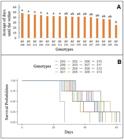
Average days until wilting of fava genotypes (8A) under irrigated conditions (0.0 MPa) and under water deficit induced by PEG 6000 (-0.3 MPa) and Survival Curve with probability of survival (8B).
Figure 8B demonstrates the survival probability of the fava genotypes, showing a decline in survival percentage as water stress progresses. The survival curve for genotype BF 301 was significantly different from the others, as confirmed by p-values (p > 0.001) from the Log-rank, Gehan, Tarone-Ware, and Peto-Peto tests (see Table 1).
3.2.1. Principal Component Analysis (PCA) of PEG-Induced Water Stress and Screening Box
The combined effects of water stress induced by PEG 6000 on seed physiological quality—evidenced by the germination test, seedling length, fresh and dry mass—as well as the prolonged absence of irrigation causing genotype death (via the Screening Box method) allowed for the classification of genotypes through principal component analysis. Components 1, 2, and 3 explained 76.78% of the total variance in the data (Table 2).
Principal Component Analysis (PCA), eigenvalues and percentage of variance of the parameters related to the germination test induced by PEG and screening box.
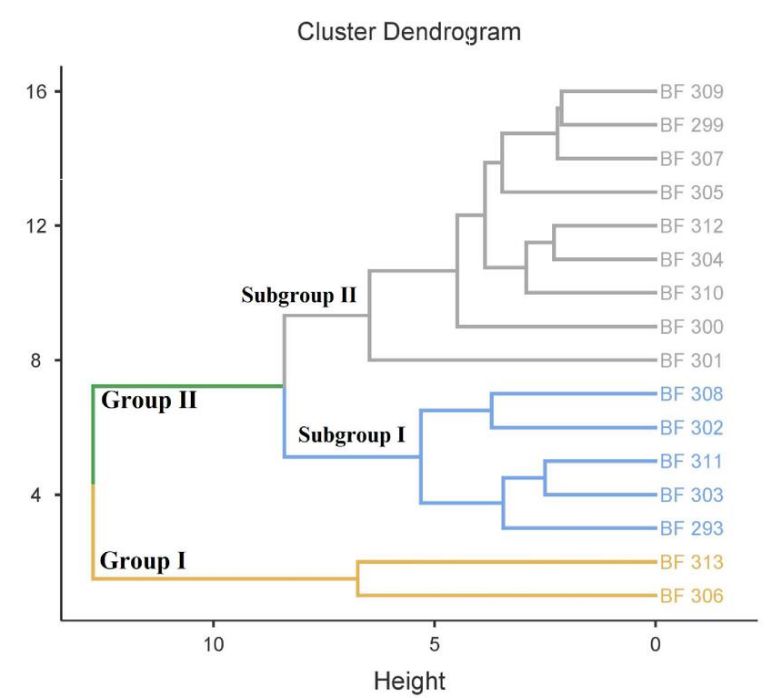
In Figure 9, the analysis showed that the genotypes BF 306 and BF 313 (Group I) are distinct, presenting the highest values in CP1 (first count) and CP2 (germination test) and therefore considered tolerant to water deficit. In contrast, the susceptible genotypes (Group II) are divided into two subgroups: Subgroup I, composed of BF 308, BF 302, BF 311, BF 303 and BF 293, presented the worst values in all analyzed parameters, while Subgroup II (less included the genotypes BF 309, BF 299, BF 307, BF 305, BF 304, BF 310, BF 300 and BF 301-with the exception of BF 312 which, although not positioned above the x axis, presented better germination and GSI values than those of Subgroup I.

Principal Component Analysis (PCA) of the PEG treatment (-0.3 MPa) and Screening Box in different fava genotypes.
Figure 10 displays the Hierarchical Cluster Analysis based on the principal components from Figure 9, wherein Group I (Tolerant) is clearly distinguished from Group II (Susceptible), the latter being further divided into Subgroups I and II in descending order of susceptibility.

Hierarchical clustering analysis (HCA) of fava genotypes under water deficit with PEG (-0.3 MPa) and Screening Box.
4. Discussion
4.1. Water Stress Induced by PEG 6000 (Polyethylene Glycol)
The results obtained in this study align with those of Sá et al. (2021), who, while researching the ‘Branquinha’ fava bean genotype, found germination percentages of 93% at an osmotic potential of –0.3 MPa and 99% for the control (0.0 MPa), with no statistically significant difference. Similarly, Moliehi and Mateboho (2017) reported germination percentages of 96.67%, 96.67%, and 95.83% for the ‘Small White’, ‘Mkuzi’, and ‘Nodak’ varieties of common bean (Phaseolus vulgaris L.), respectively, when grown in PEG solutions with an osmotic potential of –1.0 MPa.
Pereira et al. (2020) note that susceptible genotypes exhibit lower germination percentages when the osmotic potential is reduced due to the increased duration of phase III of the seed soaking process. This phase, characterized by intense water absorption and rapid growth of the main root (especially in “dry” seeds), is further hindered by the physical properties of polyethylene glycol, which, due to its high molecular weight and viscosity, diminishes water absorption and reduces oxygen diffusion during germination (Machado et al., 2016).
Germination percentage is a critical parameter for selecting commercial genotypes. As noted by Mambrin et al. (2015), the Ministry of Agriculture, Livestock and Supply (MAPA) mandates a minimum germination percentage of 80% for the commercialization of common bean seeds (Phaseolus vulgaris L.). This criterion enables the selection of creole varieties with high germination percentages for plant genetic improvement. In this context, the first count of the germination test is especially important because it reflects the vigor and physiological quality of the seeds. Sá et al. (2021) observed that the broad bean genotypes ‘Branquinha’ and ‘Cara Larga’, considered tolerant to water and salt deficits, respectively, exhibited a reduction of up to 50% in the first count at an osmotic potential of –0.3 MPa. These findings corroborate the results obtained for genotypes BF 309, 310, and 312, which differed statistically from one another. In addition, Moraes et al. (2005) documented a reduction in both the germination percentage and the number of normal seedlings in common beans treated with PEG at an osmotic potential of –0.2 MPa.
Nascimento et al. (2019) further emphasize that susceptible fava bean genotypes may exhibit up to a 60% reduction in the estimated germination percentage at the first count when subjected to osmotic potentials of 0.05 MPa—a concentration value 40 times lower than that used in the present research. They highlight that seed germination and vigor are influenced by both extrinsic and intrinsic factors, such as seed storage conditions, genotype characteristics, and the intensity and duration of the applied stress.
The impact of PEG on water absorption is well documented. According to Kaydan and Yagmur (2008), the reduced water absorption—resulting from the ingress of ions or solutes into the seeds—leads to lower germination percentages. In a similar vein, Gomes et al. (2015) indicate that water restriction can decelerate the germination process by affecting cell elongation and division, as well as the assimilation and accumulation of reserves, ultimately diminishing productivity and dispersal across different regions and climates.
Torres-Hernández et al. (2022) supported these findings by demonstrating a 66% reduction in the germination speed index (GSI) in Phaseolus vulgaris L. genotypes at PEG 6000 concentrations of 9%, with reductions reaching up to 97% when the concentration increased to 15%. Araújo et al. (2018), while examining the effects of water deficit on sulphur beans (Phaseolus vulgaris L.) using sodium chloride (NaCl) at an osmotic potential of –0.3 MPa, observed a 54% reduction in GSI for a cultivar considered resistant to water deficit. In more severe cases, Sá et al. (2021) noted that the inability of fava bean seeds to adequately soak water can trigger germination inhibition or dormancy.
Regarding root development, Queiroz et al. (1998) reported that osmotic potentials greater than –0.2 MPa can significantly inhibit radicle elongation, while Kaydan and Yagmur (2008) found that cultivars with longer radicles tend to be more drought tolerant. Lima et al. (2018) observed a radicle length variation from 22.5 cm in the ‘CNCX 251-76e’ cowpea genotype to 2.86 cm in ‘BRS Tumucumaque’, which were classified as tolerant and sensitive, respectively. Priya and Franklin (2021) further supported these observations in common bean genotypes, with tolerant genotypes exhibiting radicle lengths of 16.3 cm versus 5.0 cm for susceptible ones, findings that align with those for BF 306 (15.03 cm) and BF 308 (3.28 cm) in this research.
Torres-Hernández et al. (2022) attribute the reduction in both radicle and aerial part length to osmotic stress, which lowers cell turgidity by inducing water outflow from the plant cells to balance the osmotic potential difference between tissues and the external environment. Moraes et al. (2005) similarly explain that reduced seedling length is related to decreased cell turgidity and diminished protein synthesis. Küster et al. (2020) also reported a reduction in fresh radicle mass (FRM) across several agricultural species (maize, beans, sunflower, and peas) under water stress, noting that water deficit inhibits lateral root growth and thereby affects the accumulation of fresh radicle biomass.
Gomes et al. (2000) observed a reduction in the biomass of the aerial part in common beans (Phaseolus vulgaris L.) under both irrigated and rainfed conditions. Gomes-Filho et al. (2019) explained that this behavior is due to reduced turgor potential, which compromises the physiological and biochemical processes responsible for cell expansion, resulting in lower wet biomass. Ferreira et al. (2017) reported a complete (100%) reduction in seedling fresh mass in the cowpea cultivar ‘BRS Tumucumaque’ at osmotic potentials above –0.2 MPa, indicating that PEG-induced inhibition of water uptake can severely affect seedling growth. Conversely, Oliveira et al. (2017) observed an increase in both fresh and dry seedling mass in cotton cultivars subjected to water deficit with PEG 6000 up to an osmotic potential of –0.6 MPa, attributing this response to tolerance mechanisms that help maintain seedling vigor.
Similar responses were observed by Custódio et al. (2009) in common bean genotypes exposed to various water stress inducers (Mannitol, CaCl2, and MgCl2), and by Carneiro et al. (2011) in sunflower seeds, where an increase in the dry mass of the radicle and aerial part was noted at osmotic potentials up to –0.4 MPa—beyond which a significant reduction was observed. Nascimento et al. (2019) suggest that the reduction in dry matter of the aerial part is due to decreased production of G6PDH and, consequently, NADPH, which impairs the activity of antioxidant enzymes involved in the Calvin cycle, thereby damaging cell membrane structures and reducing dry matter assimilation in the shoot.
Comparable results were reported by Caetano-Madeira et al. (2023) in eucalyptus genotypes, where the genotype ‘SuzT’ demonstrated higher values of total dry matter, leaf, and stem compared to ‘SuzS’ under identical conditions. On the other hand, Moraes and Menezes (2003) found that in soybean genotypes, PEG completely inhibited seedling dry mass accumulation at an osmotic potential of –0.3 MPa. Coelho (2010) presented findings akin to those of this study in common bean genotypes using calcium chloride (CaCl2) as the osmotic agent, observing an increase in this relationship at –0.3 MPa and noting that the Ca2+ ion modulates cellular processes through the activation of calmodulins, which are integral to plant responses to various environmental stresses.
4.2. Water Stress Induced Through the Screening Box Method
Lima et al. (2018), using the ‘Screening Box’ technique to analyze cowpea genotypes, observed that most genotypes susceptible to water deficit were completely dead 24 days after the imposition of stress. This finding is consistent with the present study, wherein Cox-Table analysis (p > 0.001) indicated that the BF 301 genotype exhibits the highest susceptibility to water deficit due to its lower probability of survival under the applied stress conditions.
Similar outcomes were reported by Sá et al. (2021) during their investigation of bean genotypes under PEG-induced water stress, where the cultivars ‘Branquinha’ and ‘Cara Larga’ were identified as tolerant and susceptible, respectively. Moreover, Islam et al. (2024) successfully classified mung bean (Vigna radiata L. Wilczek) genotypes as either tolerant or susceptible by subjecting them to water stress at various osmotic potentials (0.0, –0.7, –1.0, –2.0, and –4.0 bar) and evaluating parameters such as the germination test, seedling length, fresh and dry mass, and multivariate statistical analyses.
The authors concluded that varieties BMX-08010-2, BMX-08009-7, BMX-01015, BARI Mung-8, BARI Mung-2, and BU Mung-2 achieved better germination rates and exhibited superior seedling growth compared to cultivars BARI Mung-1, BARI Mung-3, BU Mung-4, and BMX-05001. Thus, the results of this research provide valuable selection criteria for evaluating drought-tolerant and susceptible fava bean genotypes that can be employed in future breeding programs for both research and commercialization.
5. Conclusions
The water stress induced by PEG 6000 significantly affected all analyzed variables, reducing values in most genotypes. BF 306 and BF 313 showed superior performance, demonstrating tolerance to water deficit. Conversely, BF 308, BF 302, BF 311, BF 303, and BF 293 had the lowest values, highlighting their susceptibility. The Screening Box method discovered BF 301's susceptibility to water deficit and its survival was restricted to 25 days, which indicates its greater vulnerability to water deficit than other cultivars.
Acknowledgements
We would like to thank the Brazilian Agricultural Research Corporation (EMBRAPA Genetic Resources and Biotechnology) for exchanging seeds from its germplasm bank and supporting this research.
References
-
ADEBO, J.A., 2023. A review on the potential food application of lima beans (Phaseolus lunatus L.), an underutilized crop. Applied Sciences (Basel, Switzerland), vol. 13, no. 3, pp. 1996. http://doi.org/10.3390/app13031996
» http://doi.org/10.3390/app13031996 - ARAÚJO, M.L., DE MAGALHÃES, A.C.M., DE ABREU, M.G.P., MACIEL, J.A. and MELHORANÇA FILHO, A.L., 2018. Efeito de diferentes potenciais osmóticos sobre a germinação e o desenvolvimento de plântulas de feijão enxofre. Ensaios e Ciência: ciências Biológicas Agrárias e da Saúde, vol. 22, no. 3, pp. 201-204.
-
ASSUNÇÃO-FILHO, J.R., COSTA, M.F., PINHEIRO, J.B., CARVALHO, L.C.B., GOMES, R.L.F. and LOPES, A.C., 2022. Selection of superior genotypes of lima bean landraces by multivariate approach. Revista Caatinga, vol. 35, no. 1, pp. 87-95. http://doi.org/10.1590/1983-21252022v35n109rc
» http://doi.org/10.1590/1983-21252022v35n109rc -
BRASIL. Ministério da Agricultura, 2009 [viewed 25 March 2025]. Pecuária e Abastecimento, Regras para Análise de Sementes Brasília, DF: MAPA/ACS, 398 p. Available from: https://www.gov.br/agricultura/pt-br/assuntos/insumos-agropecuarios/arquivos-publicacoes-insumos/2946_regras_analise__sementes.pdf
» https://www.gov.br/agricultura/pt-br/assuntos/insumos-agropecuarios/arquivos-publicacoes-insumos/2946_regras_analise__sementes.pdf -
CAETANO-MADEIRA, D.D., OMENA-GARCIA, R.P., ELERATI, T.L., DA SILVA LOPES, C.B., CORRÊA, T.R., DE SOUZA, G.A., OLIVEIRA, L.A., CRUZ, C.D., BHERING, L.L., NUNES-NESI, A., DA COSTA, W.G. and PICOLI, E.A.T., 2023. Metabolic, nutritional and morphophysiological behavior of eucalypt genotypes differing in dieback resistance in field when submitted to PEG-induced water deficit. Agronomy (Basel), vol. 13, no. 5, pp. 1-20. http://doi.org/10.3390/agronomy13051261
» http://doi.org/10.3390/agronomy13051261 -
CARNEIRO, M.M.L.C., DEUNER, S., OLIVEIRA, P.V., TEIXEIRA, S.B., SOUSA, C.P., BACARIN, M.A. and MORAES, D.M., 2011. Atividade antioxidante e viabilidade de sementes de girassol após estresse hídrico e salino. Revista Brasileira de Sementes, vol. 33, no. 4, pp. 752-761. http://doi.org/10.1590/S0101-31222011000400017
» http://doi.org/10.1590/S0101-31222011000400017 -
CARVALHO, M., MATOS, M., CASTRO, I., MONTEIRO, E., ROSA, E., LINO-NETO, T. and CARNIDE, V., 2019. Screening of worldwide cowpea collection to drought tolerant at a germination stage. Scientia Horticulturae, vol. 247, pp. 107-115. http://doi.org/10.1016/j.scienta.2018.11.082
» http://doi.org/10.1016/j.scienta.2018.11.082 -
CAVALCANTE, J.O., DOS SANTOS, A.G., PESSOA, A.M.S., SILVEIRA, M.V.S., CARNEIRO, W.P., PEREIRA, A.P., CRUZ, M.P. and PESSOA, R.M.S., 2024. Caracterização biométrica de genótipos de Phaseolus lunatus L. cultivados no Sítio Serrinha-PB. Observatório de la Economía Latinoamericana, vol. 22, no. 3, pp. e3626. http://doi.org/10.55905/oelv22n3-044
» http://doi.org/10.55905/oelv22n3-044 -
COELHO, D.L.M., 2010. Estresse hídrico com diferentes osmóticos em sementes de feijão e expressão diferencial de proteínas durante a germinação. Acta Scientiarum. Agronomy, vol. 32, no. 3, pp. 491-499. http://doi.org/10.4025/actasciagron.v32i3.4694
» http://doi.org/10.4025/actasciagron.v32i3.4694 - CUSTÓDIO, C.C., SALOMÃO, G.R. and MACHADO NETO, N.B., 2009. Estresse hídrico na germinação e vigor de sementes de feijão submetidas à diferentes soluções osmóticas. Revista Ciência Agronômica, vol. 40, no. 4, pp. 617-623.
- ESTAT, 2006. Sistema para Análise Estatística (Versão 1.0) [software]. Jaboticabal, SP: UNESP.
-
FERREIRA, A.C.T., FELITO, R.A., ROCHA, A.M.D., CARVALHO, M.A.C.D. and YAMASHITA, O.M., 2017. Water and salt stresses on germination of cowpea (Vigna unguiculata cv. BRS Tumucumaque) seeds. Revista Caatinga, vol. 30, no. 4, pp. 1009-1016. http://doi.org/10.1590/1983-21252017v30n422rc
» http://doi.org/10.1590/1983-21252017v30n422rc -
GOMES, A.A., ARAÚJO, A.P., ROSSIELLO, R.O.P. and PIMENTEL, C., 2000. Acumulação de biomassa, características fisiológicas e rendimento de grãos em cultivares de feijoeiro irrigado e sob sequeiro. Pesquisa Agropecuária Brasileira, vol. 35, no. 10, pp. 1927-1937. http://doi.org/10.1590/S0100-204X2000001000003
» http://doi.org/10.1590/S0100-204X2000001000003 -
GOMES, G.R., ALMEIDA, L.H.C. and TAKAHASHI, L.S.A., 2015. Efeito do estresse hídrico e salino no vigor e germinação de sementes de feijão-vagem (Phaseolus vulgaris L.). Cultura Agronômica, vol. 24, no. 1, pp. 83-92. http://doi.org/10.32929/2446-8355.2015v24n1p83-92
» http://doi.org/10.32929/2446-8355.2015v24n1p83-92 -
GOMES-FILHO, A., NASCIMENTO RODRIGUES, E., CASTRO RODRIGUES, T., JÚNIOR NERES SANTOS, V., FERREIRA ALCÂNTARA, S. and NERES DE SOUZA, F., 2019. Estresse hídrico e salino na germinação de sementes de feijão-caupi cv. BRS Pajeú. Colloquium Agrariae, vol. 15, no. 4, pp. 60-73. http://doi.org/10.5747/ca.2019.v15.n4.a312
» http://doi.org/10.5747/ca.2019.v15.n4.a312 -
ISLAM, M.R., HOSSAIN, A., AKHTER, M.M., ALAM, M.A., AZAM, M.G., HOSSAIN, J., GABER, A. and ISLAM, M.S., 2024. Evaluation of polyethylene glycol (PEG-6000) induced drought stress tolerant mungbean genotypes by using correlation, principal component, hierarchical clustering and multi-trait genotype-ideotypes distance index analysis. Current Applied Science and Technology, vol. 25, no. 2, pp. e0260871. http://doi.org/10.55003/cast.2024.260871
» http://doi.org/10.55003/cast.2024.260871 - JACINTO JÚNIOR, S.G., MORAES, J.G.L., SILVA, F.D.B.D., SILVA, B.D.N., SOUSA, G.G.D., OLIVEIRA, L.L.B.D. and MESQUITA, R.O., 2019. Physiological responses of fava genotypes (Phaseolus lunatus L.) submitted to water stress cultivated in the state of Ceará. Revista Brasileira de Meteorologia, vol. 34, pp. 413-422.
- JAMOVI, 2022. The Jamovi Project (Version 2.3) [software]. Retrieved from: www.jamovi.org.
- KAYDAN, D. and YAGMUR, M., 2008. Germination, seedling growth and relative water content of shoot in different seed sizes of triticale under osmotic stress of water and NaCI. African Journal of Biotechnology, vol. 7, no. 16, pp. 2862-2868.
- KESHTIBAN, R.K., CARVANI, V. and IMANDAR, M., 2015. Effects of salinity stress and drought due to different concentrations of sodium chloride and polyethylene glycol 6000 on germination and seedling growth characteristics of lentil (Lens culinaris Medik). Advances in Environmental Biology, vol. 9, no. 2, pp. 445-450.
- KÜSTER, M.C.T., LEANDRO, L.P., ANDRADE, G.A.K. and VESTENA, S., 2020. Efeito do déficit hídrico no crescimento inicial de quatro espécies agrícolas. Cadernos de Pesquisas, vol. 32, no. 1, pp. 11-20.
-
LIMA, E.N., PIRES, K.R.A., CELIN, E.F., BERTINI, C.H.C.M. and MESQUITA, R.O., 2018. Identificação de genótipos de feijão-caupi tolerantes e suscetíveis ao déficit hídrico. Nativa (Sinop), vol. 6, no. 6, pp. 608-612. http://doi.org/10.31413/nativa.v6i6.5795
» http://doi.org/10.31413/nativa.v6i6.5795 - LOPES, Â.C.A., ARAUJO, A.S.F., BEZERRA JÚNIOR, J.E.A., TORRES, K.K.B., MEDEIROS, L.D.S.A., DO VALE MARTINS, L., COSTA, M.F., SILVA, V.B. and GOMES, R.L.F., 2024. Vinte anos de pesquisas com o feijão-fava (Phaseolus lunatus L.) na Universidade Federal do Piauí. Revista RG News, vol. 10, no. 1, pp. 21-28.
- LUNA, I.R.G., DA SILVA, M.R., DE ALMEIDA CARTAXO, P.H., GONZAGA, K.S., ALVES, A.K.S., DE OLIVEIRA SANTOS, J.P., BULHÕES, L.E.L., PEREIRA, D.D. and ARAÚJO, J.R.E.S., 2021. Variabilidade pluviométrica e seus efeitos na produção de feijão-caupi em um município do semiárido paraibano. Revista Thêma et Scientia, vol. 11, no. 1, pp. 255-265.
-
MACHADO, B.Q.V., REZENDE, G.F., SÁ JÚNIOR, A.D., MUNDIM, F.D.M., HAMAWAKI, O.T. and SOUSA, L.B., 2016. Germinação de cultivares de soja submetidas ao déficit hídrico induzido por polietilenoglicol. Cultura Agronômica, vol. 25, no. 2, pp. 137-146. http://doi.org/10.32929/2446-8355.2016v25n2p137-146
» http://doi.org/10.32929/2446-8355.2016v25n2p137-146 -
MAMBRIN, R.B., RIBEIRO, N.D., HENNING, L.M.M., HENNING, F.A. and BARKERT, K.A., 2015. Seleção de linhagens de feijão com base no padrão e na qualidade das sementes. Revista Caatinga, vol. 28, no. 3, pp. 147-156. http://doi.org/10.1590/1983-21252015v28n317rc
» http://doi.org/10.1590/1983-21252015v28n317rc -
MANGURE, J.D., 1962. Speed of germination: aid in selection and evaluation for seedling emergence and vigor. Crop Science, vol. 2, no. 2, pp. 176-177. http://doi.org/10.2135/cropsci1962.0011183X000200020033x
» http://doi.org/10.2135/cropsci1962.0011183X000200020033x -
MARTÍNEZ-NIETO, M.I., ESTRELLES, E., PRIETO-MOSSI, J., ROSELLÓ, J. and SORIANO, P., 2020. Resilience capacity assessment of the traditional Lima Bean (Phaseolus lunatus L.) landraces facing climate change. Agronomy (Basel), vol. 10, no. 6, pp. 758. http://doi.org/10.3390/agronomy10060758
» http://doi.org/10.3390/agronomy10060758 -
MEEKS, M., MURRAY, S., HAGUE, S. and HAYS, D., 2013. Measuring maize seedling drought response in search of tolerant germplasm. Agronomy (Basel), vol. 3, no. 1, pp. 135-147. http://doi.org/10.3390/agronomy3010135
» http://doi.org/10.3390/agronomy3010135 - MOLIEHI, R. and MATEBOHO, M.M., 2017. Screening of common bean cultivars (Phaseolus vulgaris L.) for drought tolerance. Global Journal of Agricultural Research, vol. 5, no. 4, pp. 20-29.
-
MORAES, G.A.F. and MENEZES, N.L., 2003. Desempenho de sementes de soja sob condições diferentes de potencial osmótico. Ciência Rural, vol. 33, no. 2, pp. 219-226. http://doi.org/10.1590/S0103-84782003000200007
» http://doi.org/10.1590/S0103-84782003000200007 -
MORAES, G.A.F., MENEZES, N.L. and PASQUALLI, L.L., 2005. Comportamento de sementes de feijão sob diferentes potenciais osmóticos. Ciência Rural, vol. 35, no. 4, pp. 776-780. http://doi.org/10.1590/S0103-84782005000400004
» http://doi.org/10.1590/S0103-84782005000400004 -
NASCIMENTO, M.D.G.R., SILVA, M.L.M., ALVES, E.U. and RODRIGUES, C.M., 2019. Physiological potential of Phaseolus lunatus L. seeds subjected to water stress at different temperatures. Semina: Ciências Agrárias, vol. 40, no. 6, pp. 2877-2889. http://doi.org/10.5433/1679-0359.2019v40n6Supl2p2877
» http://doi.org/10.5433/1679-0359.2019v40n6Supl2p2877 - OLIVEIRA, H., NASCIMENTO, R., LEÃO, A.B. and FERREIRA, J.A., 2017. Germinação de sementes e estabelecimento de plântulas de algodão submetidas a diferentes concentrações de NaCl e PEG 6000. Espacios, vol. 38, no. 47, pp. 13.
-
PARDO, E.M., VELLICCE, G.R., AGUIRREZABAL, L., PEREYRA IRUJO, G., ROCHA, C.M.L., GARCÍA, M.G., PRIETO ANGUEIRA, S., WELIN, B., SANCHEZ, J., LEDESMA, F. and CASTAGNARO, A.P., 2015. Drought tolerance screening under controlled conditions predicts ranking of water-limited yield of field-grown soybean genotypes. Journal Agronomy & Crop Science, vol. 201, no. 2, pp. 95-104. http://doi.org/10.1111/jac.12106
» http://doi.org/10.1111/jac.12106 -
PEREIRA, I.C., CATÃO, H.C.R.M. and CAIXETA, F., 2020. Seed physiological quality and seedling growth of pea under water and salt stress. Revista Brasileira de Engenharia Agrícola e Ambiental, vol. 24, no. 2, pp. 95-100. http://doi.org/10.1590/1807-1929/agriambi.v24n2p95-100
» http://doi.org/10.1590/1807-1929/agriambi.v24n2p95-100 - POPINIGIS, F., 1985. Fisiologia da semente 2. ed. Brasília: ABRATES, 289 p.
- PRIYA, S. and FRANKLIN, C.J., 2021. Screening of common bean (Phaseolus vulgaris L.) germplasm for drought stress. International Journal of Current Research, vol. 12, no. 11, pp. 14934-14939.
-
QUEIROZ, M.F.D., ALMEIDA, F.D.A.C. and FERNANDES, P.D., 1998. Efeito do condicionamento osmótico no vigor de plântulas de feijão (Phaseolus vulgaris L.). Revista Brasileira de Engenharia Agrícola e Ambiental, vol. 2, no. 2, pp. 148-152. http://doi.org/10.1590/1807-1929/agriambi.v02n02p148-152
» http://doi.org/10.1590/1807-1929/agriambi.v02n02p148-152 -
SÁ, F.V.S., OLIVEIRA, F.S., TORRES, S.B., PAIVA, E.P., NOGUEIRA, N.W., SARMENTO, E.C.S. and MELO, A.S., 2021. Hydric and saline stress on Phaseolus lunatus L. seeds. Brazilian Journal of Biology = Revista Brasileira de Biologia, vol. 82, pp. e233550. http://doi.org/10.1590/1519-6984.233550 PMid:34133547.
» http://doi.org/10.1590/1519-6984.233550 -
SANOGO, S.A., DIALLO, S., BATIENO, T.B.J., ISHOLA, A.I., SAWADOGO, N. and NYADANU, D., 2023. Screen house assessment of Cowpea (Vigna unguiculata L.) genotypes for drought tolerance using selection indices. Agricultural Sciences, vol. 14, no. 4, pp. 457-473. http://doi.org/10.4236/as.2023.144030
» http://doi.org/10.4236/as.2023.144030 -
SINGH, B., REDDY, K.R., REDOÑA, E.D. and WALKER, T., 2017. Screening of rice cultivars for morpho-physiological responses to early-season soil moisture stress. Rice Science, vol. 24, no. 6, pp. 322-335. http://doi.org/10.1016/j.rsci.2017.10.001
» http://doi.org/10.1016/j.rsci.2017.10.001 - SINGH, B.B., TERAO, T. and STATION, K., 1999. A simple screening method for drought tolerance in cowpea. Indian Journal of Genetics, vol. 59, no. 2, pp. 211-220.
-
SOUSA, L.I.S., BRITO, A.E.A., SOUZA, L.C., TEIXEIRA, K.B.S., NASCIMENTO, V.R., ALBUQUERQUE, G.D.P., OLIVEIRA NETO, C.F., OKUMURA, R.S., NOGUEIRA, G.A.S., FREITAS, J.M.N. and MONTEIRO, G.G.T.N., 2023. Does silicon attenuate PEG 6000-induced water deficit in germination and growth initial the seedlings corn. Brazilian Journal of Biology = Revista Brasileira de Biologia, vol. 83, pp. e265991. http://doi.org/10.1590/1519-6984.265991 PMid:37255196.
» http://doi.org/10.1590/1519-6984.265991 -
SUSANTO, U., ROHAENI, W.R. and SASMITA, P., 2019. Selecting traits for drought tolerance screening in rice. IOP Conference Series. Earth and Environmental Science, vol. 383, no. 1, pp. 2019. http://doi.org/10.1088/1755-1315/383/1/012049
» http://doi.org/10.1088/1755-1315/383/1/012049 - TORRES-HERNÁNDEZ, L., CASTILLO, M.S.D., PÉREZ-HERNÁNDEZ, Y., RODRÍGUEZ-IZQUIERDO, L., CORTÉS-MARTÍNEZ, Y. and LIRIANO-GONZÁLEZ, R., 2022. Effect of polyethylene glycol-6000 on germination and early growth of Phaseolus vulgaris L. cv. Delicias. Cultivos Tropicales, vol. 43, no. 2, pp. e06.
-
VILLELA, F.A., DONI FILHO, L. and SEQUEIRA, E.L., 1991 [viewed 25 March 2025]. Tabela de potencial osmótico em função da concentração de polietileno glicol 6.000 e da temperatura. Pesquisa Agropecuária Brasileira [online], vol. 26, no. 11/12, pp. 1963-1968. Available from: http://ainfo.cnptia.embrapa.br/digital/bitstream/AI-SEDE/21308/1/pab18_novdez_91.pdf
» http://ainfo.cnptia.embrapa.br/digital/bitstream/AI-SEDE/21308/1/pab18_novdez_91.pdf -
WANG, X., LI, Y., WANG, X., LI, X. and DONG, S., 2022. Physiology and metabolomics reveal differences in drought resistance among soybean varieties. Botanical Studies (Taipei, Taiwan), vol. 63, no. 1, pp. 1-15. http://doi.org/10.1186/s40529-022-00339-8 PMid:35332430.
» http://doi.org/10.1186/s40529-022-00339-8 - YASAR, F., UZAL, Ö., YASAR, Ö. and ELLIALTIOGLU, S.S., 2014. Root, stem, and leaf ion accumulation in drought stressed green bean (Phaseolus vulgaris L.) genotypes treated with Peg-6000. Fresenius Environmental Bulletin, vol. 23, no. 10a, pp. 2656-2662.