 Agronomic performance of maize grown under green manure and organic compost application
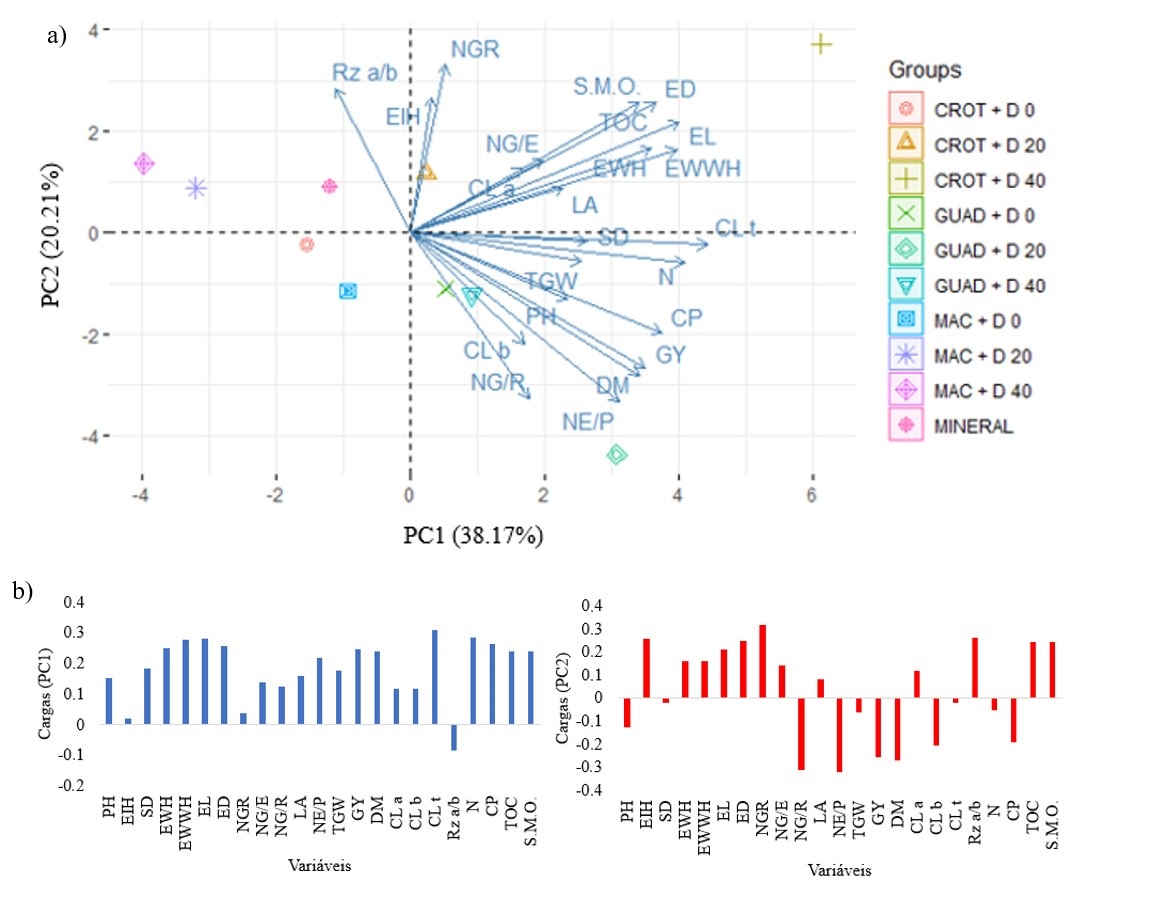
Maize (Zea mays L.) is one of the main commodities in Brazilian agribusiness and is considered the most widely cultivated crop in the world. By 2050, maize production must increase by approximately 70% to meet global demand. However, achieving high yields requires the application of large amounts of chemical fertilizers, which can be harmful to agroecosystems. In this context, the aim of this study was to evaluate the agronomic performance of maize, as well as the levels of soil organic matter and total organic carbon, as a function of organic matter application through green manure and organic compost. The experiment was conducted in a randomized block design, in a split-plot scheme [(3 x 3) + 1], with three leguminous species in the main plots (sunn hemp, pigeon pea and cowpea), three rates of organic compost in the subplots (0, 20, and 40 t ha−1), and one additional control (chemical fertilization). Agronomic parameters of maize and soil organic matter and total organic carbon contents were evaluated. Data were subjected to analysis of variance and means were compared using the Tukey test at a 5% probability level. The highest yield was obtained in the intercropping system with cowpea and 40 t ha−1 of organic compost, reaching a grain yield of 17.7 t ha−1. This represented an increase of over 20% compared to the same legume treatment without organic compost. Green manure combined with organic compost can replace chemical fertilization without compromising maize productivity. Organic compost associated with cowpea green manure provided higher maize yield compared to sunn hemp and dwarf pigeon pea. Soil organic matter and total organic carbon contents were not influenced by the green manure management combined with organic compost. Principal component analysis showed that maize yield parameters were more closely associated with the use of pigeon pea combined with 20 and 40 t ha−1 of organic compost, respectively.
Keywords:
cover crops; yield components; growth; Zea mays L
 Thumbnail
 Thumbnail