 Neonatal malnutrition and macrophage in Candida albicans infection
Abstract
Neonatal malnutrition is an important environmental exposure factor that can influence the development and health of all body systems, including the immune system. The objective was to detect the impacts of malnutrition in critical period of development on the response Candida albicans infection. It was used 24 male rats Wistar. The animals were divided malnourished group (8% protein) or nourished group (17% protein). It was collected alveolar macrophages by bronchoalveolar lavage fluid of the rats with 90-day-old. Expression levels of the targets were performed using Real-time RT-PCR. It had lower body weights from 5 days of life, until adulthood. Macrophages collected from malnourished animals exhibit a lower expression of the Toll-Like Receptor (TLR-9), interleukin 18 (IL-18) and interleukin 33 (IL-33); however, transcription nuclear kappa B (NF- kB) and interleukin 1β (IL-1β) are expressed in systems where there is a challenge with an immunogenic stimulus (Lipopolysaccharide and Candida albicans). Nutritional reduction during the neonatal period has repercussions on body growth and defense mechanisms observed in adult life. The results revealed dysregulation of immune mediators with probable implications for the effector immune response. Thus, the response to Candida albicans was altered for neonatal malnutrition, with a high chance of progressing to tissue damage.
Keywords:
malnutrition; Candida albicans; interleukin 33; interleukin 1β
Resumo
A desnutrição neonatal é um importante fator de exposição ambiental que pode influenciar o desenvolvimento e a saúde de todos os sistemas do corpo, incluindo o sistema imunológico. O objetivo foi detectar os impactos da desnutrição em período crítico de desenvolvimento na resposta à infecção por CANDIDA ALBICANS. Foram utilizados 24 ratos machos Wistar. Os animais foram divididos em grupo desnutrido (8% de proteína) ou grupo nutrido (17% de proteína). Macrófagos alveolares foram coletados por meio do lavado broncoalveolar dos ratos com 90 dias de idade. Os níveis de expressão dos alvos foram realizados por RT-PCR em tempo real. Os animais apresentaram menor peso corporal a partir dos 5 dias de vida até a idade adulta. Macrófagos coletados de animais desnutridos apresentam menor expressão do Receptor Toll-Like (TLR-9), interleucina 18 (IL-18) e interleucina 33 (IL-33); entretanto, a transcrição nuclear kappa B (NF-kB) e a interleucina 1β (IL-1β) são expressas em sistemas onde há desafio com estímulo imunogênico (Lipopolissacarídeo e Candida albicans). A redução nutricional durante o período neonatal repercute no crescimento corporal e nos mecanismos de defesa observados na vida adulta. Os resultados revelaram desregulação de mediadores imunológicos com prováveis repercussões na resposta imune efetora. Assim, a resposta à Candida albicans foi alterada para a desnutrição neonatal, com alta chance de evoluir para dano tecidual.
Palavras-chave:
desnutrição; Candida albicans; interleucina 33; interleucina 1β
1. Introduction
Inadequate exposure to nutrients at critical stages of development can modify the body's metabolic and immunological programming, through epigenetic, hormonal, and regulatory cytokine changes (Desai and Hales, 1997; Senna et al., 2015a). Evidence suggests that maternal nutritional status can induce changes in gene expression through DNA modification (Şanli and Kabaran, 2019). This phenomenon can damage immune function throughout an individual's life in the face of environmental challenges, especially greater severity and risk of infections (Maggini et al., 2018; Morais et al., 2016).
The immune response profile depends on the parasite-host relationship (Costa et al., 2016; Khan et al., 2016). Morais et al. (2016) found exacerbates the production of reactive oxygen species in the face of Staphylococcus aureus infection in group neonatal malnutrition. Costa et al. (2016) found that host defenses against Candida albicans were compromised by neonatal malnutrition. This may allow a change in the relationship between the fungus and the host, migrating from commensal to pathogenic.
Host defense against Candida albicans involves the ingestion and elimination of fungi by immune cells (Khan et al., 2016). Phagocytic cells play a key role in the generation of free radicals and pathogen recognition through a variety of receptors, including TLRs, and Dectin-1 (Khan et al., 2016; Wagener et al., 2014). Previous studies have demonstrated the involvement of Toll-like receptor 9 (TLR-9) in immune responses. Still, the specific implications of the recruitment of this receptor on the mechanisms underlying the macrophage response after Candida albicans infection are poorly documented (Milovanovic et al., 2012; Rahman et al., 2009). Recent investigations have identified NOD2 and TLR-9 receptors as essential for the recognition of chitin present in fungi (Rahman and McFadden, 2011).
IL-33, IL-1β, and IL-18 are cytokines that share similar production mechanisms and signaling pathways but regulate different immune responses (Arend et al., 2008). In this context, the inflammasome is a crucial component in structuring the host's antifungal adaptive response by cleaving the inactive forms of these molecules into biologically active cytokines (Van de Veerdonk et al., 2011; Mencacci et al., 2000). It’s important to highlight that the activation of the inflammasome is essential for the effective host response to the invading fungal agent (Richardson and Moyes, 2015). Therefore, the impacts of neonatal malnutrition are the recognition and activation of macrophages in Candida albicans infection. Thus, it may clarify important gaps involved in the immune response against C. albicans in malnourished individuals durin critic periods of development.
2. Methods
2.1. Animals and diets
Wistar male albino rats (Protocol ethics committee, no. 23076.053096/2011-91, Brazil) were used. The sample was 24 rats, that were divided into two groups: malnutrition (M) rats breastfed by mothers fed to a diet containing 8% protein and nutrition (N) 17% casein protein After critical period of development, they were then treated with 23% protein (Labina®, São Paulo, Brazil) until 90 days of life.
2.2. Alveolar macrophage culture
It was collected alveolar macrophages by bronchoalveolar lavage fluid of the rats with 90-day-old. Cell suspension was 106 macrophages/mL of RPMI 1640 (Gibco® Invitrogen) culture médium and the condition incubation of plates were: 37 °C, 5% CO2, for 24 h.
2.3. Expression of targets
Expression levels were quantified using real-time RT-PCR: macrophages in culture, RNA extraction through TRIzol reagent (Invitrogen®) and cDNA synthesis by QuantiTect Reverse Transcription Kit (Qiagen) (Morais et al., 2019). Macrophage culture: Control, Positive Control were macrophage added Porphyromonas gingivalis lipopolysaccharide (LPS, 10μg, Invitrogen®) and adenosine triphosphate (ATP, 5mM, Invitrogen®); and Candida albicans inoculum (106 fungal cells, 10231, Sigma-Aldrich®). Real-time PCR reactions were analyzed through delta delta Ct (∆∆Ct) method. The control endogenous was Glyceraldehyde-3-phosphate dehydrogenase (G3PD) gene. The analyses of the responses were performed using the Applied Biosystems PCR System.
2.4. Statistical analysis
GraphPad Prism® software was used for statistical analysises. We Applied the Student's t-test and Mann-Whitney test, admitting 5% of the significance.
3. Results
3.1. Body weight
During the critical period of development, body weight was lower in the malnourished in comparison with the nourished, the difference was detected from the 5th to the 21st postnatal day (p<0.05). This body weight alteration remained even after the nutrition replacement, until the 90th days of life (p<0.05) (Figure 1).

Body weight in the malnourished and nourished. *p<0.05 when comparing nourished with malnourished.
3.2. Gene expression
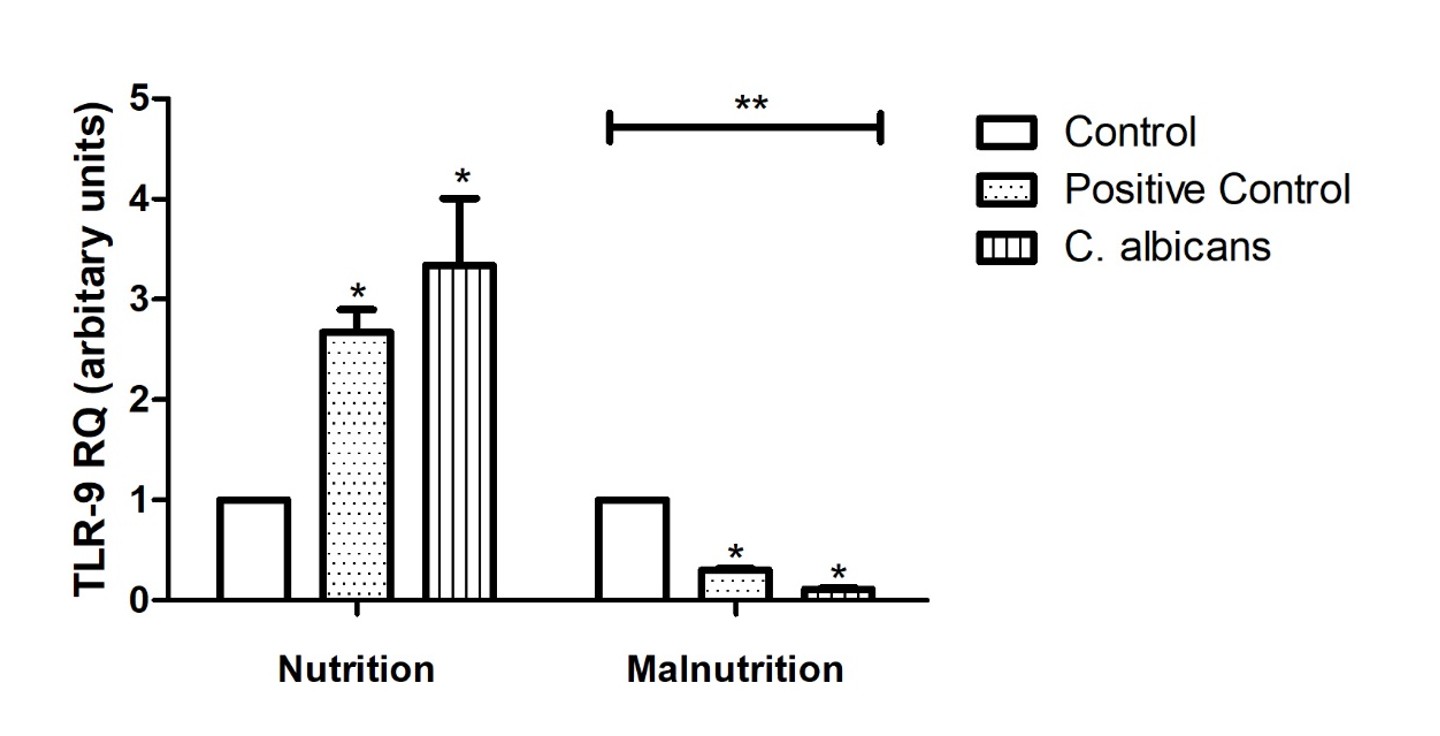
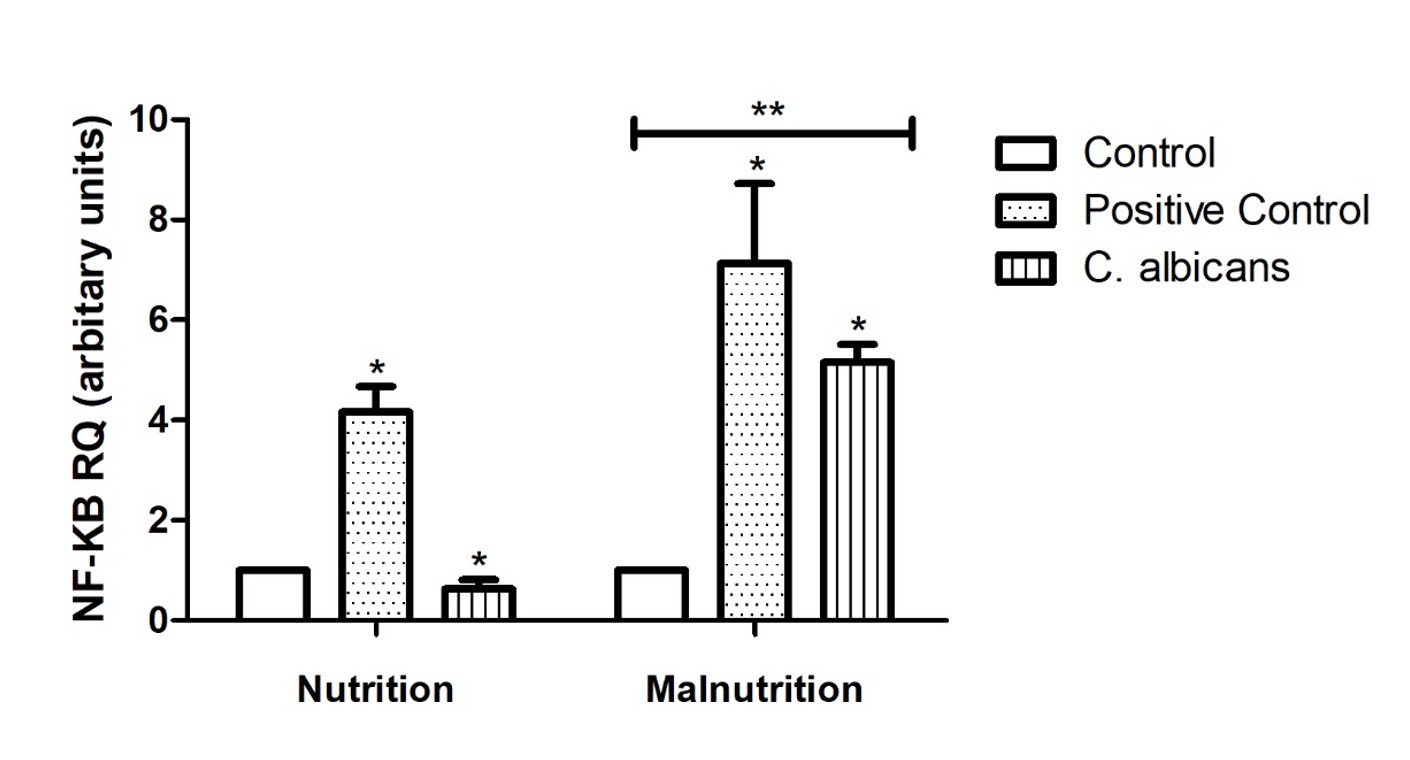
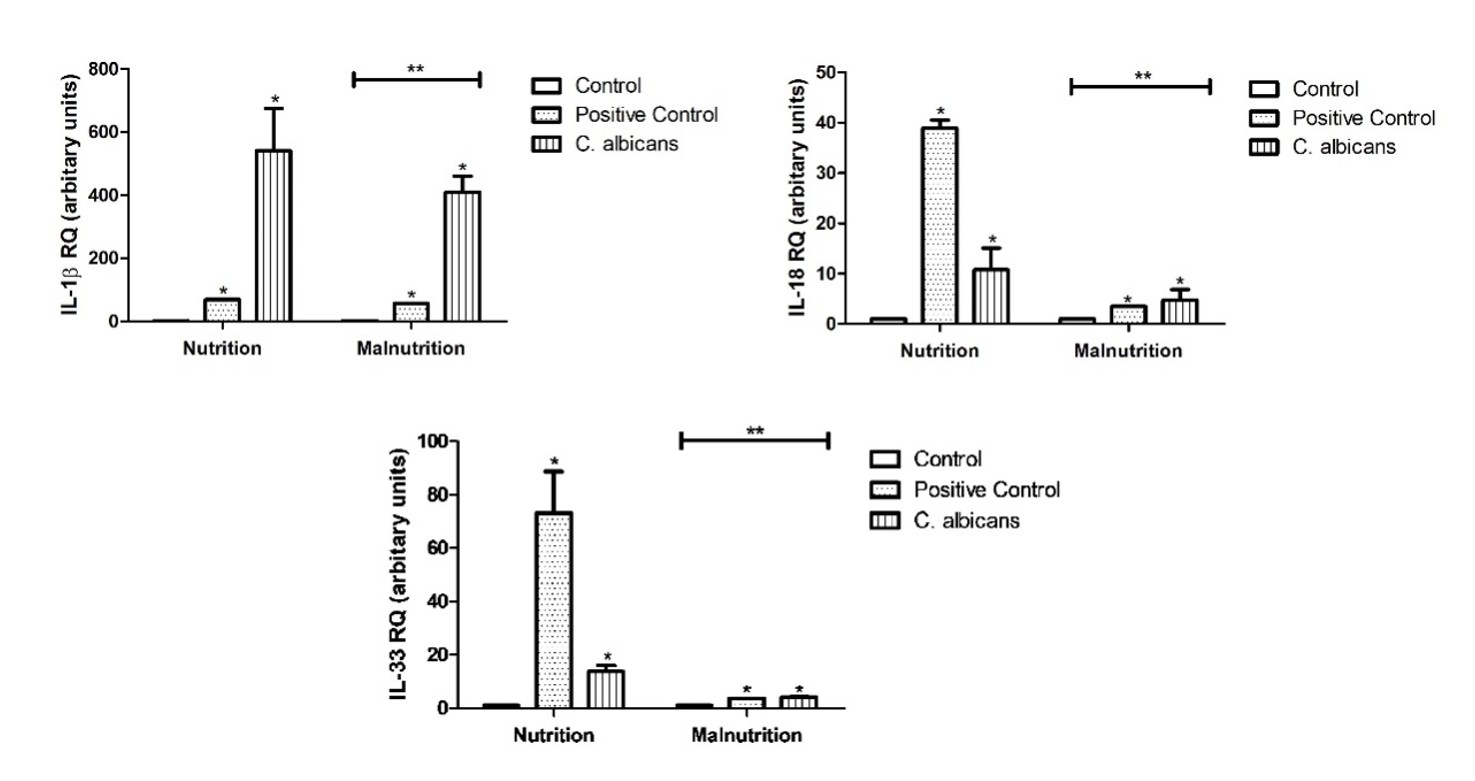
Intergroup evaluations nourished x malnourished for TLR-9 receptor indicated lower expression values in macrophages from malnourished animals (Control positive: 0.72±0.34; C. albicans: 0.25±0.19) when compared to those fed (Control positive: 1.66±0.85; C. albicans: 2.55±1.2), p<0.05 (Figure 2). However, when evaluating NF-kB (Nutrited - Control positive: 4.16±1.02; C. albicans: 0.63±0.1; Malnourished - Control positive: 7.13±0.31; C. albicans: 5.15±0.71, p<0.05, Figure 3) and IL-1β (Nutrited - Control positive: 69.0±0.34; C. albicans: 751.34±45.22; Malnourished - Control positive: 57.02±1.5; C. albicans: 497.71±0.01, p0.05) expression levels were elevated in macrophages from malnourished animals when buying from nourished ones. When analyzing IL-18, there was a reduction in expression among malnourished groups (Control positive: 3.47±0.01; C. albicans: 13.89±10.56) when compared to the nourished groups (Control positive: 38.9±2.8; C. albicans: 8.38±4.01), p <0.05. There was also reduced expression of IL-33 in the malnourished groups (Control positive: 13.8±5.81; C. albicans: 4.16±0.3) when compared to the nourished groups (Control positive: 73.0±31.3; C. albicans: 3.66 ± 0.07), p <0.05 (Figure 4). The intragroup analysis carried out on macrophages from fed animals revealed hyper-expression of the corresponding genes in the positive control, stimulated with Lipopolysaccharide, Porphyromonas gingivalis serotype, and test system infected with Candida albicans, using the negative control as a calibrator. Comparisons between the positive control and test indicated higher levels of expression in the Candida albicans-infected system for the NF-kB and IL-1β targets (p<0.05).
Quantitative TLR-2 expression for the control, positive control, and Candida albicans in nourished and malnourished. *p<0.05 when it compares with control, **p<0.05 nutrition x malnutrition.
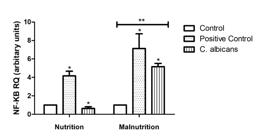
Dosage of the NF-kB expression for the control, positive control, and Candida albicans of nourished and malnourished. *p<0.05 when it compares with control, **p<0.05 nutrition x malnutrition.
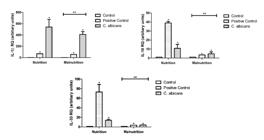
IL-1β, IL-18, and IL-33 expression for the control, positive control, and Candida albicans of nourished and malnourished. *p<0.05 when it compares with control, **p<0.05 nutrition x malnutrition.
4. Discussion
Our research group has been conducting numerous studies evaluating the impacts of malnutrition on the immune response. Our main findings demonstrate that neonatal malnutrition causes changes in alveolar macrophages (Melo et al., 2008; Souza et al., 2001). Alheiros-Lira et al. (2017) observed an increase in the inflammatory activity of peritoneal macrophages in mice fed a low-protein diet. Morais et al. (2019) detected dysregulation of innate immunity receptors. Malnourished animals and Candida albicans-infected, Costa et al. (2017) detected low expression of TLR-4 and caspase-1 in macrophages (Wagener et al., 2014).
The comparative study of the weight evolution curve constituted the first parameter used to evaluate the consequences of nutritional restriction imposed indirectly on offspring through breast milk offered to nourished (fed with a diet containing 17% protein) and malnourished (fed with a diet containing 8% protein) mothers. The evolution curve ponderal revealed was lower in the malnourished compared to the nourished. Growth retardation persisted throughout the nutritional supplementation period and reached adulthood. Morais et al. (2019) and Senna et al. (2015b) also found similar results between nourished and malnourished groups. It is essential to highlight that the diet used in this study is widely used in international research and is known to induce perinatal malnutrition (Melo et al., 2012).
It was observed lower expression of TLR-9 in animals that were malnourished during the neonatal period than in those that were nourished. This target receptor is a crucial endosomal sensor in defense against infections (Milovanovic et al., 2012). Dectin-1 receptor detects glucan in the Candida spp cells, which plays a priming response in antifungal defense (Rahman et al., 2009). Khan (2004) showed that β-(1→3) glucan is sufficient to induce dynamic redistribution and accumulation of TLR-9 in phagosomes, playing an essential role in the recognition and induction of responses against Candida albicans. However, Kasperkovitz et al. (2011) and Khan et al. (2016) suggest that TLR-9 may negatively impact the antifungal function of macrophages. According to Van de Veerdonk et al. (2008), the TLR-9-dependent pathway appears to be redundant in a disseminated candidiasis model in TLR9-/- mice, in which alternative pathways compensate for cytokine production. Therefore, the precise role of this receptor in fungal infections is not entirely understood (Rahman et al., 2009).
There was a high production of NF-kB in the malnourished and nourished animals, with hyperexpression in the malnourished group after nutritional replacement. Nuclear transcription factor kappa B (NF-kB) is an important gene transducer for the production of inflammatory mediators (Khan et al., 2016). The link between recognition receptors and pathogen-associated molecular patterns induces and modulates NF-kB activation through cross-regulatory mechanisms. Once activated, NF-kB regulates the expression of more than 200 genes involved in cellular function, including several cytokines (Wagener et al., 2014). Under basal conditions, macrophages from malnourished animals may not present detectable dysfunctions, but in adverse situations, they do not respond efficiently (Costa et al., 2017). Given this, it is believed that the overexpression of NF-kB may represent a warning sign regarding the possible dysregulation of the immune response. It is worth noting that this change can culminate in the high production of immunological mediators and lead to the emergence of tissue lesions, with consequent systemic dissemination of the invading pathogen.
In this study, the target IL-1β was elevated in the groups with Candida albicans infection. The inflammasome is an important mediator of interleukins 1β and 18 (Morais et al. 2016). Fungal β-glucans can initiate multiple intracellular signals, including the activation of transcription factors and protein complexes, the inflammasome (Kelley et al., 2019). As described by Smeekens et al. (2015), Candida albicans induces strong inflammatory responses with increased production of IL-1β. IL-1β is a fundamental cytokine involved in neutrophil recruitment and induction in response T helper 17 (Th17). The orchestration of this immune response is vital for mucosal protection in host defense against this commensal fungus (Kelley et al., 2019). Our findings illustrate the effector response to C. albicans infection. IL-18 expression levels were close to basal levels in the system infected with C. albicans in nourished and malnourished animals. IL-18 is an inflammatory cytokine recognized as an inducer of interferon γ (IFN-γ) (Netea et al., 2003). In this context, this protein complex is an essential sensor of the innate immunity against Candida. It is worth highlighting that this anti-Candida response is mediated late during infection, which may explain the results obtained in the present study.
IL-33 also presented levels close to the basal levels in the system infected by C. albicans in nourished and malnourished animals. This cytokine has been described for its essential function in fungal clearance (Maggini et al., 2018) and as a possible therapeutic target because of its ability to stimulate innate immunity in immunocompromised patients. It was observed that the production of IL-33 is independent of caspases in mouse peritoneal macrophages after stimulation with LPS, which suggests a contribution to the pathogenesis of T helper 2 type allergic inflammation (Th2) (Ohno et al., 2009). Furthermore, evidence indicates that during systemic diseases, in macrophages, the induction of IL-33 is dependent on glutaredoxin-1/TRAF6 and the NF-κB signaling pathway, which promotes Th2 protective responses. The administration of IL-33 increases host survival by promoting the elimination of fungi (Park et al., 2016). However, the Th2 response may compromise the defense of the host against fungi, which may explain the present findings. This scenario confirms the importance of the immunological mediators investigated and the need for complementary research, with experiments that include a complete evaluation of the stages of replication, transcription, and protein translation to fill the existing gaps regarding the role of these mediators in the antifungal response.
5. Conclusion
Nutritional reduction during the neonatal period has repercussions on body growth and defense mechanisms observed in adult life. Macrophages from malnourished animals exhibit changes in the expression of essential components of innate immunity. Impacts on the expression of TLR-9, IL-18, and IL-33 and overexpression of NF-kB and IL-1β may suggest immune modulation of the Th17 profile. Although this response consists of effective defense against Candida albicans infections, the high expression of these mediators may indicate immunological dysregulation. Thus, neonatal malnutrition mounts an altered response to Candida albicans infections, with a high chance of progressing to tissue damage and the possibility of triggering systemic infections caused by this fungus.
Acknowledgements
National Council of Technological and Scientific Development (CNPq), Brazil.
Data Availability Statement
The entire data set that supports the results of this study was published in the article itself.
References
-
ALHEIROS-LIRA, M.C., JUREMA-SANTOS, G.C., SILVA, H.T., SILVA, A.C., SENNA, S.M. and FERREIRA-SILVA, W.T., 2017. Effects of high-fat diet on somatic growth, metabolic parameters and function of peritoneal macrophages of young rats submitted to a maternal low-protein diet. British Journal of Nutrition, vol. 117, no. 6, pp. 796-803. http://doi.org/10.1017/S0007114517000708 PMid:28412994.
» http://doi.org/10.1017/S0007114517000708 -
AREND, W.P., PALMER, G. and GABAY, C., 2008. IL-1, IL-18, and IL-33 families of cytokines. Immunological Reviews, vol. 223, no. 1, pp. 20-38. http://doi.org/10.1111/j.1600-065X.2008.00624.x PMid:18613828.
» http://doi.org/10.1111/j.1600-065X.2008.00624.x -
COSTA, T.B., MORAIS, N.G., PEDROSA, A.L.F., ALBUQUERQUE, S.C.G., CASTRO, M.C.A.B. and PEREIRA, V.R.A., 2016. Neonatal malnutrition programs the oxidant function of macrophages in response to Candida albicans Microbial Pathogenesis, vol. 95, pp. 68-76. http://doi.org/10.1016/j.micpath.2016.02.012 PMid:27001703.
» http://doi.org/10.1016/j.micpath.2016.02.012 -
COSTA, T.B., MORAIS, N.G., LIRA, J.M.B., ALMEIDA, T.M., ALBUQUERQUE, S.C.G. and PEREIRA, V.R.A., 2017. Relation between neonatal malnutrition and gene expression: inflammasome function in infections caused by Candida albicans European Journal of Nutrition, vol. 56, no. 2, pp. 693-704. http://doi.org/10.1007/s00394-015-1113-9 PMid:26658898.
» http://doi.org/10.1007/s00394-015-1113-9 -
DESAI, M. and HALES, C.H., 1997. Role of fetal and infant growth in programming metabolism in later life. Biological Reviews of the Cambridge Philosophical Society, vol. 72, no. 2, pp. 329-348. http://doi.org/10.1111/j.1469-185X.1997.tb00016.x PMid:9155245.
» http://doi.org/10.1111/j.1469-185X.1997.tb00016.x -
KASPERKOVITZ, P.V., KHAN, N.S., TAM, J.M., MANSOUR, M.K., DAVIDS, P.J. and VYAS, J.M., 2011. Toll-like receptor 9 modulates macrophage antifungal effector function during innate recognition of Candida albicans and Saccharomyces cerevisiae Infection and Immunity, vol. 79, no. 12, pp. 4858-4867. http://doi.org/10.1128/IAI.05626-11 PMid:21947771.
» http://doi.org/10.1128/IAI.05626-11 -
KELLEY, N., JELTEMA, D., DUAN, Y. and HE, Y., 2019. The NLRP3 inflammasome: an overview of mechanisms of activation and regulation. International Journal of Molecular Sciences, vol. 20, no. 13, pp. 3328. http://doi.org/10.3390/ijms20133328 PMid:31284572.
» http://doi.org/10.3390/ijms20133328 -
KHAN, H.A., 2004. Zymosan-induced luminol-dependent chemiluminescence response of circulating and extravasated leukocytes in experimental sepsis. Mediators of Inflammation, vol. 13, no. 2, pp. 123-125. http://doi.org/10.1080/09629350410001688558 PMid:15203554.
» http://doi.org/10.1080/09629350410001688558 -
KHAN, N.S., KASPERKOVITZ, P.V., TIMMONS, A.K., MANSOUR, M.K., TAM, J.M., SEWARD, M.W., REEDY, J.L., PURANAM, S., FELIU, M. and VYAS, J.M., 2016. Dectin-1 controls TLR9 trafficking to phagosomes containing β-1,3 glucan. Journal of Immunology, vol. 196, no. 5, pp. 2249-2261. http://doi.org/10.4049/jimmunol.1401545 PMid:26829985.
» http://doi.org/10.4049/jimmunol.1401545 -
MAGGINI, S., PIERRE, A. and CALDER, P.C., 2018. Immune function and micronutrient requirements change over the life course. Nutrients, vol. 10, no. 10, pp. 1531. http://doi.org/10.3390/nu10101531
» http://doi.org/10.3390/nu10101531 -
MELO, J.F., MACEDO, E.M.C., SILVA, R.P.P., VIANA, M.T., FERREIRA-SILVA, W.T. and CASTRO, C.M.M.B., 2008. Effect of neonatal malnutrition on cell recruitment and oxidant-antioxidant activity of macrophages in endotoxemic adult rats. Revista de Nutrição, vol. 21, no. 6, pp. 683-694. http://doi.org/10.1590/S1415-52732008000600007
» http://doi.org/10.1590/S1415-52732008000600007 -
MELO, J.F., COSTA, T.B., LIMA, T.D.C., CHAVES, M.E.C., VAYSSADE, M. and NAGEL, M.D., 2012. Long-term effects of a neonatal low-protein diet in rats on the number of macrophages in culture and the expression/production of fusion proteins. European Journal of Nutrition, vol. 52, no. 5, pp. 1475-1482. http://doi.org/10.1007/s00394-012-0453-y PMid:23052626.
» http://doi.org/10.1007/s00394-012-0453-y -
MENCACCI, A., BACCI, A., CENCI, E., MONTAGNOLI, C., FIORUCCI, S., CASAGRANDE, A., FLAVELL, R.A., BISTONI, F. and ROMANI, L., 2000. Interleukin 18 restores defective Th1 immunity to Candida albicans in caspase 1-deficient mice. Infection and Immunity, vol. 68, no. 9, pp. 5126-5131. http://doi.org/10.1128/IAI.68.9.5126-5131.2000 PMid:10948135.
» http://doi.org/10.1128/IAI.68.9.5126-5131.2000 -
MILOVANOVIC, M., VOLAREVIC, V., RADOSAVLJEVIC, G., JOVANOVIC, I., PEJNOVIC, N., ARSENIJEVIC, N. and LUKIC, M.L., 2012. IL-33/ST2 axis in inflammation and immunopathology. Immunologic Research, vol. 52, no. 1-2, pp. 89-99. http://doi.org/10.1007/s12026-012-8283-9 PMid:22392053.
» http://doi.org/10.1007/s12026-012-8283-9 -
MORAIS, N.G., COSTA, T.B., PEDROSA, A.L.F., CASTRO, M.C.A.B., ALBUQUERQUE, S.C.G. and PEREIRA, V.R.A., 2016. Effect of neonatal malnutrition on expression of nitric oxide synthase enzyme, production of free radicals and in vitro viability of alveolar macrophages infected with methicillin-sensitive and methicillin-resistant Staphylococcus aureus European Journal of Nutrition, vol. 55, no. 1, pp. 403-411. http://doi.org/10.1007/s00394-015-0861-x PMid:25701093.
» http://doi.org/10.1007/s00394-015-0861-x -
MORAIS, N.G., COSTA, T.B., LIMA, L.F.F., SANTOS-BASÍLIO, D., MORAIS, N.N.G. and PAIVA-CAVALCANTI, M., 2019. Impact of neonatal malnutrition on expression TLR-9, NF-kB and cytokines of macrophages infected in vitro with methicillin resistant Staphylococcus aureus Microbial Pathogenesis, vol. 132, pp. 254-260. http://doi.org/10.1016/j.micpath.2019.05.009 PMid:31075429.
» http://doi.org/10.1016/j.micpath.2019.05.009 -
NETEA, M.G., VONK, A.G., VAN DEN HOVEN, M., VERSCHUEREN, I., JOOSTEN, L.A., VAN KRIEKEN, J.H., VAN DEN BERG, W.B., VAN DER MEER, J.W.M. and KULLBERG, B.J., 2003. Differential role of IL-18 and IL-12 in the host defense against disseminated Candida albicans infection. European Journal of Immunology, vol. 33, no. 12, pp. 3409-3417. http://doi.org/10.1002/eji.200323737 PMid:14635050.
» http://doi.org/10.1002/eji.200323737 -
OHNO, T., OBOKI, K., KAJIWARA, N., MORII, E., AOZASA, K., FLAVELL, R.A., OKUMURA, K., SAITO, H. and NAKAE, S., 2009. Caspase-1, caspase-8, and calpain are dispensable for IL-33 release by macrophages. Journal of Immunology, vol. 183, no. 12, pp. 7890-7897. http://doi.org/10.4049/jimmunol.0802449 PMid:19933859.
» http://doi.org/10.4049/jimmunol.0802449 -
PARK, S.J., CHO, H.R. and KWON, B., 2016. Roles of IL-33 in resistance and tolerance to systemic Candida albicans infections. Immune Network, vol. 16, no. 3, pp. 159-164. http://doi.org/10.4110/in.2016.16.3.159 PMid:27340384.
» http://doi.org/10.4110/in.2016.16.3.159 -
RAHMAN, M.M. and MCFADDEN, G., 2011. Myxoma virus lacking the pyrin-like protein M013 is sensed in human myeloid cells by both NLRP3 and multiple Toll-like receptors, which independently activate the inflammasome and NF-κB innate response pathways. Journal of Virology, vol. 85, no. 23, pp. 12505-12517. http://doi.org/10.1128/JVI.00410-11 PMid:21957307.
» http://doi.org/10.1128/JVI.00410-11 -
RAHMAN, M.M., Mohamed, M.R., KIM, M., SMALLWOOD, S. and MCFADDEN, G., 2009. Co-regulation of NF-kB and inflammasome-mediated inflammatory responses by myxoma virus pyrin domain-containing protein M013. PLoS Pathogens, vol. 5, no. 10, e1000635. http://doi.org/10.1371/journal.ppat.1000635 PMid:19851467.
» http://doi.org/10.1371/journal.ppat.1000635 -
RICHARDSON, J.P. and MOYES, D.L., 2015. Adaptive immune responses to Candida albicans infection. Virulence, vol. 6, no. 4, pp. 327-337. http://doi.org/10.1080/21505594.2015.1004977 PMid:25607781.
» http://doi.org/10.1080/21505594.2015.1004977 -
ŞANLI, E. and KABARAN, S., 2019. Maternal obesity, maternal overnutrition and fetal programming: effects of epigenetic mechanisms on the development of metabolic disorders. Current Genomics, vol. 20, no. 6, pp. 419-427. http://doi.org/10.2174/1389202920666191030092225 PMid:32476999.
» http://doi.org/10.2174/1389202920666191030092225 -
SENNA, S.M., FERRAZ JUNIOR, J.C., LEANDRO, C.G., 2015a. Perinatal malnutrition and the protective role of physical training on the immune system. Nutrición Hospitalaria, vol. 32, no. 3, pp. 967-976. http://doi.org/10.3305/nh.2015.32.3.9041 PMid:26319808.
» http://doi.org/10.3305/nh.2015.32.3.9041 -
SENNA, S.M., TORRES, M.K., LOPES, D.A.P., ALHEIROS-LIRA, M.C., MOURA, D.B. and PEREIRA, V.R.A., 2015b. Moderate physical training attenuates perinatal low-protein-induced spleen lymphocyte apoptosis in endotoxemic adult offspring rats. European Journal of Nutrition, vol. 55, no. 3, pp. 1113-1122. http://doi.org/10.1007/s00394-015-0925-y PMid:25986158.
» http://doi.org/10.1007/s00394-015-0925-y -
SMEEKENS, S.P., GRESNIGT, M.S., BECKER, K.L., CHENG, S.C., NETEA, S.A., JACOBS, L., JANSEN, T., VAN DE VEERDONK, F.L., WILLIAMS, D.L., JOOSTEN, L.A.B., DINARELLO, C.A. and NETEA, M.G., 2015. An anti-inflammatory property of Candida albicans β-glucan: induction of high levels of interleukin-1 receptor antagonist via a Dectin-1/CR3 independent mechanism. Cytokine, vol. 71, no. 2, pp. 215-222. http://doi.org/10.1016/j.cyto.2014.10.013 PMid:25461401.
» http://doi.org/10.1016/j.cyto.2014.10.013 - SOUZA, I.P., KANG, H.C., NARDINELLI, L. and BORELLI, P., 2001. Protein malnutrition: effect on spreading phagocytosis and fungicidal activity of peritoneal macrophages. Revista Brasileira de Ciências Farmacêuticas, vol. 37, no. 2, pp. 143-151.
-
VAN DE VEERDONK, F.L., NETEA, M.G., JANSEN, T.J., JACOBS, L., VERSCHUEREN, I. and VAN DER MEER, J.W.M., 2008. Redundant role of TLR9 for anti-Candida host defense. Immunobiology, vol. 213, no. 8, pp. 613-620. http://doi.org/10.1016/j.imbio.2008.05.002 PMid:18950591.
» http://doi.org/10.1016/j.imbio.2008.05.002 -
VAN DE VEERDONK, F.L., JOOSTEN, L.A.B., SHAW, P.J., SMEEKENS, S.P., MALIREDDI, R.K.S., VAN DER MEER, J.W.M., KULLBERG, B.-J., NETEA, M.G. and KANNEGANTI, T.-D., 2011. The inflammasome drives protective Th1 and Th17 cellular responses in disseminated candidiasis. European Journal of Immunology, vol. 41, no. 8, pp. 2260-2268. http://doi.org/10.1002/eji.201041226 PMid:21681738.
» http://doi.org/10.1002/eji.201041226 -
WAGENER, J., MALIREDDI, R.K.S., LENARDON, M.D., KÖBERLE, M., VAUTIER, M.K.S., MACCALLUM, D.M., BIEDERMANN, T., SCHALLER, M., NETEA, M.G., KANNEGANTI, T.D., BROWN, G.D., BROWN, A.J. and GOW, N.A., 2014. Fungal chitin dampens inflammation through IL-10 induction mediated by NOD2 and TLR9 activation. PLoS Pathogens, vol. 10, no. 4, e1004050. http://doi.org/10.1371/journal.ppat.1004050 PMid:24722226.
» http://doi.org/10.1371/journal.ppat.1004050
Edited by
-
Editor:
Ana Paula Peron