 Unraveling allometric relationships of fish species in streams of southwestern Amazon
Abstract
In this study, we analyzed a total of 1,354 individuals belonging to 16 species, distributed across three orders (Characiformes, Siluriformes, and Gymnotiformes), collected bimonthly, between August 2016 and July 2018, at five sampling sites in the Quinoá stream system. We present new weight-length relationship data for nine species (Triportheus angulatus, Bryconops caudomaculatus, Holopritis ocellifera, Gymnocorymbus thayeri, Apteronotus albifrons, Sternopygus macrurus, Helogenes marmoratus, Rineloricaria lanceolata, and Gymnorhamphichthys rondoni) from southwestern Amazonia, Acre State, northern Brazil. Length-weight relationships were estimated through linear regression after logarithmic transformation of the data, and a Student’s t-test was applied to test the null hypothesis that the allometric coefficient does not differ statistically from b = 3. Total length (TL, cm) ranged from 1.2 to 31.5 cm and total weight (TW, g) from 0.02 to 92.5 g. The intercept (a) of the length-weight relationship ranged from 0.0068 to 0.063, the regression slope (b) from 2.46 to 3.28, and the coefficient of determination (R2) from 0.91 to 0.99. Negative allometric growth was observed in 68.8% of the species, positive allometric growth in 25.0%, and only 6.3% exhibited isometric growth. Elongated species, particularly Gymnotiformes and some Siluriformes, showed a negative allometric pattern, whereas species such as Steindachnerina guentheri, Bario oligolepis, and Holopristis ocellifera exhibited positive allometric growth. Our findings reinforce that environmental variation in Amazonian streams influences the length-weight relationship patterns of fish species, highlighting the importance of considering analytical factors such as sampling methods and temporal scale when comparing studies. Overall, the data generated contribute to the knowledge of the ichthyofauna of the Acre state, as well as provide support for ecological studies, management of forage species, and conservation of Amazonian aquatic ecosystems.
Keywords:
Acre; amazonian ichthyofauna; aquatic ecosystems; growth patterns; igarapé Quinoá
Resumo
Neste estudo, analisamos um total 1.354 indivíduos pertencentes a 16 espécies, distribuídas em três ordens (Characiformes, Siluriformes e Gymnotiformes), coletados bimestralmente entre agosto de 2016 e julho de 2018, em cinco pontos de amostragem no sistema do Igarapé Quinoá. Apresentamos novos dados de relação peso-comprimento para nove espécies (Triportheus angulatus, Bryconops caudomaculatus, Holopristis ocellifera, Gymnocorymbus thayeri, Apteronotus albifrons, Sternopygus macrurus, Helogenes marmoratus, Rineloricaria lanceolata e Gymnorhamphichthys rondoni) do sudoeste da Amazônia, estado do Acre, norte do Brasil. As relações peso-comprimento foram estimadas por meio de regressão linear após transformação logarítmica dos dados, e um teste t de Student foi aplicado para testar a hipótese nula de que o coeficiente alométrico não difere estatisticamente de b = 3. O comprimento total (CT, cm) variou de 1,2 a 31,5 cm e o peso total (PT) de 0,02 a 92,5 g. O intercepto (a) da relação peso-comprimento variou de 0,0068 a 0,063, a inclinação da regressão (b) de 2,46 a 3,28, e o coeficiente de determinação (R2) de 0,91 a 0,99. Crescimento alométrico negativo foi observado em 68,8% das espécies, crescimento alométrico positivo em 25,0%, e apenas 6,3% apresentaram crescimento isométrico. Espécies alongadas, particularmente Gymnotiformes e alguns Siluriformes, apresentaram padrão alométrico negativo, enquanto espécies como Steindachnerina guentheri, Bario oligolepis e Holopristis ocellifera exibiram crescimento alométrico positivo. Nossos achados reforçam que a variação ambiental em riachos amazônicos influencia os padrões de relação peso-comprimento das espécies de peixes, destacando a importância de considerar fatores analíticos, como métodos de amostragem e escala temporal, ao comparar estudos. De modo geral, os dados gerados contribuem para o conhecimento da ictiofauna do Estado do Acre, bem como fornecem suporte para estudos ecológicos, manejo de espécies forrageiras e conservação de ecossistemas aquáticos amazônicos.
Palavras-chave:
Acre; ictiofauna amazônica; ecossistemas aquáticos; padrões de crescimento; igarapé Quinoá
1. Introduction
Understanding the biology and ecology of species, particularly inconspicuous and cryptic freshwater organisms that help maintain water quality and sustain aquatic food webs, is fundamental to advancing our understanding of aquatic ecosystem processes and supporting effective conservation policies and management strategies (Ottoni et al., 2025).
Studies on length-weight relationships (LWRs) in fishes play a crucial role in understanding bioecological aspects and are fundamental for assessing the nutritional condition and population growth of different species (Gomiero and Braga, 2003; Freitas et al., 2017; Oliveira et al., 2020). Furthermore, understanding LWRs can help evaluate the impacts of environmental degradation, such as dam construction, land expansion and land use, pollution, and climate change, which directly affect fish populations and assemblages (Cella-Ribeiro et al., 2015; Giarrizzo et al., 2015; Rotta and Yamamoto, 2021). For example, Winemiller et al. (2016) highlighted that the expansion of hydropower dams in the Amazon, Congo, and Mekong River basins is a major drive of hydrological disconnection and fish community disruption, compromising ecological processes such as reproduction and growth. In addition, dams of different sizes (large, medium, and small) can block migratory routes, reduce gene flow (Piorski et al., 2008), and negatively affect ecosystem services and community structure (Pelicice et al., 2023; Oliveira et al., 2024).
Riparian deforestation is another threat to freshwater ecosystems. The removal of riparian vegetation alters hydrological flow and the physical structure of aquatic habitats, directly affecting the physiology, morphology, growth, and population performance Jacob et al. (2021). In addition to riparian loss, landscape modifications such as road network expansion can further degrade stream habitats and negatively affect fish assemblages (Oliveira et al., 2024; Camana et al., 2022; Drager et al., 2025). Although the importance of riparian vegetation for maintaining stream biotic integrity is widely recognized Drager et al. (2025), vegetation loss cover promotes an increase in water temperature (Junk et al., 2024), enhances sediment input (Nicomedes et al., 2025), and promotes hydrological homogenization (Leitão et al., 2018). These changes can reduce food resources availability (Corrêa and Smith 2019; Miranda et al., 2025), leading to nutritional losses in species (Zavala-Camin 1996; Drager et al., 2025), and ultimately affecting growth patterns and length-weight relationships (LWRs).
Therefore, understanding LWRs constitutes an essential tool for the conservation of aquatic ecosystems, contributing to the maintenance of fisheries activities across different aquatic environments, such as oceans, estuaries, and freshwater systems, as well as to planning in economic aspects associated with these activities (Froese, 2006; Corrêa et al., 2018; Freitas et al., 2023). Furthermore, estimates of the LWRs parameters a and b provide relevant information regarding fish body condition, nutritional status, and growth patterns (Froese, 2006; Froese et al., 2014; Luque and Colorado, 2024). The intercept a corresponds to the LWRs coefficient, while b represents the allometric coefficient, describing the rate of weight increase relative to length and indicating whether growth is isometric or allometric. According to Tavares-Dias et al. (2008) and Benacón et al. (2015), these parameters can vary over food availability, specific morphological characteristics of each species and the biotic and abiotic environmental conditions. Consequently, these variations reflect changes in the physiological condition of individuals, thus, fish of the same length may exhibit greater weight gain, resulting in better body condition and increased accumulation of energy reserves (Le Cren, 1951; Froese, 2006; Almeida et al., 2025). Oliveira et al. (2022) highlight that data obtained from LWR estimates are important for decision-making and the management of fish stocks. In Acre state, located in the western Brazilian Amazon, studies describing fish LWRs are relatively recent (Corrêa et al., 2018; Silva et al., 2019; Silva et al., 2020; Oliveira et al., 2022; Almeida et al., 2025; Fratari et al., 2025), and substantial knowledge gap remain for many species. In light to contribute to filling this gap, we present the LWRs of 16 stream fish species from southwestern Amazonia, providing novel data for nine species, and test the null hypothesis that the allometric coefficients differ significantly from b = 3.
2. Materials and Methods
2.1. Study area
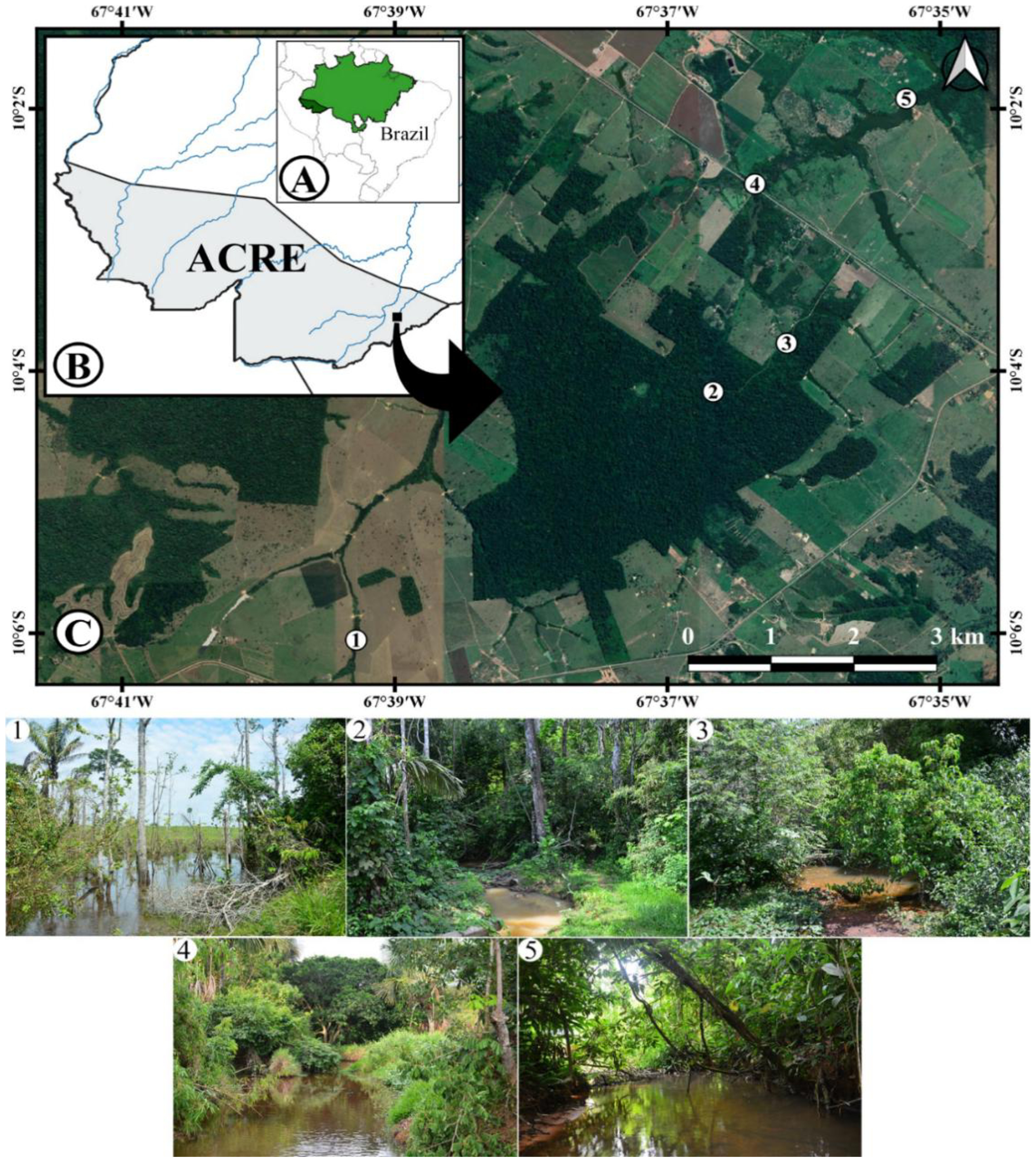
The Quinoá stream system (QSS), a tributary of the Acre River, Purus River drainage, Amazon River basin (QSS - 10º06’03.33”S/67°40º11.50”W; Figure 1), is located in the municipality of Senador Guiomard, in the Acre state, northern Brazil, approximately 25 km from the capital Rio Branco. This area includes anthropized environments and forest fragments with different degrees of preservation (Corrêa et al., 2018; Costa, 2024; Oliveira et al., 2024). The main anthropogenic impacts in the QSS are the streams damming for construction of small reservoirs and secondary roads. One of the main preserved ecosystems within the QSS is the Catuaba Experimental Farm (FEC) (10°04´S/67°37´W). The FEC covers an area of approximately 1,200 ha, with gently undulating topography and a predominance of Oxisols (Acre 2006; Medeiros et al., 2013; Oliveira et al., 2024).
Location of the sampling sites in the Quinoá stream system: (A) Brazil - Green = Brazilian Amazon; Dark green = Acre State; (B) Acre State = light gray; and (C) sampling sites (1-5). Images of the respective sampling sites are presented below.
2.2. Ichthyofauna sampling and data analysis
Fish were collected bimonthly for two years at five sampling sites in the QSS (see Figure 1), between August 2016 and July 2018 (SISBIO #11778), using different sampling gears according to Corrêa et al. (2015): (i) a seine net (“rede de arrasto”) measuring 5 m in length, 2.25 m in height, with a mesh size of 5 mm between adjacent knots; (ii) two hand nets (“puçás”) with 5 mm mesh, 30 cm in width and 50 cm in length; and (iii) two sieves (“peneiras”) with 5 mm mesh, 50 cm in width and 80 cm in length.
After each sampling event, the individuals were anesthetized with eugenol (CONCEA 2013), subsequently placed in plastic bags containing 5% formalin, properly labeled, and transported to the laboratory. The specimens were identified using specialized literature (e.g.,Queiroz et al., 2013a, b, c), and when necessary, specialists were consulted. Taxa spelling, taxonomic classification, species validity and well as other useful information were checked in Fricke et al. (2025a, b).
In the laboratory, all individuals were washed with running water and their total length (TL, cm) and total weight (TW, g) were measured using a millimeter-scaled ichthyometer. After each sorting, the fishes were transferred to 70% ethanol. Voucher specimens were deposited in the fish collection of the Federal University of Acre (UFAC), Rio Branco, Acre (seeTable 1). For the estimation of the LWRs, we initially used scatter plots to identify and remove outliers from our analyses. We used the equation W = aLb (Le Cren 1951; Froese 2006), where W is the total weight and L is the total length, and a and b are the constants of the linear regression model. The parameters a and b of the linear regression model were log-transformed (log10 TW = log10 a + b * log10 TL), and the analyses were performed in the software in R v4.4.3 and RStudio 12.1+563 (RStudio Team 2024), using the package “vegan” (Oksanen et al., 2025). Finally, for data visualization, we generated box plots to represent the distribution of total lengths of the analyzed species, and linear regression plots for species that showed statistical significance. For this purpose, we used the package “ggplot2” (Wickham 2016) in the RStudio 12.1+563 (RStudio Team 2024).
Parameters of the length–weight relationship of fish species sampled in the Quinoá stream system, Acre State, Northern Brazil.
To test the null hypothesis that the allometric coefficient does not differ statistically from the value expected under isometric growth (H0: b = 3), we applied a Student’s t-test. The t value was calculated using the formula (b − 3)/SE(b), where b is the regression coefficient of the length-weight relationship and SE(b) is the standard error of the coefficient. A significance level of p = 0.05 was adopted. Species presenting b values significantly greater than 3 exhibited positive allometric growth (b > 3), whereas values significantly lower than 3 indicated negative allometric growth (b < 3). When the absolute value of t did not exceed the critical value, b was considered not significantly different from 3 (b = 3), indicating isometric growth (Zar 2010; Ragheb 2023). Finally, we assessed the conservation status of the studied species according to ICMBio (2026). These categories provide a standardized framework for evaluating species conservation status in Brazil.
3. Results
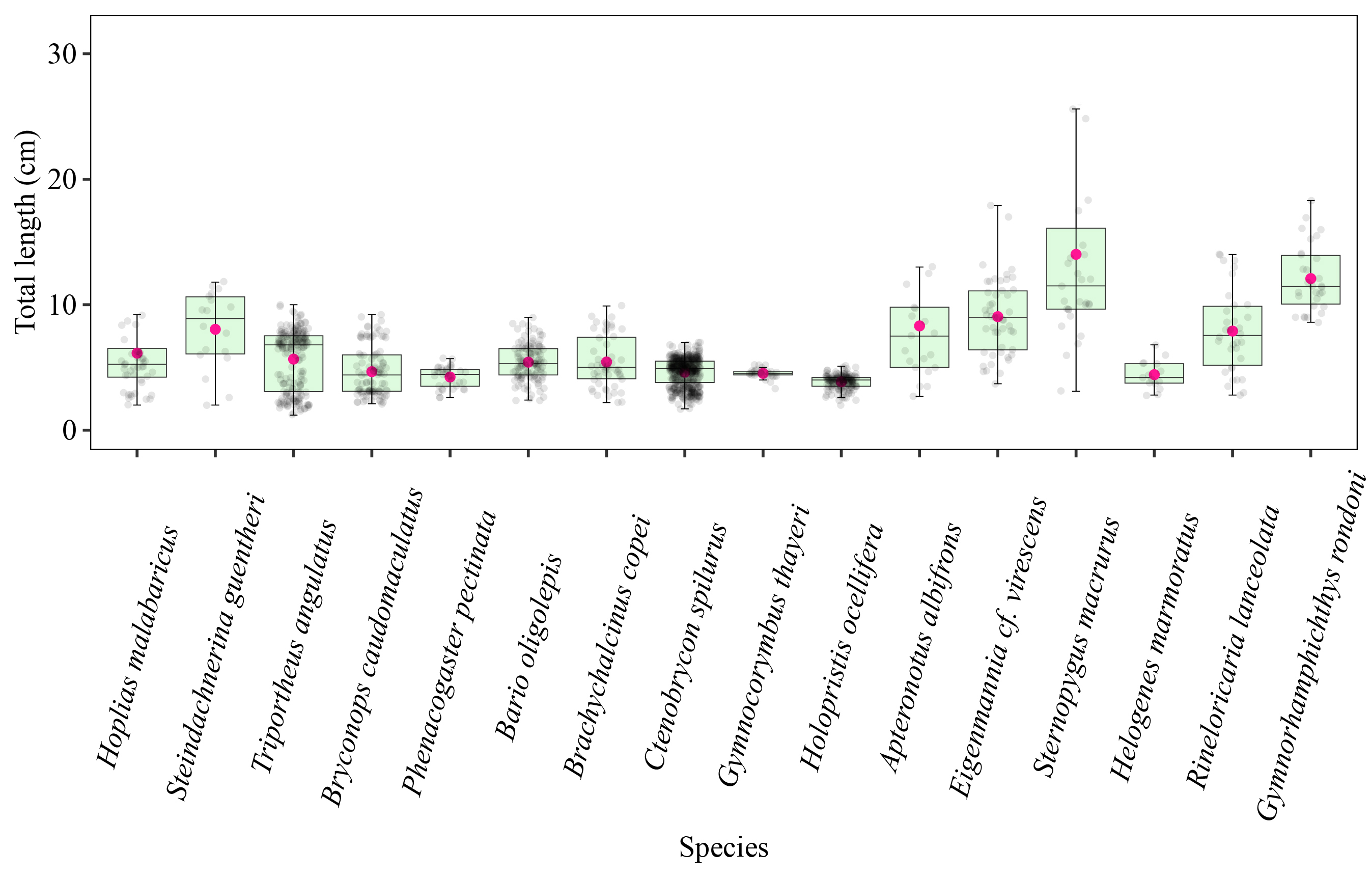
We analyzed a total of 1,354 individuals belonging to 16 species (10 Characiformes, three Siluriformes, and three Gymnotiformes). Total abundance ranged from 15 individuals of Helogenes marmoratus Günther, 1863 (TL = 4.42 ± 0.29 cm; TW = 0.97 ± 0.18 g) to 422 individuals of Ctenobrycon spilurus (Valenciennes, 1850) (TL = 4.48 ± 0.05 cm; TW = 1.31 ± 0.03 g). Overall, TL ranged from 1.2 to 31.5 cm (Figure 2), and TW from 0.02 to 92.5 g. For the intercept a, values ranged from 0.0068 to 0.0630, and the slope b ranged from 2.46 to 3.28. Regarding the coefficient of determination (R2), the lowest value recorded was R2 = 0.91 for Gymnocorymbus thayeri Eigenmann, 1908, whereas the highest value (R2 = 0.99) was recorded for the following species: Steindachnerina guentheri (Eigenmann & Eigenmann, 1889), Hoplias malabaricus (Bloch, 1794), Brachychalcinus copei (Steindachner, 1882), Bryconops caudomaculatus (Günther, 1864), Bario oligolepis (Günther, 1864), and Triportheus angulatus (Spix & Agassiz, 1829). A total of 31.3% of the analyzed species showed negative allometric growth (b < 3), whereas 18.8% showed positive allometric growth (b > 3), and only 50.0% exhibited isometric growth (b = 3) (seeTable 1), and all relationships are shown in the Figure 3.
Representation of the biometric data of total length (cm) for the 16 fish species collected in the Quinoá stream system, Acre State, Northern Brazil. The pink circles represent the mean total length for each species, and the light gray circles represent the individuals of each species.
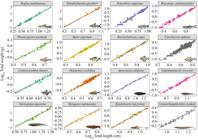
Length-weight relationships of the eight fish species that showed statistically significant allometric values, collected in the in the Quinoá stream system, Acre State, Northern Brazil, with fitted linear regressions and confidence intervals (light gray).
For nine species, we present novel LWRs data for southwestern Amazonia: four Characiformes [Holopristis ocellifera (Steindachner 1882), Gymnocorymbus thayeri, Bryconops caudomaculatus, and Triportheus angulatus], two Siluriformes (Helogenes marmoratus and Rineloricaria lanceolata (Günther 1868)], and three Gymnotiformes [Gymnorhamphichthys rondoni (Miranda Ribeiro 1920), Sternopygus macrurus (Bloch & Schneider 1801), and Apteronotus albifrons (Linnaeus 1766)] (see Table 1). Regarding their conservation status, all recorded species are classified as Least Concern (LC) according to the criteria established by ICMBio.
4. Discussion
For the State of Acre, Northern Brazil, studies describing length–weight relationships of fishes in streams and large rivers remain scarce. This situation may be associated with the high species diversity and environmental heterogeneity of the region, as well as the limited number of researchers and the lack of governmental investment (Carvalho et al., 2023). The first studies on LWRs for the Acre State were carried out by Corrêa et al. (2018), who analyzed four cichlid species. Subsequently, Silva et al. (2019) studied 14 fish species on sandy beaches of the Acre River, and Silva et al. (2020) investigated 16 species in lakes of the middle Purus River drainage, Amazon River basin. Oliveira et al. (2022) analyzed six species of Characiformes in oxbow lakes of the same river. In the present study, we provide novel data for nine species collected in the BHIQ, whose allometric coefficients (b) remained within the expected range of 2.5 to 3.5, according to Froese (2006), and approximately 50% of the analyzed species showed agreement between the estimated length–weight relationship b values and the Bayesian estimates available in FishBase (Froese et al., 2014; Froese and Pauly, 2015), also considering that some values reported in FishBase are estimates for genus levels.
Some factors may explain differences in the allometric coefficients reported in the literature, such as sampling method, fixation of individuals in formalin, nutritional condition, reproductive period, environmental heterogeneity, and the range of total lengths of the specimens. Our discussion focuses on species that showed statistical significance for the value of b according to the t-test. The top predator, the trahira Hoplias malabaricus, exhibited negative allometric growth (b = 2.83), a value lower than those reported by Oliveira et al. (2013) and Mereles et al. (2017). This variation may be related to the number of individuals analyzed and to the range of total lengths sampled. For the iliophagous species Steindachnerina guentheri, we observed positive allometric growth (b = 3.28), higher than the value available in FishBase, but partially corroborating the allometric coefficient reported by Almeida et al. (2025), who evaluated the length–weight relationship and condition factor of 11 species in a protected area of the Acre River drainage.
The tetra Bario oligolepis exhibited positive allometric growth (b = 3.22), a value higher than those reported by Luque and Colorado (2024) in the Colombian Amazon (b = 3.01) and by Almeida et al. (2025) in a protected area of the Acre River drainage (b = 3.04). These differences suggest variations in the species’ growth pattern across different Amazonian aquatic environments, possibly associated with environmental factors, resource availability, and local ecological conditions. Similarly, the tetra Holopristis ocellifera showed positive allometric growth in this study (b = 3.30), with values close to those reported by Hercos et al. (2021) in Lake Amanã (b = 3.48). The species demonstrates a consistent pattern of good body condition in heterogeneous Amazonian aquatic ecosystems.
On the other hand, some species exhibited statistically significant negative allometric growth, indicating greater increases in length than in body mass, a pattern characteristic of elongated species such as those belonging to the order Gymnotiformes, popularly known as ituis, tuviras, knifefishes, including Apteronotus albifrons, Eigenmannia cf. virescens, and Gymnorhamphichthys rondoni, as well as siluriforms such as the whiptail catfish Rineloricaria lanceolata. For R. lanceolata, the value obtained differs from the positive allometric growth reported by Tobes et al. (2016) and Oliveira et al. (2013), suggesting a strong influence of local habitat characteristics, such as substrate type and hydrological regime. In the case of G. rondoni, the negative pattern reinforces the morphological tendencies of the group, with greater investment in total length; we also highlight that there are currently no studies focusing on allometric relationships for this species.
Among the species with intermediate values, the catfish Helogenes marmoratus exhibited isometric growth in this study (b = 2.77), because it was not statistically different from b = 3, contrasting with the slightly positive value reported by Allard et al. (2015) (b = 3.21) in French Guiana. This difference may be associated with variations in environmental characteristics between the systems studied, availability of food resources, vegetation cover, and hydrological regime, factors capable of influencing the growth pattern of populations. The knifefish Sternopygus macrurus also showed isometric growth (b = 2.95), a finding similar to that reported by Allard et al. (2015) (b = 2.79), possibly because the growth pattern of S. macrurus is relatively stable in Neotropical streams. Finally, the freshwater sardine Triportheus angulatus exhibited isometric growth (b = 2.97) because it was not statistically different from b = 3, slightly lower than the value reported by Giarrizzo et al. (2015) in the Xingu River drainage, Amazon River basin, a variation that may be associated with the narrower range of total lengths analyzed and the predominance of juvenile individuals.
In summary, our findings reinforce that environmental variation among Amazonian stream systems strongly influences the length-weight relationship patterns of species belonging to different fish orders. In addition, 50% of our fidings showed values significantly different from b = 3, and nine species had their LWRs data calculated for the first time in southwestern Amazonia. Thus, caution is recommended when comparing studies, particularly with respect to sampling methodology and broad temporal scales, as well as the importance of statistically testing the obtained allometric coefficient values.
Data Availability Statement
The research data are only available upon request to the corresponding author.
Acknowledgements
RSA is grateful to the Fundação de Amparo à Pesquisa e ao Desenvolvimento Científico e Tecnológico do Maranhão (FAPEMA) for the support provided through a doctoral scholarship - Process Number 94140/25 to FC. is grateful to the Maranhão State University (Grant No. 18/2023 - PPG/UEMA) for a visiting researcher stipend. This study was supported by CAPES (Finance Code 001) through a doctoral fellowship to LPO (Process No. 88887.939430/2024–00).We also thank CNPq - Conselho Nacional de Desenvolvimento Científico e Tecnológico, Brazil for the CNPq grant no. 306490/2024-2 to FPO, and for the CNPq PPBio project Nº 441189/2023-7.
References
- ACRE, 2006. Programa estadual de zoneamento ecológico econômico do estado do Acre-fase II Rio Branco, Brasil: SEMA. 356 p.
-
ALLARD, L., TOUSSAINT, A., VIGOUROUX, R. and BROSSE, S., 2015. Length-weight relationships of 58 fish species in French Guiana streams. Journal of Applied Ichthyology, vol. 31, no. 3, pp. 567-570. https://doi.org/10.1111/jai.12712
» https://doi.org/10.1111/jai.12712 -
ALMEIDA, M.S., MONTAG, L.F.A., OLIVEIRA, L.P., JARDIM-JÚNIOR, A.A., PENHA, I.C.S., PASSOS, L.F.G., FRATARI, M.C., VIEIRA, L.J.S. and HASHIGUTI, D.T., 2025. Length-weight relationship and condition factor of 11 fish species in streams of a protected area in the Acre River basin, northern Brazil. Brazilian Journal of Biology = Revista Brasileira de Biologia, vol. 85, pp. e291756. https://doi.org/10.1590/1519-6984.291756 PMid:41337533.
» https://doi.org/10.1590/1519-6984.291756 -
BENACON, M.S., SANTOS, S.M., ARAÚJO, R.L., PANTOJA-LIMA, J., ARIDE, P.H.R. and OLIVEIRA, A.T., 2015. Revista Colombiana de Ciência Animal, vol. 7, pp. 44-49. https://doi.org/10.24188/recia.v7.n1.2015.421
» https://doi.org/10.24188/recia.v7.n1.2015.421 -
CAMANA, M., DALA-CORTE, R.B., COLLAR, F.C. and BECKER, F.G., 2022. Assessing the legacy of land use trajectories on stream fish communities of southern Brazil. Hydrobiologia, vol. 849, no. 20, pp. 4431-4446. https://doi.org/10.1007/s10750-020-04347-2
» https://doi.org/10.1007/s10750-020-04347-2 -
CARVALHO, R.L., RESENDE, A.F., BARLOW, J., FRANÇA, F.M., MOURA, M.R., MACIEL, R., ALVES-MARTINS, F., SHUTT, J., NUNES, C.A., ELIAS, F., SILVEIRA, J.M., STEGMANN, L., BACCARO, F.B., JUEN, L., SCHIETTI, J., ARAGÃO, L., BERENGUER, E., CASTELLO, L., COSTA, F.R.C., GUEDES, M.L., LEAL, C.G., LEES, A.C., ISAAC, V., NASCIMENTO, R.O., PHILLIPS, O.L., SCHMIDT, F.A., TER STEEGE, H., VAZ-DE-MELLO, F., VENTICINQUE, E.M., VIEIRA, I.C.G., ZUANON, J., FERREIRA, J., CARVALHO, R.L., RESENDE, A.F., BARLOW, J., FRANÇA, F., MOURA, M.R., MACIEL, R., ALVES-MARTINS, F., SHUTT, J., NUNES, C.A., ELIAS, F., SILVEIRA, J.M., STEGMANN, L., BACCARO, F.B., JUEN, L., SCHIETTI, J., ARAGÃO, L., BERENGUER, E., CASTELLO, L., COSTA, F.R.C., GUEDES, M.L., LEAL, C.G., LEES, A.C., ISAAC, V., NASCIMENTO, R.O., PHILLIPS, O.L., SCHMIDT, F.A., TER STEEGE, H., VAZ-DE-MELLO, F., VENTICINQUE, E.M., VIEIRA, I.C.G., ZUANON, J., FERREIRA, J., GEBER FILHO, A.N.S., RUSCHEL, A., CALOR, A.R., DE LIMA ALVES, A., MUELBERT, A.E., QUARESMA, A., VICENTINI, A., PIEDADE, A.R., OLIVEIRA, A.A., ALEIXO, A., CASADEI-FERREIRA, A., GONTIJO, A., HERCOS, A., ANDRIOLO, A., LOPES, A., PONTES-LOPES, A., SANTOS, A.P.M., OLIVEIRA, A.B.S., MORTATI, A.F., SALCEDO, A.K.M., ALBERNAZ, A.L., FARES, A.L., ANDRADE, A.L., OLIVEIRA PES, A.M., FARIA, A.P.J., BATISTA, A.P.B., PUKER, A., BUENO, A.S., JUNQUEIRA, A.B., HOLANDA DE ANDRADE, A.L.R., GHIDINI, A.R., GALUCH, A.V., MENEZES, A.S.O., MANZATTO, A.G., CORREA, A.S.A.S., QUEIROZ, A.C.M., ZANZINI, A.C.S., OLIVO NETO, A.M., MELO, A.W.F., GUIMARAES, A.F., CASTRO, A.B., BORGES, A., FERREIRA, A.B., MARIMON, B.S., MARIMON-JUNIOR, B.H., FLORES, B.M., DE RESENDE, B.O., ALBUQUERQUE, B.W., VILLA, B., DAVIS, B., NELSON, B., WILLIAMSON, B., MELO, B.S.B., CINTRA, B.B.L., SANTOS, B.B., PRUDENTE, B.S., LUIZE, B.G., GODOY, B.S., RUTT, C.L., DUARTE RITTER, C., SILVA, C.V.J., RIBAS, C.R., PERES, C.A., AZEVÊDO, C.A.S., FREITAS, C., CORDEIRO, C.L., BROCARDO, C.R., CASTILHO, C., LEVIS, C., DORIA, C.R.C., ARANTES, C.C., SANTOS, C.A., JAKOVAC, C.C., SILVA, C.A., BENETTI, C.J., LASMAR, C., MARSH, C.J., ANDRETTI, C.B., OLIVEIRA, C.P., CORNELIUS, C., ALVES DA ROSA, C., BAIDER, C., GUALBERTO, C.G., DEUS, C.P., MONTEIRO JUNIOR, C.S., SANTOS NETO, C.R., LOBATO, C.M.C., SANTOS, C.R.M., PENAGOS, C.C.M., COSTA, D.S., VIEIRA, D.L.M., AGUIAR, D.P.P., VERAS, D.S., PAULETTO, D., BRAGA, D.L., STORCK-TONON, D., ALMEIDA, D.F., DOUGLAS, D., AMARAL, D.D., GRIS, D., LUTHER, D., EDWARDS, D.P., GUIMARÃES, D.P., SANTOS, D.C., CAMPANA, D.R.S., NOGUEIRA, D.S., SILVA, D.R., DUTRA, D.B.S., ROSA, D.C.P., SILVA, D.A.S., PEDROZA, D., ANJOS, D.V., MELO LIMA, D.V., SILVÉRIO, D.V., RODRIGUES, D.J., BASTOS, D., DALY, D., BARBOSA, E.M., ARENAS, E.R.C., OLIVEIRA, E.A., SANTOS, E.A., SANTANA, E.C.C., GUILHERME, E., VIDAL, E., CAMPOS-FILHO, E.M., VAN DEN BERG, E., MORATO, E.F., DA SILVA, E.R., MARQUES, E.E., PRINGLE, E.G., NICHOLS, E., ANDRESEN, E., FARIAS, E.S., SIQUEIRA, E.L.S., DE ALBUQUERQUE, E.Z., GÖRGENS, E.B., CUNHA, E.J.R., HOUSEHOLDER, E., NOVO, E.M.M.L., OLIVEIRA, F.F., ROQUE, F.O., COLETTI, F., REIS, F., MOREIRA, F.F.F., TODESCHINI, F., CARVALHO, F.A., COELHO DE SOUZA, F., SILVA, F.A.B., CARVALHO, F.G., CABECEIRA, F.G., D’HORTA, F.M., MENDONÇA, F.P., FLORÊNCIO, F.P., CARVALHO, F.R., ARRUDA, F.V., NONATO, F.A.S., SANTANA, F.D., DURGANTE, F., SOUZA, F.K.S., OBERMULLER, F.A., CASTRO, F.S., WITTMANN, F., SALES, F.M.S., NETO, F.V., SALLES, F.F., BORBA, G.C., DAMASCO, G., BARROS, G.G., BREJÃO, G.L., JARDIM, G.A., PRANCE, G.T., LIMA, G.R., DESIDÉRIO, G.R., MELO, G.C., CARMO, G.H.P., CABRAL, G.S., ROUSSEAU, G.X., DA SILVA, G.C., SCHWARTZ, G., GRIFFITHS, H., QUEIROZ, H.L., ESPÍRITO-SANTO, H.M.V., CABETTE, H.S.R., NASCIMENTO, H.E.M., VASCONCELOS, H.L., MEDEIROS, H., AGUIAR, H.J.A.C., LEÃO, H., WILKER, I., GONÇALVES, I.C., DE SOUSA GORAYEB, I., MIRANDA, I.P.A., BROWN, I.F., SANTOS, I.C.S., FERNANDES, I.O., FERNANDES, I., DELABIE, J.H.C., DE ABREU, J.C., GAMA NETO, J.L., COSTA, J.B.P., NORONHA, J.C., DE BRITO, J.G., WOLFE, J., SANTOS, J.C., FERREIRA-FERREIRA, J., E GOMES, J.O., LASKY, J.R., DE FARIA FALCÃO, J.C., COSTA, J.G., CRAVO, J.S., GUERRERO, J.E.B., MUÑOZ GUTIÉRREZ, J.A., CARREIRAS, J., LANNA, J., SILVA BRITO, J., SCHÖNGART, J., MENDES AGUIAR, J.J., LIMA, J., BARROSO, J.G., NORIEGA, J.A., PEREIRA, J.L.S., NESSIMIAN, J.L., SOUZA, J.L.P., DE TOLEDO, J.J., MAGALHÃES, J.L.L., CAMARGO, J.L., OLIVEIRA JUNIOR, J.M.B., RIBEIRO, J.M.F., SILVA, J.O.A., DA SILVA GUIMARÃES, J.R., HAWES, J.E., ANDRADE-SILVA, J., REVILLA, J.D.C., DA SILVA, J.S., DA SILVA MENGER, J., RECHETELO, J., STROPP, J., BARBOSA, J.F., DO VALE, J.D., LOUZADA, J., CERQUEIRA SILVA, J.C., DA SILVA, K.D., MELGAÇO, K., CARVALHO, K.S., YAMAMOTO, K.C., MENDES, K.R., VULINEC, K., MAIA, L.F., CAVALHEIRO, L., VEDOVATO, L.B., DEMARCHI, L.O., GIACOMIN, L., DUMAS, L.L., MARACAHIPES, L., BRASIL, L.S., FERREIRA, L.V., CALVÃO, L.B., MARACAHIPES-SANTOS, L., REIS, L.P., DA SILVA, L.F., DE OLIVEIRA MELO, L., CARVALHO, L.C.S., CASATTI, L., AMADO, L.L., DE MATOS, L.S., VIEIRA, L., PRADO, L.P., ALENCAR, L., FONTENELE, L., MAZZEI, L., NAVARRO PAOLUCCI, L., ZANZINI, L.P., CARVALHO, L.N., CREMA, L.C., BRULINGER, L.F.B., MONTAG, L.F.A., NAKA, L.N., AZARA, L., SILVEIRA, L.F., NUNES, L.G.O., ROSALINO, L.M.C., MESTRE, L.A.M., BONATES, L.C.M., COELHO, L.S., BORGES, L.H.M., LOURENÇO, L.S., FREITAS, M.A.B., BRITO, M.T.S., POMBO, M.M., DA ROCHA, M., CARDOSO, M.R., GUEDES, M.C., RASEIRA, M.B., MEDEIROS, M.B., CARIM, M.J.V., SIMON, M.F., PANSONATO, M.P., DOS ANJOS, M.R., NASCIMENTO, M.T., SOUZA, M.R., MONTEIRO, M.G.T., DA SILVA, M.J., UEHARA-PRADO, M., OLIVEIRA, M.A., CALLISTO, M., VITAL, M.J.S., O SANTOS, M.P.D., SILVEIRA, M., OLIVEIRA, M.V.N.D., PÉREZ-MAYORGA, M.A., CARNIELLO, M.A., LOPES, M.A., SILVEIRA, M.A.P.A., ESPOSITO, M.C., MALDANER, M.E., PASSOS, M.I.S., ANACLÉTO, M.J.P., COSTA, M.K.S., MARTINS, M.P., PIEDADE, M.T.F., IRUME, M.V., COSTA, M.M.S., MAXIMIANO, M.F.A., FREITAS, M.G., COCHRANE, M.A., GASTAUER, M., ALMEIDA, M.R.N., SOUZA, M.F., CATARINO, M., COSTA BATISTA, M., MASSAM, M.R., MARTINS, M.F.O., HOLMGREN, M., ALMEIDA, M., DIAS, M.S., ESPÍRITO SANTO, N.B., BENONE, N.L., IVANAUSKAS, N.M., MEDEIROS, N., TARGHETTA, N., FÉLIX, N.S., FERREIRA JUNIOR, N., HAMADA, N., CAMPOS, N., GIEHL, N.F.S., METCALF, O.C., SILVA, O.G.M., CERQUEIRA, P.V., MOSER, P., MIRANDA, P.N., PERUQUETTI, P.S.F., ALVERGA, P.P.P., PRIST, P., SOUTO, P., BRANDO, P., POMPEU, P.S., BARNI, P.E., GRAÇA, P.M.A., MORANDI, P.S., CRUZ, P.V., DA SILVA, P.G., BISPO, P.C., CAMARGO, P.B., SARMENTO, P.S.M., SOUZA, P., ANDRADE, R.B., BRAGA, R.B., BOLDRINI, R., BASTOS, R.C., ASSIS, R.L., SALOMÃO, R.P., LEITÃO, R.P., MENDES JUNIOR, R.N.G., CARPANEDO, R.S., MELINSKI, R.D., LIGEIRO, R., E PÉREZ, R.E.P., BARBOSA, R.I., CAJAIBA, R.L., SILVANO, R.A.M., SALOMÃO, R.P., HILÁRIO, R.R., MARTINS, R.T., PERDIZ, R.O., VICENTE, R.E., SILVA, R.J., KOROIVA, R., SOLAR, R., SILVA, R.C., S DE LIMA, R.B., SILVA, R.S.A., MARIANO, R., RIBEIRO, R.A.B., FADINI, R.F., OLIVEIRA, R.L.C., FEITOSA, R.M., MATAVELLI, R., MORMUL, R.P., DA SILVA, R.R., ZANETTI, R., BARTHEM, R., ALMEIDA, R.P.S., RIBEIRO, S.C., R COSTA NETO, S.V., NIENOW, S., OLIVEIRA, S.A.V., BORGES, S.H., MILHEIRAS, S., RIBEIRO, S.P., COUCEIRO, S.R.M., SOUSA, S.A., RODRIGUES, S.B., DUTRA, S.L., MAHOOD, S., VIEIRA, S.A., ARROLHO, S., SILVA, S.S., TRIANA, S.P., LAURANCE, S., KUNZ, S.H., ALVARADO, S.T., RODRIGUES, T.H.A., SANTOS, T.F., MACHADO, T.L.S., FELDPAUSCH, T.R., SOUSA, T., MICHELAN, T.S., EMILIO, T., BRITO, T.F., ANDRÉ, T., BARBOSA, T.A.P., MIGUEL, T.B., IZZO, T.J., LARANJEIRAS, T.O., MENDES, T.P., SILVA, T.S.F., KROLOW, T.K., BEGOT, T.O., BAKER, T.R., DOMINGUES, T.F., GIARRIZZO, T., BENTOS, T.V., HAUGAASEN, T., PEIXOTO, U., POZZOBOM, U.M., KORASAKI, V., RIBEIRO, V.S., SCUDELLER, V.V., OLIVEIRA, V.H.F., LANDEIRO, V.L., SANTOS FERREIRA, V.R., SILVA, V.N.G., GOMES, V.H.F., OLIVEIRA, V.C., FIRMINO, V., SANTIAGO, W.T.V., BEIROZ, W., ALMEIDA, W.R., OLIVEIRA, W.L., SILVA, W.C., CASTRO, W., DÁTTILO, W., CRUZ, W.J.A., SILVA, W.F.M., MAGNUSSON, W.E., LAURANCE, W., MILLIKEN, W., PAULA, W.S., MALHI, Y., SHIMABUKURO, Y.E., LIMA, Y.G., SHIMANO, Y.,FEITOSA, Y. and SYNERGIZE CONSORTIUM, 2023. Pervasive gaps in Amazonian ecological research. Current Biology : CB, vol. 33, no. 16, pp. 3495-3504.e4. https://doi.org/10.1016/j.cub.2023.06.077 PMid:37473761.
» https://doi.org/10.1016/j.cub.2023.06.077 -
CELLA-RIBEIRO, A., HAUSER, M., NOGUEIRA, L.D., DORIA, C.R.C. and TORRENTE-VILARA, G., 2015. Length-weight relationships of fish from Madeira River, Brazilian Amazon, before the construction of hydropower plants. Journal of Applied Ichthyology, vol. 31, no. 5, pp. 939-945. https://doi.org/10.1111/jai.12819
» https://doi.org/10.1111/jai.12819 - CONCEA, 2013. Diretrizes da prática de eutanásia do Conselho Nacional de Controle de Experimentação Animal Brasília: Ministério da Ciência, Tecnologia e Inovação, 54 p.
-
CORREA, C.S. and SMITH, W.S., 2019. Hábitos alimentares em peixes de água doce: uma revisão sobre metodologias e estudos em várzeas brasileiras. Oecologia Australis, vol. 23, no. 4, pp. 698-711. https://doi.org/10.4257/oeco.2019.2304.01
» https://doi.org/10.4257/oeco.2019.2304.01 -
CORRÊA, F., OLIVEIRA, E.F., TUCHTENHAGEN, T., POUEY, J. and PIEDRAS, S., 2015. Ichthyofauna of the hydrographic basin of the Chasqueiro Stream (Mirim Lagoon system, southern Brazil): generating subsidies for conservation and management. Biota Neotropica, vol. 15, no. 4, pp. e0006. https://doi.org/10.1590/1676-0611-BN-2015-0006
» https://doi.org/10.1590/1676-0611-BN-2015-0006 -
CORRÊA, F., SILVA, R.S. and VIEIRA, L.J.S., 2018. Length-weight relationship of three cichlid species in a stream in southwestern Amazon, Brazil. Journal of Applied Ichthyology, vol. 34, no. 5, pp. 1255-1257. https://doi.org/10.1111/jai.13778
» https://doi.org/10.1111/jai.13778 -
COSTA, M., 2024. Geologia, mineralogia, geoquímica, fertilidade e potenciais impactos ambientais em praias, barrancos e águas fluviais e lacustres (bacias dos rios Purus e Juruá) no estado do Acre: texto de apresentação. Boletim do Museu de Geociências da Amazônia, vol. 11, no. 3, pp. 1-25. https://doi.org/10.31419/ISSN.2594-942X.v112024i3a1MLC
» https://doi.org/10.31419/ISSN.2594-942X.v112024i3a1MLC -
DRAGER, D.H.C., LEAL, C., SALVADOR, G.N., CARVALHO, D.R., POMPEU, P.S., FERRAZ, G.O., BREJÃO, G.L., BASÍLIO, P.H.S., RODRIGUES-FILHO, C.A.S., FERRAZ, S.F.B., MAEOKA, L.T.Y., ZUANON, J., MONTAG, L.F.A., ALVES FILHO, M.A. and LEITÃO, R.P., 2025. Impacts of roads on the body condition of Amazonian stream fish. Neotropical Ichthyology, vol. 23, no. 4, pp. e250078. https://doi.org/10.1590/1982-0224-2025-0078
» https://doi.org/10.1590/1982-0224-2025-0078 -
FRATARI, M.C., OLIVEIRA, L.P., DAMASCENO, M.Y.M., LOPES, R.E.L., SILVA, R.S., CORRÊA, F. and VIEIRA, L.J.S., 2025. Length-weight relationship of 12 fish species from streams of a protected area in the southwestern Amazon, Brazil. Acta Limnologica Brasiliensia, vol. 37, pp. e31. https://doi.org/10.1590/s2179-975x2125
» https://doi.org/10.1590/s2179-975x2125 -
FREITAS, M.O., FONTES, F.C., PINHEIRO, J.V. and GIGLIO, V.J., 2023. Length-weight relationship of fishes from an estuary of Abrolhos Bank, Brazil. Acta Limnologica Brasiliensia, vol. 35, pp. e22. https://doi.org/10.1590/s2179-975x4423
» https://doi.org/10.1590/s2179-975x4423 -
FREITAS, T.M.S., PRUDENTE, B.S. and MONTAG, L.F.A., 2017. Length-weight relationship in ten fish species from the Nhamundá River, the Amazon Basin, Brazil. Acta Amazonica, vol. 47, pp. 75-78. https://doi.org/10.1590/1809-4392201601272
» https://doi.org/10.1590/1809-4392201601272 -
FRICKE, R., ESCHMEYER, W.N. and FONG, J.D., 2025a [viewed 15 November 2025]. Species by family/subfamily [online]. Available from: http://researcharchive.calacademy.org/research/ichthyology/catalog/SpeciesByFamily.asp
» http://researcharchive.calacademy.org/research/ichthyology/catalog/SpeciesByFamily.asp -
FRICKE, R., ESCHMEYER, W.N. and VAN DER LAAN, R., 2025b [viewed 15 November 2025]. Eschmeyer’s catalog of fishes: genera, species, references [online]. Available from: http://researcharchive.calacademy.org/research/ichthyology/catalog/fishcatmain.asp
» http://researcharchive.calacademy.org/research/ichthyology/catalog/fishcatmain.asp -
FROESE, R. and PAULY, D., 2015 [viewed 15 November 2025]. FishBase [online]. Available from: http://www.fishbase.org
» http://www.fishbase.org -
FROESE, R., 2006. Cube law, condition factor and weight-length relationships: history, meta-analysis and recommendations. Journal of Applied Ichthyology, vol. 22, no. 4, pp. 241-253. https://doi.org/10.1111/j.1439-0426.2006.00805.x
» https://doi.org/10.1111/j.1439-0426.2006.00805.x -
FROESE, R., THORSON, J.T. and REYES JUNIOR, R.B., 2014. A Bayesian approach for estimating length-weight relationships in fishes. Journal of Applied Ichthyology, vol. 30, no. 1, pp. 78-85. https://doi.org/10.1111/jai.12299
» https://doi.org/10.1111/jai.12299 -
GIARRIZZO, T., OLIVEIRA, R.R.S., ANDRADE, M.C., GONÇALVES, A.P., BARBOSA, T.A.P., MARTINS, A.R., MARQUES, D.K., SANTOS, J.L.B., FROIS, R.P.S., ALBUQUERQUE, T.P.O., MONTAG, L.F.A., CAMARGO, M. and SOUSA, L.M., 2015. Length-weight and length-length relationships for 135 fish species from the Xingu River (Amazon basin, Brazil). Journal of Applied Ichthyology, vol. 31, no. 2, pp. 514-528. https://doi.org/10.1111/jai.12677
» https://doi.org/10.1111/jai.12677 -
GOMIERO, L.M. and BRAGA, F.M.S., 2003. Relação peso-comprimento e fator de condição para Cichla cf. ocellaris e Cichla monoculus (Perciformes, Cichlidae) no reservatório de Volta Grande, rio Grande, MG/SP. Acta Scientiarum. Biological Sciences, vol. 25, no. 1, pp. 79-86. https://doi.org/10.4025/actascibiolsci.v25i1.2119
» https://doi.org/10.4025/actascibiolsci.v25i1.2119 -
HERCOS, A.P., PRADO-VALLADARES, A.C., DEL FAVERO, J.M., ZUCHI, N.A., TEIXEIRA, T.F., ALBUQUERQUE, F.E.A. and DE QUEIROZ, H.L., 2021. Length-weight relationships of ornamental fish species from Amanã Lake, Amazonas, Brazil. Journal of Applied Ichthyology, vol. 37, no. 6, pp. 1-4. https://doi.org/10.1111/jai.14217
» https://doi.org/10.1111/jai.14217 -
ICMBio, 2026 [viewed 23 June 2026]. Sistema de Avaliação do Risco de Extinção da Biodiversidade [online]. SALVE. Disponível em: https://salve.icmbio.gov.br/
» https://salve.icmbio.gov.br/ -
JACOB, L.L., PRUDENTE, B.S., MONTAG, L.F.A. and SILVA, R.R., 2021. The effect of different logging regimes on the ecomorphological structure of stream fish assemblages in the Brazilian Amazon. Hydrobiologia, vol. 848, no. 5, pp. 1027-1039. https://doi.org/10.1007/s10750-020-04508-3
» https://doi.org/10.1007/s10750-020-04508-3 -
JUNK, W.J., PIEDADE, M.T.F., SCHONGART, J., NUNES DA CUNHA, C., GONCALVES, S.R.A., WANTZEN, K.M. and WITTMANN, F., 2024. Riparian wetlands of low-order streams in Brazil: extent, hydrology, vegetation cover, interactions with streams and uplands, and threats. Hydrobiologia, vol. 851, no. 7, pp. 1657-1678. https://doi.org/10.1007/s10750-022-05056-8
» https://doi.org/10.1007/s10750-022-05056-8 -
LE CREN, E.D., 1951. The length-weight relationship and seasonal cycle in gonad weight and condition in the perch (Perca fluviatilis). The Journal of Animal Ecology, vol. 20, no. 2, pp. 201-219. https://doi.org/10.2307/1540
» https://doi.org/10.2307/1540 -
LEITÃO, R.P., ZUANON, J., MOUILLOT, D., LEAL, C.G., HUGHES, R.M., KAUFMANN, P.R., VILLÉGER, S., POMPEU, P.S., KASPER, D., DE PAULA, F.R., FERRAZ, S.F.B. and GARDNER, T.A., 2018. Disentangling the pathways of land use impacts on the functional structure of fish assemblages in Amazon streams. Ecography, vol. 41, no. 1, pp. 219-232. https://doi.org/10.1111/ecog.02845 PMid:29910537.
» https://doi.org/10.1111/ecog.02845 -
LUQUE, F.J. and COLORADO, Z.G.J., 2024. Length-weight relationship of 32 fish species from oligotrophic headwater streams of northwestern Colombian Amazon. Acta Amazonica, vol. 54, pp. e54af24151. https://doi.org/10.1590/1809-4392202401512
» https://doi.org/10.1590/1809-4392202401512 -
MEDEIROS, H., CASTRO, W., SALIMON, C.I., SILVA, I.B.E. and SILVEIRA, M., 2013. Tree mortality, recruitment and growth in a bamboo dominated forest fragment in southwestern Amazonia, Brazil. Biota Neotropica, vol. 13, no. 2, pp. 29-34. https://doi.org/10.1590/S1676-06032013000200002
» https://doi.org/10.1590/S1676-06032013000200002 -
MERELES, M.A., SANT’ANNA, I.R.A. and COSTA SOUSA, R.G., 2017. Length-weight relationship of fish species from tributaries of the Machado River, located in pasture lands (Rondônia State, Brazil). Acta Fish and Aquatic Resources, vol. 5, pp. 43-51. https://doi.org/10.2312/Actafish.2017.5.1.43-51
» https://doi.org/10.2312/Actafish.2017.5.1.43-51 -
MIRANDA, J.F.C.T., LIMA, T.R.F., SANTOS, T.M.R., SMITH, W.S., PAIVA, F.C. and ALVES, N.S., 2025. Dieta, relação peso-comprimento e uso de habitat de Piabina argentea Reinhardt 1867 em um rio neotropical. Oecologia Australis, vol. 29, pp. 158-166. https://doi.org/10.4257/oeco.2025.2902.05
» https://doi.org/10.4257/oeco.2025.2902.05 -
NICOMEDES, N.P., SANTOS, T.M.R., CARVALHO, L.G.N., PRIETO, B.C.G., BENTO, C.S., SILVA, L.L.M., PAIVA, F.C., ALVES, N.S. and SMITH, W.S., 2025. Long-term effects of land use and cover change and dam rupture on ichthyofauna in a neotropical stream. International Review of Hydrobiology, vol. 70006, no. 1, pp. 1-8. https://doi.org/10.1002/iroh.70006
» https://doi.org/10.1002/iroh.70006 -
OKSANEN, J, SIMPSON, G.L., BLANCHET, F.G., KINDT, R., LEGENDRE, P., MINCHIN, P.R., O'HARA, R.B., SOLYMOS, P., STEVENS, M.H.H., SZOECS, E., WAGNER, H., BEDWARD, M., BOLKER, B., BORCARD, D., CARVALHO, G., DE CACERES, M., DURAND, S., EVANGELISTA, H.B.A., HANNIGAN, G., HILL, M.O., LAHTI, L., MARTINO, C., OUELLETTE, M.H., RIBEIRO CUNHA, E., SMITH, T., STIER, A., TER BRAAK, C.J.F. and WEEDON, J., 2025 [viewed 23 June 2026]. vegan: community ecology package [online]. R package version 2.7.1 Available from: https://CRAN.R-project.org/package=vegan
» https://CRAN.R-project.org/package=vegan -
OLIVEIRA, L.P., CORRÊA, F., ORTEGA, J., SILVA, R.S., OLIVEIRA, E.F. and VIEIRA, L.J.S., 2024. Influence of environmental conditions and the fragmented landscape on the co-occurrence patterns of ichthyofauna of a stream in southwestern Brazilian Amazon. Aquatic Sciences, vol. 86, no. 3, pp. 1-13. https://doi.org/10.1007/s00027-024-01080-z
» https://doi.org/10.1007/s00027-024-01080-z -
OLIVEIRA, L.P., SILVA, R.S., VIRGILIO, L.R., CORRÊA, F. and VIEIRA, L.J.S., 2022. Allometric relationships of six fish species of the order Characiformes in oxbow lakes on the floodplain of the middle Purus river, Amazon. Ecología Austral, vol. 32, no. 2, pp. 594-598. https://doi.org/10.25260/EA.22.32.2.0.1218
» https://doi.org/10.25260/EA.22.32.2.0.1218 -
OLIVEIRA, M.S.B., SILVA, L.M.A., PRESTES, L. and TAVARES-DIAS, M., 2020. Length-weight relationship and condition factor for twelve fish species from the Igarapé Fortaleza basin, a small tributary of the Amazonas River estuary. Acta Amazonica, vol. 50, no. 1, pp. 8-11. https://doi.org/10.1590/1809-4392201900702
» https://doi.org/10.1590/1809-4392201900702 -
OLIVEIRA, R.R.S., ANDRADE, M.C., PITEIRA, D.G. and GIARRIZZO, T., 2013. Length-length and length-weight relationships for fish fauna from headwaters of Onça Puma Mountain ridge, Amazonian region, Brazil. Biota Amazônia, vol. 3, no. 3, pp. 193-197. https://doi.org/10.18561/2179-5746/biotaamazonia.v3n3p193-197
» https://doi.org/10.18561/2179-5746/biotaamazonia.v3n3p193-197 -
OTTONI, F.P., ÂNDRADE, M., HENSCHEL, E., AZEVEDO-SANTOS, V.M., PAVANELLI, C.S. and ALBERT, J.S., 2025. Editorial: Freshwater biodiversity crisis: multidisciplinary approaches as tools for conservation Volume II. Frontiers in Environmental Science, vol. 13, pp. 1613883. https://doi.org/10.3389/fenvs.2025.1613883
» https://doi.org/10.3389/fenvs.2025.1613883 -
PELICICE, F.M., AGOSTINHO, A.A., AZEVEDO-SANTOS, V.M., BESSA, E., CASATTI, L., GARRONE-NETO, D., GOMES, L.C., PAVANELLI, C.S., PETRY, A.C., DOS SANTOS POMPEU, P., REIS, R.E., DE OLIVEIRA ROQUE, F., SABINO, J., DE SOUSA, L.M., VILELLA, F.S. and ZUANON, J., 2023. Ecosystem services generated by Neotropical freshwater fishes. Hydrobiologia, vol. 850, no. 12-13, pp. 2903-2926. https://doi.org/10.1007/s10750-022-04986-7
» https://doi.org/10.1007/s10750-022-04986-7 -
PIORSKI, N.M., SANCHES, A., CARVALHO-COSTA, L.F., HATANAKA, T., CARRILLO-AVILA, M., FREITAS, P.D. and GALETTI JUNIOR, P.M., 2008. Contribution of conservation genetics in assessing neotropical freshwater fish biodiversity. Brazilian Journal of Biology = Revista Brasileira de Biologia,vol. 68, no. 4, (suppl.), pp. 1039-1050. https://doi.org/10.1590/S1519-69842008000500011 PMid:19197474.
» https://doi.org/10.1590/S1519-69842008000500011 - QUEIROZ, L.J., TORRENTE-VILARA, G., OHARA, W.M., PIRES, T.H.S., ZUANON, J. and DORIA, C.R.C., 2013a. Peixes do Rio Madeira São Paulo: Santo Antônio Energia, vol. 1.
- QUEIROZ, L.J., TORRENTE-VILARA, G., OHARA, W.M., PIRES, T.H.S., ZUANON, J. and DORIA, C.R.C., 2013b. Peixes do Rio Madeira São Paulo: Santo Antônio Energia, vol. 2.
- QUEIROZ, L.J., TORRENTE-VILARA, G., OHARA, W.M., PIRES, T.H.S., ZUANON, J. and DORIA, C.R.C., 2013c. Peixes do Rio Madeira São Paulo: Santo Antônio Energia, vol. 3.
-
RAGHEB, E., 2023. Length-weight relationship and well-being factors of 33 fish species caught by gillnets from the Egyptian Mediterranean waters off Alexandria. Egyptian Journal of Aquatic Research, vol. 49, no. 3, pp. 361-367. https://doi.org/10.1016/j.ejar.2023.01.001
» https://doi.org/10.1016/j.ejar.2023.01.001 -
ROTTA, M. and YAMAMOTO, K.C., 2021. Length-weight relationship of ornamental fish interest in the Tupé Sustainable Development Reserve, Manaus, Amazonas, Brazil. Brazilian Journal of Development, vol. 7, no. 2, pp. 15085-15100. https://doi.org/10.34117/bjdv7n2-230
» https://doi.org/10.34117/bjdv7n2-230 -
RSTUDIO TEAM, 2024 [viewed 23 June 2026]. RStudio: integrated development for R [online]. Available from: https://www.rstudio.com
» https://www.rstudio.com -
SILVA, R.S., CORRÊA, F., OLIVEIRA, L.P. and VIEIRA, L.J.S., 2019. Length-weight relation of 14 fish species occurring on sandy beaches along a tropical river in the Amazon. Journal of Applied Ichthyology, vol. 35, no. 2, pp. 1-3. https://doi.org/10.1111/jai.13852
» https://doi.org/10.1111/jai.13852 -
SILVA, R.S., VIRGILIO, L.R., CORRÊA, F. and VIEIRA, L.J.S., 2020. Length-weight relationships of fish species from oxbow lakes on the floodplain of the middle Purus River in western Brazilian Amazon. Journal of Applied Ichthyology, vol. 36, no. 2, pp. 256-258. https://doi.org/10.1111/jai.14013
» https://doi.org/10.1111/jai.14013 - TAVARES-DIAS, M., MARCON, J.L., LEMOS, J.R.G., FIM, J.D.I., AFFONSO, E.G. and ONO, E.A., 2008. Índices de condição corporal de Brycon amazonicus (Spix & Agassiz, 1829) e Colossoma macropomum (Cuvier, 1818) na Amazônia. Boletim do Instituto de Pesca, vol. 34, pp. 197-204.
-
TOBES, I., MIRANDA, R., PINO-DEL-CARPIO, A., ARAUJO-FLORES, J.M. and ORTEGA, H., 2016. Length-weight relationships of freshwater fishes of the Alto Madre de Dios River (Manu Biosphere Reserve, Peru). Journal of Applied Ichthyology, vol. 32, no. 6, pp. 1256-1258. https://doi.org/10.1111/jai.13172
» https://doi.org/10.1111/jai.13172 - WICKHAM, H., 2016. ggplot2: elegant graphics for data analysis New York: Springer.
-
WINEMILLER, K.O., MCINTYRE, P.B., CASTELLO, L., FLUET-CHOUINARD, E., GIARRIZZO, T., NAM, S., BAIRD, I.G., DARWALL, W., LUJAN, N.K., HARRISON, I., STIASSNY, M.L., SILVANO, R.A., FITZGERALD, D.B., PELICICE, F.M., AGOSTINHO, A.A., GOMES, L.C., ALBERT, J.S., BARAN, E., PETRERE JUNIOR, M., ZARFL, C., MULLIGAN, M., SULLIVAN, J.P., ARANTES, C.C., SOUSA, L.M., KONING, A.A., HOEINGHAUS, D.J., SABAJ, M., LUNDBERG, J.G., ARMBRUSTER, J., THIEME, M.L., PETRY, P., ZUANON, J., TORRENTE VILARA, G., SNOEKS, J., OU, C., RAINBOTH, W., PAVANELLI, C.S., AKAMA, A., VAN SOESBERGEN, A. and SÁENZ, L., 2016. Balancing hydropower and biodiversity in the Amazon, Congo, and Mekong. Science, vol. 351, no. 6269, pp. 128-129. https://doi.org/10.1126/science.aac7082 PMid:26744397.
» https://doi.org/10.1126/science.aac7082 - ZAR, J.H., 2010. Biostatistical analysis 5th ed. Upper Saddle River: Prentice Hall. 944 p.
- ZAVALA-CAMIN, L.A., 1996. Introdução aos estudos sobre alimentação natural em peixes Maringá: Editora da Universidade Estadual de Maringá, 129 p.
Edited by
-
Editor:
Takako Matsumura Tundisi