 DNA barcoding confirms the identity of the invasive Sonchus arvensis in Java, Indonesia
Abstract
Sonchus arvensissubsp.arvensisis a perennial plant that serves both as a traditional medicinal herb and a prolific invasive weed. Its recent introduction to Southeast Asia, including Java, Indonesia, poses a potential threat to native biodiversity, yet its genetic provenance and invasion history in the region are uncharacterized. To provide a reliable species-level identification, we employed DNA barcoding of the chloroplast genesrbcLandmatK. Phylogenetic analysis revealed that samples from the four geographically distinct areas were genetically uniform based on these markers and were placed within a clade containing EurasianS. arvensisaccessions. The invader was distinct from the native AustralasianSonchusspecies. This work represents the first molecular confirmation ofS. arvensisin Java using DNA barcodes. While it establishes species identity, further genomic studies are required to resolve the population history, introduction pathway, and ecological impact of this invasive species.
Keywords:
invasive species; conservation genetics; chloroplast DNA; Asteraceae
Resumo
Sonchus arvensis subsp. arvensis é uma planta perene que serve tanto como erva medicinal tradicional quanto como erva daninha invasora prolífica. Sua recente introdução no Sudeste Asiático, incluindo Java, Indonésia, representa uma ameaça potencial à biodiversidade nativa, porém sua origem genética e histórico de invasão na região ainda não foram caracterizados. Para fornecer uma identificação confiável em nível de espécie, empregamos o código de barras de DNA dos genes cloroplastídicos rbcL e matK. A análise filogenética revelou que as amostras das quatro áreas geograficamente distintas eram geneticamente uniformes com base nesses marcadores e foram posicionadas dentro de um clado contendo acessos eurasiáticos de S. arvensis. A espécie invasora era distinta das espécies nativas de Sonchus da Australásia. Este trabalho representa a primeira confirmação molecular de S. arvensis em Java usando códigos de barras de DNA. Embora estabeleça a identidade da espécie, estudos genômicos adicionais são necessários para elucidar o histórico populacional, a via de introdução e o impacto ecológico dessa espécie invasora.
Palavras-chave:
espécies invasoras; genética da conservação; DNA de cloroplastos; Asteraceae
1. Introduction
Sonchus arvensisLinnaeus subsp.arvensis(perennial sow-thistle) is a vigorous, deep-rooted, perennial herbaceous member of the family Asteraceae, found growing wild across temperate Eurasia. Beyond its native range, it is a successful invader, widely naturalized and considered a noxious weed in North America and Australia (Masana et al., 2020). Its recent spread into Southeast Asia, including Indonesia, poses a potential threat to local biodiversity and agriculture (Wahyuni et al., 2019). In Java,S. arvensisis found in disturbed environments, thriving along roadsides, in fields, and in riparian zones, where its competitive growth and adaptability allow it to dominate. It is capable of both vegetative and prolific seed reproduction, with a single plant producing up to 60,000 seeds (Lemna and Messersmith, 1990), facilitating its rapid spread in new territories.
Despite its status as an invasive weed, in Indonesia, the plant (known locally astempuyung) is also utilized in traditional medicine, decocted to treat swellings, kidney stones, and hypertension (Wahyuni et al., 2019; Jayani et al., 2020). Evidence from bioactivity-guided studies confirms the presence of therapeutic phytochemicals, e.g., sesquiterpene lactones, phenolic acids, and flavonoid glycosides that harbor anti-inflammatory, antihypertensive, and antioxidant effects (Parisi et al., 2024; Kim et al., 2007). This dual role as both an invasive threat and a medicinal resource creates a complex management challenge, necessitating accurate identification.
This challenge is compounded by extensive morphological similarities within the genusSonchus. Specifically in Java,S. arvensisis difficult to distinguish from both introduced congeners likeS. oleraceusandS. asper, and from native Javanese species based on leaf morphology, latex, and floral structures alone (Boulos, 1973; Mejías and Valdés, 2004; Mejías et al., 2018). Furthermore,S. arvensisitself comprises different ploidy levels: tetraploid (2n = 36) and hexaploid (2n = 54) (Boulos, 1973), suggesting divergent evolutionary lineages with potentially varying invasive capacities (Krahulcová, 2003). These taxonomic ambiguities underline the critical need for molecular approaches to ensure accurate identification, which is the first step in any effective management or conservation strategy.
DNA barcoding, using the chloroplast genesrbcLandmatKas recommended by the Consortium for the Barcode of Life (Hollingsworth et al., 2009), provides an efficient tool for such identification. The combination of the highly universalrbcLand the more variablematKhas proven effective for species-level resolution in many plant groups (Hollingsworth et al., 2009; Fazekas et al., 2008). InSonchus, these markers have helped clarify phylogenetic relationships, revealing, for instance, that annual weedy species are more closely related to insular woody ones from the Canary Islands than to mainland perennials (Kim et al., 2007).
While complete chloroplast genome sequencing ofS. arvensishas provided a robust taxonomic framework within the tribe Cichorieae (Cho et al., 2019; Wang et al., 2021; Masana et al., 2020), the utility of the standard barcode loci (rbcLandmatK) for pinpointing the geographic origin of invasive populations and delineating them from native relatives at a regional level remains to be fully explored. This is a crucial application for invasion biology.
For an invasive species, understanding the genetic provenance of an introduced population can reveal its invasion history (e.g., single vs. multiple introductions), predict its ecological behavior, and inform biocontrol strategies. Furthermore, confirming the genetic distinctness of an invasive from native species is essential for assessing risks such as competition and hybridization, which are central to conservation efforts.
Therefore, this study moves beyond simple identification. We employ phylogenetic analysis ofrbcLandmatKto achieve a definitive molecular identification of theSonchuspopulations in Java and to place them within a global phylogenetic context. We aim to: (1) confirm the taxonomic identity of the Javanese populations asS. arvensis, and (2) assess their phylogenetic relationship with global accessions and native Australasian relatives. We note that the conserved nature of these chloroplast markers limits their utility for inferring introduction pathways or population-level processes; their primary utility here is for accurate species determination.
2. Material and Methods
2.1. Plant sampling and identification
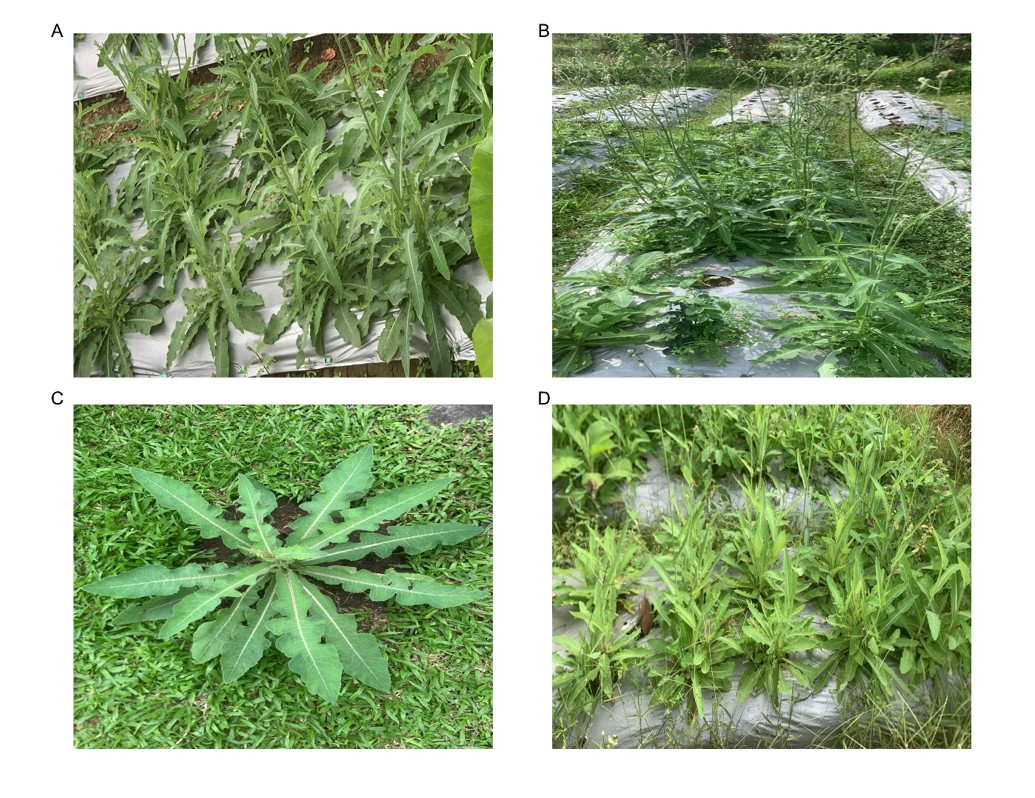
Leaf samples ofSonchus arvensisL. were collected from four geographically separate populations across Java Island, Indonesia, to enable genetic identification.Sampling sites were: Kletak Hamlet, Tutur District, Pasuruan Regency, East Java (Voucher ID: SA.P/1/05/2025), Kalisoro Village, Tawangmangu District, Karanganyar Regency, Central Java (Voucher ID: SA.K/2/05/2025), Garbosari Village, Samigaluh District, Kulon Progo Regency, Special Region of Yogyakarta (Voucher ID: SA.Y/3/05/2025), and Diwak Village, Bergas District, Semarang Regency, Central Java (Voucher ID: SA.S/4/05/2025) (see Figure 1).
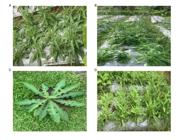
Sonchus species collected for DNA barcoding analysis using rbcL and matK gene markers. Sonchus arvensis specimens collected from four locations: (A) Kletak, (B) Tawangmangu, (C) Yogyakarta, and (D) Semarang.
Healthy leaf tissue was collected from multiple pre-reproductive (approximately two-month-old) individuals at each site. Specimens were identified in the field by a certified botanist, Mr. Dwi Narko (Purwodadi Botanical Garden, Pasuruan, Indonesia). Voucher specimens were deposited in the herbarium of the Biosystematics Laboratory, Department of Biology, Airlangga University, Surabaya, Indonesia.
2.2. DNA extraction and quantification
Total genomic DNA was extracted from 80 mg ofSonchus arvensisL. leaf tissue using the Plant Genomic DNA Kit (Tiangen, China). The extraction was done according to the manufacturer's instructions. The quality and integrity of the extracted DNA were assessed with 1% agarose gel electrophoresis (Promega, USA) and visualized under a UV transilluminator.
2.3. PCR amplication and sequencing
Two plastid DNA barcode regions,rbcLandmatK, were amplified by polymerase chain reaction (PCR) using the following primers:rbcL: 5'-AAGTTCCTCCACCGAACTGTAG-3′ (forward) and 5′-TACTGCGGGTACATGCGAAG-3′ (reverse) andmatK: 5'-TGGTTCAGGCTCTTCGCTATTG-3' (forward) and 5'-CTGATAAATCGGCCCAAATCGC-3′ (reverse). The volume of the PCR reactions was 35 μL, consisting of 17.5 μL GoTaq® Green Master Mix, each primer between 350 and 500 µM in concentration, 50 ng/μL of DNA template, and the volume was made up with nuclease-free water. The thermal cycling was done in an Eppendorf® Mastercycler Personal, with an initial denaturation of 94°C for 5 minutes; denaturation at 94°C for 30 seconds, and then annealing at 56°C for 45 seconds, and extension at 72°C for 45 seconds in a total of 35 cycles; and a final 5-minute extension at 72°C. PCR products were confirmed using 1.5% agarose gel electrophoresis in 0.5X Tris-Acetate-EDTA (TAE) buffer (Promega, USA). The products successfully amplified were scaled up to 50 μL and sent for sequencing at Macrogen Inc. (Korea).
2.4. Sequence and phylogentic analysis
Consensus sequences for each sample were assembled from forward and reverse reads using BioEdit v7.2.5 (Hall, 1999). Initial taxonomic identification was confirmed using BLASTn searches against the NCBI Nucleotide database (Altschul et al., 1990). For phylogenetic reconstruction, our newly generated sequences (see Table 1 for GenBank accession numbers)were aligned with a globally representative set ofSonchusreference sequences from GenBank, including accessions from the native Eurasian range, other introduced ranges, and native Australasian species.Prenanthessp. was selected as the outgroup. Multiple sequence alignment was performed with ClustalW (Thompson et al., 1994) implemented in MEGA7 (Kumar et al., 2016).
Voucher information and GenBank accession numbers forSonchus arvensissubsp.arvensissequences generated in this study.
Phylogenetic relationships were inferred using the Neighbor-Joining (NJ) method based on the Maximum Composite Likelihood model (Tamura et al., 2004). The robustness of the tree topology was evaluated with 1000 bootstrap replicates. All analyses were conducted in MEGA7.
3. Results
3.1. BLAST and phylogenetic analysis confirm the identity of JavaneseS. arvensis
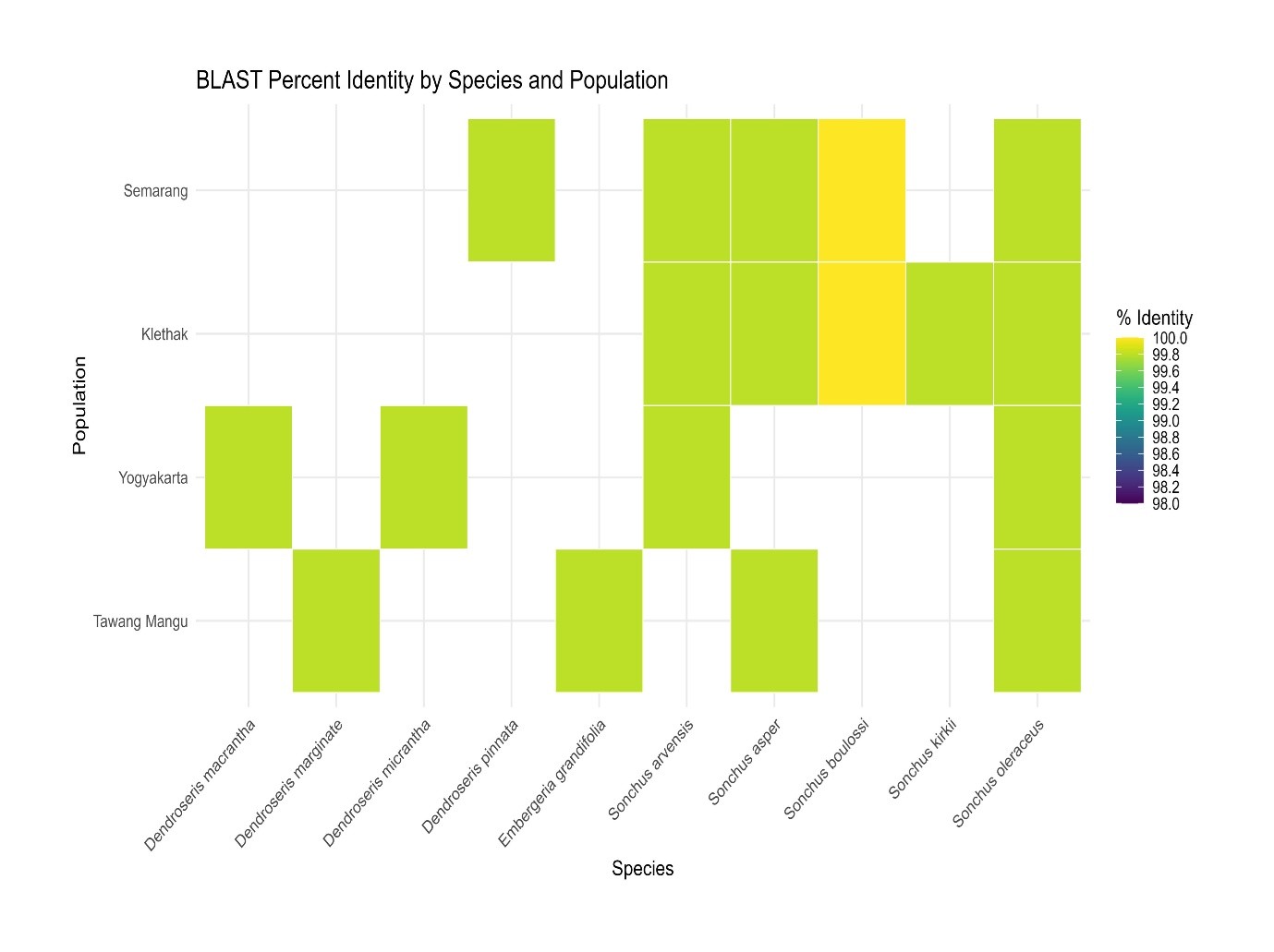
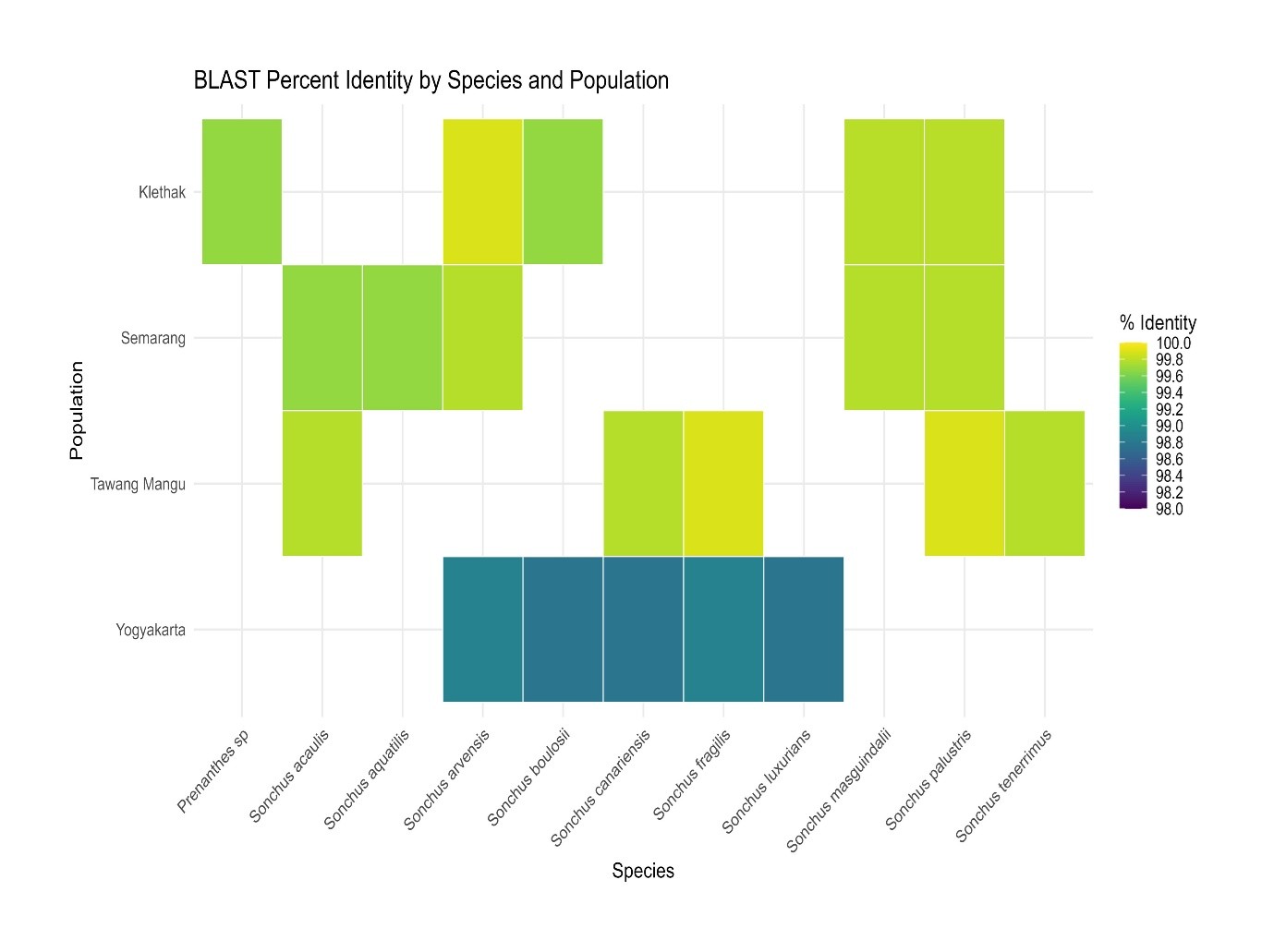
To determine the genetic identity of theSonchuspopulations in Java, we sequenced and analyzed the plastid barcode locirbcLandmatKfrom populations across four geographically distinct locations on the island (Klethak, Semarang, Tawang Mangu, and Yogyakarta). BLASTn analysis of therbcLgene revealed exceptionally high sequence similarity (99.8-100%) between our Javanese accessions and several species within the genusSonchus(Table 2, Figure 2). Sequences from the Klethak and Semarang populations were 100% identical toSonchus boulosii(accessions NC_042244.1, MK016665.1). All populations, including Tawang Mangu and Yogyakarta, also showed 99.8% identity withS. arvensis,S. asper,S. oleraceus, andS. kirkii, among other taxa. While the Yogyakarta samples showed marginally lower query coverage (99%), all alignments had E-values of 0.0, confirming highly significant matches. Analysis of the more variablematKgene corroborated these findings, with all Javanese sequences showing highest identity (99.68–99.89%) to variousS. arvensisaccessions from its global range (e.g., DQ508001.1, NC_054161.1) and closely related species likeS. masguindaliiandS. palustris(Table 3, Figure 3). Notably, the Yogyakarta population again displayed slightly lower percent identity (98.78–98.89%). Interestingly, BLAST results for both genes confirmed a strong genetic affinity with EurasianS. arvensislineages and not with native AustralasianSonchusspecies.
BLAST results of rbcL gene sequences from Sonchus arvensis ssp. arvensis populations in Java Island.
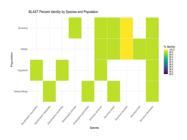
Heatmap of BLAST percent identity for rbcL gene sequences of Sonchus and related species across East Java populations.
BLAST results of matK Gene sequences from Sonchus arvensis ssp. arvensis populations in Java Island.
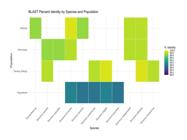
Heatmap of BLAST percent identity for matK gene sequences of Sonchus and related species across East Java populations.
3.2. Phylogenetic reconstruction confirms taxonomic placement
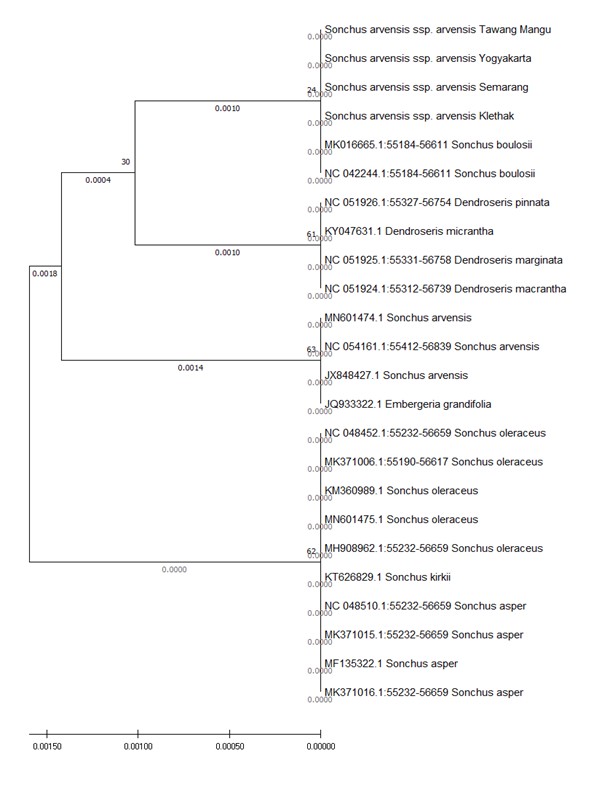
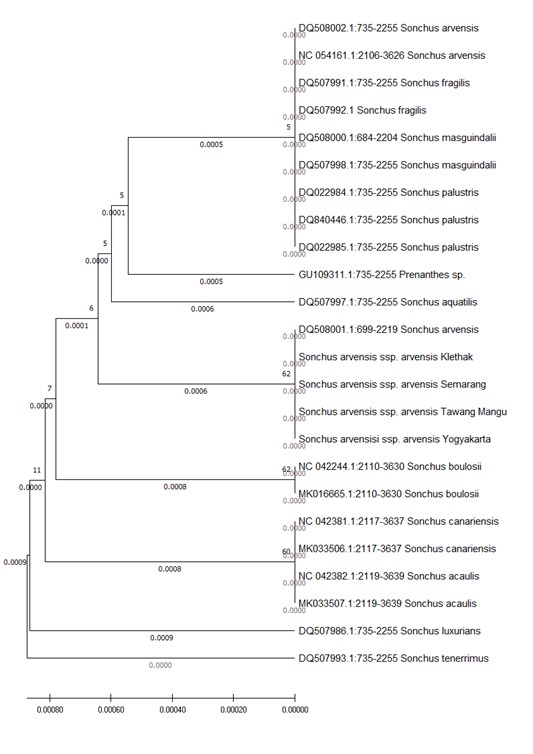
Phylogenetic trees constructed from therbcLandmatKalignments provided robust support for the taxonomic identity of the Javanese populations. The Neighbor-Joining tree based onrbcLsequences placed all JavaneseS. arvensisaccessions within a clade containing reference sequences ofS. arvensisandS. boulosiifrom Eurasia, supported by very short branch lengths indicative of minimal genetic divergence (Figure 4). The samples from Tawang Mangu, Yogyakarta, and Semarang formed a subclade, while the Klethak accession grouped directly withS. boulosiireferences. This clustering confirms the BLAST results and points to a shared, recent evolutionary history with these Eurasian taxa.
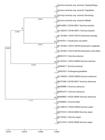
Neighbor-joining phylogenetic tree of Sonchus and related taxa based on rbcL sequences. Bootstrap values (1000 replicates) are shown at nodes. The scale bar indicates nucleotide substitutions per site.
The phylogenetic tree reconstructed frommatKsequences provided higher resolution and stronger support for these relationships (Figure 5). All Javanese accessions formed a single, well-supported monophyletic clade with reference sequences ofS. arvensisfrom its native range (e.g., DQ508001.1). This clade was characterized by very short internal branch lengths. ThematKtree also more clearly resolved the sister relationship between thisS. arvensisclade and other closely related species likeS. fragilisandS. masguindalii. As with therbcLtree, native Australasian species and other genera (Dendroseris, Embergeria) were placed in distinct, well-separated clades.
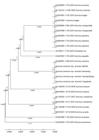
Neighbor-joining phylogenetic tree of Sonchus and related taxa based on matK sequences. Bootstrap values (1000 replicates) are shown at nodes. The scale bar indicates nucleotide substitutions per site.
Importantly, both trees confirmed that the Javanese accessions were phylogenetically distinct from the clade containing native Australasian species. Furthermore, the invasiveS. oleraceusandS. asperformed a well-supported, separate clade in both analyses, highlighting the utility of these markers for distinguishing these common invasive congeners in Java. The overall high sequence conservation and the limited genetic variation observed among the four geographically separated Javanese populations for bothrbcLandmatKmarkers are reported here. Due to the low variation observed in these highly conserved chloroplast regions, conclusions about the number of introduction events or the exact source population cannot be drawn from these data alone.
4. Discussion
This study employed DNA barcoding with the chloroplast genesrbcLandmatKto confirm the taxonomic identity ofSonchus arvensissubsp.arvensisin Java.Our analysis yields two principal findings: (1) the successful identification of the Javanese populations asS. arvensis, and (2) their clear phylogenetic distinction from native AustralasianSonchusspecies. The primary result of this study is that chloroplast DNA barcodesrbcLandmatKconfirm that the sampled individuals belong toS. arvensissubsp.arvensis. This provides reliable species-level identification, which is crucial given the morphological ambiguities within the genus. While BLAST analysis revealed high sequence identity with severalSonchusspecies in global databases (includingS. boulosii), phylogenetic reconstruction confidently placed our Javanese accessions within theS. arvensiscomplex. This confirms the initial morphological identification and is critical for accurately assessing the plant's presence and distribution in Java.
Most importantly for conservation, our analysis demonstrates a clear phylogenetic separation between the invasiveS. arvensisand the clade containing native Javanese and Australasian species. This genetic distinctness confirms that the Javanese accession is not a native species that has become weedy, but a true introduction.
The present study relied on the standard plant DNA barcode markersrbcLandmatK. While these chloroplast regions are highly effective for species-level identification, they are also highly conserved and provide little resolution for intraspecific diversity (Hollingsworth et al., 2009; Letsiou et al., 2024). Consequently, our finding of limited sequence variation across Java should not be interpreted as evidence of a true lack of diversity or a single introduction event. Chloroplast markers are inherited as a single unit and do not capture nuclear diversity or fine-scale population structure. Nuclear markers (e.g., microsatellites, SNPs) would be required to robustly investigate population structure, founder effects, or local adaptation.
Furthermore, this study does not provide direct evidence regarding ecological interactions with native species, such as competitive exclusion or hybridization risks. The phylogenetic distinctness observed in chloroplast DNA does not preclude the potential for hybridization, as this is governed by nuclear genome compatibility. Future studies incorporating nuclear markers and detailed field observations are needed to assess the potential for hybridization and the mechanisms of competition.
The high sequence conservation observed betweenS. arvensisandS. boulosii, while a challenge for resolving fine-scale taxonomy, is itself an insightful finding. It aligns with studies of MacaronesianSonchus, which also show minimal plastid differentiation attributed to incomplete lineage sorting or ancient hybridization (Lee et al., 2005; Criado-Ruiz et al., 2024). The marginally lower sequence identity observed in the Yogyakarta samples could represent minor intraspecific variation. However, the limited variation in these chloroplast markers precludes definitive conclusions, highlighting the need for more variable genetic regions to detect such subtle population-level effects.
5. Conclusion
This work provides the first molecular confirmation ofS. arvensisin Java using DNA barcodes. While it establishes species identity, further genomic studies are required to resolve the population history, introduction pathway, and ecological impact of this invasive species.
Acknowledgements
The authors thank to Plant Medicinal Garden “Taman Husada Graha Famili” Surabaya, East Java Indonesia for providing sample plants. This study was financially supported by Universitas Airlagga, Indonesia 2024 fiscal year, following the decree of Rector of Universitas Airlangga Number: 3106/B/UN3.LPPM/PT.01.09/2024, and The Airlangga Post-Doctoral Fellowship Program, following the degree of Universitas Airlangga Rector number 446/B/UN3.AGE/HK.07.01/2025.
Data Availability Statement
The entire dataset supporting the results of this study was published in the article itself.
References
-
ALTSCHUL, S.F., GISH, W., MILLER, W., MYERS, E.W. and LIPMAN, D.J., 1990. Basic local alignment search tool. Journal of Molecular Biology, vol. 215, no. 3, pp. 403-410. https://doi.org/10.1016/S0022-2836(05)80360-2 PMid:2231712.
» https://doi.org/10.1016/S0022-2836(05)80360-2 - BOULOS, L., 1973. Révision Systématique du Genre Sonchus L. s.l. IV. Sous-genre 1. Sonchus. Botaniska Notiser, vol. 126, pp. 115-196.
-
CHO, M.S., KIM, J.H., KIM, C.S., MEJÍAS, J.A. and KIM, S.C., 2019. Sow thistle chloroplast genomes: insights into the plastome evolution and relationship of two weedy species, Sonchus asper and Sonchus oleraceus (Asteraceae). Genes, vol. 10, no. 11, pp. 881. https://doi.org/10.3390/genes10110881 PMid:31683955.
» https://doi.org/10.3390/genes10110881 -
CRIADO-RUIZ, D., VALLÈS, J., BAYER, R.J., PALAZZESI, L., PELLICER, J., LORENZO, I.P., MAURIN, O., FRANÇOSO, E., ROY, S., LEITCH, I.J., FOREST, F., BAKER, W.J., POKORNY, L., HIDALGO, O. and NIETO FELINER, G., 2024. A phylogenomic approach to disentangling the evolution of the large and diverse daisy tribe Anthemideae (Asteraceae). Journal of Systematics and Evolution, vol. 63, no. 2, pp. 282-306. https://doi.org/10.1111/jse.13118
» https://doi.org/10.1111/jse.13118 -
FAZEKAS, A.J., BURGESS, K.S., KESANAKURTI, P.R., GRAHAM, S.W., NEWMASTER, S.G., HUSBAND, B.C., PERCY, D.M., HAJIBABAEI, M. and BARRETT, S.C.H., 2008. Multiple multilocus DNA barcodes from the plastid genome discriminate plant species equally well. PLoS One, vol. 3, no. 7, pp. e2802. https://doi.org/10.1371/journal.pone.0002802 PMid:18665273.
» https://doi.org/10.1371/journal.pone.0002802 - HALL, T.A., 1999. BioEdit: a user-friendly biological sequence alignment editor and analysis program for Windows 95/98/NT. Nucleic Acids Symposium Series, vol. 41, no. 41, pp. 95-98.
-
HOLLINGSWORTH, P.M., FORREST, L.L., SPOUGE, J.L., HAJIBABAEI, M., RATNASINGHAM, S., VAN DER BANK, M., CHASE, M.W., COWAN, R.S., ERICKSON, D.L., FAZEKAS, A.J., GRAHAM, S.W., JAMES, K.E., KIM, K.-J., KRESS, W.J., SCHNEIDER, H., VAN ALPHENSTAHL, J., BARRETT, S.C.H., VAN DEN BERG, C., BOGARIN, D., BURGESS, K.S., CAMERON, K.M., CARINE, M., CHACÓN, J., CLARK, A., CLARKSON, J.J., CONRAD, F., DEVEY, D.S., FORD, C.S., HEDDERSON, T.A.J., HOLLINGSWORTH, M.L., HUSBAND, B.C., KELLY, L.J., KESANAKURTI, P.R., KIM, J.S., KIM, Y.-D., LAHAYE, R., LEE, H.-L., LONG, D.G., MADRIÑÁN, S., MAURIN, O., MEUSNIER, I., NEWMASTER, S.G., PARK, C.-W., PERCY, D.M., PETERSEN, G., RICHARDSON, J.E., SALAZAR, G.A., SAVOLAINEN, V., SEBERG, O., WILKINSON, M.J., YI, D.-K. and LITTLE, D.P., 2009. A DNA barcode for land plants. Proceedings of the National Academy of Sciences of the United States of America, vol. 106, no. 31, pp. 12794-12797. https://doi.org/10.1073/pnas.0905845106 PMid:19666622.
» https://doi.org/10.1073/pnas.0905845106 -
JAYANI, N.I.E., KRISNAWAN, A.H., OKTAVIYANTI, N.D. and KARTINI, K., 2020. Standardization of Phyllanthus niruri and Sonchus arvensis as components of scientific jamu. Majalah Obat Tradisional, vol. 25, no. 1, pp. 1-8. https://doi.org/10.22146/mot.45955
» https://doi.org/10.22146/mot.45955 -
KIM, S.C., CHUNGHEE, L. and MEJÍAS, J.A., 2007. Phylogenetic analysis of chloroplast DNA matK gene and ITS of nrDNA sequences reveals polyphyly of the genus Sonchus and new relationships among the subtribe Sonchinae (Asteraceae: cichorieae). Molecular Phylogenetics and Evolution, vol. 44, no. 2, pp. 578-597. https://doi.org/10.1016/j.ympev.2007.03.014 PMid:17531507.
» https://doi.org/10.1016/j.ympev.2007.03.014 - KRAHULCOVÁ, A., 2003. Chromosome numbers in selected monocotyledons (Czech Republic, Hungary, and Slovakia). Preslia, vol. 75, pp. 97-113.
-
KUMAR, S., STECHER, G. and TAMURA, K., 2016. MEGA7: molecular evolutionary genetics analysis version 7.0 for bigger datasets. Molecular Biology and Evolution, vol. 33, no. 7, pp. 1870-1874. https://doi.org/10.1093/molbev/msw054 PMid:27004904.
» https://doi.org/10.1093/molbev/msw054 -
LEE, C., KIM, S.C., LUNDY, K. and SANTOS-GUERRA, A., 2005. Chloroplast DNA phylogeny of the woody Sonchus alliance (Asteraceae: Sonchinae) in the macaronesian islands. American Journal of Botany, vol. 92, no. 12, pp. 2072-2085. https://doi.org/10.3732/ajb.92.12.2072 PMid:21646124.
» https://doi.org/10.3732/ajb.92.12.2072 -
LEMNA, W.K. and MESSERSMITH, C.G., 1990. The biology of Canadian weeds. 19. Sonchus arvensis L. Canadian Journal of Plant Science, vol. 70, no. 2, pp. 509-532. https://doi.org/10.4141/cjps90-060
» https://doi.org/10.4141/cjps90-060 -
LETSIOU, S., MADESIS, P., VASDEKIS, E., MONTEMURRO, C., GRIGORIOU, M.E., SKAVDIS, G., MOUSSIS, V., KOUTELIDAKIS, A.E. and TZAKOS, A.G., 2024. DNA barcoding as a plant identification method. Applied Sciences, vol. 14, no. 4, pp. 1415. https://doi.org/10.3390/app14041415
» https://doi.org/10.3390/app14041415 -
MASANA, A., LÓPEZ-GONZÁLEZ, C., VITALES, D., VALLÈS, J. and GARNATJE, T., 2020. Characterization of the complete plastome sequence of perennial sowthistle, Sonchus arvensis (Asteraceae). Mitochondrial DNA. Part B, Resources, vol. 5, no. 3, pp. 2652-2654. https://doi.org/10.1080/23802359.2020.1778569 PMid:33457894.
» https://doi.org/10.1080/23802359.2020.1778569 -
MEJÍAS, J.A. and VALDÉS, B., 2004. Karyological studies in Iberian Sonchus (Asteraceae: Lactuceae): S. oleraceus, S. microcephalus and S. asper and a general discussion. Folia Geobotanica, vol. 39, no. 3, pp. 275-291. https://doi.org/10.1007/BF02804782
» https://doi.org/10.1007/BF02804782 -
MEJÍAS, J.A., CHAMBOULEYRON, M., KIM, S.H., INFANTE, M.D., KIM, S.C. and LÉGER, J.F., 2018. Phylogenetic and morphological analysis of a new cliff-dwelling species reveals a remnant ancestral diversity and evolutionary parallelism in Sonchus (Asteraceae). Plant Systematics and Evolution, vol. 304, no. 8, pp. 1023-1040. https://doi.org/10.1007/s00606-018-1523-2
» https://doi.org/10.1007/s00606-018-1523-2 -
PARISI, V., SANTORO, V., FARAONE, I., BENEDETTO, N., VASSALLO, A., DE TOMMASI, N., MILELLA, L., NESTICÒ, A., MASELLI, G., FADDA, A.M. and CADDEO, C., 2024. Sonchus asper (L.) Hill extracts: phytochemical characterization and exploitation of its biological activities by loading into nanoformulation. Frontiers in Plant Science, vol. 15, pp. 1416539. https://doi.org/10.3389/fpls.2024.1416539 PMid:39220011.
» https://doi.org/10.3389/fpls.2024.1416539 -
TAMURA, K., NEI, M. and KUMAR, S., 2004. Prospects for inferring very large phylogenies by using the neighbor-joining method. Proceedings of the National Academy of Sciences of the United States of America, vol. 101, no. 30, pp. 11030-11035. https://doi.org/10.1073/pnas.0404206101 PMid:15258291.
» https://doi.org/10.1073/pnas.0404206101 -
THOMPSON, J.D., HIGGINS, D.G. and GIBSON, T.J., 1994. Improving the sensitivity of progressive multiple sequence alignment through sequence weighting, position-specific gap penalties and weight matrix choice. Nucleic Acids Research, vol. 22, no. 22, pp. 4673-4680. https://doi.org/10.1093/nar/22.22.4673 PMid:7984417.
» https://doi.org/10.1093/nar/22.22.4673 -
WAHYUNI, D.K., RAHAYU, S., PURNAMA, P.R. and SAPUTRO, T.B., 2019. Morpho-anatomical structure and DNA barcode of Sonchus arvensis L. Biodiversitas (Surakarta), vol. 20, no. 8, pp. 2417-2426. https://doi.org/10.13057/biodiv/d200841
» https://doi.org/10.13057/biodiv/d200841 -
WANG, C., LIU, J., LI, M., SUN, Y., XU, X. and SONG, J., 2021. Complete chloroplast genome sequence of Sonchus brachyotus (Asteraceae). BioMed Research International, vol. 2021, pp. 9410496. https://doi.org/10.1155/2021/9410496 PMid:34901281.
» https://doi.org/10.1155/2021/9410496
Edited by
-
Editor:
Jairo Lizandro Schmitt