 Evaluation of leaf surface structure and control of Conyza spp. by herbicides applied in soybean pre-plant burndown
Abstract
The pre-plant burndown of Conyza spp. is a fundamental practice to mitigate weed competition with soybean. However, in light of reports of biotypes resistant to 2,4-D, the search for new options of post-emergent herbicides becomes essential. The objective of the present study was to evaluate the effect of post-emergent herbicides on the leaf structure and chemical control of Conyza spp. with heights greater than 10 cm in soybean pre-plant desiccation. A field experiment was conducted following a randomized block design, with seven treatments and four replicates. For the control data, only mesotrione + atrazine and chlorimuron resulted in control percentages lower than 80%. Regarding scanning electron microscopy (SEM), trichomes were denser on the adaxial leaf surface, while stomata predominated on the abaxial side, though both were present on both surfaces. Their distribution showed tendencies of clustering and randomness, with no consistent pattern linked to the treatments. Slight, non-significant variations in trichome density occurred, especially with halauxifen + diclosulam. The control and halauxifen + diclosulam treatments exhibited higher trichome intensity and less structural damage, whereas fluroxypyr + clethodim, dicamba, and triclopyr resulted in lower intensity and trichome disruption. Consequently, fluroxypyr + clethodim, triclopyr, dicamba, and halauxifen + diclosulam were effective in desiccating Conyza spp., with the first two causing trichome damage via plasmolysis.
Keywords:
fleabane; halauxifen + diclosulam; scanning electron microscopy; selective chemical control; surface morphology
Resumo
A dessecação pré-plantio de Conyza spp. é uma prática fundamental para mitigar a competição de plantas daninhas com a soja. No entanto, diante de relatos de biótipos resistentes ao 2,4-D, a busca por novas opções de herbicidas pós-emergentes torna-se essencial. O objetivo do presente estudo foi avaliar o efeito de herbicidas pós-emergentes na estrutura foliar e no controle químico de Conyza spp. com altura superior a 10 cm na dessecação pré-plantio da soja. Foi conduzido um experimento em campo com delineamento em blocos casualizados, com sete tratamentos e quatro repetições. Nos dados de controle, apenas mesotriona + atrazina e clorimuron resultaram em percentuais de controle inferiores a 80%. Quanto à microscopia eletrônica de varredura (MEV), os tricomas apresentaram maior densidade na superfície adaxial da folha, enquanto os estômatos predominaram na face abaxial, embora ambos estivessem presentes em ambas as superfícies. A distribuição mostrou tendências de agrupamento e aleatoriedade, sem padrão consistente associado aos tratamentos. Ocorreram variações leves e não significativas na densidade de tricomas, especialmente com halauxifen + diclosulam. Os tratamentos controle e halauxifen + diclosulam exibiram maior intensidade de tricomas e menos danos estruturais, enquanto fluroxipir + clethodim, dicamba e triclopyr resultaram em menor intensidade e interrupção dos tricomas. Consequentemente, fluroxipir + clethodim, triclopyr, dicamba e halauxifen + diclosulam foram eficazes na dessecação de Conyza spp., com os dois primeiros causando danos aos tricomas via plasmólise.
Palavras-chave:
buva; halauxifen + diclosulam; microscopia eletrônica de varredura; controle químico seletivo; morfologia de superfície
1. Introduction
Conyza spp. (sin.: Erigeron spp.) belong to the Asteraceae family and are native to South America (Yang et al., 2019). The main species of this genus are Conyza sumatrensis (Retz.) E. Walker; Conyza bonariensis (L.) Cronquist and Conyza canadensis (L.) Cronquist). These species exhibit a high frequency and distribution at the sites of infestation, especially in cropping systems where soybean is planted. In Brazil, Conyza spp. infest between 40.8% and 49% of soybean planted areas, corresponding to an extrapolated area of approximately 16,207,463 ha (Essman et al., 2021).
In Brazil, this high frequency and occurrence is common in the soybean/corn succession system, where the emergence flow of Conyza spp. starts from the harvest of the second-crop corn until the time of soybean sowing (Rudell et al., 2023). In this context, the best way to manage Conyza spp. is in pre-plant of the soybean crop, which is carried out through sequential applications, where in the first position, a systemic herbicide is often applied, and in the second application, after an interval that can vary from 10–15 days, an application of an herbicide is performed contact/desiccant (Albrecht et al., 2020; Ferraz et al., 2020; Gazola et al., 2022).
However, the control of Conyza spp. often occurs very close to soybean sowing after the corn harvest, a fact that can result in vegetative regrowth of this weed in the post-emergence of the soybean crop (Silva et al., 2023a). This behaviour can result in numerous negative effects on the production system, as there are few options for herbicides positioned in the postemergence of soybean crops that are effective in controlling Conyza spp. Application occurs in advanced phenological stages of this species, such as in plants with heights greater than 10 cm (Silva et al., 2023b).
Thus, leaf characterization can indicate greater or lesser susceptibility of a species to a given herbicide, since leaves are the main organ involved in this process (Alves et al., 2014). Morpho-anatomical characteristics such as the presence and density of trichomes and stomata, the thickness and composition of the cuticle, as well as the presence and nature of waxes, determine the ease of herbicide absorption (Inácio and Monquero, 2013; Alves et al., 2014; Baccin et al., 2023). In the case of Conyza spp., Alves et al. (2014) observed high trichome density and thick cuticle on the adaxial surface, associated with low stomatal density, which constitute one of the main barriers to herbicide penetration.
In view of the above, it is essential to correlate chemical control with aspects of the leaf anatomy of Conyza spp. plants, aiming to understand and enhance the efficacy of the main products used in pre-plant soybean desiccation. Therefore, the objective of this study was to evaluate the effect of post-emergence herbicides on the leaf structure and control of Conyza spp. plants taller than 10 cm during pre-plant soybean desiccation. To achieve this, the following subgoals were established: a) Assess the percentage of control of Conyza spp. at different evaluation periods; and b) Analyze alterations in the leaf surface structure of Conyza spp. using scanning electron microscopy.
2. Materials and Methods
2.1. Field experiment
The experiment was carried out in accordance with Normative Instruction 42/2010 of the Ministry of Agriculture and Livestock (Brasil, 2010), which concerns conducting research and experimentation in Brazil. Therefore, for this, a field trial was conducted at the Experimental Farm of Agricultural Sciences (FAECA) of the Federal University of Grande Dourados - UFGD, located in the municipality of Dourados in the state of Mato Grosso do Sul, at the following geographical coordinates: 22°18'14.6”S 54°37' 14.2”W. The experiment was conducted from September 13, 2021, to October 18, 2021. Figure 1 shows the weekly values of accumulated rainfall and average maximum and minimum temperatures in the municipality of Dourados, Mato Grosso do Sul, Brazil. The data were collected at the Embrapa rainfall station (Embrapa, 2023).

Historical series of accumulated rainfall and average values, both weekly, of minimum and maximum temperatures in the municipality of Dourados, Mato Grosso do Sul, Brazil, for the period September 2021 to October 2021. Source: EMBRAPA, 2023.
The characteristic Köppen climate classification type is Cwa (humid mesothermic climate, hot summers and dry winters), and the average annual temperature is 22.7 °C (Fietz et al., 2017). At the time of the installation of the experiment, soil samples were collected at a depth of 0-20 cm, classified as Dystroferric Red Oxisols (Santos et al., 2018), with a clayey texture whose physical-chemical properties are: pH CaCl2 = 5.08, P resin = 12 mg dm-3, OM = 24 g/dm3, K, Ca and Mg = 8, 4.56 and 4 mmolc dm-3, respectively, SB = 16.56 mmolc/dm3, CEC = 23.64 and V = 48.80%.
The experimental units consisted of 3x5 m plots. The experimental design used was a randomized block, with four replicates and 7 treatments, 6 with herbicide management, in addition to controls without herbicide application (Table 1).
Treatments applied to Conyza spp. with heights greater than 10 cm in the pre-plant desiccation of soybean.
The first initial application occurred on 09/13/2021, using the following post-emergence herbicides: fluroxypyr + clethodim (432 + 210 g ai ha-1) (Arado®); dicamba (960 g ai ha-1) (Atectra®); tryclopyr (1020 g ai ha-1) (Triclon); chlorimuron (20 g ai ha-1) (Classic®); mesotrione + atrazine (60 + 600 g ai ha-1) (Calaris®); and halauxifen + diclosulam (31.9 g ai ha-1) (Paxeo®), all associated with glyphosate (1080 g ai ha-1) (Zapp), in addition to the control (without herbicide application). Subsequently, on 09/26/2021, sequential application was performed using the desiccant herbicide glufosinate salt (400 g ai ha-1); all treatments with initial application received this sequential application, the exception being the control without herbicide application. The respective doses are presented in Table 1.
At the time of the first application (fluroxypyr + clethodim; dicamba; triclopyr; chlorimuron; mesotrione + atrazine; halauxifen + diclosulam), the area was infested with Conyza spp. at a density of 76 plants m-2, with plants homogeneously distributed in the field and an average height of 13.8 cm. According to the BBCH (Hess et al., 1997) classification scale stage 20, the plants were in phenological stage 30-39. The density of Conyza spp. plants was obtained prior to the beginning of the experiment using a hollow square with a known area of 1 square meter, which was randomly placed within the selected experimental area for identification and quantification of Conyza spp.
The herbicide treatments were applied using a backpack sprayer pressurized with CO2, maintaining a pressure of 2.0 bar. The spray bar consisted of six Teejet 110,015 fan nozzles spaced 0.5 meters apart, delivering an application volume of 180 L ha-1. At the time of each application, climatic conditions were recorded, with the first application conducted under 65% relative humidity, a temperature of 26°C, and a wind speed of 2.3 km h-1. The second application occurred under 67.6% relative humidity, a temperature of 27.1°C, and a wind speed of 0.9 km/h.
The percentage control of Conyza spp. was evaluated at 7, 14, 21, 28, and 35 days after treatment (DAT), based on the days after the first initial application (1 - fluroxypyr + clethodim; 2 - dicamba; 3 - triclopyr; 4 - chlorimuron; 5 - mesotrione + atrazine and 6 - halauxifen + diclosulam), according to the visual scale of ALAM (1974), in which 0% was assigned in the case of absence of herbicide symptoms and 100% for plant death. Symptoms such as chlorosis, necrosis, and growth inhibition were considered indicative of herbicide efficacy.
2.2. Analysis Scanning electron microscopy (SEM)
Scanning electron microscopy (SEM) was performed on the leaf surface of Conyza spp. to observe alterations in leaf structures. Scanning electron microscopy (SEM) was performed on the leaf surface of Conyza spp. to observe alterations in leaf structures. SEM analyses were conducted at the Materials Microscopy and Characterization Laboratory, located at the Agricultural Sciences Center of the Federal University of São Carlos (Araras, São Paulo, Brazil).
For analysis under a scanning electron microscope, two segments of approximately 50 mm2 were removed from the middle region of young leaves and completely from the plants of Conyza spp. From the adaxial and abaxial surfaces, the samples were removed 48 hours after the application of the treatments. They were also collected from the control without herbicide application. All samples were stored in 1.5 ML Eppendorf tubes and maintained in fixative solution - modified Karnovsky fixative (2.5% glutaraldehyde, 2.5% formaldehyde in 0.05 M sodium cacodylate buffer, pH 7.2, CaCl2 0.001 M) until the time of analysis by microscopy.
The dried samples were then mounted on stubs and taken to the metallizer in a Leica EM ACE200 vacuum coating device where they were coated with a thin layer of 15 nm gold to avoid rehydration and taken for observation under a scanning electron microscope. Thermo Fisher Scientific Prism E for morphological characterization in approximations of 250x, 500x, 1,000x and 2,000x for each of the treatments and leaf surface.
2.3. Statistical analysis
For analysis of the percentage control of Conyza spp., deviance analysis was performed, and the F statistic was calculated. This analysis was performed using two GAMLSS models with beta distribution and logit linkage function for the location parameter. The plot consisting of the treatment and block combination was considered a random effect in the model. The factors treatment and DAT and the interaction of these two factors were considered in the adjustment as having a fixed effect. To verify the normality of the residuals, the Shapiro‒Wilk test was used. The comparison between the levels of the treatments was performed graphically and using the Tukey test. The adjustment of the control as a function of DAT was performed using beta regression and the logit linkage function. All statistical tests were evaluated at a 5% level of significance.
The analyses of the scanning electron microscopy data were performed, first, by a graphical representation of the data in the Cartesian coordinate system. The kernel estimator was built to verify the absence of spatial homogeneity of the points observed in the images. Additionally, to verify the hypothesis that these points had a completely random distribution, Ripley's K function was applied, and 1,000 Monte Carlo simulations were performed to construct the confidence bands (Baddeley et al., 2014).
All statistical analyses were performed using R software (Stasinopoulos et al., 2017). For the deviance analysis, we used the gamlss package (Baddeley et al., 2014). The point process analysis was performed using the spatstat package (Baddeley et al., 2014) and ggplot2 (Wickham, 2016) was used for graphical presentation of the results (R Core Team, 2021).
4. Results
4.1. Control of Conyza spp.
When the Conyza spp. control was evaluated, the F test of the deviance analysis indicated a significant interaction between herbicide and DAT (F = 4.730; P < 0.001). The Shapiro‒Wilk test showed a p value of 0.224, indicating that the normal distribution is adequate for the model residuals. Thus, the results indicated a significant interaction between herbicides versus DAT, requiring further breakdown of the interaction. In Figure 2a, the results of the comparison between herbicides at each DAT are shown. In Figure 2b, an analysis of the regression of Conyza spp. control as a function of DAT for each of the six herbicides is presented.
Effectiveness of herbicide application (% Control) at each DAT (a), and regression analysis of Conyza spp. control as a function of days after treatment (DAT) for each of the six herbicides (b).
At 7 DAT, treatments with chlorimuron and atrazine + mesotrione did not differ from each other in terms of analysis and showed the lowest control percentages; however, they differed from the other treatments (fluroxypyr + clethodim, dicamba, triclopyr, and halauxifen + diclosulam), which were statistically identical (Figure 2a). By 14 DAT, there was no significant difference among treatments in statistical analysis. At 7, 14, and 21 DAT, none of the treatments achieved a control percentage greater than 80%. At 21 DAT, treatments with halauxifen + diclosulam and triclopyr did not differ significantly in statistical analysis, both with control percentages higher than 75%; however, they differed from chlorimuron, which had control percentages around 50% (Figure 2a).
At 28 DAT, treatments with dicamba, tryclopyr, and halauxifen + diclosulam did not differ significantly in statistical analysis and achieved a control percentage greater than 80%. During the same period, treatments with fluroxypir + clethodim and mesotrione + atrazine also did not differ statistically, but their control was less than 80%. At 28 DAT, all treatments differed significantly from chorimuron, which exhibited the lowest control percentage (65.75%). By 35 DAT, treatments with tryclopyr, mesotrione + atrazine, and chorimuron showed significant differences in statistical analysis, with control percentages of 94.25%, 72%, and 64.25%, respectively. Treatments with dicamba, fluroxypir + clethodim, and halauxifen + diclosulam did not differ statistically and exhibited a control percentage close to 90% (Figure 2a).
Figure 2b illustrates symptom progression throughout the evaluation periods. The treatment with tryclopyr had the highest coefficient at DAT (0.1152), indicating greater acceleration in control during this period. Treatments with fluroxypir + clethodim, dicamba, tryclopyr, and halauxifen + diclosulam showed gradual increase in control percentages, all exceeding 80% by 35 DAT. The treatment with mesotrione + atrazine also demonstrated control growth throughout the evaluation periods, albeit slower than the aforementioned treatments, with control below 80% at 35 DAT. In contrast, chorimuron showed slower control evolution, with a control percentage close to 60% at 35 DAT (Figure 2b).
4.2. Leaf structure analysis
In the evaluation of the leaf surface of Conyza spp., it was observed that the leaves of the plants are amphistomatic, with anomocytic stomata, present on both sides, adaxial (Figure 3) and abaxial (Figure 4).
Adaxial surface of plants of Conyza spp. larger than 10 cm at 250x magnification. A) Control; B) (Fluroxypyr+Clethodim) + glyphosate; C) Dicamba + glyphosate; D) Triclopyr + glyphosate; E) Chlorimuron + glyphosate; F) (Mesotrione+Atrazine) + glyphosate; G) (Halauxifen + Diclosulam) + glyphosate.

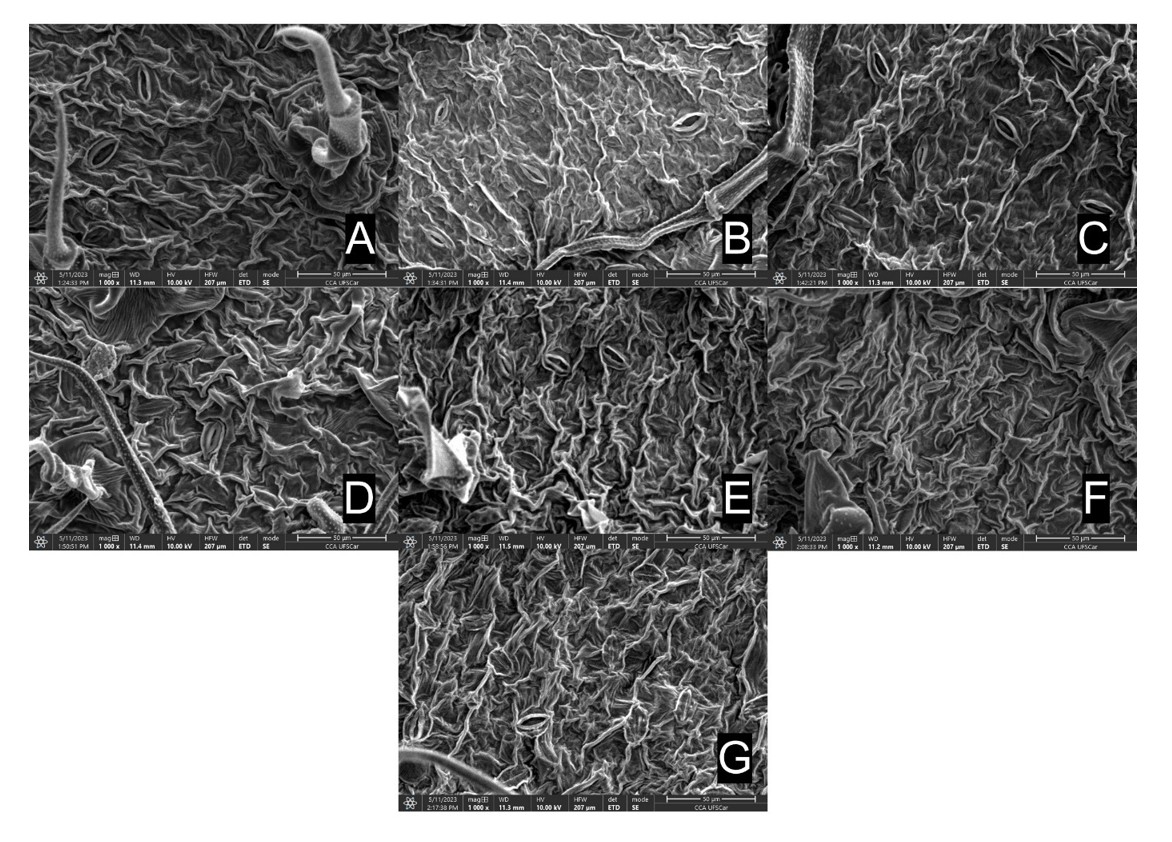
Abaxial surface leaf of Conyza spp. with sizes greater than 10 cm at 1,000x magnification. A) Control; B) (fluroxypyr+clethodim) + glyphosate; C) dicamba + glyphosate; D) triclopyr + glyphosate + glufosinate ammonium; E) chlorimuron + glyphosate; F) (mesotrione+atrazine) + glyphosate; G) (halauxifen + diclosulam) + glyphosate.
The plants have long tector trichomes with tapered tips, unicellular, which are present in high density in both the abaxial and adaxial parts of the leaf structure. However, an important aspect to highlight is the higher density and frequency of long tector trichomes on the adaxial leaf surface (Figure 3).
After the herbicide application, it is observed that both on the adaxial and abaxial surfaces of the leaves, there was damage to the long tector trichomes with tapered tips, compared to the leaves of the control without herbicide application (Figura 3 and 4).
Table 2 presents the exploratory analysis of the dot pattern for the control and the other herbicide treatments. For this purpose, stomata were considered as points. The halauxifen + diclosulam and control treatments exhibited the highest number of points, with mean intensities of 0.49 and 0.44 points/mm2, respectively. On the other hand, only six points were identified in the fluroxypyr + clethodim treatment, corresponding to the lowest intensity among the treatments. The dicamba, triclopyr, chlorimuron, and mesotrione + atrazine treatments presented 12, 10, 14, and 11 points, respectively, and the variation between treatments was not very pronounced.
Number and intensity of stomata considering a total area of 45.6 mm2 in the abaxial part of the control and herbicides.
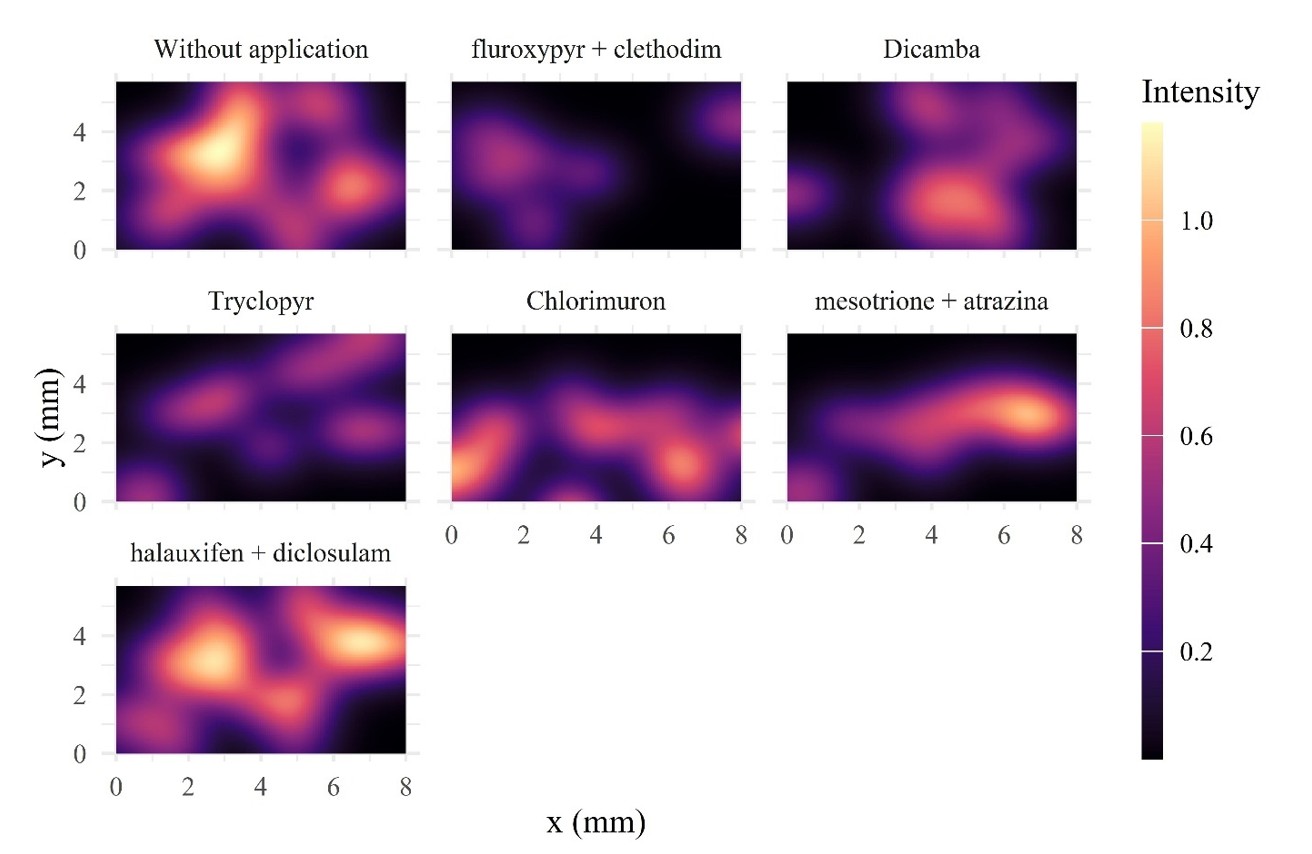
The kernel maps, depicted in Figure 5, are visual representations of the estimated point intensities in the abaxial region relative to stomata intensity. Upon examining the kernel maps, we observe that the distribution of stomata appears to be heterogeneous across all treatments. However, the halauxifen + diclosulam treatment stands out for exhibiting a more uniform distribution of stomata compared to the other treatments.
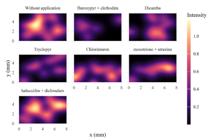
Upon closer examination of the treatments, significant variations in stomata intensity were observed. The control and halauxifen + diclosulam treatments exhibited the highest intensities of stomatal, with very similar behaviours between them. Conversely, the treatments with fluroxypyr + clethodim and triclopyr showed the lowest intensities. Interestingly, the treatments with dicamba, chlorimuron, and mesotrione + atrazine did not show significant variations in stomatal intensity, suggesting that these herbicides may not affect stomata density in this region.
Figure 6 shows the results of Ripley's K function, followed by the confidence intervals obtained through 1,000 simulations. When interpreting the data from Ripley's K function, it is important to consider the relationship between the observed (red) and theoretical (black) lines. When the observed line is below the theoretical line, it indicates a regular distribution of stomata. Conversely, when the observed line is above the theoretical line, it suggests a trend of clustering. It is worth noting that, due to the low intensity of points in the fluroxypyr + clethodim treatment, confidence intervals could not be generated for this condition (Figure 6).
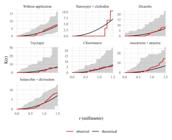
Ripley's K function for the observed point pattern (red line), theoretical value under complete spatial randomness (black line), and confidence intervals generated through simulations of 1,000-point process simulations (gray shaded area) of the abaxial part.
It was observed that, in all treatments, the observed line consistently lies above the theoretical line at distances between 1.00 and 1.25 mm, indicating clustering of stomata within this range (Figure 6). This trend is consistent across all treatments, suggesting that stomatal clustering is an intrinsic plant characteristic, not significantly influenced by herbicide treatments.
In all treatments, at a radius of up to 0.50 mm, the point distribution is more uniform or repulsive than random expectations (Figure 6). This suggests spatial dispersion, with points farther apart than expected randomly. Beyond 0.50 mm, points are more clustered than expected randomly, indicating spatial aggregation. However, the observed curve remained within the simulated envelope in all treatments, indicating that the spatial patterns are not significantly different from random, confirming that stomatal distribution is primarily influenced by genetic factors and not significantly affected by herbicide treatments
Table 3 shows the exploratory analysis of the dot pattern of the control and of the other herbicide compositions for the part adaxial. Halauxifen + diclosulam followed by mesotrione + atrazine showed the highest number of points with mean intensities of 0.66 and 0.57 points/mm2, respectively. On the other hand, only six points were identified in dicamba, corresponding to the lowest intensity among the treatments. Except for this treatment, little variation was observed between the number of trichomes observations.
Number and intensity of trichomes in a total area of 45.6 mm2 on the adaxial surface of the control and herbicide treatments.
The kernel maps of the estimated intensities of the adaxial points suggest that the spatial distributions of the trichomes occur randomly in all treatments, with halauxifen + diclosulam presenting a more uniform spatial distribution (Figure 7). The treatments, in general, did not show great variations; however, it is noteworthy that in the dicamba treatment, the lowest intensity of trichomes was observed.
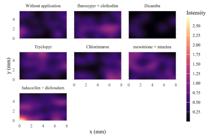
Figure 8 shows the results of Ripley's K function, followed by the confidence intervals obtained through 1,000 simulations. Due to the low trichome intensity in the dicamba treatment, it was not possible to generate confidence bands. In all treatments, regardless of the approximation, the data showed a clustering trend, meaning that trichomes exhibited a clustering tendency in all cases.

Ripley's K function for the observed point pattern (red line), theoretical value under complete spatial randomness (black line), and confidence intervals generated through simulations of 1,000 point process simulations (gray shaded area) of the part adaxial.
In all treatments, the observed curve lies below the theoretical curve, indicating that the distribution of trichomes is more uniform or repulsive than expected randomly (Figure 8). However, in all treatments, the observed curve remained within the simulated envelope, suggesting that the spatial patterns are not significantly different from those expected under complete randomization, thus indicating that trichome distribution is considered random.
5. Discussion
For plants taller than 10 cm, none of the evaluated treatments achieved over 80% control up to 14 days after application (DAA), indicating the need for sequential applications (Figura 2a and 2b). A second application, usually with a contact herbicide, is typically required about 14 days after the initial desiccation (Barroso et al., 2021). Single applications may allow regrowth, even in soybean crops when performed close to sowing (Cesco et al., 2019). Silva et al. (2023b) reported that the application of 2,4-D + glyphosate on Conyza spp. taller than 10 cm did not result in satisfactory control. Similar findings were reported by Silva et al. (2021), who obtained only 55% control in plants taller than 20 cm using the same mixture. The lower efficacy in more developed plants is associated with reduced herbicide absorption due to the accumulation of protective morphological structures on the leaves, such as thick cuticles and trichomes, which hinder the penetration of active ingredients (Fadin et al., 2018).
Chlorimuron and the mixture of mesotrione + atrazine did not provide over 80% control of Conyza spp.. The low efficacy of chlorimuron can be attributed to its primary recommendation for post-emergence applications, rather than for pre-plant desiccation (Silva et al., 2023a). In this context, Santos et al. (2014) observed that C. sumatrensis biotypes at advanced vegetative stages (>10 cm) were less sensitive to chlorimuron due to limited herbicide absorption, which was associated with external leaf traits such as trichomes. Similarly, the combination of mesotrione + atrazine + glyphosate, although commonly used in pre-plant desiccation, showed reduced control of taller Conyza spp. plants. Albrecht et al. (2022) reported less than 60% control in individuals ranging from 42 to 65 cm in height. However, better results were observed when synthetic auxins were applied in combination with diquat, particularly after the second corn harvest.
In this experiment, the initial application took place before a period of low rainfall, which may have hindered the effectiveness of herbicides like chlorimuron and mesotrione + atrazine in controlling Conyza spp. The lack of rainfall likely stressed the plants, affecting herbicide uptake and translocation. Vieira et al. (2015) observed similar issues, linking poor control of Conyza spp. to the advanced phenological stage of the weeds and the stress caused by water restriction, which thickened the cuticle and slowed herbicide metabolism.
Sequential applications that included glufosinate ammonium after initial treatments with auxin herbicides like dicamba, triclopyr, and halauxifen, along with glyphosate, proved effective in controlling taller Conyza spp. (>10 cm). This confirms the importance of combining post-emergent herbicides like glyphosate with auxin mimics, followed by a contact herbicide, in pre-plant desiccation of soybean (Albrecht et al., 2020; Ferraz et al., 2020; Gazola et al., 2022; Albrecht et al., 2022; Silva et al., 2023a).
Albrecht et al. (2022) also demonstrated the efficacy of these combinations in pre-plant desiccation, showing that treatments with glyphosate + 2,4-D, glyphosate + atrazine + mesotrione, glyphosate + halauxifen + diclosulam, and others achieved over 85% control of Conyza spp. at 42 DAA in plants ranging from 12 to 25 cm in height.
The presence of long tector trichomes on the adaxial surface of Conyza spp. leaves likely plays a key role in the plant's survival and resistance to herbicides, especially under water-restricted conditions. Okumu et al. (2022) found a higher density of trichomes on the adaxial surface, which may contribute to reducing transpiration and regulating temperature, as well as reflecting solar radiation (Baccin et al., 2023). These structures could help Conyza spp. persist in regions like southern Mato Grosso do Sul, where water restriction coincides with the weed's emergence peak.
Liu et al. (2023) reported that dense trichomes can form a highly hydrophobic cuticle surface, affecting the efficacy of herbicide sprays. These trichomes may intercept and retain herbicide droplets, influencing the deposition and absorption of active ingredients, which can reduce the plant’s susceptibility to control measures. In the present experiment, a strong correlation was observed between trichome density and the application of post-emergence herbicides such as halauxifen + diclosulam, which may explain the lower damage observed in trichomes following treatment with this mixture. Furthermore, variation in trichome production is more related to inherent differences between species than to the direct effect of herbicides.
Despite its effectiveness, halauxifen + diclosulam may show slower action compared to other herbicides, with control percentages exceeding 85% but requiring more time to reach maximum efficacy. Zobiole et al. (2018) observed that control above 80% was achieved only from 28 days after application. Once this high level of control is reached, regrowth of Conyza spp. generally does not occur (Albrecht et al., 2022).
The treatments fluroxypyr + clethodim and triclopyr resulted in the lowest intensity of tector trichomes on Conyza spp., indicating significant damage to the trichomes post-application. This corresponds with their high control percentages, suggesting that increased trichome damage is linked to more effective weed control. In contrast, dicamba, chlorimuron, and mesotrione + atrazine did not show significant variations in trichome intensity compared to halauxifen + diclosulam and the control (lower intensity) or fluroxypyr + clethodim and triclopyr (higher intensity).
On the abaxial side of the leaf, a high density of anomocytic stomata was observed, though with a low trichome density. Barroso et al. (2015) observed that higher stomatal density can enhance herbicide absorption, as stomata serve as entry points for substances, which is related to the reduced cuticle thickness in guard cells, facilitating herbicide penetration in these regions. However, stomata occupy a very small proportion of the total leaf surface, so the intact cuticle in other areas of the leaf acts as the main physical barrier against herbicide penetration (Avellan et al., 2021).
Morphological changes in weeds, such as epicuticular wax deposition, trichome density, and stomatal frequency, have been identified as key factors influencing herbicide absorption (Cruz-Hipolito et al., 2011). Specifically, higher trichome density and lower stomatal density, as reported by Placido et al. (2022), may explain the reduced susceptibility of resistant Conyza biotypes. Furthermore, although herbicide applications affect pre-existing structures such as trichomes and stomata, they do not induce the formation of new ones.
Although the dicamba treatment did not cause damage to the trichomes, it achieved control levels above 95% at 35 DAT. This high efficacy can be attributed to dicamba’s mode of action as a synthetic auxin, mimicking the phytohormone indole-3-acetic acid (IAA). By disrupting normal auxin regulation, dicamba induces phytohormonal imbalances that lead to alterations in cell division and elongation processes, causing abnormalities in plant growth and death, which results in a delayed onset of visible symptoms, explaining the slower manifestation of damage (Grossmann, 2010).
Overall, this experiment underscores the importance of examining both field results and morphological characteristics, such as leaf surface structure via scanning electron microscopy. Understanding these factors provides valuable insight into the agronomic efficacy and persistence of herbicides in controlling Conyza spp, aiding in predicting both the effectiveness and potential resistance of the weed to herbicide treatments.
6. Conclusion
The herbicides dicamba, fluroxypyr + clethodim, triclopyr, and halauxifen + diclosulam proved to be effective alternatives for controlling Conyza spp. in soybean pre-plant desiccation at 35 DAA. Leaf surface evaluation indicated that fluroxypyr + clethodim and triclopyr caused damage to the trichomes, such as plasmolysis. In contrast, dicamba and halauxifen + diclosulam did not cause noticeable changes in the trichomes at 35 DAA, likely due to the slower expression of visual symptoms.
Acknowledgements
This work was financially supported by the RESEARCH SUPPORT PROGRAM 2025, Call 06/2025, of the Federal University of Grande Dourados (UFGD).
Data Availability Statement
The data will be made available upon request to the corresponding author.
References
- ASOCIACIÓN LATINO AMERICANA DE MALEZAS – ALAM, 1974. Recomendaciones sobre unificación de los sistemas de evaluación em ensayos de control de malezas. Asociación Latino Americana de Malezas, vol. 1, pp. 35-38.
-
ALBRECHT, A.J.P., ALBRECHT, L.P., SILVA, A.F.M., RAMOS, R.A., CORRÊA, N.B., CARVALHO, M.G.D., LORENZETTI, J.B. and DANILUSSI, M.T.Y., 2020. Control of Conyza spp. with sequential application of glufosinate in soybean pre-sowing. Ciência Rural, vol. 50, no. 9, pp. e20190868. http://doi.org/10.1590/0103-8478cr20190868
» http://doi.org/10.1590/0103-8478cr20190868 -
ALBRECHT, L.P., ALBRECHT, A.J.P., SILVA, A.F.M., RAMOS, R.A., COSTA, K.Y.R., ARAUJO, G.V. and COLOMBARI, C., 2022. Sequential application of herbicide options for controlling Conyza sumatrensis in soybean pre-sowing. Revista de la Facultad de Ciencias Agrarias UNCuyo, vol. 54, no. 2, pp. 83-93. http://doi.org/10.48162/rev.39.085
» http://doi.org/10.48162/rev.39.085 -
ALVES, R.M., ALVES, R.M., INACIO, E.M., MONQUERO, P.A., MENEGHIN, S.P. and HIRATA, A.C.S., 2014. Caracterização da superfície foliar e efeito de saflufenacil sobre as folhas de plantas daninhas. Agrária, vol. 9, no. 4, pp. 550-555. http://doi.org/10.5039/agraria.v9i4a4731
» http://doi.org/10.5039/agraria.v9i4a4731 -
AVELLAN, A., YUN, J., MORAIS, B.P., CLEMENT, E.T., RODRIGUES, S.M. and LOWRY, G.V., 2021. Critical review: role of inorganic nanoparticle properties on their foliar uptake and in planta translocation. Environmental Science & Technology, vol. 55, no. 20, pp. 13417-13431. http://doi.org/10.1021/acs.est.1c00178 PMid:33988374.
» http://doi.org/10.1021/acs.est.1c00178 -
BACCIN, L.C., ALBRECHT, A.J.P., PEDROSO, R.M., ARAÚJO, L.D.S., DOTTA, M.A. and VICTORIA FILHO, R., 2023. Glyphosate-resistant hairy fleabane (Conyza bonariensis) exhibits a larger number of trichomes and altered stomatal density relative to the susceptible counterpart. Bioscience Journal, vol. 39, pp. 1981-3163. http://doi.org/10.14393/BJ-v39n0a2023-64343
» http://doi.org/10.14393/BJ-v39n0a2023-64343 -
BADDELEY, A., DIGGLE, P.J., HARDEGEN, A., LAWRENCE, T., MILNE, R.K. and NAIR, G., 2014. On tests of spatial pattern based on simulation envelopes. Ecological Monographs, vol. 84, no. 3, pp. 477-489. http://doi.org/10.1890/13-2042.1
» http://doi.org/10.1890/13-2042.1 - BARROSO, A.A.M., DALAZEN, G., NETTO, A.G., RONCATTO, E., MALARDO, M.R., MARKUS, C. and CHRISTOFFOLETI, P.J., 2021. Controle de espécies resistentes a glifosato. In: A.A.M. BARROSO and A.T. MURATA, eds. Matologia: estudos sobre plantas daninhas Jaboticabal: Fábrica da Palavra.
-
BARROSO, A.A.M., GALEANO, E., ALBRECHT, A.J.P., REIS, F.C. and VICTORIA FILHO, R., 2015. Does Sourgrass leaf anatomy influence glyphosate resistance? Comunicata Scientiae, vol. 6, no. 4, pp. 445-453. http://doi.org/10.14295/cs.v6i4.1124
» http://doi.org/10.14295/cs.v6i4.1124 -
CESCO, V.J.S., NARDI, R., KRENCHINSKI, F.H., ALBRECHT, A.J.P., RODRIGUES, D.M. and ALBRECHT, L.P., 2019. Management of resistant Conyza spp. during soybean pre-sowing. Planta Daninha, vol. 37, pp. 1-9. http://doi.org/10.1590/s0100-83582019370100039
» http://doi.org/10.1590/s0100-83582019370100039 -
CRUZ-HIPOLITO, H., ROJANO-DELGADO, A., DOMÍNGUEZ-VALENZUELA, J.A., HEREDIA, A., DE CASTRO, M.D.L. and DE PRADO, R., 2011. Glyphosate tolerance by Clitoria ternatea and Neonotonia wightii plants involves differential absorption and translocation of the herbicide. Plant and Soil, vol. 347, no. 1-2, pp. 221-230. http://doi.org/10.1007/s11104-011-0840-9
» http://doi.org/10.1007/s11104-011-0840-9 -
EMPRESA BRASILEIRA DE PESQUISA AGROPECUÁRIA – EMBRAPA, 2023 [viewed 30 March 2025]. Dourados leituras e informações [online]. Dourados: Embrapa Agropecuária Oeste. Available from: https://clima.cpao.embrapa.br/
» https://clima.cpao.embrapa.br/ -
ESSMAN, A.I., LOUX, M.M., LINDSEY, A.J., ACKLEY, B.A. and REGNIER, E.E., 2021. A survey evaluating the spatial and temporal distribution of horseweed (Conyza canadensis) late season in Ohio soybean fields from 2013 to 2017. Weed Science, vol. 69, no. 6, pp. 719-728. http://doi.org/10.1017/wsc.2021.42
» http://doi.org/10.1017/wsc.2021.42 -
FADIN, D.A., TORNISIELO, V.L., BARROSO, A.A.M., RAMOS, S., DOS REIS, F.C. and MONQUERO, P.A., 2018. Absorption and translocation of glyphosate in Spermacoce verticillata and alternative herbicide control. Weed Research, vol. 58, no. 5, pp. 389-396. http://doi.org/10.1111/wre.12329
» http://doi.org/10.1111/wre.12329 - FERRAZ, W.J., PASS, R.L.P.T., MULLER, A.L., GERHARDT, K.L., BRUSTOLIN, D.B., HUBNER, R. and FRANCISCO, C.A., 2020. Aplicação de diferentes herbicidas para o controle de Conyza spp. resistentes ao glifosato. Revista Cultivando o Saber, vol. 13, pp. 86-93.
- FIETZ, C.R., FISCH, G.F., COMUNELLO, E. and FLUMIGNAN, D.F., 2017. O clima da região de Dourados, MS 3. ed. Dourados: Embrapa Agropecuária Oeste. Documentos, no. 92.
-
GAZOLA, J., ZANDONÁ, R.R., BARBIERI, G.F., SCHNEIDER, T. and AGOSTINETTO, D., 2022. Influência da estatura da Conyza spp. na eficiência de controle por herbicidas auxínicos. Agrária, vol. 15, no. 55, pp. e14568. http://doi.org/10.30612/agrarian.v15i55.14568
» http://doi.org/10.30612/agrarian.v15i55.14568 -
GROSSMANN, K., 2010. Auxin herbicides: current status of mechanism and mode of action. Pest Management Science, vol. 66, no. 2, pp. 113-120. http://doi.org/10.1002/ps.1860 PMid:19823992.
» http://doi.org/10.1002/ps.1860 -
HESS, M., BARRALIS, G., BLEIHOLDER, H., BUHR, L., EGGERS, T., HACK, H. and STAUSS, R., 1997. Use of the extended BBCH scale - general for descriptions of the growth stages of mono- and dicotyledonous weed species. Weed Research, vol. 37, no. 6, pp. 433-441. http://doi.org/10.1046/j.1365-3180.1997.d01-70.x
» http://doi.org/10.1046/j.1365-3180.1997.d01-70.x -
INÁCIO, E.M. and MONQUERO, P.A., 2013. Controle químico e caracterização da superfície foliar de Conyza bonariensis e C. canadensis (Asteraceae). Revista Brasileira de Herbicidas, vol. 12, no. 3, pp. 220-231. http://doi.org/10.7824/rbh.v12i3.233
» http://doi.org/10.7824/rbh.v12i3.233 -
LIU, Y., HANATI, A. and LAN, H., 2023. Characterization of leaf trichomes and their influence on surface wettability of Salsola ferganica, an annual halophyte in the desert. Physiologia Plantarum, vol. 175, no. 3, pp. e13905. http://doi.org/10.1111/ppl.13905 PMid:37005220.
» http://doi.org/10.1111/ppl.13905 -
BRASIL. MINISTÉRIO DA AGRICULTURA, PECUÁRIA E ABASTECIMENTO – MAPA, 2010 [viewed 30 March 2025]. Instrução Normativa 42/2010 de 17/12/2010 [online]. Diário Oficial da República Federativa do Brasil, Brasilia, 17 dezembro. Seção 1. Available from: https://www.gov.br/agricultura/pt-br/assuntos/insumos-agropecuarios/insumos-pecuarios/alimentacao-animal/arquivos-alimentacao-animal/legislacao/instrucao-normativa-no-42-de-16-de-dezembro-de-2010.pdf
» https://www.gov.br/agricultura/pt-br/assuntos/insumos-agropecuarios/insumos-pecuarios/alimentacao-animal/arquivos-alimentacao-animal/legislacao/instrucao-normativa-no-42-de-16-de-dezembro-de-2010.pdf -
OKUMU, M.N., ROBBERTSE, P.J., VORSTER, B.J. and REINHARDT, C.F., 2022. The molecular, morphological and genetic characterization of glyphosate resistance in Conyza bonariensis from South Africa. Plants, vol. 11, no. 21, pp. 2830. http://doi.org/10.3390/plants11212830 PMid:36365283.
» http://doi.org/10.3390/plants11212830 -
PLACIDO, H.F., SANTOS, R.F., OLIVEIRA JÚNIOR, R.S., MARCO, L.R., SILVA, A.F.M., BARROSO, A.A.M., ALBRECHT, A.J.P. and VICTORIA FILHO, R., 2022. Morphological characterization of the foliar surface in glyphosate‐resistant tall windmill grass. Agronomy Journal, vol. 114, no. 1, pp. 641-650. http://doi.org/10.1002/agj2.20893
» http://doi.org/10.1002/agj2.20893 -
R CORE TEAM, 2021 [viewed 30 March 2025]. R: A Language and Environment for Statistical Computing [software]. Vienna: R Foundation for Statistical Computing. Available from: https://www.R-project.org/
» https://www.R-project.org/ -
RUDELL, E.C., ZANROSSO, B.A., FRANDALOSO, D., GIACOMINI, A.J., SPADOTTO, D.V., VARGAS, L., NUNES, A.L. and SANTOS, F.M., 2023. Integrated weed management strategies in a long-term crop rotation system. Advances in Weed Science, vol. 41, pp. e020220053. http://doi.org/10.51694/AdvWeedSci/2023;41:00026
» http://doi.org/10.51694/AdvWeedSci/2023;41:00026 -
SANTOS, F.M., VARGAS, L., CHRISTOFFOLETI, P.J., AGOSTINETTO, D., MARIANI, F. and DAL MAGRO, T., 2014. Differential susceptibility of biotypes of Conyza sumatrensis to chlorimuron-ethyl herbicide. Planta Daninha, vol. 32, no. 2, pp. 427-435. http://doi.org/10.1590/S0100-83582014000200021
» http://doi.org/10.1590/S0100-83582014000200021 - SANTOS, H.G., JACOMINE, P.K.T., ANJOS, L.H.C., OLIVEIRA, V.A., LUMBRERAS, J.F., COELHO, M.R., ALMEIDA, J.A., FILHO, J.C.A., OLIVEIRA, J.B. and CUNHA, T.J., 2018. Sistema brasileiro de classificação de solos 5. ed. Brasília: Embrapa.
- SILVA, P.V.D., MEDEIROS, E.S.D., SCHEDENFFELDT, B., VENDRUSCOLO, M.A., ZAMIGNAM, D., SALMAZO, P.A., DIAS, R.C., MAUAD, M., BICALHO, C.C. and MONQUERO, P.A., 2023a. Selectivity of post-emergence herbicides in soybean and their efficacy on the control of Conyza spp. Revista Brasileira de Engenharia Agrícola e Ambiental, vol. 27, pp. 600-609.
- SILVA, P.V., BARROS, D.M., DOMINGOS, E.R., MONQUERO, P.A., DE CARVALHO DIAS, R. and VENDRUSCOLO, M.A., 2023b. Controle de buva em aplicações sequenciais e em pré emergência na cultura da soja. Revista Caatinga, vol. 37, no. 3, pp. 739-746.
- SILVA, P.V., OLIVEIRA, M.V.B., BARROS, D.M., MOLINA, D.Z., CARVALHO, R.D., MONQUERO, P.A. and INÁCIO, E.M., 2021. Estratégias de controle de Conyza spp. em pré-plantio da soja: aplicações únicas ou sequenciais? Research. Social Development, vol. 10, no. 8, pp. e10310816995.
-
STASINOPOULOS, M.D., RIGBY, R.A., HELLER, G.Z., VOUDOURIS, V. and BASTIANI, F., 2017. Flexible regression and smoothing: using GAMLSS in R New York: Chapman and Hall/CRC. http://doi.org/10.1201/b21973
» http://doi.org/10.1201/b21973 - VIEIRA, E., GUERRA, N. and OLIVEIRA NETO, A.M., 2015. Efeito da adição de adjuvantes à mistura de glyphosate+chlorimuron-ethyl no controle de buva. Revista Campo Digital, vol. 10, no. 1, pp. 1-8.
- WICKHAM, H., 2016. ggplot2: elegant graphics for data analysis New York: Springer-Verlag.
- YANG, Q., ZHANG, C., YIN, X. and YANG, H., 2019. Investigation on weeds in vegetable fields in the northern suburbs of Meizhou City, South China. Materials Science and Engineering, vol. 472, no. 1, pp. 012067.
-
ZOBIOLE, L.H.S., KRENCHINSKI, F.H., PEREIRA, G.R., RAMPAZZO, P.E., RUBIN, R.S. and LUCIO, F.R., 2018. Management programs to control Conyza spp. in pre-soybean sowing applications. Planta Daninha, vol. 36, pp. e018175883. http://doi.org/10.1590/s0100-83582018360100076
» http://doi.org/10.1590/s0100-83582018360100076
Edited by
-
Editor:
Takako Matsumura Tundisi