 Characterization of sounds produced by three Brazilian Alpheus snapping shrimp species (Decapoda: Caridea) in laboratory
Abstract
Snapping shrimps produce snap sounds used for predation, defense, and reproduction. Despite their ecological importance, only a few studies have described the acoustic properties of these sounds. This study aimed to characterize the acoustic properties of snaps produced by Alpheus angulosus, A. carlae, and A. estuariensis. It also evaluated their correlation with morphometric measurements under laboratory conditions. A total of 45 individuals across all species were recorded, and 90 snaps were analyzed for each species. The snaps exhibited short durations under 1 ms with peak frequencies predominantly ranging from 2 to 5 kHz. Peak-to-peak (SPLpk-pk) sound pressure level values reached up to 180 dB re 1 μPa. The power spectral density (PSD) values for snap sounds were more consistent between 95 and 110 dB re 1 μPa2/Hz. Analyses revealed interspecific differences in sound parameters, with A. angulosus showing the highest degree of differentiation. Although linear regressions indicated significant relationships between morphometric measurements and sound parameters, their predictive power was limited. The findings of this study are consistent with previous research on the characterization of acoustic properties, while also highlighting variations in sound parameters among snapping shrimp species.
Keywords:
acoustic properties; Alpheidae; bioacoustics; morphometrics; shrimps
Resumo
Camarões-de-estalo produzem sons de estalo utilizados para predação, defesa e reprodução. Apesar de sua importância ecológica, poucos estudos descreveram as propriedades acústicas desses sons. Este estudo teve como objetivo caracterizar as propriedades acústicas dos estalos produzidos por Alpheus angulosus, A. carlae e A. estuariensis. Também foram avaliadas suas correlações com medidas morfométricas em condições laboratoriais. Um total de 45 indivíduos entre todas as espécies foi gravado, com 90 estalos analisados por espécie. Os estalos apresentaram durações curtas, inferiores a 1 ms, com frequências de pico predominantemente entre 2 e 5 kHz. Os níveis de pressão sonora pico a pico (SPLpk-pk) atingiram até 180 dB re 1 μPa. Os valores de densidade espectral de potência (PSD) dos estalos mostraram maior consistência entre 95 e 110 dB re 1 μPa2/Hz. As análises revelaram diferenças interespecíficas nos parâmetros sonoros, com A. angulosus apresentando o maior grau de diferenciação. Embora as regressões lineares tenham indicado relações significativas entre as medidas morfométricas e os parâmetros acústicos, seu poder preditivo foi limitado. Os achados deste estudo estão de acordo com pesquisas anteriores sobre a caracterização das propriedades acústicas, ao mesmo tempo em que destacam variações nos parâmetros sonoros entre as espécies de camarões-de-estalo.
Palavras-chave:
propriedades acústicas; Alpheidae; bioacústica; morfometria; camarões
1. Introduction
Alpheid shrimps are widely distributed, inhabiting environments from intertidal zones to deep waters, and thrive in tropical and subtropical coastal habitats (Anker et al., 2006). They are known for forming mutualistic and commensal associations with fishes and invertebrates (Boltaña and Thiel, 2001; Bauer, 2004; Anker et al., 2007). As the second most speciose family among Caridea, Alpheidae Rafinesque, 1815 includes over 700 species across 52 genera. The genus Alpheus Fabricius, 1798, is the largest, with 341 species, several of which are found along the Brazilian coast (Soledade and Almeida, 2013; De Grave et al., 2023; WoRMS, 2024). These shrimps exhibit strong heterochely in their first pair of pereiopods: the snapping claw is significantly more robust than the minor claw and features a tooth-cavity mechanism that enables both males and females to produce sounds known as ‘snaps’. This sound results from the collapse of a cavitation bubble that is produced by the closure of the snapping claw and the rapid release of a water jet (Versluis et al., 2000; Lohse et al., 2001). It involves two crucial claw structures: (i) the plunger, which is a molar-shaped tooth that acts as the hammer of a pistol, and (ii) the dactylus, which is the movable finger that closes rapidly during snap production (Versluis et al., 2000). Before the snap begins, muscles associated with the plunger contract, pulling it backward to create a low-pressure area in the claw (Ritzmann, 1974). This triggers the rapid entry of water into the claw cavity (Herberholz and Schmitz, 1999; Versluis et al., 2000), with the dactylus quickly moving forward to generate a shockwave in the water, resulting in the characteristic snap of Alpheus shrimps (Schein, 1975; Schmitz and Herberholz, 1998).
Their claws are covered with various mechanosensory setae, which are believed to help them detect and interpret snaps from conspecifics (Herberholz and Schmitz, 1998). In this context, the snaps primarily have an intraspecific communication function (Nolan and Salmon, 1970; Schein, 1975). However, the mechanism behind their ability to acoustically detect the sound produced remains unknown (Song et al., 2021). Both sexes use snap sounds in agonistic interactions (intra- and intersexual), shelter protection, predation, and during mating events (Nolan and Salmon, 1970; Versluis et al., 2000; Mathews, 2002; Mathews et al., 2002). Other putative purposes include prey capture, rock perforation, excavation, and interaction with commensal organisms (Ritzmann, 1974; Conover and Miller, 1978). Additionally, snaps may serve as a territorial defense mechanism, stunning predators or subduing prey (Schmitz and Herberholz, 1998; Schultz et al., 1998). Snapping shrimps are often found in large aggregations, producing audible snaps when individuals engage in their distinctive acoustic activities (Hazlett and Winn, 1962; Lammers et al., 2008; Lillis et al., 2017). This acoustic activity is a major component of soundscapes where Alpheus shrimps are present (Lillis et al., 2014; Kaplan et al., 2015; Lillis et al., 2017).
The acoustic properties of snaps produced by snapping shrimps are diverse, with frequencies that can exceed 200 kHz and source levels reaching up to 210 dB re 1 μPa (Au and Banks, 1998; Schmitz, 2002; Versluis et al., 2000; Dinh and Radford, 2021; Song et al., 2021). These snaps are characterized by time, pressure, and frequency parameters, which may vary depending on the shrimp’s morphological traits. For example, variations in claw size have been correlated with changes in peak-to-peak sound pressure level and peak frequency, indicating that the emitter significantly affects the values of the sound parameters (Knowlton and Moulton, 1963; Kim et al., 2010; Lillis et al., 2017). However, in laboratory studies, the accuracy of recorded sound parameters can be influenced by methodological factors. Variables such as the size and shape of the recording tank, often subject to resonance and reverberation, the experimental setup, the distance between the animal and the hydrophone, recording depth, and sampling rate can influence the sound parameters of the recorded signals (Kim et al., 2010; Jézéquel et al., 2019, 2022).
Considering the influence of both morphological and methodological factors on sound parameter variability, it becomes essential to investigate how these aspects shape sound production across different species. In this context, exploring sound variation among snapping shrimps under controlled conditions can offer valuable insights into the mechanisms underlying their sound parameters. In Brazil, 36 Alpheus species have been documented, occurring in both shallow waters (less than 100 m deep) and deeper regions, including marine and estuarine zones (Christoffersen, 1984; Soledade and Almeida, 2013; Soledade et al., 2019; Santos et al., 2024). Alpheus angulosus McClure, 2002, A. carlae Anker, 2012, and A. estuariensis Christoffersen, 1984 are commonly found in tropical shallow waters ranging from the United States to the Brazilian coast (Anker, 2012; Soledade and Almeida, 2013). Although studies analyzing the acoustic properties of snapping sounds produced by Alpheus species have been conducted in regions such as the United States (Au and Banks, 1998; Song et al., 2021), China (Song et al., 2023), and Ireland (Spiga, 2022), the acoustic characterization of these shrimps along the Brazilian coast remains scarce, despite their wide distribution and well-known snapping capability. This gap hinders the precise identification of the sounds produced by these species in marine and estuarine soundscapes. Among the species that occur in Brazil, A. angulosus, A. carlae, and A. estuariensis stand out not only for their ecological relevance but also for the potential insights they offer into the relationship between morphology, taxonomy, and sound production.
It is noteworthy that A. angulosus and A. carlae are more closely related taxonomically than A. estuariensis (Williams et al., 2001; Anker, 2012; Silliman et al., 2021). This relationship is also reflected in the morphology of the snapping claw, as A. angulosus and A. carlae exhibit more similar claw structures to each other than to A. estuariensis (Anker, 2012; Nascimento et al., 2024). Considering the influence of claw morphology on sound production, it would be reasonable to expect that A. angulosus and A. carlae exhibit more similar acoustic properties to each other than to A. estuariensis. On the other hand, since the former two species co-occur in sympatry, differences in sound parameters may also arise as a mechanism to reduce acoustic overlap and facilitate intraspecific communication (Herberholz and Schmitz, 1998). Additionally, in light of the previously discussed methodological effects on laboratory sound recordings, it becomes important to account for these factors when interpreting observed differences in snapping sounds. In this context, the objectives of this study were to: (a) characterize the acoustic properties of snaps produced by three Brazilian snapping shrimp species (A. angulosus, A. carlae, and A. estuariensis) under laboratory conditions; (b) identify the presence of interspecific differences in snap sound parameters among the studied species; and (c) investigate whether there is a correlation between individual morphometry and the sound parameters of the produced snaps.
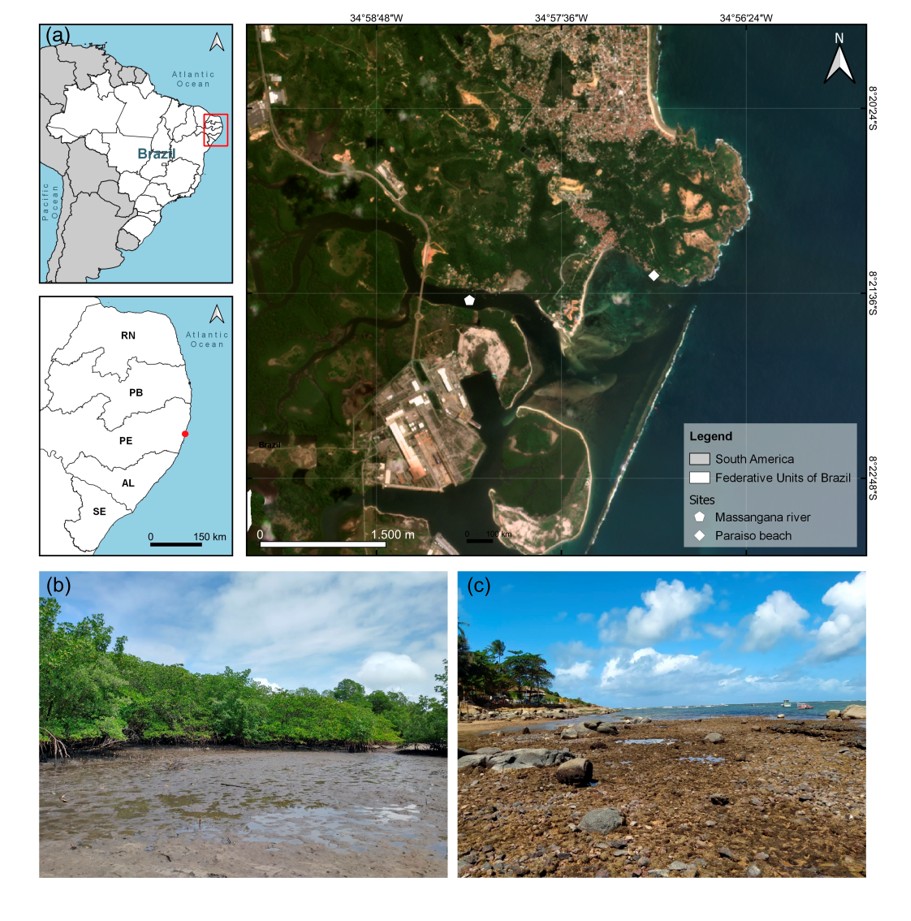
2. Materials and Methods
2.1. Shrimp sampling and data collection
Specimens of A. angulosus, A. carlae, and A. estuariensis were manually collected in October 2022 at two localities in Cabo de Santo Agostinho, Pernambuco, northeastern Brazil (Figure 1). Alpheus angulosus and A. carlae were collected at Praia do Paraíso (8°21'29.1”S 34°57'00.0”W, Figure 1b) and A. estuariensis in mudflats at the Massangana River (8°21'38.8”S 34°58'11.8”W, Figure 1c). A total of 45 individuals were sampled, with 15 belonging to each species. All sampled specimens were fully developed adults, minimizing potential variations in sound parameters due to ontogenetic differences. The specimens of A. angulosus and A. carlae were obtained during low tide by actively searching under rocks in the emerging portion of the intertidal zone and at the bottom of tide pools. Alpheus estuariensis specimens were captured during low tide using a PVC pump with a 50 mm diameter (see Costa-Souza et al., 2014). The suction pump was positioned over the burrow openings in muddy sediments, and the negative pressure extracted all material from inside the burrow, capturing the animals present. The pump was used to collect the specimens from all visible burrow openings, one individual at a time.
Sampling sites of Alpheus shrimps in Pernambuco, northeastern Brazil. (a) location of the sampling sites; (b) view of the Massangana river mangrove (8°21'38.8”S 34°58'11.8”W), where A. estuariensis was collected; (c) view of Praia do Paraíso (8°21'29.1”S 34°57'00.0”W), where A. angulosus and A. carlae were collected.
During collection, the individuals were placed separately in containers filled with water from the sampling site. Additionally, each container was provided with continuous aeration and contained a piece of rocky substrate to provide a hiding place for the shrimp. After collection, the shrimp were transported to the laboratory, kept alive, and housed individually in water tanks with constant aeration and daily feeding.
To record the snapping sounds, each individual was isolated in a glass tank with dimensions of 18 cm in height, 11.5 cm in width, and 20 cm in length, with a volume of 3 L, ensuring the identification of each recorded snap. All individuals were subjected to the same conditions, ensuring the standardization of sound parameter acquisition and comparability of the data obtained between the studied species. Tanks were filled with seawater at 25°C or brackish water at 26°C, reflecting the habitat conditions of each species.
During the recording sessions, the tank was placed on a level laboratory table measuring 2.0 m × 1.0 m. This setup minimized potential variations in the laboratory environment, such as mechanical vibrations, surface resonance, and uneven sound reflections that could affect the consistency of the recorded sounds. To avoid external sound interference, the recordings were conducted in a closed, windowless room, where the presence was restricted to a maximum of two researchers per session. Silence was maintained during the recordings, with all electronic equipment that could generate noise turned off, ensuring that only the snapping sounds of the shrimp were recorded. Recordings were performed using an underwater system consisting of an H2A hydrophone (Aquarian Audio, WA, USA), with an effective frequency range of <10 Hz to >100 kHz and a sensitivity of -180 dB re 1 V/μPa, and a Zoom H2N digital recorder operating in 16-bit stereo WAV format, sampling at 44.1 kHz, with plug-in power supply (2.5 V).
During the recordings, the hydrophone was positioned 10 cm away from the individual and 8 cm above the tank bottom. Before each recording session, each animal was placed in the tank and given a 10-minute acclimation period. The shrimp were positioned in the pre-selected location of the tank using anti-static ESD tweezers. The stimulus for snap production was applied by touching the snapping claw with the tweezers (based on Au and Banks, 1998). Recording sessions were conducted continuously for each organism and ended only after obtaining a minimum of 15 snaps per individual, with durations ranging from 1 to 5 minutes.
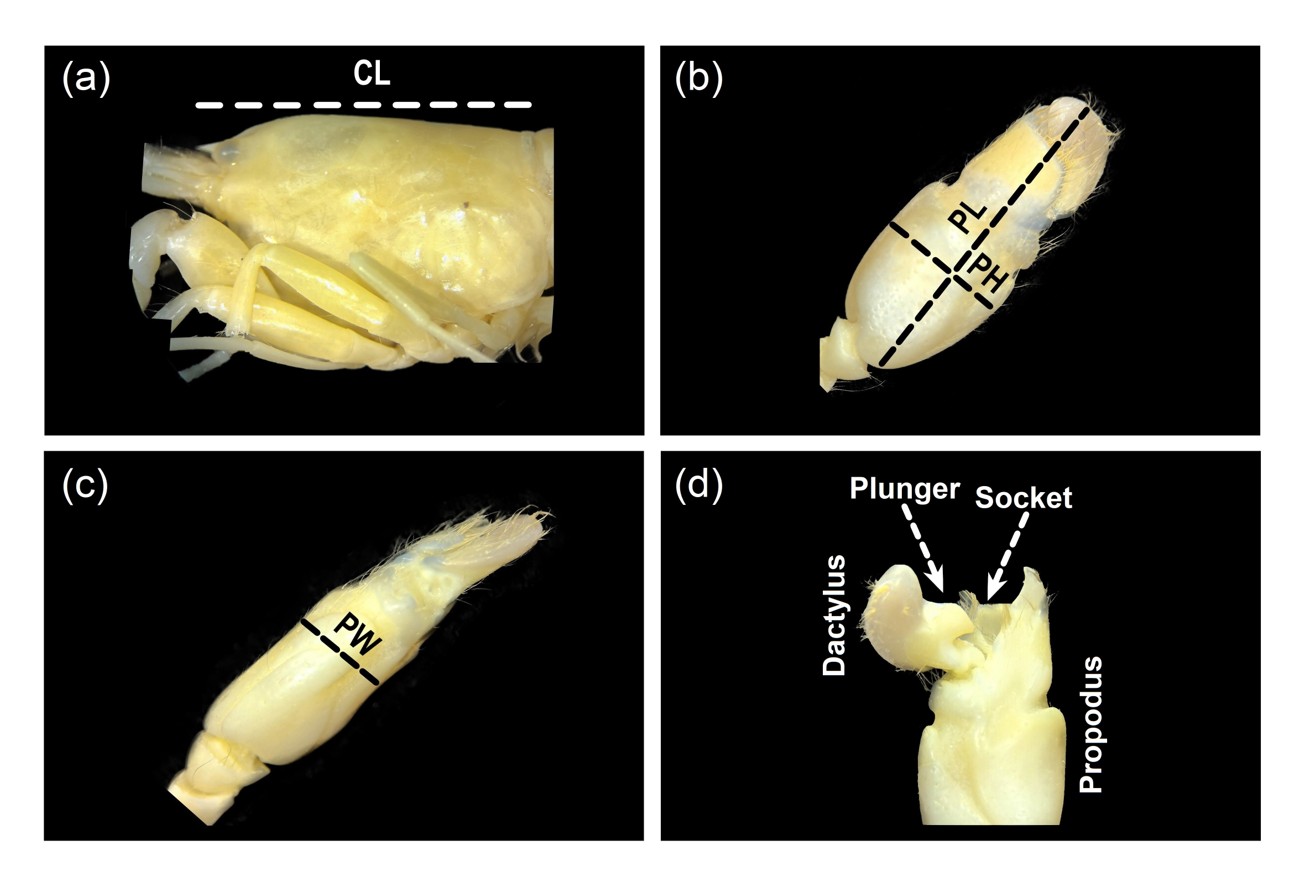
After the recordings, the individuals were euthanized by cooling and preserved in 70% ethanol. Subsequently, the following morphometric variables were measured: carapace length (CL, Figure 2a), propodus length, height (PL and PH, Figure 2b), and width (PW, Figure 2c) of the snapping claw. The location of the propodus within the snapping claw structure is shown in Figure 2d. The morphometric variables of the propodus were measured using a digital caliper with 0.1 mm precision. Carapace length was measured from the distal end of the rostrum to the posterior dorsal margin of the carapace using a Leica EZ4E stereomicroscope. All these parameters were measured in millimeters (mm) and are available in the Supplementary material . The shrimp specimens used in this study were deposited in the Crustacean Collection of the Department of Zoology at the Federal University of Rio Grande do Sul, Brazil (DZ/UFRGS), under the catalog numbers: 7063 (A. angulosus), 7064 (A. carlae), 7065 (A. estuariensis). The collection and recording of animals were conducted in accordance with the ethical standards in force in Brazilian federal laws. These activities were carried out under official authorization number 82961-1 MMA/ICMBio/SISBIO, and by the permanent license granted to MT under reference 62356 MMA/ICMBio/SISBIO - Government of Brazil.

Measurements of morphological characters and structures associated with the production of snaps from the snapping claw. (a) CL = Carapace Length; (b) PL = Propodus Length and PH = Propodus Height; (c) PW= Propodus Width; and (d) detail of the snapping claw, showing plunger, dactylus, socket, and propodus). An individual of Alpheus angulosus was used in the illustrations.
2.2. Sound and statistical analyses
Considering the potential resonance and reverberation effects caused by the recording tank size, specific methodological measures were adopted to minimize acoustic distortions. From the snaps recorded for each individual, only those exhibiting a high-fidelity profile were selected for analysis. These were defined as signals that reflected the characteristic structure of a snap (Au and Banks, 1998), including a low-amplitude precursor linked to the initial formation of the cavitation bubble and a high-amplitude pulse corresponding to bubble collapse. Accordingly, six snaps out of a total of 15 recorded per individual were selected for sound and statistical analyses. To ensure signal accuracy, the waveform segments selected for analysis (i.e., analysis windows) were defined based on the characteristic shape of a typical snap (Au and Banks, 1998). Each snap was considered to begin at the initial pulse peak and extend through its decay phase.
Sound analyses were conducted manually using Raven Pro version 1.6.5 (Bioacoustics Research Program, 2014), with each snap individually evaluated for each species. The parameters used for the analyses were snap duration (ms), peak frequency (kHz), and peak-to-peak sound pressure level (SPLpk-pk; dB re 1 μPa). These parameters were selected for their compatibility with the frequency resolution and temporal precision provided by the recording conditions, ensuring reliable and comparable measurements across samples. The time (snap duration) and frequency (peak frequency) properties were defined based on Spiga (2022), Song et al. (2023), and Au and Banks (1998), respectively. Time parameters were measured from oscillograms, considering the first to the last oscillation of what was defined as the representative properties of the snap sound signal. Frequency parameters were obtained from power spectra (sampling rate: 44.1 kHz, 16 bits per channel, 'Hann' window type, 1024-point Fast Fourier Transform (FFT), and 50% overlap window). Peak frequency was defined as the frequency with the highest amplitude within the power spectrum of the analyzed signal. Peak-to-peak sound pressure level was obtained using the PAMGuide tool in Matlab 2016 (Merchant et al., 2015), considering the 0.1 m distance adopted in our study. The hydrophone sensitivity used for calibration was -180 dB, with a gain of 39 dB and an ADC of 3.535 V. The calculation followed the logic of converting the electrical signal captured by the hydrophone into sound pressure levels (dB re 1 µPa), accounting for the recording system’s response (Merchant et al., 2015). Initially, the voltage values were corrected based on the hydrophone sensitivity and preamplifier gain and then converted into sound pressure levels using the system’s calibration relationship.
Power Spectral Density (PSD) analyses were performed to visualize the distribution of sound energy across different frequency bands over time, aiming not only to characterize the acoustic properties of the snaps recorded in our setup but also to serve as a reference for comparisons with the properties of alpheid snaps recorded in natural environments. This approach is particularly relevant given the well-known influence of tank resonance, reverberation effects, and the specific acoustic properties of the experimental setup on laboratory recordings, as it provides a means to assess the fidelity of the recorded signals by highlighting potential differences in sound parameters between laboratory snaps and those produced in nature (based on Song et al., 2021). To achieve this, we calculated mean PSD values for both the recording tank without snapping sounds (i.e., background laboratory noise) and for the snaps produced within the tank (“laboratory snaps”), thereby identifying potential spectral distortions introduced by the recording environment and evaluating the extent to which such distortions may affect the interpretation of the sound parameters. These analyses were conducted using the PAMGuide tool in MATLAB 2016 (Merchant et al., 2015).
To compare individual sound parameters from snaps produced by the three Alpheus species, we performed ANOVA tests followed by Bonferroni-corrected pairwise t-tests to identify differences in mean values between pairs of species. Since our data did not conform to the normality assumptions according to Q-Q plots and Shapiro-Wilk’s tests, raw data were log-transformed before these parametric tests. Next, a stepwise forward model selection using Wilk’s lambda criterion was performed to select sound parameters significant for species distinction. Parameters from Alpheus snaps were included from the highest Wilk’s lambda values (i.e., with the most significant contribution to species differentiation) to the lowest, until p-values were non-significant. These analyses were performed using aov and pairwise.t.test from the stats package version 4.4.0 (R Core Team, 2022) and the greedy.wilks function from the klaR package version 1.7.3 (Weihs et al., 2005) in R software version 4.4.0 (R Core Team, 2022).
To evaluate the ability of the selected parameters to correctly assign individual snaps to one of the Alpheus species studied, we tested each class (species) for its specificity, sensitivity, and precision, according to the framework delineated by Zhou et al. (2011) and Irigoien et al. (2016). For each species class (k), the number of true positives (TP, snaps of class k correctly classified as class k), the false negatives (FN, snaps of class k misclassified as other classes), the false positive (FP, snaps of other classes misclassified as units in class k), and the true negative (TN, snaps of other classes correctly classified as other classes), were estimated. Sensitivity for class k is defined as the ability of the sound parameters to correctly classify snaps belonging to class k, thus equaling TP/TP+FN. Specificity is the ability of the sound parameters to correctly exclude a unit from class k when it belongs to another class, TN/TN+FP. Precision (or positive predictive value) is the probability that a classification of a snap as the class k is correct, i.e., TP/TP+FP. A weighted distance-based discriminant analysis (WDB-Discriminant) was applied to perform the supervised classification of snaps, using a Euclidean distance matrix, cross-validated by the leave-one-out method, and the results were plotted as a confusion matrix. The distance matrix was obtained with the ‘vegdist’ function from the vegan package, and classification tests were performed with the WeDiBaDis package (Irigoien et al., 2016), both in the R software version 4.4.0 (R Core Team, 2022).
Simple linear regressions were fitted to evaluate whether there were significant relationships between individual morphometric measurements and snap sound parameters. Before fitting the linear models, we tested morphometric measures for collinearity using Pearson’s correlation coefficient, considering values of ρ > 0.7 (either positive or negative) to indicate high collinearity. We found all snapping claw measures to be highly positively correlated (ρ ~ 0.9), and we chose to proceed with regressions using propodus length as a proxy for all snapping claw measures. Regressions were fitted with the lm function from the stats package version 4.4.0 (R Core Team, 2022).
3. Results
Alpheid snaps, in general, exhibit short-duration properties, reflecting their transient and high-energy nature. These sound signals are characterized by a low-amplitude precursor, followed by a high-amplitude main pulse, which concentrates most of the sound energy of the event. The waveform shows an oscillatory tail with rapid attenuation after the peak, indicating a process of sound energy dissipation. Although this general pattern is conserved, the waveforms reveal subtle variations between the species analyzed, particularly in the shape and relative amplitude of the main pulse, suggesting possible species-specific sound signatures (Figure 3).

Acoustic properties of snap sounds produced by Alpheus angulosus, A. carlae, and A. estuariensis. (a) Spectrogram showing a sequence of six snaps from each species. (b) Oscillogram showing a sequence of six snaps from each species. (c) Oscillogram of a single snap, highlighting its low-amplitude precursor and high-amplitude pulse.
The sound parameters showed some degree of overlap among species (Table 1, Figure 4). Snap durations differed significantly among all species (p < 0.001), with A. angulosus exhibiting the longest snaps (mean ± SD: 0.8 ± 0.1ᴬ ms), followed by A. carlae (0.7 ± 0.1ᴮ ms), and A. estuariensis, which had the shortest snaps (0.6 ± 0.1ᶜ ms). Regarding peak frequency, A. angulosus and A. carlae did not differ significantly from each other, while both differed from A. estuariensis (A. angulosus vs. A. estuariensis, p < 0.001; A. carlae vs. A. estuariensis, p < 0.001). The highest mean peak frequency was recorded in A. carlae (mean ± SD: 3.7 ± 1.6ᴬ kHz), followed closely by A. angulosus (3.6 ± 1.9ᴬ kHz), whereas A. estuariensis exhibited the lowest values (2.5 ± 1.5ᴮ kHz). Peak-to-peak sound pressure level (SPL) values also differed significantly, with A. angulosus showing significant differences compared to both A. carlae (p < 0.01) and A. estuariensis (p < 0.01), although no significant difference was found between the latter two. The highest mean SPL was observed in A. estuariensis (mean ± SD: 189 ± 3.8ᴮ dB re 1 μPa), followed by A. carlae (188.9 ± 2.8ᴮ dB re 1 μPa) and A. angulosus (187.3 ± 3.3ᴬ dB re 1 μPa).
Mean and standard deviation of sound parameters across snaps produced by three species of Alpheus shrimps. Minimum and maximum values are presented inside parentheses. Superscript letters indicate homogenous groups for each sound parameter according to ANOVA pairwise tests.
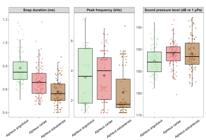
Sound parameters in the snaps produced by Alpheus angulosus, A. carlae, and A. estuariensis. Each box plot displays the distribution of the data for all sound parameters. The boxes represent the interquartile range, with the median indicated by a horizontal line and the means denoted by diamonds. Individual points represent single measurements obtained for each parameter.
For morphometric measurements, mean carapace length (mean ± SD) was 9.4 ± 0.9 mm (range: 7.86–10.92 mm) in A. estuariensis, 9.1 ± 0.75 mm (range: 8.35–10.83 mm) in A. angulosus, and 8.3 ± 0.9 mm (range: 6.64–9.98 mm) in A. carlae. Mean propodus length (mean ± SD) was 12.7 ± 1.4 mm (range: 10.32–15.86 mm) in A. estuariensis, 12.1 ± 1.8 mm (range: 9.53–14.21 mm) in A. angulosus, and 11.45 ± 2.2 mm (range: 8.43–16.76 mm) in A. carlae.
The PSD analyses demonstrated a similarity in the energy distribution across the frequency range for both background laboratory noise and laboratory snaps (Figure 5). For all three species, the energy in background laboratory noise was higher at lower frequencies (0.1–0.3 kHz), with PSD mean values ranging from 45 to 65 dB re 1 µPa2/Hz. In the remaining frequency bands, the PSD values gradually decreased toward the upper frequency limit, reaching levels close to 20 dB re 1 µPa2/Hz. In the laboratory snap properties, higher energy levels were predominantly observed in the initial frequency ranges (2–5 kHz), with mean values of approximately 110 dB re 1 µPa2/Hz. Across the remaining frequency range, the mean PSD values gradually decreased toward the upper frequency limit, reaching levels below 100 dB re 1 µPa2/Hz.
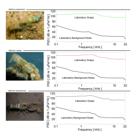
Power Spectral Density (PSD) mean levels of sound snaps produced by Alpheus angulosus, A. carlae, and A. estuariensis. The black line represents the PSD levels of laboratory snaps, while the gray line represents the laboratory background noise levels.
The snap duration, peak frequency, and peak-to-peak sound pressure level were significant in discriminating species according to Wilk's Lambda model (Table 2). The WDB-Discriminant analysis (Figure 6a) revealed variability among species in terms of specificity (the ability to exclude a snap that does not belong to that species, i.e., not incorrectly attributing snaps to that species), sensitivity (the ability to correctly identify a snap as belonging to that species, i.e., not misidentifying snaps from that species as belonging to others), and precision (the proportion of snaps correctly attributed to that species). Regarding classification performance, A. carlae exhibited the highest specificity and precision, while A. angulosus showed the highest sensitivity. A. estuariensis presented intermediate values for specificity and sensitivity but had the lowest precision among the three species. The cross-validation test indicated that 55.18% of snaps produced by the 45 individuals pooled across all species were correctly attributed to the emitter species, totaling approximately 149 correct assignments out of 270 snaps. The assignment tests revealed that 58.9% of A. angulosus snaps, 55.1% of A. carlae, and 55.6% of A. estuariensis were correctly assigned to their emitters (Figure 6b). Alpheus angulosus was most frequently misclassified as A. estuariensis (36.7%), while A. carlae also showed a high rate of misclassification as A. estuariensis (25.6%).
Stepwise forward model selection using Wilk's Lambda criterion for sound parameter values of three species of Alpheus shrimp. F and p values are shown for the overall model with the variable being included. The order of the parameters in the table, also reflects their importance in differentiating the species.
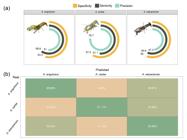
Weighted distance-based discriminant analysis and assignment test, demonstrating the species-specific character of three species of Alpheus shrimps, based on sound parameters. (a) Plot of WDBD analysis with specificity, sensitivity, and precision values derived from individuals' snaps of each species. Specificity values are shown in the outermost circles, sensitivity in the middle circles in gray, and precision in the inner circles. (b) Confusion matrix indicating the percentage of successful identification of snaps (n = 270, 90 per species) to the correct species and the proportion that were misclassified based on the selected sound parameters in the WDBD analysis.
Linear regressions fitted between the species morphometric measurements and sound parameters yielded significant relationships across species. However, the low R2 values in all instances indicated a low proportion of variance explained in sound parameters (Table 3). In A. angulosus, carapace length showed a negative correlation with snap duration. In A. carlae, carapace length was positively correlated with peak frequency. For A. estuariensis, carapace length exhibited positive relationships with both snap duration and sound pressure level. A. angulosus showed a positive correlation between propodus length and snap duration, while in A. carlae, propodus length was positively correlated with sound pressure level. Alpheus estuariensis also exhibited positive correlations between propodus length and both snap duration and sound pressure level. Among all these significant relationships, the strongest were observed in A. estuariensis, specifically between propodus length and snap duration (R2 = 0.2371, p < 0.0001) and between carapace length and snap duration (R2 = 0.1178, p = 0.0009).
Results of regression linear models using morphometric measurements of three species of Alpheus shrimps: Carapace Length (CL) and Propodus Length (PL), as independent variables, and each sound parameter used as a dependent variable relationship in bold denote statistically significant models (p < 0.05).
4. Discussion
The results of this laboratory study show that the acoustic properties of snaps produced by A. angulosus, A. carlae, and A. estuariensis conform to the characteristic profile of snapping shrimp signals, featuring a low-amplitude precursor followed by a high-amplitude main pulse, a structure that represents the acoustic signature of snapping shrimps. Power spectral density analysis revealed that snap energy was concentrated between 2 and 5 kHz, whereas background laboratory noise showed higher levels at lower frequencies (< 0.3 kHz), indicating that the recorded signals reflected snapping shrimp emissions. Significant interspecific differences were observed in snap duration, peak frequency, and SPLpk-pk parameters, suggesting species-specific acoustic signatures. Discriminant analysis showed that sound parameters effectively differentiate species, demonstrating varying levels of specificity, sensitivity, and precision. Furthermore, although significant correlations were identified between morphometric measurements and sound parameters, the low R2 values suggest these relationships account for only a limited proportion of the observed variation, indicating that other factors likely explain the remaining variability.
Regarding the sound parameters recorded in this study, the laboratory values align with those previously reported for snapping shrimp species. Previous studies have documented similar snap durations for Synalpheus paraneomeris Coutière, 1905 (Au and Banks, 1998), A. heterochaelis Say, 1818, and A. angulosus (Song et al., 2021). In this study, snap durations measured primarily ranged from 0.5 to 1 ms. Concerning peak frequencies, previous studies reported mean values ranging up to 5 kHz (Au and Banks, 1998; Song et al., 2021), consistent with the results obtained for the species analyzed in this study. Specifically, A. angulosus, A. carlae, and A. estuariensis showed mean peak frequencies of 3.6, 3.7, and 2.5 kHz, respectively. Regarding sound pressure parameters, the mean SPLpk-pk recorded in this study ranged from 187 to 189 dB re 1 μPa. These values are comparable to those reported by Au and Banks (1998), who measured) 183 to 190 dB re 1 μPa, and by Song et al. (2021), who reported mean values between approximately 190 and 195 dB re 1 μPa) at distances of 0.2 m and 0.5 m. Our results are according to field recordings of snap sounds in natural environments, such as those presented by Song et al. (2023), who reported mean snap durations between 0.3 and 0.6 ms and peak frequencies ranging from 2 to 6 kHz.
While our results are comparable to previous studies, it is important to consider potential limitations associated with the sampling rate used in this study. The high import costs and limited availability of higher-capacity equipment in Brazil limited the choice of a 44.1 kHz sampling rate. Nevertheless, snapping shrimp generally produce fundamental frequencies in the lower range of their acoustic signals (2–5 kHz) (Spiga, 2022; Song et al., 2023). These frequencies fall well within the detectable range of the sampling rate adopted in our analysis, making it suitable for capturing the main acoustic properties of the snaps. However, higher sampling rates, such as the 300 kHz per channel used by Au and Banks (1998) and Song et al. (2021), provide greater frequency resolution and allow the detection of higher-frequency components (Charif et al., 2010; Merchant et al., 2015), including harmonics and broadband energy often present in snap sounds. Although our recordings may not capture these high-frequency details, the chosen sampling rate was sufficient to achieve the study objectives and support comparisons with previous work focused on the main acoustic properties of snapping shrimp snaps.
It is important to consider that laboratory recording conditions can influence sound parameter values. In small tanks, resonance, reverberation, and confinement can artificially modify the signals by altering spectral characteristics such as frequency and amplitude (Akamatsu et al., 2002; Jones et al., 2019; Rogers et al., 2016; Jézéquel et al., 2022). Moreover, these sounds are often elicited by tactile stimuli, potentially causing differences compared to signals produced in natural environments (Song et al., 2021). The PSD analyses illustrate how these conditions can affect recorded snaps. Comparing the sound energy levels obtained in this study with recordings from a coastal marine environment by Song et al. (2023), similarities were observed in certain frequency ranges, both for background noise (45 to 65 dB re 1 µPa2/Hz) and for snaps (90 to 110 dB re 1 µPa2/Hz). However, the background noise in our experiment showed a higher concentration of energy at low frequencies (0.1 to 0.3 kHz), gradually decreasing across the spectrum. In contrast, Song et al. (2023) reported varying energy concentrations between locations, with greater energy concentration up to 1 kHz. Regarding snaps, we observed an increase in average PSD levels predominantly between 2 and 5 kHz, a pattern also identified by Song et al. (2023), followed by a progressive decrease. In this context, considering the inherent limitations of laboratory environments, the results obtained exhibit that the chosen methodology permitted a valid characterization of the recorded snaps, although caution is needed when interpreting these parameters.
The acoustic properties of the recorded snaps revealed variations in the sound parameters among the analyzed species, suggesting species-specific sounds. These differences may be related to their distinct habitats, as A. angulosus and A. carlae inhabit marine environments, whereas A. estuariensis occurs in estuarine environments (Costa-Souza et al., 2019). In this context, habitat differences may help explain the observed acoustic divergence, with the marine species being more similar to each other than to the estuarine species. Accordingly, A. angulosus and A. carlae share similar snapping claw morphologies, especially regarding the profile of the tooth-cavity mechanisms (Anker, 2012), when compared to A. estuariensis, suggesting similar sound emissions. However, our data did not support this pattern, raising the hypothesis that different species living in sympatry may exhibit differentiated sound emissions to enhance intraspecific communication. Literature shows that snaps produced by alpheid shrimps are associated with intraspecific interactions (Herberholz and Schmitz, 1998), including agonistic behavior, shelter defense, predation, and during mating events (Nolan and Salmon, 1970; Versluis et al., 2000; Mathews, 2002; Mathews et al., 2002). In this context, it is suggested that by differentiating their sound parameters, these species minimize interspecific interference, potentially increasing territorial defense and reproductive success. Thus, closely related Alpheus shrimps may exhibit intraspecific plasticity, segregating their signals either through character displacement, occurring specifically in sympatric populations, or as a permanent evolutionary trait, present even in allopatric conditions. These hypotheses, however, warrant further studies for better elucidation.
Variation in snapping shrimp sound parameters has been linked in the literature to morphological traits, particularly in the structure of the snapping claw (Versluis et al., 2000). In our study, linear regressions between propodus and carapace lengths with sound parameters revealed several significant relationships; however, none of the models had good explanatory power (Table 3). Results diverge across studies and sound metrics, with propodus length influencing SPLpk-pk in S. paraneomeris (Au and Banks, 1998) and peak frequency in A. lobidens De Haan, 1849 (Kim et al., 2010), while in A. heterochaelis and A. angulosus significant relationships between sound parameters and morphological traits were also detected, although with similarly low explanatory power (Song et al., 2021). Although A. heterochaelis and A. angulosus also showed a significant relationship between sound parameters and morphological traits (Song et al., 2021), the explanatory power in those cases was similarly low, as in the present study.
These disparities might be associated with differences in the range of propodus lengths reported across studies. However, when comparing the available data from the cited studies, no clear pattern emerges linking propodus length range and the significance or strength of these correlations. For instance, studies reporting significant correlations documented propodus length ranging from 5 to 8 mm for S. paraneomeris (Au and Banks, 1998) and 6 to 15 mm for A. lobidens (Kim et al., 2010). By contrast, the study with limited explanatory power reported propodus lengths ranging approximately from 10.2 to 15.8 mm for A. heterochaelis and 7.7 to 10.3 mm for A. angulosus (Song et al., 2021). In our study, we recorded propodus lengths similar to those observed in Song et al. (2021): 9.5 to 14.2 mm for A. angulosus, 6.6 to 10 mm for A. carlae, and 7.9 to 10.9 mm for A. estuariensis.
These findings suggest that the relationship between propodus length and sound parameters may vary among snapping shrimp species, potentially reflecting species-specific patterns, non-linear associations, or the influence of additional factors such as behavioral context, muscle morphology, or individual condition. Given the limited scope of current evidence, further studies are necessary to clarify the extent and nature of this relationship across the group.
5. Conclusion
Our results provide new, comparative data on alpheid snap sounds in a laboratory environment. By analyzing 270 snap events and 180 morphometric measurements, we identified distinct properties of snap sound emissions among three species (A. angulosus, A. carlae, and A. estuariensis), as well as varying degrees of correlation between morphometric traits and sound parameters. All analyzed sound parameters significantly differentiated the species, with approximately 55% of snaps correctly assigned to their emitters. Notably, despite their morphological similarity and shared habitats, A. angulosus and A. carlae did not produce more similar snaps than A. estuariensis, which inhabits a different environment. This indicates that sympatric species may differentiate their sounds to reduce interference and improve communication, likely influencing behaviors such as territorial defense and mating. Thus, acoustic variation in Alpheus reflects ecological adaptation and possible evolutionary character displacement, highlighting an area that warrants further study. Although some significant correlations between morphometric measurements and sound parameters were observed, the relatively low R2 values indicate that these traits have limited predictive power. These results are consistent with previous studies on snapping shrimp species (A. heterochaelis and A. angulosus), where similarly low R2 values were reported. This highlights the need for cautious interpretation of such associations and suggests that other factors, such as behavioral context, muscle morphology, or individual condition, may better explain the observed variability.
Our data contributes to refining current knowledge on the acoustic properties of Alpheus snaps. Nonetheless, a comprehensive understanding of snapping shrimp sound patterns requires additional research, particularly regarding the interactions between sound parameters and morphological traits. In addition, methodological aspects, such as laboratory recording conditions, must also be taken into account, as they can influence the characterization and interpretation of acoustic data. Such efforts will be essential to clarifying inter- and intraspecific acoustic differentiation and its potential roles in communication, reproduction, and social behavior.
Supplementary Material
Supplementary material accompanies this paper.
Table S1
This material is available as part of the online article from https://doi.org/10.1590/1519-6984.295882
Acknowledgements
We are grateful to all students from the Laboratório de Biologia de Crustáceos and the Laboratório de Cultivo de Invertebrados de Meiofauna Marinha e Estuarina of the Universidade Federal de Pernambuco for their support during sampling activities and cultivation. We also thank Giovanni Amadeu Paiva dos Santos for granting access to the laboratory and equipment for shrimp rearing. We are also grateful to Julia Ferreira Santana, a native English speaker, for proofreading the English language of this manuscript. AOA is grateful to Conselho Nacional de Desenvolvimento Científico e Tecnológico (CNPq) [grant number PQ#311217/2022-2]. Thanks are due to Mariana Terossi for providing the animals that were collected during another project under the license 62356 MMA/ICMBio/SISBIO.
Data Availability Statement
The research data are only available upon request to the corresponding author.
References
-
AKAMATSU, T., OKUMURA, T., NOVARINI, N. and YAN, H.Y., 2002. Empirical refinements applicable to the recording of fish sounds in small tanks. The Journal of the Acoustical Society of America, vol. 112, no. 6, pp. 3073-3082. http://doi.org/10.1121/1.1515799 PMid:12509030.
» http://doi.org/10.1121/1.1515799 -
ANKER, A., AHYONG, S.T., NOËL, P.Y. and PALMER, A.R., 2006. Morphological phylogeny of Alpheid shrimps: parallel preadaptation and the origin of a key morphological innovation, the snapping claw. Evolution; International Journal of Organic Evolution, vol. 60, no. 12, pp. 2507-2528. http://doi.org/10.1554/05-486.1 PMid:17263113.
» http://doi.org/10.1554/05-486.1 -
ANKER, A., HURT, C. and KNOWLTON, N., 2007. Three transisthmian snapping shrimps (Crustacea: Decapoda: Alpheidae: Alpheus) associated with innkeeper worms (Echiura: Thalassematidae) in Panama. Zootaxa, vol. 1626, no. 1, pp. 1-23. http://doi.org/10.11646/zootaxa.1626.1.1
» http://doi.org/10.11646/zootaxa.1626.1.1 - ANKER, A., 2012. Revision of the western Atlantic members of the Alpheus armillatus H. Milne Edwards, 1837 species complex (Decapoda, Alpheidae), with description of seven new species. Zootaxa, vol. 3386, pp. 1-109. https://doi.org/10.11646/zootaxa.3386.1.1.
-
AU, W.W. and BANKS, K., 1998. The acoustics of the snapping shrimp Synalpheus parneomeris in Kaneohe Bay. The Journal of the Acoustical Society of America, vol. 103, no. 1, pp. 41-47. http://doi.org/10.1121/1.423234
» http://doi.org/10.1121/1.423234 - BAUER, R.T., 2004. Remarkable shrimps: adaptations and natural history of the carideans Norman: University of Oklahoma Press, vol. 7.
- BIOACOUSTICS RESEARCH PROGRAM, 2014. Raven Pro: interactive sound analysis software, version 1.6.5 [software]. Ithaca: The Cornell Lab of Ornithology.
-
BOLTAÑA, S. and THIEL, M., 2001. Associations between two species of snapping shrimp, Alpheus inca and Alpheopsis chilensis (Decapoda: Caridea: Alpheidae). Journal of the Marine Biological Association of the United Kingdom, vol. 81, no. 4, pp. 633-638. http://doi.org/10.1017/S0025315401004295
» http://doi.org/10.1017/S0025315401004295 - CHARIF, R.A., WAACK, A.M. and STRICKMAN, L.M., 2010. Raven Pro 1.4 user’s manual Ithaca: Cornell Lab of Ornithology.
-
CHRISTOFFERSEN, M.L., 1984. The western Atlantic snapping shrimps related to Alpheus heterochaelis Say (Crustacea, Caridea), with the description of a new species. Papéis Avulsos de Zoologia, vol. 35, no. 1-29 (1983-1984), pp. 189-208. http://doi.org/10.11606/0031-1049.1984.35.p189-208
» http://doi.org/10.11606/0031-1049.1984.35.p189-208 -
CONOVER, M.R. and MILLER, D.E., 1978. The importance of the large chela in the territorial and pairing behaviour of the snapping shrimp, Alpheus heterochaelis Marine Behaviour and Physiology, vol. 5, no. 3, pp. 185-192. http://doi.org/10.1080/10236247809378534
» http://doi.org/10.1080/10236247809378534 -
COSTA-SOUZA, A.C., ROCHA, S.S., BEZERRA, L.E.A. and ALMEIDA, A.O., 2014. Breeding and heterosexual pairing in the snapping shrimp Alpheus estuariensis (Caridea: Alpheidae) in a tropical bay in northeastern Brazil. Journal of Crustacean Biology, vol. 34, no. 5, pp. 593-603. http://doi.org/10.1163/1937240X-00002258
» http://doi.org/10.1163/1937240X-00002258 -
COSTA-SOUZA, A.C., SOUZA, J.R.B. and ALMEIDA, A.O., 2019. Growth, sexual maturity and dimorphism in six species of snapping shrimps of the genus Alpheus (Decapoda: Alpheidae). Thalassas. Thalassas, vol. 35, no. 2, pp. 451-464. http://doi.org/10.1007/s41208-019-00146-2
» http://doi.org/10.1007/s41208-019-00146-2 -
DE GRAVE, S., DECOCK, W., DEKEYZER, S., DAVIE, P.J., FRANSEN, C.H., BOYKO, C.B., POORE, G.C.B., MACPHERSON, E., AHYONG, S.T., CRANDALL, K.A., DE MAZANCOURT, V., OSAWA, M., CHAN, T.Y., NG, P.K.L., LEMAITRE, R., VAN DER MEIJ, S.E.T. and SANTOS, S., 2023. Benchmarking global biodiversity of decapod crustaceans (Crustacea: decapoda). Journal of Crustacean Biology, vol. 43, no. 3, pp. ruad042. http://doi.org/10.1093/jcbiol/ruad042
» http://doi.org/10.1093/jcbiol/ruad042 -
DINH, J.P. and RADFORD, C., 2021. Acoustic particle motion detection in the snapping shrimp (Alpheus richardsoni). Journal of Comparative Physiology. A, Neuroethology, Sensory, Neural, and Behavioral Physiology, vol. 207, no. 5, pp. 641-655. http://doi.org/10.1007/s00359-021-01503-4 PMid:34241712.
» http://doi.org/10.1007/s00359-021-01503-4 -
HAZLETT, B.A. and WINN, H.E., 1962. Sound production and associated behavior of Bermuda crustaceans (Panulirus, Gonodactylus, Alpheus, and Synalpheus). Crustaceana, vol. 4, no. 1, pp. 25-38. http://doi.org/10.1163/156854062X00030
» http://doi.org/10.1163/156854062X00030 -
HERBERHOLZ, J. and SCHMITZ, B., 1998. Role of mechanosensory stimuli in intraspecific agonistic encounters of the snapping shrimp (Alpheus heterochaelis). The Biological Bulletin, vol. 195, no. 2, pp. 156-167. http://doi.org/10.2307/1542823 PMid:28570181.
» http://doi.org/10.2307/1542823 -
HERBERHOLZ, J. and SCHMITZ, B., 1999. Flow visualisation and high speed video analysis of water jets in the snapping shrimp (Alpheus heterochaelis). Journal of Comparative Physiology. A, Neuroethology, Sensory, Neural, and Behavioral Physiology, vol. 185, no. 1, pp. 41-49. http://doi.org/10.1007/s003590050364
» http://doi.org/10.1007/s003590050364 -
IRIGOIEN, I., MESTRES, F. and ARENAS, C., 2016. Weighted distance based discriminant analysis: The R package WeDiBaDis. The R Journal, vol. 8, no. 2, pp. 434-450. http://doi.org/10.32614/RJ-2016-057
» http://doi.org/10.32614/RJ-2016-057 -
JÉZÉQUEL, Y., BONNEL, J., COSTON-GUARINI, J. and CHAUVAUD, L., 2019. Revisiting the bioacoustics of European spiny lobsters Palinurus elephas: comparison of antennal rasps in tanks and in situ. Marine Ecology Progress Series, vol. 615, pp. 143-157. http://doi.org/10.3354/meps12935
» http://doi.org/10.3354/meps12935 -
JÉZÉQUEL, Y., BONNEL, J., AOKI, N. and MOONEY, T.A., 2022. Tank acoustics substantially distort broadband sounds produced by marine crustaceans. The Journal of the Acoustical Society of America, vol. 152, no. 6, pp. 3747-3755. http://doi.org/10.1121/10.0016613 PMid:36586829.
» http://doi.org/10.1121/10.0016613 -
JONES, I.T., STANLEY, J.A., BONNEL, J. and MOONEY, T.A., 2019. Complexities of tank acoustics warrant direct, careful measurement of particle motion and pressure for bioacoustic studies. In Proceedings of the 5th International Conference on the Effects of Noise on Aquatic Life, 7-12 July 2019, Den Haag. New York: Acoustical Society of America, vol. 37. http://doi.org/10.1121/2.0001073
» http://doi.org/10.1121/2.0001073 -
KAPLAN, M.B., MOONEY, T.A., PARTAN, J. and SOLOW, A.R., 2015. Coral reef species assemblages are associated with ambient soundscapes. Marine Ecology Progress Series, vol. 533, pp. 93-107. http://doi.org/10.3354/meps11382
» http://doi.org/10.3354/meps11382 -
KIM, B.N., HAHN, J., CHOI, B.K. and KIM, B.C., 2010. Snapping shrimp sound measured under laboratory conditions. Japanese Journal of Applied Physics, vol. 49, no. 7S, pp. 07HG04. http://doi.org/10.1143/JJAP.49.07HG04
» http://doi.org/10.1143/JJAP.49.07HG04 -
KNOWLTON, R.E. and MOULTON, J.M., 1963. Sound production in the snapping shrimps Alpheus (Crangon) and Synalpheus The Biological Bulletin, vol. 125, no. 2, pp. 311-331. http://doi.org/10.2307/1539406
» http://doi.org/10.2307/1539406 -
LAMMERS, M.O., BRAINARD, R.E., AU, W.W.L., MOONEY, T.A. and WONG, K.B., 2008. An ecological acoustic recorder (EAR) for long-term monitoring of biological and anthropogenic sounds on coral reefs and other marine habitats. The Journal of the Acoustical Society of America, vol. 123, no. 3, pp. 1720-1728. http://doi.org/10.1121/1.2836780 PMid:18345859.
» http://doi.org/10.1121/1.2836780 -
LILLIS, A., EGGLESTON, D.B. and BOHNENSTIEHL, D.R., 2014. Estuarine soundscapes: distinct acoustic characteristics of oyster reefs compared to soft-bottom habitats. Marine Ecology Progress Series, vol. 505, pp. 1-17. http://doi.org/10.3354/meps10805
» http://doi.org/10.3354/meps10805 -
LILLIS, A., PERELMAN, J.N., PANYI, A. and MOONEY, T.A., 2017. Sound production patterns of big-clawed snapping shrimp (Alpheus spp.) are influenced by time-of-day and social context. The Journal of the Acoustical Society of America, vol. 142, no. 5, pp. 3311-3320. http://doi.org/10.1121/1.5012751 PMid:29195442.
» http://doi.org/10.1121/1.5012751 -
LOHSE, D., SCHMITZ, B. and VERSLUIS, M., 2001. Snapping shrimp make flashing bubbles. Nature, vol. 413, no. 6855, pp. 477-478. http://doi.org/10.1038/35097152 PMid:11586346.
» http://doi.org/10.1038/35097152 -
MATHEWS, L.M., 2002. Territorial cooperation and social monogamy: factors affecting intersexual behaviours in pair-living snapping shrimp. Animal Behaviour, vol. 63, no. 4, pp. 767-777. http://doi.org/10.1006/anbe.2001.1976
» http://doi.org/10.1006/anbe.2001.1976 -
MATHEWS, L.M., SCHUBART, C.D., NEIGEL, J.E. and FELDER, D.L., 2002. Genetic, ecological, and behavioural divergence between two sibling snapping shrimp species (Crustacea: Decapoda: Alpheus). Molecular Ecology, vol. 11, no. 8, pp. 1427-1437. http://doi.org/10.1046/j.1365-294X.2002.01539.x PMid:12144663.
» http://doi.org/10.1046/j.1365-294X.2002.01539.x -
MERCHANT, N.D., FRISTRUP, K.M., JOHNSON, M.P., TYACK, P.L., WITT, M.J., BLONDEL, P. and PARKS, S.E., 2015. Measuring acoustic habitats. Methods in Ecology and Evolution, vol. 6, no. 3, pp. 257-265. http://doi.org/10.1111/2041-210X.12330 PMid:25954500.
» http://doi.org/10.1111/2041-210X.12330 -
NASCIMENTO, W.M., ALMEIDA, A.O. and PINHEIRO, A.P., 2024. Shape variation in the snapping claw of Alpheus Fabricius, 1798 (Decapoda: Alpheidae): a geometric morphometrics approach. Acta Zoologica, vol. 106, no. 2, pp. 195-204. http://doi.org/10.1111/azo.12511
» http://doi.org/10.1111/azo.12511 - NOLAN, B.A. and SALMON, M., 1970. The behavior and ecology of snapping shrimp (Crustacea: Alpheus heterochaelis and Alpheus normanni). Forma et Functio, vol. 2, pp. 289-335.
- R CORE TEAM, 2022. R: a language and environment for statistical computing Vienna: R Foundation for Statistical Computing.
-
RITZMANN, R.E., 1974. Mechanisms for the snapping behavior of two alpheid shrimp, Alpheus californiensis and Alpheus heterochelis Journal of Comparative Physiology. A, Neuroethology, Sensory, Neural, and Behavioral Physiology, vol. 95, no. 3, pp. 217-236. http://doi.org/10.1007/BF00625445
» http://doi.org/10.1007/BF00625445 - ROGERS, P.H., HAWKINS, A.D., POPPER, A.N., FAY, R.R. and GRAY, M.D., 2016. Parvulescu revisited: small tank acoustics for bioacousticians. In: A. POPPER and A. HAWKINS, eds. The effects of noise on aquatic life II New York: Springer, pp. 933–941. http://doi.org/10.1007/978-1-4939-2981-8_115.
-
SANTOS, P.S., TEROSSI, M., MANTELATTO, F.L., TORRES, R.A. and ALMEIDA, A.O., 2024. Morphology and molecular evidence reveal hidden diversity among snapping shrimp of the Alpheus obesomanus group (Decapoda: Alpheidae) with the description of a new species from Brazil. Zootaxa, vol. 5474, no. 3, pp. 225-242. http://doi.org/10.11646/zootaxa.5474.3.2 PMid:39646491.
» http://doi.org/10.11646/zootaxa.5474.3.2 -
SCHEIN, H., 1975. Aspects of the aggressive and sexual behaviour of Alpheus heterochaelis Say. Marine Behaviour and Physiology, vol. 3, no. 2, pp. 83-96. http://doi.org/10.1080/10236247509378498
» http://doi.org/10.1080/10236247509378498 -
SCHMITZ, B. and HERBERHOLZ, J., 1998. Snapping behaviour in intraspecific agonistic encounters in the snapping shrimp (Alpheus heterochaelis). Journal of Biosciences, vol. 23, no. 5, pp. 623-632. http://doi.org/10.1007/BF02709175
» http://doi.org/10.1007/BF02709175 -
SCHMITZ, B., 2002. Sound production in Crustacea with special reference to the Alpheidae. In: K. WIESE, ed. The crustacean nervous system Berlin: Springer. http://doi.org/10.1007/978-3-662-04843-6_40
» http://doi.org/10.1007/978-3-662-04843-6_40 - SCHULTZ, S., WUPPERMANN, K. and SCHMITZ, B., 1998. Behavioural interactions of the snapping shrimp (Alpheus heterochaelis) with conspecifics and sympatric crabs (Eurypanopeus depressus). Zoological Analysis of Complex Systems, vol. 101, suppl. 1, pp. 85.
-
SILLIMAN, K., INDORF, J.L., KNOWLTON, N., BROWNE, W.E. and HURT, C., 2021. Base-substitution mutation rate across the nuclear genome of Alpheus snapping shrimp and the timing of isolation by the isthmus of Panama. BMC Ecology and Evolution, vol. 21, no. 1, pp. 104. http://doi.org/10.1186/s12862-021-01836-3 PMid:34049492.
» http://doi.org/10.1186/s12862-021-01836-3 -
SOLEDADE, G.O. and ALMEIDA, A.O., 2013. Snapping shrimps of the genus Alpheus Fabricius, 1798 from Brazil (Caridea: Alpheidae): updated checklist and key for identification. Nauplius, vol. 21, no. 1, pp. 89-122. http://doi.org/10.1590/S0104-64972013000100010
» http://doi.org/10.1590/S0104-64972013000100010 -
SOLEDADE, G.O., TEROSSI, M., SCIOLI, J.A., MANTELATTO, F.L. and ALMEIDA, A.O., 2019. A new western Atlantic snapping shrimp of the Alpheus macrocheles group (Caridea, Alpheidae) revealed by morphological, molecular and color data. European Journal of Taxonomy, vol. 581, no. 581, pp. 1-21. http://doi.org/10.5852/ejt.2019.581
» http://doi.org/10.5852/ejt.2019.581 -
SONG, Z., SALAS, A.K., MONTIE, E.W., LAFERRIERE, A., ZHANG, Y., ARAN, M. and MOONEY, T., 2021. Sound pressure and particle motion components of the snaps produced by two snapping shrimp species (Alpheus heterochaelis and Alpheus angulosus). The Journal of the Acoustical Society of America, vol. 150, no. 5, pp. 3288-3301. http://doi.org/10.1121/10.0006973 PMid:34852610.
» http://doi.org/10.1121/10.0006973 -
SONG, Z., OU, W., SU, Y., LI, H., FAN, W., SUN, S., WANG, T., XU, X. and ZHANG, Y., 2023. Sounds of snapping shrimp (Alpheidae) as important input to the soundscape in the southeast China coastal sea. Frontiers in Marine Science, vol. 10, pp. 1029003. http://doi.org/10.3389/fmars.2023.1029003
» http://doi.org/10.3389/fmars.2023.1029003 -
SPIGA, I., 2022. The acoustic response of snapping shrimp to synthetic impulsive acoustic stimuli between 50 and 600 Hz. Marine Pollution Bulletin, vol. 185, no. Pt A, pp. 114238. http://doi.org/10.1016/j.marpolbul.2022.114238 PMid:36272322.
» http://doi.org/10.1016/j.marpolbul.2022.114238 -
VERSLUIS, M., SCHMITZ, B., VON DER HEYDT, A. and LOHSE, D., 2000. How snapping shrimp snap: through cavitating bubbles. Science, vol. 289, no. 5487, pp. 2114-2117. http://doi.org/10.1126/science.289.5487.2114 PMid:11000111.
» http://doi.org/10.1126/science.289.5487.2114 -
WEIHS, C., LIGGES, U., LUEBKE, K. and RAABE, N., 2005. klaR analyzing German business cycles. In: D. BAIER, R. DECKER and L. SCHMIDT-THIEME, eds. Data analysis and decision support: studies in classification, data analysis, and knowledge organization. Berlin: Springer, pp. 335–343. http://doi.org/10.1007/3-540-28397-8_36
» http://doi.org/10.1007/3-540-28397-8_36 -
WILLIAMS, S.T., KNOWLTON, N., WEIGT, L.A. and JARA, J.A., 2001. Evidence for three major clades within the snapping shrimp genus Alpheus inferred from nuclear and mitochondrial gene sequence data. Molecular Phylogenetics and Evolution, vol. 20, no. 3, pp. 375-389. http://doi.org/10.1006/mpev.2001.0976 PMid:11527465.
» http://doi.org/10.1006/mpev.2001.0976 -
WORLD REGISTER OF MARINE SPECIES – WoRMS, 2024 [viewed 25 October 2024]. Alpheus Fabricius, 1798 [online]. Available from: https://www.marinespecies.org/aphia.php?p=taxdetails&id=106978
» https://www.marinespecies.org/aphia.php?p=taxdetails&id=106978 -
ZHOU, X.H., OBUCHOWSKI, N.A. and MCCLISH, D.K., 2011. Statistical methods in diagnostic medicine Hoboken: John Wiley & Sons, Inc. http://doi.org/10.1002/9780470906514
» http://doi.org/10.1002/9780470906514
Edited by
-
Editor:
Felipe Polivanov Ottoni