 Over-expression of the ICE1 gene in transgenic rice improves cold tolerance
Abstract
Cold stress significantly challenges agricultural productivity, particularly in regions susceptible to low temperatures. In response to this challenge, the current study investigates the effects of over-expressing the ICE1 gene in rice plants on cold tolerance. Through constructing the pCAMBIA3301-ICE1 vector, transgenic rice lines with increased ICE1 expression were generated and investigated for their response to chilling stress. Upon subjecting the transgenic rice plants to chilling stress conditions, notable improvements were observed compared to wild-type (WT) plants. Specifically, the transgenic lines exhibited a substantial 62% reduction in visual damage severity, highlighting their enhanced resilience to cold-induced damage. Additionally, the transgenic lines showed a significant 30% increase in proline concentrations, indicative of enhanced stress tolerance mechanisms. Further analyses revealed a 50% reduction in malondialdehyde (MDA) levels and a 38% increase in peroxidase (POX) activity in the transgenic rice plants compared to the WT plants. These findings suggest improved antioxidant defense mechanisms and reduced oxidative damage, contributing to the overall cold stress tolerance of the transgenic lines. Interestingly, differential expression patterns of the ICE1 gene were observed between the leaves and roots of the transgenic plants under cold stress. Roots consistently exhibited higher levels of ICE1 expression, highlighting potential organ-specific responses to cold stress. In conclusion, the study demonstrates that over-expression of the ICE1 gene significantly enhances cold stress tolerance in rice plants; offering promising avenues for developing stress-resistant crop varieties that can better withstand the adverse effects of chilling stress on agricultural production.
Keywords:
ICE1 gene; Agrobacterium transformation; cold tolerance; transgenic rice; chilling injury; gene expression
Resumo
O estresse pelo frio desafia significativamente a produtividade agrícola, particularmente em regiões suscetíveis a baixas temperaturas. Em resposta a esse desafio, o presente estudo investiga os efeitos da superexpressão do gene ICE1 em plantas de arroz na tolerância ao frio. Através da construção do vetor pCAMBIA3301-ICE1, linhagens de arroz transgênico com expressão aumentada de ICE1 foram geradas e investigadas quanto à sua resposta ao estresse por frio. Ao submeter as plantas de arroz transgênico a condições de estresse por frio, melhorias notáveis foram observadas em comparação com as plantas selvagens (WT). Especificamente, as linhagens transgênicas exibiram uma redução substancial de 62% na severidade dos danos visuais, destacando sua maior resiliência aos danos induzidos pelo frio.. Além disso, as linhagens transgênicas apresentaram um aumento significativo de 30% nas concentrações de prolina, indicativo de mecanismos aprimorados de tolerância ao estresse. Análises posteriores revelaram uma redução de 50% nos níveis de malondialdeído (MDA) e um aumento de 38% na atividade da peroxidase (POX) nas plantas de arroz transgênicas em comparação com as plantas WT. Esses achados sugerem mecanismos de defesa antioxidante aprimorados e redução do dano oxidativo, contribuindo para a tolerância geral ao estresse por frio das linhagens transgênicas. Curiosamente, padrões de expressão diferencial do gene ICE1 foram observados entre as folhas e raízes das plantas transgênicas sob estresse por frio. As raízes exibiram consistentemente níveis mais elevados de expressão de ICE1, destacando potenciais respostas específicas de órgãos ao estresse por frio. Em conclusão, o estudo demonstra que a superexpressão do gene ICE1 aumenta significativamente a tolerância ao estresse por frio em plantas de arroz, oferecendo caminhos promissores para o desenvolvimento de variedades de culturas resistentes ao estresse que possam suportar melhor os efeitos adversos do estresse por frio na produção agrícola.
Palavras-chave:
gene ICE1; transformação de Agrobacterium; tolerância ao frio; arroz transgênico; dano por frio; expressão gênica
1. Introduction
Cold stress is a significant abiotic factor that can adversely affect plant growth and development under environmental conditions. Chilling injuries can lead to reduced productivity and limit the natural range of plant populations. Consequently, extensive research has been dedicated to enhancing plants' ability to tolerate low temperatures or cold stress conditions (Rout et al., 2020; Qu et al., 2022; Grosu et al., 2021; Altufaili et al., 2025). Different plant species or populations exhibit notable variations in their sensitivity to temperature changes affecting growth. For instance, plants in tropical and subtropical regions may experience chilling injury when exposed to temperatures below 15 °C, highlighting their sensitivity to relatively cool climates. Conversely, Antarctic algae may show signs of heat stress when temperatures rise above 5 °C, indicating their adaptation to colder environments (Cvetkovska et al., 2022; Sadriddin et al., 2025). While manual methods can somewhat enhance cold tolerance, breeding plants naturally adapted to low temperatures remains the primary goal. Genetic engineering has successfully produced germplasms with improved cold tolerance, but still, there was a lack of developing perfect transgenic lines (Xiang et al., 2008; Rout et al., 2020; Qu et al., 2022).
Plants, being immobile organisms, have developed various molecular, physiological, and biochemical mechanisms to adapt to unfavorable conditions. Over the past decades, significant progress has been made in understanding the Cold Signaling Network, leading to a rapid advancement in our comprehension of the cold response. Identifying C-repeat-binding factor (CBF) genes, notably CBF1, CBF2, and CBF3, stands out as a significant achievement in this field (Shi et al., 2018; Aladadh et al., 2024; Sultonovna et al., 2025). Another pivotal discovery was the identification of AtICE1, an inducer of CBF expression in Arabidopsis thaliana. AtICE1, acting as a regulatory switch upstream, plays a crucial role in regulating the transcription of CBF genes under cold conditions. ICE1, a transcription factor in the upstream signaling pathway, controls the downstream expression of CBF genes. Mutations in ICE1 can suppress gene expression at average temperatures (Chinnusamy et al., 2003; Lee et al., 2005; Khoshimov et al., 2023; Raimova et al., 2021). Under normal growth conditions, plants possess a transcription factor that primes the promoters of CBF. However, during cold stress, this transcription factor triggers the activation of CBF expression (Gilmour et al., 1998). Previous studies have demonstrated that increasing the expression of ICE1 can enhance organisms' ability to tolerate cold temperatures (Xiang et al., 2008; Rout et al., 2020; Qu et al., 2022; Muminovna et al., 2024).
Rice is highly susceptible to various stresses like drought, salt, and cold, with genetically modified rice generally exhibiting greater cold tolerance than conventional subspecies, particularly those grown in temperate regions (Fernandes et al., 2022; Sarma et al., 2023; Ongdash et al., 2024). Rice cultivation is prevalent in tropical and subtropical areas such as the Philippines, India, Pakistan, Java, Sri Lanka, and Indonesia, as well as in Central and South China and some African countries (Shakiba et al., 2017). Given rice's diverse stressors, it's crucial to identify and utilize genes that confer resilience against multiple abiotic stresses, thereby enhancing productivity. Previous studies have highlighted the potential of AtICE1 in improving tolerance to various stressors in rice cultivars. Increased expression of AtICE1 and its homologs from different plant species has improved tolerance to cold and drought (Fernandes et al., 2022; Sarma et al., 2023). ICE1 presents an opportunity to develop genetically modified rice capable of withstanding cold temperatures, which significantly impact rice's reproductive growth and productivity. Since traditional breeding methods struggle to address these challenges effectively, transgenic technologies offer an advantage by introducing desired traits that enhance the ability to adapt to cold stress.
Agrobacterium has been widely utilized for transgenic applications to enhance stress tolerance in various crops. Over-expression of AtICE1 using a constitutive 35S promoter has demonstrated increased cold tolerance in rice seedlings (Xiang et al., 2008; Оchilov et al., 2024). Similarly, the over-expression of rice ICE1 using the constitutive ubiquitin promoter has also been found to improve cold tolerance in rice (Zhang et al., 2017; Khurramovna et al., 2024). Zhang et al. (2012) conducted a comparative microarray analysis on various types of rice, encompassing both cold-tolerant and cold-sensitive varieties. The study unveiled an initial similarity in response to cold stress across these varieties. However, over time, alterations in gene expression were observed across diverse functional categories. The precise regulatory mechanisms underlying these differential expressions remain uncertain despite these findings.
Several key factors, such as the origin of explants, type of transformation vectors, duration of co-culture period, concentrations of Agrobacterium inoculum, and use of selective antibiotics, greatly influence the optimization of transformation protocols. Incorporating acetosyringone during co-culture and effectively selecting transformants based on antibiotic resistance is crucial for achieving a higher transformation rate under these conditions. The objective of this study was to over-express the ICE1 gene in developing transgenic rice lines to confer resistance to cold stress.
2. Materials and Methods
2.1. Plant materials
The plant materials, Arabidopsis and rice, were acquired from the Department of Biotechnology at M. Auezov South-Kazakhstan University. The experiments involved using seeds from these plants to produce mature seed-derived embryogenic calli.
2.2. Bacterial strain and plasmid
The present study used the Escherichia coli strain DH5α and Agrobacterium strain EHA105, The recombinant cloning vector plasmid pMD18T-ICE1, and the plant expression vector pCAMBIA3301. PCR amplification reagents, DNA markers, and restriction enzymes were purchased from Sigma (Sigma Aldrich, St. Louis, MA, USA). Additionally, other reagents used were of domestic analytical grade.
2.3. MS medium
The MS medium was foundational in rice tissue culture and genetic transformation. The callus induction medium consisted of 2.5 mg/l 2,4-D, 0.8 mg/l NAA, and 0.6 mg/l KI. The regeneration MS medium comprised 2.2 mg/l BA, and the rooting medium comprised ½ MS medium supplemented with 0.6 mg/l NAA.
2.4. Gene closing and plant expression vector construction
The complete open reading frame of the ICE1 gene sequence (GenBank accession no.: NM_113586.3) was cloned from wild-type (WT) Arabidopsis. The 20 µl PCR reaction mixture contained 10 μl of 2× Es Taq MasterMix, 1 μl each of the primers, 1 μl of ICE1 plasmid, and 7 μl of double-distilled (dd) water. The PCR conditions for ICE1 amplification were as follows: initial denaturation at 94 °C for 5 min, followed by 35 cycles of denaturation at 94 °C for 30 sec, annealing at 55 °C for 30 sec, extension at 72 °C for 2 min, and a final extension step at 72 °C for 10 min. The pCAMBIA3301 expression vector underwent double digestion with NcoI and BstEII enzymes, incubated at 37 °C for 3 hr, followed by 65 °C for 20 min. The PCR and enzyme digestion products were purified and recycled, respectively, and then ligated seamlessly using an SLS Research kit (SLS Research Private Limited, Gujarat, India) per the manufacturer’s instructions. The ligation reaction included 50-200 ng of the vector fragment, 10-50 ng of the target fragment, 4 μl of 5× buffer, 2 μl of ligase, and dd water to reach a total volume of 20 μl. This mixture was incubated at 37 °C for 30 min, then cooled to 0 °C for 5 min. Subsequently, the resulting ligation products were transformed into E. coli DH5α competent cells and positive clones were screened after that.
2.5. Agrobacterium-mediated callus transformation
The recombinant plasmid pCAMBIA3301-ICE1 was introduced into Agrobacterium, and colonies containing this recombinant plasmid were selected and cultured in MS liquid medium supplemented with Kanamycin (Jiao et al., 2021). The vials containing the infection broth and rice calli were agitated at 140 rpm on a shaker at 28 °C during the infection phase. This agitation process was crucial in improving the contact between the infection fluid and the calli, thereby enhancing the infection rate for successful genetic transformation.
2.6. Detection of transgenic plants
Genomic DNAs were isolated using the CTAB method (Ling, 2005). Confirmatory tests revealed the presence of ICE1 genes in transformed plants, while untransformed ones displayed negative results for these genes. To validate the PCR process, the recombinant plasmid pCAMBIA3301-ICE1 acted as a positive control, with untransformed maize plants as negative controls. Specific primer sequences were used for the PCR analysis to detect uidA, nptII, and ICE1 genes in regenerated transformed plants. The uidA primers were employed, F: 5′-CCAAAAGCCAGACAGAGT and R: GCACAGCACATCAAAGAG-3′. Similarly, primer sequences 5′-TCCGCTTGCTGAAAATGTCC-3′ and 5′-CTGTTGTGCCCAGTCATAGC-3′ were used for the nptII gene. For the ICE1 gene, the primer sequences F: 5′-AGGGATCCGGACCACCGTCAATAACATCGTTAAGTAG-3′ and R: 5′-CGAATTCGCCAAAGTTGACACCTTTACCCCAAAG-3′ were used. The PCR conditions for amplifying these genes remained consistent with the previously described protocols, ensuring accuracy and reliability in the detection process.
2.7. Southern blot analysis of transgenic plants
DNA was extracted from the PCR-positive transgenic lines and subjected to digestion with BamHI. ICE1 served as the probe, while biotin and DIG-labeled λ HindIII DNA (SLS Research Private Limited, Gujarat, India) was utilized as the marker. Southern blotting was carried out using the DIG DNA Labeling and Detection Kit (Sigma Aldrich, St. Louis, MA, USA), following the manufacturer's instructions.
2.8. Quantitative real-time PCR (qRT-PCR) detection of transgenic lines
Transgenic lines were confirmed positive for the transgene via Southern blotting and were subjected to cold stress at 4 °C. Total RNA was then extracted from these lines, reverse transcribed into cDNA, and diluted five-fold for analysis. qRT-PCR was carried out using specific primers for the ICE1 gene, with the forward primer sequence being F: 5′-ACCGGATCCGGGAAGGGGAAGAAGAAGGGG-3′ and the reverse primer sequence as R: 5′-TTTGGTCGACCTCTCCTGTCCTAGATCATG-3′. Additionally, the β-tubulin gene was used as a reference, with the forward primer sequence being F: 5′-GTCAAGAGGTTCTCAGCAGTA-3′ and the reverse primer sequence as R: 5′-TCACCTTCTTGATCCGCAGTT-3′. The cDNAs obtained from cold-treated plants were analyzed using an Mx 3000 P FQ-PCR System (SLS Research Private Limited, Gujarat, India). Each 20 μl PCR reaction consisted of 10 μl of 2× SYBR Premix Ex Taq polymerase, 2 μl of primer P4S, 2 μl of primer P4AS, 2 μl of template cDNA, and dd water to achieve a total volume of 20 μl. The PCR protocol included an initial pre-denaturation step at 95 °C for 3 min, followed by 40 cycles of denaturation at 95 °C for 10 sec and annealing/extension at 60 °C for 30 sec. The relative expression levels of the ICE1 gene were analyzed using the 2-ΔΔCT method (Rout et al., 2020).
2.9. Cold stress treatment of plants
ICE1-transgenic rice plants that were exposed to cold stress. The plants were initially germinated on ½ MS medium under controlled conditions, which involved a 14 hr photoperiod at temperatures of 25 °C during the day and 22 °C at night, with a light intensity of 250 µmol m−2 s−1. Subsequently, plants were subjected to 4° C for varying durations of 12, 24, 48, and 72 hr. After the cold stress treatment, samples of the entire plant, leaves, and roots were collected for RNA extraction analysis.
2.10. Assessment of visual damage
The severity of visual damage was determined by dividing it into different levels based on a classification scale. Plants without visible symptoms were categorized as having “none” damage, while those with small necrotic areas but no growth restrictions were labeled as “slight” damage (<5% leaf area necrotic). Plants with well-defined necrotic areas were classified as having “moderate” damage (5-25% leaf area necrotic), and those with extensive necrosis and severe growth reduction were considered to have “severe” damage (26-50% leaf area necrotic, but the plant remained alive). Plants exhibiting complete necrosis and collapse were categorized as “killed” damage. Each category was assigned a numerical value from 1 to 5 based on damage severity. The average chilling damage was then calculated using the following Formula 1 (Mohammed, 2024).
2.11. Determination of proline content, MDA levels, and peroxidase (POX) activity
The positive and untransformed plants were subjected to cold treatment by maintaining them at 4 °C for 0, 24, 48, or 72 hr. The measurement of relative conductivity followed the method described by Petrov et al. (2021). Changes in relative conductivity, proline content, malondialdehyde (MDA) content, and peroxidase (POX) activity were measured following the protocols outlined by Patanè et al. (2022). Proline content was determined using the sulfosalicylic acid method, while MDA content was calculated using the thiobarbituric acid-spectrophotometric method. POX activity was assessed using the guaiacol method.
2.12. Statistical analysis
The statistical analysis for this study was carried out using SPSS 19.0 software. One-way ANOVA tests were used to assess the variability of results between different treatments. The significance levels were set at p<0.05, denoted by asterisks (*), indicating statistical significance. All experiments were conducted with more than three replicates to ensure the reliability and accuracy of the data analysis.
3. Results
3.1. Construction and identification of pCAMBIA3301-ICE1 vector
The pCAMBIA3301-ICE1 plant expression vector underwent digestion with NcoI and BstEII restriction enzymes (Figure 1A, B). PCR analysis confirmed the presence of the recombinant vector pCAMBIA3301-ICE1, with distinct bands observed in lanes 1-5 of recombinant plasmid samples (Figure 1A). Subsequently, double-digestion provided further validation of the recombinant plant expression vector pCAMBIA3301-ICE1, indicated by specific band patterns in lanes 1-5 of recombinant plasmid samples (Figure 1B).
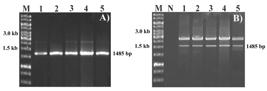
The recombinant plant expression vector pCAMBIA3301-ICE1 was validated through PCR analysis and double-digestion. (A) PCR analysis confirmed the presence of the recombinant vector pCAMBIA3301-ICE1, with lanes designated as M for marker and 1-5 for recombinant plasmid samples; (B) Double-digestion further verified the recombinant plant expression vector pCAMBIA3301-ICE1, with lanes labelled M for marker, N for water (negative control), and 1-5 for recombinant plasmid samples.
3.2. Production and PCR detection of transgenic rice plants
The results showed that the rice transformation process successfully introduced the plant expression vector pCAMBIA3301-ICE1 into the rice plants. PCR analysis conducted on the transgenic plants confirmed the presence of three essential genes: the reporter gene uidA, the marker gene nptII, and the ICE1 gene (Figure 2A-C). Among the 20 plants analyzed, five were positive for all three genes, indicating the successful incorporation of the transgenes (Figure 2A-C). The recombinant plasmid pCAMBIA3301-ICE1 served as a positive control, while no amplification was observed in the WT plant, validating the specificity of the PCR assay. Additionally, the band sizes obtained from PCR matched the expected product lengths for uidA (300 bp in Figure 2A), nptII (700 bp in Figure 2B), and ICE1 (1485 bp in Figure 2C), further confirming the successful transformation and expression of the desired genes in the transgenic rice plants.
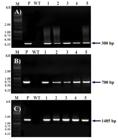
Molecular validation of transgenic rice plants through PCR confirmation of specific genes: PCR confirmation of the uidA reporter gene (A), the nptII marker gene (B), and the ICE1 gene (C). Lanes: M, marker; P, positive control (pCAMBIA2301-ICE plasmid); WT, negative control (wild type); 1-5, transgenic rice plants.
3.3. Southern blotting confirms the presence of ICE1 in plants
Genomic DNA was extracted from PCR-positive plants, followed by a 20-hr digestion with BamHI, before proceeding with Southern blotting. ICE1 was used as the probe during the Southern blotting process. The results indicated that untransformed plants exhibited no hybridization signals, while the five transgenic rice plants displayed significant hybridization signals (Figure 3).
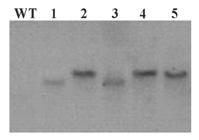
Southern blotting analysis detection in positive transgenic rice plants. WT, wild type or non-transformed plant genome; 1-5, transgenic rice plants.
3.4. Relative ICE1 expression variation unveiling transgenic effects in rice transgenic lines
The analysis of ICE1 gene expression within rice transgenic lines revealed significant differences compared to the WT (Figure 4). Transgenic line 1 exhibited a notable 2.33-fold increase in ICE1 expression, indicating a substantial enhancement over the WT (Figure 4). Similarly, transgenic lines 3, 4, and 5 showed fold increases of approximately 2.53-fold, 2.47-fold, and 2.60-fold, respectively, indicating significant elevations in ICE1 gene expression. On the other hand, transgenic line 2 demonstrated a more modest 2.17-fold increase, implying a less pronounced alteration in ICE1 expression compared to the other transgenic lines as compared with the WT (Figure 4).

The relative gene expression level of ICE1 in rice transgenic lines is quantified as the average expression levels (mean ± SD). The data comprises comparisons between the WT and five transgenic lines (1-5). *maximum level of difference.
3.5. Visual damage severity in rice plants under chilling stress
The study's findings reveal a significant reduction in visual damage severity among transgenic rice plants (1.58 ± 0.16) compared to WT rice plants (4.15 ± 0.32) when exposed to cold stress conditions (Table 1). This represents a substantial reduction of 62%, signifying that the transgenic plants experienced significantly less visual damage (p<0.05) than the WT plants under chilling stress conditions.
Comparison of visual damage severity in wild-type (WT) and transgenic rice plants exposed to chilling stress of 4 °C under controlled environmental conditions.
3.6. Differential trends in relative conductivity in WT versus transgenic plants under chilling stress
The results show significant differences in relative conductivity values between WT and transgenic rice plants at 24, 48, and 72 hr of exposure to 4 °C. Initially, at 0 hr, both WT and transgenic plants showed similar levels (not statistically significant) of relative conductivity (8.4 ± 1.25 and 9.6 ± 1.2, respectively) (Figure 5). However, significant differences became evident after prolonged exposure. After 24 hr, WT rice plants exhibited a substantial increase in relative conductivity to 24.4 ± 2.4, significantly higher than transgenic plants, which showed a lower increase to 16.5 ± 1.6, indicating potentially better membrane stability in transgenic plants under cold stress with a percentage difference of 32% (Figure 5). This significant difference persisted at 48 and 72 hr, with WT plants displaying higher relative conductivity values (28.4 ± 3.4 and 32.4 ± 4.1, respectively) compared to transgenic plants (18.5 ± 1.9 and 20.6 ± 2.1, respectively), resulting in percentage differences of 35% and 36%, respectively (Figure 5).

Variations in the relative conductivity of WT and transgenic rice plants exposed to various time intervals of chilling stress at 4 °C were analyzed using Duncan’s method (p<0.05). *maximum level of difference; nsnot significant difference.
3.7. Effect of chilling stress on proline concentrations in rice plants
At 0 hr, both WT and transgenic rice plants exhibited relatively similar proline concentrations of 14.2 ± 1.4 µg/g and 13.4 ± 1.4 µg/g, respectively (Figure 6A). However, a notable divergence was observed at subsequent time points. At 24 hr, a significant increase in proline concentration was noted in transgenic plants (21.8 ± 2.1 µg/g) compared to WT plants (16.8 ± 2.1 µg/g) under chilling stress, with a percentage difference of 30% (Figure 6A). This trend continued at 48 and 72 hr, with transgenic plants consistently showing elevated proline concentrations (23.7 ± 2.3 µg/g and 26.4 ± 2.8 µg/g, respectively) compared to WT plants (17.9 ± 2.1 µg/g and 19.6 ± 2.4 µg/g, respectively). These differences were statistically significant (p<0.05) at all time points, with percentage differences of 32% and 35%, respectively (Figure 6A).

Temporal variations in proline concentrations (A), changes in malondialdehyde (MDA) concentrations (B), and fluctuations in peroxidase (POX) activity (C) in transgenic rice plants exposed to various time intervals of low temperature at 4 °C (Duncan’s method, p<0.05). *maximum level of difference; nsnot significant difference.
3.8. MDA concentration changes in rice plants exposed to low temperatures at various time intervals
At initial point, both WT and transgenic rice plants exhibited similar MDA concentrations of 0.03 ± 0.001 μmol/g (Figure 6B). After 24 hr of exposure to 4 °C, WT plants showed a significant increase in MDA concentration to 0.07 ± 0.002 μmol/g compared to transgenic plants, which showed a slight increase to 0.04 ± 0.002 μmol/g, resulting in a statistically significant difference of 43% (p<0.05). This trend continued at 48 hr, with WT plants displaying a further significant increase in MDA concentration to 0.08 ± 0.002 μmol/g. In contrast, transgenic plants maintained a similar MDA concentration of 0.04 ± 0.002 μmol/g, resulting in a percentage difference of 50% (p<0.05) (Figure 6B). By 72 hr, WT plants reached MDA concentrations of 0.09 ± 0.003 μmol/g. In contrast, transgenic plants maintained the same concentration of 0.04 ± 0.002 μmol/g, resulting in a statistically significant difference of 56% (p<0.05) at this time point (Figure 6B).
3.9. Effect of cold stress on POX activity in WT and transgenic rice plants
The POX activity in WT and transgenic plants exposed to low temperatures of 4 °C was assessed at different time points to identify significant variations. At 0 hr, both WT and transgenic plants exhibited similar POX activity of 14.5 ± 2.1 U/g/min for WT and 15.6 ± 2.0 U/g/min for transgenic plants (Figure 6C). After 24 hr, there was a slight increase in POX activity in both WT (15.6 ± 2.1 U/g/min) and transgenic plants (19.2 ± 2.4 U/g/min), resulting in a statistically significant difference of 23%. This considerable difference continued to be evident at 48 hr, where WT plants showed a further increase in POX activity to 16.2 ± 1.8 U/g/min. In contrast, transgenic plants exhibited a more substantial increase to 22.3 ± 2.6 U/g/min, resulting in a percentage difference of 38% (p<0.05) (Figure 6C). By 72 hr, although WT plants showed a slight decrease in POX activity to 15.4 ± 1.4 U/g/min, transgenic plants maintained significantly higher POX activity at 23.1 ± 2.1 U/g/min, resulting in a percentage difference of 50% (p<0.05) (Figure 6C).
3.10. Effect of chilling stress on the expression of ICE1 gene in rice leaves and roots
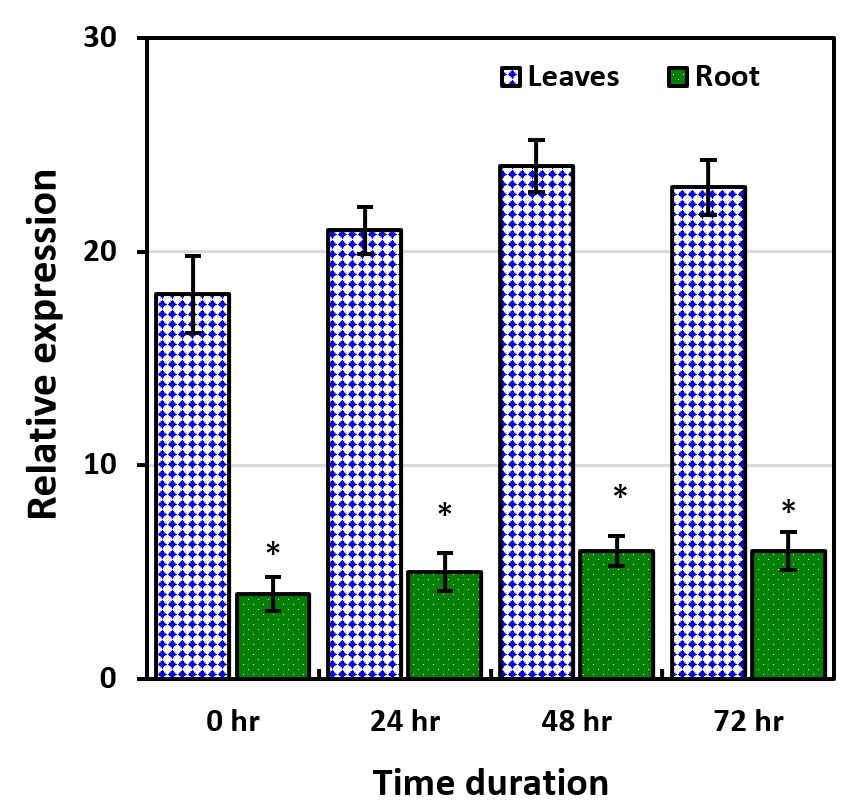
The relative expression of the ICE1 gene in transgenic plants under cold stress was analyzed, revealing significant differences between the leaves and roots over time (Figure 7). Initially, the highest relative expression levels of ICE1 were observed in the leaves (18 ± 1.8), with lower levels in the roots (4 ± 0.8). After 24 hr, ICE1 expression notably increased in all plant parts, with the roots showing the highest percentage increase (25%) and the leaves showing a 17% increase (Figure 7). This trend of increasing ICE1 expression continued at 48 hr and 72 hr, with the roots consistently showing the highest percentage increases (50% at both time points) and the leaves showing increases of 33% at 48 hr and 28% at 72 hr (Figure 7).
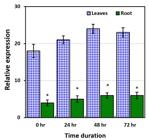
Relative expression levels of the ICE1 gene in the leaves and roots of transgenic rice plants under varying durations of chilling stress at 4 °C (Duncan’s method, p<0.05). *maximum level of difference.
4. Discussion
Genetic engineering to create stress-resistant plants often involves introducing target genes or amplifying existing genes within the plant species. Under typical circumstances, over-expressing ICE1, a crucial regulator in cold stress response pathways, has little effect on plant growth. In many different plants, including rice (Xiang et al., 2008), tomato (Juan et al., 2015), mung bean (Rout et al., 2020), and maize (Qu et al., 2022), ICE1 is a positive regulator of plant response to cold stress and plays a significant role in cold signaling pathways. This suggests that the introduction of ICE1 has fewer detrimental effects on plant growth than the introduction of CBF/DREB1. A plant with higher levels of CBF/DREB expression also exhibits higher levels of COR expression, which controls the expression of numerous genes and modifies the plant's physiological and biochemical markers, ultimately conferring a degree of cold tolerance. Consequently, the current study demonstrated the effective transformation of rice with AtICE1, creating new transgenic rice lines with heightened resistance to cold stress. Xiang et al. (2008) reported that the OsICE1, the homolog of Arabidopsis AtICE1/2, is essential for controlling freezing stress reactions. Comparative analysis revealed that A. thaliana's ICE1 gene expression changed more quickly during the cold-response process. As a result, the AtICE1 gene transfer into rice has a more significant application value than the OsICE1 gene transfer.
In our study, the relative expression analysis indicated that all transformed plants showed significantly enhanced expression of ICE1 gene transcripts compared to WT plants (non-transgenic). This upregulation of ICE1 gene expression suggests that the transgenic plants have a more robust cold stress response mechanism, potentially leading to improved cold tolerance. Similarly, a slightly enhanced up-regulation of ICE1 transcripts level was observed in mung bean (Rout et al., 2020) and maize (Qu et al., 2022) plants under cold stress conditions. Our results align with the previous findings, indicating that the ICE1 gene is crucial in enhancing cold tolerance across different plant species. Previous studies have also demonstrated the beneficial effects of ICE1 gene over-expression in mitigating cold stress. For instance, in rice (Xiang et al., 2008), tomato (Juan et al., 2015), mung bean (Rout et al., 2020), and maize (Qu et al., 2022) transgenic plants, the over-expression of ICE1 genes resulted in improved cold tolerance compared to WT plants. Overall, our results and previous research highlight the potential of ICE1 gene over-expression as a valuable strategy for enhancing cold tolerance in various crops, which is of significant importance for sustainable agriculture in regions prone to cold stress.
Our research team recently reported that when frost and cold stress are induced, there is an increase in the expression of ICE1. It has been determined that in Arum korolkowii Regel, ICE1 expression starts at the acclimatisation phase (Yeginbay et al., 2023). Under cold stress, Aronnik Korolkov's ICE1 is an upstream regulator of CBF genes. However, in these plants, a mutation lowers CBF3 expression, which affects downstream genes and lowers cold resistance. The ICE1 genes encode the MYC-like transcription activator BHLH, bound by specific sequences in the CBF3 promoter. Our most recent research also shows that low temperatures (0 °C) increase the resistance of Aronnik Korolkov plants to cold and frost by activating the CBF family of transcription factors in these plants (Yeginbay et al., 2023). The present study reported that the 62% reduction in visible damage severity in transgenic rice plants compared to WT plants under chilling stress conditions could be attributed to genetic modifications likely involving the ICE1 gene or related pathways. ICE1 plays a critical role in regulating the expression of cold-responsive genes, including those responsible for stress tolerance mechanisms like antioxidants and osmoprotectants. The heightened expression of these protective genes in transgenic plants enables them to withstand chilling stress more effectively, significantly reducing visible damage compared to WT plants.
Our results revealed a statistically significant decrease in relative conductivity in the transgenic rice lines compared to WT following 24 hr of cold stress treatment (Figure 5). These findings are consistent with prior research. For instance, Zhang et al. (2018) documented a reduction in relative conductivity in BcICE1-transgenic tobacco compared to WT tobacco under similar cold stress conditions. Furthermore, Li et al. (2022) conducted a study involving the over-expression of ICE genes (HbICE1, HbICE2, HbICE4, and HbICE5) in tobacco plants and observed a significant decrease in relative conductivity compared to WT plants after exposure to cold stress. They also reported varied survival ratios among the transgenic lines, with HbICE1, HbICE4, and HbICE5 exhibiting higher survival rates (60%) in contrast to HbICE2 and HbICE3 (40% and 20%, respectively), while all WT plants experienced 100% mortality under cold stress conditions. These collective results support the hypothesis that the over-expression of specific ICE genes can enhance cold stress tolerance in plants, as evidenced by reduced relative conductivity and improved survival rates in transgenic lines relative to WT plants.
Cold stress poses a significant challenge to plant growth and often results in substantial decreases in productivity. Various plant species have developed diverse mechanisms to counteract the detrimental effects of cold stress. One crucial mechanism involves osmoregulation, which enables plants to adapt to different abiotic stresses. Proline is a key osmolyte that enhances plant stress tolerance (Verbruggen and Hermans, 2008). In our study, we observed higher proline content in transgenic rice plants compared to WT control plants (Figure 6A). This increased proline content in transformed rice plants serves as an osmoprotectant during cold stress, aiding in their ability to withstand adverse environmental conditions. Conversely, WT plants exhibit lower proline accumulation and are less capable of tolerating cold stress. Zhang et al. (2018) reported that proline was enhanced in BcICE1-transgenic tobacco compared to WT tobacco. Proline accumulation in plants typically occurs following exposure to cold stress. Among the beneficial compounds, proline is crucial in helping plants cope with cold stress. The relationship between acquiring stress tolerance and proline accumulation has been substantiated in previous studies (Gai et al., 2020; Nguyen et al., 2024).
MDA, a byproduct of lipid peroxidation (LP), is a well-established biomarker indicating the presence of free radicals in plant tissues, particularly in response to cold-induced membrane damage (Habibi, 2015; Sharopova, 2023). LP occurs when unsaturated fatty acids in cell membranes interact with ROS, leading to the generation of MDA. Consequently, measuring MDA content becomes crucial for understanding oxidative stress levels and membrane integrity in plants under chilling stress conditions (Zhang et al., 2018). In our study, the observed significant decrease in MDA levels in the over-expressed ICE1 transgenic rice line compared to WT plants provides compelling evidence of enhanced cold stress tolerance. The over-expression of ICE1, a transcription factor involved in cold stress response pathways, likely contributes to the lower MDA levels by modulating antioxidant defense mechanisms and membrane stability. Zhang et al. (2018) reported that MDA was decreased in BcICE1-transgenic tobacco compared to WT tobacco. Additionally, the specific genetic modifications in the ICE1 transgenic line could lead to alterations in lipid composition, further supporting its improved cold stress resilience. Furthermore, the reduced MDA content in the transgenic line implies more effective membrane protection mechanisms crucial for plant survival under chilling stress.
Excessive generation of ROS is common in plants when they encounter cold stress, which can lead to significant oxidative damage within plant cells. To counteract this threat, plants have evolved intricate antioxidant defense mechanisms to neutralize ROS and prevent cellular damage (Kalisz et al., 2016; Khayitov et al., 2023; Usmanova et al., 2020). Enzymatic antioxidants, such as POXs, are crucial in scavenging ROS and maintaining redox homeostasis under cold stress conditions. Our study, conducted at a temperature of 4 °C, monitored POX activity in both transgenic rice lines and WT rice plants throughout 24 to 72 hr of cold stress exposure. Remarkably, we observed consistently higher levels of POX activity in the transgenic rice lines compared to the WT plants throughout this duration. This observation aligns with previous research by Kalisz et al. (2016), who documented similar trends of increased POX activity in Thai basil subjected to low-temperature stress. The elevated POX activity in our transgenic rice lines suggests a robust enzymatic antioxidant defense system, which likely contributes to the plant's ability to mitigate ROS-induced oxidative damage and maintain cellular integrity during cold stress. Zhang et al. (2018) demonstrated that the POX activity and the transcriptional level of POX genes were higher in BcICE1-transgenic tobacco than in WT tobacco under cold stress.
The current study found variations in ICE1 gene expression in rice transgenic lines' leaves and roots under chilling stress (Figure 7). The significant differences in ICE1 expression between leaves and roots over time suggest cold stress-induced regulatory mechanisms in these plant organs. The higher relative expression levels of ICE1 in leaves than roots indicate a role in leaf-specific cold stress responses. Maintaining leaves' photosynthetic activity and cellular integrity during stress may explain this. Lower root expression levels may indicate a lower need for ICE1-mediated responses in root tissues under early cold stress. ICE1 expression increased in all plant parts after 24 hr of cold stress, indicating an adaptive response to prolonged chilling. The roots had the highest percentage increase in ICE1 expression, indicating that cold-responsive genes in root tissues are activated more as stress persists. The plant's root growth and nutrient uptake modulation may explain this increased root response to cold tolerance. ICE1 expression remains elevated at 48 and 72 hr, indicating sustained cold stress response pathways. Our study was consistent with a previous report by Bredow et al. (2017). At average temperatures, the physiological indicators of transformed and untransformed plants were almost the same, indicating that ICE1 was inactive under normal temperature conditions. Root system development, water and nutrient uptake regulation, and stress signaling may play a role in long-term cold stress adaptation, as roots consistently show the highest percentage increases in ICE1 expression. The different expression patterns of ICE1 in leaves and roots show the complexity of plant responses to chilling stress and the importance of organ-specific regulatory mechanisms in cold stress tolerance.
5. Conclusion
The present study summarizes that the construction and identification of the pCAMBIA3301-ICE1 vector and the successful production and PCR detection of transgenic rice plants validate the incorporation and expression of ICE1 along with key marker and reporter genes. This achievement underscores the effectiveness of genetic transformation in conferring cold stress tolerance to rice plants. The differential trends in ICE1 gene expression among transgenic rice lines reveal significant enhancements in ICE1 expression, particularly in certain transgenic lines, suggesting varying degrees of stress tolerance conferred by ICE1. Southern blot analysis further confirms the successful incorporation of ICE1 into the transgenic plants. The observed reduction in visual damage severity, lower relative conductivity values, increased proline concentrations, and lower MDA concentrations in transgenic rice plants under chilling stress collectively demonstrate the enhanced stress tolerance conferred by ICE1 expression. Additionally, the higher POX activity observed in transgenic plants further supports their improved ability to mitigate oxidative stress under cold conditions. Moreover, the differential expression patterns of ICE1 in leaves and roots under cold stress highlight the tissue-specific responses and adaptive mechanisms involved in ICE1-mediated stress tolerance. Overall, these results underscore the potential of genetic engineering approaches, particularly the incorporation of ICE1, in developing stress-resistant crop varieties, thus contributing significantly to agricultural sustainability and food security in the face of environmental challenges.
-
Data Availability Statement
The entire data set that supports the results of this study was published in the article itself.
References
-
ALADADH, M.A., EBRAHIM, H.N.D.K., ELSANHOTY, R.M. and RAMADAN, M.F., 2024. Detection and occurrence of genetically modified rice and potato in the Saudi food market. Brazilian Journal of Biology = Revista Brasileira de Biologia, vol. 84, e285978. http://doi.org/10.1590/1519-6984.285978 PMid:39292141.
» http://doi.org/10.1590/1519-6984.285978 - ALTUFAILI, M., KADHIM, R. and MERHIJ, E., 2025. Determination of effectiveness of certain chemical compounds in Lactuca sativa L. under cobalt salt stress. Procedia Environmental Science, Engineering and Management, vol. 12, no. 1, pp. 237-242.
-
BREDOW, M., VANDERBELD, B. and WALKER, V.K., 2017. Ice-binding proteins confer freezing tolerance in transgenic Arabidopsis thaliana. Plant Biotechnology Journal, vol. 15, no. 1, pp. 68-81. http://doi.org/10.1111/pbi.12592 PMid:27317906.
» http://doi.org/10.1111/pbi.12592 -
CHINNUSAMY, V., OHTA, M., KANRAR, S., LEE, B., HONG, X., AGARWAL, M. and ZHU, K., 2003. ICE1: a regulator of cold-induced transcriptome and freezing tolerance in Arabidopsis. Genes & Development, vol. 17, no. 8, pp. 1043-1054. http://doi.org/10.1101/gad.1077503 PMid:12672693.
» http://doi.org/10.1101/gad.1077503 -
CVETKOVSKA, M., ZHANG, X., VAKULENKO, G., BENZAQUEN, S., SZYSZKA-MROZ, B., MALCZEWSKI, N., SMITH, D.R. and HÜNER, N.P.A., 2022. A constitutive stress response is a result of low temperature growth in the Antarctic green alga Chlamydomonas sp. UWO241. Plant, Cell & Environment, vol. 45, no. 1, pp. 156-177. http://doi.org/10.1111/pce.14203 PMid:34664276.
» http://doi.org/10.1111/pce.14203 -
FERNANDES, T., MELO, F., VIEIRA, M.B., LOURENÇO, T.F., PUCCIARIELLO, C., SAIBO, N.J.M., ABREU, I.A. and OLIVEIRA, M.M., 2022. Screening for abiotic stress response in rice. Methods in Molecular Biology, vol. 2494, pp. 161-194. http://doi.org/10.1007/978-1-0716-2297-1_12 PMid:35467207.
» http://doi.org/10.1007/978-1-0716-2297-1_12 -
GAI, Z., LIU, L., ZHANG, J., LIU, J. and CAI, L., 2020. Effects of exogenous α-oxoglutarate on proline accumulation, ammonium assimilation and photosynthesis of soybean seedling (Glycine max (L.) Merr.) exposed to cold stress. Scientific Reports, vol. 10, no. 1, pp. 17017. http://doi.org/10.1038/s41598-020-74094-w PMid:33046814.
» http://doi.org/10.1038/s41598-020-74094-w -
GILMOUR, S.J., ZARKA, D.G., STOCKINGER, E.J., SALAZAR, M.P., HOUGHTON, J.M. and THOMASHOW, M.F., 1998. Low temperature regulation of the Arabidopsis CBF family of AP2 transcriptional activators as an early step in cold-induced COR gene expression. The Plant Journal, vol. 16, no. 4, pp. 433-442. http://doi.org/10.1046/j.1365-313x.1998.00310.x PMid:9881163.
» http://doi.org/10.1046/j.1365-313x.1998.00310.x -
GROSU, V., KHOLIAVKO, N., ZHAVORONOK, A., ZLATI, M.L. and COSMULESE, C.G., 2021. Model of financial management conceptualization in Romanian agriculture. Economic Annals-XXI, vol. 191, no. 7-8(1), pp. 54-66. http://doi.org/10.21003/ea.V191-05
» http://doi.org/10.21003/ea.V191-05 -
HABIBI, G., 2015. Exogenous silicon leads to increased antioxidant capacity in freezing-stressed pistachio leaves. Acta Agriculturae Slovenica, vol. 105, no. 1, pp. 43-52. http://doi.org/10.14720/aas.2015.105.1.05
» http://doi.org/10.14720/aas.2015.105.1.05 -
JIAO, P., YUAN, W.Y., ZHAO, H.D., QU, J. and WANG, P.W., GUAN, S.Y. and MA, Y.Y., 2021. Construction of a new plant expression vector and the development of maize germplasm expressing the Aspergillus ficuum phytase gene PhyA2. Genetic Resources and Crop Evolution, vol. 68, no. 3, pp. 1103-1115. http://doi.org/10.1007/s10722-020-01052-w
» http://doi.org/10.1007/s10722-020-01052-w -
JUAN, J.X., YU, X.H., JIANG, X.M., GAO, Z., ZHANG, Y., LI, W., DUAN, Y.D. and YANG, G., 2015. Agrobacterium-mediated transformation of tomato with the ICE1 transcription factor gene. Genetics and Molecular Research, vol. 14, no. 1, pp. 597-608. http://doi.org/10.4238/2015.January.30.1 PMid:25729995.
» http://doi.org/10.4238/2015.January.30.1 -
KALISZ, A., POKLUDA, R., JEZDINSKÝ, A., SĘKARA, A., GRABOWSKA, A., GIL, J. and NEUGEBAUEROVÁ, J., 2016. Chilling-induced changes in the antioxidant status of basil plants. Acta Physiologiae Plantarum, vol. 38, no. 8, pp. 196. http://doi.org/10.1007/s11738-016-2214-7
» http://doi.org/10.1007/s11738-016-2214-7 -
KHAYITOV, O.G., SAIDOVA, L.S., GALIEV, S.Z., UMIRZOKOV, A.A. and MAHKAMOV, M., 2023. Interrelation of performance indicators of technological transport with mining conditions of a quarry. News of National Academy of Sciences of the Republic of Kazakhstan, vol. 1, no. 457, pp. 226-239. http://doi.org/10.32014/2023.2518-170X.272
» http://doi.org/10.32014/2023.2518-170X.272 -
KHOSHIMOV, N., MUKHTOROV, A., NASIROV, K., RAKHIMOV, R. and MAMADAMINOV, R., 2023. Effects of Polyphenols on changes in the transport of Ca2+ NMDA-receptors under the influence of L-glutamate. Research Journal of Pharmacy and Technology, vol. 16, no. 3, pp. 1205-1213. http://doi.org/10.52711/0974-360X.2023.00200
» http://doi.org/10.52711/0974-360X.2023.00200 - KHURRAMOVNA, S., KHAYDAROVA, D., BOLTAYEVICH, B., MURODBEKOVICH, A., XASANOVA, N. and NORMAT, K., 2024. Green biosynthesis of copper nanoparticles using citrus fruit extracts for enhanced catalytic and antimicrobial properties. Procedia Environmental Science, Engineering and Management, vol. 11, no. 3, pp. 347-360.
-
LEE, B.H., HENDERSON, D.A. and ZHU, J.K., 2005. The Arabidopsis cold-responsive transcriptome and its regulation by ICE1. The Plant Cell, vol. 17, no. 11, pp. 3155-3175. http://doi.org/10.1105/tpc.105.035568 PMid:16214899.
» http://doi.org/10.1105/tpc.105.035568 -
LI, Y., QUAN, C., YANG, S., WU, S., SHI, M., WANG, J. and TIAN, W., 2022. Functional identification of ICE transcription factors in rubber tree. Forests, vol. 13, no. 1, pp. 52. http://doi.org/10.3390/f13010052
» http://doi.org/10.3390/f13010052 - LING, G., 2005. Mapping of rice long-protective mutant gene map Xianyang: Northwest A&F University.
- MOHAMMED, M.A., 2024. Cos thin film deposited by chemical spray engineering technique: optical, gas-sensing and structural characteristics. Procedia Environmental Science, Engineering and Management, vol. 11, no. 3, pp. 433-440.
- MUMINOVNA, M., MURODBEKOVICH, A., ABDUGAFFAROVNA, M., ODILOVNA, H., KHAMIDOVA, S.M., SAMAD QIZI, N.M., 2024. Measuring the importance of green supply chain management in oil industry. Procedia Environmental Science, Engineering and Management, vol. 11, no. 2, pp. 223-229.
-
NGUYEN, M., NGUYEN, P. and NGUYEN, A., 2024. Evaluating the sustainability of sugar value chain: evidence from Vietnam. Journal of Innovations in Business and Industry, vol. 2, no. 4, pp. 273-280. http://doi.org/10.61552/JIBI.2024.04.008
» http://doi.org/10.61552/JIBI.2024.04.008 -
ОCHILOV, S.А., МАKHMUDОV, D.R., NIZAMOVA, А.Т., NORINOV, S.S. and UMIRZOKOV, А.А., 2024. Methods for calculating the parameters of drilling and blasting operations based on the primary determination of the zones of destruction of the rock mass. E3S Web of Conferences, vol. 491, pp. 02014. http://doi.org/10.1051/e3sconf/202449102014
» http://doi.org/10.1051/e3sconf/202449102014 -
ONGDASH, A., RAZAK, F., SHAVKATOV, N. and BARROS, V., 2024. Management in agriculture industries: ways to improve productivity in competitive markets. Economic Annals-XXI, vol. 210, no. 7-8, pp. 17-23. http://doi.org/10.21003/ea.V210-03
» http://doi.org/10.21003/ea.V210-03 -
PATANÈ, C., COSENTINO, S.L., ROMANO, D. and TOSCANO, S., 2022. Relative water content, proline, and antioxidant enzymes in leaves of long shelf-life tomatoes under drought stress and rewatering. Plants, vol. 11, no. 22, pp. 3045. http://doi.org/10.3390/plants11223045 PMid:36432775.
» http://doi.org/10.3390/plants11223045 -
PETROV, N., BIRYULINA, N., SIDOROVA, Y. and MAZO, V., 2021. A food ingredient containing phytoecdysteroids and polyphenols from quinoa grain: technology and physiological and biochemical evaluation. E3S Web of Conferences, vol. 285, pp. 05014. http://doi.org/10.1051/e3sconf/202128505014
» http://doi.org/10.1051/e3sconf/202128505014 -
QU, J., LIU, S., JIAO, P., JIANG, Z., FEI, J., GUAN, S. and MA, Y., 2022. Development of a new cold-tolerant maize (Zea mays L.) germplasm using the ICE1 gene from Arabidopsis thaliana. Phyton, vol. 91, no. 8, pp. 1709-1719. http://doi.org/10.32604/phyton.2022.018854
» http://doi.org/10.32604/phyton.2022.018854 -
RAIMOVA, G., KHOSHIMOV, N., NASIROV, K., TURAEV, A. and SAVUTOVA, M., 2021. Anti-thrombotic action of sulfated polysaccharides on thrombosis caused by thromboplastin. Research Journal of Pharmacy and Technology., vol. 14, no. 11, pp. 6085-6088. http://doi.org/10.52711/0974-360X.2021.01057
» http://doi.org/10.52711/0974-360X.2021.01057 -
ROUT, G.R., BANSAL, A., SWAIN, D., JADHAO, K.R., SHELKE, R.G. and PANDA, S.K., 2020. Overexpression of ICE1 gene in mungbean (Vigna radiata L.) for cold tolerance. Plant Cell, Tissue and Organ Culture, vol. 143, no. 3, pp. 593-608. http://doi.org/10.1007/s11240-020-01944-w
» http://doi.org/10.1007/s11240-020-01944-w -
SADRIDDIN, P., FERUZ, R., BUZULAYKHO, K., KOSIM, R., DAVRANOVA, A., RANO, I. and SALOKHIDDIN, Q., 2025. Risk management of cardiovascular diseases in the primary health care setting. Revista Latinoamericana de Hipertensiòn, vol. 20, no. 4, pp. 312-318. http://doi.org/10.5281/zenodo.15366583
» http://doi.org/10.5281/zenodo.15366583 -
SARMA, B., KASHTOH, H., LAMA TAMANG, T., BHATTACHARYYA, P.N., MOHANTA, Y.K. and BAEK, K.H., 2023. Abiotic stress in rice: visiting the physiological response and its tolerance mechanisms. Plants, vol. 12, no. 23, pp. 3948. http://doi.org/10.3390/plants12233948 PMid:38068585.
» http://doi.org/10.3390/plants12233948 -
SHAKIBA, E., EDWARDS, J.D., JODARI, F., DUKE, S.E., BALDO, A.M., KORNILIEV, P., MCCOUCH, S.R. and EIZENGA, G.C., 2017. Genetic architecture of cold tolerance in rice (Oryza sativa) determined through high resolution genome-wide analysis. PLoS One, vol. 12, no. 3, e0172133. http://doi.org/10.1371/journal.pone.0172133 PMid:28282385.
» http://doi.org/10.1371/journal.pone.0172133 - SHAROPOVA, N., 2023. Enhancing digital market research through distributed data and knowledge-based systems: analyzing emerging trends and strategies. In: Y. KOUCHERYAVY and A. AZIZ, eds. Internet of things, smart spaces, and next generation networks and systemsCham: Springer Nature, pp. 251-259.
-
SHI, Y., DING, Y. and YANG, S., 2018. Molecular regulation of CBF signaling in cold acclimation. Trends in Plant Science, vol. 23, no. 7, pp. 623-637. http://doi.org/10.1016/j.tplants.2018.04.002 PMid:29735429.
» http://doi.org/10.1016/j.tplants.2018.04.002 -
SULTONOVNA, E., ESANMURODOVA, N., GULNOZA, R., DIYORBEK, Y., ESHCHANOVA, N., ILKHOM, A. and UMARJANOVICH, S., 2025. New generation direct oral anticoagulants effects on thrombotic events prevention after atrial fibrillation. Revista Latinoamericana de Hipertensiòn, vol. 20, no. 4, pp. 254-260. http://doi.org/10.5281/zenodo.15358159
» http://doi.org/10.5281/zenodo.15358159 - USMANOVA, D.K., ZIYOVUDDINKHON, B., SAFAROV, B.S. and SOBIROV, B.B., 2020. Creating free tourism zones as a major feature of the economic development of a region: evidences from Uzbekistan. International Journal of Advanced Science and Technology, vol. 29, no. 8, pp. 2274-2281.
-
VERBRUGGEN, N. and HERMANS, C., 2008. Proline accumulation in plants: a review. Amino Acids, vol. 35, no. 4, pp. 753-759. http://doi.org/10.1007/s00726-008-0061-6 PMid:18379856.
» http://doi.org/10.1007/s00726-008-0061-6 -
XIANG, D.J., HU, X.Y., ZHANG, Y. and YIN, K.D., 2008. Over-expression of ICE1 gene in transgenic rice improves cold tolerance. Rice Science, vol. 15, no. 3, pp. 173-178. http://doi.org/10.1016/S1672-6308(08)60039-6
» http://doi.org/10.1016/S1672-6308(08)60039-6 -
YEGINBAY, A., PERNEBEKOVA, R., KIRGIZBAYEVA, A., IBRAGIMOVA, A., DAURKHANOV, A., SHONBAYEVA, A. and UTEPBERGENOVA, G., 2023. Expression of ICE1 genes in Aronnik Korolkov plants: assessing freezing resistance. International Journal of Pharmaceutical and Bio-Medical Science, vol. 3, no. 3, pp. 137-142. http://doi.org/10.47191/ijpbms/v3-i3-08
» http://doi.org/10.47191/ijpbms/v3-i3-08 -
ZHANG, T., ZHAO, X., WANG, W., PAN, Y., HUANG, L., LIU, X., ZONG, Y., ZHU, L., YANG, D. and FU, B., 2012. Comparative transcriptome profiling of chilling stress responsiveness in two contrasting rice genotypes. PLoS One, vol. 7, no. 8, e43274. http://doi.org/10.1371/journal.pone.0043274 PMid:22912843.
» http://doi.org/10.1371/journal.pone.0043274 -
ZHANG, T., MO, J., ZHOU, K., CHANG, Y. and LIU, Z., 2018. Overexpression of Brassica campestris BcICE1 gene increases abiotic stress tolerance in tobacco. Plant Physiology and Biochemistry, vol. 132, pp. 515-523. http://doi.org/10.1016/j.plaphy.2018.09.039 PMid:30312954.
» http://doi.org/10.1016/j.plaphy.2018.09.039 -
ZHANG, Z., LI, J., LI, F., LIU, H., YANG, W., CHONG, K. and XU, Y., 2017. Phosphorylates OsbHLH002/OsICE1 and inhibits its ubiquitination to activate OsTPP1 and enhances rice chilling tolerance. Developmental Cell, vol. 43, no. 6, pp. 731-743.e5. http://doi.org/10.1016/j.devcel.2017.11.016 PMid:29257952.
» http://doi.org/10.1016/j.devcel.2017.11.016
Edited by
-
Editor:
Takako Matsumura Tundisi
The entire data set that supports the results of this study was published in the article itself.