 Effect of different irrigation water temperatures on the vegetative development of mung beans (Vigna radiata L.)
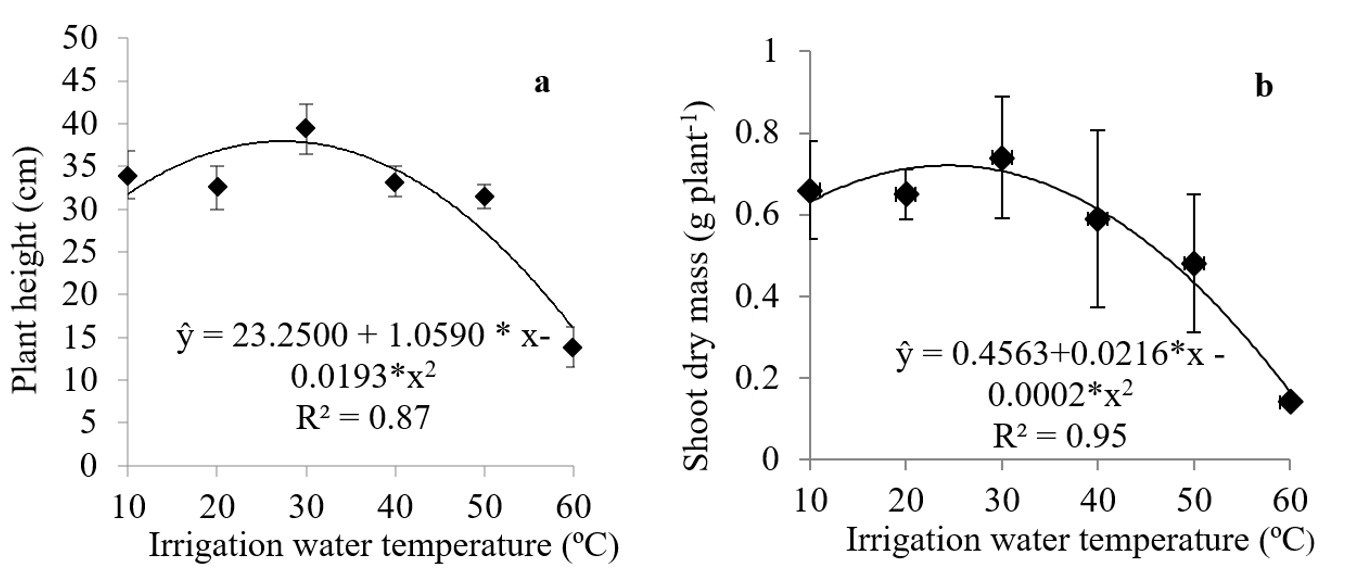
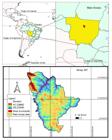
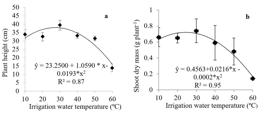
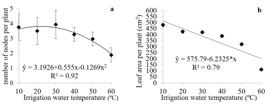
The aim of this study was to evaluate the influence of different temperatures of irrigation water applied directly to the soil on the initial growth of mung bean (Vigna radiata L.) seedlings. The experiment was conducted in a controlled environment inside a greenhouse located at the Federal University of Mato Grosso, Sinop Campus. The experiment took place from February 9 to March 31, 2023. The experimental design used was a randomized block design with four replications. The irrigation water temperatures applied were 10°, 20°, 30°, 40°, 50° and 60 °C, with a 3-day watering shift and 500 mL per pot. Plant height, stem diameter, leaf area, root dry mass, shoot dry mass and average chlorophyll were evaluated at 49 days after sowing at R7. Irrigation with a water temperature of 60 °C reduces the vegetative growth of the mung bean crop and at 10 °C increases the vegetative and root growth of the mung bean plants. The length of internodes, chlorophyll in old leaves, chlorophyll in new leaves and average chlorophyll did not have their averages altered by the different irrigation water temperatures. Water temperatures between 10 °C and 30 °C are recommended for use in irrigation in hot or tropical environments for mung bean (Vigna radiata L.) crops.
Keywords:
abiotic stress; vegetative growth; moyashi beans
 Thumbnail
 Thumbnail
 Thumbnail