 Effect of different irrigation water temperatures on the vegetative development of mung beans (Vigna radiata L.)
Abstract
The aim of this study was to evaluate the influence of different temperatures of irrigation water applied directly to the soil on the initial growth of mung bean (Vigna radiata L.) seedlings. The experiment was conducted in a controlled environment inside a greenhouse located at the Federal University of Mato Grosso, Sinop Campus. The experiment took place from February 9 to March 31, 2023. The experimental design used was a randomized block design with four replications. The irrigation water temperatures applied were 10°, 20°, 30°, 40°, 50° and 60 °C, with a 3-day watering shift and 500 mL per pot. Plant height, stem diameter, leaf area, root dry mass, shoot dry mass and average chlorophyll were evaluated at 49 days after sowing at R7. Irrigation with a water temperature of 60 °C reduces the vegetative growth of the mung bean crop and at 10 °C increases the vegetative and root growth of the mung bean plants. The length of internodes, chlorophyll in old leaves, chlorophyll in new leaves and average chlorophyll did not have their averages altered by the different irrigation water temperatures. Water temperatures between 10 °C and 30 °C are recommended for use in irrigation in hot or tropical environments for mung bean (Vigna radiata L.) crops.
Keywords:
abiotic stress; vegetative growth; moyashi beans
Resumo
O objetivo do trabalho foi avaliar a influência de diferentes temperaturas da água de irrigação aplicada diretamente ao solo sobre o crescimento inicial das plântulas da cultura do feijão-mungo (Vigna radiata L.). O experimento foi conduzido em ambiente controlado no interior de casa de vegetação localizada na Universidade Federal de Mato Grosso, Campus de Sinop. O período de realização do experimento foi de 09 de fevereiro a 31 de março de 2023. O delineamento experimental utilizado foi em blocos casualizados (DBC), com quatro repetições. As temperaturas da água de irrigação aplicadas foram 10°, 20°, 30°, 40°, 50° e 60 °C, com turno de rega de 3 dias e 500 mL por vaso. Avaliou-se aos 49 dias após semeadura em R7: a altura de plantas, diâmetro do caule, área foliar, massa seca de raiz, massa seca parte aérea e clorofila média. A irrigação com a temperatura da água a 60 °C reduz o crescimento vegetativo da cultura do feijão-mungo e à 10 °C aumenta o crescimento vegetativo e radicular das plantas de feijão-mungo. O comprimento de entrenós, clorofila nas folhas velhas, clorofila nas folhas novas e clorofila média não tiveram suas médias alteradas pelas diferentes temperaturas de água de irrigação. As temperaturas de água entre 10 °C e 30 °C são recomendadas para o uso em irrigação em ambientes quentes ou tropicais para a cultura do feijão-mungo (Vigna radiata L.).
Palavras-chave:
estresse abiótico; crescimento vegetativo; feijão moyashi
1. Introduction
In the state of Mato Grosso, priority has been given to the soybean and corn production system, which can favor the cycle of diseases caused by fungi and the incidence of pests. To avoid losses, producers are advised to rotate their crops and one valid option is to sow mung beans in the second crop. The production of mung beans is interesting in Brazil and more specifically in Mato Grosso, due to some characteristics of the plant such as relatively drought-tolerant, low-input crop, and short growth cycle (70 days or so) (Hou et al., 2019). Beyond the crop cycle, the possibility of sowing right after the corn sowing window, making it possible to use mechanized harvesting with the use of the soybean harvesting platform.
Furthermore, the grain is known to be an excellent source of proteins, dietary fiber, minerals, vitamins and significant amounts of bioactive compounds, including polyphenols, polysaccharides and peptides, a healthy food, which improves hyperglycemia, hyperlipidemia and hypertension, in addition to preventing cancer and melanogenesis (Hou et al., 2019).
It is known that the ideal atmospheric temperature for cultivation is 20 and 22 °C. It requires balanced precipitation and, due to the climate, the pods can ripen irregularly between 46 and 70 days after planting, depending on the genotype and, mainly, the climatic conditions (Vieira et al., 2003). Suitable water levels are between 50 and 70% of the soil's field capacity (Pereira et al., 2019).
Although the ideal atmospheric conditions for mung bean cultivation are relatively well known, little is known about the ideal temperature for growing plants in general (Taiz e Zeiger, 2017). Soil temperature is directly related to the temperature of the environment as a whole. It is known that in extreme weather events, in the first or second harvest, daytime air temperatures can exceed 30 °C, resulting in soil temperatures above 40 °C (Nasser et al., 2020). Temperature conditions above the ideal cause reductions in plant growth and development, with a consequent drop in productivity (Confalone et al., 2010).
Another factor that interferes with soil temperature is the temperature of the water that reaches the soil, such as precipitation (rain) and water applied through irrigation.
Pereira et al. (2021) found, during the irrigation of common bean plants, water applied to the soil at 30 °C was the one that most increased vegetative growth, and both at 10 °C and 40 °C there was a reduction in plant development. For soybean cultivation, it is worth noting that the water at the time of irrigation should be between 10 and 30 °C, and that at 40 °C a reduction in soybean development begins (Pereira and Sampaio, 2024).
Thermal stress in the soil is a present condition for crops in the mid-northern regions of the state of Mato Grosso. In the face of increasingly frequent extreme weather events, whether for first or second crop seasons, daytime air temperatures can exceed 30 °C, resulting in soil temperatures exceeding 40 °C (Nasser et al., 2020). Above-optimal temperature conditions cause reductions in plant growth and development with a consequent drop in productivity. (Confalone et al., 2010).
In this context, it is important to carry out experiments that evaluate factors such as the temperature of the water after the seeds have sprouted. The aim of this study was to evaluate the influence of different temperatures of irrigation water applied directly to the soil on the initial growth of mung bean (Vigna radiata L.) seedlings.
2. Material and Methods
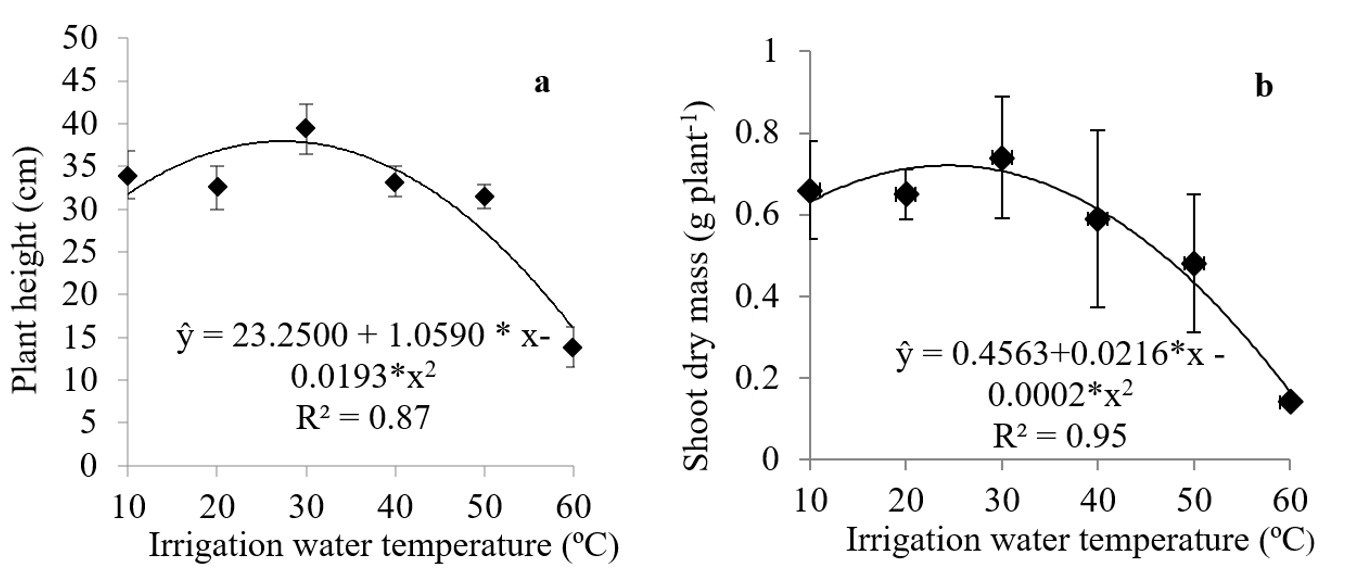
The experiment was conducted in a greenhouse at the Federal University of Mato Grosso, Sinop campus, in the state of Mato Grosso, Brazil. The municipality of Sinop is in the mid-northern region of Mato Grosso, at latitude 11°98' S and longitude 55°56' W, at an altitude of 384 m (Figure 1). The greenhouse where the study was carried out was air-conditioned with a controlled temperature of 25.8 °C and relative humidity of 60%.
The experiment was carried out in polyethylene pots with a capacity of 3 dm3, with two plants per pot, using subsoil from the 20 to 40 cm depth layer as the substrate. The soil was classified as a dystrophic Yellow Red Latosol (Santos et al., 2018). Before setting up the experiment, a 500 g sample of soil was taken for physico-chemical analysis (Table 1). The soil was also sterilized in an autoclave before use.
Results of the physical-chemical analysis of the soil used in the experiment with mung beans (Vigna radiata L.), Sinop, Mato Grosso.
After the analysis, the soil was corrected by applying a dose proportional to 2 tons ha-1 of calcitic limestone (filler), with the aim of achieving a base saturation value (V%) of 70%. Before setting up the experiment, the corrected soil was irrigated daily for 30 days to allow the chemical reactions of soil correction to take place.
The statistical design used was a randomized block design with 4 replications. The treatments consisted of six different irrigation water temperatures: 10, 20, 30, 40, 50 and 60 °C. The watering shift was every 3 days and the irrigation rate was 500 milliliters (mL) per pot. The Irrigation was applied to the amount of water needed to reach the soil's field capacity, determined by the gravimetric determination method, measured by (Souza et al., 2002).
When we prepared the treatments, temperatures below 20 °C were obtained by cooling the water in a freezer. For treatments with temperatures above 30 °C, a heating coil was used. A properly calibrated digital thermometer was used to measure the temperature. The experiment was evaluated from February 9 to March 30, 2023.
The cultivar sown in the experiment was 'Cristal', the most widely used by farmers in the north of Mato Grosso. After sowing, top dressing was applied with a dose per pot proportional to 100 kg ha-1 of P, from the source of simple superphosphate, 100 kg ha-1 of K in the form of potassium chloride (Costa et al., 2023) and 30 kg ha-1 of N in the form of urea (Silva et al., 2010).
Sowing was carried out using a total of 5 seeds per pot, at a depth of 3 cm. Immediately after sowing, the water treatments were started at different temperatures. As it was in a greenhouse, there were no problems with insects and/or diseases, so it was not necessary to use pesticides during the crop's development. Weeds were controlled by weeding.
At 49 days after sowing (DAS), the following variables were assessed: plant height (H), stem diameter (SD), leaf area (LA), root dry mass (RDM), shoot dry mass (SDM), total dry mass (TDM), internode length (IL), number of nodes (Nnodes), chlorophyll in fully expanded leaves (CloFV), chlorophyll in growing leaves (CloFN) and average chlorophyll (CLO).
The chlorophyll values in the leaves were assessed using a ChlorofiLOG® meter. Clo FV was obtained by taking 3 sample points on the oldest trefoils of the plant, on the underside of the plants. To measure CloFN, values were obtained from 3 points in the “youngest” trifolia or near the top of the plants. The CloFV and CloFN measurements were used to obtain the CLO (average of the sum of CloFV and CloFN).
The H variable was obtained by measuring the height of the two plants in the pots. The measurement was made using a tape measure graduated in centimeters (cm), measuring the values from ground level to the apical point of the plants. After the measurements, the average height was obtained with values expressed in cm. The SD was assessed using a digital caliper, measuring the stems of the plants at approximately 2 cm from the ground and the results were expressed in mm plant-1.
After the field measurements, the plants were cut off close to the ground, packed in kraft paper bags and taken to the laboratory next to the greenhouse. In the laboratory, the leaves of the plants were detached and counted, obtaining the number of leaves plant-1 and the number of nodes plant-1. The leaf area in m2 was then obtained using a leaf area integrator model LI-3010 (Li-Cor, Biosciences Inc., Nebraska, USA). Finally, the leaf samples were placed back in kraft paper bags and taken to a forced-air oven at 60 °C until constant weight, to obtain the SDM.
The roots of the plants were carefully removed by washing in running water. They were then stored separately in kraft paper bags and placed in a forced-air circulation oven for 72 hours at 65 °C to obtain the RDM . The sum of the RDM and SDM values gave the TDM.
The data was tabulated and submitted to analysis of variance using the F test at a 5% probability of error level, using the SISVAR statistical software (Ferreira, 2011). The quantitative variables were subjected to regression analysis and the best model was chosen based on the significance of the regression coefficients and the variation explained by the model. The qualitative variables were compared using the Tukey test at 1 and 5% error probability.
3. Results
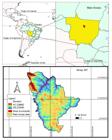
There was a statistically significant difference in the temperature of the water applied to Vigna radiata plants in the parameters H, SDM, RDM and TDM evaluated (Table 2), making it possible to fit regression models (Figures 2a-d). Among the six different irrigation water temperatures evaluated, the temperature of 30 °C provided the best conditions for growth in H, with an observed average of 0.4 meters. Plants irrigated with water at temperatures of 10, 20, 40 and 50 °C had an average H of approximately 0.3 meters. Plants irrigated at 60 °C had a reduced growth rate, reaching an H of 0.15 meters at the end, until the evaluation at stage R5. Reduction of H by 50%.
Summary of analysis of variance of the traits: plant height (H), stem diameter (SD), shoot dry mass (SDM), root dry mass (RDM) and total dry mass (TDM) of green mung bean plants under six different irrigation water temperatures.
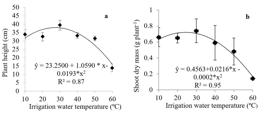
Plant height (a) and shoot dry mass (b) of the mung bean crop (Vigna radiata L.) grown under different irrigation water temperatures.
About TDM, there was a decreasing linear effect with increasing irrigation water temperature. The highest value occurred in the treatment irrigated at 10 °C, close to 0.6 grams plant-1. Starting at 10 °C, for every 1 °C increase in water temperature, there was a reduction of 0.0813g in the dry mass of the roots plant-1. When water was supplied at 60 °C, there was a reduction in RDM of 0.1g plant-1. In other words, this condition contributed to an 83% reduction in RDM, clearly showing that water at this temperature impairs the development of the root system and aerial part. Reductions in RDM resulted in reductions in SDM.
The CNOS, CloFV, CloFN and CLO parameters did not have their averages altered by the different irrigation water temperatures (damage not shown), (Table 3) so it was not possible to fit regression models. However, Nnodes was significantly altered by the temperature of the irrigation water (Table 3). The highest values were observed in plants subjected to the effects of heat stress with water at a temperature of 30 °C. In this condition, average values of approximately 3.9 nodes were found. The number of nodes per plant had an increasing quadratic behavior with the averages of plants with root systems submitted to temperatures of 10 °C and 20 °C reaching values like those seedlings with the effects of stress at 30 °C. As soon as water at 40 °C was supplied to the root system for thermal stress purposes, there were reductions in morphological differentiation in Nnodes, with the lowest value observed in the treatment with water temperature at 60 °C, reaching average values of 2 nodes per plant, i.e. reductions of 49% in relation to the thermal stress treatment at 30 °C (Figure 3a).
Summary of analysis of variance of the traits, length of inter-nodes (CNOS); number of nodes (Nº Nodes), chlorophyll in old leaves (Clo FV); chlorophyll in new leaves (Clo FN), chlorophyll mean (CLO), leaf area per plant (LA) l of green mung bean plants under six different irrigation water temperatures.
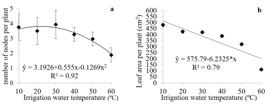
Number of nodes (a) and leaf area per plant (b) of the mung bean crop (Vigna radiata L.) grown under different irrigation water temperatures.
Plants subjected to increasing water temperatures showed leaf area development responses with decreasing linear behavior. The highest values were observed under water temperature conditions of 10 °C, with an average leaf area of almost 500 cm2 plant-1. Starting with water supplied at 10 °C, every 1 °C increase reduced the leaf area of the plants by 6.23 cm2. For the treatments supplied with water at temperatures between 20 °C and 30 °C, the average leaf area was 425 cm2. At 40 °C, an average of 400 cm2 plant-1 leaf area was observed, and for temperatures of 50 °C the observed leaf area was 350 cm2 plant-1 (Figure 3b). Supplying water at 60 °C resulted in the lowest leaf area values. For this condition, the average leaf area per seedling was 100 cm2, with a 75% reduction in leaf area when compared to the effect of heat stress with water at 10 °C.
4. Discussion
Data analysis revealed that irrigation water temperature significantly influenced the evaluated parameters (H, SDM, RDM and TDM), allowing the adjustment of regression models. The temperature of 30 °C favored plant growth, with an average of 0.4 meters in H, while temperatures of 10, 20, 40 and 50 °C resulted in averages of 0.3 meters, there is 25% reduction in plant height. However, at 60 °C, growth was substantially reduced, indicating that this temperature is limiting and causes thermal stress in the root system from the beginning of plant development.
Plants subjected to high temperatures, either due to direct incidence of solar radiation or due to an increase in the temperature of irrigation water, suffered the effects of heat stress on the root system, which consequently reduced SDM (Figures 1b and 1c). Mishra et al. (2023) identified similar effects for several plant species grown under heat stress, which tends to directly reduce RDM and overall plant growth, as heat stress damages the membrane systems of the cells of the root system. This damage is responsible for causing a reduction in the root transport water flow, affecting nutrient absorption and, as a consequence, a reduction in photosynthetic activities for dry matter accumulation. Another factor that can be highlighted is the damage caused by the destabilization of key enzymes required for nutrient assimilation at any stage of plant development. Barros et al. (2021) observed in cowpea plants cv. BRS Rouxinol that cultivation under a higher air temperature regime (24.8-30.8-37.8 °C) led to a reduction of 31.73 g in root dry mass in plants under full irrigation (100%), when compared to the temperature of 20-26-33 °C. In addition, the authors also highlight the increase in oxidative stress with lack of synchrony in the antioxidant defense system, with the increase in air temperature by 4.8 °C.
As observed, RDM showed a decreasing linear effect with increasing irrigation water temperature. The highest value was observed at 10 °C (0.6 g per plant), and with each increase of 1 °C, there was a reduction of 0.0813 g in RDM. At 60 °C, the RDM fell by 83%, indicating that higher temperatures damage both the root system and the aerial part of the plants. The increase in temperature in the root zone has a direct impact on root development, affecting the absorption and transportation of water and nutrient absorption (Alli and Omofunmi, 2021). In addition, the increase in temperature results in changes in the carbon balance, reducing the ratio of CO2 and O2 concentrations and favoring the oxygenation activity of Rubisco (Barros et al., 2021). This process increases photorespiration and reduces photosynthesis, compromising plant growth and development, since photorespiration is often considered a waste with a consequent reduction in biomass (Fernie and Bauwe, 2020). The reductions observed in this study were more drastic under conditions of severe heat stress (60 °C), i.e. the more limited the root system, the lower the morphological development of the aerial part. As expected, reductions in the root system cause limitations in the flow of water and nutrients for the physiological functions of the aerial part. Gonzalez-Garcia et al. (2023), studying the effect of temperature changes on the root system of Arabidopsis thaliana ecotype Columbia and Solanum lycopersicum var. Moneymaker, found responses that alter the functionality of the plants, such as severe reductions in cell division in the root meristems.
In general, when plants are subjected to the effects of abiotic stress, they suffer morphophysiological damage which induces yield losses. As can be seen in Figure 1d, the drop in TDM accumulation followed the same response to heat stress in relation to the root system. Also, greater damage to the root system was expected due to it being the site of the direct effect of the stress treatments, and because it is an organ that is more sensitive to high temperatures than the aerial part, as the root system requires lower temperatures than the air temperature. Damage to the root system induced reductions in SDM and TDM, compromising the biomass production of these plants. Angelotti et al. (2020) observed that high temperatures prolonged the vegetative stage of cowpea plants of the BRS Pujante cultivar and resulted in flower abortion. According to Tongerlo et al. (2021), Rising temperatures accelerate the rate of new leaf formation, excessive temperatures significantly reduce the accumulation of leaf and root biomass.
According to the results, although CNOS, CloFN, CloFV and CLO did not show statistically significant differences when fitting the regression equations (damage not observed) as a function of the different irrigation water temperatures, Nnodes was significantly influenced by the treatments applied. Pereira et al. (2021) studying a similar effect on common bean plants observed that irrigation with water at a temperature of 30 °C led to the highest chlorophyll levels. The authors also observed that irrigation water above 40 °C reduced total chlorophyll levels. It should be noted that the common bean belongs to the Phaseolus genus, which is very sensitive to water stress and changes in ambient temperature. In contrast, the genus Vigna, as a plant widely cultivated in northeastern Brazil, with many genotypes tolerant to drought and moderately tolerant to saline stress (Gomes Filho et al., 2019). In addition, mung bean is a species that achieves its greatest development in soils with small deficits and is usually more tolerant to various types of environmental stress (Pereira et al., 2019).
The Nnodes parameter is indicative of the growth behavior of the aerial part, due to the cell division activities of the apical meristem of the stem, as well as the duration of the plant development cycle, photoperiod and N assimilation and preventing an increase in the root - aerial part ratio (Zoffoli et al., 2021). In this respect, plants irrigated with water at 30 °C had the highest number of nodes, with an average of 3.9 nodes. The number of nodes increased quadratically with temperatures of 10 °C and 20 °C, approaching 30 °C. At 40 °C, reductions began to occur, with the lowest number of nodes observed at 60 °C (2 nodes), representing a 49% reduction compared to 30 °C.
The LA of the mung bean plants was altered as the temperature of the irrigation water varied, showing the effects of heat stress on the individuals. Plants subjected to increasing temperatures showed leaf area development with a decreasing linear behavior. The highest values were observed under water temperature conditions of 10 °C (500 cm2 plant-1). He et al. (2016) observed that the effects of heat stress on the root system are responsible for a decrease in photosynthetic activity and biomass gains. The authors also mention that the most damaging effects of heat stress on the root zone of plants are damage to membranes, a decrease in biomass, denaturation of proteins, a decrease in protein concentration and inactivation of enzymes specific to photosynthesis and respiratory metabolism. At 60 °C (100 cm2 plant-1), the results show that the potential of the leaf area to carry out photosynthetic activities is limited.
Leaf area correlates with the photosynthetic and transpiration activities of plant species, since it reflects the plant's ability to intercept radiation and perform gas exchange. In extreme temperature conditions, the plant can close its stomata and thus reduce carbon assimilation, consequently impairing photosynthesis and reducing leaf area (Mao et al., 2023). Leaf area is therefore an important indicator of crop productivity.
Irrigation water at temperatures above 30 °C can be considered a stressful condition for plants. The results found in this study reveal that thermal stress, when applied directly to the root system of young plants, negatively affects growth, dry mass accumulation and leaf area.
It can be seen in the results that these reductions occurred due to the limitations of the root system in acquiring nutrients from the soil for better physiological performance of the aerial part of these plants, results also verified previously (Gonzalez-Garcia et al., 2023). RDM was reduced due to reduced root volume, and smaller root volumes result in a lower capacity to exploit the soil with less water flow causing limitations to the photosynthetic system. Mishra et al. (2023) identified that among the negative points for the root system under these conditions, reductions in root growth and nutrient absorption rates by plants are the result of cell damage induced by thermal stress in the root. Damage of this nature induces a decline in root growth and in the general concentration of proteins, including the reduction of proteins responsible for the absorption and assimilation of nutrients.
5. Conclusion
Irrigation with water at 10 °C provides mung beans with the best conditions for root and vegetative growth.
Irrigation with water at a temperature of 60 °C reduces vegetative growth.
The application of water for irrigating of (Vigna radiata) plants, must be at a temperature between 10 °C and 30 °C, which can be considered ideal for use in irrigation in hot or tropical areas for mung bean crops.
Acknowledgements
The authors would like to thank the Federal Rural University of Amazonia (UFRA), the Federal University of Mato Grosso (UFMT), and the financial support of the Institute of Agricultural and Environmental Sciences of the Sinop University Campus (ICAA/CUS/UFMT), which made this publication possible.
Data Availability Statement
The research data are only available upon request to the corresponding author.
References
- ALLI, A.A. and OMOFUNMI, O.E., 2021. A review of soil temperature under a controlled irrigation system. Journal of Research in Forestry, Wildlife and Environment, vol. 13, no. 1, pp. 50-59.
-
ANGELOTTI, F., BARBOSA, L.G., BARROS, J.R.A. and DOS SANTOS, C.A.F., 2020. Cowpea development under different temperatures and carbon dioxide concentrations. Pesquisa Agropecuária Tropical, vol. 50, no. 1, e59377. http://doi.org/10.1590/1983-40632020v5059377
» http://doi.org/10.1590/1983-40632020v5059377 -
BARROS, J.R.A., GUIMARÃES, M.J.M., SILVA, R.M., SIMÕES, W.L., MELO, N.F. and ANGELOTTI, F., 2021. Production and biochemical responses of cowpeaunder thermal and water stress. Agrária, vol. 16, no. 2, e8599. http://doi.org/10.5039/agraria.v16i2a8599
» http://doi.org/10.5039/agraria.v16i2a8599 -
CONFALONE, A.E., BERNARDES, M., COSTA, L.C., RIGHI, C.A., DOURADO NETO, D., MARTIN, T.N., MANFRON, P.A. and PEREIRA, C.R., 2010. Expolinear model on soybean growth in Argentina and Brazil. Ciência Rural, vol. 40, no. 5, pp. 1009-1016. http://doi.org/10.1590/S0103-84782010000500002
» http://doi.org/10.1590/S0103-84782010000500002 -
COSTA, K.S., OLIVEIRA, C.F., MELO, M.P., LIMA, H.C., FERREIRA, R.L.C., MELO, N.C., MORAESA, K.C., CRUZ, F.J.R., SOUZA, L.C. and NASCIMENTO, V.R., 2023. Growth and production of cowpea beans under potassium doses in soil of cerrado in Amapá, Brazil. Brazilian Journal of Biology = Revista Brasileira de Biologia, vol. 83, e273777. http://doi.org/10.1590/1519-6984.273777 PMid:37970900.
» http://doi.org/10.1590/1519-6984.273777 -
FERNIE, A.R. and BAUWE, H., 2020. Wasteful, essential, evolutionary stepping stone? The multiple personalities of the photorespiratory pathway. The Plant Journal, vol. 102, no. 4, pp. 666-677. http://doi.org/10.1111/tpj.14669 PMid:31904886.
» http://doi.org/10.1111/tpj.14669 -
FERREIRA, D.F., 2011. Sisvar: a computer statistical analysis system. Ciência e Agrotecnologia, vol. 35, no. 1, pp. 1039-1042. http://doi.org/10.1590/S1413-70542011000600001
» http://doi.org/10.1590/S1413-70542011000600001 -
GOMES FILHO, A., RODRIGUES, E.N., RODRIGUES, T.C., SANTOS, V.J.N., ALCÂNTARA, S.F. and DE SOUZA, F.N., 2019. Estresse hídrico e salino na germinação de sementes de feijão caupi cv. BRS pajeú. Colloquium Agrariae, vol. 15, no. 4, pp. 60-73. http://doi.org/10.5747/ca.2019.v15.n4.a312
» http://doi.org/10.5747/ca.2019.v15.n4.a312 -
GONZALEZ-GARCIA, M.P., CONESA, C.M., LOZANO-ENGUITA, A., BACA-GONZALEZ, V., SIMANCAS, B., NAVARRO, N.S., BERMUDEZ, M.S., GONZALEZ, I., CARO, E., CASTRILLO, G. and DEL POZO, J.C., 2023. Temperature changes in the root ecosystem affect plant functionality. Plant Communications, vol. 4, no. 3, pp. 100514. http://doi.org/10.1016/j.xplc.2022.100514 PMid:36585788.
» http://doi.org/10.1016/j.xplc.2022.100514 -
HE, J., SEE, X.E., QIN, L. and CHOONG, T.W., 2016. Effects of root-zone temperature on photosynthesis, productivity and nutritional quality of aeroponically grown salad rocket (Eruca sativa) vegetable. American Journal of Plant Sciences, vol. 7, no. 14, pp. 1993-2005. http://doi.org/10.4236/ajps.2016.714181
» http://doi.org/10.4236/ajps.2016.714181 -
HOU, D., YOUSAF, L., XUE, Y., HU, J., WU, J., HU, X., FENG, N. and SHEN, Q., 2019. Mung bean (Vigna radiata L.): bioactive polyphenols, polysaccharides, peptides, and health benefits. Nutrients, vol. 11, no. 6, pp. 1238. http://doi.org/10.3390/nu11061238 PMid:31159173.
» http://doi.org/10.3390/nu11061238 -
MAO, J., LUO, Y., JIN, C., XU, M., LI, X. and TIAN, Y., 2023. Response of leaf photosynthesis–transpiration coupling to biotic and abiotic factors in the typical desert shrub Artemisia ordosica. Sustainability, vol. 15, no. 13, pp. 10216. http://doi.org/10.3390/su151310216
» http://doi.org/10.3390/su151310216 -
MISHRA, S., SPACCAROTELLA, K., GIDO, J., SAMANTA, I. and CHOWDHARY, G., 2023. Effects of heat stress on plant-nutrient relations: an update on nutrient uptake, transport, and assimilation. International Journal of Molecular Sciences, vol. 24, no. 21, pp. 15670. http://doi.org/10.3390/ijms242115670 PMid:37958654.
» http://doi.org/10.3390/ijms242115670 -
NASSER, M.D., BARDIVIESSO, E.M., AGUILAR, A.S. and ZONTA, A., 2020. Soil temperature and agronomic implications in two regions of the State of São Paulo, Brazil. Scientia Agrária Paranaensis, vol. 19, no. 1, pp. 12-17. http://doi.org/10.18188/sap.v19i1.22578
» http://doi.org/10.18188/sap.v19i1.22578 -
PEREIRA, C.S., OLIVEIRA, D., FIORINI, I.V.A. and SILVA, A.A., 2021. Diferentes temperaturas de água de irrigação na cultura do feijoeiro. Tecnologica, vol. 25, no. 2, pp. 279-284. http://doi.org/10.17058/tecnolog.v25i2.15924
» http://doi.org/10.17058/tecnolog.v25i2.15924 -
PEREIRA, C.S., VILLA-NETO, R.D., FIORINI, I.V.A., DA SILVA, A.A. and TAVANTI, R.R., 2019. Doses de nitrogênio e níveis de irrigação em feijão mungo (Vigna radiata L.). Tecnologica, vol. 23, no. 1, pp. 63-69. http://doi.org/10.17058/tecnolog.v23i1.12512
» http://doi.org/10.17058/tecnolog.v23i1.12512 -
PEREIRA, S.C. and SAMPAIO, P.C., 2024. Diferentes temperaturas da água de irrigação na cultura da soja. Scientific Electronic Archives, vol. 17, no. 1, pp. 22-27. http://doi.org/10.36560/17120241840
» http://doi.org/10.36560/17120241840 - RAIJ, B.V., ANDRADE, J.C., CANTARELLA, H. and QUAGGIO, J.A., 2001. Análise química para avaliação da fertilidade de solos tropicais. 1. ed. Campinas: Instituto Agronômico, 285 p.
- SANTOS, H.G., JACOMINE, P.K.T., ANJOS, L.H.C., OLIVEIRA, V.A., LUMBRERAS, J.F., COELHO, M.R., ALMEIDA, J.A., ARAÚJO FILHO, J.C., OLIVEIRA, J.B. and CUNHA, T.J.F., 2018. Sistema brasileiro de classificação de solos. 5. ed. Brasília: EMBRAPA, 356 p.
-
SILVA, A.J., UCHÔA, S.C.P., ALVES, J.M.A., LIMA, A.C.S., SANTOS, C.S.V., OLIVEIRA, J.M.F. and MELO, V.F., 2010. Resposta do feijão-caupi à doses e formas de aplicação de fósforo em Latossolo Amarelo do Estado de Roraima. Acta Amazonica, vol. 40, no. 1, pp. 31-36. http://doi.org/10.1590/S0044-59672010000100004
» http://doi.org/10.1590/S0044-59672010000100004 -
SOUZA, C.C., OLIVEIRA, F.A., SILVA, I.F. and AMORIM NETO, M.S., 2002. Avaliação de métodos de determinação de água disponível em solo cultivado com algodão. Pesquisa Agropecuária Brasileira, vol. 37, no. 3, pp. 337-341. http://doi.org/10.1590/S0100-204X2002000300015
» http://doi.org/10.1590/S0100-204X2002000300015 - TAIZ, L. and ZEIGER, E., 2017. Fisiologia vegetal. 6. ed. Porto Alegre: Artmed, 888 p.
-
TONGERLO, V.E., IEPEREN, V.W., DIELEMAN, J.A. and MARCELIS, L.F.M., 2021. Vegetative traits can predict flowering quality in Phalaenopsis orchids despite large genotypic variation in response to light and temperature. PLoS One, vol. 16, no. 5, e0251405. http://doi.org/10.1371/journal.pone.0251405 PMid:33974639.
» http://doi.org/10.1371/journal.pone.0251405 -
VIEIRA, R.F., OLIVEIRA, V.R. and VIEIRA, C., 2003. Cultivo do feijão-mungo-verde no verão em Viçosa e em Prudente de Morais. Horticultura Brasileira, vol. 21, no. 1, pp. 555-558. http://doi.org/10.1590/S0102-05362003000100008
» http://doi.org/10.1590/S0102-05362003000100008 -
ZOFFOLI, B.C., BRITO, L.F., STRALIOTTO, R. and DE ARAÚJO, A.P., 2021. Early nitrogen supplementation stimulates the nodulation and growth of common bean plants inoculated with rhizobium. Acta Scientiarum. Agronomy, vol. 43, pp. 1-13. http://doi.org/10.4025/actasciagron.v43i1.55105
» http://doi.org/10.4025/actasciagron.v43i1.55105
Edited by
-
Editor:
Takako Matsumura Tundisi