 Investigating farmers' preferences for rapeseed sales contracts in Iran
Abstract
Contract farming has gained popularity in recent years. Understanding farmers' preferences for contracts can help make contracts more sustainable and profitable. Therefore, the present study aimed to investigate farmers' preferences for rapeseed sales contracts in Iran. Farmers' preferences were examined using a choice experiment and conditional logit models. The statistical population was rapeseed farmers in Mazandaran province and the required data were obtained through questionnaire completion. The results showed that the attributes of input supply, the existence of incentives, pricing method, provision of technical and consulting services, and price all having a positive and significant effect on farmers' preference for choosing a farming contract. However, the attribute of contract duration has a negative and significant effect on farmers' preference for choosing farming contracts. Aligning contract conditions with farmers' preferences helps design more effective and equitable contractual arrangements, maximize farmers' profits, and ultimately contribute to agricultural and rural development.
Keywords:
choice experiment; conditional logit; contract farming; Farmers' preferences; rapeseed farmers
Resumo
A agricultura contratual ganhou popularidade nos últimos anos. Compreender as preferências dos agricultores por determinados contratos pode ajudar a torná-los mais sustentáveis e lucrativos. Portanto, o presente estudo teve como objetivo investigar as preferências dos agricultores por contratos de venda de colza no Irã. As preferências dos agricultores foram examinadas usando um experimento de escolha e modelos logit condicionais. A população estatística foi composta por produtores de colza na província de Mazandaran e os dados necessários foram obtidos por meio do preenchimento de um questionário. Os resultados mostraram que os atributos de fornecimento de insumos, a existência de incentivos, o método de precificação, a prestação de serviços técnicos e de consultoria, e o preço tiveram um efeito positivo e significativo na preferência dos agricultores em escolher um contrato agrícola. Entretanto, o atributo de duração do contrato tem um efeito negativo e significativo na preferência dos agricultores pela escolha de contratos agrícolas. Alinhar as condições do contrato com as preferências dos agricultores ajuda a criar acordos contratuais mais eficazes e equitativos, maximizar os lucros dos agricultores e, em última análise, contribuir para o desenvolvimento agrícola e rural.
Palavras-chave:
experimento de escolha; logit condicional; agricultura contratual; preferências dos agricultores; produtores de colza
1. Introduction
Despite the great potential of the agricultural sector in terms of GDP and employment, this sector faces fundamental challenges and numerous bottlenecks regarding rural poverty, food security, and the global food value chain (Devlet, 2021). Agrifood value chains in developing countries continue to undergo rapid transformation due to increasing incomes, urbanization, and consumer consciousness in food quality and safety (Abdul-Rahaman and Abdulai, 2020). Social concerns and food market changes have identified vertical coordination as a development strategy to strengthen the performance of the agri-food value chain (Widadie, 2022). Accordingly, contract farming, as a form of vertical coordination in agricultural production, aims to strengthen and manage the agricultural production chain, eliminate the shortage of strategic products, and ensure food security (Ba et al., 2019). Contract farming can play a key role in improving the livelihoods of smallholders. Particularly in developing and emerging economies, such contracts can help overcome market failures when marketing produce (Kopp et al., 2024).
Contract farming can be defined as an agreement between farmers (sellers) and companies (buyers) in advance about the terms and conditions of production and marketing of agricultural and food products. These conditions specify the price, quantity, quality, delivery time, transportation, and inputs such as seeds, pesticides, fertilizers, and technical advice provided by the company (Dubbert et al., 2023). Contract farming comes in many forms and can include a wide range of commitments regarding price paid, contract length, and input supply levels (Mugwagwa et al., 2020). Increasing diversity in contracting organizations, nature of contracts, crops, types of farmers, and socio-economic environment can help increase contractual arrangements (UNIDROIT, 2015). Ruml et al. (2022) point out that most studies evaluate the effects of one type of contract in a specific situation, ignoring that a different type of contract in the same situation may have different effects. Ochieng et al. (2017) believe that differences in contract attributes may play a role in the profitability of agricultural activity. Furthermore, Bougherara et al. (2021) also stated that contract attributes influence farmers' acceptance decisions. Indeed, since most of these measures are voluntary, their success depends on farmers' genuine willingness to participate. Schaub et al. (2023) found that farmers' willingness to engage in Agri-environmental schemes is strongly influenced by their perceptions, resources, and available alternatives—all of which are influenced by behavioral factors and opportunity costs.
The primary prerequisite for any investment in contract farming should be that it is likely to be profitable (Meena et al., 2022). For farmers to give up their marketing independence and side sales, they must earn significant profits (Liang et al., 2023). Indeed, contract farming arrangements should provide clear incentives to farmers to remain in the contract over time (Ton et al., 2017). Although it has been found that contract farming can potentially increase the welfare of smallholder farmers, there is evidence of high contract abandonment rates in contract farming schemes in developing countries (Ruml and Qaim, 2020). Evidence collected in both Europe and the United States also shows that farmers are reluctant to participate in these programs (Lapierre et al., 2023) because the proposed plans pay less attention to farmers' preferences.
Ensuring that farmers' preferences are taken into account is crucial for designing effective agricultural contracts (Schulze et al., 2024), and understanding smallholder farmers’ preferences for contracts can help make contracts more sustainable (Widadie et al., 2021). This situation has stimulated research on farmers' acceptance of different policy mechanisms, which leads to more efficient policy design and better alignment of policy instruments with stakeholders' preferences (Lienhoop & Schröter-Schlaack, 2018). Therefore, knowledge of farmers’ preferences for agricultural contracts is essential to discuss potential policy improvements using heterogeneity (Junaidi et al., 2023).
Currently, in Iran, contract farming for crops such as wheat and barley is supported by the government (Darakeh et al., 2021). Another product that has recently received attention is oilseeds, including rapeseed, which has been emphasized since 2014 (Shahnavazi, 2021). In this regard, the contract cultivation program for the 2023-2024 crop year has targeted at least 49,164 hectares of contracted rapeseed cultivation; however, statistics from the Iranian Ministry of Agriculture show that its realization is only 2 percent. In Mazandaran Province, only 10 percent of the 3,219 hectares of targeted cultivated area for contracted rapeseed cultivation has been achieved (Farhadi et al., 2024). The pathology report on contract farming conducted by the Iranian Ministry of Agriculture (2024) found that the implementation of contract farming in the 2023-2024 crop year was accompanied by challenges; the intended goals were not only not achieved, but the number of contracts signed and the area under cultivation allocated to contract farming decreased this year compared to last year. The lack of motivation for agricultural companies to participate in implementing the plan and the lack of special economic incentives for farmers are among the challenges on the path to achieving contract farming goals.
Farmers will only participate in contract farming if there is an expected benefit in doing so (Ncube, 2020). Similarly, companies choose contract farming when the expected benefits from the contract outweigh the benefits of alternatives, such as purchasing on the cash market or producing on dedicated farms. The key to reaching contract compliance is to design contracts that involve considerable incentives for both parties to maintain the relationship and not jeopardize future transactions by opportunistic behavior (Fischer and Wollni, 2018). This research aimed to investigate farmers' preferences regarding rapeseed sales contracts in Iran. Promoting and implementing contract farming on a large scale in Iran requires information on the determinants that influence farmer participation and, consequently, the inclusiveness of contract farming. Hence, it is essential to understand farmers' preferences for contract schemes and design contracts that take into account farmers' preferences. This understanding is an important tool for development policies that aim to build sustainable farmer-buyer relationships and encourage farmers' participation in value chains. Moreover, farmers' acceptance of the contract can be improved by aligning the contract design attributes with farmers' preferences. This alignment will help design more effective and fairer contractual arrangements, maximize farmers' profits, and ultimately contribute to agricultural and rural development.
2. Research Area
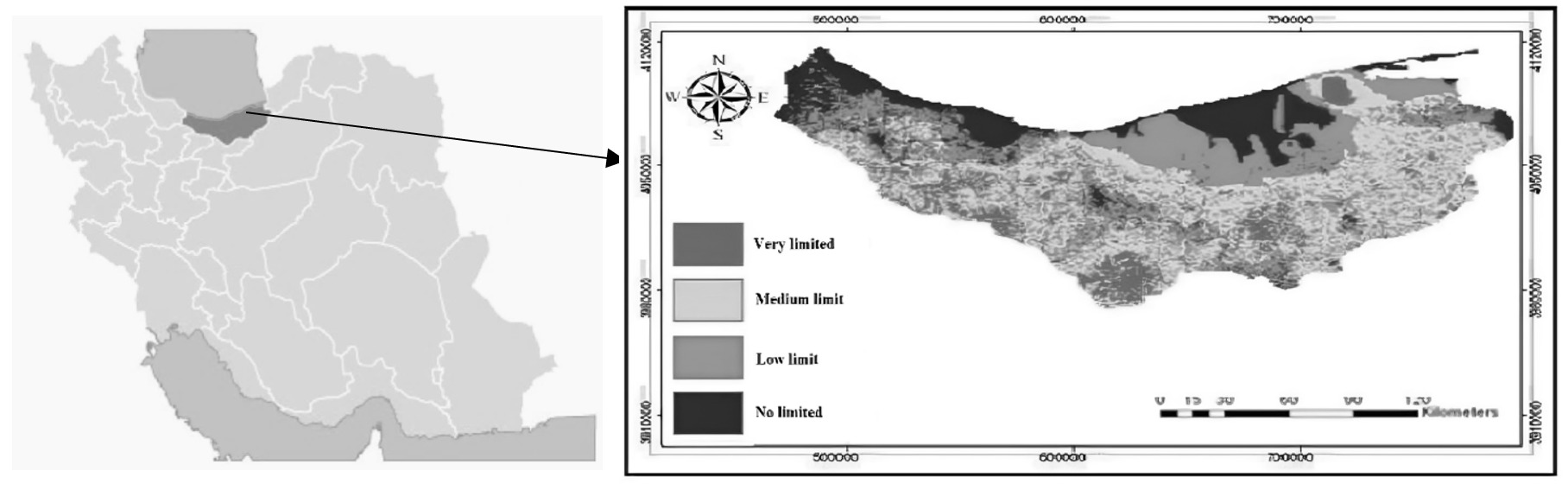
Mazandaran Province, located in northern Iran, produces an important portion of Iran's strategic crops due to its geographical location, climatic conditions, and soil (Bakhshandeh et al., 2022). Mazandaran Province has approximately 600,210 hectares of cultivated land (agricultural and horticultural) and is the main producer of rice in Iran (Shafiee and Jamshidi, 2023). Upon the recommendation of the Ministry of Agriculture and with support, rapeseed has also become common as a second crop in the rice fields of Mazandaran province over the last two decades (Farhadi et al., 2024). Sobhani and Roshanali (2018) examined the suitability of Mazandaran province for rapeseed cultivation and reported that 15.3% of the land could be cultivated without restrictions, 28.2% with low restrictions, 24.48% with medium restrictions, and 3.8% with high restrictions, based on climatic and environmental potential (Figure 1).

Suitability of Mazandaran Province Agricultural Lands for Rapeseed Cultivation (Sobhani and Roshanali, 2018).
However, a study of the trend of changes in rapeseed cultivation in Mazandaran Province has revealed fluctuations in recent years, with the area under cultivation decreasing to 6644 hectares (Farhadi et al., 2024). This amount is far below the total projected cultivated area in Mazandaran Province, therefore, a significant portion of the country's oil needs are met through imports. Meanwhile, the vegetable oil factories operating in Mazandaran face numerous problems in meeting their needs and, at times, have even stopped operating. Therefore, it is essential to bring the area cultivating this crop closer to the projected area by promoting contract farming and encouraging farmers to cultivate rapeseed.
3. Material and Methods
This study uses a discrete choice experiment (DCE), a survey-based stated preference method, to show which types of farming contracts are more desirable from the perspective of farmers in Mazandaran province. The choice experiment method is based on Lancaster's microeconomic theory and the random utility theory. Lancaster (1966) states that the utility arising from the consumption of a good is not obtained directly from the consumption of that good but rather from the sum of the utility of the characteristics of that good. In practice, individuals do not always choose the best mode of activity, and while their choices are not necessarily stable over time, they do try to maximize the utility based on their choices. Also, based on the random utility theory, not all components of the utility function that arise from individuals' choices are directly observable to the researcher (Koemle and Yu, 2020). Based on this theory and in accordance with Equation 1, the indirect utility function for each respondent i (Ui) can be separated into two parts: a deterministic element (V), which is typically specified as a linear index of the attributes (X) of the j different alternatives in the choice set; and a stochastic element (e), which represents unobservable influences on individual choice (Hanley et al., 2001):
Therefore in accordance with Equation 2, the probability that any particular respondent prefers alternative “g” in the choice set "Ci" to any alternative “h”, can be expressed as the probability that the utility associated with alternatives “g” exceeds that associated with all other alternatives:
In order to derive an explicit expression for this probability, we need to know the distribution of the error terms (eij) in accordance with Equation 3. A usual assumption is that they are identically and independently distributed with an extreme-value distribution (Weibull distribution):
McFadden (1973) showed that the above distribution of the error term the probability of any alternative j being chosen as the most preferred can be expressed in terms of the logistic distribution, as stated in Equation 4. This model is known as Conditional logit model or Multinomial logit (MNL) model:
Where "μ" is a scale parameter that depends on the type of probability distribution of the random component of the model, is related to the amount of variance of this distribution, and is inversely proportional to the standard deviation of the error term. "μ" often cannot be identified separately and is therefore typically assumed to be one, implying that the variance of the error terms is constant. An important reason for this specification is that the choices from the choice set must obey the assumption of Independence of Irrelevant Alternatives (IIA). The formation of this assumption results from the assumption of independence and similarity of the error term in the model. This model is estimated using the maximum likelihood method and the corresponding log-likelihood function shown in the Equation 5, where "yij" is an indicator variable equal to one if respondent i chooses alternative j and equal to zero otherwise. In other words, the dependent variable here is multiple (one, zero, and zero), unlike the simple logit, which is binary (zero and one).
Socioeconomic variables can also be entered into the indirect utility function along with the attributes of the choice sets (X). However, since socioeconomic variables are constant for any given individual, they can only be entered into the model in interaction with the characteristics present in the choice sets (Rolfe et al., 2000). After estimating the parameters, willingness-to-pay (WTP) is obtained according to the Equation 6 for all attributes of the choice set, where V0 represents the utility of the initial state, and V1 represents the utility of the alternative state. The coefficient "by" gives the marginal utility of income and is the coefficient of the cost attribute. This WTP is a compensating variation (CV) to measure the change in welfare resulting from an improvement in attributes, which is consistent with demand theory:
It is straightforward to show, for the linear utility index specified in (1), that the value of a marginal change in any of the attributes can be expressed as the ratio of coefficients given in Equation 7 where "bC" is the coefficient on any of the attributes. These ratios are often known as implicit prices (IP):
In this study, implicit prices are the marginal rate of substitution between the attributes of farming contracts and the market variable (the price paid for each alternative), which can be considered as the mean marginal willingness to pay (MWTP) for the change in attributes (Hanemann, 1984). If we assume that the aforementioned attributes have a normal distribution and the price variable is fixed, the willingness to pay will also have a normal distribution (Carlsson et al., 2003).
The steps in conducting a choice experiment include specifying the decision problem, identifying and describing the attributes, creating an experimental design, preparing a questionnaire, collecting data, estimating the model, and interpreting the results for policy analysis or decision support. After identifying the problem of the lack of participation of farmers in contract farming by studying previous research and interviewing experts and scholars in focus groups, a list of the attributes that influence farmers' decision to enter into farming contracts was made. The collecting of attributes was done so that it would report the attributes that influence the choices of individuals, be consistent with the political agendas of the region or country, and be understandable and important to the respondents.
Although there is no general rule for choosing the number of attributes, there is a consensus that the number should be less than eight components (Hensher et al., 2005). Therefore, after a survey of 16 experts and specialists familiar with contract farming, the most important attributes of agricultural contracts were determined using the Analytic Hierarchy Process method and Expert Choice11 software. Input supply, price determination method (fixed, variable), existence of option, contract duration (one-year, multi-year), existence of incentives in the contract, and provision of technical and advisory services were selected as the most important attributes affecting the promotion of farmers' participation in contract farming.
Since price is typically one of the characteristics of goods and services, the price per kilogram of rapeseed was also considered the seventh attribute. Given the two-level nature of the attributes, two levels were selected for each attribute. The guaranteed price per kilogram of rapeseed in the 2023-2024 crop year was 350,000 Rials (current situation). In other words, a farmer who is unwilling to participate in contract farming must sell her product to the government at a price of 350,000 Rials per kilo. To determine the price attribute levels, with a 10 percent improvement in the current situation (relative improvement situation), the price per kilogram of rapeseed was calculated to be 385,000 Rials, and with a 20 percent improvement in the current situation (desirable situation), the price per kilogram of rapeseed was calculated to be 420,000 Rials.
A statistical design was used to combine attributes, their levels, and create alternatives. Considering the number of attributes and their corresponding levels, which is equal to 7 two-level attributes, the total number of alternatives was obtained as 27=128. Since responding to all alternatives would be too time-consuming, lead to possible confusion among respondents, and reduce the estimation power of the model, a fractional factorial design was used to select the combination of attributes. For this purpose, the fractional factorial design method was used in Design Expert12 software, and the total number of possible combinations was reduced to 16. The alternatives were then placed in pairs into choice sets. Of course, in each choice set, one alternative was always listed as the "current situation" or no contract. The current situation means a zero offer that can be chosen by individuals. Therefore, each choice set consists of three alternatives: A, B, and C, where alternative C represents the current situation. Therefore, 16 alternatives were placed in eight choice sets. An example of the designed choice experiment card is presented in Table 1.
Mariel et al. (2021) noted that some studies have discouraged presenting respondents with more than four or six choice cards due to complexity and fatigue. Accordingly, the choice sets were included in four blocks of two and placed in four separate questionnaires, with two sets presented in each block.
The required data were obtained from rapeseed farmers in Mazandaran province from June to July 2024. Considering the size of the population and using the Cochran formula, 361 rapeseed farmers from five cities in Mazandaran province were selected using a multistage cluster method. The questionnaires were completed face-to-face with the interviewer present to clarify questions and resolve any ambiguities. Mariel et al. (2021) believe that depending on the complexity of the experimental design and the type of model applied, a sample size of 300-500 respondents may be sufficient to obtain reliable estimates of stated preferences.
Validity and reliability were measured using Bishop and Boyle’s method (Bishop and Boyle, 2019). Content validity involves assessing to what extent all the various components of the DCE survey (e.g., questionnaire development, the questions asked, scenario descriptions, survey information, attributes included, survey mode, sampling of respondents, etc.) were appropriate and conducive and led respondents to make choices that were in line with their true preferences. Construct validity was obtained using the expectation-based validity method, as the analyst will often have some prior expectations of the values and how they relate to other variables according to economic theories and past research experiences. In order to ensure reliability, a test-retest involving re-administering the same survey at different points in time was conducted, which did not yield significant differences in WTP estimates.
The last step of the choice experiment is the estimation of econometric models. The conditional logit model provides a suitable framework for revealing and explaining the choice process in which the choice set consists of more than two alternatives. One of the important requirements of the conditional logit model specification is that the choices within a choice set must obey the property of Independence of Irrelevant Alternatives (IIA). Based on this property, the ratio of probabilities for any two alternatives, and therefore the odds of choosing one alternative over another, remain the same irrespective of other alternatives or their attributes (Christiadi and Cushing, 2007). If IIA is not accepted, more complex statistical models than conditional logit, e.g., the multinomial probit, mixed logit, or random parameter logit, are needed to satisfy this assumption. Various statistical tests can be used to test the IIA hypothesis, among which the extended test by Hausman and McFadden (1984) has found widespread use. STATA 17.0 software was used to estimate the model.
4. Results
4.1.Demographic results
The research findings showed that the average age of respondents was 46.04 years, and the average farming experience in this sample was 16.83 years. The majority of rapeseed farmers (95.3%) were male, and the highest frequency (31.9%) reported an undergraduate education level. All respondents were willing to receive training in rapeseed cultivation, and 45.7 percent were very willing to receive training in rapeseed cultivation. Based on the results, 62.9 percent of respondents own land. The average area of rapeseed fields in this sample was 9.94 hectares, and more than half of the rapeseed farmers (56.5%) had 6 to 10 hectares of rapeseed fields. The research findings showed that the majority had an average annual income of 5770 million Rials from rapeseed production, but they stated that the annual costs of rapeseed production (including labor, fertilizer, pesticides, machinery, etc.) averaged 4010 million Rials. Additionally, 59.3 percent of people were not engaged in other side activities besides agriculture. Only 13.3% of respondents currently had contracts for rapeseed production, and the majority of them were dissatisfied with their current rapeseed cultivation contracts. In addition, 67.7 percent of rapeseed farmers also stated that they were unwilling to sell their crops through current contracts.
4.2. Conditional logit model results
We used a conditional logit model to estimate the parameters and attempted to explain the heterogeneity in farmers’ preferences by observable demographic characteristics, such as socio-economic characteristics, in the conditional logit model with interaction effects. Table 2 shows the results of the conditional logit model.
The results of estimating the conditional logit model with interaction effects showed that the parameters related to contractual attributes were similar in terms of signs to the estimates made for the conditional logit model without interaction effects. Based on the results, all the attributes considered in the choice experiment, except for the existence of option, are significant, indicating that the other attributes significantly impact farmers' preference for choosing farming contracts. The negative coefficient for contract duration indicates the negative effect of contract duration on the probability of contract selection; this means that multi-year contracts reduce farmers' utility and have a lower probability of selection than one-year contracts. The positive coefficient for the other attributes showed that the provision of inputs by the contracting firm, payment of the amount in a variable manner and based on the daily rate, provision of technical and consulting services by the contracting firm, existence of incentives, and an increase in price increase the likelihood of choosing a farming contract.
The positive and significant coefficient for the interaction between willingness to receive education and input supply indicates that willingness to receive education increases the likelihood of input supply in farming contracts. The positive and significant coefficient for the interaction between land ownership and input supply indicates that agricultural land ownership increases the likelihood of input supply in farming contracts. The negative and significant coefficient for the interaction between agricultural experience and pricing method indicates that although farmers tend to choose variable prices, less experienced farmers tend to choose fixed-price farming contracts. The significant negative coefficient for the interaction between farmer age and duration indicates that, despite farmers not being interested in long-term contracts, younger farmers choose long-term contracts. Other characteristics such as education, cultivated area, having a side job, and a degree of quality requirement did not significantly affect farmers' choices.
The Lagrange Ratio (LR chi-2) is significant at the 0.000 level. As a result, the present model is entirely significant. Also, a high value of the log-likelihood statistic indicates the accuracy of the estimated model specification. The PseudoR2 statistic of the model is above 0.1, which indicates the good explanatory power of the model. Considering the values of log-likelihood statistics, Pseudo R2, likelihood ratio (LR), and the presence of socio-economic characteristics, the conditional logit model with interaction effects is more favorable than the conditional logit model without interaction effects.
The Hausman-McFadden test was used to examine the independence of Irrelevant Alternatives. The results revealed that the IIA assumption was not violated, justifying the application of the conditional logit model to the dataset (Table 3).
4.3. Willingness to pay for each of the contract attributes
One of the advantages of the choice experiment technique is the calculation of the willingness to pay for each attribute of the choice experiment, which can be used in policy analyses. Table 4 shows the willingness to pay for each attribute. Since the conditional logit model with interaction effects is preferable to the conditional logit model without interaction effects, the results of estimating the willingness to pay are interpreted based on that model. In the conditional logit model with interaction effects, the willingness of farmers in Mazandaran province to pay for the attributes of input supply, pricing method, contract duration, the existence of incentives, and provision of technical and consulting services are 1888.51, 1626.97, 1882.18, 2272.95, and 1458.26 thousand Rials per 100 percent increase in price, respectively. The highest willingness to pay is for the attribute existence of incentives in the contract and the lowest willingness to pay is for the attribute of providing technical and consulting services in the contract.
5. Discussion
The utility of a contract is measured by its success and acceptance by the contracting parties. Our results showed that the majority of rapeseed farmers were not satisfied with the current rapeseed cultivation contracts and were unwilling to sell their rapeseed crops through the current contracts. Therefore, it can be said that the current contracts are not sufficiently desirable and cannot satisfy farmers, and these contracts should be reviewed by the contracting companies and officials.
Our study of rapeseed farmers' preferences regarding farming contracts in Iran showed that, from the farmers' perspective, input supply is one of the desirable attributes of contract farming that affects farmers' decisions to enter into farming contracts. Junaidi et al. (2023), Golestanian et al. (2020), and Mehry et al. (2021) also confirmed the effect of input supply on participation in contract farming in their research. They state that the supplier of inputs (fertilizers, pesticides, seeds, fuel, veterinary inputs, etc.) must be included in the contract. Furthermore, Kalamkar (2012) believes that contracting companies provide and distribute many or all of the inputs in most contract farming ventures. Failure to provide inputs can cause serious disruption to the supply chain and can lead to serious financial losses for all parties. The inputs specified in the contract must have the necessary quality standards and be priced fairly. Inputs must be delivered on time so farmers can use them optimally and efficiently. Farmers should not use the inputs for purposes other than those specified in the contract. Also, farmers should follow the recommendations provided in this regard in order to maximize efficiency in using the inputs provided by the buyer.
This study’s results identified the pricing method as another desirable attribute of contract farming that influences farmers' decisions to enter into farming contracts. Farokhi et al. (2024) and Mehry et al. (2021) also reported on the role of variable pricing in the choice of farming contracts. Although fixed prices are the most common method offered to farmers at the beginning of each season, may find such arrangements disadvantageous if prices increase in the open market when alternatives are available. Our results show that a flexible pricing structure applied to prices calculated based on a formula related to changing domestic markets is most desirable.
Moreover, from the perspective of farmers, the length of the contract duration is one of the attributes of contract farming that affects farmers' decisions to enter into farming contracts, and farmers prefer contracts with shorter duration of time. Golestanian et al. (2020) also reported that farmers prefer shorter contract duration. On the other hand, Mazhar et al. (2023) showed that farmers with long-term contracts have higher yield, income, and profit per hectare than farmers with medium- and short-term contracts. The duration of agreements depends on the nature of the crop. Contracts for short-term crops such as table vegetables are customarily issued and renegotiated on a seasonal basis, whereas crops such as tea, coffee, sugar cane, and cocoa require long-term contracts that can be amended periodically (UNIDROIT, 2015). Schulze et al. (2024) believe farmers' opinions on contract duration are ambivalent. On the one hand, long-term agreements facilitate planning ahead and guarantee a certain income for a defined period, providing stability. On the other hand, many farmers are more reluctant to enter long-term agreements to maintain a certain independence and flexibility in their agricultural activities.
Our results showed that the existence of incentives is another desirable attribute affecting the decisions to enter into farming contracts, with farmers preferring contracts with incentives. Farmers in Mazandaran province were also most willing to pay for the existence of incentives attribute in the contract. Most studies have pointed to the existence of incentives as a means of payment to compensate farmers for imposed policy programmes, i.e., bonus payments (Vaissière et al., 2018), price premiums on agricultural products (Tanaka et al., 2022), and access to credit (Kassahun et al., 2020). Wang and Liang (2022) believe that participants of contract farming have certain irrational fairness preference behavior characteristics when they participate in economic activities. Therefore, it is more realistic to introduce non-self-interested psychological preferences or reciprocity preferences into the incentive mechanism of contract farming. Since a low farmer fulfillment rate has greatly harmed the development of contract farming, enterprises should set up incentive mechanisms to improve the degree of farmers' effort with reciprocity preference.
This study’s results also show that the provision of technical and consulting services is a desirable attribute of contract farming, affecting farmers' decisions to enter into farming contracts, with farmers preferring contracts that provide technical and consulting services. However, Mazandaran province farmers were the least willing to pay for this attribute of provision of technical and consulting services. Saroj and Paltasingh (2024) and Toiba et al. (2023) also confirmed the effect of a provision for technical and consulting services on the choice of contract farming. Successful implementation of agricultural practices requires that farmers are well aware of the correct implementation of specific programs. Technical experts can act as intermediaries between policymakers and farmers and provide information about agricultural and environmental programs (Schomers et al., 2015). Regardless of their skill level and experience, every farmer needs technical and consulting services from a contracting firm to increase profitability and productivity, given technological advances, new problems, and limitations.
Price level is another of the the study’s identified desirable attributes of contract farming affecting farmers' decisions to enter into farming contracts, with farmers preferring contracts with higher prices. A positive price attribute coefficient indicates that alternatives with higher bid prices increase people's utility and are more likely to be chosen than other alternatives. Farokhi et al. (2024) and Hossein Abadi et al. (2024) also confirmed the effect of price level on the choice of contract farming. Prices and payment methods are key elements of contracts. Golestanian et al. (2020) also showed that farmers expected higher prices than the market price from contracts. Pricing and payment arrangements are the most controversial and challenging components of all farming contracts. The task of pricing is reiterative because it takes place within a dynamic environment: shifting cost structures affect profitability, new competitors and new products alter the competitive balance, and changing consumer tastes and disposable incomes modify established consumption patterns. This being the case, an organization must not only continually reassess its prices, but also the processes and methods it employs in arriving at these prices. Transparent pricing mechanisms are essential. Gillette et al. (2024) showed that high-price contracts help farmers make more profits than low-price contracts. Despite this, low-cost contracts have continued due to factors such as risk sharing, access to credit, and chemical fertilizers.
6. Conclusion
Contract farming arrangements are increasingly used in agricultural value chains in developing and emerging economies. The attributes of farming contracts and how farmers evaluate the terms of the contract affect farmers' expected utility levels and, ultimately, their decision to participate in the contract. Furthermore, the instability of farming contracts reported worldwide stems from contract design that does not meet the preferences of both parties. This study aimed to identify farmers' preferences regarding the attributes of rapeseed sales contracts in Iran.
The results showed that all the attributes considered in the choice experiment were significant except for the existence of options attribute; this indicates that the attributes of the input supply, existence of incentives, contract duration, pricing method, provision of technical and consulting services, and price level have a significant effect on farmers' preference for choosing a farming contract. In addition, willingness to receive education, land ownership, agricultural experience, and farmer age also had a significant effect on farmers' choices. Willingness to pay values was positive for all contract attributes, indicating farmers' willingness to pay additional costs to participate in their preferred farming contracts.
Based on the findings, it is recommended that the private sector strive to provide sufficient, timely, and affordable agricultural inputs and equipment while adhering to the necessary standards. It is recommended that partners negotiate to accept a price that is satisfactory to both parties and that both parties strictly respect the contract. A catch about price was also to include that prices could be renegotiated in the event of drastic changes in prices. Short-term contracts and the existence of incentives and technical and consulting services increase farmers' tendency to enter into farming contracts. As a result, the organizations should pay attention to the presence of such items in contracts. Understanding farmers' preferences in farming contracts helps design better contracts, leading to more sustainable supply chain relationships between farmers and buyers. The result of our study may be useful for buyers to understand farmer preferences towards specific contract schemes and thus make the contract more durable. This study may also help policymakers develop policies to strengthen smallholder participation in agricultural supply chains.
Although choice experiment results provide valuable insight into individuals' preference structure and decision-making processes and can be helpful in policy design, they must be complemented by other methods. Therefore, policymakers are advised to use a comprehensive toolbox, including other empirical approaches based on revealed preferences, such as field experiments and Randomized controlled trials, as well as qualitative research, are necessary to complement the results of choice experiments. This triangulation of methods will help balance the strengths and weaknesses of each approach.
Data Availability Statement
The data set analyzed or produced in this study can be requested from the corresponding author.
References
-
ABDUL-RAHAMAN, A. and ABDULAI, A., 2020. Vertical coordination mechanisms and farm performance amongst smallholder rice farmers in northern Ghana. Agribusiness, vol. 36, no. 2, pp. 259-280.https://doi.org/10.1002/agr.21628
» https://doi.org/10.1002/agr.21628 -
BA, H.A., MEY, Y.D., THORON, S. and DEMONT, M., 2019. Inclusiveness of contract farming along the vertical coordination continuum: evidence from the Vietnamese rice sector. Land Use Policy, vol. 87, pp. 104050. https://doi.org/10.1016/j.landusepol.2019.104050
» https://doi.org/10.1016/j.landusepol.2019.104050 -
BAKHSHANDEH, E., ZERAATPISHEH, M., SOLEIMANI, A. and FRANCAVIGLIA, R., 2022. Land use conversion, climate change and soil organic carbon: modeling a citrus garden chronosequence in Northern Iran. Geoderma Regional, vol. 30, pp. e00559. https://doi.org/10.1016/j.geodrs.2022.e00559
» https://doi.org/10.1016/j.geodrs.2022.e00559 -
BISHOP, R.C. and BOYLE, K.J., 2019. Reliability and validity in nonmarket valuation. Environmental and Resource Economics, vol. 72, pp. 559-582. https://doi.org/10.1007/s10640-017-0215-7
» https://doi.org/10.1007/s10640-017-0215-7 -
BOUGHERARA, D., LAPIERRE, M., PRÉGET, R. and SAUQUET, A., 2021. Do farmers prefer increasing, decreasing, or stable payments in Agri-environmental schemes? Ecological Economics, vol. 183, pp. 106946. https://doi.org/10.1016/j.ecolecon.2021.106946
» https://doi.org/10.1016/j.ecolecon.2021.106946 -
CARLSSON, F., FRYKBLOM, P. and LILJENSTOLPE, C., 2003. Valuing wetland attributes: an application of choice experiments. Ecological Economics, vol. 47, no. 1, pp. 95-103. https://doi.org/10.1016/j.ecolecon.2002.09.003
» https://doi.org/10.1016/j.ecolecon.2002.09.003 -
CHRISTIADI, C. and CUSHING, B., 2007 [viewed 17 November 2024]. Conditional Logit, IIA, and Alternatives for Estimating Models of Interstate Migration [online]. Regional Research Institute, Working Papers, no. 65. Available from: https://researchrepository.wvu.edu/rri_pubs/65
» https://researchrepository.wvu.edu/rri_pubs/65 -
DARAKEH, M., ZARAFSHANI, K. and SHARAFI, L., 2021. Functions and Challenges of Contract Farming in Kermanshah Province. Journal of Rural Research, vol. 12, no. 2, pp. 258-273. https://doi.org/10.22059/jrur.2021.299968.1482
» https://doi.org/10.22059/jrur.2021.299968.1482 -
DEVLET, A., 2021. Modern agriculture and challenges. Frontiers in Life Sciences and Related Technologies, vol. 2, no. 1, pp. 21-29. https://doi.org/10.51753/flsrt.856349
» https://doi.org/10.51753/flsrt.856349 -
DUBBERT, C., ABDULAI, A. and MOHAMMED, S., 2023. Contract farming and the adoption of sustainable farm practices: empirical evidence from cashew farmers in Ghana. Applied Economic Perspectives and Policy, vol. 45, no. 1, pp. 487-509. https://doi.org/10.1002/aepp.13212
» https://doi.org/10.1002/aepp.13212 -
FARHADI, F., SHAFIEE, F. and JAMSHIDI, O., 2024. IIdentifying and analysis of driving and inhibiting factors of rapeseed cultivation development in the east rural areas of Mazandaran Province. Village and Development, vol. 27, no. 1, pp. 207-234. https://doi.org/10.30490/rvt.2024.364400.1568
» https://doi.org/10.30490/rvt.2024.364400.1568 -
FAROKHI, M., NAJAFI MOGHADAM, A. and DARABI, R., 2024. Saffron future contract yield prediction using a modified quadratic model. International Journal of Nonlinear Analysis and Applications, vol. 15, no. 1, pp. 263-276. https://doi.org/10.22075/IJNAA.2023.29728.4242
» https://doi.org/10.22075/IJNAA.2023.29728.4242 -
FISCHER, S. and WOLLNI, M., 2018. The role of farmers’ trust, risk and time preferences for contract choices: experimental evidence from the Ghanaian pineapple sector. Food Policy, vol. 81, pp. 67-81. https://doi.org/10.1016/j.foodpol.2018.10.005
» https://doi.org/10.1016/j.foodpol.2018.10.005 -
GILLETTE, R.D., SAKAI, N. and IBIKOULE, G.E., 2024. Role and impact of contract farming under various pricing standards: A case of Guyana’s rice sector. AIMS Agriculture and Food, vol. 9, no. 1, pp. 336-355. https://doi.org/10.3934/agrfood.2024020
» https://doi.org/10.3934/agrfood.2024020 -
GOLESTANIAN, M., NABIEYAN, S. and MIRZAEI KHALILABADI, H.R., 2020. Factors affecting the selection of agricultural contracts from the viewpoint of farmers in the County of Bardsir: method of mixed logit. Majallah-i Tahqiqat-i Iqtisad va Tusiah-i Kishavarzi-i Iran, vol. 51, no. 2, pp. 263-278. https://doi.org/10.22059/IJAEDR.2019.274079.668699
» https://doi.org/10.22059/IJAEDR.2019.274079.668699 -
HANEMANN, W.M., 1984. Welfare evaluation in contingent valuation experiments with discrete responses. American Journal of Agricultural Economics, vol. 71, no. 3, pp. 332-341. https://doi.org/10.2307/1240800
» https://doi.org/10.2307/1240800 -
HANLEY, N., MOURATO, S. and WRIGHT, R., 2001. Choice modelling approaches: a superior alternative for environmental valuation? Journal of Economic Surveys, vol. 15, no. 3, pp. 435-462. https://doi.org/10.1111/1467-6419.00145
» https://doi.org/10.1111/1467-6419.00145 -
HAUSMAN, J. and MCFADDEN, D., 1984. Specification tests for the multinomial logit model. Econometrica, vol. 52, no. 5, pp. 1219-1240. https://doi.org/10.2307/1910997
» https://doi.org/10.2307/1910997 -
HENSHER, D., SHORE, N. and TRAIN, K., 2005. Households‟ willingness to pay for water service attributes. Environmental and Resource Economics, vol. 32, no. 4, pp. 509-531. https://doi.org/10.1007/s10640-005-7686-7
» https://doi.org/10.1007/s10640-005-7686-7 -
HOSSEIN ABADI, H., MOHAMADI-NEJAD, A., GILANPOUR, O. and KHALEDI, M., 2024. Investigating factors affecting the development of contract farming. Case study: tomatoes in Kermanshah Province. Brazilian Journal of Biology = Revista Brasileira de Biologia, vol. 84, pp. e281760. https://doi.org/10.1590/1519-6984.281760
» https://doi.org/10.1590/1519-6984.281760 -
IRANIAN MINISTRY OF AGRICULTURE, 2024 [viewed 17 November 2024].The pathology report on contract farming Available from: https://dpe.maj.ir/%DA%A9%D8%B4%D8%A7%D9%88%D8%B1%D8%B2%DB%8C-%D9%82%D8%B1%D8%A7%D8%B1%D8%AF%D8%A7%D8%AF%DB%8C
» https://dpe.maj.ir/%DA%A9%D8%B4%D8%A7%D9%88%D8%B1%D8%B2%DB%8C-%D9%82%D8%B1%D8%A7%D8%B1%D8%AF%D8%A7%D8%AF%DB%8C -
JUNAIDI, E., JAMHARI, J. and MASYHURI, M., 2023. Broiler farmers preferences for partnership contract attributes in Indonesia: a study using the choice experiment method. IOP Conference Series: Earth and Environmental Science, vol. 1153, pp. 012019. https://doi.org/10.1088/1755-1315/1153/1/012019
» https://doi.org/10.1088/1755-1315/1153/1/012019 -
KALAMKAR, S.S., 2012. Inputs and Services Delivery System under Contract Farming: A Case of Broiler Farming. Agricultural Economics Research Review, vol. 25, pp. 515-521. https://doi.org/10.22004/ag.econ.136383
» https://doi.org/10.22004/ag.econ.136383 -
KASSAHUN, H.T., THORSEN, B.J., SWAIT, J. and JACOBSEN, J.B., 2020. Social cooperation in the context of integrated private and common land management. Environmental and Resource Economics, vol. 75, no. 1, pp. 105-136. https://doi.org/10.1007/s10640-019-00390-3
» https://doi.org/10.1007/s10640-019-00390-3 -
KOEMLE, D. and YU, X., 2020. Choice experiments in non-market value analysis: some methodological issues. Forestry Economics Review, vol. 2, no. 1, pp. 3-31. https://doi.org/10.1108/FER-04-2020-0005
» https://doi.org/10.1108/FER-04-2020-0005 -
KOPP, T., DSOUZA, A. and MISHRA, A.K., 2024. The relation between contract type and market power: evidence from a high-value crop in India. Food Policy, vol. 127, pp. 102683. https://doi.org/10.1016/j.foodpol.2024.102683
» https://doi.org/10.1016/j.foodpol.2024.102683 -
LANCASTER, K.J., 1966. A new approach to consumer theory. Journal of Political Economy, vol. 74, no. 2, pp. 132-157. https://doi.org/10.1086/259131
» https://doi.org/10.1086/259131 -
LAPIERRE, M., LE VELLY, G., BOUGHERARA, D., PRÉGET, R. and SAUQUET, A., 2023. Designing agri-environmental schemes to cope with uncertainty. Ecological Economics, vol. 203, pp. 107610. https://doi.org/10.1016/j.ecolecon.2022.107610
» https://doi.org/10.1016/j.ecolecon.2022.107610 -
LIANG, Y., BI, W. and ZHANG, Y., 2023. Can contract farming improve farmers’ technical efficiency and income? Evidence from beef cattle farmers in China. Frontiers in Sustainable Food Systems, vol. 7, pp. 1179423. https://doi.org/10.3389/fsufs.2023.1179423
» https://doi.org/10.3389/fsufs.2023.1179423 -
LIENHOOP, N. and SCHRÖTER-SCHLAACK, C., 2018. Involving multiple actors in ecosystem service governance: exploring the role of stated preference valuation. Ecosystem Services, vol. 34, pp. 181-188. https://doi.org/10.1016/j.ecoser.2018.08.009
» https://doi.org/10.1016/j.ecoser.2018.08.009 -
MARIEL, P., HOYOS, D., MEYERHOFF, J., CZAJKOWSKI, M., DEKKER, T., GLENK, K., JACOBSEN, J.B., LIEBE, U., OLSEN, S.B., SAGEBIEL, J. and THIENE, M., 2021. Environmental Valuation with Discrete Choice Experiments, Guidance on Design, Implementation and Data Analysis Cham: Springer. https://doi.org/10.1007/978-3-030-62669-3
» https://doi.org/10.1007/978-3-030-62669-3 -
MAZHAR, R., AZADI, H., VAN PASSEL, S., VÄRNIK, R., PIETRZYKOWSKI, M., SKOMINAS, R., WEI, Z. and XUEHAO, B., 2023. Does Contract Length Matter? The Impact of Various Contract-Farming Regimes on Land-Improvement Investment and the Efficiency of Contract Farmers in Pakistan. Agriculture, vol. 13, no. 9, pp. 1651. https://doi.org/10.3390/agriculture13091651
» https://doi.org/10.3390/agriculture13091651 - MCFADDEN, D., 1973. Conditional logit analysis of qualitative choice behavior, New York: Academic Press.
-
MEENA, D.C., CHADDA, C., LATHA, M. and PRIYANKA, B.N., 2022 [viewed 21 May 2024]. Contract Farming and Strategies to link with Farmer Producer Organizations (FPOs). Journal of Agricultural Extension Management [online], vol. 23, no. 1, pp. 176-189. Available from: https://epubs.icar.org.in/index.php/JAEM/article/view/159138
» https://epubs.icar.org.in/index.php/JAEM/article/view/159138 -
MEHRY, M., AHMADPOUR, M., MOHAMMADI, H. and SALARPOUR, M., 2021 [viewed 21 May 2024]. Investigating the Tendency of Pistachio Producers in Yazd Province to Participate in Contract Farming. Agricultural Economics Research [online], vol. 13, no. 2, pp. 127-154. Available from: https://sanad.iau.ir/en/Article/1159574
» https://sanad.iau.ir/en/Article/1159574 -
MUGWAGWA, I., BIJMAN, J. and TRIENEKENS, J., 2020. Typology of contract farming arrangements: a transaction cost perspective. Agrekon, vol. 59, no. 2, pp. 169-187. https://doi.org/10.1080/03031853.2020.1731561
» https://doi.org/10.1080/03031853.2020.1731561 -
NCUBE, D., 2020. The Importance of Contract Farming to Small-scale Farmers in Africa and the Implications for Policy: A Review Scenario. The Open Agriculture Journal, vol. 14, no. 1, pp. 59-86. https://doi.org/10.2174/1874331502014010059
» https://doi.org/10.2174/1874331502014010059 -
OCHIENG, D.O., VEETTIL, P.C. and QAIM, M., 2017. Farmers’ preferences for supermarket contracts in Kenya. Food Policy, vol. 68, pp. 100-111. https://doi.org/10.1016/j.foodpol.2017.01.008
» https://doi.org/10.1016/j.foodpol.2017.01.008 -
ROLFE, J., BENNETT, J. and LOUVIERE, J., 2000. Choice modellng and its potential application to tropical rainforest preservation. Ecological Economics, vol. 35, no. 2, pp. 289-302. https://doi.org/10.1016/S0921-8009(00)00201-9
» https://doi.org/10.1016/S0921-8009(00)00201-9 -
RUML, A. and QAIM, M., 2020. Effects of marketing contracts and resource-providing contracts in the African small farm sector: insights from oil palm production in Ghana. World Development, vol. 136, pp. 105110. https://doi.org/10.1016/j.worlddev.2020.105110
» https://doi.org/10.1016/j.worlddev.2020.105110 -
RUML, A., RAGASA, C. and QAIM, M., 2022. Contract farming, contract design and smallholder livelihoods. The Australian Journal of Agricultural and Resource Economics, vol. 66, no. 1, pp. 24-43. https://doi.org/10.1111/1467-8489.12462
» https://doi.org/10.1111/1467-8489.12462 -
SAROJ, V. and PALTASINGH, K.R., 2024. What promotes production contract in Indian agriculture? Managing market risk versus profit orientation. Agricultural Economics, vol. 55, no. 1, pp. 140-153. https://doi.org/10.1111/agec.12791
» https://doi.org/10.1111/agec.12791 -
SCHAUB, S., GHAZOUL, J., HUBER, R., ZHANG, W., SANDER, A., REES, C., BANERJEE, S. and FINGER, R., 2023. The role of behavioural factors and opportunity costs in farmers’ participation in voluntary Agri-environmental schemes: A systematic review. Journal of Agricultural Economics, vol. 74, no. 3, pp. 617-660. https://doi.org/10.1111/1477-9552.12538
» https://doi.org/10.1111/1477-9552.12538 -
SCHOMERS, S., SATTLER, C. and MATZDORF, B., 2015. An analytical framework for assessing the potential of intermediaries to improve the performance of payments for ecosystem services. Land Use Policy, vol. 42, pp. 58-70. https://doi.org/10.1016/j.landusepol.2014.06.025
» https://doi.org/10.1016/j.landusepol.2014.06.025 -
SCHULZE, C., ZAGÓRSKA, K., HÄFNER, K., MARKIEWICZ, O., CZAJKOWSKI, M. and MATZDORF, B., 2024. Using farmers’ ex ante preferences to design agri-environmental contracts: A systematic review. Journal of Agricultural Economics, vol. 75, no. 1, pp. 44-83. https://doi.org/10.1111/1477-9552.12570
» https://doi.org/10.1111/1477-9552.12570 -
SHAFIEE, F. and JAMSHIDI, O., 2023. Identifying and Analyzing the Challenges of Agricultural Technological and Knowledge-based Companies, Fairs and Startups, Mazandaran Province. J Entrepreneurial Strategies Agric, vol. 10, no. 2, pp. 87-99. https://doi.org/10.61186/jea.10.20.81
» https://doi.org/10.61186/jea.10.20.81 -
SHAHNAVAZI, A., 2021. Evaluation of rapeseed production efficiency in Iran. Applied Field Crops Research, vol. 34, no. 2, pp. 74-55. https://doi.org/10.22092/aj.2021.127366.1422
» https://doi.org/10.22092/aj.2021.127366.1422 -
SOBHANI, D. and ROSHANALI, M., 2018. Land Suitability Assessment of Mazandaran Province for Rapeseed Cultivation Based on Multi Criteria Decision Making Evaluation Methods in GIS Environment. Geography and Territorial Spatial Arrangement, vol. 8, no. 27, pp. 129-148. https://doi.org/10.22111/gaij.2018.4094
» https://doi.org/10.22111/gaij.2018.4094 -
TANAKA, K., HANLEY, N. and KUHFUSS, L., 2022. Farmers’ preferences towards an outcome-based payment for ecosystem service scheme in Japan. Journal of Agricultural Economics, vol. 73, no. 3, pp. 720-738. https://doi.org/10.1111/1477-9552.12478
» https://doi.org/10.1111/1477-9552.12478 -
TOIBA, H., MAULANA NOOR, A.Y., RAHMAN, M.S. and RIANA, F.D., 2023. Farmers’ preference for organic rice contract farming scheme: a discrete choice experiment in Indonesia. Journal of Environmental Planning and Management, vol. 68, no. 3, pp. 704-727. https://doi.org/10.1080/09640568.2023.2269308
» https://doi.org/10.1080/09640568.2023.2269308 -
TON, G., DESIERE, S., VELLEMA, W., WEITUSCHAT, S. and D’HAESE, M., 2017. The effectiveness of contract farming for raising income of smallholder farmers in low- and middle-income countries: a systematic review. Campbell Systematic Reviews, vol. 13, no. 1, pp. 1-131. https://doi.org/10.4073/csr.2017.13
» https://doi.org/10.4073/csr.2017.13 -
UNIDROIT, FAO and IFAD, 2015 [viewed 21 May 2024].UNIDROIT/FAO/IFAD Legal Guide on Contract Farming [onlline]. Rome: International Institute for the Unification of Private Law. Model agreement for responsible contract farming with commentary. Available from: https://openknowledge.fao.org/server/api/core/bitstreams/02738d2a-ca79-4858-8d8e-b826acfc50dc/content
» https://openknowledge.fao.org/server/api/core/bitstreams/02738d2a-ca79-4858-8d8e-b826acfc50dc/content -
VAISSIÈRE, A.C., TARDIEU, L., QUÉTIER, F. and ROUSSEL, S., 2018. Preferences for biodiversity offset contracts on arable land: A choice experiment study with farmers. European Review of Agriculture Economics, vol. 45, no. 4, pp. 553-582. https://doi.org/10.1093/erae/jby006
» https://doi.org/10.1093/erae/jby006 -
WANG, C. and LIANG, Y., 2022. Designing incentive mechanism in contract farming considering reciprocity preference. PLoS One, vol. 17, no. 6, pp. e0269167. https://doi.org/10.1371/journal.pone.0269167 PMid:35666725.
» https://doi.org/10.1371/journal.pone.0269167 -
WIDADIE, F., 2022. Contract farming arrangements and producer organizations in modern retail vegetable value chains: evidence from Indonesia Wageningen: Wageningen University. PhD Dissertation in Business Management and Organisation. https://doi.org/10.18174/579315
» https://doi.org/10.18174/579315 -
WIDADIE, F., BIJMAN, J. and TRIENEKENS, J., 2021. Farmer preferences in contracting with modern retail in Indonesia: A choice experiment. Agribusiness, vol. 37, no. 2, pp. 371-392. https://doi.org/10.1002/agr.21652
» https://doi.org/10.1002/agr.21652
Edited by
-
Editor:
Takako Matsumura Tundisi