 Phosphate solubilization capacity by bacteria in soybean crops
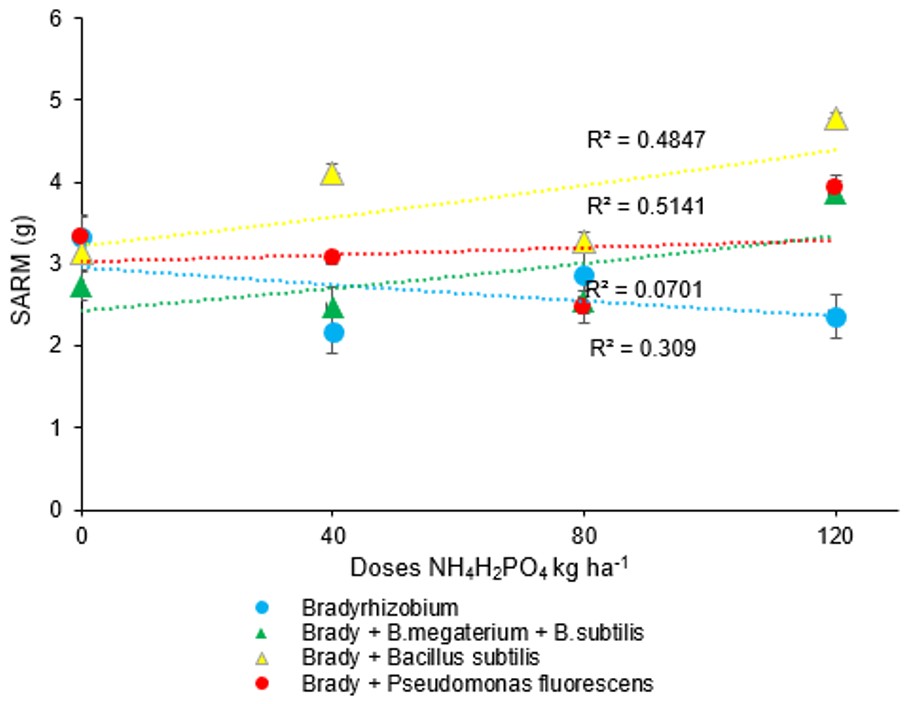
The availability of phosphorus (P) to plants is reduced by its binding to solid mineral and soil organic particles. However, phosphate-solubilizing microorganisms can increase nutrient availability by secreting extracellular enzymes such as fosfatases. The objective was to evaluate the phosphate solubilization capacity of bacteria coinoculated in soybean crops. Soybean plants were grown in nutrient solution in a combination of treatments of bacteria inoculated into the seeds [Bradyrhizobium japonicum (Brady); Brady + Pseudomonas fluorescens (Pf); Brady + Bacillus megaterium (Bm) + Bacillus subtilis (Bs); and Brady + Bs] with doses of P. In the laboratory, another experiment was conducted to evaluate the phosphate solubilization capacity in the NBRIP solid culture medium by the bacteria Bs, Bs+Bm, Pf and the isolate of Pseudomonas spp. The root dry mass increased by 201.26% with Brady+Bs coinoculation. Considering the phosphorus content in the aerial part of plant content for a dose of 40 kg ha-1 of NH4H2PO4, with B. japonicum + P. fluorescens resulted in an increase of 26.7% in relation to the control. The use of B. japonicum + B. megaterium/B. subtilis increased the phosphorus concentration in the shoot plant by 22.5%. In the laboratory solubilization test, the bacteria B. subtilis showed a medium phosphate solubilization index, making this bacterium an alternative for better use of this nutrient in the soil.
Keywords:
Bradyrhizobium japonicum; Pseudomonas fluorescens; Bacillus subtilis
 Thumbnail
 Thumbnail
 Thumbnail