 Soil fertility mapping on Ficus trees for rehabilitation of degraded land in Kuningan Regency, Indonesia
Abstract
Land degradation poses a global challenge to ecosystem sustainability and human well-being, driven primarily by deforestation, intensive agriculture, and mining. Rehabilitation efforts, particularly through Ficus species, offer effective solutions to restore soil fertility and ecosystem functions. This study analyzed soil fertility around Ficus trees in three land-use types in Kuningan Regency, Indonesia: sand mining areas, community gardens, and secondary forests. Soil samples (0-30 cm depth) were analyzed for physical and chemical parameters, including pH, organic C, total N, C/N ratio, P2O5, K2O, cation exchange capacity, and texture. Results revealed variations in soil fertility across locations: low to medium in sand mining areas, low to high in community gardens, and low to high in secondary forests. Ficus species observed included Ficus benjamina and Ficus septica in sand mining areas; F. benjamina, F. septica, F. fistulosa, and F. variegata in community gardens; and F. benjamina, F. septica, F. variegata, and F. virens in secondary forests. Among these, Ficus benjamina and Ficus septica are recommended for land rehabilitation due to their adaptability and contributions to soil restoration.
Keywords:
land degradation; land rehabilitation; soil fertility; Ficus
Resumo
A degradação dos solos representa um desafio global para a sustentabilidade dos ecossistemas e para o bem-estar humano, impulsionada principalmente pelo desmatamento, pela agricultura intensiva e pela mineração. Os esforços de reabilitação, especialmente por meio de espécies do gênero Ficus, oferecem soluções eficazes para restaurar a fertilidade do solo e as funções dos ecossistemas. Este estudo analisou a fertilidade do solo ao redor das árvores Ficus em três tipos de uso da terra no Distrito de Kuningan, na Indonésia: áreas de mineração de areia, hortas comunitárias e florestas secundárias. Amostras de solo (0-30 cm de profundidade) foram analisadas quanto a parâmetros físicos e químicos, incluindo pH, carbono orgânico, nitrogênio total, relação C/N, P2O5, K2O, capacidade de troca de cátions e textura. Os resultados revelaram variações na fertilidade do solo entre locais: baixa a média em áreas de mineração de areia, baixa a alta em hortas comunitárias e baixa a alta em florestas secundárias. As espécies de Ficus observadas incluíram Ficus benjamina e Ficus septica em áreas de mineração de areia; F. benjamina, F. septica, F. fistulosa e F. variegata em hortas comunitárias; e F. benjamina, F. septica, F. variegata e F. virens em florestas secundárias. Entre estes, Ficus benjamina e Ficus septica são recomendados para reabilitação de terrenos devido à sua adaptabilidade e contribuições para a restauração do solo.
Palavras-chave:
degradação do solo; reabilitação da terra; fertilidade do solo; Ficus
1. Introduction
The rehabilitation of degraded land is a global challenge that affects ecosystem sustainability and human well-being (Raj et al., 2023). Land degradation is primarily caused by human activities such as deforestation (Kunte and Bhat, 2024), intensive agriculture (Drobitko et al., 2023), and mining (Hadzi et al., 2024), leading to decreased soil fertility, ecosystem damage, and loss of biodiversity. Between 2015 and 2019, the world lost at least 100 million hectares of healthy and productive land (Arora and Mishra, 2024). In response, many countries have adopted rehabilitation strategies focused on forest restoration through the planting of native trees (Parr et al., 2024). Agroforestry and revegetation approaches are being used to diversify crops and restore disturbed ecosystems (Zhang et al., 2024). Community-based land rehabilitation involves active local participation in the care and management of degraded lands (Furo et al., 2024; Putri et al., 2024). These diverse rehabilitation strategies reflect various responses to the global challenge of land degradation, with the ultimate goals of restoring healthy ecosystem functions (Overton et al., 2024), enhancing food security (Deng et al., 2024), and promoting environmental sustainability (Heydari and Osanloo, 2024).
Previous research on land rehabilitation has covered various aspects and strategies based on tree planting. Early studies focused on physical restoration techniques, such as terracing and vegetation planting. Subsequent research explored the application of agroforestry, integrating trees into agricultural systems to improve soil structure (Pandey et al., 2024). The use of pioneer plant species, which can grow in less fertile soil conditions, has also become a focus to accelerate the rehabilitation process (Kusuma et al., 2023; Alves et al., 2024). More recently, holistic and sustainable approaches involving local communities have gained attention, recognizing the importance of local knowledge and socio-economic sustainability (Ortega and Senante, 2023).
Land degradation has become one of the most pressing environmental issues, especially in tropical regions that are vulnerable to land-use changes and human activities. This degradation not only leads to soil quality decline but also threatens ecosystem sustainability and food security (Hossain et al., 2021). Therefore, efforts to rehabilitate degraded land are crucial for restoring ecological functions and supporting environmental sustainability. One effective approach in land rehabilitation is the use of plant species (Hooke and Sandercock, 2012) that can improve soil structure and fertility, such as the Ficus tree. Ficus, commonly known as the banyan tree, plays a vital ecological role in maintaining environmental balance (Rahayuningsih et al., 2020). This tree is highly adaptable to various soil conditions, including degraded soils (Iryna et al., 2023). Moreover, Ficus has an extensive root network and the ability to interact with soil microorganisms, which helps enhance soil fertility, prevent erosion, increase water infiltration (Martins et al., 2024), and sequester carbon (Hendrayana et al., 2019). Through processes like nitrogen fixation, organic matter addition, and boosting biological activity in the soil, Ficus can serve as a key agent in restoring degraded land (Stavi, 2022).
Previous land rehabilitation research aimed to address land degradation in high-rainfall areas as a crucial step in maintaining productivity and reducing land pressure (Lovejoy, 1985). The implementation of traditional knowledge-based approaches and the exploration of agroforestry systems have enhanced both economic and ecological benefits (Maikhuri et al., 1997). Soil compaction issues in agricultural lands negatively impact ecosystem functions, but rehabilitation efforts utilizing earthworms have shown positive outcomes (Larink and Schrader, 2000). Forest rehabilitation programs targeting recovery from deforestation have successfully involved local communities in environmentally friendly practices (Kobayashi, 2004). However, land degradation challenges still affect agricultural productivity and economic sustainability, indicating the need for improved rehabilitation strategies (Temesgen et al., 2014).
While some rehabilitation efforts have led to further soil damage, erosion, and fertility loss, revegetation has proven effective in soil restoration (Mensah, 2015). Research on sustainable land management through soil conservation in catchment areas suggests that more investigation is needed on its impact on recovery (Ombega et al., 2017). Moreover, native drought-resistant grasses offer potential solutions for combating land degradation, improving vegetation cover, and soil quality (Mganga et al., 2019). Recent studies focus on selecting soil and water conservation technologies and native tree species to restore degraded land, supporting tree growth and survival in degraded environments (Eshete et al., 2023).
Based on previous studies, most research has focused on general land rehabilitation techniques, both mechanical and vegetative, without specifically addressing the role of Ficus species in rehabilitation efforts or providing information on soil fertility across different land uses. Apart from that, rehabilitation of former mining areas has been carried out with the Shorea bangaleran plant species (Lestari et al., 2018) and Pongamia pinnata L (Maimunah et al., 2023) which have shown quite good results as alternative plants for restoration of forests and former mining areas. Therefore, this study aims to analyze soil fertility around Ficus trees used in degraded land rehabilitation efforts. By conducting an in-depth analysis of various soil fertility parameters, this research is expected to provide a more comprehensive understanding of the contribution of Ficus species to improving soil quality. The results of this study are anticipated to provide a strong scientific foundation for developing more effective and sustainable land rehabilitation strategies, while also contributing to soil conservation efforts and ecosystem restoration in areas affected by degradation.
2. Research Methods
2.1. Study area
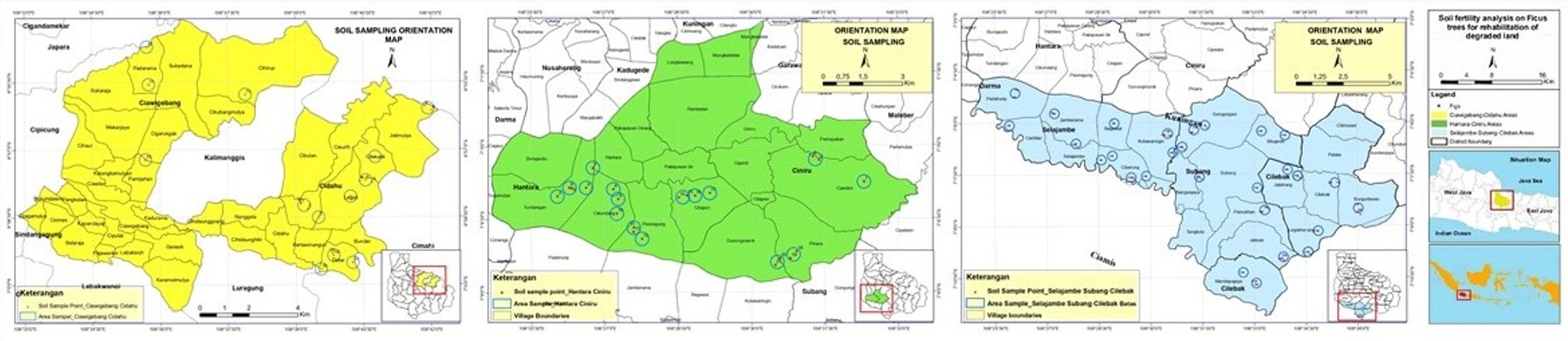
This study was conducted in Kuningan Regency, West Java, Indonesia, located at coordinates 108.23° – 108.47° East Longitude and 6.47° – 7.12° South Latitude. The topography of the area ranges from flat and gently sloping to moderately steep and steep, with elevations ranging from 47 to 3,085 meters above sea level (m asl). The annual rainfall varies between 26.32 and 271.14 mm. Soil samples were taken from three types of land use: sand mining, which is located in the Cidahu and Ciawigebang sub-districts at elevations of 47-262 m asl; community gardens found in the Ciniru and Hantara sub-districts at elevations of 269-647 m asl; and secondary forests located in the Selajambe, Subang, and Cilebak sub-districts at elevations of 301-827 m asl. The location of soil sampling can be seen in Figure 1.

2.2. Experimental design
This research will be conducted both in the field and in the laboratory. The study population includes various types of land use, specifically in sand mining areas, community gardens, and secondary forests where Ficus trees are present. Soil samples will be taken from the vicinity of the Ficus trees at the three types of land use to analyze and compare soil fertility at each location. In this study, the independent variable is the type of Ficus tree. Meanwhile, the dependent variable being measured is the level of soil fertility, which encompasses various chemical and physical soil parameters.
2.3. Data collection
Field data collection began with the creation of a sample plot with an area of 0.04 hectares when Ficus tree species were found at sand excavation sites, community gardens and secondary forests in 34 villages. Next, the data obtained is analyzed for each land use using the Important Value Index (IVI= RA+RCC+RF). To find out the selected species for each land use, the Species Similarity Index is used. The Jaccard index is used with qualitative data (e.g., species lists) to compare two sites based on the presence or absence of a species. It is based on the idea that the more species that both sites have in common, the more similar they are.
Data collection will be conducted at locations where selected Ficus species are growing, namely Ficus benjamina, Ficus fistulosa, Ficus septica, Ficus variegata, Ficus ampelas, and Ficus virens, in sand mining areas (7 points), community gardens (7 points), and secondary forests (12 points). The surrounding environmental conditions will be recorded, including temperature, humidity, and altitude. Soil samples will be taken from the soil layer at a depth of 0-30 cm at observation points using a composite method, where soil will be collected at a distance of about 1 meter in a specific direction, then mixed thoroughly. Approximately 1 kg of soil will be taken as the sample.
The analysis will cover various soil fertility parameters, including soil pH (Potentiometric), organic carbon content (Spectrophotometric), total nitrogen (Kjeldahl), C/N ratio, P2O5 (Spectrophotometric-Olsen), potential K2O (AAS), cation exchange capacity (CEC) (Titrimetric), exchangeable cations (AAS), base saturation, and soil texture (Gravimetric) (Table 1).
2.4. Data analysis
The data obtained will be analyzed using vegetation analysis with Formulas 1 to 4:
The proportion of species out of the total species list of the two sites, which is common to both sites (Formula 5):
where a and b represent the number of species unique to each site, c represents the number of shared species between the two sites, and SJ is the similarity index.
After obtaining the Ficus tree, the soil data was compared with the observational parameter data resulting from laboratory analysis with the criteria for assessing soil chemical properties in accordance with technical guidelines for evaluating land resources (Siswanto, 2006). Next, we will combine the criteria for soil chemical properties resulting from laboratory analysis with the technical guidelines for evaluating soil fertility from PPT (1995) to determine the fertility status of the soil where Ficus trees grow (Table 2).
The data analysis in this study will employ descriptive statistics to outline the characteristics of soil fertility for each sample. The results of this analysis will then be mapped based on the levels of soil fertility, enabling the identification and understanding of soil fertility variations across different research locations. The research procedures conducted in this study are as follows:
-
Selecting locations for soil sampling;
-
Determining specific spots for composite soil sampling within each research object;
-
Cleaning the soil surface of debris, grass, or other ground cover plants;
-
Taking soil samples from the cultivated layer at a depth of 0-20 cm, considering that most nutrients are primarily located at this depth;
-
The collected soil samples will then undergo laboratory analysis in the laboratory.
3. Results and Discussion
Based on the results of the field data collection, soil samples were obtained representing three land uses: sand extraction (7 soil samples), community gardens (7 soil samples), and secondary forests (12 soil samples). In the sand extraction area, the tree species found were banyan (Ficus benjamina) and awar-awar (Ficus septica). In the community garden area, the species found were more diverse, including beringin (Ficus benjamina), awar-awar (Ficus septica), beunying (Ficus fistulosa), and gondang (Ficus variegata). Meanwhile, in the secondary forest area, the species found were beringin (Ficus benjamina), awar-awar (Ficus septica), gondang (Ficus variegata), and kiara bunut (Ficus virens).
Based on Table 3, the results of the soil analysis across all locations indicate that the C-Organic values range from low to high. The lowest C-Organic value is found in the community garden location (0.27%), while the highest C-Organic value is recorded in the secondary forest location at 3.99%. This variation in C-Organic values reflects the organic matter content in the soil. Higher C-Organic levels indicate better soil quality (Supriyadi et al., 2021). The community gardens tend to have less organic matter because plant residues are often removed or cleaned up after harvest, disrupting the nutrient cycling from decomposed organic matter. Most community gardens also practice monoculture, which typically produces little organic material to enrich the soil. In contrast, the secondary forest has a more diverse and denser vegetation cover. Fallen leaves, dead wood, and undergrowth continually contribute organic matter to the soil. This natural decomposition process gradually enriches the soil's C-Organic content (Wang et al., 2021).
The total nitrogen content at the research locations shows values ranging from low to moderate, with the lowest total nitrogen value found in the community garden location (0.01%) and the highest in the secondary forest location (0.43%). The secondary forest has richer and more diverse vegetation compared to the community gardens. The deep roots of forest plants and the complex ecosystem networks allow for better absorption and cycling of nitrogen in the soil, which enhances nitrogen levels (Rivero et al., 2020). Community gardens are typically planted with monoculture or short-term crops that do not have as extensive root systems and organic matter as forest plants. Nitrogen is a type of nutrient that is easily soluble and regenerates, especially during rainy seasons when fertilizers are applied. This is in line with findings by Nurmegawati et al. (2012), which reported that most nitrogen is mobilized during harvest, with the remainder returned to the atmosphere as plant residues, evaporated, or leached through runoff.
The P2O5 parameter based on laboratory analysis shows values ranging from very low to moderate. The very low value is found at the sand mining location, which is 5.94, while the moderate value is observed in the secondary forest at 37.54. The sand mining location generally has low organic matter content because the fertile topsoil has been eroded or excavated. Organic matter plays a crucial role in the phosphate cycle in the soil as soil microorganisms help release available phosphates for plants (Rawat et al., 2021). In contrast, the secondary forest has denser vegetation and a significant amount of decomposed plant residues that provide more organic matter, contributing to higher P2O5 content (Sharma et al., 2020).
Additionally, sand mining locations often experience significant soil erosion, leading to the loss of nutrient-rich topsoil, including phosphates. In the secondary forest, the soil layer is better protected by vegetation cover, which minimizes erosion and maintains phosphate content in the soil. Furthermore, the soil at sand mining sites typically consists of coarser, sandy textures that have a lower capacity to retain nutrients like phosphates. Conversely, the soil in the secondary forest tends to have a finer texture, allowing for better phosphate retention, thus resulting in higher P2O5 concentrations. In the secondary forest, biological activity is more intense due to soil fauna and microorganisms that decompose organic matter and release phosphates into the soil. In sand mining locations, this biological activity decreases due to environmental degradation and the lack of organic matter to support the survival of soil microorganisms (Lin et al., 2022).
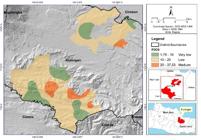
The K2O values at the research locations range from low to very high. The low value (17.8) is found in the secondary forest, while the very high value (644.44) is observed in the sand mining location. At the sand mining site, due to excavation, deeper, unweathered soil may be more exposed. The underlying soil layers, rich in minerals including potassium, are more exposed, resulting in a very high K2O content (Hoy et al., 2023). Conversely, in the secondary forest, the soil is protected by organic layers and vegetation and has undergone natural nutrient cycling, which facilitates the release of potassium into the plant ecosystem. The potassium present in the soil of the secondary forest has been utilized by plants, leading to lower potassium content in the soil.
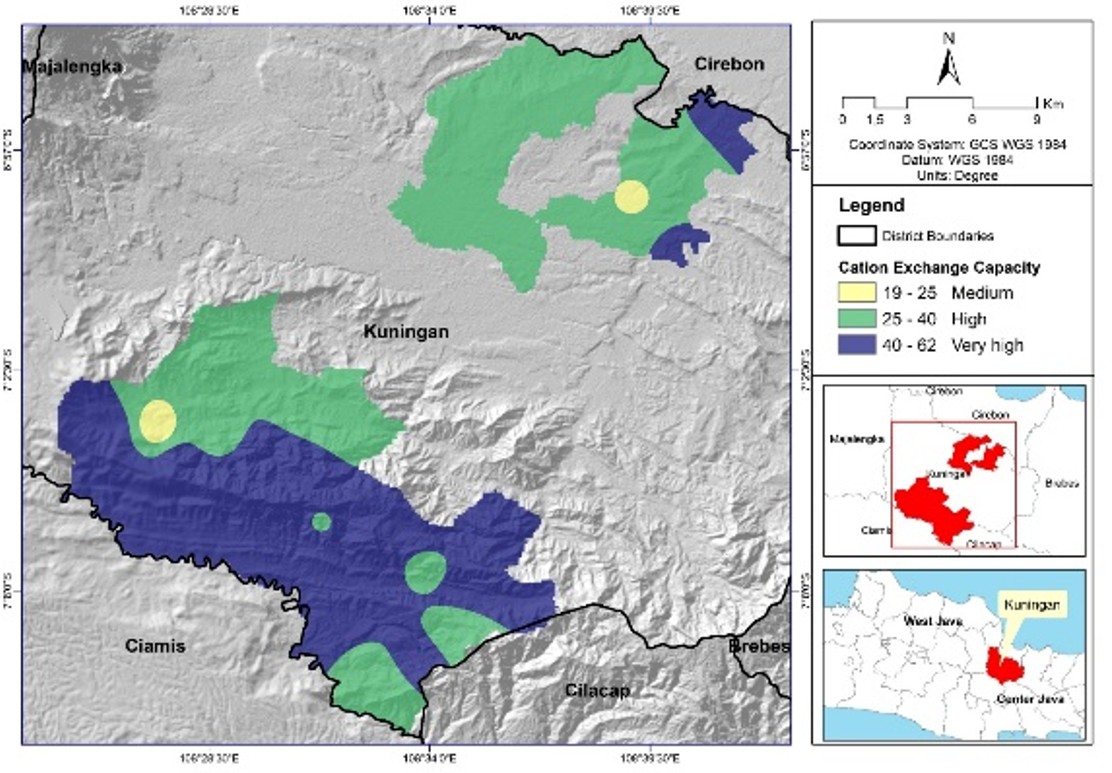
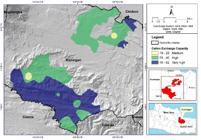
The Cation Exchange Capacity (CEC) values from the research locations range from moderate to very high. The smallest moderate value (19.27) is found in the community gardens, while the very high value (61.49) is observed in the secondary forest. Secondary forests generally have a higher organic matter content compared to community gardens. Organic matter, such as humus formed from the decomposition of leaves and plant residues, plays a crucial role in enhancing CEC as it can effectively absorb and release cations. Therefore, secondary forests tend to have higher CEC (Takoutsing et al., 2016). In community gardens, the soil is often more degraded due to agricultural activities, such as soil tillage and chemical usage, which can diminish soil texture and its capacity to retain cations. Conversely, the soil in secondary forests is usually less disturbed, resulting in a more stable soil structure that can maintain a high cation exchange capacity (Liu et al., 2024).
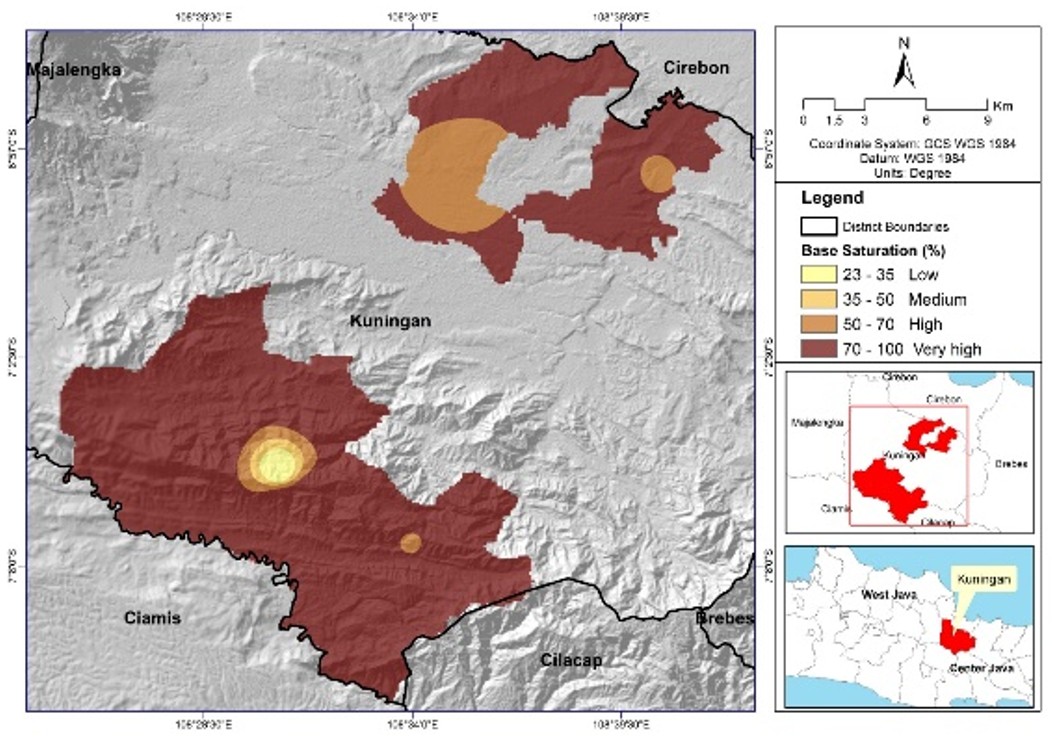
The base saturation values from the three locations range from low to very high. The low value (23) is found in the community gardens, while the very high value (100) is observed in all land use locations. Secondary forests tend to have a higher organic matter content due to the abundant naturally decomposing plant residues, such as leaves, branches, and wood. This decomposition process enriches the soil with essential nutrients such as calcium (Ca), magnesium (Mg), potassium (K), and sodium (Na), which are base cations (Marimon‐Junior et al., 2020). As a result, the base saturation in the secondary forest reaches the maximum value of 100.
The high organic matter content helps maintain a good nutrient cycle and enhances the soil's capacity to absorb and retain base cations. Conversely, community gardens often experience a decline in organic matter content due to more intensive land management practices, including weeding, tillage, and monoculture planting. These repetitive agricultural activities can lead to a reduction in organic matter in the soil, consequently lowering the base cation content. As a result, the base saturation in community gardens is significantly lower.
The soil pH values at the research locations range from slightly acidic to slightly alkaline. The slightly acidic value (5.7) is found in the secondary forest, while the slightly alkaline value (8.3) is observed in the sand mining sites and community gardens. Soil in the secondary forest typically has a high organic matter content from decomposed plant residues, such as leaves and branches. The decomposition process carried out by microorganisms often produces organic acids, such as humic and fulvic acids. These acids tend to lower the soil pH, making it more acidic (Bayazitova et al., 2023). Therefore, the secondary forest locations usually exhibit a slightly acidic pH.
In contrast, the community gardens and sand mining locations generally have lower organic matter content. This reduction in organic matter decreases the production of organic acids that play a role in lowering soil pH. Additionally, the soil in sand mining areas often consists more of mineral materials that have a basic effect, resulting in a slightly alkaline pH (8.3). In community gardens, certain agricultural practices, such as liming or using alkaline fertilizers, can also raise the soil pH (Wang et al., 2020).
3.1. Analysis of soil fertility parameters on Ficus trees
3.1.1. Parameter C-Organic
In the analysis of the C-Organic parameter, various species of Ficus were evaluated based on their C-Organic values, ranging from the lowest to the highest. The species **Ficus virens** was found to thrive well at the lowest C-Organic value, while **Ficus benjamina** exhibited optimal growth at the highest C-Organic value. Notably, **Ficus benjamina** can also grow in conditions with low C-Organic content (0.99%), indicating that this species is adaptable and can survive in a range of C-Organic levels, from low to high. This adaptability highlights the ecological importance of **Ficus benjamina** as a resilient species that can contribute to soil fertility and overall ecosystem health, even in less-than-ideal soil conditions. The C-Organic parameter map can be seen in Figure 2.
3.1.2. Total nitrogen parameters
In the Total Nitrogen parameter, the Ficus fistulosa type can grow at the lowest conditions, while the Ficus virens type is at the highest value. However, these two types are not evenly distributed in each location with varying Total Nitrogen values. The Total Nitrogen parameter map can be seen in Figure 3.

3.1.3. Parameters P2O5
In this phosphate parameter, the Ficus benjamina type can grow at the lowest value and the Ficus septica type is found at the highest phosphate value. However, the Ficus benjamina type also has the second highest phosphate value. The P2O5 parameter map can be seen in Figure 4.
3.1.4. K2O parameters
In this parameter, the types of Ficus virens and Ficus benjamina can be found at the lowest K2O value and also at the same type of value, namely Ficus benjamina is found at the highest K2O value. The K2O Parameter Map can be seen in Figure 5.

3.1.5. Cation exchange capacity parameter
In the cation exchange capacity parameter, the Ficus variegata type is at the lowest value (19.27) and the Ficus virens type is at the highest value (61.49). The CEC Parameter Map can be seen in Figure 6.
3.1.6. Base saturation parameters
In the base saturation parameter, the Ficus septica type is at the lowest value (23) and also has the highest base saturation value along with the types Ficus benjamina, Ficus fistulosa, Ficus variegata, and Ficus virens with a base saturation value of 100. The base saturation parameter map can be seen in Figure 7.

3.1.7. pH parameters
In terms of pH parameters, the Ficus benjamina type is at the lowest pH value (5.7) and the Ficus septica type is found at the highest pH value (8.3). The pH parameter map can be seen in Figure 8.

4. Conclusion
Soil fertility parameters at sand mining sites range from low to medium, at community garden sites have very low to high values and at secondary forest sites have very low to very high values. The types of ficus that can be found in sand excavation locations are Ficus benjamina and Ficus septica, in community garden locations the types are Ficus septica, Ficus fistulosa, Ficus variegata and Ficus benjamina while in secondary forest locations the types of ficus found are Ficus benjamina, Ficus virens, Ficus septica and Ficus variegata.
References
-
ALVES, A.S., NUNES, L.J., MATIAS, J.C., ESPADINHA-CRUZ, P. and GODINA, R., 2024. An integrated PROMETHEE II-Roadmap model: application to the recovery of residual agroforestry biomass in Portugal. Journal of Cleaner Production, vol. 445, pp. 141307. http://doi.org/10.1016/j.jclepro.2024.141307
» http://doi.org/10.1016/j.jclepro.2024.141307 -
ARORA, N.K. and MISHRA, I., 2024. Life on land: progress, outcomes and future directions to achieve the targets of SDG 15. Environmental Sustainability, vol. 7, no. 4, pp. 369-375. http://doi.org/10.1007/s42398-024-00330-y
» http://doi.org/10.1007/s42398-024-00330-y - BAYAZITOVA, Z.E., KURMANBAYEVA, A., TLEUOVA, Z.O. and TEMIRBEKOVA, N., 2023. Application of the thermophilic fermentation method to obtain environmentally friendly organic fertilizer. Journal of Ecological Engineering, vol. 24, no. 4, pp. 202-216. .
-
DENG, G., JIANG, H., ZHU, S., WEN, Y., HE, C., WANG, X., SHENG, L., GUO, Y. and CAO, Y., 2024. Projecting the response of ecological risk to land use/land cover change in ecologically fragile regions. The Science of the Total Environment, vol. 914, pp. 169908. http://doi.org/10.1016/j.scitotenv.2024.169908 PMid:38190905.
» http://doi.org/10.1016/j.scitotenv.2024.169908 -
DROBITKO, A., MARKOVA, N., TARABRINA, A.M. and TERESHCHENKO, A., 2023. Land degradation in Ukraine: retrospective analysis 2017-2022. The International Journal of Environmental Studies, vol. 80, no. 2, pp. 355-362. http://doi.org/10.1080/00207233.2022.2160079
» http://doi.org/10.1080/00207233.2022.2160079 -
ESHETE, A., TESHOME, S., EDASO, A., YILMA, G. and FURO, G., 2023. Selection of soil and water conservation technologies and native tree species for rehabilitation of degraded arid lands in southeast Ethiopia. International Journal of Forestry Research, vol. 2023, no. 1, pp. 357131. http://doi.org/10.1155/2023/7357131
» http://doi.org/10.1155/2023/7357131 -
FURO, G., SEYOUM, G., BIRHANU, D. and ABABU, T., 2024. Exploring the socioeconomic impacts of community based rehabilitated watersheds: a experience from Wera district, Ethiopia. Forests, Trees and Livelihoods, vol. 33, no. 2, pp. 118-134. http://doi.org/10.1080/14728028.2024.2308836
» http://doi.org/10.1080/14728028.2024.2308836 -
HADZI, G.Y., ESSUMANG, D.K. and AYOKO, G.A., 2024. Assessment of contamination and potential ecological risks of heavy metals in riverine sediments from gold mining and pristine areas in Ghana. Journal of Trace Elements and Minerals, vol. 7, pp. 100109. http://doi.org/10.1016/j.jtemin.2023.100109
» http://doi.org/10.1016/j.jtemin.2023.100109 -
HENDRAYANA, Y., ADHYA, I. and ISMAIL, A.Y., 2019. Diversity and carbon stocks of genus Ficus in Gunung Tilu Kuningan District, West Java Province, Indonesia. Journal of Forestry and Environment, vol. 1, no. 1, pp. 25-29. http://doi.org/10.25134/jfe.v1i01.1046
» http://doi.org/10.25134/jfe.v1i01.1046 -
HEYDARI, M. and OSANLOO, M., 2024. A new comprehensive Model for integrating environmental, economic, and social performance of deep and large-scale open-pit copper mines. International Journal of Engineering, vol. 37, no. 1, pp. 1-13. http://doi.org/10.5829/IJE.2024.37.01A.01
» http://doi.org/10.5829/IJE.2024.37.01A.01 -
HOOKE, J. and SANDERCOCK, P., 2012. Use of vegetation to combat desertification and land degradation: recommendations and guidelines for spatial strategies in Mediterranean lands. Landscape and Urban Planning, vol. 107, no. 4, pp. 389-400. http://doi.org/10.1016/j.landurbplan.2012.07.007
» http://doi.org/10.1016/j.landurbplan.2012.07.007 -
HOSSAIN, M.I., BARI, M.N., MIAH, S.U., KAFY, A.A. and NASHER, N.R., 2021. Application of modified managed aquifer recharge model for groundwater management in drought-prone water-stressed Barind Tract, Bangladesh. Environmental Challenges, vol. 4, pp. 100173. http://doi.org/10.1016/j.envc.2021.100173
» http://doi.org/10.1016/j.envc.2021.100173 -
HOY, M., SRIJAROEN, C., HORPIBULSUK, S., PHUNPENG, V., RACHAN, R. and ARULRAJAH, A., 2023. Innovative solution: soil cement column walls as a temporary retaining structure for excavation in soft Bangkok clay. Smart Construction and Sustainable Cities, vol. 1, no. 1, pp. 19. http://doi.org/10.1007/s44268-023-00017-z
» http://doi.org/10.1007/s44268-023-00017-z - IRYNA, D., ANATOLIY, K., TETYANA, L., IHOR, S. and MYKYTA, H., 2023. Biologically useful properties representatives of the Genus Ficus L. In: Proceedings of the 8th International scientific and practical conference “Distance Learning in Universities and Modern Problems”, 7-10 November 2023, Budapest, Hungary. New York: International Science Group, pp. 25.
-
KOBAYASHI, S., 2004. Landscape rehabilitation of degraded tropical forest ecosystems: case study of the CIFOR/Japan project in Indonesia and Peru. Forest Ecology and Management, vol. 201, no. 1, pp. 13-22. http://doi.org/10.1016/j.foreco.2004.06.009
» http://doi.org/10.1016/j.foreco.2004.06.009 -
KUNTE, G. and BHAT, V., 2024. Deforestation, climate change and the sustainability of agriculture: a review. Journal of Resources and Ecology, vol. 15, no. 1, pp. 140-150. http://doi.org/10.5814/j.issn.1674-764x.2024.01.012
» http://doi.org/10.5814/j.issn.1674-764x.2024.01.012 -
KUSUMA, F.D., ZAKARIA, S. and SAPUTRA, R.A., 2023. Arbuscular mycorrhizal colonization of pioneer mangrove species in Mahakam Delta, East Kalimantan. IOP Conference Series. Earth and Environmental Science, vol. 1282, pp. 012052. http://doi.org/10.1088/1755-1315/1282/1/012052
» http://doi.org/10.1088/1755-1315/1282/1/012052 - LARINK, O. and SCHRADER, S., 2000. Rehabilitation of degraded compacted soil by earthworms. Advances in GeoEcology, no. 32, 284-294.
-
LESTARI, D.A., FIQA, A.P., FAUZIAH, F. and BUDIHARTA, S., 2018. Growth evaluation of native tree species planted on post coal mining reclamation site in East Kalimantan, Indonesia. Biodiversitas, vol. 20, no. 1, pp. 134-143. http://doi.org/10.13057/biodiv/d200116
» http://doi.org/10.13057/biodiv/d200116 -
LIN, L.D., HO, J.R., YANG, B.Y., KO, C.H. and CHANG, F.C., 2022. Life cycle assessment of heavy metal contaminated sites: phytoremediation and soil excavation. International Journal of Phytoremediation, vol. 24, no. 4, pp. 334-341. http://doi.org/10.1080/15226514.2021.1937933 PMid:34166152.
» http://doi.org/10.1080/15226514.2021.1937933 -
LIU, W., ZHU, Z., LU, Z., OLADELE, O.P., DANG, Y.P., ZHAO, X. and ZHANG, H., 2024. Soil quality associated with microbial community characteristics and dominant taxa across different tillage practices. Land Degradation & Development, vol. 35, no. 15, pp. 4682-4695. http://doi.org/10.1002/ldr.5249
» http://doi.org/10.1002/ldr.5249 -
LOVEJOY, T.E., 1985. Rehabilitation of degraded tropical forest lands. The Environmentalist, vol. 5, no. 1, pp. 13-20. http://doi.org/10.1007/BF02239863
» http://doi.org/10.1007/BF02239863 -
MAIKHURI, R.K., SENWAL, R.L., RAO, K.S. and SAXENA, K.G., 1997. Rehabilitation of degraded community lands for sustainable development in Himalaya: a case study in Garhwal Himalaya, India. International Journal of Sustainable Development and World Ecology, vol. 4, no. 3, pp. 192-203. http://doi.org/10.1080/13504509709469954
» http://doi.org/10.1080/13504509709469954 -
MAIMUNAH, S., ERDHANI, S., SUWITO, S.B., LESTARI, N.S., LEKSONO, B. and HIMLAL, B., 2023. Restoring ex mining area using Pongamia pinnata in Central Kalimantan: a reclamation program alternative base on bioenergy species. IOP Conference Series. Earth and Environmental Science, vol. 1282, no. 1, pp. 012044. http://doi.org/10.1088/1755-1315/1282/1/012044
» http://doi.org/10.1088/1755-1315/1282/1/012044 -
MARIMON‐JUNIOR, B.H., HAY, J.D., OLIVERAS, I., JANCOSKI, H., UMETSU, R.K., FELDPAUSCH, T.R., GALBRAITH, D.R., GLOOR, E., PHILLIPS, O.L. and MARIMON, B.S., 2020. Soil water-holding capacity and monodominance in Southern Amazon tropical forests. Plant and Soil, vol. 450, no. 1-2, pp. 65-79. http://doi.org/10.1007/s11104-019-04257-w
» http://doi.org/10.1007/s11104-019-04257-w -
MARTINS, M.A., MACHADO, A.I. and KEIZER, J.J., 2024. Assessment of recent to medium-term impacts of bench terrace construction on forest ground cover and selected soil physical and fertility properties along a chrono-sequence in north-central Portugal. The Science of the Total Environment, vol. 918, pp. 170785. http://doi.org/10.1016/j.scitotenv.2024.170785 PMid:38336069.
» http://doi.org/10.1016/j.scitotenv.2024.170785 -
MENSAH, A.K., 2015. Role of revegetation in restoring fertility of degraded mined soils in Ghana: a review. International Journal of Biodeversity and Conservation, vol. 7, no. 2, pp. 57-80. http://doi.org/10.5897/IJBC2014.0775
» http://doi.org/10.5897/IJBC2014.0775 -
MGANGA, K.Z., NYARIKI, D.M., MUSIMBA, N.K. and MWANG’OMBE, A.W., 2019. Indigenous grasses for rehabilitating degraded African drylands. In: Y. BAMUTAZE, S. KYAMANYWA, B.R. SINGH, G. NABANOGA and R. LAL, eds. Agriculture and ecosystem resilience in sub saharan Africa: livelihood pathways under changing climate Berlin: Springer, pp. 53-68. http://doi.org/10.1007/978-3-030-12974-3_3
» http://doi.org/10.1007/978-3-030-12974-3_3 -
NURMEGAWATI, N., WIBAWA, W., MAKRUF, E., SUGANDI, D. and RAHMAN, T., 2012. Tingkat kesuburan dan rekomendasi pemupukan N, P, dan K tanah sawah Kabupaten Bengkulu Selatan. Jurnal Solum, vol. 9, no. 2, pp. 61-68. http://doi.org/10.25077/js.9.2.61-68.2012
» http://doi.org/10.25077/js.9.2.61-68.2012 -
OMBEGA, N.J., MUREITHI, S.M., KOECH, O.K., KARUMA, A.N. and GACHENE, C.K.K., 2017. Effect of rangeland rehabilitation on the herbaceous species composition and diversity in Suswa catchment, Narok County, Kenya. Ecological Processes, vol. 6, no. 1, pp. 41. http://doi.org/10.1186/s13717-017-0109-1
» http://doi.org/10.1186/s13717-017-0109-1 -
ORTEGA, D. and SENANTE, M., 2023. Quantifying progress made in achieving sustainable development goal 6 in Chile: a holistic and local approach. Sustainability, vol. 15, no. 5, pp. 4125. http://doi.org/10.3390/su15054125
» http://doi.org/10.3390/su15054125 -
OVERTON, K., DEMPSTER, T., SWEARER, S.E., MORRIS, R.L. and BARRETT, L.T., 2024. Achieving conservation and restoration outcomes through ecologically beneficial aquaculture. Conservation Biology, vol. 38, no. 1, e14065. http://doi.org/10.1111/cobi.14065 PMid:36811200.
» http://doi.org/10.1111/cobi.14065 -
PANDEY, A., TIWARI, P., MANPOONG, C. and JATAV, H.S., 2024. Agroforestry for restoring and improving soil health. In: H.S. JATAV, V.D. RAJPUT, T. MINKINA, E.D. VAN HULLEBUSCH and A. DUTTA, eds. Agroforestry to combat global challenges: current prospects and future challenges Singapore: Springer Nature Singapore, pp. 147-164. http://doi.org/10.1007/978-981-99-7282-1_8
» http://doi.org/10.1007/978-981-99-7282-1_8 -
PARR, C.L., TE BEEST, M. and STEVENS, N., 2024. Conflation of reforestation with restoration is widespread. Science, vol. 383, no. 6684, pp. 698-701. http://doi.org/10.1126/science.adj0899 PMid:38359128.
» http://doi.org/10.1126/science.adj0899 - PUSAT PENELITIAN TANAH – PPT, 1995. Petunjuk Teknis Evaluasi Kesuburan Tanah. Versi 1,0.1. REP II Project, CSAR. Bogor. Laporan Teknis, no. 14.
-
PUTRI, A.V., SADONO, R. and SUTATA, D.F., 2024. Enhancing land cover and carbon storage through rehabilitation of degraded lands into Wono: a case study of a small-scale private forest in Dengok Village, Gunungkidul, Yogyakarta, Indonesia (1972-2021). Journal of Degraded and Mining Lands Management, vol. 11, no. 2, pp. 5105-5117. http://doi.org/10.15243/jdmlm.2024.112.5105
» http://doi.org/10.15243/jdmlm.2024.112.5105 - RAHAYUNINGSIH, M., KURNIAWAN, F.H. and KARTIJONO, N.E., 2020. The potential of Ficus species as frugivorous feed on Gentong Hill, Mount Ungaran, Indonesia. Forestry Ideas, vol. 26, no. 2, pp. 540-548.
-
RAJ, A., JHARIYA, M. K., BANERJEE, A., NEMA, S. and BARGALI, K., 2023. Land degradation and restoration: Implication and management perspective. In: A. RAJ, M.K. JHARIYA, A. BANERJEE, S. NEMA and K. BARGALI, eds. Land and environmental management through forestry Beverly: Scrivener Publishing, pp. 1-21. http://doi.org/10.1002/9781119910527.ch1
» http://doi.org/10.1002/9781119910527.ch1 -
RAWAT, P., DAS, S., SHANKHDHAR, D. and SHANKHDHAR, S.C., 2021. Phosphate-solubilizing microorganisms: mechanism and their role in phosphate solubilization and uptake. Journal of Soil Science and Plant Nutrition, vol. 21, no. 1, pp. 49-68. http://doi.org/10.1007/s42729-020-00342-7
» http://doi.org/10.1007/s42729-020-00342-7 -
RIVERO, C., TOURN, S.N., GARCÍA, G.V., VIDELA, C.C., DOMÍNGUEZ, G.F. and STUDDERT, G.A., 2020. Nitrogen mineralized in anaerobiosis as indicator of soil aggregate stability. Agronomy Journal, vol. 112, no. 1, pp. 592-607. http://doi.org/10.1002/agj2.20056
» http://doi.org/10.1002/agj2.20056 - SHARMA, H., EHLERS, T.A. and SCHMID, M.F., 2020. Influence of oscillating vegetation cover, precipitation, and sediment transport on topography: Insights from a landscape evolution model. Vienna: EGU General Assembly 2020.
- SISWANTO, 2006. Evaluasi sumberdaya lahan. Terbitan: UPN Press.
-
STAVI, I., 2022. Ecosystem services related with Opuntia ficus-indica (prickly pear cactus): a review of challenges and opportunities. Agroecology and Sustainable Food Systems, vol. 46, no. 6, pp. 815-841. http://doi.org/10.1080/21683565.2022.2076185
» http://doi.org/10.1080/21683565.2022.2076185 -
SUPRIYADI, S., VERA, I.L.P. and PURWANTO, P., 2021. Soil quality at rice fields with organic, semi-organic and inorganic management in Wonogiri Regency, Indonesia. Caraka Tani: Journal of Sustainable Agriculture, vol. 36, no. 2, pp. 259-269. http://doi.org/10.20961/carakatani.v36i2.42556
» http://doi.org/10.20961/carakatani.v36i2.42556 -
TAKOUTSING, B., WEBER, J.C., TCHOUNDJEU, Z. and SHEPHERD, K.D., 2016. Soil chemical properties dynamics as affected by land use change in the humid forest zone of Cameroon. Agroforestry Systems, vol. 90, no. 6, pp. 1089-1102. http://doi.org/10.1007/s10457-015-9885-8
» http://doi.org/10.1007/s10457-015-9885-8 - TEMESGEN, D., YEHUALASHET, H. and RAJAN, D.S., 2014. Climate change adaptations of smallholder farmers in South Eastern Ethiopia. Journal of Agricultural Extension and Rural Development, vol. 6, no. 11, pp. 354-366.
-
WANG, B., LIANG, C., YAO, H., YANG, E. and AN, S., 2021. The accumulation of microbial necromass carbon from litter to mineral soil and its contribution to soil organic carbon sequestration. Catena, vol. 207, pp. 105622. http://doi.org/10.1016/j.catena.2021.105622
» http://doi.org/10.1016/j.catena.2021.105622 -
WANG, Y., CHEN, G., SUN, Y., ZHU, K., JIN, Y., LI, B. and WANG, G., 2020. Different agricultural practices specify bacterial community compositions in the soil rhizosphere and root zone. Soil Ecology Letters, vol. 4, no. 1, pp. 18-31. http://doi.org/10.1007/s42832-020-0058-y
» http://doi.org/10.1007/s42832-020-0058-y -
ZHANG, W.P., SURIGAOGE, S., YANG, H., YU, R.P., WU, J.P., XING, Y. and LI, L., 2024. Diversified cropping systems with complementary root growth strategies improve crop adaptation to and remediation of hostile soils. Plant and Soil, vol. 502, pp. 7-30. http://doi.org/10.1007/s11104-023-06464-y
» http://doi.org/10.1007/s11104-023-06464-y